Author Archives: Murderati


Ten Questions: Mark Terry

by Rob Gregory Browne

I’m at the RT Booklovers Convention in Ohio this week, so it’s time for an author interview!

I met Mark Terry a few years back (boy, time flies) when his novel, THE DEVIL’S PITCHFORK, was released. He hung out at my blog a lot and was kind enough to read and review KISS HER GOODBYE on his own blog.

Well, Mark is now out doing the rounds for his latest book and I thought this would be a good time for the folks at Murderati to get to know him a bit — and, of course, run out and buy his new book.

Okay, Mark. Why don’t we start with what I think are probably the most pressing questions an author can possibly be asked:

Is there intelligent life in outer space?

I’m not convinced there’s intelligent life on Earth, let alone in outer space.

Oooookay.  Let’s try something else.  How do you feel about cannibalism?

Depends. Are they juicy or tough? Fried or baked? What are the side dishes? Do they come with dessert?

You’re starting to scare me.  Why don’t we move on to writing? What’s your new book, THE FALLEN, about?

I’ll do that “high concept” thing and describe it as “Die Hard” at the G8 Summit. Basically, it features my series character, Dr. Derek Stillwater, who is a troubleshooter for Homeland Security and an expert on biological and chemical terrorism.

He’s undercover at the resort where the G8 Summit is being held in Colorado when a terrorist group calling itself The Fallen Angels takes over the Summit and threatens to kill a world leader every hour unless their demands are met. Derek’s trapped inside the resort picking off terrorists one by one.

I can smell a movie deal already.  Do you do a lot of research for your books?

You mean, do I go to the Middle East and spend two weeks at an Al Qaeda training camp learning how to kill innocent people? Uh, no.

But I do read a lot about terrorism and the history of biological and chemical warfare, keep track of what’s going on in the current Global War on Terror, or whatever it’s currently being called, and I research the cities Derek’s stories take place in and talk to experts as needed. Google and I are on a first-name basis.

What’s your writing routine like?

Well, I’m a fulltime freelance writer, editor and novelist, so I treat it pretty much as a regular job. The schedule varies a bit depending on my kids’ school schedule, but I’m typically at my desk around 8:00 AM, work until 10:30 or so, head off to the gym, grab lunch, then work for a couple more hours, pick up my kids, work for a couple more hours.

Depending on workload and deadlines for various projects, I’ll work in the evenings and weekends.

Which do you prefer writing? Sex scenes or murder scenes?

Murder scenes. I don’t know if it’s just me, and no, I don’t want you to ask my wife, but I can think of a lot more ways to kill people than I can ways to hook up. Perhaps it’s as the old line goes, “What do I know about sex, I’m married.” [Rimshot]

What’s the name of your muse?

Tommy the Terse, but I’m hoping to replace him with Larry the Loquacious.

My muse is female.  She looks a lot like Sharon Stone (obscure Albert Brooks movie reference). When you’re not writing, what do you do?

Hang with my family, read, go to the gym, run, bike, kayak, study karate, and I’m the secretary of the local school system’s band boosters (my wife is the president) so we’re always involved in various fundraisers and events. I also play guitar. God, how do I ever find time to write?

Pick three famous people. Which one would you like to sleep with, which one would you like to marry, and which one would you like to use as a victim in one of your books?

Wow, really bizarre. Penelope Cruz, Sandra Bullock, and Dick Cheney. I’ll let you guess which ones are which. 

Okay, I guess it’s time to get serious again. What’s next for Derek?

After THE FALLEN, the fourth Derek Stillwater novel is written and scheduled for September 2011. I’m currently working on the fifth and I have a Stillwater novella I want to write and will either make it available on my website or as a Kindle e-book. Of course, I have to write it first.

Okay, that about does it.  Thanks for playing, Mark.

And for our studio audience, feel free to ask Mark any questions you might have, but also answer the same one poor Mark was subjected to:

Pick three famous people — real or fictional. Which one would you like to sleep with, which one would you like to marry, and which one would you like to use (or see used) as a victim in a book?

See you in the comments.

Voice

by Toni McGee Causey

It’s very late as I write this. I’m sitting in the gorgeous hotel suite in Scottsdale, AZ, as the Desert Rose Conference winds down to an end. It’s been a very full couple of days, and I’m utterly worn out. Rejuvenated about writing, but worn out.

I taught two sessions here today; one was on sex scenes (when to use them, why, how, what the point should be, pacing, tension, subtext, conflict, etc.), and another on voice (how to define it, how to recognize what is authentically your voice, and how to hone it). 

It will probably not surprise anyone that the first class was far far easier to teach. Teaching voice is a little like dancing in a minefield. 

I purposefully did not set out to teach someone a “voice” — I don’t think that can be taught because I can’t impose that from the outside. It is something one can learn about oneself. Some people say that “either a person has a “voice” or they don’t,” but I would disagree. I certainly hadn’t figured out my voice prior to my Bobbie Faye series. I could show you the two projects I’d written just prior to Bobbie Faye and you could pick up the hints of what would become my voice, but it was inconsistent, at best, and nonexistent most of the time. I was constantly writing, searching, trying to figure out what this voice thing was all about, and how the hell did I get one of those?

While I don’t think voice itself can be taught–I can’t take another person and prescribe for them a set of steps for them to take and voila, a unique voice will emerge on the other end of that process–I do think that we can define what voice is, and find ways to hone it. (After all, this is what we all do–we all work on honing our own voice.) 

But first, what it is not: it is not tone, nor cadence, nor syntax. It is not vocabulary, nor style, nor level of complexity of sentence structure. It is not the choice of POV character or characters, nor which type of POV to use (first, second, third, third intimate, omnipotent). It is not the setting of the world, the socioeconomic background of the writer or the subject matter.

It is, in a way, all of those things. Voice is every choice that a writer makes–what matters to them. How they want to approach the story. Where they will start. Who it will be about, and then all of the other things above.

Voice is the authority of the author. Confidence in their choices of how to tell the story. Infusing that story with their own unique personality, their own perspective on the world, the themes or issues that they care about, and communicating a goal specific to themselves. 

I couldn’t have had a unique voice if I was busy emulating others, or trying to write to a trend, or trying to stay within rigid guidelines, or trying to meet all of the necessary ingredients of a genre’s checklist. Emulation and prescription are the antithesis of “voice” — where “voice” is the unique view of the world.

No two people are going to tell the same story, even if they were given identical story prompts, and that’s because they’re writing from different experiences, and with different goals. Thematically, each person will focus on something relevant to their worldview, because different issues resonate with them.  Each story produced is going to have its own voice. (Some will be boring voices, because the writer wouldn’t take a risk on exposing themselves to the reader, making themselves vulnerable by chancing risky story-telling methods. They don’t want to show something that they are worried might reflect badly on them, so they hobble their voice, vanilla it up so it won’t be judged, and only accomplish the very judgment they were hoping to avoid.)

Voice is going with your gut instincts that this is how your story should unfold, and believing in your authority to tell the story. (That’s not to say there isn’t trial and error in that process–but ultimately, when it’s done, you have to go with your gut’s final choices.)

It’s the courage to be authentically you and to reach into your own experiences to write the characters authentically, even if you, the writer, haven’t lived their life. 

Once you believe in your own authority to tell the story, all of the other choices simply become tools to help create the story: tone, cadence, mood, language, theme, POV, style, etc.

We moved on from there to some exercises that I think might help the attendees to look at what they’re doing and help them hone what they think their voice is, and to get rid of what they think isn’t working for them. From the response, I think it might have actually been a successful class (which is always the hope and the fear), and I loved the moment where we ran over time and no one moved, they were so busy scribbling and asking questions and I wished we had another hour. This really should have been a two hour workshop.

Maybe next year. (grin) 

Thanks to many of my fellow ‘Ratis who sent their books, signed, as giveaways. Man, I wish y’all could have seen their faces light up when they received them.

I’ll be on a flight home–long flight and layover. I’ll try to check in, but meanwhile, I’d love examples from you of writers who you feel have a unique voice. Any genre.


The 4th Annual State of the Industry Interview

Please join me and the rest of the Murderati crew in a warm welcome back to our favorite editor, the Legendary Honorary (Honorary Legendary?) Neil Nyren! Neil is the Senior Vice-President, Publisher, and Editor in Chief of Penguin Putnam, and edits some of my all-time favorite authors, including John Sandford and Daniel Silva. 

Neil has been kind enough to drop by and share his wealth of knowledge and expertise with us every Spring for the past few years, and I’m so excited to have him back again today for our 4th Annual State of the Industry interview.

If you’ve missed any of our previous interviews, feel free to indulge in their excellence here (2007), here (2008) and here (2009).

Without further ado – here we go!

This is our fourth sit-down in as many years, and I’m always struck by how much the industry changes from year to year. But from our chat last year to now, the changes have been exponential – at least on the surface.

Let me ask the question that’s on everyone’s minds – will eReaders kill physical books?

No, e-readers will not kill physical books. I know that some digerati like to think so, but that’s their own particular ax to grind. Right now, ebooks are still a very tiny part of our business – but obviously that percentage is going to grow. That’s why you saw so many new devices being introduced at the Consumer Electronics show in January, some of them multi-use, some of them dedicated e-readers, and that was even before the iPad. (Of course, only some of those devices will survive – I guarantee you some of them won’t be around in a couple of years). It’d gotten to the point where the electronics people could finally see enough of a future profit to make it worthwhile to put some r&d money into it. Now what’s going to happen is that the whole market will shake down, the major players will emerge – and ebooks will come into their own, side by side with the other formats. Some people will prefer them, just as some people prefer to listen to audio books. The more formats that exist, the more ways that books become available, the more books people will buy. So, really, I’m pretty happy about it.

Do you think that eventually there will be two separate publishing models – the traditional hard/soft or mass-market original releases, and separate authors doing exclusive ebooks?

I certainly think there’ll be more authors trying out ebooks on their own, and why not? It’s a new format, a new market, a new opportunity. As to how big or important a model it will turn out to be, I can answer that in three words: No. Body. Knows. Everybody’s figuring it out as we go along, and we’ll have a much better idea in a year or two. I think most authors are still likely to prefer the benefits of the traditional publishing program, but there’ll be others who still make some very good money from ebook originals, and of course others who’ll do a bit of both. It’ll be exciting to watch, that’s for sure!

Has the new technology changed the way you do your job? For example, have you moved to Kindle to review manuscripts?

If you’re talking about ebook technology, then it hasn’t changed things much for me personally. However, a lot of our editors and assistants do use e-readers to read submissions – it’s just much easier than toting home briefcases full of manuscripts. And all of our sales reps have them as well – instead of sending them manuscripts and sell sheets, we post them all on a server and they can download whatever they want. It’s a great deal more efficient, and they actually get a lot more read, which makes them even better at their job (and they’re pretty damn good already!).

The recession has hurt everyone – from huge publishing houses to new authors looking for their first deal. It feels like things are coming back. New authors are being offered contracts, established mid-list writers are re-upping. Are you buying?

Are we buying? We’ve always been buying! Recession or no recession, you’ve gotta have books to publish. Were we careful about what we bought, did we look hard at a book’s prospects, did we give a lot of thought to what we thought it was worth in today’s market? Of course! And we did that five years ago, and we’ll do it five years from now.

Have you seen a shift in editorial perspective over the past year? Are publishers looking for a different kind of book – blockbusters, niche, non-fiction – to break out and maintain (read: fund) the remainder of the list? Freeing you up to buy smaller books that will satisfy your taste and allows the authors to build over time?

The same answer applies to the question of what we’re looking for. Each publisher has different requirements, a different mix of titles and specialties and interests – and that really hasn’t changed, recession or no recession. We’re all basically just looking for good books, and books we think we can do something with – at whatever level that turns out to be. It doesn’t mean it has to be a blockbuster. I work for a commercial publisher, and obviously I try for the big books, too, because…I’m not stupid. But I spend much of my time working on less than blockbuster books, because that’s where the bread and butter of the industry lies, that’s where a lot of the good writers are, and that’s where – one hopes – some of the prize-winners and bestsellers of tomorrow will come from.

What common mistakes do you see authors make over and over again?

I guess the mistake that often bothers me the most is when authors get consumed by irrelevancies: this guy’s sales, that guy’s advance, why another writer gets more review space, why one reviewer never seems to like you, why another writer got higher on the bestseller list than you did, and so on. It’s your life, your career – not his. Let everybody else pay attention to themselves – you just do what’s right for you. See also some of my comments on the next question.

The dreaded BSP – Blatant Self-Promotion – has become a daily part of almost every author’s marketing plan – we are expected to maintain a website, participate on Facebook and Twitter, do blog tours, attend conferences on our own dime. Carolyn Haines wrote an article last week in the LA Times wondering if it was “smart” for a new author to drop her social networking in favor of working on her book. How do you feel about authors having to shoulder so much of the load?

Ah, yes, BSP. Painful (for some), but necessary. There’s no question that one of the essential ingredients in selling books is word of mouth. Good reviews, the recommendation of a friend/colleague/family member, hearing about a book through traditional print/electronic media or on the web – as M.J. Rose always says, if people don’t hear about a book, they ain’t going to buy it. And the author is an essential part of that process. The publisher will do whatever the publisher’s going to do, and sometimes that’ll be a whole lot and sometimes it won’t. But the plain truth of it is, no matter how much the publisher loves the book…nobody’s going to love it as much as the author. It’s your baby. As a writer, you are the CEO of your own business. You should make it a point to learn that business and to do whatever is necessary to make that business succeed.

That said – you still need to find the right balance. Because a big part of that success rests in writing damn good books, and it’s tough to do that if you’re spending all of your time on promotion. Not to mention that some authors are better suited for some kinds of promotion than for others. Not everybody is born to Twitter. Find out what works for you – it’s going to be different for everybody – and learn as you go along. Observe, experiment, be flexible, don’t get hung up on trivia. And remember: The book comes first.

Vampires. Zombies. What’s the next big thing?

The next big thing, huh? If I knew that, do you think I’d be working for a publishing house? I’d own a publishing house. But, yeah, I think vampires still have some life in them (oh, give me a break, I had to make that joke!). Zombies, I never thought they had much staying power. Vampires are just sexy – zombies, with all that rotting flesh, ugh, not so much. I have heard that angels might be a coming thing, as heralded by the success of Angelology. But, kids, that doesn’t mean you should all go out and start writing angel books. By the time you’ve written it, and it’s been submitted, and somebody’s bought it, and it’s been published, it may all be over (if it ever began, of course). They may be fallen angels. Paradise Lost: if it can happen to them, it can happen to you.

In my experience, many readers (ones who don’t write books) don’t understand the vital role editors play in a novel, hence the self-published industry growth. Two parter – what does an editor do? And will that need ever be supplanted?

Oh, man, an editor does everything. His first job, of course, is to find the book, and then make it the best book it can be. That means finding out what the book wants to be, and helping it get there – and that could mean anything from reshaping the whole text to just line-editing to, in rare cases, nothing at all. The editor is the crucial professional outside eye. Everybody needs one of those, no matter what you’ve written or in what format you’re publishing it.

But after the book is done – polished and perfect and glowing like a little gem – that’s when his job really begins. Because the book has to be published successfully, and every editor has to be a mini-publisher.  He has to be aware of every aspect of its publication and what every department in the house needs to know and needs to do to make that book successful – and that’s true no matter what level of sales you’re aiming at. The editor is the liaison between all the departments in the house – publicity, sub rights, production, everything. He always has to be thinking: what does the publicity department need to do something with this book? Is there a particular hook, is there something that can get the author media, does the author have contacts to draw upon to give us quotes, write an article, set up an autographing, buy quantities – anything to help things along? What’s the author’s track record? Sales has go to know. Has he published in magazines or newspapers? Sub rights has got to know. Is there any particular look for the jacket that might help? The art department has got to know. The editor has to think about all this, in conjunction with the other departments, and act as the conduit between those departments and the author.

So will the need for all that ever be supplanted? For the editorial, never. For the other parts, we all know examples of self-published authors who have been such dynamos that their books have gone on to significant and well-earned success. That’ll continue to be the case, whether we’re talking about paper books or ebooks. But being that dynamo requires a lot more time, energy and talent than most people have, which is why (among other reasons) most self-published books don’t have that kind of success. And that’ll continue to be the case, too. Allison Brennan had an interesting post partly on this very subject last Sunday on Murderati, so check it out here.

We’ve talked before about the book that got away – your white whale. Have you ever wanted to write your own? Fiction or non-fiction?

Have I ever wanted to write my own book? Well, the thought has crossed my mind, and knowing my own propensities, I’m sure it would be crime or suspense of some kind. But I know where my talents lie. I’m very good at helping other people achieve the best from their writing. If I wrote my own, I suspect it would turn out to be…downright adequate. But you never know. One day, when all the meetings and phone calls are behind me….

On to the impossible questions:

Your favorite book last year was?

I liked too many books last year to pick a favorite. I think the one that impressed me the most, however, was Dan Chaon’s AWAIT YOUR REPLY. (Everyone reading Murderati today, be warned: it’s very dark – but breathtaking.) I also had a blast with Charlie Huston’s THE MYSTIC ARTS OF ERASING ALL SIGNS OF DEATH. And Sophie Littlefield’s A BAD DAY FOR SORRY had me at its title.

Your favorite movie last year was?

For movies, the same caveat. But I was knocked out by THE HURT LOCKER – I thought it deserved all the awards it got. AN EDUCATION was a complete delight all around. And any year that Hiyao Miyazaki releases a new animated film is a banner year – last year’s PONYO wasn’t his best, but wondrous all the same.

Who’s going to win the World Series?

When it comes to baseball, let’s put it this way: Last year, when I celebrated my 25th anniversary at Putnam, my author Randy Wayne White sent me a present. It was a custom-made Red Sox jersey with my name and the number “25” on the back. I have Red Sox memorabilia strewn around my office, and a Red Sox symbol on my office door. So I think you can guess where I’m coming from here.

And finally, what did you do with the pink feather boa you earned at Sluethfest?

For the uninitiated among the readers, every year the women at Sleuthfest vote for the winner of the Flamango Award. This year, the five finalists included Barry Eisler, David Morrell and me. Eisler won, of course – really, it wasn’t a fair contest (and I still say there was something wrong with the returns from Palm Beach….). But all five of us were draped with boas. Alas, we didn’t get to keep them – they were on loan only and will bedeck next year’s honorees. I must say Eisler, Morrell and I looked quite fetching – not everybody can carry off that look, you know. And if people search really, really hard, they might just find some video online.

As always, Neil, it was a true pleasure having you here. Thank you!!!

Neil Nyren is the senior vice president, publisher and editor in chief of G.P. Putnam’s Sons. He’s been involved in the careers of many of today’s leading authors, including Tom Clancy, Clive Cussler, Jack Higgins, W.E.B. Griffin, John Sandford, Dave Barry, Daniel Silva, Ken Follett, Alex Berenson, Randy Wayne White, Carol O’Connell, James O. Born, Patricia Cornwell and Frederick Forsyth. His non-fiction list reads like a who’s who as well: Bob Schieffer, Maureen Dowd, John McEnroe, Linda Ellerbee, Jeff Greenfield, Charles Kuralt, Secretary of State James Baker III, Thomas P.M. Barnett, Sara Nelson, and Generals Fred Franks, Chuck Horner, Carl Stiner, Tony Zinni and Wendy Merrill.

How to Seduce Your Readers

by Rob Gregory Browne

I’m sure everyone’s sick of hearing me talk about the CBS pilot, so I’ll try to avoid that today, other than to say that if you’d like to see some photos of my visit to the set last week, click here.

And because I seem to be on a perpetual deadline, I’m once again taking the easy way out:

Let’s talk about sex.Those of you who are uncomfortable with the subject, feel free to bail out now. I’m likely to get pretty raunchy.

Still with me? I thought so.

When we make love, most of us have a particular goal in mind: that moment when our entire body seems to stem from one central point, when every nerve-ending tingles wildly as fireworks assault our brain.

That moment, of course, is orgasm, and anyone who has experienced one (or two or three), — especially with a willing and enthusiastic partner (or two or three) — knows that it can be an exquisitely pleasurable sensation.

But are all orgasms created equal?

Of course not. The quality of our orgasms is directly related to the quality of the fun and games that precede them, not to mention our emotional bond with our partner, and our willingness (or unwillingness) to surrender ourselves fully to the moment.

Orgasm is the cherry on top of the sundae — and that cherry wouldn’t taste nearly as good if we forgot to eat the ice cream first.

So what, you’re probably wondering, does any of this have to do with writing?

YOUR WILLING PARTNER

Writing is an extremely intimate act. In his book, On Writing, Stephen King describes it as a form of telepathy. We put our thoughts on paper, and days, months or even years later, someone literally reads our mind.

Think about it. With a simple arrangement of words, we have the potential to pull our audience into our mind where they can be stroked and fondled and toyed with — sometimes gently, sometimes rough.

The result is often a partnership so strong and emotionally satisfying that neither of us ever wants to let go.

Who of us here can forget those times when we’ve read a book or watched a movie we didn’t want to end? And when the end did come, we felt drained, elated and thoroughly satisfied, much like we do after a night of unbridled passion.

Getting to that place wasn’t an accident. The writer of the book — at least in most cases — didn’t merely fumble his way toward climax. If he (or she) did his job, every step was carefully choreographed to lead us around the third act corner toward the final pay-off. And the quality of that pay-off is related to one important thing:

THE GENTLE ART OF LOVEMAKING

We’re often reminded in how-to books that the typical story is broken into three acts: Set-up, Confrontation, and Resolution. Sounds pretty cold and uncaring, doesn’t it? Not to mention dull.

But what if we were to beat the lovemaking analogy into the ground and refer to the three acts in this way: Seduction, Foreplay, and Climax.

Certainly puts a whole new slant on things, doesn’t it? And if we’re to have a successful story with a successful and satisfying ending — one that keeps our partners wanting more — we must pay careful attention to these three words.

Seduction.

The beginning of a story, any story, cannot and should not be referred to as anything other than a seduction. It is our job to make our audience want us.

How do we accomplish that? First we start with character. We must create characters that our audience won’t mind, figuratively speaking, getting into bed with. Particularly the lead. Is he or she someone we find attractive? Does he have a problem or flaws we can relate to? Are his life circumstances universal yet unique enough to pique our interest?

The next element is mystery. Every story should be a mystery. Remember the girl in college the guys all wanted but knew so little about? A big part of her allure was the hint of mystery she carried. No matter what genre you’re writing in, you should never, never, never put all of your cards on the table at the beginning of the game. Instead you must reveal them one at a time, each new card offering a clue to the mystery of our characters and their stories.

The third and most important element of seduction is giving your characters a goal. And not just your lead. Every single character you write should have a goal of some kind. Put two characters with opposing goals in a room and you have drama.

But the goal of your hero must be compelling enough to intrigue us and hold our interest. In The Fugitive, Harrison Ford is wrongly convicted of killing his wife, escapes to find her killer, and soon discovers he’s being hunted himself by a relentless cop who doesn’t care whether or not Ford is guilty. All three elements of seduction are satisfied and guess what? We’re hooked.

Foreplay.

Once we get our audience into bed, however, we certainly can’t let them down. As you would with a lover, you explore and tease and make new discoveries — which can often lead your partner (in this case, the audience) to discover something about his or herself that, until that moment, remained dormant.

The foreplay in the second act is a continuation of the seduction but on a deeper, more intimate level. This is when we really begin to understand and root for the characters, and when their stake in the outcome becomes more and more important. Surprises are sprung, secrets are revealed, and our emotions and feelings build with each new scene, gradually working us toward the moment we’re all waiting for:

The Climax.

And this is why we’re here today, class, to talk about that most crucial of Act Three moments: the time when all of the work you’ve done for the last three hundred or so pages comes together like the pieces of a puzzle, where plot and subplot intertwine to create the only ending that makes sense within the context of the story you’ve told — a thrilling and, hopefully, explosive orgasm of emotion. The final kiss; the final death; the final revelation that sends your audience soaring.

But you can’t get there without laying the proper groundwork.

A wise writer once said that the first page of a novel sells that novel and the last page sells the next one. This is certainly true, but what he doesn’t say is that what comes between is what sells that last page. Without masterful seduction and foreplay it is virtually impossible to reach a satisfying climax.

Act Three is a culmination of all that came before it, and if the preceding two acts are anything short of spectacular, you’ll be lucky if your audience even sticks around for number three.

It’s all up to you.

Every time you sit down to write, you must remember that your audience is your partner, your lover, and in order to make them happy you must seduce, thrill and, most importantly, satisfy.


unfinished books…

by Toni McGee Causey

Have you ever started a book that everyone glowed about and you just could not get through it? Maybe it hit the NYT list, maybe it got starred reviews from everyone and God, but it made you roll your eyes by page five and by page twenty-five, if you made it that far, you wanted to spot check the rest of the readership for actual brain waves? Maybe–and I know every one of you has known this one–maybe it was considered a classic, a masterpiece, and you secretly hated it. 

Welcome to the weirdest aspect of the entertainment world: guilt for not enjoying the material.

I don’t know of any other art form or entertainment where the participants feel actual guilt for not “getting” the material or enjoying it as happens with books and reading, and I think that’s significant, culturally. How are we creating readers, if we browbeat them into thinking that every book needs to satisfy some internal English critic or create an essay on themes and comparative merits? What does that mindset say about how well books and reading are marketed to the general public? 

Maybe there are other concerns that create frustration — dollars spent, time spent, but those issues create aggravation, not guilt. It’s the guilt that stumps me. (Not that I haven’t felt it–but that I’ve allowed myself to feel it.)

I started thinking about this during the week after hearing Julia Keller‘s NPR piece on the unfinished book, where callers talked about why leaving a book unfinished bothered them so much. Some people admitted to trying to read some “great” work for years, before finally giving up. 

One woman (and I’m paraphrasing) explained that she felt particular guilt about books because when she couldn’t get all of the way through it, it sat there on her shelf, mocking her. If it had been a TV show, she could have just turned the channel or if it had been a movie, she could have left and never worried about it again, but the book sat there, on her shelf, evidence of her failure. And my first thought when I heard this was, “Why not give the book away?” 

Why do we feel the need to turn reading into some sort of gauntlet, the literary equivalent of the Navy SEALs Hell Week? 

Why is it not okay to recognize that where we are in our lives influences what we want to spend our time doing? reading? That mood and crises play as much a role in what we’re able to comprehend as our education? And where is it taught that if it’s fun, it must not be good for us, and therefore, isn’t of value? When did reading become the equivalent of taking medicine?

Sometimes, a work just doesn’t speak to us. And that’s okay. Sometimes, we’re in the wrong mood, and nothing that work could do, nothing that it had done well for others, would work for us. The work didn’t change between all of those accolades and our read. But most of the time, instead of saying to ourselves, “This isn’t what I’m in the mood for,” or “This isn’t working for me,” we instead feel like we’ve failed. That somehow, we aren’t smart enough (or current enough, or well read enough) to make the connections that obviously everyone else made, so what’s wrong with us? And that’s where the guilt starts.

This issue goes deeper than just the “literary vs. genre” wars that crop up every now and again. It goes all the way back to middle and high-school, where we often teach reading with the enthusiasm of a sadist–they are going to learn what “good” literature is, dammit, whether they can stomach it or not. And in the process of being absolutely determined to show young readers what “good” literature is, we manage to turn millions of them off reading forever, because they cannot relate. They don’t “get” it, or they are simply bored, and they don’t have enough points of reference in their lives to realize that literature encompasses an extremely wide-ranging cornucopia of choices. 

In one of the talks that I give to grade schoolers, I ask them to name their favorite TV shows or their favorite movies. We usually write down the list and when we have a nice collection, I point out that someone wrote those stories. Then we move on to favorite books, and for every one they name in a genre, I try to name two or three others that have something in common, that I think the kids will love. They’re almost always in shock, that there are these worlds out there. (Except, of course, for the one or two bookworms in the room, who are finally the ones who are cool, because they read.)

Now, I am all for great literature being taught, and all for vastly different types of stories, from genre to whatever it is that we call literary nowadays (which, frankly, is a misnomer–because many genre books can also be literary–these terms are not mutually exclusive). I’m glad to see that many reading programs in schools include current popular books, Caldecott or other winners, but I wonder if we aren’t also missing a huge opportunity when we don’t include things like favorite popular books in the different genres? I have bought at least ten copies of Ender’s Game, for example, and given it to boys over the years and every single one of them not only loved it, but started reading other books afterward, when they hadn’t been readers before.

I think one of the reasons the Kindle and now the Sony and the iPad are going to continue gaining in popularity is that people don’t feel judged for what they’re reading, because no one can see. Many people don’t want to be judged, don’t want to be taken as frivolous, or seen reading something less “important” than a great literary classic.  

So I wonder, how has the publishing industry and marketing of books failed to erase this perception of reading? Is there a solution? (Or is the solution in process–the upswing of popular YA literature?) Is there anything that could be done to show how much fun reading can be? And finally, fess up — what book did you start and not finish? (Are you glad you didn’t? Or do you plan to try again?) Or was there a book you were forced to read (for school) and as much as you anticipated loathing it, ended up loving it? [I have way more questions than answers today! I’m hoping our backblogger ‘Rati will chime in on why these things bother you.]

For me, the “put it down, feeing guilty for it” book it was Follet’s PILLARS OF THE EARTH. I had heard such rave RAVE reviews, I bought it without reading any sample; I barely started it, and my eyes just kept wandering off the page. I just could not hook into the story, as much as I admired the quality of the writing. I suspect I was just not in the mood for it at the time, so I will try again, later. Eventually.


20,000 Leagues Under The Sea

by JT Ellison

If this is your first time to Murderati this week, I’m sorry to tell you we’ve lost one of our own. Louise’s husband, Bruce Goronsky, lost his battle with cancer on Monday. Words are simply inadequate. Please consider making a donation to the American Cancer Society in his name, and send prayers and love to Louise.


You’ve all heard the term “underwater.” The service industry refers to it as  “being in the weeds.” It’s reserved for that moment, the perfect storm, when there is simply too much going on for one person to handle.

Yep. That’s me this week. Home from tour, FINALLY, thinking I’m going to get some time off. Not really time off, per se, since I have a book due May 1, but a little breather? Maybe a chance to catch up on Gossip Girl? Read the massive stack of People Magazines that have taken root next to my chair? Talk to a couple of friends? My parents? Heck, my mom literally started pouting yesterday when I had to get off the phone after a quick five minute call because we haven’t had a chance to just plain chat for almost a month.

Suffice it to say, I’ve had a lot on my plate. And yes, the vast majority of it I put there myself, which means I’ve got a damn sore backside from kicking myself.

The tour went great. The highlight, by far, was getting to travel with my good friend, the brilliant and talented Erica Spindler. We rocked the West Coast and Denver, and had a great time. Special thanks to everyone for dinners and drinks and rides during our coastal stay (Keith Raffel, Ken Isaacson, Michelle Gagnon, Jason Pinter, Maddie James, Steven Steinbock (though I think I bought HIS drink ; ) Jim Scott Bell… ) I even saw my dear friend Lee Child and managed not to get sucked into the vortex known as the Camel. Denver was wonderful, because I got a chance to see my family, and a couple of my dearest friends. D.C. was the same, I got to meet Katherine Neville and Robbie Goolrick, which was incredibly cool, and I made a new friend, Pickles, the Easter Bunny from Borders. Though poor Randy got food poisoning and we got stuck in Baltimore whilst he was ill. I feel sorry for our neighbors.

The Tennessee Mountain Writers conference in Oak Ridge, Tennessee was wonderful. I taught two fiction sessions, Building an Idea into a Novel and Murder Your Darlings: the Art of Revision. And I spoke to the plenary session, giving a long, convoluted speech about the joys and dangers of social networking. As always, teaching gives me insight into my own writing, and while I’m still not the best teacher in the world, I’m at least getting the hang of it so I don’t have the night terrors before I go in.

And then I came home. March was gone. The book did great. My sanity, not so much.

It’s that damn To Do List, you see.

Priority 1 – My AAs are here for my October book, THE IMMORTALS. AAs, Author Alterations, are Harlequin’s version of page proofs. It’s my very last chance to see the book before it goes to press. Being a bit of a perfectionist, I do my absolute best to catch all the little mistakes: copyedits that didn’t make it in, repeated words and phrases, typos and the like. It’s painstaking work. I’ve marked the manuscript with mini-post-its every place there’s a change, purple for copyedit fixes, yellow for my changes. I’ll compile them all into a spreadsheet and mail the whole thing to New York (today!) So there’s one thing off my plate.

Priority 1.5 – Golf started this week. Randy and I made an executive decision to join a golf club this year. Playing golf on the Nashville public courses has always been good enough for us – the municipal courses around here are fantastic. But the price has gotten completely out of control. A single round of 18 holes for two, with a cart, on the public course, was running us $90. That’s just plain insanity. When we looked at the number of times we played, and the number of times we wanted to play, we realized that it would actually be cheaper to join an actual club. And said club has 27 holes and a strong women’s league, which I promptly joined.

We had our first outing Wednesday morning – and I’ll be playing every Wednesday morning from here on out. I joined the group for a couple of reasons – 1, so I would have some accountability, would make myself get off the computer and actually get outside in the fresh air and get some exercise. You can burn 1,000 calories during a sedate round of golf. And 2, the ongoing attempt at socialization. Being an introvert means I’m perfectly content sitting in the house and not interacting with people, and I have to force myself to go out and do these things. So it should be good for me.

Yes, I took 3 hours away from the multitude of things on my To Do list (one so long it’s actually giving me hives) and played golf. I played like hell, but at least I wasn’t on the computer or staring at words. One of my personal goals for the year was to drop ten strokes off my game, and by God, I’m committed.

Priorities. I Has Them.

Granted, I haven’t read a book since I downed Robbie Goolrick’s A RELIABLE WIFE (fantastic book) last month, I have a stack o’stuff that needs dealing with, two books to read and blurb, oh, and that naggy little thing called a DEADLINE coming up.

But you know what? Life is too damn short. I’m the one who put all this pressure on myself, and I’m going to take it off. It’s my new mantra. I will not feel guilty for doing something that’s good for me. Everyone around me will benefit. My priorities have changed.

This has been coming for a while, but Bruce’s death this week really hammered it home for me. I have been trying to fathom Louise’s loss, and I can’t. I’m in tears right now just writing about it. And I’m getting to an age where loss is going to become a part of my vernacular. So I don’t want to lose a minute of the time I have left.

I hope you’ve taken some extra time this week to love the ones you love. Not just be with them, but truly reach out and let them know just how much they mean to you. Let me take a moment and thank all of you for reading this blog. It’s a true honor to write for you.

And now for some good news. April 16, our very favorite editor Neil Nyren will be here at Murderati for his fourth State of the Industry interview. It really couldn’t come at a better time – the industry is changing, and we couldn’t ask for a more more expert opinion on what’s going to happen. So plan to show up, comment, ask questions, etc. If you have something pressing that you’d like me to ask him, leave it in the comments. Otherwise, Happy Easter to those who celebrate!

Wine of the Week: In honor of our friends who just celebrated Passover: Covenent Cabernet Sauvignon, a Kosher Napa Valley wine. I want to go to this vineyard – I’ve heard delighful reports.

Oops!

by Rob Gregory Browne

First, I want to take a moment this morning to offer my condolences to Louise.  As everyone knows by now, she lost her husband to cancer yesterday and I can’t even begin to know what that feels like.  Louise, it’s probably small comfort at the moment, but we’re all thinking about you.  I’m so sorry for your loss.

Those of you who get up at the crack of dawn to read Murderati will note that I’m a little late this morning. Two reasons:  first, I’m working like crazy on a new book and completely lost track of time, date, day of week. Second, my wife and I are gearing up to go to Chicago this weekend.

Why Chicago?  As I said in a previous post, the dream has come true and KISS HER GOODBYE is in the midst of becoming a television series pilot for CBS.  They are in production as we speak, they’re calling it THE LINE, and it stars Dylan Walsh (Nip/Tuck), Michael Rapaport (Prison Break), Terry Kinney (The Mentalist), Sandrine Holt (24, The L Word), and a host of others.

For those interested in seeing some photos of the shoot in progress, a spectator took these shots and posted them HERE.

So, in other words, I’m just so freakin’ busy and crazy with excitement about visiting the set (not to mention prepping to go), that I didn’t even realize that today was my Murderati day until my wife informed me not ten minutes ago.  Sigh.

As a result, I’m going to repost an oldie.  Feel free to kick me in the ass in the comments.

———-

To use an old cliche:  ideas are a dime a dozen.

Truth is, there aren’t all that many ideas to spare. How many times have we seen the same story over and over again, dressed up in new clothing?

A man is accused of murdering his wife, escapes custody and hunts down the real killer.

A daughter commits suicide but her mother thinks it was murder.

Two young teenagers go on a killing spree.

A house/car/insane asylum/ship/airplane/cave is haunted by ghosts. A man/woman/boy/girl/dog/cat is possessed by evil spirits.

A husband/wife/daughter/son is kidnapped and the spouse/mother/father risks his or her life to save them.

A man and a woman meet, hate each other, fall in love, break apart after a huge misunderstanding and finally get back together again.

That last is the plot of many romance books and countless romantic comedy movies.

And you know what?  It doesn’t matter that these ideas are constantly recycled.  Because, as numerous writers have pointed out in my lifetime, it’s not the idea that counts, but the execution.

Or as The Swallows once sang:

It ain’t the meat it’s the motion
That makes your daddy wanna rock
It ain’t the meat it’s the motion
It’s the movement, it isn’t the stock

For example, let’s take a look at movies. I choose movies over books for the simple reason that a) I love them as much as books (but in a different way); and b) it’s much easier to find people who have all seen the same movie.

If we go back to the romantic comedy example — the meet, fall in love, break up, get back together plot line — we could, as I said, point to just about every romantic comedy ever made.

But which ones do we remember?

WHEN HARRY MET SALLY comes to mind. Not because it’s my daughter’s favorite movie of all time (she can quote entire passages of dialog), but because it was a huge, huge hit for everyone involved and most of us have seen it.

But it also comes to mind for another, all important reason:  it is a beautifully written, beautifully executed movie. 

Harry and Sally meet while they’re on the road to New York. Harry’s very opinionated about women and relationships, Sally’s a picky, high-maintenance girl who thinks he’s a jerk and they part ways not liking each other much.

A few years and a couple of relationships later, they meet again in an airport, wind up sitting together on a plane and Harry once again demonstrates what an opinionated jerk he is — only he’s a little more endearing than he was before.

They part ways, only to meet again a couple years later in a bookstore. Next thing you know they’re hanging out together, become great friends and — unknown to both of them, of course, but obvious as all hell to the audience — they begin falling in love.

In the middle of a personal crisis, they finally succumb to their attraction and sleep together. Only Harry, being afraid of commitment, freaks out a little and Sally, sensing his hesitation gets pissed and they stop seeing each other.

The story continues along the usual romantic comedy path, and the two eventually wind up together after Harry races to a New Year’s Eve party to find Sally. And here is an example of where the execution is so important:

Sally at first rejects him. She’s not his consolation prize. But as people are counting down to the new year around them, Harry, desperately in love and wanting to win her over, goes into a speech naming every quirk that Sally has and how much he loves those quirks and wants to be with her for the rest of his life.

Sally, pissed off, tears in her eyes, just looks at him and says, “Now, you see? It’s just like you, Harry, to make it impossible for me to hate you. And I hate you, Harry. I really hate you.”

And then they kiss.

That, my friends, is genius execution.  And with a movie filled with this kind of execution it’s no wonder that people love it.

It ain’t the meat, it’s the motion that makes your daddy wanna rock.

So what are your favorite examples of same old plot but GREAT execution?

Friends, again… meet Alafair Burke


by Toni McGee Causey


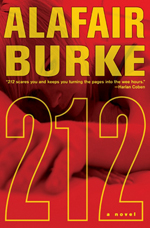
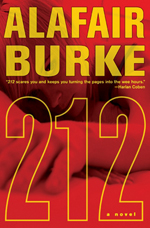
One of the very best things about being a member of a blog like this is that we occasionally get to interview really cool people… and sometimes we get lucky and get to interview other members of the blog. I was particularly thrilled when Alafair Burke joined us here at Murderati, as I’d been a fan of her work and had heard great things about her, but it was a special kick to get to interview her on the occasion of her newest book which is about to appear in the bookstores, titled 212.

First, if you haven’t really met Alafair, you should know that (and this is directly from her website) she is a former deputy district attorney, and now teaches criminal law at Hofstra Law School. She’s got a fascinating background in law as well as literature, and if you haven’t checked out her website, you’re missing a treat.

The other really really cool thing about being a member of this blog is that I occasionally get to read my fellow blogmates’ books ahead of their drop dates. And yes, I am going to be all gleeful and smug about it, because, dayem, they are fine writers and I’m immensely lucky just to be a part of this group. I couldn’t wait to get my paws on Alafair’s latest, and I have to tell you, it showed up in the midst of great personal upheaval (my father-in-law was in hospice at that time, and we knew the end was near), and I feared my concentration would be nil…  and instead, I was utterly captivated. (Check out the video… and the excerpt for 212.) 

This story is not just ripped from the headlines, but it digs deep into those headlines and exposes the kind of ramifications few in-depth exposé’s could even hope to reveal. In an age when newspapers are glib about how politicians hire expensive call girls and in a day when those very same call girls can later become on air personalities, we’ve become accustomed to reporters just barely skimming over the reality of how deadly and compromising that particular crime actually is. In 212, Alafair explores the ramifications of two intersecting crimes–politicians hiring escort services and online stalking–and shows not only the harrowing results, but the determination of good people who are trying to find the truth, trying to make a difference. Her detective, Ellie Hatcher, is a stand-out, memorable woman you’re going to want to know as she battles her way through lies and deceit to try to stop a killer from striking again, even in the midst of personal risk to her own career to do so.

I couldn’t put the book down. 

Alafair’s got a lot of information up on her site, but I got the chance last week to ask her a few more questions:

1) You write New York as someone comfortable and familiar with the city, like it’s a second skin. I know you’ve lived elsewhere growing up, so tell me about your impressions of New York when you first visited or moved there… and how those first impressions changed (or were validated) after you’d been there for a while.

I first visited New York during the Son of Sam year of 1977.  My father’s friends told of us tales of carrying mugger money around – small bills in a fake wallet to hand to the muggers instead of the real stuff.  Then as an adult, I came here as a tourist, staying most in midtown, seeing broadway shows and museums, and dining at restaurants I saw on Sex and the City.  Now that I live here, I rarely go to those kinds of places and am annoyed when I do.  The places I cherish are little neighborhood spots that would have surely underwhelmed me as a tourist looking to take in the “Big Apple.” 

2) Was there a defining moment when you felt more native New Yorker than not? What was that moment and how did it affect your perception of yourself? Your vocation?

The defining moment was more like a two-stage process.  I remember standing in the TKTS line (discount theater tickets) at Times Square when I first moved to the city.  I looked up at the lights and signs and thought, “Wow, I really live here.  I’m even insider enough to buy discounted tickets.”  Within a year, I dreaded the thought of walking through Times Square with all of those skyline-gazing tourists blocking the sidewalk.  There’s a superficial roughness to New Yorkers that I understand now, but once you scratch beneath it, the people in this city are about as goodhearted as people can be. 

3) You’ve chosen two professions which aren’t exactly known to be easy on a person’s schedule, often costing hundreds of hours of late night work to stay caught up. What enticed you about becoming an attorney? Similarly, what enticed you about becoming a writer? How are the two similar? Different? If there was one way you could prep better for each vocation, what would that be?

When I went to law school, I didn’t know whether I wanted to be a high-priced entertainment lawyer putting together deals at the Ivy or a civil rights lawyer working for the Southern Poverty Law Center.  Given my lifetime fascination with crime, it shouldn’t have come as a surprise that I had a real passion for criminal law.  I worked as a prosecutor for five years and was motivated to write by the stories I saw unfold there.  I thought I’d seen a side to the criminal justice system that wasn’t frequently portrayed in crime fiction.  They both require an ability to tell a story and incredible discipline, but writing requires a different kind of creativity that find liberating and sometimes incredibly frustrating.

4) In several of your posts and elsewhere, you’ve shown a sly, wry sense of humor that we all enjoy. What’s the zaniest thing (legal) that you’ve done that you can admit to us?

Oh lord.  I’m ashamed to admit that my craziest act was completely accidental. I went to a different branch from my usual gym.  This was back before I could afford a gym that gave you human-sized towels.  All they had were these little hand-sized things.  I was wondering around the locker room searching for the shower stalls, walked through a door, and wound up in the free-weight room. Warning: some locker rooms have multiple exits.

5) What is something that people who meet you for the first time are most surprised to learn about you?

I have really low-brow taste.  I like bad movies, pop music, and hot dog carts. I’m also very handy.


6) In your new novel, 212, coming out March 23rd, NYPD Detective Ellie Hatcher is drawn into a case that you’ve described in your acknowledgements as inspired by recent headlines: politicians, escort services, innocent by-standers, cover-ups and downfalls. You’ve created a vivid, layered world where nothing is obvious and you keep us riveted all the way through as Ellie has to peel away layer after layer to try to find the truth before it’s too late. Tell us a little bit about Ellie, 212, and your process–how you chose this particular type of headline and why you wanted to investigate the ramifications.

Ellie Hatcher is an NYPD homicide detective who, like me, finds herself working in the same field as her father and tries to avoid the inevitable comparisons.  Also like me, she grew up in Wichita, Kansas when a serial killer was active, stalking, torturing, and murdering children and women.  Unlike me, Ellie’s father was a cop who spent his life hunting that killer until he was found shot in his own car. Labeled a suicide, her father’s death has never been resolved for Ellie.

The cases in 212 were inspired by a few real-life stories.  For years I’ve been pulling at threads of stories inspired by Neil Goldschmidt, a former governor of Oregon who admitted in 2004 that he had what he termed an “affair” in the 1970s with his then-14-year-old babysitter.  Many people in Portland were accused of knowing about the abuse and assisting the cover-up, including a man who subsequently became the Multnomah County Sheriff.  I’d been reluctant to write about the case immediately.  Portland’s a small place.  I worked with Goldschmidt’s stepdaughter at the DA’s Office.  I worked closely with a law enforcement officer who was implicated in the cover-up.  But the story of a man who’d done so much good in public life rationalizing a so-called “affair” with a child — and my imagined story of the woman that child came to be as she grew up in the shadow of his political ascension — kept pulling at me.  More than five years after the scandal, my hope was to pursue a fictional story inspired by the real one.  Using the role of the internet in the modern sex industry, I found a fresh angle.

7) On the lighter side for a moment, what’s your most unusual hobby?

Maybe this goes along with my lowbrow taste, but I really like karaoke.  And not in a hip, ironic way, but in an earnest American-Idol loving, Glee-watching, sing-your-heart-out way.  I think every book conference needs a karaoke session. Wouldn’t that be great?  At Bouchercon, the playlist could be made up entirely of crime-related songs.

8) And… finally, if you only could choose five words to describe yourself for posterity, what would they be?

Loved.  Was loved.  Appreciated both.

Alafair is hosting a really cool offer for a mystery gift for everyone who pre-orders 212 before it hits all of the bookstores on Tuesday, March 23rd — which means, you only have a couple of days left to take advantage of this terrific opportunity!

Meanwhile, tell me what ripped-from-the-headlines story you’d love to explore a bit more about? Is there a story you felt the press should have investigated more thoroughly? In this age of giving starlets 24/7 coverage if they hiccup, do you feel like we’re glamorizing everything that should be news? Or do you feel we’re getting into the gritty depths like we should?


You Wanna What???

by JT

Brett and Louise have both done posts about going home recently. You can’t every really go home… maybe you actually can. All hail the conquering hero, right? The prodigal son. The prodigal daughter.

The prodigal… writer??? Who could have ever imagined that?

Recapturing our youth is an impossibility; finding a path back through the jumble of memories, to the sweet, steady heartbeat of love and friendship we received, the good times, the bad times, all get tempered with age. We forget the details and the edges blur. Five years go by and your core group of friends fall off, ten years and you’re only talking to a few, fifteen, twenty…

Thank God for Facebook, right? The opportunity to reconnect with all your old friends (and enemies, and exes, and teachers) and dredge up all those old horrid memories and resurrect the sweet ones, both of which get amplified into nearly mythical proportions.

I’ve taken care this tour to match up with old friends. I had lunch with a friend from elementary school who’s now a major voiceover actor in Los Angeles. In Denver, I had dinner with one of my best friends from high school and my best friend from elementary school, and my first boyfriend (yes, we were in kindergarten. What about it?) In D.C., I’m staying with the other best friend from high school. The memories are flowing fast and furious, and I’m opening myself up to a whole world I’d put out out of my mind.

Moving away from home changes a woman. My parents moved me around just a bit. We had several homes in Colorado, but the Great Schism happened when they moved me from Colorado to D.C. when I was fourteen. I moved from the land of forests and 4H clubs to the denizens of society, began rubbing shoulders with the sons and daughters of the elite class in D.C., the politicians kids. It wasn’t an easy transition (and probably why you can drop me into most any cocktail party across the board and I’ll happily makes friends with the closest smile.)

I went to high school in D.C. After a disastrous first year in a small Florida college, I transferred to Randolph-Macon Woman’s College in Lynchburg, Virginia. I wanted to go on in the political arena, and decided against Harvard so I could live at home for free and attend GW. Met the hubby that first night of classes, and he turned my world upside down when we eventually moved to Nashville.

I haven’t been back to D.C. for twelve years. And here I am, doing signings, riding around in cars with boys, signing stock in bookstores, drinking in pool halls, allowing the memories to creep back in. I’d forgotten how much I love this place. When we moved to Tennessee, I wasn’t happy, but I tried to hide that because I knew my husband was. And then I fell for it: the beauty, the dichotomies, the very differentness of it. Eventually, I was totally in love with Nashville, and I began to view D.C. with the same sort of horrified reverence as I do most things in my past – a world that happened to another person.

Kind of hard to separate past from present when you’re looking through your yearbook and laughing yourself into tears at the pictures, the memories, the genuine happiness. You know?

As you can imagine, I am much relieved.

My senior year annual was called YOU WANNA WHAT? I helped design the cover, a compilation of question marks and exclamation points. (This is not a surprise to those who know me, I am a fool for a well-placed exclamation point…) This is what the title means:

YOU WANNA WHAT?!

You can do ANYTHING you set your mind to. If it means going to the moon or getting an A on your English exam. The choice is yours; your interests and dreams grow during your time here and you leave with an idea of where you are going. Look around you and enjoy yourself. Do it all; varsity letter, straight A’s, anything you want. Now is the time, before you grow up. Don’t let anyone discourage you, if when you tell them your goals, they ask in an astonished and impressed tone; YOU WANNA WHAT?

I wonder, if that hadn’t been the theme of my life during those formative years, if I would have done some of the things I have? No one ever said no, you can’t. They only said yes, you can. Yes, you will. Yes, I believe.

Full circle. It’s a strange, strange feeling.

Okay, Murderati – what were you in high school? Happy? Sad? Most likely to succeed? Most likely to think cheerleaders were brainless twits and dye your hair, or date and marry them? Insider? Outsider? Sidewinder? Druggie, freak, band geek, theater geek, radio club, debate, athlete, Honor Society??? Share. (I wasn’t anything. I was a track geek, I guess, an athlete first and foremost, but I floated like a firefly between all the groups, with a friend or two in each clique.)

Because apparently, you can go home again.

Wine of the Week: Lemon Drops and Red Headed Sluts. Don’t ask….

AAAAARRRRGGGGHHHH!!!!!!!

by Rob

Okay.

I feel a little better now.

As I write this it’s yesterday.  The title is an expression of my complete and utter frustration.  My uncontrolled fury.

At what?

Technology.

Normally, I’m a pretty easy going guy.  And I’ve been a power user on computers for a couple decades now. There is very little in the world of technology that gets me frustrated.

But today (yesterday for the rest of you) I had a very simple technological task to take care of and everything that could possibly go wrong went wrong.  Of course.

Let me explain.

About a week ago, I received my first pass proofs of my fourth book, DOWN AMONG THE DEAD MEN (ready for pre-order on Amazon and B & N!!!).  In general, I hate going over galleys.  By the time I get them I’ve been through a US rewrite and copy edit, as well as a UK rewrite and copy edit.  Which means I’ve already read the book in question about eleventy billion times.

After you’ve read a book that many times, the words tend to look like mud before your eyes and that’s probably not a great thing to be seeing when the galleys arrive.

Anyway, I was given a “return by” date and once I had some other chores taken care of, I sat down and started in on the galley corrections.  As usual, however, I pushed it up to the deadline because, like I said — eleventy billion times.

My plan was to mark up the pages that had typos, then scan them all, export them into a pdf file and email them to my editor.

Nice plan.

Haha.

Three hours before my deadline, I finished the corrections.  Time to scan.  But for some reason the scanner wouldn’t work with the computer I normally use with it.  I didn’t have time to deal with fixing it, so I took the scanner to another computer.

It wouldn’t work with that one either.

Okay.  I checked the scanner and it looks fine.  Just having driver issues, apparently.

So I hook it up to my Mac, thinking, Apple makes everything easy, right?

Wrong.

My Mac saw the scanner as a printer only.  I couldn’t scan anything if my life depended on it.  And since a couple hours have passed by now, my life probably does.

Okay.  One last try.  I hook it up to a Windows 7 machine.  Success!  I scan all the pages into a single file and save it as a pdf.

One problem.  The pdf is 18 megabytes in size.  Too big to email.

Shit.

So now I have to download a special program to reduce the file size.  This takes forever, but when I finally do the reduction, the pdf looks like crap.

Sigh.

Ten minutes before deadline.

I spend the next THREE HOURS trying to get that pdf down to a size I can actually email.  I won’t go over all the hoops I had to jump through, but let’s just say it was a colossal bitch of a project.

In the past, it has taken me about twenty minutes to do this.  And I honestly don’t know why it was so diffcult this time.

Needless to say, by the end of this whole process, I was literally SCREAMING AT MY COMPUTERS.  All of them.

If I had had a sledge hammer at that moment, I would have smashed every single one of them AND half of my house.

It’s been a long time since I’ve gotten that angry and frustrated and, honestly, the only way to vent was to scream bloody murder.  I’m sure all the neighbors heard me.

I know my family did.

But I really needed those screams.  They were the only thing that kept me from imploding.

So now I sit here, my file has been sent, all is well — except that I’m completely drained and rather than do a decent blog post today I’m merely venting my frustration.

And I ask all of you — how often do you find yourself angry or frustrated enough to scream.  Or, if not a scream, what do you do to vent?

Mad man out.