Author Archives: Murderati


A Circle of Friends


By Louise Ure


There’s a tiny town that juts out into Wallis Lake, near Forster in New South Wales, Australia. My friends Dottie and Derrick moved there about five years ago after too many years in Sydney.

Derrick is an ex-British Navy man, with a squint to his eyes from all those years looking over the water. He catches his own crabs and insists upon cooking them in lake water because that is the salinity they knew. Dottie is a loud, lovely and generous woman, quick to make friends and to give you the clothes she’s wearing if you dare compliment her on them. They live in the very last house on the main road through town before you get to the beach, and are as at home there as if it were their birthplace.

This truly is a tiny town; only 300 residents and some of those are guests from the Big Smoke who come up to rent a holiday house for the summer. There’s a pizza restaurant and a small convenience store, but not much more. Not even a pub, and that’s practically a crime in Australia.

The first man showed up about 4:30 in the afternoon, a small ice chest under one arm and a folding chair cradled under the other. He nodded at me on the balcony and proceeded to the beach.

Two more arrived a few minutes later, also with folding chairs.

Then began a slow, quiet parade of townsfolk – twenty, thirty or more – in their stubbies (shorts), singlets (wife-beaters) and thongs (flip flops). Young men with calloused hands, middle aged women with henna-dyed hair, old men rolling toothpicks between their lips.

“Pub’s open,” Dottie said. We took our own wine and glasses and folding chairs and headed across to the beach.

I expected to see little enclaves of drinkers – four men at a picnic table playing cards, or two housewives catching up with a drink before making dinner – but no. Instead of the little chats I had expected, they had set up one big circle with their chairs. And as we approached, the circle got bigger. Jokes were shouted across to the other side, introductions were pantomimed to a person sitting six chairs away, quiet, grayer conversations were held between two people sitting together.

As each new arrival showed up, the circle loosened a bit more and stretched to include them.

The drinks were not shared, but stories were. Stories of how the day had gone, who had been taken ill, whose mother would be visiting next week, who had caught a mud crab in their trap.

It didn’t matter who I was, they welcomed me.

And it felt like becoming part of the mystery writing community all over again.

Crime fiction writers from all over the globe shifted their chairs and opened the circle to let me in six years ago. It didn’t matter who I was, I was part of the tribe now – part of The Pub at Wallis Lake – and I was made welcome. We could have a drink together and talk about how the day had gone, who was having trouble with a plot, whose editor would be visiting next week, who had sold their book series to a cable channel.

Jokes could be shouted across barrooms, we could read each other’s body language during a panel discussion, and quiet, grayer conversation could be held between two friends who were going through the same trials.

I was gently cradled by the fine folks at Wallis Lake last month. But I have been nurtured by this crime fiction community for a much longer time than that.

And I just wanted to say thank you.


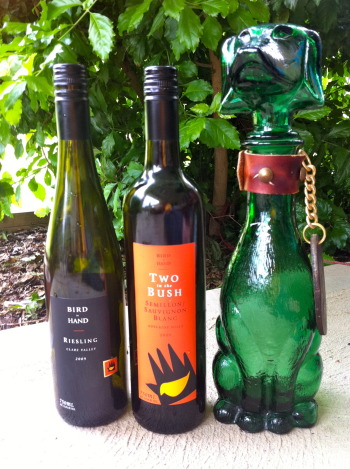
P.S. In a nod to JT, here are a couple of my favorite Australian wines: Bird in the Hand and Two in the Bush. God, I’m such a sucker for puns and cleverness.


The Fascinating, Edgar-Nominated Bruce DeSilva

by Toni McGee Causey

Every once-in-a-while, you open a book and the first sentence intrigues, the second sentences lures you in and by the third, you’re captured, kidnapped by a story so well-told by a voice that resonates with the authority to tell that story, that you know you’re about to lose many hours of sleep, because you’re not going to want to put this one down. Such is the case with Edgar-Nominated Bruce DeSilva‘s debut novel, ROGUE ISLAND.
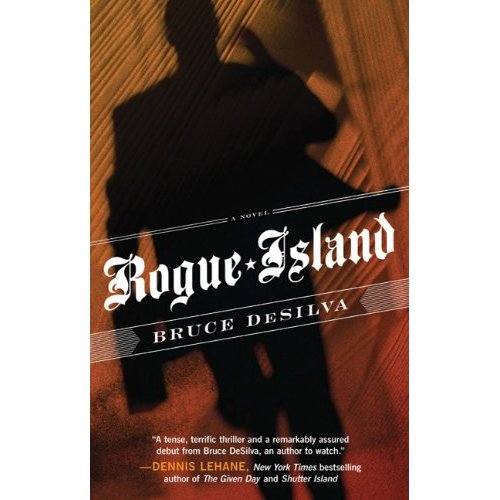
I had the incredible good fortune recently to interview Bruce, thanks to mutual fabulous friend and fellow ‘Rati, our own Alafair. His history in investigative journalism fascinated me, and I hope you enjoy the interview as much as I did. First, though, here’s a quick bio:

Bruce DeSilva worked as a journalist for 40 years before retiring to write crime novels full time. At the Associated Press, he served as the writing coach, training the wire service’s reporters and editors worldwide. Earlier he worked as an investigative reporter and an editor at The Hartford Courant and The Providence Journal. Stories edited by DeSilva have won virtually every major journalism prize including the Polk Award (twice) and the Livingston (twice). He also edited two Pulitzer finalists and helped edit a Pulitzer winner. His book reviews have appeared in The New York Times book section and continue to be published by The Associated Press. He lives in New Jersey with his wife Patricia Smith, an award-winning poet.

Toni McGee Causey (TMC): You’re drawn to crime fiction, and with the glowing starred reviews from nearly every corner of the earth, including a nomination for an Edgar for best First Novel, you clearly have a knack for it. Tell us about your background.

Bruce DeSilva (BD): I grew up in the tiny mill town of Dighton, Mass., where the mill closed when I was ten. I had an austere childhood bereft of iPods, X-Boxes, and all the other cool stuff that hadn’t been invented yet. In this parochial little town, metaphors and alliteration were also in short supply. I spent my days catching frogs, chasing girls, chasing girls with frogs, rooting for the Red Sox, and playing baseball and hockey. When I left town to study geology in college, my favorite high school teacher told my parents that I would eventually find myself writing from compulsion. He was prescient. I soon abandoned science for writing. My first job after college was covering the little town of Warren, R.I., for the venerable Providence Journal. Over the next 20 years I wrote thousands of newspaper stories, many of them investigative articles or long piece of narrative journalism, for the Journal and The Hartford Courant. Then I spent another 20 years editing such stories for the Courant and The Associated Press, training my fellow journalists, and writing occasional feature articles and book reviews on the side. But in the summer of 2009, after 40 years in journalism, I was ready for something new. It was time for a second act.

TMC: As a reporter, you tried to ferret out corruption. Did you ever feel threatened? What’s the worst of the repercussions that you faced when breaking a big story? What story gave you the most satisfaction?

BD: When I first arrived as a cub reporter in Rhode Island, a New England-wide war between organized crime factions was underway. That was my introduction to journalism. Over the years, I wrote about the Mafia, horrific conditions in state institutions for the mentally ill and the retarded, government corruption including the looting of Medicaid and low-income housing programs, and massive voter fraud. Over the years, an even 100 people (I once added it up) were indicted or fired as a result of my investigative reporting. I was sometimes threatened with libel suits; and now and then I was confronted physically, once cornered in a parking lot by a corrupt union boss and a couple of his thugs. But I find talking about threats against me both ridiculous and embarrassing. Over the years, a dozen of my colleagues were severely injured or killed on the job. One friend survived being shot in the head covering a civil war in Africa; and a few years ago, a close friend was waterboarded for trying to photograph the genocide in Darfur. I never put myself in that kind of peril. The stories that gave me the most satisfaction weren’t the ones I wrote and reported myself, but rather some of the stories I supervised and edited at The Associated Press. One of my favorites, an investigation that exposed the exploitation of child gold miners in West Africa, was a finalist for the Pulitzer Prize.

TMC: How did journalism lead you to writing crime fiction?

BD: Back in 1994, when I was working for a Connecticut newspaper, I received a note from a reader praising “a nice little story” I’d written. “It could serve as the outline for a novel,” the note said. “Have you considered this?” I would have tossed the note in the trash except for one thing. It was from Evan Hunter, who wrote literary novels under his own name and the brilliant 87th Precinct police procedurals under the penname Ed McBain. I sealed the note in plastic, taped it to my home computer, and started writing.

At the time, I lived 15 minutes from work, so I got up early every morning and wrote for two hours before going in. I was a mere 20,000 words into the novel when my life turned upside down. I took a very demanding new job; my new commute was 90 minute each way; I got divorced and then remarried to a woman with a young child. In this busy new life, I had no time to finish a novel. Years streaked by. Each time I bought a new computer, I taped that note from Hunter to it, hoping I would get back to the book someday.

Meanwhile, I was reviewing novels on the side for The Associated Press and The New York Times book review section. That gave me entre to the Manhattan’s literary circle. A couple of years ago, I found myself dining with Otto Penzler, the dean of American’s crime fiction editors, and happened to mention that long-ago note from Hunter.

“Evan Hunter was a good friend of mine,” Penzler said. “In all the years I knew him, he never had a good thing to say about anything anyone else wrote. He REALLY sent you that note?”

“He really did,” I said. “I still have it.”

“Well then you’ve got to finish that novel,” Otto said, “and when you do, you have to let me read it.”

So I went home and started writing again. I wrote at night after work and all day every Saturday; and six months later, the book was finished.

[Toni’s note: Hunter knew what he was talking about here. Smart man. And, clearly, Bruce knew a thing or two about getting a book into shape…]

TMC:  As a journalist, you edited many award-winning stories, including two Pulitzer finalists and a Pulitzer winner.  You’ve obviously applied those same skills to your fiction.  When you look at books that could’ve been a contender, so to speak, what do they lack? What are the flaws or mistakes that that keep a book from breaking out?

BD: It’s become fashionable to say that the most important thing in a novel is the characters, and of course they matter. If I start reading a book and don’t care deeply about the people in it after a few chapters, I toss it aside and find something else to read. But, hey, everything matters—the plot, the quality of the prose, and don’t forget the setting. As one of my crime-writer friends, Thomas H. Cook, once said, “If you want to understand the importance of place in a novel, just imagine Heart of Darkness without the river.” For a book to be good, all of these elements must be handled well and fit together seamlessly.

But that doesn’t answer the question. The quality of a book doesn’t seem to have much to do with how it does in the marketplace.  Crime novels that become best sellers include wonderful work by writers like Dennis Lehane and Laura Lippman, as well as complete trash. Some brilliant crime novelists, including Cook and Daniel Woodrell, have only small cult followings, and some fine stuff never gets published at all.

When I ask publishers why some books sell and others don’t, they all say the same thing:  If you could give us the answer, we could all get rich.

TMC: What is “Rogue Island” about?

BD: On the surface, it’s about an investigative reporter on the trail of a serial arsonist.  But it is really about two other things.

First of all, it is very much a novel of place— an evocation of 21st-century life in the smallest state in the union.  One of the many quirks of Rhode Island history is that no one can say for sure where the state’s name came from. One theory is that “Rhode Island” is a bastardization of “Rogue Island,” an epithet the God-fearing farmers of colonial Massachusetts bestowed upon the swarm of heretics, pirates, and cutthroats who first settled the shores of Narragansett Bay. The state has a history of corruption that goes all the way back to a colonial governor dining with Captain Kidd, but it also has a history of integrity and decency that goes all the way back to its godly founder, Roger Williams. Those two threads are woven throughout the state’s history and are still present today. The tension between them is one of the things that make it such an interesting place. But that’s not all. Most crime novels are set in big, anonymous cities. There are also some very good ones set in rural areas. But Providence is something different. It’s a claustrophobic little city where everybody on the street knows your name and where it’s very hard to keep a secret. But it’s still big enough to be both cosmopolitan and rife with urban problems. I strove to make the city and the state not just the setting for the book but something more akin to a main character. I never considered setting my story anywhere else. One reviewer called my portrayal of the place “jaundiced but affectionate,” and I think that’s exactly right.

Secondly, the novel is also a lyrical tribute to the dying newspaper business. The main character, a reporter named Mulligan, is never sure how long he’ll have a job; and he’s always in despair about the demise of the business he loves. This gives the book an additional layer of tension. And as the reader watches the character diligently pursue a serial arsonist, it becomes clear just how much is being lost as newspapers fade into history.

TMC:  Given the slow strangulation of newspapers nationally, what do you think of the state of journalism today? What do you think the future of journalism in America is?

BD: Newspapers see themselves as victims of the digital age, but they are so full of shit. The internet isn’t killing newspapers; they are committing suicide. In the sequel to “Rogue Island,” tentatively titled “Cliff Walk,” the main character explains it this way:

 “When the Internet first got rolling, newspapers were the experts on reporting the news and selling classified advertising. They were ideally positioned to dominate the new medium. Instead, they sat around with their thumbs up their asses while upstarts like Google, the Drudge Report, and ESPN.com lured away their audience and newcomers like Craigslist, eBay, and AutoTrader.com stole their advertising business. By the time newspapers finally figured out what was going on and tried to make a go of it online, it was too late. This all happened because newspapers didn’t understand what business they were in. They thought they were in the newspaper business, but they were really in the news and advertising business. It’s a classic mistake—the same one the railroads made in the 1950s when the interstate highway system was being built. If Penn Central had understood it was in the freight business instead of the railroad business, it would be the biggest trucking company in the country today.” [Toni’s note: brilliant comparison, and so apt.]

Newspapers are circling the drain now. Within the next decade, most of them will be gone. I cannot overstate what a terrible thing this is for the American democracy, because there is nothing on the horizon to replace them.  The old broadcast TV networks, undercut by competition from cable, have cut way back on their reporting staffs—and they were never all that good to begin with. Cable TV news has deteriorated into warring propaganda machines. And online news organizations do little original reporting, drawing most of their news from disappearing newspapers.

Reporting is expensive. Investigative reporting is even more expensive. And so far, no one outside of fast-disappearing newspapers has demonstrated willingness or the resources to pay for it.

TMC: Tell us a little about your writing process.

BD: Some writers outline obsessively. Others, like Elmore Leonard, never touch the stuff. There’s no right or wrong way to do it. You do what works for you. Me? I’m with Leonard. I begin with a general idea of what the book will be about. For example, I began “Cliff Walk” (the novel I just finished) with the notion of juxtaposing the two extremes of Rhode Island society – the Newport mansions and the legal (until recently) prostitution business in the state. I just threw those two worlds together, set my characters in motion, and waited to see what would happen.  A lot did.  I find that when I write myself into a story, I am continually surprised by where it takes me. I think that’s a good thing. If figure that if I don’t know what’s going to happen next, my readers won’t either.

TMC: What are you working on now?

BD: “Cliff Walk,” the sequel to “Rogue Island,” will be published about a year from now, and I’ve made a small start on the third book in the series.  When that’s done, my poet wife and I are going to write a crime novel together. It will be set in her native Chicago during the 1968 riots and will have alternating narrators—a white Chicago cop and a black hairdresser from the city’s west side.

TMC: How do you deal with writer’s block?

BD: I was a journalist for 40 years. Journalists write every day whether they are in the mood or not. They aren’t allowed to have writer’s block. They think writer’s block is for sissies. [Toni’s note: I’m grinning, since I’ve said this myself. But we may need to duck behind a wall to avoid the rocks heading our way.]

TMC: What do you do for fun? What are your hobbies? Where would you love to travel?

BD: I root for the Patriots, Celtics, and Red Sox. (I’m heading to spring training in Fort Myers next month.) I love playing with my dog, an enormous Bernese Mountain Dog named Brady. My wife and I collect daguerreotypes and other forms of early American photography. And I’m eager to visit Italy and make a return visit to Paris.

~*~

Toldja you all would enjoy Bruce. Here’s the back cover copy from ROUGE ISLAND:

Liam Mulligan, an investigative reporter at a dying newspaper, is as old school as a newspaper man gets. His beat is Providence, Rhode Island, and he knows every street and alley. He knows the priests and prostitutes, the cops and street thugs. He knows the mobsters and politicians—who are pretty much one and the same. Now, someone is systematically burning down the working-class Providence neighborhood where Mulligan grew up, and people he knows and loves are perishing in the flames. With the police looking for answers in all the wrong places, it’s up to Mulligan to find the hand that strikes the match.


You can find Bruce at his blog, as well as on Facebook.


Now, I’m curious about what you all are thinking this fine Sunday about newspapers, the state of investigative journalism, and stories that have touched home or shocked you into seeing your own corner of the world differently. Are newspapers still needed? Relevant? Is the 24/7 news cycle helping… or hurting… investigative journalism? And for added fun, all commenters will be eligible to be entered in a contest for a $25 gift cerftificate to a bookstore of their choice. (Remember–some of our favorite indies will ship!) Winner will be picked and named in next Sunday’s column, so be sure to check back on Allison’s Sunday to see who won!)

 

Logos, Ethos, Pathos

by JT Ellison

“I was brought up in the great tradition of the late nineteenth century: that a writer never complains, never explains and never disdains.”

– James Michener

Well. That says a lot.

I’ve been doing some heavy duty thinking lately. Brainstorming on a new book mostly, but also about some of my goals for the year. I maintain a personal blog on my website, and one of my goals for this year was to create a world that was predicated on what I enjoy reading from other personal blogs – snippets of the author’s life.

There’s just one big issue with that for me. I’m not good at sharing.

Quit guffawing… it’s true. You’re different. You’ve been kindly allowing me to grapple with issues, weighty and otherwise, in this slot for five years now. I feel like we know one another, even if it’s just a little.

For the rest of it – I try, very hard, to measure out my words and thoughts with care, making sure that only the things I want out in the world are out in the world. I am the Queen of the regretful tweet – I can’t tell you how many times I’ve gone back and deleted one after it was sent, cringing for some reason or another. I can’t seem to just toss a little ‘this is what happened to me today’ blog together, either. Oh yes, sharing news is easy, but sharing me? Not so much.

I think it’s more than a natural reticence to be open with relative strangers. I’m barely open with the people who know me.

I think it all comes down to the fact that while we’re all circling the sausage factory, none of us truly want to go inside and see how it’s made.

Because making a book is a very, very messy business.

There’s the title search. The plot development. The character names. And then, the actual writing. The hair-pulling, the cowardice, the grand plans, the failures. The calloused fingers and cramped wrists and lost nights. The attempts to settle your overactive mind with a glass (or two) of wine and prayers to an unknown deity that it will turn off, just for a bit, so you can be normal. See this for some stark reality into what goes on in our brains.

Writing a book is so much more than writing a book.

And nowadays, being a writer doesn’t mean the same thing it did 5, 10, 15 years ago. Being a “writer” now means you’re responsible for creating an amazing product, bleeding onto the page, meeting that deadline and wowing your team, editing and revising and copyediting and galleying, THEN going on the road, tweeting, facebooking, blogging, bookclubbing, skyping, conferencing, and sharing the intimate details of the process with everyone and their brother, all while coming up with and writing yet another masterpiece.

Yikes!

Here’s one of the problems.

Writing is a solitary endeavor. It’s meant to be. I don’t know how many writers could be collaborators as well; I know for a fact that it’s not up my alley. I like to live in my own head. I like to observe. But I also really enjoy talking to my writer friends. I love talking to fans. Sometimes, a little note on Facebook is all we need to turn a bad writing day into a good one. Our virtual water cooler is our office.

Here’s the other thing. Writers are interested in writing. We read books about it. We’re interested in others “process.” We’re fascinated by the agony everyone else seems to go through, and identify because it’s our agony as well. 

We talk at length about our daily word counts. We openly discuss our blocks, our peccadilloes, our nightmares. Our impetus. Our concerns. We gossip and teach and discuss at length. We extrapolate our worlds into the minds of others, daily, hourly, as the thoughts occur to us.

Even our editors and agents are forced into this overshare. My agent doesn’t tweet or blog, but my editor does. They too are expected to open the doors on their process. And I have to admit, it’s disconcerting to know that not only are our fans and friends watching our every move, our bosses are as well. There isn’t a corner of our creative lives that is private anymore. 

Does this transparency help us, or hurt us?

Are we devaluing our art through constant discussion of HOW it’s created, rather than enjoying the end product alone? Because every word that’s written discussing writing is another word that isn’t part of a creation. And creation, to be honest, is the writer’s paramount responsibility.

Do you see James Patterson tweeting? Hardly. But he can put out 17 new books in a year, because he’s focused on creating. Same with some of the other big dogs I admire – the Stephen Kings and Nora Roberts of the world. I look at them in awe and wonder. HOW do they write so much? HOW are all their ideas so clever and original? WHAT IS THEIR PROCESS LIKE?

See, I’m guilty of my own argument – I’m just as curious as the next person. This unknown veil we’ve lifted is quite entertaining, and enlightening. I’ve learned a great deal by following the right people on Facebook and Twitter. I’ve made great friends. And lost a few along the way, when they didn’t agree with me, or vice versa.

But what, exactly, is the point? Are we to be writers, or networkers? I think the time has come to choose.

I read something last week that started me down this primrose path – about the designer, former ballerina Jamie Wolf, who created Natalie Portman’s engagement ring. It was an interesting article, but one line at the end leapt out and smacked me in the face. She said: 

 “To quote one of my favorite ballet teachers, ‘No one wants to see how hard you are working.’”

I read that, and it shook me.

Because it’s true.

Think about the ballerina. She bleeds for her art, in the most literal of senses. Have you ever seen a dancer’s feet? They’re painful to look at. Torn and shredded, bruised and deformed. But will she ever show you the steps that it took to get those feet? The hours and hours of blood, sweat and tears? That the deformities are a point of pride? That if her feet aren’t mangled, it shows she hasn’t been working hard enough? Remember the old quote, never let them see you sweat? Ballet epitomizes that saying for me. Dancers work incredibly hard so that when you experience their art, it looks effortless.

So do writers.

But for a writer …I can’t help but wonder…. Am I littering the world with sausage casings? Do my thoughts on “things” matter? Is that what I’ve been doing for the past five years? Is that what social networking boils down to? Letting the world see how hard you work?

That concept sucked the sharing right out of me.

Maybe it’s what I needed to hear at the moment I needed to hear it. The pressure of continuing a constant chatter of information has started to take its toll on me. I really like my bi-monthly blog here. I don’t know that I need more than that. I want to go back to the days, just a few years past, when the interaction with readers and friends would be through thoughtful essays rather than thoughtless quips. Even as much as I enjoy Twitter….

I seem to have drifted a bit off course here. Apologies. It seemed important to make clear that I love my interactions here, that we all do. I’ve always loved it.

But I think the truth of the matter is this. I’ve started to wonder if readers truly want to see how hard we’re working. Part of creating a product that people adore is the mystique that surrounds it. Do you want to see the desk littered with empty whiskey glasses and spilled bottles of mood stabilizers? Or do you want the fantasy, the aura of the successful writer—the quiet, hardworking wordsmith who’s bringing down the house with an amazingly well crafted story?

Look again at the Michener quote.

“I was brought up in the great tradition of the late nineteenth century: that a writer never complains, never explains and never disdains.”

I want to be that writer. I want my work to eclipse me. I want my work to be the only thing that matters.

My question for you today – do you think writers should go back to Michener’s era and shut up? Or do you want to see how the sausage is made?

And writers – do you think having to lay bare your soul on a personal level as well as bleed onto the page for your art is worth it?

In the spirit of sharing, a signed copy of SO CLOSE THE HAND OF DEATH will go to one commenter. And don’t forget we have a new CAPTCHA system to alleviate the “Buy my watch now!” spam we’ve been getting, so double check that your comment has posted. We hope this is temporary.

Wine of the Week: Cline Ancient Vine Carignane – so delicious it almost made me cry. You have to try this. Let it open for at least fifteen minutes though.

Dedicated

To the Murderati community
Pre-published, published, no plans to ever publish
Under the skin, we’re readers all 

As you may know from the many times I’ve said this here, when I was a young man, I wanted to be a rock star. I could write songs, play the guitar and sing.  I had long hair.  I even perfected my autograph.  I was ready to go. But the world wasn’t ready for Rockstar Rob and eventually those arena stage dreams gave way to reality. 

A wife, a child, another child, a house, dogs & cats.  A different type of dream. 

But all along, in the background of everything called life, I was preparing myself for one of my biggest-come-trues:  writer. 

Being read to (OK technically I wasn’t in control of that).  Reading. Writing. Writing. And then Writing More. From songs to a 7th grade short story writing assignment.  From the tentative beginnings of more than one novel to teleplays (including a Movie of the Week!), to screenplays, and to completed novel. 

When that novel got me an agent, I was thrilled.  When that agent got me a book deal, I was on a high like no other.  Editing, copy editing, galleys, ARCs.  I had no idea what to expect–everything was exciting, shiny and new.  During the copy edit phase, there were two pages inserted into the manuscript.  One for the acknowledgements, the other for the dedication. And while I knew that just about every book is dedicated, I honestly hadn’t thought about to whom mine would be. 

The first person who came to mind was my father because he was my biggest supporter, and died when I was twenty, before ever seeing any hint of success, career- or family-wise.  But my mother had also been a big supporter and often financially backed my dreams.  But if I included my parents, how could I exclude my sister? 

And if I included my initial nuclear family, how could I ignore my current one?  My kids–young adults with very busy lives–could not have cared less.  But this was something my wife made clear was important to her, and Leila is always right (this is why we’ve been together for 35 years, folks) so the dedication of Kiss Her Goodbye reads:

For my father, mother, and sister,
who always supported the dream

And for Leila, Lani, and Matthew,
who long ago fulfilled it 
 

I’ve had seven more books published since (two will be out by mid-year). Dedications vary from a single person to multiple names, all family or close friends.  But I don’t have that large of a family and my circle of close friends is small, so at some point–should I be so lucky–I may run out of people. 

So, Murderati community, do you read the dedication?  Wonder who those people are to the writer? 

If you’re writing your first-to-be-published novel (whether it’s your first or your fourth, fifth, sixth completed novel), have you already thought about your dedication? 

If you’ve been published, to whom did you dedicate your first book and why?  Was it written before you made your deal?  For those out there who have multiple books (I’m talking Tess & Allison numbers), do you start the cycle over once you’ve hit, say, twelve books?  I think Leila would like to have me dedicate every book to her.  😉 

And if you thought from the title of this post that I was going to tell you to Write, Write and then Write More–yeah, well, that too. 

Write, Write, and then Write More.  Whenever you can.  However you can. Because you can.  

I Get Around


By Louise Ure


I was still here in Australia when I heard that Kevin was gone. He died the same day, in the same city, that the Arizona congresswoman Gabrielle Giffords was shot.

His death didn’t make the headlines in Tucson. In fact, his body wasn’t even discovered until the next day.

As remarkable as that Giffords-shooting day will remain in Arizona history, it is the boy from forty years ago that I will remember.

Kevin Michael Palmer. My first love.

“Dear Louise,” the email from his friend Doug Beckett began.

”I’m terribly sad to have to tell you that Kevin passed away. I’m sure this is a terrible way to find out, but I thought you should know sooner rather than later and wanted to be the one to tell you. I know how much you both meant to each other.

The cause isn’t known exactly. He passed away last Friday and was found the next day in his shop by his employer’s spouse. The scenario was exactly as he would have wanted it, he was doing a wood project out of mesquite, which was his passion, and the doctors believe he passed quickly.”

Kevin was the first boy I ever swam naked with and the first person I ever French kissed — my back up against the rough bark of the eucalyptus tree in the yard and Kevin’s tongue between my lips like a small burrowing animal looking for refuge.

He had crystalline green eyes and wide, strong clavicles and shoulder blades which I often thought were the remnant ends where wings used to be. His hands were always calloused, denying the life of the poet that he was. 

We were together for those all important high school and early college years. He was my passion. My future. My dreams. I practiced signing my name, appending the word Palmer to the end of it like a new limb.

Kevin was a poet, a musician, a bad boy. A rebel with a cause yet undiscovered. I still have a 45 rpm record he made of the Beach Boys tune, ‘I Get Around.” I never realized how sad the lyrics were until I heard Kevin sing them in one-quarter time. “I get around” became the empty braggadocio of the perpetual loser. A lie.

He had a dog named Shiloh, a blazingly white Afghan hound — as graceful in movement as a delicate katydid — who was terrified by the world. When we’d go up to Seven Falls and spread a blanket on the hillside in the moonlight, Kevin would place a rope in a circle on the ground to pen the dog in. She would not step over it, preferring the safety of a known space, however small, to the horrors outside that insignificant barrier.

‘I could never love a woman without ambition,” Kevin said. When I won the scholarship that would allow me to get my first master’s degree in France, he had changed it to, “I could never love a woman who would pick up and leave me.” He was looking for excuses to leave, but I didn’t know it at the time. He’d fallen in love with a friend’s little sister and the time for his first love was done.

Now it’s truly the end of it. The end of Kevin Michael Palmer and all my memories of first love.

Here’s to the magic boy – all those years ago – who set me free.

Tell me tales of first love, ‘Ratis. Leave out the names to protect the innocent, if you must. But tell me what it was like, all those years ago. Or today.

girl power

by Toni McGee Causey

There’s a difference between being cocky and being confident, but young girls aren’t often taught that the latter is theirs to have. The messages that abound in our media are often confusing and contradictory; with the advent of the divas all over TV (can there really be that many idiot so-called housewives who think they will ever come out looking good on one of those shows?)… and the wailing toddlers wearing tiaras on reality shows throwing Superbowl sized tantrums, and the bride shows that reward outrageously bad behavior, and the tremendous pressure to be sexy and alluring long before anything like that should even be a part of their conversation–we’re telling girls that they’re still objects, and whiny, bratty ones at that, but as long as they look good, they, too, can be famous/popular/rich. And that nothing else really matters.

These messages carry over so firmly into adulthood, that we rarely, as women, feel good saying, “I did that well,” or “I’m confident that effort I made was great.” If we’re confident? Someone inevitably thinks we’re up on our high horse and that we need to be knocked down, and we get that message so freaking often as girls, that it’s hard to just be quietly confident as an adult woman without second guessing oneself all of the time. (Did I look like a bitch when I said that? Did I sound like I was too full of myself? Did I, in other words, just turn myself into a target? I cannot tell you how many times that has run through my head when I have done something well, and knew it, and mentioned it.). [Deborah Tannen’s YOU JUST DON’T UNDERSTAND underscores this, how girls socialize at a young age to try to make everyone “equal.” Very interesting book.]

I think girls are often taught to feel like misfits in our own bodies–we aren’t celebrated for what we can do (which we might have some control over), but are often celebrated (or berated and ostracized) for how we look (which we have very little superficial control over). [I could rant for hours on this alone. I deleted it. You’re welcome.]

And then sometimes you see a video where you see something you know you wouldn’t have seen even twenty years ago, and you think, it’s very possible girls are getting the message after all: be yourself. Be active. Do. You are impressive. Especially when an entire stadium of men–at the Army/Navy basketball game–end up giving them a standing ovation.

Girl power. It rocks. It gives me hope.

If you’re female, what lessons do you wish you’d learned as a kid? What would you go back and tell yourself, if you had the chance?

If you’re male, what misconceptions do you think women have about what men think about women? What would you say to your daughter to help them deal with the obstacles they may face as they grow up?

Scent of a Woman

by JT Ellison

Shalimar.

Quick. What’s that make you think of? Can you smell it?

Shalimar on cold fur, whispering against my mother’s skin as she came to tuck me in after an evening out at a fancy ball.

Shalimar means Temple of Love in Sanskrit. And really, isn’t that why we use perfume and cologne? To attract? To comfort. To leave behind a memory? I am fascinated by what people choose to dab themselves in. It’s so much more than smelling pretty, really, it’s more about who you are. Your scent says a lot about you. So don’t laugh when I say this is probably the most intimate post I’ve ever done on Murderati.

I don’t wear much perfume these days. Instead, I’m a dedicated fan of La Vanilla, which is a rollerball delivered essential oil of vanilla. It is yummy. Delicious. When I wear it my husband tells me I smell good. That’s good enough for me.

But I’ve tried my hand at a number of perfumes over the years.

I started out with the age-old classic, Love’s Baby Soft.

I remember how special I felt when I graduated to White Shoulders.

Then on to Charlie, which I always felt vaguely silly wearing.

Anäis Anäis, my first teenager girl perfume.

Tresor, my second teenage girl perfume.

Joy, which trumped all of the above and was without a doubt my signature scent from about fifteen to thirty.

Chanel no. 5, which they’ve sadly just changed the formula on.

Gio, which, to my utter horror, was discontinued and parades now as Aqua di Gio, a pale imitation of its scrumptious predecessor.

Arpege, which I still wear on occasion, but has a tendency to make drunk men corner me by the bathrooms and tell me I smell pretty.

Philosophy Amazing Grace, which I do still wear. Mostly in my hair, at the beach, for some reason.

Despite that list, I’m incredibly picky when it comes to scent. Patchouli makes me sneeze. Red Door gives me an immediate migraine. Obsession was just so, well, obsessive. Most perfumes seem too loud, too forward. And when it comes to men’s scents – forget about it.

My man wears this great subtle cologne that no one can smell but me, because you can’t smell it unless your nose is literally up against the skin. (He’s going to kill me for that. I foresee Randy being sniffed at close range at the next conference bar…)

But I’ve dated them all.

Polo – Sorry, boys, but GAG ME WITH A SPOON. Granted, Polo used with a modicum of discretion probably wouldn’t be bad, but for some reason, men loved to drown themselves in it. There was one guy in high school who you could literally smell coming from two halls away.

Royal Copenhagen – okay, that’s more like it. A subtle, powdery scent.

Davidoff Cool Water – I am so not going there… but I do still have the clear glass heart Christmas ornament he gave me. Shhh….

Drakkar Noir – It sounded so freaking cool – I wear Drakkar – but the guys who did were utter Guidos or on the wrestling team. I always wondered how that felt, being pinned to the mat by a guy wearing Drakkar. Well, how it felt for the guys. Ahem.

My Dad was an Aqua Velva Guy. I am immediately sent into his arms any time I smell it. Same with Old Spice and my grandfather.

But Shalimar… wow. A classic. We were watching MAD MEN the other night, the first season, and Joan’s roommate asks her is she’s wearing Shalimar, and I was thrust back in time, to the mirrored perfume tray on my dresser, chock full of lovely glass bottles. To the feeling of being a woman, fresh from the shower, dabbing perfume in my pressure spots – inside the wrist, inside the elbow, behind the knee, behind the ear, between the breasts. Seeing my olfactory palate change as I matured.

There’s something so indefinable, yet so concrete, about how a woman smells. And no matter what, those smells are attached to memories. Good memories, bad memories, indifferent memories. Memories that make us laugh, or cry, or feel vaguely ashamed.

Think of the pheromones we put off naturally, the undetectable aromas that attract a mate. Think of how we spent so many years disguising them, drowning out our natural scent in favor of smelling like a flower. To what end? Attracting bumblebees?

Well damn. That just makes me think about Spanish Fly.

I thought I’d drag you down memory lane with me. But there is a point to all of this. Tell me about your favorite scent, your favorite cologne, from now, or then. A scent that evokes a memory. Something that you love, or hate. That makes you tingle inside, or draw back in disgust.

And I’ll do a random drawing for a galley of my new book, SO CLOSE THE HAND OF DEATH.*

Ready? Go!

Wine of the Week: Zen of Zin  Good wine depends on scent. It’s part of the experience. Your nose makes your taste buds work properly. This one is yummy – cherry and strawberry; spice vanilla and orange peel. And if I’m not mistaken, a little bit of earth overlaid with Pacific Ocean breeze. Those Sonoma Valley Zinfandels are unmistakable.  

 *I’ll announce the winners on my personal blog, Tao of JT, Sunday night, and leave a note here in the comments. If you’ve already entered over there, please don’t double dip. I’ll do two separate drawings so it’s fair to everyone.

The Secret Life of Jack the Bear

by Rob

After months of indecision our family finally said goodbye in October to our 17-year-old chow-schipperke mix Jack. 

And while we know putting him down was the right thing to do, there remains at times a bit of doubt and a fair amount of guilt.  

After all, was it really that hard to get up several times a night to pick him up off the floor because his hind legs were essentially useless?  Was it really that hard to pick him up a dozen more times during the waking hours, even if he was usually atop Jack-poop or Jack-pee that needed to be cleaned up?  Was it really that hard to jump up to run and carry him outside when we could tell he was about to go potty yet again?  

No, that part–while absolutely no fun and definitely not missed–wasn’t that hard.  After all, he needed us to help him do these basic things.  

What was tough was knowing how much pain he had to be in.  While he still ate and seemed happy to be alive, what kind of life was it, really?

But what was especially heartbreaking was looking into his eyes knowing that although he wasn’t our old Jack, he was “still Jack.” 

The Jack who loved to have his ears rubbed. 

The Jack who–when told to “take care of Betty,” our black lab who loved to escape through our apparently useless fence and roam, roam, roam–went galavanting with Betty instead of making sure she stayed home.  (In his defense, our instructions weren’t clear–he did take care of Betty while they were adventuring.) 

The Jack who led a secret life for years before we discovered the truth. 

While talking to our elderly neighbor several years ago, my wife learned that Jack would go to the neighbor’s house, where they’d visit with each other until she told him it was time to go home.  Then he would get up and leave.  Every day.  For years.  

Were it not for that chat, we would never have known, because Jack was always home when we came home. Every day.  For years.  Lying around.  Usually asleep. 

Then there was the time we came home to find a child’s handwritten note that said, “Your dog saved my life!!! He ran across the street and chased away a big dog that was scaring me!”  Jack the Hero.  Jack the Hero who was home that day when we came home.  Lying around.  Asleep. 

Like Jack, we all have a secret or two.   

Mine?  I write under a couple of pseudonyms.  And because a man has to keep some mystery about him, I won’t tell you what they are.  I know, I’m a bastard. 

Now it wouldn’t be fair to ask you to give up your secrets since I didn’t. But if you are so inclined, how about telling us something about yourself that we don’t know?  Hidden talents?  Most embarrassing moment?  Your pseudonym?  

It’s OK, you’re among friends.  We won’t tell anyone.  😉

Levels of Compassion

By Louise Ure


I’ve learned a great deal about myself this last couple of weeks and an equal amount about levels of compassion.

I’ve spent the last week in the middle of the Queensland floods. Untouched by them if the truth be told, but smack dab in the middle of it all.

Five of us had travelled to the resort town of Noosa to stay in the $8 million vacation home of a friend. Balconies on all four sides. Teak decks and plantation shutters. A riverfront setting with a private boat dock and just a five minute walk from the beach and all the shops.

It bucketed down rain for five days straight. Real Singapore-style monsoon rain … a wall of water with crashes of thunder and shudder-inducing lightning. But that was fine. We could read good books stretched out on the lounges or brave the rain for a fine meal down the road. We were isolated. We were oblivious.

I entered an orgy of eating duck. Duck rillette. Duck prosciutto. Duck terrine. Duck pate. Duck and rosemary pies. Crispy skin duck. Duck confit. Duck Marylands. I became so besotted with duck that I could have paddled back to San Francisco with my own little webbed feet. It was an idyll. A perfect vacation hidden behind a wall of falling water.

Until the owner of the house called to ask if his house was floating away. “Turn on the TV. It’s a true inland tsunami and more than sixty percent of Queensland is underwater.”  Think about that. Sixty percent of Queensland is larger than France and Germany combined.

 We did. And we finally saw what the rest of the world had been watching for the last two days. Cars hauled backwards over a bridge of rushing brown water. Houses unmoored and crashing against concrete abutments. Parents who managed to push both children up onto a roof before being swept away themselves. A thirteen-year old boy who had pleaded with rescuers to take his little brother first and got his wish. I imagine open-mouthed screams from the people in those houses as lives changed and ended in the blink of an eye.

We were mesmerized … and terrified. These were scenes from only 60 or 90 kilometers away. Our little river behind the house fed into their rivers. The rain falling on us fell also on their shoulders. And yet … and yet … we were a world apart. A literal island that felt no such pain. Yes, the river rose, but not enough to swamp the house. Our streets ran gutter to gutter with water but soon emptied back to the sea. Our shops and restaurants were all still open (and serving duck) even though the roads to both the north and south were cut.

It was then I started to think about levels of compassion. For me, hearing about a great disaster is the most remote sort of compassion, a calm narrator’s voice on the radio provides great distance between me and the pain.

Reading about disasters brings it closer to home. For some reason, my imagination is spurred by specific, written descriptions that bring the sadness to life. Obviously, that kind of empathy is what we strive for in our own writing.

Watching images of the disaster makes it even more real for me. I’ll never forget the images of that little blue sedan rushing backwards in the roiling water. Or the two horses still tethered to a post who so desperately tried to keep their noses above the rising water.

The next level of impact for me is to hear about the impact on a friend or family member who is going through it. Whether it’s a diagnoses of cancer or the matter-of-fact recitation about the flood waters swirling, if it happens to someone you know, it becomes more real.

And the only thing closer than that is when it happens to you.

This time it didn’t happen to me. Or to anyone I know. But the images and words alone had the power to make me grieve. We all wanted to help, but the roads to the north were impassable. And in truth, I’m not sure that any volunteer effort I could have offered would have indeed helped and not hindered their already wonderfully coordinated efforts.

Friday, when we were more sure that the roads to the airport would be open, we drove south to Brisbane. Taking off just north east of the city, there was much brown water where city streets and parks should have been.

Virgin Blue took flood relief donations on board. Four in our party contributed almost 30% of the plane’s total. At that paltry sum, maybe I should have started my levels of compassion barometer a little lower. Or maybe these other folks on the plane were the real volunteers who had just taken off their gum boots and rain slickers and were resting their heads against soft cushions for the first time in a week.

If you’d like to help with the relief effort, the web site for donations is: http://www.qld.gov.au/floods/donate  And remember that 13-year old boy who valued his brother’s life above his own.

a simple story

by Toni McGee Causey

I want to tell you a simple story. It’s short. Easy. Not a lot of razzmatazz.

Yesterday, down in New Orleans, there was a contractor on a fairly big job, trying to do an “extra” for the people at no charge. That’s just his personality. His outlook on life. There was a road an electrician had had to dig a trench across to lay a line, and he wasn’t going to get the road repaired in time for something important next week. The contractor offered to fix it, assuming he’d only be able to pour the concrete on Monday. As luck and several benvolent actions on others’ part happened, he was, in fact, able to pour the concrete on Saturday… but his tools and crews were already off on another location, too far away to call back. He decided to run over to one of the supply stores, buy what he needed. He could have waited ’til Monday, but he knew they needed the road, and what the hell, it was a good deed.

Off he went to the big box supply store to buy the concrete finishing tools, tools he’d normally have most any other day in the back of his own truck, when he happened to see an old man and his assistant on the side of the road, finishing up a piece of concrete, a driveway, I believe, for someone else. Traffic was horrible and at the rate he was moving, he wasn’t going to get to the store and back to the jobsite before the concrete showed up. He stopped to see if the man was about finished, and offered him the little job. It was a tiny thing, and the man said sure… then he realized he wasn’t going to be there in time. So the old man–who had never met the contractor before–said, “Hey, why don’t you just borrow my extra tools? I don’t need ’em right now.” And the contractor thanked him. The old man loaded up the tools in the back of the contractor’s truck and waved goodbye, never having asked the contractor his name or his number or gotten the first piece of information in order to retrieve his tools, should they miss each other later that day. The contractor drove a plain white truck–no company name or anything identifying on it anywhere.

The contractor was able to get back to the job before the concrete arrived, and he finished the concrete with the borrowed tools. Everyone was happy. He returned to find the old man, and when he gave the man back his tools, he gave him money for “rental” for them. The old man’s assistant had been horrified at the old man for loaning his tools to a perfect stranger without getting his information, and the old man had told him, “I wasn’t using them, and I did the right thing. If he doesn’t return them, then I still did the right thing.”

Now, that old man didn’t look like he had much in the world, but he made the contractor’s day much easier. As it so happened, because the contractor had had to return the tools, he was driving home from a different direction, and at a much different time of day than he normally would. He saw a man on a long bridge span walking away from his truck, carrying a container, obviously out of gas. It was twenty-five miles across that long bridge span until the next exit where there was a gas station, so the contractor pulled over and offered the man a ride.

It turned out that the man was desperately out of work, here from North Carolina. When the contractor asked him what he did, the man told him he “cleaned up after rod busters,” and he said it with a shit-eatin’ grin. For those who don’t know, that means he finishes concrete, and was damned proud of his profession. He also happened to be able to run heavy equipment and had a lot of construction experience. What he didn’t know–couldn’t have known–was that the contractor had been advertising for just such an employee for over a month, and was getting in a bind on the big job because applicant after applicant had flaked out. They’d call, claim to want the job, get the offer… and simply never show up. The pay scale was commensurate with the norm, the benefits were above the norm, the location was clear in the ad… but flake they did, even in this economy.

The man had no idea he was in the middle of a job interview for that first 25 miles. They stopped at the gas station, and the contractor filled up three gas containers, and then drove all the way around to bring the man back to his truck. He learned in that process that the man had a sweet mom back in North Carolina who had moved in his home and was paying half his mortgage and he was trying hard not to lose his house. He’d been working day jobs when he could, and had been trying to find something permanent. He was down to his last eleven dollars, had been sleeping in his truck and hadn’t eaten in a while. The contractor had some food in the truck and gave it to him. The man ate rather quickly, but saved the last two bites in case the contractor wanted it. (You can tell the quality of a man when he’s starving, and will still share what little he has, with someone who obviously has more.)

When they got back to the truck, the contractor offered him a job. In the next few minutes, the contractor dug out a spare pre-paid phone he carried around for emergencies (in case his broke), gave it to the man, gave him his phone number, and organized a place for the man to stay for a week, paid, with a little money extra for food and a ride back to the job Monday morning. When he told me the story, he said, “I think he’ll be a good worker. He certainly was grateful. But if he isn’t, or if he doesn’t show up, I still did the right thing.”

Just like the old man. The cost ratio was about the same–both men just reaching out to his neighbor.

No politics. No notion of who the other people were, whether they were “worth” the effort or not. Just looking around their world, and noticing someone in need, and realizing they had a way to help that person.

The old man changed the contractor’s day. The contractor changed the new employee’s life (he said, as he called to thank the contractor, sincerely grateful). Who knows how it’ll all work out.

A long time ago, when that contractor was young and he didn’t have much money, someone had called him to help out a young man who had come in for counseling. That young man had been in the armed forces, had been honorably discharged, but when he got home, he’d had a run of really bad luck: someone he loved left him, his hoped-for job back home dried up, and so on. He had hit a low so low that he’d sought help, and it was that counselor who’d called the young contractor and asked if he could give the young man a job for a day. The young contractor did, and in the process, learned a bit about the man’s bad luck. He had a car he desperately needed to sell. The contractor happened to know someone looking for a car in that price range, so the sale was set up. There was a problem with the title, but the contractor knew a notary who knew how to fix it, so off they went, taking work time, to go fix that issue. With the money in hand, and a couple of other smaller things sold (the contractor talks to a lot of people, and helped the veteran sell his stuff), the veteran was able to get back to his home state, where his family was, and, after doing so, called the contractor a few weeks later to thank him.

He’d been going to kill himself that night, the day the contractor had given him that one job for the day, he said. He’d given up. He’d only taken the job because the counselor had urged him to, and since he had “bothered” the counselor with his problems, he felt he should honor the effort the counselor had made on his behalf, but the veteran knew that wages from one day–maybe $30–wasn’t going to fix his problems. Now, though, he was home, he had a new job, and things were going well.

It didn’t take money–the young contractor, back then, was fairly broke himself. It just took caring enough to look around and notice the people who were trying to help themselves, but having little luck. It took time. It wasn’t convenient, but he did the right thing, never really knowing if it would work. If you were to ask him, he’d be embarrassed that I wrote this story about him. He’d just tell you that people had reached out to help him at times when he’d desperately needed it. It was just the right thing to do. He tries to live up to that.

There was a horrible tragedy, yesterday, in Arizona. Our hearts and prayers are with all of the victims and the families and friends. What is sad, though–in addition to the heartbreak of the event–is that there was an immediate load of vitriol on both sides of the political aisles. I refuse to believe that we’re not capable of really looking around and seeing each other as worthwhile. It doesn’t matter what we all believe. It matters that we’re all in this together. I can’t help but wonder if there had been someone along the way who could have reached out, and noticed that shooter needed help. Or needed to be stopped. Or needed… something.

That counselor didn’t know what would happen, but he reached out. That old man finishing concrete on the side of the road didn’t know what would happen, but he made an offer. The contractor didn’t know what would happen, but he found an employee who could do what he needed done. And a man’s life was changed.

What can you do today? Smile at someone. Offer a hand. Maybe all you have extra is a dollar. Or maybe, all you can do is spend a few minutes, listening to someone. You matter. What you do can change lives. Sure, there are a lot of con artists out there–so we always have to use our good judgment and if we run across a few, chalk it up to their loss and help the next person. There are a lot of people in need, and we all have talents we can share. Sometimes, it may simply be time and effort. Or loaning someone something they need. You just never know how much that one act will ripple out.

I hope we try.