Author Archives: Murderati


American Beauty

by Rob Gregory Browne

Last time I spoke about the things I hate.  Trivial matters, most of them.  Petty annoyances that drive me crazy.

Today I want to talk about something I truly detest.  Something that I don’t think is in the least bit petty, and has created such a crisis in our society that I can only believe that we’re doomed if we continue as we have been.

No, I’m not talking politics. 

Although I have strong political feelings in my private life, lately I’ve been trying to step away from such things.  Politics has become such an ugly, ugly part of our world (yes, uglier than usual), that I’ve come to find myself being annoyed even by some of the people who share my own political points of view.  (I say “points” because nothing is black and white, and I’m all over the map sometimes.)

So no politics.  At least not the in-your-face, vote-for-my-candidate/cause kind.

And yes, there are many things that I detest about this world (and many things I love), but I only want to speak about one of them today.

My typical writing day, now that I no longer have a “real” job, is spent getting up fairly early in the morning — 6 AM or so — drinking a cup of coffee (cream, two sugars), then sitting down at my brand new iMac (admittedly one of the things I love, even though I’m a PC guy) and writing for a few hours.

When it comes time for a break, I usually grab some breakfast, then sit down, watch something on TV or Netflix, or do some chores while listening to a book (currently Lee Child’s Gone Tomorrow).

For the last couple of days, however, I’ve found myself immersed in a documentary on Netflix called America the Beautiful.

Now, I’m sure a lot of you are thinking “politics” again, but no, this documentary isn’t really about politics, but about the systematic breaking down of the human spirit — particularly the female spirit — and replacing it with an insecurity so strong that some women are willing to destroy themselves in order to feel whole again.

I’m talking the beauty, fashion and advertising industries that go out of their way to make just about every woman in America (if not on the planet) feel that she is not nearly as beautiful as she should be.

According to the movie, the United States makes up 5% of the world’s population, but consumes 40% of its advertising.  And advertising is shrewdly designed to destory our psyches, then promise to make us feel better by giving us the “cure.”

I suppose this isn’t really anything new or relevatory.  Most of us know this has been going on for decades, maybe centuries, yet we continue to let advertisers manipulate us all the way to the bank.

Two of the worst industries, which are particularly good at preying on women’s insecurities are the beauty and fashion industries, where we’re led to believe that a woman can only be truly beautiful if she’s 5’9″, skinny as a rail, has flawless skin, perfect hair, a small, tight ass and large, gloriously symmetrical boobs.

This image, however, is presented through photographic manipulation that turns even the “most beautiful” women in the world — the models — into creatures that no god could ever create.  A woman so perfect, so flawless, that such beauty in the real world is completely unobtainable.

This, in turn, not only destroys a woman’s self-confidence, it conditions young men to crave only perfection, and to look at normal women as something less than desirable.  Even the filmmaker himself admitted that he broke up with a beautiful and loving girlfriend because she couldn’t live up to his distorted view of what true physical beauty should be.

And that, to me, is just heartbreaking.

But even more heartbreaking is the twelve year-old girl he features throughout the film, who has taken the modeling world by storm — not dressing and acting as a twelve year-old, but looking closer to twenty-two.  The effect this has on her life, and on the lives of her friends, is something to see.  And learn from.

But most heartbreaking to me, was a short interview with another twelve year-old who, to my mind, was just as beautiful as the young model.  Yet she tells us that when she looks in the mirror, all she sees is ugly.

Another girl tells us of a friend who was so unhappy with the way she looked that she starved herself to death.  This, unfortunately, is a story that is all too common in this country.

I won’t go on any more.   Murderati is generally a feel good place and I know I’m not making anyone feel very good right now.  But I think it’s important that we look around us and consider these things.  That we realize that we’re part of the problem, too, if we allow ourselves and our children to be conditioned and indoctrinated and ultimately destroyed by this cynical exploitation.

It’s something I detest.  And I hope you do, too.

There’s nothing wrong with wanting to look good.  We all want to look our best.  But it’s our best we should be striving for.  If we allow an industry that’s only trying to make money off of us to define what looking good means, then we’re in very serious trouble.

Last thing:  the documentary includes a a couple of short films which some of you may have seen before, but I wanted to show you again.  I think they say it all:
I have no freakin’ idea.

by Toni McGee Causey

I hate having to title fiction. Titles drive me living batshit (sans clutch) and honestly, I’m terrible at them. The only title of my own that I ever really loved was the first title of my first book: BOBBIE FAYE’S VERY (very very very) BAD DAY. When I sold that book, there were three more verys in that parenthetical, and I know for a fact I drove the marketing people nuts with those. They cut those three out, and then changed the title altogether when we went into reprints in mass market, because the length of the title plus two names (Bobbie Faye’s and my own moniker) was just too much for the mass market sized cover. I was tickled as hell at first to get to keep the title, until had to type it for a bunch of different reasons, never remembering to make a macro keystroke setup so that I wouldn’t have to type something so long. You would not believe how I managed to misspell her name. (Well, maybe you would.)

What I thought we’d do was keep the (very very very) for each book. My editor was on board with that… only… I couldn’t think of anything that worked with the story. And then it occurred to us (duh) that if every book has the (very very very) parenthetical, people weren’t going to remember which book they already had vs. which book was new. So we set out to change the parenthetical, and come up with something akin to the rhythm of the first. That effort ended in BOBBIE FAYE’S (kinda, sorta, not exactly) FAMILY JEWELS. Which I sort of hated for a while and then grew to not loathe. (My poor editor came up with a thousand titles–we just couldn’t find one we liked and honestly, this was the one that bothered me the least. But she tried. My God, did she try.)

It still confused people. You wouldn’t believe the email I got asking me when the new book was out, in spite of the fact that they had seen JEWELS on the bookstand… they thought that was the one they had. Not entirely the effect we’d hoped to have.

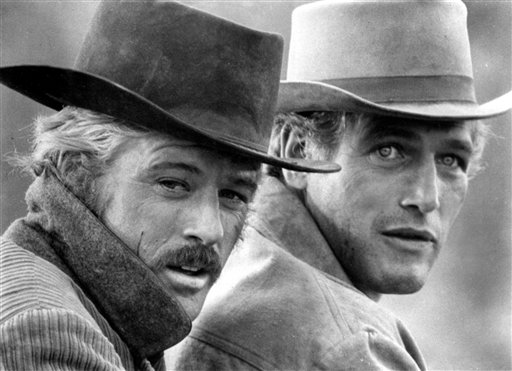
The only other title I’ve liked is my short story title in the Killer Year Anthology: Stories to Die For. Its title? A Failure to Communicate — but that’s because I fractured time as well as communication, and that fracture was the point… plus, that’s a line said to Paul Newman in Cool Hand Lukea line he liked so much, (so the apocryphal story goes), he had it written in to Butch Cassidy and the Sundance Kid. (In my story, Trevor has nicknamed Bobbie Faye “Sundance” because they are about to die. At the end, she calls him “Butch.”)

Everything else I’ve had published in fiction has been titled by others. I’ve managed the blog entries more like a drunken game of dice… sometimes I’m on, sometimes not. (Cornelia, I think, wins the memorable title aware around here. Seriously, tell me you do not think of the PILGRAMS! SCREE! SCREE! SCREE! title every time you see her name on Saturdays.)

Which, honestly, is the point: titles should be memorable. They should give you some idea of the kind of book you’re picking up, the genre, but most of all, you should be able to recall that title when you’re in the bookstore and are suddenly faced with thousands of choices… many of which sound so similar to one another, they all start to blur.

A good title will make me pick up the book, even if the cover art is so-so. I’ll flip over to at least read the back cover. An average title that sounds like every other average title would have to have really eye-catching art for me to stop, unless I already know the author’s work and therefore know whether they’re an automatic buy. 

But a great title will stop me in my tracks when my arms are already loaded down with books and people are waiting on me to leave because we have to be at dinner in less than ten minutes and could I please please hurry? When someone (whether it’s the author or the editor or the marketing department or some combination, I don’t care) comes up with something that riveting that can stop me like that, I will pick up the book and read the back copy and the cover flap and probably the first page or so. If I’m really pressed for time, and that title was great, I’ll buy it, without reading anything. My hunch is, people who are that creative have a good eye for good material. I’m not always right about that instinct, but I’ve been right more than I’ve been wrong, so I’ll keep going by that gut feeling.

Examples of books I bought this past year based solely on the title, not word of mouth or knowledge of the author:

The Girl With The Dragon Tattoo

The Sky Always Hears Me

The Book of Unholy Mischief

The Bridge of Sighs

Hotel on the Corner of Bitter and Sweet

Granted, I heard about a couple of them somewhere, but when I was in the bookstore, I couldn’t remember what had been said–but the title jumped out at me as a “Oh, yes, I’d wanted to get that.” And I haven’t read all of them yet, since I was sidetracked with a couple of other big reading projects.

It is an extremely difficult thing to do, to find a memorable, unique title. I know some writers who cannot move forward with the first page if they don’t have a title in mind–one they hope will be their final title. I felt that way during book one, but since then, I haven’t ever managed to settle on just one, to fall in love with something and know it was it and that it would be memorable. Oh, how I wish I could.

Right now, I’m tossing around ideas for titles for the new book, and it will probably end up being vastly different from my past titles since this book is much darker and complex and set in a different world. I’ve wandered around ideas of things lost and found again, and I’ve played with ideas based off Saints (the name of the fictional town is St. Michaels, a tiny place set just south of Baton Rouge). For an example, I loved the movie title THE BOONDOCK SAINTS, (and I enjoyed the movie, but haven’t seen the sequel)… but obviously, this is taken and well-enough known not to be re-useable. Titles, unlike works, are not copyright protected, but I’d truly prefer not to use something someone else has already fingerprinted. I thought of BACKYARD SAINTS, but I think Joshilyn Jackson’s next book will be titled something like that, so that one’s out. I’ve thrown around war notions and betrayals, but so far, nothing sticks. If any one of you gets creative in the comments and I end up using it, you’ll be mentioned in the book and will get the first autographed copy.

I’m looking for inspiration. What titles have you come across (whenever, doesn’t have to be recent), that you loved and remember? I’m curious, did the book live up to its title?


2009 Annual Review

JT Ellison

It’s that time of year again. Time to look back on what I accomplished in the past 365 days, ascertain what I did right and what could be improved upon, and using that knowledge, set my goals for the coming year.

I’m not a fan of making resolutions, so when I discovered Chris Guillebeau’s wonderful 2008 Annual Review on his blog, The Art of Non-Conformity, I hitched on to the ride immediately. It’s the perfect scenario for those creative types who are working for themselves but still want some accountability. (Here’s the link to the actual post. Go on over there and take a read. I’ll wait.)

Okay, now that you’ve familiarized yourself with the system…

Last Christmas, with Chris’s template in mind, I set my goals instead of fretting about resolutions. My focus was on Work, Family, Self, Home, Knowledge, Health, Friendships, and an overarching “theme” goal focusing on enhancing my creative time by cutting back in other time consuming areas.

When I looked back on them today, I was pleased to see I’d achieved many of them, especially in the categories of writing, family and friendships. I’ve become much calmer, much more Zen about life in general, and my workflow is cleaner and more productive. I’ve surrounded myself with happy, productive people, worked hard, and played hard. This year was full of ups and downs, and if the goals were anything to go by, I accomplished about 80% of what I set out to do professionally, and 50% personally.

Not bad. It could have been better, but the trick to all of this is to be accepting of what you accomplished and not beat yourself up over the things that were left undone.


The Year of Evolution

This year, I set different goals. I went rather whole hog and named 2010 the Year of Evolution. I’ve altered my categories a bit to match with my current world view: Writing, Business, Self, Education, Health, Home, Family/Friends, and a Five Year Goals section. I won’t go into the nitty gritty details, but I have a lot on my plate for this year, including launching two books, writing another Taylor Jackson book plus proposals for future novels, writing a stand-alone, making my social networking more meaningful, working on my golf game, and taking the final steps toward a real fluency in Italian.

Setting personal goals and setting professional goals are very different beasts. My professional goals are specific, with dated estimates of word counts and draft completions. They are tangible. They guide me when I get off track, and force me to consider where I spend my time.

My personal goals are different, more amorphous. Take golf, for example: I want to drop ten strokes off my score this year. There are steps that need to be taken to make this a reality: join a club, hit balls twice a week, play at least once a week. Join the women’s league so I have accountability. Most importantly, carve those precious hours out of my already hectic schedule to make this happen. Trying to jump into this in a week is a sure-fire recipe for disaster – some goals must be worked on slowly, made supple and amenable.

Therein lies the difference. Personal goals I measure in steps rather than benchmarks.

The most interesting part of my goal-setting came about purely by accident. I’m no math major, but I got it in my head I wanted to know just how I spent my time last year. Push came to shove, I started thinking about word counts, and voila – I ended up with a breakdown, albeit estimated, of how much actual writing in did in 2009. What I found was disturbing, to me at least.

I wrote 505,938 words in 2009.

Only 136,738 were fiction.

A whopping 369,200 were non-fiction. Now, this includes email, but still, that’s insane. Email alone counts for 215,200 words. (I sent 2152 emails last year, so that’s an average of six emails a day at 100 words apiece.)

27% of my writing in 2009 was fiction. To break it down even further, I wrote on average 1386 words per day, 374 of which were fiction.

Considering I make my living as a novelist, I find that horrifyingly low. Granted, all my dates changed for my book releases, and I took a few months off during the summer to deal with some life stuff, so I didn’t do a lot of writing during that period. But that’s still not enough creative work versus business work.

The numbers were enlightening, to say the least. Twitter, which I joined in February, added up to 48,000 words. That’s 3200 Tweets at 15 words per tweet. Facebook must be about the same or even more, so it gets 48,000 too. Murderati blogs* came in at 45,000 (30 blogs at 1500 a pop), and I probably wrote another 5,000 words of original content for the Tao of JT. Add in essays and interviews, and we’re at 156,000 non-fiction words before email.

With the numbers in front of me, I can’t help but see just how much time I spend on non-fiction endeavors.

TOO DAMN MUCH.


A New Chapter

2010 is the year I turn things around. I’m going to make every non-fiction word count, utilizing Artist Data and Tweetdeck to post to Twitter, Facebook and MySpace simultaneously, eliminating over 1/2 of my social networking word count. I’m also going to be a much less frequent visitor to the sites.

My blogging will stay about the same, with 2 posts a week at the Tao of JT and bi-monthly columns at Murderati.

Email is a necessary evil, and if you think about an average of 6 emails a day, that’s not too bad.

Most importantly, I’m going to up my fiction totals tremendously. My word counts really should be in the 250-300,000 range, which I’ve achieved in the past.

My goals are set, my plan is in place, and I’m really looking forward to achieving all that I set out to do this year, and more.

How about you? Resolutions or Goals this year?

Happy New Year!


Rough Estimate of Words Written in 2009
(all numbers approximate)


Fiction
     
Novels The Immortals   80,000
  The Pretender   20,000
  The Cold Room   30,000
       
Short Stories Killing Carol Ann   4,338
  Chimera   1,500
  Have You Seen Me 900
Total Fiction     136,738
       
Non-Fiction      
Essays The Charm School 3,000
Murderati Columns* (30 Blogs x Avg Words 1,500) 45,000
Tao of JT Columns*     5,000
Interviews     5,000
Total Non-Fiction     58,000
       
Work      
Email (2,152 Emails X Avg Words 100) 215,200
Total Work     215,200
       
Social Media      
Twitter (3,200 Posts X Avg Words 15) 48,000
Facebook     48,000
Total Social Media     96,000
       
Total Fiction, Non-Fiction, Social & Email Word Count 505,938
    % Fiction         27%
    % Non-Fiction         11%
    % Social Media 19%   
    % Work/Email 43%   


* I know most media analysts include blogging in the social media category. But since mine are more columns and essays, I’ve decided to include them in the non-fiction category.

Wine of the Week: 2003 Mosiac Merlot, Sonoma Valley

The Things I Hate

by Rob Gregory Browne

Now that we’ve had our season of joy and happiness and good tidings for all, let me tell you about some of the things I hate. 

I’m not normally a hateful guy, but there are things that just bug the crap out of me, and after an incredibly bad day recently, I began channeling Denis Leary and came up with this list:

10.  Standing in line at the grocery store, with one item to buy, as the person in front of you pulls out a checkbook and proceeds to take five minutes to write a check for two dollars and fifteen cents.

Get a freaking bank card, will you?  Checks should be banned.

9.  Going to the home water color and discovering that there’s not enough water left to make your morning coffee.  Those five gallon bottles are heavy, awkward and a giant pain in the ass.

8.  Water cooler again:  using the hot water spigot.  Because they don’t want to get sued, the manufacturer makes you push an extra button and hold it down as the water comes out at half-speed.  Fuck you.  I want an opt-out for this mechanism.  What do I look like, the McDonald’s crotch coffee lady?  I’m not an idiot, thank you.

7.  Ants.  Especially ants in your kitchen after you’ve cleaned it so well you could do heart surgery on the friggin’ counter (assuming you have counter space — see #5) 

The other day, I discovered that the inside of my sugar bowl was crawling with ants.  And this was when it was SITTING IN THE DISHWASHER and HAD ALREADY BEEN WASHED with soap and scalding hot water.  WTF? Do I need a new dishwasher? Industrial strength ant spray?

6.  Piece of shit dishwashers that won’t let you put a decent sized pan in the bottom rack because they get in the way of the rotating spray mechanism.  Douchebaggery at its finest.

Advice:  take your dishes with you when you buy a dishwasher.  Make sure they fit to your satisfaction.  DO NOT leave this one up to chance.

5.  Not enough counter space in your kitchen.  Don’t buy a house in a hurry.  And if you must, make sure that kitchen has PLENTY of freaking room. 

With the day’s dishes on one side, the multitude of appliances I’ve collected on the other side and a big fat stove top taking up the rest, where the hell am I supposed to cut my tomatoes?

4.  When someone asks you to do something for them, then stands over you and tells you how to do it. 

If you have time to stand over me and give me instructions (although I’ve done the task a billion times), then you can friggin’ do it yourself.  Don’t like the way I’ve mopped the floor?  Put that tongue to better use.

3.  Lame television commercials.  9.9 out of 10 commercials are inane, annoying and a waste of TV watching time.  Which is why I now buy DVDs of my favorite shows, or record them to my DVR. 

2.  When some idiot makes a right turn directly in front of you, and proceeds to drive at a speed at which no human should travel on FOOT, let alone in a car, forcing you to ease off the gas or even hit your brakes to avoid a two-car pile up.  AND THERE’S NO ONE BEHIND YOU. 

If they had waited three seconds more, they wouldn’t have you riding their assssssss.

1.  People who use cell phones while driving. FUCK YOU.  FUCK YOUR KIDS.  FUCK YOUR FAMILY.  AND all of your friends.  Especially the ones who call you while you’re driving.  Oh, and get the hell out of my way.  I’m trying to get somewhere, not make a doctor’s appointment.

And a special bonus hate:

*  Hypocrites. The do as I say, not as I do crowd. 

I once worked with a woman who was very strict about company policies and rules — except when it came to HER and the people she liked.  Then all bets were off. 

If you pointed out to her that “rules are rules,” (as she always loved to say), you jumped immediately to her shit list and she’d do everything in her power to screw you.  Behind your back.  While smiling sweetly at you every morning.

Okay, that’s it.  Rant over.  

Now it’s your turn.


contest conversations, continued…

As JT explained, we’re sorta having a half-way-ish hiatus, a week of traveling for many of us and being swarmed with family for some of us. We’re having a contest and here’s what she posted yesterday:

14 books from 14 authors.

Now that’s a deal.

Here’s what we want to know:

(answer as many as you wish, but only one answer is necessary to be included in the contest.)

 What are you doing for the holidays?

What are you reading?

What topics would you like us to cover in the New Year?

What questions do you have for any or all of us?


And then in the comments section, Sylvia asked some questions and I’ll attempt some answers and add some questions of my own at the bottom:

1. Boxers, briefs, thongs, bikinis, hipsters or none? 

I always flunk these tests. Let’s just say I like variety. And sexy comfort.

2. What would you like for your last meal?

I’d never be able to pick, so I’d probably stretch that out to my last day of meals. Like Crawfish etouffee, or my husband’s amazing Shrimp and Corn soup, or maybe ripe strawberries and whipped cream and champagne or… hmm. I’d need at least a week to fit everything in. But the upside, I’d be dead, so I wouldn’t have to worry about calories. 


3. What was your first pet and his or her name?

A german shepherd named Kraut that my mom and dad had as a puppy when I was born. I used to ride him around like a pony. He would never let my brother ride. I loved that dog.


4. What is the worst lie your parents ever told you?

Well, the one that they didn’t mean to tell was that Kraut was going to go live with my maw maw, because he needed to. (There were vague reasons why that I never fully understood, and I knew that I was being manipulated into confusion on purpose.) I was extremely angry at her for taking my dog, and then when we went back to visit and he was gone, I thought she’d lost him or given him away, instead of giving him back to me. I pretty much hated her for years for that. (He was dying, and my parents thought it would spare me the trauma if I didn’t have to see him die. I can’t say that they were wrong, though–I think seeing him suffer would have been traumatic at that very young age, and if he’d been put down, I’d have blamed them for it and hated them. There was never going to be an easy answer for that one.)


5. What’s your favorite curse word?

Fuck fuck fuckity fuck and fucktard and fuckwad and fuckshit. (I am southern. We don’t stop at just one of anything.) (Take that any way you want.)


6. What animal do you fear the most? (Must have experience and not just fantasy)

Water moccasins. I have stumbled across them and had them strike at me and I’ve been in a boat with them dangling from limbs above me and let’s just say that snakes are pretty high on my ‘the only good ___ is a dead ____’ list.


7. Does it piss you off to see your book in a clearance bin?

Nah, like others said in the comments yesterday, it’s a way for maybe more people to afford to try out my writing and then, possibly, be interested in the next thing. Plus, it’s just a natural cycle of business–very few things last forever.


8. What is your definition of hell on earth?

I have to agree with Alex: child molestation.


9. As an author, what question are you asked the most that you refuse to answer or deflect the answer?

Agreeing with Zoë, being asked how much money I make. Or the sneakier equivalent, what was my print run.


10. What 10 questions do you most want to know about your readers, or us, the commenters? I’ll just add five, since we have some great ones above and in the previous comments.

[Feel free to answer JT’s above, or any combination of these or the ones posted in the comments yesterday. This is a free-for-all rolling conversation.]

1) Who’s your hero?

2) What was the very best day of your life? (Aside from significant others/ marriages and births of children.)

3) If you could go anywhere, right now, obligation-free, without stress, etc., where would you go?

4) Which two characters would you love to see meet up for a road trip? (can be anyone in literature… anyone at all) 

5) If you could pick the traits of a favorite character to adapt in your own life, which character and traits would those be, and why?

I know there are more entries sporadically through the week — and remember, all comments all week long make you eligible for the contest. 

Have a Holly, Jolly Christmas!

MERRY CHRISTMAS!


We’re going to be on a minimal posting schedule through the New Year. Not a complete hiatus, but semi-regular postings, since many of us are traveling and trying to get a real break from the Interwebs. We’ll be back at full force January 2.

We truly appreciate that you take the time to stop by, to participate, to be a part of this fabulous community all year long. We value your input so much that we thought we’d throw the field open to you.

If you comment over the next week, you’ll be entered into our Festivus Contest!

And what, pray tell, may the glorious prize be for commenting? Why, a package of signed Murderati books, of course!

14 books from 14 authors.

Now that’s a deal.

Here’s what we want to know:

(answer as many as you wish, but only one answer is necessary to be included in the contest.)

 What are you doing for the holidays?

What are you reading?

What topics would you like us to cover in the New Year?

What questions do you have for any or all of us?


 We wish you and your families the very best of holiday joy!

The Story I’m Not Supposed to Tell (But Always Do)

by Rob Gregory Browne

My writer friends warn me that I should never talk about how I got my literary agent. 

Why? 

Because I didn’t have to go through the hell they went through, and they assure me I’ll be jumped if I tell the story. 

You see, I was lucky enough to — as William Goldman put it in Adventures of the Screen Trade — jump past all the shit.

Years ago, I won an international screenwriting competition sponsored by the Academy of Motion Picture Arts & Sciences that opened up all the Hollywood doors and got me a screen agent.  The next thing I knew I had a deal at Showtime and life was good.

Fast forward as my career took a slow, steady nosedive and I wound up writing cartoons.  And I don’t mean The Simpsons.

When that finally dried up (taking my desire to write along with it), I shuffled around for awhile, wondering what I was going to do.

My screen agent left agenting, became my manager for awhile, then finally moved on.  After a couple more years of banging my head against the wall with a new agent, I decided screw it and went out and got a nine to five job, figuring I was done with writing for good.

Oh, if only it were that easy.  As the writers in the crowd know, you’re not done with writing until it’s done with you and before I knew it, I started to get the bug again.  So I finally wrote the novel I’d always been threatening to write — working sporadically over the next three or so years until it was done.

Once it was finished, I thought I had something pretty special, hoped I wasn’t deluded, so I contact my former agent — the first one who had quit agenting while I was still her client.

You see, this former agent — whom I’ll call Marion (mostly because that’s her name) — had a LOT of connections, and I figured if anyone could help me get representation for the book, it would be her.

So I sent her an email, asking if she’d be willing to read the book.  She answered immediately and said, “Of course.”  I fired off the manuscript and a week later she called me and said, “Do you mind if I send this to a friend of mine in New York?”

Well, that friend happened to run Trident Media Group and a couple weeks later a hot young agent there — whom I’ll call Scott Miller (mostly because that’s his name) — called me and said he’d like to represent me for this book “and anything else you want to write.”

About three months later we had a deal with St. Martin’s Press.

You see why my friends warn me not to tell this story?

Please don’t jump me.

Believe me, I’m not gloating when I tell it.  I’m a very lucky, lucky guy.  But if anyone thinks I didn’t pay my dues, be assured that I spent many, many years getting kicked around in Hollywood, so I paid my fair share.

(And the great thing is, is that I’ve been able to return the favor, so to speak, by recommending a couple of writers to Scott)

So what’s this got to do with anything?

The REASON I’m telling you all this is because that aforementioned agent — Mr. Miller (is that really his name?) — has graciously agreed to answer some questions for us, and give us some insight into the agenting process.

Before he can do that, however, I need a nice, fresh set of questions to ask him.  So I want to ask YOU what YOU’D like me to ask Scott.  I’ll cull the best questions, talk to Scott and do a nice little write-up about him next time.

So imagine this:  You’re an aspiring writer.  If you could sit across from one of the hottest agents in New York (meaning you-know-who), what would you ask?

In the meantime, I’d love to hear “how I got my agent” stories from the writers in the crowd.  Everyone’s way in is different.

Until next time…

An Author’s 12 Days of Christmas

by Toni McGee Causey


An Author’s 12 Days of Christmas

(with apologies to cover artists everywhere*)


On the first day of Christmas, my agent gave to me

            One sad example of some cover art.


On the second day of Christmas, my agent gave to me

            Two antidepressants

            So I’d overcome that awful cover art.


On the third day of Christmas, my agent gave to me

            Three rounds of pep talks,

            Two antidepressants.

            “Please don’t off yourself; it’s not bad cover art.”


On the fourth day of Christmas, my agent gave to me

            Four potential pen names.

            Three rounds of pep talks.

            Two antidepressants.

            ‘Cause the publisher really loved that cover art.


On the fifth day of Christmas, my agent gave to me


 Five Re-al-ity Checks.

 Four potential pen names.

 Three rounds of pep talks.

 Two antidepressants.

 Since I was doomed when the world saw that cover art.


On the sixth day of Christmas, my agent gave to me

            Six bottles of wine.

            Five. Re-ali-ty Checks!

            Four potential pen names.

            Three rounds of pep talks.

            Two antidepressants.

            Plus a note about more samples of cover art.


On the seventh day of Christmas, my agent gave to me


Yes, I know he’s not leaping. Get your own poem. Seven Lords A’ Leaping. (Hell, I don’t know, there was wine involved.)

 Six bottles of wine. (all gone now) (duh)

 Five Re-al-ity Checks.

 Four potential pen names.

 Three rounds of pep talks.

 Two antidepressants.

                            As I sobered up to see the newest art.


On the eighth day of Christmas, my agent gave to me

            Eight frantic emails. (because I was off somewhere with…)

            Seven Lords A’ Leaping. (wouldn’t you be?)

            Six (more) bottles of wine.

            Five. Re-al-ity. Checks.

            Four potential pen names.

            Three rounds of pep talks.

            Two antidepressants.

            Because the newest was truly terrible cover art.


On the…where am I again? Nine? Seriously? Already? Can we move it back to eight? I might not make the deadline, see, because there were these Lords…


On the ninth day of Christmas, my agent gave to me

            Nine more artwork options.

            Eight frantic emails.

            Seven Lords A’ Leaping. (They had their own stash,               I swear.)

            Six (more) bottles of wine.

            Five. Re-al-ity. Checks.

            Four potential pen names.

            Three rounds of pep talks.

            Two antidepressants.

            And a deadline to pick out just one I could live with and not slit my throat over, and no, that doesn’t fit the meter, but YOU try having metered prose when you’re slitting YOUR throat and we’ll talk then, ‘kay?


On the tenth day of Christmas, my agent gave to me

            Ten warnings to quit calling the artist.

            Nine more artwork options.

            Eight frantic emails.

            Seven Lords A’ Leaping. (like they had to worry                   about artwork, hmph)

            Six (more) bottles of wine.

            Five. Re-al-ity. Checks.

            Four potential pen names.

            Three rounds of pep talks.

            Two antidepressants.

            All for artwork my dog could do in a hurricane.


On the eleventh day of Christmas, my agent gave to me

            Eleven restraining orders. (You know, that first cover wasn’t all that bad.                   If my name were bigger, it’d be perfect.)

            Ten harried phone calls.

            Nine more artwork options.

            Eight frantic emails.

            Seven Lords A’ Leaping (I wonder if one of them is an artist? What are the odds?)

            Six (more) bottles of wine.

            Five. Re-al-ity. Checks.

            Four potential pen names. 

            Three rounds of pep talks.

            Two antidepressants.

            And a reminder that I need to work in this town again.


On the twelfth day of Christmas, my agent gave to me

            Twelve beautiful cover flats. (They spelled my name correctly. Yay!)

            Eleven restraining orders.

            Ten harried phone calls.

            Nine more artwork choices.

            Eight frantic emails.

            Seven Lords A’ Leaping (Geez. Cover models.             When will they learn authors have no clout?)

            Six (more) bottles of wine.

            Five. Re-al-ity. Checks.

            Four potential pen names.

            Three rounds of pep talks.

            Two antidepressants.

            So I could practice saying, “I love my cover art.”


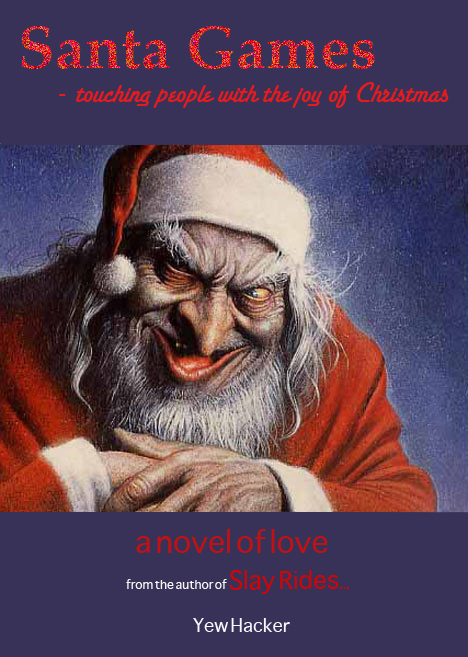
On the thirteenth day of… what? No, I hadn’t heard of the page limit. Really? Well, I thought it was going to go all the way to fifteen. Or so. Maybe weave a subplot in there? Something about a Santa Ninja Assassin and his pet… no? Really? Can I edit, then? Hello? Hello? 


* because I really did love my own cover art.


Happy holidays, everyone. What’s on YOUR wish list this year?


Author Marketing in a Recession

This article first appeared in the Tennessee Writers Alliance Fall Newsletter. It’s salient enough that I thought I’d share it here too.

Times are tough.

Publishers are cutting back on just about everything: coop, author tours, marketing dollars, heck, their staffs… Newspapers are jettisoning their book sections. Magazines are going bankrupt, writing programs are being restructured, conferences are being cancelled. It is undeniably rough out there.

So what’s an author to do in the face of all this adversity?

Take advantage of the situation at hand, of course. There’s never been a better time to create your niche. The Internet is an overwhelmingly underused resource for authors who want to market themselves. And the best part? It’s free.

That’s right. You can launch a full-blown marketing campaign for free, and increase your reach for pennies more a day.

How?

By being smart about how you approach your marketing efforts.

We’ve all seen the authors who are simply out there screaming me, me me!!! They’re a big turnoff, right? They aren’t giving anything back to the community, they just want to foist their latest book on anyone and everyone they can possibly contact. They “borrow” mailing lists from listserves and spam the recipients with their newsletters, privately inbox regularly on Facebook, ask for followers on Twitter. They are no fun.

You, on the other hand, are a glorious new author with something to say. So how do you go about saying it, getting your message out there, getting your book into the hands of loyal readers, without paying exorbitant prices and alienating possible friends and readers?

Very carefully.

While the Internet is free, the price you pay for misusing it can be deadly to your career. Every positive the Internet provides has a negative as well.

The first rule of Internet marketing? Everything you say, EVERYTHING, is recorded in perpetuity. That slam on your editor? That nasty comment about your old teacher? The displeasure you have with… well… anything, all of that gets logged somewhere. Websites cache their material, which means even if you’ve gone back and deleted something, a version continues to live on. So be careful what you say. Think before you comment. Follow the adage your mom always taught: If you can’t say anything nice, don’t say anything at all. You never know what sort of impact even the most casual negative comment can have.

Another quick bit of advice? Don’t ever, EVER engage a reviewer over a negative review. Yes, it sucks that you got a one-star on Amazon. Get over it. That’s one person’s very subjective opinion. Unless the comments are slanderous or libelous (which is rarely the case) you need to let them go. If they are edging toward actual illegality, you can complain to the site owner. But don’t engage the reviewer.

I digress. I know some authors feel that being a lightning rod gains them readers. I don’t agree. I think the way you gain a readership is by doing two things: one, writing the absolute best book you can possibly write, and two, being a value-add author. What do I mean by that? Let me give you a brief background on how I went about creating a platform for my work, and you’ll see for yourself.

In an industry that relies on the kindness of strangers, I’ve been incredibly lucky. Before I had an agent, I had a solid critique group, a membership in Sisters in Crime, a national organization that accepts published and unpublished writers, and a webpage on Publishers Marketplace, our bible. That’s how I got my agent, by the way. He saw my webpage on Publishers Marketplace and asked for my manuscript. Serendipity aside (I’d been writing him a query letter at that very moment) how did he find me on PM? My webpage was consistently in the top ten viewed pages. How did I manage that? I started a relatively one-sided conversation called “The Best Book I Read This Week.” At the time, no one was doing it. People tuned in to see what I was saying, and voila: page views translated into momentum. (Momentum is hugely important to your career, so tuck that into your caps for a moment.)

Suddenly, I had an agent, my book was out on submission, and I needed to work on my platform. Sisters in Crime wasn’t enough anymore, I needed to raise my profile. I joined Mystery Writers of America, got involved at DororthyL (a mystery listserve with thousands of active members) started making some friends out in the Internet world. When I saw something that caught my eye, I reached out. I found a cool PR site called Bad Girls PR, run by a lovely woman named Pari Noskin Taichert. I sent her a note, complimented the site, said I hoped I’d be a bad enough girl to need her services some day, and went about my business. But Pari responded, we started chatting, and several months later, when she decided to start a marketing blog, I came to mind. (Four years later, our blog, Murderati, has been nominated for awards and is one of the longest-running group blogs in crime fiction.)

Momentum. My first manuscript didn’t sell, and everything seemed to come to a screeching halt. My agent suggested I try writing a new book, which I did. During that time, though, I didn’t abandon my online efforts. I kept up with Murderati, DorothyL, and several other listserves. I continued my weekly book picks on PM. I started writing short stories and placing them in e-zines, raising my profile even more. And I volunteered to be a book reviewer for an online site, which enabled me to read everything I could get my hands on, knowing that reading is the key to better writing.

All of that paid off. When my agent took the second book out onto submission, I now had a solid online platform. I was a crime blogger, a reviewer, a participant. The editors at the houses knew I was plugged in to the crime fiction network, that I had built myself a base of followers even before I sold my first book. And it worked. My first deal was for three books. So was my second.

Momentum. In this industry, it means a lot.

The beautiful thing about the Internet is how it’s grown in the past few years. Twitter, Facebook, RedRoom, Good Reads, Shelfari… I could go on and on. The places to market yourself are out there for the taking. There are still a million listserves catering to every genre imaginable. Organizations abound. Volunteer opportunities exist. If you build it, they will come.

And since the Internet is a virtually cost-free marketing tool, anyone can do this. Just be smart about what you do. Don’t push yourself on people, be a value-add author. Give them something back. Give them something they didn’t know they needed in the first place, and you’ve conquered what marketing is all about. Because isn’t that what we do every time we write a book or a story? We create something from nothing, and work to get that into the hands of people who didn’t realize they wanted it in the first place. Crazy, huh?

Things to remember about marketing online:

Respect your lists

If you send out too many notifications, people simply tune you out. My newsletter goes out quarterly. Publishing works slowly enough that you don’t need much more than that to get your news out. Everyone’s time is precious: if you treat them with respect, you’ll get respect.

What Works For One Won’t Always Work For Others

As frustrating as this may be, it’s the truth. You can follow in every single step I took online and still not see the benefits. The trick is to be original, be open and willing, and be flexible. You never know where that next opportunity may come from.

Don’t Compare or Compete

Professional jealousy is an occupational hazard. Don’t fall into that trap. Each book, each author, is wildly different. Jealousy causes negative energy, which will trickle out in your attitude. Remember that comparing yourself to another author is like comparing apples and oranges – they don’t measure up properly.

Be Polite

Always. Don’t engage, don’t be mean and spiteful, don’t gang up on people. Cyber-bullying isn’t just a problem in our schools. And especially don’t put your woes and frustrations online. Limit those conversations to your trusted friends. The Internet is not a giant group psychotherapy session, nor a group hug.

Don’t Give Up

When one door closes, a window opens. Things fall through. Media doesn’t get played, articles don’t get placed, short stories get bumped. Promises, sadly, do sometimes get broken, but if you can keep a healthy perspective on the industry, you’ll do fine.

Be Open to New Experiences

This is a foreign landscape for many people. If you limit yourself from the beginning, you may miss out on things.

What about you, ‘Rati? What little tricks and tips do you have for getting your name out there when times are tough?

Wine of the Week: Elio Altare Dolcetto d’Alba 

Also, just an FYI, I’m keeping a journal of sorts over on my website. It’s not a blog exactly, more of a place for me to explore my personal zeitgeist in much shorter spurts. I’d love for you to stop by, or sign up for the RSS feed here.

Watching for Inspiration

by Rob Gregory Browne

I cheated and looked ahead and I know what Brett’s post is about tomorrow, and in a way, it’s connected to what I want to talk about today.

I don’t know if I’ve mentioned it here (probably have), but I’ve changed publishers and am now writing a book for Dutton, the first in a series about demons and angels and the destruction of earth and a couple of characters who find themselves caught up in it all and have to fight like crazy to keep it from happening.

It’ll be a fun book — it’s been a blast to write so far — and, hopefully, a thrilling one as well, but it’s also an ambitious book for me, bigger in scope than anything I’ve attempted before, and in preparation for the book, I actually wrote a very long outline.  VERY long.  Something I don’t normally do.

Writing that outline was, quite possibly, the toughest thing I ever had to write.  Because outlines are all about plotting and figuring out story logic and character motivation and when it comes down to it, it’s real grunt work.

As I was writing the outline, I found myself hitting walls over and over, not sure where to go with the story or how to flesh out the shorter outline I was working from.

In the old days — before strict deadlines — I’d find when I hit a wall in my writing, it always helped to sit down and read a book.  Well-written books are a great inspiration for a writer.  In fact, they’re what inspired us all to write in the first place.

Unfortunately, as much as I love to read, I find it difficult to find time for it much these days, and almost impossible when I’m smack in the middle of trying to work out a story.  Reading takes a dedicated amount of time, and a lot of it.  In order to get through a book, it could literally take me a week or more of stealing moments here and there, and the experience would likely be disjointed and unfulfilling.

When I read a book, I like to be able to sit down and read it in a few hours or a couple of days.  Solid reading, until it’s finished.

But, again, I can’t do that while I’m writing.  So when I hit those walls, unless I want to take a few days off, I’m shit out of luck.

I did, however, stumble upon a solution to my problem:

TV shows.

Right now I think we are going through a period when television drama is at its very best.  There are many, many shows with solid production values, terrific acting and superb writing.

One night, when I hit a particularly solid wall, I said screw it and sat down to watch an hour of television.  Actually, I had a series on DVD that I’d always heard good things about but had never watched, so I popped the first DVD in and was suddenly swept away.  (DVDs or Netflix streaming, by the way, are the only way to go.  Commercials are so intrusive, they interrupt the flow of the narrative.)

To my surprise, as I watched the show with it’s amazing plotting and great interplay between the characters, I found myself becoming more and more inspired.  And when I finally went back to the keyboard that night, I was on fire.

It wasn’t so much the subject matter than inspired me.  But the TECHNIQUES the writers used to advance plot and character that — because a typical TV drama is only 44 minutes long — was IMMEDIATELY evident to me.  Techniques of craft that I could apply to my own writing.

These weren’t new techniques.  I knew them already.  But to see them used so brilliantly, to see how they can bring a good story to life, was as thrilling to me as reading a book by Stephen King.

Watching that TV show made me WANT to write, just as a great book will.  And whenever I got stuck again, I’d go pop in another episode, or mix it up with another well-crafted show, and find myself inspired all over again.

Some of the shows that have inspired me are:

Dexter

Alias

Jericho

Fringe

Law & Order

All beautifully crafted, beautifully written shows.  Not every episode is perfect, of course, but if I pop one of these shows in, I’m bound to find myself itching to get writing.

So am I alone in this?  Do other writers in the crowd find inspiration in their favorite TV shows — and, if so, what are those shows?

And you readers — do you ever find that watching a great show inspires you to pick up a book?