Author Archives: Murderati


the hometown boogie

by Toni McGee Causey


“Where are you from?”

It’s an innocent, easy question, right? Drives me nuts to answer it, and now, it’s just gotten more complicated.

I’m “from” a small town just northeast of Lake Charles, Louisiana (Kinder), if what the questioner wants to know is “where were you born?” But I didn’t live there long. I lived briefly in Lake Charles and then Breau Bridge and then Baton Rouge and then Zachary and then back to Baton Rouge (for a long time) and now, I divide my time between Baton Rouge and New Orleans.

I just say, “Louisiana” to make it easy, but someone always ends up asking questions to try to narrow that down (if they’re from here). 

Less difficult, up until a couple of months ago, was “what’s your hometown?” and that was pretty easy: Baton Rouge. It’s where I’ve lived for 29 years. It’s the home of the LSU Tigers (not that I’ve ever mentioned that here) and there are tons of good people and great food. I lamented to my oldest son, Luke, that there wasn’t that much to do there and he listed off a couple of dozen things that there were to do, from the symphony to the Little Theater productions (which are, frankly, quite good), so I think my only real problem with Baton Rouge is that it’s much easier for me to be a hermit there and not participate. 

The last couple of months, though, we’ve been in New Orleans. The move was supposed to be temporary because it’s work-related, but we do love it here, and after the job is done, who knows? We’re in the Quarter, where it’s almost impossible to be a complete hermit, and that’s even when you’re not into the drinking/night-life. There are several dozen things to do and see all within walking distance, or a very short drive, which is appealing. [Just last Sunday, for example, we had lunch at a local cafe and then wandered down Royal, meandering into art galleries. One of the managers of the galleries showed off some of their very expensive originals that they keep locked in a back room.Carl admired his guitar, and before we knew what was happening, we were seated on a sofa and he was jamming out old Johnny Cash songs, playing for us like we were a room of a thousand: so much energy and enthusiasm, and talent, and when it was over, it felt like an event.]
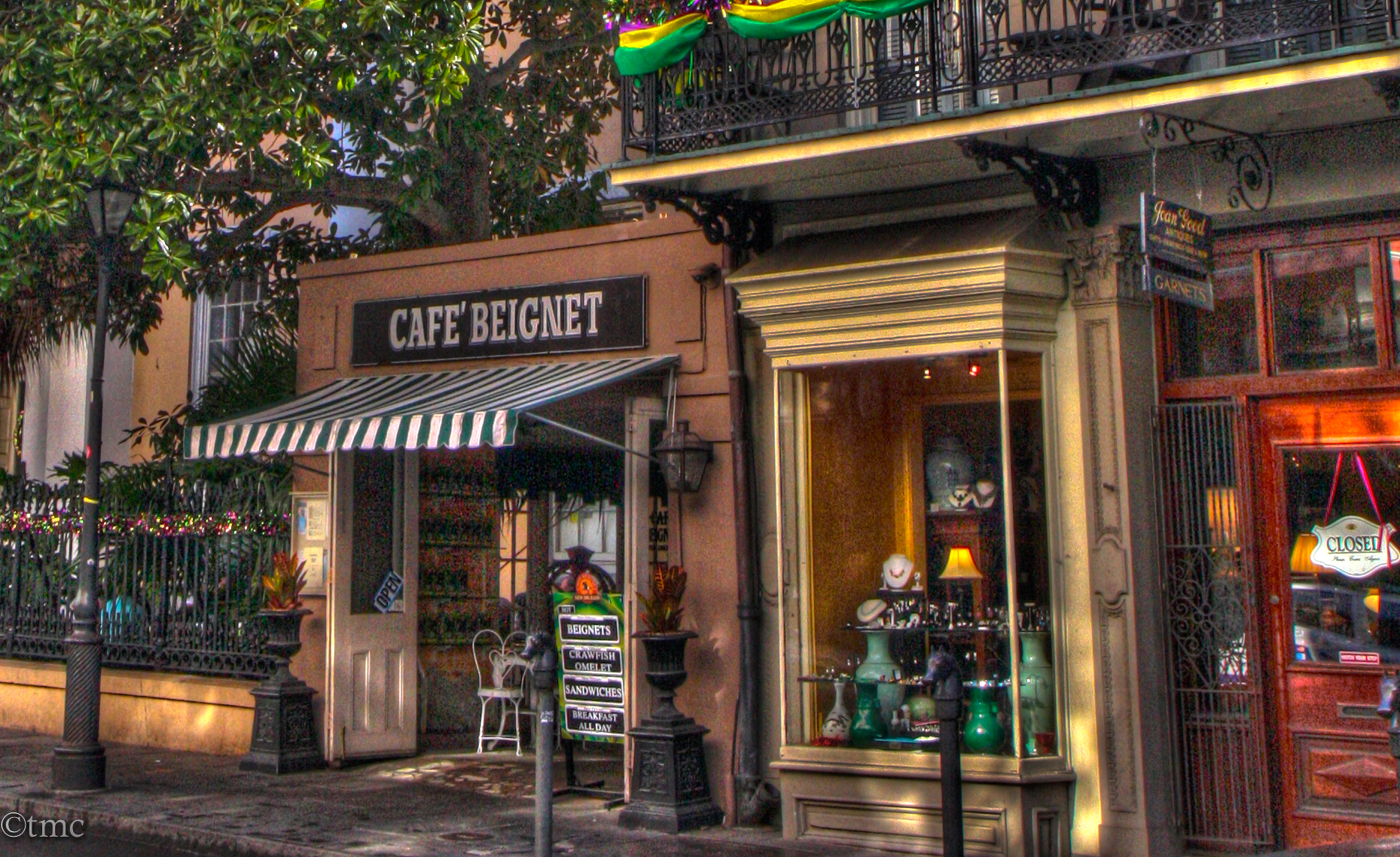
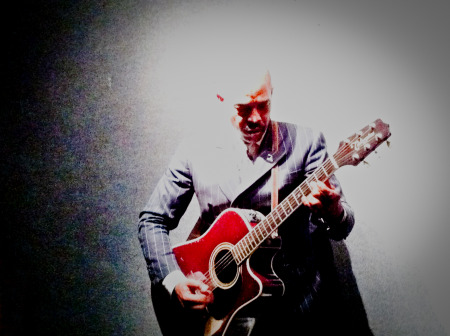
Most of the locals don’t really hang out at the Quarter, unless they live here (like us), so you get a pretty fun assortment of tourists from all over the world. It’s a fascinating cross-section for a people-watcher/writer, and fun for eavesdropping for ideas. (Oh, the ideas….)

What I like best about the Quarter, though, is not the noise or the food or the architecture – well, it’s all of those things combined – but what I like best are the very early mornings when dawn is cracking open the sky over the old buildings, some which have been here since the early 1800s, and you get to see the real Quarter – the people who work here, prepping for the day ahead. Someone pressure washing a sidewalk, someone else setting up a restaurant, delivery men shouting to each other the news of the day as they pass, a few drunk tourists trying to toddle home, doing that ‘I’m not really drunk’ walk where they stare straight ahead, zombie-like, trying to fool everyone and failing exponentially. Living here is a bit like living out behind the big top of a circus, where you see the equipment piled up, the magicians prepping the show for the night to come, where musicians are winding down and counting their tips and the dancers and bouncers are warily walking to their cars. 

It’s an interesting place, for a writer. I’m not sure it’s home, and N’awlins is much more than the Quarter — the locals will be quick to tell you that — but it’s fast becoming another hometown for me. We only half-way joke that we wish we could do this in several other major cities–have a job that would take us there for a year or so. There are a dozen places I’d love to live, love to know it as intimately as one would a home town.

Does a home town define us? Or do we, in some way, define it? 

What if it were wiped away? New Orleans almost was, during Katrina. Some of it has come back fine–some will be gone forever. It’s grown again from the mud and the debris and stood proud and even won the SuperBowl… but everywhere I go, there are still scars. Empty storefronts. Rotting houses. Roads that are in desperate need.

And then I look at the images coming in from Japan, and I am rendered speechless. Heartbroken. I cannot look at this, without choking up. Imagine if everything you knew was gone. So much of your own family–your history–your place in this world: wiped out. It is astonishing, the fortitude the Japanese people have shown in the face of this destruction and I am in awe of them. In awe of the firefighters and men who are trying to keep the nuclear power plant cool. The men who you know… you know, despite claims otherwise… are going to have practically committed suicide by going into that plant every day to try to prevent it from melting down. They’re saving lives. And all those other people, digging through the rubble, counting bodies. It’s devastating. 

What if my own home town–my sense of place–had been ripped from me? Would I still be me?Would I be the same? What would you miss the most? (besides the amenities) 

What do you love about your home town? Do you have more than one to claim? Have you moved around a lot? Enjoyed it? Hated it? And where would you stay put, if you could only choose one place on earth?
 

What Is This Thing They Call Book Writing?

JT Ellison

The word counts are creeping up. Creeping, not blazing a trail through the white space, but plodding, slowly, as if they are weighed down. This isn’t writer’s block. This isn’t lack of enthusiasm.

It’s starting a new book. As my favorite warrior philosopher, Lao Tzu, said:

A journey of a thousand miles begins with a single step.

Now what’s funny, I needed to look this quote up, because I’m still suffering from tour brain, AKA book release malaise, and I couldn’t get it right in my head – I kept saying a thousand steps, not miles, and knew that wasn’t right. When I looked up the quote, I saw a caveat I’d never noticed before.

Although this is the popular form of this quotation, a more correct translation from the original Chinese would be “The journey of a thousand miles begins beneath one’s feet.” Rather than emphasizing the first step, Lau Tzu regarded action as something that arises naturally from stillness.

“…Something that arises naturally from stillness.”

Isn’t that the perfect allegory for the beginning of a new book? Heck, any new venture, creative or otherwise, starts from that moment of stillness. If you want to get all weighty, we can get into the chicken or the egg argument. This is a cause and effect concept in a writer’s life… At what moment have you set out on your journey of a thousand steps?

Now that I’m a bit more self-aware as a writer, these thoughts enter my consciousness often. What is the exact moment when I have an idea, a spark, that will grow into a story, and thus into a book? And at what point does the beginning really begin? At what point do you shatter the stillness and take the first step? Is it a mental journey first, or purely physical?

To be honest, the writer’s entire journey is fraught with peril, but the most dangerous moment is writing those opening few pages, when you’ve got an idea, one that you think you can sustain for another 399, characters who are living, breathing entities in your head, plot points that race toward the page like a wave through your mind, notebooks filling with chicken scratch, character names, dates, places, ideas. And you have those moments of sheer fright, when you realize you can’t remember how to start a book.

So can you say you’ve started writing a book when the idea is formed, or must you wait until those first few words go down on the page?

“Try not. Do.” ~ Master Yoda

There is an offshoot of Hinduism and Buddhism known as Taoism. I fancied myself a Taoist back in college. I was very into the philosophical then, a full-circle I’m enjoying now. And while I studied the Tao-te Ching, the Taoist handbook, if you will, I didn’t truly understand the words. How could any nineteen-year-old who hadn’t experienced suffering understand? Truly, in order to appreciate what you have, you must have experienced the loss of what you desire. That tenant has its roots all over the canon – it’s better to climb the mountain than start at the top, etc. – because it’s the truth. You always appreciate something you work for more than something you’re simply handed, and suffering, at all levels, makes us who we are.

Now, though I’m hardly a scholar, more an enthusiast, I am experiencing bits of enlightenment, especially when it comes to appreciating life and the creative process.

They say the more you talk about Taoism, the less you know. I reveled in that phrase when I was nineteen, feeling so mysterious and noble. It’s true, though. One poem in the Tao-te Ching describes the Tao like this:

The Tao is like a bellows:
it is empty yet infinitely capable.
The more you use it, the more it produces;
The more you talk of it, the less you understand.

The Tao, to me, is writing. It is looking into that empty space in the bellows—the empty, yet infinitely capable space—and seeing the sparkly mist of words that will build the house that will shelter your story.

All difficult things have their origin in that which is easy, and great things in that which is small. ~ Lao Tzu

For once, I can pinpoint the exact moment the bellows filled with air and this new book began. It was January 27, 2011, at about 9:45 AM central time. I was on a marketing call with my agent and editor. We came out of it with an idea, one that morphed into an emailed paragraph by 10:09 AM, and another call with a full-fledged endorsement from said agent and a hearty “write the proposal” by 10:20. I found a title and perfect epigraph, wrote the proposal, which was submitted February 8th, which the agent loved, sent it to my editor, who helped tighten a few points down, and it was thus accepted the 18th.  We changed the title to the what I know is the final one on February 24th, I turned in the Art Fact Sheet March 10th, and by the end of the day March 14th, I had 1602 words.

Boom goes the dynamite.

It took 45 days from concept to words. And when I say concept, I mean it—when the phone rang on January 27, I had no idea what this story was. None.

I look at those 45 days with some chagrin and teeth gnashing, because I wanted to get started sooner, but had to do all the promotion and touring for the release of So Close, copyedits and AAs for WHERE ALL THE DEAD LIE, write a short story, and continue plotting world domination. There was work being done on the new book though. Research being collected, books being read, thoughts coalescing, Scrivener files filling up with light bulbs.

Ambition has one heel nailed in well, though she stretch her fingers to touch the heavens. ~ Lao Tzu

In other words, the journey has begun.

But I’m feeling rather Taoist about the content of this book. I’m just not ready to talk about it. A few people know what I’m about right now, but I want to wait to get into the gritty.

A good traveler has no fixed plans, and is not intent on arriving. ~ Lao Tzu

I want to be a good traveler with this book. I’m feeling very protective of it. There are good reasons for that, reasons time will reveal. But for now, I want to enjoy my secrets.

For my fellow writers – when do you feel the journey begins?

For my fellow readers – which came first – the chicken or the egg?

And for all – what’s your favorite philosophical quote?

Wine of the Week: Now, don’t everyone pass out all at once – this is only the second time in 5 years I’ve done this varietal: Red Tree Pinot Noir. It’s light, fruity, and perfect for getting back on the wine badwagon after food poisoning. : )

There’s a Genre for That

by Rob (and Guest blogger SB)

As regular readers of Murderati know, I’ve been considering leaving our wonderful little blog for some time. Well, unfortunately (or perhaps fortunately for some), the time has come for me to finally say goodbye.  

I’ve enjoyed my time here, and all the insightful and often funny comments from readers and my fellow Murderati alike, and thank you all for putting up with me over the last few years.  It’s been fun.

I leave you in the capable hands of Stephen Blackmoore, who is subbing for me today.

Stephen is a writer of pulp, crime and urban fantasy who occasionally lapses into talking about himself in the third person.  His first novel, CITY OF THE LOST, a dark urban fantasy will be coming out from DAW Books in early 2012.

I hope you’ll all join me in welcoming him.

———————————

THERE’S A GENRE FOR THAT 

Ever heard of Rule 34? “If you can imagine it, there is porn for it,” and it’s corollary, “If there isn’t someone will make it.”

Cheerleaders in glasses? Sure. Guys in monkey suits? Absolutely. Cross-dressing Shriners in latex wimples? Damn straight.

Genre’s kind of like that.

Way back in the misty days of yore (late ’80s) I read an article about books that people couldn’t really pigeonhole.  They had vampires in them, but they weren’t horror novels. Or detectives, but in fantasy settings. Science fiction, but set in a future that was right around the corner.

Now we’ve got genres and sub-genres and sub-sub-genres. Everything gets a label. Cyberpunk, Steampunk, Neo-Noir, Paranormal Romance. The desperate need to identify a book’s niche is so pervasive that the labels are split ad infinitum.

I mean, NASCAR romance? Seriously?

When my first novel, CITY OF THE LOST (Out next January through DAW Books) was being shopped around I made a miscalculation. I kept thinking of it as a crime novel. Which it is.

But it also has a zombie in it, a demon in a bar that isn’t really there, a feral, psychotic midget, and a 700-year-old magician who thinks he might have figured out a way to stick around another few centuries.

Shopping this as a crime novel was, duh, not working. Nobody knew what to do with it. People liked it, but they weren’t sure how they were going to market it, where they could put it on the shelves, how to push it.

Hell, I didn’t even know how to describe it. After several lame attempts the best I could come up with was, “It’s like The Maltese Falcon meets Night of The Living Dead,” which really doesn’t cover it.

And then we got back from an editor, “Great urban fantasy novel.”

Huh.

Urban fantasy is a genre that covers a lot of territory. Mystery, romance, historical. There’s some damn good stuff out there.  Everything from Emma Bull‘s WAR FOR THE OAKS to Seanan McGuire‘s LATE ECLIPSES.

It’s a real world setting, more or less, but within a fantasy context. Maybe hyper-realized, maybe not. The San Francisco of LATE ECLIPSES is our San Francisco.  The Seattle of Kat Richardson‘s GREYWALKER is our Seattle.

To say I was surprised was a bit of an understatement. 99% of my writing is straight crime fiction. I write about vengeful strippers with mommy issues, ethically challenged private eyes, homeless junkies.

And so I wrote CITY OF THE LOST as a pulp crime novel set in modern-day Los Angeles. I just happened to have a protagonist with a slight rotting problem.

Even though I hadn’t realized it there was already a genre for the book. You’d think, being the lifelong geek that I am, that I would have recognized it for what it is. Turns out not so much. Took me something like three months to wrap my brain around the idea that I had written a fantasy novel. I don’t have a problem with that, far from it, I just wasn’t expecting it.

Now I don’t mind my books being labeled. Otherwise how the hell would anybody find them? Urban fantasy is a great place to be.

But I don’t think I want to be labeled. I’ll keep writing about a mythical Los Angeles, and about homeless junkies and about psychotic cops who gun down kids. One of these days I’ll tackle a western (with Lovecraftian overtones), or historical (with aliens), maybe a romance… though god only knows what sort of twisted shit I’d come up with for that.

I like the idea of writing all over the place. And no matter what I write I know this, there will always be a genre for it.

And if there isn’t then goddamn it I’ll make one.

Love Letters

By Louise Ure


I told you two weeks ago about the rekindled relationship with my siblings and what a wonderful experience it was working with them to divide up my mother’s estate – a task that could have been fraught with angst and frustration.

The trip took longer than I expected and we accomplished less than I had hoped, but we got decisions made, experts resourced and a timetable in place. We plowed through closets and file cabinets and drawers stuffed with old papers, photos and mementos. We found my grandmother’s satin wedding shoes from 1898. My mother’s cape from nursing school when she graduated 74 years ago.

And those letters.

I don’t have many love letters from Bruce. Nor from earlier beaux. Our relationships were carried on in the days of easy phone access, dotted notes and emails. But my parents grew up in an era of diaries and long letters and longer absences. Thoughts and hopes and dreams left on the page for someone else to read and reread.

And that’s what I found.

A couple of years ago I posted a blog here about my father. He died when I was sixteen and I remember him only as a distant and cold man. He kept separate rooms in the house for himself and only dined with the family three times a year. He was a strong presence in my life, like that of a chilly draft in an otherwise warm room. I was always told that the war had changed him.

They had planned to marry on August 17, 1941. On July 29 of that year, he was told to report to Kodiak Island in Alaska. My mother crossed off the August 17 date on the invitations and wrote in “August 1.” They married and hopped on a train for San Francisco. He got off in Los Angeles to report for duty and my mother continued on to San Francisco for a honeymoon alone. She didn’t see him again for five years.

What she didn’t tell me was that she kept the letters he sent home … hundreds of them … one every two days for five years. They are still in their little parchment envelopes, rimmed with blue and red stripes for airmail. Each one still has the censor’s initials and stamp of approval. The handwriting is strong but ornate, befitting one who was educated in the ways of penmanship.

And as I read, I met a new man. A man who used endearments. A man of wit and humor. A man who enjoyed gossip. A man who loved deeply and was loved in return.

“I hope that this letter will reach you in time to tell you that for the New Year I only wish that you should remain my very lovely and adorable wife. It seems that every little thought or action that I might have is linked so closely with you that I have no choice of my own. I love you so.”

This from a man who never called me by my name.

He also seemed introspective and unsure in the letters, traits I would not normally have credited him with.

“Tell me, dear, why do I make so few close friends? I know that I demand perfection in anything that is associated with me and I know that I can be sarcastic and over-bearing but why people fear me either in my judgments or opinions, I cannot guess. Can you tell me? It has bothered me so much since I have been here.”

He wrote with a strong sense of duty and honor:

“Granted it is unnecessary in a way and calls for some sacrifices and hardships but we can’t help looking on it as a duty or service and in some ways an opportunity. I can’t help but feel that out of this will come a better, fuller life for a greater number and that it is not the end of everything. It may have taken a war to bring to the world’s attention the conditions that brought about such bitter feelings – mainly the economic inequality among nations and individuals, the crowded distribution of population in some areas, and the age old hatred of races and nations. When we win, many of these things will be corrected and this old world will be set for a long productive, peaceful and plentiful era.”

And he was a hopeless optimist:

“I am not the least afraid of the future and look forward to the fun of living in it. Also the effect on the allied nations after the war will be great. England will become a democracy in fact rather than word. The U.S. will further consolidate social and labor reforms and government will retain strong control over business. And Russia will come out of its secrecy, double-dealing and distrust and become one of the world’s great powers along with us.”

My sister and I read from separate boxes of letters, sharing choice comments or sadnesses as we found them. “I spent the day in 1941,” I told her over a cocktail. “I was living in 1943,” she replied.

I’ve met a different man than the father I knew and I take great pleasure in making his acquaintance.

So tell me about love letters, ‘Ratini. Do you keep them? Do you need to burn them before your heirs go through them? And if you don’t have them any more, which is the love letter you would most like to have in hand?

Where do you get your ideas?

by Toni McGee Causey

It’s misleading, really, when we see a final product, especially a book or a film that works because we think, “Of course–that’s the way it had to be.” 

 Ribbon Car (final image)

But truly, it didn’t. There were a million ways for the idea to go wrong, or to get mixed up with another idea (or a dozen other ideas) and become a delinquent, flaw-riddled ne’er do well of a thought, ruining all the hopes and plans of its parent. This happens more frequently than we writers like to admit; we want to keep the magic in front of the reader, not the seams and the dirty sleight-of-hand that cracks the illusion.

Ideas, you see, really aren’t that big of a deal. They’re constantly piled in heaps around us. Everyone comes across story ideas all day long, every single day. That woman who once walked by with a leaf on her nose? There’s a character. Who does that? Why? What other wonky things would she do? (I saw that woman fifteen-ish years ago, and still have not forgotten her. One day, she’s going to walk into a story and belong there, and then I’ll know why she kept perching on the idea pile.) Ideas clutter our brains like so much junk, jangling around, getting bumped and smothered with other ideas, then jostled again and again until two things become neighbors and we start seeing them differently.

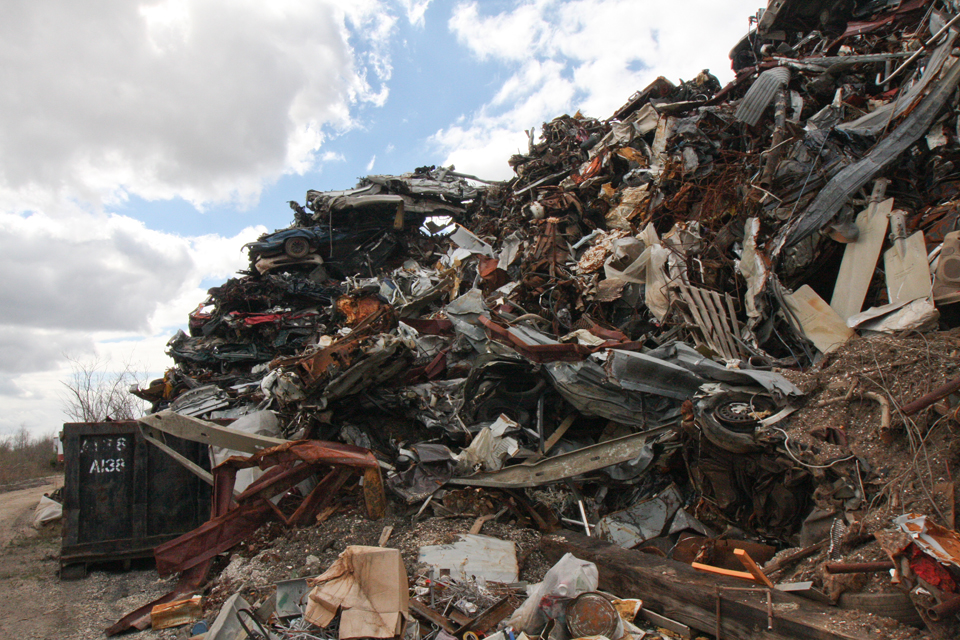
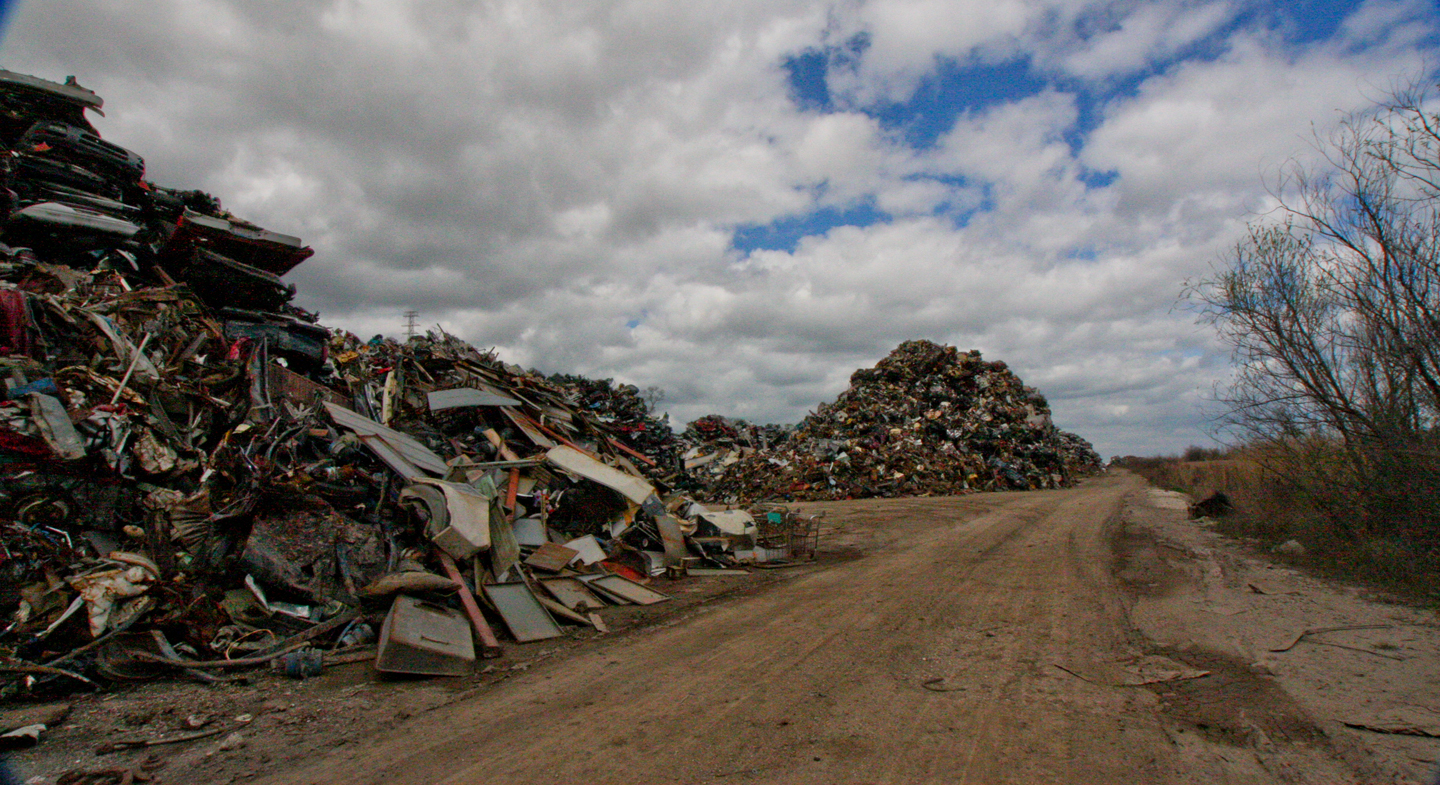
I’d been staring out a window at a flag whipping in the wind for several days, when I had the opportunity to go onto the scrap yard where we’re doing some concrete work. This particular scrap yard goes on for acres and acres, with all sorts of industrial items that have been scrapped and are awaiting the shear or to be loaded into a barge, bound for some foundry somewhere. This particular pile is where the crushed cars are stacked, and when I looked through the lens, I only had the sense that there was a possibility of beauty amongst items that are past their prime, dying or decaying. It’s an odd thought, but I took a few wide-angle shots, just to sort of “see” the items, to start filtering out the surroundings and try to focus. 

That’s when I noticed the red in the image, and I walked around the pile until I saw the red car.  Ribbon Car (original image)I loved the way the metal seemed to bend and flow, like a ribbon (flag) in the wind, and I zeroed in on it and grabbed a shot. I was losing the light and we had to go, so it’s a crappy shot with bad exposure, but I knew I could edit it.

And see, that’s really the trick when it comes to art of any kind. It’s not just the idea–it’s the vision. What makes a piece unique and memorable is the artist’s specific vision: what they want to communicate, what story they want to tell. That story doesn’t generally happen in the first draft or without some sort of editing. That editing might occur internally–especially after the artist has some years of experience and knows what they want to look for, how they want to capture it. With practice, they may be able to execute that vision on the first try. Most creations, though, take editing–layers of thoughts, sifting–yes to this, no to that–tweaking here, highlighting there, focusing the emphasis where the artist wants your eye. 

Most people will never see the thousand decisions that go into a story, if it works well. It’ll flow, make sense, be captivating, surprising-and-yet-somehow-fated. As artists, we need to also remember that it’s not terribly likely that we’re going to turn out something that is perfect on the first try. It may take layers and layers of editing before we get the story or the image into the shape we want, to tell the story that we want.

I’m in that place now with the new book. The first draft was done about a month or so ago, and I love three-fourths of it. I do not love one aspect of the ending (and I knew this all along), but I hadn’t quite seen through the debris of ideas to find the single way it had to be told. It took time away from it and then stepping around the pile, zooming in and seeing a specific section of the bigger image before I suddenly knew what I had captured, and therefore, what to enhance. Sure, I wish I had been able to turn out a pristine perfect draft out-the-gate and never have to edit, but that’s not the way I process ideas, so it’s never going to happen that way. I’ve made my peace with it, mostly because I love the editing process. (I love painting and photography for the same reason.) 

Ironically, what started off as a quickie photo shoot turned into something startling to me, which then informed some of the writing I’m working on in a way I had not ever anticipated, so that was a bonus. Plus, now I am (on the side, as a hobby) working on a series of “ribbon” images like the red car above. I think it’ll help me see with a fresh perspective.

So what are your hobbies, fellow ‘Rati? What do you like to do just for the joy of doing it–because you love the process, not because you’re necessarily any good at it. What is it that you love about it? And if you don’t have a hobby, but have been thinking about one, which one, and why?

[By the way, I’m having a contest right now for a free Kindle or Nook, plus some gift certificates. See my site for the news / newsletter / rules. Today is the last day to enter. I’ll be running more of these contests this summer, so sign up for the newsletter if you want to hear about them sooner.]


From Alley Cat to Galley Cat

by JT Ellison

Well Hi!

Yes, I am in the deep south. Sophie Littlefield and I are on our Stealing Souls tour – and let me see, what day is it? Friday? That means right about now we are just leaving Memphis heading back to Nashville, and will be doing our 5th event in 5 nights tonight at one of my fave stores, Reading Rock Books in Dickson (7-9 – y’all come!)

Sophie and I have had too much fun for words – working hard, playing harder, visiting with old friends, making new ones. I’ve been so incredibly impressed with every bookstore we’ve visited. Perhaps it’s an occupational hazard, but bookstore folk are terribly gracious and kind. We’ve been lovingly welcomed across the south this week, and we are forever grateful to everyone who’s worked so hard to make these events successful.

With that said, I’m going to share a different kind of blog today. I’m sure y’all have all heard me talk about my precious cat. There aren’t a lot of drawbacks to being on the road, but missing my hubby and my kitty are at the top of the list. That said, I have gotten a ton of work done. Once you read below, you’ll understand why. Sophie is a darling, but she and I may be drafted for the Valkyries, or the Amazons, and she’s not spending a lot of time curled in my lap.

So, without further ado, meet my alleycat, who has turned into a galleycat.


I’ve been having trouble working lately. It’s not what you’re thinking – I’m not blocked. I’ve got plenty of ideas. I’ve got lots of time, full days free of encumbrances, all waiting patiently for words to fill the moments. 

No, the reason I’m having so much trouble is my cat.

Jade is a tiger striped rescue who has never let me forget how much she appreciates the fact that I picked her. When I first saw her at the pound, she was five weeks old, suffering from a bad cold. So bad that they were going to put her down. They can’t afford to have sick kittens in the cages; disease spreads too quickly among unloved animals.

They’d named her Tori. She had the most inquisitive, if rheumy, green eyes. I knew immediately I had to take her. I couldn’t let this poor thing get put down because she’d been weaned too early and struck out on her own, a little stripedy runaway. She had gumption, I could see that. Desires, dreams. She wanted a bigger world than the one she’d been dealt. She was a renegade. Perfect.

She was also a five-week-old kitten who was terribly sick. The vet around the corner took her in, nursed her back to health, and she came home with us. A yowling little ball of fur who was the most fiercely independent cat I’ve ever had.

She took up residence on the pillow at the corner of the l-shaped couch and pretty much stayed there for the next several months. She was a sweet, lovely little thing who didn’t like people food, wanted her chin scritchies on her terms, and determinedly made a friend out on my husband, who wasn’t what we like to call a cat person.

I adore her, as you can tell.

We go to special lengths for this cat. When we travel, she has her own personal babysitter who comes over and stays with her, watching television and reading books to her. She absolutely can’t be boarded, she turns into a neurotic, shaking mess around other animals. She’s afraid, afraid! of other animals – so scared that she’s an only child. When my parents come to visit, she takes up residence under my bed, hissing and growling at everyone who dares come near. It’s hysterical, especially since she’s a regular hussy with anyone else who shows up on our doorstep. It’s only my parents, who arrive bearing their own cat and a little dog, that send her into paroxysms of kitty terror.

What must she have seen in those five weeks before we made her our own? What terrors haunted her days and nights? I’ll never know.

So Miss Jade, my fiercely independent, won’t allow herself to be picked up, I am my own cat, thank you very much, cat has suddenly turned into a lap cat.

This is a problem on numerous levels.

First, I use a laptop. Operative word – lap. I’ve been spreading a bit as I age, but I’m not to the point where I can accommodate a cat and a computer. And she doesn’t take no for an answer – she’s going to get in my lap whether I want her to or not.

We battle for several hours in the morning. She curls up while I’m going through my RSS Feeds, then jumps off. Rinse and repeat times about ten. The teakettle will be whistling, and I can’t get her off. Okay, okay. I should say I don’t have the heart to kick her off. It’s been a wintry winter in Nashville, with lots of snow and little sun, and she’s getting older, and her joints get cold. I debated getting her a heated blanket. But it’s nice to have a furball in your lap. She’s warm. She purrs. She gazes at me adoringly when I scratch her ears.

Yes, yes, I know. She’s playing into my ego. I’m enamored of the idea that this cat, who I chose, has also chosen me.

But wow, it’s hurting my word counts.

Jade is also the reason I got published. I worked for the vet who patched her up for three days (I thought I’d be working the desk, but he wanted me as a tech in the back. Bad. Bad. Bad. After my first neutering, I was done.) I was quitting on Friday, and on Wednesday I picked up a large golden and herniated a disc in my back. That led to surgery, and recovery time, and library books, where I discovered John Sandford. The rest, as they say, is history.

Tell me about your critters today! I’ll send one of you a copy of my new book, SO CLOSE THE HAND OF DEATH, which definitely isn’t about sweet, soft kittens, and make a donation to your local animal shelter.

Wine of the Week: a gem from Atlanta, and so apropos for our tour —Chronic Cellars Purple Paradise

PSA RERUN

I’d like to first thank Allison Brennan for stepping in for me two weeks ago.  Her excitement about Justified is infectious and I can hardly wait for the day I can finally start watching Season II.  Not only did she do a kick ass post but she was gracious too.  She said that I allowed her to take my blog turn because I was in deep deadline.

Allison, it was more like I was in deep doo-doo up to my eye bags, and you provided a straw through which I could breathe.  Thank you, friend.

Although The End of this latest book is in sight, it’s still pages away so I ask that you permit me to rebroadcast in part a post (edited) from nearly 2 years ago.  It’s not as clever as Pari’s PSA from last Monday but I’m hoping it might persuade some of my fellow 50-ish friends to get off their butts, literally, and take action. In the past several weeks, the importance of good health has been made painfully clear to me.


100 Feet of Joy

I had been putting it off for several years. 

Not that I was afraid, mind you. Such things don’t really scare me a whole lot. But most of the people I spoke to who had been through it told me that the truly awful part was not even the event itself.

No, they said, it’s the preparation that will kill you…

I went for a check-up several months ago and was ordered by my doctor to get a blood test.  A few days later, my doctor’s office calls and the nurse says, “Your tests were all fine, except you’re anemic. The doctor wants you to get a colonoscopy.”

Oh, joy.

But I was overdue. As I said, I’d been putting it off for several years.

I went in to see the gastroentronologist and he described the procedure to me, and for those who don’t know, a colonoscopy is basically when the doctor sticks a camera up your ass and takes movies of your colon. All of it. From top to bottom.

But no sweat, right? I’ve known people who have had one, and they all said they were put to sleep. Didn’t feel a thing.

“We won’t be putting you to sleep,” the doctor tells me.

“Say what?”

“You’ll be given a mild sedative that will calm you and make you a little drowsy, but I’d prefer you to be awake so we don’t have to worry that you’ll stop breathing.”

“Say what?”

“Oh, and don’t worry. I very, very rarely puncture the colon wall. My track record is quite good.”

“Say the fuck what?”

That isn’t the conversation verbatim, but that’s pretty much how it felt. 

I was really not looking forward to prep night. The worst thing, I was told, is that the stuff you have to drink tastes so awful that it’s nearly impossible to choke it down. And you have no choice but to drink it. The doc needs you COMPLETELY cleaned out or he can’t go forward with the procedure.

Finally, prep night came and I dutifully mixed up a liter of MoviPrep and, as instructed, I downed a glass of it every fifteen minutes until it was gone.

And you know what? It wasn’t bad at all. I’ve tasted much worse, believe me. Hell, a gin and tonic tastes worse to me.

So I had no trouble at all downing the liquid other than the simple fact that I felt like a bloated buffalo. The last glass was chugged in one gynormous gulp and I gagged a little toward the end, but a quick mouth rinse and I was fine. It was certainly not even close to being as bad as everyone said it was.

The next morning, at 4:30 am, I had to drink another liter of the stuff and spend more alone time. Then around noonish, feeling clean as a whistle, it was off to the clinic for my date with destiny.

I wasn’t really nervous. The nurse who took my blood pressure will attest to that. For some reason hospitals and clinics and the like don’t really scare me. I figure I’m there for something that could potentially save my life, so what’s to be nervous about?

A few minutes later, they finally wheeled me into the operating room (or whatever the hell you call it) and hooked me up to a couple machines. Then the nurse gave me a couple shots of some stuff that was supposed to make me sleepy.

Which it didn’t. Not one bit. And as I turned, I saw this technician walk into the room carrying a coil of what, I swear to God, looked like about a hundred feet of black garden hose.

And that’s when I REALLY got scared. Holy shit, I thought. THAT’S what’s going up my ass.

It’s a miracle I didn’t faint. But what’s even more of a miracle is that, despite the fact that I was wide awake, I did not feel a thing.

Oh, a slight bit of cramping and discomfort when they had to turn a corner or two, but for the most part, it was the proverbial walk in the park and — get this — I watched it all on TV.

I don’t know what drug they gave me, but it was certainly made by someone who knew his stuff. And I can say, without hestitation, that I have one of the most handsome colons I’ve ever seen.

The whole thing was completely fascinating.

And, fortunately, I was given a clean bill of health.

So, what, you may ask, does any of this grossness have to do with writing? Well, I can guarantee that this material will, at some point, wind up in one of my books. I don’t know when or where, but it’s bound to work its way into a story somehow.

That night, I started thinking about possible scenarios. Imagine if they hadn’t given me any drugs before uncoiling that 100 feet of joy?

Anyone remember the dentist scene from Marathon Man?

What if, instead of a dentist, the interrogator was a gastroentronologist?  I can just see him hovering over the hero, the nozzle of that hose poised and ready to make entry as he says:

“Is it safe?”

Moving Clouds


By Louise Ure


Alafair was right yesterday … the weather does affect us in inestimable ways. It was 109 degrees when I left Sydney and it snowed here in Tucson Sunday, for the first time in decades. (Of course, it’s70 degrees here today, but why let a good whine go to waste?)

I’ve returned to Tucson to finally settle my mother’s estate. She died two years ago this week, but the whole family got caught up in other – and in my case, more dire – circumstances and we couldn’t get things settled until now.

It has been decades since I’ve been here for longer than the expected four day Christmas visit. This time, although it’s fraught with potential conflict, I have the time to see the whole extended family, to eat at all my favorite restaurants, and to drive up to the foothills to see the snow if I want to.

My family numbers in the hundreds here, although there are probably only six or seven surnames involved. (No jokes about white trash marrying cousins of the same name, please. We have lots of males in the family and they in turn married into big families and sired lots more males.) But it’s the women in the family that hold it together. The women who care for the generations before them and behind them, who safeguard the memories, who tell the stories, who dust off the pictures. I celebrate them all.

If I knew that the bombs would blast on a certain day, I would make sure to gather this whole extended clan of siblings and cousins and nephews and in-laws. Among us there is a farmer, a rancher, a chicken breeder, a scientist and a teacher. There’s also a judge, a bookkeeper, a house builder, a songwriter, and a couple of nurses. In going through all the old family papers these last couple of weeks, I see that I am not the only or even the best writer among us. Taken as a whole village, the people I am related to could recreate the world.

Of course, we’ve got our fair share of ne’er-do-wells and dope dealers and scalawags, but that’s what makes it interesting.

In all my visits these last few decades, I’ve stayed at hotels here and maintained a polite but friendly distance from my three siblings. They didn’t have room for us to stay, and it felt intrusive to me. This trip we’re all staying together. We rise together and go bed together. And in between, we eat too much and laugh at jokes both old and new.

I have rekindled my happiness in making calabasitas and chorizo in my mother’s kitchen. I have once again recognized how important my siblings are to me.

In the 1970’s, trying to describe my brothers and sisters, I wrote a short essay about how each of or them would react to a boulder in the road ahead of them. I wrote that my eldest brother, Bill, who died of cancer at 29, would not have noticed it, intent on an architectural challenge he was working out in his head. My only sister, the other half of the coin to my lack of empathy, would have placed hands on the rock to understand why it was there and try to love it out of the way. The middle brother, a scientist and thinker, would have fashioned a giant lever to move it aside. And the baby brother, faster with fists than with rationale, would have beat against it until both he and the boulder were depleted.

They have not changed since then, nor has my opinion.

But we’re laughing together again. And together, whether it’s with love or a lever, we’re going to get this god damn boulder out of the way.

Tell me a story about families, ‘Rati. Either the one you have or the one you wish you had.

An interview with the ever fabulous Simon Wood

by Toni McGee Causey

Many of our ‘Rati know and already love Simon Wood, an alumni of Muderati from ‘back in the day. (See his blogs linked over in the sidebar.) I am absolutely delighted to get the chance to get to know him a little better.

He is, as you will see, pretty damned terrific, and with a (seriously, great) new book out, LOWLIFES, I know you’ll enjoy this one and want to go grab the book as soon as possible.


On with the interview:


TMC: What drew you to writing crime fiction?

SW: Old movies.  As a kid, I loved watching the black and white noir movies of the 40’s and 50’s as well as the movie serials such Sherlock Holmes (with Basil Rathbone), Charlie Chan, the Saint, The Falcon, etc.  From there, I developed a love of the genre, which led me to reading the books.


TMC: What types of crimes interest you the most? Is there a theme that runs through all of your works? Related themes? If so, what are they, and why do these appeal to you?

SW: Decisions are what interest me most about crime fiction and it’s a theme that runs through all my stories—not intentionally, but it’s a topic I’m drawn to again and again.  Decisions are the things that land characters in trouble.  Anytime a character thinks they can get away with bending the rules.  What series of actions has a villain made to make them the criminal they are?  And how similar are the hero and villain and what will these people do to condemn or redeem themselves?  It comes down to the decisions they make. 

In most of my books, the protagonist usually strays from the straight and narrow and it leads to whole world of trouble.

I think the fascination with decisions with respect to crime comes from some of the people I grew up with.  Several of the kids I grew up with ended up as killers or hardened criminals.  They were no different than me.  In most cases, they grew up in much better environments than I did, but for some reason, they took a path in life that led them down roads they could never work their way back from.


TMC: What is the biggest risk you’ve taken in your life?

SW: I would say coming to America.  I met my wife, Julie, in Costa Rica in ’96.  A relationship developed but she lived in the US and I lived in the UK.  We used to meet in different countries every few months.  We came to the decision that we wanted to take our relationship to the next level.  So I left a good job with good prospects, sold my house and moved to the US with no job, all to see if I could make a relationship work with a girl I didn’t know very well.  It didn’t seem like a huge risk at the time, but it seems slightly insane now.  J  That said, if I hadn’t taken that risk, I would have never gotten into writing.  Now wouldn’t that be a shame?


TMC: What five words (alone, or as a sentence), describe you best?

SW: Most likely to start trouble.


TMC: What makes you cry? laugh?

SW: My pets.  I rescue animals and my household is filled with four legged critters who possess the capacity to fill me with joy and break my heart.


TMC: What (other than politics or religion) makes you feel outraged, wanting to rant?

SW: Alien abductees—what made them so special?

Cell phone users—put the damn thing down.  We can all hear you and you aren’t that interesting.

Parking lot trawlers—people who’ll bring a parking lot to standstill while they wait for a good parking spot that doesn’t exist yet instead of just parking.

People who wear flip-flops—get some proper real shoes.

Nearly sports—cheerleading and competitive eating aren’t sports.

Reality TV—what’s so real about it?

Prius drivers—it doesn’t give you license to push everyone else around on the road.

Dell computers—I swear they’re designed to implode the day after their warranty runs out.


TMC: What is your favorite curse word?

SW: I’m a combinationist.  I like to put swear words together to make a super swear word.  I don’t have a favorite one.  They’re usually tailored to suit the situation.


TMC: What is the most interesting thing you’ve done in the pursuit of research?

SW: Worked for a Private Investigator.


TMC: Are you the person you thought you’d be growing up? How are you different?

SW: Nope.  I think I had a clear plan of where life was going to take me.  Now, I don’t have a clue.  Life’s way too unpredictable.  I’m an engineer who writes fiction and lives 5,500 miles from home.  That was never in the script.


TMC: What would you change about yourself?

SW: Physically, I wish I were an inch or two shorter.  Personality-wise, I wish I saw the bright side instead of expecting the worst.


TMC: What would you keep the same?

SW: My ability to turn a bad situation around.


TMC: On to book questions:

Tell us a little bit about the genesis of your current book.

SW: Lowlifes is my current book and it centers on
 Larry Hayes, a San Francisco Police Detective who wakes up in an alley with no memory of the last four hours, but suspects he might have killed his own informant, a homeless man called Noble Jon.  What makes this book different from anything else I’ve written is that it’s a multimedia story.  Larry Hayes’ point of view is played out through the book, while a short film told from the POV of another character supports the story and another character gives their account through a fictional blog.  Filmmaker, Robert Pratten, approached me last year to collaborate with him on the project.  He asked me to write the various facets based on his basic outline.  The whole thing was written in a way that the book can be read by itself, but if someone goes the extra mile and watches the movie and reads the blog, they’ll get a far more in-depth view of the characters.  As something I hadn’t done before, I jumped at the idea.  People can go to www.lowlifes.tv to read the book and blog and watch movie.

[toni’s note — I find this utterly fascinating, this integration of media. I would love to see more of this, particularly in the e-book world, where the multi-media could be played out on iPads and their ilk.]


TMC: What else is happening in Simon World?

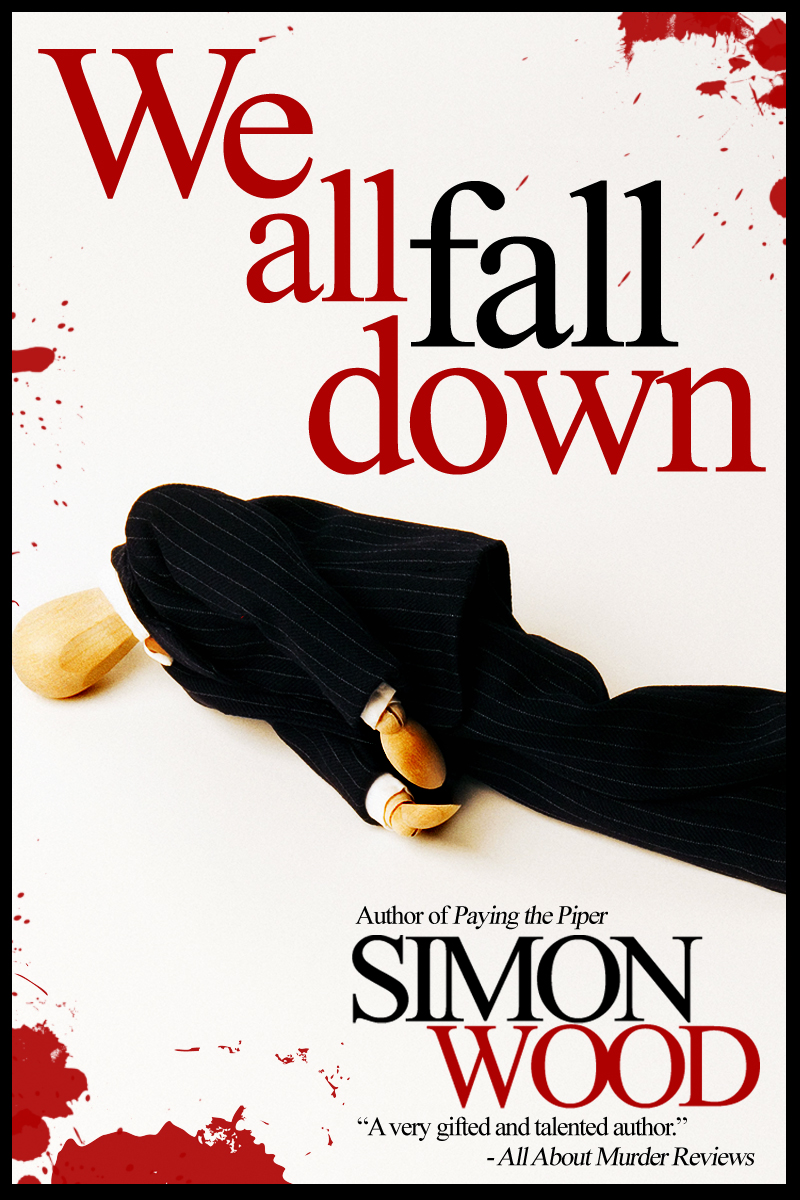
SW: I secured the rights back to all four of my titles from my print publisher, Accidents Waiting to Happen, Paying the Piper, We All Fall Down and Terminated.  I’m happy about this as I can explore options.  I’m currently following up on interest in audio books and translation.  Sadly, all four titles are hard to find in print form these days, but I’ve just uploaded them as eBooks.  I’m looking forward to the second lease of life I can give these books.


TMC: And finally, tell us a little bit about your next book–something we won’t know just by looking at the flap cover or the reviews.

SW: Did Not Finish is my next book and this is the first book in a series based in the world of motor racing.  I raced open wheel in the UK a long time ago and for years I’ve wanted to do to motor sport what Dick Francis did for horse racing.  I wanted to give the public some insight on my chosen sport (fictionally speaking that is).  The sport is teeming with some great fables and events that provide great potential for mystery fiction.  I’m going to enjoy blending fact and legend to tell some entertaining crime stories. 

You can find Simon at his website, or on Twitter or Facebook

Okay, question for you fellow ‘Ratis… do you have a road not taken? A “there but by the grace of God go I” moment where your life changed (thankfully)? I’d love to hear it. And meanwhile, all commenters are eligible to be entered for a $25 gift card to an online store of your choice award–(remember the indies). 

Winner from two weeks ago:  Mit! Congratulations, Mit! Email me at toni@tonimcgeecausey.com and let me know your bookstore of choice and an email address where you’d like to receive the card.


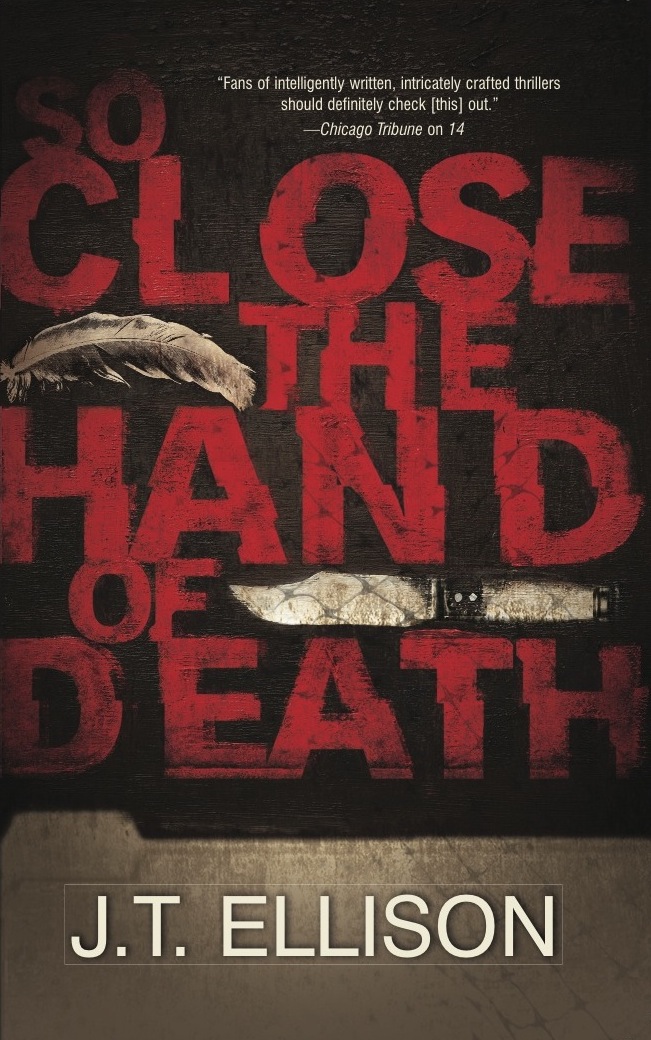
SO CLOSE THE HAND OF DEATH

by JT Ellison

I can hardly believe I’m saying this…

It’s that time again. I have a new book coming out on Tuesday. SO CLOSE THE HAND OF DEATH is the sixth book in the Taylor Jackson series, and the sequel to 14. The Pretender is back, and finally making his move on Taylor.

When I started this series, I planned to avoid any and all tropes from the thriller genres – damaged heroines, lurking serial killers, brilliant villains, skeletons in the closets, the works. And guess what? My naïveté was astounding. Over the course of six novels, I’ve come to realize that these are the many characteristics of the genre. They aren’t tropes, but instead vital, exciting vehicles for both character and series growth. Who wants a character who is too perfect? Who wants a villain who is simply a blunt instrument? Who wants the whole story laid out for them from day one, with no hope for growth, or opportunity for falling down?

Not me. Not anymore.  As I’ve grown as a writer, as a world builder, I’ve come to understand some of the fundamental truths about storytelling. The most basic of those truths is this – as long as it’s grounded in an element of reality, it’s going to work.

Is it possible for a serial killer to target a homicide cop? Of course it is. Permission granted, ma’am. Sally forth and murder at will.

Oh, if it were only that easy…

We’ve talked at length about the writer’s journey, about how sometimes you just have to get out of your own way and let the story do what it’s meant to do. I had to do just that with So Close.

Because, you see, So Close sees a different side of Taylor Jackson. She is her own anti-hero – not noble, not just, and certainly not worth looking up to. She is driven by a force out of her control, one that taps into the edge of darkness she treads along so very carefully. That force is revenge.

Revenge is a tricky thing when you’re working with a hero. Especially a hero you’ve set up to be militantly GOOD. Good people don’t plan to murder. Plain and simple.

And yet, here I am, with a book about a militantly good person who is planning the demise of another human being.

I blame James Bond.

I was struggling with the facts of the book. In order to make things go the way I wanted, I had to allow Taylor to drop her goodness, even if just for a fraction of a second, and contemplate taking another life on purpose. The minute you decide to let a character out of their proscribed box, the blackbirds descend, cawing incessantly. You can’t do that.

Caw – People will hate you for it. Caw – They’ll hate Taylor. Caw – No. Caw caw – The answer is definitively no.

Hey, blackbirds? Fuck off! My book. MINE.

And so it went, for several Sisyphean writing months, until one night, late in the evening, after all sane people had gone to bed, I was watching Casino Royale and Quantum of Solace for the umpteenth time. I’m a big fan of Bond in general, all things Ian Flemingish. I’m a Connery girl. I always thought I’d hate a blond Bond. Boy was I wrong. I think Daniel Craig is a brilliant addition to the mythos. He has that caged fury that is so necessary to an assassin. Yes, he’s suave and debonair. Yes, the ladies all want him. But this Bond recognizes that an element of his soul is black, and instead of running from it, he embraces it.

In Quantum of Solace, Bond is out for revenge. He’s going to take down the people who stole his lover from him. Irrational, yes. Ill-conceived, absolutely. People around him begin to get hurt. And yet he strives onward, never looking back. No regrets.

And we cheer him.

We laud him.

We understand.

And we wish we could do the same.

Oh.

So at two in the morning, I realized that yes, by God, I could allow Taylor to follow her instincts. I could allow her out of her box, unleash her on the world, to hunt the man who has been hunting her. Even a cop can succumb to vigilantism, especially when the people around her are getting hurt.

I finished the book. It worked, and I think, worked well.

Lots of crazy things happened while I was writing  SO CLOSE. We had a title change. We had a date change. But most notable was the loss of my editor, Linda McFall. There is nothing, nothing! worse than losing your original champion. I hated to see her go. We’d formed a very symbiotic relationship, one that needed only nudges in red to get points across. So I was lost, both career wise and book wise, for several months while we decided who would take over editing me.

I was thrilled when Adam Wilson, my assistant editor of the first four books, took up Linda’s mantle. I turned the book in and we began the journey of revising together, each learning from the other, until this puppy was whipped into shape. I think Adam’s touch on this book made it what it is. He wholly embraced the concept of Taylor as vengeful angel, owned it with me. Together we found the exact right path to lead her down.

Taylor as vengeful angel. How far we’ve come in three short years.

SO CLOSE THE HAND OF DEATH officially goes on sale Tuesday, though there are certain online retailers who have it available already. The audio book, coming March 1, is performed by Joyce Bean, and a true tour de force. I hope Joyce gets major recognition for her work on this book – she’s taken my words and created a world I never knew existed. It’s an intense experience listening to your own work . Usually I have to stop after a few chapters, cringing at word usage or phrasing, lamenting my purplish, bruised prose…. But on this? I forgot the book was mine and got caught up in the story – she’s that good. Digital copies are available for all your ereaders. And to celebrate, for a limited time, SWEET LITTLE LIES is on sale for just 99 cents. And if you send me a copy of your receipt for SO CLOSE, I’ll send you SWEET LITTLE LIES for free, and enter you in a drawing for a brand new Kindle.*

I forget sometimes how exciting it is to have a new baby out in the world. Whether it’s simply distraction, worrying about the next book, and the next, a self-defense mechanism in case of bad reviews, or a concern with overloading my fine friends and readers with BSP, I haven’t been going all out shouting this one from the rooftops. But I’m here now, asking you – please, buy the book. Read it. Let me know if you think Taylor is wrong.

I bet you don’t.

Because we all need someone to play the hero.

And a little extra incentive today – tell me you’re favorite hero or anti-hero and I’ll send one commenter a signed copy of the book.

Wine of the Week: Veuve Cliqout, to celebrate the baby’s arrival in the wild.

Talent borrows. Genius steals. Evil delegates.

It’s a hideous echo of a violent past. Across America, murders are being committed with all the twisted hallmarks of the Boston Strangler, the Zodiac Killer and Son of Sam. The media frenzy explodes and Nashville homicide lieutenant Taylor Jackson knows instantly that The Pretender is back…and he’s got helpers.

As The Pretender’s disciples perpetrate their sick homages – stretching police and FBI dangerously thin – Taylor tries desperately to prepare for their inevitable showdown. And she must do it alone. To be close to her is to be in mortal danger, and she won’t risk losing anyone she loves. But the isolation, the self-doubt and the rising body count are taking their toll: she’s tripwire-tense and ready to snap.

The brilliant psychopath who both adores and despises her is drawing close. Close enough to touch….

“Ellison’s sixth novel featuring homicide lieutenant Taylor Jackson is arguably her best book to date. A tense thrill ride filled with secrets, raw emotion and death, newcomers will love it as much as her longtime fans. After completing this one, you will scream for the next book.”
– Romantic Times, 4 1/2 Stars TOP PICK!

Read an Excerpt of SO CLOSE THE HAND OF DEATH here

Listen to the soundtrack of SO CLOSE THE HAND OF DEATH here

* Click here for more details on this special offer