Author Archives: Murderati


Why so dark?

by Alex

We’ve talked about what our literary influences have been, and JT talked yesterday about how we collect characters from around us (that is, so I hear – I wasn’t able to get on for some reason).

But I spent a couple hours yesterday in an interview talking about how to write horror and that got me to wondering about the life incidents that led us to choose this dark genre of ours (some of us darker than others….).

For instance, I realized after seeing the movie ZODIAC this week that the Zodiac killer was a huge early – influence?  Inspiration?  Impression?  What I mean is, I grew up in California and even years after this guy had dropped off the map, we kids were scaring ourselves senseless by telling ourselves Zodiac stories around the fire at Girl Scout camp. He was our Boogey Man.   

My dad grew up in Mexico and he had a passel of ghost stories that he’d pull out around the campfire to scare us with.

Also, since Dad is a scientist and Russian, and attended a lot of scientific conferences that got turned into family road trips, I have early memories of us in the family station wagon being followed by the CIA because, you know, Russians were out to destroy the world at the time.    All that ever happened was that they followed us around but naturally I’d spice the whole thing up in my imagination – my first attempts at thrillers.

It’s only recently occurred to me that perhaps I write ghosts because I went to a haunted high school – specifically, the grand and decrepit old auditorium where I spent most of my high school, rehearsing choir programs and plays, was supposedly haunted by a girl named Vicki who died the night of her prom back in the 20’s.    Yes, yes, I know that’s a classic urban legend,  but we all believed in  Vicki, and there were parts of that auditorium where you just didn’t want to go, alone or with others.    Cold spots.   Strange noises.   Disappearing props.   

(But somehow it never once crossed my mind while I was writing THE HARROWING that I was writing about a haunted school because I went to a haunted school).

I also had some pretty scary experiences early on in life that made me realize that there was evil out there.    A child molester who’d been trolling the streets around my elementary school tried to grab me one afternoon when I was walking home from school.   He was a small and creepy man, and even though I didn’t have any sense of what child molesting was at the time, I knew there was something just wrong with him and I ran.    That was my first full-on experience of what evil looks and feels like, and it’s not something you forget or let go.

And I had friends, as we all do, who were not so lucky about escaping predators, and the anger about that has fueled a lot of my writing.

There’s more, of course, and once you start thinking of influences, it’s pretty fascinating how much you uncover about your motivations.

So I wondered what kinds of experiences from real life have made you all the dark, twisted writers you are…. and what in their own lives would make our ‘Rati readers seek out this genre?

The Great Character Co-opt

JT Ellisoncoming to you from a beachside tavern in sunny central Florida…

I’m away this week, celebrating a most blessed event. My parents have been married fifty years today. FIFTY years! Can you imagine being with the same person for the vast majority of your life? (I can, but I’m lucky.) What an amazing example they’ve been to me, both in life and in love. Thanks, guys!

I love creating characters. They come from within and without. Today I’d like to talk about the characters that are inspired by people you may meet — the ones with personalities, looks, language abilities (or lack thereof), even smells — the strangers who flit through our lives. How many have you come across who are so striking you feel compelled to co-opt them directly into your manuscript?

Simon had a great post a while back about people’s hidden superpowers. I said at the time that I had none. Since I’ve had time to think more about it, I realize that my secret superpower is to be in situations where strangers feel it necessary to share their innermost secrets with me. I also seem to attract people very different from myself. I’ve always seen that as a blessing. Now that I’m writing full time, it’s a bit deeper than that.

I’ve had two of these run-ins this week alone. It got me thinking about the effect these chance meetings have on my writing, and the simple fact is I co-opt these people, fictionalize them and slap them into my books or shorts.

The first was a woman, late forties, bleached blond hair in a Farrah flip, lots of make-up. That was my first impression. I watched her stand in front of a mirror, a large make-up bag at the ready, reapplying another layer of foundation. She moved on to her lips, then refreshed her eyeshadow and mascara. She turned to me and I thought she looked a bit like a Kewpie doll, all dressed up and nowhere to go.

I was getting a pedi, in preparation for this trip. She came and sat next to me, shoulders slumped. She dunked her feet into the water and I noticed her wedding band, on her third finger. I saw the veins running under her nearly translucent skin, blue and sluggish, and realized she was terribly thin. And pale. She spoke in a whisper, telling the tech that she’d just left the hospital. There was a problem with her heart. They didn’t know what it was. She talked about the tests, the uncertainty, how very alone she felt.

She was in the shop the entire time I was there, and I overheard most of her story. Her husband was cheating on her and had just filed for divorce. A sister was dumping problems on her which seemed like minutiae compared with possible congestive heart failure. She felt taken advantage of by everyone in her life, was complaining bitterly about how bad things were. I started to wonder if perhaps she just had a broken heart, a real live broken heart.

Snip. She went directly into the mental tertiary database.

The second was as disturbing, but in a different way. Hubby and I went out to breakfast on Sunday. Our usual spot had a long line, so we went to a different place, a same name chain store two exits up the highway. We took a seat at the counter, ordered our cheesy eggs, and I started looking around. The non-smoking section was made up of an amalgamation of typical middle Tennessee — a middle aged woman in capris, with a Coach bag and fine highlights; an interior designer meeting with a client; two young couples: one with two adorable little boys dressed in madras pants and polo shirts with the collar up, the other childless, faces pinched at the noise.

The smoking section was more ethnically oriented, with several Hispanics and African-Americans sitting along a low counter. Smack dab in the middle of the line-up was a skinhead and his woman. And I’m not talking about some wanna-be young kid trying to look cool, this guy was the real deal — Aryan Nation, prison tats all over him, two giant swastikas on his neck, and a "White Power" T-shirt. And he was yapping. Loudly. Rudely. Enough that the poor African-American waitress behind the counter burned four waffles in a row because she was blinded by tears at the outrageous goings-on. The rest of the folks gamely ignored him, and left quickly. There was one man, with a doo-rag and tattoos so thick on each arm that no flesh showed, sitting with his son, who engaged in a friendly battle of intellectualism with this asshole, but the rest of us sat stiffly, not knowing what to do. To be perfectly honest, I wanted to go tell the skinhead what a jerk he was, but I was afraid. My God, this guy could snap my neck with a single hand. And isn’t that where the problem lies? They can have power, and control, through intimidation alone. What kind of power is that?

But when I put him in the book, and create a scenario around him, my tough as nails cop can engage him. Physically. I’m looking forward to meting out some fictional justice in honor of the innocent people sharing my brunch. Maybe I’ll dissect what made him who he is, how he came to be on that path, search for a reason. Maybe I’ll let him be a stereotype; that’s certainly how I reacted to him in person. Hmm. Maybe I’ll be the one with the power in the end.

I can’t help but steal these strange souls for my tertiary characters. I don’t know who influenced me, but I’ve always felt that it’s vital to a story to make every character count. If they are going to exist in my pages, they need to have worth, big or small. Characters can be drawn with simple strokes or complex explanations. I do a little of both depending on what the scenario calls for.

Do you have a favorite ripped from real life character? And if you’re a reader, what makes these sometimes nameless characters sing for you?

Wine of the Week: Layer Cake Shiraz

From the back of the bottle, a sentiment so fitting for this post — "My old grandfather made and enjoyed wine for 80 years. He told me the soil in which the vines lived were a layer cake. He said the wine, if properly made, was like a great layer cake, fruit, mocha and chocolate, hints of spice and rich, always rich…" A. Orlando

May all your stories and characters be layer cake! And please join me in congratulating New York Times bestselling author Laura Lippman on her first NYT slot (whoot! whoot! whoot!) and fellow debut author Kristy Kiernan, whose brilliant first novel CATCHING GENIUS just went into a second printing, a mere two weeks after its release! (Triple whoots to you too!) Seems I remember predicting people might like that one…

When It All Gets Too Much

Writing is sometimes easy and sometimes a right pain in the arse.  When it’s the latter, it can get real intense.  There I am trying to make words fit into sentences and sentences fit into paragraphs and none of it wants to hang together.  It feels like I’m playing Jenga with sticks of TNT.  After days of banging my head against the problem, the whole thing loses meaning.  Verbs become mystical creatures that gallop lavender meadows.  I don’t know a period from hole in the ground.  In the end it feels like I’ve been staring into the sun for a week and it hurts when I look away. 

When I’ve gotten to this stage, it’s time for a break (psychotic or otherwise). There’s no point sitting at the keyboard any longer.  I have to put some distance between me and the problem by doing something else much less difficult—like creating cold fusion or solving world hunger.  Actually, I find something really mundane helps.  It’s like a palate cleanser.  It clears all my preconceptions and allows a clear flow of thoughts.  Before long, I have the answers to my problems.

So what things do I do to clear my mental logjam?  I usually take Royston for a walk.  This has sort of lost its effectiveness.  Royston used to be a Great Dane and I’ve worn him down to a dachshund.  I say, “Royston, it’s time for a walk.”  He looks at me with that “another bloody walk” look and runs away.  As soon as he hears me swearing at the computer screen, he sneaks off to hide the leash. 

Img_0539 To give Ro-Ro a rest, I do other things—mainly chores.  I work in the garden.  I have an unstoppable wall of ivy in the backyard and I get out the hedge trimmer and whittle it down to size while moaning, “Character development, my arse!”  Or I get on hands and knees yanking the weed grass out of the lawn while muttering, “So how do you garrote someone when you only have one arm?” 

Another of my decompression exercises is to do the laundry or iron our clothes.  I find it very therapeutic to separate my heavy cottons from my delicates.

Julie quite likes this little trait of mine.  Chores around the house get done.  I get the feeling that when she edits my work she’s not being entirely honest.  I believe she has an ulterior motive.  Just listen to this recent, yet telling remark.  “Simon, I don’t think this scene is quite right.  I’m not sure your character would act this way. Now, here’s a paint brush.  The bathroom needs going over.”

Now I know I could be misreading the situation, but my next book project is going to be a tough one and Julie suggested I should go for it—but lately, she’s been outlining her needs for the kitchen remodel…

Well, that’s how I decompress—how do you get away from it all when you can’t go anywhere?

Yours back from the brink,
Simon Wood
PS: Remember the phrase "Novice Hero."  Don’t ask why.  Just remember where you heard it first and be prepared to be called as a witness.

ON THE BUBBLE WITH…ME

New_website_photos_005

If you were expecting a Q & A with Evil E – I’m sorry to disappoint you – because it ain’t gonna happen.  What?  Do you think I’m crazy?   Besides – who was gonna add my usual pithy comments?  But what the hell – I put my photo up anyway.

But – I am ‘On The Bubble’ today.   To say goodbye.

I’m not a cliché person, however, ‘All good things must come to an end’ seems appropriate. Other commitments require my full attention now, and the time constraints of weekly contributions to On The Bubble can no longer be offered with my usual brilliance and alacrity.

It’s been a marvelous year here at Murderati, and I’ve had great fun with all of you – and of course – with some of the best and brightest writers and reviewers around.  Brave souls all – and great sports who braved the danger in the basement as they descended those dark stairs and never once turned on the light as they willingly played with me at On The Bubble.

So (and in alpha order) may I offer my thanks again to: 

Raymond Benson, Cara Black, Stephen Booth, Jim Born, Robin Burcell, Barry Eisler, J.T. Ellison, Robert Fate, Julia Spencer-Fleming, Tess Gerritson, Chris Grabenstein, Paul Guyot, Denise Hamilton, John Hart, Gregg Hurwitz, Alex Kava, Bob Levinson, Laura Lippman, Gayle Lynds, David Montgomery, Donna Moore, P.J. Parrish, Ian Rankin, Linda Richards, Gillian Roberts, Jim Rollins, M.J. Rose, Dylan Schaffer, Alexandra Sokoloff, Pari Noskin-Taichert, Louise Ure, James Lincoln Warren and Chassie West.

My thanks also to Gar Haywood for his wonderful guest blog last week.  Oh, to be so gifted…

And to those wonderful writers and friends who had been waiting in the wings – my apologies for not staying around long enough to give you grief.  So – Heather Graham, Lee Child, David Morrell, Val McDermid, Steve Brewer, David Corbett, Dominic Stansbury, Dan Hale, Shaz Wheeler, Ali Karim, Ken Bruen and Lee Goldberg – drinks are on me at ThrillerFest!  Uh, just the first round.

Many, many thanks for stopping by each week.  YOU – and my wonderful guests – have made the trip loads of fun – and so very worthwhile.

Elaine

Formula for Disaster

by Pari Noskin Taichert

One of the most damning criticisms reviewers and readers can lob is: "It’s too formulaic." The opposite of this dig seems to be the tired "transcends the genre" comment — as if that’s a good thing.

I used to think I knew what these meant. That was in the beginning of my career as a novelist. Those were the same years when I fought the subgenre in which I’d chosen to base my series.

Now, the more I learn, the more I’m confused. You see, I think just about every kind of fiction is formulaic.

First of all, there’s the little question of beginning-middle-end.
Then there’s protagonist-must-grow.
What about there-must-be-conflict?
Could a good thriller not contain hero-must-be-in-danger?
How about dialogue-must-move-the-story-forward?

From where I sit, formulas are everywhere.

IMHO, we bemoan predictability while actually craving it. That’s why genres and subgenres exist in the first place.

We know that in traditional romances, a man and woman meet. They don’t like each other. Something happens to change this initial response. Love blooms. Happy ending (with sex thrown in, please).

That’s why people read romances; they know what’s going to happen. Is there something wrong with that? Does the predictability make the read any less valid or pleasurable? Why does it earn our scorn?

In traditional mysteries, someone is murdered (or there’s another compelling crime). An amateur sleuth rises to the challenge and hunts down clues. He or she figures out who did it. Justice is served. Happy ending.

Opps. Sorry. Too formulaic.

In thrillers, we expect the David-Goliath set up: common man/woman against EVIL. The action, and there’s plenty of it, ratchets up until the breath-taking climax. Little David saves the day, exposes the conspiracy, prevents the virus from being released into the general population. We want that.

In noir, we’re guaranteed that awful things happen in weird ways. They spiral downward and won’t get better (ennui and world-weariness always add good spice here). We want this off-kilter reflection of our world.

Private investigators and policemen (and coroners and forensics experts) take cases and, most often, solve them. We want the experts, the skilled and knowledgeable, to succeed.

Where’s the formula crime perpetrated? In the writing? In the genre? In the plot?

I know that some books, like movies, leave me cold when I can predict the next scene or plot point. For some reason, I don’t want predictability on that smaller level. But if I’m reading or going to a comedy, I sure as hell expect to laugh during the experience.

"It’s too formulaic." What do we really mean by that?

Is there some kind of distinction we draw between micro and macro formulaic-ness? Where, in the work, is the sin committed that merits this horrid condemnation? Why do some books attract that odd praise about transcendence?

I’d love to hear from you about this; it truly fascinates me . . .

I FEEL SO USED

Books

Mike MacLean

I have a dirty little secret.  No, it’s not the man I shot in Reno once just to watch him die.  No, it’s not the "Mayonnaise incident."  It’s much, much worse.

I buy secondhand books.

Of course, not all the books I purchase are used.  When an author I like rolls into town, I always grab something new at the signing.  Or when one of those books come along, one of those intriguing stories that I simply must read, I’m right there with my $25 bucks.

But just as often, I buy used.  It’s not something I’m proud of.

It doesn’t matter that I’m a high school teacher or that my wife is going back to college or that we’re expecting a baby next month.  I still feel guilty buying used books.  I feel as if I’m betraying all those great writers I’ve met over the past few years.  After all, according to both the Authors Guild and the Association of American Publishers the promotion of used book sales, by Amazon in particular, "will cut significantly into sales of new titles, directly harming authors and publishers" (NY Times).

So when you buy a used book, you’re essentially picking the pockets of authors and publishers.  It’s like stealing, right?  I certainly don’t want to steal from writers.  Hell, that’s what I want to be when I grow up–a working writer.

There is, however, another perspective.

At $25 bucks a pop, I’m unlikely to check out an author I’ve never read before.  But if the same book is only $5 bucks, I’ll give it a whirl.  If the novel isn’t for me, I’m only out a few bucks.  I might even give that same author another chance.  On the other hand, if I spend full price on a new book and it doesn’t scream to me, the writer goes on my black list.  More than likely, I’ll never pick up another one of her books again.

What often happens is I take a risk on a used book then get hooked.  Cost be damned, I’m not waiting for the next Lee Child to hit the used racks.  That could be months.  I need it right now! 

According to the New York Times, the sale of used books might have another, less obvious, impact. 

"The presence of a market for used books makes consumers more willing to buy new books, because they can easily dispose of them later. A car salesman will often highlight the resale value of a new car, yet booksellers rarely mention the resale value of a new book. Nevertheless, the value can be quite significant."

Furthermore, despite the comments from the Author’s Guild, I’ve never heard any specific writers speak out against the sale of used books.  Most I’ve met support libraries.  Why not support secondhand book sellers?

In the coming years, the novel will face competition like it never has before.  Low priced DVDs (a new movie is already cheaper than a new hardback).  Video games (which aren’t just for kids anymore).  The Internet (too much stuff).  Who knows what else is coming down the pike.  In the bloody free-for-all for the entertainment dollar, secondhand book sales might just keep a few more readers out there from straying–a few we can’t spare.   

So why do I still feel guilty about buying used books?  Are all the points I’ve explored merely rationalizations?

To published authors out there: What’s your take on used book sales? 

To the hardcore fans: Do you share my shame?               


Let’s Talk About… Gender

by Alex

Ooh, scary.   But maybe I can get away with it because it’s St. Patrick’s Day and everyone’s going to be drunk by noon anyway, right?

Maybe I’ve been thinking about gender and writing because there have been some little mini-explosions on the subject on several listserves/message boards I’m on.   Some female writers challenging a list of favorite mystery authors because there were practically no women on the list.  A guy storming out of a romance writers class on “How Men Think” because, from what I gather, the instructor basically said that – well, they don’t.   (That is an argument I don’t intend to touch, by the way…). 

Or maybe I’ve been thinking about it because I made the unbelievably stupid move of writing my second book from the male protagonist’s POV.   Never again, let me tell you.

I’ve got to say that with a few notable exceptions (Stephen King, Charles Dickens, Ira Levin, F. Paul Wilson… Shakespeare…)  most of my favorite writers in any particular genre, but particularly my genre, are women.   The Brontes,  Jane Austen, Lillian Hellman, Anne Rice, Shirley Jackson, Madeleine L’Engle.   Current mystery reading – can’t get enough of Karin Slaughter, PD James, Val McDermid, Minette Walters, Margaret Maron.

Well, it makes sense, doesn’t it?   I’m a woman,  I think like a woman, I react to the world as a woman.   Don’t get me wrong, I love men (um… to distraction, is the problem…)

But frankly, they’re exhausting.   And reading men can be that way, too.   I mean, it takes work.   Like, it’s great and exciting and sexy and stimulating to travel in a foreign country, but doesn’t it also feel good just to come home, where everyone talks like you do and dresses like you do and you’re not fighting with the language and culture and mores?   Where you can just relax and be yourself?

That’s what reading women is like, for me. 

I’m not talking about quantity, by the way.  I certainly read just as many men as I do women.   It’s the comfort level I’m getting at.

I think it has a lot to do with the fact that I read and write violence.   Crime, mystery, suspense, supernatural terror.   Danger, jeopardy, death.

And it is so cathartic for me to read women writing violence because women live with the threat of violence so intimately that it’s what I can only call a relief to read it from another woman’s POV  (But I won’t go there right now because Cornelia Read did so well with the topic recently, here.).

So given all of the above, why on earth would I be writing from a male POV with this book  (besides the obvious masochism thing, but that’s another post…)?

Well, it’s simple.   Because that was the story.   He was the main character.   So what could I do?

What I found is that it’s MUCH harder to write a book with a male lead than a script with a male lead, because with a book you have to be inside his head all the time.   Which is just, well, scary.   And like being in a body brace at the same time.

Luckily I have male writer friends coaching me along, for which I am eternally grateful, but it’s WORK, people, doing this male thing.

I was talking about my book, THE PRICE, in a college class I was speaking to and (because I seem unable to censor myself these days) railing about how hard it is to write a man, and one of them quite logically asked me, “Why didn’t you just write it from the wife’s POV?” 

Well, that stopped me for a second.   Had I been ignoring the obvious all along?

But no.   While it would have been easier for me to write from the wife’s voice, and while she actually is the one who goes through the most trauma in the story, she doesn’t really CHANGE.   She is ready and willing to make the big move from the very beginning of the story and she does it without question, while her husband is NOT ready to make that commitment in the beginning and he has far more of a struggle with himself to get to that point.   And that struggle is the definition of drama.

So it was, intrinsically, his story, and I had to tell it from his POV to make it a story.

Maybe I should have waited for a couple of books to tackle something so alien, but the bottom line is, the story is the story.   And I want to be a good writer of men, being that you all are half the human equation, and nothing really makes any sense without you.

So I guess what I want here (besides Guinness, because, you know, because) is some commiseration, and/or advice.   

For writers – how have the rest of you dealt with writing from the POV of that other gender, male or female?    Did it flow, or did you feel possessed by the demon Pazuzu?   And for readers and writers -are there writers you feel write the opposite gender (from themselves) really brilliantly?   

Beware the Ides of March…

JT Ellison

Sufficient unto the day is the evil thereof. (Matthew 6:34)

It’s in the air. Can’t you feel it? The pervasive grumpiness, the short tempers, the unkind thoughts, words and deeds. It’s everywhere, this unsettled, speculative funk. It creeps under doors in the middle of the night, infusing its victims with an overwhelming urge to scream, to lash out at their friends and foes alike. And it breeds. Yes, it’s that time of year again. One imagines Ceaser might have heeded the warning had he been a scribe rather than a king.

Winter lasts a few weeks too long when you’re a writer.

I know what happens to me when I’m not getting my proper allotment of daylight. I get cranky. And snappish. And when I’m under stress, which I have been quite a bit lately (go figure) I turn into the wild woman of Borneo, replete in my frustration, tearing my hair out at the slightest provocation. This is not me. It isn’t my personality. And from what I know of the rest of the crime fiction microcosm I call home, it isn’t a normal state for any of you, either.

Now someone on high decided it would be a good idea to move the clocks around early, which means I’m doubly frustrated because my body tells me it’s a different time than the clock, and I’m all kinds of screwed up on my schedule. Grr.

There is a cure. Well, there are a couple of cures. One would be to stop going to list serves and blogs, quit reading email, stop the paper for a few weeks, turn off the televisions, cocoon in our little holes, not having contact with anyone or anything until the days are longer, the vitamin D deficiencies are restored, and people can be nice again.

Or, you can join a basketball pool. That’s right. It’s that time of year again. MARCH MADNESS is here!!!!!!

                        20060121insidelofton_2

The brackets save me. Every year, just when I’m starting to think winter will never end and my husband is about to wring my neck, I get the email from my bracket manager telling me it’s time. Woo-hoo!!! I’m generally not a betting person, but I’ve won big in the pool before, and am completely hooked. I do two brackets each year, one of reasonable chance, and one wildcard, with the 13 seeds moving into the Sweet 16, major upsets, and other unlikelihoods. Last year, my wildcard bracket got me further than my mainstream, and I had a chance at taking the whole thing until Florida made it to the Final Four. Whoops, I just thought of a very ungracious word to call them.

My spirits are rising as I write this, because I know once I’m finished here, and I do my 1,000 words for the day, I get to sit down with laptop, ESPN, the newspaper and my gut, and start making choices so I can turn my brackets in.

This is the exercise that works to drag me out of the winter doldrums. What do you do to call a moratorium on grumpiness??? Is it too early to start hoping for a little sweetness and light?

Wine of the Week: Francis Coppola Diamond Series Merlot

I’d tasted this at a festival and wasn’t thrilled. Had it alone the other night at the hockey game and loved it. Apparently my tastebuds are in betrayal mode.

——-

Late breaking update:

The brackets are submitted and I’ve taken few chances this year. Florida takes it all on sheet 1, Georgetown on sheet 2. If either of them lose early, don’t blame me.

Prepared

I’m ready for the big one—even if I don’t know when or what that is.  Maybe I should explain.  Last week, I qualified to be a disaster relief worker in California after a number of training classes held over a few weeks.    Because of my day job, this was compulsory for me, but at the same time, I was interested in taking part.  When unusual offers fall in my lap, I want to learn more.  The course covered basic fire suppression, first-aid, search and rescue and running a shelter.  The classes were taught by firefighters, the Red Cross, rescue workers and nurses.  It was a little overwhelming.  I feel we only scratched the surface, but at least I have an idea of what to do now.
 
I think most of the people taking the course (me included) had a lot of preconceived notions.  These were dispelled very quickly.  It ain’t like a Hollywood movie.  Nobody runs into burning buildings without a moment’s thought for themselves and others.  There is a method—a whole bunch of it.  It was surprising how callous the decision-making has to be when it comes to search and rescue and first-aid.  Save those who can be saved and do what you can for those who can’t.  Save yourself first.  These were all tricky pills to swallow.  In the simulations, it was surprising how many people forgot that it was all make-believe.  People did what they could for their fellow man and ignored the training.  It was quite reaffirming to see people react this way, although it wasn’t the right thing to do.  I, myself, was blown away by the situation.  I forgot some of the key things told to us and what to look for.  The situation dictated that we had under one minute to diagnose someone’s condition and react accordingly.  With a dozen or so people all screaming at you at once, it’s easy to get swept away.  The simulation helped a lot.  I’d certainly be stronger next time around.  I found I could make a decision about someone and move on to someone else.  I just needed to be better at diagnosing someone’s condition.
 
No wonder there was a part on therapy for the rescue worker.  Although unlikely, I and others could be faced with some very difficult decisions.  There could be a time where the rescuer will have to walk away leaving people behind.  Survivor guilt is a big killer.  It was surprising to learn how many of the people involved in Timothy McVeigh’s arrest and prosecution committed suicide shortly after.   
 
Seeing as my home has been rocked by four small but very noticeable earthquakes over the last three months and there is a prediction of the “big one” in the next eighteen months, I’ve starting viewing things with a worried eye.  Should disaster hit, what is my preparedness?  It doesn’t look too good.  The things recommended seem like overkill—but my preparedness doesn’t even cover the basics.  I have to admit the paranoia has hit and I will be putting together an earthquake kit should we be without power, water and TV.  A hand crank DVD player is essential.
 
It’s been quite a sobering experience and will continue to be.  My training won’t stop here.  There are a number of other areas of disaster training still ahead.  My disaster worker pack sits in a secure location.
 
Regardless of the scenes witnessed in New Orleans, a lot of smart people have put together a well-thought out plan that will save lives and keep the world turning for us.  My only hope is that my training never needs to go into practice.
 
Yours cautiously,
Simon Wood

I Know I’m Good Because…uh…

 by Gar Anthony Haywood
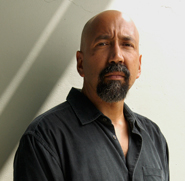
 

Like  everyone else here (I’d be willing to bet), I have a Manuscript In a Drawer.

You know the one I’m talking about.  The orphaned child that Cannot Be Published, because it’s too flawed or too violent, too personal or too counter to the market decrees of the moment.  It shames you, and yet it calls to you.  It is useless because no one else wants it, and yet you have a love for it that will not die.


In my case, the  MIaD is 140 pages of a standalone thriller that has never found a reader who didn’t prove to be indifferent to it.  My agent didn’t get it; my former editor passed on it without breaking a sweat; and the two or three other people to whom I’ve shown it over the years have all responded to it with a collective shrug.


It’s gotta suck, right?


Well…


I still can’t wrap my head around the idea that it might.  It is going on seven years old, and the idea from which it sprang is much, much older than that, but here I am, as convinced as ever that this is one great book.  A modern classic of noir fiction that if I don’t write, some other smart bastard eventually will.

So help me God, I have tried and tried to believe otherwise.  I take the manuscript out of its musty hole every now and then and scour its pages for that thing, that big, ugly wart of mediocrity that everyone else but me can see—lousy prose, phony dialogue, a plot that just drags on and on—and I can’t find it.  It isn’t there.  My instincts tell me again and again that I’ve got something here, something special that a large audience would embrace if they only had the chance to discover it…

…and yet I won’t go back and finish it.

I’ve got better things to do, bigger (read: more likely-to-be-profitable) fish to fry.  It is my baby, and yet I fear that to devote any more time and energy to its care and feeding would be an inexcusable waste of however many days I have left to write on this earth.

In other words, I’m in a long-standing state of paralysis where this book is concerned, and the reason is quite simple:

I don’t trust my own judgment enough to fight for this thing.


And I know what you’re thinking: Who the hell does trust their own judgment?  The writer has yet to be born who isn’t shackled to some extent by insecurity.  Self doubt is as much a part of our makeup as a need for wide-spread acceptance and, yes, the cash to pay our mortgage in perpetuity.

Nevertheless, it seems to me that the people who achieve large-scale success in our business tend to have a very healthy appreciation for their own work, if not a downright, pathological determination to see it take over the world.  You talk to these people, you read and/or listen to the interviews they do, and what you hear is someone who doesn’t give a rat’s ass what their agents, editors or critics have to say, and probably never did.  Their inner-voice has told them that their stuff is worth every penny of a six-figure contract and a fifteen-city book tour and, by God, they aren’t leaving the room—or sticking their manuscript in any goddamn drawer—until they get it.

Man, I would love to be one of those people.

But I read my work and I just don’t know.  I like it, some of it even makes me proud as hell, but is it great?  Even when it feels great, when I read it and re-read it and keep coming away with the same conclusion—Damn, this is some good shit!—what is that but just one man’s opinion?  The feelings of a father who can’t see anything but beauty in the (quite possibly homely) child he’s created?

Perhaps if every writer of my experience who exhibited the kind of unassailable self-confidence I’ve been talking about was as good as they think they are, I’d be more inclined to follow their example and go balls-to-the-wall for something I’ve written when my gut tells me I should.  But too many of these people—in my judgment, anyway—are completely clueless as to the quality of their work.  Even those who have made it, and who have the sales figures to prove it, aren’t all that.  I’ve read them and I know.  So this listening-to-your-inner-critic business is not exactly an exact science.  Sometimes she’s right on, and sometimes she’s about as trustworthy as a dime store compass.


Let me tell you a little story to illustrate my point:

Years ago, I attended a Writers Guild screening of “The Sixth Sense,” which was followed by a Q & A with the film’s writer and director, M. Night Shyamalan.  “The Sixth Sense,” you may recall, was Mr. Shyamalan’s breakout hit; he was a relative unknown prior to this point.  Yet he told the WGA audience that, upon completing the film’s screenplay, he gave his agent instructions to shop it to only a handful of major studios, making sure each understood that bidding for the script would start at one million dollars.  Then he locked himself and his family up in the most expensive hotel room he could find in Philadelphia and waited for the offers to roll in.  Which, needless to say, they eventually did.


Nobody had to tell Shyamalan he’d created something extraordinary.  He knew, and he behaved accordingly when he took his script to market.  The man got his money, and the rest is history.

Now personally, I think “The Sixth Sense” is a pretty damn good movie, so if any original screenplay ever deserved a million-plus writer’s fee, that one probably did.  Meaning M. Night’s supreme confidence in its worth was arguably justified.

But…

Anybody here see some of the man’s more recent films?  “Signs”?  “The Village”?  “Lady in the Water”?

They stink.  Hoo-boy, like the month-old tuna sandwich you just found in the pocket of your kid’s windbreaker.  A million would have been about $995,000 more than Shyamalan should have been paid for writing the screenplay to any one of them—and yet I have no doubt that, had he written “The Village” first, he would have given his agent the very same instructions he issued for “The Sixth Sense.”  His faith in his own talent is that unbreakable.

(Get it?  “Unbreakable”?  Forget it…)

Anyway, Shyamalan is a prime example of how unreliable an author’s assessment of his own work can sometimes be.  You’re so close to the material, it’s invariably so saturated with those things in life that you find wonderful and scary and important, that of course it strikes you as genius on occasion.  But is it?  Or is its brilliance just another figment of your hyperactive imagination?

This question is on my mind right now because, just in the last two weeks, I’ve finished a novel it’s taken me almost three years to write.  I think it’s the best thing I’ve ever done.  It’s big, smart, complex.  But it’s not particularly commercial. Almost every character in it is black, and few of them are women.


I don’t care.  I read it and think, “Big Time, goddamnit.”

Still, the novel’s not going to my agent until I’ve gotten three or four second opinions from a select group of readers I trust.  Because I’m the guy who wrote the Manuscript In a Drawer, remember?  The “modern classic of noir fiction” that’s never raised anyone’s pulse but my own?  What the hell do I know about the value of the book I’ve just written?

Is this a problem you can relate to?  Or are you one of those rare birds who always knows immediately when they’ve written a winner or a stinker?  Maybe you have a Secret Reader locked up in a room somewhere who has impeccable intuition about such things, someone you can always rely upon to give you the straight scoop about your latest masterpiece.

If you believe yourself to be a great author—and come on, people, some of you do—where does that belief come from? 


And how do you know you’re right?


MANY THANKS TO GAR FOR GUESTING TODAY.  IF YOU KNOW WHAT’S GOOD FOR YOU – GO TO:

http://www.garanthonyhaywood.com  and tell him Evil E sent you.