Author Archives: Murderati Members


We all love underdogs

Note: Great minds think alike!  Just by coincidence, both Toni and I blogged about the very same subject — the Susan Boyle phenomenon.  And we both posted our entries into the Murderati queue on Saturday.  So no, you’re not reading a repeat entry, just a different spin on a woman who’s captured everyone’s attention. 


by Tess Gerritsen

The whole world is agog about a new musical star, an unknown singer who stunned the audience at an audition for the UK equivalent of “American Idol”.  In case you’ve been sans TV and computer for the past week, the singer’s name is Susan Boyle and she’s a 47-year-old Scotswoman who’s “never been married, never even been kissed.”  Up till recently, she devoted her life to caring for her aged mum, who has since died.  Now Susan shares her home with a cat, goes to church every Sunday, and lives the quiet life of a spinster in her Scottish village.  By now, you’re getting a mental image of this woman, right?  A bit dowdy, perhaps overweight, and certainly no glamor puss.

 And you’d be right, because that’s exactly what Susan looks like.  

Yet Susan had dreams of singing before a large audience, so she plucked up the courage to perform for a packed auditorium and a panel of judges, one of them the oftentimes smirkingly cruel Simon Cowell.  As Susan walked onstage in her matronly dress, you could hear the audience giggling, could see the the male judges roll their eyes in disdain.  (The female judge, I have to say, looked genuinely respectful the whole time.  Good for her.)  But everyone else was expecting this chubby woman with the double chin and a head of frizzy gray hair to completely embarrass herself.  In fact, the audience seemed to lean forward in anticipation of the spectacle, some of them wincing at the cruelty of it all, others poised to start jeering. 

Then Susan opened her mouth and began to sing.  And suddenly, everything changed.  If you haven’t seen the video yet, here it is:

http://www.youtube.com/watch?v=9lp0IWv8QZY

I have watched this video about five times, and every single time I get a lump in my throat.  My reaction isn’t unique; if you check the comments for the video, you’ll find many other people saying the same thing.  The video has already been viewed 25 million times and counting — and Susan’s been invited onto Larry King and Oprah, and everyone is clamoring for a CD.  

What makes this performance so powerful, to the point of inspiring tears in viewers?  Yes, Susan’s voice is impressive.  And her choice of music “I Dreamed a Dream” was especially poignant, given her own lonely circumstances of having grown up as a bullied and homely girl.  But I think the real reason this performance has touched so many of us was the simple fact that we did not expect that voice to come out of such an ordinary looking woman.  We’ve been conditioned to expect singers to be young and slim and sexy.  If they’re gray-haired and dowdy, well, how good can they possibly be?  We expect our idols to look like idols, to be flawless in every way. Which is why, when an idol’s photos turn up in National Enquirer revealing protruding guts and cellulite, they become such juicy targets for ridicule.  

But Susan  — ah, Susan!  When she walked onstage, it didn’t cross anyone’s mind that she could ever be a winner.  She was considered a hopeless underdog from the word go — and that’s why the world now adores her. Most of us know what it’s like to feel like the underdog, so Susan’s triumph became our triumph as well.

Our almost universal identification with underdogs can be turned to powerful use in a novelist’s hands.  As a reader, I find it hard to care much about characters who start off having everything going for them.  A hero who’s gorgeous, a crack shot, a martial arts expert, and a snazzy dresser may look good onscreen, but in the end, James Bond is just James Bond.  Iconic, yes, and someone we’d like to emulate.  But he’s not really human. He’s not us.  He has no journey to make to become a hero, because he’s already arrived.  

I think back to the stories I loved best, and most of them are about seemingly ordinary schmoes who are forced to discover their hidden strengths and talents.  Consider poor little Harry Potter, orphaned and despised by his relatives.  Or Luke Skywalker, a simple farm boy on Tatooine.  Or that hobbit homebody Frodo Baggins, who never wanted to go on any adventures to begin with.  These are three of the most compelling characters ever created, and they all started off seemingly ordinary.  But like Susan Boyle, they walked (or were forced) onstage, plucked up their courage to perform … and revealed that they were in truth extraordinary beings.  

I think back, as well, to a film that most of you probably don’t remember.  It was “Target,” starring Gene Hackman as just a regular guy with a wife and a rebellious teenage son.  The son thinks his dad’s a total loser, content to be stuck in a nowhere town.  Hackman looks the part, too –a little bald, a little chubby, a boringly law-abiding hardware salesman who always drives under the speed limit, much to his son’s disdain.  This guy is not any son’s idea of a hero.

Then Hackman’s wife gets kidnapped while in Paris, and father and son go searching for her.  Within moments of their arrival in France, the son is shocked when Hackman starts transforming into someone he doesn’t know.  Suddenly dad can speak fluent French!  Dad pistol whips an attacker!  Dad gets behind the wheel and turns into a race-car driver!  The great fun of this movie is watching the shocked son reevaluate what he knew — or thought he knew — about his own father.  Gene Hackman is, in fact, a former CIA agent who must now call on his past skills to save his family.  Before the son’s amazed eyes, this ordinary dad proves to be an extraordinary man.  

By the end of the film, I had a giant crush on Gene Hackman.  Because heroes are always sexy — no matter what they look like.

And if you doubt that, go check out the comments on the Youtube video.  Men around the world are now clamoring to meet Susan Boyle, and give her what she’s missed all her life:

Her very first kiss.


Cultivate your writing style

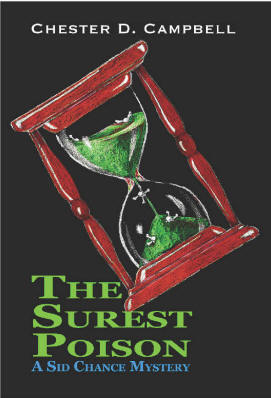
by Chester Campbell

(Welcome to my wonderful guest blogger for today Chester Campbell. His book, The Surest Poison, has just been released. Chester is a well known and well-respected mystery writer in the Nashville area. He’s currently Secretary of the Southeast Chapter of MWA and President of the Middle Tennessee Chapter of SinC. Perhaps we should ask him when he finds time to write?)

In her book How To Write Killer Fiction, Carolyn Wheat wrote: “Sentences are composed of words; the choice of the right words in the best arrangement is what we call style.” Barbara Norville said in Writing the Modern Mystery, “Style may be consciously contrived or may flow out of you from who knows what nether regions of your mind.”

I’m not sure what nether region it came from, but I think the process of writing Private Eye novels caused me to develop the style I’ve become comfortable with. I started my career as a novelist after retiring from 42 years of writing in various fields, from newspaper reporter to non-fiction freelancer to political speechwriter to magazine editor to creator of advertising and public relations copy. I began with spy stories just as the Cold War ended. It was the genre I had loved to read for years.

I won’t go into my agent horror stories. It’s enough to say the manuscripts remain stacked in a corner of my office. The message I got from one agent was that my greatest sin was overwriting. I’d never heard the term. The dictionary defined it: “To write about in an artificial or an excessively elaborate, wordy style.” You need to trim the 600-page manuscript by a third, the agent wrote. I slashed and cut and trimmed until I got it to a manageable size and the agency took it.

I finished a few more books before realizing I tended to write descriptions that were excessively elaborate and wordy. Meanwhile, the post-Cold War spy story market had about dried up, and I turned to reading more conventional mysteries. I particularly enjoyed Robert B. Parker’s Spenser series. It was also the heyday of James Patterson’s Alex Cross stories. Parker’s snappy dialogue and Patterson’s short chapters resonated with me.

After a trip to the Holy Land in 1998, I came up with the idea for a book about the discovery of an ancient scroll. It involved a retired Air Force investigator whose wife became a hostage to the return of the scroll. As I worked on the book, I found myself toning down the descriptions and using short, snappy dialogue for the most part. It quickened the pace of the story, enhanced movement of the plot.

When the book found a publisher and garnered reviews with comments like “a classic page-turner,” I knew I had found my style. I continued to hone it, using the characters to develop a series. I followed the pattern of shorter chapters and cultivated the spare writing style that is now my hallmark. Too much detail will slow the pace. When describing a scene, I give only enough to let the reader see where she is and stir her imagination to create the rest of the picture.

And I’m wary of explaining things too deeply. “Don’t underestimate your readers,” my first editor told me. “They know a lot more than you think they do.”

The bookshelves are filled with lots of different writing styles. Which do you prefer?


How Do You Know When To Quit?

How Do You Know When To Quit?

By Toni McGee Causey

Unless you’ve been under a rock this last week, you’ve probably either watched the video about Susan Boyle on Britain’s Got Talent, or you’ve heard about the Internet phenomenon she’s become. For those of you who haven’t seen the version with the interview prior to her singing, I give you this link and I want you to pay particular attention to what she says at 38 seconds into the interview:

http://www.youtube.com/watch?v=9lp0IWv8QZY&feature=related

Go, now, and watch. You won’t regret it, I promise.

At 38 seconds, Susan Boyle says to the camera that she’s going to “make that audience rock.” Now, if you haven’t just gone to see that video, and you hadn’t seen it before, here’s what the fuss is about: Susan is a 47-year-old woman who tells the judges (including Simon Cowell) that she wants to sing like Elaine Paige, whom some sites refer to as the “first lady of British Musical Theater.”

But even before that point, the audience has already written her off. She tells Simon she’s 47 when he asks, and when he rolls his eyes, she jokes and does a sort-of hip-waggle, saying, “And that’s only one side of me.” It’s nerves, probably, that has her acting a big dingy there, but it’s hard to tell for sure, and she comes across as clownish. Everyone in that audience, at that point, has written her off. Tell the truth—when you see her at that point, you’ve written her off. After all, she’s this frumpy, middle-aged, gray-haired woman. She’s not dressed in the latest fashion (though she is wearing a nice dress), she’s not slim, she’s not blonde, she’s not what you think of as a winner of these types of shows. She sure as hell doesn’t “look” like someone who could sing as beautifully as Elaine Paige. And in that moment, I think most people would agree with Simon’s eye-roll.

When Simon questions her, asking her what is her dream, she answers, “To become a professional singer.” He asks her why she hasn’t, and she simply says, “I’ve never been given the chance before, but here’s hoping that’ll change.” While she’s talking, the camera cuts to the audience where a young woman rolls her eyes. When Susan mentions Paige’s name as a singer she’d aspire to sing as well as, there is obvious snickering in the audience, and shots of women arching their eyebrows in disbelief. Some are obviously waiting for the train wreck this poor Susan Boyle is going to be, and some look as if they’re cringing for her, hating that she’s about to go through the public flogging of a failure.

She explains she’s going to sing “I Dreamed a Dream” from Les Miserables.

The music starts, everyone waits for the disaster, and she hits that first note and bam, she has you. By the second or third word, the audience is applauding and the judges are floored. Utterly floored. Not half-way through the song, not two stanzas… by the second line of the song. The audience gets to its feet on that second line, and she does indeed make that audience rock. In the middle of the song, when she sings the rising lyric and her voice soars, the entire place goes nuts. 4000 people in that audience, and they are blown away.

Here was a woman who had gotten one small shot ten years earlier, who’d participated in a charity CD (singing Cry Me A River), where her talent was obvious to anyone with ears, but she hadn’t “made it” yet. She’d been taking care of elderly parents, she lived in a very small community, and she is (or was)  unemployed. That singing on that charity CD shows she had talent, but talent, alone, won’t always win out. Timing, opportunity, are the other key ingredients. And you don’t get opportunities if you don’t keep trying.

She stood in front of that audience, hearing their skepticism, seeing the giggles, and then rocked the song anyway.

I want to tell you about another person who did something quieter, who stunned me and made such a huge impact, I’ll never forget it. It was one of the very best motivational moments in any conference I’d ever attended, and I asked her permission to relay it here.

You may already know Christie Craig. She is incredibly funny (and giving) and she and Faye Hughes are practically a stand-up comedy duo. Christie writes funny mysteries that are a hoot, and I’ve always only known her as “that successful author,” the one who has something like five novels out as well as non-fiction. She’s one of those warm people that sees someone like me (who tends to freeze up in crowds until someone else breaks the ice) and she makes them feel welcome. And at ease. A terrific person.

At our PASIC conference, Christie was to give the very last session on the second day, and her talk was going to be on, “How to Know When To Quit.”  I saw a roll-on (carry-on sized) piece of luggage on the floor at her feet, and I was curious. While she introduced her subject, she opened the suitcase at her feet and pulled out a rather large UPS-type envelope. Not the normal letter-sized—the next size up. She started explaining how she became a writer, and what she’d gone through to get to where she is now—and she explained she’d been dyslexic, and how every single solitary step had been a challenge. She talked about how writing and telling stories was her dream, and she had to teach herself how to do everything, every single step of the way. It was hard—and I have a son and husband with dyslexia—I know a little bit about what she went through.

Then Christie asked, “When do you quit? Is it after the first fifty rejections?” and she pulled a stack of papers from that UPS envelope and let them rain down around her feet. “Or the next fifty?” and she pulled another stack out and let those rain down. I could see the letterhead of the pages as they fell, and I thought my throat would close up on her behalf. “Or how about the next hundred?” she asked, and pulled another wad of pages out and let those rain down. “Three hundred? Is that when you quit?” And she emptied that envelope and reached into the suitcase and pulled out another one, and asked, “Or is it the first 500? Do you quit then?” Those papers kept raining down, “Or how about the next 500?” and more envelopes, more pages. “How about a 1000? Is that when you stop?” And at this point, I couldn’t have spoken if someone had held a gun on me, I was so choked up. “Or how about the second thousand?” More pages. “Or three? Is three thousand the point where you stop?”

I was gobsmacked. Truly and thoroughly. And impressed as hell. She didn’t stop–she didn’t let the obstacles in her life define her. Christie became the definition… of tenacity. Determination. She has talent, and the skill to put it to good use.

We dream the dream, and we want it to be easy. We live in a society where pop stars get millions to show up and act badly and behave worse, and while we mock that, we’d all secretly like the trip to success to be just that simple: show up. But it’s not that simple. It’s not always easy. It’s hard work, it’s perseverance, it’s making sure you’ve got the goods when the opportunity comes along.

That last part? Yeah, that’s the hard part. It bears repeating: it’s making sure you’ve got the goods when the opportunity comes along. That means hard work, when it comes to writing. Telling a compelling story for an entire novel isn’t like making Ritz crackers and cheese and calling it a four-course meal. There’s a bit more to it than just sitting in front of the computer and spilling out a story. For some people, it may come naturally. For the rest of us, it’s a constant process of learning, improving, getting feedback, listening to it, learning from it, discarding what doesn’t work, and then trying again.

If you’re getting the opportunities to be read—and it’s not selling, it may be a matter of you having more work to do. We all hit that point. It’s just part of the process. But if you’re getting amazing feedback (consistently, from everyone), then it may simply be a matter of timing—you just haven’t had your manuscript hit the right person at the right time. There’s not a lot you can do about that but keep trying, because you never know when the next opportunity will open up because you handed it to the right person. In my case, I’d published a lot of non-fiction, edited a regional magazine, switched into screenwriting (where I wrote probably 15 scripts) and then switched back to fiction. I’d finished the script version of Bobbie Faye when a friend happened to be here and happened to want to read it and happened to want to hand it to a friend (just for fun, not for any particular thought of the friend helping) and then the friend happened to know this editor and was willing to pitch it… and when I got that phone call about the offer, it was a soaring feeling, like the audience suddenly coming to its feet on that second line of Susan Boyle’s performance. Almost twenty years to the day after I’d first sent out my first non-fiction piece. It wasn’t overnight. I’d worked two jobs, gone back to school, was mom to two boys, helped run a construction company, and wrote in the wee hours of the night when everyone was asleep, because I dreamed a dream. I wanted it. I wanted it enough to not sleep that extra hour, to take the notebook with me to the kids’ practice, to skip out on movies or TV shows.

I’d still be doing that now, without the sale. I can’t let go of the dream. It’s changed for me over the years—what I wanted, and how I wanted to do it, but the ultimate dream was to sell what I wrote, with the hope that it brought some pleasure to the reader.

So when do you quit?

If you think you quit when it’s hard, then stop now, because I assure you, it will get hard. Even if you’ve got a book or two or ten out, it’s gonna be hard. If you think you quit when it’s bleak news, then stop now, because there’s no way to have a career in any field that is all sunshine and roses up your ass. It’s gonna get bleak sometimes. Markets change, people change, culture changes, and with change comes growing pains. If you think you quit when people don’t see your talent, then quit now, because not everyone is going to agree you have talent and even when they do, they might not be able to do anything about it. If you think you quit when people say no, then stop now, because I guarantee you, people are gonna say no to you. The day before I sent the query to the agent who repped me for the deal, I’d found out my friend had handed the manuscript to her agent, who said to me that he could see that Bobbie Faye was a very funny woman who was incredibly strong-willed and yet he hated her and wouldn’t want to spend another single minute in her head. This cracked me up because (one) he was about 65 and not exactly my target audience and (two), I have always wanted to write a character who is a love-em or hate-em kind of person. I didn’t want a lukewarm response. I wanted her to be memorable. So, as negative as that note might have come across to most authors, I loved it. And I put the next query in the mail. Signed with that agent. Had a three-book deal. Was the first guy wrong? Not for him. That was his taste and I respect that. But everyone doesn’t have the same taste, and that’s why you keep trying.

So, when do you quit?

You quit when you want something else, more. You quit when you have another dream that means more to you.

I kept writing. There were days when the economy here was so bad, there was very little work, and we dug the change out of the sofa to get enough money to put enough gas in the truck for my husband to get to work, and he had to get paid before he left, or he wouldn’t have had enough gas to make it home. I understand hardships and heartbreak, depression and frustration. But “no” is not an option. It is only an obstacle.

I’m sitting down to my fourth book now. It’s scary as hell, to start something new. I emailed a friend and asked, “How do you write a book again? I’m thinking it involves words… probably in some sort of order… maybe spelled correctly? Something like that?” It’s like having to learn how to do it all over again, and it gets harder, because you’ve set a bar of quality for yourself and you want to beat it. It’s intimidating to think you can, that people expect you to.

But I will keep trying. I dream the dream.

How about you?


Late news

This will teach me to read my email more thoroughly.

Just read an email from Rhian over at It’s A Crime! (Or a Mystery…) She writes:

“Do you blog about books? If yes, then please participate in a survey of book bloggers. Some of the questions have come from publishers. I intend to review the results and write an article that will hopefully lead to abetter understanding of the book blogging world and promote more dialogue between publishers and bloggers.

“I’d also be grateful if you could promote the survey on your blog. Many thanks, in advance, to those who complete it. It’s open for a few days, (closes on 19 April), but please reply soon.”

Hope you can take part!

Whose Voice is it Anyway?

by Zoë Sharp

Something Louise said in her blog this week made me stop and pause for thought:

‘I … have actually opened up the Work-in-Progress document on my desktop. (My God, it’s written in third person. What was I thinking? I’ve never been able to write in third person!)’

Like Louise, all my published novels to date have been written in first person, but this was not how I originally tried to go about it. For some reason I had it in mind that a mystery novel, by its nature, was a complex interweaving of different layers that would be far easier told from multiple viewpoints if necessary, and therefore in third person.

When the idea of my main protagonist, Charlotte ‘Charlie’ Fox came along, I distinctly remember making several false starts in third person. I can even remember one of those scenes. A woman, alone, walking quickly at night, high heels tapping out a nervous tattoo as she hurries through the muted cone of a streetlamp. Suddenly, a guy looms out of the darkness, snakes an arm around her throat, pins her arms to her body, and starts to drag her backwards into the shadows. But just when you think you’re observing the first victim, the woman begins to fight back, disabling her attacker. And after she puts him on the ground, the lights come back up to reveal a gymnasium, and there’s applause from the evening class of students who’ve come to learn the gentle art of self-defence from our heroine.

And, I have to admit, as an opening section I quite liked it. It did what it was supposed to do – kicked off with a little misdirection, and introduced my main character as someone very capable of looking after herself. But she just didn’t speak to me, and I was equally convinced that she sure as hell didn’t speak to the reader, either.

The only way I could get around that was to get deeper inside her head, and find out what made her tick. To speak with her voice. So I gave it a whirl, not with an opening, but with a disconnected scene. It had Charlie at a bodyguard training school, forced by her ever-so-slightly misogynist instructors to go into a darkened room and deal with what lay inside. That turned out to be an apparently mortally wounded body, and an ambush, to which she instinctively, viscerally, overreacts, laying out her attacker with an old-fashioned desk telephone, then covers up her fear with dark humour.

Ah, now I was getting somewhere.

In fact, I liked that scene so much that it eventually found its way into the third book, HARD KNOCKS, which happened to be set in a close protection training school in Germany, and so perfectly fitted the bill.

Having written my first series book in first person, I felt compelled to continue that way. And there are certain advantages in only being able to reveal information to the reader as it arrives with the main character. The knowledge could be held by other people, but if they don’t or won’t tell her what’s going on, she has to find things out for herself. I can’t show the villain scheming in his lair, nor the good guys working out that she’s in danger and rushing to the rescue. (Not that Charlie needs much rescuing, thank you very much. Her philosophy has always been to break legs now and ask questions later.)

There’s nothing written in stone that says I had to continue in first person for the entire series. Lee Child started off with Reacher in first person for KILLING FLOOR, then swapped to third person until a return to first for one of my favourites in the series, PERSUADER. And now Reacher’s back in first person again in GONE TOMORROW. And it’s a belter.

Of course, some other authors quite happily write in first person, and add in third person scenes where they feel it’s appropriate, or required by the plot. In fact, that device was suggested to me for the latest book. Some people manage it very successfully. Stuart Pawson is one, with his Detective Inspector Charlie Priest police procedurals. In one, he even manages to have his detective go undercover in passages in third person, with his identity hidden from the reader entirely, while the rest of the book is in first person. And it works, but I’m not sure I could pull that one off.

I’ve even read something – although so long ago I can’t remember the details – where the book was told by two first-person narrators in alternating chapters. Now, that’s a tricky one to pull off. SJ Rozan, in her Bill Smith and Lydia Chin series, uses first person but with one book told from Bill’s perspective, and the next from Lydia’s. What a great way to keep a series fresh for the author, as well as the reader.

One of my favourite narration styles was always Sir Arthur Conan Doyle’s Sherlock Holmes stories, told in first person, but not from the main character’s viewpoint, thus allowing Holmes to baffle the reader on the way to the conclusion as much as his sidekick, the stalwart Dr Watson. Will Thomas has taken up this literary device with his tales of Victorian enquiry agent, Cyrus Barker and his assistant, Thomas Llewelyn, writing from Llewelyn’s POV.

And that’s quite before we get into second person, which I heard Elizabeth Rigbey talk about for the prologue of one of her books. I’m writing from memory here, because I’ve been unable to track down the actual passage concerned, but it went something like this:

You are driving through a deserted forest and you knock down a cyclist and kill him. There is no damage to your car and no witnesses. What do you do?’

Not only is that second person, of course, but present tense as well. And that brings us onto a whole different ball game. Writing successfully in present tense is another skill altogether. Patricia Cornwell has written some of her Dr Kay Scarpetta series not only in first person, past tense with THE BODY FARM, but in third person, present tense with BLOW FLY. A fascinating mixture of styles. Theresa Schwegel’s debut, OFFICER DOWN, was first person, present tense and duly won the Edgar Award for Best First Novel.

But there’s no doubt that present tense is difficult to pull off. One of the best exponents for me is Don Winslow, with books like CALIFORNIA FIRE AND LIFE, and THE WINTER OF FRANKIE MACHINE, particularly as both these books involve quite a lot of flashbacks. Tackling flashbacks and sticking to present tense is enough to make a poor writer’s head implode, but he manages it with style.

Of course, the reason Louise’s comment resonated is because I’m looking beyond the end of the current rewrites – and I keep telling myself there will BE an end to them – to what comes next. Another Charlie Fox book, yes, in first person, past tense, almost certainly. But what then? I’ve always had a fancy to try third person, present tense, just to see if I can …

So, my question is, what’s your preference, both as a reader and a writer?

What is your current preferred style, and what made you settle on it?

Have you ever hankered to try and different narrative device and, if so, what?

This week’s Phrase of the Week is to win hands down, meaning a comfortable victory. It comes from horse racing, where a jockey who has no need to urge his horse forwards down the finish straight because he has a clear lead, and so can canter over the line with no need for the whip, and with both hands on more or less on the horse’s neck, to win with his hands down.

When There Is No More Room In Hell…

by J.D. Rhoades

Spring again. The time when the warm southern wind blows away the chill of winter (and blows in enough pollen to turn a newly washed car yellow in two minutes). A time when I shake off the gloom of the winter months. A time when I decide to put aside the serious post I meant to do about the Amazonfail flap, try to forget about tax day,  and talk about something fun.

Like zombies.

Are zombies the new vampires?

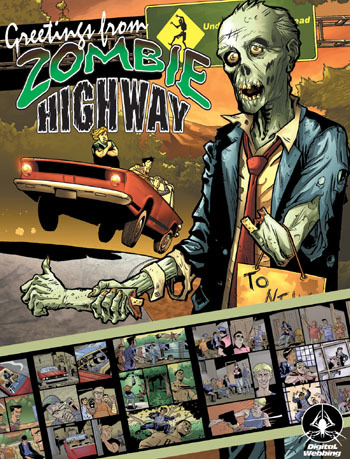
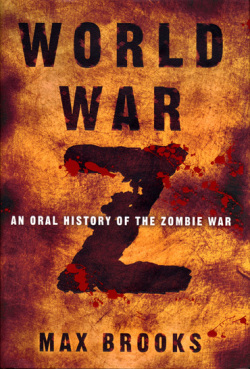
We do seem to be experiencing a sort of Zombie Renaissance these days. First, there was the sudden smash success of Max Brooks’ World War Z.


Subtitled “An Oral History of the Zombie War”, WWZ is smartly written, slyly satirical, and scary as hell all at the same time. I’d love to see it as a miniseries.


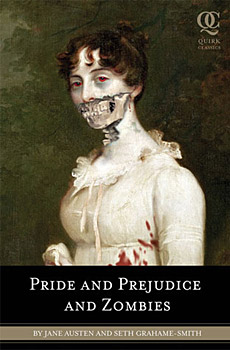
More recently, there’s Pride and Prejudice and Zombies, a “re-imagining” of the Jane Austen classic that opens with the deathless (heh) line:”It is a truth universally acknowledged that a zombie in possession of brains must be in want of more brains.” As my friend Tasha says, that is just so wrong.


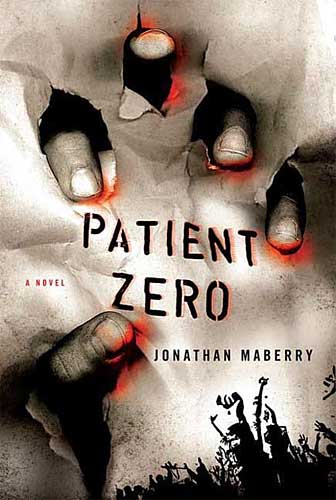
While I’m at it, I have to mention my current fave: Jonathan Maberry’s excellent Patient Zero, which puts a whole new spin on the zombie legend by casting them as a terrorist bioweapon. Facing the legions of the undead (and they are many)  is Maberry’s kick-ass action hero, Joe Ledger, a guy who could give Jack Reacher a run for his money.  I’ll nominate PZ’s opening lines (“When you have to kill the same terrorist twice in one week there’s either something wrong with your skills or something wrong with your world. And there’s nothing wrong with my skills.”) as one of the best openings of 2009. 

As you can see, I love a good zombie story as much as the next guy. I’ve probably seen Night of the Living Dead a couple of dozen times, and I can quote you whole scenes of Shaun of the Dead verbatim. But even I have trouble explaining this.

I mean, I can almost see the the vampire thing. There’s a certain sexiness about vampires, or so they tell me. They’re beautiful, their hunger equates with great passion, they bite your neck…hey, it’s not my kink, but whatever floats your boat.

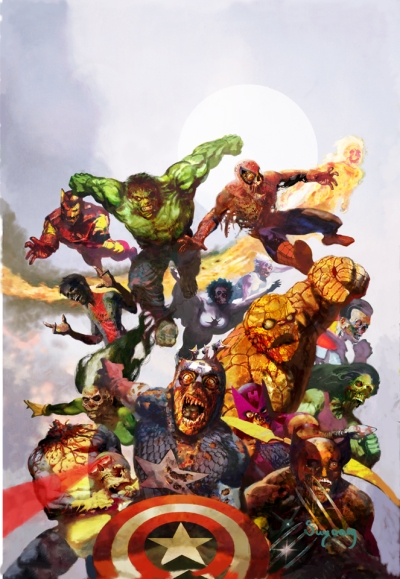
But it’s hard to envision a bestselling YA series about a forbidden romance between a beautiful but awkward teenage girl and a mindless, shambling flesh-eating ghoul. And, even as I bow down to the sheer audacious awesomeness of Marvel Zombies

I have trouble explaining exactly why I love it so. 

So what’s the deal, ‘Rati? Do you love zombies like I love zombies, and if so, why? What’s the attraction? And what’s your favorite tale of the walking dead?  And what book do you think could only be made better if you just threw in some zombies?


Bonus

A late night offering from Louise


Here’s a bonus, my ‘Rati friends. The brand new video trailer for Liars Anonymous, hot off the presses. Take a look. And if you like what you see, send it along to a few friends. It will help me get the word out!


The Liars Are Coming

By Louise Ure


I only get to do this once a year, so you have to bear with me. I’m going full-frontal, tongue-wagging, no-holds-barred, blatant self-promotion today.

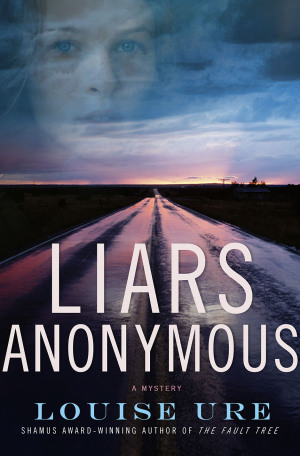
My third novel, Liars Anonymous, hits the bookstores today.

And this time it’s being ushered in with a grand slam of starred reviews from all four of the big trade reviewers!

* Booklist (2/1/09)
“A powerful, masterfully constructed, action-packed novel with fiercely moral underpinnings and strong protagonist, this cements Ure’s position alongside such psychological thriller masters as Ruth Rendell and Minette Walters.”

* Kirkus Reviews (1/15/09)
“Ure (The Fault Tree, 2008, etc.) provides a meaty, twisty puzzle. But the real prize here is Jessie, a tough, conflicted heroine you won’t soon forget.”

* Publishers Weekly (2/2/09)
“Taut…. As Ure slowly peels back the layers of scar tissue to reveal [protagonist] Jessie’s past crimes, the investigation … takes on even more depth as readers come to realize just how damaged the feisty heroine truly is.”

* Library Journal (February 2009)
“Shamus Award–winning Ure’s third mystery (after Forcing Amaryllis and The Fault Tree) is perhaps her finest effort to date.”

Read the first chapter here, if those honey-sweet words above have piqued your interest.

And if that’s not enough crowing, how about the online reviewers, like “Mrs. Peacock” over at Crime Critics who just had me jiggling and giggling all day long.

“This is a book that feels real. It is dark, gritty and beautifully written. Jessie may not be a woman we can all relate to, but she is a woman many of us probably fantasize about being. She is morally-driven, determined to do right even if the cost is her life – or someone else’s. The heart of this book is the remarkable depth Ure captures in her characters … Here we find a protagonist believably hardened by her experiences. She is tough, street smart and competent. Her need to understand the crimes she finds herself tied up in, and a stubborn steak a mile long, leave readers understanding her actions even as they are wishing for a different path for her…

Ure writes us a tale not only strong in character development and story–but also in prose. The writing is beautiful but not distracting. I probably missed much of it as the story compelled me forward, but every now and again I would set the book down and just sigh. My husband would say, “What is it?” I’d read him the line. He would sigh. “I know,” I would say and pick the book up to read on…

The landscape, both physical and emotional, are described here in such sensory-driven detail that readers will find themselves reaching for a cool glass of water and a Glock nine millimeter…

In the end, LIARS ANONYMOUS is a hard-hitting, unapologetic look at the female survivor–in her glory and in her suffering.”

(I don’t know who you are, Mrs. Peacock, but I think I love you. Want a bottle of Cristal? Want the first puppy from the litter?)


In other good news, I took all your ‘Rati advice to heart this last two weeks, and have actually opened up the Work-in-Progress document on my desktop. ( My God, it’s written in third person. What was I thinking? I’ve never been able to write in third person!) I can’t say I’m over my Been Down So Long This Looks Like Up To Me doldrums, but as Obama says, “I see glimmers of hope.”

I’ll be signing at bookstores and reader gatherings beginning April 18 and would love to see you at one of the following events.

Saturday, April 18, 10:45 a.m.
The Bay Area Bluestocking Festival of Authors/Literary Women
PLEASANT HILL COMMUNITY CENTER
320 Civic Dr.
Pleasant Hill, CA 94523
Call 925-626-5200 for tickets

Saturday, April 18, 2:00 p.m.
With Cara Black
BELMONT LIBRARY
1110 Alameda de las Pulgas
Belmont, CA 94002

Sunday, April 19, 4:00 p.m.
BOOK PASSAGE
51 Tamal Vista Blvd.
Corte Madera, CA 94925

Tuesday, April 21, 7:30 p.m.
BOOKS INC. IN THE MARINA
2251 Chestnut St.
San Francisco, CA 94123

Friday, April 24, 12 noon
MYSTERIES TO DIE FOR
2940 Thousand Oaks Blvd.
Thousand Oaks, CA 91362

Friday April 24, 5:00 p.m.
THE MYSTERY BOOKSTORE
1036C Broxton Ave.
Los Angeles, CA 90024

Saturday, April 25
LOS ANGELES TIMES FESTIVAL OF BOOKS
Signing at the Mysterious Galaxy (Booth #614) at 10:00 a.m.
Signing at the L.A. Mystery Bookstore (Booth #411) at 11:00 a.m.
Los Angeles, CA

Thursday, April 30
THE EDGAR AWARDS
The Grand Hyatt Hotel
New York, NY

Wednesday, May 6, noon
SEATTLE MYSTERY BOOKSTORE
117 Cherry Street
Seattle WA 98104

Friday, May 8, 7:00 p.m.
CLUES UNLIMITED
123 S. Eastbourne
Tucson, AZ 85716

Saturday, May 9, 2:00 p.m.
POISONED PEN
With Laurie King
4014 N. Goldwater #101
Scottsdale, AZ 85251

Saturday, June 13, 10:00 a.m.
SF ROMANCE WRITERS OF AMERICA
Pyramid Alehouse
901 Gilman Street
Berkeley, CA 94710

July 16-19
BOOK PASSAGE MYSTERY CONFERENCE
51 Tamal Vista Blvd.
Corte Madera, CA 94925

October 15-18
BOUCHERCON
Indianapolis, IN


I hope to see you somewhere along the road.


LU


Casting the Bones

by Robert Gregory Browne

This week I’m stealing a page from our own Ms. Alex and going the “craft” route.  In order to share my ideas about the craft of writing both novels and screenplays — hell, fiction of any kind — I’ve started a new website called CASTING THE BONES, where you’ll find a collection of my articles on craft.

What follows is one of those articles.  Not strictly about craft, but certainly about process.  A side of the writing game that we don’t often share.  It’s called:

HOW TO SURVIVE WORKING WITH AN EDITOR

A lot of you who have been working toward getting a book published have no idea what happens once you sign a contract with a publishing house.  Well, I’m here to tell you:

Nine times out of ten, that contract will be the result of the sale of a completed book.  You’ve written a 100,000 word manuscript, had an agent shop it around, and an editor at one of the publishing houses has taken a liking to it, made an offer, and you’ve accepted.

Eeehaaaa! Your dreams have come true.

Believe me, I still remember the exhilaration of that phone call from my agent, telling me I could now call myself a published author.  I literally started dancing.  Like a freakin’ fool.

For those of you still working on it, that contract is the pot at the end of the rainbow.  But the contract is only the beginning.  Even before the thing has been signed, you’ll get a call of congratulations from your editor and he/she will tell you that he/she is planning to reread the book with an eye toward editing.

This is when your heart sinks a little.  Isn’t the book perfect the way it is?

Not usually, no.  If you’re like me, you like to write very clean manuscripts.  A clean manuscript is one that’s very tightly plotted, concisely written and polished to a lovely shine.

But even those manuscripts get edited.   How extensively it’s edited depends on the manuscript’s needs and your editor — whose only desire is to help you put out a book that goes straight to the bestseller list.  This rarely happens, of course, but that’s a different matter.

Once your editor has re-read the manuscript, you may get a phone call, but you’ll more likely get an editorial letter.  This is where the editor goes through your manuscript, scene by scene, and makes suggestions for changes.

Assuming, of course, he/she feels it needs any.

Here’s an example of what you might see, which comes from my former UK editor regarding one of my books:

p. 7/ line 16 South Dakota – does this refer to a special police unit/ or a geographical thing? I understand the meaning but we might need to change this for UK readers if possible (also see p. 9/15)
p. 9 Cover Girl change to CoverGirl (without space)
p. 13 Anna’s thoughts on shaking hands with men – not sure if we need this; or does this refer to something else later on I have possibly missed
p. 15 It turns out later that the killing of Kimberly was a mistake – should we explain at some stage towards the end why Red Cap killed the whole family?
p. 19 / 13 ‘The minute it stops bothering you…’ – Is this a deliberate repetition from page 13 when Anna also uses the expression. It sounds slightly cynical here though and as it comes from Jake, I wasn’t sure if it would match with his character.
p. 22 / last three lines I’d cut the neighbourhood staring at her. Doesn’t seem to fit.
p. 24 Anna’s self-criticism and her views on the past. She’s not confident about her work anymore – should we reflect on this later? Do the events change the way she thinks about her confidence?

Using this as a guide, I then go through the manuscript, read the passages in question, then make changes if necessary.

I then take this very same table and write a reply to my editor explaining why I didn’t make a suggested change, or if I did, what I changed it to.

Once the changes have been made, you then email or snail mail (depending on your editor’s preference) the revised manuscript and your editor reads it again, looking to see how it flows and whether the changes work.

If all is good, it’s a wrap. If all is NOT good, then you’re likely to get another letter/email/phone call with more suggested changes.

I normally get two or three pages like this. Much of it consists of line edits, simple corrections of spelling, missing words, that kind of thing, but some of it goes to character motivation and story.

I have friends who have gotten 10-30 pages worth. It all depends on the book and what your process is. Many writers send in a first draft that reads like a first draft, and they’re looking to the editor to give them feedback before the next draft (or two or three) and the final polish.

The key is that you have to trust your editor. Know that he or she is trying to get the best book possible out of you. And they, in turn, have to trust your judgment when it comes to which changes you decide to ignore and which ones you choose to make.

I remember after the editing process was done for my first book, I said to my American editor, “So what happens now? Do you take it to your boss and get final approval on the manuscript?”

He laughed and said, “This isn’t Hollywood, Rob. As far as I’m concerned, the book is good to go. It’s YOUR book. So if you think it’s ready, it’s ready.”

—-

And that’s it.  I hope you’ll go over to Casting the Bones and take a look at some of the other articles.  I plan to contribute more, and hope to get some of my writer friends to contribute as well.  Murderati?