Author Archives: Murderati Members


The Wisdom of Winslow: Write the Story You’re Afraid to Write

By David Corbett

Brief introductory note: I’m off to the Mendocino Coast Writers Conference where I’m serving on the faculty in the novel workshop, so may not be able to respond to all comments promptly, especially in the afternoon. My apologies on that front, but I will check in when I can.

As some of you know, I was on the faculty for the Book Passage Mystery Conference that ran from Thursday through Sunday this past week, and I’m both exhausted and exilerated. Not only did we have our usual group of highly motivated participants, we had an incredible faculty and wonderful guests, including Don Winslow, Robert Dugoni, Cara Black, Tarquin Hall, D.P. Lyle, Karin Slaughter and many others.

Among my many duties, I was asked to introduce Don Winslow.
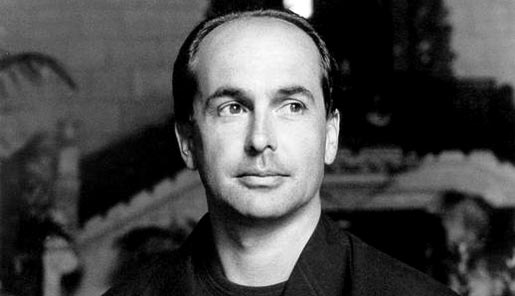
Don’s a writer I greatly admire, and whose most recent novel, Kings of Cool, has just been published to coincide with the release of the film Savages, based of Don’s novel of the same name. (Kings of Cool is a prequel to Savages.)

I based my introduction on a bit of a rant I made on the online group RARA AVIS, which is a conversational watering hole for lovers of noir and hardboiled crime fiction. The most relevant part of that rant-cum-introduction was this:

In his fifteen novels and counting, Don Winslow has created something unlike anything else in contemporary fiction, especially Savages and Kings of Cool. They’re like poetry and screenplays mashed up into fiction, and for some unholy reason it works.

He’s distilled the essence of crime writing down into its molten core and fashioned something strangely recognizable and yet utterly new.

He’s also one of the few crime writers I can think of who will be remembered not just for his body of work, but for a genuine, honest-to-God classic: Power of the Dog. That’s an incredible accomplishment. Only the greats pull it off.

Don could have come up and pimped his book and movie, but he didn’t. He loves the Book Passage conference and has taught quite a bit himself, so instead he gave a truly memorable talk about the nature of crime fiction. For me, that talk was the true highlight of the conference in a weekend full of them.

He began by noting a question he once received in an interview: Do you believe you write in a literary ghetto?

Don responded: “Yes. And I love my neighborhood.”

But Don explained he takes an expansive view of the genre, tracing its roots not just to the obvious progenitors but to Aeschylus’s Oresteia, originally performed in 458 B.C.

In those three plays, we see the warrior king Agamemnon murdered by his wife, Elektra, for having sacrificed their daughter Iphigenia so he could go off to the Trojan War; we see their son, Orestes, faced with the terrible dilemma of needing to avenge his father’s death (or face the wrath of Apollo), but this necessitates the killing of his mother (which will incur the wrath of the Erinyes, or Furies).

Orestes goes through with the killing, and is set upon by the Furies until Athena steps in and conducts a trial, dramatizing the movement in Greek civilization from blood vengeance to the primacy of the court. When the jury is split evenly, Athena casts the deciding vote, and Orestes is set free.

Move ahead two millenia to Elizabethan England, and in Shakespeare’s two-part Henry IV we see the template for the gangster classic The Godfather. In both, a son who declines the mantle of leadership that’s his birthright turns around through the course of the drama and rises to his true destiny, that of king, or godfather.

Young Prince Harry abandons the saloons and brothels where he cavorts with the pugnaciously libertine Falstaff, and ascends through battles with his father’s enemies to the position of king—where he closes all the saloons and brothels. When Falstaff approaches him, seeking a personal favor on the basis of their old acquaintance, Prince Harry, now King Henry IV says, “I know thee not, old man.” He adds that he knew such a man once in his dreams, but now that he has awakened, “I do despise my dream.”

Michael Corleone isn’t a libertine, he’s a war hero—with a schoolteacher fiancée, Kay. But he too disavows his father’s realm, until the old man’s attacked, and Michael rises to the challenge of defending his father against his enemies, and ascends to his father’s place as leader. When Kay asks him if what she’s heard Is true, he’s responsible for the death of his brother-in-law, Michael lies to her face, then enters the room where his leadership is acknowledged, and shuts the door in her face.

It’s the same story.

Don then traced the lineage to Don Quixote and the picaresque novel, with its focus not on knights and ladies but rogues and scoundrels, a tradition that continued in the eighteenth century novels of Fielding and Smollett—stories that dwelt realistically with the underclass, a milieu richly explored again in the novels of Dickens, especially Oliver Twist and Great Expectations.

If we expand our horizons in how we view the crime story, we needn’t be bothered with sniffy dismissals from our betters, because we understand that crime has always concerned itself with the defiant individual, the have-nots, and injustice.

He admitted that when he wrote Savages, stylistically so different from his other novels, he’d grown bored with his work, and feared readers had also. He decided to write the book he heard in his head.

He wrote the first 80 pages and handed it to his friend and collaborator and literary guardian angel, Shane Salerno, and said, “I’m not sure what I’ve got here. Either it’s great or I should pitch it and I can’t tell which.”

Shane read the pages and told him to put aside all his other projects and forge ahead with this one while he was still in this literary head space. He did, but remained terrified throughout that he might be committing a terrible blunder, or even professional suicide.

The rest, as they say, is history.

He exhorted the conferences participants to be daring, think big, embrace the larger canvas and, as he put it, “Write the story you’re afraid to write.”

He noted that you shouldn’t give up writing the book you think will get published, the one that publishers won’t reject out of hand, but nothing’s guaranteed, and how terrible to never have risen to the challenge to face the book you knew you had in you, but were too timid, too remiss, too cowed by the marketplace to get down in words.

* * * * *

So Murderateros, what book are you afraid to write? Have you at least started it? Can you see yourself returning to it? Have you already written it? How’d it go?

* * * * *

Jukebox Hero of the Week: I’m not going with music this week, but with a spoken-word performance by the late comedian Mike DeStefano produced through The Moth.

Note: Prepare to cry.

I made reference to this piece in my own talk at the conference on the importance of facing honestly your own personal wounds to enhance the depth, texture, and richness of your fiction. 


(For a written version of Mike DeStefano’s talk, with some additional material, check out this piece from the New York Times).

Meet the Mighty and Marvelous Madeira James

By David Corbett

For this Wildcard Tuesday I’ve invited webmaven extraordinaire Madeira “Maddee” James of Xuni.com to join us, and to explain a little of what she does, why, and what writers, especially those just beginning their careers, need to know about the importance of a stylish and informative web presence, and how to go about establishing one.

Maddee has created and manages the websites for an incredible list of clients, including some of the most prominent crime writers in the business—including several current Murderati (see below) and previous contributors Louise Ure, Ken Bruen, Cornelia Read, Brett Battles and Jonathan Hayes—not to mention Lee Child, Jan Burke, Barry Eisler, Jacqueline Winspear and a head-smacking host of others.

She’s also recently expanded into literary fiction, young adult, romance, and chick lit.

She’s a friend to authors everywhere, but especially us here at Murderati, so please welcome: Maddee James.

* * * * *

David: What possessed you to get into the web design business?

Maddee: Well, first, first things first: Thanks so much for inviting me to Murderati. (Hi Gar! Hi Martyn/Tania! Hi J.T.! Hi Zoe! Hi Alex!)

Strangely enough, I was a geologist for many years — that’s what my degree is in – and that’s another whole story that has to do with my first roommate in college being a geology major, and her having the same name as I had at the time – and that’s another whole story about changing my name – sorry, what did you ask me? 

The short answer is when I was a geologist, there came a time when earthquakes and mudslides gave California a break for a short while and we started running low on work. This was in the very early days of the internet when companies were just starting to have websites. So I suggested to my boss that I build a company website to fill my time… and I was hooked.

I am very happy to say, however, that my first attempt at web design can no longer be found on the internet.

David: Why did you decide to focus on writers — crime writers in particular? An evil plan? Happy accident? Buzzard luck?

Maddee: Another interesting story, actually. In 1998, in a strange twist of fate (yes that rhymed), I met a prolific crime writer at a dinner party, who had a question about geology, of all things. We started corresponding about whether it was possible to locate dead bodies underground using geophysical equipment, and that led to me offering to do a website for him, with all the huge amount of skill I had at the time. Not.

While it wasn’t a beautiful site, it was one of the very first author sites on the web, and as such, we got written up in PW about it. I put my quickly-thought-up company name at the bottom of his site… and started getting queries from other authors. And so it began.

While I started out doing sites primarily for crime writers, and they probably comprise the largest number of my clients, I pretty much do any kind of author site these days. I’ve been doing a lot of sites for YA authors recently, which I really enjoy. So it’s really fun that so many crime writers are getting into YA – merging my two design loves.

P.S. I’m going to start using the term “buzzard luck” – that is too cute!

David: Turning to your name, what in the world does xuni mean and how do you pronounce it?

Maddee: Doesn’t mean a thing, and it’s pronounced “zuni” like the Indian tribe. I’ve heard that it’s hard to get domain names with so few letters in them these days, but back then all I wanted was a name which was a four-letter word with either an x or a z in it…. and xuni happened to be available as a domain and sounded kind of cool. Incidentally, it’s apparently a pretty common name in China, so I get lots of offers to buy it… but I’ve been in business too long to give it up, even for a million dollars…

David: You have some excellent advice for authors relative to their websites on the FAQ page of the Xuni website. In particular, you note that though pre-published authors may want to build a website to show potential publishers they’re “serious,” it’s still the quality of the manuscript that sells a book. This is excellent advice, imho. How did you come to be so doggone smart about the book business, not just the website end of it?

Maddee: Thanks! I tried to make my FAQ page as clear and helpful as possible. I don’t know that I would call myself smart about the book business – for example I continue to be clueless about which imprint belongs to which publishing company (or does this change so much that most of us are clueless?), but I’ve been in this business a long time (14 years next month!) and of course time leads to experience. Plus I have a wide variety of clients, and I learn something from pretty much every one of them.

Speaking of pre-published authors, I had one query me just this week who wanted examples of other pre-published author sites. Which led me to realize I’ve done a LOT of them. I love to help authors new to the industry show their work in the most professional and creative light possible.

David: Your designs are visually stunning — clear, bold, interesting and personal—but you also have very keen intuition about your clients. You have an excellent sense of how an author’s site should not just look but feel. How do you do that? Do you come from a visual arts background? Do you read auras?

Maddee: Thank you! I really REALLY love what I do – and I think that shows in my work. I would say I am probably best known for two things: making an author site fit the author and their work… and a really good use of color. The way I usually manage to make the site reflect the author is by asking lots of questions upfront. Things like “what kind of “feel” do you want the site to have? I get answers like “elegant but eerie” and “romantic but scary” and interesting challenges like that. Making it happen is so much fun.

I’d also like to say at this point that though I was one of the first designers who worked specifically for authors, now, 14 years later, there are many author website designers out there. Google “author website design” and you’ll see what I mean. And the cool thing is that we all have pretty different styles, meaning authors have a lot of choices. I love that! You should definitely look at a ton of author sites to see what’s out there before you pick a designer. There’s more info about that on my FAQ page.

David: You believe in “branding” to the extent that you think writers should take some serious time to think about how they want to present themselves and their work to potential readers. This is another subtle, tricky issue — it deals with tone and personality and subject matter, almost like voice in prose.

Maddee: I do think branding is super important. And there are so many things that show that tone, personality and subject matter you mention – book covers, websites, bookmarks, social media pages, etc.  I’m not a marketing person, so I stick to the design aspects of branding – websites, bookmarks, twitter backgrounds, etc. But I think talking through your image with someone experienced in author marketing before you do any design is really important.

A good example of this: I had an experienced author (I think he had written about 8 books) hire me to build a website. When I asked all my typical questions about “feel,” etc., he said he wanted the site to have a dark, serial killer type feel. Which I did. And he loved it. His agent and publisher, however, did NOT. They thought it branded him inappropriately as too much of a horror writer. And so we had to trash it. So figuring this out ahead of time is so, so important.

David: Has the proliferation of social network sites made having a website more important or less important?

Maddee: Well I’m a website designer, so of course my answer is going to be: Websites are more important than anything.
But really, I do believe a good website is important for one simple reason: there is permanence to it. I love social media, and think it’s really incredible for authors. But Facebook posts and tweets, once they spin off the bottom of your page, are GONE. Your website is the place where a reader can always go to find out whatever they want to know (what books you’ve written, what they’re about, where to buy them, etc.). Plus the website should have links to all your social media sites. I kind of think of your website as your “author hub.”

David: You do basic search engine optimization (SEO) with every site you build, and offer more specialized SEO for those clients who want it. Could you explain this a little, and let folks know why this is so doggone important and why you’re so unique for doing it for your clients?

Maddee: It’s pretty simple: having your site listed near the top of the search engines when various keywords are put in is invaluable. However, I’m of the opinion that authors have it easier than, say, companies trying to sell odd objects, or illustrators/photographers who want to stand out from the pack. Why? Because how many people really type “good crime writer” into Google? I tend to think that doesn’t happen as much as someone going to Amazon or Goodreads to search for that kind of info. So while I think SEO is important, I don’t know that it’s the end-all.

I could be totally wrong though. In which case, feel free to ignore me.

David: Which client is your favorite?

Maddee: Um … You?

David: Which client do you want to stab in the eye?

Maddee: OMG. Definitely you.

Seriously: I have the most wonderful, talented clients ever. EVER. And I’ve loved working with you David – we’ve had a long haul!

I’ve had some clients for over a decade, and that’s pretty amazing, isn’t it? And the joy of working for myself is that I can choose whom I want to work with. So I say “yes” to the author queries I really want and “I am just too busy right now” to the ones I don’t.

David: Any news you’d like to report on the perfect children front?

Maddee: Can I just say that I am madly in love with them, and not just ‘cause they have the grace to have put up with a mother who is umbilically (is that a word?) attached to her laptop 24/7. News: Savannah is in college – yes it’s true I am super OLD — and Ry has two more years of high school and then I am… free. Except for the paying for college thing. And the continuing to give advice thing. And…

* * * * *

So, Murderateros: Anything you’d like to ask the the Mighty Madeira, Webmaven Wunderkind?

* * * * *

Jukebox Hero of the Week:  I handed my bag of quarters over to Maddee, so thank her for this one (it’s funny, and be sure to play it all the way through):


Rebooting

by Pari

Have you ever had times in your life when you feel like you need to hit the button and stop? I’m not talking about a pause here; I’m talking about letting the machine go cold.

Even before my vacation with the kids two weeks ago, I had an incredible urge to disengage from everything that wasn’t outright essential so that I could unbusy/undistract myself enough to really
look into my frenzied activity
to assess its causes
weigh its benefits
cut through the confusion
and reboot.

Last year at this time, my world flipped so completely the dizziness made me sick. Though I continue to live with tremendous upheaval, the quality of that movement, that unpredictability, doesn’t so much seem an oppression now as an opportunity.

After a year of hell, I’m feeling grounded.

And yet everything is up for examination.

I’m asking large life questions and yearning to answer them mindfully, heartfully, rather than relying on habits, assumptions or have-tos. In essence, I’m forcing the rules I live by — those that don’t impact family, health and economic survival — onto a high shelf.

After two years of writing daily, I’ve stopped that practice to ask: Am I a writer anymore? Do I want this creative identity that has brought such joy, anguish, satisfaction and self-doubt?

Do I need to be a member of professional and religious organizations? Do they enrich my life?
Do I need to answer every phone call, email, or even turn on my home computer? Are these activities bringing something meaningful into my life?
Is Facebook necessary to my sense of wellbeing and connectedness?

If I want to explore new options, why am I clinging onto old ones?
If I want to dance, why am I not dancing?

I don’t have answers to the questions yet, but I’m determined to listen carefully enough  to see if those answers exist.

I have two questions for you today:

  1. Have you ever experienced a similar reboot?
  2. How, if you work full time and have full-time obligations, have you managed to effectively do it?


Building a series

by Alexandra Sokoloff

I am writing my first series ever right now, with the exception of my part in The Keepers  series, which is not a traditional mystery series but rather a series collaboration between three authors, Heather Graham, Harley Jane Kozak and me: related books set in the same paranormal/urban fantasy world with the same core characters.  That is totally AMAZING fun, btw – sort of like repertory theater, only with authors as director/writers.  Love it!

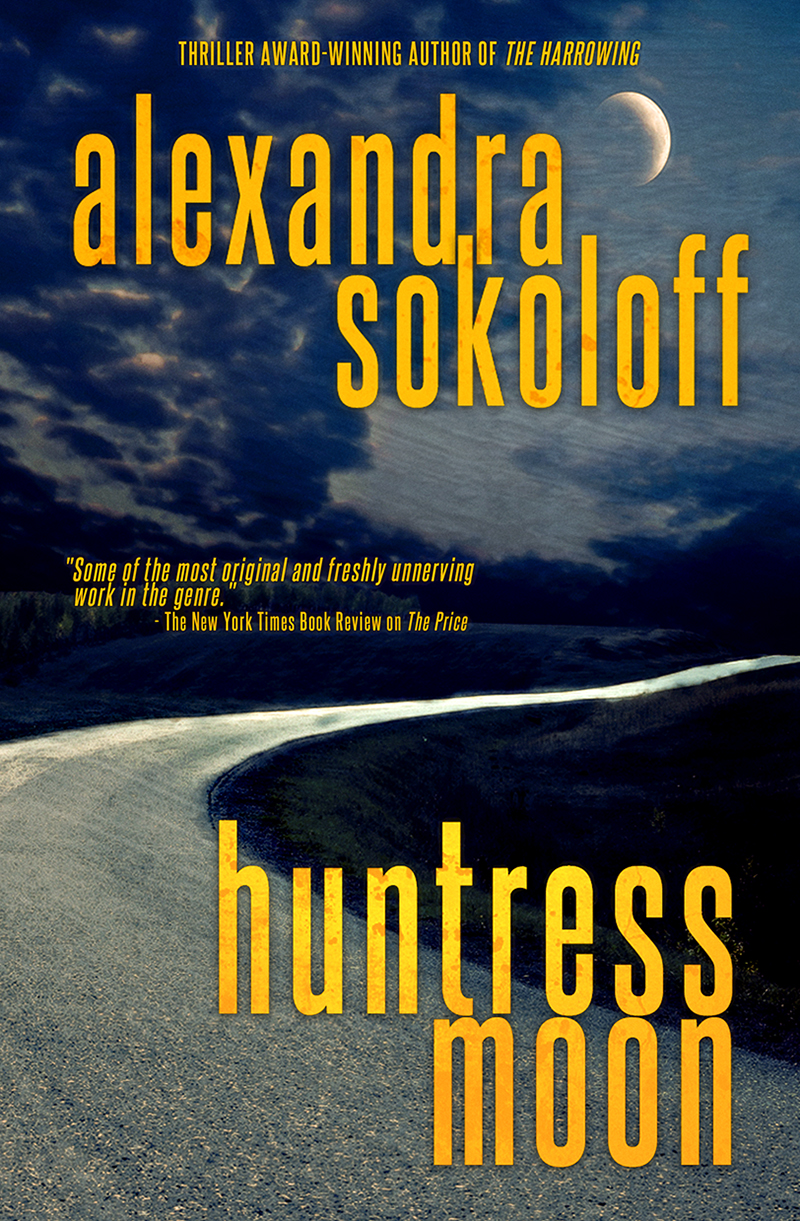
But I wrote my new crime thriller Huntress Moon  with the absolute intention of making it a mystery/thriller series, and while I do have plans to do sequels to two of my other books (Book of Shadows  and The Space Betweenwhich MUST be a trilogy!), I didn’t write those two thinking of them as series, they just turned out that way in the writing process.

Writing a series deliberately from the get-go – that’s a whole different thing.

The thing is, I don’t read many series.  The ones I do, I’m obsessed with, but have never been one of those who have to read in order. I really expect a book to work completely as a standalone, whether it’s in a series or not, so I’ll pick them up randomly and work my way through them in whatever order I get to them.

I’m not much of a TV series watcher, either.  I watch many more movies than TV series.  Well, not so much lately, since feature films seem to have hit a total low creatively, thanks to the corporate culture in Hollywood, which has driven all the good screenwriters to cable TV and jacked the quality of cable series up to mindblowing proportions.  I think it’s a second Golden Age of Television, honestly, and I often spend days watching an entire cable show on Netflix (Mad Men, The Wire, Deadwood, Wire in the Blood, Luther, The Walking Dead) without moving from my chair for much of anything.)

Hmm, I may be digressing, but it’s true.

But since I am obsessing about the series thing, I wanted to ask you all today to talk about your favorite series. What are they, what draws you to them, what hooks you, what keeps you reading, what’s your burnout point (if any!)?

Here’s my list.  (Yes, the Top Ten List I’m always preaching about!)

– Lee Child’s Reacher series

– Mo Hayder’s Jack Caffery/Flea Marlowe series

– Michael Connelly’s Harry Bosch series

– Denise Mina’s Paddy Meehan series

– Tess Gerritsen’s Rizzoli and Isles

– Val McDermid’s Tony Hill/Carole Jordan series

– Karin Slaughter’s Georgia series

– Ken Bruen’s Jack Taylor series

– F. Paul Wilson’s Repairman Jack series

– John Connolly’s Charlie Parker series

And, well, I have to add Thomas Harris’s Red Dragon and Silence of the Lambs, but the rest of the Hannibal series I try very hard to pretend never happened at all.

Now, the first thing I have to say about all of the above authors is that – it’s not the series, it’s the authors.  I would read anything any of the above put to paper, and pretty much have already, repeatedly. And I’m actually often more interested in books OUTSIDE the series than the next one in the series.

Writing a book, any book is an obsessive, encompassing, borderline psychotic thing.  (I threw in that “borderline” just for a laugh, cause, you know…)

Writing a series is all that, exponentially.  You have an ongoing, multidimensional, multi-generational parallel world inside you ALL THE TIME.

Does anyone else feel like that’s just – crazy?

Some worlds crazier than others.

I worry about Michael Connelly a little, or maybe I mean a lot, walking around with Harry Bosch in his head all the time. Because Harry is so fragile, you know.  To be constantly accessing that mindset, to be living in Harry’s skin… wow.  What would that do to you? You just want them both to have a BREAK from that, sometimes, but  – yeah, like that’s going to happen.

I guess I should be worried about Lee Child, too, because Reacher isn’t exactly the pinnacle of mental health. But Reacher has better social skills than Harry.  Even if Reacher never sticks around, he does make strong human connections consistently.  It just seems more balanced, somehow.  There was a point around the book Nothing to Lose, and then again in 61 Hours that I thought Reacher might finally be losing it entirely, but he seems to have pulled it together since then, at least for the moment.  I feel like Reacher can take care of himself because he’s actually aware of the need for help and really expert at recruiting it, while I always feel like someone should be taking care of Harry.

Notice how I’m talking about those characters as if I know them?  Well, don’t we?  That’s kind of the point of a series, right?  There is a lead character, sometimes two or three, that you want to get to know, that you commit to for a long-term relationship.

And for me, those characters are complicated and haunted and flawed.  Which might be putting it mildly – most if not all of the above characters seem to be genetically set on “self-destruct” and half of the suspense of the series is whether or not they’re going to survive the next book at all, or with sanity intact.

Actually, all the series above have some pretty strong things in common, besides the fact that they’re mindblowingly well-written.  They’re very, very dark. No happy endings (HEA) guaranteed here; in fact, you know going into any of those books that you’d better brace yourself for what’s coming.  They deal intensively with real human evil, and often with sexual abuse and child abuse, and they deal with it in a way that only a psychopath could be titillated. The characters fight that evil constantly and the battles are always bittersweet; there is no resolution, the battle may be won but the war rages on.  I think that’s just reality, and I appreciate that those authors don’t sugarcoat it.

There is a sensuality and lyricism to the writing that is hypnotic and addictive. The male/female relationships are twisted but incredibly erotic. The stories often let secondary characters take major roles (a trick I first noticed with Tess Gerritsen, one of the first series writers I got hooked on – I read her series more consistently than I did those of other authors because she would let a secondary character take the lead role in many of the books, which kept the series fresh for me).

All of those things are what I aspire to with Huntress Moon.  There are all kinds of ways that I’m trying to live my series, so I can do it justice. I’m taking kickboxing for the first time to see how my Huntress feels, physically and mentally and emotionally, when she has to fight.  (And I have to say that’s a real trip.  It’s not so different from dancing, really, a handful of basic moves that create a language of fighting, and then infinite variations on those.) I’m doing Lee Lofland’s Writers Police Academy in September to go through the law enforcement training that my FBI agent lead, and many secondary characters, would have had, and of course am addicted to Lee’s blog, and Doug Lyle‘s, for fantastic forensics information.  I am living with my nose buried in atlases and Google maps and taking any number of road trips to be in the places that my characters are traversing, so I get that physical experience right.

But most of all I’m grateful to have such stellar examples as the authors I listed above, and many more that I have missed, to look to for guidance about what I am trying create. It is an amazing thing for us as authors that our favorite authors are also our teachers – for life.  All we need to know about how to do this is right there for us – on the pages of our most beloved books.

So please – readers, talk to me about your favorite series, and writers – give me some tips from your experience writing them!

Alex

Amazon’s KDP – sharing experiences

By PD Martin

We’ve had a few blogs recently on ebooks, including discussions in the Comments on sales figures, Amazon’s Lending Library and Kindle Select. I’m hoping there are others out there who felt their appetite was whetted rather than sated and that perhaps a full blog JUST on those two aspects would be interesting. I’m not saying I have the answers (in fact, I have a few questions!), but I wanted to open the discussions up and share my experiences. And I’ve got an important question for readers, too 🙂

For those of you who aren’t aware, Amazon’s Kindle Select means the author must offer their book exclusively via Amazon, and in return that book can be borrowed (and you get $ for each borrow) and you can use five free promo days a month. The free promo days mean you offer your book for free and it heads up the charts. Hopefully!

So, a recap on the more recent ebook posts here at Murderati:

Former Murderati Brett Battles blogged on his secrets to success 
I blogged on the sweet spot for ebook pricing 

Alex blogged on her epublishing decision 

Zoe blogged on modern manners and social media 

Now you’re all caught up. 

So, Kindle Select. I did my first Kindle Select campaign with Coming Home back in May. I set it to run for 48 hours but after less than 24 hours, over 5,500 copies had been downloaded. I was excited and alarmed. Do I really want THAT many people to get my work for free? I foolishly stopped the campaign. I was in the top 40 of Kindle and #6 for Suspense (or was it mystery & thriller). Of course, later I realised the error of my ways, especially when Brett talked about 30-40K of downloads over three days.  

However, back in May I was excited by my first, tentative step into the Select program. You see, I saw a sales spike when I took Coming Home off the free promotion. In the following 48 hours I sold roughly four months’ worth of sales and I thought: “This is it. I just put one of my books up for free every couple of weeks and I can boost my ebook income.” I should also note, I didn’t do ANY promotion. Not even on Facebook or Twitter (I didn’t want to tell my readers and fans that they’d bought the book for $2.99, but others could get it free).

Anyway, a few weeks later I decided it was time to spike my sales again. So I put Coming Home up for a two-day free stint. Again, no advertising or promotion of the freebie. This result was COMPLETELY different. WTF? I got like maybe 300 free downloads. WTF? 

David DeLee mentioned in his comment on Alex’s blog that his more recent results with his free days haven’t been as good as in the past, and I’m wondering if maybe the first time you put it up for free Amazon ‘realises’ and advertises it some way? And Brett’s post mentioned that results haven’t been as earth-shattering recently either. So what gives?

It seems now we need to advertise and promote our freebies. Perhaps through social media (but we don’t want to turn people off – think back to Zoe’s blog last week) and maybe through blogs (Alex’s post on Tuesday is relevant to this one). 

Or is something else changing? Simply more players in the market, more authors going in for the free promos? Or maybe it’s something more complex. On Tuesday, Alex talked about the Amazon algorithm. Anyone out there give me more info on this? I’m not sure if this is to do with the ‘We recommend’ emails Amazon sends out or the free promo stuff. 

And finally, Amazon’s Prime Library. Again on Alex’s epublishing post, Robert Gregory Browne talked about some pretty high numbers in the lending department. But I’m literally getting lends in the double digits per month. So how do we promote our books in the Lending Library to get a share of that $600,000/month?

I do also have an important question for readers out there …would you be disappointed or annoyed in any way if you’d paid for an author’s work and discovered it was free a few days (or weeks) later? 

See…told you I had questions! 

THIS I DO BELIEVE

by Gar Anthony Haywood

One of my favorite films of all time is Steven Zaillian’s Searching for Bobby Fischer:

I think this movie is a small masterpiece and nothing less than a miracle, the latter because it’s virtually without flaw.  Zaillian’s direction of his own screenplay, the cast, James Horner’s beautiful score — you just can’t make a family-oriented “sports” film of this kind any better, IMO — and when you consider all the things that could have gone wrong during the movie’s development that somehow didn’t, well, it’s nothing short of amazing.

A few years back, the Arclight theater in Hollywood did a screening of the film that included a Q & A with Zaillian afterwards, and naturally, I jumped at the chance to attend.  Zaillian’s an incredible screenwriter (Schindler’s List, Gangs of New York, Moneyball [w/ Aaron Sorkin]), and I was anxious to hear him describe both his process in adapting the non-fiction book by Fred Waitzkin upon which his script was based, and his experiences in getting the movie made.

I learned a lot that night, but one thing Zaillian said in particular has always stayed with me.  He said the script didn’t really take off for him until he realized that the story within the source material he really wanted to tell was that of a father and son.  At its heart, that’s what Searching for Bobby Fischer is all about: a son’s need to win his father’s approval.  Everything else — the chess tournament milieu, the Good Coach With a Past, the evil rival — is just window dressing.

That Zaillian had something to say about the father/son dynamic is evident in the final product.  His film is as moving as it is — at least, for me — because it seems so genuinely felt.  This one clearly came from the heart, and I think that’s the reason Zaillian’s screenplay is such a gem.

Writing “from the heart” is what every author should be trying to do each time he puts pen to paper, regardless of what he’s writing, because that’s where the good stuff is, the stuff that makes a writer’s work uniquely his own.  Your one-of-a-kind perspective on the world in which we live — and the passions that color that perspective — are the one-two punch that no other writer on earth can offer a reader.  Your voice is an important calling card, but your soul is an even greater one.

Whenever I sit down to think about my next long-form work, I inevitably come to this question: In what ways can my personal belief systems enrich this material?  What do I have to say about it that speaks to who I am as an individual, and how I view life?

If I can’t answer that question — if I just can’t seem to find an emotional entry point to the story at hand — then I move on to something else.

For me, then, the ideal premise for a novel is one that not only excites me on a storytelling level, but also offers me the opportunity to explore a theme that, for one reason or another, stirs me emotionally.  The object is not catharsis, necessarily, but combustion; just another log to throw on the creative fire.

Over the years, I’ve figured out what most of my “hot button” themes are.  The following is just a partial list:

Fatherhood

As a father of four children, I’ve learned how strong and fierce the paternal instinct can be.  It’s no surprise, then, that stories involving a father going to war to protect/defend/avenge his brood have always moved me.  On the face of it, my most recent novel Assume Nothing may appear to be a crime thriller, but what it really is is my idea of a romance novel.  What else would you call the story of a man willing to do anything — anything — to ensure the safety of his wife and child?

True Love

“Happily ever after” I’m not so sure about, but I’m a firm believer in true love.  It’s rare and it can be fleeting, but it’s definitely real, and in my fiction, anyway, it’s always worth fighting for.

Justice

This one goes without saying, right?  It chaps my ass whenever Evil triumphs over Good, as it so often does in the real world, and I’ll be damned if I’m not going to get some payback in my fiction.

Religious Faith

As you probably know by now (especially if you read this earlier post of mine), I’m a determined if incredibly nonconformist Catholic, someone who believes in the Higher Power most commonly referred to as “God,” and who finds both peace and spiritual rejuvenation in the occasional twelve o’clock Mass.  While I have no interest whatsoever in ever proselytizing, discretely or otherwise (primarily because the things I believe in may very well turn out to be poppycock), the underlying optimism of my faith pretty much colors my view of everything, and that view in turn informs my writing.  As to the question of how much, I’ll just answer this way: No one will ever mistake me for C.S. Lewis, but neither will my fiction ever encourage non-believers to keep on keeping on.

Loyalty & Honor

The people I admire most in the world are those who live by an honor code and demonstrate an unshakable loyalty to family and country.  No, I’m not just talking about the U.S. Marines.  I think people from all walks of life exhibit these traits — by standing by their spouses when infidelity beckons, or having a friend’s back when the cost could be their livelihood — and I love writing about them.  Being loyal and honorable takes incredible courage, especially when the chips are down, and characters who meet this challenge, despite the personal sacrifices involved, are always at the center of my best fiction.

Forgive me if this all sounds pretty sappy.  But these are the themes that play out again and again in my writing, sometimes because I want them there, but mostly because they insist on butting in.  When I’m writing well, I’m emotionally connected to my material, and it is the things I believe in — the things that most draw my ire or fill me with joy — that provide that connection.

Author, know thyself.  And write accordingly.

Questions for the Class: Writers, what are your hot topic themes?  And readers, what themes do you most like to see explored in the fiction you read?

Marketing = Madness

by Alexandra Sokoloff

I just did a straight week of marketing to launch the e release of my new thriller, Huntress Moon. And in the middle of that huge Amazon promotion I have also been clearing out my house to sell it, and have been constantly finding reminders of the brutal days when book launches meant book tours and bookstore drop-ins and call-in radio shows. How different things are for authors today, just three years later than what you’re about to read below!  While throwing out (meaning recycling) ten tons of paper promo material I was reminded of this blog I wrote for the hardcover launch of my poltergeist thriller, The Unseen, which I just put up for sale on Amazon and Nook this month.  Just a bit of a different process!

But I think you’ll find it uncanny how the more things change, the more they stay the same.


December 2008


Dear Diary:

You will be thrilled to know I’ve made an actual decision. No, I mean it, stop laughing. Really. I’m just not going to kill myself promoting THE UNSEEN when it comes out. No more of this stress. I love this book. I know people want to read it. Who wouldn’t want to read it? 

John Lescroart says the only viable thing you can do to sell your books is to write another book. So that’s what I’m going to do – I’m going to write another book. In fact, I’m going to write two books.

And the Screenwriting Tricks for Authors book, too – I can do an hour of that every other day. It all stops now. No more traveling, no more craziness, just workshops close to home. That people pay me for. I’m going to write. That’s it. Write. And have a personal life, remember that?

PS. You won’t be hearing from me for a while. I have writing to do. And – personal stuff.


                ———————— Five months later ————————


May 1, 2009.

Well, Diary, I am thrilled to report I have finished Book of Shadows and Scott loves it and SO DO I. I got that paranormal proposal in to HQ Nocturne and I will easily be finished with Ghost Ship by the end of the month and get that in to St. Martin’s ON TIME. I have an entire first draft of Screenwriting Tricks for Authors, and am psyched to launch into revisions. I am so golden.

Lescroart is so right. We need to be writing.


May 2

Woke up to panic attack. OH MY GOD, The Unseen is coming out in twenty-four days. How did that happen? Who scheduled this?

I haven’t done anything. Nothing. I haven’t even thought about doing anything. I forgot about promotion. Who do I think I am, a screenwriter? I’m an author now, I have to promote.

What’s promotion again? How did I do it before? OH MY GOD.


May 3

Woke up thinking about Konrath. OH MY GOD. Konrath is doing a 100-stop blog book tour for Afraid. I should be doing a 100-stop blog book tour. Wait. I can barely write one blog a week. I’d have to have started 100 weeks ago to do a 100-stop blog book tour. 100 weeks ago is – um, years, I think. I can do ten. No, twelve. No, eight. In two months. No, one. No, six weeks.

Is it worth it to do that? Does that even count as a blog book tour?

Note to self: check Blog Book Tour site for… specifics. Wait. Wouldn’t I rather just write more Screenwriting Tricks blogs? Won’t everyone hate me if I stop those for a month to do blogs on… whatever I would be doing blogs on? On somebody else’s blog site? Didn’t I start Screenwriting Tricks because I had nothing left to say about myself? Do blog tours really work? Konrath says it’s working.

Well, of course it’s working for Konrath, I’m talking about for REAL people, do they work for REAL people? Note to self: You are NOT under any circumstances going to try to pull a Konrath here. Just get a grip.


May 4

OH MY GOD. “The Edge of Seventeen” got nominated for a Thriller Award for Best Short Story. I can’t believe it. I mean, I love that story, maybe more than anything I’ve ever written, but… it’s supernatural. It’s got a teenage GIRL protagonist. I’m so overwhelmed it got noticed.

Lescroart is right. I need to be writing. Nothing matters but writing. And affection.


May 5

OH MY GOD. Thrillerfest is the same weekend as ALA. HOW DO THESE THINGS HAPPEN? How can I not go to ALA? How can I not go to Thrillerfest? I’m going to be just out with The Unseen in hardcover, I have to go to ALA.

But I’m nominated for a Thriller award, how can I not go to Thrillerfest? How can I be in New York and Chicago at the same time?


May 6

Woke up thinking about social networking. OH MY GOD. I haven’t posted on Facebook in weeks. I haven’t Twittered in longer. And I can’t remember the last time I even signed on to MySpace. I need to update my sites. If I can remember them. Amazon blog, Red Room blog, MySpace blog, Haunt blog, Backspace, MWA something or other – Margery said we all had pages somewhere and that I haven’t done anything on mine; Pretty Scary, Authors Round the South, Indie Bound something or other, Library Thing?

Am I on that? Or was I supposed to do it and forgot? And what about that Facebook page thing? Did anyone ever figure out how to find my page as opposed to whatever the regular Facebook thing is? Is that page thing just going to open up a whole new spate of old boyfriends?


May 7

Woke up thinking about….

I can’t… think…


May 8

OH MY GOD. Romantic Times is in two days. Did I book a flight? What state is it in? Do I have bookmarks? Oh my God, I never ordered bookmarks for The Unseen. I have to e mail Kelley at Iconix and order more NOW TODAY so they’ll come in time. Will they get here or do I have them delivered to – whatever state RT is in? Kelley will handle it. IF YOU REMEMBER TO TELL HER.

Where are my business cards? OH MY GOD. I have to learn all the songs for the Vampire show. Shut up. Slow down. What you need to do at RT is WRITE. Go rehearse the Vampire show and then go back to the room and write, write, write. Five pages a day, minimum.

(Pages done at RT: 7 total, done on the plane en route. Hours spent rehearsing Vampire Show: 20. Hours on the dance floor: 3 per night. Hours in hot tub after dance=5. Parties… a lot.).


May 9

Woke up thinking about website. Hmm, worrisome. Most Awesome Webmistress is not returning e mail on website update. Starting to panic. Better call.

OH MY GOD. Most Awesome Webmistress has been sending e mails on website update that have disappeared into the ether. Website needs complete overhaul.

OH MY GOD. Must send in all updates by tomorrow and decide on design.

OH MY GOD.


May 10

– Have to get announcements of The Unseen in to all the organizations I belong to for their newsletters. What organizations do I belong to again? Who do I send this stuff to?

– Have to send updated list of all reviewers I know to new publicist so she can send reading copies.

– Have to send updated list of all media contacts I have to new publicist to she can send reading copies.

– Have to send updated bookseller/librarian list to new publicist.

– Have to do author questionnaire for Little, Brown for UK releases.

– Have to do new author questionnaire for St. Martin’s.

– Have to do AT LEAST FIVE PAGES on Ghost Ship today. I have to. I have to.


(End of day: Pages written: 0)


May 11

Woke up thinking about bookstore mailings. Elaine Viets does bookstore mailings. Elaine swears by bookstore mailings, and everyone loves her. Does that mean I should do bookstore mailings? What is a bookstore mailing?

Books? Still don’t have them. Bookmarks? Bookmarks are great if you march them into the store and set them on the counter yourself, but if I were a CRM and got bookmarks in the mail I would just toss them in the trash. I don’t even open my own mail, how can I expect anyone else to?


May 12

Woke up thinking about book club mailings. Jenna Black swears by book club mailings. Do I need to do a book club mailing? What is a book club mailing?


May 13

There’s a book club coordinator at St. Martin’s. Who knew? I give her my targeted list of rabid book clubs and she will send books with my letter that I send to her. I love St. Martin’s.

Lesson learned: Ask, Ask, Ask.


May 14

Going through old promotional files and discovered Sisters in Crime has a bookclub database with specific contact info for mystery book clubs nationwide. Most want e mail contact first. I can do that. I can do that in a night.

I love Sisters in Crime.


May 15

OH MY GOD. I haven’t worked out in two weeks. Have you somehow for gotten that you have the personality of a rabid armadillo when you don’t work out for TWO DAYS?

Has it somehow slipped your mind that a BOOK TOUR means you will be dealing with THE PUBLIC for all your waking hours? Has it not occurred to you that if you don’t get an injection of endorphins, not to mention muscle tone, then too soon to contemplate you will not be fit for viewing?


May 16, 2009

OH MY GOD. I haven’t updated my mailing list in six months. And I need to do a newsletter. How does Vertical Response work again? What’s my password? Why can’t I log in? Oh, right, I have to use Firefox to get into that one. Um, I think. But do I have any news?

Did I for sure take that guy off the list who wrote me that horrible letter about how he didn’t know me and how did I get his e mail and why am I spamming him? Does he know how many nights of sleep I lost lying awake wondering the same thing?


May 17

OH MY GOD. I have to be at BEA next week. What state is BEA in this year? I need a pass. I need books. Did I book a flight?…. Frantic e mailing ensues …. HAH! St. Martin’s has sent books and is sending me a pass.

I will do my Quail Ridge launch then drive up to NY with Natasha and stop at bookstores along the way to sign stock.

A Garmin would be good, though. Konrath swears by his Garmin. Note to self: need to get a Garmin. More to the point, need to figure out how to use it before I hit the road. Can I realistically do that? I mean, really?


May 18

OH MY GOD. Right after BEA I’m due in L.A. for the HWA Stoker weekend and So Cal MWA conference and Dark Delicacies signing and Mysterious Galaxy signing. Did I book a flight? OH MY GOD – must do bookstore drop-ins. Must do TONS of bookstore drop-ins. I can do 200 easily in two weeks before I have to be back for my Southern tour stops. Even without a Garmin. No Garmin required here at all. Konrath may be Konrath, but I know California freeways.

HAH!

—————————————————————————————

I wish I could say that’s as bad as it gets but it’s not even close. Multiply the chaos above by twelve thousand and you have a rough idea of my mental state at the moment. There is no order to anything.

The funny thing is, I just did an interview in which the eminently sane interviewer posed the question: “You’re a great business networker. What’s your strategy?”Which I guess is encouraging because no matter what is happening inside me I have the APPEARANCE of control and organization. So that must count for something.

But you know what? I was so fine while I was just writing. I really did get – almost – two books, a proposal, and a rough draft of another (non-fiction) book done in five months. This last month I’ve managed to do some editing, but that’s about it. And I am miserable about it. I could so easily have had my new book done by now.

So I really, really want to know. Are we really doing ourselves any favors doing this kind of insane promotion? Or is John Lescroart right, and we should just always be writing the next book, period?


—————————————————————————————————- 

July 2012

I find the above really amusing and frightening at the same time.

Thank God at least SOME things are different. I no longer have to book so many flights for book tours (which I have a total aversion to doing, even though these days someone else is almost always paying for my appearances, I figured THAT part out at least!).  Bookstore drop-ins?  The chains have crumbled. These days you have to figure out how to work the Amazon algorithm, but you don’t have go GO anywhere to do it.  That alone is less time-intensive.  I’m still using this paper promo at conferences, people still use bookmarks, but as I found out this week I already have a lifetime supply (!)

It’s amusing to me that we were looking to Konrath for the magic answers before the e book thing, too.  (And anyone who thinks he just got lucky on the e book thing should remember the days not so very long ago that he was doing 600 bookstore drivebys in three months and 200 blogstops in a month.)

But I can still get caught up in that kind of frantic obsessive promotional frenzy, even though I don’t have to get dressed to do it anymore. There is an addictive aspect to marketing that I think authors have to be very wary about, and always self-monitor.

And my question today, July 2012, is exactly the same:

Even though we’re doing it online, now, Facebook, Twitter, blog tours – is that really helping us?  Really? Are we really doing ourselves any favors doing this kind of insane promotion? Or is John Lescroart STILL right, and we should just always be writing the next book, period?

What do you think?

Alex


Huntress Moon, now on sale:  $3.99  An Amazon Hot New Release!

A driven FBI is on the hunt for that most rare of killers… a female serial.


Amazon IT


A Question Of Class

By Tania Carver

And so begins one of the busiest weeks of the year.  Yes, Harrogate is upon us.  And Tania Carver will be there.  Or one of us will be – and it’s me.  As I’ve said before, Linda doesn’t like getting up on stage and mouthing off, she’s happy to leave that to me.  And since I have been the Festival’s Reader in Residence for the last few years it makes sense for me to be the one there.

This year, I’m appearing (as Tania) on a panel on women and violence.  It should be fun.  And no, before you ask, I won’t be getting dressed up.  I’m also doing a couple of events as Martyn too so that balances things out.

But I didn’t want to talk about women and violence.  That’s for next weekend.  Instead my eye was caught by another panel in the programme, namely ‘A Donkey In The Grand National’.  That phrase was used by John Sutherland, who as a former chair of the Man Booker judges was asked what the chances were of a crime novel winning the prize.  About the same, he said.  Now the whole genre/literary debate has been about played to death.  For an excellent piece about it, have a look at what Ray Banks has to say here.  (There’s even a comment by me on there).  I’m not going to address that directly.  What I do want to talk about is something that may seem, at first glance, to be tangential to it but is actually – I think – at the heart of the debate.  Class.

Now I know that in the States you have trouble working out the class system we have over here.  So let me have a stab at explaining how it works.  We have the Royal family, you have the Kennedys.  We have the aristocracy, you have the Kardashians.  (When I first heard the name I thought they were aliens from Star Trek.  Honestly.  Having seen them I feel I was absolutely right in that judgement.)  We’re supposed to be deferential to our lords and ladies, you’re supposed to take seriously what comes out of Angelina Jolie’s mouth.  You see the parallels.  You see how both are essentially ludicrous.

I was out with Mark Billingham the other night and we started talking about this.  He wondered what the critical response had been to Agatha Christie during the so-called Golden Age of crime fiction.  Was she feted as the mistress of the puzzle novel?  Sneers at for the same thing?  Patronised as a genre writer (before the term had even been fully embraced)?  I don’t know.  I haven’t been able to find out.  But if anyone does, please let me know – seriously, I’d love to know.  We do know that her sales were huge, her following enormous with movie adaptations, stage plays (The Mousetrap is still the longest running play in London’s West End) and a level of interest in her personal life that most contemporary authors (JK Rowling excepted) would be hard pushed to match.  But how seriously was she taken as a writer?  From what I can tell, she was praised for being what she was.  A good mechanic, someone who reproduced puzzles in the form of novels.  She was no great prose stylist,her characters were stock, her action perfunctory.  My theory is she’s remembered because she bridged the gap between childhood and adult reading.  Her books, involving murders and puzzles, gave a young reader eager to develop beyond Enid Blyton the veneer of sophistication but they were written in such simplistic a manner as to be linguistically unchallenging.  And Christie knew her milieu.  The country house, the vicarage.  A train travelling in an exotic, far-off country.  The characters were all upper middle class (or just upper class), vicars and military officers and Lords and Ladies.  Christie knew these people.  She was in the same class as them.  Interestingly, whenever a member of the lower classes appeared they were always thick coppers that her brilliant detective would show up as idiots or servants.  They were also often the murderers and being sent to the gallows at the end of the novel was seen as a just punishment for getting ideas above their station.  She was also horribly reactionary.  I can’t speak for her contemporaries such as Margery Allingham, Dorothy L Sayers, Josephine Tey and the like because I’ve never read them.  Nor have I ever been tempted to read them and maybe that’s my loss.  I’ve read Christie and she’s not what I look for in a writer.  I strongly suspect they wouldn’t be either.  However, Christie and her coven cast a long shadow over British crime fiction.  And at its heart, I believe, is class.

It goes back even further.  It’s the Victorian idea that reading books is somehow improving and difficult.  If the reader doesn’t come away from experiencing great literature with their life enriched and challenged then they’ve been reading it wrong.  Forget entertainment, that was for the lower classes.  Education and enrichment was what it was all about, the two are mutually exclusive and if you wanted entertainment too there was something inherently wrong with your intellect.  And that prevailing attitude, I believe, still hangs over the literary world today.

I’ve mentioned this before but make no apologies for bringing it up again.  I hope I never have to see another article by some broadsheet’s literary editor about how he’s been reading (fill in the name of the latest Scandanavian crime import in translation) and is loving it.  It has everything you would want from a novel, the literary editor drivels on – beautiful prose, compelling characters, structure, poetry, strong narrative and above all a sense of social engagement with the contemporary world in which its set.  They then always conclude with a variation on the same whinge: Why oh why can’t the crime writers in this country do the same?

And my answer to that is very simple.  We do.  Or at least a lot of us do, or at least strive to do just that.  Because crime fiction – contemporary crime fiction, being written now – is doing just that.  That’s what it is.  I can come up with numerous examples and I’m sure you can too.  In fact I just did but took them all out because this piece would have doubled in length.

I’d always been a fan of crime fiction.  I came to it through comics and pulp – as a kid I would devour anything by the holy trinity: Stan Lee, Jack Kirby and Steve Ditko.  I’ve still got those comics on my shelf.  I’m proud of that.  I still read them.  I think Kirby’s work for DC in the early Seventies is some of the greatest art of the Twentieth Century and I don’t care who disagrees with that opinion.  I love it so much I could write a PhD on it.  From comics I went on to pulp fiction.  I was a bookish, geekish kid who spent summer holidays sitting reading Doc Savage, the Shadow and my favourite, the Spider.  From there I graduated to crime fiction.  I read Farewell My Lovely at a very impressionable age and that was it.  It was like someone had just flung open the doors and windows.  Here was a book that didn’t apologise for anything.  It was unashamedly a crime novel yet it was unashamedly literature – both at the same time.  How did he do that?

And in the late Eighties/early Nineties I discovered a bunch of writers who would become my literary godfathers and mothers.  James Ellroy.  James Lee Burke.  James Crumley. And the ones who weren’t called James: Andrew Vachss.  Sara Paretsky.  Walter Mosley.  There were, but again we’d be here all night if I listed them.  They wrote with a sense of engagement with the world around them that was completely absent in British crime fiction at the time.  They were like the literary equivalent of CNN: reportage as literature.  Their work was both comment on and product of the societies that shaped and formed them as writers and people.  I loved what they were doing.  I wanted to take that ethos and make it work in Britain.  I did, but I wasn’t alone.  A lot of other writers had the same idea at the same time.  We all, whether consciously or unconsciously, rejected Christie’s rigid, reactionary, class-based structure and created crime fiction about the country we lived in.  You want to now what Britain was like in the Nineties?  Read John Harvey’s Resnick series.  You want an insight into contemporary British gender politics?  Read Val McDermid.  And on and on. 

So yes.  The broadsheet literary editors bemoaning the lack of British crime writing as literature just haven’t been reading it.  Britain has crime writers the equal to any in the world.  But – and this, I believe, is one of the big things – we’re not in translation.  We write in English and therefore there’s no cache when it comes to discussing us at dinner parties. And because most literary editors are of the same class Christie was from, they still think that’s what crime fiction is in this country.  We’re not seen as difficult or improving or challenging.  In their eyes, we’re providers of entertainment for the lower orders.

Now in an abstract sense, as any serious reader will tell you, the argument is spurious.  There are only good books and bad ones.  That’s all that counts.  Great ones that could be considered genre, awful ones that are seen as literary.  And vice versa.  And a discerning reader knows that.  But for me, personally, I don’t care.  I don’t think their argument applies to me.  Because I’m the guy that thinks Jack Kirby is as big a genius as Jackson Pollack.  I’m proud to write crime fiction.  It’s a genre I love and if I want to make any penetrating insights into the human condition I can do so in a crime novel.  Just as long as I remember to put a plot in it because someone has paid money to be entertained. 

Here’s a last example of what I mean.  I’ve just finished reading a biography of Frankie Howerd.  He was a British comedian who died in 1992.  He had huge mainstream success and was best remembered for his stand up, sit coms and catch phrases.  He was, in short, a light entertainment mainstay.  End of the pier, music hall, vaudeville stuff.  Entertainment for the lower orders.  Yet he had also performed Shakespeare, appeared in opera, won acclaim as a satirist (he followed Lenny Bruce as resident comedian at Peter Cook’s Establishment Club in the Sixties), revived Roman comedies and had one critic calling him ‘the most Brechtian actor in Britain’.  Not bad for a working class bloke from Eltham, London.  Yeah, he had all those penetrating insights about the human condition but he made them while he was making his audience laugh.  While he was entertaining them.  He was the best at what he did and he did it so well it became something more than that.

That’s what the best crime writers – or best writers in any genre – always do.

And they’re a class act because of it.


GHOSTING

by Stephen Jay Schwartz

Forgive me for repeating myself, but due to time constraints, I’m re-posting a blog I wrote a while back.  I was preparing a new blog about how music has influenced my writing and I just couldn’t get it right, at least not in time for deadline.  This one, however, does the trick.  So, if you haven’t read it before, consider it brand spanking new.  Thanks for the leeway.

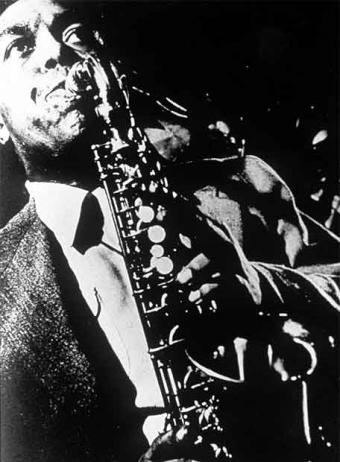
Here’s yet another example of how music has influenced the way I think about writing.  There’s a musical term, called “ghosting,” that describes a particular style of jazz improvisation. Let’s say there’s a musical phrase, or “lick,” that stretches over a number of bars.  When a musician “ghosts” that phrase, he whips through the notes, punctuating certain notes while passing over others on his way to the end of the phrase.  He might not even express the notes he passes over, he might merely suggest them by fingering the corresponding keys or allowing a very small amount of air into the instrument (if it is a saxophone or trumpet) in order to give the impression that the note was sounded. 

It’s kind of hard to describe this in words, but if you take a listen to Charlie Parker playing Au Privave, you’ll get the gist.  The music starts off with the melody line, which is repeated once.  Then Charlie improvises, and you can hear how he “ghosts” the musical phrases.

Even though we don’t hear all the notes he’s playing, we sense their existence in the context of the musical phrase.  The notes are felt, even though they might not be audible.

I realized how this concept applied to writing when I was working as a development executive and a writer I knew was having trouble cutting back a long scene.  She was reluctant to let go of the back-story she had written into the scene, thinking the reader would be lost if things weren’t spelled out clearly.

“Cut it,” I said.  “All you need is a word here and there to suggest the extensive back-story you’ve written.  Your dialogue already contains subtle references to it.  The ghost of what you’ve written will remain.”

I was discovering the musical connection even as I was saying it.  Teaching works that way, you don’t know what you know until you try explaining it to others.  She liked the concept and went off to do her rewrites.  When she finished, her script was vastly improved.  It said more, with fewer words.  And she didn’t just cut the back-story, she “ghosted” it.

I started thinking about how ghosting plays a role in other aspects of our lives.  For instance, anyone who has had to deliver a hundred-word bio goes through the process of ghosting.  Take mine, for example, with its emphasis on my development work with Wolfgang Petersen.  That was over ten years ago already, yet it influenced my life in ways that the jobs I held thereafter did not.  What about the “day job” I’m currently in?  It doesn’t show up in the bio, except for the line, “Mr. Schwartz traveled the United States extensively…”  That was for the day job.  The traveling influenced the writer I would become, but the job itself…fuggedaboudit.  Ghost it.

And how many of us have written three or four completely different resumes, each in their own way accurate in their description of our work history, accomplishments and goals?  We present different images of ourselves for different purposes.  The full story of my life exists in the combination of all the resumes, but that would be too much information, and probably too confusing.  Ghost it.

And what about our memories?  Don’t we remember the big events, the things that are really significant in our lives, while letting the less significant ones disappear in a haze of gray?  You can’t tell someone the story of your life without ghosting. 

I used to keep a recording device with me so I could capture every “great” idea that came into my head.  Then one day I was having lunch with another writer and he pulled his own tape-recorder from a hidden pocket, hit the record button, and said something to the effect of, “Note to self:  the protagonist should have a bouquet of flowers in his hands when the gunmen approach.”  Click, he slipped the recording device back into his pocket while turning to me with an innocent, “I’m sorry, you were saying?”

I ditched the tape recorder after that.  I realized that the good thoughts stick around.  Recording them or instantly jotting them down seemed redundant.  If the idea was still in my head after a week I knew it was something worth using.  If I forgot it ten minutes later then it probably wasn’t that important.  Kinda like the time I did shrooms and was absolutely fascinated with a glowing filament encased in a glass capsule, I spent hours marveling at it’s unique, sleek design and the God-inspired wisdom that caused it to come into existence.  The next morning I looked at the device again and said, “Oh yeah, a light bulb.”

But I digress.  We were talking about ghosting. 

So, ghosting in writing could be described as an intentional suppression of information that allows for the seeping through of certain elements of that information in order to suggest the existence of a deeper, fuller background than what is written on the page.

Man, I want a spot on the next Webster’s Dictionary writing gig.

What about unintentional ghosting?  I was having a conversation with a friend recently and he told me about his father’s Alzheimer’s.  It’s in the early stages—the man still remembers his family members and most of the important moments in his life.  But if you ask him what he had for lunch he’ll just make shit up.  He’ll give a whole schpeil about the fictitious dining experience he didn’t have.  Brushing over the fact that he doesn’t remember a thing about it.  Unintentional ghosting?

Does anyone out there in Murderati Land have any cool made-up words that almost make sense?  Or something you’ve taken from a different medium and applied it to writing?

Modern Manners

Zoë Sharp

My parents brought me up to be polite, and most of the time that’s stuck.

I automatically hold doors open for people, write thank you-letters, and let other drivers out into traffic. And if I’ve never actually helped a little old lady across the road, that’s only because I’ve never encountered one who needed — or would have welcomed — such an impertinence.

Don’t get the idea from this that I spend my evenings sitting at home polishing my halo — far from it. I’m sure there are plenty who would tell you I can be as stubborn or downright bloody-minded as anyone else. But being simply pleasant to people creates a kind of calm. It gives me a sense of balance in an otherwise mad world.

]

Maybe this is a result of having done self-defence training. Knowing that — as a last resort — I could take somebody on physically makes me less inclined to prove it by doing so.

But I also find these days that I am much less inclined to take somebody on at the ancient art of Black Catting.

Never heard of Black Catting? Well, I’m not surprised if the name is unfamiliar, as I believe it may well be something my sister invented, but even if you don’t know the name, you’ll recognise the concept.

We all know Black Catters. We come across them every day — and not simply because they cross the road in front of us. (Old lady optional at this point.)

Black Catters are the ones who just HAVE to get one over on you, no matter what you say, or what you have done, or where have been. They’ve always done it first, faster, bigger, more expensively. Or occasionally you meet reverse Black Catters. “You’ve been ill? Well so have I, and my illness was FAR more serious than yours …”

In other words, “My cat’s blacker than your cat. It is, it is, it bloody is. So there.”

The internet, sadly, is overflowing with Black Catters of all types.

Sometimes I think social media should be renamed socially awkward media, with its false intimacy and anonymity. Throwaway comments can be so easily misjudged because we lack the additional markers of facial expression, body language, and tone of voice. Someone once told me that there are six ways a person can read a letter, from joky or sarcastic to downright offensive. I know I shouldn’t use so many smilies (as opposed to similes) when I post or comment, but it’s the only way I know to show people I have my tongue firmly wedged in my cheek most of the time.

On the social media sites, when someone Friends or Follows me, I try to find out a little about them, visit their website and/or blog, before I follow or friend them back. Not only does this allow me to decide if I’d like to be friends with — or followers of — these people, but I’m then able to make some kind of relevant comment, too. (Usually tongue in cheek.)

I do not say, “Thanks for Friending/Following me. Now go check out my book and BUY IT NOW!”

Amazingly, this is exactly what some people do.

I can appreciate that, as an author, my job is to sell books—

No, that’s not true. While it may be part of my job to sell books, my ‘core activity’ (Gawd, don’t you hate management-speak?) is to write books. And, more specifically, to write the very best books I can possibly craft.

I am not a writer from choice. I am a writer by nature, by obsessive compulsion, by instinct and because I cannot envisage ever letting go of the urge to connect with people through the images created inside my head and blurted onto the page in a swirl of words and ideas, dancing together in the spotlight.

I write not because it is what I am.

I write because it is who I am.

So, if I occasionally neglect my Facebook, Twitter and Goodreads pages, or don’t respond to email like a swinging door, that’s probably because I’m clinging for dear life to that basic tenet.

Nevertheless, I am constantly surprised and delighted to receive emails, posts and messages from people who have read and enjoyed my work.

Last week I came across  Judith Baxter’s excellent blog in which she discovered Charlie Fox through FIRST DROP and wrote about how much she’d enjoyed the book. How lovely is that? So, naturally, I posted a comment to thank her. When I stumble across these mentions, I always try to post a response. Not to do so would be rude, in my opinion. But this was obviously something that not many authors do. Judith was so delighted by this that she posted a follow-up blog. And when I commented on that, too, Judith’s reaction was to post another review, this time of HARD KNOCKS.

I’m absolutely blown away by this enthusiasm and generosity.

Now, I know there’s been a lot of talk on Murderati lately about marketing your work — and particularly marketing your digital work. How you have to make social media work for you, but I honestly didn’t have that in mind when I responded to Judith’s blog(s). I was genuinely over the moon that she loved the series enough to say so, and because that was the way I was brought up. It’s completely ingrained.

I know personally that I will go a long way out of my way for a simple thank you.

And it would seem that others feel the same.

But the other side of the coin is when I Friend or Follow or Like someone only to be subjected to the immediate Hard Sell I mentioned earlier before I’ve had a chance to take my coat off.

I confess that Hard Sell tactics bring out my stubborn side.

Or I find their only posts are their five-star reviews or links to Buy My Book pages. Yes, it’s lovely to blow your own trumpet occasionally. But if that’s all you do then it starts to hurt people’s ears!

What are your views about the Hard Sell and Modern Manners, ‘Rati?

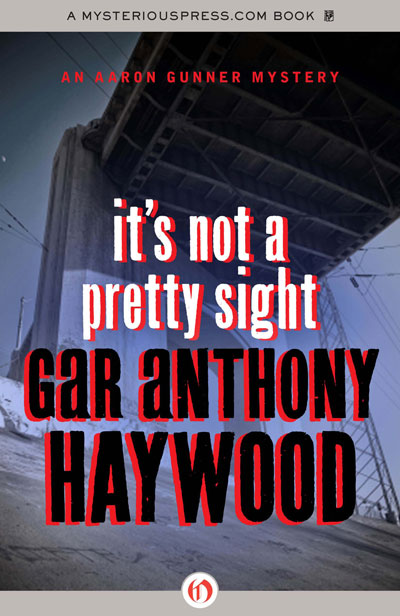
Oh, speaking of blowing trumpets, I’m happy to blow other people’s FOR them, occasionally, particularly writers of the calibre of our own Gar Anthony Haywood, whose Aaron Gunner novel, IT’S NOT A PRETTY SIGHT has just been released by Mysterious Press/Open Road at the bargain price of $3.99 until Tues, July 17th.

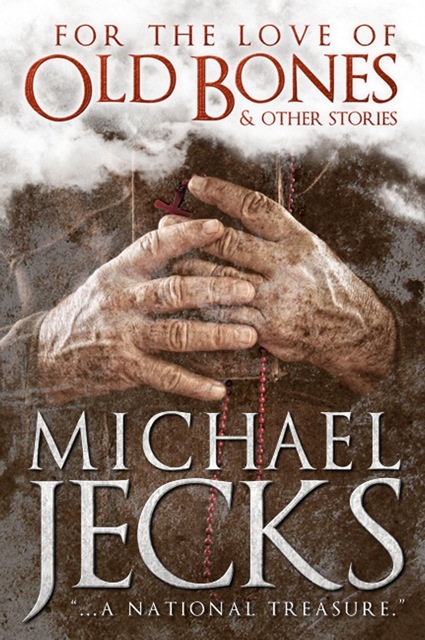
And another author friend, the excellent historical crime writer Michael Jecks (he’s also a Morris Dancer, but you can’t hold that against him) has just released a short story anthology, FOR THE LOVE OF OLD BONES — which you can buy in the UK, or US.

If you’ve never read Mike, you’re missing a treat!

And finally <shuffles feet awkwardly> might I mention that the UK mass-market paperback of FIFTH VICTIM: Charlie Fox book nine is hot off the press with a spanking new cover design, and is Allison & Busby’s Book of the Month?

Right, I’ll put this trumpet down now …

This week’s Word of the Week is exoculation, the action of putting out the eyes; blinding.