Author Archives: Murderati Members


The Lists

By Tania Carver

Well, it’s that time of year again. I don’t mean Christmas or the holidays or whatever you call it. I mean the time of year when people bombard you with lists. Best book, best movie, most profound cup of coffee, whatever. Newspapers love lists. They’re great space fillers, no brainers. They remind their readers what happened during the year and they’re cheap to produce. Even better if an editor can solicit someone else’s opinions. They can do the heavy lifting for them. You’re an author, what were your three favourite books? You’re a war photographer, what were your three favourite conflicts? You’re a porn star, what were your three favourite positions? Legal ones, please, if you don’t mind, it’s a family paper. You know the kind of thing.

So why should we be any different here?

My first thought was, obviously, books. But I honestly don’t know if anyone cares enough for that. I’ve read some great books and some not so great ones. The great ones have made me want to give up, the not so great ones have made me feel like that in different ways. I haven’t chosen a best novel of the year or even a top five. I figure everyone else will be doing that.  And as a writer I feel I can sometimes become a bit monocultural: only talking about books, only reading books, only writing books. So I decided to cast the remit wider than that. But I did want to do some kind of list thing.  It’s traditional.

So I’ve decided on best cultural event of the year. Obviously this is a personal thing and I wouldn’t expect everyone (or anyone) else to agree with me. So what kind of cultural event do I mean? Well, something that moved me in some way, that changed the way I felt about things. Something that spoke to me individually and directly.

There were two. So here they are.

The Flicker Club Presents Hammer At The Vault.

The Flicker Club organise special screenings of classic movies. But more than that, they also pay homage to the literature that spawned them. In the past they have given us such events Night Of The Hunter with Mark Rylance channelling Robert Mitchum in a reading from Davis Grubb’s original novel, two screenings of It’s A Wonderful Life, with Bill Nighy reading Philip Van Doren Stern’s original short story and John Simm the next time and Scrooge with Tom Hollander reading Dickens’ original. You get the idea. They take classic movies and turn them into an event, a celebration.

That’s how it was with Hammer. The Vault is an incredible venue to start with. Behind Waterloo Station in London are a vast amount of railway arches, all cold brick walls and vaulted ceilings. And here’s the thing: the one they staged the Hammer retrospective in used to be the mausoleum for the necropolis railway. Heard of it? It was opened in 1854 as a response to severe overcrowding in London’s cemeteries. It was supposed to take coffins down the line to Brookwood cemetery in Surrey. The Necropolis. It’s no longer in use but the tunnels are still there.

The Vault was decked out in plush red velvet cinema seats with a small stage in front of the screen. The events were given full introductions and the guest reader brought on. And there were some great guests. Liz White, the titular character, read from The Woman In White before the film, the gorgeous Madeleine Smith did a couple of stints, reading from Le Fanu’s Camilla before the screening of The Vampire Lovers and from Frankenstein before Frankenstein And The Monster from Hell, both of which she starred in. Mark Gatiss read from the Conan Doyle original before The Hound Of The Baskervilles. You get the idea.

And I loved it. Couldn’t get enough.

I’ve been a Hammer fan since my earlier teens, if not earlier. Hammer films were staying up late to be scared, the thrill of the illicit. They were suave vampires and body-reviving counts, buckets of blood and of course cleavage-heavy nubile young women. What teenage boy wouldn’t want that? I’ve collected magazines devoted to the films, books, comics, posters, t-shirts, even mugs. Yes, I’m a bit of a fanboy.

So I went along. I should explain that I’ve got most of these films on some format or other at home. VHS or DVD or Bluray.  So why did I go to the trouble and expense of seeing them on the big screen? The answer’s in the last phrase. The big screen. I’d only ever seen the films on TV. The chance to sit there, in plush, blood red velvet seats, in a Victorian mausoleum with stars from the original films in attendance was too good to miss. So I didn’t. And it was brilliant.

But not just in a nostalgic way, although obviously that played a big part. The films themselves, for the most part, really held up well. They come from an age of film-making we just haven’t got in this country (or any, sadly) any more. They weren’t made to be great pieces of art to stand the test of time. Their purpose was to scare, to entertain. Then to disappear and be replaced by the next double bill. They were put together by jobbing craftspeople who knew exactly what they were doing. There was no pretension about them at the time.

But . . .

They’ve survived. Not only that, their critical reputation has grown over the decades. And when you watch them again, on the big screen like they were intended to be seen, you can see why. They still have something, a fascination, a spell to weave over an audience. Yes, they might be a bit clunky and laughable in places now. But they were never less than the best that their makers could do. There was some damned good work in them by actors, writers, designers and directors who spent the majority of their careers being underappreciated.  Some of the directors’ families came to the screenings. It was very moving to see their reactions, the pride they had in the work.

I came away with a renewed sense of what cinema – and art – can achieve with the most miniscule of budgets and the hugest amount of belief.

So that’s my list. It’s a short one. The only thing that came close was a gig I attended in April. I was booked to do an event alongside Mark Billingham and Val McDermid at the Laugharne Festival in Wales. Linda and I went for the weekend and had a wonderful time.

Laugharne is, of course, famous as the birthplace of Dylan Thomas. Some of the events take place in what used to be his boathouse and his writing hut has been preserved exactly as it was. The festival takes place every spring and it isn’t confined to one venue – it takes over the whole village. And it’s not just about one thing: there’s literature, music, theatre, comedy, art, everything. We saw John Cooper Clark do what I thought was the best show of his career (or certainly the best gig I’ve seen him do – and I’ve seen him lots of times), My old mate Lydia Lunch did an event with Viv Albertine, late of The Slits, comedian Graeme Garden was there, as were plenty of others. But the highlight of the festival was Y Niwl.

Who? What? Y Niwl. It’s Welsh for ‘the fog’. They’re a surf guitar band from North Wales. Intrigued? Listen to them here:

It was a proper dad rock night out. We’d all had dinner at the hotel and knew that Y Niwl were playing at midnight. Did we all feel like going back out? Well . . . maybe. Maybe not. Oh go on, let’s. So we did. There were five of us. We got to the venue, upstairs in the rugby club. And waited. And waited. Midnight came and went. No sign of them. We would just have one more drink then head back. One o’clock was almost upon us when the doors opened and in they came. Hurrying to set up instruments on the tiny stage, soundchecking as they went. They had finished a gig in Wolverhampton earlier that night and driven straight down. They got set up in record time, the doors opened, the audience came in and off they went.

And it was, no exaggeration, one of the best gigs I have ever seen. They blew us away. Short, sharp melodic, instrumental surf rock. None of the songs have names, just numbers. In Welsh. Brilliant. We were all on such a high after that. Fantastic.

I’d go as far to say as they’re probably the best live band currently operating in Britain. They deserve to be seen by as many people as possible. Buy their records. Go to their gigs. Tell them Martyn sent you. You won’t be disappointed.

So there you have it. Two events. One looking backwards, one looking forwards. Just the thing for the end of the year.

Happy holidiays. 
CRAZYWOOD

By Stephen Jay Schwartz

Due to a severe lack of creative genuis, I’m reposting an old favorite this week.  If you’ve never read it then it’s BRAND NEW! 


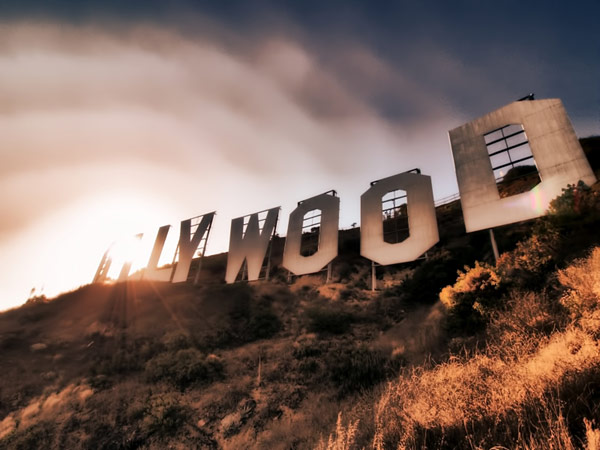
Comparing the world of publishing to the world of filmmaking reminds me of the fact that, while I hate Hollywood, I really love Hollywood.

I’m not alone.  Anyone who only loves Hollywood has never really met Hollywood.  Hollywood is a deceitful little bitch, but God she’s cute.  Sure, she can be admired from afar, but if you get too close, those little vampire teeth start to come out.

But I do have some telling stories about my days as a D-Guy, and one came to mind the other day….

This is the story of how I made the transition from being an Assistant to being a Story Editor when I was working for film director Wolfgang Petersen.  I ultimately transitioned to Director of Development, but the real crucial segue happened at this earlier stage, when I found it essential to prove that I had enough “story sense” to become a D-Guy.

By the way, this is a tale that reveals more about the dysfunctional chaos of Hollywood than it does about the qualifications I did or did not have to fill the position.

At the time, there were two people in our development office:  a Director of Development, and me, the lowly Assistant.  It was her job to find the next big Wolfgang Petersen project, and my job well, to answer phones.  But, as anyone in Hollywood will tell you, most of the submissions are read by the assistants first.  Especially if that assistant wants to move up the ladder.

Now, I knew the kind of films Wolfgang wanted to direct.  Big films with a social or political theme, films that dealt with universal issues, with social ramifications that could be felt around the world.  “Outbreak” was a great example of the kind of idea that excited him—how one little virus could polarize a nation, could ultimately take out a significant number of the world’s population if it wasn’t held in check.  What would we, as Americans, do to stop this from happening?  Would we destroy an American town?  These were the kinds of questions Wolfgang liked to consider.

So I received this spec script submission and, by God, it had everything I knew Wolfgang was looking for.  It was a very complex story about an American scientist who discovers a plot to bring a Russian nuclear weapon into America and detonate it in New York City.  It was a very smart script, much more akin to “The French Connection” than to any of the popcorn terrorist scripts that had been circulating at the time.  But the plot was so complicated it required a very focused reading just to “get it.”

There were clearly problems with the script.  But they were problems that could be addressed in development.  The important thing was that it was a smart political thriller that met Wolfgang’s requirements.  I felt that he should know about it and at least have the opportunity to read it and say “yes” or “no.”  The Director of Development wasn’t willing to stand behind the project.  She said that I was free to pitch it to Wolfgang if I wanted.

Now, I wasn’t really sold on the script as it stood; I was sold on what it could grow into, with Wolfgang’s guidance.  But I had to make a decision – do I stick my neck out for this or not?  I decided I would.

That decision was the key that turned the switch to Crazywood.

Wolfgang didn’t have time to read the script, but, based on my pitch, he felt we should go for it.  Go for it…what the fuck did that mean? 

His producing partner turned to me and said, “Well, that’s it then.  It better be good, Steve.”

And we went for it.  Which meant that we took the script to our studio and asked them to purchase it for us.  Suddenly Wolfgang was “attached” to the project.  And the town reacted. 

Now, remember, I was THE ONLY ONE at the company who had read this script.  And suddenly every production company in town was demanding to see it, and many were passing it up the ladder and submitting it to their studios.

But no one really took the time to READ the script.  Those who did, read it quickly, paying little attention to the details.  As things started heating up my producer came to me and said, “Steve, I’m getting all these calls from producers I know and no one understands this script – they can’t follow the story.  Either you’re a genius or you’re duping this whole town.”

Okay.  No pressure there. 

So the studio where we had our first-look deal passed on the project, which freed us up to take it to other studios. 

What happened next characterizes the world of Hollywood and is the stuff that keeps the sane from crossing the Arizona border into California.

Now, Universal Studios had just hired a new President of Production, and this guy was intent upon making a name for himself, and quick.  He was determined to create relationships with top film directors by purchasing their pet projects and launching them into production.  So, when he saw that Wolfgang was “attached” to this spec script, he swooped in and made a preemptive purchase of the script for 500 against 1.2. 

That means that the writer was paid $500,000 for the script and, if it went into production, he would get another $700,000. 

Just to make sure that we’re all on the same page here—this studio executive had not read the script.

When the dust settled and people actually READ the script, everyone turned to me and said, “What’s this story about?”

It was at this point that I was bumped up from Assistant to Story Editor.

I sat down and wrote a 25-page, beat-for-beat synopsis of the script, putting it in the simplest terms I possibly could.  I never said the script was ready to go, I only said that it seemed like the kind of material Wolfgang would like.  Suddenly I was responsible for a $1.2 million dollar deal and a marriage between Wolfgang and Universal Studios.

But wait, it gets worse.

This was the exact moment when a little studio called Dreamworks was born.  Spielberg, Katzenberg and Geffen.  They were their own studio, but they existed on the Universal lot.  They had a deal and a working relationship with Universal.  They had been developing a project that would become their very first feature film.  The storyline had been kept under wraps from everyone except the most inside of Hollywood insiders.

As it happens, it was exactly the same story as the spec script Universal had just purchased for Wolfgang.  Suddenly we were in a war with Spielberg.

And this was a huge embarrassment for the new President of Production for Universal, who really should have known what was being developed at his own lot.  He shouldn’t have gone out and bought a project that competed directly with the debut film from their boy wonder’s new film company.

Spielberg got hold of our project and read it and agreed that it was a smart script.  He suggested that we combine efforts, with Dreamworks producing and Wolfgang directing.  We read their project and we agreed that ours was smarter, more interesting, more realistic.  But ours still needed a huge amount of development work.  Spielberg’s project was almost ready to go.  Wolfgang declined their offer and we went to work on developing the script we had purchased.

Dreamworks moved quickly and cast their project with George Clooney and Nicole Kidman.  We were still rewriting drafts of our project when they went into production for “The Peacemaker.”

“The Peacemaker” was no “French Connection.”  It was the popcorn version of what could have been an extraordinary film about the real-life consequences of the fall of the Soviet Union.  But it was Dreamworks’ first film and its release effectively killed our project.  So, our writer never did get that additional $700,000.

But the process gave me my Story Editor stripes.  I think my salary was bumped up to $35,000 per year.

As crazy as this was, how could it not be fun?  How could I hate Hollywood when the ride was always this dynamic?  It was great, as long as I didn’t put my heart into it.  The day I really began to care was the day I had to leave.  And heal.


A cautionary seasonal tale

Zoë Sharp

I lay no claims to the following, but when it was sent to me earlier this week by my friend Shell, it seemed wholly appropriate in light of the season of over-indulgence that is almost upon us, and I couldn’t resist sharing it.

In the beginning God covered the earth with broccoli, cauliflower and spinach, with green, yellow and red vegetables of all kinds so Man and Woman would live long and healthy lives.

Then using God’s bountiful gifts, Satan created Dairy Ice Cream and Magnums.

And Satan said, “You want hot fudge with that?”

And Man said, “Yes!”

And Woman said, “I’ll have one too—with chocolate chips.”

And lo they gained 10 pounds.

And God created the healthy yoghurt that Woman might keep the figure that Man found so fair.

And Satan brought forth white flour from the wheat and sugar from the cane and combined them.

And Woman went from size 12 to size 14.

So God said, “Try my fresh green salad.”

And Satan presented Blue Cheese dressing and garlic croutons on the side.

And Man and Woman unfastened their belts following the repast.

God then said, “I have sent you healthy vegetables and olive oil in which to cook them.”

And Satan brought forth deep-fried coconut king prawns, butter-dipped lobster chunks and chicken-fried steak, so big it needed its own platter.

And Man’s cholesterol went through the roof.

Then God brought forth the potato, naturally low in fat and brimming with potassium and good nutrition.

Then Satan peeled off the healthy skin and sliced the starchy centre into chips and deep fried them in animal fats, adding copious quantities of salt.

And Man put on more pounds.

God then brought forth running shoes so that his Children might lose those extra pounds.

And Satan came forth with a cable TV with remote control so Man would not have to toil changing the channels.

And Man and Woman laughed and cried before the flickering light and started wearing stretch jogging suits.

Then God gave lean beef so that Man might consume fewer calories and still satisfy his appetite.

And Satan created McDonalds and the 99p double cheeseburger.

Then Satan said, “You want fries with that?”

And Man replied, “Yes, and Super Size ’em.”

And Satan said, “It is good.”

And Man and Woman went into cardiac arrest.

God sighed and created quadruple by-pass surgery.

And then Satan chuckled and created the National Health Service.

***

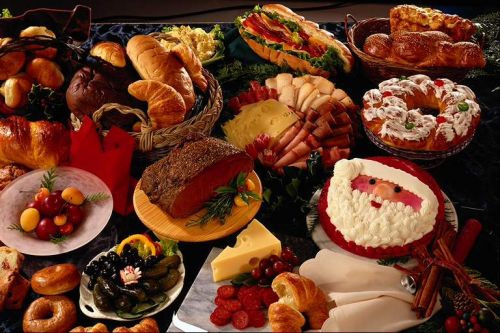
So, ‘Rati, care to share your most—and least—healthy food temptations over the coming holidays? Is there something so calorific that you only dare have it at this time of year when all bets are off? Or how do you dutifully keep yourself on the dietary track until the New Year?

This week’s Words of the Week are several Daft Definitions:

impeccable: bird-proof

microbe: tiny dressing gown

pandemonium: black and white musical instrument that won’t breed in captivity

Please feel free to add more of your own!

And finally, as this is indeed the season of indulgence, how about a few small treats that will not add to your waistline—a book or two?

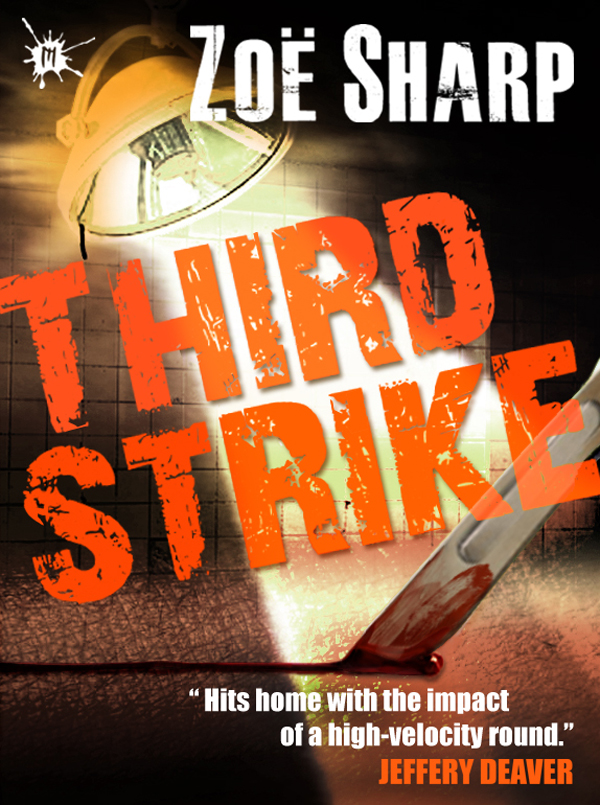
I’m sure I did more than enough utterly shameless self-promotion in my last Murderati blog but if I might add to that a small mention of the new US e-edition of THIRD STRIKE: Charlie Fox book seven, just out complete with an excerpt of the next book, FOURTH DAY, and also a taster for PD Martin’s excellent HELL’S FURY.

Happy Holidays, everyone!

Caring to Care

By David Corbett

Breaking News: I’ve just learned my interview with Mysterious Press’s Rob Hart is packaged with Otto Penzler’s interview with Nelson DeMille on a just available FREE podcast through iTunes. Just go to the iTunes store, search for Mytserious Podcast, look for the MP logo among the offerings, and there it will be.

This time of year is often called the Season of Caring—the better to distinguish it, I suppose, from the rest of the year, aka the Season of Sneering Unconcern. (Or: the Season of Scaring.)

Caring has been on my mind not just because of the season, though. Two recent articles in the New York Times had me thinking a bit more deeply than usual about the whole issue of caring—how much we can, for how long, and why we often try not to.

In her piece titled How to Live Without Irony, Christy Wampole argued that the current zeitgeist, especially among millennials, requires an almost kneejerk rejection of caring, or at least seeming to care.


She blames some of this on the obsession with digital technology, which overwhelms slower, more demanding, more human connections.

But there’s also the lingering fear of finding one’s passions and desires wanting. Christy admits when it comes to gifts, she’d rather give a kitschy knick-knack, good for a moment’s laugh, than try for something meaningful and have the recipient disappointed.

In this view, irony is the terror of the pain that accompanies being authentic, imperfect, human. It’s a kind of armor against shame.

I learned to care when I stopped trying to be the smartest guy in the room—or the class clown—and realized I actually wanted a meaningful connection with someone else. It truly hit home in my marriage—no more so than when Terri got sick and passed away. (Or, as one of Christy’s friends put it: “Wherever the real imposes itself, it tends to dissipate the fogs of irony.”)

And yet a lack of irony can be just as self-defensive and false. Tyrants lack irony, zealots lack irony. For them the hyper-sincerity of unquestioned belief is the armor against shame.

Regardless of the emotional spectrum—dour with power or hip and flip—it’s genuine connection with others, the ability to care and accept the pain of loss and rejection and error, which proves to be the most difficult thing.

The second article I read that had a real impact—“New Love: A Short Shelf Life” by Sonya Lyubomirsky—concerned what’s known as hedonic adaptation—or, more colorfully, the hedonic treadmill. (No, it won’t firm up your thighs.)

Hedonic adaptation is the now widely accepted and broadly verified phenomenon by which we naturally “normalize” experiences of profound joy or bliss or excitement after a certain period of time. Sexual passion for a loved one normally lasts about two years, for example. A new toy may lose its fascination well before nightfall on Christmas Day.

Being happy, it turns out, is a lot like being tall. After about age thirteen, the fix is in. Your general state of personal happiness is largely hard-wired.

And this is significant to the extent we pursue caring because of the joy it brings us. I don’t know about you, but I tend to think caring born of fondness is more likely to survive than concern born of moral obligation. But maybe I’m wrong.

To truly care deeply one has to crawl out of the foxhole of the ego and both see someone else clearly, as best you can, and allow yourself to be seen. It’s simple to state. Why is it so hard to do?

Why are we so beholden to an idea of ourselves? Our persona, our identity, our ego—call it whatever you want—it’s the collection of tactics, impressions, and feelings that make up who I usually consider myself to be. It’s the machine that allows me to go out in public and not be afraid I’ve got my fly down—or toothpaste on my chin.

And yet few experiences are as rewarding as when you find someone who lets you put down that mask. It may well be that there’s just another mask waiting, a slightly deeper one perhaps. There may not be a ‘true self,” just one “personality” after another, like the layers of an onion.

But there’s one bit of advice I got in my early twenties that’s as true as anything else I’ve ever learned: You don’t know yourself by yourself.

This can lead down a false path as well, of course. We all know people who “live for others,” and who seemingly would collapse into an empty husk if left alone. Solitude is maddening for such a person, a haunting scream of emptiness. It’s not that they’re lonely. They’re afraid, without someone else there as echo, that they cease to exist.

I guess I’m looking for a golden mean, on the one hand rooted to some core sense of who I am, and on the other open to the kind of change meaningful connection offers. Because if we’re not going to allow others to affect us, to make us feel and worry and laugh and give—to make us care—why bother? And caring changes us.

Sartre had it exactly backwards—hell isn’t other people, it’s ourselves. It’s being locked in the isolation of “personality.” (Interestingly, Sartre himself came to this same conclusion after the war, and devoted himself to political and social engagement.)

The truth is hard, not because it’s complicated but exactly the opposite. Human truth is simple, which is what makes it maddening. We want to love and be loved. We want to care. If it weren’t so sneakily difficult due to the habit of ego and the pieties of selfishness, we wouldn’t restrict that caring to a mere one month per year.

I could connect all of this to the writing of our characters, but this post is already far too long. Maybe I’ll get to that next year. (Oh please don’t, I hear you cry.)

Meanwhile: Who is it in your life that most instinctively arouses your impulse to care?

How has your connection to that person grown over the years?

How has the manner of your caring, or the things you care about, changed with that connection?

Happy Holidays everyone—I’ll see you next Tuesday for Wildcard Tuesday

with the British/American thriller writer Tony Broadbent,

and again the day after Christmas.

Merry Merry, Don’t Be Scary.

* * * *

Wait! It wouldn’t be Christmas without blatant self-promotion:

My short story, “A Boy and a Girl,” is the featured offering in the sweetly named Out of the Gutter 8, edited by the inimitable Joe Clifford. It’s available in Kindle edition now, with print versions forthcoming.

Also, as mentioned last time, I’m teaching a ten-week online course through UCLA Extension beginning on January 16th. The course is titled The Outer Limits of Inner Life: Building Consistent but Surprising Characters, and covers the art of characterization from conception of the character through development and execution on the page.

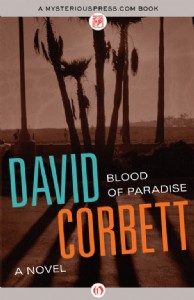
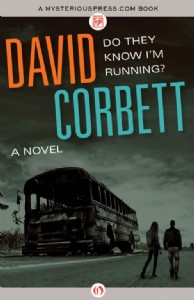
Last, Open Road Media and Mysterious Press have re-issued my third and fourth novels — Blood of Paradise and Do They Know I’m Running, respectively—in ebook format. Follow the links to purchase the titles.

* * * * *

Jukebox Hero of the Week: It’s time for those Christmas Classics, and the chestnuts haven’t roasted till Robert Earl Keene, Jr. sings “Merry Christmas from the Family:”

Holiday Traditions — Intentional, Habitual?

by Pari

Last Saturday eve I grated the potatoes and onions, added the egg, flour, salt and pepper, and plopped this year’s latkes in the waiting hot sunflower oil. The deep sizzle growl of frying food, the gloriously seasonal smell, brought a fundamental comfort and sense that all was right with the world. I started celebrating Hanukkah with my kids when they were tiny. I wanted them to have the language of latkes and lighting candles. I wanted that closeness to be part of their molecules.  Now my kids are in their teens and this tradition is a warm part of our family’s expression of enduring love.

Traditions are the scaffolding of identity, the bones of how we experience — and often judge — the world around us. Some, such as my latkes on the first night of Hanukkah, are deliberate. Others come into being by slovenly default, habits no longer imbued with meaning other than the necessity of doing them.

Always at this time of year (is this a tradition?), I reflect on the holiday-actions I do out of choice and those I feel compelled to perform merely because they’re what I’ve always done — or what I think is expected of me . . .

Gift giving
Card sending
Money donating
Champagne drinking
Party going
Overeating  . . .

Habits get taken for granted.

Intentional traditions have the potential to live in hearts for as long as memory allows. Some of the ones I share with my children are:

* Making the latkes
* Lighting the candles and singing the prayers together
* Buying the most oddly indulgent prepared foods for a blowout on New Year’s Eve
* Putting luminarias out on New Year’s Eve to welcome the New Year
(luminarias or farolitos are put out in NM on Christmas Eve to welcome the baby Jesus)
* Writing down our wishes for the New Year and burning them, in a pot outside, on New Year’s Eve

I also have a few nascent possibilities that may become personal traditions. Last year, I felt it important to be deliberate on my first Christmas alone in 18 years. I knew I’d miss my kids tremendously. I also knew I’d be spending most Christmases alone from there on out. So I watched foreign movies all day — mostly Bollywood — and topped the night off with Whale Rider. Yes, that might become a tradition; I’ll know this year, if it feels like the right thing to do.

I’m also considering other options . . .

How about you?

What are your happy intentional traditions?
Which defaults might you want to shed?
Are you thinking of any new actions that might transform into welcome traditions in the coming years?


The art of the author website

By Alexandra Sokoloff

I’d venture to say that creating and maintaining a website is one of the bigger dreads of a professional author. You know you have to do it, but you’ll do anything to avoid it. Every couple of years you end up having to do a complete overhaul, which is a huge and stressful time suck when none of us have any time to spare, ever, anyway, and I’d bet good money that I’m not the only one who postpones it for as long as humanly possible.

But with my new series, I knew I had to bite the bullet. And I knew exactly who I wanted to hire.

Our David recently did a fantastic interview with the incomparable Madeira James of Xuni.com,  so I didn’t want to go over the same questions.  I thought it would be interesting to write about Maddee’s process of creating a website design – from the author’s point of view.

Maddee asks her clients to choose 4-6 images (pulled from any number of stock photo sites), and she designs the site from those images. She recommends that the images not be specific to one particular book, as that would date the site too quickly. It’s more about the overall, encompassing feel an author wants to convey to a potential reader.

Well, that’s a brilliant and also intimidating assignment. And I’m sure Maddee gets a fair number of control freaks who are very specific about what they want (of course none of us know any of THOSE!)  

I wouldn’t dare to guess where I fall on the control freak scale – I know I have my… moments… but I think in general I’m pretty good at maintaining supreme control of my own projects but going with the flow and trusting the process when someone supremely talented is in charge, as was entirely the case here.  I really encourage you to browse through Maddee’s portfolio so you can see what I mean.  Every one of her sites is like a movie trailer: a seductive tease about a story that you just can’t wait to see. (I WISH I could see the films of some of those websites…)

Having to choosing the specific images for myself was panic-inducing, though, especially because I write so many subgenres of thriller. Five images?  Six?  How could I possibly narrow it down?

I knew I wanted to emphasize my Huntress Moon series while being general enough to give a sense of ALL of my writing. I definitely didn’t want to get too supernatural, because the Huntress series is straight crime (pretty much!) and Book of Shadows is also less overtly supernatural than my earlier novels. At the same time I did have to suggest the supernatural to encompass my other books. Also, I generally lean VERY feminine in my tastes, and Maddee does some lusciously femme designs, but I knew I had to contain myself on that front because I have a LOT of male readers who would be turned off if I let myself go that way. And I definitely didn’t want the website to give the impression that I write paranormal romance (even though I do have a couple of books out in that genre with the Keepers series),  because what I write is much darker and more ambiguous than the required HEA (happily ever after) end of any subgenre of romance.

Also, there’s the whole issue of my non-fiction, the Screenwriting Tricks for Authors books on writing. How could I suggest THAT on top of everything else I was trying to do? 

(Are you starting to see the kinds of questions you’re confronted with when you sit down to create a website design?) 

Luckily Maddee is incredibly perceptive on this front, and when we sat down to talk about the design, she instantly got what I was talking about in terms of supernatural vs. crime thriller, male vs. female, fiction vs. non-fiction. This was also easy to do because when you have the examples of a portfolio as extensive and varied as Maddee’s, it was easy to talk about the qualities of her other sites that I wanted in mine (I gave her a word list just like the word lists I’m always encouraging writing students to do: dark, dreamlike, erotic, filmic….)  I was very confident that once I came up with the images for her, she’d have all my desires and concerns in mind when she was doing the design.

That still left the problem of coming up with the images.

So I browsed and I brainstormed. Horrifying process.  I don’t know about you, but I’m a WANT IT ALL NOW kind of person, and limitation is not my idea of a good time.  But I did know four solid things: I wanted to emphasize a polarity and an erotic tension between male and female figures. I wanted the moon to figure prominently.  I wanted a strong suggestion of film, and I’m a fan of the classic LOOK of an old filmstrip. And I wanted to suggest a shattered psychological state, broken glass or a broken mirror.  So I came up with images for those four things, and a couple of others: multiple doors and a ghostlike image. 

And then I turned it all over to Maddee and waited with bated breath.  

(No, not really, but yeah, sort of). 

And she hit it out of the park on the first design:         

http://alexandrasokoloff.com/ 

There are a million things I love about the site. The descending circles of moon, man, woman give me a sense that all of these entities are dreaming each other.  I can’t say enough about how much I love the fim strip with my name.  It wasn’t my idea to have my own image in the site design but I love how Maddee worked it in. The writing was also her idea and I swear, there’s writing on the moon – that’s so trippy and cool, and completely apropos. There’s gorgeous color in the site but subdued enough that I don’t think it will turn men off. The moon, the film strip and the font of my name give it a psychedelic carnival effect that makes me think of Ray Bradbury, one of my huge literary influences.

I could go on and on, and I haven’t even gotten to the clarity of the organization, which is obviously a whole separate post. But to say I’m thrilled is the understatement of the year. 

So obviously, I’d love your comments on the new website, but my actual question for the day is: What five images would YOU would choose to convey what you’re writing? Or – what are five images that convey YOU, personally?  I think it’s a powerful creative and spiritual exercise. Scary and fun and illuminating.  Let’s hear it! 

Alex  


Apparently comments are not posting today, so I’ve posted this blog on my website blog as well if you’d like to comment there!  

http://axsokoloff.blogspot.com


PS: I’m thrilled to report that Huntress Moon made Suspense Magazine’s list of Best Books of 2012!


When the movie’s better than the book

By PD Martin

There have been posts on Murderati before about books being turned into films, including David Corbett’s recent post on Cloud Atlas.

However, I’m not setting myself such lofty heights (!). I’m looking at book versus film YA style. You see, the novel I’m currently working on is YA (primarily, at least) and so I’ve been reading in that genre, including some of the breakout hits. Two I want to talk about today are I am Four and The Hunger Games.

So, first off I should say that with I am Four my first exposure was the movie (loved it for the pure escapist, sci-fi, action-packed style that it was). And yes, I know it’s not high-brow. There, I said it. Problem was, the movie was obviously a part one, and ended with a cliff-hanger. So, I  Googled it to see when the next instalment would be out, only to discover there was nothing in the works. After dismissing it for many months (longer actually), I finally decided I wanted to find out what happened. Especially given I wanted to read in the YA space. And while I could have read I am Four, I cheated a little and jumped to the second book, The Power of Six. And this is when I discovered something interesting…the movie is actually better than the book (IMHO) – at least the movie was executed better than book 2 (and book 3, The Rise of Nine, for that matter). Now, we always hear about movies not living up to the expectation of the book, but this was reversed for me. I felt the characters were actually more well-developed in the movie than they were in books 2 and 3, and I found some of the writing mechanics a little clunky. That’s obviously with my author hat on, of course.

At the time I was reading The Power of Six, I was also doing the final stint of my Writing Australia tour, teaching writing. Anyway, one of my slides looked at what makes a book ‘good’. My list includes things like: engaging characters, well-developed plot, writing style and being a page-turner (to name a few).  Funny thing is, the I am Four books are complete page-turners. I finished them quickly and didn’t want to put them down. I may moan about the character development and writing style, but I ploughed through them, eager to lap up the next instalment. They were page turners and so using my own definition they are ‘good’. Yet they failed to tick any of the other boxes.

Move on to the next blockbuster film and trilogy…The Hunger Games. Again, I saw the movie first (really just to see what all the fuss was about) ages ago and then recently as part of my research decided to read the book. And this time I did read the first book. In this case, I have no strong opinion either way whether the book is better than the movie or vice versa. In fact, I think they’re probably pretty equal. But, once again I’m totally INTO the series. I finished the first book and downloaded the second straight away. I’m pathetically taken in by the romance element (I know, I’m hopeless!) and the sense of impending rebellion — I’m dying to see what happens next. I’m now 50% through book 2, Catching Fire. Sshh, don’t tell me what happens.

Another book-to-movie comparison that always comes to mind for me is Lord of the Rings. I actually think Peter Jackson did the most amazing job of adapting those novels. In fact, in some ways the movie version was an improvement (hope I don’t get hate mail over that one!). But seriously, who needed Tom Bombadil??

Anyway, Murderati, have you seen/read any of my YA examples above? Thoughts? What about Lord of the Rings movie versus book? Or what is your favourite or least favourite book-to-movie adaptation?

Finally, I can’t blog on 6 December without saying happy birthday to the most amazing girl in the world. Our daughter is six today!

NEXT? YES. BIG? JESUS, I HOPE SO.

by Gar Anthony Haywood

You know how, when you’re playing paintball (if you don’t play paintball, just roll with me for a minute and pretend you do) and you’re lurking around a corner, sniffing out the enemy, weapon at the ready, and you turn just three inches to your right and . . .

SPLAT!  You’re dead.  Shot right between the eyes.  And your first thought is, “Ugh.  They got me.”

Well, that just happened to me.  They got me.  Only in this case, it wasn’t a paintball game, it was an email from Naomi Hirahara.  Wonderful writer, wonderful friend.  Who could have guessed she would draw me into participating in the latest self-promotional time suck known as “The Next Big Thing”?

By now, you have to know what this is (even though I somehow didn’t), because even the lovely Zoe Sharp has done an NBT blog.

Here’s the deal: I answer a bunch of questions about myself and my latest work-in-progress, trying to avoid coming off as a self-absorbed drone in the process, and then I point you to the blog sites of some other suckers, er, writers, whom I either honestly believe you should be reading, or simply found to be dumb enough to agree to be named when asked.  I’ll let you decide which of the two is the case, respectively.

So enough with the introduction, it’s time to get on with the show.  Remember: This wasn’t my idea.  I’m just going along because I’m a man of my word, and such a man never knows what will sell a copy or two of his books.

What is the working title of your next book?

GOOD MAN GONE BAD

Where did the idea come from?

This is the long-awaited (well, at least I like to think so) seventh novel in my Aaron Gunner P.I. series, and the genesis of the plot sprang from an epiphany I had while sitting on a crowded Los Angeles freeway listening to a police helicopter drone overhead.  That’s essentially how the book opens, with Gunner stuck on that crowded freeway instead of me — and more than that, I’m not gonna tell ya.

What genre best defines your book?

Hardboiled detective, though I’d like to think the book is a little more complex than that label would suggest.

Which actors would you choose to play your characters in a movie rendition?

As the character of Gunner is over 20 years old, the answer to this question is constantly changing.  But as of this moment, I think the best fit for Gunner would be Idris Elba.

What is the one-sentence synopsis of your book?

In the wake of an apparent murder-suicide that claims the lives of his cousin Del Curry and Curry’s wife, and leaves their daughter on the brink of death, Central Los Angeles private investigator Aaron Gunner tries to determine what chain of events led Curry to pull the trigger — if in fact, he did.

Will your book be self-published or represented by an agency?

That remains to be seen, though it will certainly be shopped by an agent initially.

How long did it take you to write the first draft?

I can only wish I was finished with a first draft.  A completed first draft is probably another five or six months away.

What other books would you compare this story to within your genre?

Can’t think of any.  I’m a complete original.

Who or what inspired you to write this book?

It’s been over 13 years since I last took Gunner out for a full-length spin, and I miss him.  It was time to spend some quality time with him again.

What else about the book might pique the reader’s interest?

Uh, good writing, hopefully?

And there you have it.  My Next Big Thing.  Curious as to what some other fine writers might be doing for their Next Big Thing?  Drop in at the blogs of the following people next Wednesday, December 12, and find out.  And by the way — I was just pulling your leg earlier.  All of these guys are terrific writers you should be reading right now, if you aren’t already.

Bruce DeSilva

http://brucedesilva.wordpress.com/

Paul Bishop

http://bishsbeat.blogspot.com/

Gary Phillips

http://7criminalminds.blogspot.com/

(NOTE: Gary’s NBT post won’t run until Friday, December 14.  Why?  Because he’s a contrarian, and who the hell is gonna argue with him, that’s why.)

Traditions

by PD Martin

In today’s Wildcard Tuesday I wanted to look at traditions. I’ve never been the sort of person who was/is ‘traditional’ or who was really into traditions much at all. Having said that, since I’ve become a mother I find myself feeling much more nostalgic (and warm and fuzzy) about traditions.

Two things that have come up recently…

First off, the photo with Father Christmas. It’s that time of year again, when there’s a Santa in every department store. Last week, my daughter raced home to tell me: “Guess what, mum. I saw Santa at Shopppingtown today.” Shoppingtown is one of our closest shopping centres (mall if the language needs translating!). It was also our local when I was growing up and I remember having many photos with Santa there.

It’s also where we got a photo with Father Christmas for our first Christmas as parents, when Grace had just turned one. So it seems fitting that we go again this year, our first Christmas with Liam.

The other nostalgic thing of recent…the Kew Traffic School. This Thursday is my daughter’s sixth birthday, and yesterday afternoon we had her birthday party (actually she’s having three celebrations (!) but this was the party with her friends). Anyway, back in January I booked out the Kew Traffic School on Grace’s request. Yes, she was planning her sixth birthday party soon after her fifth! And yes, you do need to book the Traffic School early for private functions.

Anyway, the Kew Traffic School has many memories for me, and for other Melbournians. You see, it’s been around for ages. It’s basically a mini street system complete with traffic lights, a railway crossing, a roundabout, a few stop signs, a school crossing, giveway signs, etc. I remember going there when I was about eight with school as part of bike and road safety education. I had a ball! You take your bike and helmet and off you go. They also open during school holidays, and you can rent the Traffic School for private parties.

Grace’s party there was a definite success – from all perspectives. From the kids’ perspective it’s a great party. You zoom around on your bike or scooter for two hours and get to eat party food. The parents were pretty happy too, and I had many of them grinning as they were leaving and saying: “They’ll sleep tonight.”

And from our perspective, it was a pretty easy birthday. There’s no real need to decorate the venue (we just did balloons at the entrance) and you bring all your own food in so you get to choose what you want to bring and don’t pay ridiculous prices for it. There’s also a BBQ there, so we had sausages going for the second hour, which were a great hit. Yes, the threat of rain was a problem (no contingency plan) and Melbourne is unpredictable even in December. However, yesterday was perfect weather. Warm and sunny, but not too warm.

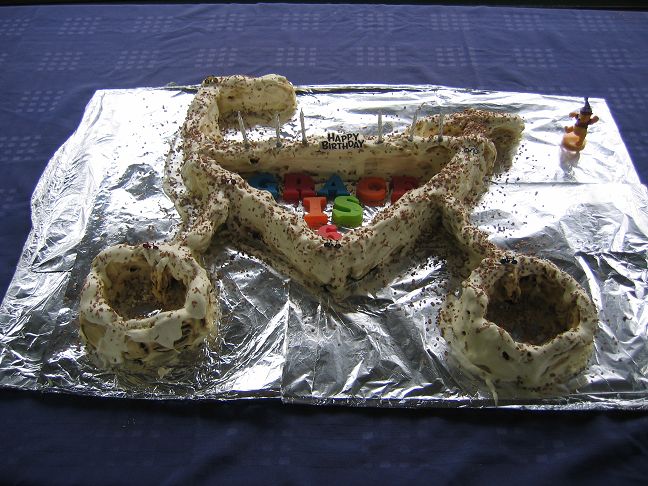
Admittedly, I had it easy – Shane did the lolly bags, the cake (a chocolate ripple cake in the shape of a bicycle) and the sausage sizzle. Some of you may remember the fairy princess cake I did for Grace last year?? This year, Shane was keen. 

Anyway, the party was a success and we’ve decided to hopefully hold a party at the Traffic School for Liam when he’s six or seven, too. Although with a May birthday I think it might be too risky!

So, what are your family traditions? Or things you do that have become a tradition?

The New Cultural World Order

By Tania Carver

I’ve just finished reading SCALPED. Now I’m sure most of you know what I’m talking about and have probably been reading it too. But since I do have a rather solipsistic tendency to assume that if I’m aware of something then everybody else is, I’d better provide a little back story.

SCALPED was a comic series, published by DCs Vertigo imprint – their line that deals in supposedly more grown up subject matter. It started in 2007 and after sixty issues (which translates into ten trade paperback collections) has just wrapped. If I tell you the premise – and what the pitch possibly may have been – it sounds like any old generic crime drama. An undercover agent goes back to the place of his birth to bring down the gangster who he believes has destroyed his hometown and avenge the murder of his mother. Simple. Don’t know about you, but at the very least I’d have been only polite about that.

What Jason Aaron the writer of SCALPED did was, from the off, brilliantly subverted not only the set up but the expectations involved in it. The main thing is the setting. The Prairie Rose Native American Reservation in South Dakota is the backdrop. Dashiell Bad Horse, the undercover FBI agent, is the daughter of political Native American Rights activist Gina Bad Horse and a troubled young man trying to find peace within himself and struggling with his own identity. The head of the Tribal Council, Chief Red Crow, is Gina’s one time partner, now turned casino owner and head gangster. Agent Nitz, Dash’s FBI handler, is actually worse than the people he’s supposed to be taking down. It’s starting to sound a little more interesting now, isn’t it?

And that’s only scratching the surface. The scope of the series quickly broadened out from that initial premise as other characters were introduced, other situations developed and the Prairie Rose Reservation went from being the backdrop to the main character in the series. The characters also behaved like real people; no good guys or bad guys, just shifting, varying shades of grey so that by the end the reader’s sympathies and allegiances had become as fluid and nuanced as the storytelling.

It’s proper, grown up storytelling in a sequential art format. R M Guera’s art is stunning, the perfect match for Aaron’s words.

I’ve been with it from the start and I was sad to see it end but glad it got the ending it deserved. But when I put it down I started to think about it. And I’m still thinking about it. I know I can re-read it at any time, either immersively or just dipping in and out. Because it’s a comic. But it also got me thinking about whether there’s been some kind of cultural sea change in the way we enjoy stories, particularly (since this is Murderati after all) crime ones.

A few years ago we seemed to have more cultural absolutes. If you wanted something with strong characterisation, good stories, atmosphere, dialogue, subtext – all of the things I, and probably everyone else, look for in narrative art – you knew, by and large, where to go. Novels and films. And as far as novels went it was mainstream literary work that would supply that. Genre was for those who’d never grown up. Who still needed the comfort of silly trappings and conventions to enjoy things. Who didn’t want to confront and understand the world we lived in but ignore it, escape from it. Genre, in its most popular forms, was science fiction, horror, romance, crime. Real novels confronted real people in real situations with real emotions. Readers could empathise with them. They didn’t need murders or spaceships or zombies or romantic doctors to enjoy books. Just good writing.

Film was the same. Yes there were the Hollywood blockbusters, but not too many of them. And those that were around were treated as embarrassments, for the most parts. They make money, sure, and provide work for cast and crew, but really, we’d rather be doing good stuff. Certainly the actors. They would rather be doing Shakespeare at Stratford instead of talking in stupid voices wielding lightsabres.

And comics? Nowhere. Full of simplistic stories of men in tights and women in far less quipping away as they fought monosyllabic bad guys. Only read by children and the kind of adults who lived in their mother’s spare room.

But that was then.

This is now: The multiplexes are choked with Hollywood summer blockbusters, all year round. Big, gaudy spectacles, centring around the kind of characters who were once only enjoyed by children and the kind of adults who lived in their mother’s spare rooms. And they’re played by actors who have done Shakespeare at Stratford and find that this pays way better.

The kind of filmmakers who used to make complex, intelligent movies have mostly decamped to TV, particularly cable in the States, once the province of the kind of hacks churned out mindless drivel like FANTASY ISLAND and THE LOVE BOAT. This new breed, people like David Simon, Matthew Weiner, Vince Gilligan in the States and Steven Moffatt and Russell T Davies here in the UK, have taken popular – not to say populist – tropes and hoary old genre conventions and turned them into truly extraordinary drama. Because they’ve been showrunners and because their shows have been allowed by their networks to blossom and develop over several seasons, something new has emerged. TV series that engages and entertains on a single viewing, but that also rewards repeated and regular viewing.  Episodes become like chapters in a novel. And you’d no more think of skipping a chapter than skipping an episode.  

Mainstream literary fiction is still there but, ironically, it’s become just another genre. And, certainly in the UK, it seems, as a genre, to regard plot or storytelling as something wholly beneath itself. It’s also, and again I’m generalising as a genre, been reluctant to engage with the society we live in. That job has been left to crime fiction.

It used to be the case, certainly in the UK, where if you wanted to write a state of the nation novel you wrote a mainstream literary one. Now, you write a crime one. It seems to be the only form of narrative fiction (and again I’m generalising, please feel free to disagree) that actively engages with our society. Or that can. And that will also subvert the conventions of a genre ending; the villain may not be punished, the good guy may not win. Unthinkable a few years ago.

Which brings us to comics. And back to SCALPED. I think we’re seeing a new culture emerge. I know it’s generally regarded that comics came of age in the mid-eighties with Alan Moore’s WATCHMEN and Frank Miller’s THE DARK KNIGHT RETURNS. This was then confirmed when Art Speigelman won a Pulitzer for Maus, his (not so) funny animal history of the Holocaust with mice as Jews and cats as Nazis. Then  . . . well, for the most part, the promise wasn’t fulfilled and comics as an industry seemed to retrench with stories once again being dominated by men in tights and women in substantially less. And a whole nation of men living in their mother’s spare rooms silently rejoiced.

But that’s not the whole story. Because I think we’ve seen something new emerging. The absolutes of the past are no longer there. Take Robert Kirkman’s comic series THE WALKING DEAD. A story of survivors following a zombie apocalypse, it’s got more in common with Cormac MacCarthy’s THE ROAD than anything schlocky or genre-based that’s come before it. It’s also a TV series now, produced initially by an Academy Award winning director. Boundaries are changing. A comic series like SCALPED or THE WALKING DEAD has more in common with a TV series like DEADWOOD or THE SOPRANOS or, best of all, THE WIRE in its richness and complexity. And those series have, in their scope, breadth and ambition, more in common with Nineteenth century Russian novels or the work of Dickens than the TV of a decade or two ago.

Our mediums are blurring. Our absolutes are disappearing. New creators are coming through from unexpected places telling surprising new stories, making us look not only at the world around us in different ways and through different eyes but in formats we may have previously dismissed as not worth bothering with. It’s new. It’s our culture renewing itself.

And it’s damned exciting.