Author Archives: Murderati Members


Thou Shout…

by Toni McGee Causey

When I was a little girl, I heard this preacher once, talking about the ten commandments. I didn’t understand much of what he was saying, but I was fascinated with the contradiction he presented: he was a dry man, like wood setting outside in the sun too long, warped and creased and bowed a little bit. Drawn up, I’d call it, settled into that shape with no intention of changing. But in the sermon he presented, he was going on and on about “thou shout” this and “thou shout” that, and I was confused by how dull and monotonous he was, droning without inflection, when his very sermon was all about shouting. And shouting sounded like a lot more fun to me than whatever it was he was plodding through. Shouting was living. It was exultation. And yes, sometimes it was anger. I was pretty disappointed later to discover that he wasn’t giving us permission to go around shouting about what we loved in the world, but was, instead, thou shalting us with rules. Rules are fine and necessary, but I still like my version better.

Thou shalt dance in the moonlight with someone you love. Of course, you’ll look silly. That’s the point.

Thou shalt listen to the old man’s stories. They are more than just history—they are a kindness you will one day hope to have.

Thou shalt tell your friends thank you, just for being there. They are a gift.

Thou shalt pay attention to which direction the hose is aimed before you turn on the water.

Thou shalt let the road rage idiot have the lane he wants. A car length is not a test of superiority. Nor is it something worth dying over.

Thou shalt take the time to build sand castles. Not everything has to go on your permanent record.

Thou shalt wear comfortable shoes. Two years from now, people will not remember what your wore. They will remember if you were grumpy, especially if they don’t know why.

Thou shalt pay attention when someone says they’re an asshole. They probably know what they’re talking about.

Thou shalt keep it fun—friendships, relationships. If you’re looking for ways to keep it fun, then you’re going to be paying attention to the other person and their needs, and you’re going to really see them.

Thou shalt not go down into the basement when the electricity is out, armed with a tube of lipstick and cleavage. This never ends well.

Thou shalt go fishing when you have the chance.

Thou shalt quit mocking your younger brother about that time you beat him up before you were twelve because one day he is going to be a fifth degree black belt and seriously, you do not want him to demonstrate that he is now able to break boards with your head.

Thou shalt remember that not everyone at the party (or conference) is an extrovert, and if they’re sitting there looking distant and unapproachable, it’s very possibly nerves. Go see. Ask them questions. Especially if you’re not comfortable at parties, either. [It is not like you have to marry them if you introduce yourself and find you don’t like them.]

Thou shalt eat all of the goldfish crackers, whenever the little victims present themselves. It is socially acceptable to hog them. [Hey. My rules. Get your own rules, if you don’t like mine.]

Thou shalt not eat all of the goldfish crackers and then ask the stupid question, “Do I look fat in this?”

Thou shalt be an advocate for children, wherever possible.

Thou shalt love. Not because you expect something back in return, because oftentimes people fail you. It is simply human nature. But you will love because the act of doing so, selflessly, helps us grow, helps us understand others when they’re hurt, and helps us heal.

There are so many more… but, now it’s your turn. Gimme your “thou shalts” for the day, serious or fun…


Back in the Day

By Cornelia Read


So I’m hanging out in Carmel, California, where I spent much of my childhood. It’s a little weird to be here. I posted on Facebook the other day that it’s like reliving my teenage ennui, only without the clove cigarettes.

There are parts of this place that I cherish, and some good memories. A lot of shitty ones, too. I achieved escape velocity at age fifteen, when I got a full scholarship to go to my mom’s boarding school in New York, and once there I swore I would never again live on the west coast. That resolution faltered when I was living in Cambridge, Massachusetts, with young twins in my mid-Thirties–looking out the window one February morning realizing that I had to find the *fourth* mitten again before I’d have my kids ready for the schoolbus, out in the snow.

Now I’m gearing up to move to New Hampshire for a year, having sworn in 2000 I’d never again live in New England, or anyplace where that fucking white stuff falls out of the sky. Famous semi-last words, I guess, and karma’s a bitch and all that.

But the coolest thing about being here so far has been the person chosen to introduce me when I gave a talk to the local chapter of the California Writers Club a couple of weeks ago: Mrs. Boys, my second grade teacher from Carmel River School.


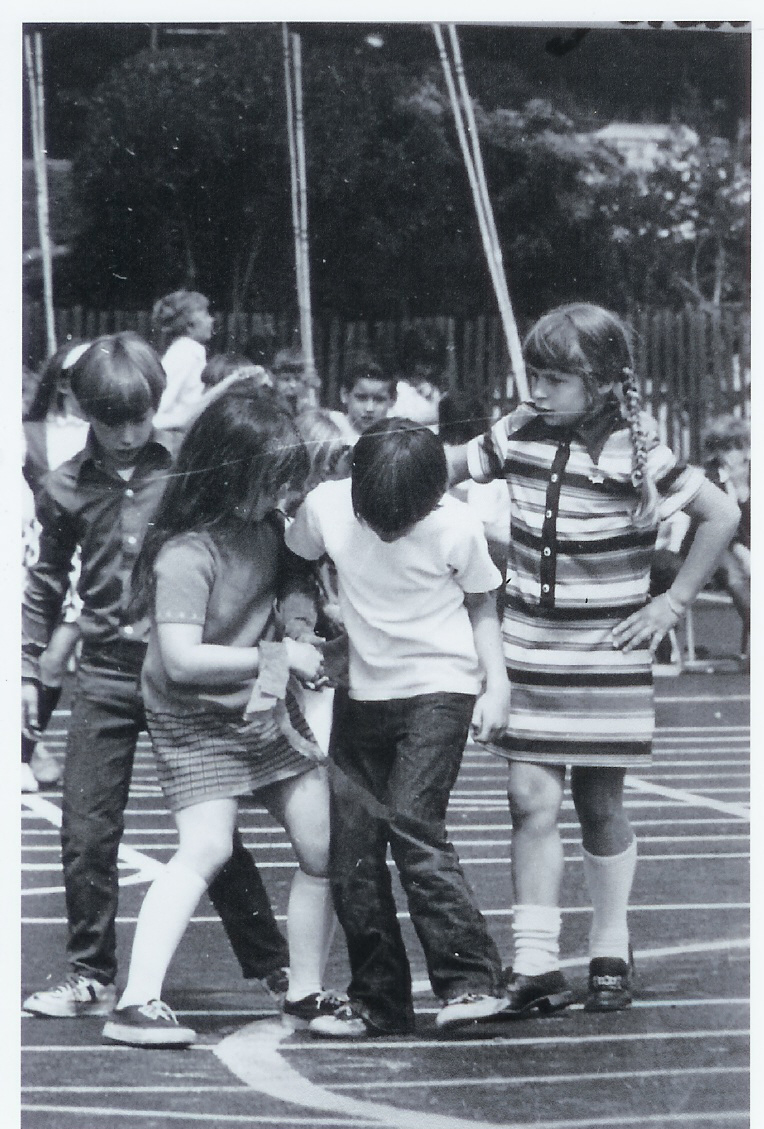
(Mrs. Boys in center… I’m on the right in the paisley minidress)

I hadn’t seen her since the early Seventies, and she is still eminently cool and wonderful. She’s also the first person who ever got me writing, and encouraged me to keep going.

I used the tall binder paper (instead of the horizontal beige stuff with room for a picture on top) for the first time in her class, back in 1970–I wrote a little essay on why I was pissed off about the treatment of Angela Davis, and the Christmas carpet bombings in Vietnam. I wrote my first poetry at her urging, and one of my haiku written then was the first piece of work I ever had published.

I owe this woman a great deal, and have a tremendous number of fond memories of what we did in her class that year.

What was even cooler than having her as a surprise speaker that evening was that she brought her scrapbook from that school year, and let me go through it. When I said I’d love to come over someday and scan some of the pictures, she pulled another small scrapbook out of her bag and handed it to me–she’d already made copies of all the pictures I appeared in, which totally made me cry for happy.

I remembered so much of what she did with us that year… especially the field trips. She had an old Frito-Lay steptruck with shag rug in the back, and she’d just load the entire class into the back of it and take us on the road. (“Yeah,” she said at dinner the other night, “imagine trying THAT with a class of twenty-odd kids today… no seatbelts.”)

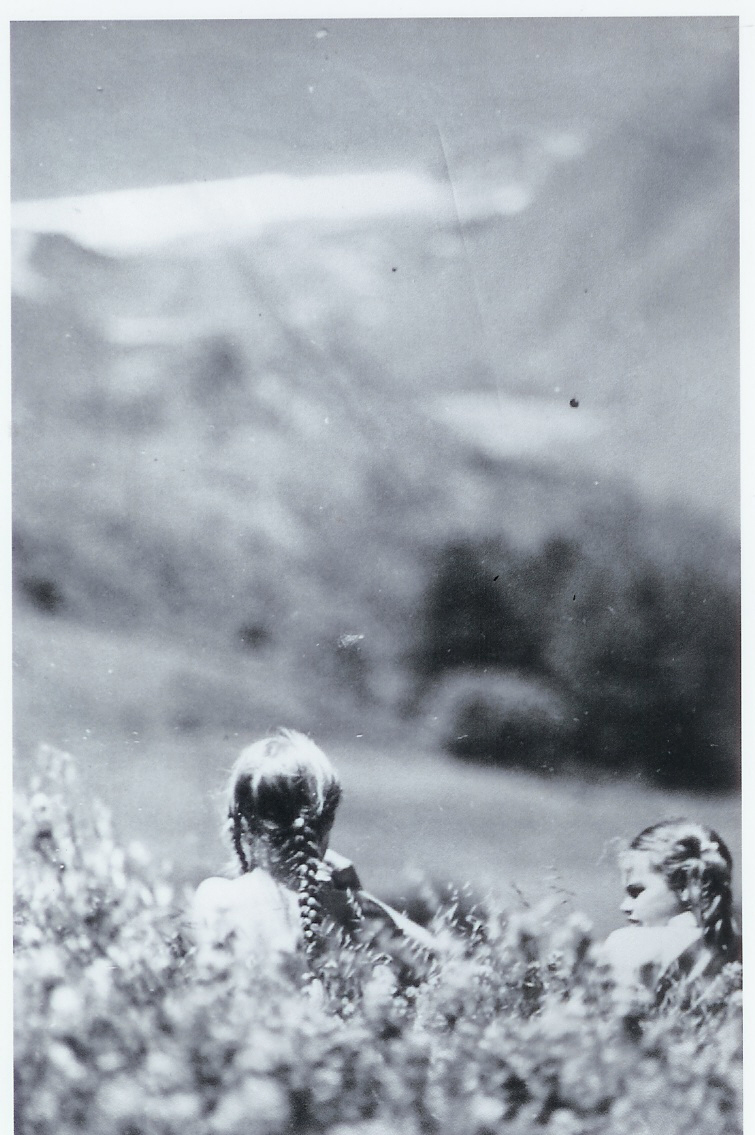
We went hiking up Pico Blanco in Big Sur, because this cement company wanted to chop it up for the limestone and we needed to know why that was totally evil:


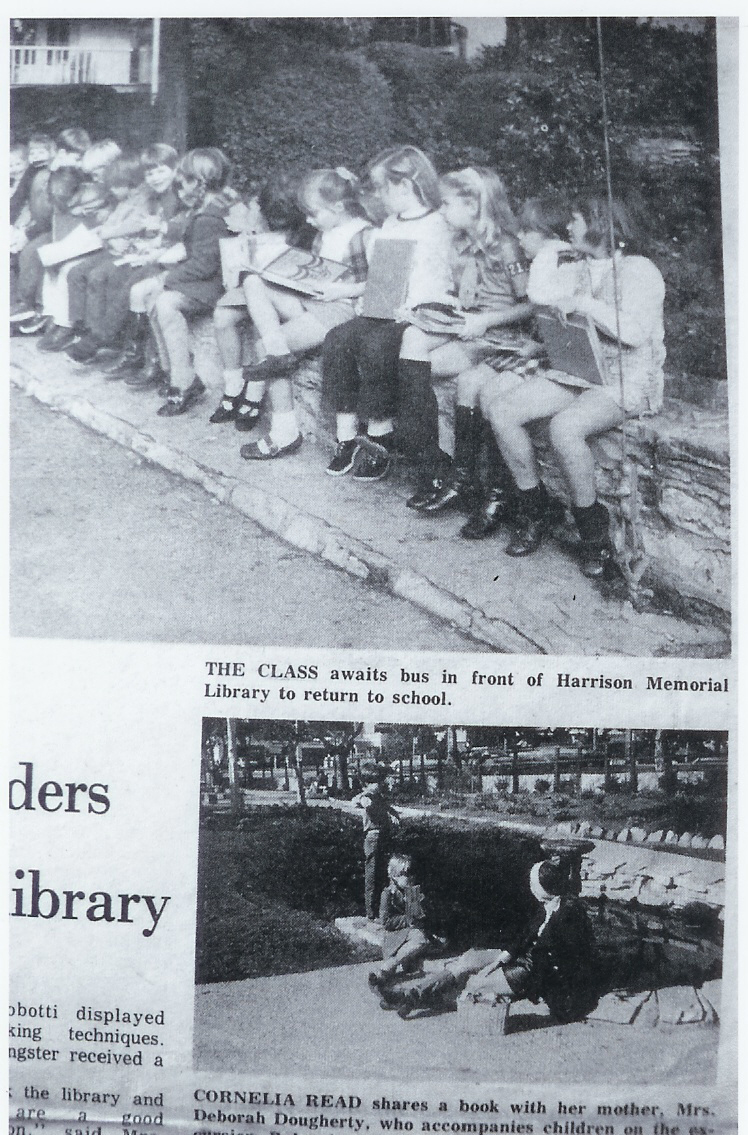
We went down to the Carmel Library, on Ocean Avenue, and got our pictures in the paper:


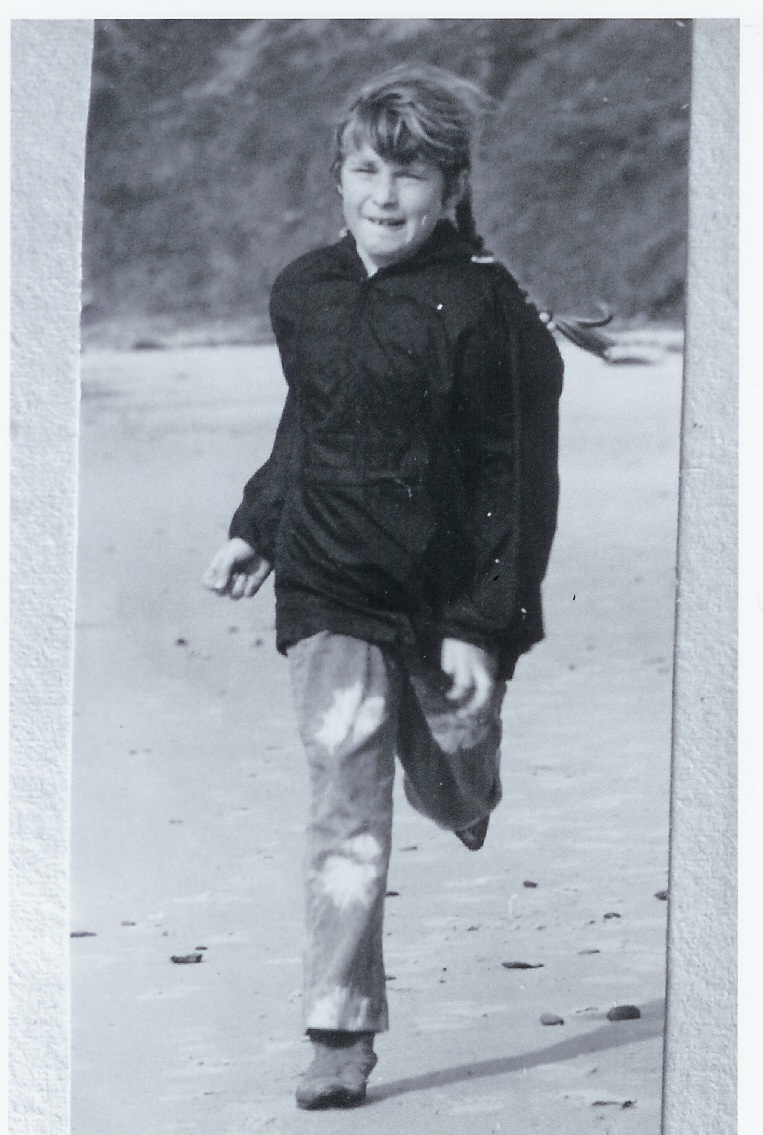
She let us run wild on the beach, even in cowboy boots:


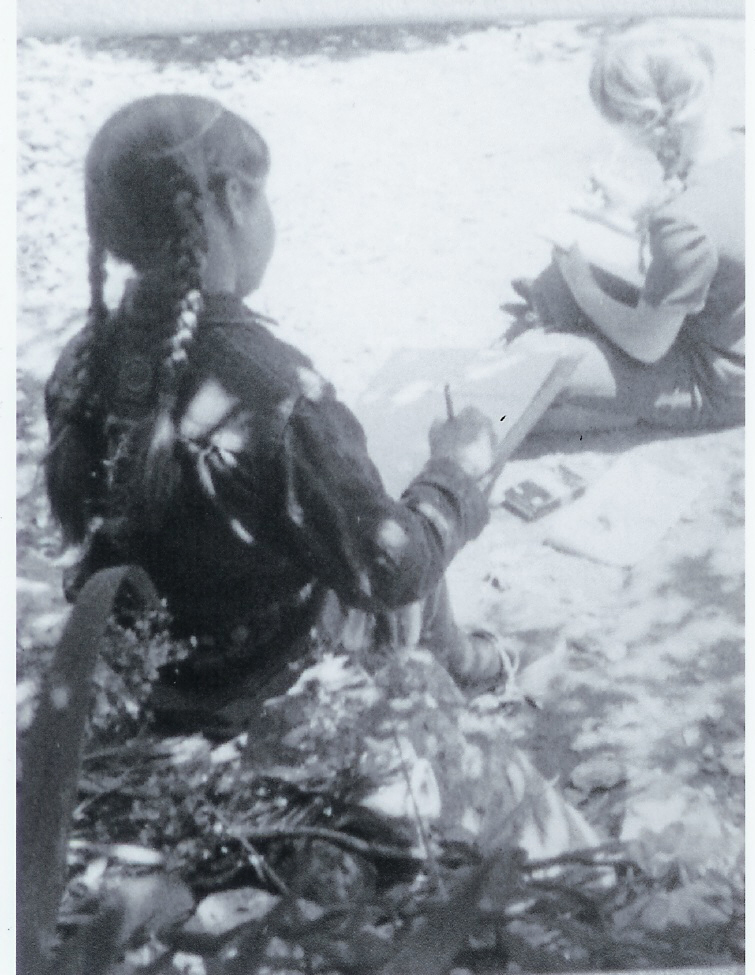
But the best trips of all were when she loaded us all up and took us out into the world “to be writers.”


We’d go to a park, or somewhere else that was beautiful, and just sit outside and think and write our little heads off–Mrs. Boys wanted us to know that that was all it took to be a writer, just putting the words on the paper, and doing the best you could with them.

I learned a lot of other cool stuff that year, like how to tie-dye, and folk dance:


(if not keep both kneesocks up at the same time.) We learned a Russian folk song so we’d know what to sing “come the revolution,” we described our dreams on a tape recorder (“I knew there was something different about Cornelia the first time we tried that,” said Mrs. Boys during her introduction. “All the other kids in the class fit their collective dreams onto a single thirty-minute cassette. Cornelia needed a thirty-minute tape all to herself.” [in my defense, it was a really cool dream where I worked with a team of kids from every country in the world to build a rocket ship out of the flags of each of our countries, all pasted together, and then we went to Mars where the skies were orange and the plants were see-through in different colors and there was this thing that looked like a cobalt-blue kickball, only when I kicked it it turned into a hedgehog and ran away… and, well, you get the idea. Ahem.])

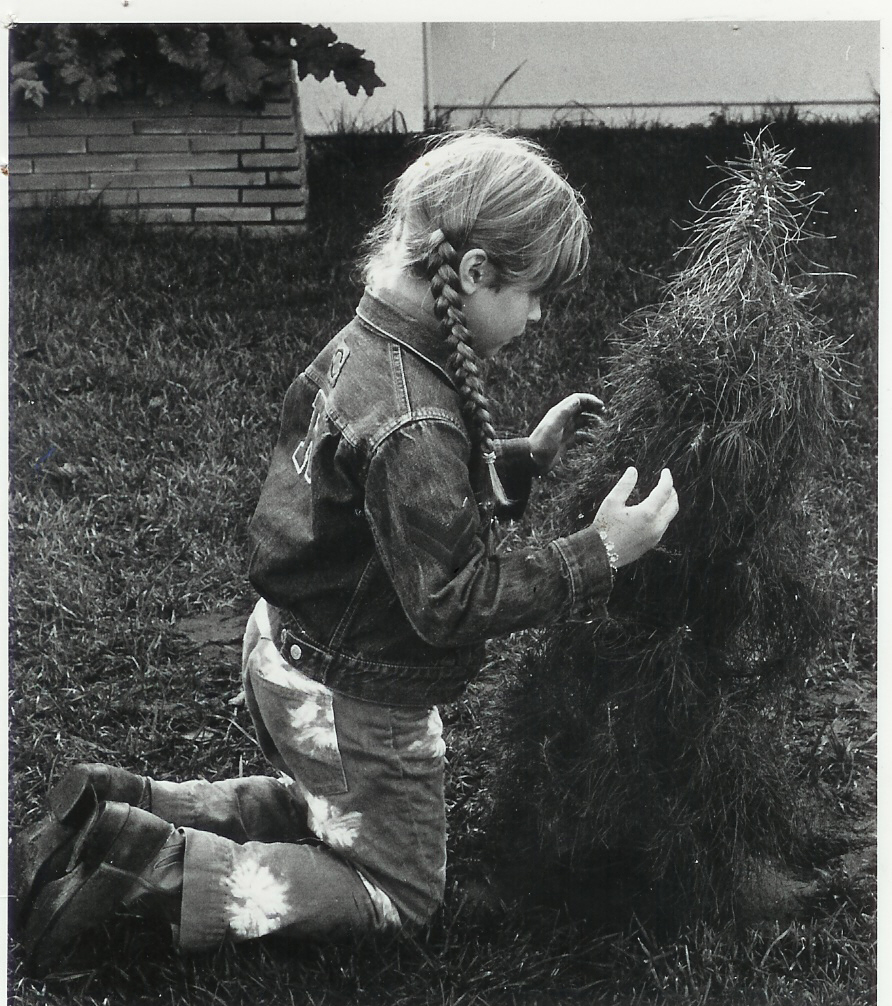
I learned how to play the Marine Corps Hymn on a soprano recorder, and plant a tree for Earth Day:


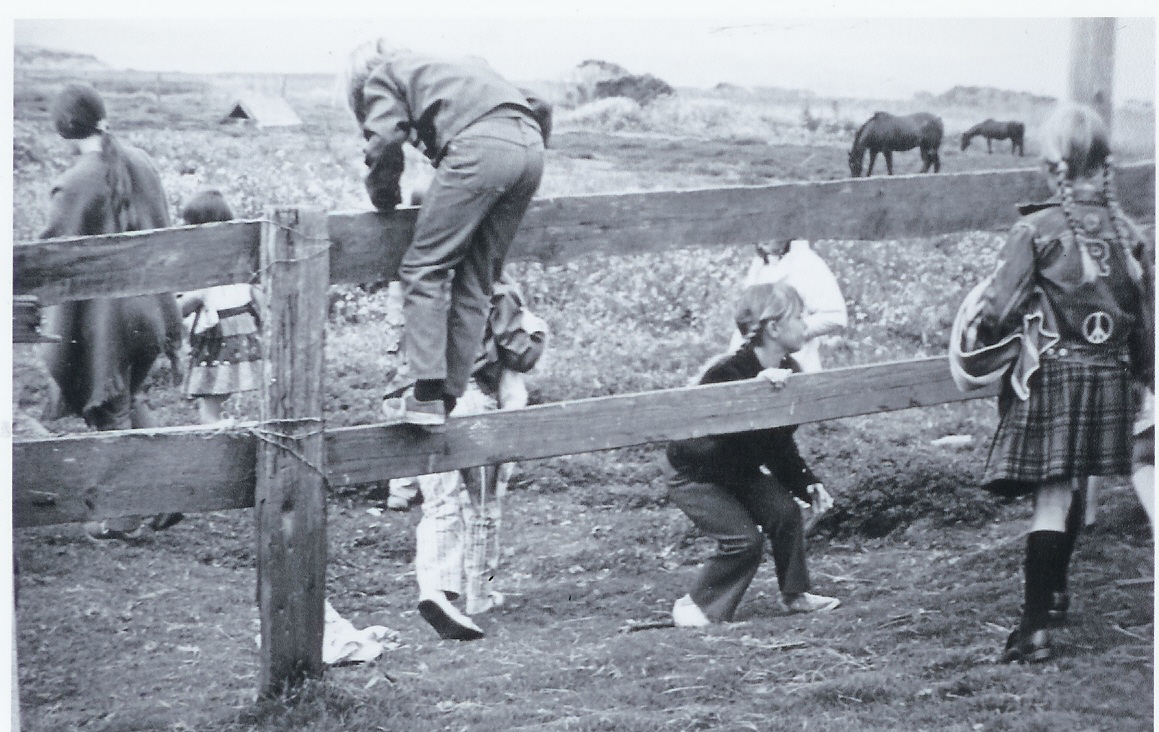
And cut across the horse pasture behind school to get to the river:


But the most important thing I learned was how to believe I was a writer, from the get-go:


And that’s pretty damn cool–even if it’s gotten a little trickier now that I know I have to use quotation marks and stuff.


Thank you, Mrs. Boys. You are awesome.

‘Ratis, who’s the teacher you owe the most, and what did they allow you to learn about yourself?


What Lies Ahead

by Zoë Sharp

This week, besides getting some much needed construction work done on the garage – smashing out old window frames out with a brick bolster and a lump hammer is so therapeutic – I’ve been Outlining.

Producing an outline for a book not yet written is a contentious point with writers. Some people sneer at the very idea that you can plan a book in any kind of detail before you start. It ruins the spontaneity, they reckon, makes it dull and staid. After all, what’s the point of writing the book if you already know everything that happens?

Well, I’m one of these people for whom knowing the end of the story doesn’t spoil it for me. In fact, I often enjoy a book or a movie more the second time around, when I’m not worrying about what comes next and I can simply enjoy the ride.

And agents and publishers these days like to have an idea of what they’re getting, in advance. Beyond anything else, the basic synopsis gives them – and therefore me – a good idea of whether the underlying idea appeals to them or not. If it doesn’t, then I’m fighting a losing battle before I put the first word on screen.

With the latest Charlie Fox novel delivered, I’m in the thumb-twiddling and nail-biting period, so the best way to distract myself is to plan the next one. Obviously, in a series there are a lot of factors that are carried over from the last book. Particularly in a series where the main character develops from book to book, rather than remaining static. Up to now, I’ve tried very hard to keep each story independent – so the books can be read out of sequence without problem.

But, inevitably, this has had to change. This time, there is a lot of carry-over from the events of the last book. And by that I don’t mean I left the main plot hanging. There was a satisfactory resolution on that front, but it was the personal story line that’s ongoing. And in the next one, Charlie’s life has been turned even further upside down. She will question all her beliefs in order to follow a course of action that could be her downfall on every level.

Producing a coherent outline is a headache. As is always the case about now, I drag out the outline from the last book to try and work out how on earth I put this thing together before. Trust me, it gets no easier.

The old outline is usually looking a bit grubby and sorry for itself by now, having been dragged everywhere with me like a child’s tatty comfort blanket. It has been much pawed over and scribbled on by the time it was put away, and it is now covered in pencil corrections and amendments and … probably bears very little resemblance to the finished book. The main plot points usually stay the same, though, and while the details may change, it at least gives me the basic story arc, and tells me at any given point how far through the story I ought to be, as certain key elements fall into place. It helps me keep track of the pace.

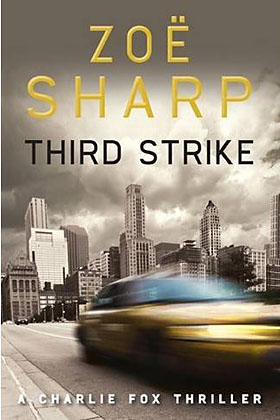
Once my basic idea has formed out of the ether, the first thing I always write is the imaginary jacket copy. I pick up the book in my mind, turn it over and read the back of the jacket. Does the idea grab me? I mean, really grab me? It better had, because I’m going to have to spend months immersed in it. When I go back through my files, this is exactly what I put together for THIRD STRIKE, before I began to write the book:

‘I was running when I saw my father kill himself. Not that he jumped off a tall building or stepped in front of a truck but – professionally, personally – what I watched him do was suicide.’

The last person that ex-Special Forces soldier turned bodyguard, Charlie Fox, ever expected to self-destruct was her own father, an eminent consultant surgeon. But when Charlie unexpectedly sees him admitting to gross professional misconduct on a New York news programme, she can’t just stand by and watch his downfall.

That’s not easy when Richard Foxcroft, always cold towards his daughter, rejects her help at every turn. The good doctor has never made any secret of his disapproval of Charlie’s choice of career or her relationship with her boss, Sean Meyer. And now, just as Charlie and Sean are settling in to their new life in the States, Foxcroft seems determined to go down in a blazing lack of glory, taking his daughter and everyone she cares about down with him.

But those behind Foxcroft’s fall from grace have not bargained on Charlie’s own ruthless streak. A deadly professional who’s always struggled to keep her killer instinct under control, this time she has very personal reasons for wanting to neutralise the threat to her reluctant principal.

And when the threads of the conspiracy reach deep into a global corporation with almost unlimited resources, the battle is going to be bitter and bloody …

Now, in that case, I already had my opening lines as well. The whole thing is less than 250 words. And, as a bonus, it more or less follows the finished book!

After that initial half-page, I start to put together my back story. Very few books start at the absolute beginning of the story, and because Charlie Fox is working in close protection, there has to be a threat of some kind to the client before she’s brought in. I need to know what it is, and more or less everything that’s happened up to the point at which she – and the reader – join the tale.

This is where a first-person narrative is both a blessing and a curse. A lot of the back story will take place off camera. If Charlie wasn’t actually there, she has to find out this information somehow, in such a way that it doesn’t put the reader – or the writer, for that matter – to sleep in the process. But at the moment all I want to know is what happened before, in broad strokes. Trying to work out exactly how Charlie fits into all this would clog me up and slow me down. Detail comes later.

Having got my back story and decided my jumping-off point for the book, I write down the main structure points. An attack on the principal. An ambush on the road. A meeting. A double-cross. A confrontation between the characters. I start off with the whole thing as bare-bones as I can get away with, and then I go over it, again and again, adding a little more detail with each layer, as the twists and turns make themselves apparent.

This is where having my back story to hand is so useful, as I can put the two side-by-side and see where Charlie’s story intersects with the back story, to make sense of the course of events. Ever watched an old James Bond film and wondered how the villain’s identically dressed henchmen always seemed to turn up in the right place at the right time to pursue 007? If anyone asks me the same question, I should be able to answer it from the back story. (And, if I can’t, I need to find that answer, pdq.)

And, with apologies to all the techie crowd out there, I do this on paper in pencil. Usually on a fold-over clipboard so I can use it in the car or wherever, and always have a flat surface to write on. The clipboard also doubles as a handy laptop tray, to stop me cooking my legs if I’m working on screen for any length of time.

The hardest part of plotting, as always for me, is the misdirection, where Charlie has to believe something other than the truth is going on, and someone other than the culprit is responsible. This usually occurs to me as I’m layering it in. Anything happening behind the scenes, I put in brackets in my outline, as an aside to myself, just so I know what’s really going on.

Having got my basic outline, I then do my cast list. Some will be continuing characters, but a lot will be new people, and at this stage I only need a brief idea of who they are. They will introduce themselves to me more fully as I go along. I’ve tried doing full biographies for characters before I start, and it just doesn’t work for me. I need to ‘meet’ them, in person, in context, before I really know who they are.

For the last few books I have had the privilege of adding in the character of someone who has bid at a charity auction for the right to be included. In SECOND SHOT this was Frances L Neagley, who became a Boston Private Investigator. In THIRD STRIKE, it was Terry O’Loughlin – a Texas lawyer for a pharmaceutical giant. In the latest book, FOURTH DAY, the winner particularly wanted her name used in such a way that possibly only she would recognise it. And in the new book I have not one, but two characters to incorporate – a mother and daughter. Fortunately, before I started outlining I had vague plans for a father and daughter as central characters, but a mother and daughter works even better.

Unless they’re auction bidders, finding names for new characters can be a bit of a chore. Fortunately, I can always call on various random name generator sites, including this one, which will allow you to be more specific, asking for names suitable for a hillbilly, a rapper, or a goth, as well as specifying country of origin.

At this stage, this is just a rough idea of who I need to people my world, trying to make sure all of them don’t have names beginning with the same letter, or ending with a similar sound, which can lead to confusion. I went to a writing group meeting last week and someone read out a story in which all the main characters had names beginning with ‘B’, a fact which she hadn’t noticed before bringing the story to the group.

What I try not to plan in detail is the reactions of the characters to the events of the book. That I like to leave as a more organic process, arising naturally out of the circumstances in which they find themselves. Dusty’s excellent blog from yesterday (see below) explained all the main archetypes and the cliché pitfalls that dot our path. Although there may only be a limited number of plots and – it would seem – a certain number of character types, it’s the way you as a writer choose to combine these, in your voice, that makes your story unique.

Of course, a lot will change by the time the book is finished, but for me it’s like going on a car journey at night. I know roughly the direction I’m travelling in. I know where to turn and which signs to follow. And I know where I ultimately want to end up. But as I drive fast into the darkness, a lot of the detail of the landscape and the road ahead is hidden, and I can only see with any clarity the area directly in front of the headlights.

With an outline, I have my road map and I do a little rolling detail outline as I go along, so I know the immediate future, the immediate path ahead, but occasionally obstacles and obstructions and detours crop up that you don’t expect, and then you – and your characters – have to react as best they can and hope you don’t crash.

So, where do you stand on the whole outline or not-outline issue. If you’re an outliner, how does your method of putting the whole thing together vary from mine? And, if you’re not an outliner, how do you set about getting into a new book?

This week’s Word of the Week is Juggernaut. With an initial capital, this means a very large lorry, but it also means any relentless destroying force or object of devotion or sacrifice; an incarnation of Vishna, whose idol at Puri is traditionally drawn on a processional chariot, beneath which devotees were once believed to throw and crush themselves. Also Jugannath, from Jagannatha, lord of the world.

And finally, as the only Brit member of the ‘Rati crew, I feel I ought to mention the fourth anniversary on Tuesday of the London bus and Underground bombings, which took place on July 7th 2005. They have just erected a memorial to the dead in Hyde Park in London – a collection of columns to represent the fallen, standing tall.


Nothing New Under the Sun?

And if I put my fingers here, and if I say
“I love you, dear”
And if I play the same three chords,
Will you just yawn and say…

It’s all been done
It’s all been done
It’s all been done before   

-Barenaked Ladies

Tropes are storytelling devices and conventions that a writer can reasonably rely on as being present in the audience members’ minds and expectations.

-Tvtropes.org

By J.D. Rhoades

After the recent discussions here and here about genre and the reader’s expectations, I started thinking about…well, about the genres within genres within genres. I’m talking about going  beyond the hardboiled/cozy/thriller/procedural/etc divides and considering recurring patterns of character and story (sometimes known as “tropes”) that you see in crime fiction.

A few examples:

The Wunza Story: As in “One’s a [blank] and One’s a [blank],” The Wunza story puts two often dissimilar people together and lets that tension play out against the bigger story. It’s a central pattern in romantic suspense: “Wunza beautiful, dedicated detective with the Nashville PD, Wunza handsome, brilliant FBI agent.” Crank up the differences a few notches and you get more humor in the mix: “Wunza a small town Southern girl who’s always getting into wacky scrapes, Wunza a dark and mysterious bad-ass who may or may not be a bad guy.” Make both characters the same sex and you have a Buddy Story: “Wunza ex-military doctor recovering from wounds suffered in Afghanistan, Wunza a brilliant cocaine addict who plays the violin.”

(For a hilarious “Wunza” generator, go to http://www.theyfightcrime.org/)

Advantages: the above-described romantic tension, opportunities for fun dialogue.

Disadvantages: for romantic Wunzas, what do you do once they’ve done it? Or in the alternative, how long can you realistically keep them from doing it before the reader gets impatient? In the Buddy Wunza: how long before people start snickering that they’re gay (not that there’s anything wrong with that…)

The Merry Band: A whole bunch of wunzas fighting crime (police procedural) or committing it (the caper story). Think CSI, NCIS, or the Dortmunder stories.

Advantages: lots of room for intra-team conflict and/or romance; even more opportunities for snappy dialogue; enjoyable to watch as it all comes together.

Disadvantages: easy to lose track of where everybody is and who’s doing what with whom.

The Shane Story: Mysterious stranger rides into town, finds bad things going on, sets them right using his fists and/or his gun, then rides away. He probably, but not inevitably, beds the beautiful damsel in distress along the way. Think:  Jack Reacher, Travis McGee.

Advantages: mythic, archetypal, or at least way larger than life character; great opportunity for cool badass action scenes.

Disadvantages: easy to make the character too invincible; suspension of belief can get more and more difficult; you’ve got to disentangle the loner hero from the love interest at the end, so he can bed the next damsel down the road. That can get a little contrived (“everyone who sleeps with the Captain dies!”), not to mention off-putting to some readers.

The Brooding Knight: A tough loner like in the Shane story, but often more tormented and reflective than a Shane. Said torment possibly comes from a traumatic experience in the past, or possibly by an ideal of justice that they cling to despite being repeatedly and grievously disappointed. May drink a lot. Think Harry Bosch, Phillip Marlowe, Jack Keller.

Many of the same advantages as the Shane story in regards to the kicking of asses; writer can (carefully) slip a little of his or her own worldview into the narrative; soulful characters can be attractive, especially to the female reader.

Disadvantages: Jesus, dude, get over yourself already.

The Smartest Guy/Girl in the Room: Also similar to the Shane story, in that the protagonist, usually an outsider, has to set things right where they’ve gone wrong, but by using his or her far-superior wits rather than physical force. Think:  Nero Wolfe, Hercule Poirot.

Advantages: some people really love puzzles and love pitting their wits against the SGITR.

Disadvantages: The SGITR can be kind of a dick; danger of making the clever solution so clever as to be absurd; misdirection of the reader is required to keep them interested. In short, the SGITR story is one of the hardest to pull off, because the writer has to be as smart as the SGITR.

Many stories combine tropes. For instance, A SGITR story is often paired with a Wunza story. The other half of the Wunza can be an exposition dump, that is, a person to whom the SGITR has to explain things to, thus informing the reader (Dr. Watson). In the alternative, they can be a foil to soften the SGITR’s obnoxious know-it-all-ism (Archie Goodwin). In contrast, Inspector Rebus is a Brooding Knight with his own Merry Band.

Now, as for the overarching advantages and disadvantages of  tropes:

Advantage: It’s easy to describe, pitch, and market stories based around familiar tropes.

Disadvantage: It’s easy for trope to become cliche.

While researching this post, I looked up a site my son had often quoted to me:  tvtropes.org. And I have to tell you, friends, it got plumb discouraging. The site’s huge, and clicking though all the links, especially the ones involving crime fiction,  makes you wonder if  pretty much every “original” idea you ever thought you had  has already been done by someone else. You may begin to wonder if the DragonBig Bad or Magnificent Bastard  in your WIP isn’t a Wall Banger because you have a scene in which they kick the dog.

Well, maybe. But then again, maybe not. After all, tropes can be tools. It’s all in how they’re used. If they’re used in a lazy or uncreative way, if you’re just phoning it in, then sure, you’ve got the possibility of the dreaded Dethroning Moment of Suck. Done right, (as in the examples above from our own ‘Rati) you may be looking at a Crowning Moment of Awesome.

Which, at long last, leads us to our discussion question, our teaching moment,  of the day:

Readers: What are some of your favorite tropes? Your least favorite? Who uses them in ways that work? Writers: how do you get out of the trap that turns trope into cliche?

A Good Dressing Down

By Louise Ure

Okay, the good news is I’m not in jail.

The bad news is that I’ve probably been banned for life from the only grocery store within walking distance.

Here’s what happened. God’s Own Truth. Well, as close to that as I’m ever likely to go; I do have a horse in this race.

It started last week. It was about twelve noon. I hadn’t showered yet (hell, sometimes I don’t get around to that until four o’clock or so), the teensy ever-so-healthy yogurt I’d had for breakfast wasn’t do its job, and there was not a scrap of food in the house.

What’s a girl to do? I hotfooted it down to the corner grocery store in my scrubs.

Have I mentioned the hospital scrubs before? No? They are my usual sit-at-the-computer wear. No sweat pants and bunny slippers for me. I learned long ago that the dog’s diarrhea or the impatient Fed Ex guy pounding on the door would not wait for me to put on anything remotely presentable to the outside world, so I opted for scrubs.

None of those cheesy pastel shades, either. If you’re a woman walking the dog at high noon in a pair of pink scrubs, the neighbors either think you’ve got one of those jobs emptying bedpans or they ask if you’ve got an extra day in your schedule to be nanny to their little ones.

No, I only wear black scrubs. No matter the time of day, black scrubs either say “I’m on my way back from a Tae Kwan Do class,” or “I’m a cardiac surgeon so don’t bother me with anything trivial like the fact that my dog’s pee is killing your lawn.” I’ve even been tempted to get the stethoscope out of my father’s old medical bag and drape it around my neck to achieve the desired approbation.

So I’m in the “10 items or less” line at the grocery store with my ever-so-healthy lunch — (OK, It was hot dogs and buns and these giant pickle spears) – and the young girl behind the register scans the items – bink, bink, bink – looks up at me and says:

“Eating for two are we?”

As anyone who has ever read the consumption/nutrition label on a canned soft drink knows, of course I’m eating for two! Those idiots at the nutritional guideline place think even a can of Coke has two servings.

But could she … does she mean … not possible. I wicked my hand down across my belly to flatten the blousy black cloth.

“Why on earth would you say that?” I purred in the most syrupy, Southern accent I could muster with my teeth clenched. What I wanted to say was, “May your lips be eaten by that cherry-popsicle lipstick you’re wearing and may your teeth all fall out.”

“No reason,” she says looking down. “Just the pickles.”

The pickles? Does any man who comes in here buying pickles get this same kind of presumptive inquisition about whether or not his significant other is pregnant? Does it matter if they’re sweet pickles versus dill?

I harrumphed and left the premises before I could tell her exactly what I thought of her medical diagnostic skills. And her intelligence. And her lack of courtesy. And her greasy hair. And her cudlike gum-chewing visage. And that fact that I’ve already lost twenty pounds this year, thank you very much.

The hot dogs quelled my tantrum and I’d practically forgotten the episode … until yesterday.

Once again I needed a few key ingredients for dinner. Like the meat. And the potatoes. And the vegetables. But I’d had appointments earlier in the day at the hairdresser and the vet’s so this time I was already sparkly clean and wearing real, outside clothes. Dark-washed, straight-leg jeans that Stacy and Clinton would have approved of. A real, ironed blouse that already had all the darts and seaming in place to hug the body. High-heeled lime green sandals. I had it going on.

Once again, only the “10 items or less” station is open (does this store have any customers who buy more than ten items?), and once again, my nemesis is there. Her eyes say that she remembers our last encounter. She nods at me and starts to pull the items one by one across the scanner.

Fine with me. I don’t need a new friend, especially one who knows I go for 100% proof mayonnaise and canned corned beef hash. I take my small bag and receipt and turn to the door.

That’s when I saw it. There, the penultimate inky line on the receipt.

“5% Senior Discount = $1.16”

I froze, the muscles in my jaw clenched. Imagine a female Clint Eastwood in Gran Torino mode.

“Make up your mind,” I said, turning back to her. “Am I young and pregnant? Or am I old and fat? Take your time. There’s a lot riding on your answer.”

Who knew that grocery stores’ security systems came with such high-pitched alarms? Once she released the button she scurried two stations down to put some distance between us. I was escorted out by the manager and a skinny little Asian security guy in a jacket that was two sizes too big for him.

I kept the $1.16 in savings.

So tell me, Rati, what are your Rudest Encounters of the Third Kind (either on your part or on theirs)? And don’t tell me I’m wound a little tight this week. I already know that part.


P.S. Come join us for this San Francisco treat!


What if?

Most writers I know adore a good what-if. That simple question is akin to creative crack, a cheap addiction with an extremely generous dealer.

After all, any topic is fodder for the what-if treatment. It’s the gift that, well, you know . . .

What if the Brits had won the American war for independence? What would our world look like today?

One particularly odd image in my answer to the above questions is imagining the Pueblo Indians of New Mexico singing God Save the Queen. It evokes a wonderful commercial I saw decades ago where the stereotypic Native American – one with long gray braids and a craggy face—eats a piece of pizza with a big smile and says, “Ah. Just like my mother used to make.”

You can bet those writers were playing with what-ifs.

What if Poirot grew tired of puzzles and opened a men’s clothing store?

Can’t you just see him measuring someone’s in seam? Of course, Poirot’s brilliant little gray cells would probably commit suicide from lack of stimulation.

What if Nancy Drew decided to drop out of high school and hitchhike through South America? What if she’d started toking reefer in junior high? What if her mother was in the picture?

I don’t know if Nancy would’ve butted into other people’s business or worked to solve crimes if her social horizons were broader, or if she’d broken a few laws herself. And, I doubt a mother would have let her do some of the things her father permitted simply because he couldn’t supervise his daughter all the time.

What if Sherlock had been well-adjusted? What if Watson was his true intellectual and observational equal?

What if Jane Eyre had had loving parents? What if Rochester had been a pleasant, happy fellow?

The mind just boggles, doesn’t it?

I know readers play with what-ifs all the time too.

My children derive quite a bit of their literary pleasure from extrapolation. My-daughter-the-Harry-Potter devotee has applied her innate logic to several questions about the characters as adults. She has a sensible theory about whom Cho would marry and why. She’s got a good idea about what Teddy (Tonks’ and Prof. Lupin’s son) would be like today. She’s certain Draco would still be a prick.

My other daughter has spoken with me about Elizabeth Bennett in Pride and Prejudice and has wondered aloud about what would’ve happened if Lizzie had been attracted to Darcy from the beginning.

“I can tell you one thing,” my daughter said to me yesterday. “It’d be a pretty short book.”

Every time I write a scene, I make dozens of decisions that feel monumental in the moment. When I commit something to paper –or computer screen –it seems like the only possible option. The best one ever. When I’m in that frame of mind, I bristle—a little—to think other people might rewrite my endings or create their own narratives around my characters’ actions and motivations.

But when I’m in a what-if mood, writing is so much more fun. I let myself play and see where alternate decisions take me. And I love that people might invest so much emotional/mental attention to my work that they’d think about other possibilities.

Today, after the long weekend, I think it’s time to get our own little gray cells working. So, let’s stretch our creative muscles with this exercise:

Ask a what-if about any literary character, story or book
       and then – if you’re willing – give us an answer.


_____________________________________________________________________________________

One of the enjoyable and unanticipated results of being the sole ’Rati that posts on a weekly schedule is that I now get all of the guest bloggers. The next two weeks are going to provide me with a much appreciated mini-vacation. And, dear readers, you’ll have the treat of two excellent writers. Talk about a win-win.

Look for

Julie Kramer on Monday, July 13

Rhys Bowen on Monday, July 20

Neither This nor That . . . or Both This and That

By Allison Brennan

Genre is important. So important that publishers market to genre expectations and authors write to genre expectations. Not because they are selling out, but because they want people to know–in a moment–what type of story they’re getting. If it’s a mystery, there needs to be a crime or puzzle to be solved. If it’s a thriller, there needs to be a fast, page-turning pace and high stakes. If it’s a suspense, there needs to be high, page-turning tension. If it’s a romance, there needs to be a happily ever after. If it’s a paranormal, there needs to be fantastical elements–be them grounded in the “real world” like Kay Hooper’s psychic FBI series or urban fantasy like Laurell K. Hamilton’s Anita Blake vampire huntress or true fantasy like Tolkein’s Lord of the Rings.

Genre blending is popular with both authors and readers because we like to take common, accessible story elements and twist them a bit to make something just a little bit different. Romantic suspense is a blended genre that has become it’s own separate genre from which other genres can be blended.

In romantic suspense (or romantic thrillers–same thing, just romantic thrillers, IMO, focuses more on the thrill than the romance and romantic suspense tends to be more romance driven. But that’s just my personal definition.) Anyway, my knee-jerk definition of romantic suspense is, “A thriller with a hero and a heroine who both live and are together at the end of the book.” But the truth is, there is a broad range of romantic thrillers, with very light on the suspense (my very good and talented friend Roxanne St. Claire writes the incredible Bullet Catchers series which has a suspense subplot, but the romance–with hot guys–take center stage) to very light on the romance (such as one of my all-time favorites–even before she gave me a quote for my FBI Trilogy–Lisa Gardner who writes thrillers with relationship subplots, such as her Quincy/Rainey series or Kim/Mac.) Some authors are very well balanced, such as the incomparable Linda Howard.

With the wide range of romantic thrillers, it’s no surprise that those of us who are writing them start incorporating other elements.

JD Robb’s futuristic romantic suspense novels, her IN DEATH series, is one of the strongest out there. Set in 2059, she has a compelling mystery, strong characters, and a constantly developing and growing relationship between the richest man in the universe (Roarke) and New York City’s top cop (Eve Dallas.) I remember Kay Hooper as one of the first to write a back-to-back-to-back trilogy, in 2002 I believe, with her SHADOW books, introducing psychic FBI agents. Real life crimes solved by real life FBI agents–who had a six sense. It added an interesting twist on an established genre.

In 2003, before I sold, I had sent out a bunch of queries for what ended up being my debut novel, and while I was waiting for responses, I came up with an idea I really loved. While it was still vague in my head, I wrote a few chapters. What if an evil coven releases the seven deadly sins into the world? What if the seven deadly sins were demons? Who could stop them? How?

I ended up selling my romantic suspense, and I put the seven deadly sins series on the back burner. Partly because I knew, in my heart, that I didn’t have the skill to write the story I could picture in my head. Nor did I have the discipline to write it. This isn’t to say that romantic suspense is easy or formulaic, but there is a comfort in writing genre fiction. I KNOW that my hero and heroine are going to live. I KNOW that the crime is going to be solved. I may not know anything else about the story, but the two musts of the genre keep me focused toward the goal. And I’ll admit it’s really fun to throw lots of danger in the mix and figure out how on earth these characters are going to survive.

Twelve romantic thrillers later, and I am on the verge of completing the first of my Seven Deadly Sins series. ORIGINAL SIN will be released on January 26, 2010. I’m excited and scared to death at the same time.

Genre is like comfort food. You always go back to it because it makes you feel good. It’s there when you need it, it’s satisfying, it’s rich and full and thoroughly delicious. You know what to expect. This is good.

As Alex said yesterday (and no, we didn’t plan to blog on similar topics!):

The challenge of genre is delivering something unique and compelling within a proscribed form.

Now, I happen to be grateful for a proscribed form, because it gives a shape to a story from the very beginning, and let’s face it, when you first embark on a project, story is a vast and amorphous mass, or maybe that’s mess. Any signposts in that chaos are lifesaving.

Amen. This is why I love forensics. When I get stuck in a book, I focus on the evidence. What do my characters know? What is my villain doing? What does the evidence show? It’s a signpost that keeps me focused on the GOAL which is solving the crime in (hopefully) a “unique and compelling” way.

In all fiction, but paranormal in particular, worldbuilding is crucial. One definition:

Worldbuilding is the process of constructing an imaginary world, usually associated with a fictional universe.

Okay, I see that . . . but is the world completely imaginary? According to the continuing article it is, including:

It describes a key role in the task of a fantasy writer: that of developing an imaginary setting that is coherent and possesses a history, geography, ecology, and so forth. The process usually involves the creation of maps, listing the back-story of the world and the people of the world, amongst other features.

This is where I diverge. Worldbuilding does not necessarily mean a completely new world. What if we like the one we have? I do. I don’t have to create a map, for example, or an entire history. There’s enough in our own several thousands of years that will do nicely. I’ll just pick and choose what I want, and then adhere to those rules.

So I’m worldbuilding . . . but I’m not.

I created a fictitious town in Central California between San Luis Obispo and Santa Barbara. I call it Santa Louisa and it’s home of the Lost Mission of California, or Santa Louisa de Los Padres Mission, which was “lost” because it was built too far off the mission trail. 

I’ve always been fascinated by a noble group of people who band together for the common good, battling evil to protect the many from violent death. Isn’t that what crime fiction is all about, anyway? Cops, prosecutors, and others battling personal demons while saving innocent people from violence, solving a crime, and catching the bad guy.

Really, my seven deadly sins series is the same thing. Just not cops, and their battling inhuman evil, not only human evil (though they battle that, too.)

And in worldbuilding, according to several articles, you have to answer a bunch of questions about your world and the people who populate it. Hmm, that sounds a bit too much like plotting, so I skipped it.

But as I wrote the first book, I needed some basic rules. I couldn’t just make them up as I went. (okay, okay, I admit it. I made it all up as I went. That’s what revisions are for, to clean up the messy beginning.) I grounded everything in the real world. I have a sheriff as a main character, for example, who investigates the crimes as any cop would. But she knows there’s something supernatural at work as well. Her theory and focus is that if she can stop the HUMANS responsible for summoning demons, she can beat them. She’s grounded in law and order; right and wrong. 

The hardest part of creating this world (read: writing the book) was figuring out the rules the villains had to follow. I couldn’t have magicians ala Harry Potter flying around on broomsticks, but in truth, the occult is essentially the practice of magic–controlling physical and supernatural forces.

When in doubt, I fall back to research books. Over the last two years I’ve lined my shelves with a wide-variety of religious and supernatural and occult books. In my crime novels, I get inside the head of the villains; I had to do it with the coven as well. And I learned a tremendous amount of information about what true witches–magicians–aspire to. It’s not about making a deal with the devil–in fact, one author commented that it was the weak magicians who resorted to pacts with demons–it was about amassing enough power and knowledge to gain control over supernatural forces.

That gave me exactly what I needed. Real-life beliefs and mythology (for lack of a better world) that I could build into a fictional occult group. They have immense power because they have honed their skills, but there are physical and emotional limits to their power. This isn’t Samantha Stevens twitching her nose, or the Charmed sisters casting spells.

As I finish up book one, I noticed something about how I wrote it. When I got stuck, I fell back into my comfort zone: forensics. The investigation. Trying to figure out how someone died when there is no physical evidence. When I didn’t know where the story was going, I went over to the sheriff, my comfort character, to see what she was doing. She’s the cop, the real-world foundation. Once, she was interviewing a suspect in his best friend’s murder. Oh, an interrogation! I can write that.

And his answers gave my the big break I needed for my characters to figure out what was going on. Wow. I love it when a story comes together.

All this is leading me back to one of Alex’s main points: that genre provides a signpost in chaos. And I so needed to hear that right now.

Toni and I have often talked about what happens when you write a book that doesn’t fit neatly into the mold. Toni’s BOBBIE FAYE series (book two: GIRLS JUST WANNA HAVE GUNS is out as of last week!) doesn’t neatly fit the mold of thriller or romantic suspense–it’s sort of an combo. And when you already have one established “blended” genre (romantic suspense) it’s hard to tack on another genre to “re-blend.”

But the book is incredible. One of the most fun series I have ever read. But when you blend too many genres, you sometimes get stuck in the middle of the Dead Zone–also known as the “general fiction” aisle. These are where the out-of-genre books go to (usually) die. At least, commercially die because most commercial readers browse the genre sections first.

I have written twelve romantic thrillers. They are in the romance section of the bookstore. (And there’s a reason for that, some good, some not-so-good, but that’s a blog for another day.) I’m happy in romance. I have a happily ever after in all my books and the bad guy ALWAYS gets what’s coming to him. (If I killed off the heroine and the bad guy sometimes got away, I’d be in suspense, but I’d be depressed and wouldn’t write anymore, so that’s that.) But it’s true that my books tend to lean a little heavier on the suspense side.

Now add on another tag: paranormal. My series is a paranormal romantic suspense.

But there’s no genre tag for that.

Which really screws me.

My base is in romantic suspense. Thus, my book is listed as a “paranormal romance.” Which really doesn’t fit. There IS a romance, but it’s a multi-book relationship arc. And there is paranormal, but it’s grounded in real-world mythology and physics. For example, one plot point in either book two or three (I’m not that far yet!) is the reality that in America, witchcraft isn’t illegal and summoning demons from hell isn’t illegal, so if you kill a witch who summons a demon from hell, and you get caught, you’re going to stand trial for murder.

I feel like I’m in genre limbo. I’m not trying to write outside of genre, because I love genre fiction. 97% of my fiction shelves are genre. But I’m neither “paranormal romance” or “supernatural thriller”–I’m both. I’m a “supernatural romantic thriller” . . . but there’s no code for that in the system.

Sometimes, the system needs fixing. Because creative people can and will mix and match genre to entertain readers. It’s what we do.

So, I was thinking about some of my favorite “paranormal” stories. THE MATRIX and RAIDERS OF THE LOST ARK; SUPERNATURAL and FRINGE; and THE STAND by Stephen King. They all have one thing in common: real, ordinary (or extraordinary) people in the real world with a paranormal twist.

Hmm, is it any surprise that’s what I’m writing now?

Do you like the supernatural? What are some of your favorite paranormal movies, tv shows, books? Comment and you get a two-fer . . . two books for the price of one comment. Bawahaha — you’ll get CHARMED AND DANGEROUS by Toni McGee Causey (Bobbie Faye book one) and SUDDEN DEATH by me (FBI Trilogy book one.) 

And a winner! The winner of last week’s contest hosted by Toni and open to everyone who commented on the “Dear Summer” entry is Marisa. She did not register an email with us, so Marisa, please contact Toni at toni [dot] causey [at]gmail.com. Thanks for playing!


On genre, sort of.

by Alexandra Sokoloff

I know, I know, everyone’s at the beach, I’m talking to myself, here. I’m too tired from the move to even think about going to the beach, so I will just type quietly to myself, which does not even require getting out of bed, by me or the cats, who don’t look too inclined to get out of bed, either. (I think half the stress of moving is seeing how much it traumatizes your animals, no matter how much you try to explain what is happening and that it will be all right, eventually…).

I did a post on my own blog this week on editing that apparently surprised some people because my rewriting advice was less about punctuation and a lot more about doing “genre passes” – that is, doing several rewrites that focus specifically on heightening genre elements in your book: a comic pass for comedy, a suspense pass for a thriller, a sex pass for a romance (all right, emotional pass, if you will…)

And then some of the comments on that post sparked a whole discussion on another website in which someone who had read my blog was fuming about the idea of having to know the genre of your story while you are still in the process of writing it.

I don’t know, it seems kind of important to me.

I understand the reluctance to be pigeonholed. I think it’s a symptom of the new writer, mostly, because anyone who has written professionally has long ago come to terms with pigeonholing (Did they send a check? Then they can call it anything they want).

But I don’t understand the reluctance to be associated with the great books that are your story’s antecedents. I really don’t understand the seeming reluctance to even KNOW what books are your story’s antecedents. We all stand on the shoulders of everyone who came before us – which is why I went into such raptures about meeting Richard Matheson last month. But then, so did F. Paul Wilson, whose shoulders I also stand on, who specifically gave tribute to Matheson as one of the greats whose shoulders Paul is standing on…

You have to know what you’re aspiring to.

The challenge of genre is delivering something unique and compelling within a proscribed form.

Now, I happen to be grateful for a proscribed form, because it gives a shape to a story from the very beginning, and let’s face it, when you first embark on a project, story is a vast and amorphous mass, or maybe that’s mess. Any signposts in that chaos are lifesaving.

But also, the form is proscribed because genre fans are paying their money to get a certain kind of experience, which your publisher (or the film studio) will have promised through the advertising of the story – the jacket design, the flap copy, the one-sheet, the trailer.

Does that make those readers lemmings? Because they’re expecting and wanting a certain experience?

I don’t think so. It’s just personal taste and preference, and a consumer’s desire to know what you’re paying for up front. When I have time to go to the movies I don’t want to be forced to sit through bubbly (well, perhaps I mean airheaded) romantic comedies when I could be watching a good thriller. I know myself, and I know thrillers (horror, mystery) consistently hit my pleasure buttons, and I don’t have that much free time to gamble two hours on a movie or eight to ten hours on a book that may not give me the basic escapist pleasure that I’ll get out of a well-written or well-produced thriller.

But the danger of genre – or perhaps what I mean is, what I am finding unnerving about it – is the lengths to which storytellers seem to feel they have to go to stand out in the field.

Yesterday I did something I do periodically: I took about a dozen books – thrillers – from my TBR pile and read the first few chapters of one after another, not letting myself go beyond three chapters (or four, if they were very short chapters). Just seeing what caught me and why. (Great exercise for people getting ready to send out queries and chapters, right? Do yours stack up?)

Some really well-written things there, and some not so much, and no, I’m not about to name names.

But I have to say I was unnerved – and maybe I mean something stronger – maybe I mean revolted or repulsed – by the level of violence that these books started out with. Not just rape, but multiple rapes, brutal slaughter, torture, mutilation.

These were not horror novels, mind you. They are new thrillers. (And the word “rape”, much less “serial rape”, does not appear in the jacket copy of any of them, otherwise they would not have been on my TBR pile to begin with).

And yes, I did flip through the books to see if that level of violence continued. It not only continued, it escalated.

Now, I know that the success of SAW started a bad, bad trend in horror movies. I remember one very strong impetus for me to write my first novel was when I had a film executive in a meeting turn to me and say: “And then let’s have him rip her face off.”

That was when I realized I’d better make other career plans, at least until that trend mercifully died.

But can someone tell me when thrillers turned into torture porn?

I write dark stuff myself. But do serial killer novels really have to have body counts in the dozens these days? Do we need to be subjected to whole chapters of real-time torture or rape?

I wish I WERE going to the beach today, actually, because I feel like I need to be washed out, and like maybe I need a whole ocean to do it.

Rape and child abuse are horrific things. Maybe these authors feel they need to escalate to the extreme to fully convey the horror of the experience.

Or maybe they are distancing themselves from the real-life horror of the by making the violence over-the-top to the point of absurdity.

Or maybe they’re scared that they can’t write well enough to stand out without butchering dozens of characters at a time.

Or maybe that’s what the reading public wants these days and I’m just in denial about it.

I don’t know – what do you think? Does “dark” these days mean continual mayhem and slaughter?

Maybe I’ll go see a couple of bubble-headed comedies. Because suddenly, it looks like there’s not a whole lot around the house that I’m interested in reading.

– Alex

——————————————————————

It’s July 4, and I really should say something relevant, right?

When I was sixteen years old, I was an exchange student in Instanbul. There were a lot of hard things about that experience, but one of the hardest was being out of the country on the 4th of July. That was surprising to me, because as people around here have probably figured out, I’m one of those subversive radicals.

It’s a terrible irony – and tragedy – that the Declaration of Independence was written in a time of legal slavery, when women were considered property as well, and written by a man who “owned” slaves. But that summer out of the country I realized what a profound concept drove the Declaration of Independence:

We hold these truths to be self-evident, that all men are created equal, that they are endowed by their Creator with certain unalienable Rights, that among these are Life, Liberty, and the Pursuit of Happiness.

It’s that Pursuit of Happiness that really sunk in for me that summer.

It was a violent time – students had been shot in political protests on college campuses, and as a blond American teenager I was sexually harrassed constantly and sometimes in fear for my life.

But that summer is when it clicked for me – that life is short and precious and I decided if I ever made it back to the U.S.  I was going to live my birthright as an American and pursue my happiness.

And when I came back to college I majored in theater instead of law or psychology or anything else practical I’d been thinking about.   Because life is short, and we have the right to happiness.

Happy Independence Day to all, whatever that is for you.

Mortality

by Stephen Jay Schwartz

He would have been 73 today.

He took his life twenty-five years ago, when I was twenty years old.

I’ve been thinking a lot about mortality lately. The triple-whammy celebrity toll didn’t help any. Ed McMahan, Farrah Fawcett, Michael Jackson.

I used to watch the Tonight Show when I was a kid, dreaming of the day I would sit on the sofa beside Johnny, laughing about the plot of the film I had in theaters at the time. Then Johnny died and so did that dream. Now Ed’s gone and the era is over.

I remember Farrah from Logan’s Run. Gorgeous. I wanted a flashing gem in the middle of my hand just so I could meet her. I was one of those boys who had her poster on the wall, too. Red bathing suit showing just enough up top to keep me up at night. I never did watch Three’s Company, but I sure did watch that poster.

I didn’t think much of Michael Jackson. He was kind-of disco era to me, and I was into Rush, Led Zeppelin, and Van Halen. Now I listen to his music and watch his dance moves and I have to agree with everyone else – the guy was amazing. Why didn’t I notice that before?

Last week I had a coroner-related question for my new novel. It had been about eight months since I last e:mailed the ME I knew at the LA County Coroner’s Office. I sent a note – “Hey, when you took me on that tour last year I thought I saw an X-ray machine. Do ME’s use X-ray machines, and under what circumstances?”

About five minutes later he sent an e:mail describing all the situations in which an X-ray machine would be used in helping to identify a body. I sent him another note a little later and he answered quickly again. Later, in the afternoon, I was driving and I heard his name announced on the radio and then I heard his voice saying, “We won’t have Mr. Jackson’s toxicology reports for another six weeks…” and I realized that he was doing the autopsy on Michael Jackson.

I e:mailed him the same day he had Michael’s body on the table.

I don’t know, but that kind-of freaked me out. The entire world was mourning Michael Jackson, and I had this strange, direct link to his most personal of personal possessions—his body.

It made me think of his body of work—what he left behind. I think it’s safe to say that Michael Jackson accomplished his great, artistic goals before passing on. He did what he came here to do. I would say that Ed McMahan, Johnny Carson, Farrah Fawcett, George Carlin…they said what they had to say.

It makes me think of mortality. Will I have enough time to say what I have to say? If I died tomorrow would my life have been fully realized? One novel, a couple short films, a few short stories, a bunch of unproduced screenplays, a documentary for the Discovery Channel. I think that about covers it.

But there are other things, too. A beautiful wife and two incredible boys. I’d rather have those two boys than the ten novels I didn’t write these past ten years. I know it doesn’t have to be one or the other, but I could have made a lot of headway with the career if I hadn’t been the sole breadwinner, responsible for the lives of four. However, I have a lot of single friends who managed to get a lot of good work done, but they don’t have children to sit with in the park, collecting potato bugs.

Stephen Sondheim’s musical “Sunday in the Park with George” makes it pretty clear for me—the most important things we leave behind are children and art.

And so I think again about my father. He took his own life. He would have been seventy-three today. What did he leave behind? The daughter-in-law he would never meet. The grandchildren who would never hold his hand.

He was a doctor and that was his art. After he died I was given the opportunity to take things from his walk-in closet. His wife permitted me that. I asked for one thing only. His medical bag. I saw her gasp at the thought—of course, it really was the essence of the man. One little black bag said it all.

I am his legacy and I carry his legacy. I set the bag upon the bed and open it for my children, his grandchildren, to examine. They run their fingers over the rough, black leather. Feel the pigskin bumps. Read the name printed in gold script above the latch – Doctor Larry R. Schwartz. Play with a twenty-five year old stethoscope, listening to each other’s heartbeats. Dig around the tools of his trade, the instruments of his art.

I think he had more to say. I don’t really think he did what he had come into this world to do.

My wife and I end all of our cards to each other with the same sentence. It’s from “Sunday in the Park with George” again. It’s about the process of living in this world, creating in this world, and sharing what we create in this world. It’s really quite simple:

Give us more to see…

It’s time to be BETRAYED

To quote Louise from a couple of months ago, “I only get to do this once a year, so you have to bare with me.”

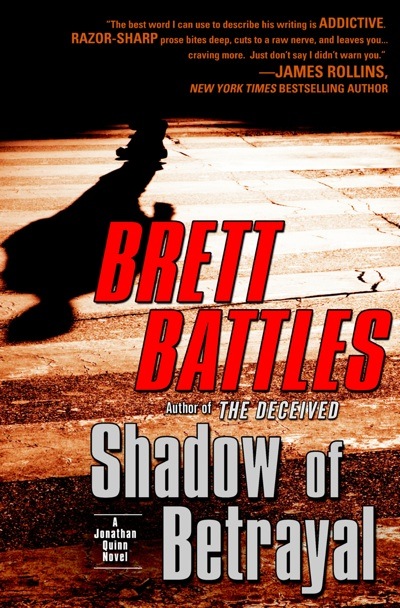
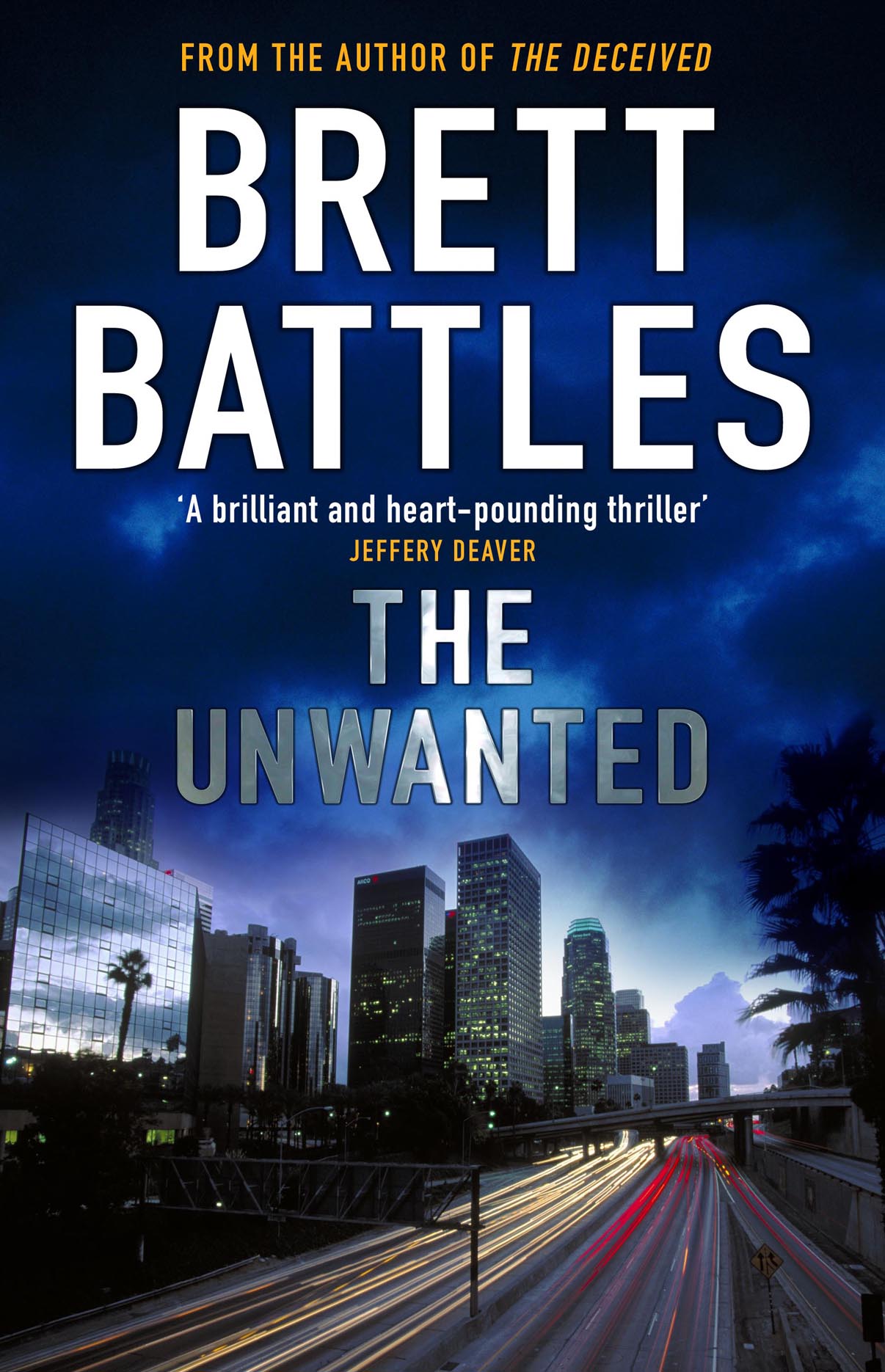
It’s publication time for my third novel, SHADOW OF BETRAYAL, and I couldn’t be more excited. SHADOW hits stores next Tuesday…just in time for Thrillerfest next week, which I will be attending! And for those of you in the U.K., you get it even earlier, albeit under a different title…THE UNWANTED should be available in U.K. store as of today! That’s right TODAY!

“The best word I can use to describe his writing is Addictive. Razor-sharp prose bits deep, cuts to a raw nerve, and leaves you…craving more. Just don’t say I didn’t warn you.” — James Rollins, New York Times Bestselling Author.

About SHADOW OF BETRAYAL

The meeting place was carefully chosen: an abandoned church in rural Ireland just after dark. For Jonathan Quinn—a freelance operative and professional “cleaner”—the job was only to observe. If his cleanup skills were needed, it would mean things had gone horribly wrong. But an assassin hidden in a tree assured just that. And suddenly Quinn had four dead bodies to dispose of and one astounding clue—to a mystery that is about to spin wildly out of control.

Three jobs, no questions. That was the deal Quinn had struck with his client at the Office. Unfortunately for him, Ireland was just the first. Now Quinn, along with his colleague and girlfriend—the lethal Orlando—has a new assignment touched off by the killings in Ireland. Their quarry is a U.N. aide worker named Marion Dupuis who has suddenly disappeared from her assignment in war-torn Africa. When Quinn finally catches a glimpse of her, she quickly flees, frantic and scared. And not alone.

For Quinn the assignment has now changed. Find Marion Dupuis, and the child she is protecting, and keep them from harm. If it were only that easy.

Soon Quinn and Orlando find themselves in a bunker in the California hills, where Quinn will unearth a horrifying plot that is about to reach stage critical for a gathering of world leaders—and an act of terror more cunning, and more insidious, than anyone can guess.

Fast, smart, sleek, and stunning, Shadow of Betrayal is vintage Brett Battles: a gritty, gripping masterpiece of suspense, a thriller that makes the pulse pound—and stirs the heart as well.

After I get back from Thrillerfest, I’ll be going on a mini-West Coast tour. If you’re near one of these locations, stop by and say hi. I’d love to meet you.

Saturday, July 18, 5:30 PM – BOOK LAUNCH PARTY
The Mystery Bookstore
1036-C Broxton Ave. Los Angeles, CA 90024

Tuesday, July 21, 7:00 PM
M is for Mystery
85 E 3rd Avenue, San Mateo, CA, 94401

Thursday, July 23, 7:00 PM
Powell’s Bookstore at Cedar Hills Crossing
3415 SW Cedar Hills Blvd, Beaverton, OR, 97005

Friday, July 24, 12:00 PM
Seattle Mystery Bookshop
117 Cherry Street Seattle WA, 98104

Thursday, July 30, 7:00 PM
Mysterious Galaxy
7051 Clairemont Mesa Blvd., Suite 302, San Diego, CA 92111

Tuesday, August 11, 7:00 AM
Poisoned Pen
4014 N Goldwater Blvd. Suite 101, Scottsdale, AZ, 85251

Saturday, August 15, 2:00 AM
Lancaster Library
601 West Lancaster Blvd., Lancaster

October 15 thru 18
Bouchercon Conference
Hyatt Regency, One South Capitol Avenue, Indianapolis, IN

Saturday, November 21, 9:00 AM
Men of Mystery
2701 Main St, Irvine, CA

And if anyone’s been waiting for the paperback of my second book, THE DECEIVED, it’s now available!

Hope to see you all on the road somewhere!