Author Archives: Murderati Members


So, You Want to Write Noir…

By Cornelia Read

Does anyone remember now whether it was Fran Liebowitz or Nora Ephron who wrote the great series of quizzes with titles such as, “So, You Want to Be the Queen of England…”
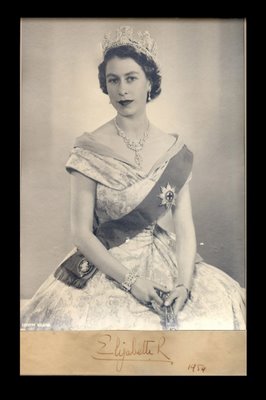
and “So, You Want to Be the Pope…” (My friends call me: a)Sparky b)Bubba c)Supreme Pontiff)

I don’t currently have a clue, and I can’t seem to find my copy of Field Studies to check, but I thought it would be good to offer a similar aptitude test for those considering a career in the Noir Services Industries(tm).

So, You Want to Write Noir…

1. Who killed Roger Aykroyd?

a. Ken Bruen
b. Leonardo Da Vinci
c. I can’t tell you, it would be a spoiler
d. The knitting cat
2. “They threw me off the hay truck about noon” is the first sentence of which classic novel?

a. The Secret of the Old Clock
b. The Woman in White
c. Princess Daisy
d. The Postman Always Rings Twice
3. You come home to find your significant other doing the nasty on the kitchen table with the private investigator you hired. Do you…

a. Pour yourself a slug of bourbon while full of angst.
b. Close your venetian blinds while full of angst
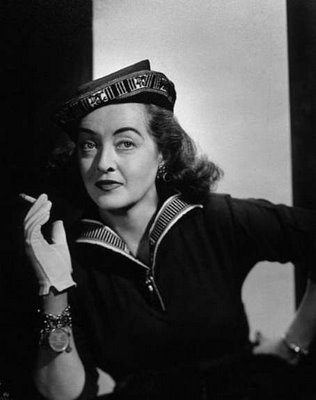
c. Straighten the seams on your stockings, stand dramatically backlit in the kitchen doorway, take one deep drag off your cigarette, and then exhale while full of angst
d. Slap yourself across the face repeatedly, yelling “My mother! My sister! My mother! My sister!”
e. All of the above.
4. Your landlady, a slatternly old drunk, is banging on the door demanding the three weeks back rent you owe her. Do you…

a. Invite her in to join the party
b. Shoot a man in Reno, just to watch him die
c. Tell her you don’t know nothin’ ’bout birthin’ babies
d. Unbutton your shirt, open the door, chuck her under the chin, and ask her where she’s been all your life


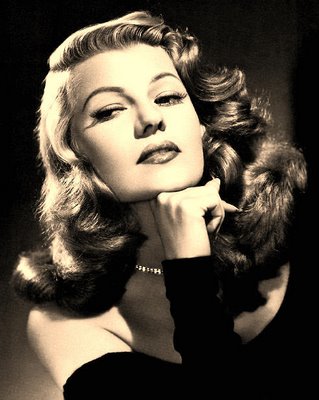
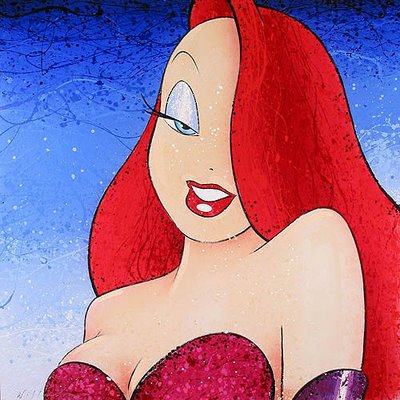
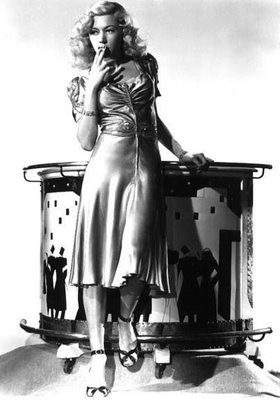
5. Of the following, who’s the most noir?

a. Rita Hayworth
b. Jessica Rabbit
c. Gloria Grahame
c. Claire Trevor
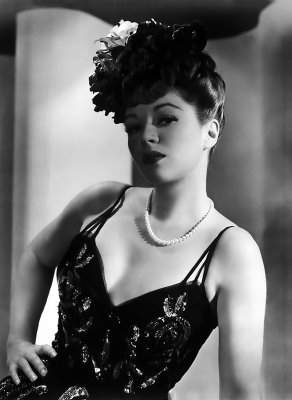
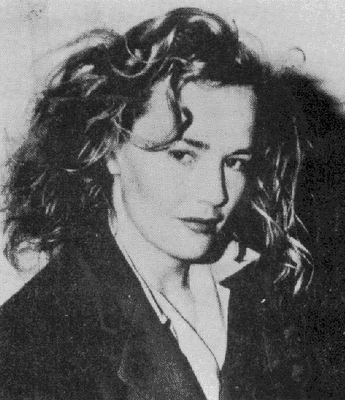
e. Frances Farmer
6. In order to avoid bruising that might harm business, pimps often beat their “girls” employing

a. a towel filled with oranges
b. a roll of nickels in each fist
c. coat-hangers wrapped in cotton batting
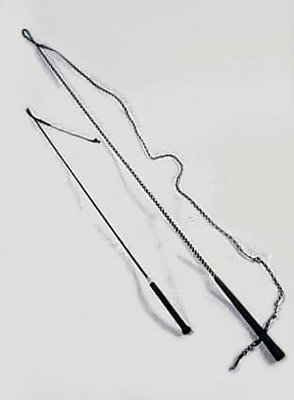
d. dressage whips
7. If you’re “on the gooseberry lay,” you have been…

a. stealing clothes from clotheslines
b. picking fruit as a migrant worker
c. trying to score some heroin
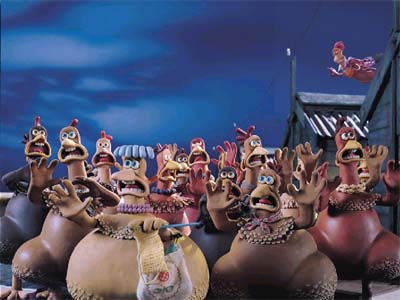
d. breaking into chicken coops after dark
e. Shooting men in Reno, just to watch them die
8. Of the following, who’s the most noir?

a. Charles Bukowski
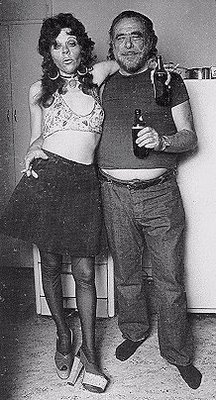
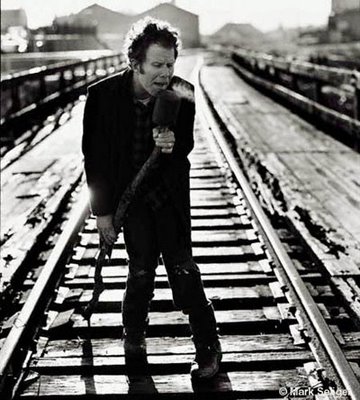
b. Tom Waits
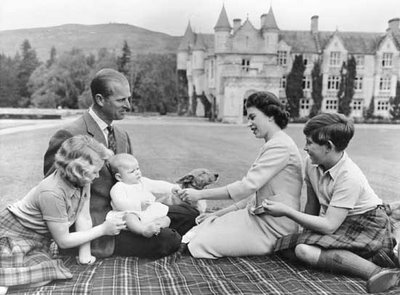
c. Prince Philip
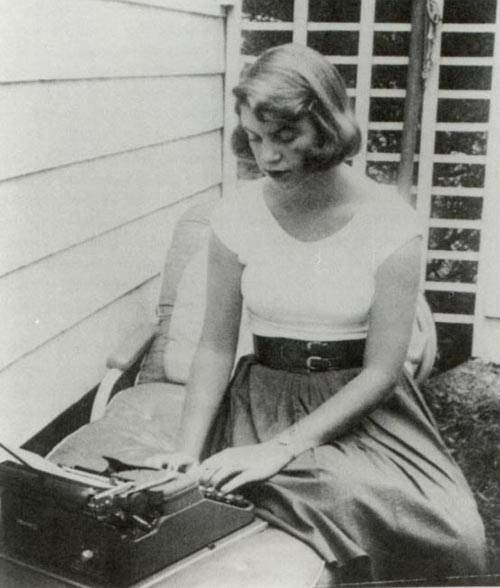
d. Sylvia Plath
9. The line “reader, I married him” appears in which novel?

a. Jane Eyre
b. The Grifters
c. They Shoot Horses, Don’t They?
d. The Magdalen Martyrs
10. Eddie Muller is

a. the fourth Pep Boy that Manny, Mo, and Larry don’t talk about.
b. the Czar of Noir
c. The Sultan of Swing
d. The bastard love-child of Barbara Stanwyck and Charles Willeford
11. Why does “she walk(s) these hills in a long black veil”?

a. because she shot a man in Reno, just to watch him die
b. because her lover’s alibi for the night of her husband’s murder was “I’d been in the arms of my best friend’s wife”
c. Because she was a man in Reno, before the surgery
d. Because she looks good in hats

12. How much does an eightball weigh?

a. one half pound
b. an eighth of an ounce, give or take the weight of the baggie
c. the same as a cueball
d. two keys of Lebanese blonde hash, man
(Lucky Number) 13. What color is a typical nickel bag?

a. silver
b. the same color as a Nation Sack
c. green
d. manila
14. What is the perhaps apocryphal real-life reason that Orson Welles included the word “rosebud” in Citizen Kane?

a. He was a fan of Miss Marple, and gardening generally
b. He still missed his boyhood sled
c. It was William Randolph Hearst’s pet name for a rear nether-portion of Marion Davies’ anatomy
d. He was deeply moved by the poignancy of allegorical chivalric love poetry
Bonus question:

15. Complete the following sentence: “Third boxcar, midnight train…”

a. “…drinkin’ wine, spo-dee-o-dee”
b. “… destination: Bangor, Maine”
c. “…falls mainly in the plain”
d. “…beads and Roman sandals won’t be seen”
Give yourself five points for each correct answer:

1. a 2. d 3. d 4. b 5. e 6. c 7. a 8. d 9. a. (And you lose five points for knowing that.) 10. b 11. b 12. b 13. d
14. c 15. b

How you rate:

0-10: Stick to “cats that knit” as protagonists
15-25: Cheese it, you’re about as noir as Nanny and the Professor
30-40: Go home and memorize some Bukowsky
45-55: Pack your bags, you’ve won a free trip to Angst-erdam
60 and up: Step away from the bourbon… and don’t ever go back to Reno


How’d you do, ‘Ratis?

Four Meals Away From Anarchy

by Zoë Sharp

Monday morning. Just back from a photo shoot over the weekend with numerous images to sort and burn and get in the post on a magazine deadline. I got up with every good intention of getting that out of the way, having my usual blended smoothie for breakfast, doing a few miles on the stationary bike, then cracking on with the rewrites with the iPod on full shuffle in the background.

And then the power went out.

Fortunately, my desktop machine is connected to an Uninterruptable Power Supply, dating back to the time of Windows 95 when, if you suddenly pulled the plug, it tended to get a little … sulky, shall we say.

So, much squeaking and bleeping from the UPS, warning me I had enough time to do a controlled save and exit, but probably not enough to start transferring large images to a back-up drive so I could work on them on my laptop.

Seeing various men in hard hats and United Utilities fluoro jackets wandering about down the lane, I ambled out and asked roughly how long it would be before they had the problem sorted. Slightly Baffled Looks were exchanged.

“Erm, didn’t you get the card?” one asked nervously. “They were supposed to send them out last week. This is an organised shutdown for maintenance work. It’ll be off all morning.”

No, I didn’t get the card, obviously. And using the term ‘organised’ in this context seemed to be overstating the case somewhat, since none of my neighbours had received notification of this impending power-cut, either.

So, back to the strangely silent study and there my creative side really got to work on me.

No power for the blender, so no usual breakfast.

No power for the stationary bike, so no exercise routine.

No music. No Internet. No email. No walkabout telephones. No TV.

OK, so this wasn’t the end of the world. I have a laptop I could have used, but even though the batteries are pretty good on such machines these days, I find it enormously difficult to concentrate when that little battery-life meter is ticking away in the background. But, if desperate, I could have gone and sat in the car and used the cigarette-lighter charger.

As for the Internet, I’m not so addicted that I was prepared to hop into said car and drive to the nearest town where there’s a very nice arts-and-crafts gallery I occasionally frequent, which has self-service cappuccino, free wireless Internet, and half a chance of the kind of cellphone signal we can only dream about at home.

Instead, I resorted to making notes on the rewrites in good old-fashioned pencil, and when I’d gone about as far as I could without typing up the alterations, I sat down and read a book. All this in the knowledge that, if this ‘routine maintenance’ turned into a ‘oops, we’ll be back to fix it in the morning’ we’d be dining by candlelight that evening. (Fortunately, we have a gas hob, so we can still cook.)

And, having been hit by 130mph winds when we first moved into the new house a few years ago – an occasion which resulted in us losing about a third of the roof and having the power off for a week – we discovered that the levels of insulation we’d installed during the build were worth their salt. It was still warm inside after a week with no heat circulating, even in January.

But, I was suddenly aware that, at the flick of a switch, I’d left the technological age of computers and email and instant communication and information behind. Instead, I’d time-travelled back to using a graphite stick on a sheet of paper and the prospect of burning string inserted in wax for light.

It was a sobering thought.

This came at a very apt time, following JT’s recent post, How Technology Is Changing The Face of Literature, in which she particularly mentioned the mobile phone and how its widespread use has to be accounted for. As I mentioned in my own comment to JT’s piece – new technology can be accounted for very easily, because the more we come to rely on gadgets, the further removed we become from the business of day-to-day survival.

Like the cheetah, the fastest land animal. For short bursts, the cheetah can run at up to 60mph (96kph), but in evolving into this sleek speed machine, it has become too lightweight to defend its kills, often expending life-threatening amounts of energy to bring down prey, only to have other scavengers horn in and elbow it away from the table before it’s had a chance to eat.

Not that I’m likening the average human to a cheetah, but it seems that, as a species, we’re in danger of evolving ourselves right out of existence.

Of simply being too clever for our own good.

And that information, of course, came from a quick Google search on cheetahs. When I first started writing, research meant hours spent in the local reference library, not simply surfing the Web from the comfort of your own home. Increasing numbers of libraries have been taking out bookshelves and putting in computer terminals, so has some of that knowledge been lost?

Back in 1975 there was a brilliant TV series on the BBC called ‘Survivors’. Devised by Terry Nation, the concept was that a genetically engineered virus is accidentally let loose, wiping out 95 percent of the world’s population, and leaving the survivors to face both nature and human nature, in their attempts to rebuild a way of life.

Last year, the BBC remade the series, with a new cast and story arcs interwoven with the original ideas.

And it struck me that people thrust into that same situation today would have a much harder time than their 1975 counterparts. Back in ‘75, there were no personal computers, no mobile phones, no satellite TV broadcasting 24-hour-a-day news from around the world, no Internet and no sat nav systems. Domestic microwave ovens were still a relatively new invention, and the majority of people did not rely on them as their sole means of preparing a mind-boggling array of pre-packaged convenience food. People still knew how to meet up at a prearranged rendezvous point without being in constant “Where are you?” cellphone communication. They knew how to read a map, mend their own clothes instead of throwing them away, and could prepare a meal from raw fresh ingredients.

In 2004, there was an article published in The Times, which explained the opinion held by the British security service, MI5, that western societies are ‘four meals away from anarchy’. If there was a terrorist attack, a hacker-instigated computer meltdown, or some other natural disaster that disrupted the electricity, food and water networks, it would be approximately 48 hours before things began to descend into chaos. The panic-buying and hoarding would start, and – when stocks ran out – violent defence of those limited assets would quickly come into play. As soon as people start to go hungry, in other words, civilisation goes out the window.

So, what if Monday’s power-cut had not been a brief interruption, but the start of a global catastrophe? Then what would I have done then?

What would YOU do?

You need transport, but cars need fuel. With no power, you need to hand-crank the fuel out of its underground tanks and hoard it, because the refineries have shut down and there won’t be fresh supplies being delivered any time soon. And no doubt a lot of other people will have the same idea …

And cars have become a disposable item. Could you mend yours if it went wrong? No mechanics to take it to, no computer diagnostics at the local dealership to pinpoint the problem. So, maybe you need to resort to more primitive means. Can you ride a horse? Do you know how to feed and care for one? And, even if you do, can you also act as your own veterinary surgeon and farrier?

What happens if you get sick? No Googling the best form of treatment, no paramedics or surgeons, no modern anaesthetic or drugs.

Could you make a fire, build a shelter, identify what’s safe to eat in the wild or what will kill you stone dead? Can you fend off predators – human and animal?

Processed food in the supermarkets – always supposing they haven’t been picked clean by looters by now – has a sell-by date. What happens when it’s all gone, or gone bad? Could you grow enough food to sustain you and your family? Could you catch, kill, and butcher an animal to eat?

Could you kill another human being to defend what’s yours?

OK, I’ll stop now. This is what happens when I let that writer’s ‘what if’ side of my brain loose to run with an idea.

A few last questions. If society as we know it ended tomorrow, what would you miss most?

What about modern life would you be rather glad to see the back of?

I’m on the road today, travelling down to the CrimeFest convention in Bristol, which looks like being an enormous amount of fun, but I’ll try to respond to comments as soon as we get to the convention hotel this evening.

And next weekend, of course, I’m off to Mayhem in the Midlands where I am delighted to be the International Guest of Honour, but that, as they say, is another story.


Meanwhile, this week’s Word of the Week is facinorous, which means atrociously wicked, from facinus, a crime.


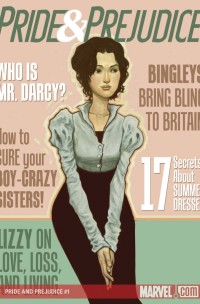
In Which I, A Manly Man, Read the Ultimate Chick Book

by J.D. Rhoades

When I told people I’d finally gotten  around to reading PRIDE AND PREJUDICE, most were puzzled. “Why are you reading THAT?” some ask. After all, I am, as you all know, a manly man, and PRIDE AND PREJUDICE is the ultimate chick book, right?


+


=

?


Nevertheless, I did read it, and I did so for a number of reasons:

  • I’d just read William Gibson’s SPOOK COUNTRY, and while I liked it a lot, I was in the mood for something completely different;
  • I was also in the mood for something more classic, I’d read all my Twain numerous times, and I just wasn’t up for CRIME AND PUNISHMENT quite yet;
  • I’d heard many friends (almost all of them female, it’s true, but a couple of men as well) rave about what a great book it is;
  • I may want to read the new PRIDE AND PREJUDICE AND ZOMBIES send-up and I wanted to make sure I got the jokes;
  • It was right there on the bookshelf, so I thought “”hey, why the hell  not?”

Anyway, I finished it last night. and quite  enjoyed it. A few observations, jotted down as I read:

  • Why didn’t anyone tell me the book was this funny?


  • I particularly liked Mr. Bennett. He handles the travails of dealing with a house full of marriage-obsesed women pretty much the way I hope I would: with deadpan wit and gentle mockery. He obviously adores and sympathizes with his daughter Elizabeth, and the scenes between them are some of the sweetest in the book. But dear lord, his wife is just awful. I want to kick her down a flight of stairs.


  • I’m not sure why Mark Twain had such an antipathy to Jane Austen. He once mentioned in a letter to William Dean Howells that “Jane is entirely impossible. It seems a great pity that they allowed her to die a natural death.” In another letter to Joseph Twichell, he claimed that “Every time I read ‘Pride and Prejudice’ I want to dig [Austen] up and beat her over the skull with her own shin-bone.” Whoa. A little harsh there, dude. And puzzling as well. Both Twain and Austen have a similar dry wit, as well as that wonderful gift of lampooning ridiculous people by just letting them speak in their own voices.
  • Everyone seems to use the word “amiable” an awful lot. In fact, it seems to be a prized quality in a spouse. I guess they had a lot lower expectations in those days. I mean, I’m pretty damn amiable and always have been, but I don’t recall women beating down the doors to marry me.
  • Okay, wait, Collins wants to marry his cousin and DeBourgh wants Darcy to marry his? What the hell is this, West Virginia?


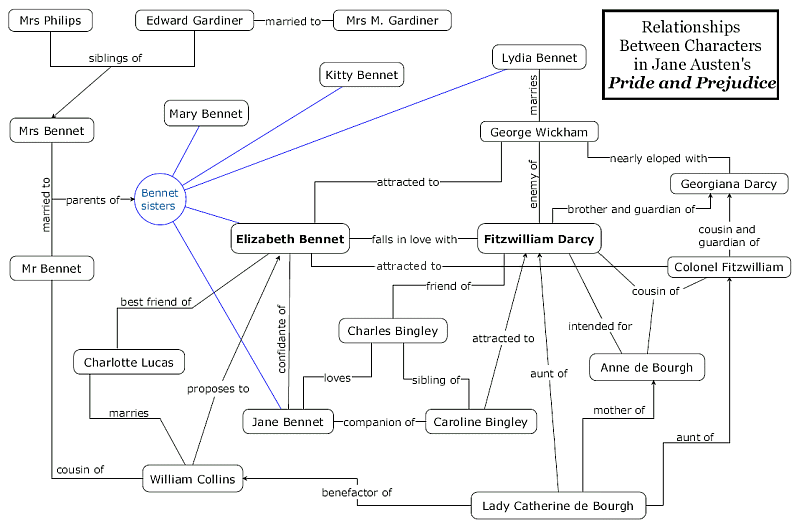
  • Man, I need a scorecard to try to keep all these people straight. (Fortunately, there’s a chart at Wikipedia.)


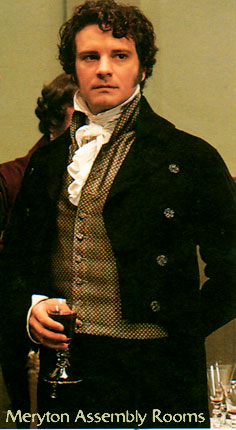
  • I’m not sure how much of the female fascination with the character of Mr. Darcy comes from the hunkiness of the actors who’ve played him in films and on TV, most notably Colin Firth. Because I’ve got to tell you, the guy doesn’t come off all that well on the page. To be frank, he’s kind of a dick. Sure, he does the right thing in the end, but he never gets around to removing the large stick he has up his ass. This is not, in short, I guy I’d be eager to have a beer with. Maybe the female readers can enlighten me.


  • Austen has kind of a tough row to hoe here, story wise. Her characters, due to the strictures of their society, can’t actually take much of a hand in solving their core conflicts (not if any reader is  going to believe them). They spend much of their time waiting  for someone else to move and worrying about what’s going to happen. Their Happy Ever After is largely dependent on what others do. So what you get is a lot of chicks walking around and talking. They talk real pretty, mind you, but this sort of thing can only carry you so far.

On the whole, though, I enjoyed it. I’m not going to run out and read SENSE AND SENSIBILITY or the rest of Jane Austen’s oeuvre right away, mind you, but PRIDE AND PREJUDICE was fun.

And now to the discussion: what book have you read that’s farthest out of your usual genre or preference? Why did you read it? Did it change your perceptions any? Did it give you a fresh look at what you normally write or read? How do you solve the problem of keeping the story moving when your characters can’t move, at least not much? And of course if anyone wants to set me straight on PRIDE AND PREJUDICE or tell me what a doofus I am for not seeing teh hotnezz  that is  Mr. Fitzwilliam Darcy, feel free.


A Hole In The Air

By Louise Ure

I’m almost at the end of the book tour for Liars Anonymous, and so far there have been nothing but high points. Gracious booksellers. Old friends with beaming faces. New friends who read a review and thought they’d like to hear more. It makes me feel like Queen for A Day.

It’s been long driving days and early plane departures. Days when a can of V-8 juice is called a meal and three hours is called a night’s sleep. There’s nothing luxurious about travel anymore.

I’ve loved this trip. A chance to visit towns I used to live in and see high school friends who disappeared from my life forty years ago. At the signing in Seattle, we had the twenty-year reunion of what was then a far-flung branch office of Foote, Cone & Belding Advertising. I was the only one without big hair back then. Not so much today. In Phoenix I connected with the daughter of the family that used to live across the street from us in the 50’s. She’s on Social Security now, of course. I didn’t recognize her.

But it was Tucson that scared me.

My 93-year old mother in Tucson died eight weeks ago. Except for the funeral, this was my first trip back without her there. And the lack of her left a hole in the air.

It was a twitch in my finger as I reached to call and tell her when I was coming in. It was a moment’s hesitation as I packed the concho belt she gave me. It was a shudder as I made a mental note to tell her about the email I got from that lady across the street.

Until just a couple of weeks ago, I’d only had to talk about her in letters, blogs and emails. I still hadn’t said it out loud. One Saturday in April, when a well-meaning friend I hadn’t seen for a couple of months asked how my mom was doing after the fall that broke her hip, I sputtered “She’s dead.” As if that answered the question. I need to learn how to say it out loud, and say it in a way that wouldn’t terrorize the gentle questioner.

What ithe hell would I do when I drove down that street and faced the emptiness of her house for the first time? Would the driveway feel different? Would the light be flat without her? And what about the signing at Clues Unlimited? Would I still imagine a small, shadowed form in that highbacked armchair they set aside for her each year? Would I be able to say anything at all to the assembled friends and family?

Will they even be there without her – the hub that held our wheel together.

In hindsight, now that I’ve been there and come back, I shouldn’t have worried. The worst had already happened — she’s gone. Nothing that happened on this trip would be worse than that.

The crowd at Clues Unlimited was huge, even though the bookstore had relocated only eight days earlier and lots of folks hadn’t gotten the word about the new address. But there were three of us Tucson authors signing — Mike Hayes, Elizabeth Gunn and me — so that swelled the ranks. And because the venue had changed, so had my expectations about remembering mom in that high-backed chair. (It would have helped if my books had arrived before the event, but Chris promised to mail out a signed copy to anyone who purchased that night. I hope that makes it up to the dozens of friends and fans who drove over a hundred miles to get there.)

And yes, the air does feel different without her, but it’s different in a way that still lets you enjoy a deep breath. Taste the warm wind … and exhale.

I told my sister that I would go back out to the cemetery to make sure they hadn’t put the stone marker in place yet. I know that seems strange, but my mom and her 94-year old sister were to be buried together, and the 94-year is still going strong and didn’t want to visit the grave and see her own name already there awaiting a final date.

 It was Mother’s Day Weekend, don’t you know, and there were lots of other cemetary visitors stopping at tombstones etched with words like “Loving Daughter of …” and “Beloved Mother of …” The grass was browner than the day we buried her, and there’s a shallow indentation there now to show she’s settling in to her new home. I, too, was hoping there was no marker in place yet. Without a name above that swale, it would have been easier for me.

Alas, Holy Hope cemetery is run by cretins, so the marker is there with both my mother’s name and my aunt’s, lacking only that final date for my aunt to contemplate her demise. A pox on them.

I had wanted to see my mother open the cover of Liars Anonymous and read the first page. That’s all the farther she ever got with the first two books, too, her Alzheimers stopping her after a hundred words or so and resetting the timer. It always made me want to get the openings just right, knowing that she’d read each one a thousand times, and a thousand times lift her head and read it out loud with new found pride and amazement.

There’s a hole in the air now, and I’ll never hear her read, “I got away with murder once but it doesn’t look like that’s going to happen again. Damn. This time I didn’t do it. Well, not all of it anyway.”

She’d have liked that opening.

PS: I’m on the road today, but will be checking in from my iPhone. Expect lots of typos in my replies to your comments.

What do you want?


by Pari

Actually, let me start with a couple of other questions before we get to the one in the title of this particular blog.

Here’s an easy one:  Am I insane?

Short answer: YES.

Hello. My name is Pari Noskin Taichert and I’m a volunteer slut. I just don’t know when to stop! Where is the twelve-step program for THAT?

You see, I’ve just agreed to chair Left Coast Crime 2011. It’s going to be in Santa Fe and will be the weekend of March 24-27-ish (Make your plans now. Start saving and register early.). Although we haven’t quite committed in writing, I can tell you that the hotel where this LCC will be held is absolutely marvelous – pure New Mexican, historic, magnificent location, utterly charming.

It’s also small – perfect but small (as are most things in Santa Fe with any true SF history) – and that means that many, many of the attendees will have to stay in other hotels close by. I can feel the headaches before we’ve even signed any agreements.

Yeah, I know.

What the hell was I thinking?

The funny thing is that I accepted because I think it’ll be a wonderful and interesting challenge to come up with a venue, program, Guest of Honor, etc. all of which will truly show off the New Mexico I know and love.

When I was first approached for this responsibility/opportunity, a close friend said to me, “Are you stark raving mad?” And after she calmed down: “Think of the PR opportunities.”

In truth that’s not why I’m doing this.

I’ve now been in the writing business long enough to have healthy skepticism about PR & networking resulting in more than PR & networking.

We writers need sales. I doubt anyone is going off to buy my books today because I’ve chosen to take on this task.

And I have to live with a certain cognitive dissonance about all of this too. Hypocrisy even. Because I’ve blathered passionately right in this blog about trying to cut out distractions in my life.

Great job, Pari. Wonderful way to bring peace and quiet to your life.

Okay. Enough about me . . .

I have a few important questions for you.

WHAT DO YOU WANT?

For people who’ve attended a mystery convention:

  1. Does the Guest of Honor, Toastmaster etc. really matter? (Are they deal makers or breakers when you’re deciding about conventions?)
  2. What kinds of panels or other programming do you adore – or abhor?
  3. What subjects would you most like to see explored in programming at a con?
  4. Would you prefer an awards dinner (if we could make it fast and fun) or a Sunday brunch?

For those of you who’ve never been to a convention:

     1. What might entice you to come?
     2. Do you understand the why of mystery conventions, that they’re for fans and authors to get together?
     3. Do you have any questions about them right now? (Maybe some of us can offer a good perspective.)

To all of you:

Thanks

. . . and wish me luck.


Music and the Muse

In April of 2007, I bought my first iPod. It was the fifth generation, on which I could watch television shows and movies as well as listen to music and play games. I bought it primarily to watch the second season of my favorite show, SUPERNATURAL, and the first season of HEROES so I didn’t have to wait for the DVD set to come out the following fall.

Between my husband and I, we had a lot of records and CDs. Because you are allowed to make an archive version of purchased music, I downloaded my favorite albums onto my iPod. But I didn’t actually expect to listen to the music while writing. I first plugged my iPod into my car to listen to the audio version of ON WRITING by Stephen King–read by Stephen King. If you like this book, and enjoy Stephen King, you’ll LOVE him reading it. It was as if he was sitting in my passenger seat talking to me like an old friend. And I’m not usually a fan of audio books because I can read faster than I can listen.

I was writing at Starbucks at the time, and eventually started bringing in my iPod without much thought. I realized over that summer that I found I wrote faster when I listened to music. In fact, harder and louder the rock, faster I wrote. So I went home and spent a fortune on iTunes buying favorite songs that I didn’t have on CD. My library is now over 1300 songs, though there’s roughly 250 that I listen to far more than the rest. (For example, I love Pink Floyd. But Pink Floyd is album music, and you have to listen to the entire album. For some reason, I find this distracting when I’m writing.)

I’ve realized that it’s partly to trick my mind–if my ears are focused on music, I’m not eavesdropping on conversations around me. Or distracted by birds chirping outside my home office. (I found out real quick that there’s a big difference listening to music through earbuds and listening through home stereo speakers. Only the earbuds work to focus my writing.)

When I have my earbuds in–and I invested in real nice, clear Bose earbuds–I hear and see nothing but the story in front of me. Amazing when you think of it — I thought music would be distracting. But I’m not actively listening–the music is simply in my head, giving part of my mind something to do so it doesn’t distract me from the story. Sounds strange, I know. I think because I’m so used to multi-tasking–not just as a mom, but in my previous career in the Legislature when I was used to juggling many projects and thinking about one thing while doing something completely different–I find it hard to focus on just one thing. The music helps me do that.

When talking to writers, I’ve found there are just as many who need complete silence or white noise–our Rob is one–in order to write as there are those who need music. And those who need music, there are about as many who can only listen to instrumental and those who need songs with lyrics. I’m someone who needs songs with lyrics. I think this is because instrumental music is distracting because I’m making up a visual story to go with the sound; with lyrics, that story is already there. And because I know the songs so well, the lyrics almost disappear. 

My 5th Generation iPod crashed and instead of getting it fixed, I bought the iPod Touch. I love it. (Well, I love everything about it–the sound, the calendar, the games–except for the sucky battery life.)

To celebrate my new toy, I created a playlist of music from my favorite television show, SUPERNATURAL, largely because the program plays music that I like. I bought some new stuff–songs written in the 2000s. For me, this is huge because I’ve always believed that no good music was made after about 1983. (I credit my oldest daughter with my ability to expand my musical horizons. She introduced me to some terrific, new rock music. So I can now listen to Led Zeppelin in the same playlist as 3 Doors Down; and Katie is one of the few teenagers who appreciates classic rock. She created her own playlists on my iPod and my husband’s iPod so when we drive together, we listen to music we both like.) Some of the songs are not available on iTunes, so I’m debating buying the CD. Some of the songs not available I already had–like AC/DC.

Right now I have 46 songs on this playlist, and I’m adding to it every week. “Oldies” like BAD MOON RISING by CCR; CARRY ON WAYWARD SON by Kansas; RENEGADE by Styx; STRANGLEHOLD by Ted Nugent; and TURN TO STONE by Joe Walsh. And “Newsies” like EVERY ROSE HAS ITS THORN by Poison; SUPERMASSIVE BLACK HOLE by Muse; SPEAKING IN TONGUES by Eagles of Death Metal; and MEAN LITTLE TOWN by Howling Diablos.

I think one of the reasons I’m so tickled about finding new music that I like is because for the longest time I believed that only rap was produced for the last ten years. Lots of people–particularly young people–love rap. Great. But I don’t. If it comes on the radio station my teens like, I hit the classic rock station without hesitation. Because while there is some popular music I can tolerate, rap ain’t it.

My oldest daughter is a music addict. So much so that she did her science project on whether music had an impact on the behavior of goldfish (I still have two of the four alive in a bowl in my office . . . ) She learned they don’t like hard rap music anymore than I do–they swam erratically at the bottom of the bowl. And they love the Righteous Brothers and swam smoothly, using the full bowl. At least, that’s our story 🙂

For fun, I went to my “Top 25 Most Played” songs and was surprised at the rather eclectic top ten:


  • Sweet Home Alabama Lynyrd Skynyrd
  • I’m Shipping Up to Boston Dropkick Murphys
  • We Used to Be Friends  The Dandy Warhols        
  • Sunday Bloody Sunday  U2        
  • I Hear the Bells Mike Doughty
  • Carry On Wayward Son Kansas
  • Bohemian Rhapsody Queen
  • Rocky Road to Dublin Dropkick Murphys
  • Spybreak (Short One) Propellerheads
  • Tom Sawyer Rush


Some of the Top 25 surprised me (like #21 “Every Day I Write the Book” by Elvis Costello.) There’s one thing that the top 25 songs have in common–they made it onto multiple playlists. And I wouldn’t be surprised if they changed over the next few months . . . 

Does music help you work, whether you’re a writer or not? What are your top five most played songs on your iPod (if you have one) or what CD is in your player? 

(As an aside . . . recently my husband bought a thingie to plug a turntable into the computer to burn CDs because, alas, we don’t have a record player anymore. Can you even buy records anymore new? I don’t think so. When my 15 year old came into the room while he was lovingly fondling the ancient vinyl, she asked, “What’s that?” And VCR tapes are fast becoming obsolete as well. Does anyone remember 8-tracks tapes? My mom had a car with an 8-track tape player. Yep, I feel old. And I had a black-and-white television until I was five.)

Location is a character.

by Alexandra Sokoloff

One of the things that you hear ad nauseum in Hollywood story meetings is:  “And I think Seattle (Rome, San Francisco, New York, L.A., Akron) should be a character in this movie!”

Not that it’s a bad note (although it’s funny how you can predict who will say it, and how you, the writer, must always pretend that it’s the most brilliant and startling idea you’ve ever heard).   It’s just that to me this is so obvious I don’t know why anyone would ever have to bring it up.   It’s like saying your story needs a plot.

Of course the location is a character.

This is excruciatingly crucial when, like I do, you write on the supernatural side, and it must seem that the very land and/or city, and/or house (or in my current WIP, boat), and elements are conspiring against the human characters.   There are vast forces at work, and they have their own intelligence.

But it’s not just in my genre.  I think one of the key promises of a novel, any novel, any genre, is that it takes you, the reader, away from wherever you are.   That’s one of the main reasons we read, isn’t it?    And even when you, the writer, are writing the darkest of dark stories – set in a prison, or in the middle of war, or an impoverished country, or a supernatural dystopia, your reader, for whatever twisted reason, is picking up that book to BE THERE.    And it is one of your non-negotiable jobs as an author, or filmmaker, to take them there – completely out of their own body, their own house, their own city, their own reality, and into yours.

“Yours”  being the operative word, here, because it’s not enough to say that the story is set in Boston and leave it at that.   It has to be your Boston, or your character’s Boston.

“What is it about Boston for you?” a friend asked me recently, as I just finished another book set there.

It’s true, Boston is one of MY cities.   Along with London, San Francisco, Berkeley, and Death Valley.   Well, that’s not a city.   But you know.   

My friend really asked the key question, the question every writer should always ask her or himself about the location of his or her story:   “What is it about Boston (or whatever)  for you?”

Boston is one of those places that I fell in love with the instant I landed in it.    It is so twisted, Boston – literally and figuratively… the streets were built along meandering cow paths.    They make no sense at all.    You round a corner and you could be anywhere.   Or anytime.

And then all of that history – the cradle of the Revolution! – and intellect, and literature, and music, and art, and cathedrals, and witches.

Aha.   That’s a lot of my personal take about Boston, right there.

For someone like me, obsessed as I am with the devil, Boston is a gold mine.   I can write stories about the devil and witches walking around in that city, with the utmost confidence and realism, because they have, and they do.

Here’s another example.   Synchronistically, this post turns out to be a great follow up to J.T.’s delicious account of her trip to Napa.    Napa is (in spades!) a region with character.   It reminds me of the overwhelming influence of the vineyards and wine-tasting imagery  that Alexander Payne portrayed to perfection about Central California’s wine country, Sideways.    For native Californians, Payne hit every iconic location he could cram into that story; we have all done all of those things, repeatedly  (the only thing he left out was the Madonna Inn, which is a whole movie in itself.)   The themes of alcoholism and creative inspiration and California excess are pillars of the movie, and the wedding and road trip themes are also completely in line with the mythology of wine country (if I had a dollar for every vineyard wedding I’ve attended… every road trip I’ve taken through Central California… ).    And it’s no accident that the characters are a (failed) writer and a (failed) actor – that is mythically  Californian.    Payne captured the unmistakable character of that region, as well as making it his own.    If you want to know what it’s like to live in California, watch that movie.

My new thriller, The Unseen (out this month, for all of you who have been waiting with bated breath) has North Carolina as its character location, and oh, boy, is it a character.   Now, I could not have begun to do that story justice from the point of view of a native Southerner  – because in case you haven’t noticed, they’re all crazy.  😉

But I could tell it from the point of view of a fish out of water, a Californian transplanted to the South, and experiencing the whole state for the first time.   And that point of view I think achieves a quality of isolation and alienation that’s very useful in a supernatural thriller.

 Doing my research and being true to the reality of the place was, for me, key.    The story is based on real-life experiments done in the Rhine parapsychology lab on the Duke University campus,  and I could not have asked for a more Gothic and spooky and atmospheric college to play with.    I felt like I was tripping, walking around that school for the first time, it’s that perfect for the book.   

The overwhelming forests of North Carolina (I’ve never seen so many trees in my life) were another great atmospheric element.   You can hide virtually anything in those damn trees.   For a child of the Southern California desert it’s terrifying not to be able to see vistas, and those endless forests are the labyrinth (with all of its mystical implications) that is so much a part of my personal thematic imagery.

Since the story is about a poltergeist house, I had to create a poltergeist house that was absolutely a character in its own right.    One that I could know the shape of like I know the lines in my hand – every room and hall and stairway and imprint.

And because writing is magic, I found the absolute perfect haunted mansion:  the Weymouth Center, and was actually able to live there for a whole week.

It’s a  real haunted house with an awesome backstory; it was one of the “Yankee Playtime Plantations”, the Southern manors that were bought up after the war by newly moneyed Northerners and turned into hunting lodges and sex retreats.   I mean, vacation houses.    This one was also a hangout for literary lions such as F. Scott Fitzgerald,  Thomas Wolfe, Sherwood Anderson,  and “editor of genius” Max Perkins.

And oh, you bet that vibe permeates the manor and grounds.   The house is not just creatively inspiring in the day and completely terrifying at night… it’s  also a total turn-on.   My haunting turned much more erotic than I was expecting, because that’s what was actually there in the mansion.   Really.   It has nothing to do with me.

We are so lucky that as authors our job includes traveling to and
experiencing as many different places as we can get to.   Free research!   We are even more lucky that so many of the conferences and conventions we attend (Left Coast Crime, Bouchercon, ALA, PLA, World Horror Con, World Fantasy Con, Romantic Times, Romance Writers of America National)  “force” us to travel to different cities every year, thus providing whole universes of research with the price of admission.   If you’ll take a look, every single one of those cons goes all out to provide field trips specific to the city and area, as well as seminars and field trips by, for example: law enforcement officials who speak about the particular issues they deal with on their turf and famous criminals and crimes of the region;  ghost walks through the cities; and tours of the host city’s most interesting features (like the underground street in Seattle at a recent  LCC).   No matter how overbooked I am at a conference, I never miss the city tours and local law enforcement tracks.

It’s a beautiful system.   We can promote our books, meet with our agents and editors, and do all our location research in one weekend.

Because you never know when you’re going to need the character of  Denver.   Or Phoenix.   Or Napa.   Or Madison.   Or Indianapolis.   Or New Orleans.   Or the Big Island.   Or….

So tell me, ‘Rati writers and readers.   What are your favorite cities, or regions?   What books and authors portray location as character particularly well?   What do you authors do to create the character in your location?  Or what convention have you been to that’s given you the best character introduction to a city you’ve ever had?

– Alex

Screenwriting Tricks for Authors

A Family Story

Before I start…wanted to let you know I’m holding another sweepstakes to win an advanced copy of my new Quinn novel SHADOW OF BETRAYAL, due in stories July 7th (July 2nd in the UK under the title THE UNWANTED.) Details here.


By Brett Battles


This week my parents are up in Seattle visiting my mom’s dad. He’s going to be 97 this summer, and while he’s obviously been a pretty hearty guy, he’s starting to slowdown. Still, come on…97? That’s some pretty good gene stock to be from. Way to go grandpa!

Even more interesting? Until about 12 years ago, he wasn’t even part of any of our lives.

See my grandmother was a bit of a flighty gal, God love her. By the time she died, she’d been married 3 times. The man I now know as grandpa was the first. He apparently came around during a break grandma was having with her boyfriend, a guy she got together with again after grandpa was out of the picture. Boyfriend, a nice guy my mom tells me, became husband #2.

That didn’t last either. After he was gone, and this was when my mom was still a girl, grandma met and married the man who would stay with her to the end, the man that for many years I thought was my mom’s dad, not step-dad.

Husband #3 was one of those step-parents who insist that they come first ahead of pre-existing kids…in other words my mom. For some reason, my grandmother indulged him. Needless to say, he and my mom didn’t have the best of relationships.
For some reason, my mom’s step dad took a liking to me, and we bonded over a love of baseball, so I have nothing but good memories of him. But if you ask my brother and sister, their experience with him was much the same as my mother’s growing up.

Anyway, circling back to husband #1 – the man I now know as grandpa. It was the mid 1930s in Los Angeles…depression time. Grandpa was having a hard time finding a job, plus I have a feeling he could already read the writing on the wall, so he picked up and moved back to the northwest where he had family and knew he could get work. He did ask his pregnant wife to come with him, but grandma had no interest in moving out of L.A.

So that was the end of that.

Unlike these days, it was very easy back then to loose touch. And that’s what happened. Grandpa, who was a thousand miles away when his daughter was born, did exchange a few letters with my grandmother’s sister, but after a while even that stopped.

When I first heard that the grandpa I knew wasn’t my mom’s biological dad I was probably 15. My immediate reaction was, of course, surprise. Over the years since then, I’ve made the suggestion now and then that she should try to find her biological dad. For years she said she might, but I could tell she was reluctant, so I didn’t push too much.

Then, after my grandmother passed away, I got a call from my mom. She told me she’d hired a company that looked for people. Within less than a week they had an address for the man who had moved away before she was even born. We were all surprised that he was still be alive, it meant he was somewhere in his eighties…(turns out he was 85 at the time).

Mom hesitated again, just a little bit this time, but finally wrote him a letter. I believe he called her right after receiving and reading it. And the next thing we knew, he’d driven down from Seattle to my parents’ house in California.

To my mom’s credit, though she had some tough questions about why he never got back in touch with her, she put that to the side. It helped that Grandpa is actually a really nice guy, and easy to like. In the twelve years since they reconnected, their relationship, and all of our relationships with him, have deepened.

And, on top of everything, we have this really cool family story now.

While this probably sounds like it’s a post about my grandfather, what it’s really about is my mom – the life she had to put up with, the willingness to take a chance and reach out, the ability to put old hurts aside, and, ultimately, the decision to not let any of the bad stuff affect her outlook on life.

She’s been one of my biggest supporters, always encouraging my writing and anything else I wanted to try. In fact, and this is a true story, after they named me when I was born, she said to my dad, “Brett Battles…that would be a great name for an author.” HA! Hilarious, but true. I guess I was predestined from almost Day One. Everything I’ve become is due in large part to my mom.

Thanks mom, and have a great mother’s day!

Against the Wind

by Rob Gregory Browne

IMAGINE THIS SCENE FROM A MOVIE:

It’s 1983.  A woman sits behind a typewriter, finishing up a page.  When she’s done, she types THE END, pulls the page out and adds it to a large stack next to her on the desk. 

She smiles, then goes to a liquor cabinet, pulls out a bottle, and pours a drink to toast a job well done.

All is good in her world.

NOW IMAGINE THIS ONE INSTEAD:

It’s 1983.  A woman sits behind a typewriter, crying her eyes out as she finishes up a page and types THE END.  She pulls the page out, adds it to the stack on her desk, but she’s crying so hard that she has to blow her nose.  She reaches for a tissue, but the box is empty.  So she gets up, still sobbing, and goes to the bathroom, looking for some toilet paper.  The roll is empty.

Moving about the house, she steps into the kitchen and grabs a note off the refrigerator — one that says BUY TOILET PAPER — and uses it as a makeshift kleenex.  Then, moving back into her living room, she opens a cabinet, pulls out a tiny bottle of “airplane” liquor, intending to use it for a toast, but when she tries to get the cap off, it won’t budge.  It takes all of her strength to get the cap loose and she finally makes her toast.

And it’s quite obvious that this woman is a complete mess.

Okay.

Now, tell me, which of these scenes would you rather watch?

Me, I’ll go with the second one.  In fact I have, in a wonderful movie called Romancing the Stone.  And I think most people would be much less inclined to fall asleep during version two than they would if subjected to version one.

Version one just sits there.  LAYS there, in fact.

Why?

Because it has no conflict.

As you may have guessed by now, I’m piggy-backing on yesterday’s post by Tess.  I was so struck by the aspiring writer’s attitude that I couldn’t contain myself to just a comment.

I needed more space.

And while I was certainly struck by the refusal of the woman in question to face reality and take the advice of the multitude of people who had tried to give her constructive criticism, what got me most of all was her insistence that her story just didn’t need any conflict.

I’m sorry — what was that again?

Conflict is the cornerstone of storytelling.  Conflict is what grabs our interest, makes us want to continue watching or reading.  And this isn’t just limited to movies and novels.

How many of us would watch the news if all we saw were happy, feel-good stories?  People THRIVE on conflict, and the person who suggests that her story doesn’t need it, is completely out of touch with what good, solid storytelling is all about.

Your basic plotline — no matter what kind of book you’re writing — always centers around characters in conflict.  There’s usually both an internal conflict AND an external one.  And the external conflict should challenge or contribute to the character’s internal conflict (and probably vice versa).

Otherwise what is the point?  If you give me a story about two people sailing through life without a care in the world other than they can’t make up their minds, then I might as well watch paint dry.  I need something in that story to grab me by the heart or the throat, to give rise to my emotions.  To make me laugh and cry and root for the hero.  And if all the hero is doing is contemplating his or her navel, then, please, get me the hell out of there.

Now, to be fair, none of us really knows what this woman’s love story was about.  And just because she wasn’t able to articulate the premise in a few sentences, does not mean it’s terrible.

But based on her apparent disdain for the concept of conflict, I’d say the chances are pretty good that it won’t set the publishing world on fire.  Many of you said as much.

So does this mean that all love stories suck?  Of course not.  Some of the greatest stories ever told have been love stories.  There are a boatload of pretty wonderful romances — the books this woman so despises — out there, and they have conflict up the wazoo.

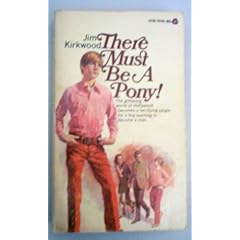
What about coming of age stories?  Again, no.  They don’t all suck.  One of my favorite books of all time is James Kirkwood’s There Must Be a Pony, about a teenage boy coping with a troubled, movie star mother.  Kirkwood was a wonderful writer who certainly understood what makes a good story tick.

There is a writer/teacher, now dead, whose name unfortunately escapes me at the moment (maybe someone can remind me), who likened a story to a basketball game.

You have opposing characters.  Two teams.  Each of those teams has a goal:  to make as many points as possible by putting a ball through a small “basket” at the opposite end of the court.

But because these teams are both determined to get the most points, one side puts up all kinds of obstacles to try to prevent the other side from reaching their goal.

This is conflict at its finest.  Its most compelling.  And if you have a vested interest in one of those teams, you will scream and cheer and jump up and down whenever they encounter and, hopefully, overcome those obstacles.

If all you had was a single team bouncing a ball down the court with no one to challenge them —

— nobody would watch.

And it’s no different for storytelling.  Your characters must have a goal — no matter how trivial it might seem — and they must have strong opposition to that goal.

Conflict is one of the most essential elements of telling a good story.  Sharing that moment when a character overcomes conflict is what lifts us.  What thrills us.  What sends us soaring.

As Hamilton Mabie once said, “A kite rises against, not with, the wind.”

And anyone who doesn’t — or refuses — to understand that had better learn it fast or give up storytelling altogether.


Won’t take advice? Good luck.

 by Tess Gerritsen

I’m a big fan of persistence.  Anyone who’s listened to me talk about what makes a writer successful will almost always hear me say that persistence is one of the characteristics of the successful author.  The business is designed to weed out those of us who don’t have the determination to keep writing, through rejection after rejection.  But the flip side of persistence is sheer, blind stubbornness, and that is just as likely to doom your chances of making it as a writer.

            I ran into just such an example of blind stubbornness a few weeks ago.  I was attending a writing conference and had the chance to meet many aspiring novelists. Over lunch, I got into a conversation with two of those unpublished novelists, and asked them  about their work.  Both had completed their manuscripts.  Both were eager to tell me about their plots.  The gentleman on my right, an attorney, quickly launched into his premise.  Within three sentences, he had me hanging on his words.  I got that wonderful punch in the gut that told me: Yes!  This guy has a story I want to read!  I don’t want to give it away because it’s his plot, not mine.  All I can tell you is that he was able to tell me in short order who his main character was, what motivated that character, and what the over-arching crisis was.  And it was a doozy.

            I then turned to the writer on my left.  She too had completed her manuscript — in fact, she was almost finished with her second.  It took her about ten minutes to tell me what the story was about, and basically it was this: a man and a woman are in love, but the man decides to go to sea, and spends the whole novel coming to the realization that he loves the woman enough to give up his seafaring life and marry her.  In the meantime, the woman has to convince her family that she belongs with this man.  Finally, in the very last chapter, the man and woman meet up again and get married.  The end.

            I asked the writer, “What’s the major challenge these characters face?  Other than finally making up their minds?”

            She said, “That is the challenge.”

            Is there something keeping them apart?  A villain, perhaps?  Someone or something that keeps them from their goal?”

            “No.  The real story is about how the woman finally grows up and decides that she shouldn’t listen to anyone else, only her own heart.”

            “But what’s the conflict?” I asked her.  “Something external, not just two people fighting with their doubts?”

            “Oh,” she said.  “I hate conflict! I don’t understand why stories always have to have conflict.  It’s so formulaic.”

            I told her, quite honestly: “Without a central conflict, the story sounds like it might have a hard time selling.”

            She gave a dismissive wave. “That’s what the agents keep telling me.  All they ask for is conflict, conflict, conflict! 

            She had submitted the manuscript to dozens of agents and editors. Needless to say, no one wanted it.   So she’d gone the self-publishing route, and all her friends told her the book was a work of genius.  “I’ve decided that this book deserves to be hand-sold,” she said.  “Not handled like all that popular junk out there.”

            (Which is probably what she thinks my books are.)

            The conversation, I’m afraid, didn’t much improve over the course of that lunch.  I kept trying to offer her bits of advice.  Based on the plot description, I thought the book sounded like it belonged in the romance genre.  “And if it’s a romance,” I told her, “There’s a problem with keeping the hero and heroine apart for the entire story.”

            “I hate romance novels,” she said.

            “But it’s a love story, isn’t it?”

            “Yes, but it’s not a romance.  It’s not one of those books.”

            “Have you read many romance novels?” I asked her.

            “I’ve tried.  But they’re all so horrible.”

            “So what is your book?  How would you categorize it?”

            “It’s not any genre at all,” she said.  (By that point, I think she was pretty well fed up with my asking her idiotic questions.  After all, who the hell was I but a popular fiction author?)  “It’s something bigger!  It’s    why, it’s a coming of age novel!” she said.

            At that point, I think she expected me to genuflect.  But secretly, I was thinking: Oh no! Another one of those dreaded coming-of-age manuscripts.  Not that there’s anything wrong with a coming-of-age novel — it’s just that so many of them are written by people who can’t sell theirs, and they proclaim loudly that it’s because publishers only buy crap.  They can’t come up with any other explanation for why no one wants their work of genius. 

            Even though this particular writer had heard the same advice from multiple agents, she refused to believe that there was anything wrong with her manuscript.  No, the problem was with everyone else — the agents, the editors, the monolithic monster known as New York publishing.  Everyone, including yours truly, was telling her that her story needed a central conflict, but she refused to re-write her novel.  She was right, and everyone else was wrong.

            Now, it’s true that you can’t  always trust the advice that others give you.  During my career, I’ve been told not to write a series, only stand-alones, because “stand-alones always sell better”.  I’ve been told that I should stick with medical thrillers and not write crime novels.  I considered that advice carefully, and eventually chose to go with my own instincts. But the point is, I did listen.

            Even established writers don’t have total control over their creations.  We listen when editors tell us our stories still need work.  We listen when the marketing department tells us our “perfect” book titles are clunkers.  We’ve learned to accept advice and work as part of the team, because even though writing may be a solitary profession, the business of publishing is not.