Author Archives: Murderati Members


Eating the elephant

Zoë Sharp

Ever get the feeling that a job always expands to fill the time available for the task? In fact, in most cases it expands to overflow the time available, and ends with some desperate floundering to make up for lost time, or giving up because the whole task seems simply too large to tackle.

Sometimes you have to accept that eating the elephant has to be done one bite at a time.

The subject of goals—setting them and achieving them—is very much on my mind today. For one thing, this month is NaNoWriMo—National Novel Writing Month. For those of you unaware of this program, it promotes the writing of a 50,000-word novel (or a 50k part of a novel) during November. And it certainly works, with millions of collective words written by the participants every year.

But why does it work?

  1. Safety in numbers. Knowing that there are others facing the same challenge acts to spur you on both to compete and to complete your work. The herd instinct, where being left behind means being picked off by the predators, and also the companionship of knowing that you may have chosen to travel a difficult road, but at least you are not alone on your journey. Some people can really benefit from that online community of support and encouragement, like joining an exercise class as opposed to working out at home.
  2. Making it real. As soon as you write down a dream, it becomes more solid and more of a reality. Successful people tend to write down their aim and then plan ways to achieve it. Without that planning, it may remain an unfulfilled dream forever. The hazy dream of one day “writing a novel” suddenly starts to take shape.
  3. Timing. At first glance, the prospect of writing 50,000 words in a month may seem very daunting, and it IS a big commitment in time and effort. But being held in early winter, with the days still shortening on their way down towards the winter solstice, makes the prospect of sitting inside in the warm creating stories seem all the more attractive. Not too close to Christmas, but not pushed into the New Year either, when other resolutions may get in the way.
  4. Bite-size chunks. Perhaps there’s a reason why NaNo takes place in a 30-day month like November instead of February. Those two extra days (and I’m not counting leap years) make a huge difference to the task at hand. If you break down those 50k words into a daily target, it’s the difference between facing a little over 1650 words a day, or nearly 1800. Even if you have a full-time job, breaking that target down further into, say 500 words first thing in the morning, another 400 in the lunch hour, then 750 in the evening, is not out of reach. You just have to want it enough.
  5. Finite time scale. Yes, this might involve getting up an hour earlier, and maybe staying up that little bit later. It may involve giving up your lunch break from a relaxing hour with friends to a snatched sandwich with your eyes glued to the page or screen, but it’s not forever. It’s one month out of twelve to achieve something you may have wanted to do for years.
In case you were wondering, no, I won’t be taking part in NaNo this year, although I think it’s a great idea. That’s not a cop-out, I promise. As I go into November, I have my own elephant to eat, although I may well have my own NoWriMo (note the lack of ‘National’). Instead of being able to work on my new project, I’m working on edits and re-writes, which is not so much about getting words on the page as swapping the existing words for the RIGHT words. And that is a slower process altogether.

But I still need to set out my goals between now and the end of the year, with realistic deadlines attached to each stage. Writing them down in order of priority helps me organise what I should be working on first. Urgent jobs tend not to be the most important, and important jobs are often not the most urgent—until the deadline looms, that is.

I need to work out WHY do I want to achieve these goals? Keeping in mind the benefits and advantages will act as a motivational factor. I work much better for the carrot rather than the stick, so looking at the plus-side of getting it done is far less de-motivating than worrying about the consequences of NOT getting it done.

What are the actual steps I need to take to achieve my goal? In particular, what’s the first step? Do I need to make changes to my lifestyle in order to achieve them? At the moment I’m doing edits, so I’ve gone through my editor’s notes and listed the main problem areas, then printed out my summary of the book to see where I can make the necessary changes. Facing the whole book as a lump seemed like an overwhelming task. Breaking it down into containable steps makes it far easier.

Setting intermediate deadlines is my next step. OK, I have a chunk of stuff that needs to be done before the end of the year, but getting the edits on the first book out of the way this month is not unrealistic. (I hope.) That’s my contingency deadline. If I can get it done inside three weeks, so much the better, because that gives me extra time to work on the next set of edits. But already I’m trying to squeeze myself into a more pressurised situation. I have no idea why I do that, when I know it may lead to disappointment.

The final thing will be to look back honestly at how it’s gone. If I achieved all I set out to do, great. Rinse and repeat. But if I didn’t get it done, why not? Unexpected interference? Well, life is full of unexpected problems and surprises. I should be used to that by now and allow for it when I’m setting my original deadline for the job.

Meanwhile, just to prove that I do occasionally get things done, I’m very pleased to announce that the latest series novel, DIE EASY: Charlie Fox book ten, is now out for Kindle everywhere except the US and Canada, with a print edition coming soon. Included is a bonus excerpt from Joel Goldman’s new thriller series, STONE COLD.
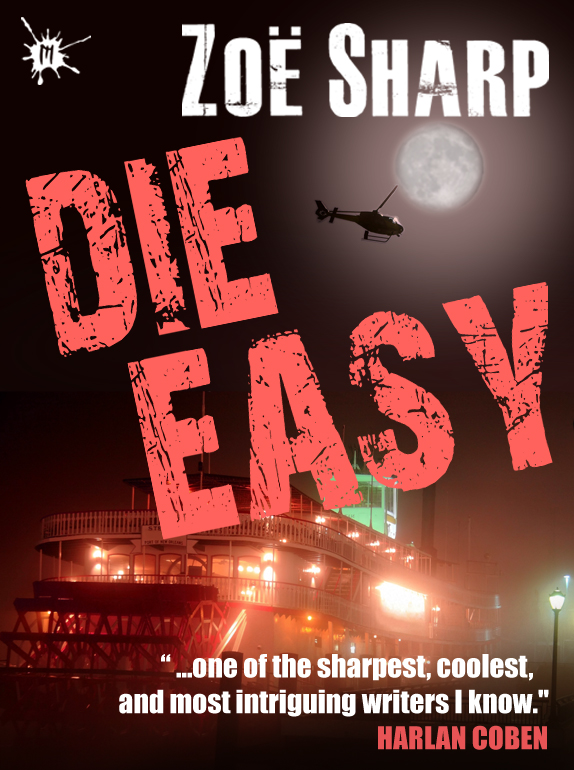
DIE EASY: Charlie Fox book ten

‘Sean didn’t remember finding out that I wasn’t to blame for ruining both our careers – that I’d nearly died for him. He certainly didn’t know that I’d killed for him.’

In the sweating heat of Louisiana, former Special Forces soldier turned bodyguard, Charlie Fox, faces her toughest challenge yet.

Professionally, she’s at the top of her game, but her personal life is in ruins. Her lover, bodyguard Sean Meyer, has woken from a gunshot-induced coma with his memory in tatters. It seems that piecing back together the relationship they shared is proving harder for him than relearning the intricacies of the close-protection business.

Working with Sean again was never going to be easy for Charlie, either, but a celebrity fundraising event in aid of still-ravaged areas of New Orleans should have been the ideal opportunity for them both to take things nice and slow.

Until, that is, they find themselves thrust into the middle of a war zone.        

When an ambitious robbery explodes into a deadly hostage situation, the motive may be far more complex than simple greed. Somebody has a major score to settle and Sean is part of the reason. Only trouble is, he doesn’t remember why.

And when Charlie finds herself facing a nightmare from her own past, she realises she can’t rely on Sean to watch her back. This time, she’s got to fight it out on her own.

One thing’s for sure—no matter how overwhelming the odds stacked against her, Charlie Fox is never going to die easy …

‘Zoë Sharp is one of the sharpest, coolest, and most intriguing writers I know. She delivers dramatic, action-packed novels with characters we really care about. And once again, in DIE EASY, Zoë Sharp is at the top of her game.’ New York Times bestselling author, Harlan Coben

‘To sum up DIE EASY, I would have to say that I have waited a year for a great book, only for a brilliant one to be delivered with all the style and panache you would expect from Sharp and Fox. An exceptional novel.’ Graham Smith, CrimeSquad.com five-star review

You can read the opening chapter here.
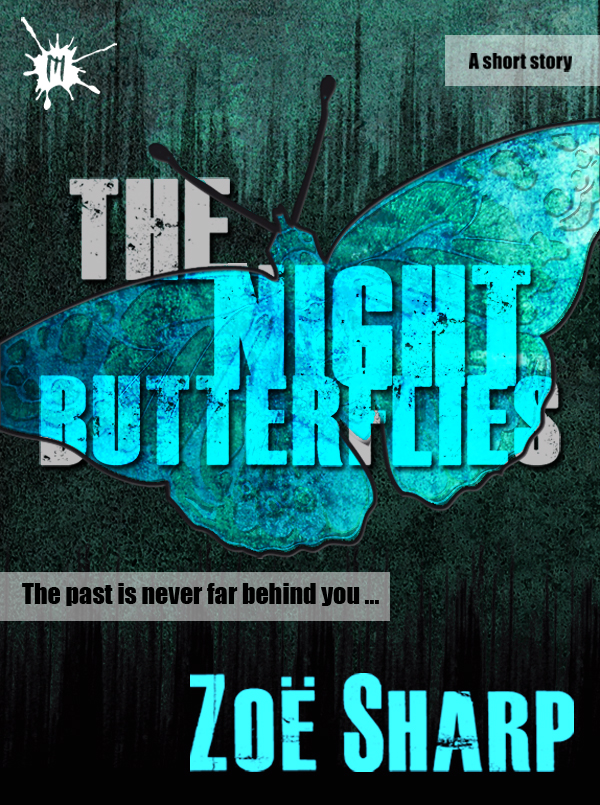
And also, I’ve brought out as an individual standalone short story The Night Butterflies, which first appeared in ACTION: Pulse Pounding Tales Vol1. This is the story of a retired ‘insurance’ man, Tommy Renshaw who is enjoying his dream retirement on the north side of Bali, until a figure from his past arrives to remind him you can never outrun the past. You can only hope to outlive it.

This week’s Word of the Week is hamartia, meaning the flaw or defect in the character of the hero which leads to his downfall, originally (and especially) in Greek tragedy, from the Greek hamartia, failure, error of judgement, sin, and also hamartiology, the section of theology dealing with sin.

Masterpiece or Mishmash? Talking Cloud Atlas

By David Corbett

There’s an old saying: Critics are the kind of people who go out after a battle’s been fought and shoot the wounded.

That little chestnut came back with a vengeance when I read some of the reviews for Cloud Atlas.

Briefly #1: If you’re unacquainted with the novel by David Mitchell on which the film is based, or the basic outline of the six nested stories that make up the narrative, this summary by Wikipedia is serviceable.

Briefly #2: I was amazed by the film, touched to the point of tears more than once. I left the theater in a kind of marvelous daze, like I was walking on fog, something that rarely happens at the movies any more.

Apparently, this isn’t the consensus view, at least among the illuminati.

I may be one of the few people on earth who went into the theater expecting next to nothing. I’d not seen a trailer, I’d read no reviews, imbibed no other media hype, and I’d not yet managed to read the book. (I intend to correct that last limitation as soon as I can.)

My sole pre-viewing opinion came from a writer friend, Tom Barbash, who’d seen an advance screening and said the film rivaled Citizen Kane in its importance to American cinema—this from a Stegner fellow and Stanford professor who didn’t merely love the book, he read it four times.

But after viewing the film—more on that in a moment (don’t worry, no spoilers)—I was hungry for more information, especially when a friend informed me the reviews were “all over the map”—a phrase, interestingly, often used to describe the film.

And so I went to the ever-informative Rotten Tomatoes and Metacritic websites to see what the wise ones were saying.

I’m sorry I bothered. I compare the experience to overhearing a circle of gossips carp and snipe about what’s oh so obviously hideous about your sweetheart.

On reflection, I too can see many less-than-successful aspects of the film. But I found little merit delving in to the orgy of self-congratulatory bile that in too many cases tried to pass itself off as legitimate criticism.

Maybe it’s because I’m a writer, and I see movies and books from the inside, looking at what was attempted, not just what’s there. I’ve learned to both enjoy the decor while also checking out the plumbing. And I was seduced by the ambition of Cloud Atlas. More than once, I sat there wondering: How are they getting away with this?

Clearly, many believed they got away with little or nothing. And they can’t say it spitefully enough.

Some of this I suspect is the usual professionalized envy that too often masquerades as criticism. Some of it is political—the Wachowskis are deemed “radical.” Some of it is the kneejerk railing against anything ambitious as “pretentious” or “pompous”—an opinion often expressed in flamingly pompous fashion.

But what I experienced over and over and over again while watching this film was the magic of the movies. I had a blast. There’s a just a visual, experiential joy to the film that I found not just inviting or seductive or infectious but engulfing.

The actors play multiple roles, crossing gender and color lines and playing a variety of ages. Is the makeup unconvincing in places? I’m enthusiastic, not blind.

Are some of the performances overly broad? You mean as in opera? So?

Is the theme delivered in ham-handed fashion or in leaden dialog?

At times. And I don’t minimize this fault. If you need to announce your theme, you’re doing something wrong. But the theme was also brought home so often by the visuals and the structure that I decided to overlook this limitation. Yes, I think the theme the filmmakers chose to emphasize is a bit simplistic, and that oversimplification created a somewhat cartoonish evil—The weak are meat, and the strong will eat—opposed by a less cartoonish but still unconvincing good—boundaries are illusions, we are all one. But the interplay of this theme in its various manifestations—some witty, some tragic, some melodramatic, some potboilerish, some hip—helped mitigate the simplicity by adding texture and contrast.

Is the movie as subtle, thematically suggestive or structurally ambitious as the book? Oh, please.

This last question seems to go to the heart of some of the most withering criticism. In just the sections I’ve managed to read so far, the prize of subtlety so clearly belongs to the book as to render the question irrelevant.

This isn’t the book. It doesn’t try to be, nor should it.

It’s a big budget ($100 million) film that needs to do well in many markets to earn back its investment. That means it has to honor the intent of the original while also playing to the cheap seats, not just here but around the world. For my money, it does so not just well, but marvelously.

However, despite earning a ten-minute standing ovation at the Toronto Film Festival, it appears to be stalling at the domestic box office. The middling reviews are creating a downward drag; those who might have gone to see it are reconsidering. (How can I shout this loudly enough: Screw the reviews, go see it for yourself!)

Argo stole this past weekend’s top receipts, and Those in the Know opine that Cloud Atlas may continue languishing and lose out not just in receipts but at the Oscars to Argo, The Hobbit, and other weighty fall fare.

That’s a shame. Because I think it’s pretty cool that a literary novel can be turned into a great visual feast and a daring cinematic event that also induces that childlike wonder that reminds us of why we go to the movies.

And I think some of the criticism against Cloud Atlas results precisely from the fact it’s not as much of a “film” as some wanted, but rather a movie.

And that’s what I call shooting the wounded.

* * * * *

So, my readers: If you’ve seen the film, feel free to chime in.

If you haven’t, what criticism have you read lately that raised your hackles—or resonated with the truth?

Do you believe in a clear bright line between “movies” and “films”?

* * * * *

This is a repeat of information I provided yesterday concerning my upcoming class through LitReactor, starting Thursday. We still have a few seats available so sign up now.

NEW ONLINE 4-WEEK CLASS — BEGINNING NOVEMBER 1ST!

The Spine of Crime: Setting, Suspense, and Structure

in Detective, Crime, and Thriller Stories

Online at Litreactor

Building on my preceding course, The Character of Crime, I move from the Who of crime writing to the Where, What and How. (The prior class is not a prerequisite for this course. The subject matter to be covered here stands alone.)

In this 4-week course and workshop, you’ll learn the crucial role of setting in crime stories—perhaps the most setting-dependent genre in literature. You’ll learn how to let suspense emerge not from coincidence but as a natural extension of character, context, and conflict. Last, you’ll learn how to construct the “spine” of your story through structure, finishing up with an examination of the unique plot elements that characterize stories in the detective, crime, and thriller sub-genres.

SIGN UP HERE

The Classes:

Week 1 — Setting: How to Ground your Theme, Characters, and Structure in Place

Whether your story takes place in a pastoral village or a skyscraper jungle, how people live in a specific place and time will define the nature and limits of what’s deemed a crime, who gets called a criminal, and what stands for justice.

Week 2 — Techniques of Suspense: Character, Conflict, and Context—not Coincidence

The trick is always to make the reader keep turning pages. Creating suspense always requires a bit of legerdemain, but to do it well, you need to look deep inside your story, not rely on chance.

Week 3 — Structure: Letting the Conflict Shape Your Story

Three-Act structure too often strands the writer in a meandering second act. By understanding structure as an outgrowth of character, plot points become meaningful events in your story’s growing conflict, not just turnstiles in the plot.

Week 4 — Structural Beats for Specific Sub-genre Types: Detective, Crime, Thriller

Each sub-genre has its own unique thematic emphasis, and that’s reflected in the nature of the adversaries and the conflict they generate. Those variations result in unique structural emphases and expectations.

SIGN UP NOW!

* * * * *

Jukebox Hero of the Week: One of the themes of Cloud Music concerns the seemingly recurring, perhaps even eternal nature of certain patterns of behavior–and musical refrains. My vote for timeless, in the realm of music at least:


Jonathan Lethem’s Promiscuous Materials Project

By David Corbett

Note: In one of those timing anomolies we encounter from time to time, my current rendezvous with Wildcard Tuesday falls one day before my usually scheduled blog posting.

So I’ll be up here tomorrow as well. (Don’t say I didn’t warn you.)


I had the good fortune to attend a City Arts & Lectures interview with Jonathan Lethem last Thursday, with author Robert Mailer Anderson providing the Q’s for Lethem’s A’s.

It’s evenings like this that remind you just how little you’re accomplishing.

On the plus side, I was dazzled.

Lethem has such a fundamentally curious, protean, sprawling mind that he managed to discuss everything from his passion for music—the one art form to which he can truly surrender as a pure fan, since he has no talent in that realm—to life with his painter father, the death of his mother when he was thirteen, and the enduring influence of Raymond Chandler and Don DeLillo on his writing.

But what really intrigued me was his Promiscuous Materials Project. This is where he offers certain of his stories to screenwriters and dramatists at a nominal ($1) fee to adapt as they wish. (He does the same for certain song lyrics he’s written over the years, offering them basically gratis to songwriters.)

He admits to being influenced by Open Source Theory, the Free Culture Movement, and Lewis Hyde’s book, The Gift: Imagination and the Erotic Life of Property.

But the real impetus for this particular promiscuity came when both a filmmaker and a dramatist simultaneously sought the rights to adapt his novel Fortress of Solitude.

Normally, multiple adaptations are impractical, especially in film, given the need to secure all rights to attract investors. But Lethem did everything he could to make sure both artists had a chance to proceed. Whether that happens or not remains to be seen.

But he’d been similarly approached by multiple parties for some of his shorter work, and the idea of multiple versions of his stories, like different cover versions of a song, intrigued him so much he decided to put some of his stories out there to see what happened.

Due to contractual obligations with his publishers, he doesn’t allow the stories to be used as the basis for other written projects, i.e., as the source for other stories or novels.

But by making the stories available in this way, for films or stage performances, he hopes not only that more people will read the actual stories, but that those stories will acquire innumerable new lives in whatever artistic form their new creators see fit.

This is part of a larger movement, much of it currently restricted to digital or web-based art. But with Facebook entering the publishing world—with text available for open social comment and in some cases even revision—the world of the story as we know it is changing rapidly. The individual storyteller is leaving his solitary garret to become part of a virtual tribe, with the word on the page never fixed, but open to constant reworking, not just by the artist but the reader.

This is no doubt perplexing to many, terrifying to some, and appalling to not a few. Some may think it’s nothing but a vanity project. It smacks of piracy, and I’m sure some people fear it’s one more step toward the total impoverishment of working artists. It challenges our notions of individual responsibility, talent, and imagination. It’s also, apparently, inevitable in one form or another in arts across the board.

So, dear readers—what say you on promiscuous literature? An intriguing creative frontier, or the edge of the pit of doom?

* * * * *

Time for a little promotion. I’m teaching another online class through LitReactor, starting Thursday. We still have a few seats available so sign up now.

Here’s the skinny:

NEW ONLINE 4-WEEK CLASS — BEGINNING NOVEMBER 1ST!

The Spine of Crime: Setting, Suspense, and Structure

in Detective, Crime, and Thriller Stories

Online at Litreactor

Building on my preceding course, The Character of Crime, I move from the Who of crime writing to the Where, What and How. (The prior class is not a prerequisite for this course. The subject matter to be covered here stands alone.)

In this 4-week course and workshop, you’ll learn the crucial role of setting in crime stories—perhaps the most setting-dependent genre in literature. You’ll learn how to let suspense emerge not from coincidence but as a natural extension of character, context, and conflict. Last, you’ll learn how to construct the “spine” of your story through structure, finishing up with an examination of the unique plot elements that characterize stories in the detective, crime, and thriller sub-genres.

SIGN UP HERE 

The Classes:

Week 1 — Setting: How to Ground your Theme, Characters, and Structure in Place

Whether your story takes place in a pastoral village or a skyscraper jungle, how people live in a specific place and time will define the nature and limits of what’s deemed a crime, who gets called a criminal, and what stands for justice.

Week 2 — Techniques of Suspense: Character, Conflict, and Context—not Coincidence

The trick is always to make the reader keep turning pages. Creating suspense always requires a bit of legerdemain, but to do it well, you need to look deep inside your story, not rely on chance.

Week 3 — Structure: Letting the Conflict Shape Your Story

Three-Act structure too often strands the writer in a meandering second act. By understanding structure as an outgrowth of character, plot points become meaningful events in your story’s growing conflict, not just turnstiles in the plot.

Week 4 — Structural Beats for Specific Sub-genre Types: Detective, Crime, Thriller

Each sub-genre has its own unique thematic emphasis, and that’s reflected in the nature of the adversaries and the conflict they generate. Those variations result in unique structural emphases and expectations.

SIGN UP NOW!

* * * * *

Jukebox Hero of the Week: On the subject of the inevitability of change, here’s They Might Be Giants, with their anthem to impermanence, “Istanbul (Not Constantinople)”:


Traps

by Pari

You’d think I’d have learned by now.
You’d think it’d be second nature.
Pause. Wait. Think!

That’d be the wise thing to do. But it’s difficult to be wise when you’re the parent of teenagers.

Before I continue, a few disclaimers:
my kids are
wonderful
bright
intelligent
interesting and,
generally, really fun and enjoyable to be around.
So it’s easy to fall into traps I should know to avoid.

Today it was the seemingly innocuous request to edit an essay. Because I respect the process — and my children’s intellects — I approached it with the same diligence and attention to detail that I would for any other writer I also respect. When my teen came into the office to hear my comments, I began to critique the way I’ve learned from years of experience.

“You’re a wonderful writer. You’re working with major concepts and go into them in excellent –“
“Don’t give me all of that stuff.  Just tell me what you found,” said my teen.
“This is what I found. And I’d like to give you an overview of –“
“That’s not what I asked for. Just tell me what’s wrong.” Blue-green eyes tearing up now.
“Okay. Well . . . there’s this problem with tenses. You shift between present and past in sentences and it doesn’t always make –“
“I do that on purpose. ” A foot stomping the wooden floor for emphasis.
“Okay, well, it doesn’t always work. It confuses the reader and –“
I know what I mean. My teacher knows what I mean.”
By now, I had started to feel like an idiot. A well-meaning idiot suffering an external perception of malice. “But . . . but the reader –“
“It’s my paper. Don’t tell me how to write it!”

And we were off . . . hurt feelings all around. Anger. Misunderstanding. All this right before I had to take the kids back to their father for the week. My child stormed out of the office, a tsunami of unhappiness crashing through the door. I, being the mature woman we all know, slammed that door and locked it. Truth was, I felt incredibly offended that I’d been asked to help, spent time taking the task seriously, and got shut down so quickly. Wah!

There are so many of these instances in life, the traps that are achingly apparent but which we ignore. Why? I don’t know if it’s because we get lulled into the assumption that this time it might be different or if we simply forget all the times when it wasn’t.

Two questions today:
1. What traps do you fall into with distressing frequency?
2. What traps do you recognize now and manage to avoid?

Retreat!

by Alexandra Sokoloff

So it’s October, and for me that has come to mean not just Halloween, but a semi-annual retreat with my awesome writing posse: Margaret Maron, Sarah Shaber, Diane Chamberlain, Katy Munger, Mary Kay Andrews and Brynn Bonner.  At first once a year, then twice, now sometimes three, we go on retreat to the beach or the mountains or some generally fantastic place. We work all day long by ourselves and then convene at night to drink wine and brainstorm on any problem that any one of us is having (and of course, compare page counts!). Murderati’s own Dusty Rhoades now regularly joins us for at least some of the fun.

Our favorite retreat is the Artist in Residence program at the Weymouth Center in Southern Pines, NC.

I’ve written about Weymouth here before: the mansion I used for my haunted house in The Unseen, a 9000 sq. foot mansion on 1200 acres that was what they called a “Yankee Playtime Plantation” in the last quarter of the nineteenth century, the fox hunting lodge of coal magnate James Boyd. James Boyd’s grandson James rebelled against the family business to become – what else? – a novelist. Boyd wrote historical novels, and his editor was the great Maxwell Perkins (“Editor of Genius”), and in the 1920’s and 30’s Weymouth became a Southern party venue for the likes of F. Scott Fitzgerald, Sherwood Anderson, and Thomas Wolfe. That literary aura pervades the house, especially the library, with all its photos and portraits of the writers who have stayed at the house.

And yes, it is haunted, ask anyone who’s been here.

When I started plotting The Unseen, I needed a haunted mansion that I could know and convey intimately – the house in a haunted house story is every bit as much a character as the living ones. So of course the Weymouth mansion, with its rich and strange history, convoluted architecture, isolation, vast grounds, and haunted reputation, was a no-brainer. I truly believe that when you commit to a story, the Universe opens all kinds of opportunities to you.

And that’s what a retreat means to me. It’s a commitment to do as much work – and as much magic – as you can possibly do in a weekend, or a week, or if you’re really lucky, two, or in the case of NaNoWriMo – a whole freaking month. 

Last time we were at Weymouth I came committed to figuring out the sequel to Huntress Moon. I left a week later with a full thirty-page outline. This week my task was to take my rough draft of Blood Moon and bash through a second draft. I finished yesterday, and today am bashing through the update of my website (a much more daunting task than a book, let me tell you!)

Writers among you know this Goethe quote I’m sure (which doesn’t apply just to writing…)

Until one is committed, there is hesitancy, the chance to draw back, always ineffectiveness concerning all acts of initiative and creation. There is one elementary truth, the ignorance of which kills countless ideas and splendid plans; that the moment one definitely commits oneself, then Providence moves too. All sorts of things occur to help one that would never otherwise have occurred. A whole stream of events issues from the decision raising in one’s favor all manner of unforeseen events, meetings and material assistance which no one could have dreamed would have come their way. Whatever you can do or dream you can, begin it. Boldness has genius, power and magic in it. Begin it now!

Well, I’d like to add that it really, really helps to have a whole group of pro writers committed to the same thing along with you.

But you know what makes it exponentially productive?  This place is imprinted.

One of the most prevalent theories of a haunting is that a violent or tragic event leaves a lingering residue on a place, like an echo or a recording. Well, Weymouth has had its share of tragedy and weirdness, but it’s also got an imprint of pure creativity.  (Come on, reread that list of authors above!)  It’s been a writers’ retreat for decades now, centuries, and you can feel it in the marrow of the house.

Layer on to that the sexual energy, just another facet of creativity – oh yes, think about it. Writer parties in the Roaring Twenties?  What was going on in every other room, in the gardens, in the horse stables…?  Did I mention that Weymouth regularly hosts weddings?  We arrived to find a massive wedding marquis in the back gardens, the most elaborate I’ve ever seen, (and I’ve been part of a wedding or two) with the detritus of what was clearly a fantastic and opulent party.

As I write this, well-built men are putting up another party tent in one of the front gardens while another bride is being photographed in the gazebo in back.

It resonates, I’m telling you.

All of this beauty and, um, stimulation, it really makes the pages fly. Also the dreams I’ve been having… well, never mind that.  But one of the most fantastic things about the writing life is that our work brings us into these incredible, layered situations, dreamlike, sometimes, with hazy boundaries between eras and dimensions, between the real and our imaginations. When we’re in the zone, synchronicities spark and breakthroughs become the norm instead of a longed-for rarity.

Writing is a draining thing. You can never really turn it off. So I’ve found that retreats, and the dedicated companionship of other writers, keeps me working deeper, faster, further than I could possibly go on my own.

And I am grateful to whatever providence brought me to my writing group and to Weymouth.

So what about you all? (You all.  Yes, I must be back in the South….)  Do you have retreats, writing groups, places that supercharge your writing?  Let’s hear about them!

Alex

————————————–

Lots of extras today. 

— First, for the Cumberbitches out there (you know who you are) I was interviewed by Newsweek/The Daily Beast as a Cumberbatch authority and managed remarkable restraint, if I do say so myself.  Read here.

— HALLOWEEN GIVEAWAY

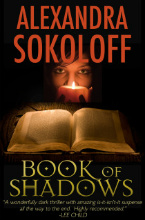
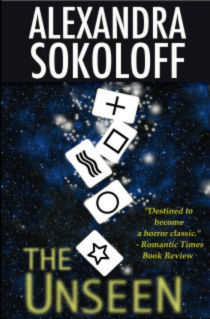
It’s October, my favorite month, and you-know-what is coming, so I’m giving away 31 signed hardcover copies of my spooky thrillers Book of Shadows, and the book that stars the Weymouth manor I speak of in this post: The Unseen.

Enter here to win!

Book of Shadows.

An ambitious Boston homicide detective must join forces with a beautiful, mysterious witch from Salem in a race to solve a series of satanic killings.

Amazon Bestseller in Horror and Police Procedurals


The Unseen

A team of research psychologists and two psychically gifted students move into an abandoned Southern mansion to duplicate a controversial poltergeist experiment, unaware that the entire original research team ended up insane… or dead.

Inspired by the real-life paranormal studies conducted by the world-famous Rhine parapsychology lab at Duke University.


And finally, I’m doing my usual NaNoWriMo prep series on my Screenwriting Tricks blog.  Commit!!!


Lost in translation

By PD Martin

About a year ago I came up with an idea for a new novel. It was the kind of idea that kept eating at me, kept calling to me “Write me”. I knew it was an idea I’d get to sooner rather than later, that it would ‘jump the queue’ in terms of the projects I had planned. This is the order I’m supposed to be doing things in:

  1. Books 2 & 3 in my Guardian and Wanderer series (Pippa Dee)
  2. Book 2 in my new “RB and The Committee series” (as a follow-on to Hell’s Fury)
  3. Another mainstream drama project (I was hoping to have an agent and a sale by now for my first mainstream drama novel, but alas it hasn’t happened yet).

Then, and only then, would I move onto this ‘new’ idea, something that’s completely different again to what I’ve been writing. It’s a post-apocalyptic YA thriller/action adventure.  I know…I’m all over the shop.

However, when I was in bed at night, I’d literally think about scenes from this book. I’d see and hear them in my head, compose the sentences and dialogue. I had the character down — a tough 18 year old who’d been imprisoned since she was 10 because she was a ‘danger to society’. But I didn’t write any of these scenes down. I trusted my subconscious and conscious to let the idea brew, to fully form. But now, I’m not so sure…

I’ve finally answered the call of this book and put all of my 1-3 points above on hold. After a little bit of initial but essential research, I started writing last Thursday. In fact, it’s the first thing I’ve written since we collected Liam in Korea a few weeks ago. And I am also aware that my writing stints are going to be an hour here, an hour there, and then one full day (Thursdays).

Now here’s the problem. The book isn’t coming out at all like it’s been in my head for the past year or so. The main character, instead of being a kick-ass bad-ass chick with a major attitude problem, is turning out to be a young woman who wants redemption for ‘her kind’, who wants to prove she can do more than only destroy society. But I just don’t know. Is the book lost in translation or is this how it is meant to be, how it always would have turned out even if I’d answered its call twelve months ago, or even six months ago? It’s not that I’m not happy with what I’ve written so far and I am only 5,000 words in so it’s hard to tell. But still, why is it so different to what I’d envisaged?

So, Murderati…for those of you who write, has this ever happened to you? Found a book comes out incredibly different on the page to what it was in your head? And for the readers, do you ever get the feeling a book is different to what perhaps the author first thought?

And finally, any thoughts on whether I should go with the flow, what’s coming out on the page, or ditch my 5,000 words and start again trying to be true to the original vision. 

IT’S (NOT) ALL IN THE BOX

by Gar Anthony Haywood

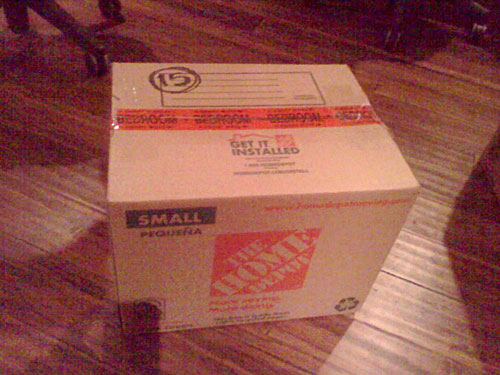
Three weeks ago, the family and I moved into a new home.  We’d been renting a place in Alhambra until we could find a house both within our budget and big enough to accommodate our ever-expanding need for space, and we finally lucked into a four-bedroom, single-story mid-century number in Glassell Park that fits the bill.  It was a great blessing.  The new joint needs a lot of work, God knows, and most of the heavy lifting has already been done, but there’s still a hell of a lot of sweat equity left to invest to make it our “home” — starting with unpacking all these @!*#%!*@ boxes we’ve vacuum-packed our lives into.  Boxes just like this one:

If you’ve ever made a similar move yourself, you know what I’m talking about.  First you spend weeks stuffing and taping everything you own into cartons three sizes too small, and then you spend weeks yanking it all out again in a different place, always thinking along the way:

“What the hell is this?

“So that’s where that damn thing went!”

“Why in the world do I own one of these?

“I’ve got absolutely no use for this, and I probably never will — but as soon as I toss it, I’ll find a use for it, so I’d better hold onto it.”

You learn a lot about yourself as you take this item-by-item inventory of your earthly existence, and one of the most fascinating is all the things you’ve accumulated not with the intent of using it in this life — the one you’re actually living — but in the life you hope to have someday.  Clothes you plan to fit into; brochures for exotic cars you intend to own; toys you’re going to play with just as soon as you’re making enough money to slow down a little.  Some of this stuff is as new as the day you acquired it; it comes in packages that have never been opened, inside plastic bags that are still sealed air-tight.

These possessions are pieces of a dream you can’t let go of.  Giving them away or selling them off at your next yard sale would be a form of surrender, an admission that time has run out on the future you’ve always thought would be yours.

So when the time comes to change addresses, you stick these things in a box, rather than leave them behind, and then you find a place for them in your new home — the closet, the garage, the attic — when the box gets opened again.  If it gets opened again.

Some things go into boxes that stay sealed forever.

Of course, as I’m a writer, most of my moving boxes are filled with ideas.  Fragments of stories yet to be written, dogeared notebooks brimming with single-line plot synopses and half-formed character profiles.  Throw this stuff away?  Are you nuts?  There’s a bestseller in there somewhere, I know there is, and one day I’m going to find it.

Ultimately, for all our mindless attachment to them, it’s not the things inside the boxes that really count.  It’s the things we can’t box up: the people we love, the memories of good times past, the hope that tomorrow will only bring more of the same.

As I write this, late at night in my new office upstairs, I see boxes all around me; numbered and labeled, every one filled with odd bits and pieces of this poor man’s treasure.  But what I value most isn’t in any of these boxes, nor anywhere here in this room.  They’re downstairs, occupying three different beds in three different bedrooms.

And that’s what makes this home.

Nanowrimo Prep: Campbell, Vogler, The Hero’s Journey, and a Narrative Structure Cheat Sheet

by Alexandra Sokoloff

Eight days and counting. Yes, I know, Halloween is seven days. I’m actually talking about NaNoWriMo, National Novel Writing Month.

I said that I’d do some prep here, but that’s not really feasible when I only blog twice a month (some of you have been prepping over at my blog, of course!). Still, I wanted to post SOMETHING useful for NaNo.

(If you have been living in a cave for the last ten years and have not heard of NaNo, you can read all about it here.)

I’m always encouraging you guys to read EVERYTHING you can about writing processes and structure, and I feel like this is a good time to nudge you all again to do a little reading about Joseph Campbell and the monomyth he details in his classic Hero With a Thousand Faces, and Christopher Vogler’s  Hollywood Cliffs’ Notes version of the same: The Writer’s Journey.

Wikipedia is a perfectly fine overview, and has all the info and links for you to explore further if you are so moved, and I hope you do.

Campbell 

Vogler

It’s easy to get lost in Campbell (such a GOOD lost!) so Vogler’s is a more streamlined version, but as useful as it is, and it is – I think it falls short in one major way. 

Here are the twelve steps of the journey that Vogler details: 

  1. The hero/ine is introduced in the ORDINARY WORLD
  2. they receive the CALL TO ADVENTURE
  3. They are RELUCTANT at first or REFUSE THE CALL, but
  4. are encouraged by a MENTOR to
  5. CROSS THE THRESHOLD and enter the Special World, where
  6. they encounter TESTS, ALLIES, AND ENEMIES.
  7. They APPROACH THE IN-MOST CAVE, cross a second threshold
  8. where they endure the ORDEAL
  9. They take possession of their REWARD and
  10. are pursued on THE ROAD BACK to the Ordinary World.
  11. They cross the third threshold, experience a RESURRECTION, and are transformed by the experience.
  12. They RETURN WITH THE ELIXIR, a boon or treasure to benefit the ORDINARY WORLD.

 Absolutely!  But let’s break that down into where those steps fall in the three-act structure:

Act One:

  1. Heroes are introduced in the ORDINARY WORLD
  2. they receive the CALL TO ADVENTURE
  3. They are RELUCTANT at first or REFUSE THE CALL, but
  4. are encouraged by a MENTOR to
  5. CROSS THE THRESHOLD and enter the Special World, where

Act Two:

  1. they encounter TESTS, ALLIES, AND ENEMIES.
  2. They APPROACH THE IN-MOST CAVE, cross a second threshold

Act Three:

  1. where they endure the ORDEAL
  2. They take possession of their REWARD and
  3. are pursued on THE ROAD BACK to the Ordinary World.
  4. They cross the third threshold, experience a RESURRECTION, and are transformed by the experience.
  5. They RETURN WITH THE ELIXIR, a boon or treasure to benefit the ORDINARY WORLD.

Do you see the problem with this template?  All good for Acts I and III… but there are only two steps to guide you through that vast, interminable, suicide-inducing second act.  And the second act is a full HALF of the story.

That’s not a whole hell of a lot of help when you’re in the middle of the damn thing.

I have another problem with Vogler, in that THE ROAD BACK step.  I have far too often seen fairly new writers struggling with that concept, when the fact is that not all stories even have this step. It’s a great element for a pure Mythic Journey story, like Lord of the Rings (the first), Star Wars, and The Wizard of Oz. But NOT ALL STORIES FALL INTO THIS PATTERN.

So I’ve composed an alternate version of this journey that gives a little more detail to help you through that treacherous middle.

————————————————————————–

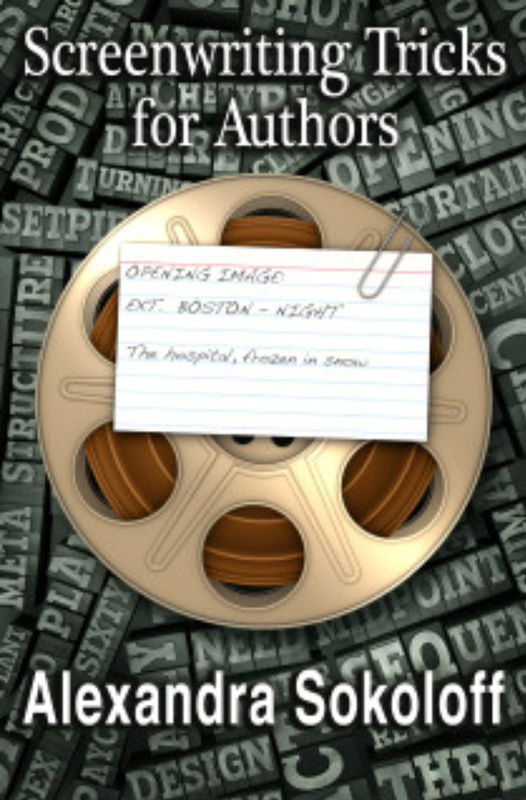
NARRATIVE STRUCTURE CHEAT SHEET, from Screenwriting Tricks for Authors

Act I:

We meet the Hero/ine in the Ordinary World.

S/he has:

— a Ghost or Wound

— a strong Desire

— Special Skills

And an Opponent, or several, which is standing in the way of her getting what s/he wants, and possibly wants exactly the same thing that s/he wants.

She gets a Call to Adventure: a phone call, an invitation, a look from a stranger, that invites her to change her life and crystallizes her desire.

That impulse may be blocked by a

— Threshold Guardian

— And/or the Opponent

— And/or she is herself reluctant to take the journey.


But she overcomes whatever opposition,

— Gathers Allies and the advice of a Mentor

— Formulates a specific PLAN to get what s/he wants

And Crosses the Threshold Into the Special World.


Act II:1

The hero/ine goes after what s/he wants, following the PLAN

The opponent blocks and attacks, following his or her own PLAN to get what s/he wants

The hero/ine may now:

— Gather a Team

— Train for battle (in a love story this can be shopping or dating)

— Investigate the situation.

— Pass numerous Tests

All following the Plan, to achieve the Desire.

No matter what genre, we experience scenes that deliver on the Promise of the Premise – magic, flying, sex, mystery, horror, thrills, action.

We also enjoy the hero/ine’s Bonding with Allies or Falling in Love

And usually in this Act the hero/ine is Winning.

Then at the Midpoint, there is a big Reversal, Revelation, Loss or Win that is a Game-Changer.

Act II:2

The hero/ine must Recover and Recalibrate from the game-changer of the Midpoint.

And formulate a New Plan

Neither the Hero/ine nor the Antagonist has gotten what they want, and everyone is tired and pissed.

Therefore they Make Mistakes

And often Cross a Moral Line

And Lose Allies

And the hero/ine, or if not the hero/ine, at least we, are getting the idea (if we didn’t have it before) that s/he might be WRONG about what s/he wants.

Things begin to Spiral Out of Control

And get Darker and Darker (even if it’s funny)

Until everything crashes in a Black Moment, or All is Lost Moment, or Visit to Death.

And then, out of that compete despair comes a New Revelation for the hero/ine, including understanding what s/he has been wrong about from the beginning

That leads to a New Plan for the Final Battle.


Act III

The Heroine Makes that last New Plan

Possibly Gathers the Team (Allies) again

Possibly briefly Trains again

Then Storms the Opponent’s Castle (or basement)

The Team (if there is one) Attacks the Opponent on his or her own turf, and all their

— Skills are tested.

— Subplots are resolved,

— and secondary Opponents are defeated in a satisfying way.

Then the Hero/ine goes in alone for the final battle with the Antagonist. Her Character Arc, everything s/he’s learned in the story, helps her win it.

The Hero/ine has come Full Circle

And we see the New Way of Life that s/he will live.


————————————————–


If this works to make the process a little easier for you, great! It may be more useful to look at it later, during your rewrites.

And if not, no problem – forget it! I’m just always looking to try to explain things in different ways, because I know for myself, sometimes it just doesn’t sink in until I hear it for the tenth or ten thousandth time.

So are you doing Nano? Do you use Campbell and/or Vogler in plotting or revising your stories? Tell us about it!

Alex


=====================================================


Screenwriting Tricks for Authors and Writing Love, Screenwriting Tricks for Authors, II, are now available in a e formats and as pdf files. Either book, any format, just $2.99.


Kindle


Amazon UK


Amaxon DE (Eur. 2.40)


Smashwords (includes online viewing and pdf file)

Amazon/Kindle

Barnes & Noble/Nook

Amazon UK

Amazon DE


=====================================================


HALLOWEEN GIVEAWAY

It’s October, my favorite month, and you-know-what is coming, so I’m giving away 31 signed hardcover copies of my spooky thrillers Book of Shadows. and The Unseen.

Enter here to win!


Book of Shadows.

An ambitious Boston homicide detective must join forces with a beautiful, mysterious witch from Salem in a race to solve a series of satanic killings.

Amazon Bestseller in Horror and Police Procedurals


The Unseen

A team of research psychologists and two psychically gifted students move into an abandoned Southern mansion to duplicate a controversial poltergeist experiment, unaware that the entire original research team ended up insane… or dead.

Inspired by the real-life paranormal studies conducted by the world-famous Rhine parapsychology lab at Duke University.

You Don’t Have To Be Mad To Work Here . . .

By Tania Carver

You know that phrase, ‘You don’t have to be mad to work here but it helps’? Course you do. It’s long been the province of dull office cubicle dwellers in dead end jobs desperately trying to create a personality for themselves. Well guess what? If you’re a writer apparently it’s true. And not only that, but there’s some science to back it up.

It was fellow Murderati-ist Zoe Sharp who put me on to it. She posted a link on Twitter to this report here. I read it and instantly agreed with it. It wasn’t a shock.  Far from it. In fact, it came as something of a relief.

This directly from the article: ‘Writers had a higher risk of anxiety and bipolar disorders, schizophrenia, unipolar depression, and substance abuse, the Swedish researchers at the Karolinska Institute found.’ The article then goes on to mention a few writers who famously suffered from mental illnesses.  Virginia Woolf drowned herself as the result of depression. Hemingway shot himself after suffering from depression. Hans Christian Andersen suffered from it too. Graham Greene, my favourite writer, was bipolar. None of this came as a surprise. Especially substance abuse – just take a look round the bar at Bouchercon or Harrogate on a Saturday night. (In fact, the bar at Harrogate on a Saturday night takes more from crime writers in one hour than a wedding takes in a whole night. I’m sure Bouchercon’s take is something similar.)

A lot of writers I know have all suffered from some kind of mental disturbance at some time. I’m not going to name anyone because it’s not my place to, but some have openly talked about it. I know that in the last decade I’ve suffered (at least) two quite severe bouts of depression lasting up to a year at a time. It was very, very bad. Hard for me but I think it was even harder for the people I live with. I don’t like to make a big thing of it because not only am I British but I’m Northern; it’s in our culture to ignore things and get on with them. I’m also quite private and reserved. So much so, in fact, that I feel quite uneasy talking about it now. So why do it? I don’t know. The article sparked something in me that I recognised and I needed to say it.

However, looking back in hindsight and at a certain degree of remove, I see that those two episodes weren’t necessarily negative. I lost a lot of weight, which I needed to. And at least I tried to get something positive out of it from a work point of view. This is also something that the researchers discovered. From the article again: ‘Lead researcher Dr Simon Kyaga said the findings suggested disorders should be viewed in a new light and that certain traits might be beneficial or desirable. For example, the restrictive and intense interests of someone with autism and the manic drive of a person with bipolar disorder might provide the necessary focus and determination for genius and creativity.’

Now while I would never make any claims to genius, I would say that my creativity increased.  I wrote three books while this was going on. Working through it seemed like the best thing to do at the time. One of the books (The White Room) turned out incredibly dark. I couldn’t help it. The subject matter was dark to begin with – a novel based on the real life story of eleven year old child killer Mary Bell – but it seemed that my depression made it even darker still. I was totally in the mind of my child killer and it was harrowing. It was like falling into train lines and not being able to get off them until I reached my destination. And the trip was very, very dark. Consequently I was in even more of a state at the end of it. Interestingly, the book that resulted is probably the one from my backlist that most people want to talk to me about. It was also a book of the year in the Guardian newspaper. (Shameless plug: You can still buy it here.) The Surrogate, the first Tania Carver novel, also emerged from a bout of depression. So the answer is simple. If I want to write something good I need to have a crippling bout of depression.

Obviously, it’s not something to make light of or to romanticise. Writers should never willingly wish themselves to suffer mental imbalances in order to make them more creative and especially not to access what they believe is their untapped genius. (That way lies madness of a different kind – the self-delusionary kind.)

If it does happen, treatment can be given. But there is a danger – and I certainly felt this in my own case – that accepting what it was and seeking help – and probably medication – might make my situation worse. As Tom Waits said, ‘If I exorcise my demons, maybe my angels will leave as well’. This also opens up an interesting area for study – are people in creative industries such as writing more prone to bipolar disorders or are people with bipolar disorders more drawn towards the creative professions where they are more temperamentally suited and can use their creative skills? I don’t know the answer to that one.

Depression (if that’s what it was and not some undiagnosed bipolar disorder) is not something I’m in a hurry to revisit. It was like living in hell (and worse for those around me, I know). Every morning I would wake up feeling fine. A mental blank slate. But then my consciousness would kick in and it was like a wall falling on me and crushing me. Huge, heavy stones on my chest and head, pushing me down, stopping me from breathing, thinking. Stopping me from climbing out.  And my heart felt like the heaviest stone of the lot.

But it went eventually. Gradually lifted all on its own. I was able to move away from it, put distance between myself and what had happened and try to keep away from whatever had caused it. And that’s the thing – I don’t know what caused it. As the article says, writers are prone to anxiety, to depression. I’d go so far as to say it’s our default setting. We constantly think everyone else is doing better than us – more successful, bigger advances, higher sales, better marketing profile. We constantly live in fear of rejection, of handing in our new book and being told it’s no good, that they’re returning the advance, they can’t publish it, it’s unreadable rubbish. Every time we get praise we think we’ve dodged a bullet, breath a sigh of relief, and prepare to start the whole thing again. And we can’t stop it or change it. Is it any wonder writers are more prone to this than many other professions? 

Maybe it’s just me.  I don’t know. Maybe other writers can successfully negotiate these mental pitfalls better. All I know is I haven’t had a bad bout for a few years now. And I’m in no hurry to go through it again.

I am in a hurry to finish the new book, though. With as little anguish as possible.

I LIKE

by Stephen Jay Schwartz

I like that the guy who works at Trader Joe’s sees us and says, “Hello, family.”

I like that people stop us at the beach and comment on how the kids have grown.

I like that, at the West Hollywood Book Fair, Jerry Stahl leaned over and said it’s nice that my family is so supportive.

People in the book community have watched my children grow for a number of years now. My wife and boys have attended just about every book event I’ve had since Boulevard, my first book, was published.

I like it. It’s a good feeling. Especially since, for the first eight or so years of my children’s lives, I was almost never around. I was working a national sales job that kept me crossing the country every other week. One week in, one week out. For years my youngest son said he didn’t like me. He actually used the word “hate,” which I knew was much stronger than what he meant. When I asked him why he “hated” me, he couldn’t think of a reason other than, “You have too much hair on your arms and face.” At the same time, he loved the daylights out of his mother. I realized that Noah felt this way because I was hardly ever there. I was the one who LEFT. His mommy was the one who STAYED. She is an at-home mom and has been by his side his entire life. I got the picture – why would a parent leave his family every other week unless he really didn’t care? And then, when he was home, why would he spend most his time hiding away, writing a book? Noah was too young to understand the sacrifice of working a day job to support a family. He thought I wanted to go. He was too young to understand the commitment and sacrifice necessary to excel at an art, despite the challenges of raising a family and working a nine-to-five job.

I couldn’t get this point across and soon I had to accept the fact that this was how it was going to be. Although this saddened me, I didn’t blame him for not liking me. I told him I thought he would change his mind someday, and I would patiently look forward to that moment.

Since I traveled so much I figured I’d better put something in writing, in case I met with a terrible accident along the way. I wrote a letter to each of my boys, sealed the letters and placed them in a drawer. In the letters I told my boys how much they meant to me, how special they are, singling out the special qualities that makes each boy unique. In Noah’s letter I said I knew he loved me and he should never, ever think that I didn’t get that message. Just because he didn’t say the words didn’t mean he hadn’t shown me, in everything he did, how much he cared.

I wanted to put him at ease. I know from experience that there’s nothing worse than wishing you had said something to someone before they died. Nothing worse than wondering if that person thought you didn’t care.

One day, just a few years ago, Noah turned to me and said he had something important to say. I brightened, guessing what was up. He was a bit shy about it, so I prompted him.

“Is it that you don’t hate me anymore?” I asked.

He smiled.

“So, you like me now.” I deduced.

I could sense there was something more. My chest started tingling.

“I love you, daddy.”

Damn. That was the best feeling in the world. I’d been waiting nine years for that and, frankly, I’d been wondering if I was ever going to hear him speak those words.

Since then we’ve been peas in a pod. The best of buds. He’s twelve now and we often walk around in public holding hands. I relish it, knowing he’ll soon cross that line where holding his daddy’s hand isn’t cool anymore. But that’s the funny thing about Noah – he doesn’t care what is and isn’t cool. He goes against the grain in everything he does. And, to me, that makes him all the more cool.

His older brother, Ben, surprised me with some critical family support the day Boulevard launched at Book Soup in L.A. There was a group of about fifty people and when I asked if anyone had questions, Ben, ten years old at the time, raised his hand.

“You have a question, Ben?”

“No,” he said, “I have a statement.”

“Okay,” I said, warily. He came up to the podium and I put the microphone to his lips.

Ben studied the crowd confidently and said, “I watched my daddy writing all the time, for years. He was always writing and saying he was going to make a book. I really didn’t think it would be that good because, well, it was his first book, so how could it be that good? And then he finished it and it got all these great blurbs (yes, he knew what blurbs were!) and everyone is saying all these nice things. And I’m really proud of him.”

Another touch-my-heart moment. If you saw the pictures from that day and saw my face you’d see the look of a content, grateful father.

You see the same look in my author photo right now.

I’m the kind of guy who just can’t smile for the camera. I try, but I usually end up looking like an insincere dork. Anyone who spends a little time studying body language knows that a sincere smile is seen in the eyes. The eyes have to smile, and that’s a response that can’t be faked.

One day Noah took a photo of me at the Festival of Books, standing next to Lisa Lutz. He was just getting into photography at the time and I thought he looked absolutely adorable behind that camera. As I posed for him, my face lit up with a pure, proud, authentic smile. And that’s what he captured, something real, with eyes that smiled with my lips. I carefully photo-shopped Lisa Lutz from the frame (sorry, Lisa!) and submitted the photograph to my agent. When my novel, Beat, was published I showed Noah the author photo in the back, and his name in print as the photographer. His face lit up with pride. I think that was the moment he decided to take a more series interest in photography.

(Movie Magic brings Lisa Lutz back into the picture!  Hello, Lisa!)

After that he took pictures of me and other authors at every panel I did. His passion came to the attention of Diana James, the literary publicist married to author Darrell James. She asked him to take some photos of Darrell at one of the book festivals and, after we sent them to her, she sent Noah a $20 check for his services. It was his first paying gig. Diana was such a sweetheart – she included a letter to Noah saying how wonderful his work is and that he should continue pursuing his dreams. Diana passed away not long ago – a terrible, tragic loss to her husband, friends, and the literary community at large. A terrible loss to a little boy whose life she touched.

(Diana James, photographed by Noah)

I’m aware I’m a lucky guy. The time I spent working and writing could have driven my family away. There was in fact a critical moment when my marriage almost ended and everything had to be rebuilt, from the bottom up. We worked through it, we got past it, we made it to the other side.

Things could be better. I could be supporting myself as an author. I could be working a day job that means as much to me as my writing. I could be out of debt. I could have a car that runs. I could be living in a house instead of an apartment. The list goes on.

But this thing I’ve got is better than everything else combined. The love and support of a loving and supportive family.

I like it.

Well, no, it’s more than like.

It’s love.