Author Archives: Murderati Members


Escaping to another place

Zoë Sharp

Most of us read to be transported to another place. As a child it was a place of excitement and welcome. I think most children go through a phase of feeling that we don’t quite fit in with our families, and that we might even be some kind of cuckoo, deposited in another nest to be raised, and that sooner or later our ‘real’ family will arrive to claim us.

No? Ah, just me then …

In times of stress or unhappiness, the world presented by a good book can be a place to step into, to be enveloped and even comforted. It offers some kind of order out of chaos. You open a crime thriller in particular knowing there will be satisfying resolution. That the murder will be solved, the mystery unravelled, the disaster averted, and the bad guys will get their just desserts. However horrific the crime, the hero will prevail and there will be justice done.

It’s hardly surprising then, that crime thrillers are popular reading among people faced with senseless violence on a daily basis. It is their safe haven and their escape.

This is why I am devoting today’s blog to an appeal for books for our service men and women in the front line. Last Christmas, the Historical Writers’ Association launched their Books For Heroes appeal in the UK, but there’s a similar one going in the States.

Last year’s donations when down extremely well, although apparently the helicopter making the delivery to service personnel in Afghanistan came under fire and had to jettison boxes to make an emergency exit, then go back for them later with mine sweepers.

And you thought you were a serious book lover …

I know it seems very early to be talking about Christmas, but don’t forget that we’re not talking about getting them to people in the least hospitable places where even UPS won’t deliver. And they need to be as-new books. The kind of thing you wouldn’t mind giving or receiving as a Christmas present rather than something that’s about to be donated to the nearest charity store.

Paperbacks only are appreciated, rather than hardcovers, because when you’re airlifting cargo, weight is a serious consideration. I hope you’ll seek out the appeal in your area, or your country, and make the time to donate a book or two. Those that don’t go overseas to service personnel on the front line are likely to end up in the hospitals or rehab centres for the returning injured.

Whether you agree with the war or not, the people who are out there serving their country and the rest of us deserve some small sign of our appreciation and consideration, especially as Christmas approaches. What better way than to give them the freedom of a book?

So, fellow ‘Rati, do you have a favourite book that’s seen you through a difficult time? Care to share?

This week’s Word of the Week is monger, usually used in combination with another word, meaning a dealer and—except in a few instances, such as ironmonger— a person who trafficks in a petty or discreditable way, or in unpleasant subjects, such as warmonger, or gossipmonger. From the Latin mango -onis, a furbisher or slave-dealer, from the Greek manganeuein, to use trickery.

PS More news on the new Charlie Fox book very soon, I promise!

The Pleasures of Re-reading Mystic River

By David Corbett

When I was trying to learn how to write, I took a course from Tom Jenks, formerly with Scribner’s (where he was responsible for editing Hemingway’s The Garden of Eden for posthumous publication) and currently the main force behind Narrative magazine.

One of the most important things I learned from Tom was that it was better to go back and re-read books that had a profound effect on you, or which you considered particularly excellent, instructive, or inspiring, than to be broadly read. It’s advice I’ve taken to heart, particularly since my writing career has so profoundly curtailed my time to read for pleasure.

It’s good to know that when I do read for the sheer enjoyment of it, I’m going to read something I know will scratch that particular itch.

One such book I picked up again recently was Dennis Lehane’s Mystic River. This was my first re-reading, and I was amazed at how much more I enjoyed it the second time through. I wasn’t reading for story, I was reading to see how Lehane did certain things, and how many he did well.

His pacing is both leisurely and taut, not easy to do. You never feel rushed but you never feel like you’re meandering, either.

His prose evokes a profound emotional connection and also provides a vivid pictorial image without being showy.

His command of setting is as deft as Richard Price’s—high praise. I was awestruck by how intimately he knew these neighborhoods, and captured them for the reader. I know, he grew up near there, but familiarity isn’t enough. You’ve got to know what to include, what to leave out, and in both cases why.

His female characters are fascinating and rendered beautifully on the page.

His understanding of cops and how they work—more importantly, how they think and talk—is unparalleled.

And these last two points are part of a larger one: I don’t know a writer who captures the inner life of his characters as vividly, intimately, and movingly as Lehane does here. This skill isn’t prized the way it used to be. Screenwriting, an affliction a great many of us now suffer from, has taught us to emphasize what can be seen and heard, not thought or felt—or worse, explained.

There’s a lot to be said for that approach. Dramatic writing, relying on what characters do and say, benefits from the power it brings to the depiction of conflict.

But there are moments in Mystic River when a character is alone with his or her own mind and heart that are simply some of the most moving I’ve come across on the page in quite some time.

They’re the kind of moments that are all but impossible to capture on film, which is one of the reasons I’ve always found the film version of Mystic River wanting. Don’t get me wrong, I liked the movie. But I didn’t love it the way I loved the book.

So much of the pleasure of the book resides inside the character’s skulls, which is invisible to the camera. In particular, I thought the women characters were robbed of the subtle interiority that made them so compelling on the page.

That also contributes to another problem I have with the film, one that the story mage John Truby discussed in an online essay discussing story structure in which he used Mystic River, Intolerable Cruelty, and Runaway Jury as his examples.

His chief complaint about Mystic River’s screenplay goes as follows:

Mystic River uses the classic technique of showing the three lead characters as boys, when one of them is molested. The rest of the story therefore has to turn on how one boy’s ghost haunts all the boys as adults. But this central connection is never made. Yes, the molested boy, Dave, is a broken man. But the other two, Sean and Jimmy, seem to be no different than they were as kids. And Dave’s horror has no real effect on them as adults.

In the book, we see more clearly how Dave’s molestation has affected both Sean and Jimmy.

One of the most moving scenes in the first part of the book—a scene I’d largely forgotten until I re-read it—portrays Jimmy’s profound isolation and his yearning for female affection, not just from his fragile, troubled mother, but from his teacher who lavishes attention on Dave when he reappears after his abduction.

Jimmy’s the toughest of the three friends, which is what makes his longing so interesting. His desire for this kind of attention is so profound he fantasizes that it was him, not Dave, who got into the strangers’ car that day. That need for female validation defines Jimmy’s capacity for staying straight as an adult, and it explains why his daughter’s murder so deeply unhinges him. More importantly, it provides the connection of shame and perverse envy that links Jimmy’s youthful longing with the vengeful hatred he feels toward Dave as an adult.

As for Sean, he was the one who got out. His dad was a foreman at the Coleman candy plant, responsible for firing Jimmy’s dad, and Sean has never looked back after leaving East Buckingham. But that superiority was built on circumstance, not character. And the issue of luck plays out to tragic consequences when he’s unable to solve the murder of Jimmy’s daughter in time. It was luck that kept him out of that car as a boy, luck that got him out of East Bucky—and now, thirty years later, luck that draws him back in and, this time, turns against him.

It’s an old complaint, a great book ill served by its film adaptation. But I didn’t appreciation exactly why I so preferred the book until I went back and read through those pages again. 

But then, I forget a lot of things these days.

* * * * *

So, Murderateros—what book(s) do you re-read, for inspiration, education, or just the sheer pleasure of it?

* * * * *

Also, a little publicity for a new 4-week online course I’ll be teaching next month through LitReactor, called:

The Spine of Crime: Setting, Suspense and Structure in Crime, Mystery, and Thriller Stories

I’m expanding from the Who of crime to the What, Where, and How, with detailed lectures and manuscript review of student projects.

If you or someone you know might be interested, find out more here.

* * * * *

Jukebox Hero of the Week: The inmates (male and female) of the Cebu Provincial Detention and Rehabilitation Center, the Philippines, doing their astonishing dance routine to Psy’s Gangam Style:


Who, me?

By PD Martin

Well, looks like today is/was my Wildcard Tuesday and I’ve completely missed it. It’s 7.25am here in Oz, and all hell is about to break loose in my house as I try to get Grace to school and Liam ready for his second ever swimming lesson. 


So, huge apologies from me. I’ve got nothing….nadda. 


And my only excuse is that I’m still not quite moving away from the chaos side of the equation…yet! 


Hope you’ll forgive me!

What’chu laughing at?

by Pari

Years ago when I worked in health care marketing, our corporation considered opening an incontinence clinic. The job of writing the mock promo brochure fell to me. I dutifully delineated all the advantages a customer (patient) would find if he or she wanted to pay our organization for the privilege of looking into the wonders of urethras, kidneys etc etc. But then — I guess because writing the rest of the brochure bored me — I came up with this title: You’re in Control.

Great, huh?

They didn’t use it.

That’s when I found out that there are certain subjects a person just shouldn’t mess with. And when it comes to health care, believe me, most of it isn’t allowed to be funny.

Now I work in a university department of psychiatry and mental illness isn’t a joke either . . . or is it?

Enter David Granirer and Stand Up for Mental Health. Here’s a guy who suffers from Depression — notice the capital D? — who is also a counselor and comic. He has created a way for people with mental illness to do stand-up comedy around a subject that often is so taboo, so dripping with stigma, families  — and individuals — will do anything in their power to avoid even skirting the topic.

Last Tuesday night NAMI-ABQ brought in Granirer to perform. What’s special about this is that six locals with mental illnesses ranging from bipolar disorder to outright schizophrenia had gone through weeks of training too. They stood up one-by-one and gave us a show. Just as in an ordinary line up of comedians, some were great and some were closer to okay. But what astounded me was how incredibly interesting their material was. We in the audience got a glimpse into “madness” and it was fascinating. The comics joked about their delusions, OCD and mania and we went along for the ride. Our willingness to go on that journey may have started with curiosity, but we stayed because it was entertaining and fun.

For me it was a glimpse into a very different way of seeing the world. I feel richer for it, grateful for the opportunity. And since the show, I’ve thought a lot about how difficult subjects can be turned into good, funny and authentic material.

So today, my questions are:

Is there anything that should be off limits when it comes to comedy?
And does that change depending on who delivers the punch line?
Are there things we should joke about that no one is tackling?

(I’m home today, so I hope to be able to finally post some responses!)

Bouchercon rocks

by Alexandra Sokoloff

I’m home from Bouchercon and as always, not very happy about it, the being home part. I haven’t been able to settle down all week. Pages are being written, newsletters are being sent, my taxes got done, even – but I am not entirely back, in my own mind.

And today is my Bouchercon blog. Where to begin?

Living in California for so long, especially my years in NoCal, I’ve heard a lot of Neal Cassady stories over the years from people who actually knew him. (Cassady was Jack Keroauc’s friend who served as the model for Kerouac’s legendary character Dean Moriarty.) And one thing I’ve heard from all kinds of sources that seems true rather than legend is that the man had an uncanny ability to pick a conversation up exactly where it had left off, even if years had passed since he and the person he was talking to had seen each other.

That’s to me what Bouchercon is like. There are a LOT of people in this community who feel like my best friends in the world, the people who know me best (and me AT my best) – who I only see once or twice a year. But the connection is deeper than most of what you get in the real world, because first – as writers, we KNOW each other. We know exactly what all the rest of us do just about every second of every day, we know how we feel about it, we know what makes a good day and what makes a bad day, we know each other’s exact fears and our exhilarations – we all have the same operating system, basically. So when we see each other there are no preliminaries necessary; we pick up the conversation where we left off, and take it deeper and further than it can go with someone who is not of the same world. Not only that, but the layers and puns and references and jokes are so much more interesting than ordinary conversation; writers are hilariously funny people and we love wordplay; it’s like fencing (or dancing!) with someone of equal skill.

We work so hard all the time, and this is our chance to play.

Of course there have been a lot of BCon wrap-ups on various blogs and lists this week, and I was kind of surprised to find that not everyone is a fan of this conference – it’s my hands-down favorite, the most fun, the most inspiring. Now, I totally get that it can be intimidating – lots of people, easy to get lost or bowled over by the sheer star power walking around those halls. But even if no one ever talked to me I could still never miss it because of all I learn. I don’t understand the people who complain that the star authors get all the attention, that it’s hard to get a panel, that midlist authors get lost. Well, of course the star authors do get a LOT of the attention. I’ve always figured that when I’VE written – oh, twenty-five beloved books – I might get that kind of attention, too. But let’s get a grip! While I’m working on those books I can go to panels where I can hear people who HAVE written dozens of beloved books talk about their process, their passion, their own inspiration, and I can get better. Maybe even get worthy.

At the San Francisco Bouchercon, in the very same day, I saw Val McDermid interviewing Denise Mina, and then Robert Crais interviewing Lee Child. Excuse me? Those two hours ALONE are worth the whole price of admission. And as I sat through those two hours, a bunch of ideas I’ve had for a long time suddenly coalesced into the storyline for Huntress Moon.

If I had been totally anonymous for that whole conference, if I hadn’t sold one book, it wouldn’t have mattered in the slightest. I got not just one book, but a whole SERIES out of that one afternoon.

And I don’t think it was any accident that this year I was put on a panel with, yes, Val McDermid – AND Elizabeth George – two authors I admire so much I was actually afraid I wouldn’t be able to speak, but there I was, able to thank them publicly and professionally for how they’ve inspired me.

I think attitude might have a little to do with what you get out of the experience. I noticed, for example, that our own lovely Sarah Wesson had no problem joining conversations with any number of star authors, and people were delighted to have her. Yes, she’s a librarian and probably knows that all authors worship at librarians’ collective feet, so maybe that’s not a good example – but actually I think it is. Sarah has paid her dues, is paying her dues. That is, I think, the actual price of admission. We have to do the work before we get to play.

Speaking of playing – the theme of this conference was Cleveland Rocks, and it really did. It’s one of the most exhilarating things to me about this community that so many authors are musical (and total hams). Did you know Lee Child plays guitar, bass AND sax?  That many talents in one package – I mean, person – is almost too much to take. Did you know that Joe Finder was a Whiffenpoof (the legendary Yale a cappella men’s group)?  Classic Bouchercon moment: Paul Wilson and I were standing at the bar at the Hard Rock party talking about performing “The Lime in the Coconut” together (well, and just that, there – I am in a universe in which F. Paul Wilson can randomly turn to me and say, “We should do ‘The Lime in the Coconut’…) and Joe suddenly starts singing it beside us in this gorgeous second tenor voice – and I never, ever knew that about him. It’s just magical.

My friend and idol Heather Graham has roped a whole lot of us into – I mean generously provided an outlet for us to exercise those talents with each other on a regular basis. This year, she hostessed a party at the House of Blues where her Slushpile band, which this time meant Heather, Paul Wilson, Dave Simms, Matthew Dow Smith, Greg Varricchio, Shane Pozzessore, and I – were able to perform with really anyone who felt like coming up with us: Daniel Palmer, who did a smoking harmonica solo to finish up his original “Bouchercon Blues”, Don Bruns doing his best Jimmy Buffet impersonation, Joelle Charbonneau, equally lovely at torch and opera.

I can see this party, and the band, growing into a regular fixture at BCon as it is at Romantic Times and Heather’s fabulous Writers for New Orleans conference (in December this year, and everyone should come!) and it’s one of the best rewards I can imagine for keeping my nose to the grindstone for most of the rest of the year.

Bouchercon is also a place for me to get a feel for what’s really going on in our business. This year, of course, the tension between indie publishing and traditional publishing was an undercurrent, in conversations with agents, publishers, and on panels as well.

Case in point, the “Heroes and Villains” panel, featuring Murderati’s own Martyn Waites and Alafair Burke, Mark Billingham, Karin Slaughter and John Connolly.

Fantastic panel, roll-on-the-floor funny, I always love this particular combination of authors. But I do have to address John Connolly’s interesting rant at the end of it – I guess loosely filed under the idea of “villains”.

I’m a huge, I’d even say rabid, fan of Connolly’s and I understand that there was a specific subtext to all of this – but I can only deal with what was said aloud and what I and the rest of the room heard.

He was basically accusing people who have been successful in e book sales as wanting to “destroy the printed word.” I don’t know who HE might know who actually feels this way but I certainly don’t know anyone who wants that. Certainly not Joe Konrath, the obvious person Connolly was talking about.

I used to teach in the L.A. juvenile court system, teenagers, almost all gang kids, and there was a very sweet kid who took it on himself to look after me in the lockup camps, and the one time I ever saw him get truly angry was the time he pulled me out from a fight between two guys that I was trying to break up and he yelled at me – “You don’t NEVER get in the middle between Crips and Bloods.” So maybe I should just stay out of this now.

But by couching it in general terms the way he did, Connolly was grouping me into this “hatred of the printed word” category, too.

I spent some time at Bouchercon talking with other authors and being very specific about the kinds of sales I’m making with e books because I want other authors to know that there is this alternative to traditional publishing, that it is doable, that it is a whole lot easier and more logical than some people say, and that it is a much more viable living than I and a lot of my midlist – I should say “formerly midlist” – friends were making with traditional publishing.

As a screenwriter and a former Board of Directors member of the Writers Guild (including organizing for the writers’ strike) I’ve seen every kind of way a writer can be exploited. And we are. We are easy targets because the people who cut the checks know oh so very well that we will write NO MATTER WHAT. We will strive to do our best work NO MATTER WHAT. Insult us, demean us, cheat us, fire us, underpay us, don’t pay us at all – we will still write.

So when Joe talks about his sales numbers I see it as a political act, and I am grateful. Traditionally published authors have often been circumspect about how much our advances are and how much we’re making a year because it was appallingly low. Pointing out HOW low, compared to what e publishing can net a talented author who is willing to do the work, is breaking a long, long taboo that did not serve us.

I’m sure that Connolly wasn’t trying to say that authors who think about and talk about what we’re paid for e books are crass or base or somehow not real artists, but – perhaps because he wasn’t being specific about what he really WAS saying – that’s how it ended up sounding.  And to say that any of us are “out to destroy the printed word” is just specious. I happen to read almost exclusively on my Kindle now because it’s so much more comfortable to hold and move around with for the five or six hour stretches I often read. But the books I read are the SAME BOOKS – no matter what the delivery system. The fact that authors get more money for those same books because of the delivery system is a good thing, if you ask me.

I could go on and on – obviously, I kind of have – but THIS is what Bouchercon does for me. It puts me in touch with myself, my friends, my colleagues, my idols, and my business.

I don’t know… sounds like a winner to me.

Thank you, Marjorie Mogg and all the fantastic volunteers who make it happen, every magical year.

Alex

————————————————————————————————–

Okay, it’s October, the busiest month of the year for me, because

1. It’s Halloween, and I write spooky, and

2. It’s the month before NaNoWriMo, and by now I feel almost a sacred duty to prep people for it instead of letting them just launch into the month on November 1 with no clue what they’re going to be writing.

So I’m doing a NaNo prep series on my blog that you can join in on here: http://screenwritingtricks.com

But also this week, I’ve made the first Screenwriting Tricks for Authors workbook FREE on Kindle, so if you haven’t grabbed a copy by now, here’s your chance.

AND – for Halloween, I’m giving away 31 signed hardcovers of either The Unseen or Book of Shadows, your choice (and yes, if you win and you’d rather have an e book of something else, that’s totally fine, just say so. 

Sign up to enter here.

Happy Halloween!

Boroondara Literary Awards

by PD Martin

In my last blog I mentioned the complete chaos in my house at the moment. But I didn’t mention I had another factor compounding the chaos of a new toddler in the house…a big freelance job!

Back in February I was asked to judge the Short Story Competition of the Boroondara Literary Awards. I knew that in September I’d get a delivery of about 300 stories (1500-3000 words long) and that I’d have a month to read them and pick the winners. No problem. I estimated it would be about 40 hours work over four weeks. Piece of cake.

Then the exciting and unexpected call came…we could organise flights and pick up MinSeok (now Liam MinSeok). 

For the first week of my four-week judging allocation, we were in Korea. Then in the second week I was reading during his naps and at night, but didn’t seem like I was getting very far. That’s when I found out that this year the competition had a staggering 611 entries. Ahhh!

But that’s not what I want to talk about. I want to talk about the experience of reading and judging these short stories. What makes a short story good? What separates the winners from those who don’t place?

My first pass of the 611 stories gave me a shortlist of 82 stories. Even this initial shortlist was hard to come up with, because there were many powerful stories that demonstrated the entrants’ strong grasp of the writing craft. In fact, I hope this doesn’t sound rude, but I was surprised at the quality. From there, I got it down to 36, then 26 and finally I was down to my top 12 stories, from which I chose the winners. Funnily enough, I actually culled the winning story at one point  (yes, the one that got first prize), but then brought it back in because I kept thinking about it. You know those kind of stories? It stayed with me.

So, what does make a short story good? It’s difficult to describe the magic formula that makes a short story sing; however for me there are some essential elements. For a start, an opening sentence, paragraph and first page that grabs me. A short story doesn’t have much set-up time and a good short story, like any novel, will constantly drive the reader forward and take you on a journey. Sometimes the driving force is the plot. Sometimes it’s the characters. And sometimes it’s the pure beauty of the written word, the author’s grasp of the writing craft. Of course, ideally these three things come together on the page — a strong plot, intriguing characters and beautiful writing.

There’s still more to a short story than that…there’s the ending. Whether it’s resolution or a shocking twist, the story must feel complete. It was actually the endings of the stories that helped me narrow down the 611 entries to my first shortlist of 82. I found many stories started strong and kept me reading, only to disappoint me in those last few sentences.

One of the difficulties in judging a competition like this is that you’re not always comparing apples with apples. How do you compare a story that’s funny, to a story that’s tragic? Or a story that’s more literary and atmospheric to a murder mystery?

At first, I also found myself drawn to the more shocking, tragic and dramatic stories and I realised that while these stories did pack a punch, I shouldn’t automatically elevate them because they addressed horrific subject matter. These stories were often difficult to read because of their emotionally charged content, namely child abuse, domestic violence, rape and child abduction. In the end, I was mindful of giving these stories equal weighting with the other entries — not elevating them, but not dismissing them either.  

Finally, to narrow down my final 12, I gave each story marks out of ten for:

  • Artistry
  • Voice and characterisation
  • Narrative structure
  • Show don’t tell
  • Impact

It ended up being a tight race. Unfortunately I can’t talk about the winners yet, because the official announcement isn’t until next month. But I will mention them in November.

In the meantime, questions for the Murderati gang. What makes a short story sing for you? Do you think you’d also initially feel drawn to the more tragic and perhaps impactful stories if you were the judge (or have been in the past)?

THE UNDECIDED WRITER’S SAMPLER

by Gar Anthony Haywood

The family and I just moved into a new home, and because of that, I’m sure I have the sympathy of anyone who’s ever had to place all their earthly possessions in 487 cardboard boxes and then try to make sense of them in a new location.  My life is a living hell of U-Haul boxes right now, so the time to do a real, honest-to-goodness Murderati post just isn’t there.

However…

I would like to take this opportunity to seek your opinion on something.  The following are excerpts from several works-in-progress that I may or may not feel inspired someday to complete.  I won’t tell you much about them — I’d rather leave you guessing as to what these planned books will eventually be about, if in fact I ever get around to re-visiting them.

I think they all have promise, but only one or two deserve the time and attention it would take to round them out into full manuscripts.

Give them a read and let me know what you think.

EXCERPT ONE:

Fourteen years after he was sent to Corcoran State Prison for a murder he didn’t commit, Woodman Graham came home to discover that the only thing he’d left behind that time hadn’t changed forever were his clothes.  Every stitch he owned was still there in his closet, either hanging enshrouded in dry cleaning bags or folded up neatly in moving boxes: shirts, slacks, underwear—even his three pair of shoes.

Of course, nothing but the shoes fit him right anymore.  The last time they’d put him on a scale at Corcoran, Woodman had weighed a meager 207 pounds, more than twenty pounds lighter than he’d been going in, so the old shirts hung on him now like bed sheets with buttons and the pants slid off his waist to his hips, leaving the cuffs to drag aimlessly around his feet on the floor.  Woodman didn’t care.  Aside from his late mother’s house in Inglewood, and the few pieces of furniture his ex-wife Fiona had seen fit to abandon there before departing, the clothes were all he had, so he resigned himself to wearing them until a few months of eating real food for the first time in over a decade could render his 6′-3″ frame formidable again.

For his first few weeks of freedom, his older sister Patrice, who’d packed the clothes and taken care of the house in his absence, was a fixture at his door, as committed to keeping him alive and well as it was possible for anyone not bound by the Hippocratic oath to be.  The big woman’s constant delivery of food and solace were an intrusion upon his depression Woodman found mildly annoying, but he knew better than to ask her to desist.  No one had fought harder for his release from prison than Patrice, nor taken the injustice of his incarceration more personally.  She was entitled to dote upon him, and he was obligated to tolerate the attention.  He knew she would tire of encouraging him soon enough, in any case; all he had to do was wait her out.

Before his arrest, Woodman had been a musician.  A jazz pianist and sessions player who made a comfortable living backing others in the recording studios of Hollywood.  He modeled himself after Bill Evans and was often compared to Bud Powell, and he always had work.  But life behind bars, and the ever-increasing prospect of dying behind them, had eventually stripped him of his need to play, and it had been over six years now since his hands had last touched a piano, despite the fact his old upright was still in the house.  Either to be generous, or to save herself the bother of moving it, Fiona had left the instrument in its customary place in the living room, where it sat all day and night, beckoning to him.  It may as well have been an old couch; all Woodman could do now was sit on the bench before it, arms down at his sides, afraid to so much as raise the lid away from its ivory keys.

He didn’t know if he could make music—of any kind—ever again.

EXCERPT TWO:

Journal Entry – Friday, April 4

She doesn’t know how beautiful she is.  Somehow, they never do.

They look in the mirror and see only the negative.  The gathering lines in the corner of an eye, the soft folds of fat ringing the waist above the hips.  The nose that isn’t quite, the lips that don’t measure up, breasts too big or too small or too much the victim of time.

I don’t see any of that.

I have a gift.  The capacity to find the one physical attribute every woman possesses which can make the heart race or the breath catch in one’s throat.  Hair like woven silk, a mouth that pleads to be kissed, a throat as smooth and elegant as a swan’s.  The magic is always there.  Always.  It doesn’t matter that the rest of her is ordinary.  Her special beauty shines like a beacon for me, and alas, all too often, for me alone.

Some people would say I’m cursed.

But if it is a curse, it is only because my eagerness to appreciate that which would otherwise go unnoticed is so often misconstrued.  It is not an illness or a disease, nor the symptoms of an untreated psychosis, as some so-called medical experts have suggested.  It is merely an added level of perception I share with very few.  I am stronger for it, not weaker, and had C only understood this, she would be alive today.  Fearing nothing, needing nothing.

The new one will be different.

She is smarter than C.  More self-assured.  Like C, she will probably reject me at first, unsure of what to do with someone who could love her so unconditionally.  But then she will do what C ultimately could not, allow me to prove that my devotion masks no sinister intent, and she will open her heart to me.  Gladly, willingly.  She will learn to love me as I love her, and I will at last have found a partner worthy of all the goodness I have to offer.

She must.

Darkness, after all, is her only alternative.

EXCERPT THREE:

The woman formerly known as “the Queen” was driving out to the clinic for her seventh chemo treatment in eight weeks when she decided to go to Los Angeles instead.  From downtown Scottsdale, it was only a difference of about four hundred miles.

Exactly sixty-one days earlier, Margaret Dodd’s oncologist Henry Chow had calmly informed her that she had developed something called an “infiltrating ductal carcinoma,” which turned out to be nothing more than just long-winded doctor-speak for the Big C.  The next thing Margaret knew, Chow was cutting a tumor out of her left breast the size of a dwarf’s fist, then following that up with a warning that the worst was most likely to come.  If surgery had been the end of it, she might not have found this trip to Los Angeles necessary, but surgery was just the beginning of the treatment plan Chow had in mind for her.  Weeks of chemo and radiation therapy were next.

She was only fifty-two years old, shit!  Naturally, she was terrified, but it wasn’t death that scared her the most.  It was the flight from death that really spooked her, this convoluted game of chicken the doctors encouraged you to play with whatever disease was chasing you down without ever offering you anything in the way of a guarantee.  Maybe fighting would work and maybe it wouldn’t—who could say?  Just swallow the poison pill and hope for the best, or pray for a miracle if you were so inclined.

Margaret had seen firsthand what could happen when the tease of remission refused to take root.  She had lost her father and her sister Daphne in just that way.  Between all the chemo and the radiation, they’d died a thousand deaths instead of just the one that eventually took them.  Quality of life went all to hell.  Food, sex, love—nothing gave them pleasure anymore.  Hairless and withered, her father and sister had lived their last days in equally depressing hospital rooms, each nearly lacking the strength to breathe, let alone hold a loved one’s hand tight enough to signal a final good-bye.

Margaret wasn’t going out that way.

For all of Chow’s assurances that her particular type of cancer was beatable, she could see this thing ending only one way, with an IV needle stuck in a withered arm she’d never have the power to move again, and six sessions of chemo into her post-operative treatment plan, this vision of her passing had finally driven her over the edge.  Yes, she was afraid, but she was also pissed, angry enough to chew nails and spit them out as bullets, and the combination of rage and terror she’d been fighting to quash over the last few weeks had become a beast she could no longer contain.

Weary of the vicious circle of lethargy and depression the chemo and her meds had her running in like a hamster on an exercise wheel, thoughts of her old California stomping grounds, and the plethora of scumbags she had come to know there, had been running roughshod through Margaret’s mind.  She wasn’t big on retrospection but hell if the prospect of death didn’t move a person to dwell on her every little fuck up and regret.  Like most people in her former profession, when she had retired five years ago, she’d done so with the sharp bones of a few demoralizing defeats sticking in her craw, and on those rare occasions she gave them any thought, the bitter aftertaste they left behind was still there.  She lost little sleep over such things because they were immutable, moments in time she could neither revisit nor undo, but they irked her all the same.

Now she had an excuse to entertain the wild idea of doing something about them.  She had cancer, and a better than average chance of dying sooner rather than later, and suddenly she couldn’t see where she’d have a damn thing to lose by spending the next few days of her life—maybe even the last few—trying to settle some old scores.  She was, after all, utterly alone in the world.  She had no husband or steady boyfriend to speak of and Early, her only child, lived seven hundred miles away in San Francisco.  If she got herself accidently killed on purpose before her cancer could do the job for her, who would be around to care?  And what in the way of a future truly worth living would she be giving up?  Twenty or so more years of golf and volunteer work at St. Michael’s?

No.  Margaret Dodd wasn’t built for a life in the slow lane and she sure as hell wasn’t built for dying in it.  A big, glorious, blood-red finish—that was what she’d always wanted when she’d been on the job, and that was what she wanted now.  That, and the satisfaction of blowing up some deserving asswipe from out of her past in the bargain.  God knew there were plenty to choose from.

I CAN’T FORGET THIS BOOK

by Gar Anthony Haywood

I’ve written more than once about the great fear I have of being forgotten, of all my work fading from the reading public’s consciousness like a half-remembered dream the moment I take my last breath.  Or maybe even sooner, while I’m still around to suffer the indignity.

I have this fear because I’ve seen it happen to others; talented writers who wrote great books but, for one reason or another, missed out on the fame and fortune they deserved.  Their names were known to readers for a while and then, suddenly, they weren’t.  One day, these people just vanished from what I often refer to as “the conversation” and were never heard from again.

This is what happened to a damn fine crime writer named Terri White, and hell if I can understand it.

One of the greatest compliments a book reviewer ever paid to something I’d written was calling it “the best Elmore Leonard rip-off since Elmore Leonard.”  Publisher’s Weekly was referring to my 2003 standalone MAN EATER, but the reviewer could have easily said the same thing fifteen years earlier about White’s terrific crime novel, FAULT LINES (Mysterious Press, 1988).  I have yet to come across another book that nails the quirky, deceptively scary flavor of a Dutch Leonard novel quite so flawlessly.

True to the often-imitated but rarely duplicated Leonard formula, White populated FAULT LINES with a cast of off-beat, complex characters and then spun a tale in which their separate misadventures would ultimately collide.

Bryan Murphy is an ex-New York City cop who, forced into early retirement by a near-fatal heart attack, now makes his home in Los Angeles, where’s he’s bored to tears.  So bored that he strikes up an uneasy friendship with an ex-con named Tray Detaglio, who’s only recently gotten out of the joint.  Detaglio’s trying to find his ex-girlfriend Kathryn Daily, a cold-hearted hustler and pole dancer who claimed to be pregnant with his child when he last heard from her, but his clumsy attempts to track her down only land him in jail.  When Murphy bails him out, being the only person Detaglio could think of to call for help, the two strike a deal: Murphy will look for Kathryn if Detaglio will take over some home repair work Murphy’s weak heart prevents him from tackling himself.

Meanwhile, Kathryn—having aborted Detaglio’s child years ago—is shacking up elsewhere in L.A. with two more ex-cons, former cellmates Dwight St. John and Chris Moore.  Psychotic career criminals who make  Detaglio look like an altar boy, Dwight and Chris seem resigned to pulling one stupid, meaningless liquor store robbery after another, until Kathryn offers them a chance at something much better: the Big, once-in-a-lifetime heist they’ve always dreamed of pulling.  One of Kathryn’s many ex-boyfriends, post-Tray Detaglio, was mobbed-up drug dealer Michael Stanzione, and before she left him, she learned all there was to know about where Stanzione likes to keep a cool half-million in his palatial Beverly Hills mansion. . .

Get it?  It’s a terrific set-up, and White works it all to perfection.  Tight plotting, solid dialogue—it’s all here.  But Kathryn—hot, sexy and oh, so wicked—is the poisoned straw that stirs this drink.  Bedding and playing all three men at once—Dwight, Chris and Tray—as if they were suckers in a shell game, she leads the reader on a hardcore thrill ride reminiscent of. . .

Well, yeah: a great Elmore Leonard novel.

By now, writers “doing” Dutch Leonard are a dime a dozen; you can find Leonard knock-offs wherever books are sold.  But great ones?  Those are still a rare commodity, which is why FAULT LINES to this day continues to occupy a spot in my top ten of best crime novels ever read.  The book should have made its author famous.  It’s that unforgettable.

Or at least, it has been for me.

The Right To Offend

by Tania Carver

I’m writing this just before leaving for Bouchercon in Cleveland. If all has gone to plan this should be going live while I’m somewhere over the Atlantic. Unless something horrible has happened I should have had four days catching up with friends in the States, promoting the new Tania novels, appearing on a panel entitled Heroes and Villains alongside John Connolly, Mark Billingham, Alafair Burke and Karin Slaughter, attending the signing as one of the contributors in Books To Die For (that David should have talked about last Wednesday) on Friday, carousing and generally enjoying myself. Hopefully I won’t have made an idiot of myself and come away with my reputation if not enhanced then at least not permanently damaged. At least that’s the plan I’ve got now.

I say all this because I was going to write about what I intend(ed) to talk about on my panel. Heroes and Villains (they’re all named after songs since Cleveland is the home of the Rock ‘N’ Roll Hall of Fame) is about just that. Everyone picks a hero and a villain and we talk about them. Interesting, maybe controversial, hopefully funny. Apologies if you’re reading this and you attended the panel and it all went according to plan and I was all three of those things because I’m going to talk about my subject again.

Or at least half of it. The villainous part. For the panel, I’ve chosen censors and censorship. I did this deliberately because this week (or last week, if you prefer) is Banned Books Week in the States. As you probably know, it’s the annual celebration of the freedom to read. This freedom is not automatically accepted, it’s not a given. It’s something that has had to be strived for and worked for. It’s hard-won and should be celebrated. According to the American Library Association there were 326 challenges to books reported to the Office Of Intellectual Freedom in 2011 and plenty that have gone unreported. These came from schools, bookstores and libraries.

For the record, here are the top ten most challenged books from 2011 and the reasons people claimed to find them offensive.

1. ttyl; ttfn; l8r, g8r (series), by Lauren Myracle 
Reasons: offensive language; religious viewpoint; sexually explicit; unsuited to age group

2. The Color of Earth (series), by Kim Dong Hwa
Reasons: nudity; sex education; sexually explicit; unsuited to age group

3. The Hunger Games trilogy, by Suzanne Collins
Reasons: anti-ethnic; anti-family; insensitivity; offensive language; occult/satanic; violence

4. My Mom’s Having A Baby! A Kid’s Month-by-Month Guide to Pregnancy, by Dori Hillestad Butler
Reasons: nudity; sex education; sexually explicit; unsuited to age group

5. The Absolutely True Diary of a Part-Time Indian, by Sherman Alexie
Reasons: offensive language; racism; religious viewpoint; sexually explicit; unsuited to age group

6. Alice (series), by Phyllis Reynolds Naylor
Reasons: nudity; offensive language; religious viewpoint

7. Brave New World, by Aldous Huxley
Reasons: insensitivity; nudity; racism; religious viewpoint; sexually explicit

8. What My Mother Doesn’t Know, by Sonya Sones
Reasons: nudity; offensive language; sexually explicit

9. Gossip Girl (series), by Cecily Von Ziegesar
Reasons: drugs; offensive language; sexually explicit

10. To Kill a Mockingbird, by Harper Lee
Reasons: offensive language; racism

If this list doesn’t make you angry then I don’t know what will. I mean, THE HUNGER GAMES ‘occult and satanic’? Only if you’re a moron. TO KILL A MOCKINGBIRD and BRAVE NEW WORLD offensive? In 2011? Seriously, some people shouldn’t be given the vote.    

Looking at this list, two complaints seem to pop up more than any other.  Sexually explicit and religious viewpoint. I’m not a betting man, but I’d put money on those two things being linked. The religious right has traditionally had a knee jerk reaction against people enjoying themselves and it seems to be continuing that fine tradition. They’re always the first to complain about any perceived erosion of their freedom but equally the first to curtail anyone else’s idea of it if it differs to theirs.  Now when I say ‘religious right’ I’m not specifically talking about Christians, although I’m sure they make up a large part of this. I’m talking about any religion that uses its beliefs as tools for repression and censorship both against its members and those outside of its beliefs. Muslims, Scientologists (if they can be dignified by being described as a religion), Jews, Hindus, whatever. None of them have any business telling the rest of us what to think, wear, listen to, watch and certainly not what to read.


It’s only a small step from book-banning to book burning. And it’s not just something that happened in old newsreel footage from Nazi Germany. Twenty years ago in Britain Muslims publically burned copies of Salman Rushdie’s THE SATANIC VERSES. He received a death threat from the Ayatollah Khomenei and spent years in hiding. More recently, morons from the Bible Belt in the US publically burned copies of the Harry Potter novels because they said it turned children to Satan. These people are staggering in their casual monstrosity.

Because that’s what it is. Monstrous behaviour. They find these books offensive. Well we’re equal, because most decent people would find their behaviour offensive. And so what? We all have the right to offend. We all have the right to be offended. That seems to have been forgotten by some people.       

If they want to think that for themselves then fine. Let them. But keep away from the rest of us. We’re literate, we’re open-minded. We’re intelligent and can make our own minds up. Because that’s another thing. These terrible books listed above not only shock and offend, but they could expand someone’s mind. Give a reader a different viewpoint. Let them ask questions, reach a different conclusion. They’re challenged because they act against rigid, dogmatic systems of control. Yes, even GOSSIP GIRL.

We should always be vigilant, we should always fight against censorship whenever it raises its head. Otherwise we let them win. So how do we do it? Well, obviously getting angry helps but make sure it generates more light than heat. I think the best way to beat them is to keep reading. Go to the library. Borrow. Go to the bookstores, to Amazon. Whenever, wherever. Read what you like. Enjoy it. Celebrate that fact. And the book burners and the censors? Laugh at them. Pity them. Be offended by them.  Offend them, even. But don’t give in to them. 

‘The important task of literature is to free man not censor him’. Anais Nin said that. She was a great writer who wrote about sex. I’m sure she’s on the list somewhere. 

And for that reason alone we should read her.

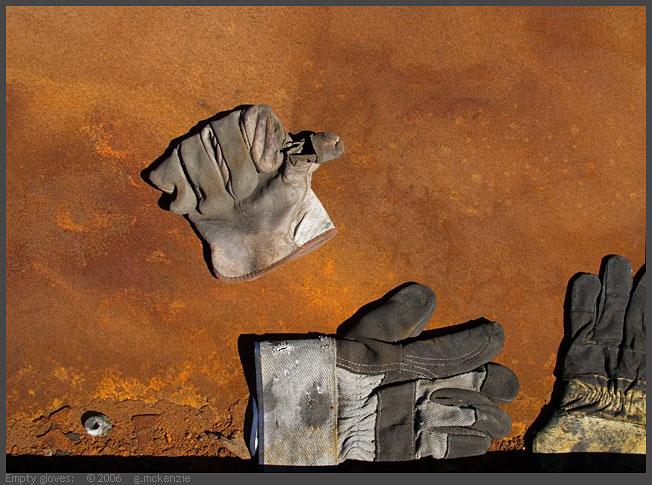
EMPTY GLOVES

by Stephen Jay Schwartz


 “It’s smokey, I think.”

“To me, it’s a burnt, sweet smell,” I say.

“It’s amazing how strong it is,” he says. Tyson runs his hand through his hair and I know he’s imagining the sweet, burnt smell coming off on his fingers.

Fingers.

We saw a bowl of them at the Coroner’s Office. Blackened, dehydrated. Jose, the Forensic Identification Specialist, had been working the fingers every hour of the past few days. They’d come off a man who’d been found locked inside a cargo container. No one knew who he was, and it was Jose’s job to rehydrate the man’s fingertips and “rebuild” the prints. He had managed to remove a thin, rubber-like layer of skin from one of the man’s thumbs, creating what looked like one of those fake magician thumbs used for special card tricks. Except this one wasn’t a fake.  He stuck his own thumb into the “thumb-sleeve” and demonstrated how he was able to make a print.

I looked at Tyson for a reaction, but Tyson played it cool.

I’d been in this room before. It was a few years ago, when I was writing BOULEVARD, my first novel. I had managed to get an interview with the Chief Coroner Investigator and he gave me a tour of the L.A. Coroner’s Office as research for the book. Although I’d already written my coroner scenes, I knew I hadn’t done the boots-on-the-ground research required to get it right.

What I learned on that first tour was that seeing dead bodies wasn’t what I thought it would be. I figured I’d watch an autopsy, vomit, then pass out. What I discovered, and I’ve written it this way in the novel, is that there was no place in my brain to process the things I saw before me. Each image, each body on the table, each open cavity, seemed to carve a new place in my brain to store the information it contained.

And the bodies, they weren’t people. They were empty gloves, left behind when the soul slips them off.

That first visit had a profound effect on me and when I returned home I rewrote my coroner scenes top-to-bottom. Now the scenes were real, and they reflected the truth of what I saw.

That was a few years ago. My memory, being what it is (random electrical charges passed from one synapse to the next in a slowly eroding brain), I’ve lost many of the details of that day. I’ve been wanting to go back, if only to recapture the sense of awe and humility and mortality I felt. The fact is, I’ve been needing to go back for quite some time.

I’ve known Tyson Cornell since he reviewed Boulevard for Publishers Weekly’s Galley Talk. He was the author event coordinator for L.A.’s Book Soup, where he’d worked for something like fourteen years. After Vroman’s purchased Book Soup, Tyson lost his job then reinvented himself as the top independent author promoter in Los Angeles. His company, Rare Bird Lit, handles the L.A. press tours for authors like James Ellroy, Chuck Palahniuk and scores of others. If you want to see an impressive client list, check out his website. He also opened a publishing division, Rare Bird Books, with the imprints Barnacle Books and Vireo Books.

Tyson is always game for new experiences. When I decided to get an armband tattoo commemorating my publishing deal with Tor-Forge, Tyson said he wanted in. We got tattoos together. It was my first tattoo and Tyson’s twentieth. Tyson likes to accumulate experiences. Anything new and different excites him. Kim Dower, my publicist for Boulevard and Beat, once told me that she had to leave a meeting with Tyson to get a pre-scheduled pedicure. Tyson joined her, because he’d never seen anyone get a pedicure before. It was an experience he needed to have.

One day I was invited to attend a lavish party and fundraiser in Malibu for Writers in Treatment, an organization dedicated to helping writers afford treatment for their addictions. My invite was sponsored by an organization called The Center for Healthy Sex. I could bring a guest, so I invited Tyson.

We sat at a table that had little place-settings with our names on them, and under our names was written the title, The Center for Healthy Sex. Everyone assumed we represented the organization. We didn’t say anything to dispel the myth. At one point Tyson started talking about his new tattoo, getting everyone interested in checking it out. He opened his shirt and revealed the words tattooed across half his chest: “SEX IS NOT THE ANSWER, IT’S THE QUESTION. YES IS THE ANSWER.”

A famous quote from Bob Crane, apparently, and Tyson had to have it inked across his chest. I’m not sure how well we represented The Center for Healthy Sex that night. Then again, it might have been exactly the kind of message they wanted to convey.

When I started talking about a return trip to the Coroner’s Office, Tyson’s ears pricked-up. He asked if he could tag along. I couldn’t think of a better co-conspirator for the job.

The Chief Coroner Investigator was again very gracious with his time. He gave us a comprehensive, two-hour tour of the facility, explaining every facet of what the Coroner’s Office does and how it benefits the community. The Department of the Coroner is responsible for the investigation and determination of the cause and manner of all sudden, violent, or unusual deaths in the county of Los Angeles. It is also responsible for determining the identity of all bodies under its care.


The facility has changed a bit since my first visit. It is undergoing a major renovation to improve and update the offices, labs and autopsy rooms. As we walked through the halls we saw holes in the ceiling where tiles had been removed, revealing the skeletal joists and silvery ducts above. Walls and ceilings were encased in opaque plastic, not unlike the plastic used to wrap the hundreds of bodies we saw in the morgue’s brand new Crypt.


When I took my first tour, the Crypt, or Cooler, was about half the size of your average Starbucks and filled top-to-bottom with bodies wrapped in white plastic sheets. The new Crypt is the size of a warehouse and, if you replaced the human bodies with wooden crates it would remind you of the scene at the end of the first Indiana Jones movie. It’s kept at a chilly 35 degrees Fahrenheit; much cooler than the previous Crypt, which rarely dipped below 50.


I’m quite aware that my description of this experience sounds a little procedural. My intention in writing this post was to re-examine my feelings about viewing dead bodies. The reason I took the tour was to push myself to face the thing we all fear, the thing that drives me to ponder everything I’ve ever pondered. I wanted to poke the part of me that might have fallen asleep.


The profound effect I experienced after my first tour eludes me. Maybe I’m still in shock – my tour was just this morning, after all. Perhaps, as my twelve-year old son tells me, the images of death are waiting to populate my dreams tonight. I wouldn’t be surprised if this was the case; I’ve been known to experience post traumatic stress days or weeks after witnessing a tragic event.


And the things I saw today were definitely gruesome, conjuring images of films like Re-Animator, Alien and The Texas Chainsaw Massacre. I saw numerous autopsies being performed, saw bodies open and upended, with empty cranial cavities and chunks of skull on the side. I saw a woman’s body unrolled all about her, a medical examiner’s arms set deep inside her small frame, while two masked and gowned homicide detectives took notes beside them. I saw a man baked from fire, the flesh on his arms colored red and yellow like the fire itself, skin rippling off bone, fingers missing but for the burnt nubs of the middle knuckles that remained. I saw victims of car accidents, suicides, homicides.


I saw one tiny drop of what the over two hundred employees of the Los Angeles Department of Coroner see every day of the year except one – Christmas. The only day they have off.


And maybe that’s why I didn’t vomit and faint. I was aware that these people came to this place all the time, that this was their job. Three hundred bodies in the Coroner’s Office every day. This death was their life. The least I could do was take a sympathetic, if objective, look at the world through their eyes.


After the tour, Tyson and I went to a cafe to share our experiences. We were all-too aware of the smell that permeated our clothes, hair, and skin. A smell set so deep that nothing could displace it.


“You still smell it?” I asked him on the phone at the end of the day.


“Yeah, it’s heavy. I had to change my shirt.”


“I keep thinking everyone is looking at me,” I said. “Wondering what it is about me they want to avoid.”


When I go home I kiss my wife and she takes a step back, her eyes open wide.


“Straight to the shower,” she says, then points at the spot on the floor where I am expected to drop my clothes. She tells me to gather some quarters for the laundry I’ll be doing tonight.


In the shower, I use a half-bottle of shampoo and a full bar of soap.


Clean, now, and to the rest of the world I seem fine.


But still, I smell it. It’s not on me, it’s in me. Maybe tonight, in my dreams, I’ll see the things I wouldn’t face with my open eyes today.


Now I lay me down to sleep, I pray the Lord my soul to keep…