David Corbett
I’m writing this on July 4th, a good day to reflect on heroes. And as has been noted on this blog on numerous occasions, crime fiction without heroes is like porn without fluffers (or words to that effect).
Note: Recent comments regarding the tediously cerebral quality of newcomer postings has not gone unnoticed. I really did try to make this not too “heady.”
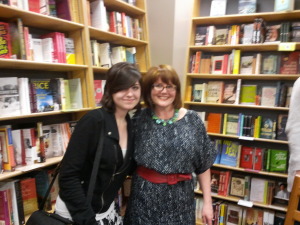
But as even the merest glance at my photograph should make plain — I am, if not the ORIGINAL Egghead from Hell, certainly a worthy inheritor of the mantle.

And, as someone far wiser than me once remarked:
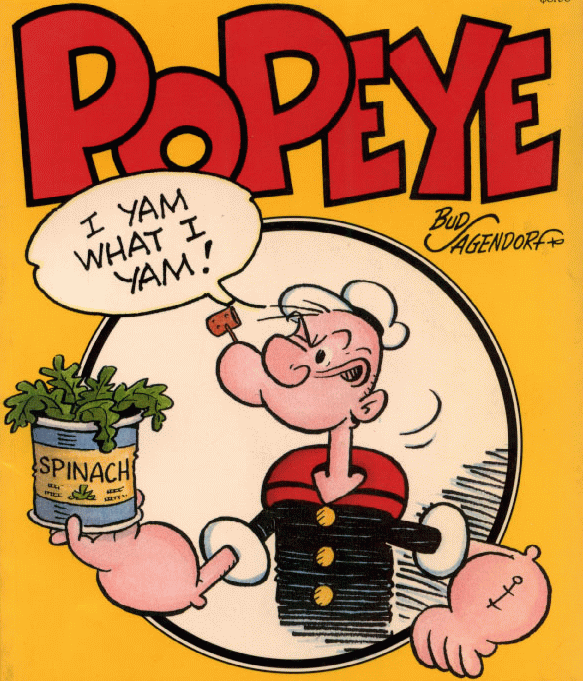
I am what I am
And that’s all that I am
—Popeye the Sailor Man
* * * * *
I was not one of those who jumped aboard the whole Joseph Campbell hero’s journey bandwagon, and I resisted the Christopher Vogler adaptation of those theories to writing.
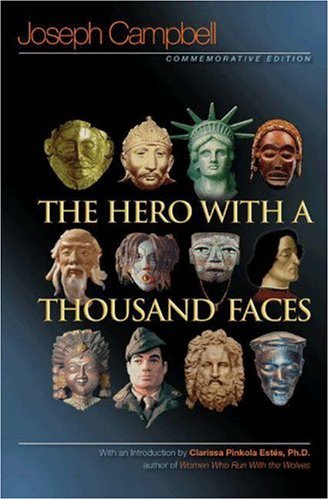
For the uninitiated: Joseph Campbell employed Jungian psychology in a comparative study of the world’s myths, creating a book that became a seminal work in the study of heroic sagas: The Hero With a Thousand Faces.
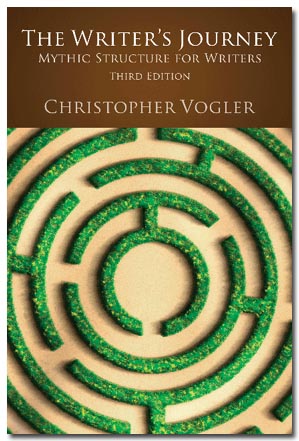
Christopher Vogler adapted Campbell’s work to the writer’s craft in his book: The Writer’s Journey.
Specifically, Vogler took Campbell’s analysis of the hero’s journey:
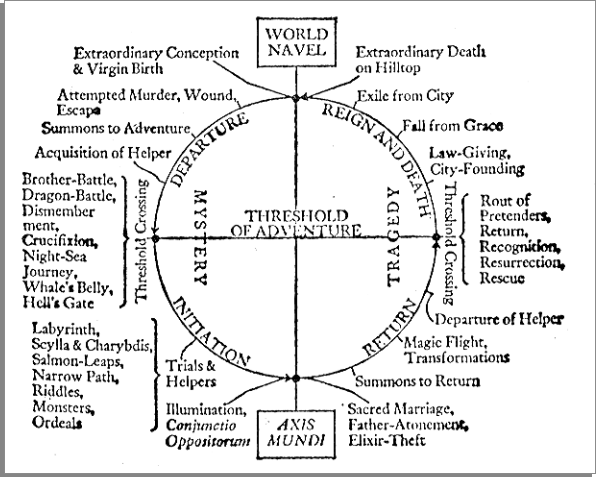
And adapted it into a twelve-step schema for storytelling.
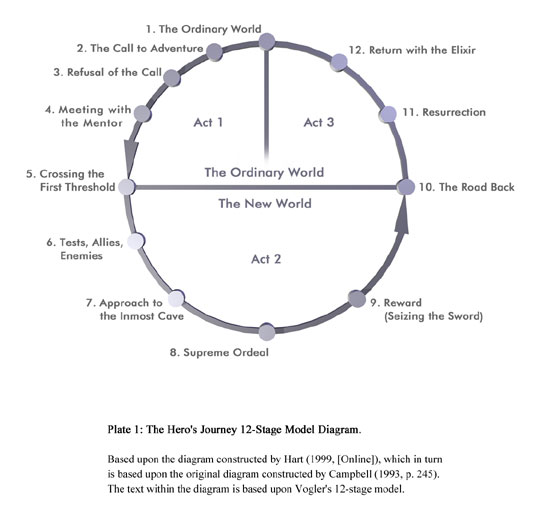
This schema has been especially influential in Hollywood.
I’ve come around a bit, cottoning to Campbell much more than I used to, and I’ve made peace more or less with Vogler, seeing a great deal that’s commendable in his methodology — though it still makes me itch at times.
First and foremost, I have to admit that Jung has always struck me as a little bit on the ooga-booga side of psychology. If Freud was the Viennese Quack that Nabokov accused him of being, Jung was the misty-eyed myth-monger. (Joyce famously referred to the pair of them as Tweedle-Dee and Tweedle-Dum.) There was just something airy-fairy about the Jungian world, with a lingering whiff of patchouli, an aftertaste of bark tea. Every time I almost succumbed, a redneck sergeant major in the back of my brain caterwauled: Hey, numbnuts! Pull your head out of your–
My basic complaint with Campbell was I thought he cherry-picked his facts to suit his theory, over-simplifying myths to fit his interpretive scheme. Myths are far more complex, varied, contradictory and unique than such a universalist interpretation can allow. (But then, I almost always regale in the trees; screw the forest.)
A number of Classicists I studied (and respected) agreed. Some even claimed Campbell’s knowledge of Sanskrit was so fatally off he’d woefully misread the texts he was citing.
Now, Aristotle’s been thrown under the bus at times for rigging his argument as well. Much of his Poetics is premised on a reading of one play — Sophocles’ Oedipus the King — and consequently his analysis ill-suits a number of other Greek dramas, not to mention more modern ones. But that’s what happens, I suppose, when philosophers go slumming in the arts.
Vogler was even more problematic than Campbell for me, to the point I nearly threw the book against the wall every time he brought up Theseus. And his attempt to use his theory to analyze The Last of the Mohicans was maddeningly — dare I say laughably — overwrought and unconvincing.
In fact, I’ve seldom found Vogler’s approach as a whole useful in analyzing anything. In pieces, this insight or another, sure, I’ve found him helpful, insightful, even profound. But some of his ideas have to be refashioned or reimagined so totally— or tossed overboard wholesale (shapeshifter my ass) — that trying to adapt them to a modern story in the realist mode seems such a wasteful detour you’re better off not to bother with them at all.
In short, I didn’t think there was anything this method brought to the table that wasn’t addressed equally well if not better — and without the spooks and fairies — by Aristotle, Lajos Egri, Robert McKee, and others in the more standard dramaturgical tradition.
I also found the efforts to use myth to demonstrate the fundamental heroic nature of human experience to be at times simplistic, ham-handed, or just plain silly — cheapening the very concept of what it means to be brave.
It’s no accident that Disney has been the most enthusiastic enabler of the Vogler addiction.
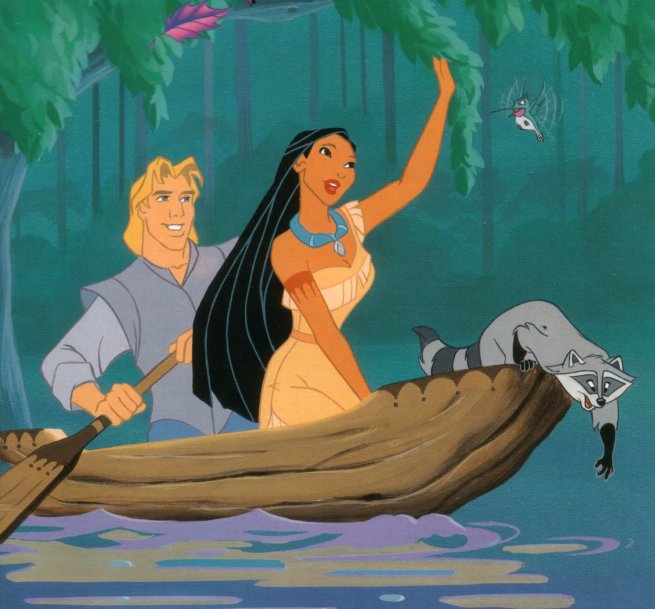
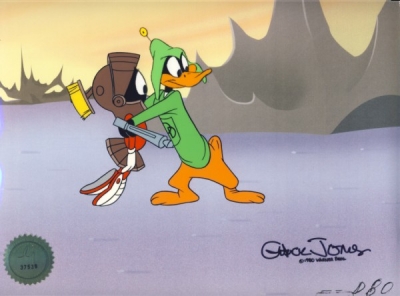
Don’t get me wrong, I love cartoons — my brother, a DoD psychologist (excuse me: Human Factors Engineer), has often remarked that it’s “frightening” how much of my personality was formed by Rocky and Bullwinkle — but I don’t look to Loony Tunes for heroic inspiration.
Now, I’m a writer, I believe stories are the best thought experiments there are for understanding human experience. I just don’t think tagging an experience to myth automatically elevates it. [“Crap, he told himself suddenly, with what facility you reduce all things to their arty equivalent.” —Robert Stone, Hall of Mirrors] Nor do I believe the best way to understand a story is to compare it to another story.
My other main complaint with the Campbell/Vogler approach was that, where the method seemed most potentially innovative and rich — adapting the hero’s journey to the psychology of personal trial and transformation — it seemed on fuller reflection to be less capable of offering new insights than merely proliferating terms.
Do I really understand anything more about a person facing a crucible “change or die” experience — an inmate giving up the criminal life, an addict battling his addiction, a neurotic embracing intimacy, a corrupt cop going straight — by likening the ordeal to Jonah in the Whale, St. George and the Dragon, Odysseus in the Underworld? Does this really add psychological, emotional or moral resonance? Or does it instead, ironically, cheapen the experience by denying its unique, temporal and material reality?
Put another way: I’ve never been convinced that going the Campbell/Vogler route produced more compelling results than deep immersion in the realities of a character or a story — not to mention of a person and an episode in her life.
Call it my Aristotelian bias, but for me the dramatic rubber meets the road when you have to deeply consider how the seemingly complex and even contradictory facts before you become intelligible as you probe their core nature and meaning.
If you do that, you’ll arrive at fundamental truths every bit as rich and “timeless” as those of myth — precisely because you’ll be tapping into the same core human truths that myths do. But there’s no shortcut. No cutesy diagram to guide the way. You gotta sweat through the homework, Sparky.
Do some stories possess qualities that suggest a special world, or entering the inner cave, or seizing the sword, or returning with the elixir? No doubt. But a great many do not. And searching for these things in tales that do not obviously possess them creates interpretive convolutions that generate nothing but circular jabber.
Also: The problem with working from myths outward is that it’s an easy trap – you can knowingly or unknowingly begin to resort to the method as a formulaic crutch — and in drama all formulas are false.
Saying we’re all on a journey is somewhat reassuring, but it’s also so vague it could be applied without much of an interpretive stretch to a rock.
Speaking of which: It’s a certain rock from mythology (ironically) that got me thinking about all of this. And the rock in question, of course, belongs to Sisyphus.
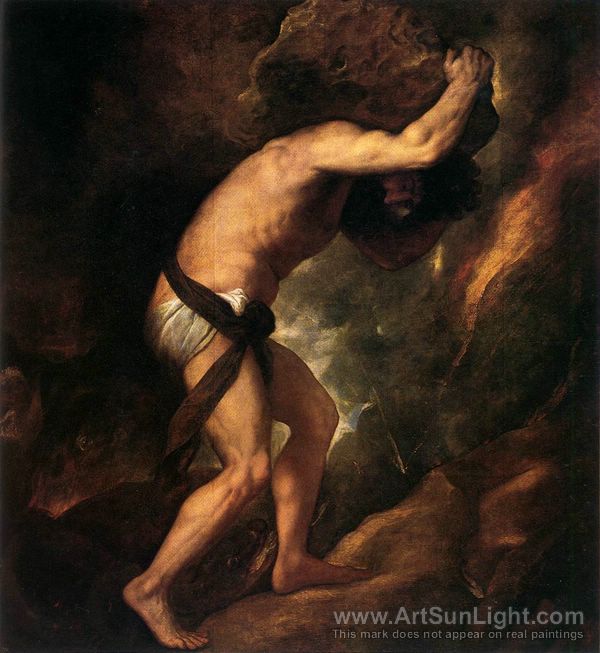
This ancient tale returned to modern awareness courtesy of Albert Camus, who like youth itself is wasted on the young. Too many of us read him in college, when the stakes of life have yet to make their most visceral impression. (Death makes life clear. The rest is marginalia.)
Camus’ essay “The Myth of Sisyphus” is deceptively brief. And I would bet that most of us, given our American optimist mindset, think of the core idea of this essay as: Life is “futile and hopeless labor.” The cheeriest insight to be had is: “There is no fate that cannot be surmounted by scorn.”
Oh, the frolicsome, fun-loving French.
How refreshing to re-read the thing and find that such a downbeat interpretation is utterly wrong-headed.
In fact, the essay has a great deal to say about heroism.
Camus finds most interesting that moment when Sisyphus sees the rock roll down the hill again, and he begins to descend to retrieve it: “That is the hour of consciousness.” And if the myth is tragic, it is solely because Sisyphus is conscious.
And yet, for Camus, Sisyphus is far from a tragic figure. Instead, he “is superior to his fate. He is stronger than his rock.”
Sisyphus teaches the higher fidelity that negates the gods and raises rocks. He too concludes that all is well. The universe henceforth without a master seems to him neither sterile nor futile. Each atom of that stone, each mineral flake of that night-filled mountain, in itself forms a world. The struggle itself toward the heights is enough to fill a man’s heart. One must imagine Sisyphus happy.
This ethos animates a great deal of modernity — one hears echoes of it in this from Martha Gelhorn: “It is cowardice or laziness to ask: what can I do about it anyway? Every squeak counts, if only in self-respect.” Or even this, in a backhanded kind of way, from Gelhorn’s short-term husband, that Hemingway mope: “Never think that war, no matter how necessary, nor how justified, is not a crime.”
I hear it in Tennessee Williams’ Cat on a Hot Tin Roof, when Maggie the Cat insists that life must go on even after the dream of life is over.
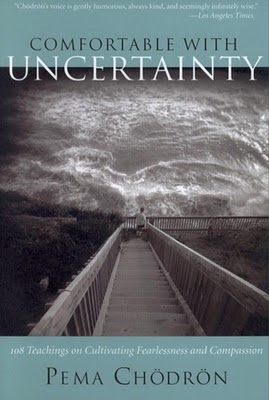
I hear it in the Zen adage: Death is like the falling of a petal from a rose — nothing more, nothing less. Or this from the Buddhist nun Pema Chödrön: To give up fear, we must also surrender hope.
I also catch it in stories I hear from cops. Every crime solved results not in the ultimate triumph of justice, whatever the hell that is, but in going back down the hill to reclaim the rock.

I hear it in war stories, because there’s no concept in the lexicon more wildly misunderstood than that of victory, and no more insidious lie than a “war to end all wars.”

I hear it in stories of the middle-aged middle-class trying to hold on to their homes, their livelihoods, their dignity amid the impromptu experiment in narcissistic sociopathy sometimes referred to as the economy.

I see it in Louise’s accounts of her past year, and now caring for her much-loved father-in-law as he faces death. I hear it in Alexandra’s offhand mention of the incredibly difficult two-year slog she’s just endured, and Stephen’s and Cornelia’s accounts of dealing with their fathers’ suicides. I hear it in Zoé and Gar’s and many others’ tales of their struggle to keep their careers alive in the face of a crumbling and often disingenuous industry. The mountain is scaled by the inch. And gravity and the rock have their own thing going.
Heroism cannot always be measured by its triumphs, if only because they’re such a long way off — sometimes beyond the horizon line. On occasion the heroic lies in the simple refusal to close the book despite the overwhelming evidence that there’s no big reveal at the end of the story. No magic sword. No elixir. There’s just this. And it is everything.
So, Murderateros: Have you employed the Campbell/Vogler approach? Has it worked for you? Do you think I’m just a contrarian crank? Do you think my Sisyphean view of the hero is needlessly bleak? When you think “hero,” who ghosts up from your memory — especially on Independence Day? Chime in, spout off, tell it.
* * * * *
Jukebox Hero of the Week: I turn this time to Eva Cassidy, who died much too young. (“What is it with Corbett and dead musicians,” I hear you cry.) This is her cover of Buffy Sainte-Marie’s “Tall Trees of Georgia,” a haunting song about another type of heroism — the lonely nobility of an honest heart.