Author Archives: Murderati Members


Dilemma

Zoë Sharp

They say writing’s therapeutic, cathartic. They say that if you have issues, writing is a way to get them out. Writing as a form of therapy, or reprisal.

Sue Grafton is a famous example:

“For months I lay in bed and plotted how to kill my ex-husband. But I knew I’d bungle it and get caught, so I wrote it in a book instead.”

When I’m giving talks, I usually joke that it’s a great way of obtaining revenge – if someone really annoys me, I kill them off in a book. And I say that, since I’ve long since run out of people who have pissed me off sufficiently, I now take requests like a kind of literary contract killer. It always gets a laugh.

But, I’m careful in how I do this when I’m actually writing, and often the recognisable features of my victims are recognisable only to me. A private joke. A private satisfaction, if you like.

But what if they’re not recognisable only to me?

I was talking to someone recently who was faced with a literary dilemma. A member of his family had written what purported to be a novel, but populated it with characters clearly drawn from his own life and portrayed in the most unflattering terms. The writer has taken real events and added his own dark spin – a hinted-at piece of moral turpitude, the sly implication of a cheated qualification.

But what do you do about it without causing horrendous rifts within the family?

You might ask, what does it matter? Surely very few people are going to actually see or read this novel? And, at one point, you would have been right. After all, no traditional publisher would touch something they thought was going to land them in legal hot water, regardless of whether the quality of the writing was of publishable standard.

Enter the internet.

Anyone with something to say can be published to the world at the click of a mouse, and so it was the case here. The book was out there, albeit briefly, for anyone to read a sample or buy in its entirety. The person who felt most damaged by this was, as you can imagine, unbelievably upset by it.

But what can he do without tearing his family apart even further?

OK, ‘Rati, what would YOU do?

Apologies for this week’s post being a short one, but I’m somewhat under the weather. I’ll be back to respond to comments whenever I can stand up. Meanwhile, this week’s Word of the Week is phoney, meaning fake. It comes from the Gaelic, fainne (pronounced ‘fawnya’) and means a circle or ring. In the 18th century, some Irish gold was not considered the genuine article, so gold rings from Ireland were called ‘fawney’, which became English slang for fake. In the 1920s, this name had extended to fake gold rings passed around by American conmen , although the American accent led to the word becoming ‘phoney’ instead.

Noir, Tragedy, and Other Dreary Bummers (Ho Ho)

By David Corbett

First, I want to say that I’m flattered  to be invited to join the Murderati Cabal. The folks who run this joint are not just some of the finest writers but some of the nicest people in the biz. I promise to do my best not to soil the linens, or leave too many surprises in the punch bowl.

To that end: I’ll launch my life as a Murderatero with something I’ve been chewing on for some time, and have written about in one form or another before—on the peculiar perils of being deemed a writer of “noir.” (Don’t worry. It won’t hurt much. Just a tiny little sting.)


The term “noir ” has become so universally misused—like other vague descriptives such as “Freudian,” “post-modern,” and “cute”—that it’s virtually a cipher, obscuring more than it clarifies.

Ask three different people if a certain writer is “noir,” you’ll get three different answers. (Yes. No. Go away.)

Is Charles Willeford “noir?” James Elroy? Lynne Cheney?

This is sloppy, it’s wrong, but mostly it’s annoying—especially when the marketing flacks at major publishing houses slather the term on a book jacket to scare off the pious scoutmasters, breathless virgins and hysteric spinsters whom the publisher fears will fall into palsied seizures in the bookstore aisles if they mistakenly crack the cover.

I speak, sadly, from experience.

If words, like people, can be known by the company they keep, then “noir” might benefit from a higher class of friends. You never seem to see Our Friend Noir without his sidekicks Gritty, Brutal, Grim or the ever-faithful Uncompromising. Throw in Brooding, Dark and Relentless, you’ve got one mean set of dwarves.

And never, never, never be so simple as to believe that calling a book “noir” will boost its sales. One might as well just slap DEPRESSING! on the cover. The only thing conceivably worse than being labeled “noir” is to be considered “political.”

I speak again, sadly, from experience. But I digress.

Getting back to our original question: What exactly is this thing called noir?

To answer these and other questions, I turned to Dark City by Eddie Muller—the “Czar of Noir.” I was particularly struck by his distillation of the noir protagonist’s philosophical dilemma: He can’t choose the world he lives in, only how he intends to live in it. (This leaves out, of course, the question of rent.)

In a way, this formulation calls to mind Sartre’s immortal, “Each of us gets the war he deserves.” Mention of Sartre in turn evokes existentialism, everybody’s favorite easy credit. I have sometimes wondered if the noir protagonist is in fact nothing but the existentialist hero—alone against “the benign indifference of the universe,” stripped of certainty and even a knowable self, burdened by guilt—or, if he plays his cards right, a full-blown psychosis.

Or, put it this way: Maybe the noir protagonist is simply the existentialist hero inserted into—get this— a crime story.

I know. I’m so bright my mother calls me Sonny.

Concerning protagonists: Sophocles is credited with the invention of the tragic hero and he used the word deinos as a descriptive. It is normally translated to mean “terrible, wondrous, strange,” and his heroes were seen as both repellent and admirable.

The Sophoclean hero was also unique at that time for his isolation, especially in relation to the gods, who were largely absent. This absence of divine guidance resonates with the “benign indifference of the universe” I already mentioned (the coinage is from Camus).

Euripides, a contemporary of Sophocles, went one better. His gods weren’t absent, they were regrettably all too present: petty, callous, vengeful.

In many of the plays of both Sophocles and Euripides, the protagonist faces a crisis in which disaster can only be averted by a compromise that, in the hero’s view, would constitute betrayal of something he or she holds to be supremely important. The hero refuses to make this compromise and, as a result, is destroyed.

Put otherwise, the great bulk of Athenian tragedy can be synopsized with: Damned if you do, damned if you don’t. In case you were wondering why Sparta won the Peloponnesian War.

Aristotle, writing a century later in his Poetics, argued that the best tragic protagonist was neither a righteous nor villainous man, but “a man not pre-eminently virtuous and just, [but] whose misfortune . . . is brought upon him not by vice or depravity but by some error of judgment.”

Or, once again seeking to encapsulate the point in a pithy bon mot, Aristotle considered the major premise of most great Greek tragedy to be: Oops.

But what does any of this have to do with noir, I hear you cry.

Let us review: We have before us a form of drama in which a psychologically and morally complex hero, who is both repellent and admirable, neither pre-eminently virtuous nor just, prone to error, stands alone in the face of an indifferent if not actively hostile universe, confronting a choice between two alternatives, neither of which is acceptable and the one ultimately chosen leads to destruction.

If I may: What’s not to noir?

A great deal, as it turns out. In noir, one often finds a protagonist whose misfortune is brought upon precisely by vice or depravity—his own. Think Frank Chambers in The Postman Always Rings Twice. Think George Neff in Double Indemnity. Think any number of Thompson’s or Willeford’s or Woolrich’s or Goodis’s protagonists. The strength of this approach lies in its ability to submerge the reader in a treacherous, unforgiving world she would normally never visit and, I would argue, a world which the authors believed pretty much resembled what modernity had to offer.

The limitation is thematic: Bad things happen to bad people. Crime doesn’t pay. These motifs are hardly startling, but it isn’t so much the destination as the journey that delivers the pay-off. And besides, as I’ve already mentioned, you can reduce the theme of even the greatest drama of all time to a caustic one-liner.

And though it shares a lack of sentimentality with tragedy, noir discards the necessity for “the moral nobility of suffering” one often finds in tragedic drama. In noir, even nobility is seen as sentimental. And here again the existentialist influence returns. “Existence precedes essence,” the great bumper-sticker slogan of existentialism, means we’re making it up as we go along, there is no transcendental meaning to be had, and there’s nothing inherently noble or degrading about anything. (To borrow a line from Zen: The situation is neutral.)

But another thing noir and the Greek tragedies have in common is their matriculation in the course or the aftermath of a lost war. The “neo-noir” films of the late 1960s and early 1970s—The King of Marvin Gardens, Scarecrow, Mean Streets, Midnight Cowboy, The Killing of a Chinese Bookie, The Friends of Eddie Coyle and, of course, Chinatown—are a case in point. Though America had not yet “lost” Vietnam when some of these movies appeared, there was an overwhelming sense that it had lost something. And this was true of noir as well even after victory in World War II. Battle-scarred veterans recoiled from the notion of themselves as heroes because they knew all too well that pitiless luck and certain varieties of “vice and depravity” were what it took to survive combat.

Then again, maybe this is all just a bunch of cynical—and therefore, sentimental—hooey. “Like all dreamers, I mistook disillusion for the truth.” That’s jolly old Jean-Paul Sartre again. How come nobody ever calls him noir?


Welcome Jonathan Hayes!

by Alafair Burke

I met author Jonathan Hayes in 2008 at a Thrillerfest cocktail party for Harper authors at Mysterious Bookshop in New York.  His first novel, Precious Blood, had just come out to rave reviews.  It turned out we had a lot in common.  He also still had a crime-related day job, serving as the city’s Senior Medical Examiner.  He liked good food and bad movies.  And, importantly, given the realities of new friendships in New York City, he lived  three blocks away from me.

A friendship was born. 

I am delighted to report that Jonathan’s much-anticipated second novel, A HARD DEATH, is in stores this week.  I hope you enjoy getting to know him in today’s Q&A as much as I have.  He’s a hell of a writer, so check out his work if he’s new to you.

Many writers have a “hook” in their backgrounds that pulled them into writing.  Michael Connelly was a crime beat reporter.  Our own Tess was a medical doctor.  I was a prosecutor.  Your most apparent lead-in to crime fiction is as a medical examiner, but that’s not actually how you began writing, is it?

It was pretty much an accident. I’d always loved to write, but it wasn’t something I’d imagined myself doing professionally. When I moved to New York, I became active in an online NYC community, where I was being (typically) free with my opinions about restaurants and movies and life in the city. An editor from Paper magazine (“the coolest magazine on Earth”, according to the LA Times) saw my writing and asked if I’d be interested in writing for them.

I dashed off a round up of my favorite NYC Vietnamese restaurants and sent it to her. Then they said, “We’d like you to write about anything you’d like.” I told them I wanted to write about the electronic music and culture of the current rave and nightclub culture. For two years, I was a professional raver (a really schizoid life – I found myself doing autopsies in the morning, testifying in a murder trial in the afternoon, reviewing a restaurant in the evening, then home for a disco nap, up at midnight and out all night at a warehouse rave).

 Hayes’ Motto Back Then (Literally?)

I wrote more and more about food; eventually I was spotted by someone at Food & Wine. They sent me to Vegas for the magazine, and things built from there. Martha Stewart next, then the New York Times, and eventually, GQ, Gourmet, etc. I ended up a contributing food editor at Martha Stewart Living.

I loved – no, loved – writing for Martha – each story was so pretty and perfect, and these jewel-like little pieces balanced out the carnage and destruction of my daily life, particularly during the hard times after 9/11. But eventually, there’s only so many times you can write about edible flowers before feeling somewhat dishonest: I am a naturally profane person, and the delicacy and politesse of writing for (most) magazines began to be a strain. I sketched the outline for a novel that would let me talk about my forensic life, and began to poke at it.

Then, another odd opportunity presented itself: my friend Bill Yosses, a prominent pastry chef, approached me about writing his dessert cookbook. When I met with his agent, she was fascinated by my day job, and asked if I’d ever written any fiction. She insisted that I send her the outline and pages of the novel I’d been working on; she signed me immediately on reading it. Harper Collins bought Precious Blood the next week in a preemptive bid. And suddenly, I was a novelist.

I think that my background in forensic pathology has been a double-edged sword. I probably know more about murder and violence than just about anyone else out there writing crime fiction today, but I worry that I might be seen as a novelty signing, like Ice T. Or, worse, Mrs. Ice T. The fact is, I’d been writing professionally at a high level for a decade before I started writing fiction.

By the way, don’t worry about Bill, he of the dessert cookbook: he’s now the White House pastry chef.

 Booklist accurately describes your new novel, A HARD DEATH, as “a CinemaScope novel, in Technicolor and surround sound.”  I once introduced you at a Mystery Writers of America event for the New York chapter by saying that you write about violence as well as any other writer working today.  Why are you so bloody good at writing about bloody stuff?

I’m not a particularly cerebral person: I am a sensualist. This is one of my strengths as a food journalist – I have a good palate, and a good nose, and can write convincingly and passionately about food at the sensual level, while bringing to the table a strong understanding of the history and culture of food.

It’s the same way with forensic stuff – I understand violence at a fairly profound level, but my approach isn’t a simple description of punching or shooting so much as a focused awareness of the look, feel and smell of violence and its aftermath. I want the reader to understand what it feels like to do my work – what it feels like to kneel down over the body of a murdered man in a blood-spattered room, or to pull the body of a stabbing victim out of a swamp.

 A HARD DEATH is the second novel featuring Dr. Edward Jenner.  Tell us a little about Jenner and the set-up for A HARD DEATH.

Jenner (who, by the way, is mortified by his overdetermined first name, and always goes simply by “Jenner”) was introduced in Precious Blood. A forensic pathologist who’s just passed 40, Jenner has retired, burned out after his 9/11 experiences. He’s hauled back into the world of violent death when the niece of a good friend becomes the target of a serial killer. Jenner survives, but is forced to take several ethically iffy steps during his hunt for the killer; politically out-maneuvered, he ends up with his New York medical license suspended. Broke and desperate to regain his reputation, Jenner jumps when an old mentor offers him several months of work in the ME office of a quiet, rural Florida county on the edge of the Everglades. It’s the perfect opportunity – Jenner can rest and recharge, away from the glare of the New York media spotlight. But then…


Your first Jenner novel, PRECIOUS BLOOD, was set in New York, where you are a senior forensic pathologist and live in the East Village.  I could feel the presence of New York City on every page of that book.  For A HARD DEATH, you take Jenner down to the Florida Everglades.  Why did you decide to move your character in only the second book in the series?  And why Florida?

I wrote about New York in a very real way – I love this city passionately, worship it. Seriously, there isn’t a day when I don’t step out onto the street and think, “Thank God I live here!” But I found I couldn’t write Precious Blood honestly unless I talked about what happened here after 9/11. This was a very hard thing for me to do – like many New Yorkers; I took a pretty bad hit back then. The topic is emotionally and politically charged for many of us, and carries very particular weight for those of us who were involved in the recovery and identification process; some of the names in the book are those of cops I worked with back then.

It was difficult to write freely about the NYPD in that book; I realized I needed to get Jenner somewhere where the cops could be really flawed without risking resentment from people I work with on a daily basis.

While I was training in forensics in Miami, I moonlighted on Florida’s West Coast, in Naples, a charming, quiet town, affluent and clean. It was a fascinating experience, particularly after the maelstrom of spectacular death that was Miami. Mostly, my days were incredibly quiet, spent documenting the natural passing of elderly Snowbirds, the occasional drowning. But then the calm would be punctured by really extraordinary things – for example, I had to go by airboat through the Everglades to a remote mangrove swamp to investigate a small plane crash. I was particularly struck by the scene of a stabbing in a migrant worker town 50 miles to the North, by the squalor in which the workers lived in comparison to the luxury of Old Naples.


That sort of contrast is great for a writer. Having learned my lessons from Precious Blood, I created the fictional county of Douglas to stand in for Collier County, and Port Fontaine to stand in for Naples (yes, I have friends in the Collier County ME Office, and in the Collier County Sheriff’s Office, and wish to step on no toes!).

Obviously, it’s not a documentary recreation of Naples and the surrounding area. I used details I’d picked up around the country – something a death investigator had told me about Iowa pig farms a few years back when I was lecturing on rave drugs in Des Moines; a lurid article about the particularly scandalous behavior of an affluent Floridian; some other stuff. And I was a bit prescient about the violent nature of Mexican drug cartels, which have, in recent months, managed to catch up with me.


We both love to eat, as do many of the other ‘Rati.  What has been a particularly memorable meal?

Last month I was in Chicago for the annual meeting of the American Academy of Forensic Sciences. I speak passable French, and have an apartment in Paris, so the community of French forensic pathologists has embraced me. At every meeting in the US, it’s my responsibility to find bons tables ­ good places to eat. Usually, that means digging up something typiquement americain; when the meeting was in San Antonio, for example, I rolled up to the rural town of Luling with a Cadillac convertible filled with French coroners in cowboy hats, eager to eat authentic barbecued brisket served on sheets of butcher’s paper and tubs of smoky baked beans, washed down by pitchers of Big Red.

But my friend Laurent Martrille is a true gourmand, and in Chicago we ate at Alinea, perhaps the best restaurant in the country. I’d raved about it in the NY Times a few years back, then wrote a piece with its visionary chef, Grant Achatz, about solid sauces for the Times Sunday magazine; we were greeted like old friends. The meal was 29 courses, some as tiny as half a teaspoon, consumed over four and a half delirious hours. And it was exhilarating.

You can see almost every course – and Laurent – in my Facebook album of the experience.   Make sure you don’t miss the duck press! They brought out a beautifully roasted duck, carved the meat off tableside, then, in front of us, stuck the defleshed carcass, heart, liver, etc, into a giant cylindrical steel press, slowly crushing the innards until a thick red slurry of organ, blood and marrow spattered out from a little spout at the bottom. This was whisked off to the kitchen and added to the jus for the duck. And it was absolutely freakin’ amazing.

Also, for the final dessert, a sheet of woven silicon was draped across the table, and two chefs poured out a variety of chocolate sauces and other elements onto this surface. They quickly bruléed a liquid cream, then brought out a chocolate mousse that had been inflated, then frozen in liquid nitrogen, and shattered it on the table, causing a fog of nitrogen mist to flow across the surface. We ate everything right off the tabletop – seriously, have a look. It was quite extraordinary, and extremely fun.

[Aside from Alafair: I could never be a food writer because my description of said meal would be, “Incredibly tasty.”] 

Sharing a meal at shared neighborhood favorite, Gotham Bar & Grill

You are a fierce Facebooker.  Unlike many writers, you rarely even mention your books or your life as an author.  Instead, you really show your actual life through photos, music, and video.  What rings your bell about Facebook?

Yes, I am the bane of my publicist’s existence – I’m frequently invited to comment on high profile killings on national TV, but always decline. I think it’s inappropriate to hold forth on something so serious about which you only have third- or fourth-hand knowledge. All of us hate to be second-guessed; it’s horrible to watch the jackals come out of the woodwork when a celebrity dies.

I’ve had a strong online presence for more than 20 years – I’ve had the same email address for all that time, and probably as many people call me “Jaze” as call me “Jonathan”.

I find just about everything fascinating – seriously, I could get engrossed in an article about the history of cereal box typography design. As a result, I have the attention span of a magpie, regularly developing odd obsessions that are gushingly watered by the fountain of esoterica that is the Internet. And when I’m passionate about something, I want to share it, hear what other people think.  So I post it on Facebook, or on my Tumblr blog.

Right now, for example, I’m obsessed by a mostly West Coast niche subculture: girls and young women who’ve developed a style fusing psychobilly rock style (fringes, retro clothes, Sailor Jerry-style retro tattoos) with facial and body piercings, breasts plumped up by clothing or surgery, Hello Kitty-style kitschy accessories and My Little Pony hair colors borrowed from Harajuku in Tokyo. It’s an odd look, a deliberate, almost angrily in-your-face miscegenation of Kiddie Cute and Hypersexualized Adult. I think it’s less rock’n’roll than a new incarnation of rave style; that scene was characterized by a conscious infantilization that had kids drowning in brightly colored, deliberately oversized clothes, carrying animal-shaped backpacks and handing out candy while they chewed pacifiers. (Admittedly, those last two were to help deal with the jaw-grinding and clenching that are a side effect of the drug Ecstasy, but, still.)

Uh, here’s my Facebook album for that – careful; depending on where you work, it might not be 100% safe for you.

I don’t talk about my work work on Facebook because it’s not appropriate; people died to make their way to me, and that should be private. This is one of the reasons I write fiction: to talk about the things I see, and the reactions they evoke, without betraying any confidence.

Anyway, I do talk about books and writing on Facebook, but not as much as I probably should if I want to be a better marketer.

My impression is that you have very eclectic friends.  Can you give us an idea of the wide array of company you keep?

Ha! I do, thank God. My first New York City friend was the naughty photographer Eric Kroll, who specializes in what’s charmingly called “glamour photography” – models in 50’s lingerie. I met Eric because he was selling a photograph of the pin-up star Betty Page shot by Weegee, the famous New York crime scene photographer. We quickly became friends, and I hung out a lot with him in his studio, and helped carry his lighting when he was shooting in various odd locales around town. Through Eric, I met a lot of people in New York’s demimonde – strippers, dominatrixes, etcetera. I, of course, found this whole new world fascinating. And in return, I was the only medical examiner they had ever met (I do think that the novelty of having a forensic pathologist as a friend has really worked in my favor – and, I must admit, I’d thought that it would when I decided to move to New York).

After the sex people, an early NYC girlfriend introduced me to friends in the visual art world – a world as cliquey, paranoid and pretentious as the fashion world. Just like the fashion world, when you get to know people individually, they can be great, but as a group, there’s an unusually high quotient of ghastliness (although my reaction might reflect my insecurity about my art world status). Then I started writing, and my next batches of friends came first from the music world, and then from the food world. And finally, the ink-stained wretches – the motley crew of authors I’ve met in the last few years.

I love my friends, though they can be a handful. Occasionally my social circles collide with terrible results, most recently last week when I had a networking disaster: my friend, fetish-y porn girl Adrianna Nicole, has a new film coming out this week, and during the run-up to its release, I’ve been following her presence on the internet. My Google alert flagged a naughty photo of her accompanied by a delirious rant about how amazing she was; this was one of the filthiest web sites I’ve seen – I mean epically obscene. Amused, I tweeted it to her.

Only instead of sending it just to Adrianna, I managed to send the URL to my entire Twitter list. When I realized it, the damage had already been done. I sent out a follow-up tweet, explaining the situation, and sincerely apologizing to anyone who’d clicked through and seen things that they’ll never be able to unsee.

And then I sent a second tweet telling anyone who’d clicked through and been delighted that they were welcome. I mean, what’re you going to do?

Really, though, much of my weird social life comes from living in NYC, and doing a cool job (forensics and/or writing). And being English and non-judgmental probably helps.


What’s next for Jonathan Hayes?

What indeed! I’m getting ready for my book tour; I’ll be banging out a bunch of dates in New York/the North East, but I’m focusing on the West Coast this time around (dates are up here). The final stop of the official tour will be, of course, in Naples, Florida, where my Collier County cop and M.E. friends will finally discover the horrific liberties I’ve taken with their beloved town.

I’m working on Jenner3 (set in the mountains in Colorado). After that, I want to do a spin-off featuring the female crime scene detective who readers will meet in this book. Down the road, I think I’d like to try a horror book, but I’m not sure.

And for me personally? I’d like to spend some more time in Paris – I’m an absurd three years into the renovation of my tiny (as in 250 square feet tiny, but perfect) studio in the Marais, and I’d really like to enjoy it for a couple of weeks. And I want to spend a month in Thailand, taking it easy, and reading the rest of Tim Hallinan’s fantastic Poke Rafferty series.

Jonathan (aka Jaze) has kindly agreed to mail a signed copy of A HARD DEATH to one randomly selected commenter.  Feel free to post any questions or comments for him, but we’d both like to know: What is your favorite New York City-centric mystery or thriller?

You can also follow Jonathan on Facebook and Twitter. Order his spectacular new novel, A HARD DEATH, here.  And check out his website here.

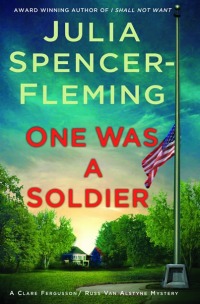
One Was a Soldier by Julia Spencer-Fleming

By Allison Brennan

I am traveling home today from the RT Book Lovers Convention, where I hooked up with fellow Murderati members and alumni: Rob, Brett, Stephen, and Alex. I haven’t been to RT in three years, and while the last one I was at in Houston left a sour taste in my mouth, this one was so wonderful it more than made up for it. I also brought my book lover daughter, my 15 year-old RT book reviewer, who took my credit card and stocked up on enough books to get her through the next few months . . .

Speaking of reading, I was lucky enough to get an advanced reading copy of Julia Spencer-Fleming’s ONE WAS A SOLDIER, on sale this Tuesday. This is the 7th book in her Clare Fergusson/Russ Van Alstyne series, and while it was the first I’d read, I didn’t feel lost. There’s a lot of backstory that I assume was in other books, beautifully woven in for us new readers so that the parts relevant to the current mystery and character arc were all there. Julia said, “I trust my readers to follow along without a road map. They don’t need all the hand-holding we authors sometimes think they do.” I, as a reader, greatly appreciated that level of intelligence!

I read virtually every page on Julia’s website (which is a terrific site, BTW, easy to navigate with lots of information) and asked her a bunch of questions as well in preparation for this article. I was tickled to learn that Julia and I are a lot alike—like me, she’s an organic writer (that means she doesn’t plot – yeah!) and her favorite quote is one of my favorite quotes: “I can fix anything except a blank page.” — Nora Roberts. Among her many favorite childhood books was the Narnia series, which I loved when I was a kid and reading them again to my children. But in one of those little twists of fate, I picked up One Was a Soldier not knowing it was set in a small, depressed Adirondack town . . . and I just turned in my next Lucy Kincaid book, set in the Adirondacks. Needless to say, I was hooked on page one!

On a warm September evening in the Millers Kill community center, five veterans sit down in rickety chairs to try to make sense of their experiences in Iraq. What they will find is murder, conspiracy, and the unbreakable ties that bind them to one other and their small Adirondack town.

The Rev. Clare Fergusson wants to forget the things she saw as a combat helicopter pilot and concentrate on her relationship with Chief of Police Russ Van Alstyne. MP Eric McCrea needs to control the explosive anger threatening his job as a police officer. Will Ellis, high school track star, faces the reality of life as a double amputee. Orthopedist Trip Stillman is denying the extent of his traumatic brain injury. And bookkeeper Tally McNabb wrestles with guilt over the in-country affair that may derail her marriage.

But coming home is harder than it looks. One vet will struggle with drugs and alcohol. One will lose his family and friends. One will die.

Since their first meeting, Russ and Clare’s bond has been tried, torn, and forged by adversity. But when he rules the veteran’s death a suicide, she violently rejects his verdict, drawing the surviving vets into an unorthodox investigation that threatens jobs, relationships, and her own future with Russ. As the days cool and the nights grow longer, they will uncover a trail of deceit that runs from their tiny town to the upper ranks of the U.S. Army, and from the waters of the Millers Kill to the unforgiving streets of Baghdad.


Doesn’t that teaser make you want to read the book?

I love Julia’s heroine Clare Fergusson. The Reverend at St. Alban’s Episcopal Church, Clare is complex, wounded, matter-of-fact, and facing very real personal and professional conflicts that have no easy or one “right” answer.

“Clare was created originally out of my desire to look at crime from the point of view of someone whose job was to repair the torn social fabric, rather than bring down the bad guys,” Julia said. “At the beginning of In the Bleak Midwinter, she is the very definition of the classic story idea ‘Someone Comes to Town.’ Everything and everyone is new to her – and her role as parish priest is also brand new. So she has a lot of connections to make.”

Keeping a character arc moving forward from book to book is not easy, something I’ve grappled with in my own series as I’m three books in. When I asked Julia how she keeps Clare fresh and growing as a character, she said, “The most surprising way Clare has grown has been in her questioning of, and experience with her ministry. She starts out very unsure of herself, bluffing her way through on her Army leadership skills and a (usually unsuccessful) determination to play the role of “priest” to perfection. As she grows throughout the books, her ability to confidently lead and guide her parish develops, but her self-doubts about her fitness for the priesthood does as well.”

To me, this conflict is so natural and organic that it made Clare real to me as a reader, someone I could see walk off the page living and breathing. And isn’t that the sign of an amazing writer? It’s no wonder that One Was a Soldier has received so many outstanding reviews, included starred reviews from Library Journal and Booklist.

“If you allow the characters to be changed by the events that unfold around them, they’ll stay fresh,” Julia said. “I think series characters stagnate when they stop being affected by crime and murder (or vampire slaying, or planetary conquest) like real humans would be. Series characters can’t be stones in the stream of story. They have to be boats, constantly moving forward through a changing emotional landscape.”

Because I’m always curious if a protagonist reflects an author in any way, I asked Julia how she was most like and most different from Clare.

“The way in which we are most alike is probably our sense of humor. Snarky, with a side of wry,” Julia said. “The way in which we’re most different? Clare is almost boundary-free; open to everyone, willing to help everyone. I’m a great deal more tightly buttoned. I wish I could reach out to others the way she can.”

One other thing I loved about the series was the very real relationship between Clare and the Police Chief, Russ Van Alstyne. While not a “romantic mystery,” the interaction between these two characters and the depth of their feelings enhanced the story and the suspense. Since I write romantic thriller, I really appreciate when other mystery/thriller writers create a wonderful hero/heroine who I can root for and respect. In addition, the characters relationships not only with each other but everyone else in Millers Kill created a very real world.

The setting for Julia’s series, Millers Kill, NY, was a character in itself: beautifully described without the description being set-aside and separate from the story—the town came alive through the eyes of the characters and lyrical word choice of the author. I asked Julia whether Millers Kill was based on a real place.

“It’s based physically on the town of Hudson Falls, NY, relocated to the far northwestern corner of Washington County. I get a lot of the details from neighboring North Country towns and villages. I go back several times a year to soak up the atmosphere and take lots of mental notes. I also get a lot of detail from the small town I live in in Maine and the nearby rural area. Like Tolstoy’s happy families, all small towns are essentially alike.

“My home town, Argyle, NY, is the basis for Cossayuharie in my books – rolling hills and dairy farms. The difference is the real Washington County has something like one murder every decade or so—while the homicide rate in Millers Kill is considerably higher!”

Julia is currently researching her eighth book, Seven Whole Days, and I was thrilled to learn that St. Martin’s signed up for three more Clare Fergusson/Russ Van Alstyne books!

Julia’s road to publication was a bit different than most–shortly after the birth of her third child, she sent her recently finished manuscript to the St. Martin’s Press Best First Novel contest. She soon after got a call from legendary mystery editor Ruth Cavin informing her In the Bleak Midwinter had beaten out over two hundred and thirty other manuscripts to win the 2001 Best First Traditional Mystery Award. 

How cool is that?

I asked Julia some fun questions, but please ask her some more yourself! She’s going to try and visit us today to answer them for you.


Dog person or cat person?


J: Dog person, though we also have two sister-cats who are very sweet. My current Big Dog, Marvin, is a lab-husky mutt who likes to sprawl next to my chair as I work.

Favorite book(s) as a child?

J: It’s a toss up between the “color” Fairy Books, the Narnia series, and Walter Brooks’ Freddie the Pig stories. I believe “Freddie the Detective” was my introduction to the world of crime fiction.


Favorite classic movie?

J: Christmas in Connecticut

Favorite movie you’ve seen in the last year?

J: Julie and Julia. We got it on DVD so we could watch only the Julia parts.

What do you like to do when you’re not writing or reading?

J: What is this strange space/time anomaly you speak of?

Favorite vacation spot?

J: I’m living in it – the beautiful state of Maine.

One fact about you that most people don’t know …

J: I wore an eye patch to correct amblyopia when I was a kid.

Now the bio . . .
Julia Spencer-Fleming is the Agatha and Anthony-award-winning author of the upcoming One Was A Soldier, the seventh Clare Fergusson/Russ Van Alstyne mystery. You can find her on Facebook and on Twitter.   One Was A Soldier is available for preorder at: Amazon, Barnes & Noble, Books-A-Million, Borders. Powell’s Books and your locally owned independent bookstore.

Start at the beginning of the story with In the Bleak Midwinter, now only $2.99 as an ebook. And don’t miss Letters to a Soldier, a free ebooklet with exclusive content and an excerpt from One Was A Soldier.

On her website, Julia ponders an oft-asked question about whether her books are “cozies” or “hard-boiled.” As a reader, I find them neither, but with elements of both, making the books an original voice that I very much enjoyed. If you don’t have a question for Julia, maybe we can discuss labels — whether labels hurt or hinder an author, books that transcend labels, or books that are called one thing but are really something very different.

REPORTING FROM THE FRONT LINES


by Stephen Jay Schwartz

I’m reporting from the Romantic Times Convention in downtown Los Angeles. So, why am I wielding a Colt M4 tactical assault weapon? Could it be because men here are out-numbered 300 to 1 by their female counterparts?

It’s tough in the trenches – Brett, Rob and I have had to team up and take positions against an advancing army of faeries, vampires, zombies and Harlequins. We sleep in shifts and keep only what we can hump in the night. Umm…that’s the military definition of “hump,” ie, “to carry.”

Okay…maybe I should stop before I get into trouble.

The Romantic Times Convention is more exciting and diverse than I ever imagined. The photo above was taken at the ATF Workshop and Demo where conventioneers were introduced to numerous weapons of minor destruction (Remington 870 police shotguns, .357 Colt Pythons, Sig Sauers, a .22 caliber “pen” gun, an HK53 Malaysian military machine gun, an AK47 African Streetsweeper that shoots shotgun shells, and an M79 grenade launcher).

However, the deadliest weapon we encountered was the One-Shot Pekingese, pictured below:


The ATF demonstration also featured a German Shephard-attack on our moderator, Author Andrew Peterson, as well as lectures by a host of awesome ATF agents and SACs.

I’m just going to burn right through some of this, because the bar downstairs is filled with hundreds of corsetted authors and it just ain’t right to be sitting in my room while the party rages on…

I’ve been hanging with Alexandra, Allison, Sophie Littlefield, Joshua Corin (my roomie), Brett, Rob, Heather Graham, F. Paul Wilson, Andrew Peterson, Barry Eisler, Boyd Morrison, April Smith, Dianne Emley, Lori Armstrong, and so many more.

Today (Friday) I’m on three panels: Hollywood: Scriptwriting from TV & Film Insiders, with Sheryl J. Anderson, Robert Gregory Browne, Adena Halpern, and Gregg Hurwitz at 10:00 am; Hollywood Film to Page with Alexandra Sokoloff at 11:15; and Striking the Balance for Thrillers with Allison Brennan, Jan Burke, D.P. Lyle and Alexandra Sokoloff. Great friends, great authors!

Listen, I could go on and on about how great this conference is. But I really got to get down to that bar.

I’ll leave you with an image from tonight’s faery contest. Yes, faery contest. Don’t look for me on stage – my wings didn’t survive the trip.


That’s Dennis Pozzessere photographing two of our fine faeries!

Sleepless in … Los Angeles. Please give a warm Murderati welcome to – our very own Brett Battles!

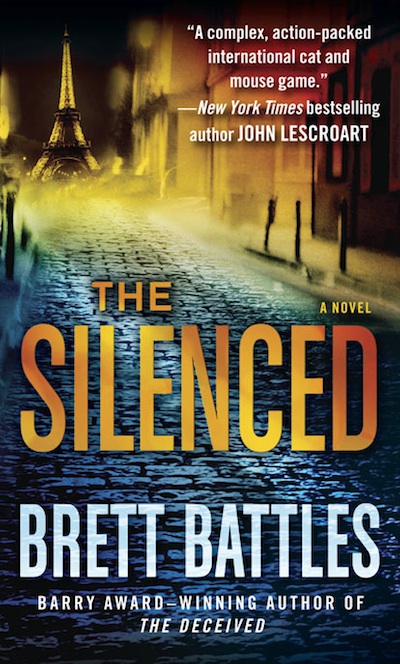
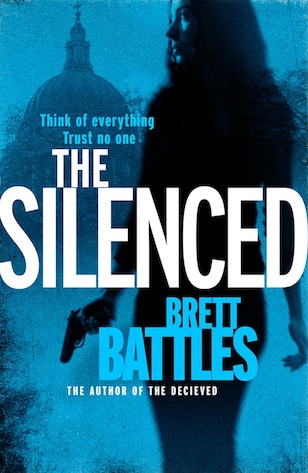
You may recall, at the beginning of March, Brett very kindly did an interview/review for the US publication of my Charlie Fox thriller, FOURTH DAY. It was an absolute pleasure to be able to return the favour with his latest – the excellent THE SILENCED. I confess I’d put off reading this book – but only because normally, reading on screen makes my eyes go a bit square, but this one no hardship at all! Highly unusually for me, I read it straight through in about a day and a half. Yeah, once the story grabs hold it really doesn’t want to let go.

Brett, as you all probably know, is the award-winning author of three previous books in the thriller series centring around Jonathan Quinn, whose chosen profession is that of covert cleaner. He’s the man who knows exactly where the bodies are buried – mainly because he’s the one who put them there. THE SILENCED is the fourth outing for Quinn, accompanied by his deadly companion, Orlando, and young apprentice, Nate, on a deadly chase across America from west to east coast, and then on to Paris and the UK.

Zoë Sharp: So, Brett – sitting comfortably? Is that spotlight OK? Electrodes not pulling out too many hairs, I hope? Duct tape allowing some circulation?

Brett Battles: Uh…help?

ZS:  So, let’s begin. You were one of the original KILLER YEAR authors – the class of ’07. For those of us with the attention span of a goldfish, can you remind us how that all came about, and how much you feel it helped kick-start your career?

BB: Ah, yes. KILLER YEAR. It started back in 2006. There were several of us with books coming out in 2007 who had taken to blogging as a means of interacting and getting our names out there. We started following each others’ posts, sharing information, and becoming friends. We were always talking about how hard it was to get attention and market our books. I’m not sure who mentioned it—Jason Pinter or our own JT, one of those two, I think—but someone said if only we could band together, it would be easier to be heard. Instantly a big giant light blub went off over our heads, and within minutes a tag line came to me: It’s Going to be a Killer Year. Jason or JT shortened this to KILLER YEAR, and we were off.

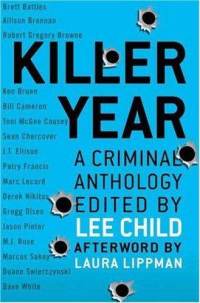
It was great! And did exactly what we hoped, especially within the Thriller and Mystery community. When we showed up at conferences, people already knew who we were. Other members included former Murderati folks Toni McGee Causey and Robert Gregory Browne, and also Bill Cameron, Sean Chercover, Marcus Sakey, Dave White, Marc Lecard, Gregg Olsen, Patry Francis, and Derek Nikitas. We got an anthology out of it (KILLER YEAR: STORIES TO DIE FOR edited by Lee Child—that was almost all JT’s doing – thank you JT!) Also, the debut novelist program that ITW runs now is a direct offshoot of KILLER YEAR.

ZS: Where did the character of Jonathan Quinn originally come from? And did the name arrive all of a piece, or did you agonise over it?

BB: I didn’t agonize, but he didn’t arrive fully formed either. I knew I wanted to write an international espionage type story, but I didn’t want to do an assassin or super spy. There were enough James Bonds and Jason Bournes and John Rains in the world. I wanted to do something different. I also have this fascination with the concept I refer to as “what happens after?” By that I mean what happens after the main event occurs. We get news articles about accidents or murders or robberies or whatever, but we seldom ever get the follow up stories of what happens after these things occur. I consider Quinn an “after” character. He gets to work after the main action goes down, though he then is often pulled into creating some of that action himself. So I thought about him for a while, and he slowly took shape, and when I finally felt I had a good idea of who he was, I started writing.

ZS: Quinn’s character is a cleaner – he moves in and deals with the aftermath of death, cleaning up and disappearing the bodies. On the surface, he doesn’t sound like a very sympathetic character. How do you go about combating that?

BB: Good point. I definitely wanted him to be sympathetic, and knew I had to be careful there. Part of what I did was basically give him a personal moral/ethical code that included working for agencies and governments he feels are doing the right thing. This is something, of course, he can’t always know for sure, and could put him in the situation of working for someone he thinks is doing right, but who is actually doing something underhanded. I also try to show that he has a clear human side and cares about things. Though he might try to hide it sometimes, it’s always there, right underneath.

ZS: In THE SILENCED, the character of Liz asks Nate if Quinn is a criminal. He replies that Quinn is possibly the most honourable man Nate has ever met, but doesn’t that side-step the question slightly? After all, Quinn is a freelance operative – he works for the highest bidder, even if he does reserve the right to walk away from jobs he doesn’t like. Did you set out to give him this conflicted set of morals – this ethical dilemma – right from the start?

BB: Yes on all fronts. Definitely side-steps the issue. To many people there’s no question he’d be called a criminal. And I love the internal conflicts this causes him. In my mind, his job is slowly eating away at him from the inside.

ZS: I particularly liked the deceptively simple narrative style of the book, and the straightforward description of the action scenes – you let the action speak for itself rather than trying to over-dramatise something that is, by its nature, already dramatic. How do you go about putting together something like the scene with Nate and Julien’s colleagues in Paris?

BB: Thanks, Zoë. I appreciate that. I wish I could tell you that I sit there and plan everything out and find the best way to tell it, but, honestly I don’t. On that particular scene, I remember thinking, “Okay, Nate needs to go here, and find what he finds, and run into one of Julien’s colleagues,” then putting my hands on the keyboard and just writing it. Turned out he didn’t find just one of Julien’s colleagues but several, and I didn’t know that until it happened.

As far as action scenes themselves, I don’t know how to write them any differently than I do. It’s just the way they come out of my brain. And, like you said, scenes like that are already full of tension. I don’t need to go over the top.

ZS: And, following on from that, what are your pet hates in action narrative? What really pulls you in, and what throws you out of the story?

BB: Over description kills it for me. It makes me aware that there’s a writer behind the words, and takes me out of the actual story. Show me what needs to be shown, keep the tension high, and get to the point. That’s what works for me.

ZS: The supporting characters of Orlando, Liz and Petra are very interestingly portrayed and fleshed out. Are you in touch with your feminine side? Erm, I mean, how easy do you find it to write opposite-gender characters?

BB: Hahaha… I actually love writing female characters, in fact, sometimes they are the strongest characters in my stories. Orlando is often Quinn’s conscience and sounding board. She keeps him focused when he begins to wander off. In THE SILENCED Liz is great, too, as is Petra. These are all women who are sure of themselves while still having doubts and questions like any normal person would have. Am I in touch with my feminine side? I try to be, but that’s for others to judge, I guess.

ZS: It seems that many publishers, if they find a character they like, push for a series rather than standalones? Did you set out to write a series from the outset, or was it publisher-driven?

BB: I didn’t set out to write a series, but by the time I sold THE CLEANER I was thinking that way. A friend and former mentor was the one who mentioned the possibility to me. When he said, “I think you could have a series here,” it was like one of those hit yourself in the forehead moments. Of course, it was the first of a series. Why didn’t I see that?

ZS: The action of THE SILENCED shifts from your home city of LA, across to Maine and New York City, then on to Paris and London. I noticed with a smile the scene that takes place in the lobby of the Grand Hyatt in NYC, as it’s a familiar location to any ThrillerFest attendees and a nice nod to the genre. How did you go about researching the other locations of your novel?

BB: I’m big on location scouting. I love to travel, so I often plan my travel around stories I want to write. Such was the case with the London and Paris locations. I went there specifically because I wanted to feature them in the story, and took tons of pictures and notes and must have walked dozens of miles while I was there. The Hyatt in NYC I’ve been to many times, of course, and thought it would be a kick to set a scene there given that Thrillerfest and the Edgars are held in the building. As for the scenes in Gorham, Maine, I have a good friend who lives there. In fact, the house in question is loosely (very loosely) based on hers.

ZS: You’ve mentioned previously that you’re not an outliner – preferring to come up with the initial idea, maybe bullet-point the plot – and see where the writing takes you. Is that still the case? If so, how many drafts do you typically go through to get to the finished work? How much does the final version usually differ from your first draft, and in what respects? Major plot points? Minor elements? Any examples spring to mind with THE SILENCED?

BB: That’s pretty much still the same way I work. I’ve tried to do more detailed outlines, but a) they’re a chore, and I don’t want writing to be a chore, and b) once I start writing the book from an outline, I feel like I’m straight-jacketed and am just typing more than writing. The way I work is exactly how you described: a few ideas, maybe some bullet points, and usually a handle on where I want to end up, then go. I sometime refer to my first draft as a 300+ page outline. Rewriting is the key. I’ll do anywhere from four to six rewrite passes these days, with the first two or three being major passes and the others more clean up and polishing passes. I can’t recall specifically any huge changes in THE SILENCED, but there is one from THE CLEANER that I’ve cited before. In the version I sold, so that would already be draft three or four at that point, I had killed Nate off in the first 80 pages. Readers of the series know that here we are in book four and Nate’s still around. That’s because a smart editor convinced me it was a mistake to kill him off, and she was definitely right. I should point out that with the earlier books I had to do more rewrite passes than I do now, but that’s because, hopefully, I’m not making the same mistakes as much. I definitely try to learn from each book to the next.

ZS: Who are your first test-readers and what made you choose them/stick with them?

BB: The two I use (read abuse) for most books are Bill Cameron and Tasha Alexander. They are both great writers, and I trust their opinions. Bill and I often talk for an hour or more after he’s read a draft, going over all the points. They have both definitely made my books better. I’ve also started expanding my Beta Readers group. I’ve even roped Rob in to reading my latest.

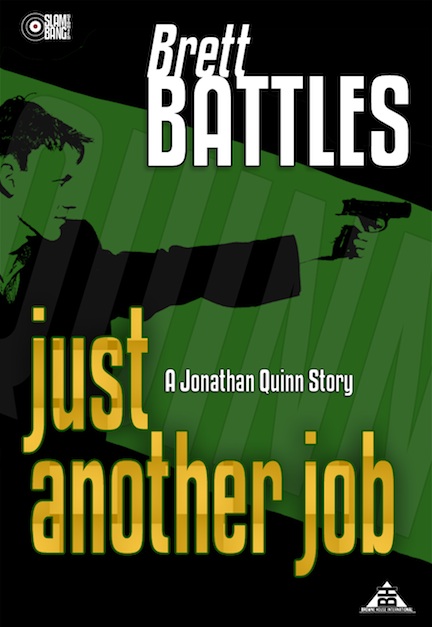
ZS: I see you have a brand new Jonathan Quinn short story available in eFormat – ‘Just Another Job’. Will this also be available for us paper dinosaurs? Are you a frequent short story writer? I note that your story ‘Perfect Gentleman’ came in for particular praise in the KILLER YEAR anthology. What attracts you to short stories, and how did ‘Just Another Day’ come about?

BB: No plans just yet to bring the shorts out in paper. Perhaps once I have several I can package them together. I haven’t written many in the past, but I do have plans on writing more in the future, including several Quinn shorts from when he was just starting out…basically Quinn origin stories. ‘Just Another Job’ was something I did as a web exclusive for a member-only site a year or so ago, and was now able to make available for others to read. I do enjoy writing shorts, but sometimes find that it’s easier to come up with an idea for a novel than a short story. Don’t ask me why.

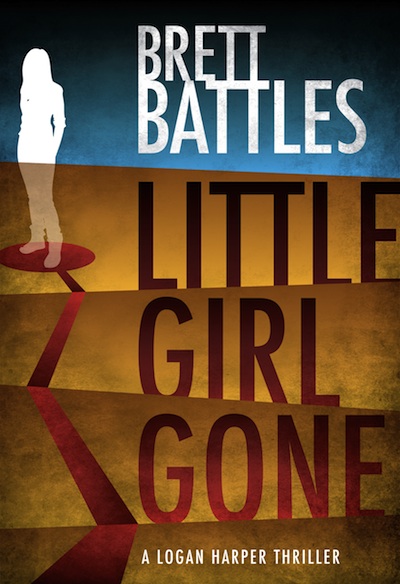
ZS: I see that as well as THE SILENCED you also have the first book in a new series with a new main protagonist, Logan Harper – LITTLE GIRL GONE. Tell us about this new departure? Why have you deviated from the Jonathan Quinn series? What avenues does Harper allow you to explore that Quinn didn’t?

BB: First let me say that I love Quinn, and will continue writing Quinn, but I’ve been feeling pulled lately to also write stories that are outside his world. Logan gives me this opportunity. Logan’s a former soldier and defense contractor who has returned to his hometown after losing his job and his wife over a crushing experience while in Afghanistan. He’s now just trying to make it day-by-day working at his father’s auto garage in the small California coastal town of Cambria. One morning when he makes his normal stop to get coffee at a shop owned by his father’s friend Tooney, he finds a man in back holding a gun to Tooney’s head. From there, Logan is thrust into a search for Tooney’s missing granddaughter that takes him first to Los Angeles, and then to Bangkok and finally to the beautiful Wat Doi Suthep temple above Chiang Mai, Thailand.

Logan allows me to have more of an everyman hero—albeit with some advanced training. He’s not a professional like Quinn. He doesn’t work for agencies or organizations. He just helps people, sometime reluctantly, while he tries to deal with his own demons.

I really love getting into Logan’s world, and am extremely happy with how LITTLE GIRL GONE has turned out. It’s been getting a lot of great response that I am very grateful for.

ZS: We’ve actually been to Cambria – lovely place, and we ate at a wonderful little restaurant that played Harry James and served terrific duck quesadillas. But I digress… So, what else is on the horizon for you?

BB: I have another book coming out later in April called SICK. It’s quite possibly the most suspenseful book I’ve ever written. And a story that will keep you guessing until the end. Oh, and then there’s the first in my new YA series, HERE COMES MR. TROUBLE. That will hopefully be out early May. At that point I may curl up into a ball and sleep for a year.

ZS: Well, Brett, it’s been real pleasure. One final question before the gag goes back on – what IS the best way to get rid of a body? Any last-minute cleaning tips I should know about…?

BB: I’d love to tell you, Zoë, but I can’t give away any trade secrets. I’m sure you understand. Thanks for having me! I’ve enjoyed it here at, what did you call this place? Murder-at-i? Well, whatever. Thanks!

I let Brett chose this week’s Word of the Week (think of it as a kind of last request) and he came up with shoice, which means when presented with several options to choose from, shoice is the option “choice” you “should” make.

Hey, Kids, Let’s Put On a Show!

by J.D. Rhoades

Recently, the publishing news website Galleycat reported that multi-million-bestselling novelist Stephen King and legacy rocker John  Mellencamp had teamed up to write a musical. The show, titled Ghost Brothers of Darkland County, “is based on the real 1957 deaths of two brothers and a young girl. Mellencamp is in charge of the ‘roots and blues-tinged score.’ ” 

Well, you know, why not? I mean, if U2 can make a horrendously expensive and insanely hazardous Broadway show based on Spider-Man, who’s to say King and Mellencamp can’t make a major hit? They’ve even played together before:


(This is, apparently, the kind of cool shit you get to do when you’re Stephen King).

Admittedly, “the real 1957 deaths of two brothers and a young girl” does not sound like the kind of subject matter to make for toe-tappin’ musical theater, but whern you think about it, there’s a lot of dark stuff and killing in musicals. Look at Porgy and Bess. Look at West Side Story.  Hell, look at Lion King (so I don’t have to.)

Musicals are huge these days. A quick glance at last years offerings shows that there were musicals based on The Addams Family (with Nathan Lane as Gomez and Bebe Neuwirth as Mortica, because apparently there is a law on Broadway that Nathan Lane and Bebe Neuwirth must be employed at all times);  Women on the Verge of a Nervous Breakdown; and, (Lord give me strength) Love Story.  I guess if you’re trying to get that all important tourist dollar into  your theater on the Great White Way, you just can’t count on packin’ ’em in with Long Day’s Journey Into Night or The Cherry Orchard, unless you set them to music.

Which of course, raises the question: why shouldn’t we jump on this bandwagon? We’ve got some musicians in our midst, and I sing a little. How about So Close the Hand of Death–The Musical, featuring a show stopping rendition by Hugh Jackman of “The Great Pretender”? Or Zoe, we could always do Charlie-The Charlie Fox Musical (“kinda young, kinda wow”!)

The possibilities are endless. Maybe when Mellencamp and King get their show up and running, I can get Mellencamp to pen a couple of tunes for the musical version of  Lawyers, Guns and Money:

(The lights come up on the  southern town of Blainesville, a once prosperous  but now fading mill town. Enter ANDY COLE, stage right He sings to the tune of Melencamp’s “Small Town”):

ANDY: Well I was born in a small town
Practice law in this small town,
Think I got life knocked in this small town.
But there’s a lot of which I’m unaware….

(Enter local crime boss VOIT FAIRGREEN from stage left):

VOIT: I run the crime in this small town,
Make a lot of cash in this small town,
Know where the bodies are buried in this small town,
Cause I’m the one that put them there…

(Then the Chorus of TOWNSPEOPLE enters):

Well a barmaid’s been murdered and Andy’s been hired

To make sure Voit’s brother Danny gets away

 But there’s a lot of secrets hidden in this small town

And when they come out there’ll be hell to pay…


Okay, maybe I’d better leave this stuff to the pros.

So tell me–which of your books–or your favorite books– would you like to see done as a musical? Who’d star? And what woud the score and songs be like? Show tunes? Blues? Rock opera? Most importantly, Where would Nathan Lane or Bebe Neuwirth fit in?

C’mon, kids! Let’s put on a show!


The South African market

by Tess Gerritsen

I’m in a jet-lagged fog, having just returned from South Africa where I spent an amazing week in the bush watching lions

leopards

 and the most adorable baby elephant who kept gamboling over to play peek-a-boo with our Land Rover.  

But before I headed off to the safari lodge, I spent a few days in Cape Town and Johannesburg doing some promotional events at bookstores, meeting readers as well as local authors. I also met with my wonderful team at Random House Struik:

 I prepared for my trip by reading some terrific novels by prominent South African thriller writers including Deon Meyer, Sarah Lotz, Mike Nicol

(here with Mike Nicol and his wife)

 Andrew Brown, and Jassy Mackenzie.

 (here with Jassy)


Many US readers are no doubt familiar with Deon’s work, and some may already know the name Jassy Mackenzie, who’s been published in the US, but if the others are not yet well-known, it’s because they aren’t yet distributed well in the US.  In this age of an international e-book market, I suspect it’s only a matter of time before you’ll get the chance to sample their work.

But in the meantime, some of these terrific authors are faced with the tough dilemma of marketing their books in the very small South African market.  How small?  Despite the fact South Africa has a population of around fifty million — putting it just under that of the UK —  the number of those who regularly buy and read books, is probably about a million.  That, at least, is what I learned from those familiar with local publishing.  The population of readers is further splintered by those who read exclusively in English, and others who prefer Afrikaans.  You can see, just by the numbers, that it’s very difficult indeed for anyone to make a living just from writing for the South African market.  The only way to make a sufficient income is to also sell to the international market.

It’s a pity that their stories aren’t more widely read, because these books have a perspective that’s seldom heard in the U.S.  I characterize Mike Nicol’s books as “Quentin Tarantino” on the page, set in the throbbing criminal world of South Africa.  Sarah Lotz tells uproariously funny crime stories that had me laughing out loud during the plane ride over.  Jassy Mackenzie and Deon Meyer’s books feature riveting, adrenalin-packed tales that are the equal of America’s best thriller authors.  And Andrew Brown’s profoundly moving, gorgeously written REFUGE, which I can’t stop thinking about, just about broke my heart with an ending that’s both tragic and inevitable.  

These are all accomplished writers, and ever since reading them, I’ve been pondering the question of why, except for Deon, they haven’t yet surged onto the US scene.  I suppose some of it may be due to the fact that Americans are by and large unfamiliar with South Africa and its unique history, politics, high crime rate and police corruption.  While I was there, in fact, there was a highly publicized contract killing of a major crime figure.  It’s an exotic environment for many Americans.  But once you get past the occasional Afrikaans word, once you get comfortable with the setting, you’ll be hungry for more.


A flash in the pan

by Pari

You lived with it – with me with it – for nearly two years. Now, Left Coast Crime 2011 is a memory. Everyone assumes that I’ve been resting, my feet up on the television table, a glass of single malt by my side.

Contrary to that lovely image, I actually came back to a full week of work. Both of my major PR clients had several big events that required my attention and presence. I still had to get dressed up and be “on,” though all I wanted to do was sit on the couch and stare into space until my eyes managed to focus again.

Since the con ended a week ago Sunday, I’ve been eating a lot of chocolate. The good news: I’ve started taking walks again. The bad news: my clothes don’t fit because of all the stress eating I did for the last three or four months.

And life continues. For those of you who know me, you know these next few months are going to signal some huge changes in my life. Some intrigue me. Others seem insurmountable. Whatever comes, comes. I’ll deal with it. C’est tout.

During the last eight days, I’ve received many thank-yous and let me tell you, they’ve been welcome. I’ve also gotten complaints about not being accommodating enough for people with disabilities, about Santa Fe’s altitude, about the convention programming, about not enough panels for would-be writers, about the layout of the hotel etc etc. 

So it goes. Pros and cons, ups and downs.

I’ll admit it. I’m pooped.

Several people have asked me if I’d do it again. Truth be told, I don’t think so. Especially not for free. I may aspire to altruism, but this was too much work; I dealt with too many big egos demanding/asserting their needs above others. And the hardest part is that after all of this effort, people have already moved on to the next shiny thing.

I knew it would happen. I just don’t like it.

On the positive side, the mantle of responsibility for the convention became quite heavy during the last few months. I expect after I’ve had a little more time to decompress that one of the benefits I’ll notice is that my spine is straighter and I’ve grown an inch or two.

That’ll be nice.

My clothes might look a bit better on me then.

For so much of the convention, I felt like an outsider at my own party. I observed but didn’t participate. I didn’t have much time to spend with friends and realized that my feelings for “the mystery community” have changed during these last two years. Having this perspective was useful – something most of us don’t get so clearly – and will be helpful as I progress in my career.

Perhaps most important of all, I also realized one incredible thing. During the entire convention, I continued to write my fiction every single day.

LCC 2011 may be a flash in the pan now, but my commitment to writing endures.


*********************

Speaking of changes, many of you have read about both Rob and Toni leaving Murderati. We wish them every success and joy.

We’re also happy to announce that two fabulous writers have agreed to join our group. We’ll have more details in the coming weeks, but I wanted to let you know that Zoë will no longer be our only international contributor. Australian writer extraordinaire P.D. Martin is coming on board! And if that’s not enough, David Corbett will be here too.

So stay tuned. Life at the ‘Rati continues to be vital and full.

Ahoy, there!

By Cornelia Read

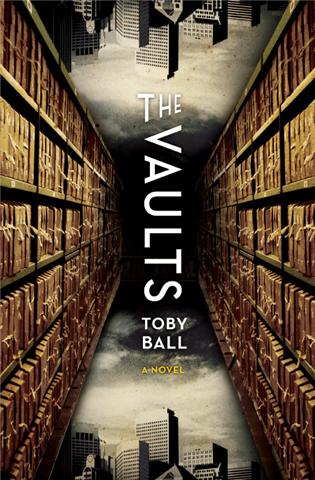
I’m thinking a lot about traveling, today. This is because I’m going to be driving up to the Maine Festival of the Book with my new pal Toby Ball, who wrote an incredible debut novel called The Vaults–a book that is dark and twisty and fabulous in all the best possible ways…

We’re going to be doing a mystery panel at 9:30, and then driving back to New Hampshire. And then I’m going to clean my apartment–really, really fast–and then I’m going to drive to New York City (Just like I pictured it! Skyscrapers and everything!), which takes sane people about five hours but me somehow about four. I say this is because I have really good music on my iPhone. Others’ mileage may vary.

But! Also! In October I get to go on a cruise! Which I have never done before!! On the biggest ocean liner currently sailing!!! With a whole bunch of mystery authors!!!

And I want everyone to totally come on this boat with us. So there, this is me, shilling totally.

But!! Here are the other authors who are going to be coming (alphabetically):

Megan Abbott | Bill Fitzhugh | Joanne Fluke | John Hart | Stephen Hunter | Lisa Jackson
Reg Keeland | Harley Jane Kozak | Gayle Lynds | Otto Penzler | Gary Phillips 
Cornelia Read | Robert Ward | Kate White | Don Winslow

I mean, how cool is THAT? Plus… the ship is amazing. Here is an article the New York Times just wrote about it:

Royal Caribbean’s Allure of the Seas!!!

So, hey, if you are a cruising type person, consider coming along for this, because it is going to be So Awesome. Seriously. And we are going to be sailing to really, really cool places. And, you know, mysteries! At sea! With buffets and stuff!!!

If you have ever been on a cruise, do you have any pointers? This will be my, ahem, maiden voyage…


I will try to check in from the road today, dear ‘Ratis… I hope everyone has a fabulous weekend!!