Author Archives: Murderati Members


Because Free is a Very Good Price!

by Alafair Burke

I’m not a salesperson.  I don’t even like to think about business or money.  If I did, I would have stayed at a law firm and pulled in a lot of dough.

I love to read.  I love to write.  I love to talk to readers about the books I’ve written.   But I also appreciate the absolutely true fact that it is only because there is a “business” side to the business that I am in the enviable position to do what I love.

These days writers are unavoidably pulled into the sales and marketing of their books.  Some writers enjoy it.  I once heard a writer talk about his drive to “move units.”

Mer.

I also know writers on the other end of the spectrum who resolutely refuse to think about anything other than the writing of the books.  I confess that I find this view tempting.  Unfortunately, that “strategy” often leads to this:

So what’s a writer like me — neither diva nor salesperson — to do?

I thank my readers — a lot — because they are the ones who give me a career.

I truly believe that word of mouth is the most effective advertising.  I still believe that readership can grow incrementally.  In a business that increasingly searches for the one-time out-of-the-gate phenom, I want a career like Michael Connelly’s, Harlan Coben’s, Lee Child’s, or Laura Lippman’s — each book getting better and better over the course of years and decades. 

That kind of career is built on support from readers.  No, not just support.  Love.  Like, serious wind-beneath-my-wings love. Like, this cat and this dog kind of love:

Last year, to thank my most loyal, loving readers for early support, I promised a “mystery gift” to readers who pre-ordered my novel, 212.  The gift was a 212 keychain and a signed bookplate — not much, but a small token of gratitude.  My awesome readers not only sent the book into the top 100 on Amazon and Barnes & Noble, but also earned us a little shout-out in a Wall Street Journal article about author giveaways.

The article was headlined, “How Authors Move Their Own Merchandise” and featured authors who were “becoming more and more involved in the nitty-gritty of moving the merch.”  One writer (not me, thank God) was described as “approximately as shy as a Kardashian,” and said, “I have four children to feed. I wish I had the luxury of not being tacky.” Another (again, not me) had a book reading at a sex toy shop.

Hey, wait a second!  My cute little keychains were a personalized and organic way to say thank you.  Tacky?  Nitty gritty of moving the merch?

Suddenly I felt like Tom Peterson, an electronics salesman who used to run TV ads in Portland, boasting “Free is a very good price!”

Well, it’s about three months before the launch of my new novel, LONG GONE.* 

Once again, I’m trying to find a way to thank my awesome readers, but my publisher and I are really struggling with the best way to do it.

Are pre-order incentives “tacky?”  Are they so common now that the book gets lost in the noise?  Or do readers enjoy being invested in the early momentum?  Are they just for loyal readers, or do new readers jump in too?

And what’s better, a little giveaway or a raffle?  Would you rather have something small like a signed book plate, or a chance to win something big?  And what should the something big be?  Something generic but expensive, like an iPad?  Or something personal, like dinner together at Boucheron?

And because this blog post is on the topic of raffles and give-aways, your thoughts on the lofty questions above will enter you into a raffle for a signed copy of 212.  Act now, and I’ll throw in a 212 keychain!  “Free is a very good price!”

*Tom Peterson would be ashamed if I mentioned his name in this blog post without also including the following information:  You can pre-order your copy of LONG GONE here.

The Bitter End

By Allison Brennan


I’m not talking about typing THE END—one of my favorite moments of writing. I’m talking about the final end, the end of days: death.

Or in the timeless words of John Cleese in Monty Python’s skit:

He’s not pining! He’s passed on! This parrot is no more! He has ceased to be! He’s expired and gone to meet his maker! He’s a stiff! Bereft of life, he 
rests in peace! If you hadn’t nailed him to the perch he’d be pushing up the daisies! His metabolic processes are now history! He’s off the twig! He’s kicked the 
bucket, he’s shuffled off his mortal coil, run down the curtain and joined the bleedin’ choir invisible!! THIS IS AN EX-PARROT!!


Apparently, Alex and I are on the same psychic wavelength once again because while I planned on writing about death, she was planning on making me an ex-writer. All I ask is that she waits until I’m done with my current book!

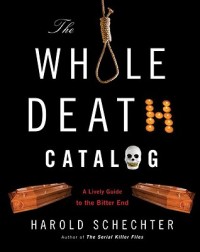
My mom has been organizing my office for me and last week she found hidden in my bookshelves a morbid little book called THE WHOLE DEATH CATALOG. My editor sent it to me because I’m a fan of Harold Schechter, who wrote one of my favorite research books, THE SERIAL KILLER FILES.

In college, I took a Philosophy class to fulfill a requirement, and I absolutely hated the segment on Death and Dying. Odd, perhaps, because I write about murder and criminal psychology and a lot of people die in my books. I’m more interested in the whys of death—homicide or natural—than in the process of dying. This probably explains my fears as well—death (as in the final outcome) doesn’t bother me. It’s the path to being dead that I don’t like to think about.

So I’d forgotten about THE WHOLE DEATH CATALOG until my mom found it. I picked it up and flipped through it. There’s a lot of interesting, albeit morbid, trivia and a lot of research about how people viewed dying across time. What makes it almost fun is the author’s voice, illustrated well in this paragraph from the introduction:

“Concerned that you lack the necessary skills to throw a truly memorable funeral, one that expresses the unique, inimitable (albeit now defunct) you? Not to worry. A new branch of the mortuary business has lately sprung up, composed of experts who, taking their cue from professional party planners, will help you arrange the perfect going-away-forever affair, complete with specialty catering, appropriate music, and even giveaway “funeral favors.” Sort of like a really top-flight wedding or bar mitzvah, only with a cadaver as the guest of honor.”


Some of the fun tidbits from the book:

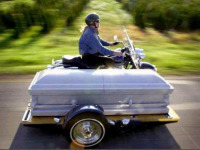
The motorcycle hearse. Schechter’s research uncovered that the first known biker burial was in the UK immediately after WWII. Now, the practice has spread to the US and if this is the way you want to go to your grave, check out Biker Burials.

Then the question: To Burn or Not to Burn? The history of cremation. The different types of caskets explained, including some of the not-so-successful ideas in coffin-making: the glass coffin, the cement coffin, and the rubber coffin. I really didn’t need to read the history of embalming; however, I did have a spark of an idea for a future book. 

One of my favorite stories was about (surprise) serial killers William Burke and William Hare. Prior to 1830, it was extremely difficult for medical schools to obtain cadavers for anatomical study, according to Schechter. Some people became grave robbers, digging up freshly buried corpses and selling them to “anatomy schools.”

Not so for Burke and Hare. When an elderly lodger of Hare’s died owing money, Hare sold the corpse to an anatomist. When he saw how much money he could make, and disliking the “difficult, dirty, and dangerous business of grave robbing,” Hare and Burke opted to create their own cadavers. First hastening the deaths of the elderly in Hare’s boarding house, until they were all dead, they next preyed on prostitutes and the homeless. Fifteen people died this way before they were caught.

There is even a chapter on Death in the Movies and another on Death Lit 101, perhaps of more interest to Murderati readers.

For example, the “Most Emotionally Satisfying Death” according to Schechter?

Dirty Harry (1971). Few, if any, other moments in cinematic history are as profoundly gratifying as the climax of this two-fisted classic, when Clint Eastwood’s heroic police officer puts a well-deserved .44 Magnum slug into the worthless carcass of the sniveling long-haired psycho killer after asking, “Are you feeling lucky, punk?”

 “Most Shocking Death in a Classic Film Noir”

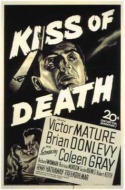
Kiss of Death (1947). In a scene that still shocks with its brutality (even in our age of Saw, Hostel, and other works of cinematic “torture porn”), a cackling psychopath named Tommy Udo (Richard Widmark) ties a crippled old lady to her wheelchair and hurls her down a flight of steps—basically just for the fun of it.


And in “Death Lit?” Most of us have probably read many of the entries: Edgar Allan Poe’s “The Masque of the Red Death,” William Faulkner’s “A Rose for Emily,” Evelyn Waugh’s “The Loved Ones”, and Katherine Anne Porter’s “The Jilting of Granny Weatherall.” Schechter also writes about W.W. Jacobs’s “The Monkey’s Paw” (one of the scariest stories I have ever read!):

“Playing on a proverbial theme—be careful what you wish for—this classic tale of terror (arguably the scariest ever written) serves as an effective reminder that the very human impulse to pray for the return of a deceased loved one might not be such a hot idea.”


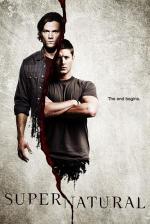
Season 6 ArtIn SUPERNATURAL, one of my favorite television shows, it would have done the Winchester Brothers (and their dad) some good to read “The Monkey’s Paw.” In the season two opener, the dad John agrees to exchange his life to save his son Dean. At the end of Season Two, Dean makes a deal with the crossroads demon and gets Sam’s life back (he’d been dead a couple days, but didn’t seem to suffer the decomposition process—I had to put aside the disbelief on that one) in exchange for his own. Dean has one year, then he’s going to Hell. Season Three is spent trying to get Dean out of his deal, but to no avail. He goes to Hell. (He comes back in Season Four.) And one of my favorite characters, who’s only been in two or three episodes, is Death (played by Julian Richings.) Creepy and perfect for the role. A lot of death and afterlife (afterdeath?) in this television show!

Julian Richings as “Death” one of the Four HorsemanWhat is one of your favorite movies or books with death as a central theme? Something that made you laugh or reflect—or both. And if you can’t think of one, what kind of funeral celebration do you want? Somber and traditional, a lively wake, or maybe hire a party planner so your friends and relatives will talk about your funeral for years?


The Long And Short Of It

(Or – Killing Allison Brennan)

by Alexandra Sokoloff

This month, because I have nothing else to do, I wrote a short story. 

I don’t usually do that.   Practically ever.    I only said yes because it was for ITW’s great Thriller – Stories To Keep You Up At Night series and Our Allison  is co-editing (with Sandra Brown) and she asked me.   The thing is, we were all recruited for this book so long ago, and so much has happened since then, that I sort of misplaced the idea of a deadline, if I ever knew it to begin with.

So it came up – suddenly.    Which is good, in a way, because the reason I don’t do shorts is that they’re only short in length – the process is excruciating and feels as long as any other writing I ever do except for Twitter updates, and I rarely even do that.  I didn’t have any room to stall, I just had to do it.

On the other hand, two weeks ago I was having serious thoughts about killing Allison, which just seemed easier and less emotionally draining than doing the story.   Plus I knew she would understand, as long as I was creative about it.

But it really is amazing to me, every single time, how obliging our subconscious is  (or – “those guys in the basement”, as Stephen King says.).  When we need an idea, when we have a scary deadline, the subconscious, the guys, the Muse, the Universe – whoever it is out there always comes through.

First, since this anthology focuses on the romantic suspense subgenre, I picked a dream location in the Bahamas – sexy, glamorous, escapist, that I happened to have made a whole lot of notes about on a not-too-long-ago vacation .    Since setting is HUGE to me, always a key element in anything I write, that was a big jumpstart – I knew I could deliver a sensual experience, which is half the battle in those more romantic thrillers. 

Then, I blatantly used my own feelings at the exact moment – which happened to be deep grief over the loss of a loved one.   It instantly brought up a central emotional question: Will the protagonist ever feel like living again?   And that question led to another:  Well, what in that fantastical environment would MAKE her want to live again?   And that’s the kind of question that leads to a story.

And from there, the Universe did most of the work.  As it always does if we pay attention.  A Tarot card came up as my card of the day that gave me most of the central images and objects of the piece.   I could steal from my sister’s work history to get the heroine’s job (always one of the biggest pains for me to figure out unless I’m writing a cop story or something equally obvious).   My jazz dance teacher was playing a lot of Jamaican music that I had heard on this trip.   Because of the Oscars, Colin Firth was all over the media, and if there’s a better inspiration for sex scenes, I don’t know of one.  And having spent a week in the place I was writing about, I knew the layout of the hotel and the sounds and colors and smells, so I didn’t really have to stop and think all that much.  

And somehow it all just happened and was done in a couple of weeks and I am mad at Allison again because now I have to be grateful to her for the rest of my life that she made me do this.  

I don’t usually get this kind of instant gratification from writing.   Writing a novel is such a long process that even FINISHING doesn’t have much of a rush for me beyond profound relief leading pretty instantly to coma.   I don’t really get to enjoy writing until I start hearing back from readers and realize that the story I wrote actually EXISTS – not just for me but for anyone who wants to pick it up and step into that weird alternate universe that a book is.  Which is a huge gratification, mindblowing, really, but so delayed that it doesn’t seem to have much connection to the writing process.

But a short – somehow is a little miraculous.    One day there is nothing but a black hole of panic and three weeks later or so there is a mini standalone alternate universe.   It makes you feel like you’ve actually accomplished something.   In fact, you have physical proof that you have actually accomplished something.

On the other hand, I can’t imagine putting myself through this on a regular basis.   I know some people can churn out short stories without blinking, but that’s not me.  Realistically, my novel would be a month further ahead if I hadn’t taken the time, and a month is a lot.   Since all writers really have is our time…. as much as I love the story, and as fulfilling as it is to have it, now, and as much as I admire the Thriller series (and, yes, okay, Allison) and am honored to be part of it – was writing the story actually a smart thing to do? 

So, those of you who write short stories – I’d really love to know why you do it.   What do you think is the benefit of writing short stories – in a career sense (if any)?   Or is it a more personal pleasure?    Alternately, here’s a good question:  What if anything do you enjoy about writing?   Honestly?

And readers – has a short story ever inspired you to check out an author you haven’t read?

Finally, all good thoughts out to all those affected by that devastating Tokyo quake and tsunami… it’s just been surreal to see.

Alex


INSPIRATION EVERYWHERE

by Stephen Jay Schwartz

First of all, let me apologize for not being around this past week. A bizarre apartment malfunction sent me and my family running to the hotel we’ve been living in for the past six days, with only our dog and the shirts on our backs. All this, with very little sleep and the pressure of delivering the first draft of my screenwriting assignment today. It’s been an adventure, and the thing that’s kept me sane through it all is reality television.

Really, Stephen? Reality television?

I’m not talking about your parent’s reality television, like The Real World or Big Brother, where the point is to voyeuristically observe the train wrecks of troubled lives colliding.

I’m talking about a new generation of family-friendly phenoms that teach more about human emotion and the sanctity of life than the world of literature herself. Yeah, I know, big statement. But I’m talking about inspiration here, not the deep, dark ruminating of Tolstoy, Hemmingway or Emily Dickenson. These are shows that reveal the human spirit in action, the American work ethic working, and the indisputable value of family and friends.

The Unpoppables


Description: “The twists, turns — and ties — are many for the staff at New Balloon Art. Each episode of this series follows Addi, Katie and Brian as they meet with a client and then begin creating a large-scale balloon installation for a special event or occasion. An average of 15,000 balloons are needed to complete the intricate projects, and the team usually has no more than 72 hours to get the job done.”

This charming show is my favorite. It proves that you really can do whatever you want in life. Do you remember your parents’ reaction when you told them you were going to be a novelist? Can you imagine if you’d told them you were going to be a balloon artist instead? Well, that’s what these guys do, and it’s as much an art as anything you’ve ever seen. I am astounded by the amount of creativity involved. I never knew how many different shapes and sizes and styles and colors defined the universe of balloons. These guys have to build their projects within a 72-hour window or else the balloons will shrivel and wilt (I know the feeling). If they can imagine it, they can do it. And this is the message I want to convey to my kids. This is why The Unpoppables scores at the top of my list.

The Cake Boss


Description: “Buddy Valastro’s family-owned business, Carlo’s Bakery in Hoboken, N.J., is booming, and it’s bound to get even busier after viewers get an inside look at how Buddy and his staff, including his mom, four sisters and three brothers-in-law, produce thousands of wedding cakes, specialty cakes (as in Britney Spears’ circus-theme 27th birthday cake) and pastries every week.”

Did I ever think I’d be glued to a reality TV show about a bakery? Never in a thousand years. So, why is this show so damn compelling? It’s Buddy. He’s an incredible hero. His story is the American Dream, realized from the boot-straps on up. The great message of this show is that integrity, loyalty, hard-work and commitment to family prove to be the ingredients needed to live a happy life. Buddy is a tough-guy Italian at first glance, but reveals himself to be such a loving romantic that I feel like a slug when compared to him, and any guy who watches the show with his wife is going to be compared to him. Interestingly, this is another show that proves art is a component of every vocation. I’m enthralled by the way science and aesthetics combine to create such functional beauty.

The Next Great Baker


Description: Join Buddy Valastro as he puts 10 talented pastry chefs through the wringer to earn the title of “Next Great Baker.” At stake in the competition: a $50,000 cash prize and the chance to work side-by-side with Buddy at Carlo’s Bakery.”

It was this show that introduced me to Buddy Valastro. He comes off as the boss-from-hell in this show, as he puts a group of talented, young bakers to the test. I was blown away by how much suspense can be squeezed out of baking cakes. All the dramatic beats of Greek tragedy exist here.

Pit Bulls and Parolees


Description: “Follow the turbulent drama and bittersweet moments of Tia Torres, her family and her crew of ex-convicts as they come together to rescue and rehabilitate abused and abandoned pit bulls.”

What’s not to like in that log-line? What marketing genius thought to combine Pit Bulls and parolees? If I banged my head against a wall for a thousand years I would not have come up with that combination. Reality wins again. This is a show about second chances. Everyone deserves one. These ex-cons learn to see themselves in the abandoned and abused dogs they manage, experiencing the kind of rehabilitation that could never exist in prison. And the fact that a tough, no-nonsense woman runs the place, keeping everyone’s attention focused on the plight of the animals, says more for Women’s Lib than a hundred pamphlets distributed in the parking lot of the Miss America Pageant.

This show also provides another great message for my children – there is good in all of us. If you fuck up, you can learn from it, you can make things right. Another common message in the above three shows – failure is part of the process. It’s the first ten steps of success.

Outrageous Kid Parties


Description: “Whether it’s a birthday party, a graduation, or any milestone celebration, each week Outrageous Kid Parties documents parents as they go beyond their means to give their child a huge eye popping, jaw dropping fete. With high expectations, they force other family members, friends and party planners to go to extreme measures to ensure that their fabulous party goes down in history as an event never to be forgotten.”

Okay, this is my guilty pleasure. This is the train wreck we watch from the sidelines. The best thing I can say about this show is that it serves as a cautionary tale for the handful of disturbed housewives who want to live their unrealized dreams through their children by spending $30,000 on a six year-old’s birthday party. And the women are perfectly matched with clueless husbands who enable them and always seem surprised when they arrive home to find a thousand people in their front yard holding tickets for a ride in the elephant parade. Then there’s the poor siblings of the Chosen Child who are told through a million un-spoken cues that they are not the favorite child, that they are undeserving of the $30,000 party, that the only thing they’re good for is getting on the bus to serve the favored one. These siblings might as well study balloon art and prepare for the worst.

19 Kids and Counting


Description: “The Duggars aren’t your average family. In fact, they’re over 5 times the size of an average family. And while raising 19 kids can be a challenge, for the Duggars, it comes with more than its share of rewards.”

The best thing about this show is that it directly follows Outrageous Kid Parties and thus provides an alternative to slitting our wrists. The show reminds us that all families are not dysfunctional. It is all about family and love and respect. Like The Cake Boss, the message is clear – you work hard, you’re there for your friends and family, you treat others as you want to be treated, and the goodness of life will be yours.

It’s interesting to note that I didn’t choose any of these reality shows. There were, in fact, forced upon me. I watched them because my kids wanted me to, and then I got hooked. What’s cool is that my kids saw their value first. They showed me the way. And I’m there for them, letting them know that their opinion counts. Reminds me of the special moments my father and I shared, watching episodes of the original Star Trek or Night Gallery together. It was our time to hang out, to be friends.

In addition to the reality shows, my kids have aged enough to appreciate the wry humor, sarcasm and sexual innuendo that permeates some of my favorite shows – The Office, Saturday Night Live (especially classic episodes), and Whose Line is it Anyway? This is a great relief to me, since just a few months ago it was Zack and Cody and Hannah Montana. Please, gag me with a spoon. I’m glad they’re growing up in a family without dysfunction. Oh, wait, is that the Girls Next Door they’re watching? I better go join them. (It’s called “adult supervision,” folks.)

The Always Dangerous Zoë Sharp

by Brett Battles

Today it is my absolute pleasure to be interviewing our own Zoë Sharp. Her novel, FOURTH DAY, is just out in the U.S., and her follow up, FIFTH VICTIM, hits U.K. shelves March 28th. FOURTH DAY is a fantastic book, that messes around with several preconceived notions that a lot of us have. I thoroughly loved this book. Zoë has created a truly memorable protagonist in Charlie Fox, a tough, smart, talented woman. It’s no wonder that Zoë’s up for the Barry Award for Best British Novel this year!

For those of you in Arizona or California this month, and/or are attending Left Coast Crime in Santa Fe March 24th-27th, be sure to check Zoë’s tour schedule, and try to make one of her signings! 

Brett Battles: First, congratulations on the US publication of FOURTH DAY, Zoë! Since you and I split Thursdays here at Murderati, I think we might be tempting fate for both of us to appear on the same day. But, the die is cast, so let’s dive in and see what happens.

So I have to say that when I first started reading FOURTH DAY, I thought I was going to have a bone to pick with you. Here you’ve set a novel in my home state of California, and it appears that it centers around a cult! A cult! Don’t you realize we’ve been trying to shed that image for decades? But, I have to say, by the end of the book I had forgotten all about any issues I had. So first question, what led you to center a story around the cult culture?

Zoë Sharp: Thanks, Brett, and it does feel a little weird to be here on the wrong day, doesn’t it? Like we’re going to cause some kind of reality inversion …

Cults of all kinds fascinate me, the way people can have their whole belief system turned on its head. And particularly the idea I developed for Fourth Day – that you can’t be rebuilt until you’ve been broken – which was one that fitted in really well with the psyche of my main protagonist. Charlie Fox has been walking a very thin line between whole and damaged for a while now. I wanted to see what happened when that line was stretched to breaking point. Putting her undercover into a cult, having her challenge her view of herself when she already had doubts about her morality, her code of ethics – and then to have those around her begin to doubt her judgment as well. It all felt exactly right for this character at this time in her life. Basically, she’s looking for redemption.

BB: The Fourth Day organization sounded very believable. At the beginning you do a great job of instilling the cult-vibe. What kind of research did you end up doing?

ZS: A LOT of reading, and I did get to talk to a few people who had been involved in cults at one time or another, which was always invaluable for that extra bit of insight. But, as I’m sure you always find with research, you do huge amounts of it, only to discard about ninety percent. I was not intending to write a California guide book, nor an in-depth exposé of cults in general. Fourth Day is not your average kind of cult, so I knew I didn’t have to follow the rules. I was aiming for verisimilitude, an appearance of reality, rather than outright accuracy. Liberating, in its way.

BB: Any fascinating tidbits you learned that you ended up not using you could share?

ZS: Well, I could tell you, but then I’d have to kill you … Hey, do you think I could hire Jonathan Quinn to come and dispose of your body?

Erm, Brett, you’re not smiling. I was kidding, OK? Put that chair down …

I did a lot of research about the Branch Davidians in Waco and a nice little piece of info that emerged was that as well as the 75 ATF agents and 10 Texas National Guard counter-drug personnel, plus hundreds of agents from other federal agencies, there were also ten US Special Forces soldiers and two members of 22 Regiment – the British SAS – present as ‘observers’. That little fact sets off all kinds of ‘what if’ scenarios in my mind. I didn’t use it as such, but let me just say that it explains how a couple of guys who were not part of the official federal response to Fourth Day could be present and at least peripherally involved.

I also discovered that the military advisors at Waco recommended the ATF agents had their blood type written on their arms or neck after leaving the staging area and before the raid on the Mount Carmel Center compound. That was another little fact out of pages and pages of information that really stood out to me. I mean, it’s pretty chilling when you think about it. They were as good as telling these guys they were going to get badly injured enough to require blood transfusion. So I twisted it around a little and used it.

Interestingly, though, when I emailed various contacts in SWAT or law enforcement and asked how they would go about attacking or defending such a compound, everybody assumed I wanted to know from the point of view of the aggressors, not the defenders …
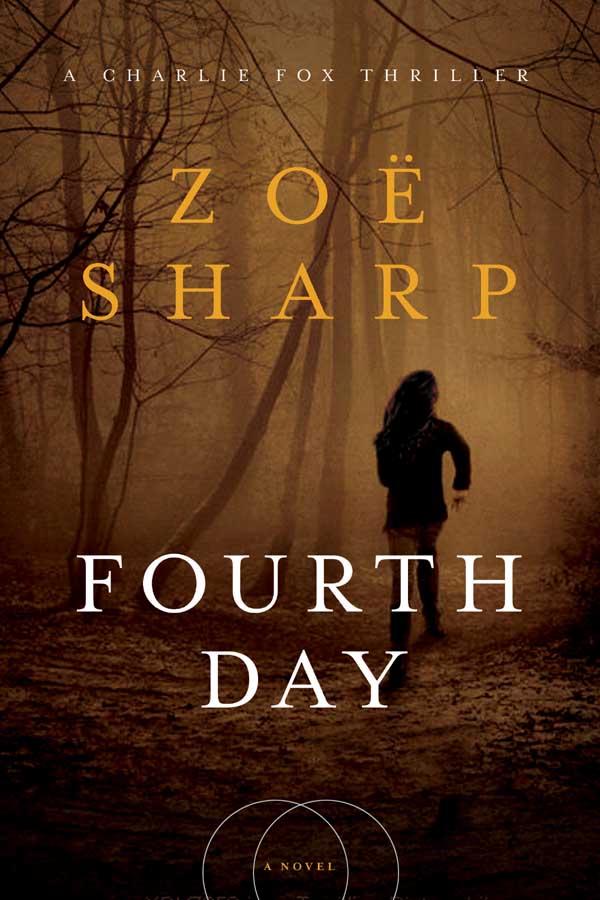
BB: In defense of my beloved state, why did you decide to set FOURTH DAY in California?

ZS: Yeah, I had to laugh when you said about picking a bone with me over having a cult in California as the plot of FOURTH DAY. I thought it might provoke that kind of instant reaction – or anti-reaction – which was part of the reason for writing the book. I wanted to take what might have been a same-old, same-old storyline, and put a fresh slant on it. There were various geographical factors that meant California fitted the bill as a location. I also wanted a desert area for its symbolism – Charlie walks out into the wilderness at the start of her search for some kind of self-awareness, for truth. And besides, she had spent a lot of time on the east coast – it was time she headed west for a little sunshine.

BB: What I loved about this story is how you play against preconceived notions, and twist things in unexpected ways. Was that part of the plan from the beginning? Do you rigorously plot that kind of stuff out first?

ZS: Yeah, I have to say it was part of the plan. I don’t like taking the easy way, the line of least resistance. I set a previous book – ROAD KILL – in Northern Ireland, and didn’t go down the paramilitary route. I also had Charlie joining a group of bikers as the main characters for that book – and not a meth lab in sight!

I am a plotter and an outliner I’m afraid. The first thing I write is always the flap copy. I need to know if the basic idea is strong enough to grab me, whether I can get the crux of it across in half a page, make it sound like something I’D like to read, never mind anyone else.

I like to do a basic outline, with the main points, then go over it several times, interweaving the characters and the storyline until I have something both tight and complex. The more I can get the differing strands to weave back into the whole, the stronger the story feels to me. Then I do a final outline that is just from Charlie’s POV. Writing in first-person, she can’t know anything that doesn’t come to her directly, so I like to know in advance how she discovers all the facts in as believable way as possible. I hate books that end with pages and pages of exposition to explain how everything worked out.

I know some people say that if they outline too much, it makes the story boring for them to write, because they know what’s coming next. I don’t find that at all. Instead, knowing the destination frees me up to really enjoy the journey. And knowing WHAT is about to happen is not the same as knowing exactly HOW it’s going to happen.  That’s the fun part to write.

BB: Yeah, we’re on different sides of the fence on that one. I’m one of those people who gets bored if I outline too much. But that’s what’s great about this business. No two methods are alike.

I read somewhere where you said you created Charlie Fox in a kind of response to the lack of strong female characters you saw in other stories at the time. You also mentioned that you didn’t want her to be a guy in a skirt. Well, I think I can say that you’ve certainly accomplished that. Charlie is a kick ass protagonist who is very much a woman. You push her to her limits, and definitely put her through the ringer in FOURTH DAY. I’m wondering if you set out to see how much she can take, and if you’ve ever pushed her too far and had to reel it back some…?

ZS: I grew up reading good old-fashioned thrillers, where the men were men and the women screamed or fainted a lot, or twisted their ankles at vital moments. Charlie was definitely a response to that. I wanted someone who could do her own fighting and was more likely to be in the rescue party than be in need of rescuing.

I always like to pressure-test my character. How people react under extreme circumstances so often defines them. Charlie is very cool and almost clinical in violent situations, which led one reviewer to suggest her attitude to violence bordered on casual. But that’s not it at all – she feels it, but she is professional enough to keep it buttoned down until later. It’s still not as acceptable for women to be capable of acts of violence in fiction. They are so often portrayed as victims. She has been a victim in the past, and made a decision a long time ago that she was never going to be put in that kind of position again. It’s her driving force.

Have I ever had to reel it back some? Well, there was this small torture scene in THIRD STRIKE, which was there to demonstrate how a fundamentally ‘good’ person can be pushed to do unthinkable acts in extreme situations. I thought it was actually quite lightly sketched. A bit like the shower scene in ‘Psycho’ – you think it’s real slasher stuff, but in fact you never see the knife go in. It all happens in the spaces between. So, with the scene in the book, there’s no gleeful wading through gore – I don’t do gratuitous violence – but it was quite a disturbing scene. My US editor made me take out the one paragraph that described what was actually happening, and I think she was quite right. Like that shower scene, you get the full picture in the spaces between the words.
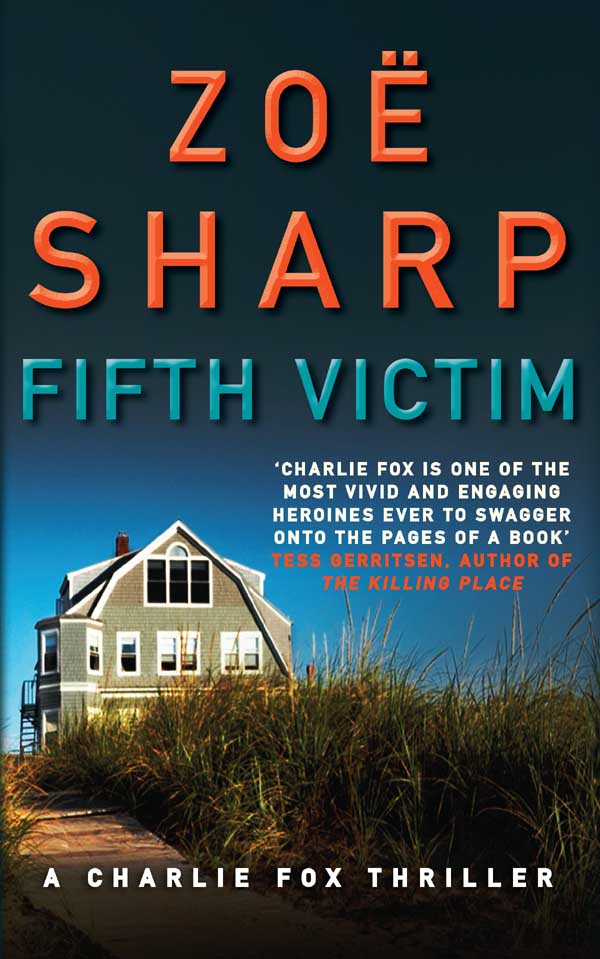
BB: FOURTH DAY is your eighth Charlie Fox novel, and the ninth, FIFTH VICTIM, will be out in the UK this month, with a Charlie Fox short story, ‘Off Duty’ available as a bonus download. How do you go about keeping the series fresh for yourself? Or is that even an issue?

ZS: ‘Off Duty’ was written as a filler story that happens between the events of SECOND SHOT and THIRD STRIKE. In fact, there’s a very small reference to it in THIRD STRIKE, if you read closely enough! I like to come back to ideas from short stories and weave them in. One of the characters from a short called ‘Postcards From Another Country’ which I wrote for the mass market paperback US edition of FIRST DROP pops up again in FIFTH VICTIM, for instance. Things like that all help to keep things fresh.

You have a choice when you begin to write a series. You can either keep the main character unchanging or you can progress them as the series develops. I chose to progress Charlie as the books go on, so there is always a new personal challenge for her to face. Each book has a journey for the character as well as the main sequence of the plot. Tying the two together makes for a more complex and – I hope – ultimately a more satisfying read.

BB: When will the FIFTH VICTIM be available in the states?

ZS: Pegasus Books, who publish FOURTH DAY, will be bringing out FIFTH VICTIM next year. I’ve already seen the proposed cover for the US edition, and it’s stunning.

BB: Are you sticking strictly with Charlie, or have you considered writing a book or even series with other characters?

ZS: I keep trying out new characters in short story form. I have a lot of ideas buzzing around in my head, and I’ve had a supernatural thriller bubbling away in the back of my mind for years. I think it would make a great novel, or graphic novel, or a screenplay. One day, I’ll get around to writing it – maybe even as a collaboration …

BB: You’ve written elsewhere that the most influential book you read growing up was BLACK BEAUTY. Is there also one you could describe as the most influential book you’ve read as an adult? If so, what is it?

ZS: It’s quite true about BLACK BEAUTY. It was a book that changed attitudes and laws in Victorian England – for the better. What greater legacy could a writer wish for? But the most influential book I’ve read as an adult? Hmm, that’s a difficult one. Possibly THE RUBÁIYÁT OF OMAR KHAYYÁM or simply THE CHAMBERS DICTIONARY.

BB: Major congratulations are in order for your Barry Award nomination for Best British Novel! So tell us, how did you find out, and what was your first reaction?

ZS: I had an email from Judy Bobalik with the shortlists, which was amazing. I love the way an email can turn up out of the blue and make you smile all day. My first reaction, looking at the other authors, was that I’m the rank outsider! But at least I get to bask in the reflected glory until the results are announced at Bouchercon in September.

I’d only just got the news that the ITW book of essays, THRILLERS: 100 MUST READS, was up for an Edgar Award in the Best Critical Biographical category. I was one of many contributors, who must all be thrilled (no pun intended) to be nominated.

BB: And, finally, the “what can we expect next” question. So, Zoë, we know that FIFTH VICTIM is almost out in the UK and will be coming to the US next, but what about after that? What can your readers expect after that?

ZS: I’m already into the next Charlie Fox book, which is set in New Orleans. And, incidentally, a character mentioned in ‘Served Cold’, which appeared in the A HELL OF A WOMAN anthology, has found his way into the new book. We visited New Orleans last summer, when we were staying with Toni McGee Causey, and it’s a fascinating place, with a real split personality. I like the experience of light and dark, and if you can get that from a location, it adds so much to the tone of the story. Rest assured that she won’t be there simply to enjoy Mardi Gras and eat crawfish …

BB: Thanks, Zoë!

ZS: Brett, it’s been a pleasure. And hey, I like what you’ve done with the space. Looks different from this side. Next time, you come over to my place and we’ll talk about THE SILENCED.

BB: Sounds like a plan! All right, all, feel free to ask some questions in the comments section. Though I’m told she’ll be a bit jetlagged, Zoë’s promised to check in as much as possible. Let the commenting begin!


Foundlings

 by J.D. Rhoades

As writers, we all hit a wall at some point, that horrible moment when it looks as if the damn thing is never going to get done, it’s a huge waste of time, why did I ever think I was a writer, I wish that giant asteroid would just hurry up and wipe out all life on Earth. etc. And, we’re told, to be a real writer. you have to push on through that wall and finish the work.

But according to  this article in the New York Times on  “writers who abandon novels”,  it seems that  lot of, not just “real writers”, but famous,  talented and respected ones,  have started works they never finished for various reasons.


Michael Chabon leads off, talking about how he abandoned his second novel, “Fountain City,” after five and a half years of work because, he says,  he could feel it  “erasing me, breaking me down, burying me alive, drowning me, kicking me down the stairs.” (Wait, that’s not how it’s supposed to feel?)

Some writers who admit to having dropped projects might surprise you. Stephanie Meyer apparently stopped work on her “Twilight”  spin-off  “Midnight Sun” after 12 chapters were leaked to the Internet because,  she says,  she felt “too  sad.” Whether she was angry about the leak or the quality of the work is not specified in the NYT  article.  Harper Lee allegedly quit work on  her second novel, tentatively titled “The Long Goodbye,” after “To Kill A Mockingbird” became such a runaway success.  “When you’re at the top,” she told a relative, “there’s only one way to go.” Maybe she also got “too sad” after realizing Raymond Chandler had already written a book by  that name.

Well, if these people can admit to abandoning their children, I guess I can. Some of my foundlings include:

DEVILS AND DUST- the fourth Jack Keller novel and the wrap up of the series. where Jack has to go looking for his friend and sometime sidekick Oscar Sanchez, who’s disappeared while looking for his sons who went missing while trying to enter the country.

Reason for abandoning: lack of enthusiasm for another Keller novel on the part of my publisher.

DYING BREED- another “redneck noir”  novel about two young men who grew up in foster care. One turned out okay, one went bad, but the “bad” one shanghais the “good” one into a doomed plan to rescue their mother from the clutches of her boyfriend, a small time drug dealer trying to go big time by ripping off his sadistic boss.  Pretty soon everyone’s in way over their heads, including a couple of cynical DEA agents on the trail of said boss.

Reason for abandoning: My agent said, and I quote: “I don’t love it.” I did end up lifting the twin redneck bodyguards, Liberty and Justice,  and using them in LAWYERS, GUNS AND MONEY, where they’re not quite as evil, but still scary.

THE KING’S JUSTICE-definitely not the sort of thing you’ve come to expect from me, this was a medieval-fantasy post-apocalyptic mystery. Several hundred years ago, a  war that culminated in the magical equivalent of a nuclear exchange killed every wizard on both sides, destroyed most of their armies,  and left a huge swath of territory not only devastated, but polluted by residual and unpredictable magic. Now, in time of peace,  the area is beginning to be re-settled, but it’s still a wild  frontier. The King’s authority is maintained by travelling Justices such as the portly, jolly, and shrewd Master Justice Taras Flinn, who travels from town to town  with his Watson-like apprentice and their valet Jacky (a former thief),  holding court, solving mysteries, and looking for the next inn where he can get a decent meal and a tankard of ale.

Reason for abandoning: I’d put a couple of short Taras Flinn pieces up on an early e-pubbing site called MightyWords and gotten some good feedback, (and a couple of dollars). Then MightyWords went toes-up, I  started writing The Devil’s Right Hand, and that’s the one that sold. (And just a reminder: The Devil’s Right Hand  is now available again for Kindle, Nook, etc. for only  .99 for a limited time).

LIGHTFOOT: this sci-fi adventure featuring a lone-wolf, wisecracking space-freighter captain was abandoned because it sucked. I mean really sucked. It taught me that I absolutely wasn’t ready to write SF. Let us draw a veil over it and speak of it no more.

The New York Times article mentions that sometimes “dead” projects rise again: Stephen King’s recent “Under the Dome,”  for example,  was an abandoned project from 30 years ago that finally clicked.


So who knows? One day one of these projects may see the light of day. Or maybe not.

So, fellow ‘Rati, spill: what abandoned children are sitting on your hard drive? Have you ever looted them for parts, characters, dialogue, etc.  for use on other works? Anything you might ever go back to, or is there a project that you feel needs a stake through its heart to stay dead? Finally,  when,  if at all, do you know it’s time to let a failing project go? 


What’s your nightmare?

by Tess Gerritsen

(Once again, I’ll be on the road when this entry gets posted.  But I’ll read the comments when I get home, and I hope you’ll all chime in and tell us which monsters inhabit your dreams at night.)

As crime writers, we spend a lot of time thinking and writing about what scares us, and many of us probably share the same fears, most of them rational — fear of heights, of pain, of something happening to our kids.  But once we drift off to sleep, our fears take on different, sometimes irrational forms.  It’s those literal nightmares that so fascinate me, because we have no control over them.  They emerge from our subconscious, many of them purely symbolic and posing no real threat.  Yet they cause us to awaken in a cold sweat, hearts pounding.

I’ll bet that most of you reading this have had the familiar nightmare of being out of the house and suddenly realizing you’ve forgotten to get dressed.  Fear of humiliation is obviously what’s at play here.  Which makes me wonder: Do nudists ever have this nightmare?  Does it show up in cultures where people normally run around half-naked?  What’s their equivalent of the humiliation nightmare?

Another common one is the “Oh my God, I never went to class!” nightmare where I’ve got a final exam in French and I know nothing about the subject.  I suspect this nightmare particularly afflicts OCD types like me who are anxious about failing.  The more stressed out I am about work, the more this dream plagues me.  Oddly enough, even though I’ve been a writer for 25 years, I never have nightmares about being late for a deadline. Instead, this nightmare setting doesn’t seem to advance beyond my college years,  

I also have one where my teeth are falling out.  I used to have this one a lot, and I’ve heard from other women who also have it.  I haven’t met any men who’ve had it, which makes me think it’s very much connected to being female.  One theory is that it represents fear of aging.  Others — and I think this is probably closer to the mark — say it represents anxiety over loss of power.  Your jaw is one of the strongest muscles in your body and your teeth are a primitive means of self defense, so losing your teeth equates to feeling powerless.  Which may be why so many women have this dream.  We also seem to dream a lot about being chased.  

While men may also have nightmares of being pursued, several have told me they’ve got a gun with which to fight back.  Which is totally unfair.  Even in our dreams, we women are outgunned.

Then there’s this weirdly eccentric nightmare which seems to be mine alone.  This dream has plagued me since I was very young, and I can’t seem to shake it.  Over the decades, the basic plot has expanded to include members of my family, but it always starts with a view of a clear night sky.  Tiny lights like stars are moving.  Then the stars begin to move in different directions and I realize, to my utter horror, that these are alien spacecraft and the invasion of Earth has begun.  Humankind is about to be massacred.

In a panic, I try to gather up my family, fill the car with food, and head for the wilderness to hide.  I’m very methodical about this in the dream.  I consider which car will go the furthest on a tank of gas.  I consider which food items to pack, how many bottles of water we can carry, which medicines to bring.  I think about sleeping bags and blankets and tents.  But gosh darn it, as usual, I never seem to have a gun.

I know it sounds like the plot of a dozen Hollywood B-movies.  Maybe it was inspired by some horror film I watched as a kid.  Yet all these decades later, it still has the power to make me wake up at night, drenched in sweat.  I don’t know what brings it on.  I haven’t met anyone who’s similarly terrified by alien invader dreams.  But it’s such a powerful fear that even when I’m awake and I look up at a clear night sky, it’s always with a tiny apprehension that this will be the night I see those stars start to move.

And it’ll be time to round up the kids and pack up the car.

So what’s your recurring nightmare?  Is it something peculiar to you, something that no one else seems to have?  What do you think it means?

Seven things I wish people knew about PR

by Pari

Tomorrow morning a high school student is going to join me for a week to learn about public relations and marketing. Today as I looked around my messy office and contemplated what I hoped she’d take away from the experience, I realized that there were a few things I really wanted her to know.

1. Public relations is about relationships with your publics.
Oh, I know I’ve said this before. But it bears repeating because everyone gets so caught up in getting publicity – free interviews on television or the Web, mentions in the newspapers, book reviews – and, frankly, I think a lot of that is a waste of time.

I know for a fact that you can be highly successful without a single intentional media hit.

2.  Word of mouth is still the best form of PR there is.
Of course there are experts who work hard to create “buzz,” to manipulate the public psyche and make the next big thing. They do it through multiple media and with a lot of money and strategy. But the truth is, what they’re really doing is manufacturing word of mouth. The more people talk about something the more interesting it seems.

Here’s the reality: Whether you generate buzz through money spent on advertising and media hits or through getting people you know to be your marketing foot soldiers, the principle is really the same. Get ’em talking about what you want them to talk about.

3. Public Relations is about the truth
You read that right. It applies across the board.
Don’t mislead. Don’t lie. If you do, it’ll bite you in the butt.

I wish more people understood this one.

4. What you think is newsworthy – especially if it’s about you – probably isn’t.
Think in terms of your audiences and know what your audiences need . . . not what you want them to need.

Really. We’re not nearly as interesting to others as we are to ourselves.

5. Be sincere.
I think information consumers today are quite sophisticated. They hate feeling like they’re being used. And they can smell a fake. Don’t give them a reason to plug their nose.

6. Pick the PR methods that make you the happiest.
There are countless ways to do public relations – to get your message out. So there has got to be at least one or two that you’d enjoy doing. Why spend energy on things that make you miserable? Life is too damn short . . . isn’t it?

Here’s my advice (even if your publicist tells you different): if you despise speaking in public, don’t do it. Write emails. Conduct online contests. Do blog tours. If you love being on television or radio, go for it. Make yourself — or your pitch — irresistible to those media outlets. If you like attending conventions, have a blast and enjoy yourself.

7. Do unto others as you’d have them do unto you.
In other words, be nice.
Do your homework.
Be respectful.
Remember to be grateful — and to express that gratitude.

Is there anything I’ve missed? Let me know. I’ll share your pearls of wisdom with my intern . . .

Chic, Fabulous Cara Black

By Cornelia Read

Today it’s my pleasure to interview the magnificent (and chic, and fabulous–see above) Cara Black, author of the Aimee Leduc mysteries, set in Paris. Which is the smartest place to set a mystery series EVER, and I wish I’d thought of it instead of setting my first novel in not-quite-so-intriguing Syracuse, New York.

I first met Cara when I was a student at the Book Passage Mystery Conference in Corte Madera, California, and then my mystery writing group invited her out to dinner so we could ask her all about her journey to becoming published, and her marvelous novels, and just her fine self in general. She was a tremendously lovely dinner companion, and has become a friend I cherish.

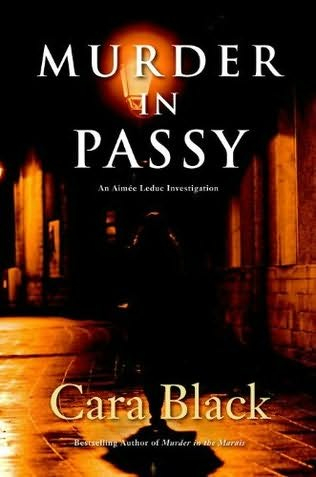
And without further ado… some Q&A about Cara’s latest novel from Soho Press, Murder in Passy

1. I love your stories about how you pick each neighborhood that will feature in a novel. What drew you to Passy for Murder in Passy?

Sometimes I feel like writing a murder mystery isn’t unlike being a detective. It’s about finding the bits that fit the puzzle of a story I want to write. Passy – in the exclusive 16th arrondissement – still retains a ‘village’ feel despite its haute-bourgeoise reputation.

Passy’s beginnings were humble, a village on the outskirts of Paris where Balzac fled to hide from his creditors. Empress Eugenie, Napoleon the III’s wife, took the waters at Passy. Hector Guimard, the father of Art Nouveau,

whom we have to thank for the wonderful verdigris metal Metro entrances, lived and designed buildings in the quartier.

My friend who lives in the 16th kept badgering me to write about her quartier but for me it was too staid, too chic and not my detective Aimée’s ‘hood.’ But it was discovering that a Basque Cultural Center had existed near the tiny police station (unchanged since the 30’s) along with a long historical presence of the Basques in the quartier that changed my mind. What a contrast in this very conservative and wealthy quartier!

My family and I had spent time in the Basque country,

we loved the culture, the people and the food,

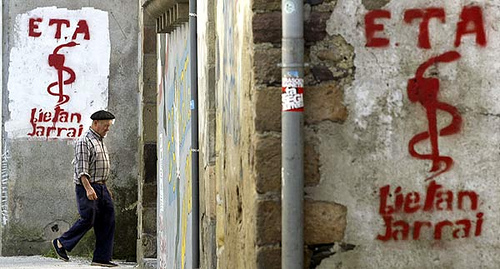
yet witnessed the rubble of bombed farmhouses from ETA’s–the Basque Separatists–militant actions. That made me wonder…what if the ETA–who were very much in the headlines at the time–used a wealthy environ as a hideout. What if this murder struck close to Aimée? 

2. You were joking around recently about Parisian maids in neighborhoods so fancy that the maids themselves wore pearls. I dream of being that chic in my next life. Any tips for this one? I’ve given up on the scarf gene already…

That’s a conundrum Cornelia. I wish I had the scarf gene too. I think, after much observation, scrutiny and obsessing about this, Frenchwoman follow a simple dictum. They buy quality, a few pieces – accessories and staples; the shoes, bag, one good little black dress and jacket, the coat.

It’s all about mixing and matching whatever you have in the closet with a few good pieces – it’s about putting it together, for a formal look the little black dress, a weekend lunch, mixing a stylish tousled thrown-together look with a Vuitton scarf.

That flair, that je ne sais quoi factor…that’s another gene.

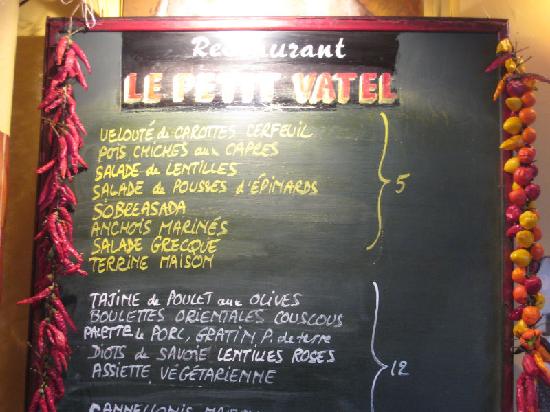
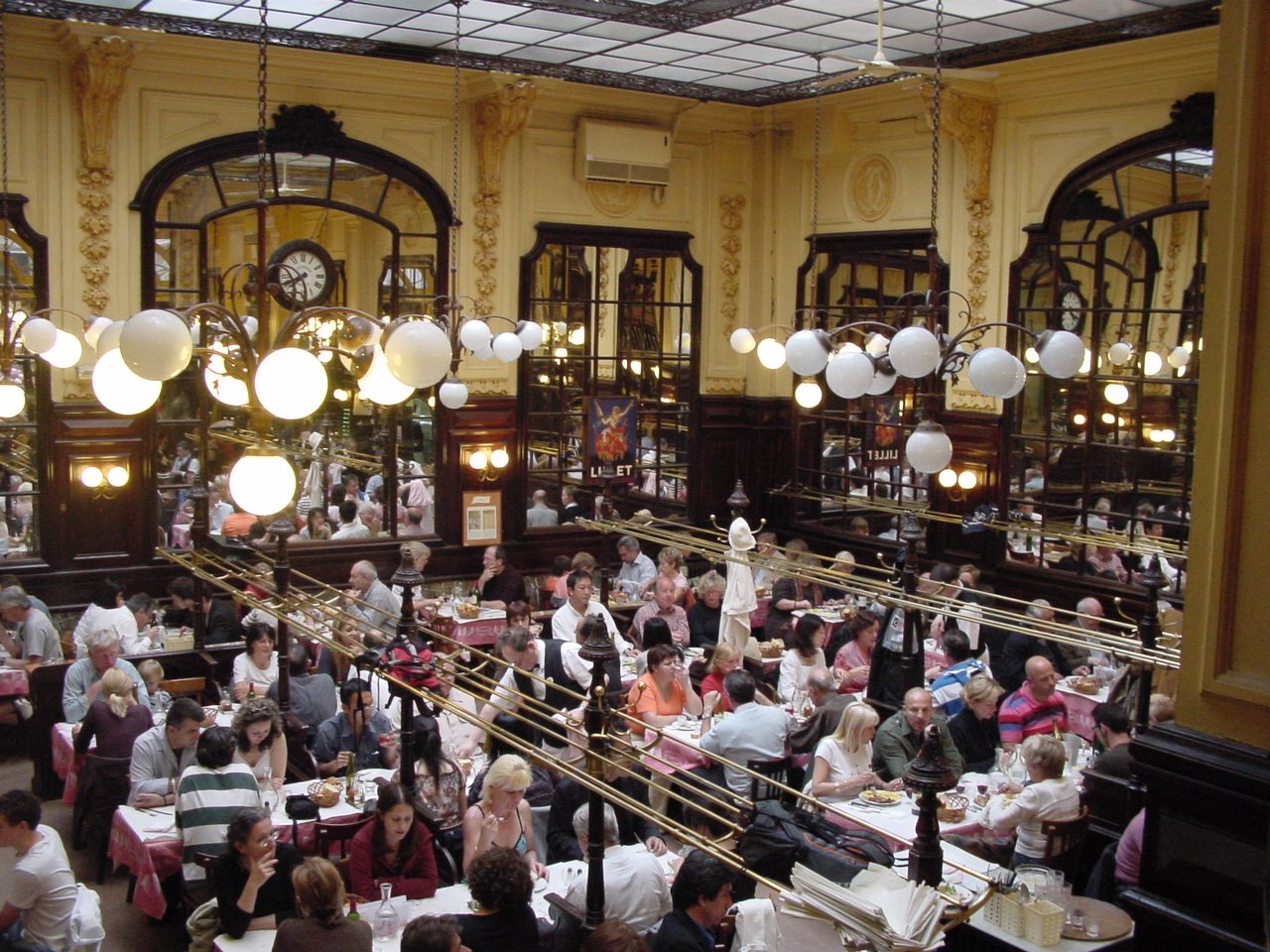
3. What are your favorite low-end and high-end places to eat in Paris? I was a big fan of Chartier in my college days for cheap steak tartare and chocolate mousse. These days I like a tiny place called Le Petit Vatel, in the Sixth.

Both pretty cheap. 

Oh yes, Chartier for the ambiance and the price.

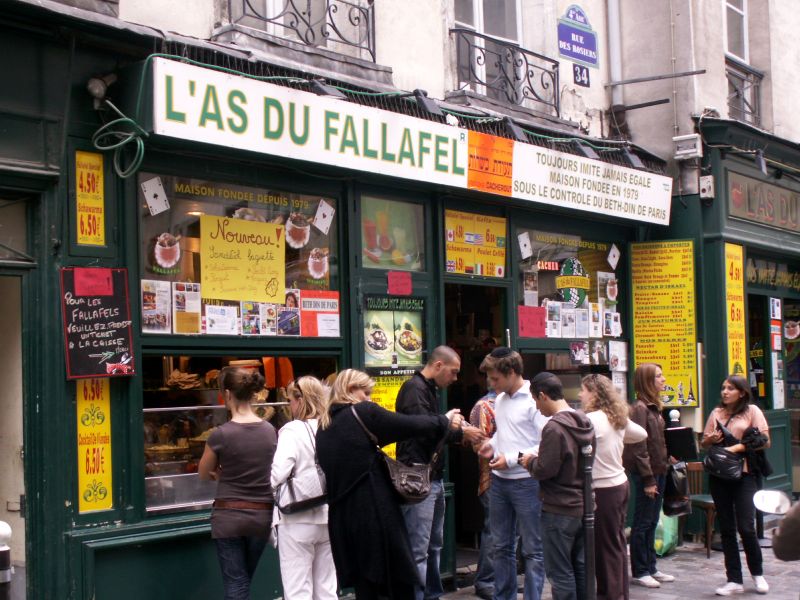
Low end is my favorite falafel on rue des Rosiers, L’as du Fallafel.

There’s always a line in the street, The NY Times wrote about it, yet still for my 6 Euros the best falafel outside of Tel Aviv. I’ve been going there since forever.

La Marine–old-fashioned bistro on quai Valmy in the 10th with a bobo hipster crowd–borders the Canal Saint Martin, serves locals too and stays reasonable. Consistently delicious.

Near the Marche d’Aligre, 12th arrondissement, the tiny wine bar le Baron Rouge crates in fresh Normandy oysters–that morning–can’t be beat. 

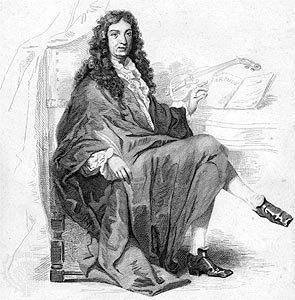
Vatel, meanwhile, was the guy famed for committing suicide when the fish was delivered late for a banquet for Louis XIV at which he was maitre d’hotel. He also invented creme Chantilly for the same meal. Ran himself through with a sword, apparently.

 They take their food seriously – then and now – these chefs.

4. What are they wearing in Paris, this winter?

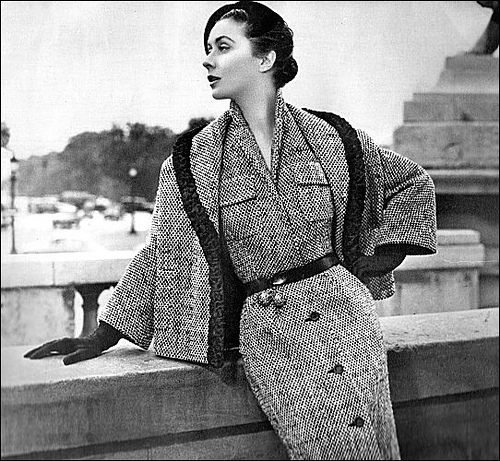
Winter white. And black, always. Shearling coats because it’s cold. Knee high boots. The short jacket layered over a tailored blouse, long sweater, tight pants or mini and heels.  


5. What are you working on now? 

I’m editing my next book titled Murder at the Lantern Rouge – the story is set in a Chinatown in Paris existing in the medieval northern edge of the Marais.

There’s four Chinatowns in Paris but this one’s the oldest and smallest. The story came from a comment from a man working for the RG (Renseignements Generaux, like our FBI), who told me ‘No one dies in Chinatown.’ 


Now when’s YOUR next trip to Paris, Cornelia?

How about tomorrow?

Thanks so much for having me!

Cara

Things That Should Be

Zoë Sharp

I’m a chronic maker of lists. I should have a list of lists, really. In fact, before I started writing my blog this morning, while I waited for a head of steam to build up in my desktop, I was making my Daily To Do List. It’s not displacement activity – honest. It’s time management … or something.


In fact, currently sitting on my desk are several lists. One is today’s, another is a list of jobs that really ought to get done before we go to the States next week, and another is a list of the last few remaining jobs to do on the house.

When I write it down like that, it’s rather sad, really, isn’t it? 

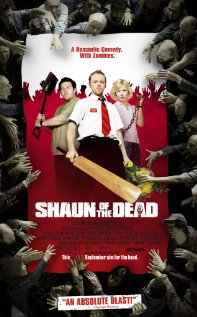
Mind you, the best list I’ve ever come across was in Simon Pegg’s classic rom-com-zom movie, ‘Shaun of the Dead’


Buy Milk.

Ring Mum.

Dodge Zombies


I even have a printed-out shopping list of all the stuff we regularly buy, grouped together according to section, so a trip to the supermarket has become a case of crossing off the stuff we don’t need rather than remembering the stuff we do.

It’s not that I have a really bad memory, it’s just very selective – in the same way that given nine good points in a review and one bad one, it will inevitably be the bad one I can recall word for word. I do have a tendency to remember something once, and then because I’ve remembered it rather than actually done whatever it is that I needed to remember to do, I promptly forget it again.

Most of my To Do lists contain stuff that, in reality, I know I need to do, but seeing it in black and white – or green fountain pen in my case – and then being able to put a line through it when it’s sorted, gives a sense of satisfaction out of all proportion to the task.

Mind you, a friend recently suggested that I keep a Done list instead – enabling me to look back at the end of the day and see what I’ve achieved rather than what I failed to do. This is a very nice idea, but doesn’t help when I suddenly remember at 10:30 pm that I really should have booked the car in for service, or posted a cheque.

Of course, what I could do is have a both a To Do and a Done list, but I think that would get out of hand very quickly, don’t you?

What about you, ‘Rati? Are you listers or non-listers? And if you’re a non-lister writer, do you also not like to outline? I wonder if there’s any connection.

Some lists, I wouldn’t like to be without, though. Over the last few years, we’ve put together a packing list, which includes everything from passports and currency down to the stick-on in-car bracket for my phone, which is also our sat-nav. At the end of each trip, I add stuff on that we needed but didn’t take, and cross stuff out that we took and didn’t need.

All this daft organisation will – with any luck – help us to pack for this month’s US mini-tour for FOURTH DAY using only two carryon-sized wheelie bags. The only complication is that I’m attending two conventions – both the Tucson Festival of Books (March 12th/13th) and Left Coast Crime (March 24th-27th) which necessitate a frock or two, and a pair of heels. Fortunately, I only ever buy dresses that scrumple up. 

A bigger packing problem at the moment, though, is the weather. We were lulled to expect pleasantly warm temperatures. Instead, I hear of rain in San Francisco (OK, so maybe that’s no great surprise) and SNOW in Tucson. That wasn’t in the game plan at all. I haven’t had so much packing confusion since one year when we went skiing in New England and then carried on down to Daytona Beach for Spring Break. It’s the only time I’ve been to Florida and taken a fur hat.

It doesn’t help that I’m a wuss when it comes to the cold. I admit it. Take the time we went to Death Valley. We drove in along mile after mile of arrow-straight road, past signs that said, ‘Do not leave your car!’ and ‘Take water with you!’ and ‘Much danger, Will Robinson!’


And when we got there? I was chilly and had to put on a sweater.

Everyone told us Arizona would be mild and balmy at this time of year, unlike last June when we were there last, when it was hot enough to dry the spit on your eyeballs. We also lived up to our Mad Dogs and Englishmen reputation by walking around in Houston at high noon. Even our own shadows were trying to hide from the heat.

But the hotter it is outside, the more every building cranks up the air-con, so as soon as I get inside, I freeze. Ho hum. 

So, I’ve really no idea what to expect in Scottsdale and Tucson AZ, or San Diego, LA, Lancaster, Sacramento or the Bay Area CA, or Albuquerque and Santa Fe NM.  Any pointers welcome. Remember those carryon bags. We can’t afford to take stuff we’re not going to use, but I really don’t want to shiver, either!


What about you, ‘Rati? What’s the best or the most useless item you’ve ever taken on holiday with you?

This week’s Word of the Week comes courtesy of a writer friend, Kate Kinchen, and is another of those words that doesn’t exist but should do. It’s sarchasm, which is the gulf between one who speaks in a sarcastic tone of voice, and one who doesn’t get it.