Author Archives: Murderati Members


Realignment

By Allison Brennan

Several friends recommended Detroit 1-8-7 as one of the best new television shows out this season, so I downloaded Season One thus far and will start watching it while wrapping Christmas presents this week. It’s an ABC show, and I think I avoided it when it started because I rarely watch network TV anymore. Castle (ABC) is my guilty pleasure, and Law and Order SVU (NBC) has been a long-time favorite. But looking at my iTunes directory, there are no other network shows. I grew quickly bored with Criminal Minds, stopped watching CSI years ago, and NBC ticked me off when they cancelled LIFE after two incredible seasons. As far as I’m concerned, network TV is no better–and often worse–than cable television. The pluses are that when they are good, they have the money to really produce a top show–with solid writing and great actors and no skimping on the budget. But unless I hear from people I trust–like I did about Detroit–I won’t invest the time or money in network TV.


FOX launched in 1986, and brought with it some innovative programming. The WB and UPN were merged into The CW a few years ago, but the WB in particular had some great shows. X-Files came from FOX and one of my favorite shows (SUPERNATURAL) is on the CW. The formerly small networks are now competing with the big guys and I think it’s to the advantage of television fans to keep the creative competition thriving.


Enter cable TV. It used to be, at least for many people, that cable television was blah–unless you had paid premium cable like HBO and Showtime. To me, ten years ago cable television was all boring documentaries and some good kids programming (like Nickelodeon.) But over the last few years, I’ve found that cable is bringing me my favorite new shows. And while in the past cable networks weren’t widespread or you had to buy specific packages, now there’s more universal cable programming. And even better for people like me, if you don’t subscribe to premium programming, you can still buy many of the shows on iTunes to watch only a few hours after they air. But it’s still the basic cable programming that is really shining for me.


Take F/X. JUSTIFIED is my new favorite show of 2010–and I’m thrilled Season Two is starting in two short months–sometime in February. It’s edgy, fun, witty, dark, with some of the best characters on television today. US Marshal Raylan Givens is based on an Elmore Leonard character, and Leonard is involved in the show. 


And I’ve been enjoying THE GLADES (A&E) and am glad it’s returning for a second season. The show works because of the protagonist, Chicago transplant to South Florida Det. Jim Longworth played by Matt Passmore, and his best friend, the forensic pathologist Dr. Carlos Sanchez (Carlos Gomez.) It’s not JUSTIFIED, but few shows are. But it’s fun, and Longworth is a great character.


And I’m still watching SUPERNATURAL, now in Season 6, on the CW. The show is about two brothers battling supernatural forces–the standard demons and vampires and ghosts, as well as less common creatures like the djinn, tricksters, and ghouls. I was skeptical that it would survive without its creator, the amazing Eric Kripke, and when the season started my first thought was, “Damn, they should have ended on a high note.” Kripke had a five season story arc for the show, and it was pitch perfect. But still, I continued on, until two weeks ago when they aired “Appointment in Samarra” and I thought, “It’s back.” In summary? Dean, the older brother, agrees to be the Horseman Death for a day if Death will get Sam (the younger brother’s) soul out of Hell where it’s trapped with Lucifer and Michael. If they keep up this storytelling, SUPERNATURAL will return to being one of my top two shows. I’m only disappointed that it took them half a season to regain their footing.


And then there’s FRINGE, a FOX program. Season one? Terrific. Season two? Awful. I don’t know why, but I really didn’t like it at all. It just didn’t click for me. But so far, Season three is fantastic. I hope they keep it up.


To me, there’s sort of a realignment going on in television–and possibly all media. The big guns are no longer the big guns per se, but when they get it right they do it right. But the cable networks — even with small budgets and shorter seasons — are creating some amazing new programming, focusing largely on quality character development as well as edgy storylines, without being unbelievable. So while I’m looking forward to ABC’s DETROIT because my friends tell me it’s amazing, I’m truly looking forward to seeing what cable comes up with next. Another fun thing about cable shows is that they often launch mid-seasons, with fewer episodes but original programming when so many other station are putting up re-runs. 

Now, there’s no new trailers for JUSTIFIED, but I found this on YouTube and I thought those who love the show would enjoy the minute of clips from Season o ne, and those who haven’t seen it will get a taste of a terrific program.


 What mid-season premiere are you most looking forward to returning? Here about anything new coming up that sounds like great television?

 

On the road again

by Alexandra Sokoloff

Yes, once again, I’m about to do that thing I do, the long drive.  It’s funny, but I seem to be repeating a childhood pattern (as we all tend to do).  In my case it is the full-out cross-country road trip once a year.

My father is a peripatetic kind of guy. Because of various revolutions and natural disasters and immigration restrictions, his family moved from Leningrad to Tokyo to Mexico City before he was three years old. (We think we live exciting lives – but if you ask me nothing we do holds a candle to what our parents have lived through.) That sense of movement never really left Dad; he got into the U.S. when he was 15 and rode the rails all over the country before he was 18, and I’ve never seen him happier than when he’s behind the wheel of a car (“King of the Road” is one of our family songs).

Though when he married and started a family he put down roots in California, Dad and my mother are both educators, and at the time my siblings and I were growing up, schools still had those three-month long summer vacations. And we spent those long summers on the road, driving all over the country, different routes every year, because Dad and Mom thought that we should see the country. All of it. Intimately. You might even say, would definitely have said if you had seen how grimy we all got after two months on the highway, that we became one with it.

So some of my earliest and most enduring memories and sensations are – movement. Perpetual movement. Constantly changing scenery and huge contrasts: endless brutal deserts turning into palm oases. Towering craggy mountain ranges with pockets of ethereal fields of wildflowers. Geysers and glaciers… and grizzly bears trying to claw their way into the car.

And while there are other life lessons generally associated with the back seats of cars, I really believe that the back seat was where I learned how to write.

I don’t think it’s any surprise that I’m a sucker for big visuals in my reading and my writing, or that I crave stories that have a constantly moving pace and surprises around every bend. I definitely picked up those rhythms and preferences on the road.

But as everyone knows, road trips aren’t necessarily a thrill a minute. Especially in portions of, say, Texas, where the same kind of flat landscape seems to go on for days. Oh, right, that’s because it DOES go on for days. So I did a hell of a lot of reading along some of those stretches, and sometimes would read the same book several times in a trip, which was great training for writing, because with multiple readings you start to see the mechanics of it all. I could recite whole sections of my favorite thrillers and mysteries to my family. I also learned to make up stories to entertain myself. What if that car following us was full of CIA agents? (Oh, right – the car behind us sometimes WAS full of CIA agents. My father is a scientist, and Russian, and that was a suspicious combination when I was a child).

But what if they kidnapped us? What if I was the only one who could get free?

What if those dinosaurs in Dinosaur World suddenly came to life? (Okay, Michael Crichton beat me to that one)

What if there were real ghosts in that ghost town?

You have a lot of time for those “What ifs” on the road.

And God knows all that traveling – the national parks, the different cities, the museums and art galleries and reservations and ghost towns along the way, gave me a whole lifetime of fodder for different stories.

I’m eternally grateful for the traveling because it’s made me completely unafraid about jumping in a car or on a plane and going wherever I have to go to research a story.  Not just unafraid, but eager for it. Especially writing supernatural thrillers as I do – the PLACE of a ghost story is sometimes the most important part of the whole deal. I always want to visit and explore the city or region I’m writing about, because it’s the best way to give a reader a true and complete experience. I need you to believe in the reality of the story – to feel and smell and hear things – so I can sneak in there and scare the pants off you.

All that traveling also prepared me for the author’s life – although I never would have known that going in. I don’t think anyone can possibly realize how much traveling is required of an author: not just the research, but the conventions, the book signings, the workshop gigs. It’s a wonderful gypsy life – you go to different cities every year for Bouchercon, Left Coast Crime, Book Expo America, the Public Library Association conference, Thrillerfest, Malice Domestic, Romantic Times – and all your friends are there, including your agent and editor, so you end up doing business in all these different cities. It’s a huge traveling circus, really.

And it helps me with dreaded book promotion that I have no problem driving all over the state – any state – to stop in at bookstores and sign stock. I’d prefer to be driven, but driving itself is relaxing to me, and a welcome break from writing, so I find it a great balance – exhausting, I won’t lie about that, but also rejuvenating.

I don’t panic if I get lost, I don’t worry when little things go wrong, and I really do end up enjoying the ride. And I never, ever forget how lucky I am: I always wanted the kind of life that would take me to new places all the time, and I’ve got it – in spades.

So, that’s going to be my Christmas vacation. And hopefully, I’ll leave all the not-so-optimal aspects of 2010 in the dust.   I hope the same for all the ‘Rati.

Now it’s your turn. Are you a road tripper?  Was there something else in your childhood that you think prepped you or turned you out as writer?   Or, if you’re not already out there shopping, what are you doing for the holidays?

Alex


GHOSTING


By Stephen Jay Schwartz

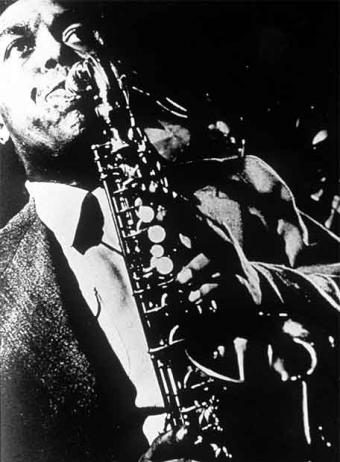
And here’s yet another example of how music has influenced the way I think about writing.  There’s a musical term, called “ghosting,” that describes a particular style of jazz improvisation. Let’s say there’s a musical phrase, or “lick,” that stretches over a number of bars.  When a musician “ghosts” that phrase, he whips through the notes, punctuating certain notes while passing over others on his way to the end of the phrase.  He might not even express the notes he passes over, he might merely suggest them by fingering the corresponding keys or allowing a very small amount of air into the instrument (if it is a saxophone or trumpet) in order to give the impression that the note was sounded. 

It’s kind of hard to describe this in words, but if you take a listen to Charlie Parker playing Au Privave, you’ll get the gist.  The music starts off with the melody line, which is repeated once.  Then Charlie improvises, and you can hear how he “ghosts” the musical phrases.

Even though we don’t hear all the notes he’s playing, we sense their existence in the context of the musical phrase.  The notes are felt, even though they might not be audible.

I realized how this concept applied to writing when I was working as a development executive and a writer I knew was having trouble cutting back a long scene.  She was reluctant to let go of the back-story she had written into the scene, thinking the reader would be lost if things weren’t spelled out clearly.

“Cut it,” I said.  “All you need is a word here and there to suggest the extensive back-story you’ve written.  Your dialogue already contains subtle references to it.  The ghost of what you’ve written will remain.”

I was discovering the musical connection even as I was saying it.  Teaching works that way, you don’t know what you know until you try explaining it to others.  She liked the concept and went off to do her rewrites.  When she finished, her script was vastly improved.  It said more, with fewer words.  And she didn’t just cut the back-story, she “ghosted” it.

I started thinking about how ghosting plays a role in other aspects of our lives.  For instance, anyone who has had to deliver a hundred-word bio goes through the process of ghosting.  Take mine, for example, with its emphasis on my development work with Wolfgang Petersen.  That was over ten years ago already, yet it influenced my life in ways that the jobs I held thereafter did not.  What about the “day job” I’m currently in?  It doesn’t show up in the bio, except for the line, “Mr. Schwartz traveled the United States extensively…”  That was for the day job.  The traveling influenced the writer I would become, but the job itself…fuggedaboudit.  Ghost it.

And how many of us have written three or four completely different resumes, each in their own way accurate in their description of our work history, accomplishments and goals?  We present different images of ourselves for different purposes.  The full story of my life exists in the combination of all the resumes, but that would be too much information, and probably too confusing.  Ghost it.

And what about our memories?  Don’t we remember the big events, the things that are really significant in our lives, while letting the less significant ones disappear in a haze of gray?  You can’t tell someone the story of your life without ghosting. 

I used to keep a recording device with me so I could capture every “great” idea that came into my head.  Then one day I was having lunch with another writer and he pulled his own tape-recorder from a hidden pocket, hit the record button, and said something to the effect of, “Note to self:  the protagonist should have a bouquet of flowers in his hands when the gunmen approach.”  Click, he slipped the recording device back into his pocket while turning to me with an innocent, “I’m sorry, you were saying?”

I ditched the tape recorder after that.  I realized that the good thoughts stick around.  Recording them or instantly jotting them down seemed redundant.  If the idea was still in my head after a week I knew it was something worth using.  If I forgot it ten minutes later then it probably wasn’t that important.  Kinda like the time I did shrooms and was absolutely fascinated with a glowing filament encased in a glass capsule, I spent hours marveling at it’s unique, sleek design and the God-inspired wisdom that caused it to come into existence.  The next morning I looked at the device again and said, “Oh yeah, a light bulb.”

But I digress.  We were talking about ghosting. 

So, ghosting in writing could be described as an intentional suppression of information that allows for the seeping through of certain elements of that information in order to suggest the existence of a deeper, fuller background than what is written on the page.

Man, I want a spot on the next Webster’s Dictionary writing gig.

What about unintentional ghosting?  I was having a conversation with a friend recently and he told me about his father’s Alzheimer’s.  It’s in the early stages—the man still remembers his family members and most of the important moments in his life.  But if you ask him what he had for lunch he’ll just make shit up.  He’ll give a whole schpeil about the fictitious dining experience he didn’t have.  Brushing over the fact that he doesn’t remember a thing about it.  Unintentional ghosting?

All right, I’ve wasted too much of your precious time already.  Let’s all get back to work.

Does anyone out there in Murderati Land have any cool made-up words that almost make sense?  Or something you’ve taken from a different medium and applied it to writing?

Oh, yeah…one last plug on this…Crossing the Line, my short story prequel to Boulevard and Beat, is finally available as a free Kindle download from Amazon, as well as appearing as a free downloadable pdf from my website…


Oops…I did it again.

By Brett Battles


It seems like only a year ago I was finishing a book that experienced a few bumps along the way…to recap:

a) I was writing my first standalone

b) Everything was going well, then, when I’d reached around the 200ish page, I stumbled upon another book set in the exact same locale with a very similar plot

b2) it was by an author I knew

b3) …an author I’d already asked to blurb this book once I finish it

c) I then had to start basically from scratch (kept the locale, and the first line, but everything else was new)

RESULT: The whole experience from first page of the discarded story to last page of a semi-polished draft of the new direction all took place from beginning of September to end of December last year because I HAD to get it done.

Oh, so…yeah…it WAS a year ago.

Why do I bring this up? Because it just happened again.

Okay, not EXACTLY the same way, but the results were similar.

This time, instead of a standalone, I had this new series I wanted to start. The idea for the first book had been swimming around my head for months, and, for various reasons I’ll go into sometime in the future, the time to write it had come.

I did even more prep work than usual this time, creating a timeline using butcher paper and colored post its. I had characters named, and detailed back stories figured out before I put one word of the actual novel to paper. Then I dove in.

The action scenes were working out great, the settings were intriguing, and the interplay between the main characters was exactly what I’d hoped for.

In no time, I’d written 288 pages. I was going to have the first draft done before Thanksgiving, well ahead of my end of the year deadline.

The problem was, that 288th page? That was the last one I wrote on that version.

Why? Well, the next morning I woke up no longer able to ignore the nagging little voice in the back of my head. It kept repeating the question, “You DO know what kind of book this is becoming, don’t you?” The problem with your mind asking you a question like that is you usually already know the answer. And I did.

I hadn’t been writing the first book of a new series. I’d been writing a book that, with some name changes and a few additions, could easily be the fifth book of my Quinn series. That’s great for Quinn. I now have a massive start on his next adventure. But it sucked for my new guy, because having him be just another Quinn was absolutely NOT what I wanted. And his was the book I needed to write now.

This realization coincided with an out of town conference I had to go to. So I spent the time away letting my mind stew on a solution. My answer? The basic idea behind the story was still useable, it was just everything else had to change, starting with the point of view.

So the following Monday I was back at my desk, starting at the very beginning.

One big change was that instead of writing the story in third person, this new version is entirely in first. This helped me get into my characters head a hell of a lot better than the previous direction had. As for the rest, I thought at first I might be able to salvage some of the work I’d previously done, and use an adjusted version, but that didn’t end up being the case. Turns out there was only one scene I even slightly borrowed from.

But I’ve got to say, since this restart, things have flowed like crazy, and that nagging voice in the back of my head has not made a reappearance.

If everything sticks to my plan, I should be finishing a first, full draft tomorrow. I still have a lot of work to go. There are many things I know I need to add to the next draft, and a ton of things that need to be cleaned up. But I’m well on my way, and this should be done and ready to go not long after the New Year begins. When that happens, you’ll hear a big sigh from the West Coast.

God, I hope this doesn’t happen to me on the next one! If there’s something a new novelist can learn from my experience, it’s that if you really want to be a published author, it’s all about persistence and constantly pushing yourself to be better. I could have just kept going with that first version. I could have been satisfied with a variation on a theme I’d already established. But I don’t want to just cruise or settle or repeat. I want to get better. Always. And sometimes that means going back to the beginning.

So, anyone have writing horror stories you were able to overcome that you’d like to share? Love to hear them!

Submission. It’s Not As Much Fun As It Sounds Like.

    by J.D. Rhoades

We’ve heard a lot from our fellow ‘Rati recently about Thrilling Deadline Heroics: prodigious word counts, grueling all-nighters, and, as Tess described,  overcoming the inevitable onset of ITotallySuckitis (or, since Tess is a more sensible person, ThisBookTotallySucksItis).


I laugh at these things. I laugh them to scorn. I, you see, am finished with MY book. And that puts me in an entirely different level of Hell. Because I’m, as I like to say, “between publishers.” My agent has cast my bread upon the roiled waters of the publishing industry, and we’re waiting to see what comes back. What that means is that I am in that very special VIP Room of Hades that’s known as


ON SUBMISSION.


    As a trial lawyer, one of the most stressful times of your life is when you have a jury out. That’s when I and my colleague in the other chair have  presented all our evidence, argued all the finer points of law, made our stirring closing arguments to the twelve folks in the box,  and listened, trying not to fidget,  while the judge droned on and on, instructing the poor jurors  in the law according to the Pattern Jury Instructions, which even James Earl Jones and Morgan Freeman couldn’t read in a way that makes them comprehensible to a layperson, much less interesting. Then the jury retires to their little room tp decide your client’s fate. And the waiting begins. And along with the waiting, the second guessing. Should I have left that kindly looking little old lady on the panel or bounced her? Should I really have argued a SODDI defense or gone with diminished capacity? Because, really…just LOOK at that guy.

      So you wait. And you fret.


     Being on submission is like that , for days. Sometimes weeks. You look at the phone, checking to make sure it’s on. You resist the urge to send an e-mail to your agent to remind her of the number, just in case she’s lost it. You dread seeing your agent’s e-mail when you open up your computer, because they call if there’s good news, only rejections come by e-mail. And you fret. Should I have shortened that sex scene? Is anybody really going to believe that action sequence? Should I really have killed off that character? He might have been a great sidekick if it ever becomes a series….


   Then, of course, unless you’re really lucky, the first rejections come in. Some of the most painful ones are the ones that go, “I really love this…but I have to pass.” They love the characters, but think there’s not enough suspense. The suspense is great, but no one’s buying this sort of thing  right now. Love the characters and the suspense, but the market is glutted because everyone already put out  a book like this. And so on. Before long, after getting a few of these, all of them saying something different, and some of them contradictory, you start to wonder if anyone in this business knows what the hell they’re talking about. 

And you tell yourself, this is the last time. It’s just too painful. If this one doesn’t fly, it’s over. It’s time to give up.


Eventually one of two things will happen. I’ll either get the good phone call…


Or I won’t. And then, I’ll get to work on something else.


Because, my friends, I am not a well person.


Wish me luck.


I hate this book

by Tess Gerritsen

I have not been out of my house in days.  If not for my husband delivering nourishment to the refrigerator, I would have starved weeks ago.  My neighbors think I’m the crazy recluse next door, probably destined to turn into one of those weird cat ladies shuffling around in a bathrobe and slippers, muttering to myself.  Except I don’t own a cat.  But I do shuffle around muttering to myself because this is the very worst time of year for me, the time of year when I don’t answer my phone or my mail, when I turn into Greta Garbo and moan, “why can’t I just be left alone?”

It’s deadline time.  

It’s also called the I hate this book stage.  I’ve heard that some authors (I don’t know any of them personally) completely bypass this stage.  They rocket through the process of writing a novel with overwhelming passion and joy and they think their story, at every stage, is grand and a work of genius.  I suspect those people are merely psychotic.  Or maybe I’m the psychotic one, to put myself through this with every single book.

And it does happen with every single book.  It’s utterly predictable.  I will start off with an idea I love.  And then, somewhere between the first and second draft, I will start to hate the whole damn project.  By then, my publisher has a cover design in the works and riveting flap copy written, both of which seem so much better than the story they’re actually supposed to sell.  But no one knows it yet, except me.  And I’m afraid to tell my team how much I hate the story, because then they’ll worry that it really is as horrid as I think it is.

My literary agent, though, takes my misery in stride because she has heard it all before.  At some stage in the writing, she says, almost all her authors have whined, “I hate this story and I hate these characters.”  That, she says,  means the book’s done and it’s time to send it in.  

My husband has heard it all before, too.  “You said this the last time, so just finish the thing already,” he says.  Such an understanding man.  

If you are writing your very first novel, this stage will terrify you.  It will make you question your talent, cause you to surrender, make you wonder if you shouldn’t toss this deformed monster in the closet and start a different novel instead.  My advice?  Don’t.  Stick with it.  Fix it.  Shuffle around scenes, re-write dialogue.  

That’s what I’m doing now.  Fixing things.  Feeling alternately optimistic and hopeless.  Unlike the newbie novelist, I have the advantage of knowing this stage is perfectly predictable.  I also know that I’ve forged through this every time before.  Twenty-two books later, I have to believe I can do it again.  

In the thick of it

by Pari

This holiday season, the only sugar plums dancing in my dreams have price tags on them.

I’m thinking about travel arrangements for our Left Coast Crime 2011 guests of honor; making sure those *hotel rooms at La Fonda are really for our convention guests; programming; my budget; designing and ordering tote bags; the cost of entertainment; whether or not to have convention pins made; how much audio visual equipment we’ll need since we have to pay for it all; my budget; the auction(s?); advertisements in our program books; trying to get sponsors to help defray costs; identifying tasks for volunteers; getting volunteers; public relations and media attention; whether to cap attendance at the convention; name badge pouches; budget, budget, budget; getting discounts for attendees on the local shuttle service; our financial ability to provide extras; budget; how to make people feel welcome; answering all my wonderful committee’s questions and making decisions when there aren’t obvious answers .  . .

And, Lord, help me, the food.

Let me tell you about the food. I thought I was doing a fabulous thing by including two continental breakfasts, hors d’oeuvres for the welcoming ceremony on Friday night, and a banquet buffet (which is more expensive than a sit-down dinner, btw) on Saturday – all in the convention registration price.

That’s a lot of grub.

And when you stop to consider that EVERYTHING food-related in Santa Fe has an approx. thirty-three percent (yes, you read that right) additional fee slapped on for service charges and city taxes, well, that’s a lot of food to provide.

However, now my committee tells me that people will judge us harshly if we don’t have snacks in the f**king hospitality room. Snacks. La Fonda is a dream to work with, a delight. I negotiated a wonderful room/night fee for our LCC members to stay in an historic hotel, with enough personality to knock every attendee’s socks right off, and it’s mere feet from the heart of the city. The cost for that great rate? I agreed that we wouldn’t bring in food ourselves.  

And now the lack of a bowl of pretzels or popcorn might totally undo all the incredible effort we’re expending to make this convention a success?

Grrrr. All I can say at the moment is that it’s good this blog isn’t in video format. You. Do. Not. Want. To. See. Me. Right. Now.

Okay. It’s time for several cleansing breaths . . . in  . . . out . . .  in . . . out . .  .
Focus, Pari. Think about what you
can do . . .

All right. Here’s something; I can remind people about a few dates they might have forgotten and spotlight a few new ones.

Jan. 1 – registration fee goes up
Jan. 1 – award nominations begin
Jan. 15 – main deadline to be considered for a panel (we’ll give the nominees until Jan. 31)
Jan. 21 – nomination period ends
Jan. 24 – nominees announced
Jan. 31 – hotel rates for people not already registered for LCC go to the normal, higher La Fonda rate

Whew! That feels better. More in control. But then there’s this:

* Hotel rates
[Begin rant]  In our contract with La Fonda, we agree to have a certain number of hotel rooms filled each night. People who have reserved rooms but haven’t committed to coming to LCC could really torpedo our budget.  Plus, there are many other attendees who’d love to stay at La Fonda — who have registered — and would be delighted to have the opportunity!

So  . . . my message is this: Stop hedging your bets.
We’d love to have you at LCC. But if you’re not planning to come, please give up those rooms now while we can fill them.
[End of rant]

Okay. I’m done pouting now.
I’ve combed my hair,
gotten dressed,
and had my second cup of coffee . . . 

QUESTIONS For today
1.  What is the most important thing – content, food, entertainment, location – to you at a convention?

2.  Are snacks in the hospitality room a deal-breaker for you?


valley of ashes

By Cornelia Read

So, just to glom on to JT’s word counts of yesterday…

Turned in the first draft of my fourth novel yesterday at about 3 p.m.

Deadlines blown: all of them

Pages: 395

Word count: 81,568

Word count last Sunday: I don’t remember. I think 50,000

What I remember of this last week: Um, in one straight twenty-five-hour stretch, I wrote 80 pages. Then I slept for 13 hours, and woke up and started writing at 4 p.m., and had written 60 more pages by 3 p.m. yesterday, at which point I’d reached the 81,568 word count above.

Year it feels like I’ve been awake since: 1952

What my brain feels like:

Favorite line written this week: “I felt like I was being sodomized by my own life. And not the fun kind of sodomy, either.”

What I looked like yesterday at 3 p.m.:

What I imagine my editor’s response will be:

What I felt like, around Thursday at 4 a.m.:

What the overall process of writing this book felt like:

1. I am in labor with a child who has a six-foot-wide head

2. Scratch that, I am undergoing a caesarean section with no anesthesia

3. Oh my fucking GOD, I am being forced to perform a caesarean ON MY SELF with NO ANESTHESIA 

4. With stone knives and bear skins

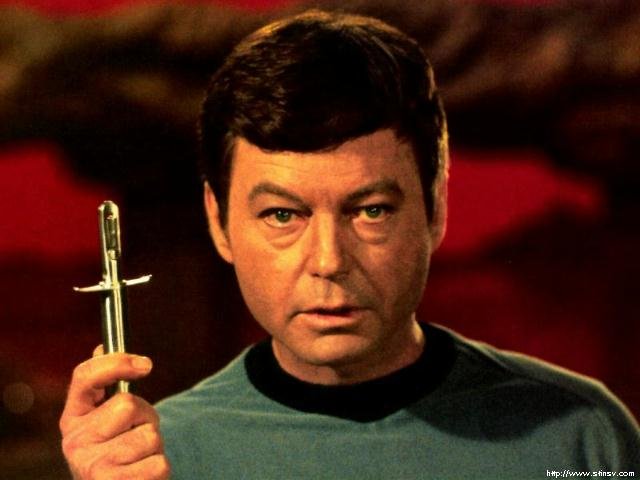
5. I’m a doctor, Jim, not a magician.

6. I’m not a doctor, Jim

What I would like to be doing right now:

What my brain felt like last night, and also how everything was starting to look around me:

How I wish the writing process actually went:

Song I think we should all be listening to right now:


Title of this book:

Valley of Ashes

Projected pub date:

March, 2012


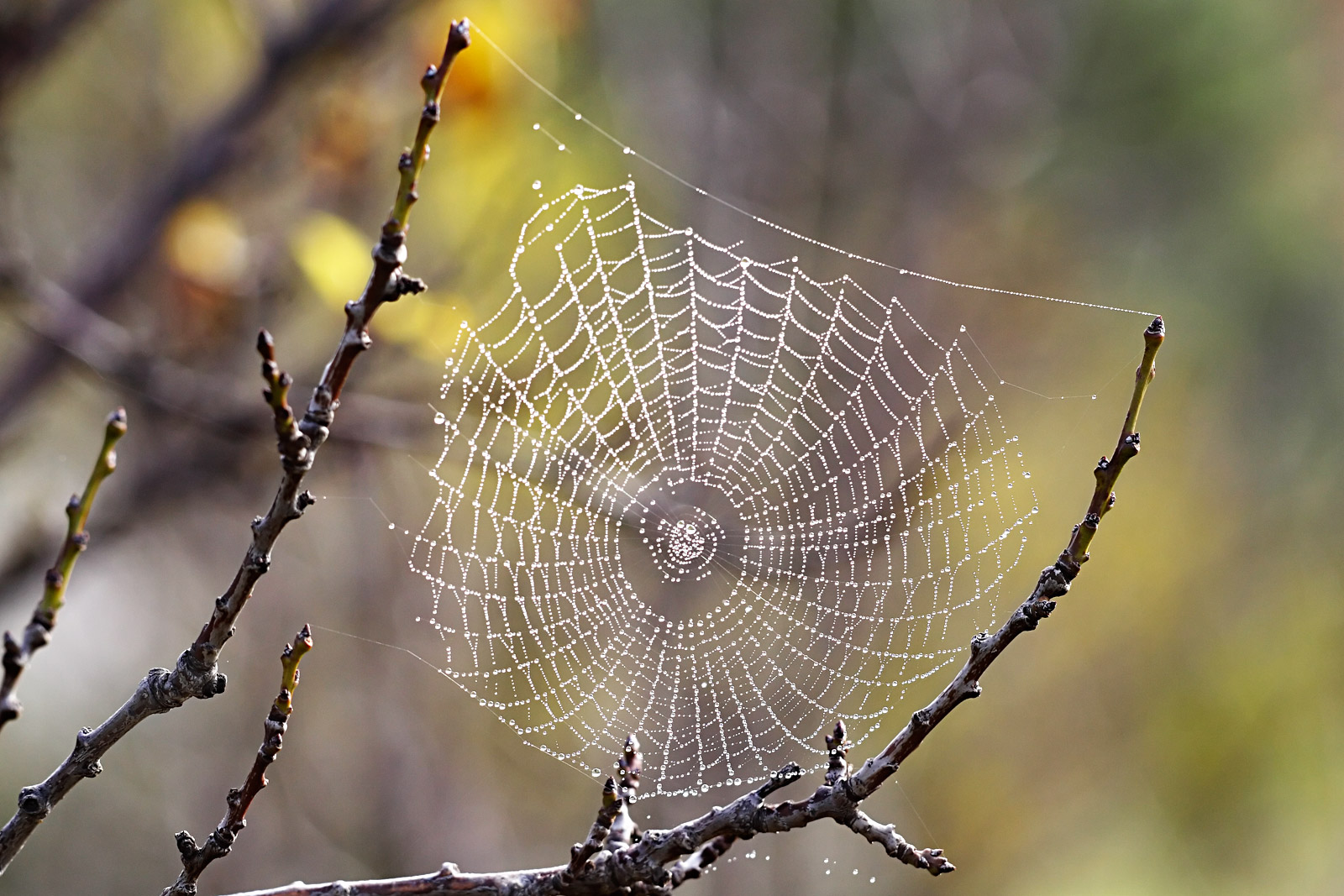
Weaving the Tangled Web

Zoë Sharp

These days, every writer needs a website.

True or false? 


True – but why?

And, more importantly, what?

It’s been mentioned quite a bit by my fellow ‘Rati that writing is no longer simply about writing the books, and hasn’t been for some years. In fact, there’s been a lot of talk lately about whether writers should also be their own publishers and cover designers, but I won’t go into that one again. It’s been covered far better than I could in Allison’s recent post.

But even if you don’t go down the eBook route, there’s a whole load of other stuff that goes along with being a writer and occasionally swamps the creative process altogether. Websites, although creative in their own right – and certainly a creative outlet – can be one of them. Websites are a vital but time-consuming (and possibly hideously expensive) part of the job, but if all you’re providing is information on yourself and your work, how do you know it’s the right info, presented in the best possible way?

The reason for this post is because my website is due for revamp. In fact, it’s probably overdue for revamp, but there never seems to be the time to devote to pulling the whole thing down and rebuilding it from scratch. I’ve been trawling the web quite a bit recently looking for good and bad examples of web design, purely from a visitor’s point of view. I won’t name the guilty parties, because this website has already done it for me.

Just as you can learn a lot about writing from reading bad books as well as brilliant ones, you can learn a fair bit about web design from looking at appalling websites. Good design looks effortless but is incredibly difficult to do well.

 But design is one thing.

Content is another.

A writer’s website, after all, should be more about the content than anything else.

Shouldn’t it?

What makes you seek out a writer’s site?

Personally, I don’t put ‘crime fiction authors’ into Google and see what comes up. I usually search on a title or a specific author’s name. Why? Because I’ve heard them mentioned somewhere like here, or recommended, or there’s been a lot of hoo-hah for some reason. I always click on what looks like their official site – I’d rather go straight to the horse’s mouth than a publisher’s author page or similar. Don’t know why – just personal preference, I guess.

But, what do I look for when I get there?

If they’ve written a number of books, I want the right order for the series. I want publication dates for the next book. An opening chapter and/or an excerpt is always good. The publisher and ISBN can be useful for ordering. Tour dates are a plus.

But that’s just me.

What I’d like your help with, is what do YOU want from an author’s website? What are examples of good sites you’ve visited, and why? What DON’T you like about either writer’s sites, or other websites you’ve been on, for whatever reason?

I remember visiting a Thai restaurant site in a town where I was going to do an evening speaking engagement. I went to the site both to get the address, so I could be sure we could find the right place, and make sure we had time to be in and out before I had to be at the gig.

The only thing not on the website was the restaurant’s opening hours. Doh!

Anyway, let me know your thoughts, ‘Rati!

This week’s Word of the Week is toxicophobia, a morbid fear of poisoning. And, along with this – but perhaps more worrying – we get toxicomania, which means a morbid craving for poisons. Doesn’t say why, though…

These Are a Few of My Favorite Things

by Alafair Burke

Ah, the joys of holiday shopping.

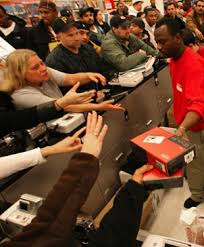
It took only a few images like these for me to head straight to the safety of my desk for all my holiday shopping needs. Part of me does feel guilty about missing out on the special experience of holiday shopping in Manhattan, but, wow, it’s so warm and comfy in my apartment (and much closer to the refridgerator.) I love that the gifts get wrapped and mailed by invisible elves, complete with return instructions so my friends and family members don’t even have to tell me if they opt for another selection.

Ironically, though, holiday shopping online may not actually save time, at least not in my case.  In a store, I’m so eager to leave, I grab what I want and get the hell out while I’m still alive.  But online?  I browse and browse and browse, because the choices are infinite.  And so very, very odd.

I thought you might enjoy seeing a few of my favorite (mostly ridiculous) online finds this year.

10.        Blink Ketchup and Mustard Bottles

Your hotdog and hamburger eaters will love these.  The eyes close when you flip the bottle over!

9.      Fire Bell Alarm Clock    

From one of my favorite modern design stores in New York, this clock looks incredibly cool and is supposed to be as loud as a fire bell.


8.  Girly-Girl Roller Skates

Okay, that’s not really what they’re called, but that’s what I’ve dubbed them.  As a kid, I used to skate until my feet bled.  These make me want to spin in circles until I fall from dizziness.

7.    Bacon Soap

We all know someone who says everything is better with bacon.  (Come on, people, you know who you are!)  This soap, which looks and smells like bacon, will put that theory to the test.


6.  Toph Daddy Area Code T-shirts

A few of my readers were sweet enough to bring these to my attention after my most recent book, 212, was published.  I love my 212 shirt.  They also have ones for Boston, LA, and Chicago.


5. Edible Gingerbread Playhouse

Every year I love to peruse Neiman Marcus’s “Fantasy Gifts.”  Nothing will ever beat last year’s Cupcake Car, but this $15,000 edible gingerbread playhouse gives me a new understanding of how rich, crazy people make weird, bratty kids.


Last year’s cupcake car. Check out the creepy description: “Ever had a crowd of kids chasing after you just for the crazy gleeful heck of it?”
4.  Mystery Solver Trucker Hat

This hat is actually an homage to Frank, the trucker-hat wearing writer on 30 Rock, but I suspect we’ve got a few pals here at Murderati who might just rock a Mystery Solver hat without any irony.

3. Keurig Coffee Maker

Okay, no comedy here but what writer doesn’t need a coffee maker that brews single cups with no muss, no fuss? Total time saver.

2.  Soda Stream

No kidding around here, either, folks.  I like to think my home carbonation machine makes up for all those K-cups I’m throwing away thanks to the Keurig coffee maker.  Soda Stream even has a delivery service to send back your CO-2 tanks for refill.  Anyone who drinks sparking water should own one of these.  (Added bonus: The carbonating process makes a noise that the seven year old boys in your life, or in my case, the husband, will find absolutely hilarious.)

1.  Gee, what would I suggest as the #1 gift for the holidays?  How about… BOOKS!  You know how fun it is to discover a new writer with a backlist so you can read all the books in order?  Consider introducing your friends to new writers by buying them the first few paperbacks in a series.  Books are inexpensive, personal, and a cinch to wrap with all of those convenient right angles!

So how much online shopping are you doing this year?  And what are some of your favorite holiday finds?