Author Archives: Murderati Members


How do you read?

By Allison Brennan


E-books and e-readers are topics of conversation everywhere, and no place more so than among authors.


I could discuss any number of things related to e-books, but the topic could fill a novel—far more than I want to write on a Saturday night!


I think that there are two truths that most people can agree with, to differing degrees. One, e-books are here to stay and they’re a growing market. And two, print books will continue to sell.


I honestly don’t care how readers read my books. If they enjoy them electronically or in print or listening to them on tape or download. Truly, my job is to entertain by telling a good story.


At some point—when, I have no idea—there’ll be a balance between e-books and print books, just like there is a balance between hardcover and paperback releases. This unknown is one of the reasons that publishers are in a tizzy—it’s nearly impossible to plan print runs and create marketing plans when readers are all over the map. When an author like myself—a mass market commercial fiction author—has a book out there was a plan. But those plans are constantly in flux because of the unknowns.


We can say that ebook sales are increasing exponentially, but every author—with a particular eye to format and genre—is affected differently. My ebook sales are still in the single digits of total books sold. I know a lot of people who are selling upwards of 35%–most, if not all, of these authors are published in hardcover. Some of my mass market friends are seeing low two-digits—10-15% e-book sales, but most mass market authors aren’t getting the near half sales electronically.


So there are a lot of unknowns!


One of the problems everyone is having is with statistics. Numbers mean something, but methodology is crucial when looking at the stats. We’re hearing that Amazon is selling more digital books than hardcover books—but the problem with that statement is that they don’t tell us whether they’re selling more digital copies of books that are also available as hardcover, or are they selling more total digital copies than hardcover books.


I’m not discounting the quantity, because I know that hardcover authors are selling very well electronically, but we need to compare apples to apples if we can possibly plan for future books as well as know our audience.


For example, according to “Self Publishing Resources,” the average POD (which I am assuming includes self-published books, but I can’t be certain based on the wording) sells 75 copies, and Author Solutions reports that they sell on average of 150 copies of each of their self-published novels. According to a New York Times report in early 2009, when Bertram Capitol merged with Xlibris, they published six times more titles than Random House—the worlds largest publisher.


Quantity of titles doesn’t equate to success. Well, the vanity press companies are certainly successful, for one article on the Self Publishing Resources website states that 81 percent of the American people believe they have a book in them. And with the ease of getting that book published, there are now over 480,000 titles published today (2009.)


But the vast majority of those titles are selling less than 1,000 copies. One report I remember reading (but can’t find though I searched!) is that only 25,000 titles have a print run in excess of 5,000.


My point is that the big sellers are driving the digital train just like they drive the high print runs. I think when the New York Times starts their ebook bestseller list, that’s going to prove that it’s still the John Grishams and Lee Childs and Nora Roberts and Stephen Kings of the world that are dominating the sales. There will be new up and comers for certain, just like on the traditional print lists, but as more digital titles are available, readers will still gravitate to their comfort reads and proven authors.


I’m certain that there will be a lot of changes to come, some exciting and some scary. We don’t really know what’s going to happen, only that more people will move to reading some or all of their books digitally. And because this is technology based, it happens faster than other changes.


Decisions based on fear and not fact will only hurt authors—and, in the long run, readers. We need statistics that make proper comparisons, such as comparing e-book sales to print sales on those titles that are available in both markets. Unknown authors who think that they can break into digital publishing and make it big have a lot of work ahead of them—just because you can keep more money from each book sold doesn’t mean it’s the right decision. Or the wrong decision. Because of the potential for entrepreneurs who have both talent and marketing sense, there will be success stories. It’s inevitable. And I think that’s great.


But none of that means death to print publishing. 8% of the reading public owns an ereader—and that is expected to double within the next six months. And those who own ereaders are more likely to read more books. But there are still a lot of people who state they will not be buying an ereader in the next year. According to Harris Interactive (which I hesitate to quote because it’s an opt-in poll of people who are online and thus not a cross-section of all readers) the two demographic groups least likely to own or buy an ereader in the next 6 months are the 65+ group and the 18-33 group. That these are people who are active online and not moving over to ereaders is significant—I only have my unscientific poll of my teenagers who, when I offered them an ereader, said, “Hell, no.” (And I have an iPad, so I’m not opposed to ereaders!)


Their reason? They spend so much time on the computer, they don’t want to read books on it or any electronic device. Their textbooks are on the computer. They have assignments on the computer. They text and facebook and chat on the computer. Is there going to be a small technology backlash in the younger generation? Maybe. Maybe not.


But that’s the point—everything is changing so rapidly and data is incomplete. That’s why taking in the big picture and making smart, strategic decisions—both for authors and for publishers—is so important.


One experiment that my publisher is trying is releasing an exclusive electronic novella between the first two Lucy Kincaid books. Love Me To Death, the first Lucy Kincaid book, will be out on December 28, hopefully everywhere books are sold. Then on January 24, 2011, a novella Love Is Murder will be available everywhere electronic books are sold. Then Kiss Me, Kill Me, the second Lucy Kincaid book, will be out on February 22. I’m very interested in seeing the numbers—whether having an e-exclusive story increases e-sales of KMKM over LMTD, among other things.


Yesterday, my editor sent me two printed copies of Love Me To Death. When I opened the package, the same warm, happy feeling came over me that I had five years ago when I received the first two copies of my debut novel The Prey.


So to celebrate the pending publication of my fifteenth book—which happens to fall on the five year anniversary of the release of my debut novel—I’m giving away a set of my first trilogy: The Prey, The Hunt and The Kill. If the randomly chosen winner already has those books, I’ll send them any set of my trilogies that they want. In print—because I have the copies.


So tell me . . . have you converted to reading ebooks and if so, are you mostly reading books published exclusively as ebooks; ebooks that are also available in print; or a mixture of both?


More scary monsters: Sense And Sensibility

by Alexandra Sokoloff

In Stephen’s wonderful post yesterday he was asking about great thrillers – in the context of comparing and contrasting two of my favorite books and movies:  Thomas Harris’s masterpieces Red Dragon and The Silence of the Lambs.

When I teach, I use those two books all the time – to the, um,  horror, of the aspiring romance writers who often take my workshops, who wouldn’t be caught dead (sorry, I’ll stop now) reading those books.   But I always try to get new writers to understand that they can learn just as much from stories outside their own genre, because the elements of story – and suspense – are the same no matter how many bodies are or are not falling or how many creatures are or are not lurking in the basement.

And for us darker types, there’s a lot to be learned about storytelling  from classics in other genres.

I am lately on a Reacher binge and at the same time obsessed with the Ang Lee/Emma Thompson film of Sense And Sensibility.   Which makes a warped kind of sense because my experience with romance is more along the lines of what you get in the Reacher books, and I find serious horror in Sense And Sensibility.  But I’m not joking about the horror in Sense and Sensibility (or any Austen book), and it’s not a horror of romance, either.    I am, however, horrified at the Netflix description of the film as “Austen’s classic tale of 19th century etiquette”.  This story is more about monsters in the basement than it is about etiquette.   

Actually, it is about an evil much bigger than a monster in the basement.

The film opens at the deathbed of Mr. Dashwood, the father of our heroines Elinor and Marianne (Emma Thompson and Kate Winslet, one all “Sense” and the other all Sensibility” – ie, passion.).    Mr. Dashwood has called in John, his son from a previous marriage, to whom Dashwood’s entire fortune and houses will pass under the law of primogeniture, which bars women from inheriting property and keeps both the patriarchy and the aristocracy intact by mandating that family fortunes pass undivided to the eldest son of a family, with only minimal livings carved out for any remaining male children.

Before he dies, Dashwood extracts a promise from John that he will take care of the present Mrs. Dashwood and her three daughters, Elinor, Marianne, and Margaret, who by law are only allowed to inherit 500 pounds.

John’s original intention is to give the Dashwood women an additional 3000 pounds so they can live comfortably on the interest, but in the course of a carriage ride up to Norland Park, where John and his wife will take over the Dashwood house, John’s harridan of a wife, Fanny whittles John’s gift down to nothing at all:  “Twenty pounds here and there should be ample.   What would four women need with more than 500 pounds?”

This series of scenes is a beautiful – and funny –  dramatization of greed in action, and Fanny makes a detestable villain.   But more importantly, the scenes introduce the real villain of the story, and every Austen story: primogeniture – which kept the rich superrich, the poor practically or literally indentured as servants to the rich, and women enslaved to men, for centuries.

Stylistically, Jane Austen was writing comedies, but the stories are built on social outrage, and I believe it’s that canny blend that made and keeps these books classics.

The whole next sequence introduces us to the extremely sympathetic Dashwood women as they are reduced to guests in their own house – in the midst of their deep grief over the loss of their father and husband.   While Fanny steamrolls through the house claiming everything in it as her own, the Dashwood women scramble to find other living arrangements on their tiny inheritance.

And then, enter Edward Ferrars – Fanny’s intelligent but very reserved brother (Hugh Grant at his diffidently charming best) who instantly understands the pain of the Dashwoods’ circumstances, bonds with and draws out youngest daughter Margaret, and falls hard – abeit reservedly – for kindred soul Elinor.   Of course, a match made in heaven – but there’s more to this than love.   In her circumstances, Elinor’s life and her family’s lives depend on her making a good marriage, because women are prohibited from earning an income.   So a happy marriage to a well-off man is the dream, the best possible outcome– but the stakes couldn’t be higher, and Elinor’s situation is more than tenuous – she has not the slightest power over the outcome.   Fanny and Edward’s mother (offstage, but very present in the form of threat of disinheriting Edward if he makes an “unworthy marriage”) immediately go about preventing this match, and the Dashwoods move from their home to a cottage on the estate of Mrs. Dashwood’s wealthy cousin, without a marriage proposal from Edward to Elinor. 

In their new home, younger sister Marianne catches the eye of the county’s most eligible bachelor, wealthy and cultured Colonel Brandon  (a completely dreamy Alan Rickman).  Marianne scorns Brandon’s attentions, thinking him too old (he’s 35 in the book), and falls hard for the dashing Willoughby, who also seems very well-fixed financially and outspokenly shares Marianne’s passion for poetry and music.   Elinor, though, has doubts…. 

All of this set up (the first act of the film) makes for huge stakes emotionally.   We hope that Elinor will make her happy marriage with Edward.   We hope Marianne will also make a happy marriage, but are uneasy with her choice of Willoughby (over Alan Rickman???   Surely that’s wrong…)   We fear that Edward will not marry Elinor because of his mother’s threat of disinheritance.   

Elinor is very much in love with Edward; we know she will never find as perfect a mate elsewhere.  But even beyond that – her life without him is clear and endlessly grim – spinsterhood, poverty, or perhaps a loveless marriage that at best would turn her into some version of Fanny, and at worst – well, put any ribbon you want on marriage, but at the time women were property of their husbands. (And we’re not all that long out of it, ourselves.)

Marianne’s possible fate is spelled out even more graphically by Colonel Brandon.   As a youth he fell in love with his family’s young ward, but they were forbidden to marry because she was penniless.   Brandon was shipped off to war, and the young woman was turned out of the house and reduced to prostitution;  Brandon returned to find her dying in a poorhouse.

It’s all reported very discreetly, but it’s clear this is exactly what could happen to the passionate, impetuous Marianne if Willoughby throws her over.   And throw her over he does…

Now of course, after some hair-raising reversals, there is finally a brilliantly happy ending; all the right people marry.  But underneath all of that is the undercurrent of the horror that might happen if it doesn’t end happily – the stakes are just about as high as they can get.

And it’s not just the women who suffer under the system of primogeniture and complete control by the property owners of the society.  Willoughby is disinherited and reduced to marrying for money, when his true love is Marianne.   Edward is disinherited by his mother when he chooses to marry “beneath him” and only saved from poverty by the sympathetic Colonel Brandon, who offers him a clergy position in the local parish.   And we also see the miserable marriage of a couple of minor characters – wonderful performance by Hugh Laurie as a man who married for money and is drowning in his own bitterness.

Austen’s work is so often called “drawing room comedy”, but I don’t read or see many thrillers that have anywhere near this level of tension, suspense, and truly horrific stakes – it’s my most fervent hope that I can create characters and situations anywhere near this emotional gripping.

So how about it, Rati –  what books or movies have gripped you lately?   Any examples of huge emotional and/or thematic stakes you weren’t expecting in a particular genre?

I’d especially love to hear about emotional and thematic stakes in thrillers and mysteries, but any gerne is fine with me.)

And of course I have to ask –  Hugh Grant or Alan Rickman?

Alex

LAMB SLAYS DRAGON

By Stephen Jay Schwartz

So I’ve been rummaging through the undersides of things in my effort to consolidate the clutter of my life before moving from house to apartment, occasionally jumping when the call of “Spider!” comes from one of the other rooms, from one of the other family members, and my life-saving skills are required to take the thick or thin or hairy or spindly eight-legged offender out to the outside of the domicile where we, ourselves, will soon be outside looking in.

It’s a bitch of a time to get any writing done, and a few weeks after I started my third novel I find myself just ten pages in, ten solid pages, re-written ten times, but ten pages nonetheless.  My focus has been on the move and the day job and on finishing my tour for BEAT, which took me back to my hometown of Albuquerque, New Mexico, last weekend.  Writing will again commence Thanksgiving morn, when I’ll be looking at four ten-hour writing days in a row.

But I have during this time made time to read.  I tackled the works of Thomas Harris, picking up SILENCE OF THE LAMBS and RED DRAGON.  I was getting tired of being the only writer on the planet who couldn’t say that RED DRAGON was the best thriller ever written.  I’ve seen the title pop up in just about everyone’s Top Ten List, and I was at this year’s Men of Mystery when Greg Hurwitz was asked to name the best thriller ever written, and he said it would have to be RED DRAGON.

I read the books back-to-back, but backwards, diving into LAMBS first only because I was able to acquire it before DRAGON.

I was just a few pages into LAMBS when I got the cozy feeling that I was in the hands of a master.  It was revving up to be the perfect reading experience and I felt myself trying to slow things down, afraid I’d run into a bump along the way, something that might derail this wonder-train and break the illusion I was getting that LAMBS might in fact be the golden elixir of thrillers.  I zipped through the novel and was not disappointed.  It was brilliant, and in my opinion, a perfect novel.

I eagerly leapt into RED DRAGON, expecting the same.  And it was great, it was wonderful, but it wasn’t SILENCE OF THE LAMBS. 

Both novels are compelling studies of characters in duress.  Perhaps what makes DRAGON stand out so much is its depiction of semi-retired FBI profiler/forensic analyst Will Graham, the physically and psychologically wounded man responsible for capturing the cannibalistic serial killer Hannibal Lecter.  Asked to return to the FBI to pursue another brutal killer, Graham first visits Lecter in jail, hoping to obtain a little insight.  Lecter asks him the question, “Do you know how you caught me, Will?”  He answers his own question thereafter, saying, “The reason you caught me is that we’re just alike.”  This statement haunts Graham through the rest of the book, and Harris does a bang-up job convincing us that Graham fears he has what it takes to be another Hannibal Lecter.

All of DRAGON’S characters are complex and believable and the science and procedural aspects of the book are spot on.  It’s a really great book, but it’s not SILENCE OF THE LAMBS.

What is it about LAMBS that captures me so?

First of all, it’s tight.  I’m a big fan of tight.  I’m a student of Jim Thompson, and his writing is honed down to the bone, and it moves.  We talk here at Murderati about “cutting out the stuff no one reads,” and Thompson’s work stands out as a shining example of that.  I read Thompson continuously as I was writing my last few drafts of BOULEVARD, and his writing taught me to constantly tighten and trim my prose.  His work proves that less is often more.  I’ve noticed that BEAT is a tighter, faster ride than BOULEVARD, and my new book is tighter still.  Soon I’ll be writing mystery-thriller haikus.

LAMBS is rich with detail.  It’s obvious that Harris has done his homework.  But the volume of research is presented with amazing restraint.  There’s no need to take the reader on long tangents into the history of profiling or forensic science.  No need to give us more than the very basics about Clarice’s boss, Jack Crawford.  Just enough to bring out character, without drowning the reader in backstory.  One beautiful little character touch comes in a narrative line about Crawford that reads, “Back at his chair he cannot remember what he was reading.  He feels the books beside him to find the one that is warm.”  There are little brushstrokes like this everywhere in the novel.

And don’t even get me started on the rich character descriptions of Clarice, Hannibal Lecter, Chilton and Buffalo Bill.  Every character, even the walk-ons, is unique and bursting with dimension. 

Clarice herself is exceptional.  There is such complexity to her, in that she is a young, female, FBI trainee with a troubled past and a chip on her shoulder.  She’s refreshingly original and her sense of pride and justice are things to admire.  Match that with Lecter’s eerie, uncanny ability to peer into the recesses of everyone’s psychology, and you’ve got two of the best characters ever written. 

In LAMBS, Lecter is a slippery guide and mentor, and, while he’s always out for himself, he finds joy in helping Clarice along on her path.  He plays a slightly different role in DRAGON, by actively helping the antagonist in Lecter’s own quest to destroy Will Graham.  This doesn’t feel like the Lecter I know from LAMBS.  It’s cleverly done in DRAGON, but it reduces Lecter’s role to something less than his potential, which is further developed, with greater satisfaction, in LAMBS.

The pacing of LAMBS was also more satisfying than in DRAGON.  LAMBS grabbed me by the throat and shook me almost to unconsciousness, then slapped me in the face repeatedly to wake me up.  It was a non-stop ride on a jackhammer.  And yet I still felt firmly planted in the story—the speed of the narrative didn’t come at the cost of losing the story’s foundation.  I still got the opportunity to peek into the world of the FBI, to spend time in Quantico, to learn about Clarice’s early life on the farm, her run from the glue factory, her desperate wish to live in a world of silence, where the lambs never cry. 

And I had the opportunity to observe the smartest serial killer on the planet.  I don’t know if I’ll ever have Harris’ chops—Hannibal Lecter is the most interesting antagonist I’ve met.  There is more of Lecter in LAMBS, too.  He plays a more vital role in the narrative, and yet he doesn’t steal the story from its principal characters, Clarice, Crawford and Buffalo Bill.

Listen, I could go on forever, analyzing the structures of each novel, deconstructing every chapter and paragraph, explaining what works for me and why.  They are both great novels, but I clearly see SILENCE OF THE LAMBS in the top spot. 

Let’s hear some comments.  What do you think is the best thriller of all time?  Why?

                                                              *    *    *

Also, my short story prequel to BOULEVARD is now available as a FREE DOWNLOAD from my website.  It will also be available on Kindle and other e-book devices beginning December 7.


In CROSSING THE LINE, young LAPD officer Hayden Glass is driven to move quickly up the ranks at the department. Only one year in, he decides to pad his experience with a stint in Vice. But, with a marriage on the rocks and carrying the weight of a dark and troubled past, Hayden cannot resist the temptations he encounters on the street. CROSSING THE LINE marks the moment Hayden’s sex-addiction first rears its ugly head.


Hits and Misses

By Brett Battles


I admit it. I’m a TV junky. In my life I’ve watched FAR too much, and I’m sure I’ll continue to watch FAR too much moving forward, too.

It’s the stories that draw me in. Even the simplest ones can make me watch if there’s something that gives me hope the story might be good. I’m often disappointed, but, no matter what, I watch.

I talked earlier about how much I love the beginning of the fall television season. It’s full of promise and hope. My DVR just overflows with things to watch. But, inevitably, I start removing shows from my record list. Some flat out are bad. Some are good ideas that just don’t reach their full potential. And worst, I think, some are just mediocre. Occasionally, I’ll have to remove a show not because I don’t like it, but because they network has cancelled it.

Let’s look at some shows I had hopes for:

HAWAII FIVE-O – I had a lot of hope for this one, but after just a couple of episodes I all but gave up. The situations were ridiculous, and the characters were way too one-note for me. Too bad, too, because a couple of the actors are favorites of mine. I did try a more recent episode, the one with Kevin Sorbo. It was so obvious he was the killer from the beginning that I was yawning by the final reveal. STATUS: Show deleted from my record list.

UNDERCOVERS – This one I was excited about because of J.J. Abrams involvement. I loved LOST, and I loved ALIAS, so I was hoping to love this. I didn’t. But I didn’t hate it either. I liked the characters, and I thought that at some point the show might hit it’s stride. But that’s not to be. ABC has cancelled it. For me, this was an example of a show that was a good idea but just didn’t reach full potential. STATUS: Still on my record list only because I haven’t removed it yet.

RUBICON – WOW. Now this is a show. Unfortunately AMC has decided not to renew it for a second season. (THAT SUCKS AMC!!) If you can catch this, do. It’s very smart. STATUS: Still on my record list because I refuse to remove

THE WALKING DEAD – Also on AMC, but this one they’ve already re-upped for a second season. Funny how good ratings will do that. I’m enjoying this one. Good characters, interesting world, exciting situations. My only issues at this point are that we’ve seen some of the same type of situations in other shows and movies. Granted, this is based on a graphic novel I have not read, so it’s possible the novel came out before some of the other movies did, and they’re the ones that are derivative. STATUS: On my record list, and staying there.

That’s just a sampling, of course. Some of the other shows I record that have made the cut from the previous years.

COMMUNITY – Love this show! Hilarious.

30 ROCKS – Still a ton of fun.

GLEE – Loved this last year. This season not as good, so it’s on the verge of getting into my iffy list.

FRINGE – My guilty pleasure. This show rocks. My fellow geeks know what I mean.

And just for fun…one of our local stations airs PERRY MASON every morning at 5 a.m. I record that, too. Love, love, love it. (In fact I’m watching a episode as I’m writing this.)


So, here are my questions…what’s on your favorite’s list? What show’s have you given up on? Any gems out there we should all be watching?

Homesick For A Place That Doesn’t Exist

One of the blogs I read every day (or as often as it’s updated) is called Making Light. The blog is hosted  by Patrick & Teresa Nielsen Hayden, both of whom are editors, teachers of writing, and major figures in the world of SF. The subject matter is varied and fascinating, ranging from science fiction and fantasy (naturally), to the business of publishing, to politics and world events, to, well, just about anything.


It’s usually at least an interesting read, but this recent post by co-blogger Abi Sutherland (an American living and working in the Netherlands) particularly set me to thinking. The post was written as a response to one on Roger Ebert’s blog (which you can find here), on the subject of loneliness. Sutherland’s post is mostly about the sense of community one can find at various places on the Internet (something to which I think we can all relate), but it was this passage that really struck a chord for me:


[Ebert] wrote it from the perspective of being one of those happy people who does not get lonely, and I think he goes astray as he does. He wants to attribute it to causes, to lost loves or love never found, but I tend to think that some of us are simply prone to longing.


I don’t even know what we long for. Not necessarily for companionship, or love, or friendship and interesting conversation; I have all of those in abundance. I’ve been married seventeen years, and I know I am beloved. My children adore me the way that children often do adore their mother. I have friendships both in person and remote. And I return all of these sentiments wholeheartedly. I’m not achingly lonely the way I was as a teenager. But still…


An evangelical type might tell me I long for his version of God. Madison Avenue will happily detail all that I should long for, and how much I can save by buying it while it’s on special offer. Many Americans, particularly conservatives, will tell me that I long for liberty, here in “oppressive” Europe. Perhaps any or all of these people are right, but I doubt it. My experiences don’t match their assumptions.


Something in me longs for a place I feel at home; perhaps that’s it.


I may just be projecting here, but it seems to me that’s why a lot of us read, and why a lot of us write: a longing for someplace we feel at home.


One of the things I’ve always loved about the German language (Mark Twain’s’ hilarious distaste for it notwithstanding) is the amazing variety of precise words it contains for very specific and complex emotions and states of mind. One of those is Weltschmerz. The word is usually translated as “world-pain” or “world-weariness”, but I’ve always preferred the definition given by Meyer in one of the Travis McGee books: “homesickness for a place that doesn’t exist.”


How many times have we heard readers tell us that they read to escape? Often, that statement is followed by a story of some wrenching event in their lives, or some horrible time they’ve gone through, and how such and such a book helped them get away from it for a while. It we’re really lucky, the book’s one of ours. But I’ve found that even people, like myself, who are well provided with “companionship, or love, or friendship and interesting conversation” still have that sense of longing to be, at least for a short time, in another place. Some of us feel the need so acutely that we’re driven to build those places in our heads, then invite other people to visit there too. This occasionally annoys our companions, loved ones and friends, because it does at times seem more than a little ungrateful. But it really has nothing to do with them. We’re just, as Ms. Sutherland says, prone to longing.


So, am I off base here? Does loneliness (or longing, if you prefer) drive YOUR writing or reading?


Things I’ve been wrong about

by Tess Gerritsen


You live and you learn.  And what I’ve learned, over the past two decades as a writer, is how many times I’ve been wrong about developments in the publishing biz.  When I go back and see old blog posts of mine, I have to either wince or laugh about how poorly some of my predictions have come out.  Which only proves that too much of the time, I have no idea what I’m talking about.

But I’m willing to admit it.

Here are some of the things I’ve been absurdly wrong about.  Or maybe just a little bit wrong about:


“E-readers will never be popular.”

I believe I made this assertion as recently as, oh, 2007.  I said that no one would want to bring an e-reader to the beach, that we’re all too attached to real books, and that those gizmos were just too reader-unfriendly.  But then I had a conversation with a Kindle zealot and, in September 2008, I bought one.  And blogged about it.  Not just blogged about it, raved about it.  But I still didn’t see it taking over the publishing world.


“E-books will always be a small segment of overall book sales.”

  Can I stop whacking myself with the wet noodle?  I was so wrong about this, I want to blush.  As Sarah Weinman writes in Daily Finance, e-sales comprised about 25% of overall sales for John Grisham’s latest novel.  And they were more than 50% of overall sales for Laura Lippman’s recent hardcover release.  I’ve seen the growth in my own sales, and the steepness of the curve, from last year to this, has been nothing short of breathtaking.  The good news is that my total hardcover sales haven’t really declined because of it, which makes me think that many of those e-customers represent growth in overall readership.  Or they represent readers who are buying both formats.  I have absolutely no doubt that within the next few years, e-sales will make up 50% of the sales of most new releases.


“Piracy will destroy publishing.”

This past January, I blogged about how many of my books were turning up on pirate sites. I foresaw the same calamity falling upon publishing that fell upon the music industry.  I worried about authors starving because too many readers would just swipe our work for free.  I noted how many thousands of my books had been downloaded for free from sharing sites.  

I think I worried about it for nothing.  Because e-readers have become so popular, and downloading books has become so easy and for some titles, dirt cheap — that customers are bypassing those virus-ridden free-sharing sites and downloading books legally.  The iTunes model, it turns out, works for books as well.  It’s just a matter of keeping the books affordable and available.  And if a reader steals one of my books?  Well, I’ve come around to agreeing with publishing guru and author Joe Konrath: if the thief really really loves the book,  maybe he’ll actually pay for the next one. 


“Traditional advertising for books is the gold standard.”

By traditional, I meant the use of print ads in places like the New York Times and USA Today.  But after an online conversation with marketing guru M.J. Rose, I was forced to re-think my position, which I blogged about here.  And now, in 2010, I can tell you that I think print advertising is pretty much wasted money.  For my last book, ICE COLD, no major print ads were bought at all.  The advertising was pretty much all online, with two ad spots on television during the debut week for “Rizzoli & Isles.”  I don’t think we’ll be going back to newspaper ads for the next book, either.  Because why spend tens of thousands of dollars for an ad that will just be lining birdcages within 24 hours?  

As for TV ads, that’s something else that authors should re-think.  It’s cool, it’s glamorous, but for the most part it’s an expensive bust.  Consider this fascinating article, which analyzes the effect of a TV ad on one author’s book sales.  His conclusion: it’s a huge waste of money.  Now in my case, this may not be true, because I was advertising on “Rizzoli & Isles, a television show that was built on my books.  So I was playing to the same audience that already likes the characters.  But if you’re just putting up an ad on a random TV show that has nothing to do with your books, you might want to think again.


“Self-publishing is a fool’s game.”

Back in 2006, I wrote a blog about how self-published books almost always fail.    And I revisited the topic here.  I’m not going to entirely back away from that stance, if what we’re talking about is print books.  I still believe that if you pay to print your own book, you’re facing insurmountable odds when it comes to getting that book into stores, getting it reviewed, and finding any readers to buy it.  But something drastically changed between 2006 and today, and that is the e-book revolution.  Now you can self-publish your manuscript with Amazon or Barnes and Noble, and then sell it through their e-stores.  True, you’ll face competition with all the thousands of other authors who are also self-publishing their books.  But as Joe Konrath has proved, it is possible to make a living as a self-published e-book writer.  Again, the odds are stacked way against you.  But your investment is minimal, and there actually is the potential for an income.

Bottom line?  If you’re a first-time author who’s been offered a traditional publishing contract with an advance, I would still say you’re better off taking it.  Because you can’t dismiss the advantages that a real publisher can give you, from distribution to marketing to editing.  But if you can’t find a publisher, or you’ve been fired by your publisher, there is now another way to sell your book to the public.


“The vampire/zombie/fairy/werewolf/blahblah craze can’t last.”

When it comes to trends in public taste, I don’t know what I”m talking about.  And neither does anyone else. 


So what have the rest of you been wrong about?  Which trends did you dismiss, which developments did you pooh pooh?

Meet Dirk Cussler. Yes, THAT Cussler . . .

by Pari

When Bookworks, one of the truly great indy bookstores in my city, contacted me about a possible interview with Dirk Cussler, I jumped at the opportunity. I was fascinated with the idea of learning how Dirk started working with his legendary father, Clive Cussler, and how the two them could keep coming up with their action-packed plots — that span continents and centuries — for all these years. I also liked that my Albuquerque readers will have the chance to meet Dirk and Clive this Wednesday night

Tell us about the new book Crescent Dawn.
As with most of the Pitt books, a historical element provided inspiration for the story. In this case, there were actually two events. I became interested in the loss of the H.M.S. Hampshire, a British cruiser that sank under mysterious circumstances in World War I, while transporting Lord Kitchener to a secret meeting with the Russian Czar. Dozens of rumors and theories abounded after the sinking, including speculation that the ship was sunk by the IRA or even the British government, rather than a suspected German U-boat. It all seemed to me like good fodder for a fictional sub-plot. At the same time, Clive was intrigued by Helena, the mother of the Roman Emperor Constantine, who traveled to Jerusalem in 327 A.D. to search for relics of Christianity. The trick was then to tie the two events into a contemporary-staged thriller.

What inspired you to start writing with your father?
About eight years ago, I quit my job in the tech industry, where I’d worked in corporate finance for almost 15 years. Kicking around to do something different, and with the writer’s bug nibbling at my extremities, I teamed up on a writing project with Craig Dirgo. Dirgo had co-written the two Sea Hunters books with Clive, which were non-fiction accounts of several of the NUMA shipwreck expeditions. Dirgo had also worked with us on a few of the actual searches. So he and I started working on a non-fiction historical book we hoped might lead to a series project  . . . but ultimately went nowhere.

About that same time, Clive was working to finish Trojan Odyssey. He was 71 and supporting my mother, who was battling lung cancer. That made for a weary time, and I think he lost his passion for writing a bit. Seeing that I had a sincere interest in writing at that point, he called me up out of the blue one day and asked me if I wanted to take a crack at writing a Pitt novel. It was a proposition I never anticipated, but I eagerly jumped in with both feet. I never expected to be writing the Pitt books, but having essentially grown up with the series, and having a little extra insight on their creator, it’s been a completely fun experience. My father and I have a strong relationship, so it is of course quite rewarding to be able to work together with him, even if it did come a bit late in both our professional lives.

How do the two of you work together?
As fortune has it, my father and I only live about ten minutes apart in the Phoenix area, so we see each other several times a week, whether writing or not. We actually work separately, but meet often to discuss the current book’s progress.

What’s the division of labor?
Most of our joint work is at the front end. We’ll meet together regularly over the course of several weeks to kick around plot ideas and then hash out an outline. Once that is set, then I’ll go off and do the bulk of the actual writing, with my father editing along the way. I would say the challenges of working together are few, beyond the normal struggles of writing a book. It’s a real pleasure picking the brains of my father, however, as his creativity seems to have no bounds.

What do you think are the essential elements of good storytelling?
I might say that the three C’s of Character, Conflict, and Compulsion are at the heart of any good story. Writing action adventure tales, we don’t necessarily delve too deeply into the psyche of the characters, but it’s always important that the reader can empathize with one or more of the main figures. Some measure of action is required, typically driven by a conflict or odyssey of some sort that leads the characters forward, either physically or mentally. And it all must be done in a compelling manner that keeps the reader turning the pages, be it by mood, dialogue, style elements, or the conflict or action itself.

photo: C Ronnie BramhallWhat’s up next? Any solo writing?
Clive and I have already been formulating some plot lines for the next Dirk Pitt book, so I expect to begin writing on that shortly. I haven’t yet found the time to complete a solo novel…but some day!

What’s going on with the real NUMA right now?
We’re currently involved with two ongoing NUMA search projects, one in Lake Michigan and one in the North Sea.  We’ve been searching in Lake Michigan for a Northwest Airlines DC-4 that crashed in a thunderstorm back in 1950, and represented the worst air fatality accident at the time. In the North Sea, we are also trying to locate the Bonhomme Richard, the flagship of John Paul Jones which sank after battling a British squadron in 1779.  We’ve spent several unsuccessful years looking for this one, but hope to try again next summer.

Dirk,
Thank you so much for this wonderful interview. I look forward to reading your — and your father’s — books for many years to come.


Dirk Cussler, an MBA from Berkeley, worked for many years in the financial arena, and now devotes himself full-time to writing. He is the coauthor with Clive Cussler of Black Wind, Treasure of Khan, and Arctic Drift. For the past several years, he has been an active participant and partner in his father’s NUMA expeditions and has served as president of the NUMA advisory board of trustees. He lives in Arizona.

Clive Cussler is the author of forty-two previous books, including twenty Dirk Pitt® adventures; eight NUMA® Files adventures; seven Oregon Files books; and two Isaac Bell thrillers. His most recent New York Times bestsellers are Spartan Gold, The Wrecker, and The Silent Sea. His nonfiction works include The Sea Hunters and The Sea Hunters II; these describe the true adventures of the real NUMA, which, led by Cussler, searches for lost ships of historic significance. With his crew of volunteers, Cussler has discovered more than sixty ships, including the long-lost Confederate submarine Hunley. He lives in Arizona.

(I’ll be out of pocket much of the day today, but will respond to comments as soon as I can this afternoon. In the meantime . . . enjoy!   
Cheers, Pari)


Where to live next

By Cornelia Read

So, again with my procrastinatory Googling of dead relatives… but this time I think I may have decided where I want to live next, weather and finances and fate permitting.

This pretty much all started when I heard from the lovely and inimitable Lee Child that he would be going to Saratoga, New York, for a library gig–at which I hope he was madly feted since he’s really cool and stuff. For some reason, I remembered from earlier dead-relative Googling that my great-great Uncle, Dr. Valentine Seaman, had done the first chemical analysis of the waters of Saratoga and Ballston Spa in the late 1700s.
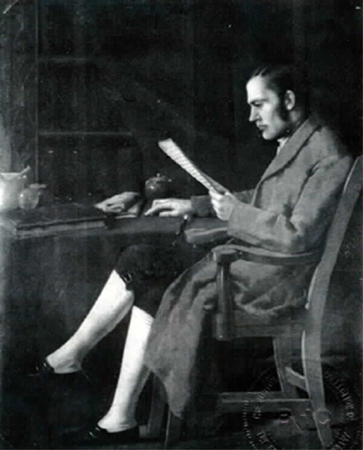

He looks quite a bit like my dad, actually–including the sideburns.
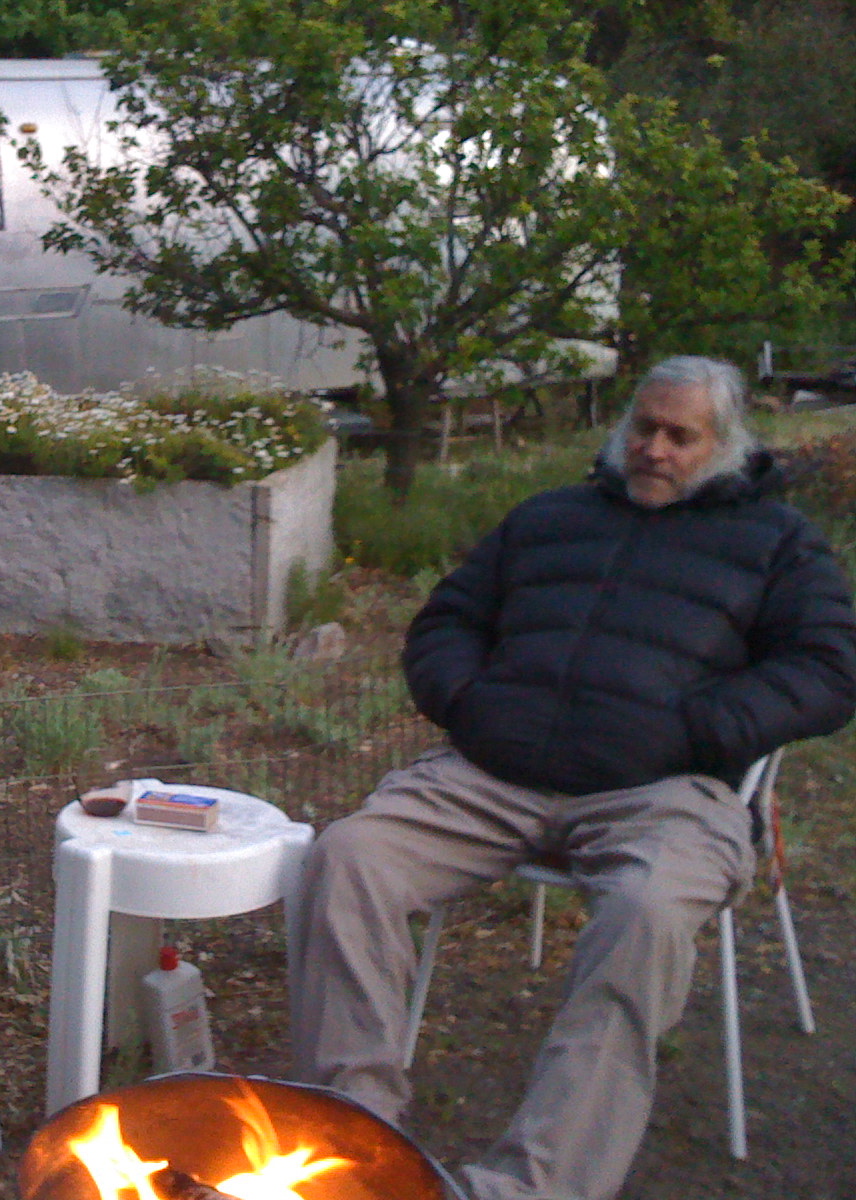
 

Totally the same forehead and cheekbones, even though you probably can’t tell since this is of course not a profile shot of Dad (my scrapbooks are all in storage in California.) Dad had a better nose, though. Not to mention way longer legs.

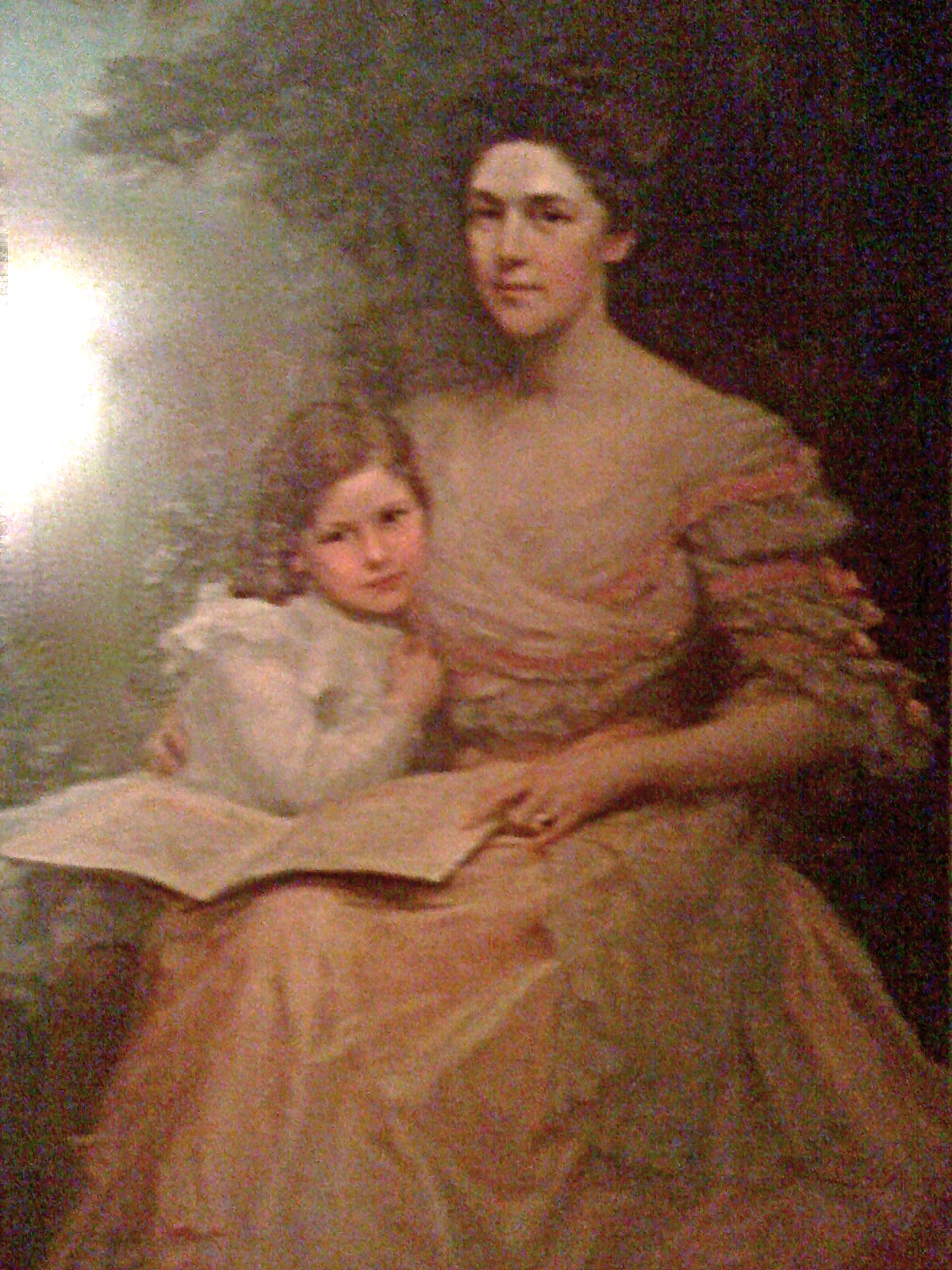
Here’s Valentine’s great-niece, Caroline Seaman Read, with her daughter Carol. She was Dad’s grandmother:
Great-Great-Uncle Valentine was also the guy who introduced Jenner’s cowpox vaccine for smallpox to America, after his eldest daughter died of a live-smallpox inoculation. Valentine traveled to England to ask Jenner about his work, became lifelong friends with the guy, and returned home to New York City with some cowpox in his luggage. There were apparently riots in NYC because people were terrified that he’d start an epidemic, plus his colleagues at The New York Hospital were pretty freaked out by it, so he volunteered to treat his own remaining children with the stuff first.

He also did the first training classes for nurses in the United States–a twenty-two-lecture series on midwifery. 

Oddly enough, my daughters were born at what is now New York Hospital-Cornell Medical Center. I remember the morning the cab let my husband and me out at the entrance to the maternity ward. There was a small bronze plaque near the front doors which, if memory serves, read “New York Lying-In Hospital, 1793.”

I thought to myself at the time that I was totally fucking glad not to be standing in that spot in 1793, since they probably had dirt floors and stone knives and bearskins, and I badly wanted an epidural, but I had no idea that had I been suddenly whisked back 199 years that I might well have met up with my great-great uncle. Weird, huh?

Anyway, interesting guy and he died of consumption at age 47 (my age this year), in the front room of the family house on Beeckman Street. His son Valentine, also a doctor, lived to the age of 96 and was written up in the New York Times the year before his death because he was thought to be at that time the oldest native inhabitant of the city.

Here’s Valentine the Younger’s obituary from The New York Times, which is pretty interesting reading about the old days further downtown:

http://query.nytimes.com/mem/archive-free/pdf?res=FA0B12FF355413738DDDAC0994DA415B8984F0D3

THAT Valentine and his brother John bought 25 acres at the northern tip of Manhattan and John built a country place on the site. Henry and his wife referred to it as “Mount Olympus,” but the locals called it “Seaman’s Folly.”
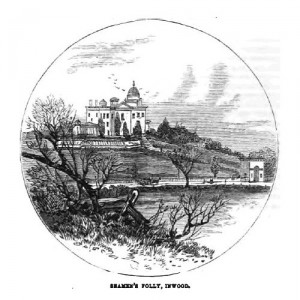
 

 Here’s what it looked like later, after it became the home of a riding club:
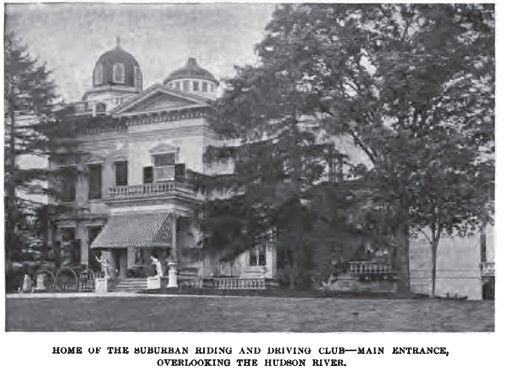
 Though from a different angle, this would have been what the house had a view of:
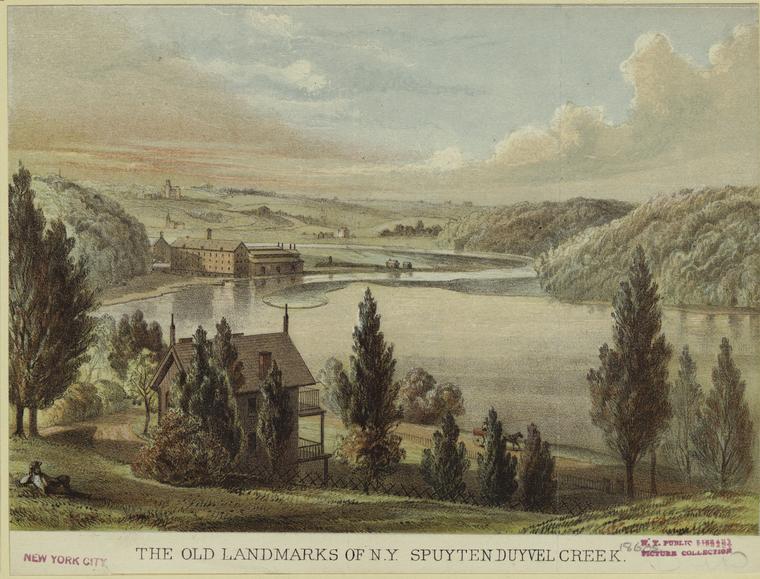
 Actually, maybe that building at the top left WAS the house? Not sure…

Here’s a fuller description from myinwood.net (quoted from an article in The New York Herald, August 29th, 1869):

The mansion is built entirely of white marble, quarried by Mr. Seaman on the spot. It is seventy-eight feet deep and in plan is nearly square. It has a main dome reaching a height of ninety feet from the ground, with its top painted a dark maroon color. There are also two smaller domes, whose arches are surmounted by the statues of Love and Music respectively. It is hardly possible to give a correct view of this house—a house that has few equals in the world, and one that is a combination of capacious wings, towering chimneys, vaulted domes, Roman windows and sharply defined, yet not ungraceful lines. If defies classification according to the schools of art, yet it is inferior to none of them, while a combination of all.  The plan of breaking away from what is pure Grecian or Roman is a praiseworthy innovation, and one, which has been followed with triumphant success along the river. From the northern porch the ground assumes a gently declining surface till it touches the drive in continuous groves of beautiful evergreens; from the eastward it descends on eight terraces, along which are constructed the extensive hothouses; from the southward the garden spots and statuary dot the green, and to the southward are the stables and the valley.
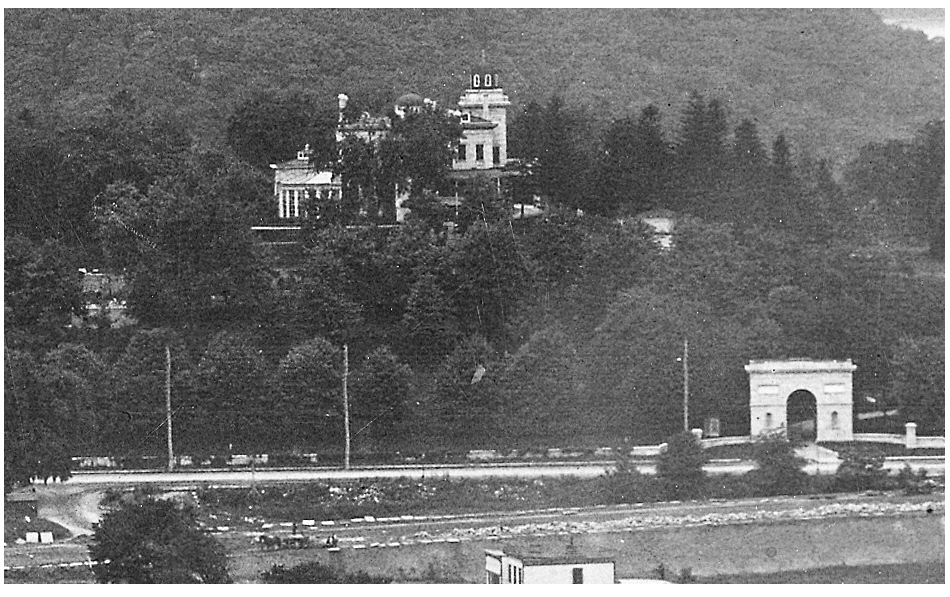
Let us enter the house. The door is flanked with fine pieces of statuary, and once within a wide and lofty hall, with the usual furniture, is seen. To the extreme south end of the house is the octagonal library, fitted up at great expense. Closets whose doors support long and beautifully gilded mirrors, statues of Scott, Shakespeare, Byron, Milton, Homer, Esculapius, Socrates and Pluto fill niches in the wall, and also the mind from the measures of heroic verse to the eternity of dreary philosophy. Some fine paintings hang on the walls, and the western windows look out into a small conservatory, in which statues of the four Seasons are placed in appropriate positions. These figures are about two feet high….

Looking north can be seen Spuyten Duyvil creek and the rich and fertile acres which it washes; the Harlem river with its torturous course winding like a snake through the tall grass and thick shrubs; a section of the Hudson shining like a lake of molten silver, and tinged with crimson by the setting sun; the misty hills rising from the valley and just perceptible through the haze, the weird glens, the weather beaten crags and torpid mountains. A scene like this is but a portion of what strikes the eye at every point; and this sublime panoramic view has been gazed upon by many eminent Europeans, who declare that nothing equals it in the Old World.

At the entrance to the porch two figures in the dress of the time of Louis XIV stand out in conspicuous prominence, and a statue of America caps the main dome: the interior is frescoed with Cupids. The house is connected from room to room with an alarm telegraph, so, that should burglars aspire to transfer some of Mr. Seaman’s valuables the dial would at once indicate their location and anxieties, when doubtless he would treat them with becoming civility….

The hothouses are very extensive. They consist of graperies, a pinery and greenhouses. The pinery is fifty feet deep, and is very fruitful. The graperies now groan under heavy loads of their delicious fruit. They are two in number, separated by a plant house, and have a through depth of 212 feet, with a width of 22 ½ feet, with a lean-to quadrant shaped roofs. A steam engine is used to throw the water on the grape vines, which have hothouse peaces just in their rear; and against the wall some rare figs. The whole arrangement of these graperies is a model of neatness. No finer fruit of this kind is grown in America. Every species abounds. There are the black Hamburgs, the Victoria Hamburgs, some bunches of which weigh six pounds; the white Nice, the Muscat Alexandrias and the royal muscadines; the Timothy de Burgh, the earliest golden Chasselas [below],

grizzly Frottingaus and white Prottingans. The plant house in winter contains 2,500 pots. The western slope is now broken up for improvements. A small lake is to be constructed; and adjoining, an ice house, so that he can make his own ice.


This being my family, of course, what with their absolute genetic genius for losing fortunes and squandering swaths of gorgeous bountiful real estate, all that’s left of the place today is what’s known as the Seaman-Drake Arch, touted as a perfect scale model of the Arc de Triomphe in Paris:
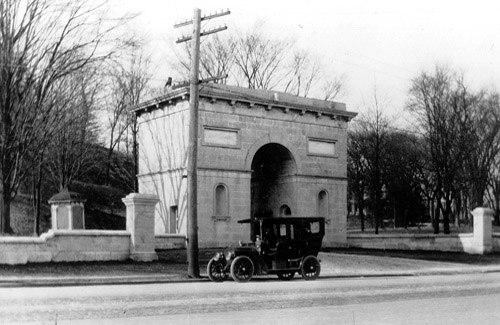
 

The above is from sometime in the Twenties, I suppose. Below is how it was situated when the house was still a going concern, at the center of the photograph (looking towards the Hudson, with the Johnson Iron Works in the foreground–manufacturer of cannons during the Civil War):
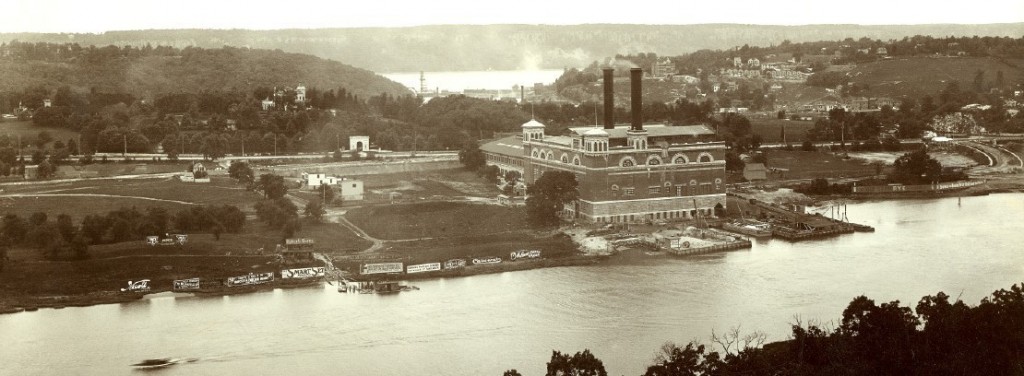
Check out the billboards along the Harlem River… 

These days, it looks like this:

It’s now at 216th Street and Broadway. They think maybe there was once a gatekeeper’s residence on the interior, but it burned out decades ago.

Henry Seaman had a made a fortune in “drugs” (no shit), but lost it all. Luckily, his wife Ann was rich, so she kept the place up during her lifetime. When she died, 140 relatives contested the estate. She left it all to her nephew Lawrence Drake, whom her late husband had forbade from ever visiting the property when he was still alive. Which just goes to show you that George Burns was right about the secret to a happy life, to wit, “having a large loving family in a distant city.”

Here’s a little description of local street names from the deeply fabulous Inwood historical website myinwood.net, the following a description of the road that runs in front of the arch:

Broadway Generally acknowledged to have followed the old Weckquaesgeek Indian trail that ran the thirteen mile length of Manhattan. Early settlers called it the Bloomindale Road. Going north the original trail crossed the then shallow Spuyten Duyvil Creek into what today is Marble Hill. At low tide a traveler could cross the Spuyten Duyvil Creek on foot. Records show that Indians referred to the crossing as “The Wading Place.” Future generations would see a ferry crossing and eventually the King’s Bridge.


There’s also Indian Road, just a block and a half long off 218th Street, near the northern end of Seaman Ave.

It’s the last street on Manhattan that’s still officially named a “road.” I’ve read that it was named that because this is approximately the spot at which Peter Minuit bought Manhattan from the Lenape tribe for sixty guilders. Aunt Jean says we all have some Lenape blood, which is way cool, not least because Mom’s side of the family killed of the Pequot in Connecticut.


View Larger Map

Click on “view larger map” and then zoom in twice to see the street names. Where the Seaman house once stood is now Park Terrace East and Park Terrace West

There’s a 400-unit apartment complex there now, designed by Albert Goldhammer. It was built in 1940 and is still wonderfully deco, with lots of actual garden lacing between the buildings.

But to back up again a little, here’s what the old neighborhood looked like:
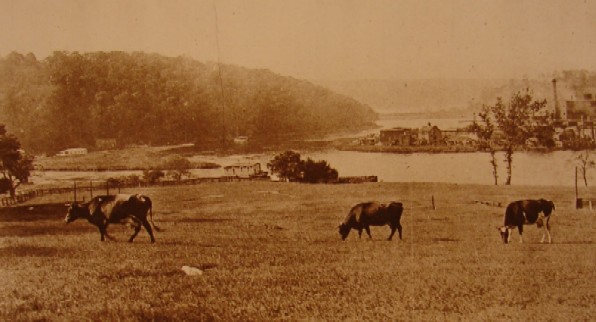
Those were apparently the last cows kept in Manhattan. We’re looking towards the Hudson again, over Spuyten Duyvil Creek (pronounced SPYden DYEvull.) This is possibly now the site of Baker Field, where Columbia plays football (there’s a sixty-foot tall “C” painted on a palisade across the river.)

It’s funny, I remember trying to go find an apartment in this neck of the woods the last time I lived in the city… the rental prices were just so amazing, I asked my husband if we could drive up there and check it out. We got lost in Washington Heights, then at the peak of a Dominican crack fest, and all the cars were on fire. Never made it all the way up to Inwood, and it’s all of course since gotten really gentrified. At the time, I had no idea I had roots up there.

Quite a bit of the Inwood neighborhood is still parkland, though, which is very cool. Here’s a contemporary view from further south and east… the humpy bit with all the trees behind the cows is still a humpy bit with trees, only now it’s got the Henry Hudson Parkway nestled behind it, leading to the Henry Hudson Bridge there, kind of in the middle. This part of town has the only untouched Manhattan forest land left, with a salt marsh.

Here’s what walking along Spuyten Duyvil Creek looked like, back in the day. The lady with the basket and child was basically abroad on a dirt road in the South Bronx. I’m thinking picnic:
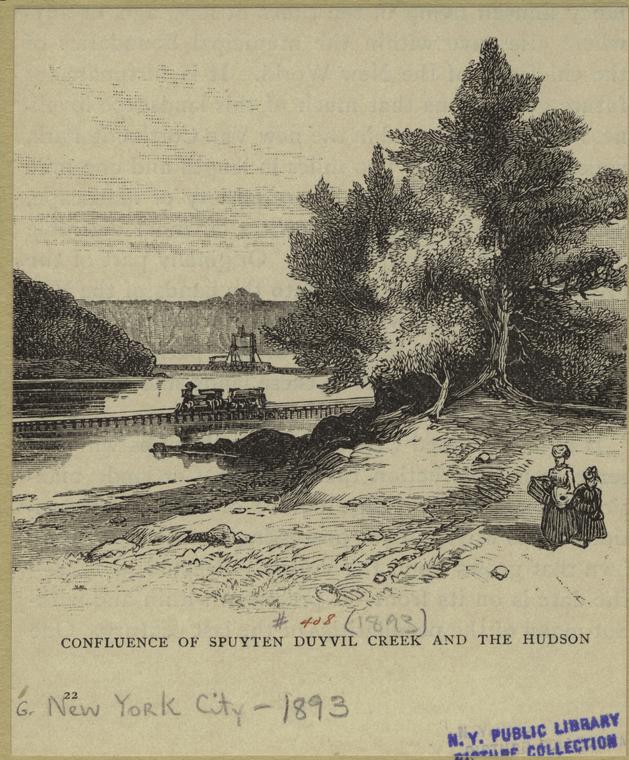
Today she might be walking in front of the yellow brick building, I guess:

The other remnant of my dead relatives having frolicked in this vicinity is a street name… Seaman Avenue.

Here’s another snippet from myinwood.net:

Seaman Avenue First opened in 1908 and extended in 1912, Seaman Avenue is named for the family of Henry B. Seaman. The Seaman estate once covered some 25 acres from Park Terrace Hill to Spuyten Duyvil Creek.  Henry was a descendent of Captain John Seaman who settled in Long Island in the 1650′s.
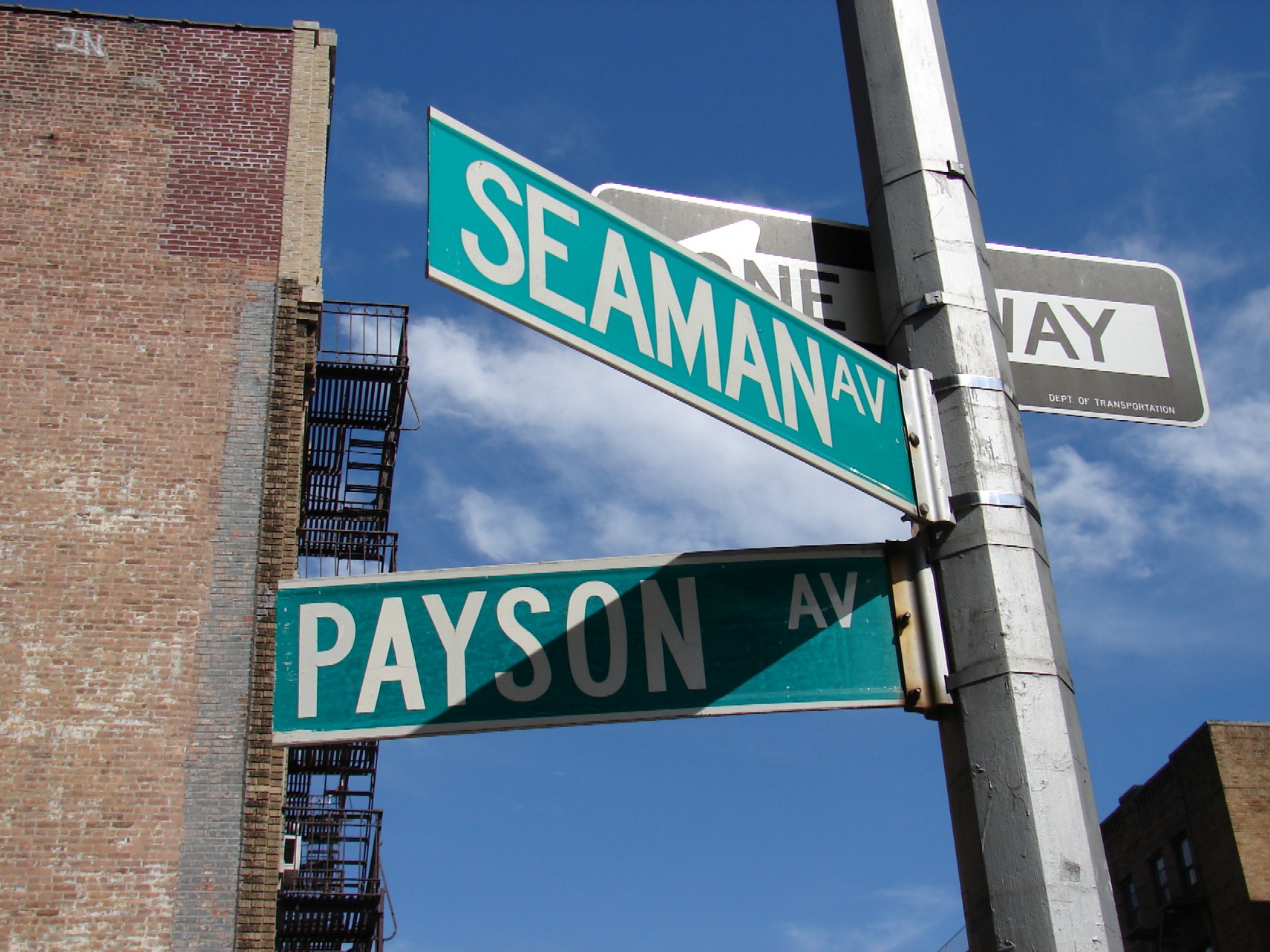
 

Here’s what the corner of Seaman and Payson used to look like:
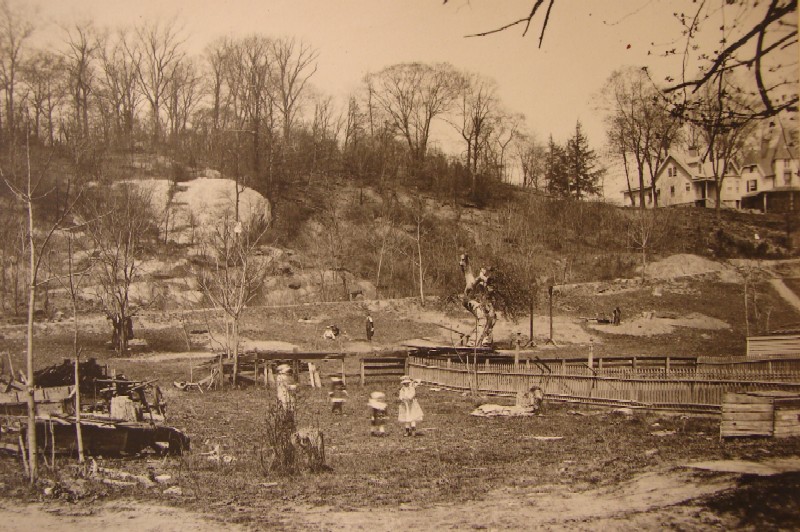
Another wonderful quote on myinwood.net is from a 1921 article by Eleanor Booth Simmons. She wandered around Inwood talking with elderly residents, describing many of the old family houses then falling into ruin. Here’s my favorite bit:


Do you like to dream about old houses? Do you like to investigate neglected mansions of a past age, picturing the life that flowed through the high-ceilinged rooms now so musty and decayed?

If you are a New Yorker it isn’t necessary to travel to New England to indulge in this pastime. Forty minutes by subway from the shopping district, a brief walk, and you are in a region of old houses. Some crown the green hills of Inwood, which downtown excursionists are beginning to discover, and some, stranded on the streets, are rudely shouldered by modern apartment houses of glaring brick. But there they are, and in some of them you will find white-haired men and women whose talk takes you back to a day earlier than that in which the characters of Edith Wharton’s “The Age of Innocence” lived.

Fancy going into a house a few steps from the Dyckman ferry and finding two brothers and a sister who have dwelt there sixty years! These are the Flitners, children of the Maine sea captain, who, landing at the Hudson River dock with barges of lumber from the North, was so charmed with these shores that he brought his family here to live. Get them talking and they tell you of a time when there were but seven buildings above 187th Street east of Kingsbridge Road. In their childhood the winter skating was the social event of the locality.  The lads damned up a brook that ran just north of Inwood Street, now Dyckman Street, and made a wide pond between two small hills. At night they lighted fires of Tar barrels and waste wood on the banks, and the community gathered and sang and shouted and did marvelous things on the ice. Perhaps the winters were colder then, for, as Charles Flitner remembers it, there was always ice from fall to spring.

Where Cobwebs Thrive on Manhattan Isle, by Eleanor Booth Simmons, New York Tribune, November 6, 1921.

Doesn’t that sound like something straight out of Mark Helprin’s Winter’s Tale?
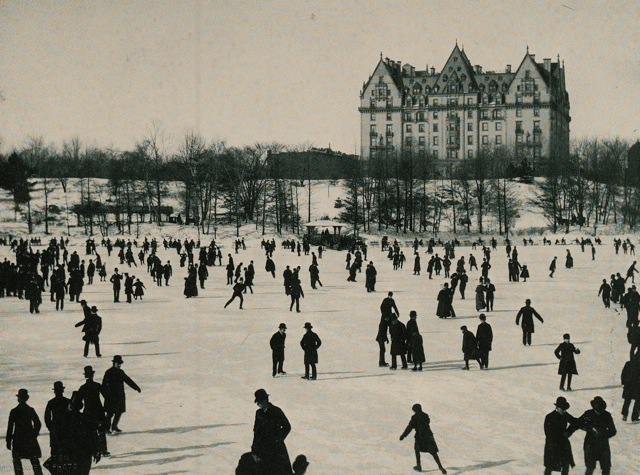
 

Okay, this is a photo of people skating on Central Park, when the Dakota was still new, and it’s probably at least a couple of decades later than what was described above, but it’s still one of my favorite photographs of Manhattan.

So now my real estate fetish has kicked in fully, and there’s actually a five-room apartment for sale on Seaman Avenue that I’d give my eye-teeth and right arm to live in:

109 Seaman Avenue, built in 1917. And hey, it’s a two bedroom in Manhattan for under $400k, so maybe it’s time to buy some Powerball tickets? I went and drove around the neighborhood this week, when Grace and I drove down from Cow Hampshire for her Barnard interview (and drove BACK that same day–ten hours total.)

Turns out my initial impulse to go check this neighborhood out was right on. Only wish we’d moved there instead of Boulder, back in 1995…

Take a look at the rest of that apartment: http://www.corcoran.com/property/listing.aspx?Region=NYC&ListingID=1982033&ohDat=11/7/2010%2012:00:00%20AM;

Ossum, right? Plus, it is NOT at this intersection, one of the most ridiculed and photographed in all of the city:
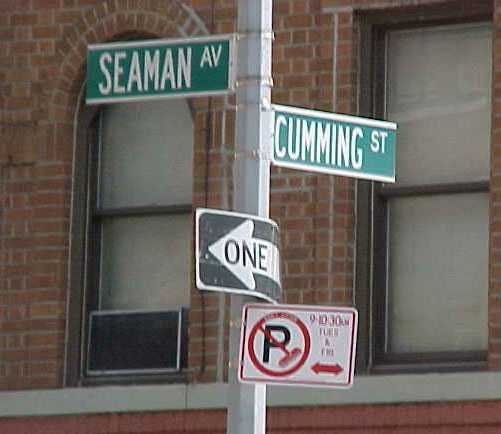
 

But you can still go for a walk in the park along Spuyten Duyvil Creek:

Okay, dear ‘Ratis, where would you live if you could live ANYWHERE?

I am extremely grateful to Cole Thompson, a real-estate agent with New Heights Realty in Inwood. Much of the information about the Inwood neighborhood and the majority of the images in this post are from his fascinating blog, myinwood.net. If I ever have any money, I hope to buy an apartment from him. Or at least rent one…

 

Sympathy With The Devil

Zoë Sharp

Last night I went to the prize-giving event for the Lancashire Libraries short story competition at County Hall in Preston. A very enjoyable event, with a worthy winner in Jo Powell, and commended writers, Kathryn Halton and Neil Martin. Congratulations to all those who took part – there were some wonderful pieces of writing.

To kick off the evening, myself and fellow judges Neil White and Nick Oldham talked for a little while about writing in general. The audience was made up largely of entrants to the contest, who patiently listened to the three of us ramble on before the winner was announced, and they also had the opportunity to ask questions about writing in general.

The subject of those questions was very interesting, because the thing that people most wanted to know seemed to be about developing good characters. And I must admit, that when I first started trying to write, it was the characters that I found most difficult. Creating rounded people comes only with time and practice, I think.

I remember getting hold of a book about the different characteristics of the various signs of the zodiac, which was very useful for working out some traits that dovetailed together. I’ve read books on body language and mental illness, looking for those genuine tics and features that make characters come to life on the page.

But do I write out detailed character biographies before I start, as one audience member asked?

Erm, no, I don’t.

I’ve tried it, but I find myself inventing stuff just for the sake of it, and then the danger is that you try too hard to shoehorn that information into the story when it just doesn’t fit.

The truth is, before I meet a character, in setting, I don’t know them all that well. I have an idea of why they’re there and what drives them, but until they metaphorically shake my hand and look me in the eye, I don’t really know them.

I’ve never liked stories that dump all of a character’s backstory in your lap within a page. Equally, I don’t like people who tell me their life history the first time I meet them. Some people have that kind of abounding self-confidence, though, that makes them want to boast about their achievements to comparative strangers. The kind who tell you within ten minutes of meeting what their house is worth, or how much they paid for their car. Usually, I have to say, they’re self-made.

It’s nice of them to take the blame.

Think of people you’ve met, who might have seemed quite charming when they were first introduced, but gradually you realise that you can’t stand them. They don’t have to come out with an outrageous personal statement, like they think your litter of dalmation puppies would make a wonderful fur coat, but after a while it dawns on you that they’re not quite as charming as you thought they were.

And nowhere near as charming as they think they are, either.

Is it the way they rattle on about themselves for just that bit too long, without asking anything about you in return? Do their eyes stray past you while you talk, and linger on the dangerously young girl who’s just walked by? Do they manoeuvre you out of a conversation with your boss or colleague, or steer things round to how great they are or what they’re working on instead?

Or do you suddenly notice that their smile doesn’t quite reach all the way up to their eyes?

 Things like this used to really annoy me. Now I take notes.

Of course, certain traits simply crop up in the writing. Often, I don’t know exactly where they come from. They just suddenly arrive.

I’m writing a short story at the moment. I have a character who’s an old-school East End gangster, married but with a younger mistress towards whom he is slightly cold. And unexpectedly, halfway through the story, I found out that the reason for this is because his wife suffered early-onset dementia and is in a nursing home, that obviously he is enormously fond of her but she doesn’t know him any more. That changes things about him. It changes them a lot. But I didn’t know that before I started writing, and to be honest I don’t think I would have thought of it up front.

So, my solution now is that I think I’ll do character biographies after I’ve finished the first draft of a book, so I can see if any characters seem a bit thin or a bit clichéd, in which case I can make another pass and see if I can get them to talk to me a little more about who they are and why they behave the way they do.

Another character question that came up was about making characters sympathetic, and what are the traits you should remove in order to make them more so.

This is a very difficult question, because some of the finest characters in fiction have traits you wouldn’t expect to appeal to the reader. Who would have thought that Dexter Morgan, the psychopathic serial-killing hero of Jeff Lindsay’s series, would be such a hit?

Or Thomas Harris’s ‘gentleman, genius, cannibal’ Dr Hannibal Lecter?

And what about the mysterious Jackal of Frederick Forsyth’s classic thriller, THE DAY OF THE JACKAL? The man is a ruthless assassin, who picks up first a lonely woman, sleeps with her and murders her, and then preys on a gay man in order to have a place of safety to stay before the attempted hit on De Gaulle. He had few redeeming features, but by the end of the book you find yourself almost willing him to succeed. Is it his very ruthlessness that makes him so fascinating?

It comes back to the fact that you don’t have to like a character to be thoroughly engaged by them. Ken Bruen’s corrupt coppers, Roberts and Brant, should be the kind of policemen playing the villains, not the heroes, but you root for them all the way through.

The James Bond of Ian Fleming’s books was a racist, misogynist womaniser. Doesn’t seem to have done him any harm.

So, what turns an on-the-face-of-it unsympathetic character into a human train wreck that we just can’t tear our eyes away from? Has to be down to the skill of the writer, for sure.

I’d love to hear your examples, and what it is about them that should be unappealing, but somehow just works. Is it down to humour? Do we find ourselves instinctively warming to a character who possesses a biting wit, even if they are the twisted personification of evil? Or is it the evil itself that we secretly find so compelling?

How do you go about constructing a character? 

This week’s Word of the Week is cacoëthes which apparently means mania or passion or even disease. It’s from Greek kakoethes, which combines kakos, bad with ethos, habit.  And from this comes cacoëthes scribendi, a compulsion to write, the writer’s itch, an uncontrollable desire to write, a mania for authorship. Roman satirical poet Juvenal wrote: “Tenet insanabile multos scribendi cacoethes”  or “The incurable itch for scribbling affects many.”

And finally, let us not forget that today is Remembrance Day, Armistice Day and Veterans’ Day.

Where Ideas Come From (or Things That Make You Go Hmmm….)

by Alafair Burke

Of all the questions writers get on tour and online, the one many of us hear most is, “Where do you get your ideas?”  In truth, the question is raised so frequently that some writers barely suppress an eye roll at its utterance, but I’m always glad when I get this one because I think I actually have a decent answer: Ideas come from everywhere if you only use your imagination.  (Hey, I said it was decent, not groundmaking!)

I’ve heard many writers talk about the “What if” process. You read a newspaper article or stumble on a little nugget of a thought and start to think, What if X had happened instead of A?  And then what if because of X, Y happened?  And then what if the reason Y happened was because of Z?  Before you know it, you have a plot that’s quite unrecognizable from its inspiration.

Ideas also come from characters, and, for me at least, characters come from watching the world with empathy.  I try not to wonder “What would I do in situation X, Y, or Z?”  Instead, I watch people in the world and wonder how they’d react, how they’d speak, and how they became the people they are today.

But not every story, and not every person, sends my imagination running.  There are stories, and people, who, in the once great words of C&C Music Factory, “make you go hmmm.

A couple weeks ago, I stumbled upon a little gem of a news story online about an Orange County woman who drove for months with the body of a dead homeless woman in her car.  According to media coverage, a 57-year-old former real estate agent “befriended” the homeless woman at a neighborhood park in December and allowed her to sleep in the car overnight.  When the car’s owner found the woman dead, she was too scared to call the police, so simply continued to use the car while the body sat covered in clothes in the passenger seat.

Police broke a window to enter the car after first noticing a foul odor and then observing the dead woman’s exposed (and now mummified) leg beneath the pile of clothing.  They found a box of baking soda that the driver had placed inside to reduce the smell, although she told them that she had “gotten used to it.”

Comments posted online about the story tended to focus on the yuck factor. 

Or to make jokes about the driver’s desperation to use California carpool lanes.  (Warning: Those of you who don’t like the course language or humor probably won’t enjoy this clip from Curb Your Enthusiasm…but the rest of you might.)

But yucks and yuks aside, this is the kind of story that made me go hmmm.  News reports indicate that police believe the driver, but that doesn’t mean a crime writer can’t go makin’ stuff up if she wants.  So what if the driver were lying?  What if she and the other woman weren’t just casual acquaintances from the neighborhood park but co-conspirators?  What were they planning?  And what went wrong? 

But perhaps even more interestingly, let’s assume that the driver is telling the truth as all reports indicate.  Why did she offer her car to the other woman for sleep?  Might it be related to the fact that she is a “former” real estate agent who “once” lived in Corona del Mar, an affluent Newport Beach neighborhood, but is now experiencing “difficult financial times” and “staying with a friend” while she drives a 1997 Mercury Grand Marquis registered to her sick father? 

And why was she so afraid to call the police when she found the body?  Did she do something she’s trying to hide, or is there something about her personality or experiences that makes her fear police generally? 

And who was the poor dead homeless woman?  How did she come to be homeless in a park?  And how did the two women become friendly?  And how did she die?  Did she know it was happening?

I never know where these kinds of ruminations will take me.  I published a book earlier this year, 212, that involves women living dangerous double lives in New York City.  Many readers thought it was inspired by the so-called Craig’s List Killer case, where the victim was a New York woman who, unbeknownst to her friends and family, was using Craig’s List to book private massage sessions.

But I turned in the manuscript for 212 two weeks before that case occurred.  If I had to guess where the idea came from, I’d trace it back to a winter morning more than five years earlier.  I had just moved to the city and was staring out my little window in the east village, marveling that my Wichita-raised self was living in great big important Manhattan. 

I noticed an attractive younger woman walking on Mercer.  She was tall, thin, well-dressed, gorgeous.  I wondered what it was like to be her.  She probably shopped at Barney’s, I figured.  Dated investment bankers.  Whizzed past the red velvet ropes outside the hot clubs she frequented long after the likes of me had fallen asleep.

And then she stopped at the corner trash can and looked in all four directions before pulling out a discarded pastry and eating it.

My fictional image of her life suddenly changed. The “character” I had momentarily created in my head was no longer cliche.

So if your friends and family ever find you daydreaming — paying too much attention to people you don’t know, staring into space wondering “What if?” and “What must it be like?” — tell them you are busy writing.

Now time for comments: Why in the world would someone drive her car for months with a dead body in the passenger seat?!  (And/or feel free to talk about where your ideas come from!)