Author Archives: Murderati Members


“Yes, but . . . “

By Allison Brennan

I stumbled across John Scalzi’s blog last week on writing. I love this comment he made:

Do you want to write or don’t you? If your answer is “yes, but,” then here’s a small editing tip: what you’re doing is using six letters and two words to say “no.” And that’s fine. Just don’t kid yourself as to what “yes, but” means.

We often find ways to lie to ourselves. That the nachos and margarita calories don’t really count because you didn’t have breakfast. That playing video games is honestly creative thinking. Or maybe “I’ll try to write a thousand words today.”

As Master Yoda says, “Do, or do not. There is no try.”

A few weeks ago I blogged at Murder She Writes about how I hate writing speeches, and even the one I did write (and posted here at Murderati) I didn’t really give because I went off on a tangent after page two and I have no real recollection of what I said. But I’m the keynote speaker for the Moonlight & Magnolia’s conference next weekend, and I do need a little preparation. Not a full speech like I wrote but didn’t give to the New Jersey Romance Writers conference, but a loose compilation of thoughts and inspirations I can share with fellow writers.

When I read Scalzi’s blog, I thought of the theme of the conference: “Master Your Story, Master Your Destiny.” Which for writers, I think means: 

You have absolutely no control over anything in this business except the effing book, so you’d better damn well write!

Or, we could switch this around and say, “Stop lying to yourself. If you want to be a writer, put your ass in the damn chair and write! If you don’t want to be a writer, why are you sitting here? Master your destiny, then you can master your story.”

Either way, Scalzi and Master Yoda have an important point that it would benefit all of us (including the Queen of Procrastination, Yours Truly) to take to heart. No more buts, no more trying. Say yes and do it.

Whatever “it” is.

So I’m calling on you all for help. Give me examples of how we lie to ourselves, especially to justify not doing something. Or, what you think “Master Your Story, Master Your Destiny” means. I’m also looking for motivational quotes—you know, one of those kick-you-in-the-ass quotes—or a true story that gets you excited to write or do something else you care about. Are there any books or articles out there that motivate you? Whatever you want to share, great!

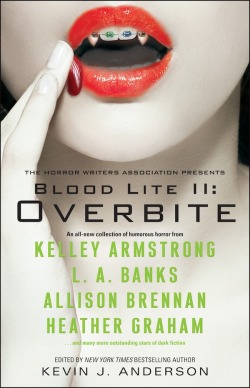
And as a thank you for your help, I’m giving one random commenter a copy of BLOOD LITE II: OVERBITE, an anthology of humorous horror stories by the Horror Writers Association and edited by Kevin J. Anderson, a prolific and talented writer. I had a lot of fun writing my story!

How far will an elite call girl go to beat a murder rap? Stuck with a dead client in a luxury L.A. hotel room, she might strike a costly bargain with a woman of unearthly powers in Allison Brennan’s “Her Lucky Day.” 

Self-expression? Is it?

– by Alexandra Sokoloff

I attended an event last weekend where I was in a mix of people from wildly diverse backgrounds, which included a fairly intimate dinner, and we had a chance to all go around introducing ourselves and what we do, and of course instantly you get that validation of Just How Cool being a writer is if you don’t actually have to do it every day, especially those days when you know you’re never going to get that subplot to work.  (Oh!  Right!  Yes!  It’s cool!)  

One woman was enthusing about self-expression – how great it must be to live a life that is totally about self-expression.   And for the life of me, I couldn’t understand what she was talking about.  

But she seemed so sure, and so I tried to get into her mindset, because I wanted to understand, but I didn’t see where the “self” part was coming into it.  

I don’t know about the rest of you, but if I pray anything at all before I lie down to work  each day (because now you all know I don’t SIT down to work) it’s something like this:   “Please God/dess, Universe, Angels, Fairies, Story Elves – let me serve this story and make it whole and somewhat readable and also marketable, please, thank you, Amen, Sat Nam, Ashe, etc.”  

It’s not that I don’t put myself into what I write – I know I do.    I put my whole life experience and observation into what I write, all the time.  I write on the themes and the subject matter I write because I care passionately about those themes and subjects.   But what I am and what I’ve experienced and observed and care about is only useful as it serves the STORY.   In fact, I myself am only useful as a channel to serve the story (although I have many other fine qualities as a person, but we are talking about me as a writer, now.).  

But what this woman said really got me thinking about what we do, as writers – how we define what we do.   And self-expression has almost nothing to do with my job description, as I see it.  

I think what I do is create an EXPERIENCE for a reader or audience.   Reading a book or seeing a film (and I’m talking about fiction, now, and especially genre fiction)  is about getting completely out of yourself and going on a journey as someone else, or multiple someones, and LOSING yourself in that experience – an experience that is solely in your mind, but can sometimes be far more gripping than anything in real life.  

Actually (and you can tell me if I’m being just too Hollywood for words) – you could say what we do is create theme park rides.  Some of them very smart ones, but still, theme park rides.   You could also say we create dreams.    We take our readers through a dream.  And our absolute, bottom-line goal is to create a dream state so hypnotic, so mesmerizing, so enticing – that readers/viewers get lost in the dream.     And I’ve actually heard editors say this over and over again on panels – that the number one requirement they have for a book is that it doesn’t break that dream state.  

Think about it.  Isn’t everyone’s favorite review a sincere: “I couldn’t put it down”?  

Hmm, now that I’ve put it like that – are we much more than pushers, really?   

Okay, maybe I’m digressing.   But now that I have put it like this, do you see what I’m saying when I say that this has very little to do with self-expression and everything to do with being acutely attuned to serving the EXPERIENCE – the needs of a reader/audience?  

I am a genre writer.   I am very aware that I was continually hired in Hollywood because I could deliver a certain experience of spookiness and sensual chills.   As a novelist I continue to deliver that experience of spookiness and sensual chills.    I am privileged as a novelist (much more so than I was as a screenwriter) to be able to bring my specific, warped tastes to the stories I tell – but my bottom-line mandate is to deliver the experience.  

And my other bottom-line mandate is to serve the story.  I am not doing my job, I cannot calll myself a novelist, if I do not deliver the STORY.   That is: an uninterrupted dream of an experience, from beginning to end.  

Now, as Lincoln said, “You can’t please all of the people all of the time.”  We need look no farther than our Amazon reviews to realize that not everyone will have the experience of our stories that we hope that they will have.    But our best chance of pleasing as many of the people as we can, as often as we can, is being as true to the STORY as we can be.   And in my experience, that’s about acknowledging what I want to experience in a story – and then committing to get out of my own way as much as I possibly can, in order to let that experience come through me, unimpeded by some need for “self-expression”, so that I can provide that experience, uninterrupted by ego, for other like-minded people.  

This may be an analogy that makes sense only to me, but I will try to explain it anyway.    When I got involved with dance, first it was because I was acting, and dance training just increased my chances of being cast in productions I wanted to be in.  I worked hard, really hard, to learn the language of dance, to make my body an instrument that was capable of dance.   Then I kept dancing even when I wasn’t acting anymore because – well, because the endorphins made me less likely to have a complete nervous breakdown.   And I kept dancing and training and improving just because I was actually really good at it and nothing else made me feel so much like myself, and it wasn’t at all about being cast or anything except the fact that not doing it was agony.  And then, after all those years, I was actually good enough to get paid for it, pretty much accidentally.   

Well, I’m sure a lot of people think dance is all about self-expression.   But when for the first time in my first professional show I told a choreographer “That pose doesn’t feel like me,” and he looked at me in that totally dom way that choreographers have and said – “What do you have to do with it?” –  it suddenly clicked for me that professional dancing is about serving the dance.    I – and my body – were really just props – a medium of expression for something much, much bigger.  

And that’s how I feel about my writing.   I have honed my “instrument”, as actors say – after years and years of work I have the technical skill it takes to write, to deliver the complete experience of a story.   But all of that technical craft is just so that the story can flow through me – from wherever the hell it comes from.  

Self has something to do with it, no doubt.   But mostly, we have to leave self behind, get out of our own way, and serve the story.   And hopefully – hopefully – deliver the experience our readers are looking for, hoping for, wishing for, when they pick up our books.

So am I the only one who feels this way?  Do the rest of you, or most of you, feel that your writing is about self-expression?  Or how would you describe what it is that you do?

Alex             


NEWBIE NO MORE

By Stephen Jay Schwartz

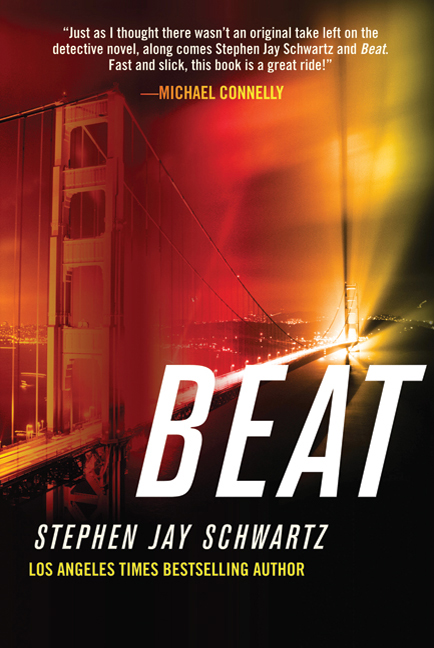
The day, she has arrived.  BEAT hits the stores this Tuesday, September 28.  In hardcover and trade paperback simultaneously.  So there will be two affordable paperbacks in the stacks at the same time.

And then there’s this little puppy, being released at the same time:

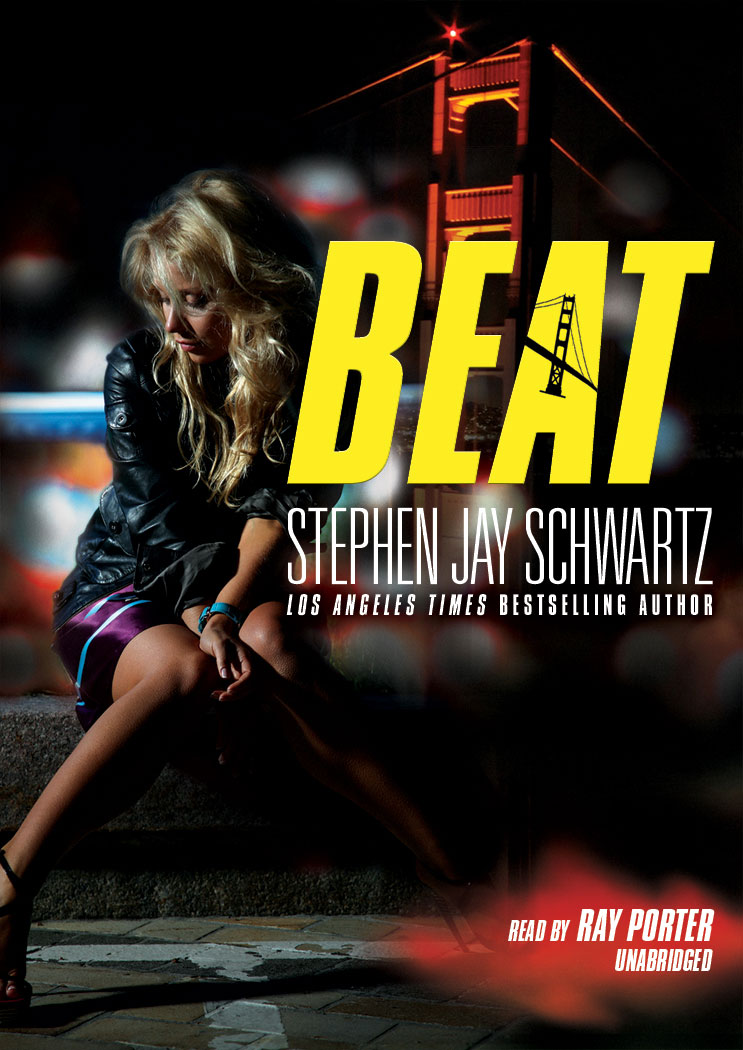
The audio book cover is just sexy enough to make your hair stand on end.

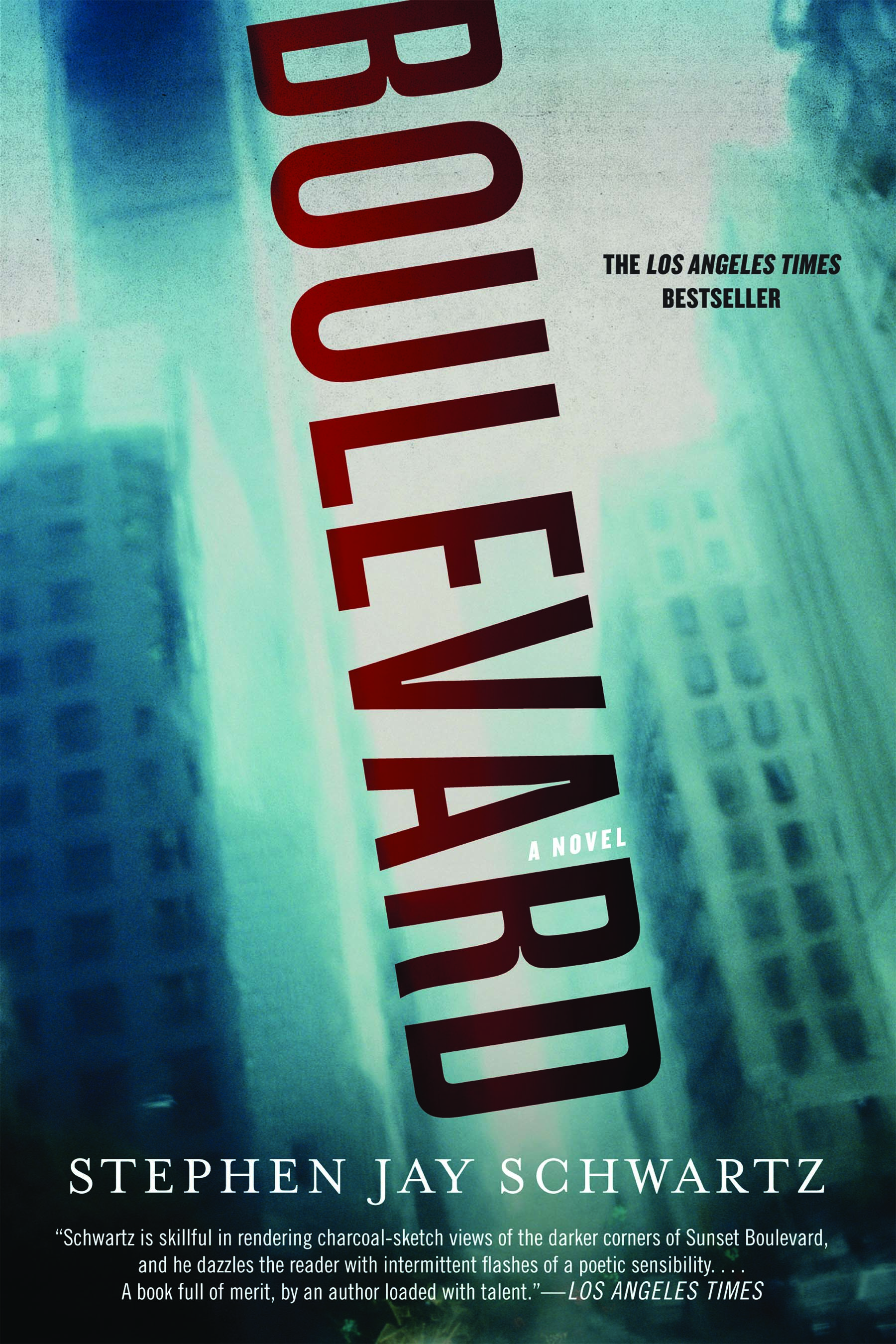
And this old friend…

Will be offered on Kindle at a very reduced price, in an effort to entice some readers who’ve been waiting for a deal.

And my publisher had me write a Hayden short story that we’ll be giving away FREE as an ebook.  Called “Crossing the Line,” the story takes us back to Hayden’s early days as a rookie on the force, when he’s just starting his time in Vice.  It depicts the moment his addiction first rears its ugly head.  A little ditty designed to introduce new readers to the world of Hayden Glass.

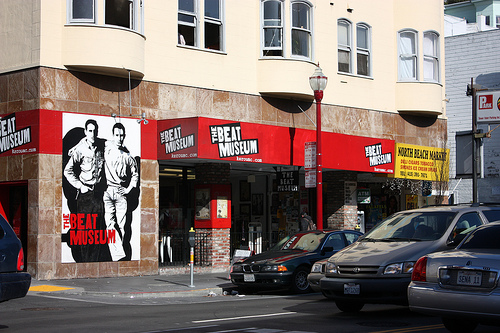
The big, fun event I’m doing is happening the night before Bouchercon, on Wednesday, October 13 at 7:00 pm.  It’s a launch from the Beat Museum in San Francisco, smack dab in the middle of North Beach, just around the corner from City Lights Bookstore. 

Everyone who’s in the vicinity is invited to come.  We’re expecting lots of people, mostly authors and attendees of Bouchercon, but also local poets and writers, policemen and FBI agents.  BEAT is set in San Francisco, so many of the folks who helped or consulted on the novel will be attending the event. 

I hope to see all my Murderati friends in San Francisco.  Until then I’m just going to dive into the euphoric chaos of T-minus four days and counting…

I want to thank you all for being so wonderful and loving and supportive and delightful during my one and only debut year.  Murderati has been my anchor through the whole experience.

The following are some of the nice things folks are saying about Beat….

“Just as I thought there wasn’t an original take left on the detective novel, along comes Stephen Jay Schwartz and Beat. Fast and slick, this book is a great ride!”

Michael Connelly, New York Times bestselling author of the Harry Bosch novels

“Stephen Jay Schwartz writes with a paintbrush and expertly guides us through the gates of hell into a world where sex and violence merge into a toxic yet highly addictive alternative reality. Hayden Glass is a character we’ve not seen before, with fiendish impulses and a desperate desire to overcome his past. This is one of the most darkly sexual books I’ve ever read and I devoured it in one suspenseful sitting. Schwartz pulled me in and held me captive from beginning to end.”

Katie Arnoldi, LA Times bestselling author of “Point Dume”

“Beat is an old-fashioned nail-biter that the not-too-squeamish aficionado of the hard-boiled genre will enjoy.”

Kirkus Reviews

“The soiled hero’s relentless interrogation of his motives for pursuing Cora will make it hard for like-minded readers to put down his odyssey unfinished.”

Booklist

“Glass is tough to like, impossible to admire, but relentless against insuperable odds.”

Publishers Weekly

And the things folks are saying about BOULEVARD…

“Schwartz is skillful at rendering charcoal-sketch views of the darker corners of Sunset Boulevard, and he dazzles the reader with intermittent flashes of a poetic sensibility…A book full of merit, by an author loaded with talent.”

Los Angeles Times

“Boulevard is raw, twisted, and so hard-boiled it simmers from beginning to end.”

Robert Crais, New York Times bestselling author of The First Rule

“Boulevard is terrific. Fast-paced and convincingly told. The streets of L.A. have never been meaner or seamier. Stephen Jay Schwartz’s clear vision and knowing heart make him a gifted writer to watch.”

T. Jefferson Parker, New York Times bestselling author of Iron River

“Relentless and unflinching, a shocking thriller that dares you to keep reading. Schwartz has created one of the most complex and tortured protagonists I’ve encountered in a long time. A powerful debut.”

Tess Gerritsen, New York Times bestselling author of the Rizzoli and Isles series

“Like James Ellroy, Schwartz can make the reader squirm…Schwartz does a fine job of blurring the lines between sexuality and violence, the criminal world and the police world.”

Publishers Weekly

“Schwartz hasn’t missed a trick in this gripping first novel…He skillfully develops Hayden’s flawed character, showing him to be decent, haunted, and sometimes loathsome. Most important, he artfully builds tension and suspense into horror and finishes with a stunning Grand Guignol climax. Expect much more from this talented writer.”

– Booklist

“Plot twists and turns plus an unusual denouement make Schwartz an author to watch. Mystery fans who enjoy reading about the mean streets of L.A. (a la Robert Crais, Michael Connelly, T. Jefferson Parker) will devour this.”

Library Journal

“Boulevard is a mesmerizing read; Schwartz has drawn a swift, brutal and compelling portrait of a nightmare underworld of Los Angeles and a protagonist tormented by his own sexual addiction as well as by a real human evil. Boulevard is one of the most compelling books on addiction I’ve ever read, wrapped up in a gripping thriller.”

Alexandra Sokoloff, ITW Award-winning author of The Unseen.

“Dark and gritty, Schwartz’s dicey debut is seriously twisted.”

Robert Ellis, national bestselling author of The Lost Witness

“A lurid nightmare tour through dark streets and dark minds. Stephen Jay Schwartz writes with the fevered intensity of early James Ellroy.”

Marcus Sakey, author of The Amateurs

“Tightly written and wildly original, you’ll be thinking about this story long after you close the covers. Sex-addict Detective Hayden Glass is an unforgettable antihero you’ll love and hate at the same time. Stephen Jay Schwartz is going to give Michael Connelly’s Harry Bosch a run for his money. Boulevard is just plain excellent.”

J.T. Ellison, bestselling author of The Immortals

“Boulevard is one of the most riveting debuts I have ever read. Stephen Schwartz has written a story that will enthrall you, haunt you, disturb you, and keep you thinking long after you’ve finished reading it. Once you begin this book you won’t be able to look away.”

Brett Battles, Barry Award winning author of Shadow of Betrayal

“Stephen Jay Schwartz is a brave and gifted author, and Boulevard is an electrifying journey into sinful delights and escalating evil. Morally sound, addictive as a speedball, and rich with insight into human frailty—this novel kept me awake and disturbed my dreams in all the right ways. Lock your doors and read it.”

Christopher Ransom, bestselling author of The Birthing House

“This may be Stephen Jay Schwartz’s first book, but you’d never know it from the writing. Or the plotting. Or the characters. Boulevard is all adrenaline, a spiraling dance of doomed souls in the best tradition of L.A. noir. The streets here are so well drawn you can almost see the heat shimmering off the asphalt and smell the exhaust as hookers, cops and addicts of various kinds do their perpetual dance. Hayden Glass is a cop with a secret, a secret that not only endangers his search for a vicious serial predator, but also brings Glass to the jolting realization that he is somehow part of the predator’s scenario. From the first scene to the dead-stop conclusion, Schwartz never lets up, and his story lifts a corner of the social fabric and peers beneath it to shine light on a part of the urban world that most of us, if we are lucky, will never be part of.”

Timothy Hallinan, bestselling author of Breathing Water

One of My Favorite Times of Year

by Brett Battles

One of my favorite times of year has always been the fall. Not because of the weather and beautiful colors (though I LOVE them), and not because it’s football season (go 9ers, despite the slow start). It’s because it’s the start of the new network television season.

Now, things have been changing for a while on the television front. There was a time when there was just the three big networks (CBS, NBC, and ABC), and they would go ALL OUT to get viewers attention for their fall lineups. They’d do huge image campaigns, use catch jingles (often based on older song…anyone remember “Still the One” for ABC?), and otherwise pull out all the stops. This kind of all out blitzkrieg marketing pretty much stopped sometime in the late 90s. I actually worked on one of the last ones for ABC…it was the one where we had these giant As, Bs & Cs that the cast members of the various new and returning shows could play on and we filmed them. It was fun, but, honestly, there’ve been better campaigns and worse.

Anyway, campaigns weren’t what I wanted to talk about, the point I was trying to make was that the disappearance of campaign happened because the networks were no longer the only game in town, and the networks fall lineups lost some of their luster because there were so many other choices out there.

Why? Cable, of course. At first channels like FX and TNT and SY FY (then SCI FI) were just places for old movies and network returns, but then cable channels started branching out and running first run programs on their own. And they did this with zero regard to the usual show launch season.

The Fall.

That really changed things.

Nowadays shows are launched year round – January, May, June, whenever a show is ready to go (that’s not completely true, but close enough).  

But while the networks might have lost some of their edge, they have hung on to their fall tradition (admittedly with some spring shows thrown in and an emerging summer season). And since this still represents a majority of new show debuts, I still look forward to it.

You see, to me, there are few things on television more interesting than the pilot episode of a series. This is the episode that sets everything that follows up. And, quite honestly, is often the worst episode of the whole run. That said, I love to watch pilots. I love to see how the show’s creators set up their worlds, how they introduce their characters, how they set the tone and pace for the series.

I think watching these is a great exercise for writers no matter what genre or type of writing you might do. It’s a quick way to see multiple creative efforts to bring new realities to life in a relatively short period.

More times than not these newly created realities fail quickly and are yanked from the schedule. But even for the ones that do succeed, often it’s despite pretty sucky pilots.

But, as they say, you sometimes learn more from the bad than the good. So pay attention and take notes because a bad pilot is likely to have any or all of the following: cliché characters, cliché settings, cliché set-ups, and, well, just clichés, also story logic issues, undervaluation of view intelligence, poor casting choices, and just plain bad dialogue. What’s not to learn from that? (I was kidding about the taking notes part. Well, half-kidding, anyway.)

Perhaps the show pilots that have the hardest are the ones for series where each episode is basically a one-off story. In other words, what happened last week has no baring on what’s happening this week. In those cases, show producers (or, most likely, network executives) feel the necessity of establishing the ground rules of the series (who, what, where, when and why…with the occasional how thrown in) right in that very first episode. That means their shoehorning in a TON of information they seem to think you need to have now.

Sitcoms, in particular, are subject to this. And when you shoehorn something in, something else has to go. And when you shoehorn in a lot of somethings there is little room left for the show to be what its creators had envisioned. Don’t believe me? Choose a favorite series, then go back and watch the very first episode and you’re likely to see what I mean. Everything that comes after is more natural, because the show is able to breath.

Perhaps the pilots that have it easiest are the ones for series that have continuing stories, so that they don’t feel pressured to get everything out right away. In fact, some of my favorite pilots are in this category: LOST, Twin Peaks, Arrested Development, Band of Brothers…just to name a few.

But no matter how good or bad, I love pilots. They’re just…interesting to me. If you’re a writer, or just a fan of how stories are put together, I urge to watch as many of these pilots as you can. In other words, I give you permission to watch TV all week.

So, what’s your take on the first episode of a new series? Have you watched any of the ones this fall? Any loves or hates so far? And what have you learned?

The Nomad

by J.D. Rhoades

(Note: this is the “workspace” post that was displaced last week because of our mourning for our friend David Thompson.)

I’ve really enjoyed having a look at the workspaces of other writers. And I have to confess, I’m a little jealous of some of them, particularly Tess’ attic office. I always wanted to write in a garret.

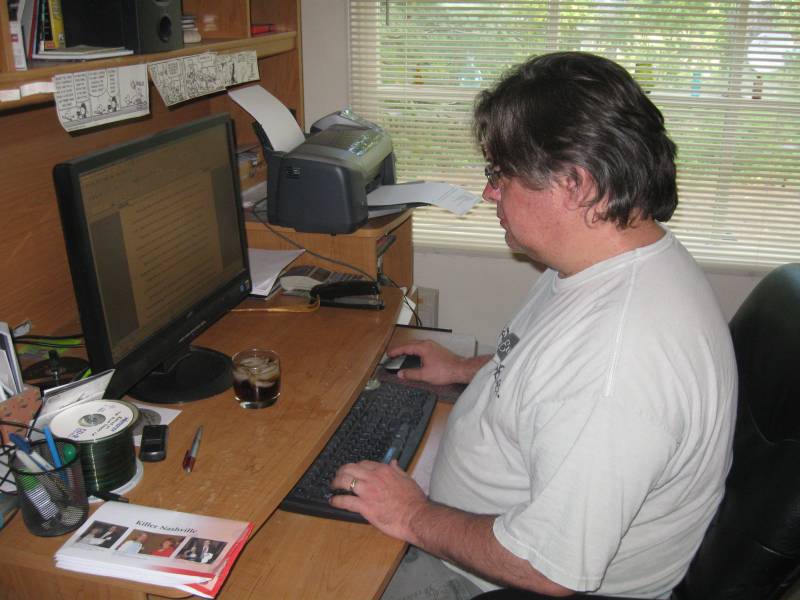
 As I’ve mentioned before, I don’t really have an office to myself. I’ve always had to do my writing wherever I can find a quiet space. And with two kids  in the house, quiet spaces have been kind of hard to come by for the last few years.

I do some writing on an old computer that’s tucked into a nook near the front door. It’s a nice nook, with a good computer desk, bookshelves,  and a big bay window. It’s where I wrote my first three books.


Only problem is, it can get a tad noisy. The house has a very open floor plan, which is one of the reasons we bought it. But it also means that the kitchen is a few feet away from the space you see here. The family room is just past that. If anyone’s watching TV and commenting on it (and they usually are) it’s like they’re in the room with you. So I  move to the bedroom. Sometimes to the bed:


Or,  more recently,  to a little desk we set up by the window:


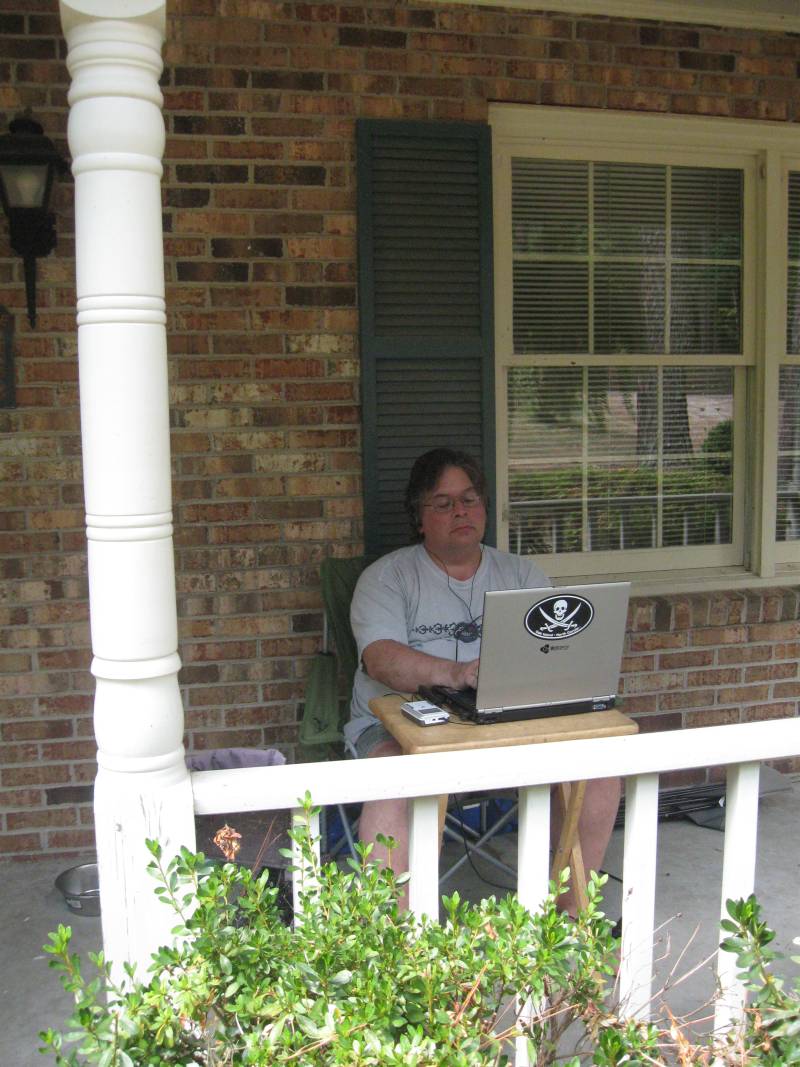
Only problem is,  my wife  goes to bed early, and she likes to spend some time alone with a book beforehand, usually starting right after dinner, which is when I start writing.  And, day or night, if laundry needs to be put away, she’s in and out of the room a lot (and trust me, in this house, the laundry piles up fast). So I move to the front porch: 


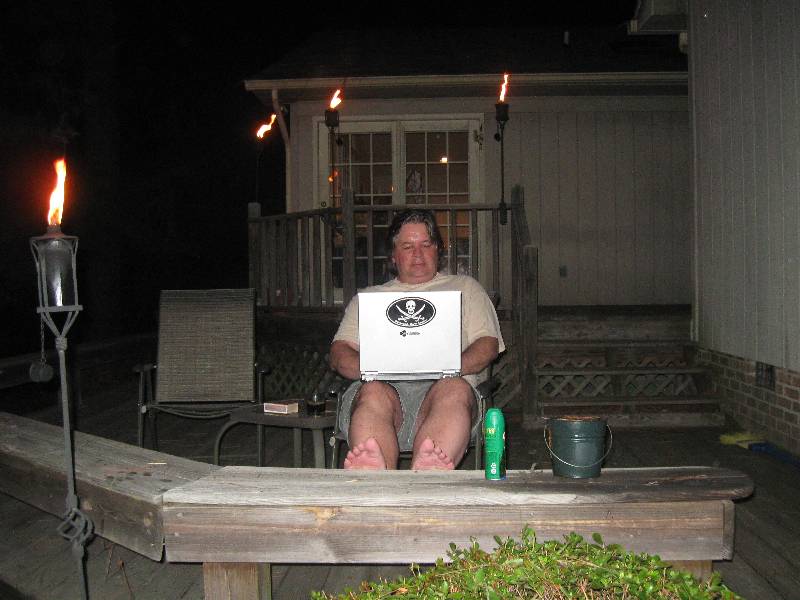
Or the back deck:


(I find that the torches add a nice barbaric ambiance to the whole enterprise).

Only problem  is,  when it rains,  or it’s really hot, or really buggy (and in North Carolina in the summer it’s liable to be at least two of those things) it’s hell to try to write outdoors.

But now that The Boy’s left for college, he’s graciously given me permission to use the desk in his room (and to close his door). Lynn spent two days cleaning it up and we had to haul a huge box of trash out of there, but it is a right cozy little spot, and quiet, and I finished the first draft of the WIP there.

Only problem is, it reminds me of how much I miss him.

As for process:  I didn’t outline the first book at all. As I’ve gone along,  I have started outlining more and more. Only problem is, by the time I start getting the words down on paper…well, you know the old military adage that “no plan survives first contact with the enemy”? Well, no plan of mine  survives first contact with the actual characters. They take one look at the plot I’ve so carefully laid out for them, laugh derisively, and go “as if.” Then we’re off to the races. It’s hard for me to plan more than a few chapters ahead after that. Even with that minimal level of planning,  the  little boogers  still insist on doing pretty much as they damn well please and refusing to even get their obstinate selves onto the page if I try to force them. Bastards.


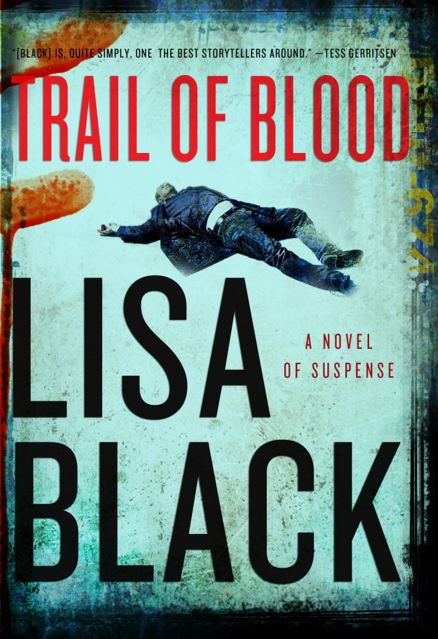
Interview with thriller writer Lisa Black


Today I offer a real treat: an interview with Lisa Black, whose background as a forensic scientist brings realism and details to her thrillers that few other authors can offer.


1. Your new book is Trail of Blood, the third novel featuring forensic scientist Theresa McLean.  Tell us about the plot, and what inspired it.


Trail of Blood emerges from the true story of a serial killer who terrorized Cleveland during the Great Depression. He was brutal, prolific and never caught—the American version of Jack the Ripper. There are so many factors that make this a fascinating story. He actually cut his victims to pieces and wrapped them in newspaper—neatly. Eliot Ness was the safety director of Cleveland at the time, after cleaning up Chicago. The economy had collapsed and people still weren’t over the first world war. There was no DNA testing, no television and no one had ever heard the term ‘serial killer.’


Trail of Blood begins where history leaves off, when the series of murders begin over again. Forensic scientist Theresa MacLean must use her knowledge of both Cleveland’s past and forensic science to discover the secret behind these frenzied crimes and keep history from repeating itself.


2. You yourself are a forensic scientist and a specialist in latent fingerprints.  How often do you use real cases in your novels?  Any examples?


Most real-life cases are interesting, but not interesting enough to sustain a full length novel. Usually I pick up pieces from real cases, small details that stuck in my mind. Evidence of Murder was the closest to reality: the victim, an escort, came from a case I worked in Cleveland and the (virtually untraceable) method of murder was whispered to me by a medical examiner’s assistant, who had worked such a case in Miami.


3. What’s the most memorable real-life case you’ve encountered on the job?


We had a fifteen-year-old stab his closest friend, another fifteen-year-old, upwards of 175 times because they got into an argument over a video game.


4. Undoubtedly, when you read thrillers written by other authors, you spot tons of mistakes.  What are the most common ones?  The most annoying ones?


In both novels and film, the most common ones would be a) picking up a piece of evidence before you photograph it and sketch it’s location, and b) then putting that item in a plastic bag instead of a paper one. The most annoying one is the coroner’s or medical examiner’s staff member who has an unhealthy appreciation for dead bodies. I worked there. No one was overly fond of dead bodies.


  1. For novelists who aren’t criminalists, what are the best online or print sources for information?


The FBI and the IAI (International Association for Identification). www.fbi.org and www.theiai.org.


  1. Thanks to the “CSI effect,” I’ve noticed a huge upswing in interest among college students (especially women) who now want careers in forensics.  What’s the job market look like these days?


I would strongly suggest that graduates have a backup plan. Crime labs do not employ dozens of people just as they don’t have every piece of equipment known to man. Forensic support services have been expanding and the federal government is kicking in a lot of grant money, but still—there are an awful lot of CSI fans out there! But I would never want to discourage anyone from going into this line of work, because I love it.


Those Pesky Voices

by Pari

I’ve been thinking about the voices that impact my life. I’m talking about the ones I hear when no one else is around. A bevy of naggers, destructors, cheerleaders and optimists that crowd my inner life and influence the way I work, parent, and perceive the world and my relationship to just about everything.

Many cultures believe that naming something gives the namer (yes, it’s not a word, but it should be) –or the named – power. But how many of us have bothered to stop and name our voices? I suspect most of us simply listen without any filters.

Well . . . no more. I’m going to give it a shot right here, right now.

The first are a family of scraggly-haired, snaggletoothed, warty women. They live in the open on a tiny island in the middle of a swamp with an incredible amount of methane gas and sulfur. Only acid rain falls on their muddy, bleak domain. The subsist on moldy, half cooked grains — and bugs — scounged from around their yard. They speak in creaky, cracky, wheedling whispers. The only thing they can successfully grow is decay.

Let’s get out the disinfectant, bug spray, pointed stakes and matches for  . . .

Ms. I’m Crap, My Writing Is Crap, My Life Is Crap

Ms. I’m A Bad Mother and her sister Ms. I’m A Bad Wife

Ms. Why Does Everyone Else Always Get All The Attention?

Ms. This Will Never Work

And their cousins Ms. Why Bother? and Ms. I Don’t Deserve Success

Down the road from these maggots masquerading as ladies is a run down cottage. Its walls used to be white and strong, but now they’re a strange combination of peeling, crumbling shades of brown and gray. A spindly hedge with pale green leaves and large black thorns surrounds the thatched round-roofed building. Three middle-aged sisters, wearing torn dresses and stockings with countless holes, hoe and dig in the hard dirt. They think of having a garden someday, but do nothing to improve the soil. They eat gray flavorless foods. Dust covers their expressionless faces.

Hello to  . . .

Ms. This is Hard, So Why Don’t I Give Up?

Ms. There’s Never Enough, I Need More

Ms. I’m Selfish For Taking Time For Yourself

and everyday, sometimes more than once, their neighbor stops by: Ms. Clean the F*cking House

Several miles away from the other two dwellings is a modest brick home. Its front yard has beds and beds of herbs – borage, basil, lemon balm, rosemary, lavender and so much more – and fruiting apple, apricot, peach and cherry trees. Hummingbirds, bees, ladybugs, spiders and praying mantises find happy refuge here. In the backyard on the other side of the garden’s fence, chickens cluck. The building’s windows are all open, the doors too. Every room is full of natural light. All are welcome to come in and sit in the kitchen at the large wooden table for a cup of coffee, tea, or a slice of homemade bread with butter and honey. Cello practice, fingers clicking on a computer keyboard, grunts from rigorous exercise, singing and laughter – oh, so much laugher – testify to the health of this dwelling.

Let’s embrace the last of my voices . . .

Ms. Isn’t Life Beautiful?

Ms. My Life Is Filled With Love

Ms. I Like The Person I See In The Mirror

Ms. I Am So Fortunate

Ms. There Is Enough

Ms. Thank You For Absolutely Everything

Ms. How Incredibly Interesting! How Cool!

Ms. Maybe This Would Make A Good Story

and Ms. Why Not?

I’m sure there are more names, more voices. But doing this today, taking the time to name and personify some of them, has been fascinating. I’m left feeling a little naked and, strangely, cleansed, lighter, more powerful.

Tell me . . . Who are your voices?

Assume the Position

By Cornelia Read


I’m like Alex–for me writing is not Ass in Chair, it’s Ass on Cushioned Horizontal Surface. Mostly here, at the moment:

The monogrammed pillow is from my pal Mags, who got it for me from Land’s End, if memory serves.

The most important thing you need to write in bed are pillows… lots and lots of pillows.

Originally, when I moved into this apartment near the Arctic Circle last year, I planned to write here:
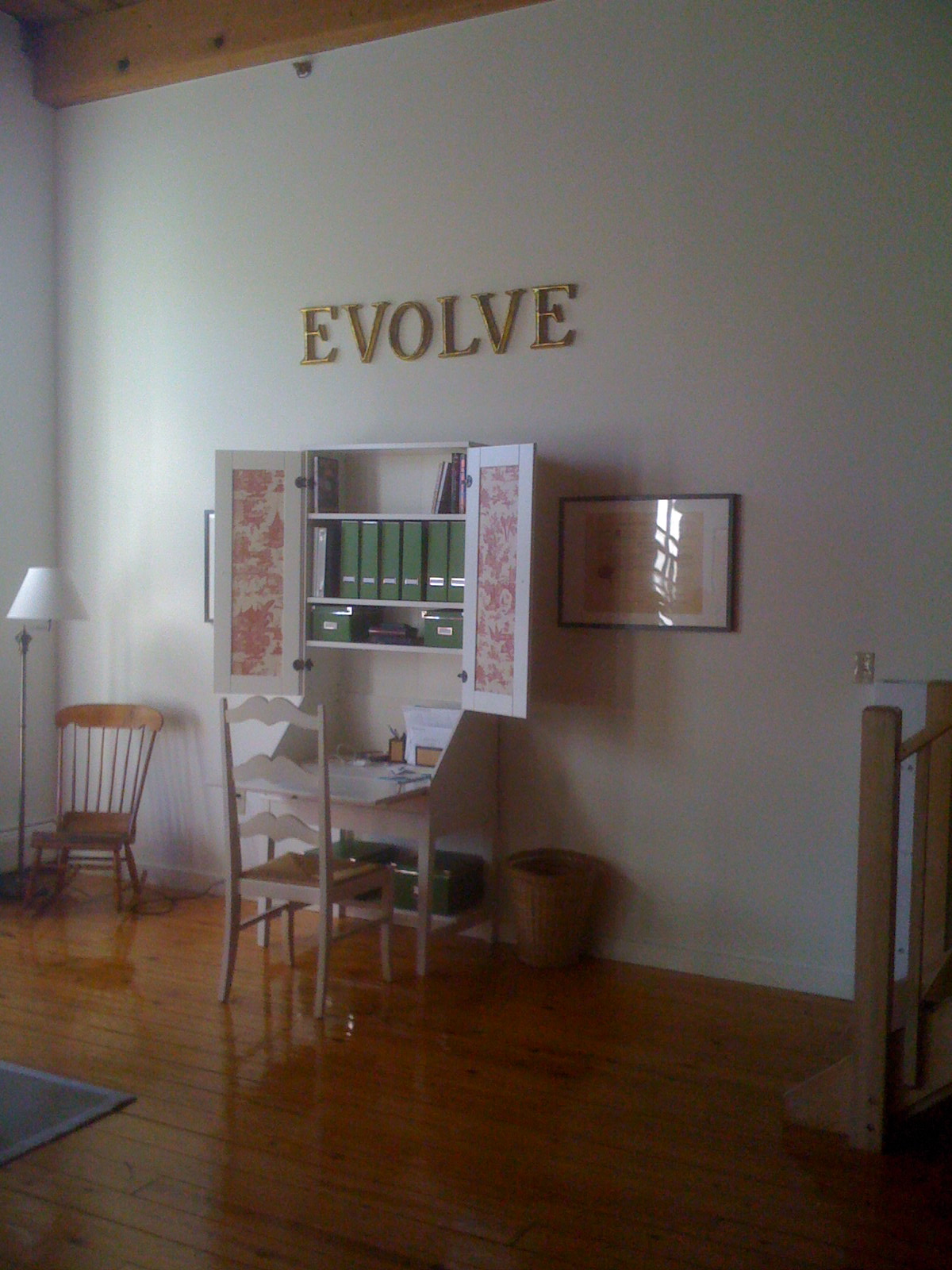
The desk is from IKEA, but the toile wallpaper I bought online. My daughter and I went to a garage sale last summer and they had two sets of large gold letters spelling “LOVE” for sale, for $4 each. I said, “hey, if we buy both of them, we can spell ‘EVOLVE’!” So we did.

I think maybe I’ve written exactly half a sentence at that desk. Finally, I told Grace to use it for homework and now it’s filled with a pile of Grace detritus. Oh well. It looks nice, in the living room. When I close the front flap to cover the Grace detritus.

I miss writing at my friend Sharon’s house. We used to write together at her dining room table pretty much every weekday. I was really productive there, especially for the first ten months when we couldn’t figure out the key code to get me into her wireless service. We would gossip a lot and stuff, but after an hour or so we’d get down to work, and finally I would be so in the zone that I didn’t even hear her kids when they came home, and would finally come up for air, most nights, when the family needed to set the table for dinner.

When I first moved to the Great White North, I thought I’d get a TON of writing done, since I didn’t know anybody and wouldn’t have to fight the urge to go out to lunch with people a lot and stuff. It turns out that talking to people and hanging out and non-writing social stuff is actually excellent fuel for writing stuff. You need to recharge your batteries, and often. That doesn’t happen so much here, unless I drive down to New York and hang out with pals. That’s about a five-hour drive. I go down whenever I get really stir crazy, which has been a lot over the last year or so.

At any rate, even after I got the pretty desk from IKEA, I tried to write at the cool dining room table I got on craigslist:

I got maybe the second half of that first sentence written at the table. But I spent two days painting the chairs dark green. Except for when Sharon came to visit–I got ten pages written then. It was almost as good as living in California again.

I took her to see Portsmouth:

And Salem, Mass.:

Which was fun but not writing.

And we went for a walk along the banks of the Mighty Squamscott, here in Exeter:
Which is pretty great. But not writing.

In fact, my writing–in terms of quantity and probably quality–has pretty much sucked for this past year. My pals try to reassure me that this is because the year itself was pretty sucky. Sharon is especially good at cheering me up this way. She’ll call from California and say, “well, let’s see–in the past year you’ve moved three thousand miles away to a town where you didn’t know anybody, because your daughter needed you; you got divorced; you had to leave your other daughter with your ex because you can’t physically care for her anymore on your own; your father committed suicide two weeks before your original deadline; your editor died of cancer; and you did publicity and touring for your third book; oh, and you tried to mediate amongst all the crazy relatives after your dad died. Look at it this way–you should cut yourself some slack, and you’re never going to be short of material.” This is why I love Sharon. But still, here is what my writing has been for the last year:

Now I seem to have the ball rolling, at least a little bit. Probably going to blow my new October 1st deadline, though. Especially since my Mom flew in on her way home from Greece last night, and wants to go on a roadtrip. I should stay home and write, but I have people here so seldom I kind of want to milk the opportunity for real conversation that doesn’t involve sixteen-year-olds, although the latter is not without charm.

As for methodology… well, no index cards, whiteboards, post-it notes (giant or otherwise, until we get to the copy edit stage of things.) I’m not an outliner, though I had to write a synopsis for this fourth book. My editor wasn’t crazy about my first three ideas for it, and I had so few pages over the last year that my new sweet editor asked if I could summarize what I was thinking of doing for the salespeople. Not sure they’re going to need that, now, as this book certainly won’t come out in 2011, but I guess maybe it was helpful–though the next twenty pages I wrote after the synopsis totally negated the synopsis.

I remember Lee Child once saying at a book signing that he never outlined, and when editors wanted an outline he’d make something up and then write what he wanted anyway. I suppose that’s a lot easier to do when you’re LEE CHILD. But I still raised my hand at the end and asked, “do they make you do that for every book?”

He said they did, pretty much.

I asked, “so since you never write the book that’s in the outline, can you just recycle the outline the next time they want one?”

He said he hadn’t thought of that, but that he’d definitely do it the next time he got asked for one.

I usually start a book with a scene in my head. It’s always something very place-specific, usually with a telling event at the heart of it, though the event may have nothing to do with the eventual mystery.

In A Field of Darkness, the opening is in my old apartment in Syracuse, New York, on the night a building on the next block caught fire for the second night in a row–which actually happened. It’s funny how many little things I just jotted down in the first draft ended up being themes that carried out through the entire narrative: fire, my heritage, and even photography. I said that walking into the next street to see the fire at first felt like a photograph by Weegee, by which I mean an image somewhat like this:
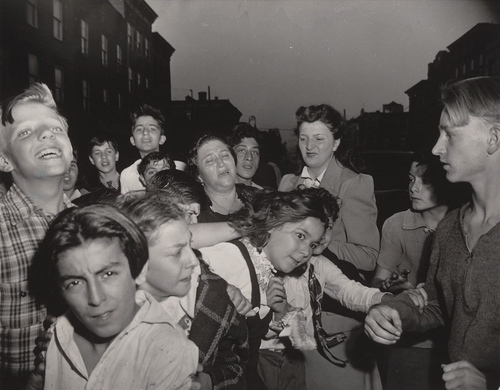
This is actually titled “Brooklyn Children See Gambler Murdered in the Street,” but it’s the kind of late-night spooky crowd scene I had in mind. I believe the description in Field was something like:

I cut across the tar-soft street and between the woodframe hulks facing ours. For just a second, coming out the other side, it was like stepping into one of that guy Weegee’s photos from a forties copy of Life: black-and- white, some police-scanner tragedy back when everyone wore hats and cars were bulbous as the Hindenburg.

I blinked and it was just my neighbors milling slack-jawed, tank tops and stretch shorts bursting with that translucent flesh I always attribute to Kool smoke and government cheese. I stepped in among them and chastised myself: no worse snob than a poor relation.

For The Crazy School, I thought back to the classroom I taught in at The DeSisto School in West Stockbridge, Mass, in the fall of 1989. The walls looked like this, except painted glossy mustard, and the general attitude on campus is well represented by that officious little note next to the thermostat:
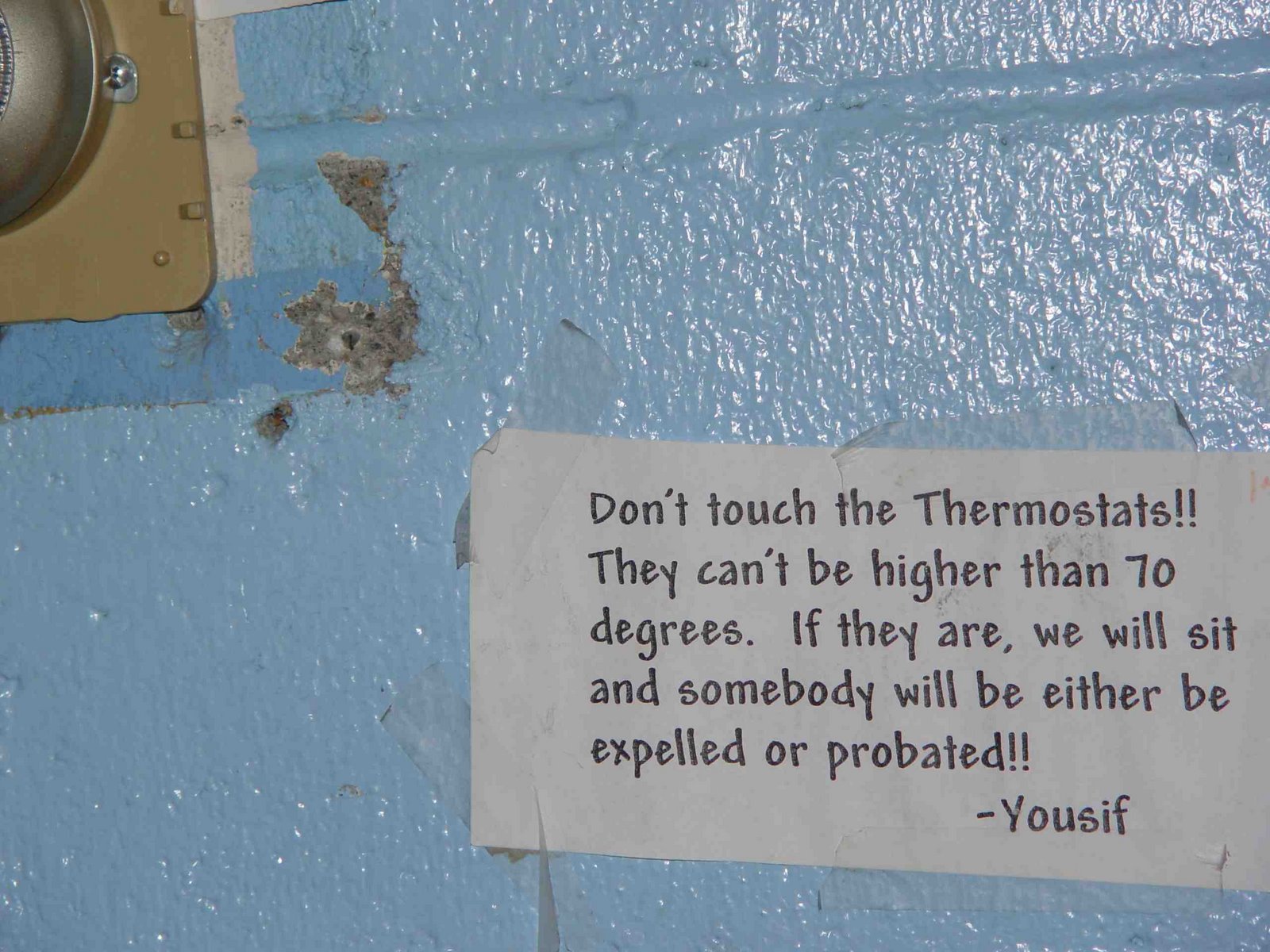
In the first chapter, I wrote:


It was an ugly room. Demoralizing. I didn’t want to be in it, either, only you’re not supposed to say that when you’re the grownup.


I talk about mostly real places, in my books. Like the family cemetery on Centre Island, in Oyster Bay, New York:
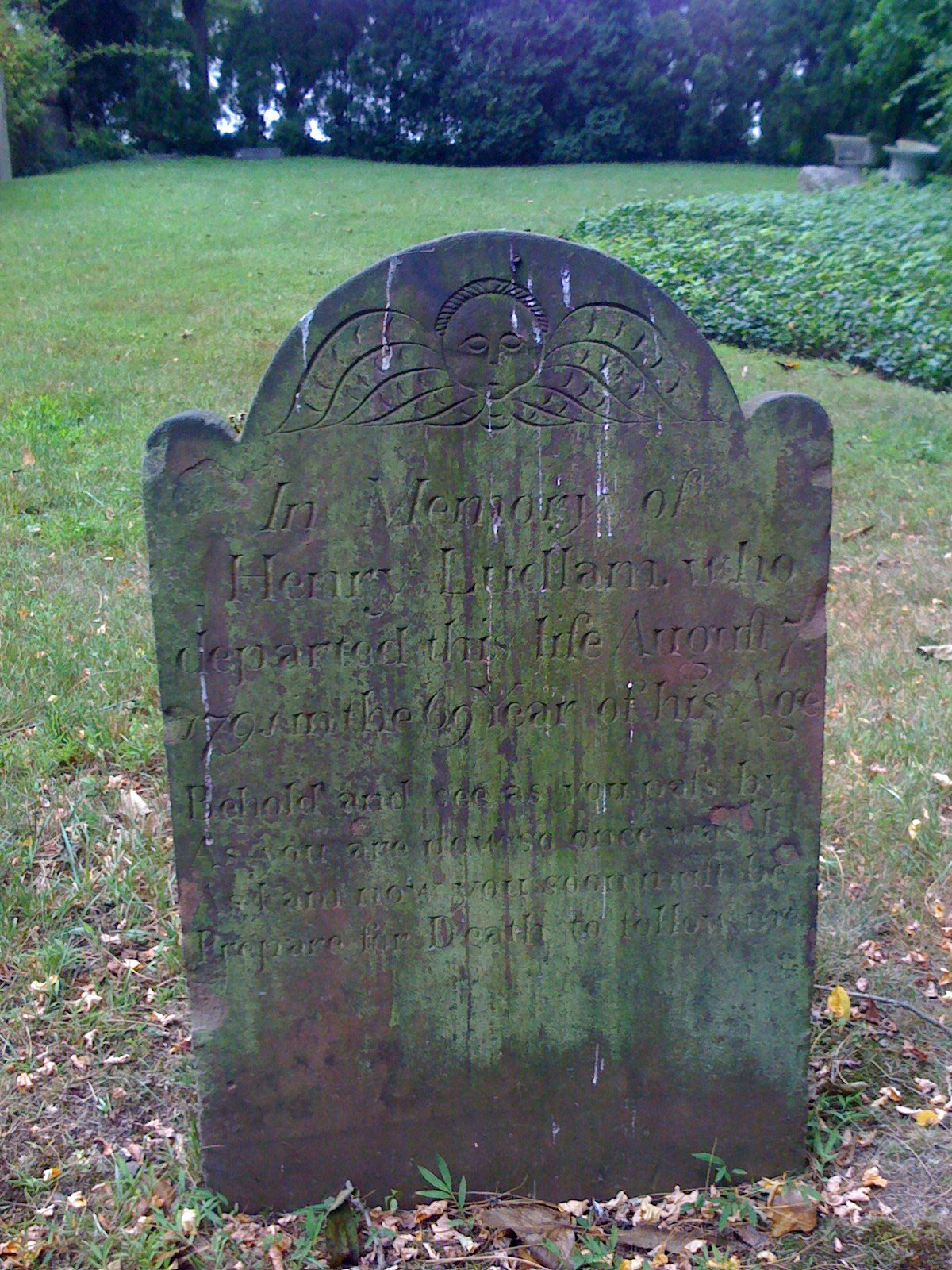
That’s my favorite gravestone. It says:

Behold and see

As you pass by

As you are now

So once was I

As I am now

You soon must be

Prepare for death

To follow me

I’ve also written about the family camp, in the Adirondacks:
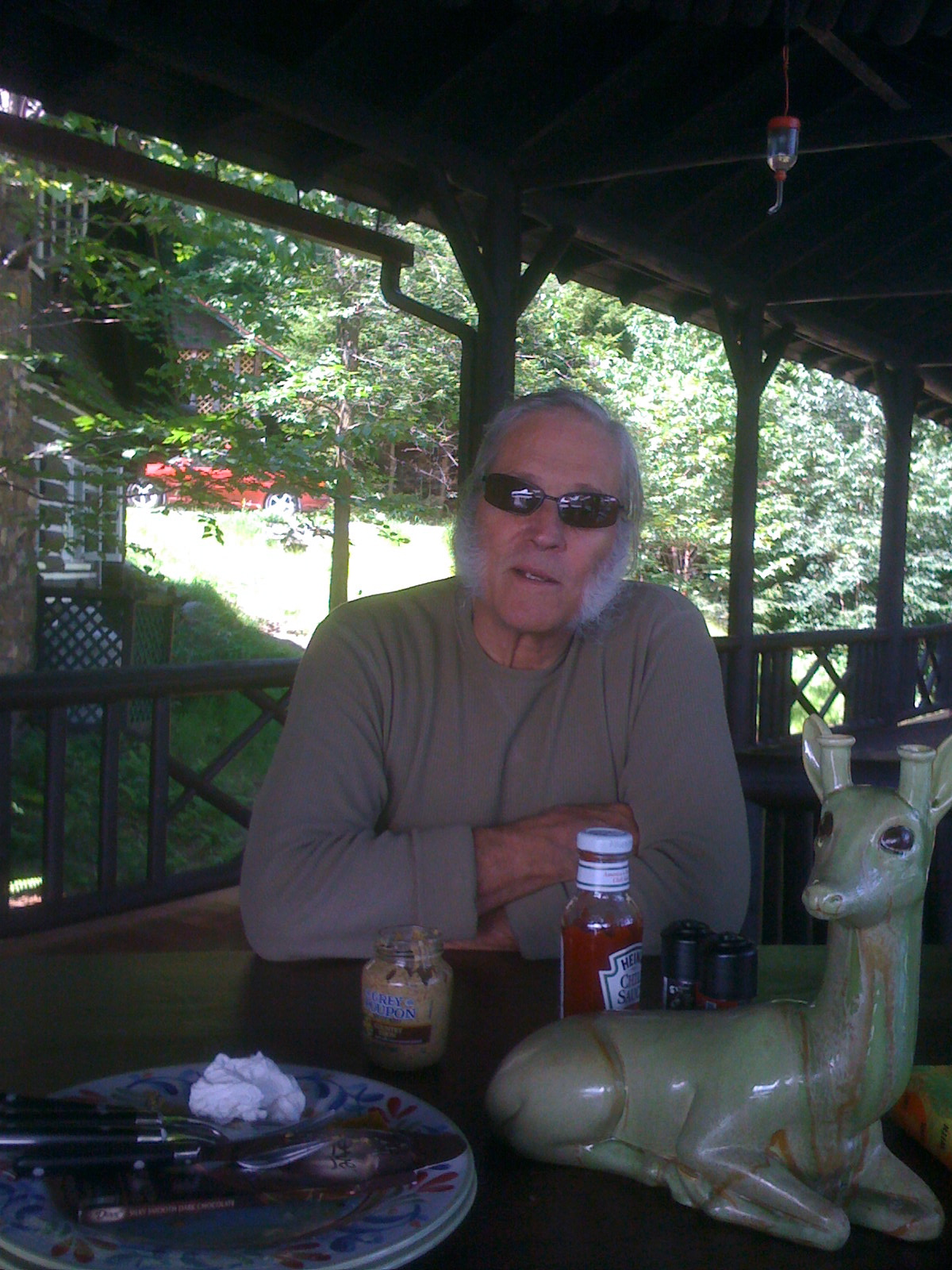
Here’s Dad, sitting on the porch outside the dining room last summer. We all thought that ceramic deer should’ve been thrown into the lake sometime in the Mid-Fifties. It’s fucking fugly.

My fourth book is set in Boulder, Colorado, and opens a day before my twin daughters’ first birthday. I’m cleaning the house (a lost cause) because my mother is due to fly in at any moment. It’s going to be a pretty sad book. The title is now officially Valley of Ashes. Here’s how it opens:

When we first moved to Boulder I was entirely too happy, a state of being so rare in my experience that I found it rather terrifying.

My twin daughters Parrish and India were beautiful, precocious, and brimming with health. My husband Dean was happily successful at his new job and my best, most trusted friend. We lived at the eastern feet of the Rocky Mountains in a cozy old house on the loveliest street of a charming university town. The air was fresh, the sky was blue–our yard a lush and maple-shaded green, our mellow brick front porch banked in spring with a cobalt-and-amethyst embarrassment of lilac, iris, and grape hyacinth.

Everything I’d ever wanted.

Hubris.

Sorrow is always your own, offering no temptation to fickle gods. Fucking joy, on the other hand? You might as well string your heart from the ceiling for use as a frat-party piñata.

Once I get that first scene established–in this case I’m standing in the living room of a rented house at 1913 Mapleton Street with a vacuum hose in my hand, despairing over the ugliness of the orange shag carpeting and the bomb-just-went-off housekeeping–I just hope that the characters start talking to me, or to Madeline,

my alter ego. 

If you’d like to see the house we rented, go here: http://maps.google.com/maps?client=safari&q=1913+mapleton+street+boulder+colorado&oe=UTF-8&ie=UTF8&hq=&hnear=1913+Mapleton+Ave,+Boulder,+Colorado+80304&gl=us&ei=

4taUTKiFBsL88AaJ4fWcDA&ved=0CBYQ8gEwAA&z=16

Then click on the little pinkish-reddish pointer pin marked “A” and then click on “Street View,” under the little thumbnail photo. It was a pretty great house.

It’s kind of like lowering your face through the surface of a swimming pool and watching a movie, when the going’s good. I see everything that’s happening while I’m typing–the furniture, the choreography of everyone in the scene. I just try to get that down precisely without too many brushstrokes; just enough detail to make it take on three dimensions.

Either it comes or it doesn’t, and boy is it terrifying when it doesn’t, let me tell you.

So here I am, lying on this bed, typing this blog… and now it’s time to try to finish the scene I’ve been working on, at Alice’s Restaurant on the shores of Gold Lake, another 3,000 feet of altitude above Boulder. Madeline has just told a joke to her friend Cary. They’re at a business dinner with Madeline’s husband Dean. Now they have to start talking about arson. They’re both in danger, but they don’t know it yet….

Maybe today I’ll write a little on my sofa, so I can talk to Mom when I get stuck.

That’s a bottle of absinthe on the table. I may need it.

Eating the Elephant

Zoë Sharp

It was a tough decision to go back to our current workspace/process theme today, after the death of the extraordinary David Thompson of Murder By The Book in Houston TX, and Busted Flush Press. This has been posted on the MBTB website:

David Thompson: A Celebration of Life

Please join McKenna Jordan and the Murder by the Book family for a celebration of the life of David Thompson, who passed away suddenly and unexpectedly on Monday, September 13, 2010. David loved a good party, and we will honor him by celebrating the life of an extraordinary young man who touched the lives of many in his 21 years at the bookstore. 

Place: The Briar Club, 2603 Timmons Lane, Houston, TX 77027 (for map & directions, click on this link to The Briar Club)

Date & Time: Sunday, September 26, 2010, 2 to 5 p.m.

There will be margaritas and Mexican hors d’œuvres– great favorites of David’s – along with other drinks. No RSVPs are necessary.

Many have asked about tributes to David’s memory. Alafair Burke has set up a fund for those who would like to make a donation in David’s name. The charity will be determined later. For those wishing to contribute, here are the details:

Checks to the order of “In Memory of David Thompson” (NOT simply David Thompson)

Mail for deposit to:
7 E. 14th St. #1206
New York, NY 10003

Or you can make a donation by Paypal:

inmemoryofdavidthompson@hotmail.com


I hope as many as possible will manage to get to the memorial party, and will contribute to the fund.

For me, David was my publisher as well as friend, and an incredibly enthusiastic advocate for crime fiction of all kinds. As a publisher he was wonderful, and I’m not just saying that out of sentimentality. He cared passionately about getting the books out there, publicising them, helping out. When we came out to Houston in June, shortly after the publication of KILLER INSTINCT, he met us at the airport with bottles of chilled water after our flight, fed us, looked after us.

I’ll treasure the memory of attending David and McKenna’s wedding amid the ruins of Dryburgh Abbey in Scotland only two short years ago. Andy and I went expecting to be surrounded by a huge group of strangers. Instead, we were welcomed into a tiny wedding party. The reception afterwards was small enough to sit around a single table. After expecting to slip away unnoticed once the inevitable dancing was in full swing, instead we all sat and talked late into the night.

They reckon you judge people by the shape of the hole they leave in the world.

All I can say is, David left a huge hole.

Needless to say, after all this, I haven’t been getting much writing done this week. But we have a couple of long car journeys coming up, one of which is to attend the Reading Festival of Crime Writing this weekend, and that is normally one of my best opportunities to write. Because, a lot of the time, this is my office:

My old laptop (well, it’s more than six months old, so that makes it almost antique, doesn’t it?) has a cigarette-lighter adaptor, so I never have to worry about running out of battery. If it starts getting too warm, I rest it on an old clipboard. If we’re on the motorway, as in the pic, I can get more written in a couple of hours than during a day at my desk. No internet, no landline, just the ultimate bum-in-chair environment. I even have an LED light that plugs into a USB port, and is just bright enough to illuminate any bits of the keyboard I do need to look at (allthe Home/Delete/PgDn etc keys are in different places from my desktop keyboard.

Speaking of keyboards, I’m eternally grateful that I learned to touch-type a long time a go. And these days, it’s doubly useful because I’ve worn half the letters off my favourite ergonomic keyboard. I can’t seem to find this exact shape of keyboard any more. Curved ones, yes, but they don’t have the triangular gap in the middle, they just have stretched centre keys, and they’re dished rather than domed.

I’ve been using an ergo keyboard since I first had operations on my left wrist, after the fluid kept leaking out of the joint. (I blame the long reach for the clutch on my Suzuki RGV250 motorcycle.) Recently, I started having a lot of neck and back problems, and was advised by my physio to raise my monitor up further into my eyeline, and to buy a wedge-shaped cushion for my chair. I’ve done both, and my neck and back problems – touch wood – have stayed away ever since.

So, this is my untidy office space.

And yes, the arms of my typing chair are held together with duct tape, but it’s a comfy chair, and it still works, so why would I change it? I love the corner desk arrangement because it means I can rest my elbows on the desktop while I type, which reduces strain on my neck and shoulders. The ergo keyboard is one of the best thing I ever bought, and the widescreen monitor means I can look at two pages at once for doing edits, without having to resort to a microscope or binoculars to read the type.

Of course, Andy’s side of the office looks much more industrious than mine. He’s hard at work on an article. And those are lounging pants, thank you very much, not pyjamas. (He doesn’t wear pyjamas…) Andy hasn’t quite mastered the correct use of a typist’s chair, as you can see. The Tannoy iPod dock means we’re usually listening to music while we work, 5500 tracks on full shuffle makes for some interesting segues, from Stone Sour to Zydeco, Frank Sinatra to Slipknot.

The polar bear arrived recently with a World Wildlife Fund credit card. I think it’s cold enough for him. The box of sheets on the window ledge is a build-a-paper-plane-a-day calendar, but Andy’s falling behind with production. I think we’re going to have a mad plane-folding exercise at the end of the year.

Of course, there are distractions to being at home. The first of which is the spruce tree you can just see on the right outside my office window, in which the red squirrels have built a drey. Last year we had a bunch of babies, who are even cuter than the fully grown squirrels. (Yeah, I know they’re just a rat with a bushy tail and a good PR agency, but even so…)

In case you’re wondering where the books are, they’re in the upstairs lounge, next door to the office. I’m in the midst of rearranging them at the moment, which is why there are piles of them on tables, most of which have come off the shelves behind where I’m standing with the camera, and have yet to be put back. The gaps are mostly from the CDs. I’ve been downloading our music collection onto the iPod and have been putting the CDs to one side as I’ve done them. They fill several archive boxes, also out of shot. (Come on, I’m not going to show you ALL my untidiness!)

So, the process. Hmm, when I work that one out, I’ll let you know.

I think the first thing is persistence. It’s the old racing adage – to finish first, first you must finish. If you never finish a piece of work, you will never be a published author. It’s my opinion that there are far more persistent authors published than there are talented authors published. So, the first rule of my process is to GET ON WITH IT. A little at a time, and the elephant will get eaten.

Of course there are days when I really don’t feel like writing anything at all. I had one yesterday. I know I can’t afford to let myself have too many of those days. I HAVE to keep pushing forwards, or the book will stall.

To keep myself on track, I have a spreadsheet of my daily word target. It’s on a sliding scale. I work out when I’d like to have a certain amount done – say, 50,000 words. Then I break down the number of days until that date, and divide 50k by that number. If I have a good day, and do more than my target, the number for the remaining days drops. If I have a bad day (like yesterday, when my total was a big fat 0) then I regroup, recalculate, and move on.

I find around 1250 a day is a do-able target for me. I know from reading about some of my ‘Rati brethren, that would be a pathetic amount, but it’s a personal thing. It means I advance by 10,000 words every eight days. A book puts on weight at a surprising speed when you’re making that kind of progress.

Usually, the only time I don’t achieve my daily work target, is when I fall asleep at the computer. I haven’t quite mastered the art of writing in my sleep, although I’ve come pretty close to it a few times. My brother-in-law’s mum actually knits in her sleep. She knows when she’s nodded off working on something, because she always sleep-knits the same stitch pattern.

But anyway, I digress.

Getting started is always the hardest part. Finding the story is one thing. Finding the exact point at which I should invite the reader to step into that story is quite another. I try and get the first 10,000 words complete to my satisfaction before I start on the whole spreadsheet thing, otherwise it’s too tempting to run with an idea I’m not totally convinced about rather than unpick it all and start again.

I’m a planner, but not to the extent of wipeboards, I’m afraid. I like pencil and paper. When I’m creating an outline, I go for the basic idea and the broad outlines first, then keep going over it, again and again, adding in more layers of detail as I go, until I can practically do a scene-by-scene breakdown. This is still very flexible. If, when I get to a certain point in the story, it’s clear that my next scene doesn’t fit, I replot rather than write myself into a corner. I edit as I go, and summarise behind me so I can keep a track of the story so far. This is also invaluable for copyedits afterwards.

I don’t do lots of drafts, don’t just write in any given direction and see what happens. It doesn’t spoil a movie for me if I know the ending. In fact, I love watching films I’ve seen a dozen times all the more because I can enjoy the ride and the journey instead of worrying what comes next. I can savour the details. It’s the same with writing a book – just because I know the ending, doesn’t mean I’m not still excited by the method of getting there.

At the end of the day, my most important writing tools are these:

A weird and wonderful collection of books, some of which were bought second-hand because you never know when they’ll come in useful.

Sheets of scrap paper.

An old clipboard held together with duct tape (doubles as laptop tray)

A pencil, eraser and an enclosed pencil sharpener, so I don’t have to worry about the shavings.

Apart from that, I just use my neck-top computer, and the complusive, obsessive desire to tell a story.

What more do you need?

This week’s Phrase of the Week is caelum non animum mutant qui trans mare currunt, which translated from the Latin means ‘they change their sky, not their mind, who scour across the sea’. I prefer to think of it another way: ‘The greatest journeys a man can make are inside his own head.’

Happy travels.


We Interrupt This Program…

by J.D. Rhoades

It’s very hard to write this post, and I wish you were reading my planned entry on my workspace. But the usual drollery seems inappropriate at the moment, because we’ve lost a dear friend.

David Thompson, manager of Murder by the Book in Houston and one of the founders of the excellent small publisher Busted Flush Press,  passed away suddenly on Monday afternoon at the age of 38. It came as a cold steel shock to all of us in the mystery community, not just because David was so young, but because it seems impossible that someone so full of energy and enthusiasm could ever be gone from among us.

David loved books, loved writers, and even loved this crazy business. Most of all, though, he loved his beautiful wife McKenna, who became owner of the store.

It seems only fitting that this photo, taken by Our Zoe at David and McKenna’s  wedding, should show the two of them happy and smiling, because that’s the way I, and everyone who knows them, best remember them.

(Our Alafair also remembers them like this, crashing on her NYC couch after being stranded by bad weather on the way home from the wedding):


I first met David shortly after my first book THE DEVIL’S RIGHT HAND, came out. A mutual friend put David in touch with me, and he invited me down to do a panel with Duane Swierczynski, Jason Starr, Allan Guthrie, and Ken Bruen (can you imagine?) I have many fond memories of that night, but one of the fondest was of David and McKenna’s hospitality. We ate well, we drank well,  we laughed hard, and we ended up back at McKenna’s apartment, reading aloud from each other’s work into the wee hours. We’ve all been friends since that night. It was my first experience in this wonderful community of writers,  and for that alone, I owe David Thompson a debt of gratitude I can never repay.

Of course, it doesn’t end there. All of us can testify as to the amount of time David spent hand-selling our books and promoting our careers, and of the sheer joy he took in doing so.

If you knew David, you were lucky. If you have memories to share of him, please do so in the comments.

RIP, David Thompson. May your story be told forever.