Author Archives: Murderati Members


Les Was More

By Cornelia Read

(Apologies for the cross-posting, as this appeared on The Lipstick Chronicles last Saturday, but this week has been a giant suckfest and Les was truly a fine man.)

 

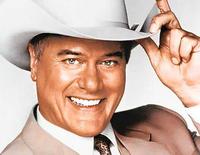
Take a look at this face. It’s the face of a good man, a true mensch: kind and wise, gently amused. It’s one of those rare adult faces in which you can still see the full spirit of the original (indigenous?) little kid–luminous, undimmed.

This is the face of Les Pockell.

He came up with the title for my first novel, and was my editor for books two and three. Last Monday night he died in his sleep, after a long fight with cancer. His wife and his brother were with him, and if ever there was someone who deserved to have his most beloved people beside him at the end, I’m pretty sure this was the guy.

Earlier in my life, I worked with some ginormous buttheads in publishing–not as an author, but as a lackey. Over the years I’ve been grossed out to read their obituaries, to see how their coffee-mug-throwing, profanity-laced, and grotesquely shrill sense of entitlement was glossed over as “sensitivity,” “generosity of spirit,” and even “tremendous patience and compassion.”

Sadly, it’s often the ginormous buttheads who end up getting eulogized most extensively in New York Times obits–the ones who stole all the credit, jockeyed endlessly for position, played favorites, treated waitstaff and assistants like dog shit, and just generally, as my pal Rae says, “played ‘cupid’: Kiss Up, Piss Down.”
That wasn’t Les. If you Google him, you’ll find testaments to the man’s character from an astonishingly broad spectrum of people, but his own humility isn’t hard to spot. He edited a number of anthologies, and in almost all of them, his author bio reads simply, “Les Pockell lives in Westchester County, New York.”

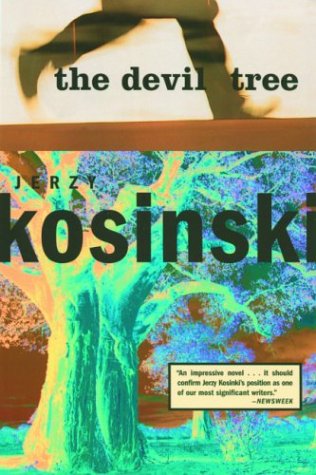
This is a man who edited Jerzy Kosinski’s Passion Play and The Devil Tree, going to bat for him when Kosinski was accused of plagiarism.
On Google Books Les shows up in the acknowledgements of an astonishing number of authors:

Our wonderful editor, Les Pockell….

I was very fortunate to have Les Pockell direct this project. He had wonderful ideas that improved this book immeasurably. And he is a very patient man — an indispensable quality in an editor….

Les Pockell, who at that time was an editor at St. Martin’s Press, had a bit more perception and put his tail on the line for my first book….

Oh yes, there is Les Pockell, our editor, who was forced to tolerate the authors’ casual attitudes and impossible schedules. Without Les, there would be no book, and we hope that like the Snopes, he endured….

Author and photographer Hank O’Neal describes how he came to work on a book featuring the work of Farm Security Administration photographers of the 1930s and ’40s:

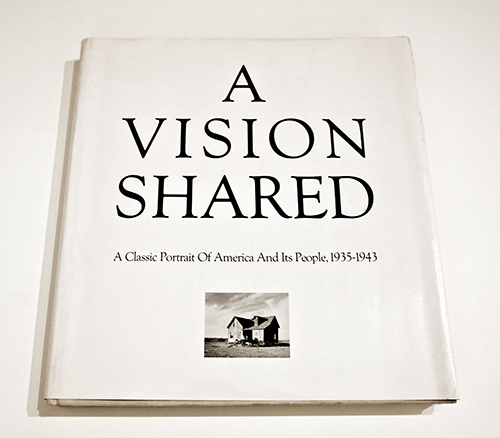
A Vision Shared came about because of a photograph I purchased from Lee Witkin in 1972. The photograph was by Walker Evans and this ultimately led me to the treasure trove of photographs in the Prints and Photographs Division of the Library of Congress. I decided I wanted to learn more about these photographs and photographers but there was no overall survey of this monumental project. I went to Les Pockell at St. Martin’s, pitched an idea and he told me if I could gain the cooperation of five or six of the original Farm Security Administration photographers, he’d do the book. Ultimately, nine of the original men and women signed on as well as the Estates of Ben Shahn and Dorothea Lange. The book was published in 1976 and was a success. 
 

That’s just a random quick smattering of projects Les was involved with. His Associated Press obit described him as a publishing executive and literary anthologist known for his deep and unpredictable intellect and an equally eclectic range of book projects.”  The number of books he helped bring into being, the authors he supported, the ideas he helped midwife–yea, verily, the man’s sheer, formidable magnitude of contributions to our culture–is humbling to consider. Les worked at St. Martin’s, Doubleday, Kodansha, Book of the Month Club, and Warner/Hachette/Grand Central. He was Donald Westlake’s editor and Harold Bloom’s and John Lithgow’s.

That AP obit’s author, Hillel Italie, wrote that Les “was also regarded as a mentor with a great deal to teach and a willingness to let others take the credit.” That’s certainly how my wonderful original editor at Warner Books’ Mysterious Press, Kristen Weber, remembered Les on her own blog, To Live and Read in LA:

I wasn’t sure what to make of Les when I first met him. He was enthusiastic and expressive and I was a scared baby editorial assistant…. But everything changed when my boss, legendary Mysterious Press editor Sara Ann Freed, passed away. I was an editorial assistant without an editor to assistant, and Les became one of my biggest advocates. He watched over me when I had to pack up Sara Ann’s office. And when all of her authors slowly but surely decided they wanted me as their new editor, he was as excited for me as I was.

Mysterious Press became me, Les, and publicist Susan Richman. We’d have weekly meetings in his office that were as much about fun as they were about business. I was thrilled to discover how much of a mystery fan he really was, and he became one of the first readers for any project that I wanted to buy.

Sara Ann gave me the tools for becoming the editor that I am today, but Les was the one that watched over me while I implemented them. He was an amazing mentor and I know there are many other editors who feel this exact same way.


Les was on the editors’ panel at a literary trivia competition sponsored by Slice Magazine (co-published by Les’s former assistant editor, the fabulous Celia Johnson*.)
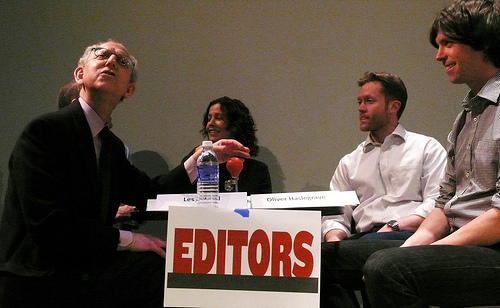
One of his authors, Susan Jane Gilman, was competing against Les on the authors’ panel that night. She summed up the experience on the Powell’s Books Blog:

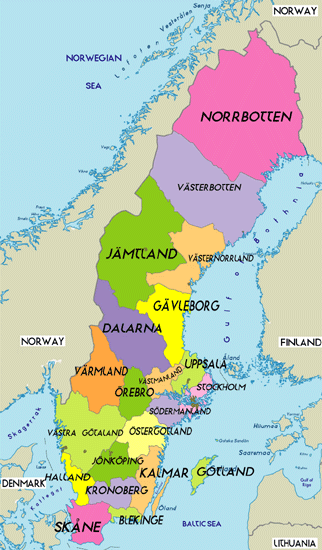
But the editors? It’s their job to know more than writers. And my current editor, Les Pockell, knows just about everything. And I mean everything. He’s a guy who goes into a Japanese restaurant and orders in Japanese, and then converses casually with the wait staff in Japanese. And he isn’t even trying to get laid. His daily functioning intelligence is slightly higher than that of, say, the entire nation of Sweden.

As a fledgling author under Les’s aegis, I got to have lunch with him too, and it was really, really cool just to get to listen to him. He was enthusiastic about EVERYTHING. He loved surprising details and lovely ironies and obscure little factoids, and he’d join into just about any conversation with tremendous glee.

And to have this guy get excited about your work, as a writer… well, all I can say is that it makes me tear up just thinking about it. Having received praise from Les Pockell will always count as one of the best, most lapidary, most sublime things I’ve ever had happen in my life.

When Les looked across the restaurant table and said why he liked a particular thing, and just got so happy and excited, grinning and waving his hands around… I don’t think the experience of working with an editor can get any better than that. And he was willing to wait for liking something, through draft after draft, just being encouraging and thoughtful and smart about the work as I tried to figure out what the hell the book was about and everything.

I’m not saying he pulled punches, or sugar-coated his critique when a manuscript needed work. He was forthright, and usually just, well, right. Even about the details–like when I referred to the mournful second movement of Beethoven’s Seventh, but ended up typing “Beethoven’s Second.” Well, Les caught stuff like that, which is no small thing when you’re trying to whip three-hundred-odd pages of manuscript into shape without embarrassing yourself, you know? But he was never a jerk about anything, never pretentious or didactic or even harsh at all.

Goddamn it, the world needs more human beings like Les–men especially. Losing him hurts, and I think all the best people involved with making books happen in New York feel the pain of his passing. He was a shining exemplar of goodness, in a world containing far too many ginormous buttheads.

And at the end of the day, here is the problem with ginormous buttheads, in publishing and elsewhere: they tend to kill off ideas. Even if they don’t think, or admit, that that’s what they’re doing.

As Richard Hofstadter wrote, in his Anti-Intellectualism in American Life: “Hardly anyone believes himself to be against thought and culture. Men do not rise in the morning, grin at themselves in their mirrors, and say: ‘Ah, today I shall torment an intellectual and strangle an idea!’”

It takes courage to nurture ideas, and to nurture people. It takes patience. It takes wit. It takes tremendous compassion. It takes people like Les.

Alice Walker once said, during a graduation speech at Sarah Lawrence: “No person is your friend (or kin) who demands your silence, or denies your right to grow and be perceived as fully blossomed as you intended. Or who belittles in any fashion the gifts you labor so to bring into the world.”

Les was both friend and kin, a man who coaxed gifts into the world.
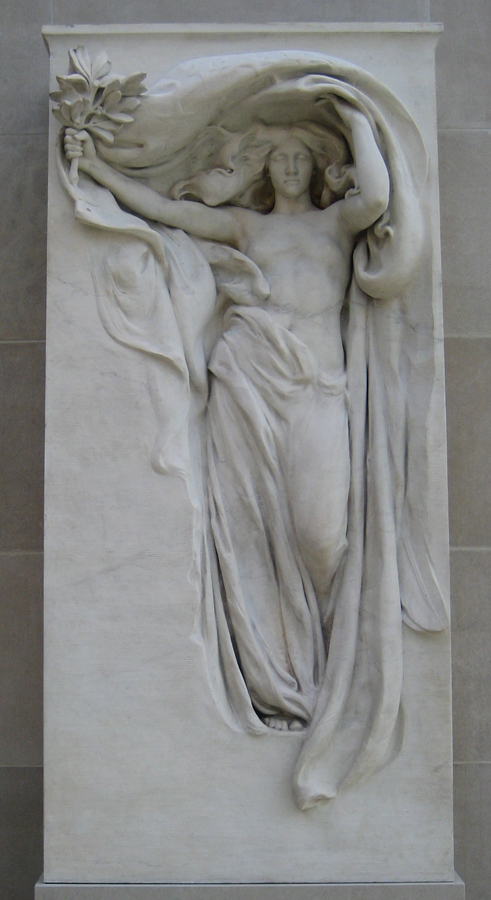

I just finished re-reading Mary Karr’s The Liars’ Club yesterday, and was really struck by her final paragraphs in that beautiful book as this has been a year marked, for me, by a lot of death:

It’s only looking back that I believe the clear light of truth should have filled us, like the legendary grace that carries a broken body past all manner of monsters. I’m thinking of the cool tunnel of white light the spirit might fly into at death, or so some have reported after coming back from various car wrecks and heart failures and drownings…. Maybe such reports are just death’s neurological fireworks, the brain’s last light show. If so, that’s a lie I can live with.


Still, the image pleases me enough: to slip from the body’s tight container and into some luminous womb, gliding there without effort till the distant shapes grow brighter and more familiar, till all your beloveds hover before you, their lit arms held out in welcome.
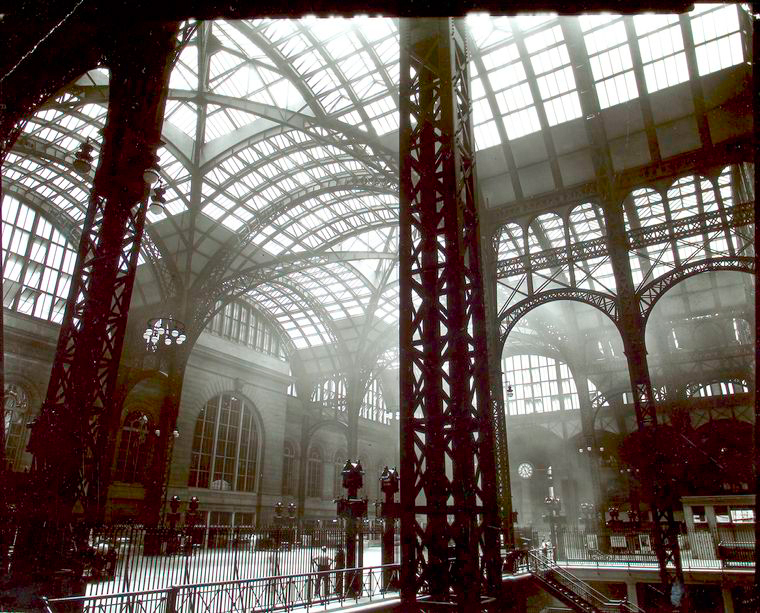
 

Amen to that. (And, yes, I think the afterlife should look like the former Penn Station.)

But here’s the best way I think Les can be remembered:
Les Pockell Makes a Sandwich


*  I am blessed that Les worked on my last two novels with the luminous and extremely gifted Celia Johnson, now the full-fledged editor in whose capable hands I find myself for book number four. I am a lucky, lucky writer, and Les was (once again) a farsighted and very smart man.
Harbinger

Zoë Sharp

We British as a whole are very bad at the practice of blowing our own trumpet.

As a general rule, we’d rather apologise for being bad at something – take your pick of any sporting activity, from cricket to football (soccer) – than we would boast of our successes. Maybe we’ve had so few successes as a nation recently that we’re out of the habit. (See, there I go again…)

So, I’ve found this post very difficult to write.

You see, while I was at the Harrogate Crime Writing Festival a couple of weeks ago, I found out that the news is official.

The Charlie Fox series has been optioned by Twentieth Century Fox TV.

I heard the news in the bar (of course – this was a crime writing convention, where else would I be?) I was just introducing fellow author Russel D McLean to his American publisher, who I happened to know and he’d never met, when the publisher paused, looked at me and said, “Didn’t I just get an email about you – something about a movie deal?”

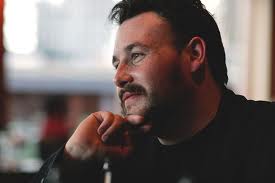
(Oh, and isn’t this a great picture of Russel, by the way? It was taken by the incredibly talented Mary Reagan, and really should be his official author photo.)

Of all the ways to find out the proverbial cat was out of the bag, that has to be one of the most unexpected. When fellow crime writerist and famous beardy person, Stuart MacBride, heard the news, he was dancing about with a huge grin on his face, while I admit I was just looking a bit nonplused.

Of course, since then I’ve had a bit of time to think about it, for the implications to settle in and, frankly, I’m still thinking… Wow.

Of course, apart from wandering round with an occasional big stupid cheesy grin on my face, I don’t quite know what to make of it. I’ve had emails from people – including all the ‘Rati crew, of course – wishing me congrats, but the Brit in me feels compelled to point out that it’s only half an inch up towards the first rung on the ladder. There’s a hell of a long way to go from page to screen, as I’m sure many a previously optioned author will testify. (You see? I just can’t help myself.)

But for the moment, I can allow myself the odd little daydream, the most immediate of which (apart from wondering what it was they saw in my series that made them option it in the first place, and what elements might make it through to the final phase) is who would play the characters. I know, I know, it’s sad, but what author hasn’t done it?

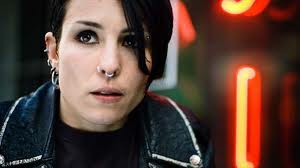
The dream, of course, is to have a relative unknown, like Noomi Rapace who played Lisabeth Salander in Stieg Larsson’s original Millennium trilogy. But who will take the role in next year’s remake, considering Daniel Craig has already been cast as Mikael Blomkvist? If it’s a big name, they’ll bring a big slice of their own personality to the part. Does the character gain or lose from that?

The problem for me is, that because Charlie Fox is a first-person character, I never get a good look at her. She’s not the kind of girl who spends a long time staring into mirrors, and the only time she’s looking at reflections in shop windows is doing counter-surveillance routines.

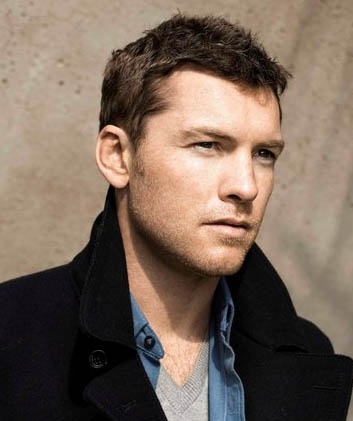
Now, Sean I have a much clearer picture of. Probably something like the Sam Worthington character in ‘Terminator Salvation’.

Charlie’s fallen-from-grace slightly cold orthopedic surgeon father? Well, how about somebody like Michael Kitchen, although minus the hat.

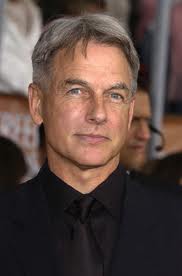
And Charlie’s boss, Parker Armstrong? In my world, Mark Harmon would be a distinct possibility.

And yes, I know there isn’t a cat in hell’s chance of any of this fantasy cast becoming a reality, but I can dream, can’t I?

My problem is that Charlie is very close to me, which is a problem when it comes to me picturing her as somebody else – or somebody else as her. Fellow crime author Meg Gardiner once described one of her lead protagonists as “me with the brakes off” and that probably about sums it up. Only, to that I’d add “me with the brakes off, fighting mad and heading for timber” as well.

So, I’m open to suggestions. Help! How do you see her? Or any of the characters? Or any characters in your own or your favourite books, that have or haven’t made it to screen yet? Did the actor playing the part fit your idea, or ruin it for you?

This week’s Phrase of the Week is letting the cat out of the bag, meaning to reveal a secret. It stems from medieval markets where an unsuspecting buyer was often shown a suckling piglet, but while negotiations were taking place on the price, and the piglet was being bagged up for the journey home, an accomplice would often substitute it for a cat instead. The duped buyer would only discover this when he got home and, quite literally, let the cat out of the bag.

THIS IS THE CITY

by J.D. Rhoades

I just got back from the big city of Chicago, where I had the honor of helping two dear friends celebrate their wedding. When not participating in wedding merriment, I got a chance to see some more of one of my favorite towns.

There are quite a few downsides to being, as I put it, between publishers, but one of the ones that really gets me down is that I don’t get to travel as much to conferences and book festivals. Not only do I love seeing old friends, making new ones, and finally getting to know people I only know from online, I love seeing America’s cities. This may surprise some of you, since I’m pretty vocal about being  a small town boy. What can I say? Like Walt Whitman, I am large. I contain multitudes.

There’s just something about going walkabout in a city I’ve never been before, especially if it’s a place I’ve connected to through books. Or going back to one I’ve been to before to find that the taste I got the second or third time is different from the first.

Here are some of my favorites (by no means an exhaustive list):

Chicago: I love the  architecture. I know it makes me sound geeky as hell but I’m fascinated by those old buildings, especially the big ones like the Chicago Tribune building. Some of them are as ornate and filigreed as cathedrals.


Then there are the parks. For a big city, Chicago seems to be very much into green space and places to play outdoors.  Next time I go back, I’m going to take some time to just hang out there.

And the food, good lord, the food.


New York: I’ve often said I’d probably expire quickly if I lived in New York. Not from pining away for the South,  but  from lack of sleep.  No matter how late it might be, I look out into the street and I feel it pulling at me. I  just have to get out there and see what’s going on. And there’s always something going on. The people were very nice, too, which I didn’t expect after years of hearing how uptight and unfriendly New Yorkers were. (Except the bartenders in the Grand Hyatt. Those guys acted like they were doing me a favor selling me a 14 dollar cocktail.).

Which reminds me:  there are some cities I’ve been surprised by, because frankly, my pre-conceived image of them was so unfair. Like:

Boise: “Boise?” someone once asked when I told them I was going there for the Murder in the Grove conference. “Why the hell would anyone want to go to BOISE?” To be sure, I wondered that myself. I expected to be surrounded by potato-chomping whack job survivalists. Boise, I apologize. It’s really a very hip city, with great restaurants, coffeehouses, and one of the coolest guitar shops I’ve eve been in. And I got to actually wave hello to the new Governor in his office.


Omaha: I had the same prejudice against Omaha. I thought it was going to be a hick town writ large. But again, I apologize. No, corn does not actually grow in the streets there. No, cows do not roam free. The people do not all dress in overalls (not that there’s anything wrong with that). In fact, it was a very nice place,with great food, cool record shops, Irish pubs, blues bars, and some great steaks.

Some cities, alas, it’s hard to love. Like, for instance, Dallas. I hated Dallas. Hated it,  hated it, hated it. That may, however. have been because I was only there for a meeting that was part of a particularly  ugly and contentious lawsuit and my main view of the city was from the windows of a corporate boardroom full of assholes. 


  But even that dry brown city had its upside. It was there I first sang karaoke with a group of Japanese executives who were very appreciative of my sake-fueled rendition of “Travelin’ Band.”

Houston,  on the other hand, rocks, thanks to friends like David Thompson and the lovely  McKenna Jordan (both of Murder By the Book) as well as my old friend Celine (aka Lee Billings).  I’ll always remember Houston as the place where Ken Bruen read to a room full of late night partiers from a book that had just come out called THE DEVIL’S RIGHT HAND.  

One city I’d love to go back to: Baltimore. I’d read Laura Lippman. I’d seen every episode of THE WIRE. So I’m not sure what I expected from Baltimore. That may be why I never really felt like I got a handle on the place. But lunch at the Inner Harbor was nice.

Other places I’ve loved and would love to revisit: Boston. Miami. Madison.

Some cities where I’ve never been, but want very much to see: L.A. Seattle. Austin. New Orleans.

So, on to the discussion questions:  What’s your favorite city? What must I be sure to catch when I’m there?


The Pantry Diet


By Louise Ure


The ‘Rati troops seem to have been fairly consumed with food issues these last few weeks. Rob wrote about his Post-Hawaii Diet. Cornelia sang the praises of “Lobster Pie” at the Maine Diner (and gave an even earlier shout out to a “Lobster Prozac” recipe). Alafair, in yesterday’s post, bemoaned the temporary loss of her favorite lunch at Otto’s Enoteca Pizzeria in NYC.

I’m continuing the theme today with my own new diet plan: don’t buy any food.

Times are tough, we hear on the news. Folks are going out to dinner less often and packing their own lunch for the office. That’s all good advice, but many of us stopped going out long ago and making my own lunch is nothing new.

Ergo my new calorie and cost saving diet: stop buying food.

With three exceptions (milk, eggs and bread), I’m not going to buy any groceries until I’ve cleaned out the freezer and the pantry.

Now I’m not one of those folks with a full-size freezer stocked with venison and a whole flock of chickens. The stuff that’s in the freezer is there because I didn’t want it before. Some of it is so old that I can’t tell what it is. Animal? Vegetable? Mineral? I’ll take my chances.

And the can-laden shelves in the garage are not “earthquake supplies,” as contractor I hired so graciously suggested. Oh no, that’s mini-Costco. One thing I’ve learned in hindsight: I should never have sent Bruce to Costco when he was hungry. He invariably came home with a case of kidney beans or a gross of cans of tuna. Or both. I have enough cranberry juice on the shelves downstairs to cure a sub-continent of scurvy.

At first it was fun and full of variety. There was shrimp in the freezer. And steak. Frozen haricots vert and corn. The supplies dwindled as my favorites disappeared. And my names for each of these recipes changed. Soon I was eating “Home Alone Macaroni and Cheese” and “Assisted Living Chicken,” which is probably not what the folks at Stouffers would have called that breaded chicken cutlet.

There’s “Party of One Smoked Oysters” (and why did Bruce ever think we’d need fifty cans of it?) and “Thousand Year Old Pot Stickers.” I need about twenty new recipes to use up all the cans of water chestnuts and little bottles of clam juice.

Tamales have their own pride of place as my relatives think they are the Arizona equivalent of a covered dish brought home after a funeral. I had four dozen at last count and that’s about 48 meals-worth.

There’s a pecking order to my choices, of course. I’ll use the butter up first and then move along to the olive oil. When that’s gone, I’ll resort to the vegetable oil, the peanut oil and finally to that least-favorite-of-all-the-lipids, PAM spray. If I break out the lard, you’ll know I’m close to the end.

The coffee will go first and then I’ll attack those half-dozen, half-filled boxes of tea bags. And I don’t even like tea.

I have enough pasta to live through any amount of time in a bomb shelter and enough brown rice to start my own commune.

Desserts will prove challenging, although I still have a jar of applesauce, and a box of popsicles. Of course, there are all those boxes of Jello pudding and the Peeps from last Easter on the top shelf of the cupboard.

Sometimes when I’m putting together a meal I feel like one of those chefs opening a basket on “Chopped.” Anchovies. Dried apricots. Bush’s Baked Beans. Count Chocula cereal. “You must use all of these ingredients in your final dish.”

What about you guys? If you had one of those “No Way I’m Going to the Grocery Store” days, what would you pull out of your pantry for a meal?

Oh, and I may add one more ingredient to that “must buy” list. Wine. I think I’m going to need it.


I Want What I Can’t Have

I want what I can’t have.

When I say that, I don’t refer to the desires most of us have for actual things or states of being that exist in reality but which we will likely never enjoy: a mansion in Maui, a loft in Tribeca, waking up in bed with James Franco. 

In other words, when I say I want what I can’t have, I don’t mean it the same way Morrisey meant when he sang “I Want the One I Can’t Have.”  (Yes, that was just an excuse to include a Smiths video in this post.)

With all due respect, Morrisey, the more precise language to describe that state of desire would be, “I want what I am highly unlikely to have in the foreseeable future.”  No.  When I say that I want what I can’t have, what I mean is that I want what I literally cannot have.  And by literally, I mean literally, not figuratively, the way people nowadays inexplicably (and literally) say things such as, “My head literally exploded.” 

Here’s what I mean: Yes, I want that beach house in Maui, and I want that loft in Tribeca.  I’m not likely to have either one in the foreseeable future, but my real problem is that I want them at the same time.  I want to wake up to the sounds of waves crashing on the beach outside my window, then step outside onto cobblestone streets to eat pasta cooked by some employee of Robert DeNiro.  I want to take a surfing lesson in my backyard then walk down the street for dinner at Nobu.


And, yep, I got a mad crush on James Franco.  I sort of like the idea of being Mrs. James Franco.  (Oh, who are we kidding?  He’d be Mr. Alafair Burke, but whatevs.)  Now, am I likely ever to meet James Franco?  No.  Would he love me if he met me?  Well, yeah, of course, but he might not want to marry me.  All of those considerations are irrelevant, however, because I want to be married to my husband.  Forever.  Exclusively.  Indubutably.  For reals.  But, ahem, as bride to James Franco. I want what I can’t have.

As I write this, I find myself extremely sad because I am packing a suitcase.  Tomorrow morning, I will board an airplane, and I won’t come home for 14 days, 2 hours, and 11 minutes.  The husband will be joining me for the first five days on Burke-a-pa-looza, an all-Burke vacation up in Canada.  There will be golf, parental units, and nieces and nephews who think I’m the coolest aunt in the world.  I have every confidence that said vacation shall rock.

From there, I will head solo to a hotel room on the west coast, away from the humidity that ruins my summers and my hair, closer to dear friends whom I still miss everyday, and shielded from the many distractions at home that keep me from writing with the intensity I need right now.  I asked for ten days, by myself, in a hotel room, so I could finish my next book before classes start.

I got what I asked for. 

But now I’m sad.

Why?  Because fourteen days away from home means fourteen mornings when I won’t wake up to find this face licking mine:

It means fourteen days when I won’t have lunch at my office away from home:

Notice the name of the guest on the check. I’m a regular!
It means fourteen days without my gym, my park, my croissant place, or that amazing collection of health and beauty aids crammed into my medicine cabinet. 

It means ten days without my husband.

The thing I want that I can’t have is all the comforts of home, all the familiar rhythms of family, the constant companionship of my closest friends, and all the time and solitude I need to write the best possible book I can.

In this case, I really can’t get what I want.

I just might, however, find I get what I need: a few days with my family, a few dinners with my west coast friends, a hell of a lot of writing time, and a very happy husband and Duffer waiting to greet me and my completed manuscript at home.  Wish me luck!  (I may be a bit quiet while I’m bunkered down.)

So what are the things you want that you CAN’T have?

If you enjoyed this post, please follow me at Facebook, Twitter, or my Website

RWA Nationals and some thoughts on INCEPTION

by Alexandra Sokoloff

I’m posting from Orlando, where I am at the Romance Writers of America National Convention, along with ever-lovelier Murderati lovelies JT and Allison.

I don’t suppose it’s even much of a surprise any more that a good chunk of this Rati lineup attends one or both of the major romance conventions a year, and smaller ones on the side as well.   And it’s not just because we can’t bear to go more than a few months without seeing each other in person, although that’s part of it.

Many of us have said this here before, but it bears repeating.   ANY writer in publishing today ignores the romance market at their own peril.   Industry insiders openly admitted that romance kept the book business afloat during the bleakest times of the recession, and continues to.    And it’s no longer the case that mystery and thriller writers are just outsider guests, mere curiosities at these conferences.   Just in the last four years that I’ve been a published author, I’ve seen the huge tent that romance is take in more and more subgenres, some of which tilt darker and darker  –  and I’m talking dark like in zombie apocalypse stories – to the point that I’m not sure you can realistically call romance ANY kind of genre at all, as much as it is simply a marketing strategy.

(Okay, all right, I can hear romance purists howling out there, but I’m looking at this from a mystery/thriller perspective.).

ALL the publishers are here, some of them with dozens of reps, from divisions all over the world.    You can’t walk two steps without tripping over an editor or agent from a major company, And not to be crass, but you can tell how romance ranks with our publishers not just from that overwhelming presence, but also from the sheer amount of money the agents and publishers spend on parties, marketing, and book giveaways (staggering…).

Because of that overwhelmingly professional slant, RWA is not the free-for-all that Thrillerfest and Bouchercon and Left Coast Crime – and Romantic Times – tend to be.   (Although nothing beats that Harlequin dance party – I’m so sore this morning I can barely type…).   It’s a working conference; many, many aspiring authors come to pitch to agents and editors (and do come away with representation and book deals), and the very cool thing is that RWA chapters all over the country prep their chapter members for conferences with practice pitch sessions and conference how-to in the months before “nationals”, as they call it.

One feature I really love about RWA (besides being able to wear all my dressiest clothes and changing outfits three times a day) is the daily luncheons with keynote speakers.   Not only do they feed us (which means I actually eat, something I often forget to do at other conferences), but there’s always a fascinating keynote speaker at the lunches – yesterday Jane Ann Krentz, who has published 160 books under three different names, giving us a wry breakdown of how she has sabotaged her own career over and over and over again over the years, and always managed to reinvent herself.   You can’t help but learn – and find comfort – from a pro with that much life and career experience.  

But the greatest thing for me about this conference, as really any of the good ones, is hearing aspiring writers all around me say in a way that makes me know they mean it – “That’s it  – no more fucking around.   I’m finishing this book by   —-“    (Oh, all right, it’s Nationals, they’re not saying “fucking”.)   And they mean it.   I’ve seen it happen over and over and over again – a conference like this is what gets people past those last internal blocks and gets the book finished, repped and out there.

Something to think about.

—————————————————————–

Okay, so while I’ve been here I’ve taught two Screenwriting Tricks For Authors workshops, SRO, and because I saw INCEPTION last week I kept using that as an example, and I want to make a couple of comments without discussing in-depth until more people have seen it.

The movie is a great one to see not just because anything Christopher Nolan does is worth seeing, but also because it illustrates how useful it is to watch movies and read books with story structures specific to what you’re writing yourself.    I’m going to do a full post on it next month, and if you want to play along, there are two things especially I wanted to suggest you guys keep in mind when you see it.

First of all – the movie is about the nature of dreams and reality, sure, but while you’re watching it, ask yourself – “What KIND of story is it? (See here if you don’t know what I’m talking about).  It’s a very specific sub-genre that Nolan uses to tell this story, and all the conventions of that genre are used and laid out very -conventionally. Instead of giving you the answer, though, I think I’ll let you see it and tell me.

But it’s absolutely textbook how all the story elements I keep talking about are laid out in this movie (watch particularly for how the PLAN is articulated over and over and over again…)

Also, the movie is interesting structurally because it uses a convention we haven’t talked about yet – a Point Of View character. Even though DiCaprio is the protagonist, we maintain a certain distance from him because he is so unreliable. So there is also a character who carries the emotional investment of the audience – a character who observes DiCaprio, worries about his mental state, and steps in at a crucial moment with a plan of her own. Ooops, there, I gave it away, but it’s not really a spoiler – I just wanted to mention that Ellen Page is serving as the point of view character, and you can see how that works. (Actually I think the Ellen Page character is a very weak character, and it’s a weak performance, but the presence of that character as written still works to build suspense about DiCaprio as a dangerous character, unsuited to do the job he’s supposed to be doing.).

This is a storytelling trick used when you want to build in a whole other layer to your protagonist, and observe her or him as a character instead of simply being inside the character as a vehicle for your experience of the story. Often this character will actually BE the protagonist, the one with the biggest emotional arc.

Also, this is a great movie to watch for the outlining of the PLAN.

And oh, all right – what class MYTHS do you see working in this one? (One is too easy for words, but not ALL on the nose…)

There are some classic Point Of View characters in literature, and some not so famous – any examples for us?

And yes, I want to hear what KIND of story you think INCEPTION is!

And of course – anyone else have a take on romance conferences?

Back to the trenches, now… where are those spike heels?

– Alex


BEAT ON

By Stephen Jay Schwartz


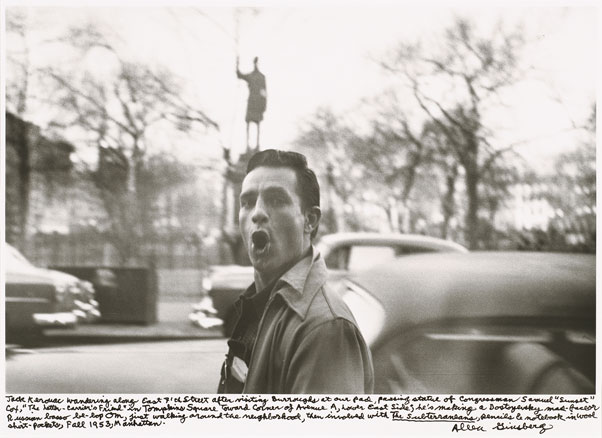
Have I made it perfectly clear yet that I’m obsessed with Jack Kerouac?

I think I mention Kerouac and the Beats every time someone asks about my literary influences.  But I don’t really think of myself as a guy with obsessive tendencies.  I don’t have a thousand lunch pails sporting images of Superman or characters from The Andy Griffith Show.  I don’t paint tiny army figurines and play them one against the other on a giant, Styrofoam battlefield in my garage. 

But the way I feel about the Beat Generation…kinda sounds like obsession.

I’m not alone.  There’s a something somethingness about these folks that translates into every language, crosses every border, travels the world and appeals to millions.  I remember feeling crushed when I discovered there were others like me.  The relationship I had with Jack Kerouac, Allen Ginsberg and William S. Burroughs felt personal, like I rode shotgun at their side through all the adventures.  I didn’t like the fact that my feelings were not special or unique.  And, when I finally accepted that I was not the reincarnation of Jack Kerouac (every Beatnik goes through the phase where he insists he’s Jack reincarnated), I learned to enjoy sharing the Beat universe with others. 

How do I explain the appeal of the Beats?  

It starts with Kerouac.  He’s the center of the storm.  I posted a blog a little while ago with a link to Kerouac reading from On the Road.  My blog was about the musicality of his writing, the fevered saxophone solo of his words, his syncopation and meter and rhythm.  That’s the first thing that got my attention.  Just hearing Jack read his own work took me to another place.  It was the marriage of music and literature, poetry and jazz.

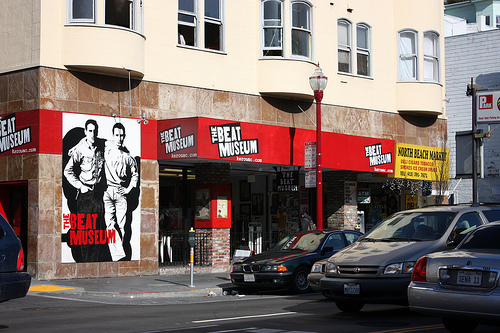
Last week I was in San Francisco for a too-brief moment and I visited one of my favorite places in the world, the Beat Museum.  

There’s a TV monitor near the entrance playing a continuous loop of Kerouac, with the sound turned off.  It was playing the same segment I mentioned above, the one I have linked to my previous blog.  I watched it again, silent, observing Jack’s body language as he read, hearing the words memorized in my head, knowing every camera angle, expecting the crescendo of music and words as the sequence came to an end and the lights came up and the camera pulled out to a wide shot, in total silence.  And I noticed something I had always seen but hadn’t really acknowledged.  It was a look in Kerouac’s face, a reluctance to let it go, to leave the place in his head where he’d gone while reading his work.  I wouldn’t be surprised if it was Nirvana, where he’d gone.  It showed in the way he seemed to grapple for something lost, something held for a moment in the palm of his hand, before the music ended and the lights went up and the camera pulled back and out.

In that moment I saw Kerouac’s vulnerability.  His complete and total honesty, open for the world to see.  And I think that’s the real appeal, that’s what draws so many millions into his orbit. 

The Beats were nothing if not honest.  They lived lives of chaotic adventure, documenting everything they did, felt and saw.  They weren’t ashamed by their actions.  Their lives were their art, America the canvas. 

Now, remember, this was the 1950s.  Before reality television brought media-starved souls into our bedrooms to entertain us with the wreckage of their lives.  This was before Andy Warhol gave every American permission to seek fifteen minutes of fame.  People didn’t expect to receive instant adulation on a worldwide stage.

It was the era of “Leave it to Beaver,” the Marlboro Man, the Red Scare.  A Post-War America with a black-and-white setting.  Shades of gray didn’t exist until the 1960s.  In the 50s you were either perfectly good or…perfectly bad.  And, if you were just a little bit bad, you were perfectly bad.  If you smoked a little weed, if you liked to listen to jazz…you might as well shoot heroin, pop speed, have sex with your neighbor’s wife and rob your friends.  All of which the Beats excelled at.

So, is there anything to admire about that?  Is that heroic? 

The fact is, they lived, man.  These cats were full of life.  They did not compromise in their search for meaning.  They blew through this land, rolling across our virgin highways, searching out America, testing the caliber of their souls along the way.  Their message was peace and friendship and love.  They lived their lives fully, whatever the cost.  And the cost was high, in the 1950s.

Kerouac was talented and sensitive and vulnerable and he ultimately killed himself with booze.  Frustrated, he drank because he was misunderstood.  His publishers and the media and the critics sold him as America’s “bad boy.”  They didn’t look at his writing, didn’t acknowledge the value of his fresh, new style, didn’t hear the questions he posed about the meaning of life.  He was cast as the harbinger of restless meanderings and delivered to a hungry, eager youth ready for action, encouraged to use On the Road as their map into naughty new places where sex, drugs and jazz defined the essence of cool.

While Kerouac was the match that lit the flame, he was not the whole movement.  One man does not a Generation make.  A number of colorful cohorts traveled at his side, folks like Allen Ginsberg, William S. Burroughs, Neal Cassady, Carolyn Cassady, Gregory Corso, and Lawrence Ferlinghetti, to name a few.  Their writings challenged the conventions of the day, setting the stage for an even greater revolution yet to come.  These were the original road-trippers.  The first hitchhikers.  Doing it all before the hippies hit puberty.

I have a pretty significant collection of Beat literature in my library.  Sometimes I stand in front of the shelves and stare at my copies of On the Road, The Subterraneans, Big Sur, Naked Lunch, Queer, Junky, Howl, Kaddish, Memory Babe, The Town and the City...just being near the stuff connects me to my core.

Whenever I’m in San Francisco, I visit the Beat Museum.  It’s a place where I can talk with other obsessive beatniks about the minutia of Beat life.  I also chat with folks who come in off the street, come in from all over the world, really.  Some know their shit while others are taking their first Beat-baby steps.  I love introducing Kerouac to a new generation of readers and fellow road-trippers.

Last week I had nowhere to stay and no money for a hotel and I didn’t want to bug Louise or Allison Davis or anyone I knew and what I really wanted to do anyway was beg Jerry Cimino, owner of the Beat Museum, to let me spend the night in the museum.  Yes, IN the museum.  I’ve known Jerry for a couple years now, ever since he introduced me to the San Francisco beat cop who would become my main source for research on BEAT, my sequel to BOULEVARD

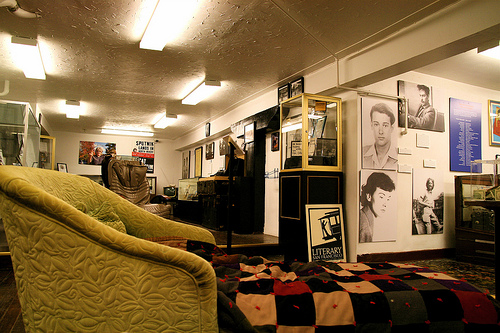
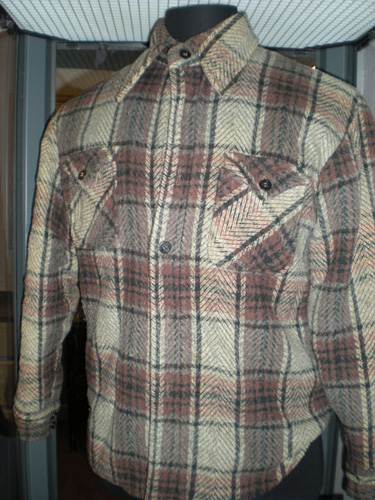
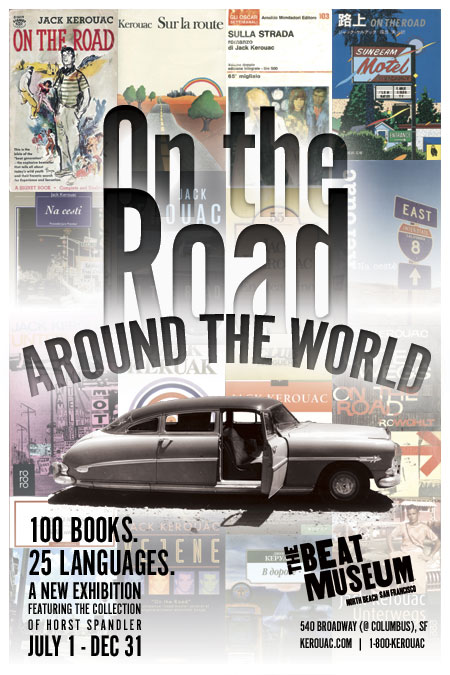
Jerry, being the cool cat that he is, let me stay.  I slept in a period chaise-lounge beside a jacket once owned by Kerouac, in front of a collection of one hundred copies of On the Road translated into 25 different languages.  I was like a Beat Generation centerpiece.  I was like a Kerouac collectible. 


(Yes, I slept here)


(Right next to Jack Kerouac’s jacket)


(Next to 100 copies of On The Road from around the world)


It was a Friday night and the world outside the museum walls was a-rockin’.  I was in the center of North Beach and from inside the museum I could hear the wild raucous live music of nearby clubs, the screaming and yelling and laughter of twenty-somethings let loose for the weekend, the crash of beer bottles, the sirens from police cars and ambulances, the hushed sounds of hoodlums smoking pot just outside the door, the call of barkers from Big Al’s strip club across the alley.  And me, stepping softly barefoot on the wood floor, looking at photos of Kerouac and the gang, reading titles from their books, letting their history engulf me.  I felt like a bridge between the San Francisco of their era and the San Francisco that screamed and danced on the other side of the wall.

It doesn’t get much better than that for a Beat junkie.  Except maybe to lie down on Kerouac’s grave in Lowell, Massachusetts.  Which I’ve done.  Twice. 

Jerry Cimino also honored me last year when he let me have my San Francisco launch of BOULEVARD at the museum.  This year will be even better, since I’m launching BEAT, which is set in San Francisco, from the Beat Museum, the night before Bouchercon.

Can you beat that?

Serendipity.

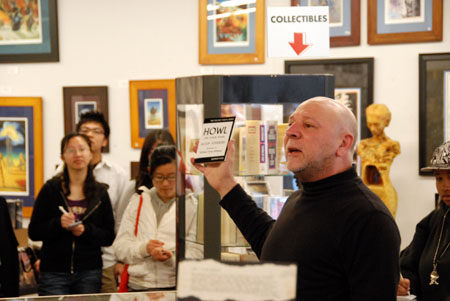
When I saw Jerry last week I read a section of my book to him, which includes the following lines:  “They passed the Beat Museum with its mural of Jack Kerouac and Neal Cassady standing arm-in-arm.  Hayden saw a man inside waving a copy of Allen Ginsberg’s Howl before a group of Japanese tourists.”

When I asked Jerry to send me a few photos for this blog, he sent me this one, which was taken at an event two years ago…

Come on now.  I knew nothing of this event.  The book I referenced in my excerpt could have been anything, I could’ve written that he was waving a copy of On the Road or Naked Lunch.  I could’ve said the tourists were from Sweden.

Is this a sign of some sort?  Am I supposed to drop everything and move to San Francisco, work the register at the Beat Museum for the rest of my life?

When you’re channeled into the Beat thing, well, shit like this just happens.  I invite you all to join the ride.  Get on the bus.  Drink the Kool-Aid.

Beat On.

Everyone who’s going to Bouchercon is invited to join me at the Beat Museum for the SF launch of BEAT on Wednesday, October 13, 2010, at 7:00 pm.  We’re going to have a nice crowd of Bouchercon attendees, and we’ll hit the North Beach restaurants and bars directly thereafter.  Special Guest Kim Dower (Kim-from-LA) will be reading from her newly published book of poetry as well.  Kim is a wonderful poet and the Beat Museum is a perfect venue for her. 

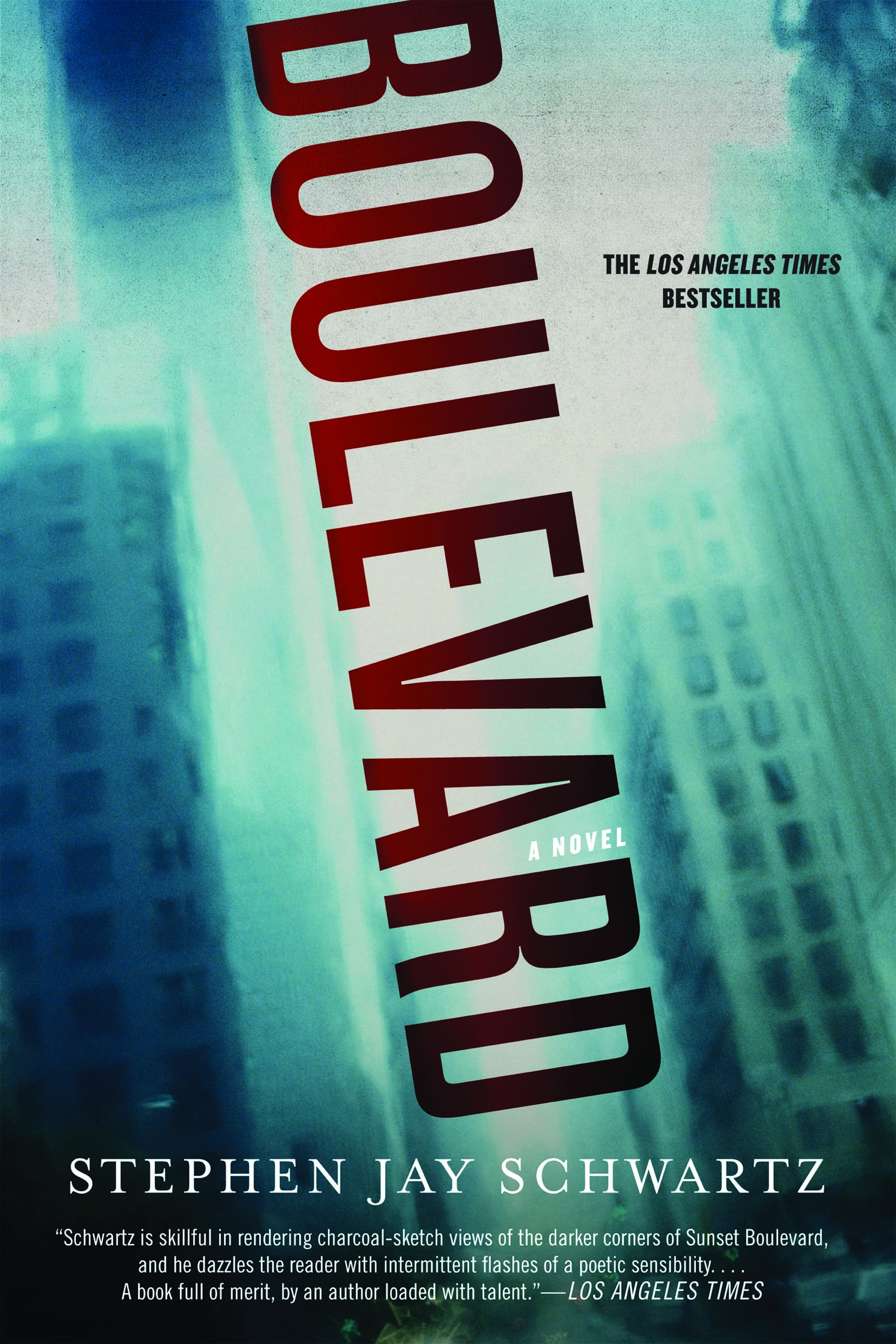
And next week BOULEVARD comes out in trade paperback, with a fancy-schmanztie new cover.  Tell the friends, and thanks!


PHOTO CREDITS:  beat-museum-front.jpg  –  “Helder Ribeiro”  Site: http://www.flickr.com/photos/obvio171/3261609437/
chaise-lounge.jpg  –  “Sara Stell”  Site: http://www.flickr.com/photos/scorpiosphynx/3770357809/in/photostream/
jacks-jacket.jpg –  The Beat Museum
jerry-talking-to-students.jpg  –  Sean Stewart  Site: http://babylonfalling.com/blog/?p=251

A LITTLE BIT OF THIS, A LITTLE BIT OF THAT

Boy do I have a blog post (multiple actually) for you! The unfortunately thing is I probably need to wait until 2012 or later before I actually post them. Curious? Wish I could write them now, but sometimes you just gotta wait.

The problem is, the subject of these potential posts have been occupying much of my mind this summer, and, even more so, the past couple of weeks. So coming up with a topic for today has been difficult to say the least.

So this is going to be a bit of a scatter shot of things, hope you don’t mind.

1. I’ve never been to COMIC CON in San Diego (hope to one day), but a few weeks ago I did get to go to the Anime Expo in downtown Los Angeles with my daughters. To those unfamiliar with Anime, it is basically the Japanese form of film and television animation, and Manga (also part of the expo) is the Japanese form of comic books. Think Speed Racer and Pokemon, though there are TONS of other, darker examples. Like what I’ve heard about COMIC CON, many of the attendees at Anime Expo dressed up in their favorite character outfits. There were ninjas and school girls, and pokemon characters, and characters from Shugo Chara just to name a few. It was…fascinating. My youngest daughter is totally into anime (she dressed up in a school girl outfit.) She’s so into it, in fact, that she wants to go to Japan and work as an anime artist when she grows up. So to say she was in her element would be an understatement. My other daughter came along because otherwise she’d have to spend a boring day at home. Anime and Manga are decidedly NOT her element. It was humorous watching her reactions to all the costumed people. Did I say humorous? I meant hilarious. Anyway, tons of fun.

2. Having your transmission go kaput on the freeway 20 miles from home is not fun. Finding out how much it will cost to replace it, even less fun.

3. Walking around Las Vegas people watching (with very little money in your pocket…see item #2) is at times even more entertaining that attending the Anime Expo.

4. If you’re ever in L.A. in the summer, you MUST make time to spend an evening at the Hollywood Bowl. Even the cheap seats are fine. Bring your wine and something to eat, and you’ll be in heaven.

5. I’m now at the beginning again. Time to start writing a new book. For me, this is often the hardest part. I have that opening which I wrote months ago, and now I have to get back into that frame of mind. At the moment, I’m looking for the rhythm. In fact, I had planned on writing all day, but when I woke up this morning, I was still not feeling it completely. I’ve written enough books now to know that it’s ok if I give in to that feeling. What I need is more stimulus…maybe catch a movie (did you all see INCEPTION? Awesome), or read a book (current read THE GODFATHER OF KATHMANDU by John Burdett, so far excellent), or watch TV (reruns Perry Mason play on a local channel here at noon everyday, I’ve grown a whole new appreciation for the series) or…who knows?


So what’s going on with you this summer?

Hollywood as bookseller

I am now the subject of my own study.

I’ve long been fascinated by the effect that Hollywood has on book sales.  Fourteen years ago, I was advised to write only stand-alone novels because it allowed each book to be an individual property for sale to the movies.  If you linked the books as a series, when you sold just one of those books, the producer would own the rights to the characters — and to that whole string of novels.  Feature film deals were the gold standard, and John Grisham’s career was the ideal.  We all wanted to see our books on the big screen.  TV deals might be nice, but they just didn’t have the same cachet.  From my conversations with authors whose books did make it to the big screen, I learned that a feature film could net some pretty nice book sales.  One author told me that when his book was adapted into a modestly successful feature film, it translated to an extra 750,000 paperback sales of his book.

And as authors, that’s what we really care about.  Not the glitz and glamor of Hollywood, but the tangible reward of book sales. 

For a few years, I followed the advice of sticking to stand-alone novels.  I sold the feature film rights to HARVEST and GRAVITY, but those projects went nowhere.  Then I ended up writing a series when my character from THE SURGEON, Jane Rizzoli, went on to appear in the next book and the next.  I learned to ignore Hollywood and I simply wrote the books that I wanted to write.

I began to notice that feature film might not always be the best vehicle for selling books.  I saw what the TV series “Bones” and “True Blood” did for the book sales of Kathy Reichs and Charlaine Harris.  Their sales were going through the roof.  One bookseller told me that while feature film can boost the fortunes of a relatively unknown author, it might actually undermine the sales of a novel that’s already a bestseller.  He’d watched the sales of one very popular novel collapse within a few weeks of the movie version’s release because people who watched the film felt they knew the plot and didn’t need to read the book.  “But a TV series is all about characters,” he said.  “When viewers become engaged with characters, there’s no end of plotlines they’ll come back for.  And that helps drive book sales.”

Two years ago, Hollywood came knocking again at my door.  They wanted to option the TV rights to the Jane Rizzoli series.  The project seemed to be sprinkled with fairy dust because the option turned into a pilot, and then into a TV series, and on July 12, the debut of “Rizzoli & Isles”on TNT was watched by nearly eight million viewers — the highest-ever ratings for a premiere on ad-supported cable.

So … what will a TV series do for book sales?  

It’s a bit too early to tell, but but I’ve already noticed a few changes.  During my recent book tour, at least half of the questions from the audience were about the TV show.  How did I feel about the cast? (Swell!)  Will the show change my future books? (No.)  Did I have anything to do with writing the show?  (No.)  

I’ve discovered that I’m now one of those lucky authors whose books are shoplifted.  A phenomenon that may signal good things ahead.

I’ve noticed the sales of my latest hardcover ICE COLD (which went on sale two weeks before the show’s debut) haven’t dropped quite as rapidly as you’d normally see after two weeks.  In fact, my USA Today ranking actually blipped up a bit between weeks two and three.

 I’ve noticed a big change in Amazon index for my backlist Rizzoli series.  Before the show’s debut, THE SURGEON sales index was in the tens of thousands.  Now it’s in the hundreds.  How many copies does that translate to?  I have no idea, but the trend looks good.

I’ve always been interested in numbers and marketing and consumer behavior.  If this were happening to another author, I’d be taking notes too.  And I’m curious about the experiences of authors and publishers.

If you’ve had a book turned into a movie or a TV show, how did it affect your sales?  How was that link marketed?  How did it affect your career?


Who am I?

by Pari

Don’t worry, I’m not going to go all existential on you. Leave that to Camus . . .
But I have been thinking a lot lately about what I write and why I write it.

Up until the Master Class, I always introduced myself as a mystery writer. End of story. Let people draw whatever conclusions they wanted. I knew what that meant. However, a weird thing happened during those two weeks in Oregon. All of us wrote well more than 30,000 words. And guess what? Of the three short stories, the ten or so book proposals, and all the other assignments, I came up with exactly one thing that had to do with the mystery genre. Yep. One measly four-page book proposal.

Of course, I didn’t write anything funny either. But that’s probably due to the fact that I was so tired I skipped over being slaphappy and went straight into morose.

What the hell?

The mystery thing, the lack thereof, seriously messed with my mind. I’d established myself with writing traditional mysteries. That’s where I’d garnered nominations, met other writers, relished spending time with readers. And I was abandoning all of that?

Skip forward nine months. I’m writing daily again. Short stories for now. The pieces I’ve worked on so far are all over the place – in terms of genre – horror, fantasy, mainstream, literary. Notice anything missing?

It seems that my identity as a mystery writer has somehow morphed into something far simpler but much more problematic.

I’m a writer.
C’est tout.

From a marketing/public relations perspective, this is a disaster. Conventional wisdom dictates that once you’ve established an audience, you should keep writing works that audience expects/wants. That way your readers can find you. But screw that!

I don’t want to be consistent right now. I don’t want to shove myself into any category – not even fiction vs. nonfiction. I just want to write, damnit! I want to have fun, to explore where my creativity wants to go next, to see what’s around all those twisty turns in my mind.

So where do I go from here?

Hell, I don’t know.
I’m just going . . .

(More food for thought: Toni Causey’s excellent exploration about writers and joy and joy in writing from yesterday — right here in the ‘Rati. Go there immediately if you didn’t read it. Go on. I’ll wait . . .)

My questions for discussion today:

1. For everyone: Has your personal myth, the one you repeat to yourself and the public, ever changed unintentionally?

2. Readers: Should writers stick to their successes, write what they’ve written at least some of the time, to keep growing audience? Is it a betrayal when they don’t? Should they use pen names to give readers/editors a clue that they’re going in new directions?

3. Writers:  Have you ever had these moments of redefinition? How have you handled them? Have they brought you joy (thanks, Toni) or caused misery?