Author Archives: Murderati Members


Separated at birth


By Cornelia Read

So I’m sitting there watching Lord of the Rings on TNT last night, and I just can’t help thinking that a lot of the actors look like other actors, in this Spy Magazine kind of way. (God, how I miss Spy! Especially the headlines… like the time they did an article on Charlton Heston at an NRA rally and called it “Guns ‘n’ Moses.” I mean, how great is that, right?)

I had never seen LOTR before, other than the Hobbit doors on an episode of America’s Next Top Model when they all went to New Zealand this one season. So maybe it was because the whole thing was kind of fresh to me, but it really started to get weird after a while.

I mean, doesn’t Saruman

Look an awful lot like Uncle Junior?

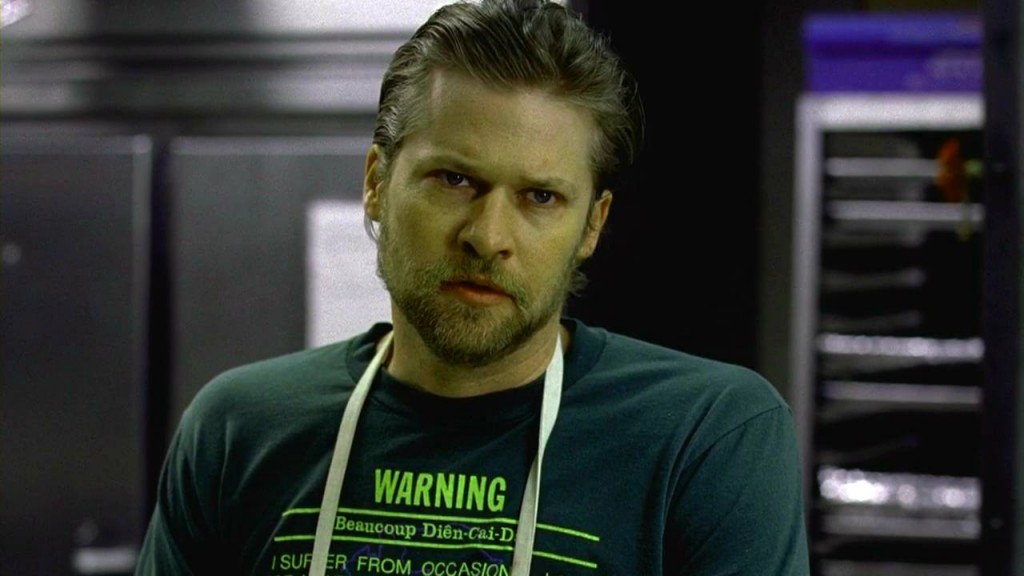
And Boromir…

Totally look like Terry on True Blood?

And I know it’s kind of a cheat to compare LOTR with Harry Potter, but still… Legolas…

And Mr. Malfoy?

And then of course there’s Frodo…

and Susan Boyle…

A hairy Orc…

And this guy leaving voicemails for his girlfriend?

Well, and Galadriel…

And Stevie Nicks is just too easy…

And then of course my mind started to wander, and I matched Kendra…

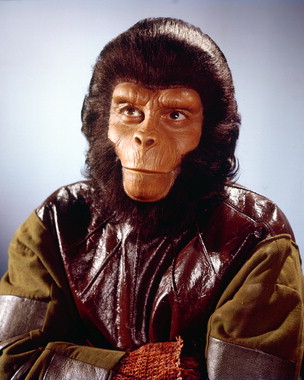
with Dr. Cornelius


McNulty…

With Geico…

These guys…

And these guys…

Rahm Emanuel…

With Joe Piscopo…


Journey…

With the Bay City Rollers…

And Daniel Day Lewis…

With Robbie Benson…

Last but not least… Donald Trump

And a day at the county fair…

How ’bout you guys, thought of any unlikely twins lately?


and…


Time and Space

Zoë Sharp

I have always viewed myself not as an artist, but a craftsman.

I take an enormous amount of care over my work, and yes, pride in it. I’m constantly striving to improve and hone what I do, but the word ‘artist’ always conjures up images of ego and eccentricity. I just can’t take myself that seriously.

I can never forget that I am asking people to buy into a myth, a dream, a jumble of thoughts and ideas that have been tumbling around inside my head, and have finally made it out in some semblance of order onto the page.

The fact that anyone wants to read them often frankly astounds me.

And yet, I had an email from someone recently who told me that she cried while reading the ending of FOURTH DAY. Having that happen at all is pretty humbling for a writer, to be honest. But the fact she cried while reading the book in the airport is even more so.

The power of words on a page, in a public place with all the distraction that entails, actually reduced someone to tears.

Other people’s books make me cry, I admit. And soppy movies, and heroic rescues, and onions. But writing doesn’t.

Having said that, to write dark emotional scenes, I need a dark and emotional atmosphere. I find it much easier, for some reason, to write in the winter, with just a desk lamp providing a pool of light around my keyboard and screen, and moody broody music playing in the background. The volume has to be right, though. If it’s too loud I just listen to the music. What I want is for it to manipulate my feelings on an almost subconscious level.

I’ve written on planes, ferries and automobiles. Not so much on trains, but that’s only because I do find it off-putting having the stranger sitting next to me reading over my shoulder. Same goes for planes. I’m fine if Andy’s next to me, but I struggle if I’m in the centre of a row. Of course, I don’t have that problem at all if I’m in the comfy seats up front, which sounds like a damn good reason to upgrade right there!

I write in the car – a LOT. Maybe this is because we spend a lot of time on the road, but making notes on sheets of scrap paper on a clipboard while we’re motoring along is often my most productive time. I once wrote an entire short story on a car journey to a bookstore event. And while I can hear some lip-curling comments being muttered about the quality of something dashed off in such a fashion, can I just say that story was long listed for a prestigious award and turned into a short film?

I write in doctor’s waiting rooms, even in hospital, in hotel rooms, in friends’ kitchens while everyone else is sleeping during a weekend visit. If I have a pencil, and paper, and enough light to see one joining the other, and I’m awake, I write.

I write at my desk both early in the morning and late at night, often on the same day, which can be a bit of a problem, even though I’ve known for years that sleep is very overrated. Sometimes I write until I start producing utter gibberish because I’m nodding off at my computer. Often when I open the file up the following day, the final paragraph from the day before needs a lot of tweaking because of this. In fact, on Tuesday I found I’d managed to insert half a dozen completely extraneous words into a sentence – correctly typed but utterly meaningless. Thank goodness for the delete key…

But, the long and the short of it is, I don’t care where I write. The writing is the thing. If I had to wait for the perfect moment, I’d still be working on my first novel.

The perfect moment, like tomorrow, never comes.

I was at the Bodies in the Bookshop event at Heffers bookstore in Cambridge last week – with fellow ‘Rati, JT Ellison, as it happened – and found myself buttonholed by a successful writer for whom the perfect moment was something of a necessity.

He could only write, he told me, in a cabin in the wilds, miles from anywhere, with no phones or anything else to take away from the prose.

And I know there are going to be those who would wholeheartedly agree with him. To create, they require a level of tranquillity and isolation not available in their normal surroundings. So, they borrow friend’s beach houses, or go on writers’ retreats.

Equally, there are others who regularly go and sit in noisy, crowded cafés and quite happily lose themselves among the places and people they’re creating. And, in some ways, I can’t help thinking that if the story is strong enough to suck you in to the exclusion of all else while you’re writing it, then surely it will suck you in while you’re reading it, too?

I know it’s a constant refrain of mine that there are as many different methods of writing as there are writers. There is no wrong way to do it, providing you get the words on the page. You can do it one word at a time while bungee jumping from the landing if it gets the job done. But which method do you favour?

And are you one of these readers who gets emotionally invested in the book you’re reading? Have you ever cried in an airport at the ending of a book?

This week’s Phrase of the Week is having your leg pulled meaning to be on the receiving end of a deception or joke. It’s thought to originate from a Scottish rhyme of the 1860s, in which old Aunt Meg was hanged and the preacher pulled on her legs to ensure she died quickly and without too much pain. Aunt Meg was probably innocent of the crime for which she was hanged, but was known to have been the victim of much deception and trickery, for which having her leg pulled was the result.

I’m off to the Theakstons Old Peculier Crime Writing Festival at Harrogate today, so please excuse erratic response to comments, but I’ll get there eventually!

Who Cares If It’s Well-Written?

by J.D. Rhoades

Does good writing even matter?

I’ve been  thinking about this question for a couple of weeks ever since our  discussion of the TWILIGHT books. You may remember that  commenter KarinNH mentioned that her students were reading the books and that:  

…one ventured that I wouldn’t like the series because “it is really poorly written.” Interestingly, the ones who were recommending the books all agreed. Emphatically. However, they were willing to look past that because they liked the story.

I found this interesting for a couple of reasons. One, my daughter, who’s read all the books and seen all the movies, says exactly  the same thing: the writing’s really bad, but you care about the story. Two, I felt the same way about the last book that everyone I know purported to despise, but which I found quite entertaining: Dan Brown’s THE DAVINCI CODE.

The prose in TDVC is, in a word, atrocious: clumsy sentences (starting with the first one); infodumps; word choices that leave you scratching your head. If you want more explanation, go here.

And yet, when I took it to the beach with me, I I couldn’t put it down. Neither, apparently could millions of other readers. Why? Because the story hooked me and dragged me along. Oh, I was rolling my eyes and occasionally wincing at the prose, but there’s no denying, it had me.

Just a couple of weeks ago I read another technothriller from another well-known author. The dialogue was  unbelievable, the hero was  just a little too perfect to get next to as a character, and sometimes the set-ups for the action scenes sounded like a catalog put out by the guys who manufacture military gear (when the hero and his buddies are getting ready to  kick bad-guy ass, do we really NEED to know who made their gloves?) But once again, I read it cover to cover, because the aforementioned  bad-guy asses were kicked, names were taken, and the story was just fun to read.

I think all of us can describe books we’ve read where the prose was gorgeous, but we eventually put the books aside, because nothing really happened to any of  those exquisitely described people in their gorgeously described setting. I once described a friend’s book to another friend thusly: “it’s literary fiction, but don’t worry, stuff actually happens.”

On the other hand, we can all reel off long lists of bestsellers, going back years, where the prose ranged from barely serviceable (early Tom Clancy) to  pretty much god-awful (VALLEY OF THE DOLLS and all  of Harold Robbins). And yet, we read them. Cover to cover and often more than once.

Which brings us back to our main question: does good prose even matter? Why do we bother? Why spend all that time looking for just the right word, paring down the adverbs, repeating to ourselves “show, don’t tell, show, don’t tell,” etc, if all the majority of readers care about is the story?

I‘ve thought about it quite a bit, and I know what my answer is. I’ll reveal it in the comments, after I hear some of your thoughts on the matter. And while we’re at it…share some of your favorite badly written novels you couldn’t put down.

Flotsam and Jetsam


By Louise Ure

If flotsam is the wreckage of a ship washed up by the sea, and jetsam the purposeful tossing of objects overboard to lighten a vessel … this has been a week of both for me. I can best describe it as a week of useless and discarded objects.

Returning from moving my father-in-law to assisted living in Seattle, I faced my own house with new eyes. Ye gods. I’d become a hoarder, too.

I don’t know why, but I always start a cleansing process like this with the tiniest job imaginable. I roll pennies. I organize a button box. I put all the stamps in one place. Maybe taking that small first step gives me the courage to try something bigger, like a drawer. Soon I was going through closets, drawers and cupboards and evicting anything broken or the wrong size or I simply didn’t like. Funny how much of the stuff I own falls into one of those categories.

The storeroom in the garage held a four-drawer filing cabinet with tax records and canceled checks dating back to 1979. Ten big plastic bins crammed with God-knows-what. Vacuum-sealed bags of clothes with no owner. The third bench seat to a car I no longer own. Rolled rugs so old and dirty that no charity would take them. Empty boxes from TVs we gave away ten years ago.

I spent five days down there, going through every piece of paper, sorting through bags of cloths to give away, making a bonfire-sized pile for the junkyard. After recycling and trashing as much as I could, I still had 210 pounds of paper to take to a professional shredder.

Then there were new targets: things that decided to break right in front of my eyes as if to tell me that they, too, were ready to join The Long March. The coils in the couch that sprang loose to stab me in the butt. The computer that finally said it had only 4 MB of space left and would no longer even sync to my mobile phone.

Out with the old and in with the new.

I hired a tech guy to set up the new computer and make sure I didn’t lose any data. He was a gem, setting up wi-fi networks and discarding a modem so old (still plugged in!) that it was on dial up. He went through everything electronic in the house — routers and firewire, cables and AC adapters, old cell phones dating back to the 80’s, a Super 8 player! — and took them all to either recycle or sell for me on eBay.

And yet, and yet … I look around and nothing looks leaner or cleaner or uncluttered. How is that possible?

I had lunch with an old friend in the midst of all this clearing away madness and she told me about her own, preferred Spartan style of living. The kitchen counter must be bare, nothing must reside on the front or on top of the refrigerator. Her “junk drawer” has only eight items in it. They are in a drawer organizer.

My cupboards are still full, not a scant inch left for a new vase or sweater or book. There is no table that needs another “interesting objet d’art” on top. The storage room in the garage looks just as crammed full now as it did before the purge. And yes, there are baskets stacked on top of my refrigerator.

What about you guys? Are you neatniks? Is there an empty drawer someplace in your house? Are you happily cluttered? Or are you — like me — in danger of being approached for that Buried Alive hoarder show on TV?


What’s in a Name (and a Jacket)?

by Alafair Burke

I have a confession: I long for a world where the content of a book speaks for itself — where the reading experience is entirely subjective and organic, where a reader actually has to read Book C by Author Number 62925 before deciding what “kind” of book it is. 

I know: I’m in la-la land.  Readers want to know who wrote the book.  But would I have a different audience if I published under, say, Ally Simpson instead of Alafair Burke?  And readers want to know a genre.  But am I mystery or thriller?  Women’s suspense (whatever the frack that means) or procedural?  And readers want to know some basic information about the plot.  But should the jacket description of 212 emphasize the stalking of a college student, the murder of a celebrity bodyguard, or the death of a real estate agent who was leading a double life? These choices we (or our publishers) make about what to put on the book jacket send signals to readers about the contents of the book before they’ve even broken the spine.

Arguably that signal begins with a book’s title.

I’ve mentioned elsewhere that I struggle with character names, but when it comes to titles, the struggle reaches epic, paralyzing proportions. Why?  Because I withdraw from every decision that purports to typecast the book I have written.

I’m in title hell right now with my next book, my first stand-alone.  I ran a couple of contenders past my kitchen cabinet advisors (i.e., Facebook friends).   The comments cemented my gut instincts: one sounded thrillerish, one sounded chick-ish, and both sounded vaguely familiar.  “[Suggested title] sounds like a cheesy book I wouldn’t read under threat of bodily harm,” said one.  Another reader said one title sounded like a Harlan Coben novel, the other like Nora Roberts.  Same book, two pretty different impressions.

See?  This is why I hate the pressure of a title.  Pick a couple wrong words, and you just might lose the readers who would have loved that book.

But here’s what I’m learning about titles: They don’t exist in isolation.  They are backed by an image on the jacket, and, as the cliche goes, a picture says a thousand words.

Consider some recent examples:

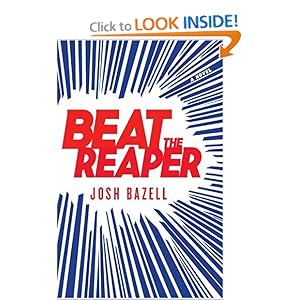
Beat the Reaper by Josh Bazell.  I’m not sure what the title on its own would say to me, but the quirkiness of the jacket “matches” the tone of the book.

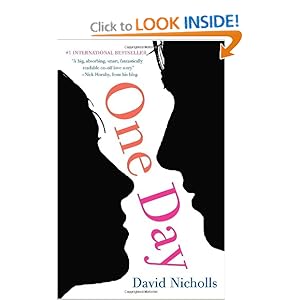
Then there’s One Day by David Nicholls.  Kind of bland.  Kind of makes me want to sing “One day, one where, we’ll find a new way of living,” but I do have an annoying tendency to break out in song, regardless of lyrics.  But check out the jacket:

Gets your attention, right?  Flip it over and learn that the novel depicts two people on one single day across twenty years?  Suddenly it’s a perfect title.

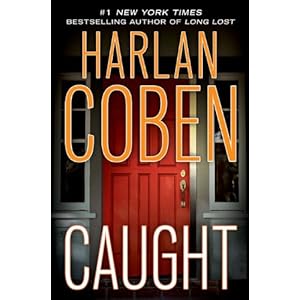
Or how about “Caught” by Harlan Coben?  Pretty good title.  I always like those one-word things.  But take that single word, and drop it against this background:

Then read this first sentence: “I knew opening that red door would destroy my life.”  Awesome!

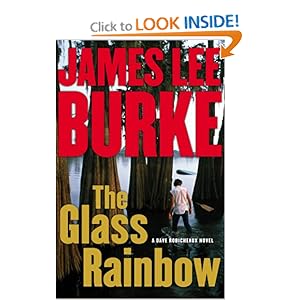
I recently finished a little book called The Glass Rainbow by some guy called James Lee Burke.  I confess to talking some serious smack about that title when I first heard it.  The Glass Rainbow?  The only book I could imagine was a memoir of Kurt Hummel’s early years:

But add the jacket art, and The Glass Rainbow suddenly looks like a JLB novel.  Read the book, and the title truly works.  (Blatantly nepotistic plug here: The book’s fabulous and just came out last week!)

So folks, I’d love to hear your thoughts about some of your favorite book jackets and titles.  Send links to images if it’s not too much work.  And, oh, if you happen to have a good standalone title for someone who writes sort of like me, let me know!    

(I’ll be on a plane today on my way home from a wedding in Santa Fe, so I may be slow to post replies, but I can’t wait to read your comments!)

If you enjoyed this post, please follow me on Facebook, Twitter, and my mailing list.

Sex in a Series

So Alex did it to me again. She sent out a vibe three thousand miles away, found out exactly what I was thinking, pulled it from my brain, and wrote a fabulous blog about love and sex in mysteries.


I’d been thinking about this subject a lot lately as I write the second book of my Lucy Kincaid series. Why? Because with an ongoing relationship, the love scene takes on a different meaning, and to keep them from being staid, “insert part A into slot B”, each scene needs to bring the characters closer or push them apart, while also complicating the relationship or raising the stakes. That’s a lot harder to do, I’m discovering, in book two of a series (and probably book three, book four, book five . . .  if I’m so lucky.)


So because Alex invaded my thoughts and plucked my idea, I went with the next logical discussion point: character growth in the series.


I wrote twelve romantic thrillers which were more or less stand alones. Not purely stand alones, but each one had a separate hero/heroine and a separate crime, which was resolved by the end of the book. The only continuity was the occasional recurrence of secondary characters, some of whom had been or would be stars in their own book. The only trilogy that was more than loosely connected was the Prison Break trilogy where in book one (KILLING FEAR) an earthquake under San Quentin frees a group of death row inmates and each book handles a different escapee, until book three where the last escapee is trying to prove his innocence and enlists his estranged daughter’s help.


Because the story, protagonists, and villains are different, I don’t really think of these as a series—more like they’re crimes happening in the same fictional world.


The Lucy Kincaid series is truly a series, with the same core group of characters facing different crimes. Lucy was previously a secondary character in my “No Evil” trilogy who was kidnapped in FEAR NO EVIL. Because of her past—not only what happened to her but how she responded both then and now, six years later—I find her one of the most compelling characters I’ve gotten to know. Everything she’s done for the last six years is to land her a job with the FBI, but she’s not there yet. Her love interest is Sean Rogan, a private investigator and security expert who has had run-ins with the FBI, and not all of them friendly. We don’t know his entire past, but there are enough hints in the first book to suggest that he hasn’t always been a law-abiding citizen. Well, he’s not exactly a law-abiding citizen now, either—just better.


There are other recurring characters, some more important than others (like FBI Agent Noah Armstrong who Sean calls “Mr. Law & Order”—and not very nicely, I might add!—especially after Lucy develops a camaraderie with the agent. Patrick Kincaid, Lucy’s older brother who was seriously injured rescuing her in FEAR, is Sean’s partner, and there may be other characters from previous stories who will pop in, depending on the story.


I’m not worried about story ideas–I have a lot of ideas for Lucy. I can “see” the characters and what type of crimes would draw them in and challenge them, while tapping into something in their past. What I’ve truly been wrestling with is multi-book character growth. There are two primary concerns here: first, that my characters continue to grow and change, organic to the story, in each book. And second, that new readers coming in mid-series will get both a complete story, and not be lost in understanding the character and their decisions.


Writing a stand-alone—where two characters (for me, a hero and heroine)—I know what to expect, at least as far as the character arc. The reader needs to be satisfied that the characters have grown to the point where they have solved their internal problems and can have a life and stay together (the romance part of “romantic suspense.) In my book THE HUNT, for example, the hero FBI Agent Quinn Peterson prevented the heroine Miranda Moore from graduating at the FBI Academy—he had her kicked out because of a psych exam. Considering that they were lovers at the time obviously caused much consternation—Quinn felt that Miranda was on a personal vendetta against a serial killer who killed her best friend, so much so that she’d make a dangerous agent. Miranda felt betrayed that Quinn had her tossed from the academy, and that what he believed about her mental stability. Fast forward twelve years and they are working on a case together—Miranda in search and rescue looking for a missing college girl who fits the pattern of the serial killer, and Quinn as the FBI Agent most familiar with the case. They obviously have to find the girl before she’s killed,  and identify and catch the killer, but layered over that is Quinn’s perception that Miranda is too close and reckless, Miranda’s personal fears about the killer, yet ultimately Miranda’s knowledge of the Gallatin Valley is essential to finding the killer. They have to work together—they have no choice if they’re to save the girl.


By the end of the story, Miranda faces her fears and proves to Quinn that he was wrong about her stability and she ; Miranda accepts that twelve years ago she was too close to the case; time and experience gave her the ability. By the end, she forgives Quinn because she now understands herself and her flaws—but more importantly, what her motivation was then and is now. The End.


In a series, I need to take Lucy and Sean to the next logical level in the relationship without having a complete conclusion. There should always be reader satisfaction, but a hint of doubt and conflict for the future. Each book needs to grow on that. JD Robb’s Eve Dallas and Roarke are models for this—you know they love each other and will stay together . . . but they both have a past and conflicts. For example, when Roarke’s previous lover comes to New York, Eve’s insecurities about their relationship come forward and Roarke, true to personality, is angry that Eve doesn’t trust him and his feelings.


But more than their personal relationship, each character has to grow and change in the story, without rehashing the same problems over and over. Therein lies the difficulty. Keeping the characters growing, changing, but having conflict in each story. Keeping the love scenes from being more than just physical acts of sex, but emotional turning points for one or both of the characters.


What I’ve decided to do, at least for book two, is take Lucy’s primary insecurity—that she isn’t “normal” because of her past, and run with it by highlighting how “normal” Sean is and see where it takes the two of them. Lucy is serious and focused; Sean is a daredevil and charming. Put in a female character like Sean and Lucy’s insecurities will shine. The female cop who is helping them find a missing teenager is everything that Lucy wants to be and thinks she isn’t–attractive on multiple levels, from personality to looks, having “normal” interests outside of work. The cop’s life and past doesn’t consume her: she’s doing a job and has a personal life. Lucy has a hard time separating these, and seeing how Sean is so natural with the stranger highlights Lucy’s fears and insecurities about not only herself, but their relationship. This should be the core conflict in all the scenes between Sean and Lucy, hanging over them, but be at least partly resolved by the end of the story.


Character development should be organic to the story, the the love scenes should continue that whether they are graphic or tame. I’m hoping that each book I can find one more area to work on. I’m finding I love writing a series, but at the same time? It’s just as hard as a stand alone. But in this business, nothing is easy.


Just curious . . . do you prefer stand alones or series? Why or why not? Does it matter? 

No sex, please, we’re mystery writers

by Alexandra Sokoloff

When my first book came out I didn’t read my reviews all that often, except the biggest ones.    Maybe that was mostly because I was so deep in the middle of the second and it was such an intense experience that I blocked out most of what else was going on around me.   I know some authors don’t read reviews at all.    I don’t avoid them, but I don’t try to hunt them down.   But you do get a lot of them by osmosis, and it is useful to have an overview, because by the fourth book I am getting a sense of some patterns of response, here.  

And one of them I find really amusing, always from men, of course, is the “unnecessary romance” gripe.    Usually phrased as “unnecessary sex”.  

Now, the first thing that comes to mind is, “Unnecessary to whom, exactly?’   Because I know these characters I’m writing pretty well, and I can assure you that they don’t feel sex is unnecessary.  As a matter of fact, if you asked them, they’d probably say it was about !%@#&* time by the time it finally happens.    I myself would be pretty unhappy if I had to go the whole length of a book without sex.

But it’s really interesting how some genre puritans – I mean purists – just do not think sex belongs in a crime thriller, or a horror novel, or a mystery. 

Maybe I’m just coming from a different frame of reference.   I’m sure Steve, Rob and Toni can back me up on this – the love subplot is just de facto in Hollywood, except in the most extreme cases, and so you learn to weave it in as an essential part of your plot.  

But I still can’t understand why people would be so put off by sex in a thriller.   If you’re not getting off on the sex, doesn’t that mean, basically, you’re getting off on the violence?   Worrisome.

Anyway, long rant to get to what I really wanted to talk about.   I am not going to be taking sex out of my books (in fact, having done a paranormal, now, coming out in November, people who read me better be bracing themselves for more than usual).     But I do feel very strongly that the love plot has to be essential to the action, and thematic, not just a throwaway.

It’s sort of a monumental task to take on the structure of romance, so I’m been starting to break it down into elements one at a time, to see what I can learn about what makes a great love story.   I talked about how crucial theme is in a love story before, and today I’m focusing on a particular dynamic between characters that I’ve noticed lately.

There’s a saying I’m sure you’ve heard that in a relationship there is always a Lover and a Loved One. Whether that’s actually true in life, I’m not sure I want to know; one would hope these things would be somewhat equal. But I know this Lover/Loved One dymanic tends to be the case in romantic comedy (the romance readers/writers will have to tell me if it’s the case in romance fiction, I’d love to know your thoughts.). Either way, it’s a useful model for writing romance, and I think for a love subplot, too.

In most stories, for most of the story, there’s an imbalance between the hero and heroine, or hero/hero, or heroine/heroine… the two lovers, whatever gender and orientation they may be. (I’m not going to get into the subgenre of ménages today, sorry.)

At first what this looks like is that there’s a Pursuer and a Pursued – but the pursuer might not be the one who loves most deeply. The pursuit might be ego-based, or to win a bet, or obviously, just sexual conquest – any number of things.
Now, the two characters might equally hate each other at first: as in WHAT HAPPENS IN VEGAS, YOU’VE GOT MAIL.

But pretty quickly in most romantic comedies, one of the characters becomes more interested in the other, and becomes the pursuer.

Note that the protagonist can be either the pursuer or the pursued. In NOTTING HILL, Hugh Grant is the pursuer (in that diffident English way, of course…). In IT’S COMPLICATED, Meryl Streep is the pursued.

In WHEN HARRY MET SALLY, Harry is the pursuer. In YOU’VE GOT MAIL, Tom Hanks is the pursuer. In PHILADEPHIA STORY, Katharine Hepburn is the pursued. (arguably in these three films there is no true protagonist; the hero/heroine characters are about as equal as characters ever get in a story)

Hmm, do we see a pattern here? Male pursues, female is pursued. Maybe biology really IS destiny. No, wait – in BRIDGET JONES’ DIARY, Bridget is the pursuer. In BRINGING UP BABY, Katharine Hepburn is the pursuer (but not the protagonist). And I’m sure you can think of a lot of other examples.)

But the pursuer is not the same as the Lover, necessarily. In NOTTING HILL, Hugh is both the pursuer and the lover (he is definitely the one who feels most deeply in the tentative dance going on between him and Julia Roberts). In IT’S COMPLICATED, Alec Baldwin is very much the pursuer, Meryl Streep is the pursued, and Steve Martin is the lover (also a pursuer, but overwhelmed by Alec Baldwin’s intense pursuit. But in this trio, Steve Martin is most clear about who and what he wants.).

In WHEN HARRY MET SALLY, Harry is the pursuer, but not the lover. At a certain point, it’s Sally who realizes that she wants more than friendship. She becomes the lover.

In PHILADELPHIA STORY, Cary Grant is the pursuer and also the lover, but interestingly, he’s coming from much more of a position of strength than the lover usually comes from; from the beginning, he has no intention of compromising.

Pursued and pursuer, lover and loved one, different combinations of and variations on those dynamics. 

And once I noticed that dynamic, I also noticed that there’s a very typical scene, usually in the very last part of Act II:2, but sometimes in Act III, that I’ll call “The Lover Makes a Stand” (Takes a stand? Makes a stand? Looking it up. Okay, it’s “makes a stand.”).
 
And in this scene the Lover, or whoever has become the Lover by this point, the one who loves most deeply, basically says to the Loved One – “I’m not going to take your bullshit any more. Make up your mind. Either commit to me or don’t, but if you don’t, I’m out of here.”

Steve Martin tells Meryl Streep that she’s not done with Alec yet, and he doesn’t want to see her while she’s still emotionally involved with him. Hugh Grant tells Julia Roberts in the bookstore that between her “vicious temper” and his far more inexperienced heart, he doesn’t think he would recover from being discarded again, and turns down her offer to date. Sally refuses Harry’s offer to go to the New Year’s party as his “friends with benefits” date because “I’m not your consolation prize, Harry.”

Cary Grant – well, in PHILADELPHIA STORY Cary makes his stand at the very beginning, in action, not words. The whole movie is about him creating a situation that will force Katharine Hepburn to look at herself clearly and choose what and whom she really wants. Cary never begs. He manipulates, then stands back and watches until she falls, and in falling becomes the whole woman he always knew she could be, but he will not accept less than.

(And that, btw, is the sort of thing that makes a person Cary Grant…)

In all of the above scenes, the Lover’s Stand forces the Loved One to step up and commit just as deeply as the Lover is committed. But it seems that very, very, very often, it’s one character, the Lover, who has to force the issue.

It’s such a common scene, I’m going to have to stick it in my Story Elements Checklist, right around Sequence 6 or Sequence 7.

Now, sometimes there’s a different scene at this juncture, which I will call The Declaration. A very good example is in BRIDGET JONES’ DIARY, when Bridget races to the party to tell Colin Firth she loves him, only to find that his parents have thrown the party to announce his engagement and departure for America. Then she makes her Declaration – a mangled sort of toast that Colin understands is her desperate confession of love. It’s not the same as a Make a Stand scene because it’s not saying, “I’ve had it, I’m walking.” But it does put the cards on the table so the Loved One will have to make a decision, one way or another.

The more I look specifically at the way love plots work, the more these elements seem to be the natural – or unnatural, if you want – rhythm of courtship.    For better or worse, but that’s the way the game plays out.    And that’s an interesting thing to know, whether your book or script is all romance, or whether you’re working on a love plot for your mystery or thriller.

What do you think, all you romance writers out there who are far more qualified to write this post than I am? Am I on to something, here?

Any examples of Pursuer/Pursued, Lover/Loved One? Or examples of The Lover Makes A Stand scenes or Declaration scenes for us?   Or other essential elements of romance/love plots that you’ve found?

Or am I wrong, and sex really doesn’t belong in a mystery/thriller?

– Alex

———————-

I’m teaching a 2-week online Screenwriting Tricks For Authors workshop this month – details here.

WISE UP

By Stephen Jay Schwartz

I was going to call this blog “Moonwalking in New York,” and it was going to start off something like this:

“Are you guys all dancers?”

“Excuse me?” I said, to the girl in the elevator at the Hyatt Regency, New York.

“It’s about Michael Jackson, right?”

We had almost reached the lobby by the time I figured it out.  She was looking at my badge.  Thrillerfest.  I imagined a thousand thriller authors taking over Grand Central Station, doing the moonwalk to cuts from the Michael Jackson album “Thriller.”

“No, oh-no,” I said, but the doors had opened and she had already gone.

True story.  But then I thought, ugh, really?  I’m going to blog about Thrillerfest?  My God, I’ll never do it justice.  It was like a whole universe unto itself, a crazy, wonderful mystery-thriller love-fest that just simply cannot be represented accurately in a blog.  It’s like Rashomon, where everyone’s perception of the event is different.  It’s really a thousand Thrillerfests seen through a thousand different eyes.

I mean, if you really want to read a good blog about Thrillerfest, check out Jason Pinter’s article in The Huffington Post.  I took one look at that and said, “Well, shit, I can’t top that.”

Of course, if I did talk about Thrillerfest I’d talk about all the things that made it special for me, the things that stand out in my mind as simply exceptional experiences.  Things like meeting Heather Graham, then drinking “car bombs” with her and F. Paul Wilson and Eric Raab, my editor, at the Irish pub two blocks from the hotel, I could talk about the tsunami high school reunion feeling of that first night when all the authors bumped one into the other and in one moment I was arm-in-arm with Sophie Littlefield and the next Ken Follett and then Jamie Freveletti and Allison Brennan and Alan Jacobson and then I escaped for a breather and it was just me and Gar Anthony Haywood chilling out in the hallway, two cats in love with a world of words.  I could talk about the excitement of being handed a copy of the trade paperback version of BOULEVARD weeks before it hits the stores, or my rush to the Mysterious Bookstore for yet another Thrillerfest cocktail party and how excited I was to be able to thank Michael Connelly in person for the blurb he gave BEAT, or the fun I had at our Murderati lunch where I finally got to meet Tess and hang with Allison and Alafair and JT and her husband Randy and Neil Nyren and his wife.  Or how I kept going back to that pub for more “car bombs” (Guiness plus Jameson plus Bailey’s Irish Crème) with Heather and Paul and now Keith Raffel and Marcus Sakey and Jason Pinter and more, and how I roomed with Josh Corin and he was great and sweet and wonderful and he talked like a madman in his sleep, and how I loved the Debut Author’s Breakfast where I pitched Boulevard in sixty seconds or less and saw my books sell out of the bookstore during my signing, how I ditched the big banquet to eat pizza with my editor and debut author John Rector and we rode the Stanton Island Ferry while others gave speeches and received awards, and when we returned all was good and everybody and everything simply glowed with enthusiasm and glee.

But that’s not the blog I chose to write.

So I started a different blog, and called it “Newbie No-Mo.”

The concept being that, despite the fact that I’m still in my debut year, I feel more like a veteran than a newbie.  Newbie, No More.

Despite its catchy title, the blog was a college thesis documenting my rise from naïve newcomer to worldly author.  I wrote about the fact that I’ve been a Murderater (Murdermarauder?) for more than a year now, my first blog having been posted on May 22, 2009.  (So where was my one-year chip?  Shouldn’t someone have given me a one-year chip on my “birthday?”  Who’s running this meeting, anyway?)

The blog detailed the three different conferences I’ve seen:  Bouchercon, Left Coast Crime, and Thrillerfest.  There were graphs and pie charts showing the progression of my maturity in the business, beginning with those first sloppy attempts to pitch my book (in twenty words or less), and ending with the pinnacle of my success as represented in my ability to hand-sale Boulevard to the guy in the seat next to me on the airplane home, and how the momentum escalated further, climaxing with a slam-dunk pitch that sold my book to the Supershuttle driver who delivered me to my doorstep.

But there just wasn’t enough PASSION in these topics, so I bailed, I shut down, I closed out Microsoft Word and opened iTunes and I listened to a song by Aimee Mann called “Wise Up.”

Passion.  Why is it always music that takes me there?  Words are too wordy, they sometimes get in the way.  Music cuts right to the soul.

Aimee Mann… I love her voice and her phrasing and her range and control.  Her music brings me back to the core of what I’m feeling these days, and that feeling is passion.  That’s what got me here.

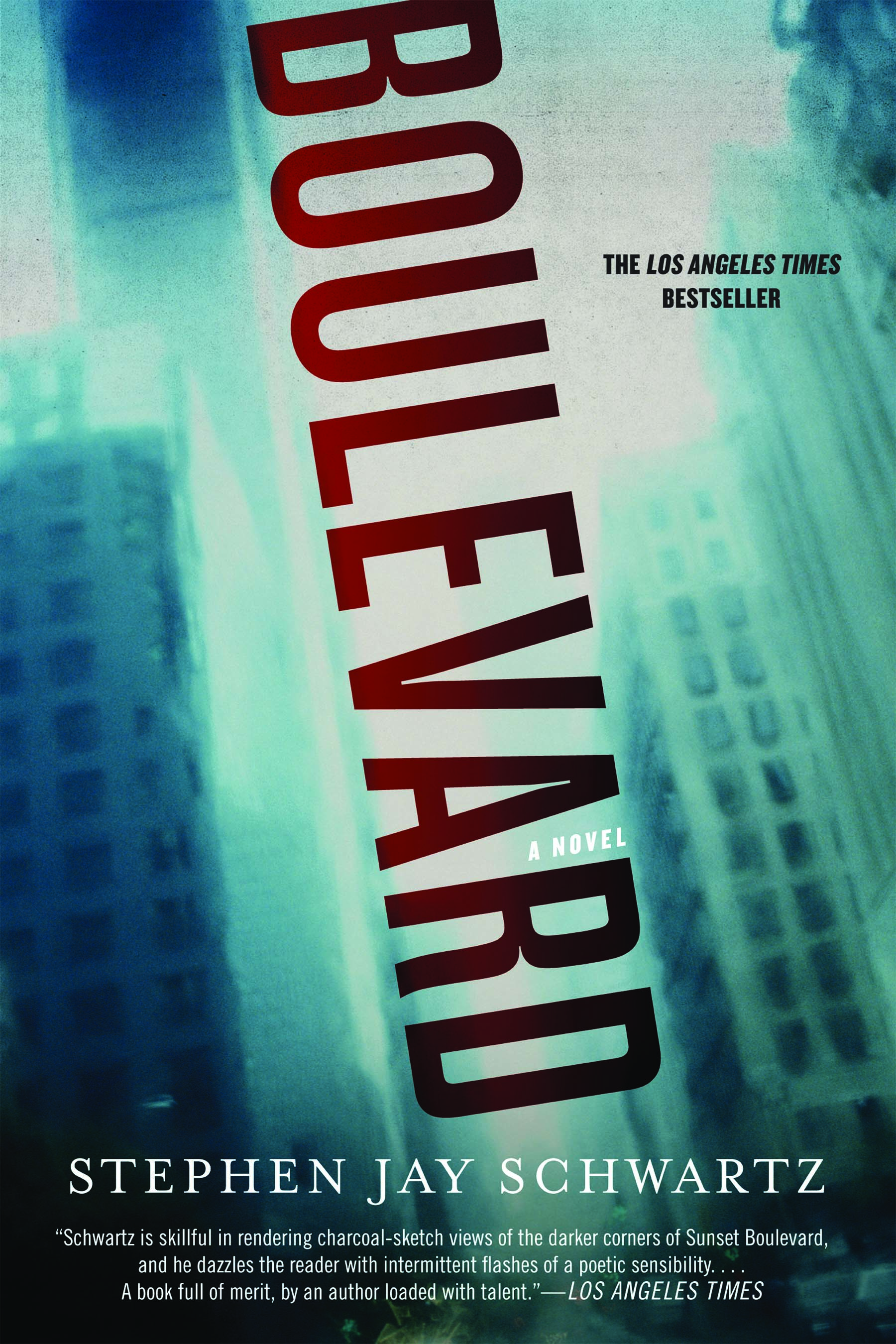
And where is here?  Here is two weeks away from the release of Boulevard in trade paperback:

See, that’s the cover I was passionate about from the start, and then Barnes & Noble had us change our cover to the one with the gun on it.  Which I love, too.  But this one really spoke to me.  My editor knew it, so he fought to get it for the paperback.

And then, two months after that, this little ditty hits the stores:

(Do me a favor and CLICK HERE – I couldn’t get the image to load up.)

Can you see why I’m such a nutcase over here?  I’m living my dream! 

So, I guess what I’m saying, at 2:30 am when my blog goes up in two hours, is that it’s all about passion.  When I start bitching about the bills and the dues I’m-a payin’, I better just chill out and…wise up.


SPACE OUT

By Brett Battles

Pari’s post on Monday and a question I was asked by a friend last week got me thinking about writing rules. Not the ones that Pari talked about, but the more mundane rules, the technical rules.

The question I was asked (and Steve was on the email, too, as it was from an old college friend of ours) was to settle a bet our friend had with her daughter. Her daughter had come home from school after getting a report back with a note from her teacher that said it was unnecessary for her to put two spaces after periods. My friend found this odd. She clearly remembered learning back when she was in school that you always put two spaces after the period. So she wanted to know who was right, and hence the question to Steve and I.

I remember that rule, too. Probably the most important – and impactful – class I took during my junior high experience (though I didn’t know it at the time) was a summer school typing class.  I went from a hunt and peck typist to a touch typist, and have never looked back. As someone who writes everyday, that’s been HUGE in my life. It has allowed me to write tons faster than I would have the old way. Along with learning to type without looking, I also learned the two spaces after a period rule.

For well after I got out of college I would dutifully double tap the space bar before I’d start a new sentence. That is until one day a co-worker said to me, “You don’t have to do that anymore.” At first I didn’t believe her, but she then explained to me why, and from that point forward, only a single tap for me.

You see, in today’s modern computerized world, you don’t have to double space after a period. Why? Well, in the typewriter/typesetting days (think everything pre-late 80s) type was pretty exclusively what is called mono-type. That is each letter takes up the same amount of space as the others. In other words a W would occupy a similar sized area as an I. In the monotype world, putting two spaces after a period helps readers know when a new sentence starts. There are still a few monotypes used on computers. The most common being Courier.

In the computer world, most typefaces are what’s called proportional type or fonts. In these the W and I do NOT take up the same space. They take the proportional space they need. Times and Helvetica and any number of others are examples of these.

With proportional type you do not, and should not, double space after the period. In addition, even in this computer age, it’s basically unnecessary to double space even when using Courier. Of course, if you’re still using a typewriter, tap-tap.

Most of you probably already knew this, but perhaps didn’t know the reason. Or perhaps you did. Either way, it was on my mind and I though would be a good idea to throw out there.

A few other manuscript guidelines…I won’t say rules because I’m sure there are variations…that may or may not be helpful:

• Make your margins one inch all the way around

• Double space your manuscript. (There are exceptions I allow myself, such as when I’m mimicking a newspaper article or emails or the like.)

• Start each chapter at least a quarter of the way down on the page. Nothing in stone on this one.

• Number your pages either in the footer or header. I use the upper right of the header, but I know others who use the middle of the footer…no hard/fast rule here.

• Don’t put THE END at the end. You’re reader will know.

There are exceptions to everything


So what do you think? Got any guidelines you’d like to share?


A little PR: I was interviewed on BlogTalkRadio earlier this week. It was a lot of fun, and if you’re interested in listening to it, click here. Let me know what you think!

“Why the hell won’t they review my book?!!!”

(note: I’m traveling right now, promoting ICE COLD and “Rizzoli & Isles,” so apologies for the short blog post.  I won’t be able to respond to comments, but trust me, I will be checking them when I get home in two weeks.)

All you writers reading this have no doubt stared in frustration at the book reviews page of major newspapers and wondered why your title isn’t included in the latest roundup of novels.  John Q. Stuckup’s latest literary novel about  the usual (yawn) white-male-midlife-and-bad-marriage-crisis will eat up a zillion column inches.  So will the review of Jane Babyface’s debut memoir about her angst-filled days as a barista/ hooker.  But your novel? The wham-bam thriller that will probably find twice the audience as Mr. Stuckup’s or Ms. Babyface’s?  It’s nowhere to be found in any newspaper review pages.  Yes, it may have been dutifully reviewed in Publishers Weekly and Booklist and that perennial good friend to authors, Romantic Times.  But good luck finding it mentioned in the New York Times or the Washington Post.  Or, for that matter, in any major big-city newspaper.

It’s no doubt a sore point for many genre authors.  After all, we’re the engine that drives publishing, the creators of the product that the public actually wants to read.  But where are the reviews of thrillers, romances and science fiction in newspaper review pages?  Are we being discriminated against? 

Perhaps. 

Or maybe the reason is this:


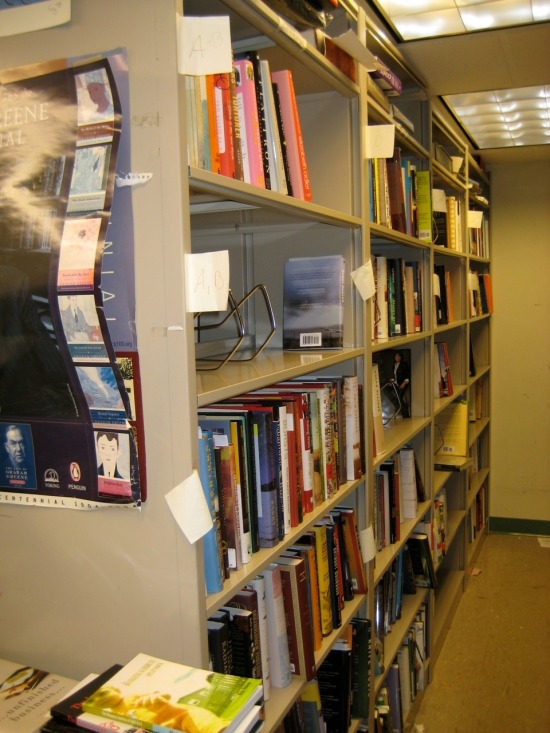
You are looking at the July fiction reviews bookshelf of the Philadelphia Inquirer.  These are the galleys that the Inquirer is considering for reviews during the month of July.  Mnd you, this is only the fiction section; the nonfiction section has a cabinet with just as many galleys waiting for review.  This is only for the month of July, and these are the survivors after a severe winnowing down of all the galleys the newspaper received for this month.  

I had the chance to visit the Inquirer building during my recent trip to Philly, and journalist Michael Klein was kind enough to give me a tour of the newsroom.  (Get a load of the messy desks — they look like mine!)


Klein pointed out bins and bins of discarded galleys which had already been rejected.  He also told me that, every week, the Inquirer receives about two hundred galleys for review. That’s eight hundred a month.  

If yours is one of them, good luck getting noticed, much less reviewed.  The chances are, it got chucked into one of those recycle bins.  

With that many galleys flooding the newspaper, reviewers have to make tough choices.  Big debut novels, of course, get special notice.  So do books by high-profile or celebrity authors such as Glen Beck or Sarah Palin.  But for those of us who reliably hone our craft year after year?  We have to fight for every column inch of attention.

My visit to the Inquirer was a sobering look at how tough newspapers have it these days, trying to keep up with all they have to cover.  Every author wants attention, but one look at the piles of discarded galleys reminded me of just how hard it is to be noticed when you’re fighting for attention along with two hundred other books.  Every single week.