Author Archives: Murderati Members


The Dash


By Louise Ure


Bruce A. Goronsky, a much admired television commercial producer, died Monday, March 29, in San Francisco of cancer. He was 61.  A native of Seattle, where he worked his way through the University of Washington playing drums in a blues band, Bruce moved to San Francisco in the 1970’s to pursue his career in advertising and broadcast production. A Clio and Emmy award winner and founder of Fleet Street Pictures, Bruce also worked at Foote, Cone & Belding Advertising in San Francisco and Ogilvy & Mather/Los Angeles.


My husband, Bruce, died two weeks ago yesterday. I wonder if every Monday morning at 8:00 a.m. will be as difficult. I’ve only had two of them now, but the world goes slow and quiet, my breath catches and I try to reorder my mind, once again, to face a Monday alone.

God help me, when I think of him, I can still only picture him that last night in the hospital. The medical staff was exquisitely compassionate. They gave us a private room with a lot of space. I got to sleep next to him and hold him the last eighteen hours.

He was unconscious by then, but I’m convinced that he could still hear me, that he was still nominally aware of what was happening, and that he recognized the race was over. He was simply taking a cool down lap.

Friends and family swooped in but then hesitated – shuffling in their indecision – fearful of intruding. They should not have. Death was the intruder. Cancer was the unwelcome guest at the table.

I have focused on tasks since he died and there are many to be done.

Here’s what I have learned:

For the same reason that doctors do not operate on their relatives, writers should not have to write their spouses’ obituaries. Our skill is unnecessary here, the knife cutting too close to vital organs along the way.


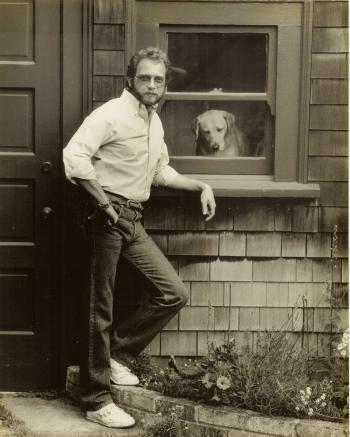
With a laugh that would enter a room before he did, Bruce had a love of senior Golden Retrievers and Maker’s Mark, and took particular joy in vintage car racing with his Shelby Mustang. He often said his only goal was “to be half the man my dog thinks I am.”


The financial documents – from the deed to the house to the paperwork to get the credit cards and bank accounts solely in my name – come to me for signature with the line under my name already filled in as “Louise Ure/Survivor.” I do not want to sign a line titled that way. I want “Wife” or “Lover” or even—in recognition of our quarter of a century together—“Widow.” I have not “survived” this.

I picked up his ashes yesterday afternoon, buckled them into the passenger seat, and talked to him all the way home. I’m lucky that he was always a man of few words.

There are many who miss him as much as I do, and last Thursday they showed me that when they put together a celebration of his life. There were more than 150 people there, some from his racing world, many from film production and some of you writerly sorts who never met him but who came to wrap your arms around me. His brother and 88-year old father were there even though they were so infirm that they had to fly in with a nurse in attendance. I thank you all. The event ended with all of us trying to recreate Bruce’s laugh. Magical.


He is lovingly remembered by his father and brother, Ade and Paul Goronsky of Seattle, Washington, by his wife of 25 years, Louise Ure, by the children of his heart, Brian and Maya Washington of San Francisco, and by many friends and colleagues.


One of Bruce’s old advertising colleagues RSVP’d for the event but did not show up. I would have been surprised if he had; there are arrest warrants out for him in two countries and he was reported to have died in the Indian Ocean tsunami of 2004, but it looks like even that was a scam. In any case, he sent a note with a video called The Dash. It has stuck with me these last two weeks as a raft to cling to in these high seas.


“It’s not the date of birth or the date of death on the tombstone that matters; it’s how you live the dash in between.” That dash represents all he was, all he gave, and all the people he loved and who loved him. That’s what counts.


Bruce had a good dash.


Thank you, my Murderati family, for the flowers and plants, the emails and phone calls and charitable contributions, the arms around me at the memorial. You have my heart.


Hey, I know that place!

by Alafair Burke

Last night I glimpsed a new neighborhood in New York: Bay Ridge.  I know, I know, Bay Ridge has been around for-evah.  It’s also nothing new to creative types.  Tony Manero lived there in Saturday Night Fever.*

So did Peggy from Mad Men, announcing, “I’m from Bay Ridge.  We have manners.”

But nearly a decade since I left Oregon for New York, I am still learning about this city.  Last night the subject was Bay Ridge.  I was there for a book event (terrific store in Bookmark Shoppe, by the way), so took some time to check out the neighborhood.  I even made my local friend, Jeff, show me the home several customers referred to as the “gingerbread house.” 

Rumor has it that the garage floor rotates like a turntable so the owner doesn’t have to back the car out.  Pretty sweet.

Do I know the ins and outs of Bay Ridge as well as Jeff?  Of course not.  Could I set an entire novel there with authenticity?  I doubt it.  But I saw enough of 3rd Avenue, 83rd Street, Shore Road, the Fort Hamilton Athletic Field, and the gingerbread house to set a scene there. 

But what if I hadn’t seen the place?  I could read about it on Wikipedia.  I could stroll its streets on Google Maps.  I could also make it up from whole cloth.  Would it really make a difference?

For reasons I haven’t fully identified, I’m uncomfortable writing about places I don’t know.  I mean, really know.  Ellie Hatcher’s backstory is in Wichita, Kansas, where I spent fourth through twelfth grade.  Ellie works for the NYPD, and her life takes place almost entirely in the pockets of Manhattan I know best.  Her apartment is in the same spot as my husband’s former place.  Her latest homicide case occurs in the fancy new condo building across the street from me.  Samantha Kincaid is a prosecutor in Portland, Oregon, where I lived for nearly a decade (and worked, yup, as a prosecutor). 

Why do I make these choices?  Maybe I’m just lazy.  Research, after all, is not my favorite part of the fiction gig.  But I think there’s more to it.  After all, starting a second series set in New York (the Ellie Hatcher series) was definitely not a lazy move.  I had plot, character, and procedural reasons for doing so.  But that move was also about place.

Five years after leaving Portland, I was starting my fourth Samantha Kincaid novel and wrote a scene I knew just wasn’t right.  I went for a run to figure it out.  Sure enough, I had Sam hailing a cab outside a witness’s house in the West Hills.** Homey don’t play that. 

I not only caught the mistake, saving myself from the “you’re-an-idiot” emails that surely would have followed upon publication, but I also took it as a strong hint that my imaginary life in Portland was growing dusty.  At the same time, I realized I had finally become (gasp) a New Yorker.  I decided to try my hand at this new town of mine, at least the Manhattan parts, and think I’ve managed to capture the place pretty well.  I even named my most recent novel 212 (the original Manhattan area code) to highlight Manhattan as a main character.  My writing will get back to Portland when the time is right, but I’ll probably only jump in after rekindling my relationship with the city. 

I do, however, realize this is likely a whole lot of ridiculousness on my part.  Plenty of writers continue to capture the magic of places they’ve long left behind.  Michael Connelly no longer lives full-time in Los Angeles.  JLB wrote the first four books in the Dave Robicheaux series from Kansas.  Even the miraculous Lee Child can’t possibly live in all those Jack Reacher stops (or can he?).

What do you think: When a writer truly knows a place, does it make a difference on the page, or only in the writer’s mind?

 * I have so much love in my heart for Saturday Night Fever that it took incredilble restraint not to insert a 400-word digression here about the brilliance that is that film.  Please tolerate this footnote instead.

** Lest you’re wondering, these are the same West Hills referenced in the Portland band Everclear’s “I Will Buy You a New Life.”  No cabs there.  Trust me.

P.S. I’m out on tour still, this time in Washington DC (Borders, Bailey Crossroads, 7:30 PM).  I’ll be checking in as I can, but forgive me if I’m slow to acknowledge your comments.  I want to see them though, please!

If you enjoyed this post, please follow me on Facebook and Twitter.

E-books, Publishing, & Piracy

By Allison Brennan

I have taken a strong stand against piracy here and elsewhere, as many other authors have done. While I disagree with the contention at this point that a pirated copy is a lost sale, I also disagree that a pirated copy isn’t a lost sale (because they would never have bought the book in the first place.) Why? Because at this point in time, I think that the majority of pirated books are stolen by people because of the convenience, and they would never have bought them (thus no lost sale) or by people who can’t purchase them because of where they live.

However, ebooks will become more popular among readers and thus there will be more lost sales–people who used to purchase print copies who learn about “free” (illegal) downloads and stop buying. (As a format, e-book sales are still a very teeny percentage of print books sold–meaning, if a book is available both for print and e-book, the print books will generally sell in far greater numbers. My own e-book sales have slowly risen over time, to about 1% to my total sales.) Joe Konrath had a very interesting blog about the success of his Kindle experiment–that by pricing the books rejected by traditional publishers at a low price point, he is able to make a goodly sum of money–more than through traditional publishing as a midlist author.

There are many pros and cons to Joe’s experiment. The pros include the fact that he’s one of the first to self-publish through Amazon (and I also assume through the other e-distributors, though that wasn’t explicitly stated in his column.) By virtue of being early to the game, he’s able to garner a name among e-book readers as a reliable source for reading entertainment. He’s already published, and I would assume far above the average self-published author in terms of editing ability–he can tell a good story, knows how to edit it, and put out a clean book.

He gets to keep most of the money, price the book what he wants, and build sales through providing his readers with more of what they want.

As e-book sales grow–both in terms of print books available in e-format and self-published e-books–readers will be inundated with more choices than they have now–which are an incredible number. I don’t have the latest per year or per month releases, but I know it’s staggering. According to a May, 2009 article by Publishing Central, Bowker’s reports there were 275,232 new titles and editions in 2008, and a historic (over doubling from 2007) self-published/on-demand books published.

(One comment to put the numbers in perspective, of the 275,232 titles, 47,541 were fiction. Non-fiction still dominates the total number of books published. Also included are textbooks, college publications, etc.)

The Bowker’s report (pdf) has other interesting data. While books published (not self-published) declined from 2007-2008, they have still increased from 2002-2008. In addition fiction showed the highest percentage increase from 2002-2008, 89% of titles published, and is still the largest percentage of categories (17.27%) For our purposes here at Murderati, I think we’re most interested in the fiction numbers.

According to a 2006 article, 93% of books published (this is all published, not self-pubbed/on demand) books sell less than 1,000 copies. 

Joe Konrath has proved that he can and will sell more than 1,000 self-published e-books–a rarity among print-published books. But at his price point and already having a fan base through his traditionally published books, it’s almost a no-brainer to try this with books he hasn’t sold.

Authors with an established fan base may do well in this new e-book world because they are a known quantity. Readers have already sampled them, so they trust the author to tell a good story. Authors who are new to this world may have a shot because they can price the books on the cheap side where someone might be willing to sample a story by an unknown author if it doesn’t cost a lot.

The problem becomes volume. There were 285,394 on demand/self published books in 2008 and it is still growing exponentially (now maybe we can understand the vanity press business–there is a huge market for them to make money from writers.) The overwhelming majority of these books are not available through traditional outlets, they sell few copies (there are exceptions of course, but by and large most sell poorly and only through the hard work of the writer) and even on Amazon and other sites, they rank low. As more people self-e-publish, there are more choices–and as we know from the self-published world as it stands now, many of those books will be poorly edited and not very interesting. I’m not dissing self-published authors–there are many who have published great books for a niche market. But as it becomes easier and cheaper to publish in e-format, even more people will do it, making it even harder to stand out as a new author. 

Some other downsides include paying for professional editing (unless you’re already a fantastic grammartarian and self-editor), marketing (on-line, which right now isn’t hugely expensive, but it’s growing as more people spend more time on-line), and design. That comes out of your profits (as opposed to the publisher–who pays an author less money per book but eats the cost of publication.) A professionally edited and presented book gives comfort to a reader who knows that based on his experience with that author, they’re going to get a good story.

But I’ll admit I am intrigued by Joe’s “experiment” and how it will both succeed for some and fail for others–very similar to print publishing. Readers are going to gravitate toward the people they know, so authors who are already bestsellers may fare exceptionally well with this model. Midlist authors like Joe will also do well because they usually have a loyal fan-base (and thus keeping a higher percentage even on a lower price, you’ll earn more per sale.) Unknown writers? Not so much. As the titles increase, name ID will become even more important, as readers aren’t going to want to sift through thousands of books in their favorite genre. That means endorsements, marketing, or already being an established author.

I don’t believe print publishing is dead. I do believe that more people will choose the e-book format. I believe that sales will remain relatively level for each individual author (all other things remaining equal) but the percentage of format sales will change (such as I do see within the next 5 years my e-format sales increasing to 10% of my total sales.)

I also agree with Joe that publishers need to becoming more innovative in this Brave New Market. While I don’t think devaluing stories–it is the STORY that has value, not the platform it is delivered on–is the answer, I do think that e-books should be discounted from the print copy. (For example, my Kindle books are 20% less than my print books full retail price.) I, personally, like the idea of where a reader can buy a print book and get a coupon to purchase the e-book at a greatly reduced rate. I also like the idea of added value for e-books–author interviews, exclusive short stories, photographs, pictures, or perhaps include a free backlist title. So you pay the same as the hardcover, but you get more. 

There are lots of options and ideas for this expanding market. I’m both excited and apprehensive–excited by the possibilities, but apprehensive about how much time exploring the possibilities will take from my writing.

But all that aside,  more than anything, I believe that authors should be united against piracy.

As e-format books increase, so will piracy. And e-book exclusive authors are hit the hardest because theirs is more a “lost sale” than a print published author. In the romance community, there are many e-published authors who fight tooth and nail against piracy because see it affect their bottom line and their ability to make a living.

Piracy is stealing. Even the pirates don’t really dispute that. They simply think there’s nothing wrong with it. They justify it to make themselves feel better. Dan Brown is already a multi-millionaire. Another author is an asshole, I don’t want to give her any money. I can’t afford to buy the book (and don’t want to go to the library, don’t have a library near me, don’t want to get on the waiting list, etc.) I’m not hurting anyone. I wouldn’t have bought it anyway. I just want to try out the author, but not pay for it or stand in the aisle of a store.

What makes this all so much worse, and hugely frustrating, is when reputable people stand up and announce that it’s okay to steal. When Randy Cohen tells someone that it’s okay to steal an illegal pirated copy of a book because they already bought the hardcover, it gives everyone the sanction to do it. Generally law-abiding citizens now breathe a collective sigh of relief, because they can steal with a clean conscious. Randy Cohen, The (so-called) Ethicist for the New York Times, has deemed that while it is illegal to steal an e-book, it’s not unethical if you already bought a hardcopy.

Soon, no one is going to think they need to buy a hardcopy. That it’s their right to read any book for free (which it is–if they get it from a library.) As it becomes easier and easier to download illegal copies, more people will do it without buying the hardcopy. (And honestly? I doubt there are many people similar to the reader who wrote Cohen–that they buy the book and download a “free” illegal copy.)

So I would ask Randy Cohen this: If I buy a ticket to Clash of the Titans, is it okay for me to download a pirated copy when it comes out on DVD? After all, I already paid to see the movie . . . why should I have to pay twice? 


Top Ten Things I Know About Rewriting

by Alexandra Sokoloff

I am in teaching mode (I know, always, right?) because I am teaching this weekend, at the Black Diamond Romance Writers Retreat in gorgeous Sonoma, California. 

I think the best thing anyone can tell a new writer is that old saying, “Writing is rewriting.”

Before I started writing novels, I worked as a theater director, a Hollywood story analyst, and a screenwriter. All of those jobs have given me some pretty useful perspectives on rewriting and editing. So I’ve put the best things I know into one of those ever-popular Top Ten lists:

1. Cut, cut, cut.

When you first start writing, you are reluctant to cut anything. Believe me, I remember. But the truth is, beginning writers very, very, VERY often duplicate scenes, and characters, too. And dialogue, oh man, do inexperienced writers duplicate dialogue! The same things happen over and over again, are said over and over again. It will be less painful for you to cut if you learn to look for and start to recognize when you’re duplicating scenes, actions, characters and dialogue. Those are the obvious places to cut and combine.

Some very wise writer (unfortunately I have no idea who) said, “If it occurs to you to cut, do so.” This seems harsh and scary, I know. Often I’ll flag something in a manuscript as “Could cut”, and leave it in my draft for several passes until I finally bite the bullet and get rid of it. So, you know, that’s fine. Allow yourself to CONSIDER cutting something, first. No commitment! Then if you do, fine. But once you’ve considered cutting, you almost always will.

2. Read your book aloud. All of it. Cover to cover.

The best thing I know to do to edit a book — or script — is read it aloud. The whole thing. I know, this takes several days, and you will lose your voice. Get some good cough drops. But there is no better way to find errors — spelling, grammar, continuity, and rhythmic errors. Try it, you’ll be amazed.

3. Find a great critique group.

This is easier said than done, but you NEED a group, or a series of readers, who will commit themselves to making your work the best it can be, just as you commit the same to their work. Editors don’t edit the way they used to and publishing houses expect their authors to find friends to do that kind of intensive editing. Really.

4. Do several passes.

Finish your first draft, no matter how rough it is. Then give yourself a break — a week is good, two weeks is better, three weeks is better than that — as time permits. Then read, cut, polish, put in notes. Repeat. And repeat again. Always give yourself time off between reads if you can. The closer your book is to done, the more uncomfortable the unwieldy sections will seem to you, and you will be more and more okay with getting rid of them. Read on for the specific kinds of passes I recommend doing.

5. Whatever your genre is, do a dedicated pass focusing on that crucial genre element.

For a thriller: thrills and suspense. For a mystery: clues and misdirection and suspense. For a comedy: a comedic pass. For a romance: a sex pass. Or “emotional” pass, if you must call it that. For horror… well, you get it.

I write suspense. So after I’ve written that first agonizing bash-through draft of a book or script, and probably a second or third draft just to make it readable, I will at some point do a dedicated pass just to amp up the suspense, and I highly recommend trying it, because it’s amazing how many great ideas you will come up with for suspense scenes (or comic scenes, or romantic scenes) if you are going through your story JUST focused on how to inject and layer in suspense, or horror, or comedy, or romance. It’s your JOB to deliver the genre you’re writing in. It’s worth a dedicated pass to make sure you’re giving your readers what they’re buying the book for.

6. Know your Three Act Structure.

If something in your story is sagging, it is amazing how quickly you can pull your narrative into line by looking at the scene or sequence you have around page 100 (or whatever page is ¼ way through the book), page 200, (or whatever page is ½ way through the book), page 300 (or whatever page is ¾ through the book) and your climax. Each of those scenes should be huge, pivotal, devastating, game-changing scenes or sequences (even if it’s just emotional devastation). Those four points are the tentpoles of your story.

7. Do a dedicated DESIRE LINE pass in which you ask yourself for every scene: “What does this character WANT? Who is opposing her/him in this scene? Who WINS in the scene? What will they do now?”

8. Do a dedicated EMOTIONAL pass,
in which you ask yourself in every chapter, every scene, what do I want my readers to FEEL in this moment?

9. Do a dedicated SENSORY pass, in which you make sure you’re covering what you want the reader to see, hear, feel, taste, smell, and sense.

10. Finally, and this is a big one: steal from film structure to pull your story into dramatic line.

Some of you are already well aware that I’ve compiled a checklist of story elements that I use both when I’m brainstorming a story on index cards, and again when I’m starting to revise. I find it invaluable to go through my first draft and make sure I’m hitting all of these points, so here it is again.

STORY ELEMENTS CHECKLIST

ACT ONE

* Opening image
* Meet the hero or heroine
* Hero/ine’s inner and outer desire.
* Hero/ine’s arc
* Hero/ine’s ghost or wound
* Inciting Incident/Call to Adventure
* Meet the antagonist (and/or introduce a mystery, which is what you do when you’re going to keep your antagonist hidden to reveal at the end)
* State the theme/what’s the story about?
* Allies
* Mentor (possibly. May not have one or may be revealed later in the story).
* Love interest
* Plant/Reveal (or: Setups and Payoffs)
* Hope/Fear (and Stakes)
* Time Clock (possibly. May not have one or may be revealed later in the story)
* Sequence One climax
* Central Question
* Act One climax

___________________________

ACT TWO

* Crossing the Threshold/ Into the Special World (may occur in Act One)
* Threshold Guardian (maybe)
* Hero/ine’s Plan
* Antagonist’s Plan
* Training Sequence
* Series of Tests
* Picking up new Allies
* Assembling the Team
* Attacks by the Antagonist (whether or not the Hero/ine recognizes these as being from the antagonist)
* In a detective story, questioning witnesses, lining up and eliminating suspects, following clues.

THE MIDPOINT

* Completely changes the game
* Locks the hero/ine into a situation or action
* Can be a huge revelation
* Can be a huge defeat
* Can be a “now it’s personal” loss
* Can be sex at 60 — the lovers finally get together, only to open up a whole new world of problems

______________________________
ACT TWO, PART TWO

* Recalibrating — after the shock or defeat of the game-changer in the Midpoint, the hero/ine must Revamp The Plan and try a New Mode of Attack.
* Escalating Actions/ Obsessive Drive
* Hard Choices and Crossing The Line (immoral actions by the main character to get what s/he wants)
* Loss of Key Allies (possibly because of the hero/ine’s
obsessive actions, possibly through death or injury by the antagonist).
* A Ticking Clock (can happen anywhere in the story)
* Reversals and Revelations/Twists. (Hmm, that clearly should have its own post, now, shouldn’t it?)
* The Long Dark Night of the Soul and/or Visit to Death (aka All Is Lost)

THE SECOND ACT CLIMAX

* Often can be a final revelation before the end game: the knowledge of who the opponent really is
* Answers the Central Question

_______________________________

ACT THREE

The third act is basically the Final Battle and Resolution. It can often be one continuous sequence — the chase and confrontation, or confrontation and chase. There may be a final preparation for battle, or it might be done on the fly. Either here or in the last part of the second act the hero will make a new, FINAL PLAN, based on the new information and revelations of the second act.

The essence of a third act is the final showdown between protagonist and antagonist. It is often divided into two sequences:

1. Getting there (storming the castle)
2. The final battle itself

* Thematic Location — often a visual and literal representation of the Hero/ine’s Greatest Nightmare
* The protagonist’s character change
* The antagonist’s character change (if any)
* Possibly allies’ character changes and/or gaining of desire
* Could be one last huge reveal or twist, or series of reveals and twists, or series of final payoffs you’ve been saving (as in BACK TO THE FUTURE and IT’S A WONDERFUL LIFE).

* RESOLUTION: A glimpse into the New Way of Life that the hero/ine will be living after this whole ordeal and all s/he’s learned from it.

———————

So, anyone have a top few rewriting tricks for me (and my class?)  I’m always looking!

– Alex

Screenwriting Tricks for Authors

WELCOMING NEIL CROSS

By Stephen Jay Schwartz
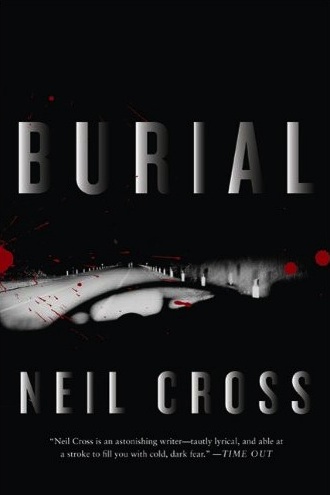
 

If you only read American crime fiction you might not be familiar with Neil Cross, but, trust me, he’s a big deal in the U.K.  A successful television writer and the author of a growing number of tight, psychological crime dramas, Neil is currently enjoying the excitement of seeing his latest novel find publication in the U.S. 

BURIAL, a compelling, psychological story of one man’s descent into the darkness of his own conscience, was published by Forge Books in March of 2010.  It has been called ‘Terrifyingly scary . . . brilliantly written in taut, humorous prose, while being exceptionally well observed and paced’ by the Daily Mirror, and, ‘His scariest and most satisfying yet . . . What it doesn’t tell you about the perverting, abasing power of guilt isn’t worth knowing’ by Time Out.

Neil was lead scriptwriter for series six and seven of the acclaimed BBC spy drama series Spooks and is the creator of the forthcoming BBC crime thriller Luther, which is scheduled to appear on BBC1 in 2010, starring Idris Elba.  I’m very happy to host Neil here today.

Stephen:  Neil, I have to apologize for not having read your work until recently, when my editor handed me an advanced copy of BURIAL and said, “You HAVE to read this author!”  I read the book and I truly could not put it down, nor did I want to.  What makes BURIAL different from the rest of your work, and do you think these differences built the bridge that enabled this book to “cross the Pond?”

Neil:  Well, thanks for the generous words. To be honest, in some ways Burial is typical of what I write.  Perhaps the cardinal difference between it and my earlier novels is actually how I’m perceived as a writer.

For quite a while I was marketed as, and therefore considered to be, a“literary” novelist. But I never accepted any distinction between “literary” fiction and “genre” novels, just between good books and bad books.  I wanted to ensure that readers knew me for what I am, which is a suspense novelist. I’m proud of that.

All that aside, with Burial I felt that I’d learned to tell the story I wanted to tell in the best, most suspenseful way I could.

People keep telling me it kept them awake at night, which is immensely gratifying. I love to think that I can frighten a reader, move them, excite them….make them think: Just one more chapter before I go to sleep.  I can’t think of a higher calling than that.

Stephen:  The plot of BURIAL is launched from one simple mistake, an assumption on the part of the protagonist, Nathan, that he shares the guilt of murdering a young woman with a man he barely knows.  I won’t spoil the incident for our readers, but I can certainly see how Nathan has been led to believe that he is equally responsible for the death.  The story then becomes a psychological examination of Nathan’s sense of guilt, and all of his actions going forward, for many years, are predicated on this terrible secret he keeps.  What drew you to this material?

Neil:  In general, I’m fascinated by how easily we make the transition from one moral realm to another; by how effortlessly an ordinary human being, almost any human being, can behave like a monster. It really doesn’t take much. Ask Stanley Milgram.

But what really horrifies and fascinates me isn’t so much that wickedness happens…it’s what comes after. It’s that you somehow have to live with yourself.  Everyone knows how it feels to lament their own behaviour — things they did or said in the heat of the moment, perhaps after one drink too many; things they now bitterly regret.

So how must it feel, to wake up and remember not that you insulted your best friend or were unfaithful to your spouse…but that you did something truly horrifying, something that could never be justified or forgiven?

Simply by committing such an act, you became another kind of being. But you still have to get up and shower and go to work. You still have to lead a life, one in which you hope nobody ever knows, or ever finds out what you did: not because you fear for your freedom, but because you couldn’t endure the shame of the people you love knowing what you’ve become.

This happens to real people, every day. It’s happening to somebody in your town right now, maybe the person behind you at the lights this morning. I wanted to write a book about it, and that’s the place Burial came from.

Stephen:  Bob, Nathan’s “partner in crime,” is an eerie individual.  What was the inception for this character?  Have you ever met anyone who so fanatically studies the paranormal?

Neil:  I’m a rationalist with a mechanistic world view….in the daytime.  At 2 a.m., alone in the dark, with the wind in the trees outside, my thinking is entirely different.  Basically, for reasons I can’t guess at, I grew up fascinated by and terrified of ghosts. At forty-one, I’m still fascinated by and terrified of ghosts.

I’ve spent a lifetime studying the subject, and I can happily recount the most rigorous and plausible scientific, psychological and cultural interpretations for most apparently supernatural phenomena. But that doesn’t stop me being scared of the dark.

So although I don’t write autobiographical fiction, there’s definitely a fragment of me in Bob.  And Nathan’s guilt-ridden, obsessive fear of the dark is entirely mine — an autobiographical  sketch from my own life as it was, twelve or fifteen years ago, when I lived alone in a fifth floor apartment in a London tower block.

Stephen:  Despite all the unnerving things that Nathan does—his uncomfortable stalking and wooing of Holly, the dead girl’s sister, and the duplicity he exhibits at his workplace—I still end up liking him and wanting him to succeed.  I want him to be happy.  Why do you think that is?

Neil:  I’m fascinated by how certain novelists beguile the reader into becoming a kind of accomplice — a shudder of confederacy I experienced first and most utterly when I read Patricia Highsmith’s The Talented Mr Ripley.  In that remarkable novel, the author makes no attempt whatever to excuse Ripley’s homicidal behaviour…but we still want him to get away with it.

Ever since, I’ve been trying to work out how and why — and I’ve been trying to replicate that feeling of complicity in my readers, so I’m very happy you felt the way you did.

I don’t think I can give you a definitive explanation of how, not yet —I’m still learning this stuff. But one thing I’ve learned is that making it work on the page requires a deep trust in the reader. Another thing I’ve learned is that the reader is smarter than I am, and usually at least one step ahead of me.

Stephen:  There’s a real tempo to BURIAL, and I don’t think it’s all represented in the plot.  I think you’ve created a dilemma that drives the psychology of the story beyond the confines of a simple three-act structure.  The stakes are much greater than whether Nathan goes to prison or not.  Because of the trusting relationship he’s built with Holly, we sense that the consequences of his failure would absolutely crush her, and this would be worse for Nathan than if he were incarcerated.  So, your psychological dilemma and your plot crisis intersect in the climax.  First of all, could you comment about the way you approached handling the psychological versus plot elements of the book, and secondly, do you outline and plot your books carefully, or do you just sit down with a concept and write until you’re done?

Neil:  I think psychology and plot are the same thing. Nathan is who he is and he did what he did. The way those two things intersect is the story called Burial which, in the end, is all about love.

At the outset of writing a story, I’ve got a moderately good idea of where it’s going, or at least where I want it to end up. But in order to keep me excited the route I take has to be flexible.  If I outline too much, things start to feel kind of fixed…and once a story feels fixed, it’s a short hop to stagnation. So usually I scribble down a few notes — a rough beginning, a rougher middle, a downright crude end.  Then I just dive in and get on with it. If there’s research to be done, I do it on the fly, often trusting it to coincidence. ( I always seem to stumble on the right article or hear the right news report at exactly the right time.)

I’ve settled on this working method — if you can even call it that — by way of a lifetime’s trial and error. Unquestionably, it’s not for everyone: I get lost, I get stuck, I get sleepless nights. I stare at my laptop with a baleful eye.

But somewhere, right at the back of my head, part of me seems to know where I’m headed, if not quite how to get there.

Stephen:  Do you think your experience writing television has in any way influenced your style and technique? 

Neil:  Writing  screenplays is a much more methodical and structured affair; but not quite as structured and methodical as some of those “how to” books would have you believe.

Each discipline informs the other — for instance, learning to write for the screen taught me a lot about the frugality of structure. But writing novels taught me a great deal about the practicalities of characterization…which is equally significant.

Actually, in the end it seems to me that character, action and structure are essentially the same thing.

Stephen:  When did you leave the UK, and how did you end up in New Zealand?

Neil:  When I was young, I read (and re-read, and re-re-read) the science fiction novels of Harry Harrison. In those cherished, used paperbacks, the author’s biography listed some of the places he’d lived:  America, England, Italy, Denmark, Ireland. It also listed some of the places he’d visited, which seemed to include pretty much everywhere.

Having at the time been pretty much nowhere, this notion dazzled me. I grew up thinking: that must be the best part about being a writer…you get to live anywhere you want to.

Although my wife and I met, married and had kids in London, she’s a New Zealander. She and I visited New Zealand several times together, but I only needed to be here about ten minutes before I fell in love with it.

At the same time, I’d grown wholeheartedly sick of London. By then I was a full-time writer. Remembering that childish fascination with the nomadic Mr  Harrison, I thought: I’m a writer. The best part about that is, I get to live anywhere I want to.

So we upped sticks and emigrated.

We’ve been here for seven years now. I continue to set my books and TV dramas in England, and work takes me home several times a year. I’m always happy to be there; being away from London rekindled my love for it.  The secret to maintaining that relationship is that, London and I give each other plenty of space. It’s a long commute, but a good compromise.

Stephen:  Are you planning on doing a U.S. tour for BURIAL?

Neil:  I’d love to; any excuse to spend some time in the U.S. But I don’t think it’s going to happen this time round — not least because I’ve got so much work to do.

Stephen:  Will there be other Neil Cross novels published in the U.S.?

Neil:  I certainly hope so. Captured was published in the U.K. this year.  Hopefully it’ll be available in the U.S. sometime soon.

Stephen:  What’s in store for Neil Cross in the future?

Neil:  Luther, my new BBC crime drama, is due to screen in Britain very shortly— and hopefully in the U.S. shortly thereafter. It stars the Wire’s Idris (Stringer Bell) Elba, who you won’t be surprised to hear is truly extraordinary in the title role. I can’t wait for people to see it.

I’m working on a number of movie projects — one in England, one in NewZealand, one in L.A. My adaptation of M.R James’s classic Victorian ghost story Oh, Whistle and I’ll Come to You is about to go into production, screening in the UK Christmas 2010.  I’m writing a six-hour sequence of historical dramas for the BBC, and developing a number of other returnable series. Plus, I’m about half-way through, and very excited about, the next book.  (It’s still just “the next book” because I’m damned if I can think of a good title.)

Stephen:  Thanks, Neil!  I can’t wait until “Next Book” hits the stands!

Okay Murderati, let’s give Neil a little love…

Have you ever read…..?

By Brett Battles

Every time someone asks me that question, I know the answer is probably going to be no. I cringe sometimes, wondering what author’s name they are going to throw out at me, and how stupid I’m going to look when that “no” slips from my lips. It’s inevitable.

See, not only are there just too many books to read ‘em all, but, personally, I have some gigantic holes in my reading history.

Don’t get me wrong. I’ve pretty much been reading solidly since about fifth grade. At different points in my life I’d read a couple books a week. (I realize there are some of you out there who read almost a book a day. Wow. That has never been me.) There have also been points in my life – mainly during particularly stressful periods when I had a day job – where I was lucky to read a book a month. But no matter what, I always have a book I’m reading.

Thanks to my father, I started my reading life in the world of sci-fi. He was, and continues to be, a huge fan of the genre. I ripped through Asimov’s FOUNDATION series (trilogy at the time I started), through various books by Arthur C. Clarke, and nearly everything by Robert Heinlein. I read James White, a few by Phillip K. Dick, and bits and pieces of all sorts of others.

For a while the only thing I would let myself read was sci-fi. I remember one birthday my mother giving me a Western novel. I’m sure I said, “Thanks,” but I never read it. I was a purest. And, by definition an idiot.

Eventually my horizons broadened, and I started reading thrillers and adventure stories – almost everything by Alistair MacLean, THE EAGLE HAS LANDED by Jack Higgins, BLACK SUNDAY by Thomas Harris, and then, of course, the works of Robert Ludlum.

And as I grew older still, I’ve come to enjoy books of many different genres, but those holes remain. For example, because of my sci-fi fanaticism in my teens, I missed out on the whole pulp crime/intrigue world of fiction. Why? Because a) I just didn’t even know about it, and b) if I had I probably would have said, “Where’s the spaceship?”

By missing that chunk of our collective history, I had missed some of the greatest writers of our time. I know, I know. I should be taken out and shot. But before you pull that trigger, know that all of that has been changing over the last decade. Slowly at first, but really picking up speed now.

And thanks to the 31st Vintage Paperback Collectors Show & Sale here in L.A. held a few weeks ago, I’m moving into light speed catch up mode! If you’ve never gone to a classic paperback show, you should. They are unbelievable! Thousands of old crime and thriller and adventure novels. And –tapping into that old first love of mine – tons of vintage sci-fi stuff, too!

I left the show with 138 books. That’s right. 138.

Now, admittedly, that number is cheating a little. I met up with someone who had offered to give me a box of books they didn’t want any more. Turned out to be a total of 100 books, most of where were part of the Edward S. Aarons’ ASSIGNMENT: series. There are 48 books in the series, I am now the proud owner of 44 them, with duplicates of most. Couldn’t be happier.

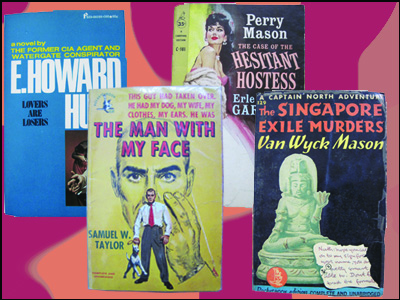
But beyond this wonderful gift (thank you, Michael & Jodi!), I purchased 38 more. One goal was to fill out missing parts of the MATT HELM series I didn’t own. Got some, still need more (but that means more happy searching in the future). Other finds were: THE MAN WITH MY FACE by Samuel W. Taylor, PERRY MASON THE CASE OF THE HESITANT HOSTESS by Erle Stanely Gardner, RUN SILENT, RUN DEEP by Edward L. Beach, THE SINGAPORE EXILE MURDERS by Van Wyck Mason, and LOVERS ARE LOSERS by E. Howard Hunt (yeah, that E. Howard Hunt.)

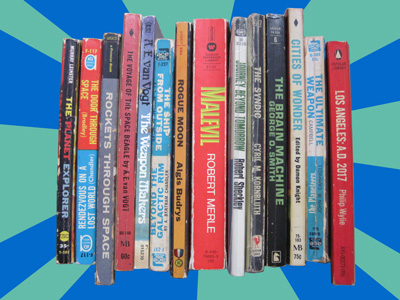
I also gave into that sci-fi boy inside and got about a dozen or so 50s era sci-fi novels.

Kid in a candy shop? Yeah, that’s me. 

But the best part is once I get through all of these, then when someone asks me “Have you ever read…?” I won’t tense as much waiting for the name. Sure, the answer is still going to end up being “no” more often than not, but the percentage will be less. And I’m working on tilting the scale the other way!

So, holes in your reading history? Are you doing something about it? And who have you read, but wish you had read sooner?

The Big Fear

    First, a bit of BSP: I recently decided to try an experiment in electronic publishing. My friends J.A. Konrath and Lee Goldberg have had some success putting stuff up on Kindle and other e-pub formats. So I thought I’d stick my own  toe in the digital water, so to speak,  and put my novel STORM SURGE on line, for those of you who are electronically enabled. In keeping with the idea that e-pubbing should be cheap, it’s only $1.99. 

     You can find the Kindle version HERE, and Smashwords has other formats HERE. Let me know how you like it. I’ll report back,  as Joe and Lee have done, on my experience with the experiment.

     Now, on with the show:

It’s spring again. Gorgeous outside, despite the yellow clouds of pollen hanging so thick in the air that it looks like we’re under some sort of chemical warfare attack. It’s warm, the trees are blooming, it’s a great time to be alive. 

So naturally, perverse critter that I am, I’m thinking about fear.

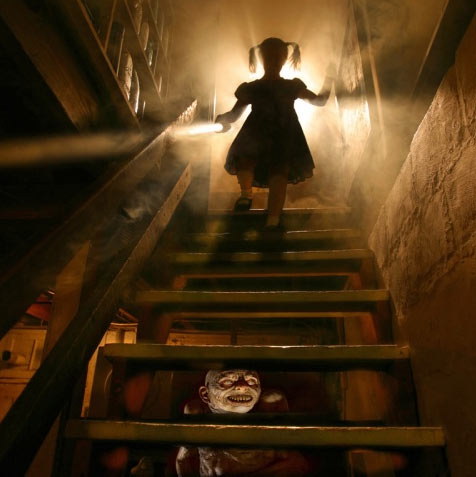
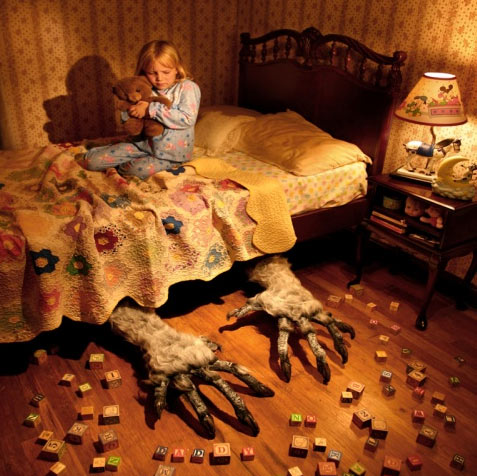
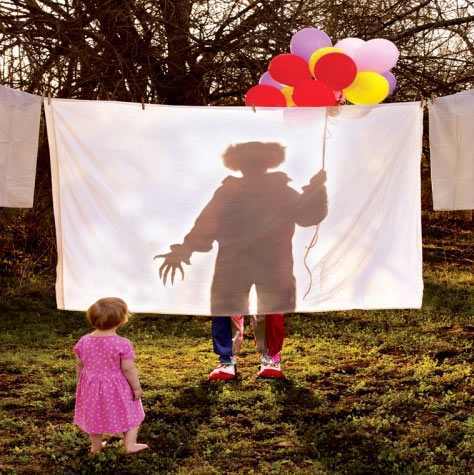
Recently, while looking for something else,  I stumbled across the work of photographer Joshua Hoffine, who’s done a stunning series on childhood fears:


  If you click through (and I recommend that you do), be warned that some of these images are extremely disturbing and some are definitely NSFW.


 (All images used with the permission of the photographer, who also invites you to visit his blog).


     A short time later, I was having a conversation with my wife, who’s currently reading a Nevada Barr book that features spelunkers–people who explore caves for fun.  As she described passages about exploring narrow passages deep in the earth, crawling along chutes too narrow to even sit up or turn around in, I recalled one of my own childhood terrors.

   When I was growing up, there were a number of storm drains and drainage pipes in my neighborhood:  long, narrow concrete tubes to divert storm run-off away from the roads and people’s yards. I remember looking down one of those pipes and wondering what it would be like to be crawling  through one of those and get stuck halfway through, unable to go forward or back, where no one could reach you or hear your cries, where the only thing to do would be die a long slow horrible death, alone in the dark….

    I was a lot of fun as a kid, believe me. But you will never,  EVER get me into one  of those chutes underground.

    It  started me thinking about how everyone’s afraid of something:

    I was talking to my girlfriend the other day, and I asked her, “what are you afraid of?” And she said, “I’m afraid we’re growing apart, that you’ll leave me some day and that I’ll die alone. What are you afraid of?” and I said “Bears.” -Mike Birbiglia

    And how, despite the fact we hold many fears in common, each of us has, locked within us, the one Big Fear, the one thing we just can’t abide: 

The worst thing in the world,’ said O’Brien, ‘varies from individual to individual. It may be burial alive, or death by fire, or by drowning, or by impalement, or fifty other deaths. There are cases where it is some quite trivial thing, not even fatal.’ George Orwell, 1984.

  And then I started thinking about my current WIP. One of the antagonists is a former military specialist in PSYWAR–psychological warfare. His specialty involved things like this. His job was to scare the enemy, literally, to death. And now, he’s come home, bringing his private war with him, wielding his favorite weapon: stark terror. 

   And so,  in the interest of research, I want to hear what it is that scares other people. So tell me….what are you most afraid of? I’m not talking angst here, or worry. I’m talking about the one thing on earth that even thinking about makes you cold. The thing that can send you skitttering backwards across a room to get away. What’s your “worst thing in the world”?

    Sharing time, boys and girls…

You are what you are


In my family, I’m known as the Trip Daddy.

When arrangements need to be made, passports checked, flights booked, everyone rounded up to get to planes/trains/ferries on time, I’m the one in the family who does it.  I go around the house banging on doors, telling people it’s time to get up so we can get on the road.  I herd people along, get them to gulp down breakfast, and ask if everyone’s got their toothbrushes packed.  In short, I’m the horrible family nag.

I became aware of how irritating that can be during a recent trip to the US Virgin Islands.  I was trying to hurry everyone along to catch a ferry, and my son blurted out, “God, will you just chill out, Mom?!!!”

That hurt.  I was just trying to get everyone where they needed to be, and no one appreciated it.  Yes, they wanted to catch the ferry.  They wanted to get moving.  But no one was doing anything about it.  And the one person trying to do something about it — me — was getting criticized for trying to make things happen.

I decided, then and there, to adopt a completely new attitude: Whatever.  So what if we didn’t make the ferry on time?  So what if no one got to do what they’d planned to do?  It wasn’t my problem.  I was just going to lie back, read my book, and wait for someone else to take charge and be the Trip Daddy.  

And that’s what I did.  The next morning, the family had plans to go into Charlotte Amalie to go shopping.  But noon came and went and no one got out of bed.  Whatever.  I just enjoyed myself sitting on the porch, reading.  Eventually family members started stumbling downstairs to eat breakfast.  They surfed the internet.  They hung out.  I didn’t make a peep.  It got to be late afternoon.  The ferry was long gone.  

Whatever.

The family started whispering to each other.  I’m sure they were wondering: “What’s wrong with mom? Why isn’t she nagging us to move our butts?” 

Evening rolled around.  We had reservations for a steak dinner on the beach.  I didn’t say a thing; I just kept reading my book.

The earth was beginning to shift.  My husband said, “Um, maybe we should get going…”

Hunh.  Whatever.  I was no longer the Trip Daddy, so let someone else round up the troops.

Hubby got more insistent.  Maybe he was hungry; maybe he’d sensed that in this new vacuum, someone had to take charge.  So he got everyone moving.  I cooperated, obedient as a cow, but I was through being the leader of the pack.  I was tired of it, and tired of having to be the nag.  Because, let’s face it — no one likes Trip Daddies.  

Even though they know they need one.

I resolved to adopt Whatever as my new motto.  No longer would I be responsible for the family’s daily vacation schedule!  No longer would I feel the pressure of making sure that everyone was happy and well-fed!  It was every man for himself. I was just going to look out for myself.  

 I luxuriated in irresponsibility.  The next two days, I ate breakfast alone when i wanted to, got up when I wanted to.  I didn’t tell anyone what to do or where to go.  We missed ferries.  We got to dinners late, and ended up at the lousy tables that no one wanted.  Not my fault, not my problem.  I was learning to be a slacker, and it felt pretty darn relaxing.

But two days later, I realized our vacation cottage had run out of bottled water, as well as milk and bread and fruit and eggs.  Someone had to catch the ferry into town and go shopping. I looked around at my dear family, who hadn’t even noticed that the refrigerator was empty, and realized that if I waited for one of them to notice the problem, the last ferry would be long gone for the day.  And we’d have no breakfast in the morning.

I caught the ferry and went shopping.

My brief experiment in slackerhood was over.  I was back to being the Trip Daddy and the obsessive-compulsive mom, back to automatically taking inventory of toothpaste and oatmeal.

What I discovered from this vacation experiment is that it’s not easy to change one’s basic nature.  From the time I was a little girl, I was irritatingly responsible. Occasionally, I’ve tried to cut loose and be spontaneous, but I just can’t keep up the charade. I look at the calendar and can’t help but think of deadlines.  I obsess over everything that can possibly go wrong, and I plan accordingly.  And because I do, no one else feels the need to.

No matter how much I may want to change, I’ve accepted that this is who I am.  I’ll never be the wild woman who throws on a backpack, abandons the family, and disappears without warning into the jungles of Borneo.

 But if you want your refrigerator stocked and dinner on the table every night, I’m your gal.

Going in the opposite direction

by Pari

Last Thursday, I began a two-month contract to help the Albuquerque Youth Symphony with a three-day alumni reunion. The work involved sits squarely with much of my former professional skill set in PR. Ladies and gentleman, I know how to put on an event. (That’s probably why I didn’t get hives or balk at chairing LCC Santa Fe.)

But starting a job out of the house – even though it’s short-term – is playing emotional havoc with my image of myself as a writer, as a professional writer. The fact that I don’t have a book in the publishing pipeline, and might not for who knows how long, isn’t helping.

Don’t get me wrong. I’m still writing. I’m actually more productive now than I’ve been in many years past. I’m sending out short stories, writing freelance articles. But do I have the right to call myself a “professional writer” when that production isn’t supporting me, isn’t paying for my kids’ tuition at a pricey private school, isn’t resulting in new books with covers you can see on the side of this blog?

I don’t know . . .  

Many of the authors I know work full-time at other jobs. They carve time out at night and in the early morning hours to keep their fiction going. I’m going to have to learn how to do that again, to balance it all in a way that I haven’t done for fourteen years. (How did Allison and so many others do it for all those years?)

I’m not whining here. My priority – my children’s education – is right where it should be. I’m also incredibly grateful to have this consultant job. It’s fun; I enjoy most of the tasks. It’s nice to be out of my home, having contact with all kinds of people, doing something I’m very good at. Feeling confident and making money at the same time.

But creatively it feels like I’m going backward, like everyone around me is jumping to full-time writing. And here I am, going in the opposite direction.

Somehow that feels like a defeat . . . like I’ve failed.

So today I’d love some perspective, a way to frame it so that I stop beating myself up. I’m sure many of you, dear ‘Rati, have had similar times in your life when you have had to readjust your self-image after years of going in one particular direction.

Please, share your experiences with me. Your comments always illuminate in such positive and thoughtful ways.

Thank you.

Home Again, Home Again, Jiggety Jig

By Cornelia Read

Our beloved friend Louise Ure is in all our thoughts this week. Please consider making a donation to the American Cancer Society in her husband Bruce Goronsky’s memory.


Well, this will be the second time I’ve written this post this morning. I’m lying in bed at my pals Sue and Glo’s house in Glendale, California, and didn’t do the intelligent thing of asking them how to log onto their wireless service before I tried to save and publish my thoughts to Murderati today. O joy, o rapture. But maybe it will make more sense this time (at least I hope so.)

The bed belongs to their son Malcolm, who’s away on a sleepover, and it’s made up with extremely cozy Star Wars sheets, so there is definitely some mojo in being wrapped in likenesses of Han Solo and Princess Leia.

I’ve been on book tour since Monday, and it’s a wonderful thing to be back on the green lush west coast when everything in New Hampshire is still very grey and mouse-colored. I’v been blessed to see dear friends at every stop along the way. I’ve been given rides to and from every airport, and beds to sleep in, and have gotten to break bread with people I love at every meal–in Seattle, in Corte Madera and Berkeley and Piedmont and San Mateo, and now here in LA.

In Seattle, Fran and Lillian blessed me with a mojo-rich leather biker jacket that belonged to their friend Lou, who died seven years ago of breast cancer. The only condition of the gift was that the little pink ribbon pin on the left lapel must always stay in place, and I am honored to oblige them in that.

The only thing that’s felt a little off about my travels this time is me. Normally, I’m pleased to get up and speak to a crowd at the drop of a hat. I’m very lucky, especially in this line of work, to have no nerves whatsoever about public speaking. This time, though, I haven’t felt as solid about what to say about my work. I think this is partly because my third novel is a tougher thing to encapsulate in a polished way. The issues in it go too deep for me, it’s too personal, and it’s become a divisive thing within my family. This is the book I worked on as my marriage fell apart for once and all, and it’s also done a good bit to shatter the fragile peace of my immediate family’s long held truce of denial. It’s a dark book, though I’m pleased and honored that the Richmond Times-Dispatch called it “at once heartrending and hilarious.”

And, too, seeing so many wonderful friends on the west coast has driven home how solitary the life I’m returning to on Monday is, by comparison. I lived in Berkeley for nine years before lighting out for New Hampshire, and I was blessed with a wonderful collection of beloved friends and colleagues in the Bay Area. I miss them all a great deal.

This year has been the first in which I lived alone, ever. I met my husband a couple of months after leaving college, when I was still sleeping on a friend’s dorm room floor at Williams. I haven’t ever been the sole grownup in a household, and I’m discovering all the ways in which I’m not very good at being said grownup, when everything’s on me. Parts of it have been really cool, but most days there are at least a few instances where I feel like a twelve-year-old masquerading as someone who knows what she’s doing in a forty-seven-year-old body.

The best part of the year has been the realization that I am supporting myself and my daughter with my writing alone, the scariest part my uncertainty that that will remain true, given the tenuous nature of this line of work. My friends have sustained me through all of this, even though most of them are now 3000 miles away from the zipcode I currently claim as home.

If you’ve found me a little more shy and hesitant at signings this time out, all of this is what’s been going through my head. And I have one more gig today, 3:30 p.m. at The Mystery Bookstore, 1036 Broxton in Los Angeles. I’d love to see you there if you’re local at all.

So, ‘Ratis, who are the people who’ve sustained you at points in your life when everything changes, especially when if feels like there’s no context at all?

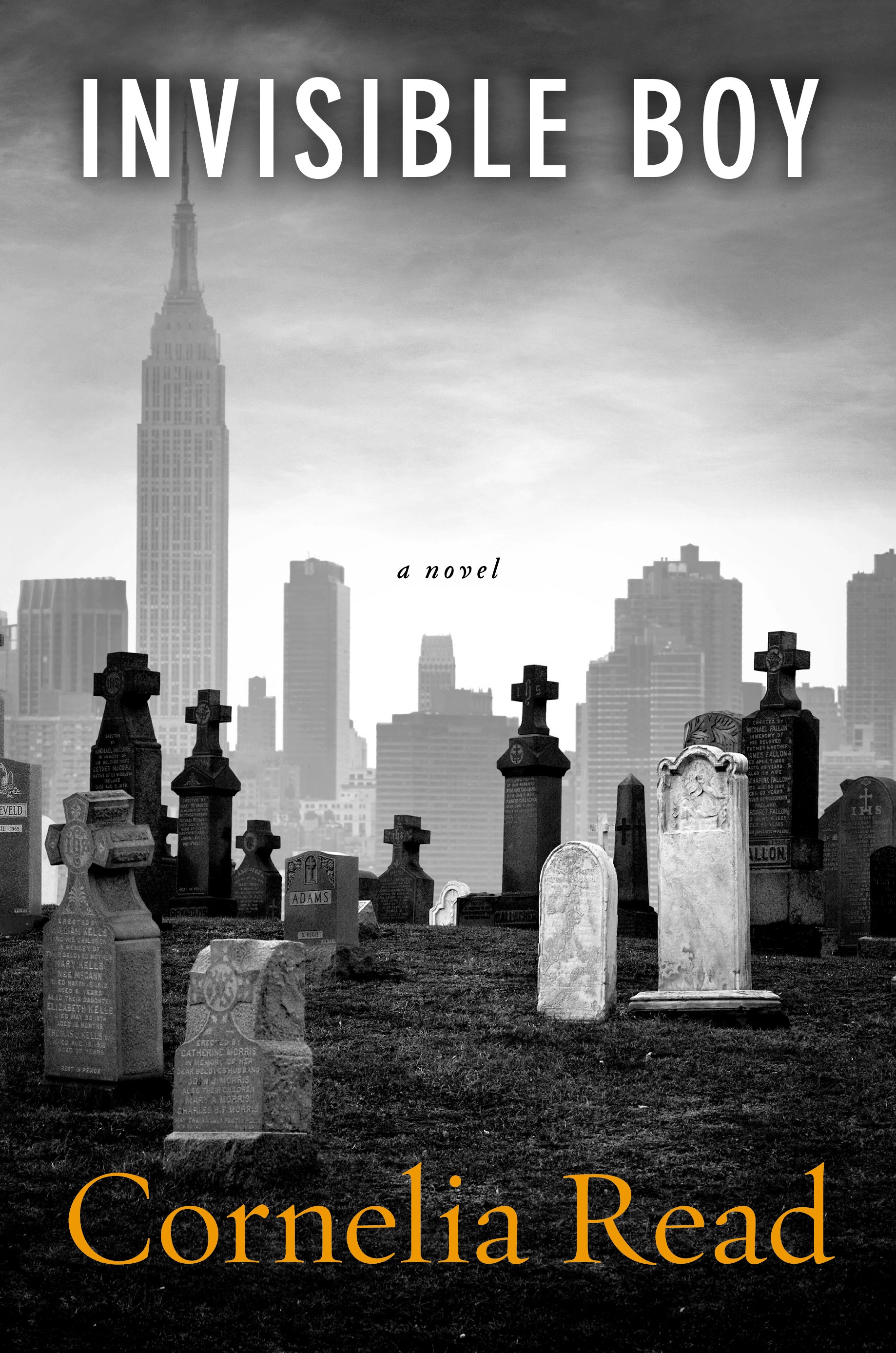
At Zoe’s kind behest, the name of the book is Invisible Boy, my publisher describes it as follows:

The smart-mouthed but sensitive runaway socialite Madeline Dare is shocked when she discovers the skeleton of a brutalized three-year-old boy in her own weed-ridden family cemetery outside Manhattan. Determined to see that justice is served, she finds herself examining her own troubled personal history, and the sometimes hidden, sometimes all-too-public class and racial warfare that penetrates every level of society in the savage streets of New York City during the early 1990s. 

Madeline is aided in her efforts by a colorful assemblage of friends, relatives, and new acquaintances, each one representing a separate strand of the patchwork mosaic city politicians like to brag about. The result is an unforgettable narrative that relates the causes and consequences of a vicious crime to the wider relationships that connect and divide us all.

and the cover looks like this: