Author Archives: Murderati Members


What to do . . .

by Guest Blogger

(David Corbett is someone I’ve known and respected for years. A couple of weeks ago, he was so moved by some of the posts here, that he asked if he could contribute a message close to his heart. I am certain everyone here at the ‘Rati can benefit from David’s personal experience and wisdom.
Pari)


If you need anything, don’t hesitate to call.

This is the sentence most people who are grieving from a devastating personal loss, or suffering through a crisis, hear over and over and over and over. It is almost always well-intended. Unfortunately, it also reveals a fundamental misunderstanding of what the person is going through.

In this country, where individual initiative, responsibility, stoic resilience and good-natured optimism are so prized, one seldom feels as unattractive, unworthy, uninteresting and burdensome as when withstanding some personal crisis or struggling through a terrible loss.

The sorrow is so disorienting, the rage so unpredictable, the numbness so leaden—while the rest of the world quite rightly goes on about its daily business—that one comes to think that the best thing to do is hide away. You feel like a raw and suppurating wound. You can’t imagine anyone wanting to waste time with you and you don’t blame them. You’re sick of yourself.

So if someone tells you that, if you need anything, just call, they’re missing the point on two scores. One, you have no clue what you need, except for this part of your life to end. And you wouldn’t dream of asking anyone for anything—the imposition feels obscene. Why stain anyone else’s life with your pathetic relentless misery?

As a friend, you need to instead do something. Stop by with food, for example. Nothing was more valuable to me after my wife died than a neighbor’s bringing frozen dinners she’d prepared that I could microwave if I finally did recover my appetite. Everything tastes like sand, cooking feels too intimate, too laden with memories of shared meals—and so having someone else bring food is a surprising grace note.

As odd as it may seem, providing help with chores is also incredibly helpful. My friends came by and helped me one weekend in the garden. I can’t tell you how much that meant to me.

And of course just stopping by. Or calling. Or sending a card.

The problem is, we feel as though we’re imposing, violating the chapel of our friend’s sorrow. Well, yeah, you may be doing just that. But the tendency of someone going through a terrible ordeal is toward isolation, and that’s just unhealthy. You have to be willing to risk being a bother, a nuisance, a nag, and accept criticism or irritability if that’s the case. Apologize, discreetly withdraw. Your love for the person and hers or his for you will survive such things. You’re going to make mistakes, you’re going to show up at the wrong time, you’re going to stay too long, you’re going to say the wrong thing and offer the wrong help and blunder in who knows how many other ways. Get over yourself. Give up on perfection. Grief is the realm where perfection vanishes forever. You’re not going to be a perfect friend. You’re just going to give as much as you can and try to sense when enough is enough, it’s time to go. And there is no smart little guidebook for that. You will simply have to pay attention, open your heart, trust your instincts. And be willing to mess up.

Don’t leave it up to the person going through the ordeal to decide for you what the right thing to do is. That’s abdicating your responsibility as a friend. It’s putting your fear of doing or saying the wrong thing ahead of genuinely caring. Be willing to enter with him or her into this new world, where nothing is right, all the cues are mistaken, and simply putting one foot in front of the other borders on the miraculous. If you can do that, share the devastation and give up on being the perfect pal, be willing to accept some hard feelings if you cross the line (understanding that you cannot be spared anger, you cannot be spared the feeling of not having enough to give, not in this situation), you’ll offer a gift of genuine friendship and concern. You will have shown yourself willing to understand what it means to enter a world where nothing is right, at least not yet. That’s courage. That’s love.

David Corbett has published four critically acclaimed novels: The Devil’s Redhead, Done for a Dime, Blood of Paradise, and Do They Know I’m Running? His short fiction has appeared in numerous anthologies, including Best American Mystery Stories 2009. Visit him at www.davidcorbett.com

(Pari here: I’ll be around today — as will David from time to time — so please, let us know what you think. I know that so much of what he writes here is absolutely true. Grief is incredibly nonlinear. The friends I remember most from those times in my life were often people at whom I raged the loudest. But they stuck by me and it made all the difference in the world. David’s message today gives each one of us a small roadmap to help those we love.)

The Lost Library of My Dreams

By Cornelia Read


I was randomly Googling my Great-Grandfather William A. Read a couple of weeks ago. I don’t know a huge amount about him, since Dad is a little nuts and doesn’t like to talk about his family all that much.

Here is what I do know (mostly from a book about the investment bank he founded The Life and Times of Dillon Read, by Andrew Sobel):

He graduated from Brooklyn Polytechnic at the age of nineteen, and went to work for a bond house called Vermilye & Company. He could apparently write with both hands at the same time, composing a letter with one while solving equations with the other. He formed his own bank, William A. Read & Company, which later became Dillon, Read. He was walleyed, and always wore violets in his lapel. He invented the bond issue which underwrote the construction of the first subway system in New York City. Four of his sons, including my grandfather, his namesake, were naval aviators in World War I. By that time, however, he was no longer around, having died in 1916 of the flu. He was fifty-two years old.

An older cousin once told me that her father (my grandfather’s brother Bayard) had sold his shares in Dillon Read before the 1929 stock market crash. He got $29 million for them. My grandfather waited until after the crash and “only” got $6 million for his. I’ve often wondered what it must have been like to have six million bucks, cash, at the outset of the Depression. It’s kind of astonishing to think about the lengths my grandfather must have gone to to squander all of that by the time he died in 1976. I figure he must have stayed up late at night, pondering ludicrous investments.

But when I Googled his father the other day, I found something else that was exceedingly bizarre–something I’d never heard about. On a rare book site, a copy of the hardbound 1936 auction catalog of “The Splendid Library and Collection of Historical and Literary Autographs of the Late Mr. and Mrs. William A. Read.” It was offered for twenty-five dollars, and extremely oddly, this volume was for sale at a rare bookstore a block from my apartment in Exeter. 

The stuff parted with at this auction included a letter from Elizabeth Barrett Browning to Poe (“her reply to him for his dedication of The Raven and Other Poems to her”),

from John Keats to his love, Fanny Brawne,

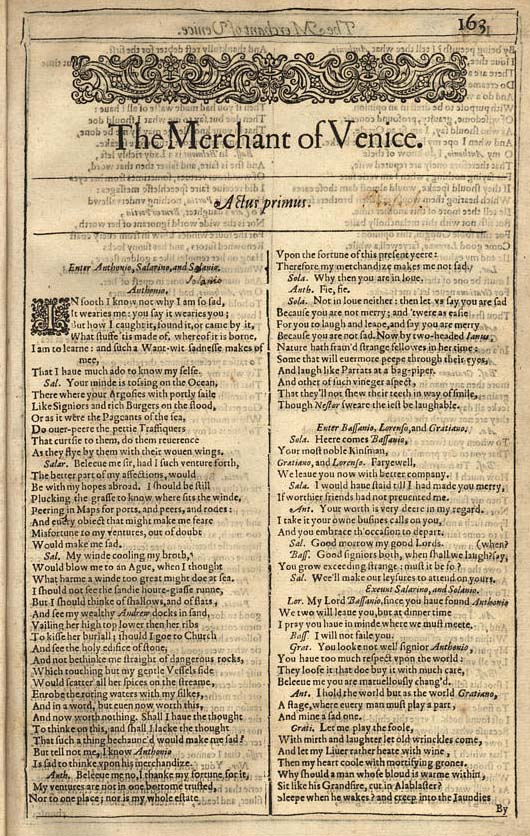
the first four folio editions of Shakespeare (published in 1623),

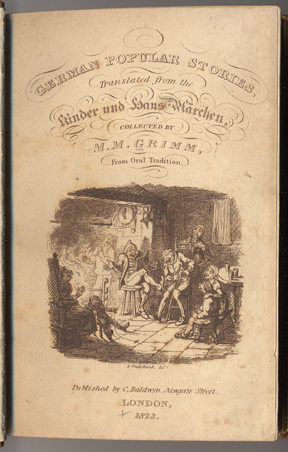
stuff from George Washington, Thackeray, Twain, Dante, Milton, Oliver GoldsmithHarriet Beecher Stowe, and apparently a large collection of primary documents used in the witchcraft trials in Massachusetts, first edition of Spenser’s Faerie Queen, “the finest copy of Grimm’s ‘Popular German Stories,'”

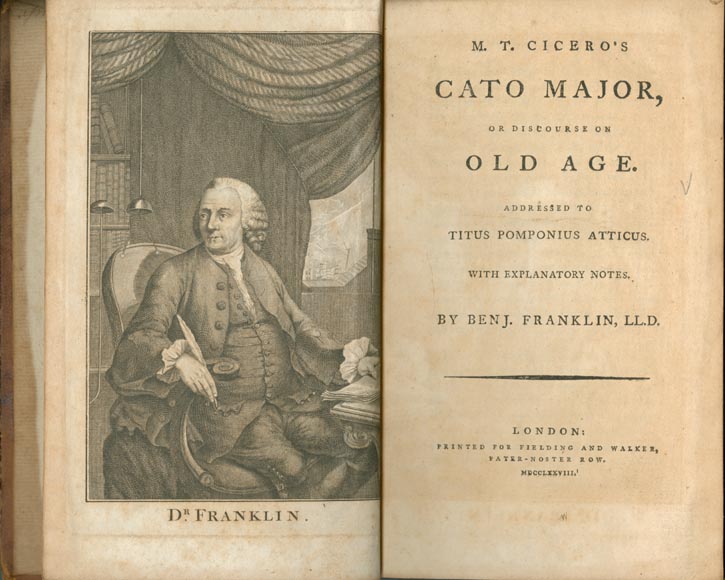
“M.T. Cicero’s CATO MAJOR, or his DISCOURSE of Old-Age” printed by Benjamin Franklin,

among lots of other groovy crap–the catalog is 287 pages long. And all of it sold “By Order of the Heirs.”

Some days my family annoys me far more than others. 

The foreword of this catalog describes these books as “not the modern sort of library limited to the collecting of one or two special classes of books. It is a more generous kind of collection, rich in many fields and showing a wide range of interests. It is the result of the collaboration of two elaborately balanced minds in search of a library equipped to fit all moods. Not every volume is a rarity, yet every volume was chosen carefully to satisfy a particular need and the whole is so compacted with treasures and delights that it must necessarily attract many collectors by its variety and excellence.”

I bought this catalog for myself yesterday, an early birthday present since I’ll be turning 47 on Monday.

And as I’m now leafing through it, I wonder what the library itself looked like, when all these books still lived together on its shelves. I wonder that these two people I never knew, my great-grandfather William Augustus and his wife, Caroline, would make of me.

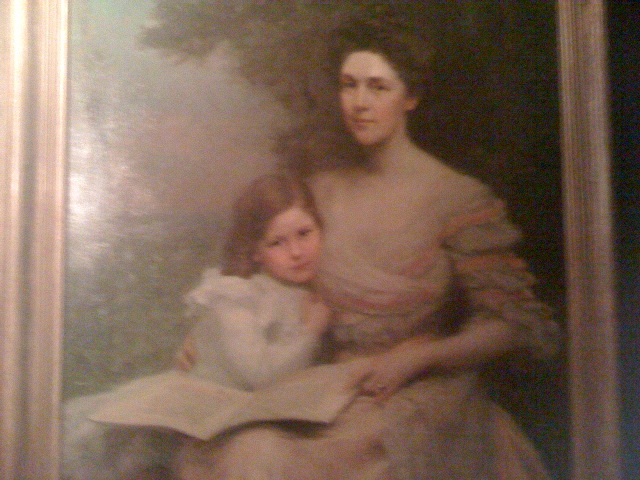
Here is a crappy photograph I took last summer with my iPhone of a portrait of her with their daughter Carol (who died in a car crash in France in the Twenties):


 I wish I knew what that book lying open across her lap is.

I wonder if my great-grandparents were the people I get my love of books from, as not a whole lot of people who came generationally between us seem to have quite this deep a lust for the printed word.

I love that the foreword of the catalog refers to them both as the minds responsible for putting together this library. I wish I could have known them.

Most of all, I’m glad that the catalog of their library ended up in the magnificently dusty basement store I visited yesterday, just across the String Bridge from my new digs. How odd is that?

But it makes me miss my own collection of books,38 cartons now in storage in California until I can afford to rent a U-Haul truck to drive them across the country. I feel so rootless without them…

‘Ratis, what’s a book you’ve lost that you wish you still had?


NO STRANGERS – ONLY FRIENDS

by Zoë Sharp

This week, I’m delighted to be able to do an interview with a writer I greatly admire. Please give a warm ‘Rati welcome to…JT Ellison!
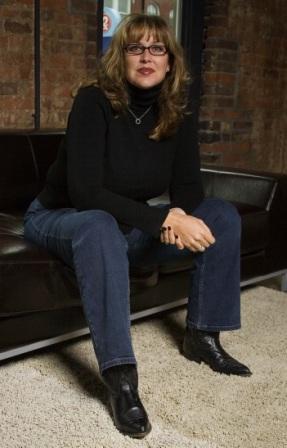
Yes, I realise that you all know JT, but that doesn’t mean you’re aware of just what an all-round superhero(ine) she is. So, for those of you who are unaware, I’m going to quote from her author biog:

“JT is a graduate of Randolph-Macon Woman’s College and received her master’s degree from George Washington University. She was a presidential appointee and worked in The White House and the Department of Commerce before moving into the private sector. As a financial analyst and marketing director, she worked for several defence and aerospace contractors.

“After moving to Nashville, Ellison began research on a passion: forensics and crime. She has worked with the Metro Nashville Police Department, the FBI, and various other law enforcement organizations to research her books.

“Her short stories have been widely published, including her award winning story “Prodigal Me” in the anthology KILLER YEAR: STORIES TO DIE FOR, edited by Lee Child, “Chimera” in the anthology SURREAL SOUTH 09, edited by Pinckney Benedict and Laura Benedict, and “Killing Carol Ann” in FIRST THRILLS, edited by Lee Child.” 

Not only that, but JT was lucky enough to have Lee Child as her mentor for Thriller Year, an organisation that was dedicated to raising awareness for the debut novelists of 2007. How could she possibly fail?
“She is the bestselling author of the critically acclaimed Taylor Jackson series, including ALL THE PRETTY GIRLS, 14, JUDAS KISS and now THE COLD ROOM. Her novels have been published in 14 countries, and she was named “Best Mystery/Thriller Writer 2008” by the Nashville Scene.”  

“She lives in Nashville with her poorly trained husband (Randy) and a cat.” Oh, hang on, I may have got that last bit the wrong way round … 
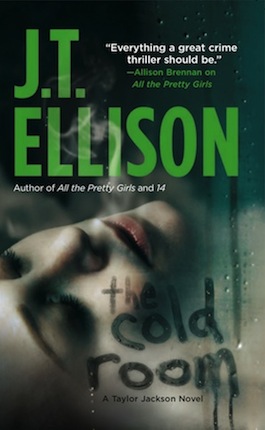
This interview all came about because of JT’s latest book, THE COLD ROOM, as you’ll soon see:

Zoë Sharp: Where did the character of Taylor Jackson originally come from? Allison’s blog last Sunday about the characteristics of strong leading women felt quite apt as I was reading about Taylor, a strong, intense and sensual woman, who finds it difficult to resist the physical attraction of another man, even though her emotions are completely wrapped up in her fiancé, FBI profiler Dr John Baldwin.


JT Ellison: “I got the idea for Taylor after reading John Sandford’s PREY series, back in 2003 or so. I was driving down Interstate 40, thinking about Lucas Davenport’s icy smile that didn’t quite reach his eyes, and that scar, and his depression, and realized I wanted to write about a woman in his shoes. A woman in control, who’s strong without being strident, who commands the respect of her peers and her enemies. One who’s worked hard and paid her dues. Taylor literally leapt fully formed into my mind, talking in that low, smoky drawl, and I was hooked. I knew I had to tell her story. Considering her humble beginnings, it’s so fitting that she represents Athena to me. And aren’t all Goddesses irresistible to the men around them???”

ZS: The character of Taylor’s lover, Baldwin, is a strong figure right from the start of the series. Did you always intend to give Taylor a partner – both in her professional and personal life – or did he creep up on you? How do you feel their complementary skills give the pairing a unique edge?

JTE: “No, I didn’t. Initially, she was on her own, still recovering from the betrayal of her last boyfriend, a dirty cop she was forced to kill after he attacked her. The first book I wrote with Taylor, she hadn’t met Baldwin. He came in halfway through the story, and she wasn’t terribly enamored with him. Truth be told, she felt sorry for him. He was in an emotional tailspin, self-medicating with alcohol, and truly on the edge. She was HIS savior, not the other way around.

“Now, they’ve started to depend on one another, and that’s going to cause its own set of frictions.”


ZS: How important do you feel the actual police procedure is? Obviously, Taylor is a Nashville Homicide detective, so it has to play a large role in each book, but how tied do you feel to accuracy when it comes to this aspect of your storytelling?


JTE: It’s very, very important to me. I want to at least know the procedure so I can make an educated decision whether to alter it to fit the story or keep to the truth. I’d say I keep to the truth about 99% of the time. The procedural aspects are what lend credibility to the books. The thriller formula is inherently preposterous. How many times can one cop be singled out, be touched by evil, be forced to kill? Most cops never draw their weapons, Taylor has killed four people. The procedure keeps the books grounded in a bit of reality, enough so that readers can suspend their disbelief at Taylor’s horrific luck in the serial killer department and enjoy the story. At least, that’s my goal.”


ZS: In this book, you use the character of DI James ‘Memphis’ Highsmythe to create an internal conflict for Taylor. How do you go about putting your protag under pressure on a constantly changing basis? Obviously, there’s the pressure of catching the bad guys, but this book also worked on a more personal level for Taylor, not just because she’s been busted back from Lt to Det. Was that a deliberate objective you set out to achieve?


JTE: “Absolutely. On paper, she seems nearly perfect: Intelligent, beautiful, loved, respected. She’s a hero, she must be larger than life and “better” than the average Joe. But I wanted to let people see that’s she’s human. She’s struggling with her emotions, with her independence, with the idea of commitment. She’s been dragged through the mud and publicly humiliated, and she has to keep her head help high and soldier on. That outward strength is so important, because when the reader gets a glimpse of her true self, her vulnerabilities, they can relate. We’ve all put on a brave face before.”

ZS: Where did the character of Memphis come from? The son of an earl, working for the Metropolitan Police in London? Why a Brit rather than a guy from the LAPD, or Chicago? Or even an Italian, since part of the book is set in Italy, and it feels like you know that setting very well? What made you come up with him, and how tricky was it to get inside the head of someone from another culture?

JTE: “Because I love to challenge myself. Memphis was another one of those characters who practically writes himself. He started as an Interpol agent, until a source of mine from Interpol explained that he wouldn’t have the freedom to chase after a suspect. Since there were crimes being committed in London, he became a New Scotland Yard DI. Which necessitated tons more research, and of course, I had to make him a Viscount, so he would stand out. Speak differently, act differently. He and Taylor are such similar creatures, both products of their environment, both from privileged backgrounds, both eschewing their personal wealth to work in law enforcement.

“Memphis posed so many challenges… (and just a note to our readers, Zoë is the reason Memphis came to life. I can’t count how many emails we exchanged trying to nail him down. Phraseology, background, everything, Zoë influenced in so many ways. So THANK YOU!)

“I could have made him Italian, it certainly would have been easier on me, the language, the history, the setting. But sometimes a character is who he is, and I can’t explain why. That’s the deal with Memphis. And it means I get to do more research in England, which will be cool.”

ZS: I’ll never forget the initial email from JT that read: “I want my Brit character to see my main protag and have a bit of an inconvenient erection. How would he refer to this?” As you can imagine, the conversation went rapidly downhill from there…


But, I digress! The structure of the story has altered from the version I read when we were kicking bits of Britishness backwards and forwards. It originally started with a scene of Taylor at the gun range, and then moved to the character of Gavin Adler. Why did you lose that initial opening?

JTE: It had been dropped in the Australian version, and when we pulled the book and went back through it, my US editor really wanted to drop it as well. I fought long and hard, because I felt that was such a quintessential scene. But it was important for Taylor’s character, and not the actual story. It was a very “hard” opening, and they wanted her a bit softer. It might make its way into one of the future books, because I still love it. But revision is all about killing your darlings to make the story work better, right? And opening with Gavin just set the perfect, creepy, scary tone. In retrospect, I’m very glad we did drop it.”

ZS: You mentioned in your last blog that you were asked by your publisher to alter the direction of the book for Taylor. How do you feel you’ve done this? I know, with a series character, you have to make the decision to keep them static, or take them on a journey through each book, from which they emerge changed in some way. What was your original journey for Taylor, and how do you feel it’s altered in the final version?

JTE: “You know, it’s funny. I resist making Taylor be too girly, mostly because I’m not girly and can’t relate well enough to make her work that way. But she’s so tough, and the consensus was she was almost too tough. Too serious, too committed. Too earnest. The wanted me to “soften” her. But Taylor isn’t a soft woman. She’s intense and focused, and I struggled with the whole concept of “softening” her, because to me, that meant girlifying her up (Um, I don’t know if girlifying is a word, so…) I found a perfect solution. When I did the revision, I played up her sense of humor. Instead of being so angry all the time, she’s rolling with the punches a bit more. It worked very well, and helped me find another layer into her psyche that I didn’t know existed.”


ZS: When I first read your books, I was rather struck by the similarities between Taylor Jackson and Charlie Fox. Both are strong female protagonists, sure, but they both sport scars around their necks from knife attacks, and even both wear a TAG wristwatch. Now, that’s just spooky!

JTE: I LOVE that they have these bizarre bits in common. I remember reading FIRST DROP and saying Wow, Charlie and Taylor are so similar. Of course, Charlie could probably kick Taylor’s ass… The TAG comes from me, I’ve worn the same TAG HEUER watch since I was 21. And the scar – well, that was her vulnerability when I first started out. She’d nearly lost her life, and it colored the way she acted from there on out.

ZS: You said: “We all know how I feel about strong heroines, and the ways we give them flaws and vulnerabilities. I’m always in favor of a strong heroine who’s independent and not driven by a tortured past, who can handle most anything, but has some weaknesses that can be exploited for story. My favorite thing to do is hand my main character something that falls into the gray areas, situations she’s never faced that challenge her code. That’s the fun stuff!” Discuss!

JTE: “The gray areas are where we have fun, I think. Heroes have flaws, and throwing challenges at them is one of my favorite pastimes. Taylor especially is incredibly strong and sees the world in black and white, so giving her something that’s out of her spectrum, like having sex-tapes go live online, or getting demoted, helps me challenge her in the now, instead of focusing on things that happened in her past. We’re all the sum of our parts and experiences, but it’s more rewarding to me as a writer to find the paths that will move her conscience, alter her reality, and make her rethink her code.”

That’s it from me, but what questions do you all have for JT? And if you haven’t already rushed out and bought a copy of THE COLD ROOM, do so!
This week’s Word of the Week is scooning, or to scoon, a completely made-up one, that we’re trying to bring into common useage. A guy we used to know called Scoon was taking a long flight, when he fell asleep in his seat. Gradually, his head lolled until it was resting on the shoulder of the total stranger in the next seat. This guy was very polite and didn’t want to wake him up, until he realised that our friend had been drooling in his sleep and had actually soaked through the guy’s jacket and shirt and was making his shoulder damp. Now, if anyone drools in their sleep, it’s known in our household as scooning. Enjoy…


A Glimpse Into Crazy


By Louise Ure


About ten days ago I got an appreciative email from a reader that I want to share with you. Not that I want this man’s words enshrined anywhere (on the contrary), but to remind us all that there are some true crazies out there. I’ve removed his email address and signature line, just in case you’re so deeply offended (as was I) that you’re tempted to reply to him.


His message, complete with vitriol, bigotry, violence, illogic and original misspellings is as follows:


From: Crazy M-Fer

Date: February 20, 2010 9:38:52 AM PST

To: Louise Ure

Subject: THANK YOU for Liars Anonymous!!


Dear Mrs. Ure:

I want to THANK YOU so much from the bottom of my heart for your recent book Liars Anonymous that I just finished reading.

THANK YOU for redeeming Caucasian Christian Men, as you did in this book.

I was very worried when I first began reading, that your character was a bull dagger for her she was a woman who thinks she can act like a man and do the things men do, like kick ass, and protect women and children. This is NOT the job of a woman and your books proves how stupid, gullible, and easily led astray women are.

And you confirmed what men have been saying all along, only it means so much more because you are a woman – you are a real woman, yes? Not one of those girly men who’s transformed himself? For if so, then it doesn’t count.

We reaffirmed what men have been saying all along: women LIE! And women ESPECIALLY lie about being sexually molested as children, and especially to their best friends.

And their motivation is always their sick attempt to destroy men and to make the real women who love those men look stupid and hateful to their children when they believe their man over those spiteful, lying girls.

We all know women make up childhood sexual abuse, and if not to bring trouble to grown men, then because their bull dagger therapists lead to to ‘remember’ false memories because we know these women hate men and want to destroy us.

And I am further thrilled that it is a dirty jew that was the evil force behind real murders and another jew was eliminated (which should have happened to ALL of them years ago); and the other evil force was that rich woman. Women are ALWAYS the manipulators and real dogs and you have proved it with your story.

I hope you leave your character in jail where she belongs and make her serve even longer that most women in this country serve for murdering anyone. Thank you for contributing so emmensely to the exoneration of men and proof that women make up abuse to try to punish us.

You are such a credit to women and making sure their role is kept as God meant it to be. I look forward to your next book! MEN RULE!


Where to begin?

First of all, I think you’re a hateful, deluded, dangerous person and I can’t believe you actually read books – any books – let alone mine. Did it bother you when my protagonist kneed the guy who was trying to rape her and smashed his elbow with a crowbar? I’m surprised you had the nuts to keep reading.

Let me take this point by point:


1.“THANK YOU for redeeming Caucasian Christian Men”

Uh, no. I think Caucasian Christian Men are just as likely to be evil as anyone else and maybe even more so, as they often hide their own insecurities and obsessions behind their religion.


2. “I was very worried when I first began reading, that your character was a bull dagger for her she was a woman who thinks she can act like a man and do the things men do, like kick ass, and protect women and children.”

You’re dating yourself here, pal. I haven’t heard the term “bulldagger” (derogatory appellation for an aggressively masculine lesbian , more often one who is muscular or burly , who assumes the male role in lovemaking) for decades. Imagine the horror of a woman saying “I’m going to touch you here.” My God, we can think and feel for ourselves!

And I’m sorry you f-ing chauvinist, but I’m perfectly capable of taking care of myself and anybody else I care for including other women and children. Women today are not waiting around for some man to save us.


3. “ … their sick attempt to destroy men and to make the real women who love those men look stupid and hateful to their children when they believe their man over those spiteful, lying girls.”

Ooh, sounds like somebody’s got some history here. Do the cops still have you on a sexual predator list? Did your kids disown you when they heard? Sounds like you’ve still got the little wife cowed, though. But I’ll bet you don’t let her friends come by any more.


4. “And I am further thrilled that it is a dirty jew that was the evil force behind real murders and another jew was eliminated (which should have happened to ALL of them years ago)”

Okay, there you go, right past the Tin Foil Hat stop sign and into the high speed zone of dangerous, deadly bigotry. Zip it, you pinhead. I don’t have the time or energy for your particular combination of stupid and hateful.

By the way, there’s not one character in that book described as Jewish.


5. “. Women are ALWAYS the manipulators and real dogs and you have proved it with your story.”

Don’t you get it? Stories PROVE nothing. They’re stories. Fiction. I could just as easily write a novel about an ignorant white man who abuses little kids and then hides behind his religion to get away with it. Would that story be any more true? (In your case, maybe so.)

Back here in the reality-based world where I live, abuse happens to men, women and children all the time. And it’s assholes like you that try to excuse it away or pretend it never happened.


OK, ‘Rati Readers. I’m back, now that I’ve vented just about as much as he did.

I never did write back to him directly and hope to hell he doesn’t read this blog, but as hateful and misinformed as his email is, my real question is: does it matter? Does it matter that I didn’t intend to write any of those coded messages that he picked up?  Does it matter that he’s misconstrued the basic nature of my characters and their battle with guilt, blame and responsibility?  Once our work leaves our hands, can we still claim ownership of how it should be received?

The audience is free to interpret a poem, or a ballet or a piece of music. Does is matter that their  comprehension is not what the poet, the choreographer or the musician intended?

Fire away, my ‘Rati friends. Either with your response to this Crazy M-Fer or at the notion of ownership of creative ideas once they’re loosed on the world.


PS: Tiny update on the situation at home. Bruce has fallen in love with those old-timey popsicles that have a joke printed on the stick. “What kind of clothes do frogs wear? Jump suits.” I’ll soon be a hit at all the kids’ parties.


Do-It-Yourself-ing

Much to my continued surprise, I find myself a New Yorker.  And by that, I don’t merely mean that I happen at this moment to live in New York.  I mean that I hate to drive.  That I’m overwhelmed by big box stores.  When I go to Times Square, I no longer marvel at its majesty, but instead complain about the tourists who block my route from the subway to the theater by staring up in the sky and posing for pictures with the Naked Cowboy.

But I’ve come to realize that there’s one part of me that’s still from the rest of the country.  New Yorkers, more than any other people I know, hire people to do their work.  They have housekeepers, doormen, handymen, personal trainers, personal shoppers, and dogwalkers. They send out their laundry.  And they have everything under the sun delivered.

Apparently I haven’t quite made that leap.  This week, I shocked my NYC friends by painting the wall of our apartment all by my lonesome.  Here’s the proof:


And next week I just might slap up some wallpaper.

Now, this DIY stuff is nothing new to me.  Back when my sewing machine still worked, I sewed my own clothes. And when I bought my first house on a baby DA’s salary, I spent every weekend at Home Depot.  By the time I sold that house three years later, I had tiled a hearth, lineoleumed a laundry room, laid down a wood plank floor, painted thousands of square feet of walls, replaced two faucets, and even built a cedar fence.  Consider me handy.

And in many ways, my recent painting adventure was typical of my do-it-yourself tendencies.  I do my own taxes.  I made my own video trailer for my new book, 212.  I navigate my way through the lay-out for the (admittedly imperfect) newsletter I send to my mailing list. And today, I’ve tinkered once again, creating a mystery thank-you gift to send to online friends who pre-order 212.   (Details below, online friends.)

But if you ask my husband, I’m no DIY-er.  He teases me that if we had enough money, I’d hire a butler to cater to my every whim.  Why would he tease me that way?  Because despite lingering self-reliance, in some ways, I have begun to adjust to the New York way.  My dog, the Duffer, has both a dogwalker and a daycare center.  I’ve been known to have wine, groceries, and even a small container of chicken soup from the downstairs-deli delivered.  If it were up to me, we’d send out our laundry instead of dealing with the apartment complex laundry room.  And, I’m ashamed to say it, I once paid a woman to clean out my closet.

So what’s the deal? Why do I happily entrust some aspects of my life to others while I pride myself on handling the rest on my own?  Am I hopelessly conflicted and inconsistent, or is there some method to my madness?

I tried to hire someone to figure it out for me, but couldn’t find anyone on Craig’s List (kidding, of course).  The most noble explanation is that I recognize which tasks I’m either really bad at or simply hate to do.  I’m bad at throwing out old clothes from my cluttered closet, but I’m good at taxes.  I hate folding laundry, but creating my home-made book trailer was pretty damn fun.

Or maybe it’s about bragging rights.  You can bet that I told every person who visited my Portland house that I built that (semi-crooked) fence myself.  And if I do take on that wallpaper job, I’m sure I’ll point to every bubble and wrinkle like a gold medal.  But there’s no glory to be gained in doing laundry or preventing your closet from ending up on the next episode of Hoarders.

Or, you know, maybe I’m just random and incoherent about these things.  I’d love to hear from others on this.  What sorts of things, both in your work and home life, do you do yourself, and when would you prefer to hire out? 

P.S. As I mentioned, my most recent tinkering was on a special mystery thank-you gift for online friends who pre-order my new book, 212.  For every hardback copy of 212 purchased by March 22, I will send a mystery gift to thank you for supporting my work.  See details here.  (And, yep, I did the html myself so forgive the imperfections.)

What Would Princess Leia Do?

By Allison Brennan


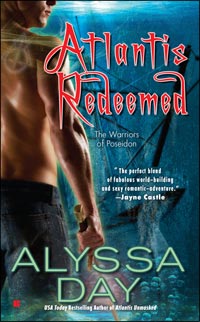
Yesterday, I made the time to attend my local RWA meeting where New York Times bestselling author Alyssa Day spoke about heroines. Alyssa is a talented paranormal romance writer who has a reputation for writing alpha heros AND alpha heroines. I asked her permission to talk about her workshop on this blog because I think it would benefit ALL writers, not simply romance or romantic suspense authors.

Alyssa’s workshop was hugely inspirational and beneficial to me. A lot of people might think that after 13 published books why would I want to attend a craft workshop? The same reason why I bought Donald Maass’ FIRE IN FICTION last summer–I am still learning. While I believe my strength in writing is centered around my heroines, I also believe that all writers, no matter what their level or how many books under their belt, published or unpublished, can learn something simply by listening to others. Sometimes it’s not like we learn something particularly new, but we are given a new way of looking at something we know and it broadens our perceptions and our craft.

Yesterday was just such a day for me.

I write strong heroines. My hardest characters are the heroines who are not in a naturally kick-ass professional. For example, Julia Chandler (prosecutor in SEE NO EVIL) or Robin McKenna (night club owner in KILLING FEAR.) Why? Because when your heroine has a role like cop or FBI Agent or P.I. reader expectations are that the character knows how to take care of themselves, that they are independent and strong-willed. Female cops are not wimps, for the most part, and I don’t have to convince my readers that Detective Carina Kincaid (SPEAK NO EVIL) knows how to investigate a murder. I can simply put her in the middle of the investigation and give her the label “detective” and readers get it.

I’ve judged the Thrillers for four years, and there are a lot of fantastic books I’ve read–the finalists and some that haven’t finaled. I love thrillers, suspense, mysteries, romantic suspense, anything with twists, turns, high stakes. One thing I’ve noticed is that some writers–many male writers, but even some female writers– create stereotypes for their female characters. The femme fatale. The man-hating cop. The wimpy Perilous Pauline. Some books are more about the hero’s journey–and that’s fine. But good books have strong secondary characters, too, and while stereotypes can (and often should) be used in writing, they should be relegated to the third tier characters.

The female protagonist–whether she is a true heroine (i.e. equal to the hero, like in a romantic suspense novel) or a secondary character (such as a partner or an ex-wife)–is crucial to a strong story. Alyssa’s advice to writers is terrific. For example, is your heroine strong or passive? Does she DO things or is she always having things DONE for her? Can she solve her own problems, or is she always looking for the hero to do it?

There is nothing I hate more than a woman who can’t do anything for herself. This doesn’t mean she has to do EVERYTHING for herself, but she should have common sense. If she has a flat tire, she might not know how to change it, but she damn well knows how to use a cell phone. Or flag down a truck. Or capable of walking a mile to the nearest gas station. (And yes, some women–not me–know how to change a tire.)

If you have an important female character, does she advance the plot in any way? Or is she standing around wringing her hands waiting for the big, strong guy to save her? (Gag.)

Alyssa identifies five core character traits of a strong heroine:


  • She’s an independent thinking and makes intelligent choices.
  • She has a sense of humor–she can face conflict and adversity and be able to laugh at herself or her weaknesses.
  • She’s ready and willing to fight, either it’s physically or not. Meaning, she should be able to defend herself verbally or physically, to stand up for what’s right, and not always cave to those seemingly bigger or stronger.
  • She should accept her hero as he is and not try to change him.
  • She should be able to face everyday situations with strength and resilience.


Smart choices, the first point, is crucial, but often misunderstand. It’s not always that we can make the RIGHT choice. Sometimes, we don’t have all the information we need. Sometimes, we have to do something we know is wrong because the stakes are so high. Sometimes, we’re in a lose-lose situation. ACTION is what’s important, that inaction is a sign of weakness. Inaction in fact is a character trait. But strong heroines will do what they think is right given the circumstances–they have strong motivation in doing what they do.

Some writers, Alyssa points out, take the idea of a strong heroine to mean she has to be perfect, flawless, beautiful at all times. WRONG! I love Alyssa’s comment, “I believe in Kryptonite.” Meaning, every character has a fatal flaw. Perhaps the flaw is physical or emotional or situational. Every character has their own Kryptonite. (This goes for heroes, heroines, villains, secondary characters–doesn’t matter who! But it’s doubly important for your protagonists and your villain.)

But in the end, what I loved most about Alyssa’s workshop was when she ended with when you’re stuck, just think:

What would Princess Leia do?

So now I have that phrase etched in my mind as I finish the copyedits for CARNAL SIN. My problem in writing is not usually the heroine–my heroine’s are generally strong. Sometimes TOO strong. In FEAR NO EVIL I had my first hero who wasn’t in law enforcement paired with a heroine who was a renegade FBI Agent. I had to make sure that my trained, smart, and talented heroine wasn’t stronger than my forensic psychiatrist hero. So to resolve the central problem, it was my hero’s ability to think like the villain that gave them the edge to save lives–not my heroine’s training or law enforcement background.

A female character I’ve been hugely impressed with is FBI Agent Olivia Dunham from FRINGE. Olivia is trained, strong, independent, but she also has a vulnerable side. She can love, she has a sister and niece she is close to but her job keeps getting in the way of her promises. This bothers her, but she is driven to do the job well. She is not hardened, but she can be tough. She doesn’t make too-stupid-to-live decisions–when she makes a risky decision it is always with the purpose of saving an innocent life. She is smart and capable and not too rigid. 

In LIFE, the erroneously canceled NBC series starring Damian Lewis as Det. Charlie Crews, his partner Dani Reece is another example of a strong female character who has flaws but still gets up every day to do the job. She’s a recovering drug addict. She has a problem with relationships and therefore has one-night stands instead of any steady boyfriend. She’s a good cop, but is overshadowed by her well-known retired father, also a cop. She changes over the course of the two-season series to be able to have 1) a friendship with her partner and 2) a relationship that last more than one night (not with her partner) and 3) the courage to try to move up the ladder on her own merits.

And of course Princess Leia. She was a princess, after all, but she was also capable of taking charge. (So what if she got them trapped in the trash compactor? At least she DID something rather than stand around and be shot at!)

I’d love to hear more examples of strong female characters, and some of your pet peeves about heroines and female characters . . . rant away!


The Fairy Tale structure

by Alexandra Sokoloff

Two weeks ago, as part of my own “What the @#$% am I going to write next?” ramblings, I posted about making random lists of basically everything in the known universe that appeals to me and looking through those lists for patterns.

One thing I’ve learned about myself as a writer, partly by making lists! is that my favorite stories of all are fairy tales and myths – which are often interchangeable, although story structuralists Christopher Vogler and John Truby make good arguments that stories with mythic structure and stories with fairy tale structure have their own rules and formulas.

And indeed, the couple of stories that are beginning to take shape in my head have tons of fairy tale elements.   This, at least is familiar territory to me, exciting territory.

When I respond deeply to a movie or book, no matter how realistic and modern it seems on the surface, chances are it’s going to have a fairy tale structure.    

SILENCE OF THE LAMBS, RED DRAGON, THE EXORCIST, THE GODFATHER, A WRINKLE IN TIME, STAR WARS, SLUMDOG MILLIONAIRE, THE TREATMENT (Mo Hayder) – every single one of them is a fairy tale.   And fairy tales have their own structural rules that just work for me.

I know JT and Cornelia have blatantly (my favorite approach) used fairy tales in at least a few of their books.

Anyone who wants a quick lesson on the fairy tale structure in action,  should go out and rent PAN’S LABYRINTH.   Wonderful, heartbreaking film, one of the best in years.

That movie has a blatant fairy tale structure, and as in so many fairy tales, the heroine is told by her mentor and ally the faun that she must perform three tasks to save the underworld kingdom and reclaim her place as the princess of that world (and thus escape her horrifying reality in 1944 Spain.)  

The three-task structure is SO useful and successful because it tells the audience exactly what they’re in for.   Audiences (and readers – but especially audiences) need to know that things will come to an end eventually, otherwise they get restless and worried that they will never get out of that theater.   I’m not kidding.    And a reader, particularly a promiscuous reader like me, will bail on a book if it doesn’t seem to be escalating and progressing at a good clip.   But with a three-task structure, the audience is, at least subconsciously, mentally ticking off each task as it is completed, and that gives a satisfying sense of progress toward a resolution.  

Plus once you’ve set a three-task structure, you can then play with expectation, as Del Toro did in PAN’S LABYRINTH, and have the heroine FAIL at one of the tasks, say, the second task, and provide a great moment of defeat, a huge reversal and surprise, that in this case was completely emotionally wrenching because of the heroine’s very dire real-life situation.

Another classic fairy tale structure is the three-brother or three-sister structure.   You know, as in The White Cat, or The Boy Who Had to Learn Fear, or Cinderella.    In this structure there is one task that is the goal, and we watch all three siblings attempt it, but it’s always the youngest and ostensibly weakest sibling that gets it right.

Another Rule Of Three fairy tale structure deals with the three magical allies.   THE WIZARD OF OZ has this – Scarecrow, Tin Man, Lion;  the animated classic SLEEPING BEAUTY – fairy godmothers Flora, Fauna and Merriwether; HARRY POTTER, obviously, with the three magical mentors Dumbledore, MacGonegal and Hagrid; A WRINKLE IN TIME – the “witches”: Mrs. Whatsit, Mrs. Who, Mrs Which; and STAR WARS – R2D2, C3P0, Han Solo (Okay, there’s four, Chewbacca, but he’s so joined at the hip to Han that they’re really one entity.).   Magical allies give gifts, and they provide substructure for stories by each having their moment or moments of aiding the hero/ine.

I must point out that you DO NOT have to be writing a fantasy to use any of these structural techniques.   They all can work just as well in the most grittily realistic story.   Just look at THE GODFATHER, the most classic modern example I know of the three-brother structure.   There’s the old king, the Godfather; the two older brothers, Sonny, with his lethal temper, and Fredo, with his weak womanizing; and the youngest brother, Michael, who is the outsider in the family: college-educated, Americanized, kept apart from the family business, and thought of as the weakest.   And throughout the story we see this unlikely younger brother ascend to his father’s throne (even though it’s about the last thing we want.)

You can see the three-brother structure working loosely in MYSTIC RIVER, with the three friends who are all cursed by a horrific childhood event that inextricably binds their fates together.  Lehane even uses a fairy tale analogy in the tale:  “The Boy Who Was Captured By Wolves,” and the fairy-tale resonances in that book and film contribute to its haunting power.

THE DEERHUNTER is another three-brother structure, that opens with another huge fairy tale story element: a curse.  The whole first sequence is a wedding, complete with unwanted guest (the Green Beret who won’t talk to the three friends about Vietnam), and at the height of the merrymaking the bride and groom drink from the same cup and spill wine on the bride’s gown, thus bringing on the curse for all three friends.

THE DEERHUNTER also utilizes another classic structure technique, also common in fairy tales:   The Promise.   In the first act, when the friends are on the mountain, hunting, on their last day before three of them are shipped off to Vietnam, Nick asks Michael to make sure that he doesn’t leave him over in Vietnam.   Even if he dies, he wants to return home.   “Promise me, Mike,” he says.  “You gotta promise me you won’t leave me over there.”

You KNOW when you get a promise scene that the story is going to be about that friend keeping the promise.   It’s an anchor to the action of the story – one of those spell-it-out moments that lets an audience subconsciously relax, because they understand what the story is going to be about – and they know the WRITER knows what the story is about, too.   That’s a comfortable feeling.   You have to let your audience/reader know that you know what your story is about.

The point is, if you really look closely at stories on your list, you might just find a similar meta-structure at work that will help you shape your own story. 

As I’ve mentioned here before, I’m seeing a therapist who is heavily on the Jung side (or at least is canny enough to understand that that’s about the only way he’s going to get through to me), so he’s been having me read a lot of fairy tale analyses: there is some hugely great stuff out there.   THE MAIDEN KING, by Robert Bly and Marion Woodman;  WOMEN WHO RUN WITH THE WOLVES; Clarissa Pinkola Estes; IRON JOHN, Robert Bly (not at all the squishy male power book I had always assumed it was); and Marie-Louise Von Franz has a classic series on fairy tales that I am looking forward to.

(I’m with Cornelia, though – steer away from Bettelheim).

But the best of all is to just read the tales themselves – Andrew Lang’s Blue Fairy Book and the other colors in that world fairy tale set are wonderful, bloody, and have fantastic, evocative illustrations.

So of course today I am looking for examples – of your own books and your favorite books with fairy tale elements or structure.   And of course – your own favorite fairy tales!

– Alex

Screenwriting Tricks For Authors

RAMBLIN’ ON…

By Stephen Jay Schwartz


It’s a story about guilt, about a powerful man’s sense of entitlement and how his assumptions cause an innocent man to cross the line.

No, it’s a story about a man’s desperate need to succeed, his last chance, and the line he is willing cross in order to get what he wants.

Or, maybe, it’s a story about a man who has gone way over the edge, and a boy who gets caught up in the man’s delusions.

How about a guy who wakes up from a six-week black-out and is coaxed into a crime plot by a bunch of grifters who convince him he’s someone he’s not?

My God, I haven’t been at the beginning for at least five years.  That’s approximately when I started writing BOULEVARD.  And, though I’ve just completed BEAT, my second novel, it wasn’t exactly like starting from the beginning, since it was a sequel.

But now I face a standalone.  I’m marveling at the realization that…anything is possible.  Sky’s the limit.  Providing, as my agent is quick to remind me, I stay in the genre in which I’ve been published.  Which is fine, I could write dark crime thrillers for the next thirty years. 

And you know what?  Maybe I can mix things up a bit, futz around with style.  I wrote those first two books in third person close, which is a bitch of a POV.  It’s like almost first person, but not.  It’s enough like first person to keep you from knowing what the other characters are thinking.  I like it, but I’m sick of it, you know what I mean?  It would be nice to explore different character points of view for a change.  It would be nice to really know what that other character thinks, instead of only knowing what my protagonist thinks that other character thinks.  Never knowing for sure until that character says, “Yes, I was exactly thinking what you thought I was thinking when you thought that in third…person…close.”  Aaaargh!

So, maybe omniscient third.  And yet I want something a little edgy, and so I’m thinking of writing in present tense.  Timothy Hallinan writes in present tense and he brings an immediacy to the story that makes it feel like you’re watching a movie.  Which is apropos, since screenplays are also written in present tense.  And I’m thinking of setting my standalone against the backdrop of Hollywood, so the present tense would also play up the blurred line between reality and illusion, which is a theme I want to explore.

Oh, God, it can be anything.  I could write in omniscient third, present tense, with alternating chapters in first person for each character. 

I almost don’t want to settle on a story, because once my mind is set the structure must be built, like a house.  Whereas now I’m letting EVERYTHING in.  I’m sponging the world around me.  It’s the most exciting part of the process, yet the most frightening as well. 

There’s been a magical serendipity around me lately, with the Murderati authors blogging about first ideas and how to start that next book.  JT’s blog that began with the photograph of the girl really made me think about process.  And Alexandra’s last blog hit home in a big way.  I printed it out and highlighted every other sentence.  Then I wrote a list of all the films and books I love, all the books or scripts I wish I had written.  And then I wrote out the major themes, just as Professor Sokoloff instructed.  

I discovered that I want to write something that combines the elements of Heart of Darkness, Crimes and Misdemeanors, Chinatown and The Player.  Can I just write that on a piece of paper and call it my book proposal?

Who wouldn’t want to read that book?  Forget about the fact that no writer can weave all those themes together in a believable thriller.  Let’s sell the proposal first and worry about the rest later.

Slowly, comfortably, a story is emerging.  A scene here, a bit of dialogue there.  I worry if the inciting incident is too over the top.  I worry that I won’t be able to capture the nuances of power and manipulation that exist in Hollywood, that I’ll make it a satire instead of a documentary.  These are things that keep me from putting pen to paper.  I’ll get over them, once I fully commit to the story.  Once I decide that the story I want to tell is the story I’d want to read.

One thing I’ve been doing is re-reading books that have a really strong voice.  Like Chuck Palahnuik’s “Fight Club” and Jim Thompson’s “The Killer Inside Me” and “Pop 1280.”  Those books are tight as hell and unique in tone and style. 

I find it strange that, although I came from the film industry, I have a very hard time visualizing my characters and settings.  I’m reluctant to focus on photographs, the way JT does, even though I know it will probably help in the long run.  I seem to want my characters to remain physically elusive, and I suspect this is a holdover from writing screenplays, where the writer is encouraged to keep his character descriptions slight.  You don’t want to describe your protagonist as Mel Gibson when the producer who buys the script has a relationship with Matt Damon.

I’m holding myself back.  Because, when I commit, I don’t want anything to get in the way.  And right now I’m focusing on getting through the copyedit of BEAT.  But what I really want to do is drop everything and bury myself in words and images and stories and ideas.  And dreams.  I want to disappear for a few weeks and dive into the recesses of my mind.  I used to do this sort of thing, back when I was eighteen, nineteen years old.  I’d catch a bus and disappear into the countryside with a couple Steinbeck novels and a notepad, and I’d be gone for days.  Gone.  I’m desperate to do that now, but life is in the way.  I envy Alexandra’s freedom to wallow in her dreams, to let the collective unconscious guide her every day. 

Last Sunday I spent the day at Venice Beach.  It was hard to pull myself away from the family, but I felt it was necessary.  Watching the insane circus of humanity was a jump-start for my creative process.  I wrote everything I saw, just as an exercise.  It got the juices going.  Quietly observing human nature is my favorite way to find my voice, my story.  It’s like meditation for me.  I found it hard not to buy a cheap sleeping bag and pitch camp in the sand with all the other vagabonds. 

Oh, my mind’s a mess.  I’m all over the place.  But maybe that’s my process.  Maybe I’m exactly where I need to be.  As long as I’m not on a deadline, I can afford to be a flibbertigibbet. 


THE REALITY OF REALITY

by Brett Battles

Okay, first a huge thanks to all those who made comments and suggestions on my last post. I gotta say I’m still digesting a lot of it, and will be mining it for topics in upcoming entries. Simply awesome.

What I’m writing about today was inspired by a suggestion in one of those comments. Nancy Laughlin posed several questions, but one jumped out at me when I reread it this morning: Is it better to make up a city or use a real one in a book?

That got me thinking about two of my favorite things: locations and setting. As many of you know, locations play a big part in my stories. In fact locations are basically characters for me. In THE CLEANER both Ho Chi Minh City, Vietnam, and Berlin, Germany, play large parts. In THE DECEIVED it’s Washington, D.C., and Singapore. And in SHADOW OF BETRAYAL (THE UNWANTED in the UK) it’s Africa, Ireland, and California. But it doesn’t stop there. In my upcoming standalone, NO RETURN (out early 2011), the action all takes place near a navy base in the high desert of California, and in THE SILENCED (the next Quinn novel, title not necessarily final, and tentatively out later in 2011), London, Paris, and northern Minnesota play big parts.

I guess what I’m trying to establish here is my location cred. Hopefully I’ve done that. If not, ugh…but I’m moving on anyway.

When I write about specific locations, it’s important to me to give the reader an accurate feel for the city or place. I try to get roads right, and directions, and local landmarks that you wouldn’t just find fishing around the internet. The reason for this is so that the reader feels like they’ve been somewhere when they read those particular scenes.

But I’ll let you in on a secret, giving a reader an accurate feel for a city or place doesn’t necessarily mean describing those places accurately. What? Heresy!! Someone muzzle him before he says anything more!!

Well, we all know that’s not going to happen, so what do I mean by this? I’ll tell you…

If you’re going to use a real-life city, it’s probably best you use one you know. You sprinkle that city with sights and locations you’re familiar with. This will help make your city more three-dimensional and “real” to your readers. And why would you want that? Simply. If a reader feels you have control and knowledge of the location you are writing about, you can then throw in things that are purely fictional.

Let me give you an example. In THE CLEANER, a large portion of the book takes place in Berlin. I used hotels and restaurants and U-Bahn stations and an open air market that all exist. My descriptions of each of those places were as accurate as they could be. But I also needed a few other locations, too. Places that weren’t really there, so I just made them up and plopped them down in the city where I needed them to be. I even made up an entire large hotel. And I’ve done similar things in all my other books, also.

I guess what I’m trying to say is if you have a handle on the place you are writing about, it’d much easier to then add in any fictional parts you may need.

Don’t get hung up on having to be 100% accurate. We are writing FICTION after all, and, therefore, have the license to create.

That brings me back to Nancy’s question… Is it better to make up a city or use a real one in a book?

My answer to that would be, Yes.

You see, whether you are making up a city or using a real one, the important thing is that readers feel you know about the place you are writing about. If they feel like you have a handle on it, then you’ve done your job. If they feel like you don’t, it’s doubtful you’ll even finish your story.

Another example from THE CLEANER. At the beginning of the book, Quinn goes to the small Colorado mountain town of Allyson. But in the real world, there is no Allyson, Colorado, at least not where I put it. But I just made it real in my mind, so when I wrote it, it was real on the page. Or at least I hope so.

So Nancy, I think the question isn’t which is better, but which does a story need?

My old writing mentor used to say – and I know he cribbed this from someone else – “Don’t let reality get in the way of telling a good story.” Now what he was referring to was when any of his students would write a scene based on something that happened in real life, and would miss an opportunity to make it better, and when he called them on it, they’d use the excuse, “But that’s not how it happened.” The thing was, it didn’t matter how it really happened, we writing stories, not history books.

So, if you’d allow me to tweak his advice just a little, in regards to today’s topic, he might have said, “Don’t let the reality of a location get in the way of telling a good story.”

Use reality. Own it. Then, when you need to, abuse it. And if reality just isn’t going to work for you, don’t be afraid to use a place pulled completely out of your mind. You are the story teller, and as such, you are creating your own reality.

So, ‘rati, how do you feel about locations in books? Do you think they need to be 100% accurate? In other words, am I full of shit? (Rob, hold your tongue.) For the writers, what’s your take on Nancy’s question? And for the readers, does how a writer handles locations make a difference to you? If so, why?


Now talk about reality! How about tracking your life for a whole year…check this out. A high school teacher kept track of his (2009), and this is the result:

Dan Meyer’s 2009 Annual Report from Dan Meyer on Vimeo.


IT’S ALIVE!!!!!


By J.D. Rhoades

We spend some time here talking about the pressures,  the challenges, and the frustrations of the writing life. True, it ain’t all beer and skittles. But, to be fair, there’s right much in the way of skittles. And lord, is there ever beer. Along with that, there are moments that feel so good, they remind me why  I still do this. Here’s one.

I sat down one day last week  to write  a scene for my current WIP. This book is probably the one I’ve done the most extensive outlining and pre-planning for, so I knew what I wanted to do in the scene and how it advanced the story. There’s a bit of exposition, a bit of revelation,  where the main character (a female FBI agent) is getting a teasing glimpse of exactly how big and how mean the monster is that she’s up against.

As originally conceived,  the scene presented some challenges; it takes the form of an interview the agent and her partner are doing with the CEO of a big pharmaceutical corporation.

Two people interviewing a corporate suit and his lawyer runs a severe risk of being a boring info-dump:  lots of talking, lots of exposition while the reader’s interest begins to wither and die. I sat and stared at the page for a long time, wondering how to keep that from happening. I started. I stopped. I checked my e-mail and Facebook. I went back to the document. I started again. I stopped. I picked up the guitar and played a bit. I petted the dog who was squirming around under the desk, trying to get my attention. I shooed the dog out and sat down again.

And  suddenly, as I began writing the CEO’s lines, something happened. I could see him. I could see how he looked, how he spoke, even a particular annoying mannerism he has that illustrates that he’s brilliant, but highly eccentric. His dialogue began to write itself. And as it did, the character of the partner also began to emerge. Previously, I’d known a couple of things about him: he’s big, he’s more than a little intimidating, and being FBI,  he’s a little too cocky for what he’s about to go up against. But he didn’t have a face, nor did he have much of a personailty. 

But as the scene went on, he shouldered his way in and took a bigger role in the interrogation.  Suddenly there were dimensions to him I hadn’t seen previously. He’s actually a lot smarter than he looks, but he knows when playing the dumb jock can work for him, especially when dealing with an brilliant, eccentric nerd who likes to feel superior to someone who looks exactly like the kind of guy who used to harass him in grade school.

When it was over, two characters that originally were just shadows in my mind  were living and breathing and sparring with each other. I knew them. I knew what they looked like, I knew their respective backstories. Give me a couple of minutes, and I can tell you what they had for lunch.

Damn, it’s fun when that happens. It doesn’t actually feel like I’m the one creating. It feels like people are  leaping fully formed out of my head, like Athena.  I actually leaned back and went “where the hell did THAT come from?”

In moments like that, all the rejection, all the frustration, all the exasperation with this ridiculous busness seems very remote, and you remember why you do this.

So, writers and non-writers: Tell me about the moments that remind you of why you do what you do.