Author Archives: Murderati Members


When the public turns scary

by Tess Gerritsen

When I sit alone in my office, writing my stories, I imagine my readers as a big, sprawling community of friends around the world, and I want to please them.  I know I’m bound to disappoint some of them from time to time, but I hope that they’ll give me another chance, and that I’ll redeem myself in their eyes with my next book.  We writers depend on our readers for our livelihoods, and most of us try very hard to stay in their good graces. 

But sometimes, those readers make us want to run for cover.

So far, I’ve had only a few such experiences.  There was the man who leaned close and whispered how much he liked THE SURGEON (my book about a killer who slices and dices women) because it allowed him to enjoy his secret fantasies.  There was the agitated woman in the leopard-print pants who waited until the end of my booksigning to insist that I write her life story.  Which she then proceeded to tell me, ending with the sentence: “And after all that, the jury only convicted me of manslaughter!”  At which point my media escort swooped in, insisting that we had to leave now.

I count myself lucky that my fans, by and large, are nice, reasonable people, especially when I read the latest news about Susan Boyle, the shy spinster from England who shot to fame with a show-stopping performance on “Britain’s Got Talent.”  Poor Susan now has a stalker and her home has been broken into several times.  Then there was the frightening incident at Stephen King’s house several years ago, when a mentally unstable man broke into the kitchen, forcing Tabitha King to flee in her bathrobe.

This past week, I’ve witnessed yet another example of how the public has teeth — and how quickly those teeth can start ripping into an author.  I’m talking about the astonishing wrath exhibited over at the Amazon.com page of Douglas Preston’s new book, IMPACT.

Full disclosure #1: I know Doug Preston.  He’s a charming, delightful, literate man.  And we both share a lifelong passion for science.

Full disclosure #2: I’m a fan of his books.  When I board an airplane, if I’ve brought along a thriller by Preston, or by Preston and Child, I know I will be well-entertained during that flight.

Soon after Preston’s new book was released, I hopped on over to Amazon to see if readers were enjoying his book as much as I did.  I was surprised to see a number of 1-star reviews.  My surprise turned to consternation when I read those poor reviews and realized that almost all of them weren’t about the book at all.  Instead, the “reviewers” were using the site to express their fury that the Kindle edition of Impact wouldn’t be released until months after the hardcover went on sale. They expressed their rage by attacking Preston and his work, saying they would never buy another one of his books.  The New York Times caught wind of the turmoil, got Preston to comment on it, and he expressed his quite understandable annoyance with the whole affair.  Which resulted in an even more furious, even vicious onslaught of one-star reviews on his Amazon page.  (Note to self: if the New York Times ever calls asking for statement, politely decline and hang up phone.)

The public e-lynching of Douglas Preston is a frightening spectacle that will almost certainly be replayed, with other authors as fresh targets.  As a result of the recent battle between MacMillan and Amazon, Kindle e-book prices for new releases will probably be increasing across the board.  Already, I’ve received an email from a reader, complaining that the Kindle edition of my upcoming book, ICE COLD, is priced at $14.30.  “I will not be buying your book at that outrageous price,” the reader said.  The email was a civil one, but I’m bracing for others — far less civil — that will probably follow.   

What’s astonishing is that “greedy” authors are being blamed for this.  That’s like blaming the fisherman for the price of  sole meuniere on the restaurant menu.  Writers, like fishermen, are simply responsible for delivering the raw product.  Standing between us and the final consumer are processors, packagers, and retailers.  Unless a book is self-published (in which case the author can set the price) writers have absolutely no control over the final list price, in whatever format it may be published.  

Let me repeat: traditionally published authors have no control over the final list price of their books.  

In all my twenty-three years in the publishing industry, I have never been asked what my book should cost in the marketplace.  Not once.  Just like the fisherman never gets asked what the restaurant should charge for its Catch of the Day special.

Because of what happened to Preston, I thought long and hard about whether I should even be discussing this subject on a public blog.  It’s tempting to just dive under your desk and stay out of sight, where the bullets can’t find you.  But that doesn’t change the fact that every author is a potential target.  When the public gets enraged about book prices, and they want to attack, they won’t be hurling their stones at something as nameless and anonymous as the “publishing industry.”  They’ll be aiming their fury at the people whose names they know.  The names on the books.  The “rich and greedy” authors whose $14.00 e-books are — to the public — as potent a symbol of avarice as a banker’s multimillion-dollar bonus.

Put on your armor.  It’s going to get rough.

(I’m afraid I’ll be on the road when this post goes up.  I’m sorry I won’t be able to respond to comments.)


February

by Pari

Cornelia hates February. Most people on the East Coast probably do at this point. But down here in New Mexico, I’ve seen yellow crocuses and white narcissus blooming. How can animosity find purchase in anyone’s heart when the sun shines so unfettered in this crayon blue sky?

For me, February is a time of reflection.  When my life is as roller coaster-y as it’s been during the last few months — introspection can become paralyzing.

This month is colored with memories of my mother — her life and death — and our troubled relationship.

It’s also my birthday month. A time of celebration. A time of looking to the future. I love it for that, for its uniqueness and brevity.

Last weekend, I saw a poor confused butterfly. It fluttered across my path and, because it’s February, I was struck with both the beauty of the moment and the incredible sadness of that creature’s prospects for survival . . . because any New Mexican can tell you that this light hint of winter’s release is only a tease. We’ll have a big snow storm or two, at least one more hard freeze, before spring conquers the day.

When thinking about topics for today’s blog, I had several ideas. All of them put me squarely back into the danger zone of deep introspection and I just don’t want to go there right now. I’ve got enough on my emotional plate to feed a couple of hungry villages.

So I decided to post a few videos that make me happy. Why not give you, our ‘Rati readers, a little fun on a Monday morn?

If you’re not smiling by the end of this duet with Toots Thielemans and Stevie Wonder, you need a therapist:

I’d never heard of Andy McKee until crusing the internet last week. Though many other of his other videos have more pyrotechnics, I adore this one for the love it shows. In thinking about my mother, I wish I’d been able to write something like this in words.


Tom Leher is someone many people today have never heard of. Back when I was a kid, he was something of a guilty pleasure, one shared among friends — but only the right kind of friends. Most of Leher’s songs have a truly wicked center and it was difficult for me to pick the one I wanted most to post. But the song below seems particularly appropriate for mystery readers and writers . . .

So have a good remainder of February and think of me at the end of the week . . .

And, maybe, share a link to a music video that brightens your day every time you see/hear it.

The Weekend Academy I’d Give my Eye-teeth to Attend…

By Cornelia Read

I got an email from Lee Lofland a couple of weeks ago, asking whether I could donate a book to an auction at The Writers’ Police Academy event he’s organizing (September 24-26, 2010.) When I looked up the Academy website, I was overwhelmed with determination to go–it just sounds amazing.

I wrote him back saying I’d be honored to send a book, and asking whether I could interview him about the event here on Murderati, because this seems like something a lot of us would love to take part in.

Cornelia: I’m not someone who uses the word “unique” very often, but in this case it’s justified: yours is the most unique writing conference I think I’ve ever run across, and the one I’d most give my eyeteeth to attend this year. You said in your original email that “This is not a writer’s conference. There are no agents, no pitch sessions, and no editors – just plenty of handcuffing, police cars, firearms training, crime scene investigations, accident reconstruction, fire and rescue training with real fire and rescue equipment, explosives investigations (airport and other), SWAT, homicide investigation, and much, much more. All things to help you get your police, fire, EMS, and forensics facts straight.” Awesome!!! How did the conference come about?

Lee: First of all, thanks for having me here on Murderati, one of my favorite blogs. I spend so much time on my own site that I have little time to visit others. But this is one of my pet lurking spots. I am indeed a fan.

The Writers’ Police Academy was an idea that came to me as a result of stumbling through bad police information in books written by some of my favorite authors. Also, TV is not very accurate in its portrayal of police procedures and forensics. Of course, TV has a better excuse for fudging facts—they only have thirty to sixty minutes to cram in as much excitement as possible.

As a reader, I’m not as forgiving (although you’d never know I cut TV any slack if you’d ever read my Castle reviews) when I turn to page forty-seven and discover a modern-day officer smelling cordite while racking a round into the chamber of his department-issued Sig Sauer. Or, when a plainclothes officer wears an ankle holster containing a pistol that’s far too large and bulky for that purpose. Ten minutes online, or a quick email to me (or a peek at my blog) and you’ll know that neither of those things should/could ever happen.

Over the years, many writers have transferred, without thought or care, what they’ve seen on television into their books, possibly thinking that information is fact. And why not? We’ve been seeing this stuff for years. Television and film have crammed this garbage down out throats as fast and furiously as they can. Well, I’d finally had enough and set out on a mission!

First I started speaking at conferences and other similar events. Then I wrote my book a couple of years ago for the sole purpose of helping writers learn the truth about police procedures, police tools and equipment, and forensics. Of course, I’d like to think I can write like James Lee Burke, so that when you open the pages of my book you smell gunpowder and swamp water. Still, the book wasn’t enough, so I followed up with my blog. But I still wasn’t satisfied. I wasn’t doing enough! I felt that there had to be a better way to help writers experience this stuff for themselves.

I wanted them to have the opportunity to activate their senses, not just read that when an officer sits, the flesh on his side is sometimes pinched between his Kevlar vest and gun belt. 

Writers should smell real burnt powder from a concussion grenade. They need to hear the explosion when that grenade is tossed into a building where a murderer is hiding out. They really must experience the rush of having a suspect point a weapon at them and then fire! They need to feel that heart-pounding moment when a little old lady suddenly pulls a weapon during a domestic dispute call. Do you shoot, or not? Well, you’d better, or she’ll blast you before you can bat an eyelash, for the last time.  I’ve been there and done that. Now it’s your turn. We’re giving you an opportunity to experience a very realistic day in the life of your protagonist!

Attendees of the Writers’ Police Academy will be doing all those things—facing old ladies with guns, seeing burning buildings, arresting bad guys and taking them down, smelling the after-effects of explosions, and more. Never before has there been anything like this. We’re very fortunate to have the opportunity to offer this event.

We hosted a mini version of the academy last year at a conference just outside Cincinnati and it was a huge success. So, I contacted some friends at an actual police academy in North Carolina to see if there was any interest in hosting the event. Well, since many of the folks at the North Carolina police academy are readers and fans of mystery, romance, romantic suspense, and thrillers, they welcomed the idea to help stop the nonsense they read in books written by their own favorite authors. We quickly set up a meeting with the powers in charge, and within days the project was a go. We’ve had full cooperation from the entire staff since that day.

As soon as I had the go ahead, I contacted literary agent Verna Dreisbach (Verna’s also a former police officer) to see if she’d be willing to sign on as my partner in this madness, and we’ve been making preparations since. I’ve also been fortunate to have the assistance of a fantastic planning committee—Susan Greene, Nancy Kattenfeld, Lynette Hampton, and Mari Freeman, members of SinC, MWA, RWA, and local romance writers chapters. We wouldn’t be able to pull this off without them.

Believe me, this is a ton of hard, hard, work, because not only do we have the usual logistics to work out, we also have the added worries of lining up real police officers, academy instructors, actual police equipment, canines, bomb experts, jail cells, police cars, weapons, lab equipment…well, you get the idea. This event is the real deal!

You told me in your most recent email that “We’re actually going to blow up stuff, set a building on fire, investigate a murder, reconstruct an auto accident, train on a firearms simulator, handcuff, learn defensive tactics, spray someone with pepper spray, Taser someone, examine evidence in a real crime lab, and…well, you get the idea.” I LOVE the idea of blowing stuff up, of course—and everything else listed here– but who gets to be Tasered and pepper-sprayed?

I was hoping either you, Tess, or Alafair might volunteer to be our bad guys. No? Well, in that case, we’ve lined up actual police academy recruits (remember, we’re hosting this event at a real police, fire, jail, and EMS academy) to act as our unfortunate victims. I’ll be the first to tell you that it’s no picnic getting pepper-sprayed, or shot with a Taser. I’ve experienced both. Never again!

Your keynote speaker will be Jeffery Deaver, who’s terrific. Tell us a little about the other people on your faculty…

Jeff Deaver is a fantastic speaker. He always delivers a message that’s not only inspiring and entertaining, it’s very informative. We’re lucky to have him on board. We also have Jonathan Hayes as a special guest. Jonathan is a wonderful writer, and he’s also a senior medical examiner in New York City. He’ll be presenting a few pathology-related workshops, and he’s also presenting a major session on autopsy in the main auditorium on Friday afternoon.

Immediately after the Friday evening reception (we have a special musical guest from Atlanta lined up to entertain us during the reception) I’ll be presenting a night owl session where I’ll be taking everyone through an actual homicide case, involving love, drugs, homicide, and dismemberment. This is a case that I’ve been a part of for quite a while, and I’ll be sharing actual crime scene photos, and other evidence. It’s a very compelling story, a story that’s perfect to experience just prior to turning in for the night!

We’re also featuring:

ATF Special Agent Rick McMahan, who’ll be teaching workshops on weapons and fight scenes.

Verna Dresibach is scheduled to teach classes on jail searches and DUI’s (there may be some actual drinking involved in this workshop).

Dr. Denene Lofland will be conducting workshops about microscopic murder and bioterrorism (chemicals, poisons, bacteria, and viruses).

Forensic psychologist Rick Helms will be dazzling us with his vast knowledge of serial killers.

We also have many, many actual police academy instructors who’ll be leading workshops on crime scene investigation, crime labs (you’ll be testing actual evidence in a real crime lab), FATS training (firearms training simulator), SWAT, building searches, arson investigations, explosives, accident reconstruction, fire department operations, and much, much more. We’re also going to have representatives from several police departments on hand through out the academy to answer your questions. They’ll have booths set up displaying police and fire equipment, as well as offering live demonstrations on Friday and Saturday, such as SWAT, motorcycles, fire trucks, ambulances, and canines. A few of those instructors as follows:


  • Eric Holloman, Dept. Chair Criminal Justice – Accident reconstruction:
  • Susan Pons, Assoicate Professor, Criminal Justice- Crime lab (fingerprint and impression evidence):
  • Mike MacIntosh, Bomb and HazMat Expert
  • Jerry Coble, Ass’t  Fire Marshall for Guilford County – Arson investigation and basic firefighting 
  • Jerry Cooper – FATS training/Taser Demo  
  • Deputy Catherine Netter – Jail searches 
  • Bob Walters, BLET Coordinator; Lt. Randy Shephered, Deputy Vic Maynard – Police equipment and tools:
  • Defensive tactics/Handcuffing and arrest techniques: Guilford County Sheriff’s Dept.  
  • Bill Lanning, Assoicate Professor in Criminal Justice


Where and when will the conference be held?

The Writers’ Police Academy (remember, this isn’t a conference) will be at Public Safety Academy on the campus of Guilford Technical Community College in Jamestown, N.C., which is just outside of Greensboro, and very near Mayberry and Mt. Pilot. The event kicks off on Friday September 24, 2010 and ends Sunday at noon after a fun de-briefing session.

By the way, the Mayberry Days celebration takes place the same weekend—I planned it that way—so if you’d like to drive on over while you’re in the area, you can see Thelma Lou, The Darlings, Otis, Floyd, Karen Knotts (Don Knotts’ daughter), the old Mayberry Jail and sheriff’s car, the Andy Griffith Museum, and more. You can even participate in the apple peeling contest or enjoy a pork chop sandwich in the diner while the Mayberry patrol car zips by on the street outside. You might even see Otis stumble by on his way to the courthouse. Oh, there are mule-powered wagon tours of the town, too. It’s a real hoot!

The conference website mentions The Don Knotts Silver Bullet Writing Contest and the Krispy Kreme Golden Donut Award for best short fiction. Who can enter, and what are the deadlines? And, of course, the most important question: will real donuts be involved?

The Don Knotts Silver Bullet novel contest is named after, of course, Don Knotts from the Andy Griffith Show. Don’s daughter, Karen, is a good friend of my blog, The Graveyard Shift. She once wrote a wonderful article for the blog about her famous dad, and even supplied us with a couple of never-before-seen photographs.

Karen has graciously offered to let us use her father’s name in connection with the contest, which is open to everyone and anyone. The Silver Bullet award will be presented for the best manuscript presented to our panel of judges—literary agent Kimberly Cameron of Kimberley Cameron and Associates, literary agent Elizabeth Pomada of Larsen Pomada Literary Agency, publisher Benjamin LeRoy of Tyrus Books, and Poison Pen Press acquisitions editor, Annette S. Rogers. The winner will not only receive the physical award, they’ll also be afforded the opportunity to submit their entire manuscript for possible representation by one of the agents, or for publication by the publishers. Of course, the winning manuscript must be worthy of publication for the publishers to accept it.

The Krispy Kreme Golden Donut contest is a short story contest. Writers can submit a story about a common theme ( a photo by photographer Sunday Kaminski) similar to the monthly contest seen in Alfred Hitchcock Mystery Magazine. There’s a reason for that particular rule, and we’ll tell all a bit later. (Sunday Kaminski’s work has been featured in the Alfred Hitchcock Mystery Magazine, and quite frequently on my blog).

Details for both contests will be available on our website within the next few days.

Of course donuts are involved. In fact, Krispy Kreme is the sponsor of the Golden Donut contest. They’re also furnishing donuts and coffee for the event. We simply could not have a real police academy and not have donuts on hand!

Conference proceeds benefit the Criminal Justice Foundation of the college that’s hosting the event, Guilford Technical Community College in Jamestown, N.C. What are the aims of this foundation?

The Criminal Justice Foundation is in place to help fund basic and in-service training needs for police officers. The money we donate to the foundation will be used for equipment, teaching supplies, and other necessary items that simply aren’t available through normal state funding. Times are tough for education, especially when it comes to training law enforcement officers. And this particular group of police instructors have a special connection to writers. Many of them are the experts who’ve answered police-related questions, either directly or through me, or they’ve provided some bit of information for my book and blog. 

Anything else you’d like us to know?

Yes. If you can only attend one event this year, the Writers’ Police Academy should be it. Writers conferences comes and go—they’re fun and I love them, but they’re the same old, same old. But you may never have this opportunity again. There’s not another place in the world where writers can train like real police officers. This is not a watered down citizens police academy. Not at all. We’ve put all our energy into making this event special. We want everyone to learn and have tons of fun while doing so.

This will be an action-packed weekend. In fact, we’re starting Saturday off with a BANG (literally). Do yourself a favor, and be there. We’ll need help putting out that fire!

Thanks again for having me, Cornelia. I hope we see you there. I think we have a pair of handcuffs with your name on them.

For details and updates, please visit the Writers’ Police Academy website at http://www.writerspoliceacademy.com/index.html

Or, visit The Graveyard Shift at http://www.leelofland.com/wordpress/ for more of the same.

If anyone has questions they can contact me at lofland32@msn.com.

I would like to take time to thank our sponsors, if I may.

Writers Digest

The Oak Ridge Boys

Singer/recording artist Joe Bonsall, The Oak Ridge Boys

Author Deborah LeBlanc

Just Write Sites

They’ve all been wonderful and quite generous with their contributions, and with donations for the academy attendees. In fact, The Oak Ridge Boys have donated a really nice raffle basket containing several of their CD’s, signed books, and other neat items. Joe Bonsall (the voice on Elvira) and the Oak Ridge Boys’ manager/agent Kathy Harris have been simply wonderful. We’ve been in almost daily contact since they first signed on. What a great group of people!

Writers Digest has gone all out with their generous offerings. One of the items they’ve donated for the raffle is a complete set of the new Howdunit series, which includes Poisons (Serita Stevens and Anne Bannon), Police Procedure and Investigation (my book), and Forensics (D.P. Lyle). The new Weapons book may be out by that time as well. Just Write Sites designed, hosts, and maintains our fabulous website (they also take care of my website and blog), and author Deborah LeBlanc dug really, really deep into her bank account.

See you in September!

Lee

*******

Okay, don’t you totally want to go to this, ‘Ratis? I think I might even agree to be pepper sprayed… totally worth it!

(BONUS: Everyone here on Murderati will be donating books for a group blog basket at Lee’s WPA auction. Yea!)

 

Laying It Out


by Zoë Sharp

I’m fussy when it comes to presentation. For someone with precious little fashion sense, I do take a lot of care about the way my work looks when it goes out, and I always have. Maybe that makes me vain, in a way. I’m not sure.

I could try to say that always preferring to print out an address label rather than hand-write the package is just to save the postal system misdirecting it, but the truth is, I just think it looks neater.

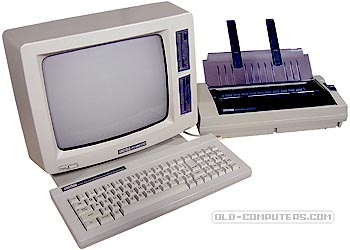
I bought my first word processor – the almighty Amstrad – back in the mid-1980s. It allowed me to present a piece of work that was spell-checked and laid out properly. Even a dot-matrix printer – set on high quality – could produce decent looking type. And although this was not the model I owned, you’ll notice something about this PC – no mouse. Everything was keyboard-driven. I loved it, and hung on to my old version of LocoScript as a word processing package for years after it had gone out of date. The thesaurus program knocks later ones into the proverbial cocked hat. Ah, nostalgia – it isn’t what it used to be. <sigh>

And now, when I send out sets of digital images on DVD-R, they have a fully printed label, the pictures are sorted into order, renamed to relate to the subject matter, and numbered. I even rename the disk itself, so as soon as it goes into the drive, you know what it is.

Sounds a bit daft, doesn’t it?

Not if you keep getting the work.

I’m not saying that laying your work out correctly, numbering the pages right from the start of the typescript, and spell-checking the document, will get you a deal. Let’s be honest about this. It won’t. There’s an old motor-racing saying that goes, “You can tidy up speed, but you can’t speed up tidiness.” And so it is with writing. If the style and the voice is there, it’s going to shine through regardless. But why make things difficult for yourself?

People may think that they make considered decisions, but the truth is that most job interviews are passed or failed within the first three minutes. Sending out a piece of work for consideration is like an interview. And quite beyond the quality of the writing, sending stuff out that needs rearranging before it can be printed or read, is asking for a negative response.

I have recently been reading work from various unpublished writers, who wanted my opinion (for what it’s worth!) and found the following difficulties:

Block paragraphs instead of indented.
OK, not a great problem, until you try and print out the pages to read. Then you find out just how many blank spaces there are, and how many extra pages of print it takes up. I’m not made of ink, and think of the poor trees!

Double line spacing instead of one-and-a-half.
Again, not a big problem, and one that’s a lot easier to block-alter. I have always presented typescripts in 1½ spacing rather than double, purely because it looks better on the page – more like a book and less like a manuscript – but still allows room for comments between the lines, if necessary. And again, it saves on trees. I quickly re-spaced the t/s of FOURTH DAY and discovered it went from 329 A4 pages to 427. That’s a lot of extra paper.

Font size.
This is starting to make me sound really picky, but I’ve had stuff sent to me in everything from eight-point, which makes you go cross-eyed halfway down the first page, to fourteen-point, which feels like the writer is shouting at you. I use a 23in widescreen computer monitor, and this makes me feel like I’m going deaf. Please, twelve-point is fine.

Page numbering.
Either you get no page numbers at all, and have to add them in, or occasionally I’ve had each chapter sent as a separate file, with the numbering returning to 1 for each one. And no identification of the author or title in the file title, or occasionally nothing in the header or footer in the document itself. Mind you, I think that’s better than putting a © copyright symbol in with their name, like they expect I’m going to steal their work. If you’re that worried, don’t send it to me.

Be consistent.
Most of the time, it really doesn’t matter if you spell something as one word, two words, or hyphenated. But not all three. In the same paragraph. UK publishers use single speech quotes, and US publishers use double. Either is fine, but not a mix from one page to the next.

These may seem like basic, basic points, and indeed they are. Most are easily fixed with a few keystrokes, but why make the person you are sending your work out to, have to do this before they can read your actual words? Remember those three minutes? How many of them have you wasted in making your good impression?

And then there’s attitude. I love to try to help and encourage writers to achieve their dream of publication. It gives me a real thrill to pay it forwards, it really does. But you can take the pish.

I’ve had approach email from people that actually start, “I’ve never read any of your work, but…” and end up attaching their opening chapter for my opinion. I have a website I’ve taken a lot of time and trouble over. It has extracts – both audio and print – and opening chapters of all my books, plus openers of short stories. Don’t you think it might be worth five minutes having a click round? OK, I don’t expect you to go out and buy a book on the off-chance, but at least go and check one out of the library.

I’ve also had approaches that ask for an opinion, and then admit that they’ve already sent the work out on submission anyway. In which case, what does my opinion matter? Why are you asking if it’s too late to do anything about it anyway?

I’m happy to help, really I am. Most writers are. But you can really help yourself if you do a little research first. At least pick a writer whose work you know and admire, so you know in advance that their comments on your style are relevant. We all ask dumb questions occasionally. We all make mistakes, we’re all human, but give yourself a chance to give us a chance to help.

This week’s Word of the Week is subsultive, meaning moving by sudden leaps or starts; twitching, and also subsultus, meaning an abnormal convulsive or twitching movement, usually of the muscles, from the Latin subsultare, to jump, hop, from sub up, and salire to leap.

I’m in and out of the office in fits and starts today, but I’ll get back to everyone as soon as I can!


Breaking News!


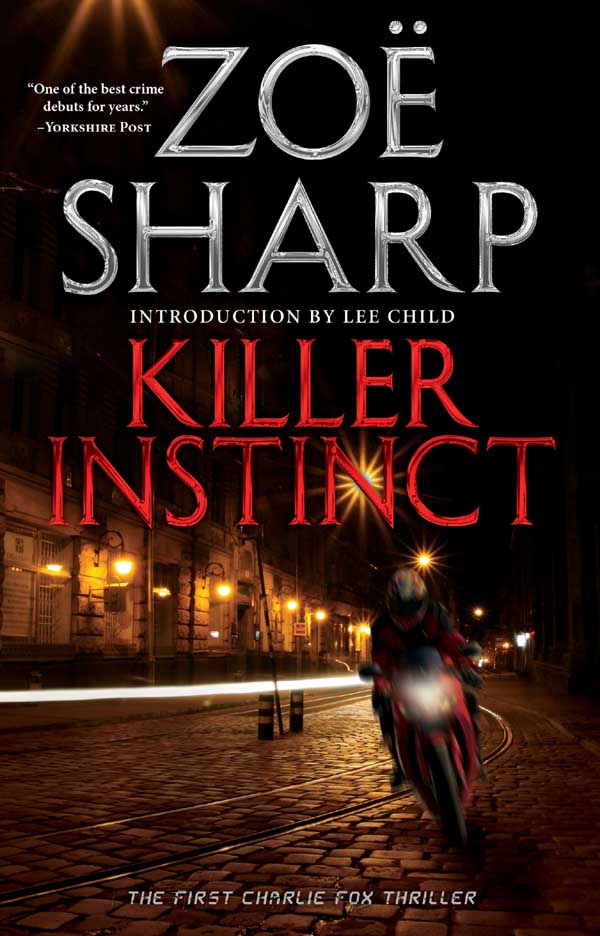
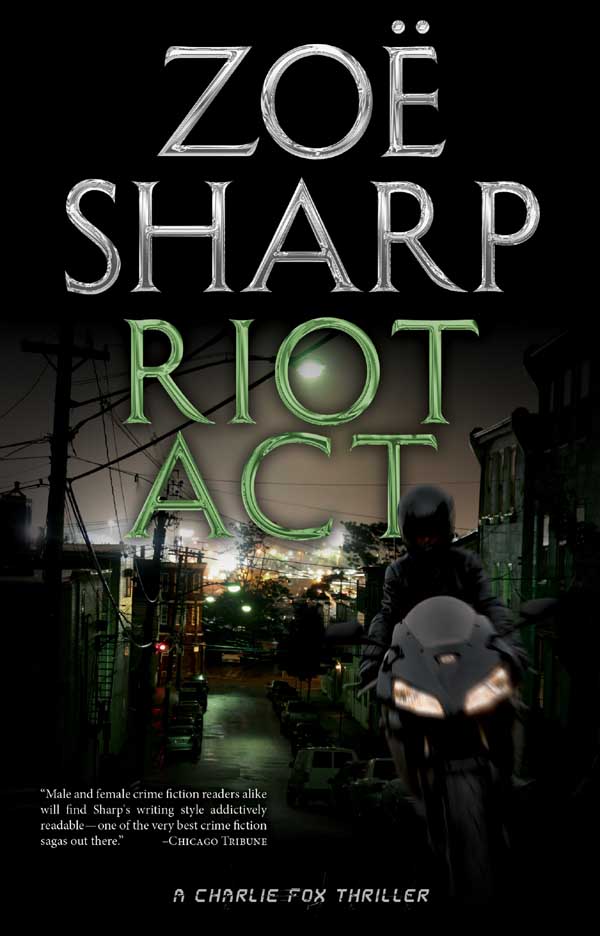
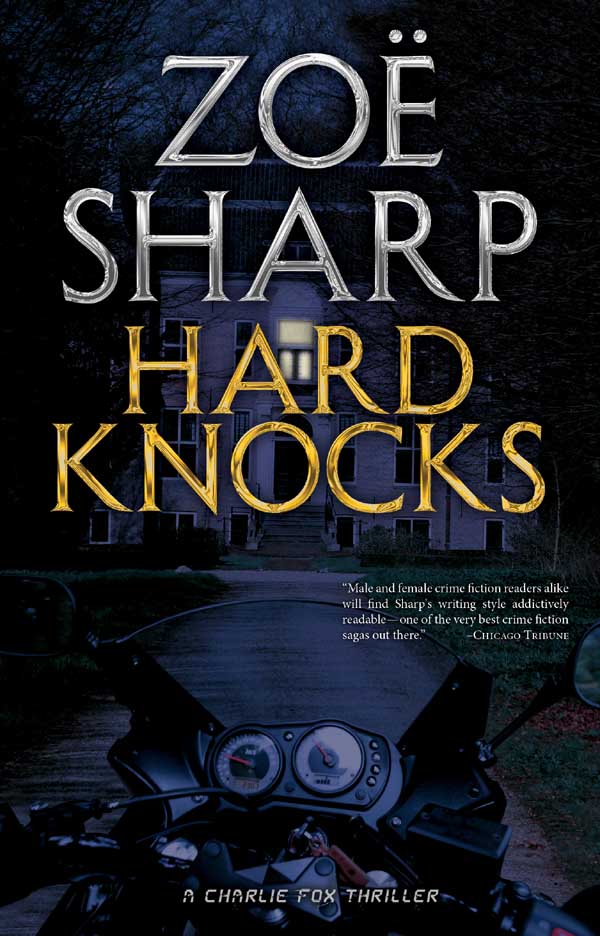
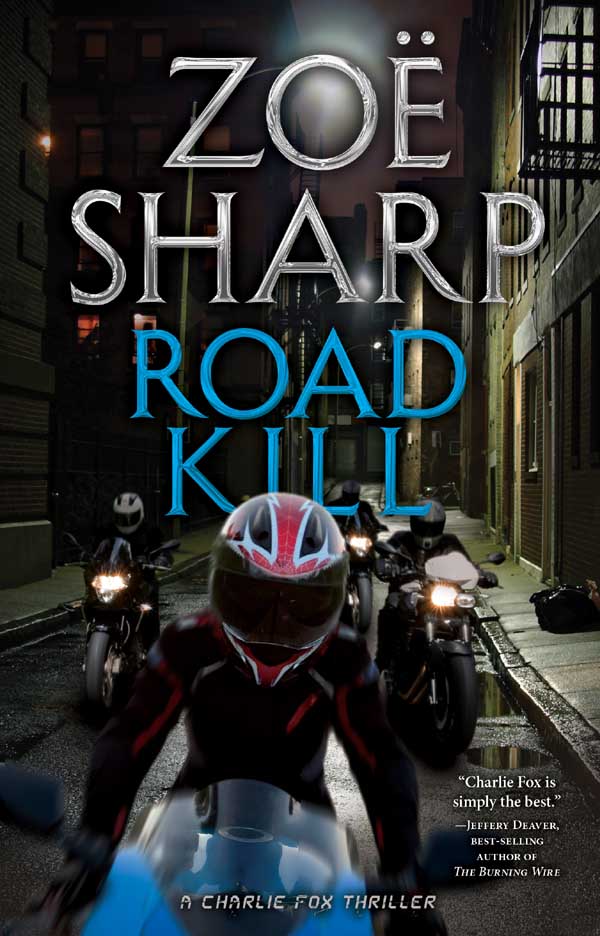
Busted Flush have just announced all four covers for the backlist of the early Charlie Fox books, coming out in the States over the next twelve months, and I think they look fabulous! I’ve been grinning ever since I got them ;-]


Coming Clean


By Louise Ure


Several days ago, two of our ‘Rati readers, PK and Berenmind, commented that, when we’re faced with a paucity of topics for blog posts, they’d be just as happy reading about the daily life of the ‘Rati authors. What we’re doing. What we’re thinking. How we’re faring.

That was a joy to know. That somewhere out in that shimmery internet there are friends who I’ve only met here at Murderati. People who come to visit even though we don’t always write about murder or mysteries or the marketing thereof. People who might just want to know how we are.

It’s time I come clean and tell you how I’ve been.

Horrid.

Just after Thanksgiving weekend, my husband, Bruce, was diagnosed with Stage IV lung cancer. It has already metastasized to his bones, his adrenal gland and to an area surrounding his heart. It is incurable. It is inoperable. And the chemo doesn’t seem to be working.

He had a small cough and went in to see our doctor the Monday after the holiday weekend. She said his lungs sounded fine, but recommended a chest x-ray just to be sure. Our lives changed as of that day.

These last ten weeks have been a horror of hospital stays, white blood cell counts, plummeting weight loss, radiation, PICC lines, chemotherapy and nausea. I’m learning a new language of pain and loss. And it was hard to hide that in my blog posts and comments.

No more.

I promise not to make Murderati a bi-monthly update on this personal hell, but it’s nice to know that friends can be open with each other if need be.

My real life neighbors, friends and family have been extraordinarily kind. They bring soups and sweets and lists of clinical trials that we may not have considered yet. Other friends have been supportive by email and by phone.

Even the insurance company has exceeded my expectations with their courtesy and competence.

Bruce’s attitude is great. He is a man of dogged determinism and his optimism is unflagging.

We say “I love you” more often these days.

I’m not writing at all. Not even a diary. I know some people say it was helpful to them to do so, but for the moment it seems too much like rubbing sandpaper across a suppurating wound. My only jottings are to note the date for a visiting nurse or to monitor a change in oxygen levels.

I’ll try to keep up my end here at Murderati, but please understand if some weeks my posts are short, or sad, or maybe filled with dark humor. Whatever it takes to get through the day.


Much love to you all,


Louise


I Don’t Want to Grow Up…So Why Must My Characters?

by Alafair Burke

A pop psychologist coined the phrase Peter Pan Syndrome to describe men who want to remain boys.  If there’s a female version of the syndrome, I suppose I probably suffer from it.

Don’t get me wrong.  I like to think I’ve matured in the ways that matter.  I confront my problems.  I deal with people directly.  I don’t lie to my parents even when the truth is uncomfortable.  And when I want to lose weight, I do it sensibly – not like that popcorn and pickle diet I tried my sophomore year. 

There are perks that have come with age as well.  I have a real car instead of that oxidized baby-blue Chevy Chevette POS I used to share with my sisters.  I no longer work at Benetton.  I can stay up late whenever I want.

But, deep down, inside, where it really counts?  I don’t want to grow up.  I still dance in my living room, stomp in snow piles, and break out into the occasional handstand.  Last Thursday, I ate pudding for lunch an hour before teaching the search incident to arrest doctrine to my crim pro students. 

The world changes around me, but I’m still the same oddball interacting with it.

I used to be a choir geek obssessed with 


 These days, I inner choir geek watches America Idol and Glee, and, although I no longer tape posters to my walls — honestly?  I’d love for just one day (maybe week) to be

or   

Am I alone in feeling that external time passes far more quickly than our internal clocks can possibly register?  I don’t think so.

My mother told me when I turned thirty that she still looks in the mirror and expects to see her thirty-year-old self.  These guys?  I know they don’t define themselves through biological age.

So what’s my point?  If, at heart, most of us don’t want to grow up — and don’t really acknowledge that we have — why must our fictional characters age on the same clock as those of us stuck in the real world?  My husband always tell me to face the music: the only alternative to aging is death.  But why must that be true for the characters who live through our words?

One of my favorite writers once told me that his biggest writing regret was that he’d given his beloved series character a year of birth.  By doing so, he forever locked his character in the continuum of time, and inevitably that character will face the realities of grey hair and back pain.  And we’ve all experienced that as readers, haven’t we?  We watch as our favorite protagonists reach their seventh and eighth decades but suspend disbelief as they continue to kick in doors, crack heads, and score with the ladies.

My good pal Kinsey Millhone, on the other hand, gets to stay in her thirties.  But to keep Kinsey from aging in real time, author Sue Grafton created a time capsule, freezing the alphabet series forever in the 1980’s.  With no computers or cell phones, Kinsey’s world falls further into the distance from the present with each new book. 

But why must a writer have to choose between youth and the present?  Having celebrated its twentieth anniversary, The Simpsons is now the longest-running prime time show in TV history.  But Bart’s not a middle manager in an office park, Lisa’s not contemplating her biological clock, Homer and Marge are still ambiguously middle aged, and Maggie’s still working on her pacifier.  But the world around the family changes.  For example, in an early flashback, Homer was into Steve Miller’s The Joker.

 More recently, we learned that Homer spent college in a 1990’s Kurt Cobain-like state.

My Ellie Hatcher series is (hopefully) still in its inchoate stages at the third novel.*  Although I could always change my mind, my plan is to pull a Simpsons,** always setting the books in the present, but having only a short period of time supposedly pass between books.  The year will change.  So will the cultural references.  But the people in Ellie Hatcher’s world get to stay young.

If I’m lucky enough to enjoy a long-running series, I fully expect to receive emails complaining about “continuity problems,” but I plan to find a polite way to tell the haters to suck it.  If it’s intentional, it’s not a problem.  I pride myself on the authenticity of my work, but who says fictional characters have to age like the rest of us? 

I’d love to hear comments:  What have other series authors done to tackle the age issue?  And would you think less of a series if the protaganist got to experience a changing external world without having to age like the rest of us? 

*B-ish (because it’s a footnote) SP: 212, the third novel in the series, is out March 23.  Read awesome reviews here and here.  Watch my low-budget, home-made video trailer, set to one of the aforementioned pop idols, here.

** A lesson on knowing your audience: I unleashed my the-Simpsons-don’t-age observation at a book event, and it turned out that no one in the audience — I mean no one — had ever seen a single episode of the Simpsons.  They looked at me like a child who ate pudding for lunch.

If you enjoyed this post, please follow me on Facebook and Twitter.

So who would play the villain?

By Allison Brennan

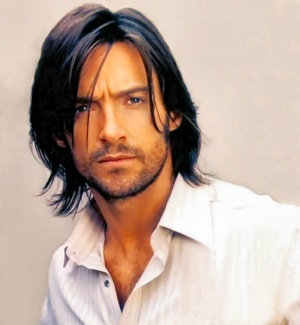
I never visualize real people when I create a character. They are as unique as anyone, and I don’t model them after specific people. But they do tend to certain “types” and I’ve had fun over the last few years picturing which actor or actress would play my heroes. For example, Nathan Fillion from FIREFLY (a more serious Nathan than Nathan Fillion from CASTLE) would make a good Quinn Peterson from THE HUNT. And Evangeline Lilly would make a good Miranda Moore from THE HUNT. Or David Boreanaz as Jack Kincaid. I would say Hugh Jackman would make a great Rafe Cooper from ORIGINAL SIN, but long-time JD Robb fans have Jackman pictured as Roarke, and I really can’t argue with that (though I picture Roarke taller and broader . . . )


And then there’s who would play Moira O’Donnell . . . that one I’m not so sure yet. She’s so real to me that no one seems to fit, and I think I need to watch some more of the teen movies to find the right actress.

But honestly? It’s the villains who intrigue me. I especially like actors who don’t traditional play a villainous role as villains because they tend to be more compelling, less stereotypical, and creepier. Anthony Hopkins was brilliant as Hannibal Lecter of course, and I also loved him as the killer in FRACTURE which was a sleeper that was still a good movie. Anthony Hopkins is so well-known as Hannibal that I’d much rather see him as a hero in the future. He’s already played the ultimate villain.

Actors who are truly talented should be able to play both a hero and a villain.

Johnny Depp in THE SECRET WINDOW from Stephen King’s short story. Glenn Close in FATAL ATTRACTION. 

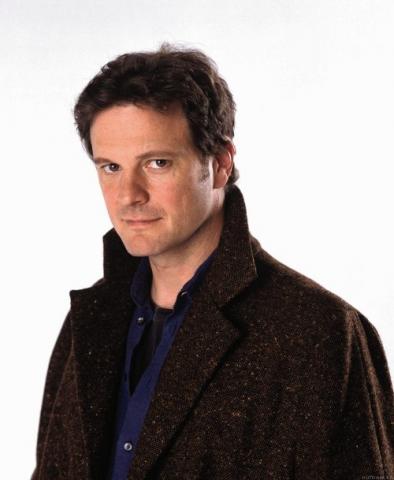
I saw this photo of Colin Firth and instantly thought he’d make a great villain–disarming, attractive, but with the potential of being evil.


He could be the attractive, extremely intelligent sociopath Theodore Glenn from KILLING FEAR. Or maybe Matthew Walker from ORIGINAL SIN, someone who can look and seem very helpful and then turn on you on a dime.

Other talented actors I’d love to see as a really good villain . . . Russell Crowe. Brad Pitt. Johnny Depp. Robert Downey, Jr. Maybe John Cusack as the very tragic erotomaniac Aaron Doherty from TEMPTING EVIL. I doubt Meg Ryan would ever play a bad guy, but I’d love to see her play a sociopath. I think she could pull it off. Or someone like Emma Thompson.

What about you? Is there an actor or actress you’d like to see stretch to play a villain? A specific villain?

I’ll be responding late as I’m at Disneyland all day. But I’m interested in hearing all your ideas!

What’s the next book?

by Alexandra Sokoloff

I am (THANK YOU GOD, ANGELS, AND THE UNIVERSE) closing in on the end of my current book, my first paranormal, part of The Keepers trilogy coming out in the fall.  

This is the stage of a book in which I have no earthly interest in doing anything other than to just get the damn thing done.    Even though I am comfortably within my deadline, though not entirely of my own doing,  I am not doing much of anything these days but waking and working, pausing once during the day to go work out (because if I didn’t, I would kill people).   And falling into an exhausted sleep after, if not during.

Not that there isn’t a lot of procrastination going on within the day, but I really don’t WANT to do anything else – I don’t want to talk to anyone, I don’t want to watch movies or TV, I definitely don’t want to blog, I don’t want to go out to lunch or dinner or Superbowl parties (although I was thrilled  at the outcome).   The state of discomfort of being near the end of a book but not quite finished is so great to me that I would rather put everything else aside and push through to the end and pick up the pieces of whatever life I have left when it’s actually over and there is that feeling of relief so vast that you actually remember why you ever wanted to write in the first place.

But I find myself in an interesting dilemma, for maybe the first time in my professional writing life.

I don’t know what to write next.

That’s not entirely true – I am 3/4ths done with a YA I was writing at the same time that I was writing this paranormal, but I bailed on it around Christmas when I realized it was just too hard to be writing two books at the same stage of the writing process – that is, first draft, second half.   That’s the HARDEST stage of any book for me and I couldn’t handle doing two at that same stage.    So yes, I will go back and finish that book with some of this new “I finished the book!” energy.

Oh yeah, and also about the same time I was finishing my Screenwriting Tricks For Authors workbook.  (Um, the next time anyone hears me whining about not getting enough work done, can you just gently remind me…)

What I mean is, I don’t know what I’m writing after that YA, and that’s an issue, because as you know, or for those of you who don’t know, as I’m about to tell you, you always need to be at least a year ahead of publication, so I need to have another book in the pipeline for NEXT year.

Now the fact is, I have several complete proposals done.   Whole stories worked out.  Could bash out a screenplay on any number of them in six weeks, easily  – have done it a million times before.   (Well, dozens.)   Actually I have a whole first draft of a book done, too, but that I can’t go back to right now because it’s just too painful a reminder of a very painful year last year – I need more distance to finish that one sanely.

And I probably will write the books in those proposals one day.   Or I won’t.   I have so many books I am never going to be able to write.    But I know they’re not the right book right now.   At this stage of writing I can’t afford to be working on any book that isn’t the RIGHT book.

In the past I would have just jumped into one of those ideas, just decided and soldiered on.    I HATE the not knowing.    It is excruciating.   But we really have such limited time – as writers and on earth.   

And the truth is, I’ve had a cataclysmic year.  Profound changes.  I’m not the same person I was when I wrote those proposals.  I feel I need to start from where I am now – wherever that is, and I’m not even pretending that I know.

So as uncomfortable as I am about it, I am not jumping into the first thing that I think of, or the first thing that pleases me but that might not be a big enough book.    I am waiting. I am meditating.    I am reading randomly.   I am paying attention to dream images, songs, people, that catch my attention.    And I am taking my own writing advice.   I am making lists.

On my own blog, at the prompting of a reader, I have started a gargantuan series on “How to Write A Novel, From Start To Finish.”   (No, I never once said I wasn’t insane).

And I’m doing it for ME as much as anyone. 

I’ve already done four or five posts on just generating that perfect idea  – and I intend to do several more –  because this is a part of the writing process that people rarely spend enough time on, and is crucial if you want to develop a riveting book, even more crucial if you have any hope of being paid to write. You are going to spend two years of your life, minimum, on this book (and that’s truly a minimum). 

So that brings us to the eternal question:   

How DO you get your ideas?

When people ask this of authors, many of us tend to clam up or worse, get sarcastic – because the only real answer to that is, “Where DON’T I get ideas?” or even more to the point, “How do I turn these ideas OFF?”

The thing is, “Where do you get your ideas?” is not the real question these people are asking. The real question is “How do you go from an idea to a coherent story line that holds up – and holds a reader’s interest – for 400 pages of a book?”

Or more concisely: “How do you come up with your PREMISES?”

We all have story ideas all the time. Even non-writers, and non-aspiring writers – I truly mean, EVERYONE, has story ideas all the time. Those story ideas are called daydreams, or fantasies, or often “Porn starring me and Edward Cullen, or me and Stringer Bell,” (or maybe both. Wrap your mind around that one for a second…)

But you see what I mean.

We all create stories in our own heads all the time, minimal as some of our – uh – plot lines may be.

A better question is “What’s a GOOD story idea?”

I see two essential ingredients:

a) What idea gets you excited enough to spend a year (or most likely more) of your life completely immersed in it –

and

b) Gets other people excited enough about it to buy it and read it and even maybe possibly make it into a movie or TV series with an amusement park ride spinoff and a Guess clothing line based on the story?

a) is good if you just want to write for yourself.

But b) is essential if you want to be a professional writer.

As many of you know, I’m all about learning by making lists. Because let’s face it – we have to trick ourselves into writing, every single day, and what could be simpler and more non-threatening than making a list? Anything to avoid the actual rest of it!

So here are two lists I encourage my workshop students to do to get those ideas flowing, which I am now doing for myself.

List # 1: Make a list of all your story ideas.
 
This is a great exercise because it gets your subconscious churning and invites it to choose what it truly wants to be working on. Your subconscious knows WAY more than you do about writing. None of us can do the kind of deep work that writing is all on our own. And with a little help from the Universe you could find yourself writing the next Harry Potter or Twilight.   That’s my plan, anyway.  

Also this exercise gives you an overall idea of what your THEMES are as a writer (and very likely the themes you have as a person). I absolutely believe that writers only have about six or seven themes that they’re dealing with over and over and over again. It’s my experience that your writing improves exponentially when you become more aware of the themes that you’re working with.

You may be amazed, looking over this list that you’ve generated, how much overlap there is in theme (and in central characters, hero/ines and villains, and dynamics between characters, and tone of endings).

You may even find that two of your story ideas, or a premise line plus a character from a totally different premise line, might combine to form a bigger, more exciting idea.

But in any case, you should have a much better idea at the end of the exercise of what turns you on as a writer, and what would sustain you emotionally over the long process of writing a novel.

Then just let that percolate for a while. Give yourself a little time for the right idea to take hold of you.  We all know what that feels like – it’s a little like falling in love.

List # 2: The Master List

The other list I always encourage my workshop students to do is a list of your ten (at least) favorite movies and books in the genre that you’re writing, or if you don’t have a premise yet, ten movies and books that you WISH you had written.

It’s good to compare and contrast your idea list with this IDEAL list.

So that’s another thing I’ve been doing again for myself.   Here’s part of it, in no particular order.

Rosemary’s Baby
Silence of the Lambs
Alice in Wonderland
The Haunting of Hill House (book and film)
The Shining (book and film)
Room with a View (film)
Withnail and I
A Wrinkle in Time
The Witching Hour
Pet Sematery
Hamlet
Arcadia
Rosencranz and Guildenstern Are Dead
The Fountainhead
Atlas Shrugged
Notorious
Vertigo
Suspicion
Rebecca (book and film)
Ten Little Indians/And Then There Were None
It (the book)
Bringing Up Baby
The Thin Man
The Little Foxes
The Children’s Hour
Pride and Prejudice
Bridget Jones’ Diary (book and film)
The Wire
Deadwood
Mad Men
I, Claudius
Fawlty Towers
Rome
Philadelphia Story
It’s A Wonderful Life
Groundhog Day
The Breakfast Club
Poltergeist
The Stand (book)
Carrie (book and film)

I included my favorite TV, and I could go into musicals, too, but I’ll spare you. Well, except I have to mention Sweeny Todd. And Phantom of the Opera. And Chicago. And…

And on the myth and fairy tale front:

Ariadne (Theseus and the Minotaur)
East of the Sun and West of the Moon
Eros and Psyche
Beauty and the Beast (all three of those last are the same story, essentially).
The Handless Maiden
The Yellow Dwarf
1001 Nights
Sleeping Beauty

Now, that’s a BIG list, of all-time favorites that I see/read over and over and over again, and it doesn’t even begin to scratch the surface.  And on the surface, it seems to have a lot of disparate genres there. But there are underlying commonalities that are very specific to my own taste (and I’m the only one who can truly say what those are, just as you are the only one who can say what your emotional preferences are).

What do I see about that list?

Dark dark dark dark dark…. Except for the romantic comedies and swoony Room With A View.

Lots of horror, but more psychological than gory. Lots of psychological thrillers. Some adventure fantasy and fantasy fantasy. The Stoppard is about trippy extra-dimensional occurrences, plus he’s a genius. Actually that goes for Shakespeare, too, extra-dimensionally. Lots of psychology – the Lillian Hellman plays are dramas, but very dark ones that explore ordinary and completely chilling human evil. I especially like human evil so big it seems almost supernatural (as in Silence of the Lambs and Rebecca). Withnail and I is a flat-out drug movie, and has the British comedy of chaos I so love in Fawlty Towers. Lots of sex, or at least, the sex is part of what I love about a lot of those choices. (The Wire and Deadwood, for example…). Lots of Cary Grant. Oh, right, that would be sex.

What are some of the themes and subthemes of these stories? (For me, personally, I mean, and not trying to be too analytical about it – just spewing:)

Good vs. evil (and good usually triumphing, ambiguously). Inability to distinguish the supernatural from reality. Inter-dimensionality. Erotic tension. Loss of control (and that absolutely includes the comedies on there – Fawlty Towers, Bringing Up Baby, Withnail and I, are complete rollercoaster rides of hysteria.) What is reality? Man Must Not Meddle. The deal wit
h the devil. What it means to be a hero or heroine. Unlikely heroes and heroines. Coming to terms (or not) with one’s extraordinary gifts. Disparate people uniting to accomplish something as a team. A man and a woman who don’t trust each other having to work together, discovering they are divinely matched.

And even more importantly, what FEELING am I looking for when I read and watch these stories? What EXPERIENCE am I looking for? Again, this may be the most important indicator of what genre you’re writing in.

I like a lot of sensation in my stories. That is, I want a story to make me experience a lot of sensation. And not easy, light, fun sensations either, for the most part. Fear, thrills, doubt, sex, urgency, loss of control, violent surprise. I love the overwhelming feeling of having something huge, possibly supernatural, going on around me (in the form of the characters I’m projecting myself onto). Something evil, even, but so powerful and mesmerizing I have to explore it, understand it. And that can be a situation, as in Rosemary’s Baby or The Shining, or a person, as in The Children’s Hour. I want a sense of cosmic wonder. I want a sense that good does conquer evil, that good people can make a difference, but without sugar coating. I like a lot of game playing, matching wits (Philadelphia Story, Thin Man, Silence of the Lambs).

So, what I write is psychological horror, or supernatural thriller, or supernatural mystery, or psychological thrillers with an extra-dimensional twist. And while that sometimes makes my books frustratingly hard to categorize (in libraries, for example…) it also has branded me in a way that has been useful to me as an author, and that I’m pretty obligated to stick with now.    Let’s face it – I’m not going to suddenly resurrect the chick lit genre.   And in a happy non-coincidence, what I’m looking for in a book is what my readers read my books for, or so they tell me.  

So this week as I make my lists (and finish that damn book), I am concentrating on the FEELING of my next book, and letting the details come as they will.

I hope.

Authors, my question for the day is – What are you trying to make your reader or audience FEEL? Horror? Thrills? The glow of romance? The adrenaline and exhilaration of adventure?

And readers, what are you hoping a book will make you feel?

– Alex

————————————————————————-

PS.  The Price was released in the UK this week, from Little, Brown:


Buy it here…


THE GOOD STUFF

By Stephen Jay Schwartz

“Would you rather vomit out your eyeballs or your nose and ears?”

My nine-year old boy has taken to asking such questions lately.  It reminds me of that scene in the movie “Parenthood” when the kids are in the back seat of the car singing disgusting lyrics to favorite camp songs, and Steve Martin says, “This is what we get for sending them to that expensive summer camp?”

My wife and I both chose to vomit the nose and ears and keep the eyes.  I realize that I’d rather vomit the whole shebang than lose the hair.

It’s been heavenly coming home from work every night to spend time with my family.  For years now I’ve been doing the day job then going to the café to spend another five or six hours writing.  And my weekends have been ten to twelve hour writing days.  But the second book in my two-book deal is done and when I come home now I see my wife and my kids and there’s simply nothing else I want to do but hang with them.

I’ve been playing chess with my nine-year old and he kicks my ass every time.  I finally got one win from him a couple weeks ago and I’m holding onto that feeling with everything I’ve got.  I don’t expect to be able to beat him again.  It was a fluke, it took all my mental energy and I didn’t have a clear thought for days after.  The kids have also got me onto their internet game-making site called Playcrafter.  They design and publish these cool little video games, and now I’m part of their world. 

And I’m just listening.  Hearing what they have to say, on a whole host of subjects.  My eleven-year old reads Scientific American and Discover and Night Sky and he tells me about the shrinking stars and inflationary expansion of the universe and the evolution of species and String Theory and I don’t understand half of it.  They tell me about the world of their Imagination, which is an actual creation, a story they’ve been building between themselves for years.  They add characters and adventures and they’ve put together this long family tree that covers a half-dozen generations.  They spend some time every day on this, and it’s like watching “story improv” to see them going at it.  I told them someday we’ll put all of that into a cool, YA book, written by them, with the help of their parents. 

And they both take violin lessons and, home from work yesterday, I watched them, with their long hair pulled back to keep from getting caught in the bows, and I felt warm and wonderful inside, with the rain pounding on the roof and the labradoodle like a lump of black sugar at their feet.

This time is fleeting.  I have to begin work on a proposal for my third book, which will be a standalone.  And I have to sweep up the mess of my life, what fell between the cracks while I wrote the first two.  There’s a foreclosure in the works, and maybe a bankruptcy, and the likely, looming loss of my day job, and more and more and more.  What I’d really love to do is make a clean break and go straight to writing full-time, which is what most of us would like to do, I’m sure.  Maybe a writer-in-residency program at some artist colony, a place to keep myself and the family for six months or more.  If anyone has any ideas…I’m all ears.

I’ll take my time on the book proposal.  I don’t want it to get in the way of daddy time.  I know that, soon enough, I’ll be back in the trenches, with deadlines and page-count expectations hanging over me.  My boys will see me with my head buried in the laptop and they’ll wonder what happened to the guy who used to end up at the bottom of every dog pile. 

Tonight, instead of burying myself in research, I’ll curl up on the couch under a blanket with the wife and kids and watch “The Witches of Waverly Place,” or my favorite, “Phineas and Ferb.”   Their world is simply much more fun than anything else I can think to do.  Sure, there’s a lot of crying and stomping of feet.  But, once I’m done, the kids always find a way to make me laugh.  We’re in that perfect, magical time, the time when kids actually want their parents around.  And their perspective is always refreshing.  We’ve had a huge “Happy Birthday!” banner on the wall for two years now, because the kids didn’t want to take it down.  Because, as I’m told, “it’s always someone’s birthday, somewhere.” 

They keep the Peter Pan in me alive.  I don’t ever want to take them for granted.  After all, this is the good stuff.


FLOUNDERING IN THE DIGITAL MORASS

By Brett Battles


When I started to write this blog entry, I began a piece on what I consider to be the new newspaper. Interesting? Perhaps. But I found the voice in my head going “blah, blah, blah” after a while. So maybe I’ll save that for another time. That’ll be up to you (read to the end).

Can I be honest here? I’ll pretend I’m hearing a resounding SURE.

Thanks. Okay, here goes. Sometimes trying to write a blog post sucks. All of you who blog know what I mean. Am I even saying anything anyone cares about? Is this interesting? Am I making sense?

A few years ago, I used to post multiple times a week on my own blog. Some of you reading this do that now. Again with the honesty…there’s no way in hell I could do that today. I would go CRAZY. Give me a book to write any day. But two, three or, my God, four or more posts a week? Stripping me bare and dropping me in the middle of Time Square in January would be less painful! (More humiliating, perhaps, but it’s a trade off I might be willing to make.)

The problem is I only blog every other week now and I STILL run out of ideas! Okay, that’s not completely accurate. It’s more of a I-don’t-know-what-to-write-that-people-will-find-interesting kind of thing.

There are some weeks when my Thursday is getting closer and closer, and I am starting to sweat. “Pull your head out of your ass and think of something,” I tell myself. I always do, but sometimes the gap between that doing and there being a gaping blank hole on Murderati where my post should be is a razor thin line. (And just so you don’t think I’m a complete flake, there are times when I get a post written and up ready to go a week or even more ahead of time. This week was not one of those weeks.)

But those doubts about whether I’m writing posts that people are interested in remains. That’s fueled a lot by the fact that I’m pretty sure I’m Murderati’s least commented on poster. (This is not a pity plea, just stating potential facts here…if there is anything like a “potential fact.” I guess I should go back and do a scientific survey, but…yeah…I’m not going to do that.) (I should also note that about a year ago I sent our wonderful JT an email saying I was obviously not writing the kind of things people wanted to read, and was considering leaving the blog. Among other things, she pointed out that it would be helpful if I actually commented on the other Murderati folks posts, to remind our readers I was out here, and to engage more in the general conversation. OUCH! But damn if she wasn’t right. Though I did comment on occasion, it was rare. Duly chastened, I forged on. My commenting has still be somewhat sporadic, but I’m trying. But I know me, and on the perfect/not-so-perfect scale in this area the needle of my meter will always to tend to trend to the not-so-perfect side. Sincere apologies to all my fellow Murderati contributors…I’m not giving up, though.)

ANYWAY, back to the non-parenthesis’d portion of today’s entertainment. And that would be the fact that I’m looking for your help. What I really want to do is write about things you’d be interested in reading. So far, I don’t know if I’ve hit that mark. Perhaps, but perhaps not. (Maybe what I need to do is to go off on a rant like Rob did a few weeks ago. That was HILARIOUS. But, see, I’m generally not a ranter. I’m the appeaser, the peace-maker, the Vaseline on dry skin…wait, strike that last one.) Oops…more parenthesises, sorry about that.

So back to what I was trying to say… Today, I want you to be “where I get my ideas from.” (At least, blog-wise. Story ideas, I’m good.) Parenthesises, Brett! Parenthesises! I can’t promise to address every topic suggested, but those I either have knowledge of or an option about, I will.

So tell me Murderati faithful, what do you want to read about here?

In anticipation of your suggestions, I’ve lined up a little something interesting.

It’s an idea, that, whether you think it’s good or not, you have to admit is pretty ingenious.

Via Boingboing.net I bring you part of a patent request for the latest idea in coffin technology:

(click here to see the boingboing article, and click here to see the whole patent)