As I’m sure you’re aware, the underdog New Orleans Saints won the Super Bowl the other day. They’re probably still partying in NOLA. It was a great game, and a joy to watch, and I’m really happy for those guys, and their city.
I need to hang on to all that happiness and joy right now, because tonight at 9:00 ET, my beloved UNC Tar Heels take to the basketball court against the hated Duke Blue Devils.
Normally, I’d be getting really psyched for this game. We usually play the spoiled crybaby prima donnas from Duke and their rat-faced little coach at least two, sometimes three or even four times a season (depending on the tournament brackets), and each game, by virtue of the intense rivalry between the teams, becomes the Biggest Game of the Season.
It’s difficult to explain to outsiders just how intense this rivalry is. It can best be summed up by the title of a book (yes, an entire book) by Will Blythe about it: “To Hate Like This Is To Be Happy Forever.”
But I’m not foreseeing much happiness tonight. See, the problem is, the Tar Heels SUCK this year. I mean we really, REALLY suck. We’ve lost six of our last seven games. We lost to COLLEGE OF FUCKING CHARLESTON. It wouldn’t be so bad if we hadn’t, you know, WON THE NCAA TOURNAMENT LAST YEAR. I know it’s a rebuilding season, but JESUS, I cannot BELIEVE THESE GUYS…
Oh. Sorry. Was I shouting? I get a little carried away. Our old dog used to get up and leave the room every time he heard the sound of shoes squeaking on a basketball court on the TV, because he knew that yelling was soon to follow. It’s kind of a family tradition.
So, anyway, it’s probable that we’re not going to do all that well against those smug, insufferable pantywaists and their coach with the ridiculous and unpronounceable name. And it’s kinda got me down.
It’s not just me. UNC Coach Roy Williams, as you might imagine, is really in the dumps about how poorly our team is doing. In a recent interview, Roy (we call him Roy, ’cause we’re all like family) said : “The way I’m feeling now, I’m wondering if I’m worth anything, wondering what I’m doing.”
I read that, and I thought, “hey, that sounds familiar.” And I bet it does to you, too, if you’re a writer. You know the feeling I mean. The one you get after getting a rejection that things suck, they’re never going to get better, that let’s face it, YOU suck, and why do you even try? It’s even more discouraging if, like a lot of writers, you had some success in the past few years, only to get caught in the recent publishing bloodbaths. Clearly, any success you had was a fluke, an aberration, a mistake. Just admit it and move on, right? There are wonderful opportunities waiting in the ever-growing food-service industry.
But, you know, the team’s had bad times before, most recently in what we call The Dark Years (2000-2003), when Matt Doherty, who was clearly not ready for the stress, took over. Doherty managed to not only lead the Heels to their first losing record since 1962 (8 and 20), but also managed to drive away both key players and long time Athletic Department staff by, basically, being a world class jerk.
But we bounced back from that, with a vengeance. Did I mention last year’s NCAA Championship? And that makes it easier to believe we can do it again.
In the mystery world, look to the example of Charlaine Harris. Her first novel, REAL MURDERS, got nominated for an Agatha. But subsequent books and series did not, as her website delicately puts it, “set the world on fire.” Until she wrote DEAD UNTIL DARK, the first Sookie Stackhouse book. It won the Anthony, and more importantly for Charlaine’s career, hit the NYT bestseller list, as have the sequels. The Sookie books became a series on HBO, and I hope they’re making Miz Harris dirty rotten filthy stinking rich, ’cause she’s a nice lady.
So, despite the bleak season, the Heels lace up their shoes and get out on the court, and we go back to the keyboard. In the meantime, Roy has some more words of wisdom:
“I don’t think there’s any question you need to enjoy the ride and enjoy the journey…If you don’t enjoy the good times, the bad times can just kill you.” Williams said.
Amen, Brother Roy.
And, in writing as well as in sports, I always try to remember this classic conversation between two fans of the British football club Arsenal in the original UK version of the movie FEVER PITCH:
Fan 1: What about last season? Fan 2: What about it? Fan 1: They were rubbish. They were fucking rubbish. Fan 2: They weren’t that bad. Fan 1: They were fucking rubbish last year. And they were fucking rubbish the year before. And I don’t care if they are top of the League, they’ll be fucking rubbish this year, too. And next year. And the year after that. I’m not joking. Fan 2: I don’t know why you come, Frank. Honest I don’t. Fan 1: Well, you live in hope, don’t you?
Yeah, Frank, we do. Who knows…it’s the Atlantic Coast Conference. Anything can happen!
Two weeks ago, I wrote a blog post over on my own site about e-book piracy, and how victimized I felt, as an author, about my books being pirated. After I wrote the post, I thought I’d add an appropriate graphic to accompany the entry, so I went searching for a pirate image. I did a search on Google Images and found 17,700,000 entries.
Now, I don’t think of myself as the type of person prone to be a pirate. My daughter-in-law and my younger son both make their livings as professional photographers, so I’m well aware of the issue of photographers’ rights. Photographers want copyright control over their images just as much as we writers want control over our creations.
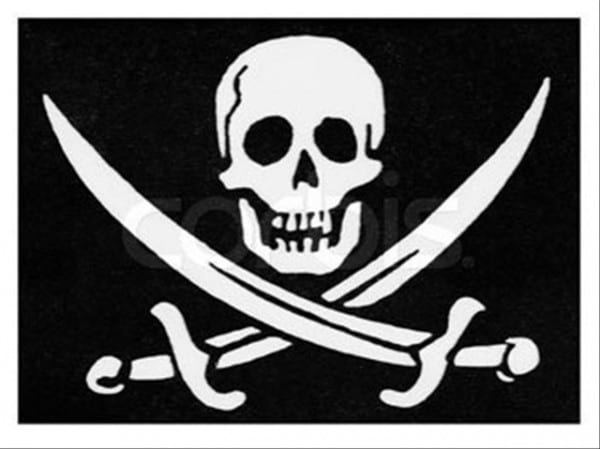
So as I looked at all those pirate images on Google, I automatically shied away from any and all photographs, because I knew they were probably under license. I shied away from anything with a live model or anything that looked like a hand-drawn illustration. I shied away from anything that had a trademark or an obvious business logo. I finally settled on the most generic black-and-white skull and crossbones I could find. It looked like your standard pirate flag symbol, something that might actually have flown on a flag two hundred years ago. How could something so generic be under license?
The blog post went up, and two weeks went by.
Then I received an email from a helpful soul, pointing out how ironic it was that I’d chosen a licensed image to illustrate my blog post about piracy. Take a careful look at that image, he advised me. There was a watermark there, almost hidden in the background. Yep, my generic skull-and-crossbones flag was a licensed image.
I’d completely missed it. I’d pirated an image for my post about piracy.
Of course I took it right down. And it got me to thinking — how often does this happen? How often do we unknowingly pull off licensed images from the internet, thereby violating the rights of artists or photographers?
I asked the person who’d written me how one can tell if something’s licensed or not, and he passed the question along to a friend of his who works in the graphic arts business. And the response was: all original creative works are copyrighted by default. The problem with Google images is that there’s no way of knowing if the image is indeed in the public domain. So to be safe, none of us should be using anything off Google images.
So where can we find free images?
He suggested a site: morgue file, a public image archive.
Finally, he added that “Many US government produced images are Public Domain, except for “agency logos” as we paid for them. NASA, EPA, etc… image can be be freely used in many cases.Just see the term of image use on most agency pages. Some require crediting the agency or photographer or not commercial use.”
It’s a valuable tip for anyone who blogs. If we hate being pirated as writers, then we should understand that it’s just as much a sin to be pirating off artists and photographers.
Just my tip for the day.
(I’ll be traveling today so won’t be able to personally respond to any comments.)
Last week I wrote a short story featuring a fiction writer in the future. Each morning she goes to work and her thoughts are harvested for stories. People known as “The Watchers” decide which of her ideas are the most marketable. In the afternoon, my poor protag must flesh out and complete those tales.
Problem is, my character is bored with their choices. The Watchers always pick the same general ideas. Originality, it seems, is frowned upon.
When I wrote the story, I wasn’t actively thinking about clichés.
I am now.
You know what? I think most of us treat clichés in a very cliché’d manner. Editors, critics, reviewers, readers — we all condemn them. Oh, no! They’re hackneyed, formulaic, unoriginal, tired.
Bull.
Deep down we crave clichés for the comfort they give us, for their efficiency and predictability.
This week I developed a taxonomy of clichés that centers on four main categories:
1. Phrases ► So hungry I could eat a cow ► Eyes like limpid pools ► High as a kite
2. Literary Devices ► Ticking clock ► Cliffhangers at ends of chapters ► Multiple POVs to give a sense of urgency
3. Characters ► Protag with crippling problems – alcoholism, traumatic past ► Brilliant scientist who is also really, really hot ► Bumbling policeman who never sees the most obvious clues
4. Themes ► Mysterious stranger arrives in town. All hell breaks loose either for the character . . . or the town. ► Boy meets Girl. Boy and Girl hate each other. Boy and Girl fall in love. ► A world is in peril. Hapless man/woman meets sexy scientist (see category #3). They save it in the nick of time.
So why do some of these “overworked” concepts sometimes work while others don’t?
I’m reading Jeffrey Deaver’s The Bone Collector right now. It’s got the ticking clock for sure. Both of the main protags – Lincoln Rhyme and Amelia Sachs – have enough emotional baggage to sink the QEII. And don’t tell me that SERIAL KILLER isn’t a cliché theme all its own.
Yet the book is a riveting read.
Is it really possible that there’s “no new idea under the sun?” That plus ça change, plus c’est la même chose — which, of course, is a cliché — is the reality?
That still doesn’t explain the difference between successful clichés and those that make us want to throw a book across the room.
Is it merely a question of how they’re employed, the way a story is told?
I honestly don’t know.
Do you?
Let’s discuss it . . .
Give me your theories. ► Create new categories of clichés.
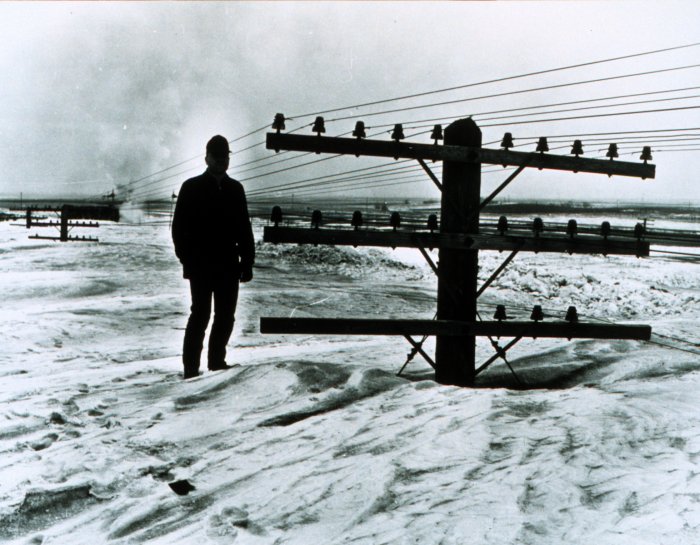
Okay, it’s FUCKING FEBRUARY and I now live near the arctic circle, here in Cow Hampshire. I hate February. I know deep in my tiny black heart that T.S. Eliot was totally, irredeemably, hopelessly misguided about that whole “April is the cruelest month” crap. April is a big fat snooze of a year-twelfth, by comparison–taxes and all. The only thing that can be said in February’s defense is that it’s the shortest, even though of course it actually consumes five years of mental time because, (oh, did I mention this already?) February SUCKS SUCH GINORMOUS BUTT!
Like I was filling my car with gas so I could drive down to New York last weekend, and it was so goddamn cold it almost made me cry, no shit. So cold it made my face ache the minute I opened the car door and I unscrewed the gas-cap and thought my hands were going to shatter and fall off, which is not something you want when you’re on deadline.
Luckily, I did not actually burst into tears, because they probably would have frozen before leaving my tear ducts and made my head explode. Or implode, or whatever. I don’t actually know, because I got a D-minus in chemistry back in high school, which allows me to disavow all knowledge of such things. Except that it was too fucking cold out.
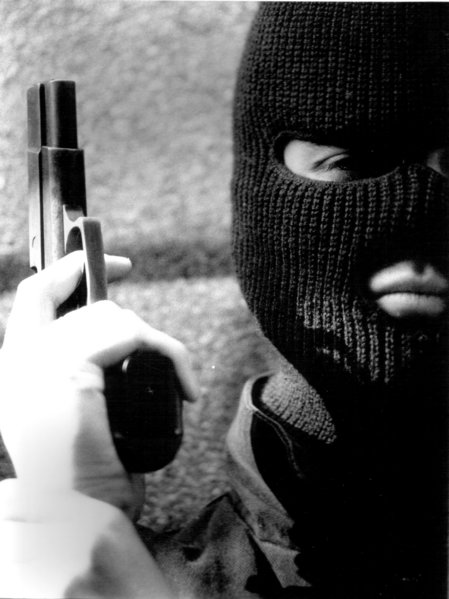
Having lived in the northeast before, however (starting at age fifteen, when I left California for an east-coast education), I know that the only way to get through this shitbox of a month is to stockpile happy things. I don’t mean kittens and puppies (especially because they’d freeze to death, HELLO), but the kind of things that can nurture the human spirit even when it’s fully dark by four in the afternoon and you begin considering the option of investing in a balaclava with especially tiny eyeholes. (the gun would of course freeze to your hand, so bank robberies are probably out until April).
Yes, if you live somewhere as cold as here and you’re not one of those genetically Calvinist psychos who run outside yelling “Yea! Now I can go build a hut out on a big lake and catch fish through a hole in the ice!”, I know you probably just want to curl up under the sofa with a cake-mixing bowl of mashed potatoes with four or five sticks of butter shoved into the middle, but this is not a sustainable plan of attack on a daily basis. Trust me, I’ve tried.
Herewith, the ten things that have sustained me through the worst month of past winters:
1. Anti-Depressants
Why not start with the big guns? And remember, they’re cheaper than cocaine and probably not cut with Italian baby laxative. Bonus!
How does he make the boomerang-shoe noise? Genius! And so NSFW…
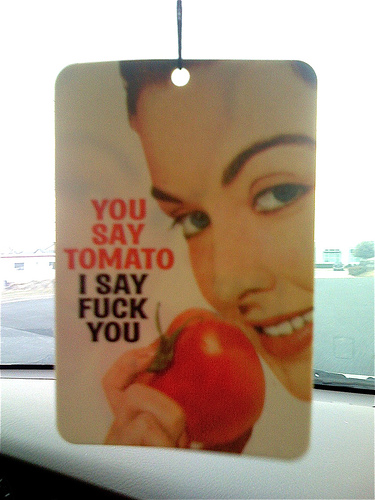
5. The car air freshener my pal Maggie bought me.
Because you* deserve a laugh after you’ve just scraped your windshield off with a metal spatula from IKEA, since even though you left California in August, you keep forgetting to buy a real ice-scraper thing at Wal-Greens. (*And by “you” I mean “me.” But you probably figured that out already. {And that last time, “you” actually meant “you.”})***
And also, it makes your incredibly bone-chilling car interior smell like tomatoes and basil.
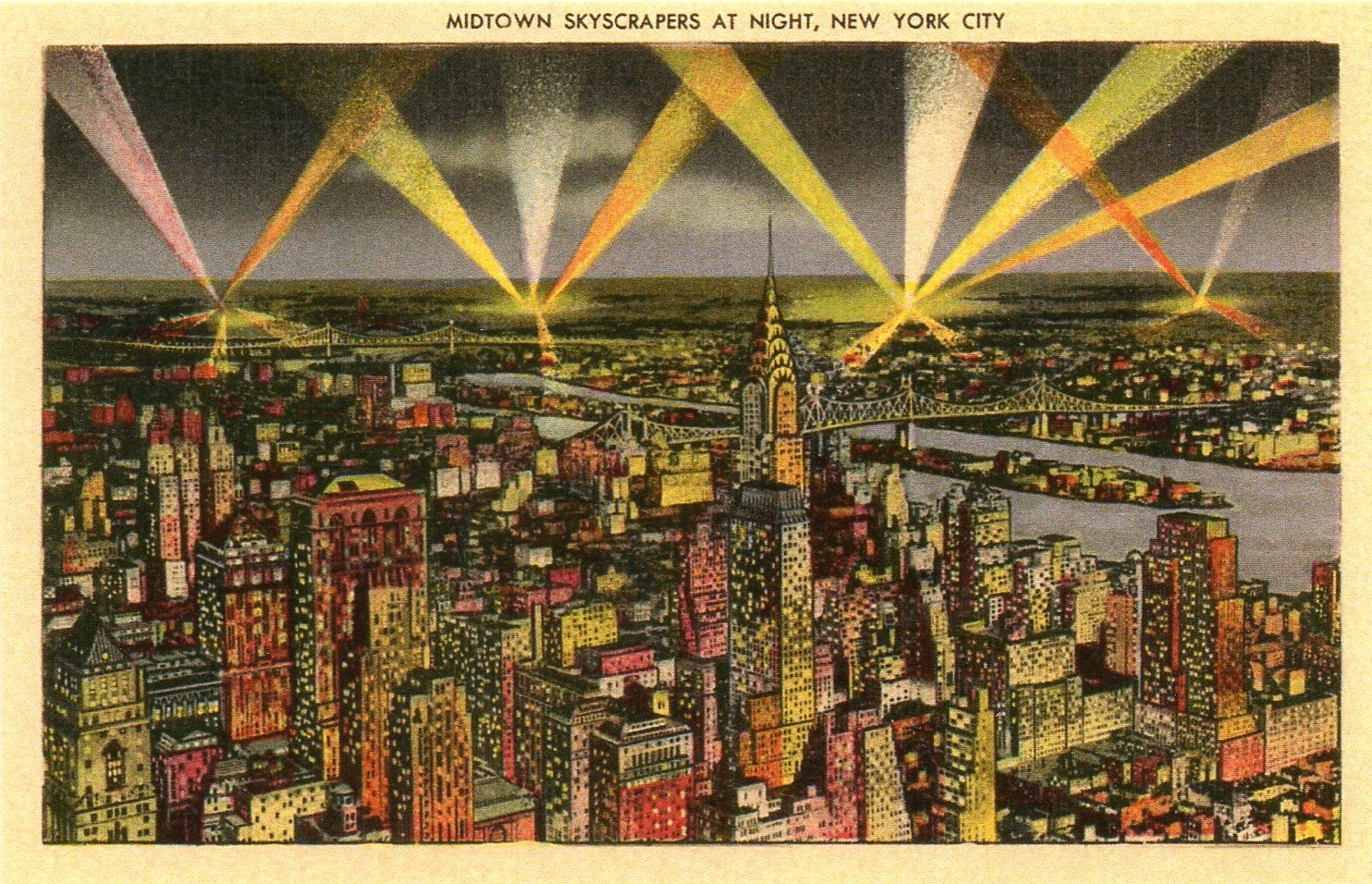
Because all the good stuff there happens INDOORS, and everyone delivers.
Not to mention free cold sesame noodles:
Oh, and you can take your kid out to buy H&H bagels that are still hot, along with some Tem-Tee whipped cream cheese and a pound of Nova from Zabars (since unfortunately Barney Greengrass, “The Sturgeon King,” is closed on Mondays), which totally doesn’t suck.
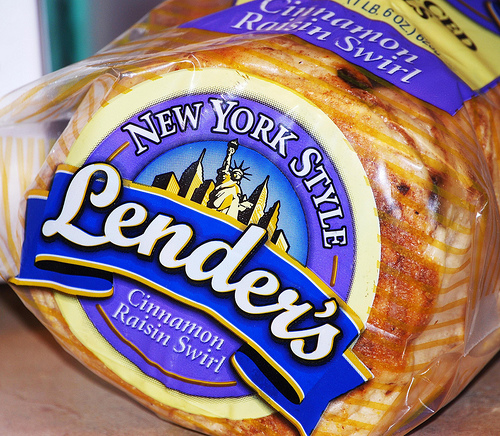
Because all they have in Cow Hampshire are these:
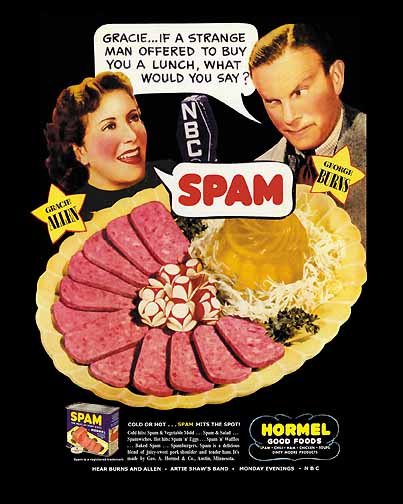
Which are the goyish-carbohydrate answer to SPAM.
7. Go outside SOMETIMES
Like to watch the sun set over the frozen waters of the mighty Squamscott, very happy that they will light up those cupolas for the long dark night ahead.
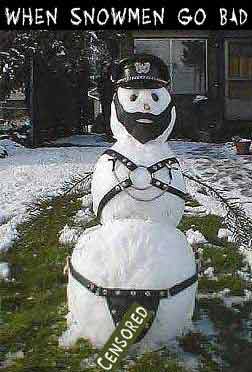
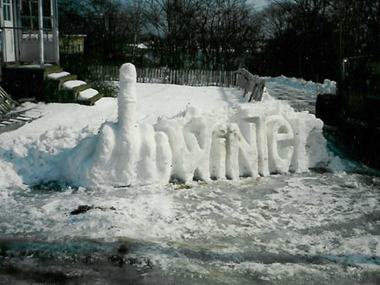
8. Practice some “Snowman Noir”
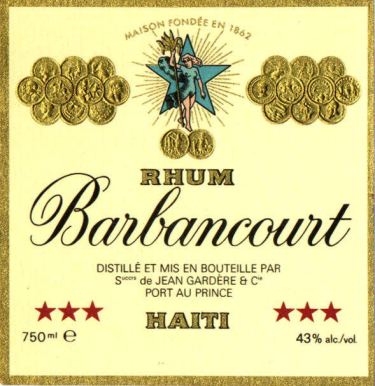
9. Drink some Haitian rum
I don’t mean on an hourly basis or anything, but hey, every once in a while when it feels like it’s been the first week in February for the last twenty seven years, go for it. I mean, there’s got to be SOME upside to the sun going down so early, right?
Plus which, at this point it’s for a good cause.
10. Remember that there are still people in the world who stand up for what’s right. Then get to your feet and stand up beside them.
Let’s Watch A Girl Get Beaten To Death. This is not my blog, but I don’t have a blog, or a space, and I’d like to be heard for a bit.
Last month seventeen year old Dua Khalil was pulled into a crowd of young men, some of them (the instigators) family, who then kicked and stoned her to death. This is an example of the breath-taking oxymoron “honor killing”, in which a family member (almost always female) is murdered for some religious or ethical transgression. Dua Khalil, who was of the Yazidi faith, had been seen in the company of a Sunni Muslim, and possibly suspected of having married him or converted. That she was torturously murdered for this is not, in fact, a particularly uncommon story. But now you can watch the action up close on CNN. Because as the girl was on the ground trying to get up, her face nothing but red, the few in the group of more than twenty men who were not busy kicking her and hurling stones at her were filming the event with their camera-phones.
(Du’a at seventeen)
There were security officers standing outside the area doing nothing, but the footage of the murder was taken – by more than one phone – from the front row. Which means whoever shot it did so not to record the horror of the event, but to commemorate it. To share it. Because it was cool.
I could start a rant about the level to which we have become desensitized to violence, about the evils of the voyeuristic digital world in which everything is shown and everything is game, but honestly, it’s been said. And I certainly have no jingoistic cultural agenda. I like to think that in America this would be considered unbearably appalling, that Kitty Genovese is still remembered, that we are more evolved. But coincidentally, right before I stumbled on this vid I watched the trailer for “Captivity”.
A few of you may know that I took public exception to the billboard campaign for this film, which showed a concise narrative of the kidnapping, torture and murder of a sexy young woman. I wanted to see if the film was perhaps more substantial (especially given the fact that it was directed by “The Killing Fields” Roland Joffe) than the exploitive ad campaign had painted it. The trailer resembles nothing so much as the CNN story on Dua Khalil. Pretty much all you learn is that Elisha Cuthbert is beautiful, then kidnapped, inventively, repeatedly and horrifically tortured, and that the first thing she screams is “I’m sorry”.
“I’m sorry.”
What is wrong with women?
I mean wrong. Physically. Spiritually. Something unnatural, something destructive, something that needs to be corrected.
How did more than half the people in the world come out incorrectly? I have spent a good part of my life trying to do that math, and I’m no closer to a viable equation. And I have yet to find a culture that doesn’t buy into it. Women’s inferiority – in fact, their malevolence — is as ingrained in American popular culture as it is anywhere they’re sporting burkhas. I find it in movies, I hear it in the jokes of colleagues, I see it plastered on billboards, and not just the ones for horror movies. Women are weak. Women are manipulative. Women are somehow morally unfinished. (Objectification: another tangential rant avoided.) And the logical extension of this line of thinking is that women are, at the very least, expendable.
(Screenshots, camera-phone video of the stoning of Du’a Khalil)
I try to think how we got here. The theory I developed in college (shared by many I’m sure) is one I have yet to beat: Womb Envy. Biology: women are generally smaller and weaker than men. But they’re also much tougher. Put simply, men are strong enough to overpower a woman and propagate. Women are tough enough to have and nurture children, with or without the aid of a man. Oh, and they’ve also got the equipment to do that, to be part of the life cycle, to create and bond in a way no man ever really will. Somewhere a long time ago a bunch of men got together and said, “If all we do is hunt and gather, let’s make hunting and gathering the awesomest achievement, and let’s make childbirth kinda weak and shameful.” It’s a rather silly simplification, but I believe on a mass, unconscious level, it’s entirely true. How else to explain the fact that cultures who would die to eradicate each other have always agreed on one issue? That every popular religion puts restrictions on women’s behavior that are practically untenable? That the act of being a free, attractive, self-assertive woman is punishable by torture and death? In the case of this upcoming torture-porn, fictional. In the case of Dua Khalil, mundanely, unthinkably real. And both available for your viewing pleasure.
It’s safe to say that I’ve snapped. That something broke, like one of those robots you can conquer with a logical conundrum. All my life I’ve looked at this faulty equation, trying to understand, and I’ve shorted out. I don’t pretend to be a great guy; I know really really well about objectification, trust me. And I’m not for a second going down the “women are saints” route – that just leads to more stone-throwing (and occasional Joan-burning). I just think there is the staggering imbalance in the world that we all just take for granted. If we were all told the sky was evil, or at best a little embarrassing, and we ought not look at it, wouldn’t that tradition eventually fall apart? (I was going to use ‘trees’ as my example, but at the rate we’re getting rid of them I’m pretty sure we really do think they’re evil. See how all rants become one?)
(Next to her in this shot is a cinderblock used by her attackers)
Now those of you who frequent this site are, in my wildly biased opinion, fairly evolved. You may hear nothing new here. You may be way ahead of me. But I can’t contain my despair, for Dua Khalil, for humanity, for the world we’re shaping. Those of you who have followed the link I set up know that it doesn’t bring you to a video of a murder. It brings you to a place of sanity, of people who have never stopped asking the question of what is wrong with this world and have set about trying to change the answer. Because it’s no longer enough to be a decent person. It’s no longer enough to shake our heads and make concerned grimaces at the news. True enlightened activism is the only thing that can save humanity from itself. I’ve always had a bent towards apocalyptic fiction, and I’m beginning to understand why. I look and I see the earth in flames. Her face was nothing but red.
All I ask is this: Do something. Try something. Speaking out, showing up, writing a letter, a check, a strongly worded e-mail. Pick a cause – there are few unworthy ones. And nudge yourself past the brink of tacit support to action. Once a month, once a year, or just once. If you can’t think of what to do, there is this handy link. Even just learning enough about a subject so you can speak against an opponent eloquently makes you an unusual personage. Start with that. Any one of you would have cried out, would have intervened, had you been in that crowd in Bashiqa. Well thanks to digital technology, you’re all in it now.
I have never had any faith in humanity. But I will give us props on this: if we can evolve, invent and theorize our way into the technologically magical, culturally diverse and artistically magnificent race we are and still get people to buy the idiotic idea that half of us are inferior, we’re pretty amazing. Let our next sleight of hand be to make that myth disappear.
The sky isn’t evil. Try looking up.
(Her grave)
Inspired by Whedon’s essay, a group of people decided to collect essays and artwork for an anthology, called Nothing But Red. Here’s the website: http://nothingbutred.wordpress.com/
“Killings of young girls and women in Kurdistan are rapidly rising and such killings occur even more openly than before. After the murder of Du’a Khalil Aswad, a 17-year-old Yezidi girl stoned to death in public, at least another 40 women have been killed – among them Amina, a 12 year old girl killed by her father, under the pretext that she was ‘in love with a neighbor,’ and Sara an 11-year-old.”
My pal Susan sent me a link to a Huffington Post article written by Peter Daou this morning, which is what got me thinking about the Whedon essay.
It was this part of the piece that compelled me to search for something to ease my sense of despair:
“13-year old Aisha Ibrahim Duhulow was stoned to death in Somalia by insurgents because she was raped. Reports indicate that she was raped by three men while traveling by foot to visit her grandmother in Mogadishu. When she went to the authorities to report the crime, they accused her of adultery and sentenced her to death. Aisha was forced into a hole in a stadium of 1,000 onlookers as 50 men buried her up to the neck and cast stones at her until she died. A witness who spoke to the BBC’s Today programme said she had been crying and had to be forced into a hole before the stoning, reported to have taken place in a football stadium. … She said: ‘I’m not going, I’m not going. Don’t kill me, don’t kill me.’ A few minutes later more than 50 men tried to stone her. The witness said people crowding round to see the execution said it was ‘awful.'”
The sky isn’t evil, but it sure can feel like it.
Buy a copy of Nothing But Red. Proceeds benefit Equality Now, whose mission statement reads:
Equality Now works to end violence and discrimination against women and girls around the world through the mobilization of public pressure. Issues of concern to Equality Now include:
RAPE * DOMESTIC VIOLENCE * REPRODUCTIVE RIGHTS * TRAFFICKING * FEMALE GENITAL MUTILATION * POLITICAL PARTICIPATION * GENDER DISCRIMINATION
That’s something we can all get behind, especially in February.
It will come as no surprise to those who know me that I love playing with words. My dictionary is falling apart and decorated with Post-It notes of words that would make great titles, names, or just ones I love the sound or shape of. Looking up anything always takes me longer than I expected because I get very easily side-tracked. I collect weird meanings and derivations of unusual words and phrases, many of which I’ve included in these posts.
But it’s not just unusual words that fascinate me. I love common words with unusual meanings, or slight misspellings that change everything. (Only recently I was sent an email imploring me to sign a partition.) When I started making a note of some words that caught my eye for this post, I quickly filled pages of notes, and then had to force myself to stop. Here are just a few of my favourites, in no particular order.
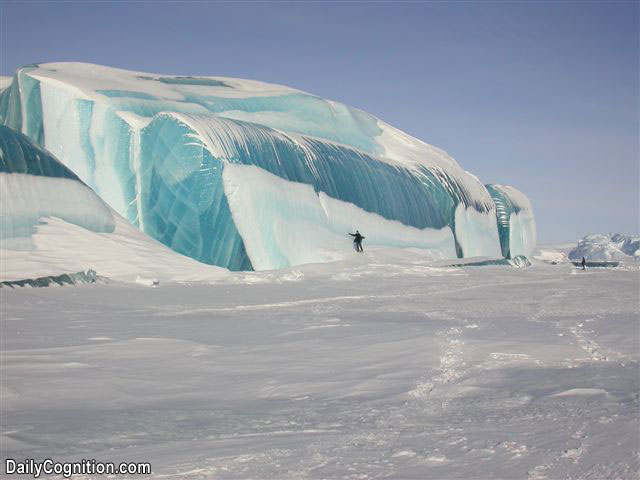
And, just to break things up a bit, I’ve interspersed them with some glorious pictures sent to me this week of the coloured patterns in icebergs, caused by them picking up different pigments, or frozen waves. Icebergs in the Antarctic area sometimes have stripes, formed by layers of snow that react to different conditions. Blue stripes are often created when a crevice in the ice sheet fills up with melt-water and freezes so quickly that no bubbles form. When an iceberg falls into the sea, a layer of salty seawater can freeze to the underside. If this is rich in algae, it can form a green stripe. Brown, black and yellow lines are caused by sediment, picked up when the ice sheet grinds downhill towards the sea.
While androgynous means having both male and female characteristics, androgenous means having only male offspring.
Everyone knows what angry means, but angary is a legal term meaning a belligerent’s right to seize and use neutral or other property, subject to compensation.
Pursue means to harass or persecute – or, in Scots law, to prosecute – and Spenser spelt it pursew with the same meaning. But written persue, it is not only another alternative spelling, but also means a track of blood. (Spenser again) from the act of piercing.
Consent might be to agree or comply, but concent is a harmony of sounds or voices.
The meaning of blanket is familiar, but blanquet is a variety of pear, blanquette is a ragout of chicken or veal made with a white sauce, and bloncket means grey. (That bloke Spenser gets everywhere.)
A lake is not only a body of water, but also a small stream or channel, or a reddish pigment made from combining a dye with metallic hydroxide to give the colour carmine. Spell it laik and it becomes a Northern English term meaning to sport or play or be unemployed, and lakh means the number 100’000 in India and Pakistan, especially when referring to rupees, or an indefinitely vast number.
While a block is a mass of stone or wood, a bloc is a combination of parties, nations or other units to achieve a common purpose.
One that always used to confuse me as a kid was the difference between demure, meaning chaste or modest, and demur meaning to object or hesitate.
And I know for a fact I’ve accidentally mixed up defuse, to take the fuse out of a bomb or, according to Shakespeare (and what did he know?) to disorder, with diffuse, meaning widely spread or wordy, or also to pour out all round; to scatter.
A clue might be anything that points to the solution to a mystery, but it’s derived from clew, being the ball of thread that guides through the labyrinth, as well as being the lower corner of a sail or one of the cords by which a hammock is suspended.
And this is before we get to the words with one spelling but lots of different meanings:
Pernicious means both destructive and highly injurious, but also (according to Milton) swift, ready and prompt.
A tent could be a portable canvas shelter, an embroidery or tapestry frame, a plug or roll of soft material for dilating a wound, a Spanish red wine, or the Scots word for taking heed or notice of.
A rabble could be a disorderly mob, but also a device for stirring molten iron etc in a furnace.
A race is the descendants of a common ancestor, a fixed course or track over which anything runs, the white streak down an animal’s face, a rootstock of ginger (Shakespeare) to raze or erase, or to tear away or snatch. (Both Spenser. He just made them up as he felt like it, didn’t he?)
Anyway, there are LOTS of others, so what are your favourites, ‘Rati? And what’s the best accidental misuse of a word you’ve ever come across?
No Word of the Week this week. I think I’ve used quite enough, don’t you?
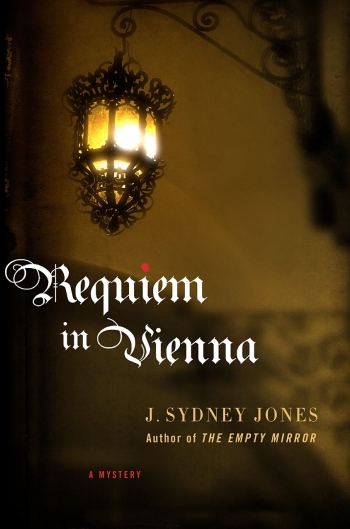
Today’s guest is J. Sydney (Syd) Jones, whose second novel in a historical mystery series set in Vienna 1900, Requiem in Vienna, launches today.
Each book features one of the cultural luminaries of the day. The first in the series, The Empty Mirror, has the painter Gustav Klimt accused of murder and this second book finds the composer Gustav Mahler the target of an assassin.
“A rich, beautifully written historical mystery … first class,” said the starred Booklist review.
“Confident prose and mastery of historical detail, woven into a convincing narrative, make this sophisticated entertainment of a very high caliber,” wrote the Kirkus reviewer in another starred review.
Publishers Weekly said: “Jones’s fine second Viennese mystery … smoothly blends a compelling period whodunit with bountiful cultural and social details.”
Let’s get to know Syd a little better:
LU:It’s clear from your work that you know Vienna well. Tell us a little bit about your years there.
JSJ: I went to Vienna initially as a student. It was my first experience of a big city and I fell in love with the place. This was during the Cold War–the Russians had just crushed the Prague Spring movement–and the city was most definitely Central European with the ambience of a much earlier time. Faded elegance best describes Vienna during that time. It has since gotten a facelift and joined Western Europe in a million small and irritating ways, but at the time, for a young man who loved history, Vienna was a living museum. I stayed on for almost two decades after my student year, working and living in other parts of Europe as well: Paris, Florence, Molyvos, Donegal. But I always kept coming back to Vienna for that feeling of home.
LU: How did you happen to choose fin de siecle Vienna as the time period? What is its special appeal? And have you ever been tempted to write about modern day Vienna?
Vienna became not only a second home to me, but also a major theme for my writing. When I was first there, fin de siecle, or Vienna 1900, was not the cottage industry it has since become. You could still pick up a Klimt sketch for a reasonable price or bid on Werkstätte pieces at the Dorotheum with a chance of actually winning. Maybe it was a wonderful course I took on Wittgenstein’s Tractatus at university in Vienna, maybe it was the as yet undiscovered territory of the intellectual/cultural ferment of the period–whatever, I became hooked on turn-of-the-century (20th) Vienna. I researched it for years in preparation for my first big nonfiction work, but soon discovered that no one was interested. But for Hitler there has been perennial interest. Linking the story of the (largely Jewish) cultural renaissance in Vienna 1900 with the flip-side tale of Hitler’s down and out years in the city, I found quite a lot of interest; thus publication of my Hitler in Vienna.
I have also used Vienna for a more recent historical backdrop in a stand-alone thriller, Time of the Wolf, set during World War II, and wrote three unpublished novels in a series featuring an American foreign correspondent set in contemporary Vienna. But it seems my efforts at an earlier Vienna are the ones that have proven more successful.
LU: Your work is peopled by real historical figures like Gustav Mahler, Gustav Klimt, Hans Gross and Alma Schlindler. What are the special challenges you face when including real people in a work of fiction?
Using historical characters in fiction obviously poses some challenges. With fabricated characters, the writer is in total control of backstory, personality, and physical characteristics. However, when using actual figures in a fictional setting, you do not want to do a disservice to the historical record. I read widely about my characters–biographies, journals, diaries and letters if available, newspaper accounts. But at some point you just have let your writerly instincts take over and get inside the character. Klimt, for example, as I portray him in The Empty Mirror, is a bit of a crude barbarian, but loveable all the same and a true genius. I took my lead from bits and pieces of historical writing about him, especially about his weight-lifting and brawling and his love of pastries. Other characters give you more insight to start with. Alma Schindler (later Mahler) kept a diary for the years I was interested in that provided me a window into her psyche as well as the social happenings of the day. There are also dangers in this approach. Using Klimt as a suspect in a series of brutal murders earned me a headline in one of Vienna’s tabloids as a “Scandal Author.”
LU: Tell us about your protagonist, the lawyer Karl Werthen. Why is he the perfect foil for the other lead character, Hans Gross, and this series?
Werthen and Gross have a long history and it is Gross (one of those actual historical figures in my series) who first prods Werthen back into the world of criminal law and investigation. Gross, as I portray him, is a blustery old coot in many ways, but also in possession of a keen mind–he is known as the father or criminology, after all, and an inspiration, some say, for the character of Sherlock Holmes. Gross is fusty, persnickety, and a great egoist, largely unaware of his self-centered ways. Werthen, younger than Gross, is sensitive and caring, a man with artistic sensibilities and even some ambition to be a writer. Where Gross is all action and drive, Werthen is more reflective and in possession of a sense of humor–something missing in Gross’s resume. They play off of each other quite well, and over the course of the books Werthen increasingly comes out of the shadow of his mentor. Theirs is not a Holmes-Watson association, but rather a collaboration of equals. It is just that Gross only rarely recognizes this.
Their pairing also allows me to bring out important themes in the series, including anti-Semitism (Gross is the unconscious racist whereas Werthen is an assimilated Jew), and feminism. Werthen’s wife, Berthe, and her group of friends (including the early feminist writer, Rosa Mayreder) are integral characters in the ongoing adventures.
LU: You’ve written both fiction and non-fiction. Is there a difference in how you face your writing day for those two different kinds of writing?
Half of my published work is nonfiction. When starting out as a writer, I was very practical, figuring that I could publish nonfiction more easily than fiction, and then establish a name and cross over to my first love, fiction. Practical isn’t always smart, and publishing works in mysterious ways. Anyway, while concentrating on novels now, I have continued to work in nonfiction and in freelance journalism to pay the bills. The biggest difference between the two is that with nonfiction there is not that niggling little bit of dread in the stomach when I sit down to work each morning: I know where the day’s work is going. Fiction demands more. I pretty closely map out my novels scene by scene, but there still needs to be that spark, that bit of invention and surprise in each scene. You hope you get it every day; sometimes you don’t.
LU: Tell us about the birth of this new series. You’ve been writing for over twenty years, and yet this new series set in turn of the century Vienna represents a whole new direction for you. Did it require a new agent and new publisher? How did you go about getting it published?
The Viennese Mystery series is the first time I’ve allowed myself to use, in a fictional format, the material I’ve researched for so many years. I guess I was always too conscious of historians looking over my shoulder before. Once I set on Gross and the fictional Werthen, however, the writing became hugely fun for me and I forgot about the constrictions of nonfiction. My enjoyment–if you believe the reviewers–comes across in the books to create an entertaining blend of fact and fiction. And what was also surprising about the series was the relative ease I had in getting it published. I did need to change agents for this new direction, and had positive responses from a number of really good people. I teamed with Alexandra Machinist at the Linda Chester Literary Agency. She loved the book and the series concept and made the sale with the first submission. It seems my earlier works on Vienna helped, making me something of a Vienna expert, but it was also the high concept and Alexandra’s enthusiasm and savvy that did the trick.
LU: What famous Viennese characters or situations are you working on for the next book?
Book three is finished and features, among others, ten-year-old Ludwig Wittgenstein, long before his fame as a philosopher. The modernist architect Otto Wagner and the mayor of Vienna at the time, Karl Lueger (role model in demagoguery for young Hitler) also figure in this tale of machinations to sell off the sacred Vienna Woods to developers. Book four in the series is in the works now and focuses on literary Vienna–Arthur Schnitzler (the playwright whom Freud called his doppelgänger), Felix Salten (of Bambi fame), ur-bohemian Peter Altenberg, and a host of other literati of Vienna 1901. Another major character is the famous prostitute and madam, Josephine Mutzenbacher, whose memoirs are a sort of Viennese Fanny Hill. Like I say, this series is great fun to research and write.
LU: Thank you, Syd. It’s a pleasure to get to know you. Check back in on our comments section today and meet the rest of the ‘Rati crew.
PS: Not only is it Syd’s launch day for Requiem in Vienna, but it’s also the day that the trade paper edition of my Liars Anonymous hits the shelf. Go out and buy somebody’s book today! And since Amazon appears to have backed down in their power grab over e-book pricing (although I don’t see that their ordering buttons are lit yet) feel free to order from them or go to BarnesandNoble.com or to your independent bookseller!
Over at Facebook, folks are winding down Doppelganger Week, which called on Facebook users to change their profile picture to a celebrity they’ve been said to resemble.
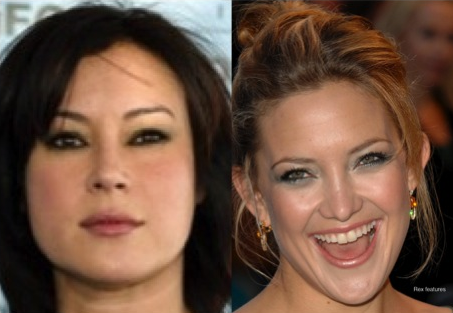
As it turns out, I’ve been said to resemble a broad array of celebrities. When I was in college, my father (around the same time he said my two sisters looked like Jessica Lange and Kim Basinger, respectively), maintained that I looked “just like” these knockouts:
Apparently age has treated me well, however. More recently, I’ve been compared to these women:
Um, yeah… right. Although I’m much happier to be compared to Kate Hudson or that actress who temporarily ruined Law & Order than either of the Rosies, I conclude from this mish mash of non-matching faces that I may not have a celebrity doppelganger. But, lucky for me, other writers do.
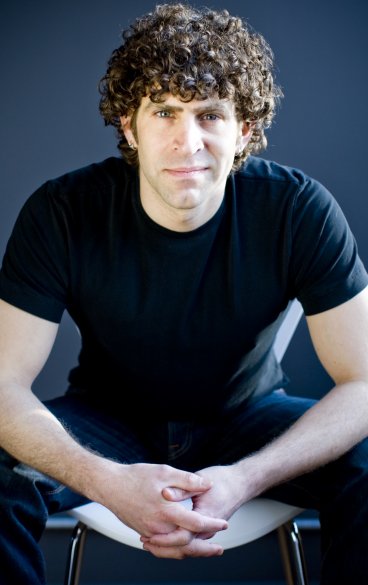
You see, much like my father, I also have a tendency to swear that people look “just like” someone else. I can’t run into Andrew Gross, for example, without reminding him he looks like that totally hot kid on Weeds.
And poor Michael Koryta has surely lost count of the times I’ve pointed out his resemblance to David Duchovny.
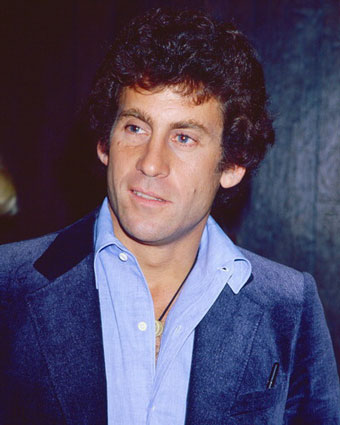
Marcus Sakey‘s probably sick of hearing that he looks like Starsky.
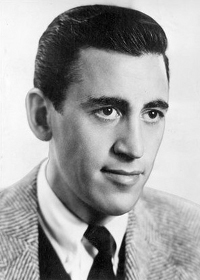
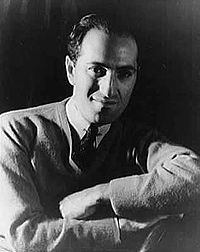
The late JD Salinger bore a strong resemblance to George Gershwin.
And Barry Eisler might as well change his last name to Baldwin.
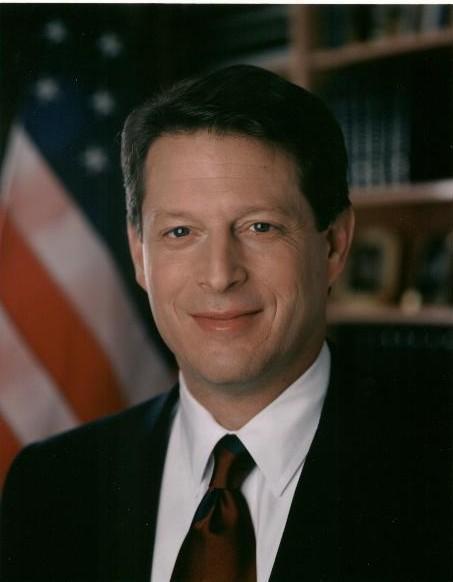
It turns out some writers have lookalikes I hadn’t thought of. Jason Pinter also played Doppelganger Week, posting a photo of Al Gore. Now, Jason, can you say “Lockbox?”
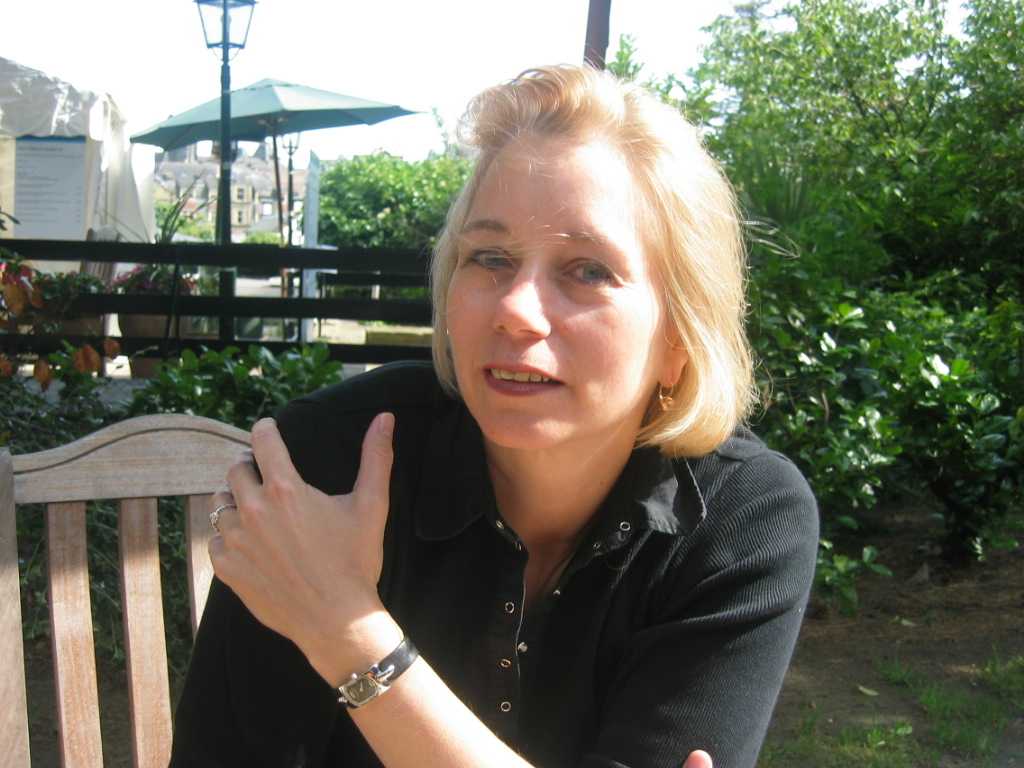
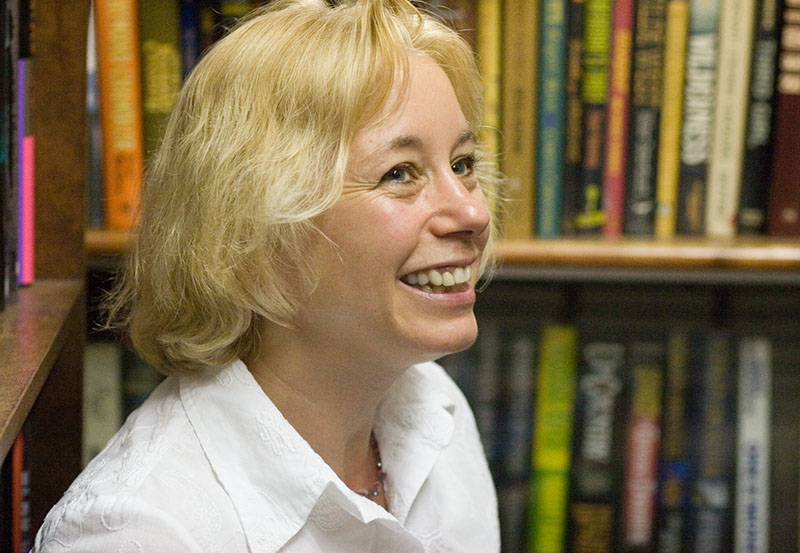
Laura Lippman tells me she’s often compared to Susan Dey. No surprise there, right?
But I was beyond amused to hear that in profile, she’s a dead ringer for a fellow journalist who loved Underdog, Sweet Polly Purebred.
With some writers, the identification of a lookalike’s a little more challenging. And, boy, do I like a challenge.
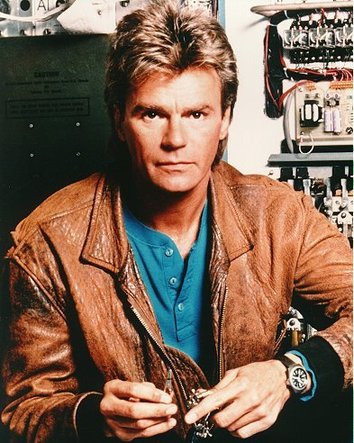
With someone like James Born, for example, it depends which photograph you select. In some pictures he looks a lot like that writer who once said I looked like Rosie O’Donnell.
But in other pictures, Jim, I’ve got to say it, you look more like MacGyver.
In my constant quest to identify lookalikes, I have an irritating tendency to tell friends they look like X and Y had a baby. Harlan Coben, for example, looks like the offspring of Tony Shalhoub and Stanley Tucci.
+=
And Victor Gischler could be the long-lost love child of Meat Loaf and Mario Batali. (Wow, that sentence actually made me hungry.)
+=
So here’s today’s challenge: Who are the other doppelgangers? Do you have one, and this a good thing or bad? And which other writers have lookalikes that I’ve missed? Psychic gold stars for those who include links to photos!
ADDED 5:13 pm Sunday: Oh! Toni has a winner from last week! Elisabeth (commenter #9). Yeah! Please email Toni at toni [dot] causey [at] gmail.com and give her your preferred email address and whether you want an Amazon or a BN or Borders gift certificate. Toni will then email the gift certificate directly to you!
Now back to the regularly scheduled blog . . .
I start writing a new book tomorrow. I would start today, but I’m revising the final two chapters of my current book one last time. It’s crucial to make sure the ending is not only satisfying, but that all the loose ends are tied up, and those that are continuing threads are at least neatly identified. Writing a series is HARD WORK–I didn’t realize how hard until now.
But whatever difficulty I have in ending a book, it’s nothing like the beginning of a book. And the most important question for me now is:
WHERE DOES THE STORY START?
Because this is a series, and this book takes place about two weeks after the book I just finished (well, I THINK two weeks, I’m not quite sure because I haven’t started it yet), the story really started two books ago. Of course, readers don’t want a boring recap of what happened in the first 900 pages of this saga.
For CARNAL SIN, I started with another vision for my heroine, prompting a tense conversation between characters where I could both advance the story and give the reader the minimum information she needs to understand the story. But since my heroine is not in town at the beginning of MORTAL SIN, I can’t do that again–and it would be kinda boring to do the same thing.
LAW & ORDER is brilliant in how they enter a scene “late”–meaning, after the action or in the middle of action. Elliot and Liv go in asking questions. No lengthy set-up. Dead body? Rape victim? We see part of the set-up (prologue) and then jump into the middle of the investigation. We don’t see them being called, or stopping for donuts, or having a conversation about how they spent the night before. BORING. Sure, it might go to character, but we can get that information in context, not in the beginning.
I love starting books with a dead body. A standard opening in mysteries–a crime to be solved. I’ve done it in many of my books:
SPEAK NO EVIL:
Her death had not been easy.
Homicide detective Carina Kincaid stared at the dead, naked corpse of the young woman, avoiding the wide-eyed terror etched on her face. her mouth was gagged, but what drew Carina’s eye was the word slut scrawled in thick black marker across her chest. A small red rose was tattooed on her left breast.
SUDDEN DEATH:
The homeless man’s murder had been ritualistic, brutal, and efficient.
THE PREY:
Rowan Smith learned about Doreen Rodriguez’s murder from the reporters camped out in her front yard Monday morning.
Because in MORTAL SIN, one of my main characters is suspected of murder, I thought–why not start with finding the body? Not let the reader know–through reading the scene–whether he’s innocent or guilty. When I get into his head, the reader will know (he’s a reliable narrator) but initially, there are doubts. And, perhaps, he’ll know more about the death than he lets on to the other characters–
But still, I don’t know for sure that this is the best place to start, hence my preoccupation with beginnings today.
So I pulled out some books from my TBR pile and read the first paragraph of two, just for fun. Now for a little game: read the openings and tell me which book you would most like to read. (And if you know the book, don’t let on! I’ll post the titles in the comments at the end of today.)
A
At the mass of the dead, the priest placed the wafer of unleavened bread and the cheap red wine on the linen corporal draping the altar. Both paten and chalice were silver. They had been gifts from the man inside the flower-blanketed coffin resting at the foot of the two worn steps that separated priest from congregation.
B
“You have a whisker.”
Though I hear the loudly whispered comment, it doesn’t quite register, as I am rapt with adoration, staring at the wonder that is my hour-old niece. Her face still glows red from the effort of being born, her dark blue eyes are as wide and calm as a tortoise’s. I probably shouldn’t tell my sister that her baby reminds me of a reptile. Well. The baby is astonishingly beautiful. Miraculous.
C
Every eye in the newsroom followed me as I left Kramer’s office and walked back to my pod. The long looks made it a long walk. The pink slips always came out on Fridays and they all knew I had just gotten the word. Except they weren’t called pink slips anymore. Now it was an RIF form–as in Reduction in Force.
They all felt the slightest tingle of relief that it hadn’t been them and the slightest tingle of anxiety because they still knew that no one was safe. Any one of them could be called in next.
D
I’ve always wondered what people felt in the final few hours of their lives. Did they know something terrible was about to occur? Sense imminent tragedy, hold their loved ones close? Or is it one of those things that simply happens? The mother of four, tucking her kids into bed, worrying about the morning car pool, the laundry she still hasn’t done, and the funny noise the furnace is making again, only to catch an eerie creak coming from down the hall. Or the teenage girl, dreaming about her Saturday shopping date with her BFF, only to open her eyes and discover she’s no longer alone in her room. or the father, bolting awake, thinking, “What the fuck?” right before the hammer catches him between the eyes.
E
Cops aren’t supposed to get frightened. The badge and the uniform and the gun strapped to a cop’s side are intended to ward off the normal fears that most people experience when confronted by unspeakable horror and evil.
But it doesn’t always work out that way. Cops get scared, just like everyone else. Sometimes they get so scared, they run for their lives. Other times, they get shaken to the core and never forget the things they’ve seen. It happened to me, two years into the job.
F
On January first, Mac rolled over to smack her alarm clock, and ended up facedown on the floor of her studio.
“Shit. Happy New Year.”
She lay, groggy and baffled, until she remembered she’d never made it upstairs into bed–and the alarm was from her computer, set to wake her at noon.
Okay, those are the six pleasure books on the top of my TBR pile–meaning, I’d looked through them on Friday to pick something to read for the weekend, and those interested me the most, but then one thing led to another and I didn’t have time to start anything new. If those six books were at the top of your TBR pile, which would you read first? Remember, don’t spoil the fun and give away the author!
And as a little teeny reminder . . . ORIGINAL SIN went on sale this week. It’s a supernatural thriller–a little different than what I’ve been writing, but I had a lot of fun writing something new! So to celebrate . . . I’m giving one copy away to a random commenter. Just tell me your favorite beginning (above) or just say hi!
Thought I’d better post this breaking news, which Rob and Louise and Stephen and Dusty and I just found out about and which affects many, many of our writer/readers:
Amazon.com has pulled books from Macmillan, one of the largest publishers in the United States, in a dispute over the pricing on e-books on the site.
I have been fretting this week about questions and comments I’ve gotten, publicly and privately, which I guess go along with the territory of teaching and blogging and writing about writing as if I really know anything at all about what I’m talking about.
(But I have to say there have been a few questions that I should never have gotten at all – it’s mystifying. For the record, if you have a grammar question, DO NOT write to an author to get the answer. That is not our job, you will have burned a valuable opportunity to ask something actually worth asking, and it will make us crazier than we already are, and you really don’t want to do that.)
All these questions, aside from the grammar ones, have made me want to say this again, and repeat it often:
While I blog about, and write about in the Screenwriting Tricks workbook, a formula for film structure that is widely used in Hollywood, the MAIN POINT of what I am always writing about here is that you study the specific structures of movies and books in your genre and that specifically appeal to you, so that you can discover the specific tricks that great storytellers use to create the stories you love.
And whatever it is you think they’re doing, you might try doing it yourself.
That is the bottom line of every single thing I have ever written about writing.
It’s the same with creating character.
As much as I get asked to teach, I never teach workshops on character. Not solely on character, anyway. I just don’t. It’s not that I couldn’t figure out something to say. It’s just that – as I’ve said before – I think writers live with characters in our heads on a daily and nightly basis. I could be totally wrong, but I suspect people don’t become writers if they don’t have characters living in their heads. We don’t live with structure quite so intimately, and therefore it seems more teachable.
And honestly, I very, very rarely hear anyone say anything about creating character that makes me think – WOW, that’s it, I get it now. Of course, I’ve never taken Rob’s class on character but that’s only because he’s refused to let me in.
But I see other workshop instructors at conferences handing out character charts, breaking down movies or stories I know pretty well myself, and will occasionally swipe one of those charts to see what the secret might be, and am sometimes absolutely horrified at what I see.
Case in point… people love to break down The Wizard of Oz. God knows I understand that. I’ve used tons of examples from Wizard myself. We all KNOW Wizard, so it makes sense to reference it. But The Wizard of Oz is such a special case. It is an iconic movie for reasons that I wouldn’t possibly want to have to explain – it’s like explaining sunlight, or – a rainbow. You can break it down into its elements, but that will never give you the experience. There was a special magic looking over that movie through all its harrowing changes of writers, directors, actors, etc. – and let’s not forget that it was based on a classic SERIES of books – and, oh, yeah – it’s a MUSICAL. And all that terrifying mess somehow combined to make a classic. It is not something anyone could ever duplicate.
It’s confusing even to break the movie conveniently into sequences, because it is a musical, and musical numbers were cut and rearranged (and rightly so!) which would have made the timing of the sequence structure make more conventional sense. Just as an example – the studio wanted “Somewhere Over The Rainbow” cut because it made the first Kansas sequence too long, but the movie gods apparently intervened, the song remained, completely screwing with the sequence timing, and film students have been arguing about the Act One break ever since.
So when I see the characters of a movie like The Wizard of Oz dissected on a chart, I am wary and skeptical. I am hard–pressed to believe that you ever even come close to developing a story as rich and enduring as The Wizard of Oz based on the two-dimensional layout of a chart.
Just consider what The Wizard of Oz would have looked like had Shirley Temple (often named as the top choice for the role) been cast instead of Judy Garland, as Dorothy.
The casting of Judy Garland, and her lush, just blossoming, completely vulnerable sexuality, TOTALLY changed the dynamic of the character and every single interaction she had with the other characters in the movie. It changed the meaning of the journey. A young woman’s dream, or fantasy, or metaphorical journey – whatever you want to call that adventure to Oz – is completely different from a child’s. Teenagers yearn for significantly different things than children do.
When I was a preteen I became firmly convinced that the whole Wizard of Oz journey was Dorothy’s dream letting her explore which one of the three farmhands she wanted to marry – as a young woman reaching marriageable age, those would be her obvious choices in such a farm town. In Oz, Hunk/the Scarecrow is the first one she meets, and over and over and over again the Scarecrow steps forward as the problem solver and her biggest defender. (She also dances with him in a musical number that was cut from the final film – The Jitterbug, and as any dancer or choreographer knows, when two characters dance in a musical, that means they’ve just had sex.). When she leaves Oz, she tells the Scarecrow she’ll miss him most of all, and when she wakes up in bed, he kneels by the bed and she touches his face. She’s chosen.
I would tell people this occasionally in college and they’d laugh – but years later I read much more about the elaborate history of the film and learned that the final scene of an earlier script really had concluded with Hunk going off to agricultural school and winning a promise from her to write to him – implying a romance that would continue (and marriage once “The Scarecrow” had his real-life diploma).
What I’m saying is, there was a structure built in to the script, as well as the magic of casting, that resonates in a way that is not capturable on a character chart.
Okay, you might be saying now that I’m the only person who’s ever watched the Wizard of Oz and gotten that out of it. But you’re wrong. My author sister friend Ann Voss Peterson has always felt the same way, so there. And even if there weren’t at least one other person who sees the truth of it – my analysis of the subtext is meaningful to me, just as my analysis of Ophelia’s role in Hamlet is, and my strong personal opinions on the movies I watch and the books I read, however obscure they may seem to other people, have been invaluable to my growth as a writer.
Plus, I have more to say about what makes Dorothy a great character.
Another level of my take on Dorothy – and I know I’m not alone in this one – is that
she is going through an inner journey to internalize the qualities of braininess, heart, and courage – and her higher self, Glinda – so that as she grows into a woman, she will be able to use those qualities against enemies like Miss Gulch instead of running away as she does at the beginning of the movie.
And another big change that happens with Dorothy is that we see her in situation after situation go from a scared little girl who needs protecting to a woman who will step forward and protect her friends. It’s a big character arc for a teenager, growing up like that.
I guess what I’m saying is that a LOT goes into creating a character, and even if some writer or teacher or workshop leader breaks it down brilliantly for you, it’s even more important to figure out what YOU think is going on with that character.
And I’m also saying – and this is very true of the Wizard of Oz film in particular – sometimes it is absolutely impossible to track how something was written. There were so many writers, directors, artists, producers who worked on this one – somehow certainly the movie gods were watching over it to create the alchemy that makes it the classic it is.
Some things are quantifiable, but some simply aren’t. And please don’t be satisfied with anyone else’s quantification.
You are the writer. Ultimately, it’s you and the page. You are God, baby. Make your own rules.
So I’m snowed in here in Raleigh, after being in 90 degree Cozumel four days ago. My body has no idea what it’s supposed to be feeling anymore.
Since I’m not going anywhere today, does anyone have any unique interpretations of movies or books to share? Some deeper theme you’re convinced of, but somehow no one else sees it?






















.jpg?__SQUARESPACE_CACHEVERSION=1264891700384)