Author Archives: Murderati Members


Three Things I’ve Learned From Law & Order

By Allison Brennan

I never watched Law & Order when it first aired, and to this day I’ve only watched a handful of the original L&O episodes. But in 2005, after I quit my “day job” and started writing full-time, I used to watch re-runs late at night as I came down off my caffeine high. The spin-off that hooked me was SVU. The original L&O has many of the same elements as SVU, but SVU has–for me at least–the most interesting characters, both the series stars and one-show stars.

Anyone writing crime fiction, mysteries or thrillers should at least invest a couple hours watching L&O, though I think the lessons learned would benefit most commercial fiction writers. There are other shows that “teach” the same lessons (HEROES, for example) but L&O is the most obvious.

1) Enter Late, Leave Early

Most writers want to over-explain. They like hefty set-ups, establishing character and backstory, and “setting the scene.” If you watch L&O you’ll see they start each scene just after the beginning of the scene. They don’t show Olivia and Elliott driving to the scene of the crime, they show them AT the scene of the crime–often after the CSI team have gone through it to give them information they need.

Sometimes, you want to show the painstaking CSI investigation–to establish clues or a red herring. But most of the time, it’s unnecessary. L&O has done a great job in showing us the parts of the investigation we need to see to stay invested with the story, but keeping other parts off-scene in such a way that we know it’s going on, we can “almost” see it, but it’s not in front of us. We never think they aren’t covering all the bases even when we don’t see them working each piece of evidence. Truly, masterfully done.

Leaving early is just as important. I’m a big offender of this–sometimes, my characters think too damn much at the end of scene, prolonging the story. While it’s important to get inside your character’s head, it’s best to do it as much as possible during the action of the scene to avoid long narratives between scenes. Scenes should answer story questions as well as ask story questions–so going into the scene you give your reader information and/or answers; then raise more. Leaving a scene “early” provides a great venue of such story questions, as well as cliffhangers to get the reader to turn the page, start the next chapter, finish the book.

WARNING: Entering late and leaving early is a great way to keep your story moving at a brisk pace. But after reading hundreds of thrillers, I’ve noticed that some never let up. You’re worn out because there is NO downtime. Sometimes, you SHOULD move into a scene slowly or wrap up a scene more completely, or even offer a “quiet” chapter so that your reader isn’t overwhelmed with one action after another with no let-up. I’ve found that these less frantic scenes are well-suited for right before or right after major story turning points, such as crossing the first threshold, the mid-point, or before (or after) the black moment (all is lost.)

Strong pacing is important, but strong pacing isn’t non-stop, story-on-steroids pacing

2) Shades of Grey 

I have always been fascinated by moral dilemmas. My first Lucy Kincaid book, which has been postponed to Spring 2011, deals with a complex moral dilemma. We in society often have sympathy for people who do the wrong thing for the right reasons, and often we have compassion for people who take the law into their own hands when they’ve played by the rules but were victimized.

Any one remember Dirty Harry? Wasn’t it MAGNUM FORCE that had cops killing criminals who’d beaten the system? On the one hand, it’s the worst betrayal of trust and duty to have cops kill in cold blood; on the other hand, many of us believe it’s unfair–and plain wrong–for violent offenders to beat the system and walk the streets, knowing that they’ll kill again.

We believe in the justice system because it is the most fair, but at the same time it is flawed. When I first learned decades ago that John Adams defended the British after the Boston Massacre, my gut feeling was how could someone fighting for Independence defend murderers? Yet, Adams believed so much in the system of a fair trial that I realized that his defense of the system was one of the backbones of our fight against British tyranny. If we denied them a trial, we were betraying the country we were trying to create. 

Few situations are black-and-white. We all have opinions and values that are important to us, but rarely is there a case in which anything we believe is all-or-nothing. It’s the shades of grey that make a story compelling–because life is never simple, nor most of the decisions we make, nor our values which have taken a lifetime to develop.

L&O explores many of these shades of grey, which makes the stories “page-turning.” Tonight I watched an episode from a few weeks ago called HARDWIRED about a group of predators who believe that sex between adults and pre-pubescent minors can be “love” and “consensual.” During the trial of the leader of the organization that was similar to NAMBLA but different, they had a girl testify that when she had a sexual relationship with the leader (when she was 11 through 14) that she consented, that because of him and his love for her, she got out of her abusive family home, moved in with her grandmother, and ended up staying in school and getting her Masters. While we all would (hopefully) agree that a sexual “relationship” between an 11 year old girl and a 30 year old man is vile and wrong, we can’t help but think what might have happened to the girl had she stayed with her physically abusive father, that the school and her drunk mother failed her, and this sick pedophile helped her get out of the situation. Fiction, yes, but we all know that there are good people in bad situations. It doesn’t make the relationship right, but it makes us pause and wonder how we, as society and human beings, could fail in such an atrocious manner that an 11 year old girl sees sex with a 30 year old as her only way out of a miserable life.

This is just one example of the “shades of grey” that L&O explores so well–without over-explaining or being preachy–that I find intriguing, and speaks directly to the next, and perhaps most important point:

3) Characters Are People Too 

In a one-hour drama, it’s hard to convey well-rounded, full characters who you believe really exist. In a series it’s easier, but every show runs the risk of two-dimensional stereotypes. CASTLE is my guilty pleasure, and it’s probably the worst at surface characterization. I just can’t help myself, I like the show. HEROES does a better job at creating characters who are neither all-good or all-bad, who are complex and flawed and sometimes do the right thing for the wrong reasons; or the wrong thing for the right reasons. But L&O is masterful at characterization. The series repeat characters have grown over the series, but in many ways they haven’t changed drastically. We understand them and how they will react in certain situations, and that is comforting even when they don’t act as we would. They are staying IN CHARACTER. The supporting cast provides just as much depth. They don’t agree on everything, they argue their points effectively, they are not all perfect or all flawed. And even more important, they don’t have to agree on everything and they can still work together effectively. 

But it’s the guest stars, whether famous or not, who make the show. Some bad guys are just bad. Some are bad but you have sympathy. Some are more complex than others. Some lie, some don’t. They are REAL. You feel like you’ve really caught a snapshot, or a short video, of their life. If a one-hour (44 minute!) program can create REAL, complex characters on television, we as authors should be able to do the same in a 100,000 word novel–while adhering to point #1 above. They use stereotypes effectively to keep the story moving (not everyone needs a backstory shown, like the traffic cop who relays information, of the paramedic who has two lines) but smoothly, so you don’t *think* stereotype. But the characters important to the story have depth.

So what have you learned from your favorite TV shows? 

Jung at heart

by Alexandra Sokoloff

Last month I found myself in Jungian analysis by mistake.

(I know this doesn’t sound probable, but trust me, it can be done.)

I guess if you subscribe to the synchronistic (and Jungian) theory that there are no accidents, which I pretty much do when I remember to, then it wasn’t a mistake, but it certainly wasn’t intentional.

But ever one to go with the flow, this perhaps being an extreme case, I am now committed.

I always loved the idea of doing Jungian therapy (because for one thing, as a woman, why would I ever trust anything Freud had to say?), but somewhere along the way I forgot.

So I was intrigued to find myself in this situation.   It did seem destined.  Also, the first thing my therapist did was buy and read my books, which you have to admire in a therapist.

I’ve had two bouts with therapy before.   I think a lot of people go into therapy looking to be fixed, and when a certain period of time goes by and you notice that you’re still not fixed, you look to do it again.  

On the other hand, I think a lot of writers, maybe other artists too, are wary of therapy and analysis because, hey, if you take away our demons, what’s left?

But a Jungian-based approach is very artist/writer friendly because you’re dealing with

A)   Dreams

B)   Fairy Tales

and

C)   All those people in your head.

All of which are writers’ stock in trade.

The dream landscape has been very interesting – it’s amusing how reading Jungian books makes you dream in Jungian symbols almost instantly.   I’ve never dreamed of a castle in my life that I can remember, but the other night after reading Robert A. Johnson’s Fisher King/Handless Maiden, there I was that night in a full-on medieval castle, interacting with a studious adolescent boy who was, I am gathering, one aspect of my animus, my inner male.   (He was not happy with me.  At all.)

And then the next night, another animus figure and I and this little wild girl child were excavating a statue of a goddess, or the goddess, but it felt like Aphrodite, which had become damaged, I believe cracked in the head, in the process of excavation and we had to stop.

Not my usual dreams at all, but the theory is that the unconscious really WANTS us to get the message and will obligingly adopt whatever symbolic language will make us get it the fastest.   At any rate, my dreams, which are usually interesting, have become suddenly very pointedly clear about my life situation.  

One big element of Jungian therapy is this idea of the anima and animus, that we all have masculine and feminine sides, or aspects, really.   (I will not even attempt to explain this myself, yet – here’s a great article. )

And what we do when we’re unconscious (not meaning asleep, but the general waking unconsciousness of most human beings on the planet) is project our own anima (for men) or animus (for women) onto the men and women we fall in love with.   And a true relationship is only possible when both partners are able to withdraw the projection and see their partner for the real person they are.

So (if I’ve got this right) theoretically, you do that by becoming aware of your anima/animus to begin with, which you can do by studying who and what shows up in your dreams.

In most of my dreams for the last week I have been interacting with a male figure, all different ages, or there is simply one by my side while I go about whatever else I am doing:  my brother, that brainy adolescent boy from the castle, an alarming number of exes, a completely insane homeless person, Alfred Hitchcock (I loved that one), and Joe Konrath.    (Yes, I know, scary, but the truth shall set you free.)

All aspects of my animus.  

One of my particular life problems is about balancing my male and female sides, which have been unbalanced for a long time, so this first step, becoming aware of what’s actually in there, is being fascinating.   It’s a marvelous thing that everything we need to know about ourselves is actually right there, playing itself out in our dreams every night.    It’s actually kind of addictive, to look at your life more as a novel, with its own structure and design, and to not be the writer for once, but the audience.

And of course, it’s all research – SO many new characters to keep in that character warehouse for when next I need them.

There’s another thing that’s being fascinating, in fictional terms as well as therapeutic, and that’s how my dreams will keep presenting the same symbols and variations on the same setting or situation – there are obvious themes, and a progression to the dreams, as if when I figure out what one is saying, the next dream will take it to the next level and there will be a new puzzle to work out to get to the next step.  

I find myself impatient to get through the day and get to sleep so I can see what happens next.

ALL of the above so obviously applicable to writing:  thematic image systems, a series of progressive puzzles, recurring characters, male and female sides in opposition, and the drive to find out WHAT HAPPENS NEXT.

Now, I admit, I can’t see that the writing I’m doing during the day has taken any quantum leap because of my more conscious nightly adventures – yet – but on the other hand, I never know what I’m writing or how good it is until I’m finished.   And I can’t help but think that it’s going to help.

Anyway, I’ll keep you posted.

So how about you out there?   Any Jungians?   Has therapy helped your writing or your life?  Any interesting dreams, lately?

Happy Solstice, Christmas, Hannuka, Kwanzaa, and everything else that everyone celebrates!

—————————————————————————————–

I will be teaching an online Screenwriting Tricks for Authors workshop through the Yellow Rose Romance Writers, Jan. 1 through Jan. 18. 

These online workshops are a fantastic deal, just $25 for two weeks, and here’s where you can get one-on-one feedback on the craft techniques I blog about here as they apply to your own story.  All genres welcome!

Go here to register.

More info on Screenwriting Tricks For Authors.

- Alex

XENOPHOBIA

By Stephen Jay Schwartz

Xenophobia:  a dislike and/or fear of that which is unknown or different from oneself. It comes from the Greek words ξένος (xenos), meaning “stranger,” “foreigner” and φόβος (phobos), meaning “fear.” The term is typically used to describe a fear or dislike of foreigners or of people significantly different from oneself, usually in the context of visibly differentiated minorities.

I don’t know why this was on my mind this week.  Maybe it’s because I’m aware of the unique opportunity we as writers have to combat xenophobic thinking.  It brings up the writings of Jim Thompson, a classic crime writer from the 1950s.  His protagonists always encountered xenophobic characters, yet even before the days of the Civil Rights Movement, Thompson managed to reveal the absurdity of racism and discrimination through character confrontation.

Thinking about this, I considered my own role in this process.  I wondered if I had truly examined my perspective on race and culture.  It brought out the moments in my life where I first observed xenophobic thinking:

Memory Flash #1:  I’m in high school, with one of my very best friends.  She and I weren’t romantic, but we were so close that, at times, it seemed like we were meant to be together.  I knew she was a very religious Christian and, since I’m Jewish, I recognized that this was one major point of difference between us.  I remember one day at lunch I saw her crying and I asked her what was wrong.  She told me she was sad because someday we would pass on from this world, and she would be in Heaven, and I wouldn’t be there. 

Memory Flash #2:  I’m in college, at North Texas State University, in Denton, Texas.  A friend of mine is waiting for the dorm-mate who had been assigned to her.  It’s a week into the semester and the girl hasn’t arrived.  Then one day she appears and tells my friend, “This is the imaginary line in the center of our room.  I’ll stay on my side and you stay on yours, whitey.” 

Memory Flash #3:  I’m in college again, playing in a sixteen-piece swing band called Big Al’s Swing Dance Orchestra.  I’m playing alto and I’m working through a section with the tenor player.  He’s being a real jerk to me, as he always is.  Suddenly he apologizes, saying that he’s just never been around a Jew before and didn’t know how to deal with someone whose people were responsible for killing Jesus Christ.

Memory Flash #4:  A girl hangs out with us at the dorms.  She’s mulatto, but her features are mostly African American.  She’s a musician, like the rest of us.  The guys she hangs out with at the Black Student Union tell her she has to make a choice – is she black or white?  ‘Cause she’s acting like an “Oreo”.  She is torn.

Memory Flash #5:  I’m driving in a heavy rainstorm in Northern Arizona, doing research in the Navajo Reservation.  My car breaks down.  I’ve got the hood up and a Navajo man in his twenties stops and asks if I need help.  I’m freaked out, scared, having heard stories of people being held up on the road in the Res.  “No, I’m fine!” I say and I instantly regret it.  I see the look on his face, he shakes his head.  I can tell I’ve hurt something inside him, hurt him bad.  He goes back to his truck.  He was only trying to help, after all.

These are experiences I’ve had and I can surely use them in my own writing, in an effort to unmask xenophobia, the way Jim Thompson did.  But I wonder if these experiences are enough.

Part of my job as a writer is to walk in the shoes of the characters I depict.  But I wonder if I truly understand the racially and religiously diverse characters I write.  Am I writing real people or stereotypes?  Is there a subtle xenophobia working behind the scenes, keeping me from capturing the nuance of characters too different from myself?

I wrote an African American detective named Wallace into my novel, BOULEVARD.  Does he read authentic?  Does he need to read different than any other American detective I write?  I first wrote the character as white, and then, mid-stream, I changed his ethnic background.  Should I have reached back further, created a new character analysis to redefine his perspective on life, based on the different forces that have influenced his life as a black man in America?  I did some of this on the fly, but was it enough?  I wonder if I have a responsibility to do more.

When I was in college I wrote a screenplay about a nineteen-year old Navajo boy who took a trip through the Res, encountering other Navajo characters on his way to California.  I did a huge amount of research for this story and, in the end, I think I captured the characters realistically.  But maybe the work was overly sentimental.  Maybe it was a white, Jewish, college kid’s idealized version of the world of the Navajo.

What does it take to see the world through the eyes of another?  Does our best work come when we rely on our own experiences for authenticity?  We’ve all heard that we should write what we know.  So many great writers have written from their own childhood experiences and their work stands out because of it.  But I’ve always thought that good research would fill the gap.  If I research it, I experience it, and therefore I know it.  And then if I write this “researched experience,” I’ll be writing what I know. 

But is that enough?  Can I possibly write from the perspective of a Navajo or African American or East Indian if all I’ve done is the research?  Is there a part of me that’s afraid of the differences between them and me?  And, if so, will I truly be able to represent their stories on the page?  It makes me wonder if I’m capable of exposing our xenophobic world through my fiction, when my own point of view might be influenced by the xenophobia that surrounds me.

It makes me admire Jim Thompson all the more.

What do you think, folks?  Is this a universal writer’s struggle, or am I making more of it than I should?  Should I just shut up and get back to work already?


A Little Holiday Cheer

It’s a week before Christmas (okay, a week and a day), but I’m already traveling around visiting friends and family. I’m happy to say the new manuscript is all but done. Just a few more days work, maybe five tops, and I’ve decided not to push it, so will finish up right after New Years.

Anyway, since I’m traveling around today (you’ll probably notice the lack of response ahead of time from me, my apologies), thought I’d leave you with some holiday cheer. Two songs and a present.

Song one features David Bowie and Bing Crosby singing together. I remember watching this when I was a kid, and it’s stuck with me every since:


Song two…couldn’t leave out the kids from Glee:


And a present:


Oh, and in case you missed it…here’s a new take on people power.


Merry Christmas and Happy Holidays to everyone!


Questions I’d rather avoid

by Tess Gerritsen

(I’m staring into the jaws of a deadline — my book’s due TODAY!!! — so this will be a short entry.  And if you’re wondering how my adventure in Hollywood went, check out the photos from the set of “Rizzoli”, over on my own website, to see what it’s like hanging out with the film crew.)

Like many authors, I get asked a lot of questions.  Sometimes it’s an emailed interview.  Sometimes it’s at a bookstore or library presentation, when I invite the audience to ask me anything. For the most part, I enjoy answering those questions.  But there are a few that I’d be happy to never hear again. And here they are:

What’s your normal writing day like?

 I know that everyone probably thinks this is a perfectly straightforward, inoffensive little question, and it is.  But I often get the feeling that people ask it only because they feel that someone should ask it, if only out of politeness.  Like so many questions asked for that reason, the answer is seldom interesting. At least, my answer is. Does anyone really want to know that I start off my day with breakfast and coffee? That I sit down at my desk and turn out four pages? That I break for lunch and end at dinner?  The truth is, a writer’s job, for the most part, pretty much involves just sitting in a chair.  And when you ask me that question, you force me to confess just how boring my day really is.

Who’s your favorite writer?  

This question makes me squirm every time, because I never know how to answer it. If I name specific names, it means leaving someone out and possibly hurting feelings.  My favorite authors change, depending on whose books I’ve read lately.  And after a lifetime of being a reader, I find that my favorite-favorite books, the ones that forever hold a cherished place in my heart, are books from my youth  It’s the same phenomenon that makes us remember childhood fruits as the sweetest and childhood winters the coldest. But it feels so dorky to admit that, no matter how many glorious new novels I’ve read this year, nothing will ever beat The Hobbit

Do your children read your books?

Again, another seemingly unobtrusive question.  But ah, it’s one that makes me wince just a little.  Because no, my grown sons do not read my books.  They’re really not interested in reading my books — a sad fact of life that I suspect may be true for other writers as well.  Because let’s face it, we’re just Mom or Dad.  What could we possibly do that would make us cool?  I remember reading an interview with Billy Joel, who sighed that his own kid doesn’t bother to listen to his music.  Because it’s just Dad’s stuff, so it can’t be a big deal, can it?  

Which of your own books is your favorite?

I can tell you which of my books sold the most copies.  I can tell you which ones got starred reviews.  But which one do I love the most?  That question ties me in knots, because it means choosing from among my twenty one titles.  I have heard authors say that the books that gave them the most trouble often turn out to be their favorites, and there’s some truth to that.  I sweated hardest over Gravity and The Bone Garden — and both would be among my favorites.  But they weren’t my biggest bestsellers.  They’re just the books that stuck with me the longest.  Probably because they caused me the most agony.

Do you know Stephen King?

Everyone who lives in Maine gets asked that question.  Because only about seventeen people live in this entire state, so of course we all know each other.

I’m sure other authors have heard questions that made them sigh inwardly.  How about it, writers?  Are there any questions you’d like never to be asked again?


Freedom

by Pari

One the first day of Hanukkah, my true love gave to me . . .

Yep. It’s that time of year when latkes sizzle and candle flames flicker.

And let’s not forget the old saw about the miracle of a small amount of oil lasting for eight nights.

But for me the real miracle is that a small band of determined and incredibly outnumbered people fought for the freedom to worship, to believe in their own way, and actually won.

I don’t know about you, but I think about freedom a lot:

Physical freedom from slavery, hunger and disease
Political freedom to express opinions, to vote
Creative freedom to think differently, to break the chains of our self-imposed limitations

Yet all of us are prisoners. We embrace “conventional wisdom” without thinking about it. We often succumb – willingly – to a negative status quo.

When I stop to think about my writing and career, I’m agog at all the truisms I’ve bought into without question:

No one respects creativity anymore
Writers must market to be successful
Piracy is inevitable
More editing = better work
No one reads anymore 

The list goes on and on . . .

I’m not saying that the above – and the many more givens I accept – don’t hold grains of truth. I’m just sayin’ that maybe I’ve spent more time responding to them rather than thinking about how much they’re true in the first place.

So . . . this Hanukkah, my first present to all of you is in the form of a wish:

May you all experience the miracle of questioning, of looking anew at your long-held beliefs. And may you free yourselves from those that are holding you back in your personal and professional life.

The videos below are my second present to you. All of them blast away at certain kinds of conventions. I hope you enjoy them

1. Dar Williams sings “The Christians and the Pagans”
I love this song for the message of putting aside differences — if only for an evening — and learning to find “common ground.”  (Sorry to include a link rather than embedding, but this is the best quality link to really hear the words.)

http://www.youtube.com/watch?v=U_Xdk4PujOE

2. Danny Macaskill rides his bicycle in ways that’ll blow your mind.

3.  Paddy Jones dances at Spain’s big talent show.
Ms. Jones is a 75-year old woman who can dance a mean salsa. Even though the quality of the video isn’t as good as I’d wish, it’s message comes through.

Questions for discussion:

What are some of the positive or injurious conventions you see out there in the reading and writing world?

Have you rejected a conventional wisdom lately? If so, what was it?


Joyeux Noir

By Cornelia Read


Yes boys and girls, it’s that time of year again: the advent of Cornelia’s Annual Shopping List for Those not Overly Enamored with Holidays, Generally.

1. Steampunk Taxidermy.

New Zealand artist Lisa Black has a new take on the whole “cute baby animals” thing:


Her “Fixed Deer” has been sold, but you could probably commission something equally un-Xmas/Chanukah-esque if this floats your boat.


2. When “Love” just doesn’t cut it:


A mere $19.49 from the good folks at Harnk.


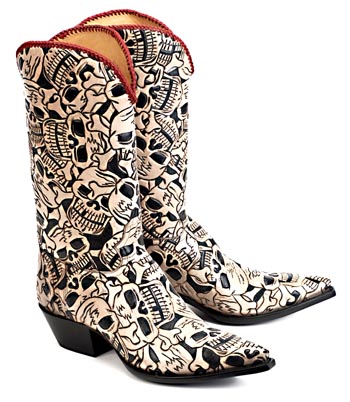
3. Killer Boots


Hand-tooled “62 Muertos,” only $1995 at bootstaronline


4. Brain-Flavored Zombie Mints


A mere $2.50. What’s not to love?

5. Inflatable Fruitcake.


Reusable. Just like the real thing. $6.95


6. Trebuchet Kit

Start your own arms race… in the year 1235. This is a 1/200th scale model, for $189.

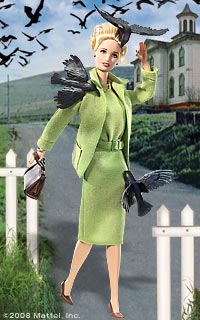
7. Hitchcock Barbie


The perfect add-on gift with a pair of budgies. Priceless.

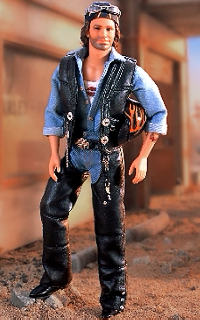
8. Harley-Davidson Ken

Barbie’s Malibu Meth Lab sadly not included…

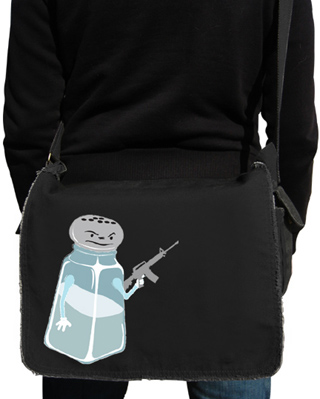
9. A Salt With a Deadly Weapon Messenger Bag

Come on, is this awesome or what? $46.95

10. Free Tibet* t-shirt

*this offer not valid in China. $20

11. A Jetpack. Finally.


Available in late 2010, for only $100,000. I want it.

12. I Also Want This


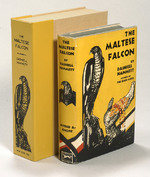
First edition. $136,000.

13. But I’d Settle for This:

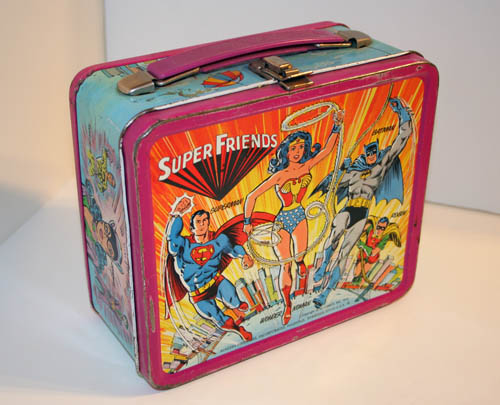
$85. What a bargain.

14. Nouveau Retro

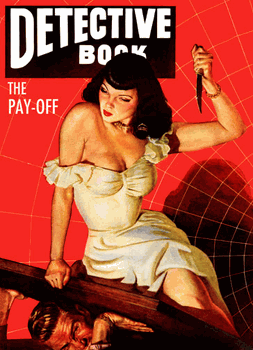
A limited-edition repro of a classic pulp cover–stretched canvas, 36″ x 48″. $450

15. And This Wouldn’t Suck, Now That I Live in New Hampshire


A sculpture by Peter Grondquist, who also did Chanel grenade launchers and Gucci shotguns and other groovy things for his “The Revolution Will Be Fabulous” show in LA a while back. This one is sold, but I want everything else.


What about you, ‘Ratis? What do you want for a present this year?

Questions, Not Answers

by Zoë Sharp

The topic of eBooks and ePublishing has come onto my radar recently, and I confess it’s something I haven’t yet ventured into. I know I should – like a lot of things – but there’s always the pros and cons to consider. And, for me, the jury’s still out. Hence the title of this post. I’m asking for a consensus of opinion. I have questions, not answers.


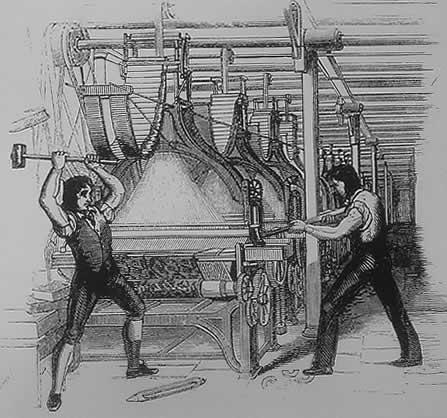
It’s a fact of life that eBooks are here to stay. Whether they eventually overwhelm conventional paper publishing is another thing. I hope not. There’s something tactile about reading a book that cannot, for me, be replaced by the onscreen experience. Things just read differently on paper. Maybe I’m just a Luddite at heart.


To begin with, eBooks tended to be used for technical manuals that were for a limited audience and expensive to produce in other formats. I can still remember the joys of my first Amstrad word processor, when it – or I – did something stupid that the manual did not seem to have an answer for, you could throw the heavy tomes against the wall. Many’s the time they landed with a satisfying thump in a corner of the office.


Time’s moved on since then. It’s only two years since the introduction of Apple’s iPhone and Amazon’s Kindle, and then the Sony Reader hit the market earlier this year. The explosion of the iPhone and the iPod has meant that every man and his dog seems to spend half their life with those little white earphones in place. It’s hard to remember a time when it wasn’t so.


But I digress. In theory, the numerous eBook formats that have sprung up to support this growing trend of the digital reader are all protected against illegal copying.


In theory.


Stealing books is not a new idea. When I used to live in a big university town, the most frequently shoplifted books from our local bookstore were textbooks. The trend towards eBooks has meant that students can obtain required textbooks much cheaper than their print versions.


I can see all the advantages of an eBook. For voracious readers, it allows them to have a huge collection in a very small space. They can search the text for keywords. They can carry a large number of books around at any one time – invaluable for travellers. Video clips can be embedded. Font size can be enlarged to order for the visually impaired. You don’t even need a bookmark to remember where you left off, nor a flashlight to read them under the covers.


BUT


You need an electronic reader of some description to read an eBook. You can’t drop them with impunity. You can’t dry them out on a radiator if you fall asleep reading in the bath. The readers are more attractive to thieves than an ordinary paperback, in which case a large book collection could be lost. Some devices are difficult to read in strong sunlight, and they require a power source that can malfunction or run out at an inopportune moment. Digital formats change, are updated, and they degrade, where paper books have lasted hundreds of years and can become valuable heirlooms.


But the main argument against eBooks seems to be the one of piracy.


In researching this piece, I’ve come across a lot of comments on other blogs and in response to articles on ePiracy. Some people have a theory that making a copy of something is not technically stealing it, and how many of us can say, hand on heart, that we don’t own a film that someone videoed or digitally copied from the TV, a book we didn’t buy ourselves, or a piece of music that wasn’t downloaded. I’m not suggesting any of us are likely to walk out of WHSmiths with a couple of hardbacks stuffed down the front of our trousers, but there is a generally casual attitude to ‘acquiring’ pieces of software, for example. If it’s out there somewhere for free on the web, people are very reluctant to pay for it.


As an author, I would, of course, far rather every reader I have went out and bought themselves a spanking new copy of my book – preferably in both hardcover and paperback – and if they feel a friend really ought to read it, too, that they go out and buy them their own copy. But I know this is just never going to happen. Thanks to the Public Lending Right (PLR) system for UK-based authors, I am more than happy to recommend that people simply borrow my books from their local library, but in other countries where authors don’t receive a tiny payment each time a book is borrowed, this is not such an attractive option.


As far as I understand it, unlike a paper book, eBooks cannot be transferred from one person’s device to another’s. You can’t simply lend a book to a friend. Some devices apparently monitor or track readers and their habits, restrict printing, and also the number of times the eBook can be transferred – from one device to an upgraded version, for instance – and eventually it’s entirely possible for the service provider can block access by the customer to ‘their’ copy of the book. It seems to be more like a long-term rental, with strings attached, than an outright sale.


But, you’re not supposed to be able to copy DVDs or CDs, either, and yet they are, often within hours of being released. The first hooky copy of the new Star Trek movie, according to The Times Online in November, was made at 11:31am on the day of its cinema release.


According to another article in The Times Online, best-sellers like the new Dan Brown were available even before official publication, and within a couple of days of release there had been more than 100’000 downloads by filesharers. The small size of a book compared to a movie – 3Mb as opposed to 1.5Gb – make it much easier to download.


And some books, like the Harry Potter series, which JK Rowling decided would not be released in e-format at all, have been hugely pirated, partly due to sheer demand. In the United States, the article reckoned, an estimated 1.7 million people own e-readers of some description, not to mention iPhones or similar devices.


British publishers are trying to stop piracy through the Publishers Association, which allows them to log the details of websites infringing their copyright and get the links removed. They’re fighting a losing battle.


And although research published by Oxford University in March 2008 put forward the theory that digital piracy may actually benefit those being affected in terms of driving up the buzz about a product without the need for spending money on marketing, things have changed a lot. The question is, have things accelerated too far, too fast since then? And do the benefits outweigh the lost revenue?


So, what’s your opinion on ePublishing and eBooks? Good thing or bad? Is piracy robbing authors and killing the industry, or is it getting otherwise little-known names out there to a wider audience? Do you like reading digitally or prefer paper?


What are the pros and cons I haven’t considered?


Like I said at the start, I have more questions than answers, and I’m very interested to know what you all think on the subject, and what your personal experience has been.


This week’s Word of the Week is an odd one. If you were asked whether the word ‘plagiarism’ meant ‘piracy’, ‘kidnapping’ or ‘robbery’, which would you choose? To contestants on a recent UK television quiz show, the answer seemed easy and obvious – they opted for ‘piracy’. Probably most people connected with the world of literature would make the same choice. Surprisingly, the correct answer is ‘kidnapping’. Plagiarism is defined as ‘the taking and using as one’s own of the thoughts, writing or inventions of another.’ At its root is the word ‘plagium’ – a Latin legal term for kidnapping or man-stealing. Hands up if, like me, you got it wrong!

Running Over the Same Old Ground

by  J.D. Rhoades

During Allison’s discussion of “Epic Books” the other day, several commenters mentioned books they’d read over and over and might read again. That got me thinking because, at the time, I was re-reading a book I hadn’t read in years: Mark Twain’s THE INNOCENTS ABROAD. And, I confess, I was feeling a little guilty about it.

I know that’s absurd. After all, INNOCENTS ABROAD is a great book. It reminded me of why I love Twain. The passages where he’s  in the Holy Land, recounting various absurd claims made on behalf of local landmarks, each narrative ending with the solemn affirmation that  “of course,we know this to be true”, are Twain at his skeptical and ironic best. Twain knew that sometimes, the best way to satirize something foolish was  to present it as it is, without embellishment or burlesque, just a tongue planted firmly in one’s cheek.  TV’s Jon Stewart is a master of the same technique.

But much as I enjoyed it, I couldn’t help but feel the weight of the steadily growing TBR pile beside the bed. All those books you haven’t read, one of that multitude of small voices in the back of my head nagged, and here you are going back and wasting time with something you’ve already read. And you know you’re going to be getting more books  for Christmas, so you’ll get even further behind.

Like I said, absurd. Hey, it’s not always easy living inside my skull.

It wasn’t always like this. Back in the days of my youth, I used to read  THE LORD OF THE RINGS at least once every couple of years. There are some Heinlein novels, like STRANGER IN A STRANGE LAND, GLORY ROAD, and STARSHIP TROOPERS, that I must have read five or six times each.  I’ve read most of the Travis McGee books at least twice. Hammett’s RED HARVEST and THE MALTESE FALCON,  three times.

Somewhere along the way, though, the  leisure time shrank, while  the number of books I wanted to read expanded. And re-reading a book I’d already read seemed like a waste of time that would be better spent exploring something new.

But, you know, I get over it. And when I do break down and pick up an old book, it sometimes shows me how much I’ve changed. The last time I picked up THE LORD OF THE RINGS, for instance, Tolkien’s formal, mythic prose, which had previously thrilled me,  seemd a bit stilted. After a  decade or so of coming to love spare, lean, noirish writing, one of my formerly favorite lines in the book, Eowyn’s defiance of  the Nazgul who’s just told her “no living man” can kill him:

No living man am I! You look upon a woman. Éowyn I am, Éomund’s daughter. You  stand between me and my lord and kin. Begone, if you be not deathless! For living or dark undead, I will smite you, if you touch him.

…suddenly seemed almost comical. The movie version, with an excellent performance by  Miranda Otto, boiled the line down to a snarled  “I am no MAN!” followed by a vicious sword thrust to the face (or where the face ought to be). That, after all this time,  had become much more satisfying. More hardboiled, so to speak.

INNOCENTS ABROAD also struck me a little differently. For the first time,  I noticed that Twain’s more than a bit of a North European chauvinist. He finds the French and the Russians charming; the Italians, the Turks, and the Arabs, not so much. Now, maybe everything south and east of France really was as dirty, squalid, and diseased as Twain makes it out to be, and I have no problem believing that the Syria-Lebanon-Palestine trail was (and is)  a parched and rocky hellhole. Maybe it’s just cultural oversenstivity making me wonder why, the darker the people get, the harder Twain is on them. Maybe the next time I re-read it, I’ll feel differently.

So tell me, dear ‘Rati: am I the only one who feels a little guilty getting sucked into a previously read book when there are so many unread ones on the TBR pile? Do you ever go back to a book you’ve read before and find it a very different experience from the other times? What book have you re-read the most times?

The Omniscient Narrator

By Louise Ure


Bear with me here. This is not a political blog; rather it’s a discussion of the use of point of view. Specifically that of an omniscient narrator in literature.

Last week an emailed first-hand account of a possible terrorist hijacking attempt on an AirTran plane flying between Atlanta and Houston was making the rounds on the blogosphere.

Forget for a moment whether you belong to the “This feels too much like socialism to me” camp or the “Could the wingnuts get any crazier?” one. Let’s look at this email from a strictly literary point of view.

The full copy of the email is below:


From: Petruna, Tedd J. (JSC-DX12)[RAYTHEON TECHNICAL SERVICES COMPANY]

To: undisclosed-recipients

Sent: Friday, November 27, 2009 11:32 AM

Subject: Long story short….

One week ago, I went to Ohio on business and to see my father. On Tuesday, November the 17th, I returned home. If you read the papers the 18th you may have seen a blurb where a AirTran flight was cancelled from Atlanta to Houston due to a man who refused to get off of his cell phone before takeoff. It was on Fox.

This was NOT what happened.

I was in 1st class coming home. 11 Muslim men got on the plane in full attire. 2 sat in 1st class and the rest peppered themselves throughout the plane all the way to the back.

As the plane taxied to the runway the stewardesses gave the safety spiel we are all so familiar with. At that time, one of the men got on his cell and called one of his companions in the back and proceeded to talk on the phone in Arabic very loudly and very aggressively. This took the 1st stewardess out of the picture for she repeatedly told the man that cell phones were not permitted at the time. He ignored her as if she was not there.

The 2nd man who answered the phone did the same and this took out the 2nd stewardess. In the back of the plane at this time, 2 younger Muslims, one in the back, isle, and one in front of him, window, began to show footage of a porno they had taped the night before, and were very loud about it. Now….they are only permitted to do this prior to Jihad. If a Muslim man goes into a strip club, he has to view the woman via mirror with his back to her. (don’t ask me….I don’t make the rules, but I’ve studied) The 3rd stewardess informed them that they were not to have electronic devices on at this time. To which one of the men said “shut up infidel dog!” She went to take the camcorder and he began to scream in her face in Arabic. At that exact moment, all 11 of them got up and started to walk the cabin. This is where I had had enough! I got up and started to the back where I heard a voice behind me from another Texan twice my size say “I got your back.” I grabbed the man who had been on the phone by the arm and said “you WILL go sit down or you Will be thrown from this plane!” As I “led” him around me to take his seat, the fellow Texan grabbed him by the back of his neck and his waist and headed out with him. I then grabbed the 2nd man and said, “You WILL do the same!” He protested but adrenaline was flowing now and he was going to go. As I escorted him forward the plane doors open and 3 TSA agents and 4 police officers entered. Me and my new Texan friend were told to cease and desist for they had this under control. I was happy to oblige actually. There was some commotion in the back, but within moments, all 11 were escorted off the plane. They then unloaded their luggage.

We talked about the occurrence and were in disbelief that it had happen, when suddenly, the door open again and on walked all 11!! Stone faced, eyes front and robotic (the only way I can describe it). The stewardess from the back had been in tears and when she saw this, she was having NONE of it! Being that I was up front, I heard and saw the whole ordeal. She told the TSA agent there was NO WAY she was staying on the plane with these men. The agent told her they had searched them and were going to go through their luggage with a fine tooth comb and that they were allowed to proceed to Houston . The captain and co-captain came out and told the agent “we and our crew will not fly this plane!” After a word or two, the entire crew, luggage in tow, left the plane. 5 minutes later, the cabin door opened again and a whole new crew walked on.

Again…..this is where I had had enough!!! I got up and asked “What the hell is going on!?!?” I was told to take my seat. They were sorry for the delay and I would be home shortly. I said “I’m getting off this plane”. The stewardess sternly told me that she could not allow me to get off. (now I’m mad!) I said “I am a grown man who bought this ticket, who’s time is mine with a family at home and I am going through that door, or I’m going through that door with you under my arm!! But I am going through that door!!” And I heard a voice behind me say “so am I”. Then everyone behind us started to get up and say the same. Within 2 minutes, I was walking off that plane where I was met with more agents who asked me to write a statement. I had 5 hours to kill at this point so why the hell not. Due to the amount of people who got off that flight, it was cancelled. I was supposed to be in Houston at 6pm. I got here at 12:30am.

Look up the date. Flight 297 Atlanta to Houston .

If this wasn’t a dry run, I don’t know what one is. The terrorists wanted to see how TSA would handle it, how the crew would handle it, and how the passengers would handle it.

I’m telling this to you because I want you to know….

The threat is real. I saw it with my own eyes….

-Tedd Petruna


The airline quickly posted a response to the email, debunking the passenger’s account, and adding the red-faced information that Petruna wasn’t even on the plane. He’d missed his connection.

So okay, we’re dealing with fiction. As fiction, how does it rate?


  • It’s crying out for a new title. “Long story short” is enough to make my eyes glaze over. It sounds like my father-in-law, twenty-five minutes and three drinks into a bad joke.


  • He gets points for decent research. Even though he wasn’t really on the plane, he managed to get a fair number of facts (the large group of foreign-speaking passengers, the controversy over a cell phone, the passengers reboard) correct.


  • The opening was a bit slow. He might have started a little closer to the action, perhaps when he first notices the flight attendant and the man with the cell phone.


  • He starts telling the story from a first person point of view. That’s a good thing: we can identify with this kind of everyman-action hero, a mythical Bruce Willis forever on his way to visit his daughter for Christmas when he comes across Big Time Evil.


  • He lets his research/assumptions show too much in the paragraph where he says Muslims have to watch porn in a mirror with their backs to the actress/ecdysiast. A nice addition might have been a short paragraph flashing back to his own investigation into Muslims and pornography, which might also have filled in some important backstory for us.


  • Good use of pacing and action sequences, although I find the dialogue (“Shut up, infidel dog!”) to be a bit clichéd.


  • Prior to publication, I wish he or his (internal) editor had used spellcheck or a universal search for exclamation points.


  • And the big one for me: he’s fallen out of the first person POV to tell us two things: that the person with the cell phone in first class had used the phone to call an ally in coach, and that the foreigners in coach were watching pornographic movies they’d taped the night before. How could our first person narrator have known these things?


For that matter, how did Petruna come up with any of this stuff, given that he wasn’t on the plane?


But that’s the very definition of good fiction, isn’t it? Making us believe a story that comes, at least in part, out of our heads. He shouldn’t have broken that implicit contract with us by leaping into an omniscient narrator’s POV midstream to carry the story along.

Oh, and the ending stinks. He shoulda’ had the plane blow up and the hero barely get all the good guys out the emergency slide at the last minute.

All in all, I guess it’s a good action yarn but still needs a bit of weeding and pruning. Thank God for slush piles.