I’m not touring and teaching like Alex this week, nor have I been at a high-powered writers’ workshop like Pari, or out striking big TV deals like Rob.
What I’ve been doing is falling in love with words. Again. As usual.
In my last post I wrote about my gelatophobia, one of those top-drawer words that does not mean at all what it sounds like. Others on my “I don’t think so” list would be: enervate, choleric, pulchritude, necromancy, fungible and my newest favorite, gongoozler. “Choleric” has nothing to do with cholera, “pulchritude” is actually a good thing, and a “gongoozler” is an idle speculator, especially one who stares for a long time at nothing.
That’s me today.
And that idle staring has taken me on a detour through idioms today. An idiom is an expression that usually can’t be translated literally. Its meaning is often quite different from the specific word-for-word translation. They’re the worst kind of clichés if we dare to use them in our writing. In dialogue, they connote a lazy-thinker or someone from Hicksville.
“I’m not pulling your leg.”
“It’s no good crying over spilt milk.”
“I’m living the life of Riley.”
They’ve become such comfortable, worn out moccasins of phrase that we don’t even think about them any more. But they jump up like a soliloquy on stage when you hear them in another language.
“I’m not hanging noodles on your ears” (Russian) and “I’m not pulling the hair out of your nostrils” (Japanese) = Not pulling your leg.
“Biting the elbow” (German) = Crying over spilt milk.
“To fart into silk” (French) and “live like a maggot in bacon” (German) = Live the life of Riley
In Spain, if you feel like a fish out of water you’re “like an octopus in a garage,” and if two things are well suited for each other they’re “like fingernails and dirt.”
A “mouse milker” in German is a detailed-oriented person, but an “ant milker” in Arabic is a miser or a tightwad. In Spanish, that same tightwad would be someone who “walks with his elbows.”
In English, you could be “in a jam” or “in a pickle.” In Latvian, you’d be “up a stovepipe.”
We make a mountain out of a molehill, but the Poles “make a fork out of a needle.”
We think of ourselves as “the third wheel” – the unnecessary one – on a date, but the Portuguese would say they were “holding a candle.” Yep, someone just standing there, lighting the scene so the two lovers could see each other.
When the Japanese dine with a foreigner, they’re having “a sideways meal.” (Since the Japanese write vertically and most westerners write sideways, talking to a foreigner is “speaking sideways” and lunching with one becomes equally horizontal.)
When the French stand someone up for an appointment, they “donner le lapin” (give a rabbit.) For the Spanish, it’s “give a pumpkin.” Which would probably leave their Russian date “looking like September” (looking miserable).
If an Italian woman decided to “reheat cabbage” (rekindle an old romance), her Chinese husband might be accused of “having a pretty green hat” (having a cheating wife).
A window-shopper in France is “window-licking” and to attempt the impossible would be like “biting the moon” (French) or “climbing a tree to catch a fish” (Chinese). That would be nothing more than “making tea with your navel” (laughable, in Japanese).
Clearly, you should always look before you leap for, as the French say, “in candlelight, a goat looks like a lady.”
I know I’ll never be able to use this linguistic exercise in my work. I don’t want to write in trite idioms nor do I often like characters who speak that way. But it’s fun. And it gets my mind working.
And maybe, just maybe, it helps me come up with new metaphors on my own.
Whatcha’ think, Rati? Do you have any favorite idioms (English or otherwise) that I’ve missed? Or would you like to create a new one to confound all future students of English As A Second Language?
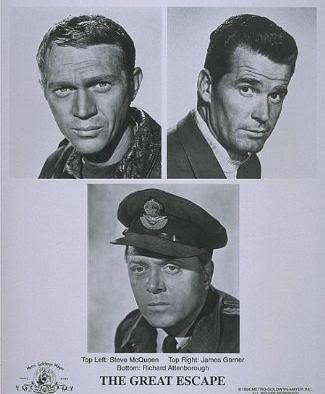
Thanks to some truly memorable writing by a guy called Thomas Harris, and some wicked good acting by a dude called Anthony Hopkins, many of us picture this guy when we think “serial killer.”
Or if we take our models from the real world, we might conjure up images of these fellows.
The paradigmatic “serial killer,” as we tend to use that term, is, by definition, both evil and genius. We know he is evil because he not only takes life, but does so repeatedly and often methodically. We know he must be genius because he is able to get away with his acts, repeatedly and methodically. Ted Bundy convinced grown women to get in a car with him. Charles Manson controlled his own cult. The Zodiac Killer was never caught. And Hannibal Lecter? Well, he managed to outwit even Clarice Starling. How wiley is that?
But I spent some time last week thinking about our fascination with the particular type of romanticized evil epitomized by the pop culture figure of the serial killer. My thoughts were first sparked by this season’s insanely delicious performance by John Lithgow on Dexter, based on the groundbreaking novels by Jeff Lindsay. Dexter himself was a terrific twist on the usual serial killer depiction: He only kills people who deserve it. And, in some ways, the killer portrayed by Lithgow checks off all the usual boxes: methodical, intelligent, manipulative – check, check, and check.
Except … he’s also married. And he sings loudly and earnestly at church. And he wears goofy shirts. And he gets angry when a new acquaintance lingers too long near his dead sister’s ashes. And he totally wigs out when he hits a deer with his creepy kidnapper van. And he looks like this.
Not wiley. Not genius. Just a little off. And kind of dorky.
I was also thinking about serial killers when I dusted off an old war story for my criminal law students this week. When I was a young Deputy District Attorney in Portland, I prosecuted a guy called Sebastian Shaw. The facts? He threw an onion at his sister with such force that it, in her words to the police, “exploded.” (No offense to my siblings, but you all did way worse to me, and I never called the cops.)
In all honesty, I might have only pushed the necessary papers on the case had it not been for persistent phone calls from a friend of the defendant’s family (coincidentally, a writer you’ve probably heard of). She warned me and anyone who would listen that Shaw was dangerous. We had to do something. To the best of my recollection, Shaw was convicted of assault and received what was probably a typical sentence for the crime of injuring another person.
I moved on to the next case (or hundreds) and never thought of it again until the First Assistant called several months later, asking for information about a guy called Sebastian Shaw. “Oh yeah,” I said, “the exploding onion case.” I could tell from the First Assistant’s response that my levity was misplaced. (I know. It probably still is.)
You see, Shaw had been stopped by police in a car that happened to have the following items in the trunk: a blindfold, plastic zip ties, duct tape, mace, a knife, a lead weight in the end of a sock, ski masks, latex gloves, and pornographic magazines. That’s all the police needed to know to conclude that Shaw was up to no good. But it wasn’t proof beyond a reasonable doubt.
Fortunately, Shaw smoked. And littered. After he flicked a cigarette butt to the ground outside a grocery store, police linked him through DNA evidence to a rape and two unsolved murders. The last time I checked, Shaw claimed to have killed ten or fifteen people, and law enforcement continued to connect him to bodies.
It wasn’t until after he’d been identified as a serial rapist and murderer that all the stories started to come together. The threat to his roommate’s life during an argument about the dishes. The eerie statements that had gotten him suspended from his cable company job. The outburst at his co-workers when he was a security guard. And don’t forget about the exploding onion.
All that time, all those stories. Apparently his family suspected something was deeply wrong. But I imagine that, to the people who had only superficial encounters with him, Sebastian Shaw seemed sad. Bizarre. Pathetic. Lonely. A loser.
Not evil. Not wiley. Not genius.
Now police in Cleveland have found eleven bodies in the home of this man, who had lived with his stepmother and did not drive. Sad. Pathetic. Not wiley or genius.
All of these stories were bouncing against each other in the pinball machine I call my brain when I asked my Facebook pals what I should blog about. I got some great suggestions that I may use later, but one stood out when my friend, Steve, said, “How about the banality of evil?”
It shouldn’t have taken Steve’s suggestion for me to tie John Lithgow to Sebastian Shaw to Anthony Sowell in Cleveland. I grew up in Wichita, Kansas, terrified of a murderer who called himself BTK. Bind. Torture. Kill. Thirty years without capture. Evil. Wiley. Genius.
But then they caught him because he was stupid enough to send police a CD-rom initialized with his full name. In his job enforcing low-level code violations in his tiny little town, he was known to measure grass with a ruler. Not wiley. Not genius. Just a sad loser. But still evil to the core.
So if evil doesn’t usually come in a super-smart, fava-bean eating package, why are we so fascinated with the prevailing paradigm? Maybe it’s simply because characters like Hannibal Lecter make for much better fiction than overweight landscaping police. But I suspect our preferences run deeper. We want to believe that evil is both recognizable and rare, not the nondescript guy in the next office.
If you’re fascinated by real-life serial killers, which ones fascinate you and why? And, as a reader (and perhaps writer), how do you respond to fictional portrayals of evil? Which ones stick with you?
I just finished a 4,000 word short story that’s going in a special edition of ORIGINAL SIN that will be exclusively at Walmart, and then later I’ll give it away free on my website (sometime before CARNAL SIN comes out at the end of June.) This is the fourth short story I’ve written (fifth if we count my 38,000 word novella). I’ve learned a lot about short stories since, but mostly I learned that they are damn hard to write.
Short is not my strong point. When I was in high school American History, I had a fabulous teacher (Dwight Perkins) who gave me an “A-” on my final essay because I, “so eloquently said in 10 pages what could easily have been said in 5.”
Why did I ever think I could write a short story? I didn’t even consider writing short stories when I started writing-I wanted to write a book. I meaty, 100,000 word novel. But in Stephen King’s ON WRITING, he lamented the death of the short story and what a wonderful medium it was. And I reflected how much I enjoyed reading short stories, from when I was a little kid through adulthood. To this day, some of my favorite stories are short stories. “A Sound of Thunder” and “He Built a Crooked House” by Ray Bradbury; “The Lottery” by Shirley Jackson; “The Cask of Amontillado” by Edgar Allen Poe; “Harrison Bergeron” by Kurt Vonnegut; “The Celebrated Jumping Frog of Calaveras County” by Mark Twain; “Mrs. Todd’s Shortcut” and “Quitters, Inc” by Stephen King. And that’s just the tip of the iceberg, what I can think about off the top of my head, the ones I think of from time to time when a theme or image from the story plays out in my life. If I took the time to cull through my shelves I would likely find a dozen or more short stories that I could call a favorite.
So when I was asked to write a short story in KILLER YEAR edited by Lee Child, I jumped at the chance (not to mention that it was being edited by Lee Child. I mean, I’m not an idiot. Most of the time.)
“Killing Justice” in KILLER YEAR was 5,800 words (over my allotted limit, but since my “mentee” Gregg Olson came way under his word count, JT was kind enough to let me keep my words.) Kind? Well, maybe not, because that story could have been better if I knew more about short stories.
Don’t get me wrong, I still love the story. It takes place in the California State Capitol and takes what I know about politics and deals and legislation and puts them in a very short story about a subject I care deeply about: child predators. But the structure of the story was like a novel-multiple viewpoints and multiple scenes. This doesn’t work well when you have less than 6,000 words.
My second short story was “A Capitol Obsession” in TWO OF THE DEADLIEST edited by Elizabeth George. Yep, you guessed it, I took a setting I was intimately familiar with (the Capitol) thinking that would be easier to write the story. I had more words to play with-7-9K (my story ended up just over 10K. Remember Mr. Perkins!) But I had learned from my first short, so I focused on one crime, primarily one setting, and only two viewpoints (a female state senator and a homicide detective who were on the “off” swing of an on-again/off-again relationship.) I started with a dead body (a lobbyist) to get immediately into the story (on the fantastic advice of Ms. George who commented that my first draft didn’t really begin until the second scene . . . so I cut the first scene during revisions.) I had my cop and my senator working parallel investigations. It was fun. In hindsight, I would have cut one scene (where my cop goes to the victim’s employers and apartment to gather information about her) simply because though the information was important, I could have probably incorporated it in such a way so I never had to show my characters outside of the Capitol.
Next came a story that hasn’t come out yet that will (hopefully) be in the HWA anthology. It’s tentatively titled “Her Lucky Day” and is a supernatural “light” horror story. I put it aside for a couple weeks and will edit it one more time. One POV and two settings AND I came in under my allotted word count of 4,000! Woo hoo! (A little bit of trivia: I originally wrote the scene as the prologue for CARNAL SIN, but it didn’t fit the tone or the direction that the book ended up going, so I cut it . . . but I really liked it, so I reworked it and gave it a conclusion.)
The given criteria for my short story in the back of ORIGINAL SIN was that I had to use major characters from the book in the story. As I thought about it, I realized that I also couldn’t have anything majorly pivotal to the series happen in the story because it’s “bonus content.” So no blowing up buildings in my fictional town that I’ll be visiting again, or killing off a major character, or anything that changes the goals or motivations of my main characters. I considered a lot of different ideas, but ended up with the same problem: too big. Just thinking about the ideas, I could see the bigger story behind it. That was my problem with “Killing Justice”–there was a much bigger story I tried to tell that didn’t fit well in the short word count.
When I was driving back from my trainer on Thursday (amazing, I often think of murder and mayhem after working out . . . ) the idea just popped into my head: a ghost story. Well, not just popped because I’d been mulling this issue over and over for days. But the story goal, the set-up, the setting, the conflict, it was all there bam!
It was perfect for me on multiple levels. First, the series is about demons and witches, not ghosts-but I’d set up in the book that ghosts exist and could cause problems for my characters. So if I wrote about a ghost, I wasn’t messing with my major antagonists-they could safely remain in hiding. Second, I had a perfect setting for the story where something tragic happened during the course of the book. Third, I had a plausible story conflict that didn’t mess with my series characters primary conflicts-I could use them more as catalysts rather than being considerably changed by the event. And the one character who is truly affected had already discussed her conflict about the situation in the book, so it’s believable for the story as well as if I use the issue in the future. (Sorry for being so vague, but I don’t want to give anything away.) And finally, I had a “villain” (the ghost) and who had a strong motivation for his “crime.”
Believe me, I was totally excited about this. I started writing. I set up my sheriff going to the scene and why . . . and my heroine and hero going to the scene and why . . . over 1000 words before they even got to the main conflict.
Argh! Seven pages and . . . they all had to go. Sure, I tried to convince myself that they didn’t have to be deleted. I told myself that those 1,000 words were really the first act of the story and they did end in a mini-climax/hook. Yes, we delude ourselves when we don’t want to delete something. They weren’t bad pages-in fact, even the first draft was pretty tight and to the point. But I had to remind myself that this was a short story. I didn’t have to painstakingly set the scene. I didn’t have to SHOW why the sheriff went to the scene; I didn’t have to SHOW my heroine’s growing worry and sense of foreboding when she couldn’t reach her friend (the sheriff.) Yes, in a full-length book such scenes are necessary at times especially leading up to the final confrontation. But for a 5,000 word story? No.
I realized I could SHOW my heroine’s fear as they arrive at the scene and find all the streetlights broken, adding to her growing apprehension; be with her and the hero when they see two cars parked in the back, one being a stranger; listen as they hear a scream and gunshots as they’re about to break into the building. All that in less than two double-spaced pages. It sets the tone and the scene and the primary goal (save the sheriff) without the longer, meatier lead-in. Why the sheriff is there de facto comes out as the scene unfolds.
I also made the choice to keep the entire story in my heroine’s POV. Believe me, this was tough because I LOVE multiple POVs. But it kept the story tighter and more focused and, therefore, the word count down.
Easy? Hell no! As hard as writing a book. Sure, a 100,000 word novel-or in the case of ORIGINAL SIN 125K-takes far more time, concentration and revising, but no individual scene was harder than the short story.
Every short story I’ve written has taught me lessons about writing that I couldn’t have learned in class. I was thinking about this after reading about Pari’s absolutely incredible experience with her in-depth writer’s program. I was itching to do something like that as well, to learn more about how to write, the different types of writing I can do, how to really dig deep and challenge myself.
And maybe, some day, I will do something like that.
But in the end, the key lessons I took away from Pari’s post was that they wrote every day. They practiced. They challenged themselves by doing–not just thinking about writing, not just talking about writing, but writing.
The short story is hard for me, but the only way I can learn to do it well is to do it. I was as giddy typing THE END on the short as I was typing it on my last book.
I’m hoping that with the multiple anthologies of novellas and short stories coming out these past few years and in the future that there’ll be a resurgence of sorts in short fiction. What do you think?
Readers, do you like reading short stories? Novellas? Or prefer to stick only with full-length novels? What is a short story you’ve recently read that stands out, or one you read years ago that you still think about?
Writers, do you like reading and/or writing short stories? Putting the time factor aside, is it easier or harder than a book? Some of your favorites?
You all get more tour journal today because tour is ALL I’ve been doing, since – I can’t even calculate since when. I don’t even remember what it’s like to write, by now, which scares me, oh, just a little. This is the last day of traveling, though, at least until one big week at the end of the month, but apart from some cool publicity with that, that week is going to be just about writing, MY writing.
Whatever that is.
My last stint has been teaching Screenwriting Tricks For Authors on a beach in Charleston – an incredible week long retreat for writers and aspiring writers sponsored every year by the Lowcountry Romance Writers. It’s all women except for one man, who is taking those odds very much in stride, and the focus is paranormal, historical romance, and romantic suspense, although to my delight there is one horror chick so I don’t feel like the complete voice of doom.
I had a fabulous drive from Raleigh to Charleston, nice to be on the road again. The great thing about driving toward South Carolina is that you get all that beach music, which I never knew it was its own genre of music until I actually lived in the South, and then I could see it in EVERYTHING – the Spinners and Temptations and Marvin Gaye and everyone.
I got to the bridge over to the island where our retreat house is, just at sunset – WOW. I drove straight out to the beach strip and pulled into this – incredible – mansion. To say it is luxe is the understatement of the year. Exquisite. Cherrywood floors, and three levels of absolute perfection, elevator accessible of course – but in a very beach, livable way – there’s a lot of Southwest influence, which is where the family of owners is from. This porch that I’m out on now, or terrace or whatever you call it in the South, has multiple living areas, with fireplaces of course, and the ocean is right there, in front of me (past the pool and volleyball court, naturally) and that SOUND, and the air – I’m just in a tank top and I’m fine, and this incredible fragrance – it’s not jasmine, but something sweet and completely intoxicating, and there are turtles, apparently, out there in the sand doing their thing in a way that is so protected that you can be arrested for turning on porch or pool lights after sunset.
And my room. Well, the word is suite. With sweeping ocean view, entertainment center and kitchen, and spa bath. Yes, I could get used to this.
I truly believe that anyone who commits to this kind of week-long writing intensive, at the prices that get charged for them, is ready to move to another, professional level, and I’ve never been disappointed in the calibre of students.
We had a fantastic dinner and got to know each other a bit, and out of 25 people about half are either psychiatric professionals or law enforcement or social welfare. Unbelievable stories at dinner, I’m so psyched to be here – as usual, I’m going to learn every bit as much and more as the students.
—–
Funny, here, how it’s incredibly cloudy, layered and stormy and brooding and you look away for a second and when you look back the whole sky has gone dazzlingly sunny, just the slightest wisps of clouds. I have noticed, oh man, have I, how Southern temperaments are just like that weather. Violent moods and storms that shake the earth and are forgotten in the next minute. Not what I’m used to.
It’s another warm day but not so humid, easier. I’m on the terrace again (and that sweet smell is jasmine, I found the vines) and I am noticing that in the overgrown yard next door there is a swing set, rusting, covered in brambles. Tragic. It would be lovely to swing and look out over the ocean. But an overgrown swing set is a good image…
Romance conferences are great – for many reasons, but what I’m thinking of specifically right now is the swag. Authors who can’t come contribute these extravagant giveaways for the swag bags – lush beauty products, flavored condoms, chocolate lip gloss, chocolate cock suckers (chocolate, chocolate, women and chocolate – someone’s in the kitchen right now making double chocolate biscotti). Once in a while there’s even a mini-vibrator. I used the body lotion from my bag and now, in the sun, my whole skin is sparkling with tiny iridescent flakes – the label on the bottle says it’s mica. It’s making me feel like a mermaid or something.
People here are great. The entire house is now vibrating with deep creativity. Four of us who just had their periods have started them again from all the free-floating estrogen, just like in college. Everyone is so excited. And for me there is nothing like being able to draw a fantastic plot line out of a beginning writer – who up until that second didn’t even think she could do it. I tell people: “You would not have had the idea if you were not capable of executing it.” (Something I am always fervently hoping for myself…)
Whether they do execute it or not, you never know – that’s more about endurance and a certain ruthlessness than about talent. But I have been privileged and proud to see people I taught show up at a conference a year later with book deals – NOT saying I did it, but that I could see that it would happen, and told them so.
—PM—–
I taught my class again today and people are now constantly laughing out loud in surprise when they saw how brilliantly formulaic film structure is and how much easier their lives are going to be from now on, knowing a few simple tricks.
And my horror chick is a real author. One of those that I wouldn’t dare give notes to, she is so dead on about what she’s doing. Naturally the most nervous one here, almost fainted before she had to read, and the most surprised that what she’s written is what it is. And it is so great and logical and right that the Universe has put her here because I’m one of the few women out there writing what she’s writing and I will be able to save her about a year of grief and possible disaster when it comes time to get an agent, the right agent, and between me and my other dark female author friends we can help her navigate what’s going to be her new life.
(And this happens over and over and over again at these workshops and conferences – for authors, for aspiring authors, for me personally. If you do it, the Universe understands that you’re serious about your writing and lifts you to the next step in a way you could never do for yourself.)
She’s one of the ones I bonded with last night, staying up way too late watching an excruciatingly bad horror movie called Orphan. But finally there was a plot twist so sublimely ludicrous we were screaming, laughing – worth ever single minute we wasted with the rest of the movie.
Sunset was about three hours long, wave after wave of color crashing over the clouds, with a full moon on top of that, and dinner was Fettuccini Alfredo, from scratch.
No. It doesn’t suck.
——
Things I love about this place.
– The spiral staircase, going up three floors, that polished, cherry wood…
– The elephant tapestries on the second floor. Ganesh, god of happiness.
– The knockout 180 view of the ocean you get walking through the archway into the living room.
– The theme of palms – I’ve always loved that as a design element anyway, and I was in THE palm room, they were on everything, pillows, pictures, shower tiles, ceiling fan. Just like the Atlantic ocean is a softer ocean than the Pacific, these are softer palms than California palms, feathery and feminine.
– That sea foam. Didn’t Venus come from sea foam – the sperm of Zeus? Never got how of course the Greeks would think that, before this trip. Totally fitting for a romance retreat.
– Omg, the food. As anyone who has read this blog for a while has no doubt noticed I am NOT a foodie but we have had some spectacular meals – one night crab legs and oysters, which were cracked and fed to us by the Charlestonians – this beautiful auburn-haired lithe elegant woman named Kathy, with the sexiest, butteriest accent – standing in front of me with a knife and opening oysters for me – full well knowing the picture she was creating and the primal pleasure of it all…
– And sparkly Lisa from Florida, who owns an apparently quite famous bakery/café in St. Augustine, the Cookery, made a five course Hungarian feast: sweet beets with sour cream, flat herbed egg noodles for goulash, this incredible sour cream and dill cucumber salad, green beans. And homemade, soft granola in the morning… ummm….
– The surfers. It cracks me up to see surfers trying to surf the baby waves here, but some of these guys were actually catching some rides…. Mystifying. Looked great in the wetsuits, too.
– The butterflies – so many of them, little animas, everywhere, fluttering right in front of our faces, fearless: bright yellow ones and tiger-striped.
– The company of women. The comfort level – open, loving, supportive, sexy, giggly, earthy, hilarious.
—-
As you can probably tell, I had a cosmically wonderful time, and got some seriously good teaching done.
And yet I kept getting these anxiety – not attacks, but prickles, that I was not getting any of my own work done, that any time I had a free moment, not that there were many, I’d walk on the beach or get talked into another horror movie marathon or just sit on the porch baking in the sun and staring out at the ocean.
Why do we do that to ourselves?
I’ve been touring NON-STOP for over a month now, because of the Halloween thing and because The Harrowing came out in the U.K. in September. It was a total, Universal gift to have a week on the beach, in such overwhelmingly beautiful circumstances. I wasn’t slacking, I was teaching, and yet I was beating myself up that I had gotten no further on deciding my next book (that would be after the next TWO that I’m writing at the moment).
Is there not something a little crazy about that?
Well, finally I relaxed and decided I was just going to take the gift. And maybe instead of forcing a decision on my next book, I will just listen, and see what I might be being told to write, if I just manage to stay quiet enough to hear.
So that’s my message today. We’re given all these gifts, all the time. Life is so abundant, and a writer’s life seemingly even more so – just magic things, all the time. Do you take the gifts you’re given? Doesn’t it work better that way?
Comparing the world of publishing to the world of filmmaking as I did in my last blog reminded me of the fact that, while I hate Hollywood, I really love Hollywood.
I’m not alone. Anyone who only loves Hollywood has never really met Hollywood. Hollywood is a deceitful little bitch, but God she’s cute. Sure, she can be admired from afar, but if you get too close, those little vampire teeth start to come out.
But I do have some telling stories about my days as a D-Guy, and one came to mind the other day….
This is the story of how I made the transition from being an Assistant to being a Story Editor when I was working for film director Wolfgang Petersen. I ultimately transitioned to Director of Development, but the real crucial segue happened at this earlier stage, when I found it essential to prove that I had enough “story sense” to become a D-Guy.
By the way, this is a tale that reveals more about the dysfunctional chaos of Hollywood than it does about the qualifications I did or did not have to fill the position.
At the time, there were two people in our development office: a Director of Development, and me, the lowly Assistant. It was her job to find the next big Wolfgang Petersen project, and my job well, to answer phones. But, as anyone in Hollywood will tell you, most of the submissions are read by the assistants first. Especially if that assistant wants to move up the ladder.
Now, I knew the kind of films Wolfgang wanted to direct. Big films with a social or political theme, films that dealt with universal issues, with social ramifications that could be felt around the world. “Outbreak” was a great example of the kind of idea that excited him—how one little virus could polarize a nation, could ultimately take out a significant number of the world’s population if it wasn’t held in check. What would we, as Americans, do to stop this from happening? Would we destroy an American town? These were the kinds of questions Wolfgang liked to consider.
So I received this spec script submission and, by God, it had everything I knew Wolfgang was looking for. It was a very complex story about an American scientist who discovers a plot to bring a Russian nuclear weapon into America and detonate it in New York City. It was a very smart script, much more akin to “The French Connection” than to any of the popcorn terrorist scripts that had been circulating at the time. But the plot was so complicated it required a very focused reading just to “get it.”
There were clearly problems with the script. But they were problems that could be addressed in development. The important thing was that it was a smart political thriller that met Wolfgang’s requirements. I felt that he should know about it and at least have the opportunity to read it and say “yes” or “no.” The Director of Development wasn’t willing to stand behind the project. She said that I was free to pitch it to Wolfgang if I wanted.
Now, I wasn’t really sold on the script as it stood; I was sold on what it could grow into, with Wolfgang’s guidance. But I had to make a decision – do I stick my neck out for this or not? I decided I would.
That decision was the key that turned the switch to Crazywood.
Wolfgang didn’t have time to read the script, but, based on my pitch, he felt we should go for it. Go for it…what the fuck did that mean?
His producing partner turned to me and said, “Well, that’s it then. It better be good, Steve.”
And we went for it. Which meant that we took the script to our studio and asked them to purchase it for us. Suddenly Wolfgang was “attached” to the project. And the town reacted.
Now, remember, I was THE ONLY ONE at the company who had read this script. And suddenly every production company in town was demanding to see it, and many were passing it up the ladder and submitting it to their studios.
But no one really took the time to READ the script. Those who did, read it quickly, paying little attention to the details. As things started heating up my producer came to me and said, “Steve, I’m getting all these calls from producers I know and no one understands this script – they can’t follow the story. Either you’re a genius or you’re duping this whole town.”
Okay. No pressure there.
So the studio where we had our first-look deal passed on the project, which freed us up to take it to other studios.
What happened next characterizes the world of Hollywood and is the stuff that keeps the sane from crossing the Arizona border into California.
Now, Universal Studios had just hired a new President of Production, and this guy was intent upon making a name for himself, and quick. He was determined to create relationships with top film directors by purchasing their pet projects and launching them into production. So, when he saw that Wolfgang was “attached” to this spec script, he swooped in and made a preemptive purchase of the script for 500 against 1.2.
That means that the writer was paid $500,000 for the script and, if it went into production, he would get another $700,000.
Just to make sure that we’re all on the same page here—this studio executive had not read the script.
When the dust settled and people actually READ the script, everyone turned to me and said, “What’s this story about?”
It was at this point that I was bumped up from Assistant to Story Editor.
I sat down and wrote a 25-page, beat-for-beat synopsis of the script, putting it in the simplest terms I possibly could. I never said the script was ready to go, I only said that it seemed like the kind of material Wolfgang would like. Suddenly I was responsible for a $1.2 million dollar deal and a marriage between Wolfgang and Universal Studios.
But wait, it gets worse.
This was the exact moment when a little studio called Dreamworks was born. Spielberg, Katzenberg and Geffen. They were their own studio, but they existed on the Universal lot. They had a deal and a working relationship with Universal. They had been developing a project that would become their very first feature film. The storyline had been kept under wraps from everyone except the most inside of Hollywood insiders.
As it happens, it was exactly the same story as the spec script Universal had just purchased for Wolfgang. Suddenly we were in a war with Spielberg.
And this was a huge embarrassment for the new President of Production for Universal, who really should have known what was being developed at his own lot. He shouldn’t have gone out and bought a project that competed directly with the debut film from their boy wonder’s new film company.
Spielberg got hold of our project and read it and agreed that it was a smart script. He suggested that we combine efforts, with Dreamworks producing and Wolfgang directing. We read their project and we agreed that ours was smarter, more interesting, more realistic. But ours still needed a huge amount of development work. Spielberg’s project was almost ready to go. Wolfgang declined their offer and we went to work on developing the script we had purchased.
Dreamworks moved quickly and cast their project with George Clooney and Nicole Kidman. We were still rewriting drafts of our project when they went into production for “The Peacemaker.”
“The Peacemaker” was no “French Connection.” It was the popcorn version of what could have been an extraordinary film about the real-life consequences of the fall of the Soviet Union. But it was Dreamworks’ first film and its release effectively killed our project. So, our writer never did get that additional $700,000.
But the process gave me my Story Editor stripes. I think my salary was bumped up to $35,000 per year.
As crazy as this was, how could it not be fun? How could I hate Hollywood when the ride was always this dynamic? It was great, as long as I didn’t put my heart into it. The day I really began to care was the day I had to leave. And heal.
* * *
On a completely different note, I wanted to post a link to my interview on “Connie Martinson Talks Books.” Connie has been doing author interviews for almost thirty years and I was very honored to have been chosen to participate in her series.
So this week has been a very interesting one for me. By interesting, I mean…well, let’s just say there’s an installment of AT PLAY IN THE FIELD OF THE WRITTEN WORD coming up, and it’s a doozy. Can’t do it this week because a few things are still up in the air, but should be raring to go in two weeks.
That said, what has been going on has kept me a little occupied, so I hope you’ll excuse me if I post something that has appeared on-line before. It’s a short story.
Now, I haven’t written a ton of short stories. In fact, with the exception of several flash fiction piece (one of which is below), I’ve really only written two average length shorts. One is a sci-fi piece I worked on about ten years ago, but never really did anything with. And the other was “Perfect Gentleman,” the story that appeared in the KILLER YEAR ANTHOLOGY in 2008. (Side note: I am very honored by the fact that “Perfect Gentleman” was also selected by Tyrus Books to be included with their recently released BETWEEN THE DARK AND THE DAYLIGHT AND 27 MORE OF THE BEST CRIME & MYSTERY STORIES OF THE YEAR anthology.)
So, I guess what I’m saying is that while I don’t do a lot of short fiction, I do enjoy it. Anyway, on to the story. For those of you unfamiliar with Flash Fiction, it refers to short stories that are limited to a certain small word count, quite often 1000 words. In this case, the limit was 500.
Apologies to those of you who’ve already read it.
CAFÉ LATTE
By Brett Battles
“The large one.”
“You mean venti?” the barista asked. She was probably just barely out of high school.
“Sure. Venti. That’s the large, right?” the man asked.
“That’s the large.”
“Good.”
“Can I get your name?”
The man looked around. “Why? Is there a line?”
There was no line.
“Right. Sorry. I’m a little nervous,” she said.
“This your first day?”
“No. Third.”
“You’re doing fine.”
And she was, too. Her customer service was all he could have expected.
“How much?” he asked.
She hesitated for a moment like she hadn’t understood what he was saying, then shook herself and rang up his drink.
“Three forty-five,” she said.
“Annie.” It was one of her co-workers. The red-headed kid who looked like he could use a little sun. “Just give it to him.”
“It’s okay,” the man said. “I don’t mind paying.”
He pulled a five dollar bill out of his pocket and handed it to the girl. Once she had given him his change, he dumped it all in the tip jar.
While the rest of her co-workers and pretty much everyone in the coffee shop watched, Annie made the made a venti latte. No one offered to help, but she seemed to have everything under control.
Somewhere in the distance, there was the faint sound of a siren.
The man waited contentedly as she finished frothing up the milk and adding it to his cup. Once she was done, she put a lid on top and slipped a safety sleeve around the base. Her hands weren’t even shaking as she handed the drink to him.
The sirens were closer now, probably only six or seven blocks away. The man took a sip of the latte, then smiled.
“This is great.”
“Thanks,” Annie said.
“You have a good day,” he told her.
“You, too.”
Except for his footsteps on the tiled floor, the coffee shop was silent. Everyone’s eyes were on him, but he acted like he didn’t notice. The only abnormal thing he did was step over the dead body of the would-be robber lying in the middle of the floor.
The unlucky bastard’s gun was still in his hand. An ancient .38 special. God only knew how much damage the kid had done with it in the past.
As the assassin opened the front door, he glanced back at the counter. Annie was still there, watching him. As he gave her a little wave, she mouthed the words, “Thank you.”
He smiled and walked out to his car. A glance at his watch told him he was still ahead of schedule. That was fine. It was never good to kill someone when you were in a rush.
_________________________
Read a good short story lately? Tell us about it. And, if you can, tells us where to find it.
Last weekend, Michael Palmer and I taught a writing workshop in Cape Cod. One of the participants asked a question: “Who are your readers?” It’s a very good question, but it’s one for which authors have only a hazy answer. Because, for the most part, we’re not certain. We get a general idea based on the fan mail we receive, and we see who turns out at book signings, but as for real statistics? For the most part, we’re just guessing. I suspected that my readership reflected the general readership of fiction readers in the country: 75% female, on the older side. And the audiences at my book signings tend to support that general female/male ratio. But these are just spot samplings, and I had no hard numbers.
Then I got back a survey of readers around the country, which checked the demographics of my readership. And what I’d suspected to be true has turned out to be pretty accurate.
— Women were four times more likely than men to rate me as one of their favorite authors. (Which is actually not all that different from other female mystery writers.)
— My readership tends to be on the older side, with the percentage peaking in the 45 – 54 age group. Again, this is probably right in line with other authors.
— My readership tends to also like mystery, thrillers, horror — and romance. But I have very few readers who also favor graphic novels, manga, and science fiction.
— My book THE KEEPSAKE was most popular among two groups: those under 18, and those between 55-64.
— No surprise, many of my readers work in the healthcare industry.
These results are just for the U.S. I have a feeling that those numbers might be slightly different outside the country, just based on who attends my signings overseas. At some of my UK and German booksignings, the male/female ratio has been close to 1:1. And the only time I’ve ever had a man approach me in a hotel lobby to ask if I was Tess Gerritsen, it happened in Berlin.
My reader demographics are probably similar to those of other female mystery authors. What can we all gather from this?
Our readers are primarily female, and older. I also have a fan base that’s under 18, but once a reader hits their twenties, it seems their novel reading slows down for a few decades. They’re busy with college, marriage, motherhood, and careers, so it’s not surprising they might cut down on their pleasure reading. But once the kids are raised, and they have more control over their lives, women seem to go back to reading again. I’m not sure there’s much we can do to snag more of those 18 – 40 year-old women readers.
As for the male readers, obviously I have a ways to go. But then, so do we all. How do we get more men to read us? How do we convince them that, yes, a woman writer can tell a story they’d enjoy? That’s the challenge.
For the past two weeks, I’ve been struggling with how to write about my experience in the writing master class I took in Oregon.
Short version: Grueling, exhausting. Life changing, transformative.
Medium version: Other than childbirth, it was the most difficult thing I’ve ever done in my life. And I know my writing and writing career changed forever the minute I committed to the process.
Long version:
This is where I get stumped. Where to start? Do I try to describe the schedule? It was basically boot-camp style – I kid you not. Daily classes from 10 am – 1:30 or 2 pm. Go work on assignments. Eat. Classes from 7 pm to 11 or later. Go work on assignments. To bed between 1:30 (really, really early) and 4 am. Get up by 8:30. Shower, shake the cobwebs off. Have breakfast and start all over again. Fourteen days solid.
Do I talk about the technique and style & content exercises we did to improve craft and to study writing genius on a daily basis? Do I talk about the short stories we wrote that stretched every single one of us so far and hard that we can never look at ourselves in the same way again? Have you ever written a 10,000+-word story in less than 72 hours while going to at least 8 hours of classes daily and having other assignments as well? What about the anthology we had to create with stories we – and former class participants – wrote? We were given a word count, budget and payment guidelines and three days to go through more than 100 stories to create a table of contents and then be able to defend the decisions we made. Boy, does that give a person perspective on an editor’s life.
Do I discuss the overwhelming amount of information we got on business – how to read contracts, copyright; the history of the publishing industry; the game we “played” that simulates the life of a writer over the course of 8 years—complete with bad and good life events, books and short stories sold; the lectures on strategies to really earn a living; the cautions about shooting yourself in the foot? Do I talk about the pitches and proposals we wrote for new novels (I hadn’t gone to the class with any ideas and came back with many viable ones)—sometimes several a day?
Do I try to recount all the myths about craft and business that we writers live with and promote . . . and the way the instructors blasted so many I can’t even begin to remember them all?
Do I spend hours pouring over the two full notebooks of notes I took to try to give a hint of everything that we did and learned during those fourteen days?
The problem is, I’m still stunned. Really.
Stunned.
The instructors told us it would take months before we realized some of what we learned, that years later we’d be surprised with the insights we’d acquired without realizing.
So . . .
Here I stand. Altered. And unsure just how deep those lessons went in.
Before I stop this lengthy host, please indulge me. I want to give a shout out to the Kip, Misty, Amy and the others at the Anchor Inn in Lincoln City. If you want a writer-friendly place to stay, go there. Just go.
Writing scares me. Getting my ass in the chair and the Work-In-Progress Word file open is a goddamn struggle, every single time.
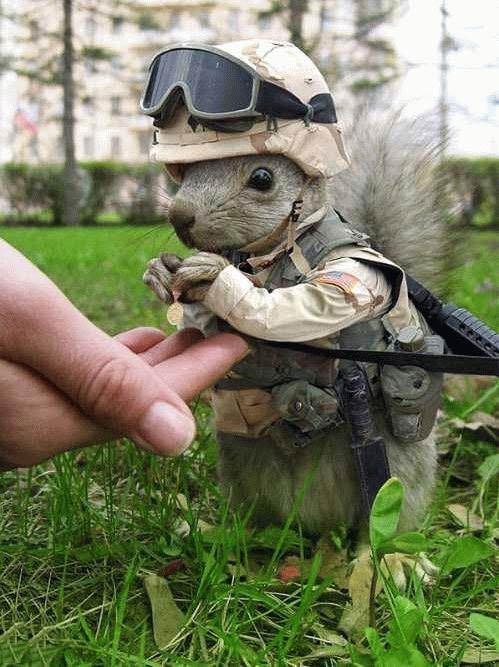
It’s like my head is filled with a bunch of really mean, sarcastic squirrels who don’t like me very much,
and I have to get each one of them to shut up even though they’re wearing body armor and keep ducking down behind these fat flood-watch sandbags of inertia and angst.
Oh, and they’re probably French.
That they are also zombies and radioactive no doubt goes without saying.
So, yeah, a head full of Kevlar-encased carnivorous undead glow-in-the-dark scathingly articulate plutonium-oozing Catherine-Deneuve squirrels who know me down to the last molecule of unworthy marrow: Fabulous.
I may be more squirrel-infested than you are, or less. I think we all have to play at least a little mental whack-a-mole in order to get down to work.
My squirrels remind me that I don’t have a backup job or health insurance, and that if my fourth book sucks butt–which it inevitably will, if I even manage to finish it–I will be unable to learn how to operate an espresso machine at Starbucks, and that I will therefore be doomed to labor on well into my toothless nineties wearing support hose and a McDonalds uniform.
Probably in Antartica.
(Yes, I am aware that there are no Eskimos in Antartica. This just means that my job at McDonalds will be more lonely.)
I am not alone in this, I know. Gene Fowler once said, “Writing is easy. You simply stare at a blank sheet of paper until drops of blood form on your forehead.”
(I first heard that from Douglas Adams in a speech he gave at an ABA breakfast in Anaheim, about seventeen years ago. And he didn’t credit Gene Fowler.)
The basic gist here is that in order to write, I have to keep reminding myself to kill my squirrels. Here are ten tips for squirrel maintenance that have served me well in this regard, even though I don’t always remember them.
Number One: They’re Only Squirrels.
Really. Not to mention imaginary.
It’s a negative soundtrack of your own devising. It’s not the voice of The New York Review of Books, Your Mother, or Fate. Anne Lamott called it Radio KFKD, and rightly pointed out that it’s bullshit.
Don’t let it stop you from getting your ass in the chair and opening the Word file. You are allowed to write crap. You are allowed to write a shitty first draft, and a shitty second draft, and as many steenking-piece-of-crap drafts as it takes.
The best novel you can ever write will be the result of small, sustained efforts, repeated over and over.
It will not be the product of continuous days of brilliance, with The Choir Eternal singing praise in your ears throughout. It will be built in layers. Many, many, many layers.
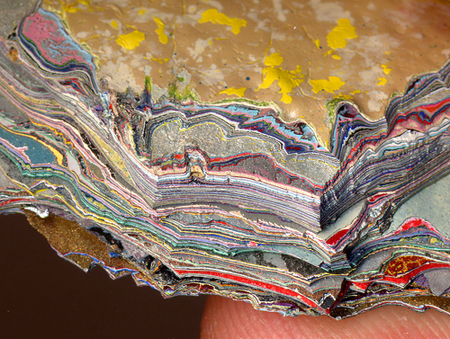
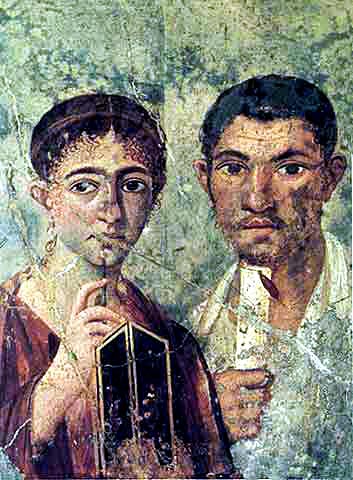
These efforts will at times feel infinitisemal, as though you are trying to unearth Pompeii with a bent spork and broken fingernails.
Some of these infinitisemal efforts will suck. That is inevitable, and it is okay. You will fix them. You do not have to turn straw into gold by lunchtime, or dinner, or even breakfast tomorrow.
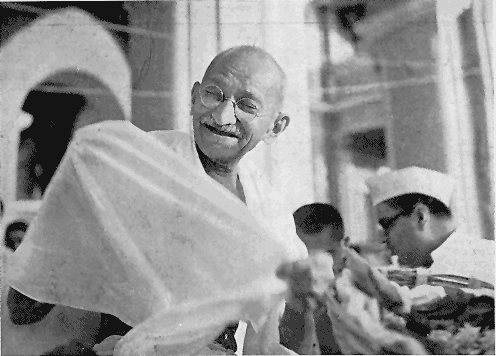
Gandhi said, “Whatever you do will be insignificant, but it is very important that you do it.” That’s your daily mantra.
Guy de Maupassant is credited with saying “Get black on white,” meaning just spill some ink on the paper.
Start. Pick a word and go.
I just re-read Stephen King’s On Writing. He relates an anecdote about a friend asking James Joyce what he’d managed to write that day.
“Seven words,” said Joyce.
“Well, James, that’s pretty good for you.”
Joyce shook his head. “But I don’t know which order they go in.”
What they say in AA is if you don’t know what to do, Do The Next Right Thing. It might be tiny, you might not know what comes next. Just do the next. right. thing.
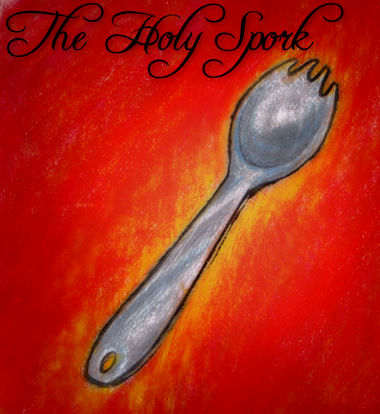
We’re all digging with Sporks. Embrace the Spork. The Spork is Life.
Number Two: Writing is Like Working Out
If you’ve blown off exercising for a while, getting started up again sucks. The first day you feel like an idiot–you’re sweaty and ungainly and everyone else in the room is faster/stronger/better than you are.
The second day is worse because now you’re sore from the first day, and besides which the instructor lady is obviously a bulimic Nazi bitch who hates you.
But the third day… well, maybe the Stairmonster didn’t make you feel like barfing after only five minutes this time, or you actually finished the full sequence of leg-lift inner-thigh-torture things without collapsing to the floor like a lukewarm pool of spilled Hollandaise.
Writing is like that, too. Day one is a root canal, day two is a root canal with back spasms… but day three you might think up something funny, or have a few good lines of dialogue, or really nail the way newly delivered palm trees with their fronds tied up in the air:
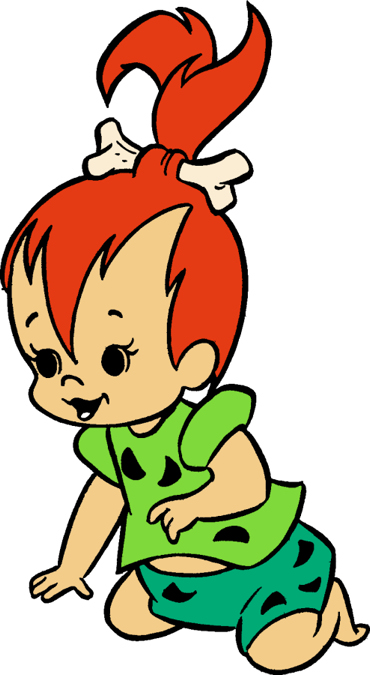
kind of look like Pebbles Flintstone:
Whatever… day three you’ll have a little something to let you know you’re getting your mojo back, I promise.
Number Three: Watch Some Stupid TV. After You’ve Written.
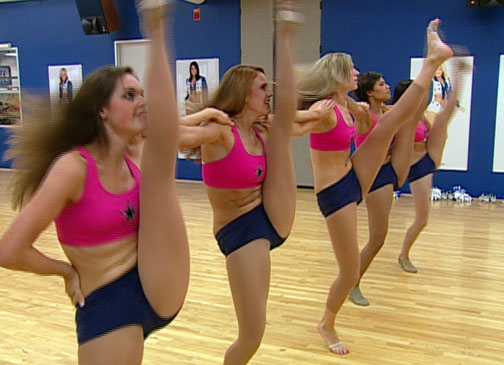
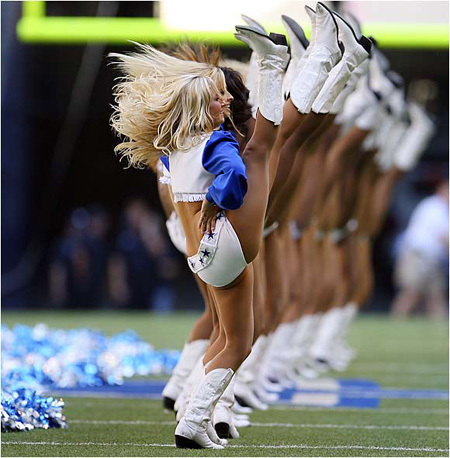
For the past two nights, I have been watching the CMT series about tryouts for the Dallas Cowboys Cheerleaders. This has helped my mental state immensely. I’m serious.
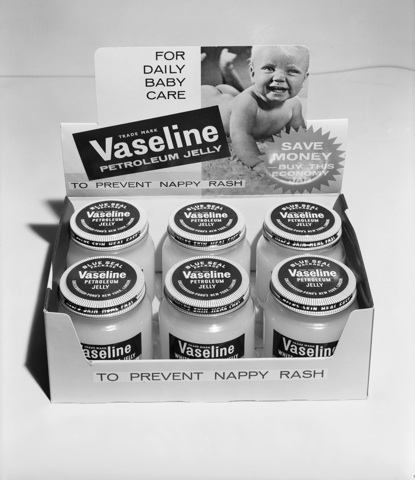
Here’s why: 99.9% of the chicks trying out for the squad are are nubile, gorgeous, great dancers, and have these huge smiles like they’ve got Vaseline on their teeth (they probably do have Vaseline on their teeth, if my Miss America trivia is at all trustworthy.)
600 of them showed up for the initial tryouts. Circa 150 got picked for a second round. Maybe 30 of those got to go to cheerleading camp, and another 15 of those got cut over the course of the next eight weeks of grueling workouts and vicious dance hazing.
Those final 15 who got cut? Mostly it was because they were nervous.
They didn’t throw caution to the wind and go for it, didn’t have fun, didn’t get outrageous and over-the-top with the whole thing.
The ones who made it were the ones who just shut up and did it–said to themselves, “Holy crap, I’m at fucking DALLAS COWBOYS CHEERLEADERS CAMP! What a trip! BE HERE NOW!”
The ones who thought about it too much froze, and missed out on the experience. And went home.
The ones who just went for it? They took criticism, and asked for help when they were called into the office. They said “yes ma’am” a lot and got better. And better. Bit by bit, rehearsal by rehearsal.
And they never stopped smiling.
Also, it reminded me that as hard as writing can be for me, it sure beats having to be a professional cheerleader.
If I had to smile that hard, my lips would fall off.
Seriously, aren’t you glad we don’t have to look this enthusiastic throughout Bouchercon?
Plus I can’t dance for shit. Not even with a bottle of tequila in hand and a gun to my head.
Number Four: Read a Really Crappy Book
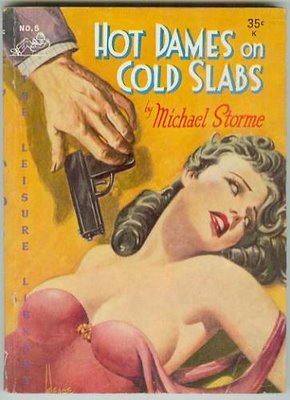
If you’re struggling with your writerly self-esteem, read the crappiest book you can lay your hands on. I’m talking vampire e-porn, or the ugliest paperback in the drugstore rack.
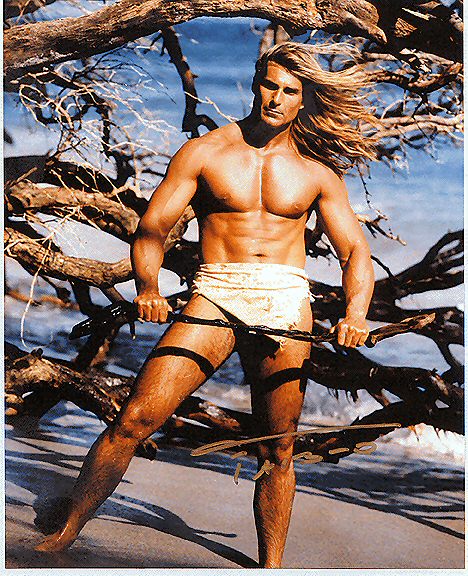
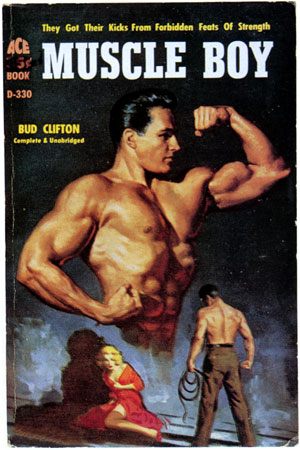
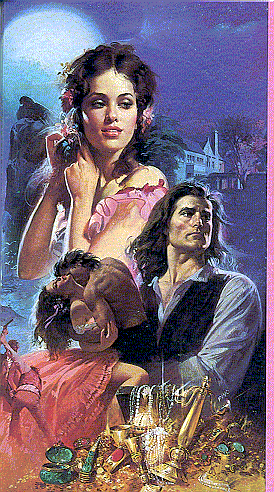
Something with a bad ersatz Fabio on the cover and a lot of overly-serifed swirly fonts in gold is good.
Something where every woman’s hair is “a deep auburn,” and they talk about “his manhood” a lot.
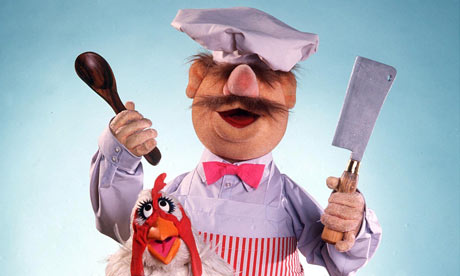
Better yet, open up an Ayn Rand novel and read the dialogue aloud to yourself, preferably in a Sesame-Street Swedish Chef accent.
You can do better than that. You WILL do better than that. You already *ARE* DOING WAAAAAY BETTER THAN THAT.
Lather, rinse, repeat as needed.
Number Five: Do Something Mindless But Slightly Engaging for a While
I’ve heard it said that when super-computer designer Robert Cray got stuck, he’d dig tunnels in his back yard. Serious tunnels. Great Escape tunnels–with wooden struts and stuff.
There’s something to be said for doing some mindless shitwork that engages your front brain but leaves your messy subconscious bits free to play around on their own. Some of the best ideas I’ve ever had came while I was driving my kids back and forth to school for three months in a car with a broken radio.
The driving was just the right amount of engagement for my internal editor/critic to be absorbed by, but the rest of me was bored enough to start free-associating in kind of wild ways. Worked like a charm.
Raking leaves might work. Walking on a treadmill with no music could, too. I hear that some people swear by long showers for inspiration.
You want something that takes just a little concentration–probably with a slight amount of sensory deprivation and some sort of physical engagement. Distraction, basically, but not all-engrossing. The idea is to free yourself up to fly a little.
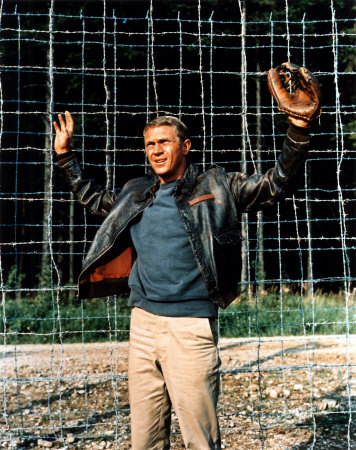
Think Steve McQueen stuck in The Cooler with his baseball and his mitt.
Number Six: Play “The Galaxy Song” a Couple of Times
Number Seven: Dude, Count Your Blessings Already.
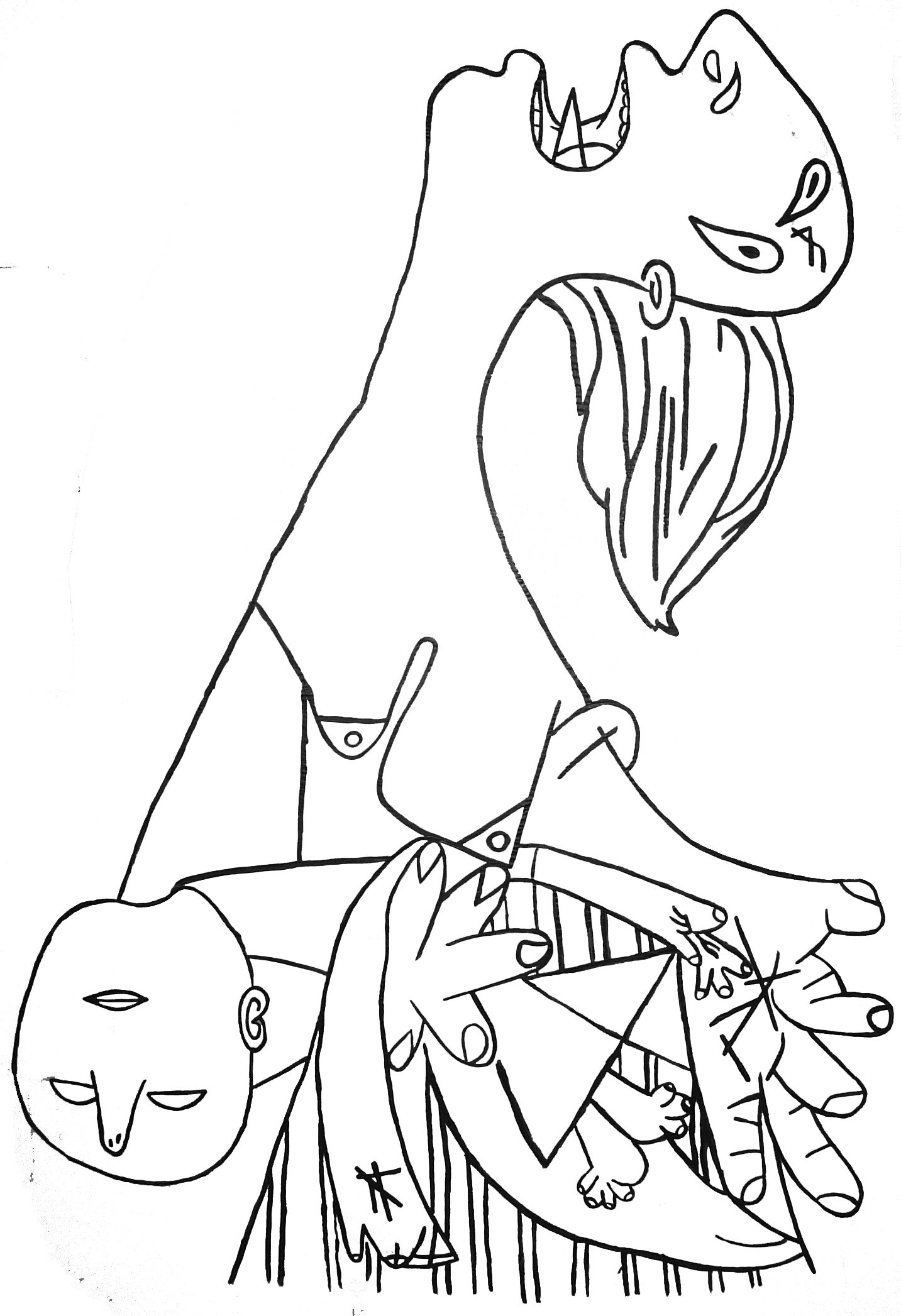
First of all, you are not a little kid in Guernica when the Germans are testing out how well bombing civilians works for invoking general terror.
Neither are you getting strafed by Jap Zeros in a rice paddy in 1939 Nanking, with nothing to protect you but a straw hat.
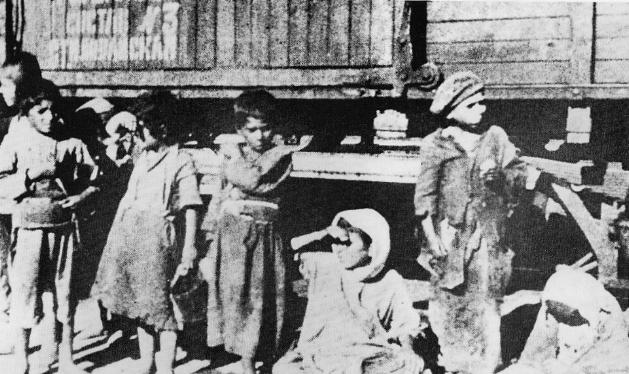
Yea verily, I doubt that you are starving in Armenia,
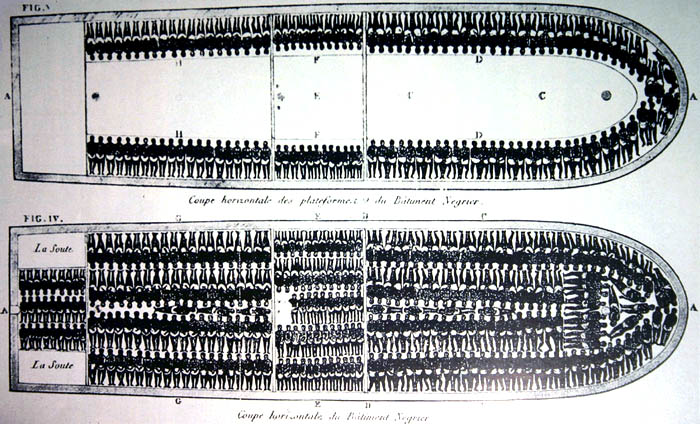
Or chained in the bowels of a boat on your way to a torturous life of horrid indentured servitude,
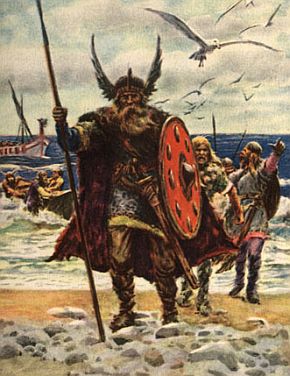
Or being pillaged by rampaging Vikings at this very moment.
Additionally, there is probably NOT an IED strapped under your desk. You just have imaginary squirrels in your head.
Remember: It’s only writing–not famine or pestilence or doom.
In all the times throughout history that you could have been born, this one is pretty damn good. There are antibiotics, for instance, and if you get sick, it’s a good bet no one will try bleeding you to release the bad humors.
Plus, if you’re reading this, you not only know how to read, you have access to a computer. The universe has indeed smiled upon you.
Be grateful.
Be happy.
Type something.
Number Eight: You Can Make it if You Try-igh-igh
As God is my witness, you can finish a book (or books)!
You may have to write it seven words at a time. You may not know what order they go in, at least right away. But if you get your ass in the chair and open the file every day, it will happen.
I don’t care if it’s for fifteen minutes at a stretch… you need to assume the position for inspiration to find you. You need to be typing.
I also don’t care if you start out typing “all work and no play…” etc. over and over again, until you figure out something better (though I recommend staying away from axes and creepy empty hotels, generally.)
Number Nine: Cornelia Says Relax
So does Ginger Rogers.
Number Ten: Fill in the Blanks
As Max Ehrman wrote,
You are a child of the universe, no less than the trees and the stars; you have a right to be here. And whether or not it is clear to you, no doubt the universe is unfolding as it should.
‘Ratis, what works for you, when your squirrels are restless and your hypos have the upper hand?
This week’s been a bit up and down, in a mild kind of a way. Firstly, I went back to the wonderful library at Poulton-le-Fylde on Tuesday evening to do a talk. One of the librarians there, Ken Harries, has just retired, but turned out for the evening anyway, and Linda Robinson and the rest of the staff made me very welcome. Always nice when the turnout’s good enough so they have to bring out extra chairs. I think we’ve all done events where the staff outnumbered the audience …
That was the ‘up’ part. They even put me under a sign that said ‘Young People’ – what’s not to like?
Then, Wednesday, I was due to go to my writing group, which meet in a friend’s house about forty miles away. Long way to go for a writing group, I know, but this is the remnants of the Lune Valley Writing Group, which is now sadly defunct. The little local library where we used to meet in Caton village has even been closed down. It was this group who followed me through the trials and tribulations of writing my first novel and getting it into print. There’s now only four of us who meet with any regularity. They’re all excellent writers, who – vitally – don’t pull their punches when it comes to criticism, and I find their input extremely useful as a book progresses.
As I’m just about to dive into the next Charlie Fox book, I was looking forward to our meeting, even though it means getting home about midnight and I knew I still had this week’s Murderati blog to write (and, if I’m honest, no clue as to a topic). But, I was due a contact lens check in the morning, otherwise they can’t keep supplying me daily disposable lenses by post. I used to wear the permanent tinted lenses, which were brilliant, but eye problems – including a warning that I might completely lose my sight – put an end to that. So, important to have the regular check-ups, just to make sure nothing’s amiss.
But, this still meant we had all afternoon to kill, as it wasn’t worth doing the eighty mile round trip home and back again for a 7:00pm start. And then, at 18:04, I get a call on my mobile to tell me that two people can’t make it, so the meeting’s cancelled.
Ah well, that’s life. No point in getting upset about it, but I admit to a regretful moment about an afternoon spent wandering when we have mountains of things to do at home. Time lost, after all, is the one thing you just can’t get back.
And, on the bright side, it has given me a topic for this week’s blog. Writing groups. Are you a member – or have you ever been a member – of one? What did you feel you got out of it? If you stopped going, why?
When I first moved up to this neck of the woods, I looked for a local writing group, and one was just forming, but it seemed to me that the organiser wanted to use it as a platform for her own ideas on teaching us to write, rather than simply letting us bring our own work for feedback from the rest of the group. I know a certain amount of structure is good – a topic for next time, if people are stuck for what to write about – but it wasn’t what I was looking for, and I regret that I didn’t last long there.
The trouble is, I don’t live in a big city, and there aren’t lots of writing groups to choose from. And I’ve never been a member of one where anyone else was writing crime. So, I’m starting to wonder about joining an on-line group.
But I don’t know how that works.
The big problem is the written word. If someone says, to your face, “That piece of dialogue really doesn’t work for me. It’s clunky. It sounds like the writer needing to get information across to the reader, rather than two people talking.” Then you pick up on far more than the words. Body language, tone, emphasis, facial expression, all help to soften down the criticism into something you can process and accept. Dashed off in an email, it sounds like a damning condemnation.
Somebody once said there are six ways people can read a letter. Some people write things that are supposed to be tongue-in-cheek, and find themselves being taken much too seriously and causing great upset or offence. I know adding smiley faces to emails is supposed to be a bit naff, but I do it all the time now to show I’m only making a jokey comment that is not supposed to be taken literally. Having had someone ring up and yell at me down the phone for a throwaway remark I once put in an email, I’m now very careful about these things. It doesn’t always work, of course, and I know I often put my foot in it. Where do you think the heading ‘Changing Feet’ came from?
So, that in itself makes me wary of joining an on-line writing group. The whole purpose of on-line is that you don’t meet, so how do I know if the general personality of the people whose opinions I’m soliciting will fit in with my own ideas? You make decisions about people within minutes of meeting them, but how long does it take for those same opinions to form when all you have are emails or comments? Do people reveal themselves more fully in their writing than face-to-face, or do they hide behind the words?
And quite often I used to take along to my writing group the bits I wasn’t sure about. If you write something that you instinctively know is good, you’re happy with it. It’s the bits you have sneaky doubts about where you want a second – or even third or fourth – opinion. Do I really want to release unfinished, possibly dodgy bits of work onto the Internet? Who knows where it might end up, and what damage it might do?
Paranoid? Me?
So, I’m looking for advice and information, people. Can you recommend a good on-line crime/thriller writing group? If you’ve had any bad experiences of on-line or face-to-face writing groups, care to share? And just how do the damn things work, exactly?
This week’s Word of the Week is postiche, an adjective meaning superfluously and inappropriately superadded to a finished work; counterfeit or false. Also a noun meaning an inappropriate hairpiece or wig.