Author Archives: Murderati Members


The man who hates libraries

What the …..???


From a suburban Chicago newspaper comes this startling story, about a library under fire, and certain well-to-do citizens who simply don’t see the point of publicly funded libraries:

Telling her mother that she wanted to come to the aid of a library under attack, 11-year-old Sydney Sabbagha stood at the podium before the Oak Brook village board.

“I used to go to the library knowing there were people there to help me find a book. Now there is no one to help me,” Sydney said solemnly. “It will never be the same without the people you fired.”

Sydney nestled back into her seat, but that didn’t stop 69-year-old criminal attorney Constantine “Connie” Xinos from boldly putting her in her place.

“Those who come up here with tears in their eyes talking about the library, put your money where your mouth is,” Xinos shot back. He told Sydney and others who spoke against the layoffs of the three full-time staffers (including the head librarian and children’s librarian) and two part-timers to stop “whining” and raise the money themselves.

“I don’t care that you guys miss the librarian, and she was nice, and she helped you find books,” Xinos told them.

“Don’t cry crocodile tears about people who are making $100,000 a year wiping tables and putting the books back on the shelves,” Xinos smirked, apparently referencing the fired head librarian, who has advanced degrees and made $98,676 a year. He said Oak Brook had to “stop indulging people in their hobbies” and “their little, personal, private wants.”

Leave aside the fact this man Xinos sounds like a rather unpleasant fellow who gets a kick out of making little girls cry.  Leave aside, too, the debate over how a community should spend its tax dollars.  What struck me, while reading this article (and a few of the comments that follow it) is how little some people value the public library  — or even the idea of a public library.  One person in the comments section feels that kids hardly need libraries these days:

It seems that this library is more of a social gathering place than a source of knowledge. Who here thinks that there are even 20 homes in OakBrook without the Internet, which is what most students and individuals use now for research?

Would you be so upset if the town decided not to have public tennis courts and swimming pool? Most people in OB who want those facilities can pay for their own, or join a club. Why not make libraries prove their own worth in the same way health clubs do? Why force people who don’t use it to pay for it?  (from “City Resident”)

And another person chimes in:

With the internet along with every school having a library, is there really the need for libraries anymore? At least, does EVERY town need one? Can’t one library serve a handful of towns.  (from “rightwinger”)

Libraries, according to these folks, are a waste of public resources.  Why, they’re just like country clubs, and only the folks who actually use them should have to pay for them.  Make every kid who wants to borrow a book from the library dig the money out of his own pocket. And if they don’t want to pay up, then they should just go online, because everything you’ll ever need to know (whether true, false, or just plain worthless) is available on the internet.  And if you’re too poor to own a computer or have internet access, tough luck. Where in the Constitution does it list the “right to information”? 

Good god, how our values as a country have changed when people today, in all seriousness, can equate kids using a public library with rich folks belonging to a tennis club. The idea of a library as merely a place to indulge one’s hobbies or one’s “little, personal, private wants” is not something I would have heard when I was a kid growing up in California. That was the post-Sputnik era, when educating American children became our national mission, when a President could announce, “We’re going to put a man on the moon” — and it would happen.  In those days, libraries weren’t considered amusement halls for hobbyists.  They were outposts of knowledge, accessible by anyone regardless of age, wealth, or race.  

And access it I did.  Some of my best childhood memories are of combing the stacks at the Serra Mesa branch of the Public Library in San Diego, searching for the latest Nancy Drew mysteries. Twice a week, my mom would drop me off there, and I’d come home with a fresh armload of books.  I brought home mysteries and adventure novels, science books about dinosaurs and space travel.  I felt welcomed there, by ladies (back then, all the librarians seemed to be ladies) who always seemed delighted that I was back for more.  In those days, America didn’t consider public libraries a luxury; they were considered a national necessity, for feeding our brains, educating the populace, and moving the country forward.  We all seemed to agree that knowledge is power, and knowledge was how America would discover new cures and put a man on the moon. 

The ancient world certainly understood the importance of libraries.  The great library of Alexandria was not just a repository of scrolls and historical documents; it was also a place where thinking men gathered to exchange ideas and test theories, a center of scholarship for mathematics, physics, and the natural sciences.  

Fast forward to today, when some American communities — even affluent ones — now question the need for public libraries at all.  Rich people don’t need them because they can just drive to Barnes and Noble and buy the latest Dan Brown novel.  Poor people don’t pay taxes, so why should they benefit from a library that they don’t contribute money to? Wouldn’t our tax dollars be better spent on a new sports stadium that everyone can benefit from? (Except for those aforementioned poor people who can’t afford the price of a ticket.)

When I read articles like the above, I feel sick.  I feel that the values I grew up with — a respect for education and knowledge and science — is quickly vanishing from this country.  If we shut out brilliant but impoverished children from access to information, where will our future NASA engineers like Homer Hickam come from? Are we writing off the future of another budding scientist from a poor coal mining town?  

Those of us who love books, whose lives are enriched by books, know that the internet is no substitute as a source of information.  Only a fool would claim otherwise.

Alas, the fools seem to be taking over.


Positive and Negative Spaces

By Toni McGee Causey

When I first went to college, my major was Architecture. (I had not yet realized that I could actually be a writer as an official occupation.) I couldn’t wait to take architecture courses and I perused the curriculum in the student’s catalog and read through the course descriptions with a lust that most kids that age reserved for hot cars or cold beer. (The caveat—I already had a hot car—a 1968 cherry red Mustang,
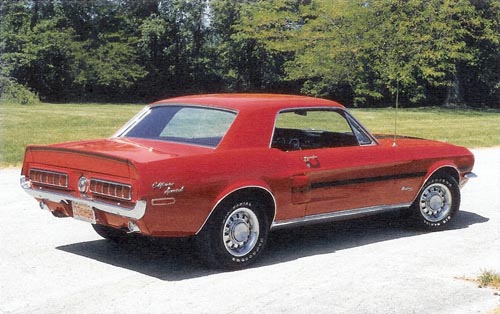


and I had access to plenty of cold beer.) (Hi Dad. I totally did not drink until I was officially 18, the legal age of drinking, because I was a very very good kid who did everything her dad told her.) (You cannot ground me retroactively, don’t even try.)

Anyway, I wanted to be an architect, and I imagined all the sorts of buildings I would design. I endured the first semester of boring classes and looked forward to being able to take Engineering Design, the very first freshman level course that was one of the official architecture courses.
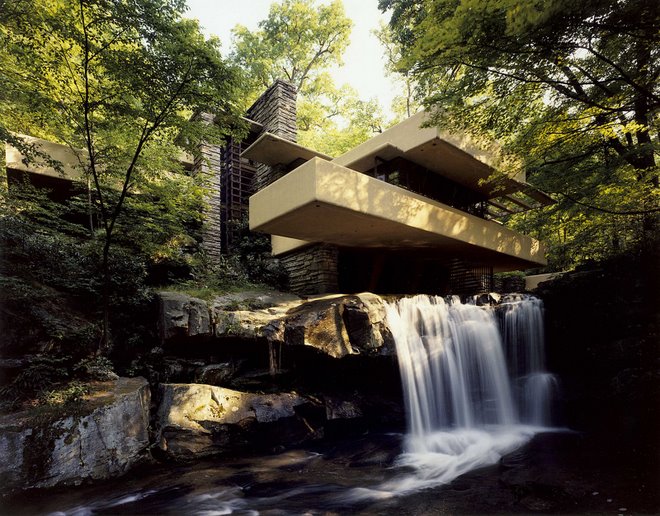
(Frank Lloyd Wright — Falling Water)

(Craftsman style house)

Turns out? They expect architects to use math much more sophisticated than simple addition and subtraction to formulate all of those pesky things like load bearing walls that will hold the building up.

It is apparently not kosher to make wild-ass guesses, which is how I would frequently solve math problems, and they heavily frowned on the eeny-meeny-miny-moe method. Ironically, I had placed out of every math requirement, including calculus—I had this uncanny ability to guess the right answers on tests, and yet, my professors, picky bastards, would not go with the percentage route that I was going to be correct a good solid 80 to 90% of the time. 10% to 20% of the buildings falling down would be bad.

It was a very short career.

In spite of that, I’ve remained fascinated with architecture over the years, as well as interior design. I pore over magazines and web sites, absorbing new trends. I have dozens of coffee table books with photos of spaces—old plantations, castles, bungalows along an Italian coastline, the white cities of Greece.

Recently, Janet Reid recommended a little book titled: 101 Things I Learned in Architecture School by Matthew Frederick. I love this little book. Since I didn’t even get past “2 things I learned…” in my own career, it was like having a crash course in all of the cool terms I’d wanted to study, but hadn’t. Some of these things I had picked up in my journeys, but it’s nice to see them laid out so simply. What I expected when I bought the book: to learn a few more terms, satiate that longing to design by at least sidling up to it and conversing with it a bit.

What I had not expected when I bought it is to see an entire book that has as much to do with writing and living as it does architecture. And I hadn’t expected to have a startling revelation about my own life.

Now, to be fair to Mr. Frederick, he did not design the book with the latter in mind—it’s something I simply “saw” in the book. Which is a bit ironic, since the revelation occurred over the architectural term “positive and negative space.”

Mr. Frederick defines these terms thusly:

“We move through negative spaces and dwell in positive spaces.”

It’s a simple concept.

When I thought about this in relation to writing, I had a twofold appreciation for the term. First off, just the physical aspect of the page—the words and paragraphs create positive space and the white space around it is the negative space. If you pick up any manuscript and it’s filled with long, dense paragraph after paragraph, it feels cluttered and heavy, weighted and overwrought, even before you’ve read a single word. A reader brings with her the expectation of balance, and you need white space to achieve that balance. Too much white space, though, feels bereft of weight, of value, of deeper meaning, and so it’s the writer’s job not only to craft the words, but to pay attention to the space those words take up on the page.

Simple enough, right?

The other meaning when applied to writing is the creation of the worlds we hope to evoke. Mr. Frederick goes on to explain:

“The shapes and qualities of architectural spaces greatly influence human experience and behavior, for we inhabit the spaces of our built environment and not the solid walls, roofs, and columns that shape it. Positive spaces are almost always preferred by people for lingering and social interaction. Negative spaces tend to promote movement rather than dwelling in place.”

(a place to dwell–a positive place)
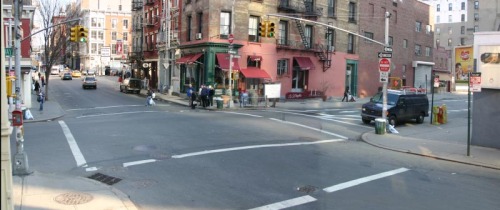
(An example of a city street–a corridor–a negative space.)

Again, simple.

In writing a book, we’re attempting to create a world. We want to do such a fine job, that the readers feel as if they’ve inhabited that world and that they’ve met the people who live there, and know them well.

One time, a long time ago, my husband and I were house shopping. In the course of a random conversation with a man we’d met, he mentioned that he and his wife were about to put their house up for sale. When he described the location, it piqued our interest, because it was very close to where we’d been previously looking, and this house happened to be on a small lake with a decent view. It was the exact size we were looking for and, miracle of miracles, it was in our price range. We made an appointment to go view the home and double-checked with the owner prior to arriving to make sure the time was still convenient, since, obviously, they were still living in the home and it wasn’t yet listed.

We wound through the neighborhood of unique homes and arrived at his address to see a beautiful Craftsman styled house set against big oaks and a few pine trees. The landscaping was impeccable—and lush. They’d eschewed the boxy, regimented style of an English garden look and had, instead, created a free-flowing design that invited you to move through a winding walkway through a wonderland of color until you reached the front door. We had a hard time keeping our mouths from gaping open with awe and lust. I didn’t want them to add another $20K just from the look on our faces.
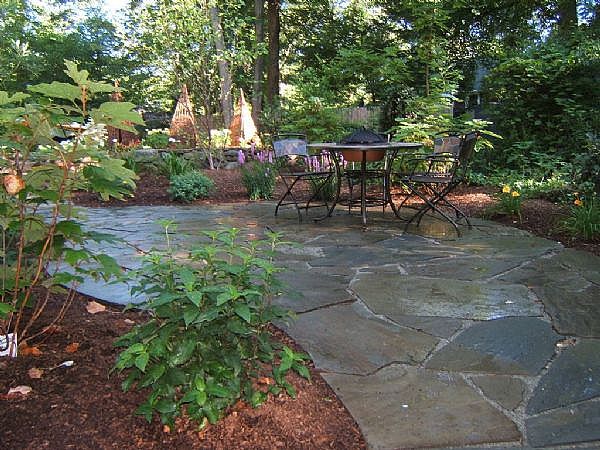
(similar to this)

Crossing through the threshold, however, was a shock. Though the home was beautifully designed, you couldn’t tell it for the clutter. Now, I have two sons and a husband, all of whom could easily be celebrated on the poster for “Packrats Unlimited,” so I’m not unfamiliar with the challenges of digging out from under the constant influx of junk. But this? This house was piled with detritus beyond my wildest imagination. Every level surface had piles and piles of paperwork. In the dining room, the table (which could have seated eight) had a pile so high, that the chandelier above it (and these were ten foot ceilings) was actually skewed at an angle, resting on the top of the pile. Every countertop, every sink, toilet, bed, side table: junk. We couldn’t enter the spare bedroom, though they opened the door to show us the room; there was junk piled from floor to ceiling, spanning the entire room. It looked as if someone had routinely just opened the door and tossed items in, for years.
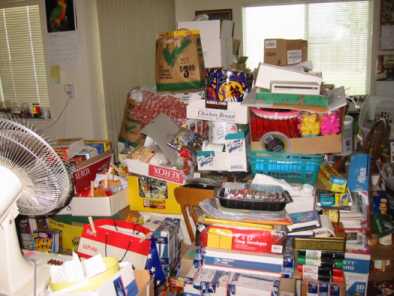
(And waaaaaay worse than this…) 

When we left there, my husband wondered if they were moving because they wanted a bigger house. I predicted that they weren’t going to even get the house officially listed and that within a year, they’d be divorced and battling over the house in a lawsuit. It didn’t surprise me in the least to see it for sale a year later with an “Owner recently divorced, highly motivated” notation on the listing.

They had not created for themselves a positive space to dwell; instead, they’d created a negative space that they could only move through. Disconnected, they became apathetic to their needs—each others’ and their own—and the family dissolved.

I’ve had people hand me novels in the past for critique and they spend a couple of chapters (or more) “building the world” – telling the reading about the political and economic machinations which have brought this world into being, into the state we find it in at this moment in time. It’s a huge mistake to do this. For one thing, the story hasn’t started yet until the characters are moving through that world and experience conflict within it. For another, the writer isn’t trusting the reader to extrapolate the positive and negative spaces from a select few examples.

If you look at the paragraph above describing the clutter, I’d be willing to bet you mentally filled in those rooms, though I didn’t describe a single stick of furniture, or the style of the interior. You filled every nook and cranny with junk in your image, though I didn’t get very specific about the junk. What’s more, if you thought about the couple, I’d be willing to be you saw them both in rather rumpled, dragged from the laundry basket wrinkled clothes, though I never described them.

We don’t have to give pages and pages of details—we just need to give a select few that show not only the space the characters are in, but how they’re interacting with that space. Some of our own choices are determined by economics which can be beyond our control, but some of the choices we make in our surroundings communicate who we are and what we think of ourselves. Same with our characters and their worlds: how do they dwell? What do they move through? Why? What does their surroundings say about them? What does yours say about you?

While I was thinking about this application of the architectural terms of negative and positive space, and simultaneously reading JT’s blog about the clutter of the online media and the expectations of what we have to do to create a writing career and maintain it, along with marketing it, I had an abrupt-but-fine appreciation for the connotations of positive and negative spaces and how they impact our lives. With regard to the social media/marketing aspect, I think the online world—particularly Twitter and Facebook—create the illusion of positive space, a space to dwell. Only, there is no “space” there, there is no permanent peace or interaction with tangible walls and windows, living areas and social areas. It’s all hallways and moving, traffic and business with the veneer of being social, and at its most fundamental sociological construct, it’s in disharmony with our need to dwell, because in social media, we’re always moving through. Targeting something—more interaction, more movement, more recognition, more awareness (both of each other, of marketing needs and trends, of products, not necessarily just of our own products).

It makes sense, then, that these sorts of venues create a sense of discord over time. I think it’s ironic, but I think that while it gives the illusion of greater intimacy and friendship, it also emphasizes the disconnect we have in our lives because we’re not interacting with a space or with a person, but with a computer screen. I enjoy Twitter, and, tangentially, Facebook, but I have felt far less stress in this last month since I have cut back my interaction at both places to just a few minutes a day.

Aside from that, though, is another fundamental truth of space, and it’s the fact that we build our environment. We choose where we’re going to dwell (or, at least, what we surround ourselves with in our dwelling place). The epiphany I had when reading Mr. Frederick’s book was that the positive and negative spaces were a part of our philosophy of life, not just our physicality in life. (I know this is not a new concept. It just opened up something for me.)

I’ve always been the type of person who was an overachiever. I’d accomplish something, check it off as done and move on to the next thing. It felt lazy, almost, to just… be. To be in a place and time without some sort of pressing item that needed to be achieved next. The problem with this was that I was dwelling in the corridors of my life. If something was done, it was over and I passed on through to the next challenge, and there was no space to just enjoy.

In the world of publishing, there is always the next hurdle. Always.
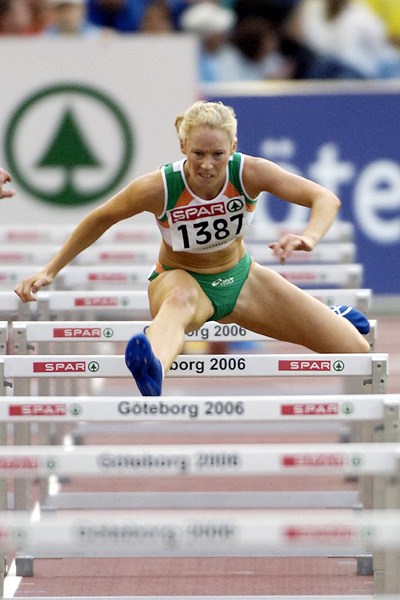
As soon as you finish a book, you have to try to get an agent. As soon as you get an agent, you have to try to sell it. As soon as you sell it, you have to start worrying about what changes they’re going to want and whether you can deliver that. As soon as you deliver that, there are marketing decisions that are made (often without your input) and marketing decisions you make (which increases the pressure), because now there is a goal: sell the books. While all of this is going on, you’re trying to either write the next book on a contract (and you are worrying whether or not you can hit the bar you’ve set for yourself again, whether you even remember how to write a book, and why on earth did you think you could do it again?) or you’re trying your dead level best to convince someone that yes, you can write another one and here it is, or here is the proposal. As soon as your first book goes on sale, all sorts of goals will crop up—will it do well enough, will it further your career, will it die a stone cold death and stop your career. If the former, the bar is set higher. If the latter, that’s a whole set of other problems / goals / fears. People will tell you to stop and enjoy the moment, but you’re generally so frantic to accomplish all of the stuff you need to accomplish in the short window that your book will be on the shelf that by the time you think you have time to stop and enjoy it, it’s long past gone and is probably buried under the last three goals you were striving for.

It is very difficult to just “be” and dwell.

But positive space—not just positive thinking, but positive space—is as necessary to our mental health and our survival as that negative space—that moving, ever onward. We need the connections around us, the grounding in the here and now, the raft of joy in the midst of a chaotic world, to replenish the soul and the well of creativity. You can go a lot of years without doing this, and still function. I can attest to that. But you’ll be missing so much.

So beyond just the writing applications of space and how it’s relevant to character development, my own personal philosophy has shifted in priorities: take the time to enjoy the people around you. Take the time to look at the things you have done and enjoy them. Dwell. Be. Replenish. The world and the race will still be there when you’re ready to re-join. There is no one final race anyway, but millions of races. If you don’t join this day’s race, you can join tomorrow’s.

Questions:

What is one thing you’d change about your physical environment that would make it a more pleasant place to dwell? Does your environment reflect the real you? If not, why not? 

Exercising The Mind

by Zoë Sharp

Monday, I broke a rib – again. Not the same rib as last time, I don’t think, but one a bit lower down. Probably it was the turn of the next one along. There I was, hanging out of a moving car to do some low-angle tracking shots, we hit a bit of an undulation, and I heard it go crack.

Oh … arse.

Last time, it took about three months to mend and, of course, we’re coming into winter, which makes the damn thing ache when I’m outside. I shall have to set out on particularly cold days with a hot water bottle stuffed down the front of my jacket. Not exactly what the fashion mags predicted all the best-dressed people would be wearing this season.

It was my own fault, of course. Not the hanging out of a car bit – that’s considered entirely normal behaviour for me – but the very morning I bust it, Andy and I had been discussing exercise. Tempting fate, you might say.

Well, I’d been promising that I really must build time into the daily schedule over the winter to do some regular exercise again. It’s difficult when you don’t have a routine. We could be at home for days at a time, and then flying all over the country.

And I’m just about to dive into another book, so I know that when the writing’s going well, I won’t want to stop because … the writing’s going well. And if it’s being difficult, I also won’t want to stop because then I’ll feel it’s beaten me, and I want to keep worrying at it until I get it right. So, proper Catch 22.

I used to exercise, of course. A lot. At one point I was going to the gym and working out with weights five days a week, I rode horses, did a lot of aerobics. I’ve also cycled, raced dinghies, and done pilates and yoga, not to mention self-defence and house building. Not a recognised form of exercise, but it would have been very effective had we not largely existed on junk food while we were doing it. The local kebab shop and pizzeria’s profits have fallen dramatically since we completed the build.

But, about eighteen months ago we discovered a – I hesitate to call it a diet – an eating plan that really suits us. It’s called The Abs Diet, but you have to ignore the name. It’s sensible, the recipes are great, and we’ve both lost the best part of a stone (that’s 14lbs or just over 6kg) without trying. And, unlike the Atkins diet, it doesn’t cost you a fortune at the supermarket, either.

So, the next step seemed to be to get back into exercise, and not just for the physical health benefits, but the mental health ones, too. According to a report written by the Mental Health Foundation back in 2005, exercise is extremely effective for treating mild depression, the symptoms of which are:

  • less energy than usual
  • tiredness
  • poor concentration
  • difficulty sleeping (problems getting to sleep, waking up unrefreshed from a long sleep, or waking up very early)
  • loss of sex drive
  • disturbed eating patterns – either loss of appetite or eating too much (comfort eating)

All the symptoms, in fact, of a writer who’s struggling with a book.

The report reckoned that physical activity lasting between 20 and 60 minutes can help to improve a person’s psychological well-being. But even shorter bouts of moderate intensity walking (10 to 15 minutes) can significantly improve their mood. Physical activity increases the amount of hormones (endorphins) in our bodies that help us feel happy.

So, people with depression are recommended to follow a structured and supervised exercise programme of up to three sessions per week (lasting 45 minutes to one hour), for between 10 and 12 weeks.

Not only that, of course, but in the Northern Hemisphere we’re also coming into winter, which means shorter days and less sunlight, and that brings with it the onset of Seasonal Affective Disorder (SAD) or winter blues. The symptoms are similar to depression, growing worse over December, January and February, and lifting in the spring, often with a short four-week period of over-activity or hypomania.

One of the most effective ways of treating this is light therapy, or sitting in front of a high-intensity light box for several hours a day. According to the SADA (Seasonal Affective Disorder Association) website:

Light therapy has been shown to be effective in up to 85 per cent of diagnosed cases. That is, exposure, for up to four hours per day (average 1-2 hours) to very bright light, at least ten times the intensity of ordinary domestic lighting.

Ordinary light bulbs and fittings are not strong enough. Average domestic or office lighting emits an intensity of 200-500 lux but the minimum dose necessary to treat SAD is 2500 lux, The intensity of a bright summer day can be 100,000 lux.

Light treatment should be used daily in winter (and dull periods in summer) starting in early autumn when the first symptoms appear. It consists of sitting two to three feet away from a specially designed light box, usually on a table, allowing the light to shine directly through the eyes.

The user can carry out normal activity such as reading, working, eating and knitting while stationary in front of the box. It is not necessary to stare at the light although it has been proved safe.

Treatment is usually effective within three or four days and the effect continues provided it is used every day. Tinted lenses, or any device that blocks the light to the retina of the eye, should not be worn.

Some light boxes emit higher intensity of light, up to 10,000 lux, which can cut treatment time down to half an hour a day.”

So, ideal for suffering writers to have near their computer monitor then, thus helping them concentrate on work and combat the disorder at the same time.

Fortunately, I don’t think I suffer from SAD. In fact, I find that the dark winter months are by far the best time for me to write. Perhaps it’s just that I’m not tempted to be outside doing Other Things as much, and the photography tends to be much more intense during the summer anyway. There’s something rather intimate about sitting in a little pool of light from a desk lamp, just you and the world you’re creating, with the darkness forming a barrier between you and the rest of reality. Perhaps that’s why I often work on dramatic scenes late at night. Or maybe I just procrastinate too much to get them done during the normal working day.

But, nevertheless, I promised myself I’d get some exercise done over the winter, and now it’s going to have to be something pretty gentle. There are always long walks, although these are hardly likely to prove gentle in this neck of the woods, where all the sheep have to get two legs shortened so they can lean into the wind.

So, help, ’Rati! I’m open to suggestions. Do you find exercise helps your concentration? If so, what do you do, and would you recommend it to others? How long have you been doing it, how frequently, and what do you like or dislike about your chosen method? And would it be suitable for someone who’s slightly crocked-up at the moment?

This week’s Word of the Week is another from my friend, Kate Kinchen. It’s circumferaneous, meaning going about or abroad; walking or wandering from house to house, or from market to market, as in a vagrant. From the Latin circum, around, and forum, a a forum or marketplace.

Icons of Cool

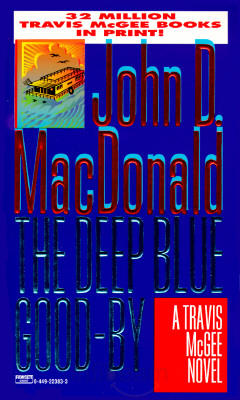
As so often happens, I actually had another topic planned for this post. But yesterday I found something out that absolutely redlined my bullshit meter. Acording to Lee Goldberg’s excellent blog A Writer’s Life, there’s a movie version in the works of John D. MacDonald’s first Travis McGee book, THE DEEP BLUE GOODBYE.


McGee is to be played by…brace yourselves:

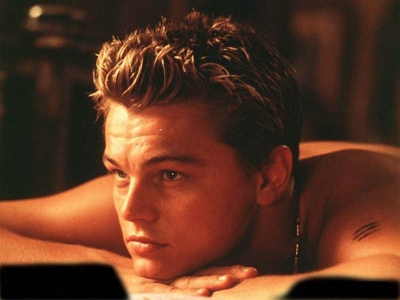
Leonardo DiCaprio.

I think I just threw up a little in my mouth.

Okay, after seeing BLOOD DIAMOND and THE DEPAHTED, I’ll grant that DiCaprio can play a tough guy. He’s turned in some great performances.  But damn it, he’s just wrong for McGee. He’s too short. He’s too blond. He’s too goddamn pretty.

I know I shouldn’t get this upset. It’s just a movie. And McGee’s just a fictional character in some old paperbacks.

Except to me, Travis McGee is a lot more than that. As I’ve mentioned here  before, I discovered the Travis McGee books at a formative time in my life. In my mid teens, I was a lonely kid with a tendency to wax philosophical. I could, and occasionally did, get all tragic and self-pitying, what the kids today  call “emo.” But then John D, MacDonald’s series about a loner with a philosophical bent who lived on a boat, righted wrongs, AND got a lot of hot women, hooked me and hooked me hard.  My parents had a couple of the books on their shelves, and after devouring those,  I went out and hunted down every other  one I could find. I’ve probably read all of them at least twice, and some I’ve read so many times the old paperbacks are coming apart.

McGee had a lifestyle most people would envy. In addition to the aforementioned boat and hot women, he had a fantastic , if entirely unconventional car: a Rolls Royce some maniac had painted electric blue and chopped up to make a pickup truck. He called it Miss Agnes after an old teacher who’d had hair the exact same shade of blue. He had an awesome best friend: a genius economist named Meyer who lived on a nearby boat and provided  him with a foil for his musings (and a mouthpiece for  some of John D. MacDonald’s observations as well). Most importantly, though, McGee had life figured out. He had life flat knocked. McGee had decided that life was too short to wait for the good times, so he’d take his retirement in installments and only work when he needed money. To make this happen,   McGee crafted for himself the ingenious profession of “salvage expert,”   a  euphemism for what he really did: Recover things for people who’d had those things stolen from them. Often, the thievery was legal; McGee’s methods of recovery,  not so much. His fee was half of whatever he recovered. On the surface, this sounds pretty mercenary, but McGee had a romantic streak that often caused him to take on apparently lost causes. He once expressed his philosophy of life in a way that almost makes him sound like a hippie:

Up with life. Stamp out all small and large indignities. Leave everyone alone to make it without pressure. Down with hurting. Lower the standard of living. Do without plastics. Smash the servo-mechanisms. Stop grabbing. Snuff the breeze and hug the kids. Love all love. Hate all hate.

And yet, McGee could go out and kick asses if he needed to. THis was fortunate, becuase he needed to, a lot. Further, he didn’t take himself too seriously. He referred to himself  on more than one occasion as a  “knight with rusty armor, a bent lance and a swaybacked steed.” This cynical/romantic dichotomy is pretty much a staple of private eye fiction; McGee, however, took it and made it seem even cooler than usual.

And that, more than anything else, is why Travis McGee is so special to me. There are a lot of real-life people who influenced my idea of what it was to be cool. But I can’t deny the influence of some cultural icons as well, and one of the first was Travis McGee.

Granted, he had some flaws. His attitudes towards women could be a bit paternalistic, although it’s unfair to call it Hugh Hefner-like,  as George Pelecanos once did (McGee would probably bridle at anyone referring to a woman as a “Playmate”).

All that said, though, McGee was the type of guy who a lonely kid could aspire to be. He was a tough guy with soul. An undeniable bad-ass, but with a soft spot for the wounded and downtrodden and a willingness to fight for them. A guy who lives by his own strict code, but who doesn’t take himself too seriously. A guy who doesn’t give a damn what the world thinks of him or the way he lives. A guy who is, in a word, an icon of cool.

And I’m sorry, Leonard DiCaprio can never be that.

So tell me, ‘Rati: what fictional character most influenced your concept of cool? Has any movie casting of one of your favorite characters pissed you off as bad as this has me?
Story Time


By Louise Ure


A writer friend sent me a present this week that I initially thought might possibly be the finest gift (short of a lifetime publishing contract) that any writer could get.


It’s called “Deal a Story.”  Or Plot in a Box. Or Writers Unblocked. Or How to Waste an Afternoon and Call it Work.


It’s the size of a canasta game, a box with two decks of cards in it.


  • ·      16 Hero cards
  • ·      16 Heroine cards
  • ·      16 Villain Cards
  • ·      16 Flaw cards
  • ·      16 Plot cards
  • ·      16 Genre cards
  • ·        5 Wild cards, for when you get stuck.


Just deal yourself a hand and all your troubles are over!


Let’s start with the genre cards.


I’m not writing “Inspirational Novels” or “Fantasy,” so I can put a couple of these aside. (Cornelia, there’s not one card here for “Literary Fiction” so I guess I can’t help you with the plotting in that non-genre category.) Inexplicably, they have five separate cards for “Thriller,” “Action,” “Crime,” “Mystery,” and “Suspense.” I could argue for a little consolidation there, but I understand their desire to offer sixteen separate cards so they used a little literary license. “Patriot Games” is a Thriller according to them, but “Ice Station Zebra” is an Action book. “Mildred Pierce” is a “Crime Novel,” but “Along Came a Spider” is a Mystery. Go figure.


The Hero cards are defined as:


  • ·      The Outcast
  • ·      Mr. Nice Guy
  • ·      Mr. Organized
  • ·      The Knight
  • ·      The Explorer
  • ·      The Daredevil
  • ·      The Conquerer
  • ·      The Confidant
  • ·      The Boy From the Wrong Side of the Tracks
  • ·      The Born Leader
  • ·      The Avenger
  • ·      The Absent-Minded Professor
  • ·      The Wanderer
  • ·      The Rogue
  • ·      The Rebel
  • ·      The Playboy


They’d probably consider Jack Reacher and “Avenger” or a “Knight,” but I prefer the notion of a Palladin. (He’s definitely not a “Wanderer,” as they describe that character as: “Lonely, he is easily hurt emotionally by criticism and censure, is unsure of his own abilities and feelings and is discontented with life. A vulnerable soul looking for acceptance.”) Not Jack Reacher at all.


I don’t want to write about Wanderers or Mr. Organized. Blech. What kind of hero would they be?


Heroines are equally pigeon-holed:


  • ·      The Innocent
  • ·      The Girl Next Door
  • ·      The Darling
  • ·      The Dark Lady
  • ·      The Comedian
  • ·      The Caregiver
  • ·      The Bookworm
  • ·      The Zealot
  • ·      The Working Girl
  • ·      The Wise Woman
  • ·      The Trail Blazer
  • ·      The Siren
  • ·      The Rescuer
  • ·      The Princess
  • ·      The Orphan
  • ·      The Know-It-All


I know I’ve written about a “Rescuer” before, but I hope never to create a “Darling” heroine, as their description reads: “The Darling grew up loved and adored by everyone around her and tends to make decisions with her emotions. Self-assured but impulsive, she often finds herself in a ‘pickle’ and needs help getting out. However, most of the time her ‘crazy’ logic will save the day. See Elli Woods in ‘Legally Blonde.’” God help us all.


The Villain cards run the gamut you’d expect: Evil Genius, the Devil, Corrupt Leaders, Assassins, Aliens, Psychopaths, Monsters, Machines, Tyrants, Terrorists and Traitors. I think they’ve forgotten that some of the most vile behavior is carried out by those closer to home: the Selfish, the Cruel, the Zealots.


I thought the Flaw cards might be the answer to all my problems. Deal a Story separates their suggestions onto cards labeled Challenges, Secrets and Attitudes among other flaw categories. On the Flaw/Challenges card, you’re encouraged to create a character that has “lost a limb, or is wheelchair bound, or has a speech impediment, or is unattractive, or is hearing impaired, or is awkward or is blind.” WTF? Being unattractive is now a flaw that a hero has to overcome? Sheesh.


I won’t bother much with the plot cards as I guarantee that they won’t be descriptive enough for you to say, “Eureka! Now I know what my next book is going to be about!” (Unless of course, you’re bowled over by headings like Puzzle, Pursuit, Relationships, Rescue, Rivalry, Conversion, Coming of Age. Hell, I could have gotten better ideas by reading the dictionary, let alone the TV Guide listings.)


In short, my afternoon of dealing myself a story was a bust. I could write a “(Genre Card)Suspense Novel” where the “(Heroine)Working Girl” who is a “(Flaw card) Nosy Parker/Blackmailer” takes “(Plot Card)Revenge” on “(Villain Card) Tyrant”  who fired her father.

Hell, it’s probably better than what I’m working on right now.


So tell me, ‘Rati. What tricks, games and self-deception do you use when you’re stuck in a story. How do you deal yourself a story?


“I don’t usually like mysteries, but…”

by Alafair Burke

It’s that time of year – about six months out from the next publication date – when the conversations around Team Burke become dominated by marketing talk.  Some authors thrive on marketing, speaking openly about the “brand” they are trying to create, the value they place in their “product,” the placement of their product in the “market.”

I’m not one of those writers.

Don’t get me wrong.  I’m no precious, anti-commerce, purist hippie.  I like four-star dining and fancy shoes way too much to try to pull off any kind of starving artist persona.  I’m all for the selling of the books.

My only complaint is that the rest of Team Burke – editor, publicist, marketing people, special online marketing people, the whole lot of them – look across the table at me as if I might be of some use.  As if I might actually know how to get my books into the hands of the people who might enjoy them.  As if I might know how to get those same people to then carry the book to a cash register.  As if I have the remotest clue about why anyone likes what she likes, or buys what she buys.

If I knew any of that, I’d be the genius who came up with this:

Or perhaps this:

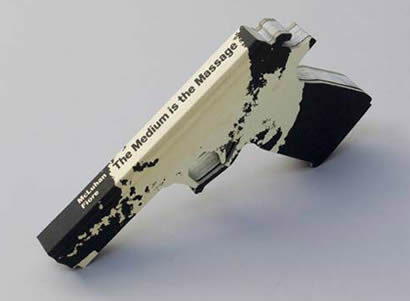
Plenty of sales there to support a woman’s restaurant and shoe preferences, without having to type out all those pesky words.

I do try, though.  I make suggestions.  Some of them actually go into the plan.  Luckily, I enjoy some of the biggest parts of the plan – the touring, the facebooking, the blogging.  In my academic life, I’m lucky if ten other academics read my writing, so talking with people who read my books is heaven as far as I’m concerned.

But, this time around, Team Burke has added a new layer to the usual plan: “We want to get 212 to people who don’t usually read crime fiction.”

Say what?

“So many people here love your books even though they don’t usually like mysteries or thrillers.”

Read that previous sentence again.  There are so many things wrong with that sentence, I don’t know where to start.

Okay, I’ll start here.

1.    Who the heck doesn’t like mysteries and thrillers?

Given that you’re reading this particular website, my guess is you’re not one of these people.   Well, whoever they are, I don’t know whether to loathe or pity them.  I guess it depends on whether they think they’re too good for the genre or just don’t know what they’re missing.

There’s no question, though, that these people exist.  My pilates trainer just told me that she loved The Girl with the Dragon Tattoo, even though she didn’t “usually like mysteries.” 

“You don’t usually like what?”

I’m sorry.  I don’t understand.

Which brings me to…

2.    WHY would anyone not like mysteries and thrillers?

To get some insight into this phenomenon, I did what anyone seeking to conduct serious empirical research would do: I Googled.  

An initial observation: The quantitative data support the claim that there are actually people who claim they don’t like crime fiction, as evidenced by the number of results for the following searches:

23,100 “don’t like thrillers”
667 “don’t like mysteries”
22,400 “don’t read mysteries”
6,190 “don’t read thrillers”

On the qualitative side, I did find some explanations for these dislikes in my casual perusal of the search results (okay, not very scientific – whatevs):

Too much violence and death
Too suspenseful
Too improbable
Too predictable
Not enough character development
Bad writing

Now, that first reason is defensible, I suppose.  If someone doesn’t like to think about the bad things that happen to people, well – first of all, they should never spend time with me.  And they might justifiably stay away from the mystery shelves.  

The second one?  I won’t even pretend to understand.

“The suspense is making my eyes wide!”

And the rest?  They strike me as complaints that there’s too many bad books in the genre.  But there are bad books in all genres.  There are bad books pawned off as so-called “literary” fiction.  There are bad books.  Don’t read them.  Read good ones instead.

3.    Now here’s where it gets interesting: Why does a person who doesn’t usually read mysteries or thrillers suddenly decide to like a mystery or thriller?

Back to the Google data:
12,300 “don’t usually like mysteries”
38,500 “don’t usually read mysteries”
22,700 “don’t usually read thrillers”
2,040 “don’t usually like thrillers”

And almost always, these phrases are followed by the word “but:”

“but this one kept me on the edge of my seat.”  I’m sorry, but if you want your books to put you on the edge of your seat, we’re your people. 

“but this book was so warped, convoluted, I just couldn’t help but be entranced.”  Um…warped and convoluted?  We are totally your people.  (P.S. Kudos, Christopher Rice. That’s a review to be proud of!)  

Here are some more typical buts (shame on you if you just snickered): but this one was very entertaining, but this book is awesome, but this one is killer, but I absolutely love this one. 

Do you see a trend?  Basically, people don’t usually like crime fiction, but then sometimes they suddenly like crime fiction.  And if you think all these “buts” are for Michael Chabon and Stieg Larsson, you’ve got another thing coming.  People who think they don’t like crime fiction like Jonathon Kellerman, Michael Connelly, Alexander McCall Smith, and James Patterson.  That’s some pretty genre-y genre fiction (and I mean that in the very best way as a person who loves the genre).

4.    And, on the more personal side, why does a person who doesn’t usually like mysteries or thrillers like my books?  

As I understand it, my new fans at the publishing house are young people living their lives in Manhattan, just like the characters in my Ellie Hatcher series.  The books reflect their reality.  The characters sound like them, watch the same TV shows, and share the same worries.  

That’s all well and good, but these new readers of mine got the book for free from their employer.  If they saw it on the mystery table at Barnes & Noble, would they even pick it up, let alone buy it?   

5.  Now, my fellow ‘Ratis, here’s the question for group discussion: 

How do you get a person who thinks he or she “doesn’t like” mysteries and thrillers to give a book a try?  Must it be a personal recommendation from a friend: “Trust me, it’s good”?  Does it have to be the water-cooler book of the season?  Must it appeal to some other interest?

Why does the non-genre reader read a book in the genre?   

Travel Nice

By Allison Brennan

It’s been a hectic week in the Brennan household as I prepare (ha! It’s 7:20 Saturday night and I’m not even packed–in fact, my suitcase is not down from the high shelf in the garage) for my trip to Washington DC where I get to tour FBI Headquarters and the FBI Training Academy at Quantico. (Eat your heart out Stephen. And Toni. And Alex–but I know Alex just wants to go because Quantico is also a Marine base, not for research. Or writing-type research, anyway.)

Thinking about the trip reminded me about what I love–and hate–about travel.

I try to live my life by the 11th commandment. You know the one . . . love your neighbor as yourself. Basically, be nice to people. Cut them some slack. Don’t blare your horn because someone is going too slow or ticks you off. (To me, the car horn is reserved for three things. 1- a gentle tap-tap when the car in front of you doesn’t notice the light has turned green. 2- a firm hoooonnnnnkkkkk to avoid a collison, such as when an idiot is backing up and doesn’t see you. And 3- a constant honk-honk-honk-honk until your teen-age daughter–who said she was ready but is not in the car–runs out of the house to avoid being embarrassed by the neighbors. Amazing, it really works to get their ass in gear!)

Everyone has to go through security. Yeah, it’s not always fun, but it’s not like we are giving up major liberties to secure a bit of safety here (though I can’t help but think up all the ways I could get around security at airports–I think it’s an occupational hazard.) I don’t dramatically sigh because the nervous little old lady in front of me is having a difficult time removing her shoes, for example. 

On the plane, we’re all cramped. It’s often hot. There’s sometimes a crying baby. (Get earbuds and an iPod–loud rock-n-roll pretty much drowns out anything.) Be patient getting off the plane–we’re all going to get off. If someone has a tight connection, let them go first–no skin off your nose if you don’t have a tight connection, right? 

I’m a nice traveler 🙂 . . . 

except . . . 

(Yes, you knew there was an exception.)

If you’re traveling during the day, why do you need to recline your seat? For your comfort? For your enjoyment of the flight? What about the person behind you? What if the person behind you is an author with a really tight deadline and they really, really, really need the five hour flight to write the next chapter of their book? Do you realize that there is no way in hell that said author can write if you recline your seat?

Believe me, I have tried. And had major shoulder and neck pain to accomplish a small number of words. 

The seat in front of you tilts back. That puts the tray closer to you. It’s already cramped trying to type on the tray anyway, but when it’s three-four inches closer? Try typing with your elbows pressed against the back of your seat, your screen tilted at a 80-degree angle toward you so you can’t even really see what you’re writing, so you hunch over a bit and your shoulders are now touching the bottom of your ears. Because sometimes, if you aren’t watching you can find yourself typing a whole page that looks something like this:

Bretvsuid dp,eyo,rd upi vsm gomf upitdr;g yu[]pomv s ejp;r [shr yjsy ;ppld ;olr yjod/

Just because your fingers shifted over one letter.

So consider the writer behind you when you travel. You’ll make all of us–well, at least me–a lot happier. And our editors, who really want the book in their inbox when you tell them it’ll be there.

Aside from the inconsiderate book haters who recline their seats, I generally like traveling. Especially alone. I can write for hours, thanks to my newish MacBook Pro with a 7+ hour battery life (it rocks. I LOVE my new laptop.) I have flash drives, a me.com account to archive daily (in case some low-life criminal steals my  laptop) and for this trip, I used my frequent flyer miles to upgrade free to First Class on the leg out east, and got a really cheap Economy Plus seat coming back west. Yeah! No more seat recliners! (In Economy Plus, it’s annoying, but not hugely cramped to write when the person in front of you wants to relax at your expense.)

I hope to have lots of stories for you when I return from Quantico!

Oh, by the way, it’s really not nice to confuse tired moms on deadline. I had to go from soccer game to football game to a birthday party to a volleyball tournament an hour away . . . and when I finally got home I log in to Murderati and . . .  saw Cornelia’s blog. I became extremely confused. Because I ALWAYS follow Alex. But I KNOW it’s my day, so I’m posting anyway. If there’s any complaints, go talk to Alex and Cornelia.

Great blog, BTW, C. My two cents? You have to write what you’re passionate writing, whether genre or something else. You have to love it, with all the pain that comes in penning the damn thing. But the one thing you shouldn’t do is not attempt it because you’re scared. If you don’t do it, it should be because you don’t have the passion for it, not because you don’t think you could do it. If that makes any sense.

So gang, I’m traveling all day. I’ll try to log-in at the airport to check in, but I’ll be on a plane from 11 am Pacific to 9:30 pm Eastern. Have fun while I’m gone!


Weasel Vomit and the Whole Genre v. Literary Debate Thing

 By Cornelia Read

I’ve been thinking an awful lot about genre lately.

Here’s a definition of the word from The American Heritage Dictionary:

Genre

NOUN:

  • A type or class: “Emaciated famine victims … on television focused a new genre of attention on the continent” (Helen Kitchen).
  • A category of artistic composition, as in music or literature, marked by a distinctive style, form, or content: “his six String Quartets … the most important works in the genre since Beethoven’s” (Time).
  • A realistic style of painting that depicts scenes from everyday life.

ETYMOLOGY:
French, from Old French, kind, from Latin genus , gener-; see gen- in Indo-European roots

I’ve been thinking a lot about it for the past month or so because my editor is urging me to write my fourth novel as a non-mystery, which is difficult for me to get my head around. Especially since he would like it to be a novel containing my established series characters.

Now, my editor is a very smart guy who’s been in the business a long time, and it’s amazingly wonderful that he’s taking this much interest in my future as a writer, and also too I don’t take anything he suggests lightly, but this is tricky for me on a lot of levels. I’m kind of going through Kubler-Ross-esque emotional stages about it–i.e. fear, confusion, swearing, and belligerence–not necessarily in that order and indeed often simultaneously.

His arguments in favor of me taking this tack are as follows:

  • He thinks my strengths are description, dialogue, and voice.
  • He thinks I pretty much suck at the “procedural stuff” (though he worded it much more kindly) and is concerned because he has to keep pushing me to get more action into my stories and raise the stakes all the time and stuff.
  • He thinks he could position me differently if I wrote a non-genre novel, which would be more likely to be a commercial success.

My first response during our phone call about this was to say, “yeah, but, um… I think my plots actually suck because I suck at plotting… and somehow I don’t think moving AWAY from genre is going to make that better…”

And that is a big part of it for me–I like having a known structure to mess around with. I compare it to writing a sonnet or something: there are rules, and you can stick with them or rebel against them as you so desire, but it’s mostly helpful to know that they’re there whether or not you want to follow them strictly.

But there’s also my feeling that the best writing today is happening in crime fiction–mysteries and thrillers. I’ve often said on panels and stuff that literary fiction lost me in the Eighties. I just couldn’t get behind minimalist New Yorker stories, the whole juiceless scraped-dry-bones minimalist Gordon Lish thing. I want detail, I want passion, I want big fat zaftig stuff about things that actually matter. Most of all, I want resolution. I can’t stand novels that just kind of drift around about vaporous bullshit and then wander out of the room at the end without a point. I am not much of a Proust fan, and Thomas Mann gives me hives.

In fact, I think the closest thing to summing up my idea of what makes great literature is a quote from D.H. Lawrence, even though I think his fiction is kind of dopy, too. He wrote, in his Studies in Classic American Literature:

The essential function of art is moral. Not aesthetic, not decorative, not pastime and recreation. But moral. The essential function of art is moral.

But a passionate, implicit morality, not didactic. A morality which changes the blood, rather than the mind. Changes the blood first. The mind follows later, in the wake.

Now that isn’t to say that I think all crime fiction is superior to all “literary” fiction–in fact I agree with Sarah Weinman that the most important distinction we can make among books is to say that there are good ones and bad ones, and everything else really doesn’t matter in the end. But for me what is most essential about writing as an art is happening a lot more these days in genre fiction than outside it.

I do tend to blame that a bit on the MFA model of writing, though some of my best friends have done MFA programs, so it doesn’t all suck. But it just seems as though this rather artificial division between genre and non-genre has sprung up over the last couple of decades, and that the champions of contemporary standards of what has come to define “literature” have done a good deal to squeeze the life out of narrative in general.

When Sarah posted a great piece on her blog about Lev Grossman’s dismissal of Michael Chabon’s The Final Solution as “highbrow fiction being assaulted by low-brow genre,” Laura Lippman wondered:

Who benefits from the debate, that’s what I want to know? Not genre writers. Not readers. So it must be the literary writers who keep beating this dead horse. Such pieces always make me feel as if I’m an ill-behaved dog running amok in the great marble temple of literature….

“Stop her! She’s peeing on the floor! She’s drinking out of the toilet! She won’t play by the rules — except those tired genre conventions that mark her work as second-rate. Ohmigod — she’s humping Nadine Gordimer’s leg. Get her out!

Which prompted me to codify my own feelings on the subject for the first time, as follows:


I think they’re all just pissed off because they’ve turned “literature” into the kind of Filboid-Studge Latin whose precise declensions can only be enforced with Joycean pandy-bats viciously applied to the reader’s tender palms and footsoles,

and meanwhile we’re all having so much goddamn fun over here in Vibrant Street-Italian Vernacular Land it should be illegal.

Okay, I guess that covers the “belligerence” phase of my response to the idea of writing a book in which no murder takes place. Besides which I am loyal to the genre, and the people who write in it, and I’m sick of all of us getting dissed by a bunch of whiny-ass bitches who couldn’t, in my opinion, write their collective way out of a wet house of cheap cards.

(And I should probably also throw in that I can’t stand literary cocktail parties unless they are peopled with crime writers. This just feels like my tribe–as opposed to the last time I was drinking with a roomful of academician poets, back in Syracuse,


who were so humorless I ended up swilling beer in the kitchen with the insurance salesman who lived next door and was actually a pretty interesting dude.)

Also, I just have a perverse fascination with crime generally, and murder in particular. I don’t think there’s any human conundrum more morbidly intriguing than the question of why we kill each other. I want to know what that part of us is, I want to see if there’s any way to keep it from happening. I care deeply about justice, and morality, and what it all means in the end.

I was intending to base the central plot of my fourth book on the murder of a friend of my mother’s about twenty years ago. She went out to get the morning paper at the end of her driveway–in view of about eight other houses on her cul-de-sac–and was beaten to death with a baseball bat. Probably by her ex-husband or her son.

My editor asked why I want to write about baseball bats.

I ran all this by Tana French in an email soon after, because she’s a writer whose work I think is exquisite and extremely literary in the best possible way.

She wrote back:

How the hell do you plot a book without ‘Someone gets killed, someone else finds out whodunit’ to give you a structure? I’m as fond of character and dialogue and all that fancy stuff as the next girl, but without the murder mystery to bookend things, all my books would go on for thousands of pages and never get anywhere much… What does your editor have against the baseball bat?


Amen.

And that’s where the “fear and confusion” Kubler-Rossity comes into this for me. I mean, I’m not saying I hate all novels in which a murder does not take place (I love Joshilyn Jackson’s work, for instance. Which does tend to be rather dark and have death here and there, but is otherwise not genre). But I don’t know if *I* could come up with a plot that actually went anywhere without the genre form to guide me. I mean, I spent twenty years (off and on) futzing around with a memoir that never gelled into a narrative, despite several hundred pages of typing and thousands of hours of agita on my part.

Plus which, to quote the late, great Brenda Ueland: “There is absolutely no evidence that I could write a good book. It might very well be the most awful weasel vomit.”

And also too, I just think it’s weird to write three books in a series that revolve around murders and then have all the same people just bop hither and yon in the fourth book without any blood spatter whatsoever, you know?

So I don’t actually have any sort of good thumping conclusion to this post, because I haven’t figured this stuff out yet. All of the above is twirling around in my head like those proverbial visions of sugar plums.


Maybe the thing to do is come up with a better mystery plot than I’ve so far managed to do, so that my editor feels more comfortable with my actually *earning* the genre pigeonhole? But everything I’m coming up with so far seems to be brimming with weasel vomit.

Oy. Feh. Vey ist mir.

What say you, ‘Ratis?


WHIRLWIND


By Stephen Jay Schwartz

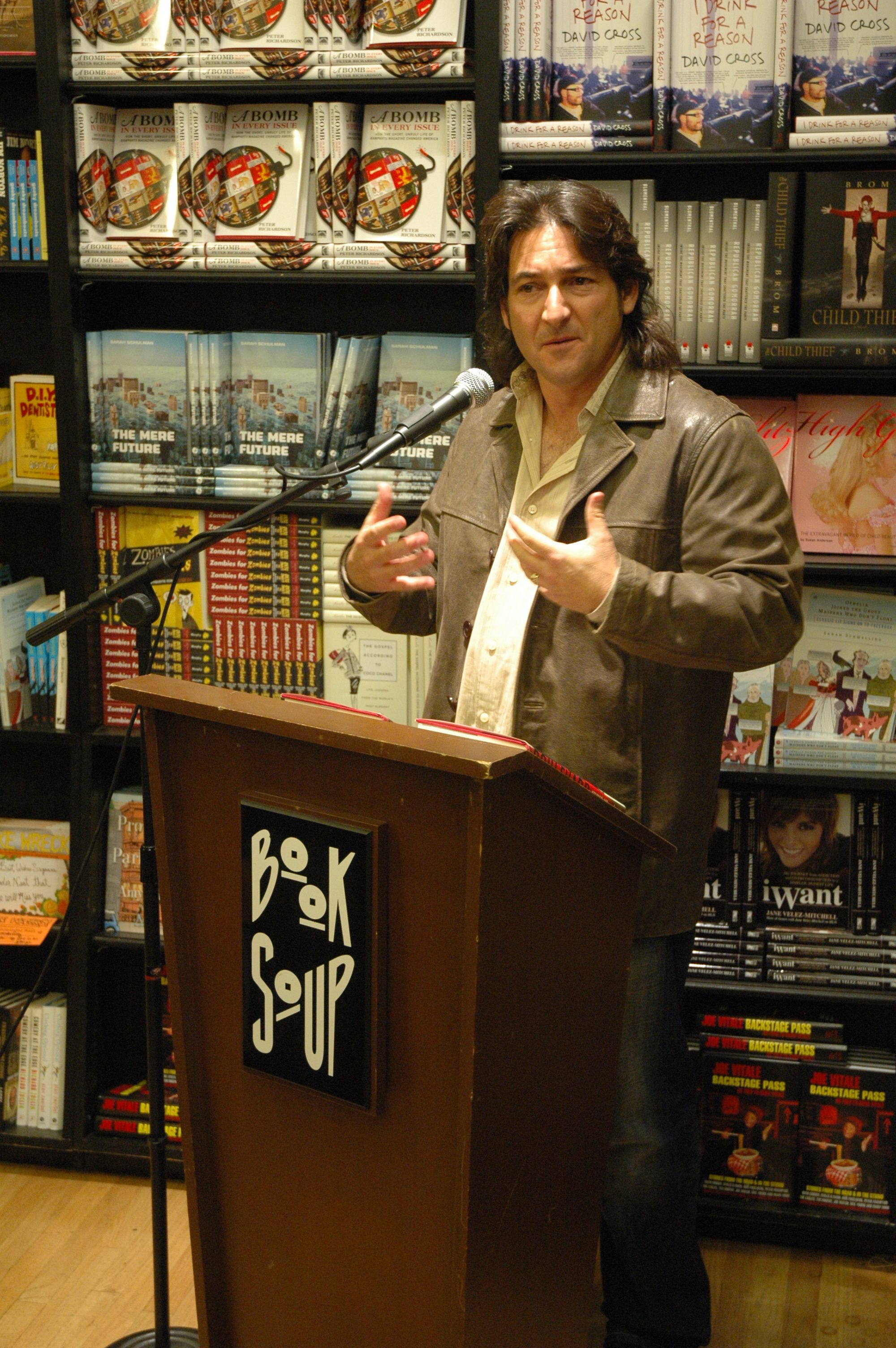
BOULEVARD launched from Book Soup in West Los Angeles on September 16.  It’s been a whirlwind ride.  We had about fifty people in attendance, which included college friends I hadn’t seen in twenty years.  Brett Battles was there, too, as was the man (a good friend now) who employed both of us when we worked for Sir Speedy more than two decades ago.

It was great having my family at the event.  My mom flew in from Mexico to be with us, and my wife and two boys were at my side. 

I found it both intimidating and strangely comforting to sit behind a desk signing fifty copies of my book.  It was a feeling of quiet serenity, of friendly, honest smiles and handshakes and words of gratitude written and personalized on my title page.  My boys leaning against me as I signed, playing Nintendos.  Me catching glimpses of my wife in the crowd staring at me with that otherworldly, proud smile on her face.  It was a night of bliss.

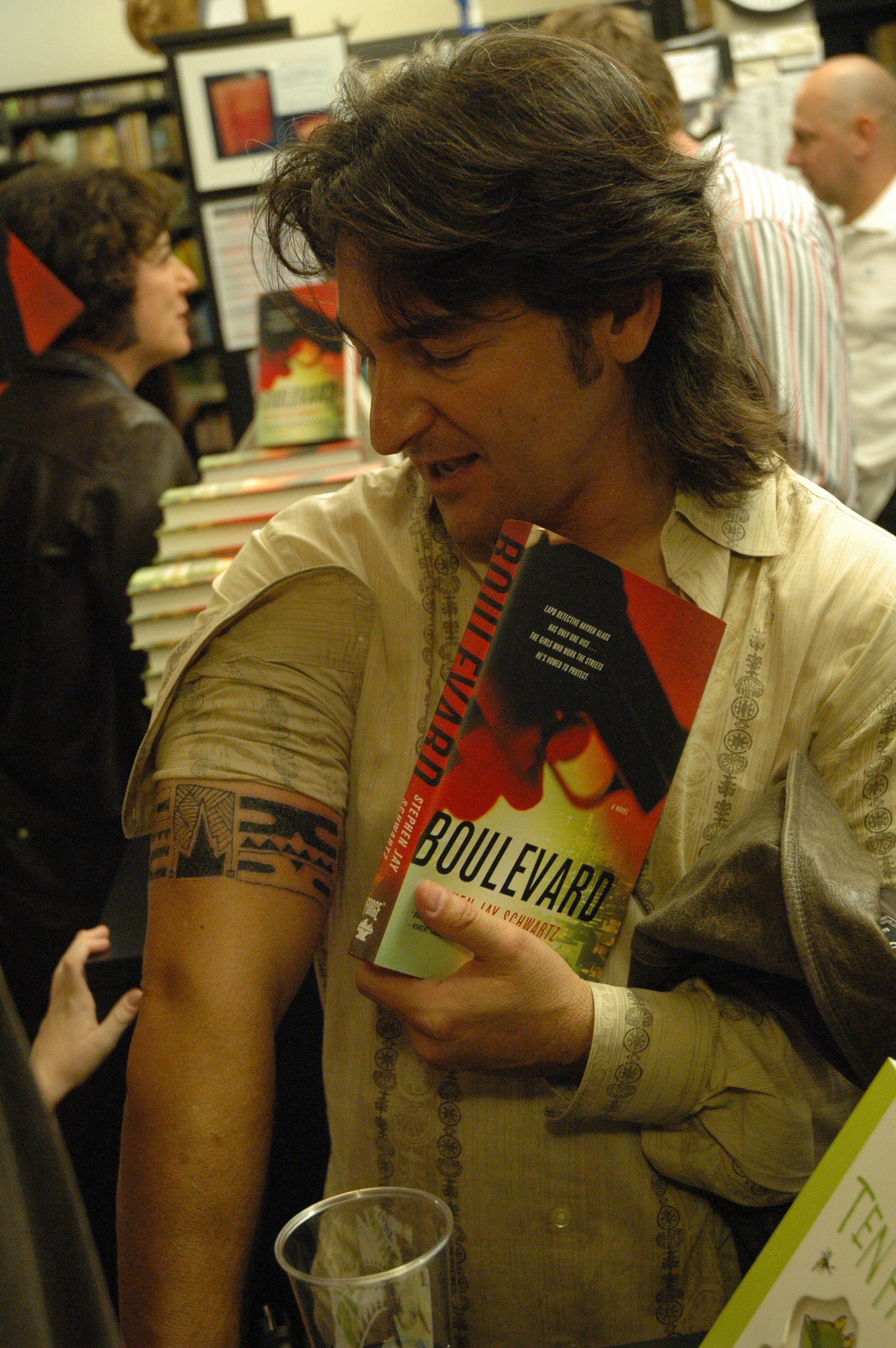
Many in attendance had heard about my tattoo, so I rolled up my sleeve to show them the bloody, scabbing thing. 

I explained that the tattoo is a Polynesian version of the Tor-Forge logos on one side, and an old-fashioned Underwood typewriter on the other side.  It was a rite of passage for me—a defining moment that marked my transition from unpublished to published.  Something to remind me that I am as I define myself. 


The very next day was a punch in the face as I was forced to endure the eight hours of my day job.  As we know from Rob’s last blog (congratulations, Rob!), it’s impossible to be truly realized as an artist when forty hours a week or more is spent being someone you’re not.  I got through that Thursday and Friday by thinking of the launch and answering e:mails from friends who had attended, and by making nightly trips to the many Borders and Barnes & Nobles in the greater Los Angeles area, doing drop-in signings.

The first drop-in signing I did was the day before the event at Book Soup—the day the book was actually released.  We went to our local Borders, which had about ten copies BOULEVARD.  It was fun to see my boys running through the aisles, searching for, then finding my book stacked face-out in the shelves.  Of course, we took pictures.  We looked like the giddy, debut author family.

This week began the book tour, which took us to San Francisco where I did a reading and signing at the Beat Museum in North Beach. 

It’s a very special place for me because it honors the memories of the Beat Generation writers.  Jack Kerouac has been an influence on my life and my writing for over twenty years.  If you’ve never heard Kerouac read his work you’re missing out.  He was an amazing spirit and the fact that he lived in the “conservative” 1950’s makes his writings and life-journey that much more remarkable.  So, to be reading passages from BOULEVARD that were inspired by Kerouac, at the Beat Museum, in North Beach, across from the fabled City Lights Bookstore, was another defining moment in my life.

Before the event I took my family to the San Francisco Police Department’s Central Station, where I’ve been doing all my research for the book’s sequel.  I’m now friends with all the cops and they happily gave my wife and kids a tour of the armory and holding cells.  My boys were just a little freaked out to be standing in a room filled with almost a hundred automatic and semi-automatic weapons.

I also did something I’ve been wanting to do for a year—I presented a copy of BOULEVARD to the officers and placed it in their “library” where dozens of dog-eared police thrillers sat.  San Francisco is a city of readers, and the SFPD officers do their share to keep the thriller writers of America employed.

Our own lovely Louise Ure and her husband Bruce joined us at the Beat Museum, and it was a joy to finally meet her in person.  The next day my family and I had brunch with her in her city and we sealed a relationship that will last a lifetime.

We finished off the week at M is for Mystery Bookstore in San Mateo, California, where I discovered that the owner, Ed Kaufman, had already pre-sold almost thirty copies of my book.  What an amazing bookstore!  I saw books on the shelves written by ALL of the Murderati authors, as well as many other Murderati guest bloggers.  Ed is an avid reader and he’s extremely supportive of all the writers in our genre.

Listen, I’m a happy camper.  I’m having the time of my life.  I’ve got another month and a half of touring and panels, ending the whole thing with a trip to Indianapolis for Bouchercon, where I hope to see many of the people I’ve met on-line through Murderati.

I’ll check back in two weeks with further updates.  Being the Newcomer has been great fun, and I love the fact that Murderati has offered this forum for me to share the experiences of my debut year!  (I’ll be on the road when this posts, but I’ll try to check in with comments at stops along the way.  And sorry I’ve been absent for the past week…it’s been a whirlwind)

(Polynesian Underwood typewriter)


AT PLAY IN THE FIELD OF THE WRITTEN WORD Part 1

Thought I’d take you all on a little journey with me. Next week my proposal is due for my new book. So the idea is to let you see how it all goes.

This week I want to talk about the preparation, i.e. the proposal.

In the past, my proposals have consisted of the first twenty or thirty pages of the book and a page or two of an incredibly generic synopsis. That gave me a lot of room to work. I’ve said it before, I’m the kind of author who enjoys writing without a net (read outline.) I love how stories organically come together. I like being surprised and entertained.

But this time is different. In the past, the books I was proposing were further episodes of my Jonathan Quinn series. My next book, though, is a stand alone.

(Now before any of you who enjoy the series get worried that there won’t be any more Quinn books, fear not. The fourth in the series is actually already written and done. And, if I may say so, is my favorite Quinn book so far. But first we’re going to bring out a stand alone, so THE SILENCED – tentative title – will be out after that.)

So while I am still providing the first twenty to thirty pages as part of the proposal, I realized my outline/synopsis can’t just be a page or two. In fact, I’ve decided to make it more detailed than I ever have in the past. The hope is, based on what I’ve heard from others, that this will help me stay on track and write faster. I sure hope so. But I’ve got to say writing the synopsis is excruciating.

In the time I can usually write five to six pages of prose, I’m lucky to get a page or a page and a half of an outline. I also find myself getting up from my chair more often, watching episode of DEXTER season 3 or going for a walk or playing Mindsweeper on my iPhone. Anything to avoid the pain of actually thinking out the details of the story.

But all that said, I can see how this actually is going to help me focus more when I get down to writing the book. I’m excited about it (again, not about writing the synopsis – something I’m avoiding at this very second – but in how it will help me), and am anxious to put it to the test.

If this works, I may be a reluctant convert. I know Rob blogged about a similar thing several weeks ago. (I don’t know for sure, but from what I understand the outline for his next one is in the dozens and dozens of pages…mine is not. I’m not THAT crazy.)

I’m also doing something else with this proposal. Something neither my editor nor my agent is expecting. But that I’m going to have to save until next time, so I don’t blow the surprise in case one of them reads this. I’ll let you know in part 2, as by then they’ll have proposal in hand. Hopefully I’ll even be able to tell you how it was received.

Question time (and no, I’m not going to ask the Outline vs. No Outline question as we’ve argued that more than enough): I know some readers like series and some don’t…for those of you who do like series, does it bother you when the author writes a stand alone? Do you read it? For those of you who prefer stand alones, why do you think you avoid series?

Look forward to reading your answers!