Author Archives: Murderati Members


Book-selling and the Sufi master

by Tess Gerritsen

I’ve just returned from a three-week trip to Turkey.  One thing I love about foreign travel are the lively and impromptu conversations I have with people abroad, and during my ramblings in Istanbul, Cappadocia, and the Aegean coast, I chatted with Turks about a wide range of topics.  A coffee shop employee and I bemoaned the difficulties of successful cross-cultural romances.  A jewelry store owner told me in great detail about his sick niece and sang the praises of Turkey’s socialized health-care system for keeping her alive. Several times, I heard about the deep and enduring affection that many Turkish men feel for their mothers.  “You always remember your own mother’s scent,” one man said wistfully.  “And all your life, you miss it.” It was a touching reminder of the universality of love, and how alike we humans really are.

While I was crossing a public square in Istanbul, I encountered another startling reminder that some experiences are universal.  It was a book signing booth promoting a Turkish author named Serdar Ozkan, whose Istanbul-set novel THE MISSING ROSE, was available for sale in numerous foreign languages.  Naturally, I stopped to buy a signed copy of the English edition, but the author had left to take a break.  Manning the booth in his absence were a man and two women (posing with me below) who were passing out flyers to passers-by, encouraging everyone within earshot to take a look.  I assumed they were bookstore employees.

Until I started chatting with them. 


It turned out they weren’t bookstore employees at all.  Two of them (the man and the woman standing beside him) are physicians at the American Hospital in Istanbul, and they’d taken the day off to help their friend — the author — sell his books.  To their dismay, passersby were pretty much ignoring them, or waving off the flyers, and these three were getting a humiliating taste of what it’s like to be a salesman. 

“You must be really good friends of the author,” I said. “If you’re going through all this for him.”

The man smiled serenely and asked me, “Do you know anything about Sufism?”

Baffled by his question, I admitted that I knew very little. 

“Then let me tell you a story about a Sufi master,” he said.

Once long ago, there was a wealthy, well-respected judge who decided he wanted to be schooled in Sufi mystical traditions.  He went in search of a famous Sufi master and found him wearing rags and living in an impoverished village.  “I want to be your student,” the judge announced.

The Sufi master looked the judge up and down, and said: “You are not ready to be my student.”

The judge was outraged that this beggarly man would reject him. “What do I have to do to be your student?” he asked.

“You must sell meat in the market,” the master replied.  

The judge was appalled that anyone would see him, a respected judge, working like a common butcher.  So he lurked in the shadows, rolling his meat cart through side streets where he wouldn’t be noticed.  

But again, the Sufi master rejected him.  “You must sell your meat where everyone can see you,” he said.  “And you must wear your judge’s robes, so everyone will know who you are.”

So the judge rolled his meat cart into the full glare of the public eye.  No one bought his meat. Instead he was jeered at and humiliated until every ounce of his pride was destroyed.

And the Sufi master finally said, “Now you are ready to be my student.”

“That’s why I’m here today, helping my friend sell his books,” the doctor told me. “I wanted the full Sufi experience.”

“You wanted to experience humiliation?” I said.

He gave me a sly wink.  “It’s working, isn’t it?”

That’s when we both laughed at just how right he was.  Here was this medical doctor, shilling in a busy public square, facing rejection from passers-by who rudely waved away his flyers.  As I watched him cheerfully persevere, I remembered all the booksignings I’d endured over the years, all the bookstores where I would feel humiliated, begging for customers’ attention, pleading with someone, anyone, to come and take a look at my latest novel.  Whether you’re in Istanbul or Indiana, book-selling is a humbling experience. Perhaps it would be easier to stomach if we all adopt a bit of Sufi wisdom.  Perhaps we should embrace the ordeal as the path to enlightenment.

Later that evening, on my way to dinner, I walked across that same Istanbul square and saw that the author was now back in the booth.


 I stopped to say hello and told him that I’d bought his book earlier that day. Serdar Ozkan was gorgeous and charming, and he had a long line of customers waiting to buy his book.  He was definitely not having the Sufi experience.

I guess he’ll have to wait for enlightenment another day.  
 

If not now . . . when?

by Pari


How many of us zip through our lives without pausing to think about what we’re doing? I know there are periods in my own hectic existence when all that matters is getting through the day, week, month. Lately, though, I’ve been looking at what’s most important in my life. There are the obvious themes: family, love, the health and happiness of those I love, friendships, my creativity, feeling productive and like I’m contributing something to the world.


There are also wishes, dreams as yet unfulfilled. Through neglect, I’ve let some of them slip into the realm of impossibility. I doubt I’ll feel free enough, while still young enough, to join the Peace Corps or go to Carnival in Rio and dance from afternoon until dawn.


Others might still be possible, if I push. I might actually go on that walking tour of pubs in Ireland and drink a frothy stout at every one. I might write that book that hits the market just right and propels me to a new level in my career . . .


I might take up yoga; dedicate real time daily to meditation; learn T’ai Chi and Pilates. I’d better see the Aurora Borealis in full color, go whale watching, swim with dolphins.


And then there’s the cello.


When I was a kid, I wanted to play that noble instrument with all of my heart.

My mother said, “You can’t. It’s unladylike. If you’re going to play anything, it’ll be the violin.”


End of argument.


So I played violin for four years and hated every single minute of it. Mom finally let me stop taking lessons when she caught me holding the violin like a guitar on my lap—playing it full pizzicato—while composing my 60th or 70th macabre folk song.


For years, playing the cello was a fantasy of mine. I wanted to feel those incredible low notes reverberate from my toe tips to my fingers and throughout my body right to the outer edges of my scalp. But I’ve always put it off. I was too busy; I’d never find the time to practice. It was too expensive. It was frivolous, too self-indulgent.


Well, screw that.


Two months ago, I rented a cello and started taking lessons.


The wonderful thing about doing this, beyond the life-affirming qualities of it, is that I’m putting absolutely NO pressure on myself to “succeed.” Playing the cello is utterly for my own pleasure. I don’t give a damn if anyone else ever hears me or likes what they hear if they do. I don’t have to accomplish anything beyond enjoyment.


As a result, I’m doing really well and already have a repetoire of about twelve nice little pieces. My Twinkle, Twinkle Little Star would make you weep for all the right reasons. I love to practice. I adore the effort and struggle of trying to get the bowing just right and making sure I’m actually in tune.


I’m having such a blast with this that I want everyone else I know to find something equally baggage-free and satisfying.


So what about you? Have you taken a similar plunge to do something you’ve always wanted to do? If not, do you have a dream that you could really do?

Why aren’t you doing it yet?


——————————- A note about my next two posts —————————————

In early October, I’m going to attend an intensive writing workshop and probably won’t be online at all for two full weeks. As a result, the wonderful L.J. Sellers will guest on the ‘Rati on October 5. I’m considering doing my let’s-write a story-together experiment again on the 19th. By then, I’ll be back though my sanity might still be in question.


I Don’t Care What You Do, Do Something

By Toni McGee Causey

This past week, one of the news items that was depressing to read was the one about a woman in her 40s who lives in Australia who, according to the evidence mentioned in the article, was a victim of incest from the time she was 11. Her father fathered her four children, three of whom still live. In that article, the woman who encouraged the victim to come forward deduced the situation and spoke up. In another article, a third woman criticized the one who encouraged the victim as a “busybody” who was always putting her nose in other people’s business.

Well praise God for busybodies.

The victim was too terrified of her father’s violence to speak out, even when she lived away from his house. It took her three years from the time she first reported it to get up the courage to file a restraining order.

Closer to home, domestic abuse is on the rise. According to some statistics, every 15 seconds, a woman is assaulted in her own home.

Did you read that? Every. 15. Seconds.

Do you know what that translates into? Roughly 5.3 MILLION women, every year. EVERY YEAR.

Three to ten million children will witness violence in their home.

Some people, though, think, wow, that’s bad, but it’s not affecting me, and I don’t know anyone affected. 

Well, think again.

You know someone who has suffered from abuse. They just haven’t told you. They may still be suffering from it.

From The American Institute on Domestic Violence:

  • The health-related costs of rape, physical assault, stalking, and homicide by intimate partners exceed $5.8 billion each year.
  • Of this total, nearly $4.1 billion is for victims requiring direct medical and mental health care services.
  • Lost productivity and earnings due to intimate partner violence accounts for almost  $1.8 billion each year.
  • Intimate partner violence victims lose nearly 8.0 million days of paid work each year – the equivalent of more than 32,000 full-time jobs and nearly 5.6 million days of household productivity.

You know what’s going to make it worse? Tremendous amounts of people are out of work and their unemployment has run out, or will run out soon. They’re looking at extreme financial difficulties coming up on a winter, where heat and food are going to be luxuries. Heat and food. There are victims out there in fire areas, storm areas, who’ve lost what little they had that held them together. This does not even count the people who are already locked in a vicious cycle of welfare and abuse, where they feel like they have no other choices but to live in the hell they’re in.

Anecdotally, the cops I’ve spoken to tell me that domestic abuse cases seem to be on a serious rise. People are at their wits’ end, tempers are all over the place. Those who were prone to violence before become violent again. Some people who’d never been violent will snap.

Now, I know a lot of people want to help. A lot of people try. [Side note: my pet peeve, the one that drives me absolute batshit? Cynicism. To me, cynicism is the five dollar word that means lazy, but with a hipster dress code. If someone can read those statistics and not feel a compulsion to do something, then I don’t want to live in the pretty world they live in, because that world is going to hell and they’re asleep at the toll booth.]

If you’ve read this far, I doubt very much that you’re cynical. You may know more about it and can help illuminate this problem even more. You may have already donated/volunteered and if so, if you’ve got suggestions for ways to help, see below — we want to hear from you. But maybe you don’t know what to do about it because the problem is so large, and you’re just one person. That, I understand.

Here are some ideas:

Food Banks are always desperate for donations. There is generally a big surge around Thanksgiving and Christmas, but people have to eat between now and then. You’re bound to have something in the pantry you can donate. I’ll bet your neighbors do, too. You could do something small (yourself), or join up with neighbors. Going to gather around a TV with friends over football? Get ‘em to bring donations.

Women’s Shelters – again, always desperate for donations. You probably have a shelter somewhere in your town. Call them, see what they take as donations, see what they need. Some have stores where they re-sell donated items to raise money; others use the items donated for the women. Some of these shelters are desperate for clothing—especially for women who had to leave their violent home without their belongings and now need to job hunt. Many of these women have children and children have this stunning habit of growing out of their previous year’s clothes – particularly coats and gloves and shoes.

I will be willing to bet you that you have stuff at your house or apartment you are not using that someone else could use. Most shelters will give you a tax receipt that you can use if you itemize. We went through every closet, our attic, and garage and found a ton of items we weren’t using, and this was after my kids had had a garage sale. We donated what was useful, and recycled the rest and I was astonished at the value of what we ended up donating. Stuff that was completely going to waste here, not to mention cluttering our house.

Don’t have time to clear out a whole house or apartment? I didn’t either. I did it one small area at a time over a few months. Piled everything in a “donate” corner and then every once-in-a-while, we’d run it over to the shelter. If you have kids, get them involved. Ask your neighbors to consider donating. If you have a vehicle and they’re willing to donate, maybe you can offer to drop the stuff off. Most people have good intentions, but don’t get around to doing it because it’s not on their way. Maybe you can be the one who changes that.

Do you Twitter? I put money in a jar every time I Twitter. At the end of the month, that goes to a shelter. I may not make a big difference with that amount, but combined with others’, every little bit helps. I’d love to start a Twitter drive. Suggestions?

What habit do you have that’s totally frivolous? Or maybe your kids? Could you sponsor a group? A marathon? Maybe have a contest between writing groups or book clubs.

Book Clubs – maybe you can bring used books to the shelters. Or donate toward a literacy program. The problem of literacy is pervasive and creates despair, which can compound violence in the home.

Will you be attending a conference? Whether it’s a formal conference-wide sponsorship or just a group of friends, how about putting one drink’s cost in a jar for a donation to a shelter in that city? One drink. Or one snack. Particularly for crime writer conferences, this could make a big supportive statement in the community. We write about crime, which means we write about victims of crimes. Let’s give back.

You don’t have any money or excess items to give, but you’re interested in making a difference? There are literacy programs. Or if that’s too long of a commitment or not do-able on your schedule, maybe you could volunteer once a month to help out with the food banks or the shelters or teach a class how to write a business letter or a résumé.

You don’t have to start a program. You don’t have to reinvent the wheel. There are already a ton of programs out there who need volunteers. You don’t even have to do a whole lot. Just do ONE THING. One. Pick something that means something to you, and do it. I don’t care how crappy your week has been, if you’re sitting here, capable of reading with internet connection on a computer somewhere, odds are that there are people around you who are suffering and that YOU could make a difference.

I don’t care what you do, do something.

Tell me some more ideas in the comments, folks. Or tell me something you’ve been inspired (not necessarily by this blog, obviously) to do in your community.

IF YOU ARE IN AN ABUSIVE SITUATION, there is help. THERE IS A WAY OUT. If you don’t feel like you can confide in someone close to you, PLEASE please contact the National Domestic Violence Hotline:

1−800−799−SAFE(7233) or TTY 1−800−787−3224.

Or, if you feel safe enough to use your computer (that it is not being monitored by the abuser), their website is: 

http://www.ndvh.org/

Outside the Box

Zoë Sharp

I spent last weekend at the excellent Reading Festival of Crime Writing (that’s pronounced ‘Redding’, the town in Berkshire, not as in ‘reading a book’) and a comment there by a particular author sparked off a couple of different trains of thought. The first thing was that this author not only used a pseudonym, but several of them for writing in different genres.

The reasons for this seem quite sensible. For a start, the author was often called upon to publish scientific papers under his own name, so when he first embarked on a career as a novelist obviously he did not want to run the risk that the scientific community might take his academic work less seriously because of his fictional activities, as it were.

But, does an author really have to assume new identities if they want to write outside their given field? It would seem the answer is yes.

When people ask what I write, I usually categorise myself as an author of a series of contemporary crime/thriller novels. Not a straightforward thriller, but not quite a mystery either. But perhaps I should just say that I’m a writer and leave it at that. And, if pushed, narrow it down to fiction, or say I’m a novelist.

But that’s not strictly true. If you ignore the unpublished (and probably unpublishable) children’s novel I wrote when I was fifteen, I started off as a non-fiction writer, and was producing a constant stream of technical and feature articles for magazines and newspapers for thirteen years before my first crime novel was published. (Indeed, it was my only means of income, so it had to be a steady stream, or I didn’t eat.) But I’ve also written comedy, after-dinner murder mystery games, the script for an audience-participation murder mystery play, song lyrics and short stories. The only things I haven’t attempted are screenplays and a graphic novel, but I have ideas for both …

So, what’s stopping me? Perhaps it’s something to do with the other half of that statement. That I define myself as a crime/thriller writer and am reluctant to step outside that niche. After all, when I was a non-fiction author, I found that by far the easiest way to get a steady source of work was to specialise. In my case, it was all about cars. Fortunately, I was (and still am) deeply into my cars, having a series of Triumph Spitfires in various shades of repair and a mid-engined Lancia Montecarlo that shall be firmly consigned to the Mistakes I Have Tried category.

And although I’ve now retired from the non-fiction writing in order to pursue fiction, my continuing photographic work still dovetails in nicely. And yes, it’s still nearly all cars, although I’ve done a few oddities such as ferries, people’s accident scars, and even taken the occasional author pic. But when I photograph things outside my main speciality, I don’t even consider using a pseudonym.

Perhaps this is because people are buying the magazine because of it’s overall subject, rather than because it contains the work of one particular contributor. People usually remember the photoshoots I’ve done, but not the fact that I was the one who did them.

Writing has more clearly delineated barriers. The author’s name on the cover is a large part of the selling point of the book. You’re buying a brand that you know and trust to deliver what you expect. You wouldn’t be happy if you picked up a box of washing powder and found it had breakfast cereal inside instead, although it would make trips to the supermarket much more exciting.

But, if an author is not to break their contract with the reader, they must deliver what the reader expects. If a cosy author suddenly produces a book which turns into a swearfest bloodbath, their readers are going to feel understandably cheated without some prior warning. I read Charlie Huston’s ALREADY DEAD, knowing his hero, Joe Pitt, was a Vampyre and fully accepting of where that would lead the character and the story. And thoroughly enjoyable the book was, too!

It’s only when you get into a book that seems to promise one thing and then deliver another that you could begin to feel frustrated. Or – if it’s handled well – intrigued, but that’s a risk few publishers seem willing to take in these straitened times.

But does a different writing style, even the departure from a series character, mean an author has to strike out under a new name? I can think of a number of writers who do two very different series alongside each other, under the same name. With a few of them, I love one series, and am not so keen on the other, so would it make a difference if they were written under different names? Or is the gamble that, if you like one series, you’ll at least be predisposed to give the other a try when you might otherwise not, and then it’s up to personal preference if you continue reading it or not.

Dorothy L Sayers had both her Lord Peter Wimsey and travelling wine salesman Montague Egg characters. Both were amateur sleuths, the main difference being that one used the tradesman’s entrance. And although I was a fan of Wimsey, I was never quite so fond of Egg.

But that’s just within the same genre. What if you want to step outside your current genre completely? Well, that’s actually quite difficult to do, when you consider how much element of mystery is contained in other genres, the boundaries are becoming much more blurred. With paranormal and romantic suspense so popular, your detective could just as easily be a werewolf as a tall, dark and handsome stranger. Whenever you have relationships between your characters, there is the possibility of not just sex, but romance.

And when you look at suspense, it’s a short step into horror, and my writer’s general ‘what if’ mentality makes me lean naturally towards sci-fi. After all, if you’re constantly reinventing the present, why not take it one step further?

I was fortunate enough recently to read an advance copy of Stuart MacBride’s sci-fi standalone, HALFHEAD, a rattling good serial killer/police procedural set in a grim Glasgow of the not-too-distant future where convicted serious criminals are mutilated and lobotomised by the state and given menial jobs. It’s a darkly humorous and highly violent tale that I struggled to put down. And such is Stuart’s position that he’s been able to write this as Stuart B MacBride rather than going under a completely different name. I’m not sure what the ‘B’ stands for – Bearded, probably.

Certain types of sci-fi like this really appeal to me. They’re often crime novels but with a strong investigative element, which is complicated by the advances in technology brought about by the slightly futuristic setting. I’m not so enamoured of the interstellar travel angle, but books like Peter F Hamilton’s MINDSTAR RISING trilogy are largely crime thrillers, set in the UK after global warming, and featuring his gland-enhanced psychic private eye, Greg Mandel. In fact, A QUANTUM MURDER is a classic English country house murder mystery, in which a brilliant professor is brutally murdered during a violent thunderstorm which cuts off the house and its occupants from the outside world, and the only suspects are the professor’s apparently devoted students, none of whom seem to be lying. Add to that the semi-recognisable setting of Rutland Water, a nice mix of past and future technology, and a wonderful writing style, and you have a fairly addictive mix.

That same ‘what if’ question translates just as easily into sci-fantasy – a quest, a chase. It’s a thriller by another name. But, I’m pretty sure if I mentioned any of the ideas I have for sci-fi projects, or the supernatural/horror novel that’s been bugging me for years, I’d meet with stiff resistance. A new name would definitely be called for.

So, as a writer, are you tempted to step outside your chosen genre, and if you’ve tried it, what were the effects? How much do you feel you already mix genres in your current writing?

And as a reader, would you read outside your chosen genre if it was an author you already knew and enjoyed, even if the book they’d written was not the kind of thing you’d normally read?

This week’s Word of the Week is more of a phrase of the week, it’s force and fear, which is a Scottish term for the amount of constraint or compulsion which is enough to annul an engagement or obligation entered into under its influence.

And finally, here’s a link to a You Tube clip by Kseniya Simonova called Sand Animation. For those of you who haven’t seen it, it’s stunning, and a beautiful example of how the mind and the eye can be fooled. Apologies that I am too technically inept to insert a proper video clip ;-[ 

http://www.youtube.com/watch?v=518XP8prwZo

Simplify, Simplify…Whoa, Too Much

by J.D. Rhoades

Our Louise wrote a great post yesterday about pitching your work to agents. One fine  nugget in that pile of golden advice was this: “boil it down to a conversational but tight 25-words-or-less.”

You see a lot of advice telling you that you need to be able to describe your story in one sentence. This is known as “The Elevator Pitch”, so named because it can be sprung on an unsuspecting  agent during that glorious moment when you have them trapped in a small confined space from which they can’t possibly escape.

It’s possible, however, to boil your Elevator Pitch down too far, to the point where you miss the point of the book entirely. A couple of examples (which I remember but cannot for the life of me tell you where I read them first):

  • The Bible: God creates the world, then destroys it.
  • Moby Dick: a one-legged man goes fishing.

Some of my own:

  • The Odyssey: Soldier with terrible navigational skills probably should have asked directions.
  • The Grapes of Wrath: Poor people are nice, but they get shit on a lot. 
  • Macbeth: Ugly women screw with a nobleman’s head for no discernible reason.
  • The Great Gatsby: Rich people are interesting but crazy, and sometimes they shoot each other.
  • Just about any Pat Conroy Novel: Dysfunctional Southern boy takes 700-plus pages to finally get around to telling you the Horrible Thing That Happened.
  • Most of the later Spenser Novels: Tough but sensitive ex-boxer with annoying girlfriend cooks and solves mysteries with the aid of a black guy who scares the hell out of people.
  • Rocky: Dumb guy with speech impediment gets the crap beaten out of him and still thinks he won the fight.

Some others from around the Internet:

  • Remembrance of Things Past: Frenchman eats a cookie and remembers a lot of stuff.
  • Batman: Wealthy man assaults the mentally ill.
  • Charlie and the Chocolate Factory: deranged industrialist tortures and mutiliates young children.
  • Waiting for Godot: Nothing happens. Twice.
  • The Lord of the Rings: Little man gets a ring, then tries to throw it into a volcano.
  • Dune: Rich kid and his mom get tossed into the  desert and become worm-riding jihadis.

So just for fun, take your own work or someone else’s and craft an entirely unfair one sentence summary. Here, I’ll start:

The Jack Keller novels by Yours Truly: Bounty hunter with severe mental health issues keeps blundering into bad situations.

Your turn…

Pitch Perfect


By Louise Ure


Some months ago I wrote two blog posts on query letters – how to write them and where to send them. Today I’m tackling another area of interest to new writers and that is, “How to Pitch to an Agent.”


There are two occasions in which you might find yourself face-to-face with that rarest of all indigenous creatures, the literary agent:


  •  Meeting them casually at conventions


  • Getting one of those coveted pitch session time slots at a writers’ conference


Let’s take the first of those: the convention run-in. You’re at Bouchercon or Left Coast Crime. There, sitting by himself at the end of the bar and putting his cell phone away is that agent that you have your heart set on. You know, the guy who represented what’s-his-name … who got the big advance for that newbie author who went on win all the awards. You want to meet him. How do you handle that?


In the immortal words of the much-missed Miss Snark:


What to say after you say hello:

1. What are you reading now that you love?

2. How did you get started agenting? Do you love it?

3. Is this your first time here (if it’s not in NYC).
Do you have a place you like to tell everyone to see here in NYC?

4. What was your favorite book as a kid?

5. May I buy you a drink?

Things NOT to say:

1. What advice can you give me?

2. Are you having a good time?

3. You look tired.

4. Can I show you my manuscript/query letter/pages?

5. I know I’m not supposed to do/say this but….

6. Can I have lunch with you?

7. You rejected me but…

8. I sent you a query/email. Do you remember…

9. Remember me?


I would add to Miss Snark’s wise advice:

  • You might move #5 (“May I buy you a drink?”) up to #1.
  • Leave before his eyes glass over. If he’s looking over your shoulder or down at his iPhone, you’ve already overstayed your welcome. Remember, these few conference days are also when agents need to spend time with their current clients and check in with editors they don’t see regularly.
  • Talk about anything other than your book, so that said agent doesn’t have to hide when he sees you coming for the rest of the con.
  •  If the agent does ask what you’re writing, boil it down to a conversational but tight 25-words-or-less. (“It’s about a blind female auto mechanic in Arizona who becomes the only witness to a murder.) If he’s intrigued, he can always ask for more detail.
  • No agent is going to ask for a copy of your manuscript based on a two-minute casual conversation. But that short interchange may lead to a later email where you say how nice it was to spend a bit of time with the agent and now that you’ve met her and know about her passion for Jane Eyre, you realize that your just completed novel may be of interest to her.
  • Oh, and if Philip Spitzer is the agent you’ve buttonholed, always laugh at his jokes.


Now on to the more gut-wrenching, hysteria-inducing “pitch sessions.” Sometimes you can pay extra at a writers’ conference or win a lottery to get one of the “pitch session” slots with an agent. You’ll have somewhere between three and fifteen minutes to introduce yourself and your work and leave the agent with the impression that she simply must read your novel.


Easy, right?


Huh-uh.


First of all, many writers are introverts and a pitch session feels a lot like being naked, walking up to a stranger and asking her to marry you. It takes confidence to do that. Balls, some would say.


Secondly, writers as a breed are not noted for their salesmanship. It’s not a skill many of us practice until we find ourselves on out on that first book tour. (Speaking of authors’ skills on book tours, check out this marvelous page on the author Jincy Willett’s website.)


And third, you’re probably thinking that this five-minute agent pitch is going to be the make-it-or-break-it moment in your literary career and you’re hyperventilating just thinking about it.


The best thing to do is to practice. I recently attended a local RWA meeting where they set aside a period of time for interested members to rehearse and practice their pitches in mock interview sessions. Afterward, the rest of the chapter commented and made suggestions about how the performance could be strengthened. It served two goals: perfecting the language of the pitch itself and easing the nerves of the writer who is facing this situation for the first time.


Once you have your pitch session lined up, here’s what I think you need to do:

  • Keep your pitch short. Just because you have fifteen minutes to fill doesn’t mean you have to. The very best pitch session is one where that agent is interested enough to ask questions and make comments. Leave her the time to do so.


  • Focus on your character and the major conflict in your novel. You don’t have to go through every detail and twist and turn. Who’s the character? What does she want? What’s stopping her from getting it?


  • You’re not just a talking head. Tell the agent something about yourself, why you started writing and what drove you to write this particular novel.


  • Be passionate about your work. Passion equals confidence and confidence equals success. Nobody wants to represent a writer who is wishy-washy about her story.


  • Listen to what the agent has to say. No agent in a pitch session is going to tell you your idea sucks. Instead, they might make suggestions or ask questions and that feedback is invaluable to you. It will tell you what caught their attention or what piece of information is missing in your delivery. It will help you sell your novel.


Agent Kimberley Cameron sums it up beautifully: “Breathe.”

 “They tend to feel so nervous that they speak way too quickly,” Kimberley goes on to say. “What we agents are looking for is a story that resonates, and the best way to deliver that is to share it with us, as if we were a friend.  We all are looking to make something happen together, and the best pitches I get are relaxed and fun. I always ask the author to tell me about themselves and their writing to relax them and start a dialog together.

 “In the best scenario, their genre will be just what I’m looking for, and they will have hooked me with a good premise – it’s really nothing more than that!  Tell them to be positive and genuine, and that communication is the key, which is two ways… “


See? It’s more like a blind date than walking up naked and asking her to marry you after all.


How about all you ‘Ratini out there? Any other advice for giving the perfect pitch? Or any horror stories about close encounters with an agent?


Behind the Velvet Rope

by Alafair Burke

This summer, former bouncer Darryl Littlejohn was sentenced to life without parole for the brutal murder of 24-year-old graduate student Imette St. Guillen.  Imposed consecutively to a separate 25-year-to-life sentence for kidnapping a Queens woman, the judgment guarantees that Littlejohn will never be free to victimize another woman again.  But behind the evolution of one criminal case, and even beyond the life of the beautiful young woman whose face temporarily emblazoned the front pages of newspapers and the sides of light poles in New York City, is a cautionary tale for all women.

Today’s women have learned lessons from the crime victims of previous decades.  No hitchhiking.  No late-night shortcuts through darkened alleys.  Check the peephole if you’re going to open the front door.  Walk through the parking lot with alarm key in hand.  And no rides from strangers, even ones as handsome as Ted Bundy.

But then that photograph of another missing woman reminds us: Despite the usual precautions, sometimes we allow ourselves to be vulnerable.  Imette St. Guillen found herself in a predator’s path when closing time came at the Falls Bar, an upscale Soho tavern with brown leather banquettes, dark wood accents, and a menu featuring Kobe-beef and lobster burgers.  She’d celebrated her birthday with a girlfriend, but when her friend headed home, she remained behind alone.

Soho’s Falls Bar, where Imette St. Guillen came across killer Darryl Littlejohn

Nine months earlier, eighteen-year-old Alabama high school student Natalee Holloway disappeared near the pristine white sand beaches of Aruba.  She’d been celebrating spring break with her classmates at Carlos’n Charlie’s, a Caribbean Vegas-Meets-Disney hotspot, before leaving alone with three young men she’d just met.  

Four months after St. Guillen’s murder, eighteen-year-old New Jersey student Jennifer Moore was abducted from the West Side Highway.  She’d been drinking with a friend at Guest House, a Chelsea club described by New York Magazine as an “intimate” and “posh boite,” where a patron sporting “sunglasses and stilettos (and exhibiting a good deal of flesh)” might “step out of a canary-yellow Lamborghini” and “snag a reserved table for bottle service.”  But Jennifer Moore had neither a Lamborghini nor a driver to meet her at the curb.  She was a passenger in her girlfriend’s illegally parked car, which the city first ticketed, then towed, and then refused to release to the girls because of their intoxication.  When her friend passed out at the impound lot, Moore walked off alone.  Her accused killer, drifter Draymond Coleman, still awaits trial three years later.

Guest House’s offers private bottle service. Grey Goose goes for $350.

Currently the search continues for missing 25-year-old Laura Garza, who was last seen leaving the club Marquee at 4 am on December 3 with a convicted sex offender named Michael Mele.  The New York Daily News described Marquee as “ritzy” and Mele as “flashy, often decked out in expensive clothes and driving a sports car.”  Prosecutors are considering indicting Mele for murder, even if Garza’s body is never found.

Paris Hilton, Lindsay Lohan, Ashlee Simpson, and Pete Wentz have all been spotted at club Marquee

I can’t be the only one who sees a trend.  

In the opening scene of my novel, Angel’s Tip, Indiana college student Chelsea Hart is celebrating the final night of spring break at Pulse, a hot-ticket club in the Meatpacking District.  A few hours and several drinks later, her friends are ready to call it quits, but Chelsea stays behind to have one last drink.  Joggers find her body near the East River the next morning.

The media widely reported that Angel’s Tip was based on the murder of Imette St. Guillen.  However, that opening scene could have been based on any one of the same scenes I see repeating every weekend in my neighborhood in lower Manhattan: some young woman — dressed to kill, drunk out of her mind – splitting off from her friends.  The friends looking back with a worried expression.  The girl assuring them she’ll be fine.  

It’s easy for me now – married, in my late thirties – to shake my head with wisdom.  To dole out advice to my female students.  To write about this.

But I remember.  I remember being those girls.  Sometimes I was the one begging my friend to come home because I couldn’t hold myself upright anymore but couldn’t stand the thought of leaving her alone.  And sometimes I was the stumbling drunk, so sure I could look after myself, so certain the guy I’d just met was worth the late night.  

I was lucky.  So were most of my friends – not all of them, to be sure, but even those survived.  And then there are the women like Imette St. Guillen, Jennifer Moore, and most likely Natalee Holloway and Laura Garza, who don’t.

I want to be absolutely clear here.  This isn’t about blame.  No one asks to be victimized, and women don’t bring this onto themselves.  This summer’s murder of Eridania Rodriguez demonstrates that we can only control so much.  The working mother disappeared not from an A-list nightclub, but from the eighth floor of the secured skyscraper she was cleaning.  Her body was found in an air duct four floors up.  An elevator operator has been charged with her murder.  Predators exist.  Like bolts of lightning, they will occasionally strike.

But although lightning may be hard to predict, it is not random.  Neither is crime.  Why does a generation of women who lock their doors, check peepholes, and carry alarm keys continue to wander off alone at closing time?

Because we feel safe.  In a darkened alley or an empty parking lot, we know to put our guard up.  We know to be street smart.  But our preferred nightlife spots change all that.  The red velvet rope.  The discerning doorman perusing the waiting crowd, selecting those fortunate enough to enter.  The so-called VIP lounges that provide yet another layer to the selection process.  The eighteen-dollar martinis.  Bottle service for the truly pampered.  The alcohol allows us to fall further into the fantasy.  And in the fantasy, everyone in the club is “in the club” – beautiful, upscale, safe.  

But that bouncer doing the screening could be Darryl Littlejohn.  The cute guy you’re dancing with could be Michael Mele.  The man who helps you hail a cab at 4 am could be Draymond Coleman.    

If you’re like me — if you’re a woman who has ever let her guard down — don’t wait until the next missing woman’s photograph is on the front page to feel lucky.   And the next time you go out, don’t press your luck.  Drink in moderation.  Stay with your friends.  And don’t fall for the hype.

But That’s MY Idea!

By Allison Brennan


What has been, that will be; what has been done, that will be done. Nothing is new under the sun. Even the thing of which we say, “See, this is new!” has already existed in the ages that preceded us.

Ecclesiastes 1:9-10


I had one of those “Damn! That’s MY idea!” moments tonight.

Six years ago, I came up with the initial spark of my Seven Deadly Sins idea. I started the book in August of 2003, but shortly thereafter, THE PREY (which was then titled THE COPYCAT KILLER) finaled in an RWA chapter contest. I hadn’t finished the book, so thinking I had a great shot at getting an editor to read me, I put aside the book I was then calling THE COVEN and finished THE PREY.

While the editor ranked me second in the contest, she said that the chapters she’d read (50 pages) were great, but not something she’d acquire. Emboldened, and sensing that this book was IT, I terminated the relationship with my then-agent, cleaned up the manuscript, and queried 12 top agents. I sold THE PREY, and in hindsight I’m glad I didn’t focus on the Seven Deadly Sins series , because I didn’t have the skill to pull it off the way I wanted.

But the book haunted me.

I sold the series in 2008, and the first book–now called ORIGINAL SIN–will be on sale 1.26.10. I finished the revisions Friday night and sent them off to my editor. The book goes into production on Monday. I am alternately excited about this book and scared to death: it’s a pure supernatural thriller and unlike anything I’ve written. It’s exactly the way I wanted to write it . . . and I am forever indebted to my editor for helping pull the meat of the story from the mess of my first draft, showing me the potential, and giving me the palette back to paint the story my own way.

But because I’ve been thinking about this story a long time–and even had 150 pages written (none of which made it to the final draft)–I began to get frustrated when I saw themes and ideas I had show up in other books and media.

Now, I’m not the first person on the planet to come up with the idea to write a series based on the seven deadly sins. Lawrence Sanders had a whole series on the theme; Brad Pitt and Morgan Freeman starred in the fabulous and terrifying movie SEVEN; and stories about lust, greed, pride and the rest have been created from the dawn of storytelling. 

I did think that my story was a different take on an old theme. The Seven Deadly Sins as demons on earth. I have always loved the supernatural, classic supernatural stories. New paranormal trends don’t interest me. I can’t wrap my head around the idea of a vampire who is good. TWILIGHT is a huge hit–yeah Stephanie Meyer–but really, where are the animal rights people when you need them? Seriously, if I ever wrote a vampire book, vampires would be portrayed as the evil bloodsuckers they are. Demons? They’re not heroes. They want your soul, as painfully as possible. So I was kind of out-of-step with what was selling. But honestly, my idea was not blazing any new paths–but rediscovering favorite roads

While the story was cooking in my head, a television show started called SUPERNATURAL. I love it.

But dammit, some of their ideas are MY ideas.

No, I don’t think Eric Kripke can read my mind, but for awhile I was worried. For example, long after I wrote my initial proposal, and three years after I wrote my first 150 pages, Season 3 began with the episode “The Magnificent Seven.” Yep, the Seven Deadly Sins as demons.

See. Me. Bang. Head. I almost abandoned my idea. Then I realized that it was one episode and they didn’t explore a fraction of the subject matter. It wasn’t a continuing theme.

But then last night, when we watched the recorded Season 5 premiere, we learn that the only way for an angel to enter your body (a “vessel”) is if you invite it.

See. Me. Bang. Head. Again.

There are no angels in my book–no easy solutions (though in SUPERNATURAL they are handling the demons and angels thing brilliantly, IMO.) If there’s around, it’s just to give signs, but not consciously written. It’s up to free will human beings to discern what the signs mean, and to stop the Seven from causing (more) problems on earth.

But I do have a “rule” in my world that to be a vessel (and yes, I used “vessel” as well!) you have to willingly agree. (The “vessels” are not for possession by angels–or demons–but essentially human sacrifices through which the demons are brought forth or contained.

I think I swore at the televisions. My book is DONE. 

I have over 40 books about witchcraft, the occult, exorcisms, prayer, spiritual warfare, angels, and major religions. So much of what is in SUPERNATURAL comes from history or mythology–which is also where I’m basing my world “rules.”  So it’s natural that we’re going to come up with similar ideas. 

I’ve heard unpublished authors say that they dumped an idea because another popular author wrote a similar idea in THEIR book. Well, hello people. There’s nothing new under the sun. It’s all been done before. Get over it. Write the book.

I guarantee it’ll be different from anyone.

I’d bet if I gave the same story idea to the 13 other Murderati members, that they’d all write a completely different book. And each one would be damn good and stand on its own.

I’ve heard unpublished authors give up on ideas because television or the movies recently had something similar. Hello! Capitalize on the interest. BTW, it’ll take a couple years before your book hits the shelves and by that time the subject matter could be hot. 

Recently, an unpublished writer asked on a writing loop if she should copyright her unpublished book before she submitted it to agents, because they might steal her idea and give it to one of their authors to write. Um, why would they do that? Agents are not looking to take ideas from unpublished authors. They have plenty of good submissions to sort through. They WANT to sell books, and they WANT more than one client. Amy Berkower doesn’t just represent Nora Roberts–she has other clients. And really, like I need someone else’s idea? Believe me, I have plenty of my own. Not all of them good, not all of them sellable, but plenty.

It’s not just this current series that had me knotted up. A movie called UNTOUCHABLE about a guy who kills people on-line that came out three months before my book FEAR NO EVIL that had a girl kidnapped and the bad guy was charging people to watch–and they could pay and vote on how she dies. My book was already in production before the movie was released. Episodes of both SUPERNATURAL and CRIMINAL MINDS had people hunting other people for sport. So did my book THE HUNT–which came out long before either show–it again highlighted that there are many common themes, even similar ideas. And what about that movie (the name escapes me) about the rape victim who turns around and kills the men who raped her? She hunt them down. Stories connect us because they come from our common foundation as human beings and that MOST of us have the same basic fears, the same basic desires, the same basic internal struggles as everyone else. So that many of us have stories that stem from the same core idea is not surprising; that we all write completely different stories is a testament to our individuality.

So have you ever had an idea and it seemed that you saw it everyplace after that? Have you noticed that there seem to be cycles of a bunch of similar movies/books/themes all coming out together? Am I the only one who has noticed that sometimes, blogs all cover the same general subject matter?

The Plan

by Alexandra Sokoloff

I don’t care what the plan is as long as we have one.

 – Kevin Bacon in Tremors

I was teaching last weekend, another one of my patented how-to-use-film-techniques-to–craft-a-killer-novel in one impossible hour workshops, and I found myself focusing on a plot element that I haven’t spent all that much time talking about here, so I thought I’d blog about that today.

You always hear that “Drama is conflict”, but when you think about it – what the hell does that mean, practically?

It’s actually much more true, and specific, to say that drama is the constant clashing of a hero/ine’s PLAN and an antagonist’s, or several antagonist’s, PLANS.

(Oh, you thought this blog was going to be about life plans?   Hah.   Like I have a clue.)

In the first act of a story, the hero/ine is introduced, and that hero/ine either has or quickly develops a DESIRE.   She might have a PROBLEM that needs to be solved, or someone or something she WANTS,  or a bad situation that she needs to get out of, pronto.

Her reaction to that problem or situation is to formulate a PLAN, even if that plan is vague or even completely subconscious.   But somewhere in there, there is a plan, and storytelling is usually easier if you have the hero/ine or someone else (maybe you, the author) state that plan clearly, so the audience or reader knows exactly what the expectation is.

When in JAWS, Sheriff Brody is confronted with the problem of a great white shark eating people in his backyard (ocean), his initial PLAN is to close the beach to swimmers.   He throws together some handmade “Beaches Closed” signs and sticks them in the sand.    Problem solved, right?

Yeah, right.

If that initial plan had actually worked, JAWS wouldn’t have made a hundred zillion dollars worldwide, not to mention cinematic history.   The whole point of drama (including comedy) is that the hero/ine’s plan is constantly being thwarted:  by the main antagonist, by any number of secondary and tertiary opponents, by the love interest, by the weather, or by the hero/ine him or herself (because you know we’re all our own worst enemies.).

So almost always, the initial plan fails.   Or if it seems to succeed, it’s only to trick us for a moment before we realize how wretchedly the plan has failed.   That weak initial effort is because it’s human nature to expend the least effort possible to get what we want, and only take greater and more desperate measures if we are forced to.

Now, in JAWS, the primary antagonist is the shark.   The shark’s PLAN is to eat.   Not just people, but whatever.   (Interestingly, that plan seems to evolve…)  

Brody’s initial plan of closing the beaches might actually have solved his problem with the shark, because without a steady supply of food, the beast probably would have moved on to another beach with a better food supply.

But Brody’s initial plan brings out a secondary antagonist:  the town fathers, led by the mayor (and with a nice performance by co-screenwriter Carl Gottleib).  They don’t want the beaches closed, because the summer months, particularly the fourth of July weekend, represents 70 percent of the town’s yearly income.  So the town fathers obliquely threaten new sheriff Brody with the loss of his job if he closes the beaches, and Brody capitulates.

This proves disastrous and tragic, as the very next day (as Brody watches the water from the beach, as if that’s going to prevent a shark attack) another swimmer, a little boy, is killed by the shark, practicing its plan.

The town fathers hold a town meeting and decide on a new plan:  they will close the beaches for 24 hours.   Brody disagrees, but is overruled.   Eccentric captain Quint offers his services to kill the shark – for 10 grand.   The town fathers are unwilling to pay.

In response, Brody develops a new plan, one we see often in stories:  he contacts an expert from afar, oceanographer Matt Hooper, a shark specialist, to come in and give expert advice.

Meanwhile a new antagonist, the mother of the slain little boy, announces a plan of her own:  she offers a bounty for any fisherman who kills the shark who killed her son.

The bounty brings on a regatta of fishermen from up and down the eastern seaboard.   One of these crews captures a tiger shark, which the mayor is quick to declare the killer shark.   Case closed, problem solved, and the beaches can be reopened.   Hooper is adamant that the shark is far too little to have caused the damage done to the first victim, and wants to cut the shark open.   The mayor refuses, and is equally adamant that there is no more need for Hooper.   We see Brody agrees with Hooper, but wants to believe that the nightmare is over.   However, when the dead boy’s mother slaps Brody and accuses him of causing her son’s death (by not closing the beaches), Brody agrees to investigate further with Hooper, and they cut the shark open themselves to check for body parts.   Of course, it’s the wrong shark.

Brody’s revised plan is to talk the Mayor into closing the beaches, but the Mayor refuses again, and goes on with his plan to reopen the beaches (and highly publicize the capture of the “killer” shark).

The beaches reopen for 4th of July and the town fathers’ failsafe plan is to post the Coast Guard out in the ocean to watch, just in case.   While everyone is distracted by a false shark scare,  the real shark glides into a supposedly secure cove where Brody’s own son is swimming, and kills a man and nearly kills Brody’s son.    (And it’s so diabolical in timing that it almost seems the shark has a new plan of its own – to taunt Brody).

At that point the Mayor’s plan changes – he writes a check for Quint and gives it to Brody, to hire the captain to kill the shark.  But that’s not enough for Brody, now.   He needs to go out on the boat with Quint and Hooper himself, despite his fear of the water, to make sure this shark gets dead.

This happens at the story’s MIDPOINT, and it’s a radical revamp of Brody’s initial plan (which always included avoiding going in the water himself, at all cost).    And it’s very often the case that at the midpoint of a story, the initial PLAN is completely shattered (a great example is in THE UNTOUCHABLES, which I’ve talked about here:             

And yet, Brody is still not ultimately committed.   For the next half of the second act, he allows first Quint and then Hooper to take the lead on the shark hunt.   Quint’s plan is to shoot harpoons connected to floating barrels into the shark and force it to the surface, where they can harpoon it to death.   But the shark proves far stronger than anyone expected, and keeps submerging, even with barrel after barrel attached to its hide. 

And now a truly interesting thing happens.   The shark, supposedly a dumb beast, starts to do crafty things like hide under the boat so the men think they’ve lost it.   It seems to have a new, intelligent plan of its own.   And when the men’s defenses are down, the shark suddenly batters into the ship and breaks a hole in the hull, causing the boat to take on alarming quantities of water, and making the men vulnerable to attack.

Brody’s plan at that point is to radio for help and get the hell off the boat.   But in the midst of the chaos Quint suddenly turns into an opponent himself  by smashing the radio – he intends to kill this shark.

Hooper takes over now and proposes a new plan: he wants to go down in a shark cage to fire a poison gun at the shark.   But the shark attacks the cage, and then as the boat continues to sink, the shark leaps half onto the deck and eats Quint.

Brody is now on his own against the shark, and in one last, desperate Hail Mary plan (the most exciting kind in a climax), he shoves an oxygen tank into the shark’s jaws and then fires at the shark until the tank explodes, and the shark goes up in bloody bits.   As almost always, it is only that last ditch plan, in which the hero/ine faces the antagonist completely on his or her own, that saves the day.

I hope this little exercise gives you an idea of how it can be really enlightening and useful to focus on and track just the plans of all the main characters in a story and how they clash and conflict.    If you find your own plot sagging, especially in that long middle section, try identifying and tracking the various plans of your characters.   It might be just what you need to pull your story into new and much more exciting alignment.

And of course the question is:  any favorite examples of plans for me, today?

Related posts:

Elements of Act I

Elements of Act II

Elements of Act II, Part 2

Elements of Act III


————————————————————————————————————-

And….

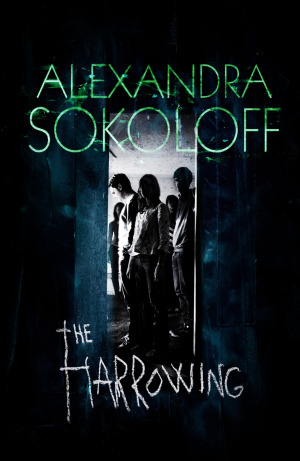
I am thrilled to announce that the The Harrowing finally gets its U.K. release this Thursday, September 17, with this fab new cover, one of my favorites – I guess I mean favourites – ever:


“Absolutely gripping…It is easy to imagine this as a film…Once started, you won’t want to stop reading.”

–  The London Times

Watch the book trailer

Buy here!


BLAMELESS SHELF PROMOTION

By Stephen Jay Schwartz


I’m promoting your shelf this week.  Your bookshelf, that is.  I’m suggesting that it might look a lot better with one of THESE on it…


Yes, it’s time.  After three and a half years of writing, after one and a half years of waiting (after the sale), the thing I’ve been hawking has finally arrived. 

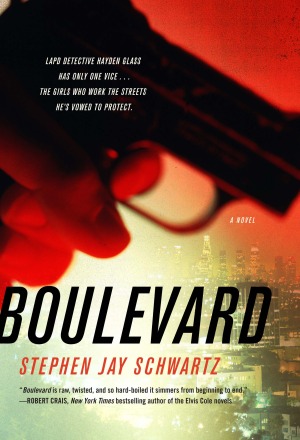
BOULEVARD hits the shelves September 15.  That’s next week, folks.  I’m flipping out.  My first novel. 

Here’s what people are saying about BOULEVARD…


“Schwartz hasn’t missed a trick in this gripping first novel. He begins with a knowing guided tour of LA’s boulevards, i.e., “hooker strolls,” as seen by the cop/customer, and he skillfully develops Hayden’s flawed character, showing him to be decent, haunted, and sometimes loathsome. Most important, he artfully builds tension and suspense into horror and finishes with a stunning Grand Guignol climax. Expect much more from this talented writer.”

–Booklist


Like James Ellroy, Hollywood film developer Schwartz can make the reader squirm, as shown in his debut, a disturbing thriller whose hero is addicted to sex…Schwartz does a fine job of blurring the lines between sexuality and violence, the criminal world and the police world.

–Publisher’s Weekly


A New Golden Age? The modern mystery is advancing into new territory with unusual sleuths and a mix of genres and moods. Stephen Jay Schwartz’s Boulevard introduces a police detective who is also a sex addict.  Hayden Glass is the top investigator in the LAPD elite Robbery and Homicide Division. He’s also a sex addict. This debut novel revolves around Glass’s addiction and a series of sadistic murders that are aimed specifically at Glass. The murderer leaves clues that Glass puts together but that others miss mainly because few know about his addiction. Working with Kennedy Reynard, a former FBI profiler, he slowly tracks the killer. VERDICT: Plot twists and turns plus an unusual denouement make Schwartz an author to watch. Mystery fans who enjoy reading about the mean streets of L.A. (à la Robert Crais, Michael Connelly, T. Jefferson Parker) will devour this.

–Library Journal


“Boulevard is raw, twisted, and so hard-boiled it simmers from beginning to end.”

-Robert Crais, New York Times bestselling author of the Elvis Cole Novels


“Boulevard is terrific.  Fast-paced and convincingly told. The streets of L.A. have never been meaner or seamier. Stephen Jay Schwartz’s clear vision and knowing heartmake him a gifted writer to watch.”

–T. Jefferson Parker, New York Times bestselling author of The Renegades


“BOULEVARD is relentless and unflinching, a shocking thriller that dares you to keep reading. Schwartz has created one of the most complex and tortured protagonists I’ve encountered in a long time.A powerful debut.”

–Tess Gerritsen, New York Times bestselling author of The Keepsake


“Tightly written and wildly original, you’ll be thinking about this story long after you close the covers.  Sex-addict Detective Hayden Glass is an unforgettable anti-hero you’ll love and hate at the same time. Stephen Jay Schwartz is going to give Michael Connelly’s Harry Bosch a run for his money.  BOULEVARD is just plain excellent.”

–J.T. Ellison, bestselling author of Judas Kiss


“A lurid nightmare tour through dark streets and dark minds.  Stephen Jay Schwartz writes with the fevered intensity of early James Ellroy.”

–Marcus Sakey, Strand Critics Award-winning author of Good People


“BOULEVARD is one of the most riveting debuts I have ever read.  Stephen Schwartz has written a story that will enthrall you, haunt you, disturb you, and keep you thinking long after you’ve finished reading it. Once you begin this book you won’t be able to look away.”

–Brett Battles, bestselling author of The Cleaner


“Dark and gritty, Schwartz’s dicey debut is seriously twisted.”

–Robert Ellis, bestselling author of City of Fire


“Stephen Jay Schwartz is a brave and gifted author, and Boulevard is an electrifying journey into sinful delights and escalating evil. Morally sound, addictive as a speed-ball, and rich with insight into human frailty-this novel kept me awake and disturbed my dreams in all the right ways.  Lock your doors and read it.”

–Christopher Ransom, international bestselling author of The Birthing House


“Boulevard is a mesmerizing read;  Schwartz has drawn a swift, brutal, and compelling portrait of a nightmare underworld of Los Angeles and a protagonist tormented by his own sexual addiction as well as by a real human evil.  Boulevard is one of the most compelling books on addiction I’ve ever read, wrapped up in a gripping thriller.”

–Alexandra Sokoloff, bestselling author of The Unseen


Thank you Murderati authors for your wonderful blurbs!!!

I’m doing a short little book tour, which you can find by visiting

http://booktour.com/author/23736

I hope to see everyone at Bouchercon in Indianapolis, October 15-18.

Thanks for allowing me my moment of shameless self-promotion.  I promise it won’t happen again until I’m out in paperback.