Author Archives: Murderati Members


DON’T HIT ME, BILLY…


By Stephen Jay Schwartz


I really do believe that every single experience we’ve had is stored in our memories. Even the little nonsense nothings – a mailbox I passed twenty years ago on an old country road – is there, waiting, with perfect clarity, for something or other to trigger it to life before my eyes.

I’m constantly amazed by the odd places I go in my head when a particular scent fills my nose – sometimes it’s just a flashing image: a stream I ran beside at age ten; a kitchen in a forgotten friend’s house where I “invented” peanut-butter by coating peanuts in butter and slamming them with a hammer; or chasing garter snakes in the backyard with my dad.

Everything is there – glimpses of my Kodachrome life.  I’ve always claimed to remember the moment of my briss.  Eight days old, just after the cut, when large, hairy hands placed a fluffy, purple dinosaur in my crib. I remember thinking it was hardly compensation for what had been taken.

My wife says there’s no way I can remember this. She says it’s a made-up image, malarky all the way.

Malarky. Now, that’s a word from a different era. Brings memories of my wife’s stepfather who died recently at the age of 89. He was a swing-time jazz musician and his vocabulary was filled with jumpin’ jive words, like malarky.

So, I was shaving the other day and I saw a flash of myself at age 19, standing in a studio apartment in Santa Cruz, California, with a drink in my hand. My eyes downcast, listening to the stomping of feet toward me, seeing a glimpse of a muscled arm rising.

And me, repeating the words, “Don’t hit me, Billy. Billy. Please. Don’t hit me.”

I don’t know why the memory came to me at just that moment, as I held the razor to my cheek. Nothing to prompt it. Just me staring at my face.

It was only a year ago, right? Maybe ten. At the most fifteen. It couldn’t have been twenty-eight. But it was.

I had arrived at Christie’s home. We’d spent the afternoon together with her four year old daughter. Christie was twenty-three and she worked at the video store in downtown Santa Cruz, owned by the TV producer I had come to work for as an intern. The “TV producer” ended up being a flaky, local entrepreneur and coke dealer. It was the best internship I ever had.

Christie took a liking to me right away. But she had this “friend” named Billy, who seemed to hang around a lot. I never really saw Billy, just a shadow here and there. He was twenty-seven – a real man with dreams and plans that apparently included Christie. Her cute little daughter came from a previous relationship, so Billy had no claim to her. And, according to Christie, Billy was just a friend.

Christie had a car, which was more than I had, and she let me drive her and her daughter around that afternoon, getting take-out at Pizza My Heart and an ice cream at Baskin Robbins. This was a long time ago, when Pizza My Heart had only two locations–one in downtown Santa Cruz (by the bus station) and one in Capitola. 1985. Just yesterday.

We watched the sun as it set over the Pacific and then Christie asked me to take her home. Take us home. It looked like I’d be spending the night.

We drove to her place and then past it because there was a car hovering in the shadows.

“What’s Billy doing here?” she asked, rhetorically.

She told me to keep driving. We went back to the beach, watched the stars come out in the sky. Then I drove back and, still, Billy’s car in the driveway.

“I think Billy thinks he’s your boyfriend,” I said. “Maybe I should go home. While the buses are running.”

“No…no, Billy’s just a friend….” she said, without conviction.

We drove around town a bit then returned to discover that Billy had left.

I carried her sleeping daughter and put her in bed, which was uncomfortably close to Christie’s bed, which, from the way things were looking, would be my bed as well.

Christie fixed me a drink and we stood for what seemed like seconds when the white light of a car’s headlights flashed the window.

“Who could that be?” she asked, rhetorically. I was getting pretty tired of ‘rhetorically.’

There was a soft knock at the door and Christie opened it.

“Billy, what are you doing here?”

 His hands in his pockets, an “aw, shucks” slump, genuine and kind. “Where’ve you been tonight, Christie?”

Then he sees me over her shoulder. My drink in hand, a dopey smile on my face. “Hi, Billy,” I said, in ironic monotone. A slow wave of my hand.

He turned around quickly, a rush of anger. Stepped away from the door, stepped back and away again, then forward with determination, his hand moving through his hair, his cheeks blowing red.

“Billy,” Christie said, “what’s going on?”

I knew what was going on.

He stomped into the house, pushing Christie aside.

“Billy!” she screamed. “Billy, stop!”

And me, just watching him come. I was no match for him. I knew it. There was really only one thing to do.

“Billy. Don’t hit me, Billy. Please. Don’t hit me.”

A calm, pleading appeal. I made no move to defend myself. I guess in the back of my mind I pictured the tables turned – would I be able to hit a defenseless kid who meant no harm, a kid who clearly hadn’t slept with my girlfriend or friend or whatever I chose to call her?

Billy approached like a bear with his arm cocked all the way to his ear. He stood above me, a foot taller, knuckles shaking in a now-or-never fist.

In the background, Christie screaming, “No, Billy, stop, stop!”

In the foreground, a droning mantra, “Please. Billy. Please. Don’t hit me, Billy.”

The combination worked. He turned on his heel, brought the anger to his lungs. “Get the fuck out of here!” and pushed me from the house.

The door slammed behind me. It was a cold winter night. The buses had stopped running and it would be a long, long walk to my apartment on Pacific Avenue. Seven miles, was my guess. I sat in the shadows in the front yard, listening to Christie talking nonsense and Billy punching walls.

Somehow, she managed it. Explained that I was just a friend from work who bought her and her daughter some ice cream–on my way home when Billy came to the door. I don’t really know what all she said, except for the “I love yous” and “Oh, Billy, it’s only you, you know that.” After an hour he stepped through the door and came to me with his hand extended.

“Sorry, man. I totally misunderstood,” he said.

Me, I’m glad he didn’t show up twenty minutes later.

“Well, yeah, okay,” I said. “But now I don’t have a way home. I could use a ride.”

Billy wasn’t about to drive me home and he wasn’t going to let his whatever-she-was spend a minute alone with me in a car. We compromised and they let me borrow her car so I could drive to my apartment, where I slept lonely and alone in an ice-box room above the local Mexican club, the Acapulco Lounge. Mariachi music until two a.m.

A month or two later Billy took Christie and the kid back to wherever it was he came from, Minnesota, I think, where they could have a normal life among normal friends. She was twenty-three, Christie. She’d be in her fifties now.

How did this start? Oh, yeah. Memories. That one came while I was shaving.

Time is not what we know. I’m convinced that everything that ever happened to me happened no earlier than fifteen years ago. Whenever someone asks me how long I’ve known this or that person, or when I left Albuquerque, or when I went to music school, I always think, “Well it had to be around fifteen years ago.” Because that’s as long as anything has every happened in my life, right?

I’m one of the most sentimental, nostalgic persons I know. I love my memories, good and bad. I used to be the only one like this, until I met all the friggin’ authors. Now I know I’m not alone. It’s a gene we’re born with, me and the writers. We’re lost in our memories. We’re lost in our minds.

Not a bad place to be, if you have to be anywhere at all.

                                                    *     *     *

Come read next week’s episode, when Stephen finds Billy dealing blackjack in Vegas and says, “Hit me, Billy. Please. Hit me.”*

* The last bit is just a bunch of malarky.
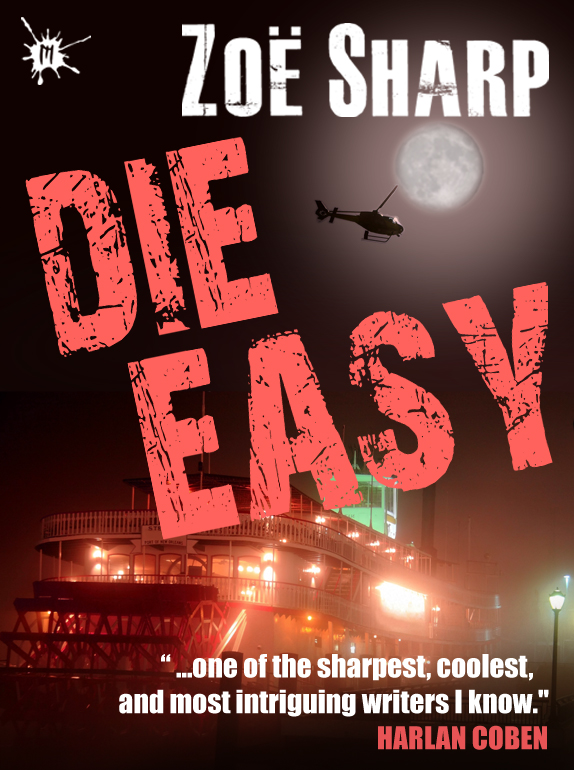
Catching up

Zoë Sharp

I hope you’ll all forgive me this week if I do a little catching up with myself. It’s been a busy few months and I wanted to let you know that I haven’t been entirely idle during that time.

This year is passing so quickly, and the final month of the year is just about upon us. I’ve no idea what happened to most of it—it sped by in something of a blur.

Still, the latest in the Charlie Fox series—DIE EASY: Charlie Fox book ten—is out there in digital form, complete with a guest excerpt from the first in a new series by bestselling author Joel Goldman—STONE COLD. The US/Canadian edition of DIE EASY is due in January.

‘Sean didn’t remember finding out that I wasn’t to blame for ruining both our careers—that I’d nearly died for him. He certainly didn’t know that I’d killed for him.’

In the sweating heat of Louisiana, former Special Forces soldier turned bodyguard, Charlie Fox, faces her toughest challenge yet.

Professionally, she’s at the top of her game, but her personal life is in ruins. Her lover, bodyguard Sean Meyer, has woken from a gunshot-induced coma with his memory in tatters. It seems that piecing back together the relationship they shared is proving harder for him than relearning the intricacies of the close-protection business.

Working with Sean again was never going to be easy for Charlie, either, but a celebrity fundraising event in aid of still-ravaged areas of New Orleans should have been the ideal opportunity for them both to take things nice and slow.

Until, that is, they find themselves thrust into the middle of a war zone.

When an ambitious robbery explodes into a deadly hostage situation, the motive may be far more complex than simple greed. Somebody has a major score to settle and Sean is part of the reason. Only trouble is, he doesn’t remember why.

And when Charlie finds herself facing a nightmare from her own past, she realises she can’t rely on Sean to watch her back. This time, she’s got to fight it out on her own.

One thing’s for sure—no matter how overwhelming the odds stacked against her, Charlie Fox is never going to die easy …

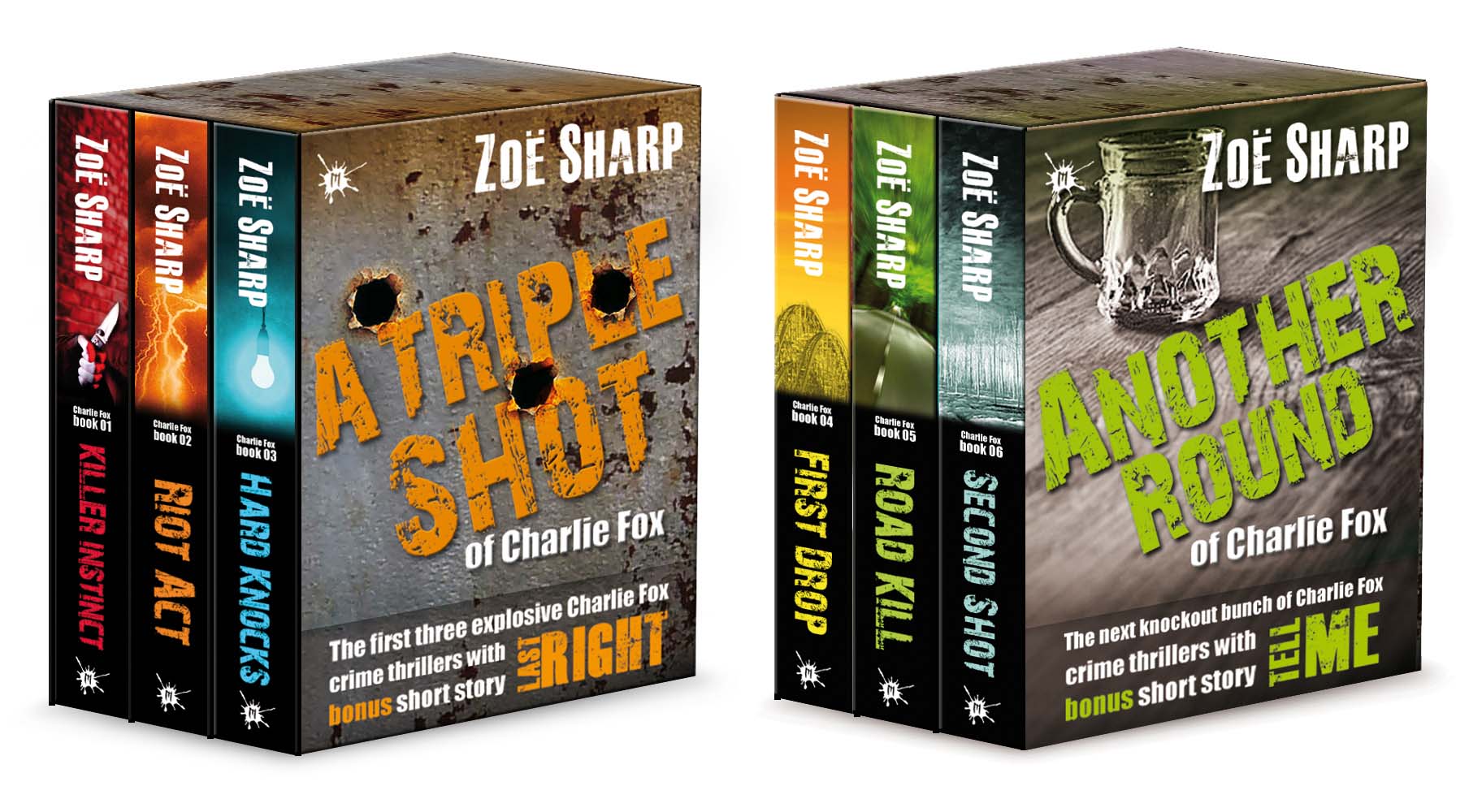
I’ve also just put together the first three Charlie Fox crime thrillers into a special e-boxed set—A TRIPLE SHOT of Charlie Fox, so you get KILLER INSTINCT, RIOT ACT and HARD KNOCKS, complete with a bonus standalone short story, Last Right.

And, following on from that, I’ve put together the second three books—FIRST DROP, ROAD KILL and SECOND SHOT—into another e-boxed set called ANOTHER ROUND of Charlie Fox, which also comes with a bonus standalone short, Tell Me.

And, of course, both Last Right and Tell Me are now available as individual downloads, alongside another standalone short story, The Night Butterflies.

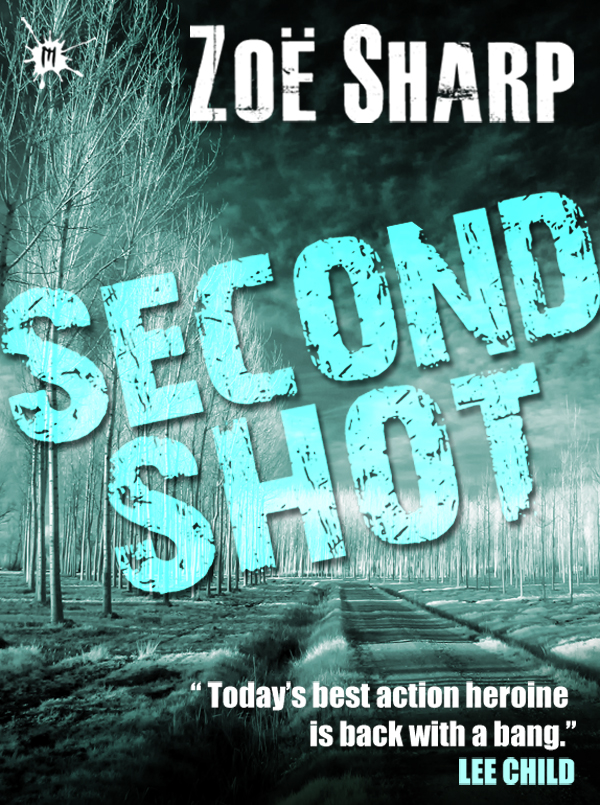
On top of that, I’ve reverted US rights to SECOND SHOT: Charlie Fox book six, and that’s now out with a guest excerpt from LOST RIVER by highly acclaimed British crime writer, Stephen Booth.

‘Take it from me, getting yourself shot hurts like hell.’

When the latest assignment of ex-Special Forces soldier turned bodyguard, Charlie Fox, ends in a bloody shoot-out in a frozen New England forest she’s left fighting for her life, with her client dead.

Simone had just become a lottery millionairess but she never lived long enough to enjoy her new-found riches. Charlie was just supposed to be keeping Simone’s troublesome ex-boyfriend at bay and helping track down the father Simone had never really known. 

But Simone’s former SAS father has secrets in his past that are coming back and haunt him. Did Simone’s money tempt him into engineering her death? And what happens now to Simone’s baby daughter, Ella?

With Simone gone, Ella’s safety is Charlie’s main concern. She’s determined, despite her injuries, not to let anything happen to the child. Even if this time Charlie’s in no state to protect anyone―least of all herself.

Is that enough for now? Well … no, actually.

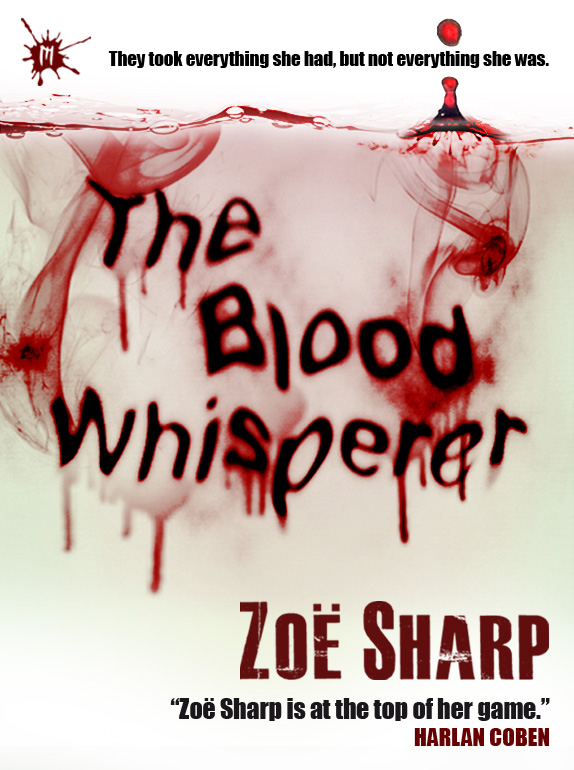
 I’m currently working on edits for a standalone crime thriller, THE BLOOD WHISPERER. No links up for that yet, but I can let you have a sneak peek at the cover and the jacket copy.

They took everything she had, but not everything she was …

Six years ago, London crime-scene investigator Kelly Jacks woke next to the butchered body of a man with the knife in her hands and no memory of what happened.

She trusted the evidence to prove her innocent.

It didn’t.

Now released after serving five years for involuntary manslaughter, Kelly must try to piece her life back together. Shunned by former colleagues and friends, the only work she can get is with the crime-scene cleaning firm run by her old mentor.

But old habits die hard.

Sent to eradicate all trace of the apparent suicide of Matthew Lytton’s wife at their country home, she draws unwelcome parallels with the past. The police are satisfied, but Kelly isn’t so sure. She wants to trust Matthew, but is he out to find the truth or to silence the one person who can expose a more deadly plan?

Kelly quickly finds herself plunged into the nightmare of being branded a killer once again. On the run from police, Russian thugs and local gangsters, she is fast running out of options.

But Kelly acquired a whole set of new survival skills on the inside. Now she must use everything she knows to evade capture and stay alive long enough to clear her name.

Right, I think that’s enough for now, so I’m going to shut up … in a moment.

Before I go, however, I’d just like to thank my wonderful webmaster for the total revamp of my site. If you haven’t had a look, I’d value your opinion. Just click on my name at the top of this blog.

Also, I need to give much kudos to my extremely talented cover designer, Jane Hudson at NuDesign, who’s come up with all these stunning new images.

My grateful thanks go to our Alexandra Sokoloff for her wonderful mention on her last blog. I’d already done my Next Big Thing blog, so here’s my take on it.

A big thank you to Cheryll Rawling for a wonderful interview on her excellent blog site, CrimeWarp.

Tomorrow is also my last day as Author of the Month on CrimeSquad.com. Thanks to Graham Smith for that one!

And don’t forget David Corbett’s upcoming writing courses—Character Spines & Story Lines at Book Passage this weekend, and his online course in January. It would, as they say, be a crime to miss them.

This week’s Word of the Week is gormless, a lovely word that has certain lights-on-nobody-at-home connotations. It actually comes from an old English dialect noun gaum meaning attention or understanding, and also a dolt, but can also function as a verb meaning to behave stupidly. The most common spelling in modern times is gormless. I love the idea that one can have gorm—it’s a bit like using ruth instead of always ruthless, or to be ept instead of always inept.


Cover Quotes – Credible Praise or Irredeemable Corruption?

By David Corbett

First, some business to square away – I’m teaching a couple of courses I’d like everyone to know about. If you or someone you know would like to register, follow the links I provide below.

The first is an in-person weekend class and workshop at Book Passage in Corte Madera on December 1st & 2nd. The class is titled Character Spines and Story Lines, and will focus on how to integrate character with story to create focused, compelling, character-driven plots.

The second is a ten-week online course, beginning January 16th, offered through the UCLA Extension Writers’ Program. It’s titled The Outer Limits of Inner Life: Building Consistent but Surprising Characters, and covers the art of characterization from conception of the character through development and execution on the page.

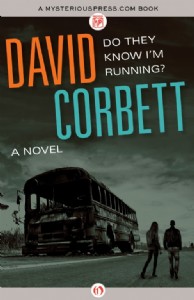
Also, Open Road Media and Mysterious Press have re-issued my third and fourth novels — Blood of Paradise and Do They Know I’m Running, respectively — in ebook format with, imho, killer new covers:


They’ve also created a swift little video for the rollout, in which I characteristically talk far too quickly about nothing much:

Follow the links to purchase the titles, and remember there are two days left of the special November promotion in which The Devil’s Redhead (and 99 other stellar titles) are all available for $3.99 or less (TDR is a lean, mean $2.99).

* * * * *

Now, to our regularly schedule programming:

I had a lot to be grateful for this Thanksgiving. I got to meet my girlfriend Mette’s parents for the first time – they spend much of the year abroad, living for several months in Bergen, Norway, another several in Izmir, Turkey – and spent several restful days at a lakeside cottage in the Putnam Valley (not far from Sleepy Hollow), eating sumptuous meals, hiking in the woods, and listening to vinyl on our host’s knockout stereo (his record collection ranged from Bowie to Herbie Hancock to Fela to Sonny Boy Williamson to, well, you get the picture).

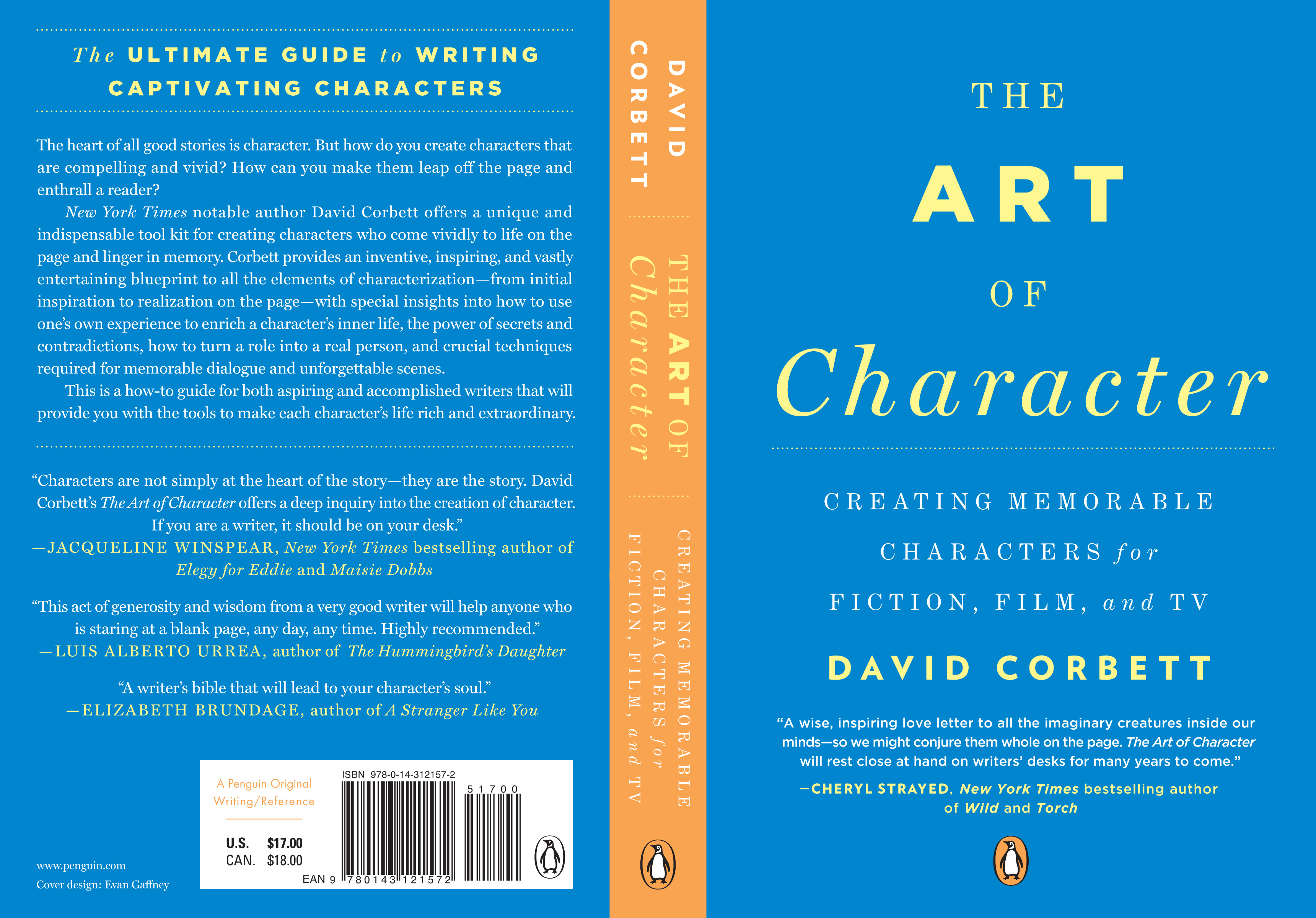
I also received from my editor at Penguin, Tara Singh, a jpeg for the finalized cover up my upcoming book, The Art of Character:

Oops. My apologies. I tried to post the cover, but I only have a pdf file,

and apparently I need a jpeg or similar file. I’m going to try something here — let’s see if it works. If not, sorry.


The cover was completed after I was able to scrabble together some blurbs from assorted friends, colleagues, comrades in arms. Given the rather ragged path to publication this poor little book has endured – I’m on my third editor, for example – I was given a very narrow time window (two weeks) to gather these quotes, which all but guaranteed that we’d come up short-handed.

All the writers I know are super-busy, and asking for a quote in such a short time frame was almost embarrassing. Many of the writers I asked simply couldn’t oblige, but luckily there were a significant, generous few who were able to take the time and respond.

As you know, this past year there was a rather heated debate over the use of “sock puppets” to praise one’s own work and, in extreme cases, attack the work of others. Alexandra and Martyn both posted blogs here on the topic. And the resulting discussion all around the web brought into high relief the entire issue of garnering favorable opinion for one’s work – whether in the form of friends writing Amazon reviews, writing reviews oneself under pseudonyms, or good old-fashioned, genuine third-party praise.

Barry Eisler, in addressing the sock puppet phenomenon, put it in the context of acquiring blurbs, a system he considers “irredeemably corrupt.” I’m not quite as jaundiced as Barry, but I’m no fool. I realize that many cover quotes are written as personal favors or as a kind of quid pro quo for kindnesses or acts of generosity provided elsewhere. I also know they don’t always reflect a genuine knowledge of the work. As Robert B. Parker famously remarked: “I’ll blurb the book or read it, not both.” (I’m paraphrasing.)

I think most people understand all this. Readers don’t take cover quotes as gospel any more than they read Yelp reviews without a certain reasonable skepticism. Ultimately, we evaluate several reviews and/or blurbs, “weigh the source,” glimpse at the book ourselves, and form our own opinion.

That said, I was absolutely overwhelmed with the generosity, kindness, and respect my fellow writers showed my humble little book. My editor was frankly stunned – and ecstatic. Here’s a sample:

“David Corbett has written a wise, inspiring love letter to all the imaginary creatures inside our minds—so we might conjure them whole on the page. I predict that massively underscored copies of The Art of Character will rest close at hand on writers’ desks for many years to come.”  —Cheryl Strayed, Best Selling Author of Wild

“I once made the mistake of writing a story with David Corbett. The man smoked me. He can delineate the character and personality of an accordion in three strokes. I didn’t even know accordions had character. This act of generosity and wisdom from a very good writer will help anyone who is staring at a blank page, any day, any time. Highly recommended.”  —Luis Alberto Urrea, Pulitzer Finalist and Bestselling Author of The Hummingbird’s Daughter

“Corbett’s The Art of Character is no “how to” book or “writing by numbers” manual.  It is a writer’s bible that will lead to your character’s soul.”  —Elizabeth Brundage, Best Selling Author of A Stranger Like You

Indispensable. Few are the writer’s guides that are written as beautifully, cogently, and intelligently as a well-wrought novel. This is one of those books.”  —Megan Abbott, Edgar-Winning author of The End of Everything

“David Corbett’s The Art of Character belongs on every writer’s shelf beside Elizabeth George’s Write Away and Stephen King’s On Writing. An invaluable resource for both the novice and the experienced hand, it’s as much fun to read as a great novel.”  —Deborah Crombie, New York Times best-selling author of Water Like a Stone

“The topic of character development begins and ends with David Corbett’s The Art of Character. This is the book on the subject, destined to stand among the writings of John Gardner, Joseph Campbell, and the others of that select few whose work is fundamental to understanding the craft of storytelling.”  —Craig Clevenger, author of The Contortionist’s Handbook and Dermaphoria

“David Corbett’s The Art of Character offers a deep inquiry into the creation of character for the novice writer, with valuable nuggets of wisdom for the seasoned storyteller. If you are a writer, it should be on your desk.”  —Jacqueline Winspear, National Best Selling Author of A Lesson in Secrets

“Clear-headed and confident, David Corbett takes us through the steps of characterization in a manner that resists formula while at the same time demystifying a process that has likely daunted every writer since Homer. “  —Robin Hemley, Award-Winning Author of Turning Life into Fiction

“David Corbett has combined his unique talents as a gifted writer and an extraordinary teacher to create a superb resource on character development. Deftly crafted and impeccably researched, The Art of Character is a thoughtful and insightful book that is immensely readable and practical.”  —Sheldon Siegel. New York Times Best Selling Author of Perfect Alibi

 “It is rare to find the deep philosophical questions of literature (and life) met with such straight-forward and inspiring instruction. But David Corbett is that writer, and The Art of Character is that book.”  -—Robert Mailer Anderson, author “Boonville”

“This fine book is about as thorough an examination of character and what it means in all sorts of imaginative writing as you’re likely to find anywhere.”  —Robert Bausch, Prize-Winning Author of Out of Season

Yes, they all could be lying, or exaggerating, or simply doing me a good turn. But I think, when readers look inside the cover, they’ll be able to determine for themselves whether the praise was warranted or not. In the meantime, I’m basking in the glow – and feeling very fortunate indeed.

So, Muderateros – how do you appraise the value of cover quotes on a book you’re thinking of buying? Do you agree with Barry Eisler that the system is so ridden with underhandedness as to be worthless? Or does the opinion of a writer you admire still carry weight?

* * * * *

Jukebox Hero of the Week: I mentioned that I got to listen to Fela this weekend at my lakeside hideaway. For those of you unacquainted with this African megastar-hero’s work, this is an excellent introduction – “Zombie,” from 1976:


BLACK FRIDAY, CYBER MONDAY AND NOW: MURDERATI TUESDAY!

by Gar Anthony Haywood

Though I rarely take part in all the fun, cash-strapped as I am, I kind of dig Black Friday.  The idea of retailers throughout the country holding a joint super sale to end all super sales on a single day is kind of awesome, and when you extend that concept to a tech-only version the following week on Cyber Monday, well . . .  What’s not to like?

(Except for the crowds . . .

. . . the traffic . . .

. . . and the gunfire on Aisle 9, that is.)

But neither Black Friday nor Cyber Monday is the super sale I’d really like to see.  The one-day discount extravaganza of my dreams would involve merchandise only we writers care about.  Things that we wish existed, but don’t.  I’d call this day immediately following Cyber Monday “Murderati Tuesday” (what else?), and the price-slashed goods would look pretty much like this:


A BIG-SCREEN TV THAT ONLY WORKS WHEN YOU DO


This set connects to your laptop or desktop computer via USB cable and monitors your daily progress toward the deadline and word count you’ve committed yourself to meeting.  Once your deadline passes, if you haven’t delivered a complete manuscript, the set can be programmed to either shut down completely or only tune in to over-the-air stations showing old Bosom Buddy reruns.  Want to watch the Super Bowl on something other than your smart phone?  Better get your ass in gear and finish that damn novel.


A GPS DEVICE THAT CAN TRACK THE WHEREABOUTS OF BOOK CONVENTION UNDESIRABLES

You know the kind of undesirables I mean.  You see the poor devils wandering the hallways of the convention hotel every year, and usually too late to avoid being cornered by one of them.  They wear quadruple-X-sized T-shirts and unisex khakis, and drag three fully-loaded canvas book bags behind them like balls-and-chain.  (Bags which, in total defiance of the odds, never manage to contain a single title of yours.)  They tell incredibly unfunny stories and rave about authors you wouldn’t pay to write a squirrel’s obituary.  This handheld device alerts you the minute one of these geeks steps within fifty yards of your present location, and it comes with a panic button that will sound an ear-splitting alarm should you fail to heed its warning and blunder into the men’s room where, say, good ol’ Bob Fussblott of Dunwoody, Illinois, is waiting for you.


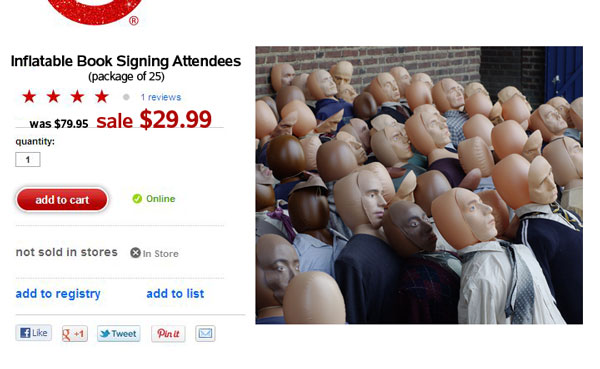
INFLATABLE FANS


Sold in packages of 25, these rubberized mannequins can be used to populate the audience of an otherwise scorched-Earth-desolate, mall store book signing you don’t know why you ever scheduled in the first place.  Why read to yet another host of empty chairs when you can read to over two-dozen, somewhat human-looking blow-up dolls that have been specifically designed to appear as if they’re hanging on your every word?  They can’t ask questions or buy a book to be signed afterward, but then, none of them will fall asleep on you, either.


AN E-READER THAT TRIMS THE FAT


The Zook e-reader does what few professional editors have the guts to do anymore: It cuts all the unnecessary crap out of the books you download to it.  Never again will you have to suffer through 131 pages of drivel wholly unrelated to the story at hand.  The Zook scans e-book text for excess prose and sends it straight to the trash where it belongs.  The reader features four specific settings that allow you to fine-tune its editing functions to meet your reading needs: Verbosity, Digression, Literary Grandstanding and Filler Only Included at the Eleventh Hour to Meet the Author’s Contractual Word-Count Obligations.


HEADGEAR FOR THE CLICHE-IMPAIRED


Writing while wearing the ClicheBuster headset won’t make you a New York Times bestselling author overnight, but it will discourage you from filling your work with the trite and overwrought.  This brainwave interface device fits snugly over your dome to read your every thought, and the minute a cliche of any kind enters your mind, you’re treated to an electrical shock guaranteed to make you think twice.  Good cop, bad cop?  Zap!  “But all was not what it seemed”?  Zot!  The spunky female heroine dating the handsome homicide detective while sharing barbs with her feisty, irascible mother?  Zow!  (Note: The intensity of the jolt you receive corresponds to the degree of unoriginality the cliche being considered indicates, so first-time authors are warned to use the device only under the direct supervision of a professional writers’ camp counselor.)


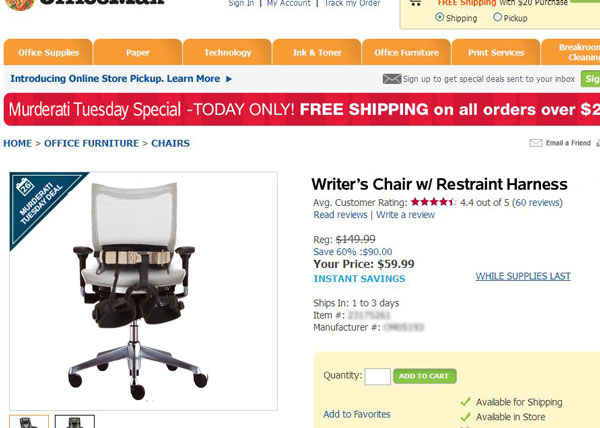
A PROCASTINATION-PROOF OFFICE CHAIR


Ever wish your writing chair was as ruthless a taskmaster as your agent?  Well, now it can be if your chair is the beautiful, ergonomic restraint device shown here.  Sit down, strap yourself into the locking three-point harness and start writing, because you won’t be getting up until your agent calls or emails you with the lock’s combination, which changes daily.  Want to go to the window and blow a good hour watching that crazy neighbor of yours try to trim his shrubs with a weed whacker?   Forget about it!  Thinking about running downstairs to catch the last forty minutes of The View?  Not a chance!  Need a potty break?  Well . . . better hope your agent liked the last 30 pages you  delivered.  Otherwise . . .

Divorcing your characters

by Pari

Why do relationships end? Are there fundamental disasters sown in the first rites of spring? Do we crack the foundation with expectations before laying the first brick? And does any of the endless analysis and questioning result in better future relationships?

Hell if I know.

What I do know is that I’ve had a long-term relationship with Sasha Solomon*, my main character in my published mystery series, and it has been severely tested in the last five years. The most recent test came with the first volley in my husband’s proposed property settlement. He wants “One half of the community interest in the literary Copyrights of Pari Noskin Tachiert” (Yes, the typo was there; it added a little insult to the whole endeavor.)

When I read those words, I thought, “Okay, then, I’ll just never do anything with Sasha again.”

After that initial infantile reaction, I started looking deeper. That’s one of the dangers of being introspective and not particularly interested laying blame at other people’s feet. Though I could sense the intent behind the request, the stab at my self-identity, the stink of malice, in the end did it really matter?

Is my 17-year relationship with this character so shallow I’m willing to end it over someone else’s actions? And who would I be hurting if I did? The deeper I went, the more questions I had.

How much of our relationship — Sasha’s and mine — sits on shaky ground? How much has been in reaction to
*  The people who said I’d never get published?
*  The limits of being with a university press and trying to “break into the big time?”
*  My desire to be unique, interesting?
*  My insecurities and worries about self-worth?

I also wondered about how easily I could get thrown off track. Do I still love Sasha or have I just been using her for years? Have I been holding on to her because I was scared to let her go?

Deeper and deeper I’ve gone.  Why I haven’t written creatively in nearly 8 months? Is it really because I’m letting my wounded creativity heal quietly, to hibernate, until I can embrace it with the love of a true friend? Or is it because I’ve wanted to hoard it in, to hold it close, because I don’t want my husband try to possess any of it?

Wow. Is that weird or what? It feels so petty. And, frankly, a bit stupid. The only one getting hurt in this is me . . . and Sasha . . . and, maybe, readers who still want more of her stories.

Do other writers have these kinds of literary existential crises? I sure hope so.

So my main questions for today are these:

Readers & Writers:  Have you ever been faced with this introspective questioning?
What did you discover?

Writers: Did you ever divorce a long-term character you created?
Or were you able to get literary marriage counseling?

* the website referenced above was created by B.G. Ritts as a kindness years ago . . .

Noir Friday

by Alexandra Sokoloff

One place you will NOT find me today is in a mall. Instead, we’re having Noir Friday here on Murderati.

So I’ve professed my undying love for Bouchercon, the World Mystery Convention, many a time on this blog, but I do have a serious beef with this year’s line up.

The noir panel was all men.

I mean, really? In 2012?  When Megan Abbott and Kelli Stanley and Cornelia Read are attending? When Christa Faust is not only in the room, but up for an Anthony?

I guess all the women were stuck in binders or something.

(Kudos to the one panelist, John Rector, who knows a little about noir himself,  who jumped to point this absence out.)

Bouchercon was over a month ago and this noir sans femme thing is still rankling me, so I decided to blog about it.

 This is also partly because I was asked (multiple times) to take part in the latest author blog hop, The Next Big Thing, in which authors post their answers to a set of ten questions about their latest books on their blogs and then tag five more authors for the next week, and possibly Kevin Bacon is involved, and then we take over the world. 

So my horror/thriller author pal, the wildly dark, or darkly wild, Sarah Pinborough, tagged me two weeks ago, ad I did my ten question interview on Huntress Moon last week – here –  and now it’s my turn to tag five authors and link to their interviews this week. 

And because I am still seething over the noir panel, I chose a theme of fantastic dark female characters, and tagged my authors accordingly:


– Michelle Gagnon is a thriller writer who has recently brought her powerhouse female perspective and adrenaline-charged storytelling to the YA thriller genre with her latest, Don’t Turn Around. Noa is a terrific tenage role model; I hope we’ll see more of her.  Read her Q & A here


– Christa Faust knows noir backward and forward, and has virtually created a whole new direction for the genre and its characters. Angel Dare is an alt heroine who brings OUT everything that noir anti-heroines like Gloria Grahame were doing in a coded sense, and Butch Fatale takes the “two-fisted detective” archetype to a new meaning.  Read her Q & A here


 – Wallace Stroby. As Anyone who reads this blog knows, I am VERY picky about men writing “strong women”, and on the dark side, Stroby is as good as it getts, both shattering and reversing noir gender stereotypes. His Crissa Stone series presents a thief who doesn’t just hold her own, but leads and controls motley collections of male gangsters. And I’m even more fond of Stroby’s Sara Cross, who mirrors the classic noir paradigm; she’s a truly good woman whose near-fatal flaw is a tragically bad man.


in the Charlie series is set in New Orleans! http://zoesharp.com/  

Zoe Sharp needs no introduction here. As we know, she actually DOES write a kick-ass female lead, Charlie Fox, who works as a bodyguard and makes the physical reality of her job perfectly plausible (I’ve learned a lot about self-defense from these two…) while she battles uniquely feminine psychological demons. And her new installment in the Charlie series is set in New Orleans! http://zoesharp.com/

(Right, that’s only four.  I can count, at least up to ten, but getting authors to do anything on deadline is like heding cats.)


I really encourage you all to click through to their interviews, especially for the fun question on who they would cast in a film or TV version of their books. Always a good exercise for any writer, you might get inspired!

So not everyone above is writing noir, exactly. Stroby, definitely. Faust has a lot of noir influence but I’d say her work is more like female-driven pulp, with a strong emphasis on camp humor, too. Sharp and Gagnon write dark and intense, but it’s not noir any more than I’m writing noir, which is not at all.

I’m also no way a noir scholar, and let’s face it, the lines are blurry (Is it noir? Pulp? Neo-noir? Just a good old B movie?) and I’d like to leave the question open for David – I mean everyone – to jump in and define it for us in their own words.  Personally, I know it when I see it!  No, really – for me, the key difference is that, for example, in Zoe’s and Michelle’s story worlds, there is the possibility and even probability of redemption, while in the classic world of noir, there is none, or very little. Doom and fate figure predominantly.

I liked  John Rector‘s capsule summation on that B’Con panel: “Noir pushes people to extreme circumstances and there is no happy ending. The hero/ine is fighting the good fight… but loses.”

So I guess the personal line I draw between “noir” and “dark” is about that possibility of redemption and at least temporary triumph. You can win the battle even when you know the war rages on. In my own books, there’s plenty of dark, but not noir’s overwhelming sense of inexorable fate; my own themes are more about the people caught up in a spiritual battle between good and evil. And no matter how dark it gets, there’s always the presence of good. 

In fact, some of my favorite dark thriller writers: Denise Mina, Tana French, Mo Hayder, Karin Slaughter, Val McDermid, seem to me more fixed on exploring that spiritual evil than fate. As dark as they get, I wouldn’t call what they’re writing “noir”, because it IS more spiritual, they’re dealing with a more cosmic evil.  Or maybe the evil they depict is so rooted in a feminine consciousness and feminine fears and demons that it doesn’t FEEL like noir. But that could be me splitting hairs, you tell me! That’s what this blog is about.

And there’s another element that I consider classic noir:

Threatening women.

Threatening to men, anyway, apparently! 

But the presence of shadowy – or maybe the word I mean is shaded – women is key. For my money some of the most interesting women ever put to page or celluoid are noir femmes, and part of that is because quite a few noir writers and filmmakers and actresses actually made a point of exploring the dark sides of women.

And noir takes on significantly different meaning when the leading roles are played by women instead of men. These days Sara Gran, Megan Abbott, Gillian Flynn, Christa Faust and Wallace Stroby are all doing really exciting work genre-bending by putting women in the protagonist’s seat and then absolutely committing to what it would look like and feel like and mean for a woman to take that lead in circumstances we don’t usually see women in.

I was enthralled by Sara Gran’s Dope, which explores a noir standard, addiction, and the noir paradigm of the tarnished white knight committed to a hopeless and destructive person – all from a completely feminine point of view. Likewise Wallace Stroby’s Sara Cross (in Gone Til November) is a committed knight… lawman… lawperson… who very nearly falls because of a fatally seductive man, and any woman who’s ever been tempted will understand her struggle. 

Gran has created another classic yet entirely unique noir heroine in her latest, Claire DeWitt and the City of the Dead; I can’t think of another noir character so reliant on my favorite force in the world: synchronicity. But also, back to addiction: is that synchronicity drug-induced?  Claire’s pot habit might be useful juice for her detecting instincts, but one gets the feeling it’s playing hell with her personal life.

Megan Abbott layers a specifically feminine addiction, the pathological narcissism that anorexia can be, into her latest, Dare Me – to chilling effect. And I’ve never seen anyone else portray the feminine counterpart of criminally sociopathic male athletes, but you better believe these cheerleaders are exactly that.

Abbott, Gran and Flynn (in Sharp Objects) are also sometimes writing female protagonists battling female antagonists, with men relegated to secondary roles. I find it a deliriously welcome reversal of the traditional order.

I suspect it’s easier, or really I mean more natural, for women to achieve a genre bend with noir and thrillers because we’re working against a very entrenched male tradition. If we’re just fully ourselves, it’s going to look new to the genre.

But men can get there. I think Dennis Lehane did a brilliant genre bend with his male characters in Mystic River by going places that men don’t usually go in their own psyches  – they’d rather assign that scary stuff to female characters to distance themselves from the experience instead of having to put themselves into those vulnerable positions. Which  personally I think is cheating.

And as Stroby is proving, consciously committing to the physical and emotional reality of a complex female protagonist is possible for a male author, too.

By looking at crime through a specifically feminine lens, these authors are creating a new genre. I don’t know what to call it, but I know I love it.

I know there are more of these authors and books out there, and I want to hear about them, so let’s have it. Who are your favorite dark female leads – and villains? Which authors in our genre do you think are portraying ALL the facets of women, black, white, and every shade of gray in between?

And yes, what is your definition of noir?  I’d love to know.

Alex


Blast from the past

By PD Martin

These last few weeks I’ve been experiencing a real blast from the past. You see, a couple of months ago I contacted both my US and Aussie publishers hopeful that the rights to my Sophie Anderson series (Aussie FBI profiler) had reverted back to me.

Reversion of rights used to be the kiss of death for authors. Generally, no publisher would buy the book again to re-launch it (except perhaps if you went on to write a best seller and your new publisher was keen to acquire your back list). Then, ebooks happened. Now, reversion of rights is actually an exciting prospect for an author. Especially given one of the keys to ebook success is volume — having more than a handful of titles available to build your name and, of course, sales.

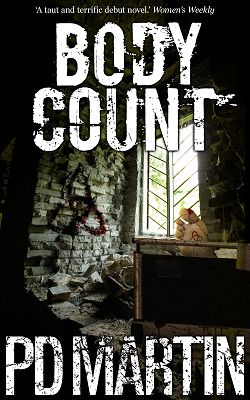
So, I was very happy to find the rights had reverted for ALL my Sophie titles with Pan Macmillan Australia. My contract for the US required much longer time frames to be served, but I was hopeful maybe book 1, Body Count, would be up for reversion. Unfortunately, not. Even though it’s out of print in the US, because I gave my North American publisher worldwide rights (excluding a few countries) it just has to have been printed somewhere recently (or due for a reprint). In the case of Body Count, apparently a reprint is scheduled of the French edition. While it’s great the reprint is happening, it’s frustrating that I’ll only be able to make my Sophie novels available to people in Australia and New Zealand.

This is particularly concerning given we represent such small markets on the global side of things (given our populations), plus so far Aussies have been very slow to adopt Kindles and other ereaders. (I’m not sure about New Zealand’s adoption rate of ereaders.) After some debate, I decided it’s still worthwhile to get them up there. Maybe I can be one of the Aussie authors getting in at the ground level, before Kindles take off!

So, for the past two weeks I’ve been taking another look at Body Count. It’s the first time I’ve read the book since the page proofs, back in 2005. There are a few minor things I’ve always wanted to fix, and other things I’m finding along the way. For example, I really steer away from dialogue tags now (he said, she said) and aim to use descriptions to attribute dialogue instead. To give a very basic example,

“I don’t know, Sophie,” Flynn says.

Might become something like this:

Flynn’s blue eyes fix on me. “I don’t know, Sophie.”

I’m also now mindful of the ebook medium and will be doing one pass entirely with the aim of breaking up a few chapters. I think some shorter paragraphs and shorter chapters work well for the ebook format and help give a book that page-turner feel. Plus, I’m concerned the book starts too slow so I’m hoping to cut out around 5,000 words from the first 1/3 of the book. That’s going to be a tough job, though, and I’ll devote one editorial pass just to that task. Deleting scenes is never easy for an author.  

Of course, I’ve also been getting the cover designed. Like it?

So, Murderati, questions for today. When you revisit a book several years later (as an author or reader) how does it hold up? For those of you who read ebooks, do you agree that shorter paragraphs and chapters work better?

Special note
To all our US readers who observe Thanksgiving, I’d like to say Happy Thanksgiving! Hope you have a great day, filled with good food and good company, with many things around you to give thanks for. 

EVERYTHING OLD IS OLD AGAIN

by Gar Anthony Haywood

An author learns a lot when he volunteers to be a judge on a literary awards panel.  Such as:

–  A slow start is an absolute deal breaker.

–  There are a ton of books out there.

–  Most of that “ton of books” is unreadable.

–  If you believe everything you read on a book’s cover, there are approximately 8,417,212 “international bestsellers” writing crime novels at present.  Who knew?

–  There are some incredibly talented writers today working in a state of obscurity their storytelling skills simply do not warrant.

–  Great cover art guarantees nothing; awful cover art, on the other hand, is usually a perfect compliment to the book to which it is attached.

And finally, the most important lesson to be learned of all:

–  We all need to try a little harder to come up with some new ideas.

Quite a while back, I promised you a Murderati post in which I list all the crime novel premises I think are begging to have a fork stuck in them.  These are premises so overused, so tired and ubiquitous, that at this point, any book based upon one should just be given a number for a title, as in “THEY KILLED HIS FAMILY AND NOW HE WANTS REVENGE #46,808.”

Well, here’s that list, at least in part:

–  The loving widow who discovers her recently deceased, ostensibly perfect husband/boyfriend was not the man she thought he was (because he was in fact a spy/crime boss/assassin/serial adulterer/etc., etc.).

–  The triple-crossed espionage agent who must travel the globe in search of those who betrayed him before the multiple contracts on his life can be filled.

–  The amnesiac who wakes up in a strange place and must piece together his/her past while simultaneously evading an army of people trying to kill him/her for reasons unknown.

–  The serial killer survivor who, years after the attack that nearly killed her (and it is almost always a woman), finds herself being stalked by either that very same serial killer, or someone mimicking him.

–  The ex-con, fresh out of prison, forced to pull one more job by his former partners in crime, who are holding his wife/child/mother/brother/family dog hostage to ensure his cooperation.

–  The unstoppable professional assassin with the catchy code name (the Wolf, the Hound, El Tigre, El Diablo, etc.) who suddenly finds himself being hunted by his most ruthless professional rival (the Snake, the Dog, Sir Muerte, La Leona, etc.).

–  The grizzled, addiction-addled cop forced to play cat-and-mouse with a diabolical serial killer whose M.O. is so twisted, half the CSI team loses its lunch at every crime scene.

–  The grizzled FBI agent-with-a-past forced to play cat-and-mouse with a diabolical serial killer whose M.O. is so twisted, half the CSI team loses its lunch at every crime scene.

–  The grizzled, addiction-addled FBI profiler-with-a-past forced to play cat-and-mouse with a diabolical serial killer whose M.O. is so twisted, half the CSI team loses its lunch at every crime scene.

–  The haunted, addiction-addled psychic who reluctantly helps the police play cat-and-mouse with a diabolical serial killer whose M.O. is so twisted, half the CSI team loses its lunch at every crime scene.

–  The grizzled, addiction-addled EX-cop-with-a-past forced out of retirement to play cat-and-mouse with a diabolical serial killer whose M.O. is so twisted, half the CSI team loses its lunch at every crime scene.

–  The grizzled, unshakable ex-military policeman who plays cat-and-mouse with a diabolical serial killer whose M.O. is so twisted, half the CSI team loses its lunch at every crime scene.

–  The grizzled . . .

Well, you get the idea.

If I were nothing but a reader, I’d be way tired of this stuff.  I mean, seriously, enough is enough.  But speaking as an author, I have to admit that avoiding such overly-familiar concepts is easier said than done, because there are only so many promising crime or thriller novel premises to be had in this world and devising one that’s never been done before is damn near impossible.  Also, let’s be honest here: The reason people keep writing books based upon these retreads is that people keep buying and reading them.

Still, I think any author seeking to create truly great work must make a concerted effort to take the tried and true and make something relatively fresh and new out of it.  Adding a twist here or there is not enough; true creativity demands that an author deconstruct these belabored premises and rebuild them from the ground up, so that a reader cannot instantly identify — or worse, dismiss — their latest book as “WRONGFULLY ACCUSED WOMAN SEEKS MISSING CHILD AND HUSBAND’S KILLER WHILE RUNNING FROM THE LAW #24,909.”

A unique voice and/or intriguing protagonist can only do so much to separate a book based upon a tired old idea from the hundreds of others based upon that very same idea.  To be memorable, to stand out from the crowd, such a book must break the mold in some significant way, not merely massage it into a slightly different shape.

If all you want to do is sell thousands of paperback originals at Walmart (and come to think of it, who doesn’t?), this may all sound like way too much work, and you’re probably right.  But if your goals are a little loftier — if you want to build your reputation on more than just an ability to create suspense using the same limited tool box hundreds of other authors are drawing from — you have to go the extra mile and yes, reinvent the wheel.

Otherwise, you risk turning off readers and award judges alike for whom unadulterated familiarity may not only breed contempt, but qualify a book for the Been-There, Read-That-a-Million-Times-Before rejection pile.

Hard At Work

By Tania Carver

I find this hard. Writing, I mean.

Sitting down, putting words that will hopefully mean something to someone on a blank screen, putting down enough of them to tell a story, provide a plot, create a character, give a reader some diversion from their life or even, on those very, very, rare occasions, provide some illumination into the human experience.

Yes. Hard. But please don’t think I’m complaining because I’m not. This is what I do. I’m a professional writer. I get paid to do it and therefore I bring a certain standard to it and have certain expectations, both in terms of what is expected of me and what I expect of myself.

At the best of times it’s hard.  And that’s right, it should be. The trick is in making something that’s (hopefully) easy to read. That doesn’t necessarily mean it has been easy to write. In fact, it’s usually the opposite. How many times has an audience watched an actor or a dancer or even an athlete and thought, they make it look so easy. Therefore it must be easy. Therefore I can do it. And they try it. And realise it’s not so easy after all.

Admittedly some people who try their chosen thing do go on to be proficient at it. But most don’t. Most give up and are content once more to watch/read others do it. And that’s fair enough. Some delude themselves into believing that they can do it, and persist, getting more and more embittered as rejection after rejection piles up. Then, in the case of writing, taking to the internet and self-publishing. Then getting more and more embittered as their books fail to find an audience.

I must admit, I don’t know much about the self-publishing world. And to be honest, I don’t think I understand it. I’m lucky enough (so far) to have always been professionally published by reputable houses. I haven’t always been well-represented at those houses but currently things are going OK. It took me five years to get my first novel published. I started writing it in 1992, it came out in 1997. During that time it went round just about every publisher in London, had two agents (the first one claimed it was one of the most horrible books she had ever read) and was rewritten over and over again, depending on the whim of whichever editor had it at the time. Eventually it caught the attention of an editor who was looking for gritty, regionally set crime novels. Perfect, I thought. She liked it but there were things wrong with it. It needed editing. I thought I’d done that but apparently not. I asked her to show me how to edit. She did so. This involved taking a big black Sharpie through the majority of what I’d written. At first I was appalled but then realised she was right. Too verbose.  Over-written. I did the same thing she had done, spending six months excising extraneous words. I also took her notes on board, tidying up the plotting at her insistence, making the characters more believable. It was on the spot training, learning as I went. In signposting what I needed to do, she taught me invaluable lessons in how to edit and structure. I still do the same things she taught me today.

Once I’d made all these chances the book was accepted. I was given a two book deal: could I deliver another novel in nine months? Sure. And I managed it. Just. I ended up in bed for days with nervous exhaustion but the book was there. And that was it. I’d stuck my toe in the door. From my toe I managed to wriggle the rest of my foot in. Then my leg.  Then the rest of me. Now, I think that if I’m not over the threshold I’m at least loitering in the doorway and not letting them throw me out

But did I ever consider giving up? No, I don’t think I did. My friend Simon Kernick always says that a professional writer is just an amateur writer who won’t take no for an answer. That’s bang on.

But did I ever think about self-publishing? No. Never. At the time there was no internet. There were bookshops. And if you weren’t in them you weren’t anywhere. There were vanity publishers who you could pay to have your book published. But that was that. It just wasn’t an option.

So, if I was in the same position now would I self-publish? I still don’t think so. I needed an outside eye on my work, editorial comments to guide me. Luckily a professional editor did just that then published me. I would never dream of putting something unedited, that hadn’t been proofed or copyedited out there. But a lot of people do. If the internet had been around when I was trying to get published and I was so sick of rejection I had just said to hell with it and uploaded my stuff to Amazon’s kindle store, I doubt I would still be working now. Or at least, I doubt I would have progressed as a writer. I’d have probably withered away. And certainly have got lost amongst all the other dross out there.

Because I wasn’t good enough then. The book needed work. I’d read books where the writers had made it look easy. So therefore I thought it was easy. But it wasn’t. And if I had settled for uploading it then I’d have been one of those deluding themselves that somehow I deserved to be published even though all evidence pointed to the contrary. Because I wasn’t good enough to be published then. I was an amateur but I hadn’t done enough taking no for an answer. I wasn’t ready to be a professional.

And this is another thing. A lot of self-published writers hate that that word. Professional. They react like it’s the worst thing a writer could be. It’s used on some internet forums in the most hateful, pejorative sense. A professional writer doesn’t have the heart and soul of an amateur writer. A professional writer doesn’t mean it.

Rubbish. If you’ve got a leak who do you call? A professional plumber. If you need a wall rebuilding who do you call? A professional builder. If you need an operation, who treats you? A professional surgeon. If you want to read a good book who does it best? A professional writer.

A lot of self-published writers bang on about how the traditional gatekeepers are trying to keep them out, keep them down. Deny them a voice. I don’t think I’ve ever met a single editor or agent who wasn’t actively looking for a new, exciting voice that they could manage or publish. Even in this economic climate. And some writers will get missed. And some writers already published will be dropped. The law of averages says it will happen to me at some point. And what then?

I don’t know.

I do think that having a proper book, made of paper and everything, is still the best option. And nothing I have seen, read or had explained to me will change that. Ever. And there are certain procedures a writer must go through in order to ensure that their book is of a certain standard before it’s presented to a buying readership. And some books won’t come up to that standard. Even by established authors. And they’ll have to be reworked until they do. That’s the way the business works. That’s what a lot of people who download stuff from the kindle store for twenty pence don’t understand. They think it looks easy.

Now, I may have got all this wrong. And if someone wants to put me right then please feel free to do so. Because having said all that, if the time comes when I have to move to digital, I’ll do it. In fact, I’m thinking of writing something next year that will only be available as an ebook. Just to see what happens. It’s an experiment. I don’t even think any publisher will be interested in it.

I have no idea if it’ll be successful or not. As I say, it’s just an experiment. But I do know a couple of things about it. I’ll approach it with the high degree of professionalism I try to apply to everything I do. And the other thing: it’ll be hard work.

And that’s the way it should be.

Falling Beams

By Tania Carver

Greetings from Deadline Hell!

Yes, that’s where I am at the moment and seemingly stuck here for the foreseeable future. Unfortunately, as the new book is supposed to be handed in in a couple of weeks time. So if anyone asks, I’m not really here.

At this time of year (Deadline Hell, not approaching Christmas) my world shrivels down to just one thing: words. That’s all, just words. No pictures, apart from the ones in my head hopefully being explained, but no other distractions. Just words.

Well, that’s not exactly true. Obviously there are some things that have to be there. Because they’re part of the ritual.

I’ve never thought I was particularly superstitious. I’ve had some great Friday 13ths (admittedly not while watching the movies as they’re uniformly awful – and I say that as a connoisseur of tat), I walk under ladders (as long as I check to see nothing’s going to be dropped on my head), I leave shoes on the table (bad luck, apparently. Especially if you’re searching for your shoes and someone’s moved them off the table.), I leave knives crossed on the cutting board, I laugh at horoscopes, wondering how the movements of planets light years in the past can affect whether we’re going to have a falling out with a loved one or authority figure that Wednesday. Yes, what a rebel. A thoroughly rational, humanist rebel.

And then I think of the way I write.

Like I said before, there’s a ritual. I’m sure every writer has one and I’m sure they’re all different yet all have the same intended result – to make us write and write better. Some writers can only write at one desk in one room, anywhere else and it just doesn’t happen. Some writers (like Philip Roth used to – and I can say that in the past tense now) have to stand up to do it. Some writers can only work in coffee shops with noise, music, conversation and (if you’re in a British branch of Starbucks) tax-avoidance all around them. Some have to have music playing constantly, some can only work in silence. And some writers – if not all – have their little rituals before they can even start work.

I don’t think I’m as hidebound as others but then I probably am. I always say that I don’t subscribe to any particular method of work or approach. I always treat each new novel as a blank slate, an opportunity to try different things, see if new exercises will yield better results. Outline. Don’t outline. Plot thoroughly. Don’t plot at all. Think of three characteristics that sum up this character you haven’t even decided on a name for yet. If this character was an alcoholic drink what would they be? All that. Yeah, I always start that way. But it never lasts long. I’m sure I end up going back to the way I usually do it. And that’s fine I suppose, because that’s the working method that has evolved best for me.

And I think that’s something inherent in human nature. Ritual, routine. We try to get away from it but we’re always drawn back to it. We can’t help it.

There’s that famous section in Dashiell Hammett’s The Maltese Falcon, the so-called ‘Flitcraft Parable’. I’m sure you all know it. Flitcraft, a Tacoma businessman went out for lunch one day and never returned. He was wealthy, happy and he left behind a wife, two children and a very successful real estate business.

‘He went like that,’ Spade said, ‘like a fist when you open your hand.’     

And then his wife heard he had been spotted in Spokane so Spade was given the job of investigating. He tracked down Flitcraft – now called Pierce – and found him to have a new wife, a new son and a very successful business. Spade asked him what had happened, why he left. He said that when he had been on his way to lunch a beam had fallen from a building site, narrowly missing him. He wasn’t hurt but it made him realise just how random life is. He realised that ‘in sensibly ordering his affairs he had got out of step, not in step with life’. So he walked out. By the time Spade found him he had fallen back into exactly the same routine again. ‘He adjusted himself to beams falling, and then no more of them fell, and he adjusted himself to them not falling’.

Obviously I can’t say for definite, but I do wonder whether Hammett was talking about writing when he wrote that. Because that’s exactly how I – and I’m sure lots of other writers – work. I try to find a different way of doing something, saying something but it just ends up in the same routine.

So perhaps it’s time to stop trying to change things, to be different. Maybe it’s time to just accept that’s how one works, embrace it and get on with it.

For instance, my working day starts with coffee.  And it has to be served in one of my special Hammer films mugs.  Yes, honestly.  It may very occasionally be tea but the mug has to be the same. I’ve got two rooms tow work in, my office and the dining room. If it’s the office it’s at the desk (obviously) if it’s in the dining room it always has to be at the same end of the table. Then I open the computer and play freecell. Only five games, though. Then there’s the song. I have to have a song to start the day. Or the night, whatever. And each book seems to suggest its own song. For the last Tania Carver novel, CHOKED, it was Gerry Rafferty’s Night Owl. I don’t know why, I’ve never been a particular fan of his. But it came into my head one day like a persistent little earworm and wouldn’t leave. So it became my touchstone. I’d listen to it most days before and after work. And then when the book was finished, so was the song.

This time it’s Verdi Cries by 10,000 Maniacs that’s my daily listen. Or rather a solo performance of it by Natalie Merchant from a TV show in 1989. I don’t know what it is, the song, her phrasing, her playing . . . It’s just great. And it’s become the unofficial theme tune to the novel.

But that’s just one example, that’s just what works for me, my rituals. And I suppose that, as writers, we should always be trying to look beyond the rituals, get to the truth of what we’re writing without and mental clutter. Doing all of the above is like not walking under ladders or leaving shoes on the table. Things that, stripped of their totemic value are completely pointless. My rituals don’t make me a better writer or a worse writer. They don’t affect the writing at all, I don’t believe. We live in an indifferent universe, playing five games of freecell is not what will make me a better writer than Hemingway. Being a better writer than Hemingway will make me be a better writer than Hemingway.

I’m sure everyone had their rituals.  And please, feel free to share them. Because we all still cling to them. Why? Comfort, I suppose. Because, like Flitcraft, we do the same thing every day, sit down and work. Plough through it. We’ve adapted our lives to beams not falling.

However, if we want our writing to be even a bit more surprising and spontaneous, to live, to breathe, to excite, maybe the thing to do is to write like we’re standing there in the street, just waiting for the beam to drop, knowing our indifferent universe is about to remove us from it.  Write like that.

And see what happens.