Author Archives: Murderati Members


More bang for your buck

Zoë Sharp

September marks the end of the first year of my Great e-Book Experiment. I can hardly believe that only twelve months ago I had none of the backlist Charlie Fox books out there in digital format. Now I have five of the books and a short story e-thology out on Kindle, and am just about to launch into all the other e-pub formats, plus my first foray into printed editions.

It’s been a hell of a year.

For me as a writer, the real joy has been to see Charlie’s story available again right from the beginning. So many readers wanted to start at book one, and I could see their enthusiasm waning when they discovered that only collector’s first editions were available, often at mind-boggling prices.

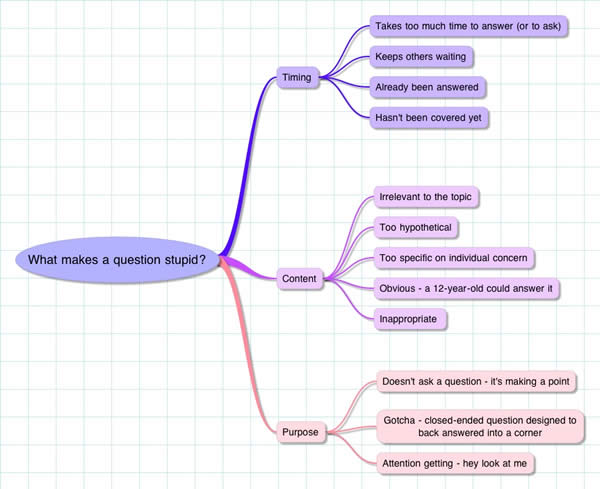
The first e-book I put together was FOX FIVE: a Charlie Fox short story collection. It was a huge, huge learning curve, during which I have many people to thank for putting up with my innumerable stupid questions. In many ways, it still IS a steep learning curve, but more on that later.
A short story anthology — which in e-book form I refer to as an e-thology in an attempt to bring the word into common usage! — was very different proposition from the first of the books themselves, however.

One of the things that immediately struck me was the layout. A traditional book often has a pre-title page (with just the book’s title on it), then the title page itself, copyright page, list of the author’s previous publications, a dedication, acknowledgements, maybe even the author biog. Only THEN do you reach the story itself.

With an e-book, where a prospective reader might well download a sample first before deciding to buy, those intro pages all eat into the sample. So I put the dedication on the title page, shifted the copyright, acknowledgements, and an extended author biog to the back of the book, but instead added a short synopsis — what would be the jacket copy on a printed book — so the reader is reminded of the story as soon as they open the file.

In addition, some brilliant writers were generous enough to do swap excerpts with me — Brett Battles, Blake Crouch, Lee Goldberg, Timothy Hallinan, and Libby Fischer Hellmann. I put a taster of one of their books in the back of one of mine, and they did the same for me. Plus, of course, an excerpt from the next book in the Charlie Fox series, just to whet your appetite for more.

And in KILLER INSTINCT: Charlie Fox book one, I was also able to include the amazing Foreword by Lee Child, and my own Afterword, as well as two previously deleted scenes that I felt helped to fill out Charlie’s back story for what was to come. There’s also a short biog of the character, and the jacket copy for the other books in the series with suitable links.

In October, the next book in the series will be ready to go. Called DIE EASY: Charlie Fox book ten, it sees Charlie facing her toughest challenge.

In post-Katrina New Orleans, a celebrity fundraising event should have been the ideal opportunity for Charlie to piece together her working relationship with Sean, who has woken from his gunshot-induced coma with his memory in tatters. But the simple security job turns into a nightmare when an ambitious robbery explodes into a deadly hostage situation. Charlie is forced to improvise as never before, and this time she can’t rely on Sean to watch her back.

I’m already putting together the extras for the e-book version. And my question is, what else would you like to see in an e-book that there isn’t the space or opportunity to include in a printed book?

I’ve always loved the extras available on a DVD, and an e-book is now the literary equivalent. So, would you like insights from the author about the writing process, or asides about continuing characters giving you a little of their back story, or research notes that didn’t make the final cut? In DIE EASY, for example, I did an enormous amount of research about the effects of Hurricane Katrina on New Orleans, but only a fraction of that made it into — or was relevant to — the actual story. Would you like a bonus article on that?

I’m open to suggestions and fascinated to know what you all think! And I hope you’ll forgive for continuing to ask stupid questions — it’s how we learn 🙂
This week’s Word of the Week is epeolatry, meaning the worship of words. It comes from the Greek epos meaning word, and –latry meaning to worship.

I’m away this week, doing some very serious and labour-intensive research on a boat in the Mediterranean, but I’ll try to get to comments as soon as I can!
 

Naming Names

By David Corbett

Call a player “Sycamore Flynn” or “Melbourne Trench”
and something begins to happen. He shrinks or grows,
stretches out or puts on muscle. Sprays singles to all fields
or belts them over the wall.

—Robert Coover, The Universal Baseball Association, Inc.,

J. Henry Waugh, Prop.

No, this isn’t about outing sock puppets. After the heated debate of yesterday on the issue of fake internet reviews, I thought a little cooling off—a palette cleanser, if you will—was in order.

(Actually, I’d already written the damn thing and I didn’t have time to whip up another.)

So, gentle readers, let’s turn our beautiful minds to the subject of character names—even though I’m sure some crank out there will read this and think what I’m secretly doing is giving everyone various ways to create pseudonyms for sock puppet villainy.

I’d rather shoot myself, frankly. 

Anyhoo, here goes:

My favorite character name of all time comes from Richard Price’s Clockers: Buddha Hat.

No, he’s not a Zen milliner. He’s a drug enforcer. A bit counter-intuitive? Oh yeah. Ergo, perfect.

Best name I discovered in real life I couldn’t use because, well, a real person already owned it (and not a terribly nice person): Seth Booky.

Most writers will tell you choosing a name is one of the most crucial parts of a character’s depiction. Get the name right, so many other things just seem to fall into place. Get it wrong, everything else is a struggle.

Once you know the character’s name, once you can picture her vividly enough to know that a certain name suits her—or better yet, is intrinsic to her—you’re pretty much home free.

It’s sometimes said we grow into our faces, coming to resemble our real selves as we reach our prime. I wonder if we don’t also grow into our names: George Clooney. Hillary Clinton. Art Garfunkel.

A name can often substitute for a physical description if chosen wisely—think of the names from the TV series The Wire: Jimmy McNulty, Stringer Bell, Omar Little, “Proposition Joe” Stewart, Snoop Pearson, Bunny Colvin, Cutty Wise, Bunk Moreland, Bubbles.

And returning to Richard Price (who wrote for The Wire), there’s a man with a true knack for picture-ready names: Rocco Klein, Strike Dunham, André the Giant, Shorty Jeeter, Lorenzo Council, Little Dap Williams.

Other memorable character names:

Chili Palmer (Get Shorty)

Baby Suggs (Beloved)

Nurse Ratched (One Flew Over the Cuckoo’s Nest)

Ed Punch and Al Catalog (The Shipping News)

Ree Dolly (Winter’s Bone)

Madeline Dare (A Field of Darkness)

Rooster Cogburn (True Grit)

Jenny Petherbridge (Nightwood) 

That said, there’s an intriguing challenge in a seemingly lackluster name—Jim Williams, Jane Smith, John Harris. Such names, by denying you a unique visual image, force you to remember that the character can’t be confined to such an image. He’s more than that. And he’s going to change, even as his name doesn’t.

But where do I get really good names, I hear you cry.

There is of course every author’s friend, the Random Name Generator, which has the eminently useful “obscurity factor” for increasingly oddball names. (Anything over 5 puts you pretty much in Dickens territory).

There’s the Fake Name Generator, which also provides an address!

There is the Fantasy Name Generator, which doubles as a secret source for baby names among Trekkies:  Pollyever, Belpaw, Untar, Ghal.

There is the Seventh Sanctum Name Generator (prepare to waste a day on this sucker).

And, as they say, so on. Just Google “random name generator” and stand back.

But I invariably find the best sources are those that give you names people really use. A computer can crank out nearly infinite possibilities, but the fact a loving mother actually said—Yep, that’s my baby’s name—makes a subtle, sneaky difference. At least it does for me.

Which is why I’ve sought out real-life sources for interesting names. And what I’ve discovered, quite by accident, is that sports provides some of the strongest or most unique names for both men and women available.

Don’t believe me?

Brandi Chastain. Serena Williams. Dakota Stone.

Jake Stoneburner. Pudge Cotton. Philander Moore (I’m not making that up.)

That’s a mere sample. Let me share with you a few more names of athletes I just found too intriguing not to tuck away for further use. (A gift from me to you.)

Note: You seldom want to steal a name wholesale, so consider this list a set of parts, with interchangeable first and last names.

WOMEN 

Mao Asada

Seimone Augustus

Susan Butcher

Gina Carano

Swin Cash

Tamika Catchings

Debora Dionicius

Carolina Duer (great name for an assassin)

Vonetta Flowers

Shindo Go

Chevelle Hallback

Christina Hammer (yes, she’s a boxer)

Ronica Jeffrey

Malia Jones

Ava Knight

Lo’eau LaBonta

Kina Malpartida

Misty May-Treanor

Heather Mitts

Carina Moreno

Susie Ramadan

Cat Reddick

Libby Riddles

Carolina Salgado

Ann Marie Saccurato

Briana Scurry

Miesha Tate

Diana Taurasi

Jackie Trivilino

Kaliesha West

Fatima Whitbread


MEN

Okay, these are a little more offbeat. I gathered them from an article titled

Coolest Names in College Football 2012.”

OFFENSE

Rob Blanchflower

Blair Bomber

Brandon Bourbon

Bookie Cobbins

Brander Craighead

Duke DeLancellotti

Spiffy Evans

George George

Lynx Hawthorne

Hunter Hollowed

Win Homer

Thor Jozwiak

Jazz King

Munchie Legaux

Fritz Rock

Cayman Shutter

Chase Tenpenney

Sirgregory Thornton

DEFENSE

Xavier Archangel

Zeek Bigger

Chief Brown

Blaze Caponegro

Jose Cheeseborough

Mister Cobble

Fabby Desir

Steele Divitto

Hugs Etienne

Ego Ferguson

Maxx Forde

BooBoo Gates

King Holder

Barkevious Mingo (my absolute favorite)

Wonderful Terrific Monds II

Godspower Offor

Happiness Osunde

Leviticus Payne
 (close second)

Bacarri Rambo 
(my cocktail choice)

Konockus Sashington
 (second runner-up)

Prince Shembo

Fudge Van Hooser (I mean, really)

Tronic Williams

Now, I realize many of those names are “too weird not to be real,” and thus problematic as character names, which have to be believable in a way real names don’t. Reality always has the upper hand in weirdness, because it doesn’t have to make sense.

But for secondary characters or just a walk on the wiggy side, this just might point you in a useful direction.

Oh, and one last thing: If you read an online review by Barkevious Mingo, it’s not me. I promise. 

* * * * *

So, Murderateros — what are some of your favorite character names?

What are your favorite sources for names?

Have you grown into your name? Your face?

Do any of the names I’ve listed above suggest characters to you? Describe them for us.

Using mix-and-match, what character names have you been able to create from the above lists?

* * * * *

Jukebox Hero of the Week: Bond. James Bond. Meet the Beatles:


Book community scandal: paid and fake reviews

by Alexandra Sokoloff

Well, it’s Wildcard Tuesday and as reluctant as I am to take up this topic, I wouldn’t be doing my job as a mystery community blogger NOT to report on the scandal du jour (or de semaine, or du mois, probably.)

The subject is paid and fake Amazon reviews, and the internet is burning up with outraged posts, petitions, and condemnations against several authors:

– Stephen Leather and Roger Ellory and Sam Millar for creating sockpuppet accounts to praise their own books and trash those of competitors.

– John Locke for paying for at least 300 Amazon reviews and then – what I personally find even more reprehensible – writing a book on “How I Sold a Million E Books in Five Months” and charging $8.99 for it, while OMMITTING the fact that he paid for at least 300 Amazon reviews, which surely had a great deal to do with his sales success. 

I’ve linked to some main articles below so you can catch up.

Go read here and here and here and here, and then if you feel like discussing, meet me back here.

There is a lot of sadness and discomfort mixed with my own outrage.

I like Roger Ellory very much as a person and I actually agree with his own reviews of his books, they’re some of the best crime fiction I’ve read in recent years.  Why he thought that he had to pump up his already stellar reputation by creating fake reviews and trashing other fine authors like Stuart MacBride and Mark Billingham is beyond me.

Except that it’s not.

I have done many stupid, regrettable things in my life, and paid dearly for those things, too. Usually when I have been completely out of my mind with – something – grief over a dying parent, grief over the loss of a loved one or a loved project, fear over my financial situation, fear over just about anything.

As completely unchristian as I am I can’t help thinking of that little verse about “she who is without sin” and “casting the first stone.”

It’s very easy to get caught up in the maelstrom of  – well, anything, really, but publishing is what we’re talking about – and do stupid things we wouldn’t ordinarily condone or be caught dead doing ourselves.

When we can see other authors blatantly gaming the system: racking up success after success by faking reviews, publishing fan fiction that skirts or crosses the line of plagiarism which turns into a series of multimillion dollar bestsellers and a major movie deal, hiring other authors to write books for you and slapping your name on them while grossly underpaying the authors who actually WROTE the books – there’s a huge temptation to jump on one of those bandwagons because, hey, everyone’s doing it.  And while I’m able to flatly say that the above practices are wrong – what about tagging parties?  What about asking friends to bury one-star reviews by clicking “unhelpful” on Amazon?  Is that gaming the system?  Is it wrong?

BUT – even as I am remembering that I’m fully capable of doing stupid and condemnable things myself, I do very strongly believe that we authors have to police ourselves as a community.  We need to talk, to debate, to develop standards and be able to say when required: This is wrong, this is duplicitous, this is unacceptable.

Whether that will stop the behavior, I have no idea.

But I also believe authors are for the most part an empathetic and moral lot.  I really do believe that.  I hope that all of these authors who have been caught out and are being held up as examples will take all this furor and censure to heart, self-correct, make appropriate amends to anyone who has been wronged, and go on to use their influence to do better. Much better.

And I would hope that friends of authors who are drifting toward moral gray areas would be the first ones to speak up and say – WTF – what are you thinking?  Stop that shit NOW before you do somethiing you’ll regret for the rest of your life.. 

I SERIOUSLY hope that my author friends would step up and say it to me.

I hope we ALL will. Because we need to remember how easy it is to get caught up in the desperation of trying to make a living at this very tenuous profession and how easy it is to fall into behavior that serves no one.  We ALL need a little help from our friends.

So, ‘Rati, I have a lot of questions today. Were you aware of the blazing heat suddenly surrounding this issue of paid and fake reviews?  Are you feeling outrage about any of this behavior, and if so, or if not, what are you feeling? Do you believe that given all the success ladled on cheaters, you have to cheat to remain in the game?  Or do you believe in karma?  Or do you believe that a belief in karma is the modern opiate of the masses?

And here’s another question – who should be policing reviews and author behavior, if anyone?

Alex

Forever young?

by Pari

I’ve been thinking about aging lately. It might have to do with the fact that amid the ashes of my marriage’s implosion, I’m now finding small green shoots of hope. Whether it’s the dream of traveling or embracing a new relationship or exploring a creative passion, I’m allowing my imagination to dance again.

But usually at some point a panorama of negatives about aging comes into the picture. Age complete with a flimsy aluminum walker and ivory-topped wooden cane.
Age with its wrinkles
and smells
and bumps
and lumps . . .

Age with its loose skin
thinning bones
lousy eyesight
and compromised hearing.

Is there enough time to let those green shoots grow?
Am I too old to dance in the streets during Carnival in Rio
to have an extraordinary relationship
to become a visual artist?

My thoughts sway with the ferocity of winds in a confused hurricane, strong and strange and unpredictable. One moment I’m saddened at perceived limitations. The next moment I’m excited with expanding possibilities. Here I stand at this odd cusp in my life, marveling at the push-pull of existence: Youth/Old Age, forward-looking/past-focused. I’m a Great Aunt and the mother of teenagers, an orphan and a single woman contemplating dating again someday.

I’m betwixt and between.

In department stores, younger salesclerks ignore me in favor of 20-somethings.
Women in their 60s tell me I’m just a baby.
On television my contemporaries fight desperately to stay young.  
The people I’m meeting in their 60s and 70s are so much more content and purposeful than most of my peers.

Aging is a reality in the sense that
our bodies change
our past experiences inform what we do now and in the future
and we move through time no matter how much we might want to halt it. (And, my friends, halting it would be death.)

But is aging the end of fruitful living? Is it to be feared?
Or is aging an adventure? Does it deserve cultural — and personal — reframing?

What do you think? How do you relate to aging?

(BTW, I’m not at work today, so I can finally really carry on a conversation with anyone who cares to comment!)

Wanna be an author? Learn to love promotion.

by Alexandra Sokoloff

So the very good news is that the rise of e publishing has made it much easier and more viable for an author to make a real living. In fact I was on a panel last week at the RWAustralia convention during which the very well-prepared moderator rattled off some e pub statistics, and apparently traditionally published authors who e publish are currently making TWICE the money at e publishing than they did in traditional publishing.  My own experience says that estimate is low. Very low.

The downside is that actually making that living is a 24/7 commitment.

Not that this is a new wrinkle, mind you. My Australian vacation (um, make that WORK vacation!) is the first time off I’ve had from writing in years, and I was still on the computer every day doing various and sundry promotion.  I’ve always been pretty 24/7 about promotion.

But now, with my e books, I don’t even have the ILLUSION (and yes, it was mostly an illusion) that any publisher is doing the work for me. It’s all me.

So the question is, what to do that actually works? 

Hah.  As if anyone knows!

But here are a couple of promotional ventures I’m involved in right now that are typical author promotions.

1.  The Killer Thrillers! author collective.

2. The Labor of Love event promotion this Labor Day weekend


Killer Thrillers!

One of the huge problems of e publishing from a quality perspective is that in this brave new world of self publishing, “gatekeepers” have essentially been eliminated.  Agents and publishers are no longer filtering books before they’re put before the public. While there’s an argument that that’s a good thing, I know from my years as a reader for film production companies how very much absolute dreck is screened out by early readers:  agents, editorial assistants, editors – and when I say dreck I mean scripts and books that should never have been read by another soul besides the purported author.

I’m all for readers being allowed to discover books on their own, and it is true that the actual purchase or publication of a script or book is subject to personal taste, the specific needs of a publishing house or line, and the vagaries of the market.  But those screeners also kept some seriously awful material from ever seeing the light of day.

So now that anyone who can figure out the e publishing platform can upload virtually anything to Kindle, Pubit, Kobo and Smashwords, where’s the quality control?  You can argue that the readers are their own quality control now, but seriously – the vast number of books – and especially free books – on offer has made sorting through the dreck that’s out there (and oh yes, the dreck is out there) a time-consuming proposition for a reader.

Personally, I WANT some screening.  But where is that going to come from?

While literary agencies are a logical entity for promotion of quality authors and books, they seem so far reluctant to set themselves up as publishers or storefronts for their clients.  And since agencies are not performing this function, I have thought for some time that authors should be banding together to support and promote their own books, and there are more and more of these author collectives springing up (not surprisingly the majority are romance authors).  I’ve been asked to join various author collectives but have so far been wary about committing because I haven’t heard of or more importantly read most of the authors involved.  I can’t in good conscience post about other authors’ books on Facebook and Twitter and on this blog and my own when I haven’t actually read the goods. I think we all have a responsibility not to waste other people’s time by randomly promoting mediocre books and leaving readers to find for themselves that those books were better avoided.

So so far my only choices have been to form a collective of authors I admire myself, or wait for someone like-minded to do it. And luckily for me, thriller author Karen Dionne has done exactly that. Karen is a bestselling author and organizer extraordinaire: the founder of the writers forum Backspace and the Backspace Writers Conference.  For Killer Thrillers she’s put together a group of thriller authors I would have approached myself: some friends and blogmates you’ll recognize from Murderati:  Rob Gregory Browne, Brett Battles and Zoe Sharp, and other authors I know and love like David Morrell, Blake Crouch, CJ Lyons, Keith Raffel – all authors I have read and can recommend without reservation.

All Killer Thrillers authors are bestselling, award-winning and/or internationally published; almost all are traditionally published as well as e published.  Those qualifications do not guarantee that a particular reader will love all or any of the books offered, but they do say that a significant number of readers have found the books worth reading. And most of the authors involved know each other from Bouchercon and Thrillerfest, MWA and ITW and Sisters in crime, and can promote each other without the slightest hesitation.

In essence authors are banding together to establish their own publishing imprints, just as publishers do. We are creating an umbrella organization that guarantees a certain genre and a certain quality of work. How effective these collectives are going to be in the Wild West of e publishing is an open question, but Killer Thrillers is a brand I can put my energy into building with real enthusiasm. I hope you’ll check out the site and the books today, and if you see anything you like, tell your friends.

Killer Thrillers


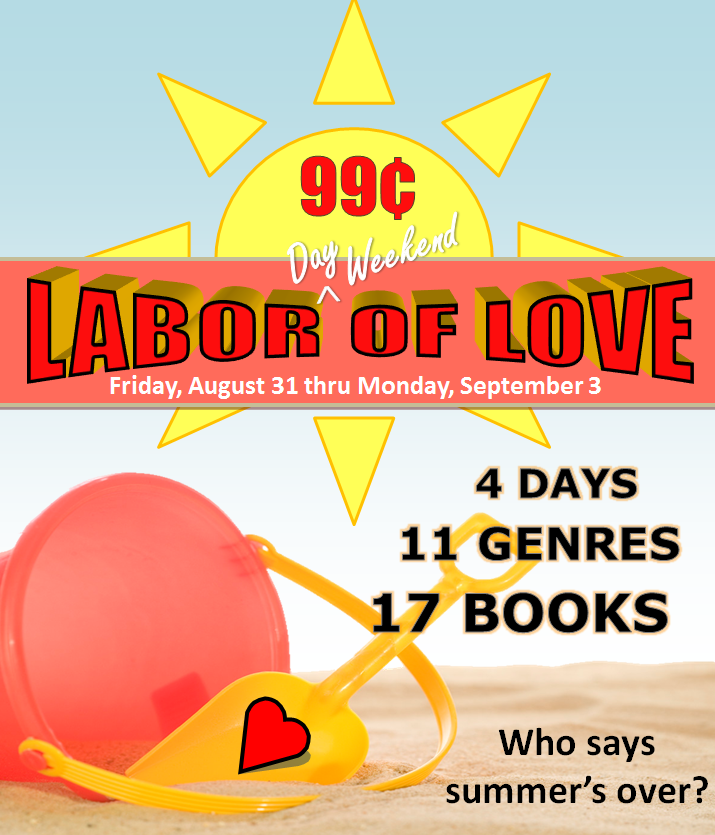
Labor of Love 99 cent book promo

The second promo venture I want to mention today is another fast-growing approach: group sales events, in which a group of authors join forces and drop prices on their books for a limited time, then cross-promote the event. I’ve been watching other authors do this extremely effectively; the point is that all authors have built up a following of thousands on Facebook and Twitter, and by teaming up with other authors you are able to reach a whole new group of literally thousands of readers through other authors’ FB and Twitter followers and general buzz about the event.

My friend (and Aussie travel companion!) bestselling romantic comedy author Elle Lothlorian organized the Labor of Love Promo, a four-day Labor Day weekend blitz involving 17 authors from all different genres who have all dropped the price on one of their books to 99 cents for the long weekend.  We’re all blogging, Tweeting, and FBing about the event, and anyone who wants to browse the list can pick up any or all of the books for the 99 cent price for the whole weekend.

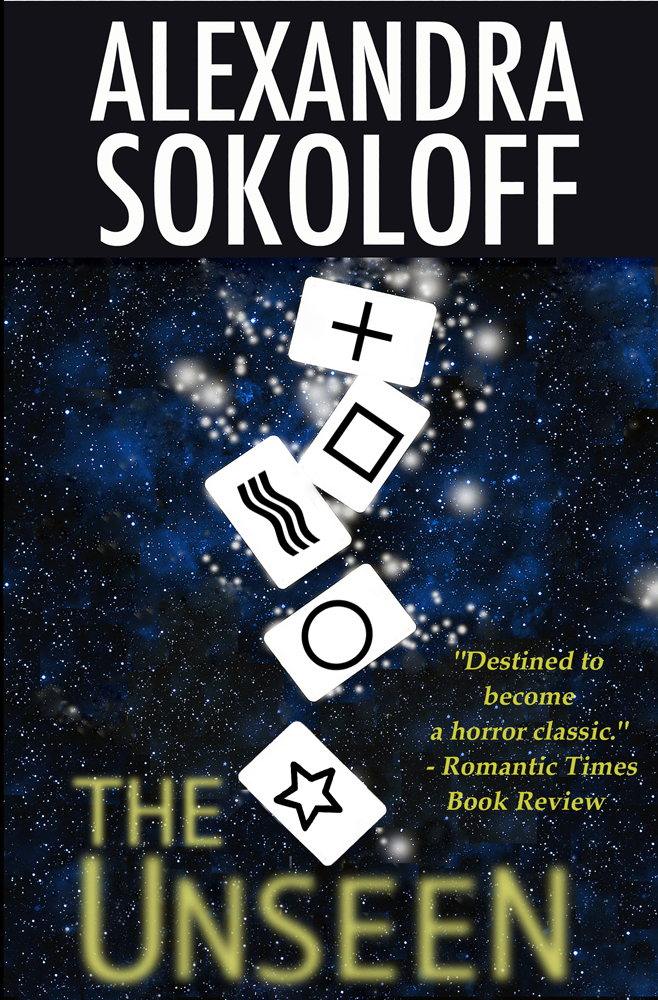
I’m offering up my parapsychology thriller The Unseen


And here’s a link to a list of all the books available, with links through to buy.  So browse away and catch some deals!

And today, if there’s anyone NOT on vacation, I’d love to talk about book screening. 

Readers, how do you find your books these days? Have you seen other effective methods of quality control and promotion?

And writers… especially aspiring writers… are you prepared for the grueling job that promotion is?  Do you kind of see how important it is to make it fun and social and collective, so as not to go completely insane?

And I’d just love to hear what everyone is doing for the long weekend. Hope everyone has fabulous plans!

See you back here in the – yike – fall!

Alex


Thank God for lending rights

A very short blog today, mostly because it’s a small but important subject!

We’re very lucky here in Australia to have a government-run system called lending rights. Each time someone borrows one of my books from a library, the borrow is logged and once a year those borrows are tallied up and I get a cheque in the mail. Nice, huh?

Sure, it’s not like we’re talking a huge payday, but when you’re an author, any cheque is good…welcome, needed…and cashed at the bank within 24 hours.

We have two lending rights programs — public lending rights (PLR) and educational lending rights (ELR). As the name might suggest, public lending rights come from the public libraries that stock your books and educational lending rights come from  schools, universities and other educational institutions that buy and hold copies of your book. 

I got my most recent PLR and ELR payment fairly recently, as it’s in line with our financial tax year (which for some unknown reason is 1 July to 30 June).

So, I’d like to says thanks to the Aussie Government, and to the library borrowers out there. Sure, it’s a lot less $ per book than what I’d get from a sale, but every little bit helps. And it’s also increasing my reader base, which is a good thing for every author.

So, do other countries have a similar lending rights system? What are your thoughts on this extra author payment. In case you want some cold hard figures, I usually get $2,000-$3,000 a year, mostly from PLR rather than ELR — my books aren’t in many school libraries, for obvious reasons.

PS: As I mentioned in my Wildcard blog on Tuesday, I’m travelling so I’m not sure how much access I’ll have to join in the discussion…just chat among yourselves! 

THAT’S INCREDIBLE! (AND THAT’S THE PROBLEM.)

by Gar Anthony Haywood

As the father of four children (two sets — one now in their twenties and the other in their pre-teens), I’ve seen a lot of so-called “family-friendly” movies.  Some of them good and some of them bad.  A few have been terrific and quite a number have been just dreadful.

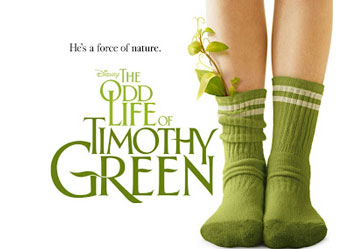
But I don’t think I’ve ever seen a “kids'” movie as jaw-droppingly awful as THE ODD LIFE OF TIMOTHY GREEN.

Now usually, when an adult says something this harsh about a kids’ movie, it’s because the critic in question is just a curmudgeon.  A grown-up who’s lost touch with his inner-child and can no longer be moved emotionally by films filled with pathos and/or whimsy.   I know people like this myself and I’ve always felt sorry for them.  What does it say about one’s adult existence if you lack the capacity to feel something — really feel something — when E.T. boards that spaceship and leaves poor Elliott behind?

But in this case, I promise you, my unequivocal statement that THE ODD LIFE OF TIMOTHY GREEN is one of the worst kids’ movies ever made, is not coming from a heartless grinch with no appreciation for flights of fancy.  In fact, it is coming from someone who had hoped it would be a fine entertainment.  My family and I saw the film three weeks ago at the behest of my son Jackson, whose birthday we were celebrating, so I truly wanted to enjoy it.

But I just couldn’t.

By now, you have to be wondering just what THE ODD LIFE could have possibly done so poorly as to earn such enmity from a big, old softie like me — someone who cries like a baby every time the credits roll at the end of BIG FISH?

The answer’s quite simple: There is not a single credible moment in the film.  Not one.  No character ever — ever — behaves the way a real person would.

I swear to you, this is no exaggeration.

“But, wait a minute, Gar,” I can hear you saying.  “This is a movie about a little boy who sprouts from a garden in answer to a childless couple’s prayers.  It’s a fantasy, and fantasies aren’t supposed to be credible!”

To which I reply, “Nonsense.”

The best fantasies are those that are well grounded in reality.  The magic in them works because, in the world in which they operate, characters abide by the very same rules of logic we do.  Fantastic things may happen to them, things that are realistically impossible, but their reactions to these things ring true.  Credibility is the lifeline a filmgoer — or reader — can cling to when everything else in a story is threatening to throw them overboard.  (Or worse, insisting that they jump.)

THE ODD LIFE OF TIMOTHY GREEN literally defies you at every turn to believe what its characters are doing.  When all common sense suggests they turn right, they turn left instead.

You want examples?  I could give you several dozen.  But dismantling, piece by piece, a film like this — one that so clearly has its heart in the right place — would be a very mean spirited thing to do.  So I’ll just let one key example suffice for all the rest.

(SPOILERS AHEAD)

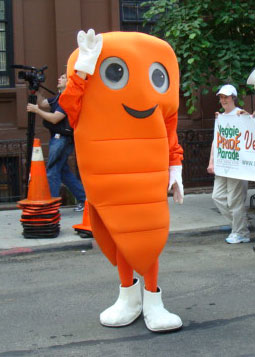
The film’s story is told in flashback by Cindy and Jim Green, two wild and crazy kids madly in love but unable to conceive, as they are interviewed by a pair of sober and skeptical adoption agency officials.  To illustrate how fit and well-prepared they are to become adoptive parents, the Greens tell the officials the incredible tale of their “son” Timothy: a ten year old boy they raised as their own after he unexpectedly sprang from their front garden one night like an overgrown, ambulatory carrot.

Only hours before, Cindy and Jim had buried their extensive wish list for the child they can never have in a box out in the garden, and they understood immediately that Timothy — sweet and innocent and brimming with heartwarming bromides — was meant to be that wish list personified.  With living green leaves sprouting from his shins to authenticate his agricultural origins, Timothy had to be a gift from . . . Somebody.  Right?  So they kept him, and passed him off to everyone in Stanleyville as their own (adopted?  inherited?  borrowed?) child.

(The folks of Stanleyville are a simple and uncurious lot, apparently.)

Anyway, from there, the Greens’ story gets much more preposterous — and far more sappy.  In the end, after having changed the lives of everyone he’s come in contact with for the better, Timothy loses his leaves and eventually returns to the garden, never to be seen again.  The interview comes to a close and the adoption agency officials bid the Greens farewell, having just heard them relate a story only slightly more fantastic than that of James and the Giant Peach as if they’d been under oath to tell the truth, the whole truth, and nothing but the truth, so help them God.

Naturally, Cindy and Jim’s application for adoption is approved and a beautiful little girl is promptly delivered at their doorstep, just in time for Fade Out.

That THE ODD LIFE OF TIMOTHY GREEN had to end on this cheerful note, or one remarkably similar to it, is inarguable.  This is a Disney movie, after all, and happy endings go with the territory.  I love happy endings.  But a happy ending slapped onto the backside of a film with zero effort made to support it with so much as a wisp of realism is an insult to one’s intelligence.  In this case, THE ODD LIFE ends the way it does for one reason, and one reason only: because that ending suited the man who wrote and directed it.

That’s what’s wrong with the movie throughout: Everything that happens in it only seems to happen because the movie’s screenwriter/director Peter Hedges wanted it that way.  Logic, realism, common sense — none of these things plays any part in the choices the film’s characters make.  Not in the things they say, not in the things they do.

(I suspect I’ll be encouraged to offer further examples of this in the comments that follow, should you be interested in hearing them.  But I won’t go into them here.)

I don’t know whether THE ODD LIFE is as horrible as it is because Hedges is lazy (“I don’t feel like explaining how this could happen.”) or just plain clueless (“I can’t explain how this could happen.”).  But I do know his film comes off as the work of a man who cares far more about the emotional responses he wants to elicit from people than how those reponses can be earned honestly.  When a writer, simply to achieve a desired result, puts his own best interests before those of his characters, he is doomed to fail.  In successful fiction, the Cardinal Rule is not “For every action there must be an equal and opposite reaction” — it’s “For every action, there must be a viable and perceptible reason for the reader (or viewer) to believe it.”

Defenders of THE ODD LIFE OF TIMOTHY GREEN — and there are many, like these two little guys . . .

. . . would probably say the problems I cite are all in my head, that I just didn’t approach the film with the proper commitment to suspending my disbelief.  But demanding that your audience suspend its disbelief indefinitely, simply because the story you are telling is a fairy tale, is not a substitute for telling it in such a way that it requires as little suspension of disbelief as possible.  I saw no evidence that the makers of THE ODD LIFE gave a rat’s ass how credible its people and situations were, and that’s a shame.

Because I like a good, child-friendly fantasy as much as the next heartless bastard.

Questions for the Class: How important is credibility in fiction to you?  What was the last critically-acclaimed film or book that failed to meet your standards in that department, and why?

Salisbury Writers’ Festival

By PD Martin

I’m up for Wildcard Tuesday, and I wanted to talk about the wonderful weekend I just had in South Australia for the Salisbury Writers’ Festival. I think all readers and writers can agree that writers’ festivals are fantastic.

For readers they offer an insight into the writing life and their favourite authors (and characters), and for authors they’re an opportunity to meet fellow authors, meet readers, and generally get out of the cocoon that often surrounds the writing process.

Salisbury Writers’ Festival was no exception!

It’s a smaller festival, one that’s run by a local council about twenty kilometres outside of Adelaide city centre, with many of the attendees being aspiring writers. Whether it’s despite its size or because of its size the event is run incredibly well and I had a ball.

I was lucky enough to be involved in four events over a three-day period. First off, was my keynote address on Friday night. My topic was “The Brave New World for Readers and Authors”. One guess what that focused on! It’s interesting, because here in Australia market penetration of e-readers is very poor. Stats are hard to come by, but when I asked members of the 170-strong attendees if they owned a dedicated e-reader, only about eight hands went up. Like I said, e-readers still aren’t big here, and so part of my address was really about the basics – what an e-reader is, what brands are available in Australia and some of the features. I think they’re like many new technologies, in that people are hesitant to jump on board, especially with something that’s new, something that they don’t see or hear much about. And that’s the case with e-readers here in Australia.

In terms of the author side of things, I talked about the self-publishing revolution that’s been happening in the industry and mentioned some of the bigger success stories, such as JA Konrath and Amanda Hocking. During my research I found a quote from JA Konrath that I absolutely LOVED. He was quoted in a USA Today article as saying: “Traditional publishers are just serving drinks on the Titanic.” Man, I love that quote! So much so, that I wanted to share it here in case you haven’t heard it before.

Then, on Saturday I was on two panels, one titled Pathways to Success, which had four of us sharing our experiences of getting published. Dan McGuiness, who writes graphic novels aimed at 8-12 yro boys, had a very interesting success story. Basically, he went to a pub one night that was an ‘arty’ pub with readings and the like, and showed a woman his drawings. She asked if he could write a book in that style, and he said “sure”. That woman was an editor at Scholastic and she signed him up for his Pilot and Huxley series. Not many authors find success walking into a pub and it definitely makes for one hell of a good story!

I also stood in for a sick panellist for “Pathways to the Future”, and as you’d expect the discussion centred around ebooks, social networking, blogging, etc. It was a lively discussion with one blogger/author, one publisher, a digital publishing expert and little old me.

Although there were other very interesting events on for the rest of the day, the conversation we’d started at the panel was so interesting we continued it over coffee. That’s one of the things I love about writers’ festivals – meeting other writers and people in the publishing industry and just hanging out.

My weekend dance card finished with a master class that I ran from 9.30-3pm on Sunday. My aim when I run any sort of class is to give attendees information about the writing craft that I feel would have helped me get published sooner, if only I’d discovered these pearls of wisdom a couple of years earlier. I think everyone enjoyed the class.

There’s also something kind of nice about staying in a hotel, especially if you don’t tend to travel much for work. So at night I was able to kick back, read a bit on my Kindle and watch a bit of TV. Nice.

So, what’s your favourite readers’ or writers’ festival and why? 

By the way, I’m also travelling this week, so might have difficulty responding to comments. In fact, I don’t know when/how I’m going to write and get my post up on Thursday! Stay tuned…

Canonically Sanctioned Rebellion

By Tania Carver

I see that the film version of ON THE ROAD will soon be upon us.  I know there’s been good word of mouth about it but I’m afraid I can’t get too excited about it. Yes, I know the brilliant Sam Riley is in it and the great Viggo Mortensen and Kristen Stewart plays a stroppy teenager again and Walter Salles has directed it but . . . here’s the admission. I’ve never liked Jack Kerouac.

Now I know saying this in public is the kind of thing that can get you drummed out of the Writers To Be Taken Seriously Gang but it’s true. I read ON THE ROAD and thought . . . meh. Is that what all the fuss was about? It was self-indulgent and lazy. And above all, fake. I didn’t believe a word of it. Here was a writer who was supposedly breaking with the traditions of literature and creating something entirely new, supposedly the literary equivalent of what Jackson Pollock and Mark Rothko were doing in painting at the time. But I didn’t get that. I love Pollock and Rothko but Kerouac did nothing for me. Left me cold. Rather than a new literature it read like an extended ‘What I did on my holidays’ school essay. And just as interesting.

Now I don’t say all this lightly. I was hugely disappointed when I read it, mainly because I was expecting to enjoy it so much. People I knew and admired loved it. My best mate from college was a complete Kerouac nut. He kept trying to recreate the novel’s experiences by hanging around in awful jazz clubs (which he used to drag me to) and hitchhiking to Bournemouth. It wasn’t the same somehow. But, bless him, he kept trying. So I thought I’d love it. For all the reasons everyone else did. It was new, hip, free. It was rebellious. And that was the word that got me, the one I had the problem with.  Rebellious. My first response on hearing that is always the same: If everyone is telling you something is rebellious, it’s not. I should have known. My mate from college was the son of a bank manager from Aylesbury.

Maybe one reason I didn’t like it was because I was a few years older than most people when they read it. I went to college a bit later than my peers, having taken what we now call ‘a gap year’ but what was then called ‘work’. I think it’s one of those things that you need to read when your self-defining memories are at their highest. That period from your mid-teens to early twenties where everything you read, hear, see and do is the best thing that’s happened to anyone EVER. If you miss out and read it later when you’ve been around the block a few times then it just doesn’t have the same impact on you. (For the record, my self-defining years were spent reading crime novels, comics and pulp fiction, listening to punk, post punk and indie, and of course seeing and doing the best things that have happened to anyone EVER.)

So with this in mind and thinking it was just me I decided to read some more beat literature. The next one I tried was William Burroughs’ THE NAKED LUNCH. Jesus Christ. Now, I’d seen Cronenberg’s film of the same name and loved it. But then I am something of a Cronenberg nut. So I was expecting something similar. I didn’t get it. As my wife often says, there’s nothing more boring than listening to someone else recount their dreams. (Especially mine, she always adds.) And I believe there’s nothing more boring than listening to a junkie ramble on. Put those two together and you have a junkie rambling on boringly about his dreams. Or THE NAKED LUNCH, as it became known. Burroughs once said that the chapters of the novel were only published in the order they were in was pure chance. Some critics hailed this remark as evidence of his brilliance. Not me.

Thinking that it was just prose I had a problem with I turned to poetry. Ginsberg’s HOWL, to be exact. Fine. I quite liked that.  Good work. So I read some more of his stuff. And I soon realised why HOWL is the only one people mention.

So that was me done with the Beats. But I didn’t stop thinking about them. Why were they so enduring? Why did people still read them? Because they liked them, I suppose. Not everyone has the same tastes as me. (Which is a shame because I’d sell more books that way.) And that’s fine. But I think it’s something else. I think they’re still read for more than just the writing. I believe the beats give the impression to a lot of people that that’s what writing is like, or what it should be like. What a writer’s life is like. Going on a quest, experiencing everything the world has to offer, good and bad, then processing that and putting it down. They venerated the craft of writing itself. It’s the act of sitting at a typewriter wearing cool glasses and a plaid shirt drinking bourbon and coffee with an ashtray of overflowing French cigarette butts beside you and some moody cool jazz playing in the background. And then going out getting drunk and stoned with massively attractive and interesting people. That’s what writing’s all about. That’s what life’s all about. And that, judging from the trailer, is what the movie version of ON THE ROAD is about.

Well, it’s not. Sorry and all that, but it’s not. (Well, maybe the bit about getting drunk and stoned with massively attractive and interesting people. As anyone who’s been in the bar at Bouchercon or Harrogate will testify.  No?  Oh well . . .) It may be what sells, the illusion of the writing life, but it’s not the reality of it. Nowhere near. If it was presented as that, that wouldn’t sell at all.

For instance, here I am writing this not on a typewriter but a computer. I have to because it’s a blog post and I have to send it down the internet. There’s no bottle of bourbon on the desk beside me, just a glass of water. That’s because if I started drinking while I was writing I would never get finished. Alcohol doesn’t fuel creativity. It saps it. It’s fine after you’ve worked but not during. Likewise there’s no overflowing ashtray. That’s because I don’t smoke, French cigarettes or otherwise. And there’s no moody jazz playing in the background. Possibly because I can’t write if there’s music playing but mainly because I can’t stand jazz. (I think all those years of being dragged round duff jazz clubs at college did that for me.) So no. None of that. I’m just sitting at my desk, writing. It’s hellishly unexciting to watch.

There’s also another couple of things that make me wary of the whole idea of veneration that the cult of Kerouac encourages. The first one is the fact that we celebrate a writer who died young. As if he had such a talent that it burnt him out to use it. No. He was an alcoholic and died of an internal haemorrhage caused by cirrhosis. Burroughs and Ginsberg didn’t die young. They stayed around to watch their excesses diminish their work. The other problem I have with him – and all the beats but not exclusively just them – is the fact that they’re still seen as rebels. Reading their work is an act of rebellion. Erm, it’s not. They’re part of the literary canon. They have mainstream Hollywood films made about them. They have civic memorials to them. They’re published as classic literature. They’re all of those things. But not rebels. They may be marketed as rebels, but but only in a canonically sanctioned way.

Having said that, if young people want to read those books and think they’re being rebellious then that’s fine. No argument with that. As long as they’re reading. And I don’t know, maybe they do feel rebellious when they read them. Maybe some sixteen year old kid picks up ON THE ROAD and sees a whole new literature before him. A new world and a new way of writing about the world. And living in the world. Maybe he doesn’t want to read what some miserable old bloke who’s the same age as Kerouac was when he died has to say about it. Maybe he thinks it’s the best thing he’s ever read. And it may be. Because he’s also listening to the best music anyone’s ever heard ever. And seeing and doing the best things that have happened to anyone EVER.

And if that’s the case, great.  Because to be honest, I’m more than just a little jealous.


WEST BY SOUTHWEST

By Stephen Jay Schwartz

I’m on a plane again, heading west, Southwest Airlines, Denver to L.A. Last week it was Phoenix to L.A. The week before that, Salt Lake City. Albuquerque. Minneapolis.

Next week Seattle. Phoenix. Vegas. Portland.

Traveling for the day job. My willingness to travel is what makes me marketable, employable, desirable to the employer who would need an experienced traveller. I know the ins and outs of airports, I’m George Clooney in Up in the Air. I know what to wear and how to pack and what line to choose when entering security and where to find the hand sanitizer when I need it. I know where to look for my books if my books are there to be found and I’ve even found them, once, on the shelves of a bookstore at San Francisco International, the day before Bouchercon.

I’ve travelled most of the U.S. and Canada. Sales jobs, running the country or a region, meeting the reps, seeing the sights. I don’t let it go to waste, these paid-for trips, these lonely journeys flying alone and away.

I’ve worked New England three times and each time I force a sales rep to drive me to Lowell, Massachusetts, so I can sit beside Jack Kerouac’s grave. When I worked New Hampshire I took a side trip to Thoreau’s home where I swam Walden Pond end-to-end. I made my New York rep take me to Niagara Falls so I could call my wife and say, “Happy Anniversary, babe!”

I had an idea to write a short story about turkey hunting, so I called my Alabama rep and set a date to make sales calls during turkey hunting season. We spent a day in the woods above Huntsville and I got all the research I needed. When I worked Oklahoma City I had my rep take me to the Alfred P. Murrah Federal Building where I walked the memorial and cried like I child. I did the same with my rep in Manhattan, staring at pictures of the lost and dead on a chain-link fence circling the empty pit that had once been the Twin Towers. On another work trip, years before that, I spent three days driving a rental car through Amish farmland in Ohio after the grounding of the planes. It was another world; probably the most peaceful place on Earth at the time.

I worked Nashville, visiting the Grande Ole Opry after hours. I hit the local bars to get a taste of Southern music. I did the same in New Orleans. And in Austin. And in Memphis, where I also visited the home of the King. I worked the Midwest and visited the St. Louis Arch. The Petrified Forest. Fargo, North Dakota. The Mall of America. Navy Pier. Mile High Stadium. The Indianapolis Speedway. Boys Town in Omaha. Georgia O’keefe Museum in Santa Fe. The glaciers of Kalispell. Powell’s Bookstore in Portland. Pike Place Market in Seattle. Pikes Peak in Colorado. Alligator Alley in Florida. Pier 39 in San Francisco.

I’ve seen America on the company dime.

I’ve been put up in some nice places, too. The Waldorf Hotel in New York City. The Palmer in Chicago. The Peabody in Tennessee. The St. Francis, San Francisco.

And the airports, I’ve seen them all. LAX and SFO, Bob Hope International (Burbank), Sea-Tac (Seattle), Denver International, Dallas Fort-Worth, Atlanta, Houston, JFK. From the big hubs to the dirt runways. I’ve sat in just about every plane Boeing makes, from the comfey 777 to the fifteen-seat prop plane that took me from Boise to Butte, riding turbulence all the way.

I keep thinking I’ll do some writing in those airports, with all the time I spend waiting. Instead, I stare at the myriad human activity around me. Business men and women sitting cross-legged on the floor, tied to their laptops and iPads, guarding electrical sockets like eggs in the nest. College boys and girls traveling to destinations of youth, their eager, earnest energy cutting a path through the rest of us. Toddlers hop-scotching cracks in the tiles, their effervescent eyes open to everything they see, arms outstretched, hands waving, smiles enlarged with loud sing-song yelps that become screeching tantrums on the floor. Young parents happy and gay then suddenly stressed beyond imagination, tugging at their hair, doing deals with neighboring parents for an extra diaper or a few drops of Benadryl. Babies in their carriages or slings, sleepy eyes blinking, mouths suckling plastic nipples. Tough guys and gals with tattoos on their arms and bluetooths in their ears. Mousey house-wives reading every shade of gray. Elderly couples holding hands, some content, others quietly sparring, using words weighted with years of resentment. Retirees in a group, clutching tubes containing fishing poles for their trips to the Great Lakes or Montana or that small island off the coast of Nova Scotia.

I’ve found that I can’t write in the airports because I’m too busy watching, which, in truth, is a form of writing-to-be. Observation is the author’s greatest gift.

I try to write when I’m on the road and at times I’ve managed it well. But the temptation to sit and listen is often unbearable. I’ve sat in so many cafes – in Columbus, Ohio, in Boise, Idaho, in Baton Rouge, in Missoula, in Omaha, in Boston, in Tallahassee – and eavesdropped on conversations that held me breathless. I’ve heard tales of grief and stories of inspiration. I’m determined to write a book called, Overheard in Cafes Across America, a cross between the works of Charles Kuralt and Studs Terkel. Something I’ll do on my own time, since my agent already advised me to write something else.

There’s no doubt about it, my travels as a salesman have benefitted my work as a writer. It’s a strange push-me-pull-you relationship I both love and detest. No matter how hard I try I seem stuck to this life. It’s like my writer-self knows that it grounds me. I’ve spent days in cars with salesmen crossing one end of a state to the other, all the while peeling back the layers of their lives, learning how true human character works, that individuals are messes of irrational thought governed by reflections on personal experience. Everyone comes with baggage and their baggage defines them. Their depth is deep and circular, and infinite. This I learn not from books on how to write good character, but from observing real people in action. Through observation I’ve learned that the human condition is complicated and universal, that our differences are many, but all can be bridged by attempting to find common ground, somewhere, somehow. And when I bridge that gap, when I see the world through the eyes of someone so different from me, from a turkey hunter, perhaps, then I can write that character from the inside out.

My day job is not for everyone. I’m employed largely because I can hold up under the weight of changing time zones, cancelled flight schedules and car rental conundrums. I can take being thrown under the bus, into the firing squad of emergency sales meetings or a Colosseum of frenzied customers. I manage because it funnels into the molten pit of my writing.

I need the job and the job needs me. We have a symbiotic relationship. I’ll bitch and scream about having a day job, but inside I know the truth. It’s not the cash. Or the health insurance. Or the expense account. It’s the perspective I get when I watch, observe and participate. Life in the air is what grounds me.