Author Archives: Murderati Members


Structure and Function

Structure and Function

 by Jonathan Hayes


A song’s structure is readily apparent in minutes, unlike, say, that of a movie or a book, where it slowly heaves into view over the course of hours or even days. Pop songs are almost instantly comprehensible because of their repeating structures: intro/verse/chorus/verse/chorus/instrumental break/verse/chorus/outro. 

With music, though, the immediate legibility that makes the songs accessible can also make them facile and disposable – what I like about most of the music I love is that each time I listen to it, I hear something new there. Indeed, I might not like it much at all the first time I hear it. Really well made pop music – U2, say, or the Beatles, or the Beach Boys – keeps rewarding the listener, but most has a pretty short expiration date. And that’s okay: one of the things I like about pop is that it is definitively of its era, sometimes going so far as to define that era.

I listen to a lot of music – indeed, I got my start as a professional writer by writing a montly music column – and can usually find something to enjoy in everything, but most of what I listen to generally falls under the rubric of alternative or indie rock (with a healthy dose of everything else, particularly electronic music, dance music and modern classical music). I posted my five favourite songs of 2010 on my blog; for me the clear #1 was “Helicopter”, by the Athens, Georgia band Deerhunter:

Now I grew up in a classical music family; at some point I pretty much stopped listening to lyrics, because I tend tend to find them both similar and facile. I listen for melody, but  even more for texture and timbre, and I thought “Helicopter” was just magnificent – that point at the 0:31 second mark when the song suddenly opens into an infinite ocean of space and possibility just blows me away. How is it possible for something to be so exquisite?

For all its radiant beauty, “Helicopter” is lyrically a grim thing. The song is inspired by (or inspired, I’m not sure of the order) a narrative by the transgressive (do we still use that word? is it still possible to transgress in 2011?) writer Dennis Cooper about a 14 year old boy who becomes a male prostitute in Russia; for a while he’s feted and sought after, but eventually his moment passes, and he’s routinely abused and raped. Finally, an embarrassment to the powerful men who once desired him, he’s taken by helicopter over a remote forest in northern Russia and thrown out. (This is probably one of the reasons I don’t listen to lyrics much.)

I love all four of Deerhunter’s albums, and their various singles, and collect their cover versions of other artists’ songs – I’ve not been as excited about a band in years. But I saw them live for the first time last night, and they were astonishing. Their songs share my obsession with texture and sound colour – they tend to the psychedelic, a post-Phil Spector wall of sound, welling chords from the two guitars meshing into thick waves of melody and noise, digitally processed, shaped and augmented. Their song structures are generally fairly classical, but they often smear the verses into the choruses, and use odd time signatures and unexpected tempo changes.

When they play live, they rework the song structures aggressively. A somewhat trite pop song turns into punk thrash, the singer’s voice drowned out by fast, grinding guitars. And the fast songs get split wide open, the instrumental breaks stretching out to swallow the last verses. For me, the highlight was a transcendent moment when they snapped the spine of “Nothing Ever Happened” open into an roaring two-guitar symphony, and then laid Patti Smith’s “Horses” on top. It was breathtakingly beautiful, and, when the song coalesced again and its original structure reemerged, I had tears in my eyes.


(I’m grinning now because I know that if you watched that entire video, some of you might have tears in your eyes of a different sort, but trust me: it was transcendent last night!)


I really admired their willingness and ability to play with time-tested structure; it’s not something genre writers in particular often do. Part of the stricture of genre is that there are certain conventions of the form that must be satisfied for the story even to qualify as belonging to a particular genre. Indeed, before we even reach the level of genre, the vast majority of stories hew to a classic three act structure, breezily summarized as “get your characters up a tree, throw some rocks at them, then get them back down”.

The problem is that stories, and genre stories in particular, have a certain narrative sameness. And the corollary of that is that, for the experienced reader, these similarities make books blur together, make them predictable. Similarly, I think most of us have gone to the movies, and found that what we’ve just seen was decent, but pretty much the same as the last 20 films we’d seen.

What this sometimes leads to is “forced twists” – events inorganic to the story, placed by the author just to cobble up a little surprise. Personally, I hate it when the killer turns out to be – gasp! –  the detective’s brother or what have you. In Precious Blood, I quite deliberately set out to write a forensic thriller with a direct linear narrative, a serial killer story where the case progressed as cases have always progressed in the hundreds of murders I’ve worked on: methodical police work, a little intuition, a little luck, eventually the different elements coming together like ice floes to form solid footing. (A note: I’ve never worked a case where the killer turned out to be the lead detective’s brother. Not that it couldn’t happen, but you’re going to have to work pretty damn hard to convince me.) For most readers, Precious Blood worked as a strong, unusually vivid procedural, but some felt it needed more twists.

I’d chosen a serial killer story for my first novel not just because the story came to me cut almost in whole cloth, but also because the serial murderer brings his own instant ticking clock, allowing me to focus on the mechanics of character and scene and dialogue. With A Hard Death, the sequel, I expanded the number of characters and points of view, and rather than having one protagonist and one antagonist locked in life-or-death pursuit and combat, I put Jenner in a town seething with bad people. I think of A Hard Death as following in a noir tradition; Jenner finds himself in a world of festering moral decay, and while he is ultimately infected by this amorality, he’s not consumed by it (which would be the true noir outcome). 

Precious Blood, since it gave me a way of dealing abstractly and somewhat discreetly with some of my post-9/11 experiences, is a deeply personal book, and I love it, but I think that A Hard Death is the stronger of the two, at least at the narrative level, and readers seem to agree. I don’t think it’s simply because of the increased complexity of the story, and the broader vista of its setting; I think that with each book you write, you understand the mechanics of story better. At least, I damn well hope so.

At the end of the day, genre fiction is a bit like reggae: there may be certain formal criteria for making a song a “reggae song”, but within that rubric, there’s a huge range of possibilities, from the stadium pop of Bob Marley’s “No Woman, No Cry” to the drek pop of Ace of Base’s “The Sign” to Burning Spear’s mesmerizing “Marcus Garvey” and its dub version, “The Ghost”. There is life even in the most familiar formula, and it’s up to the writer to tap that; the art of genre is to transcend its formal limitations.


And of course there’s plenty of room to mess with the structure of a story/novel – I’m just not well-read enough to know who’s doing it well in crime fiction. In, uh, “literary” fiction, three books I have loved did just that:
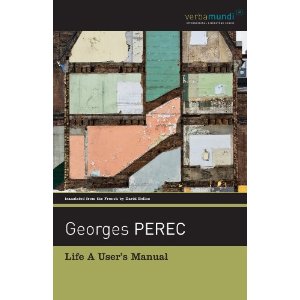
Georges Perec’s Life, A User’s Manual bases its narrative structure on a physical structure – an apartment building – with each chapter built around the inhabitants of a particular unit, the stories gradually interlocking to become a woven narrative (Perec is also famous for A Void, a book written entirely without the letter E; I think the more astonishing achievement was that of Perec’s translator, who took the French original, Un Nul, and converted it into similarly E-less English.)


Jennifer Egan’s A Visit from the Goon Squad dedicates different chapters to different points of view, each chapter taking place at a different time and place; over the course of the book, recurring characters (not always immediately identifiable from their previous appearances) help the reader construct the core narrative. It’s a beautifully written book, and one of its most beautifully written chapters takes the form of a Powerpoint presentation.
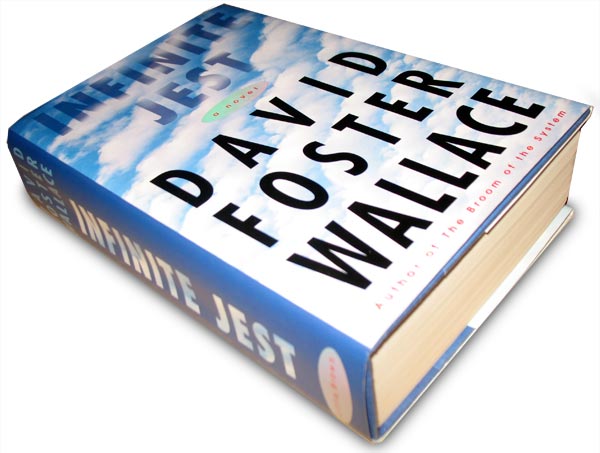
 

David Foster Wallace’s epic Infinite Jest I liked more than loved, in part because DFW insists on punctuating his narrative with voluminous foot notes; the print book is over a thousand pages long (at least, it feels like it), and flipping back and forth is a royal pain in the ass. If you’re going to read this book, for crying out loud, read it on an eReader! 

I’m sure there are some really strong crime fiction authors using unusual structure in their work. Anyone care to recommend something a bit different, and help me out of the shadow of my ignorance?



Disappearing Women

by Tess Gerritsen

Now that I’m in my fifties, I’m noticing more and more what generations of women have complained about: that right around this age, we start to disappear in the eyes of the world.  As we grow gray we become invisible, dismissed and ignored.  No wonder there’s a spike in suicides as women pass the frightening threshold of fifty. Invisibility happens to us all, whether we were once fashion models, prom queens, or hot actresses.  (With the possible exception of Betty White.)  When we lose the dewy glow of reproductive fitness, suddenly society thinks we are no longer worth the attention.  Yet men in their fifties still get plenty of attention, both in real life and in the movies.  Harrison Ford, Arnold Schwarzenegger and Sean Connery, were alll playing sexy action heroes in their fifties.  Silver-haired men, at their peak of political or financial power, are considered hot catches and Hollywood producers don’t bat an eye at the thought of casting a 50-year-old film hero with a 30-year-old heroine.  But a celluloid romance between a young man and an older woman?  Well, that’s got to be an outrageous comedy, right?  A story that no one would really believe, like Harold and Maude. Because while fiftyish men can be sexy as hell, a fiftyish woman is just, well, somebody’s boring mother.

Life is so unfair.

It’s unfair in crime fiction as well, where you don’t find many sexy, kickass heroines in their fifties.  Which strikes me as surprising, considering how many authors are women in their fifties. You’ll find plenty of fictional heroines in their twenties, thirties, and forties.  But then women vanish as heroines until they suddenly pop back into view on the far end of the age spectrum as sharp-eyed, inquisitive Miss Marples in their seventies.  And these older heroines are often objects of amusement or even ridicule, the troublesome old biddies who solve mysteries only because they can’t mind their own business.

I try to remember any older heroines in the books I’ve been reading.  The only recent one who comes to mind is the narrator in Alice LaPlante’s TURN OF MIND (a terrific novel by the way).  Alas, although that heroine is tough, smart, and determined, she also has Alzheimer’s disease.  Not exactly the sexy heroine I’m looking for.

I confess, I too have been guilty of ignoring the fifty-year-old heroine.  Part of it was my desire to meet the demands of the fiction market.  People want to read about sexy heroines, don’t they?  And if I want to sell film rights, wouldn’t a younger heroine be more attractive to Hollywood?  Years ago, I wrote a book that featured a number of senior citizens (LIFE SUPPORT), and one of the discouraging comments I got from my then-Hollywood agent was a dubious: “Gee, there are an awful lot of old people in this story, aren’t there?”

When I started my writing career, it made sense for me to focus on young heroines, because I could identify with them.  As I got older, so did my heroines.  They matured into their thirties and then their forties, just as I did.  But suddenly I hit fifty, and my heroines didn’t cross that line with me.  They stayed frozen at forty-something, the oldest age that I believed the marketplace would still accept them as romantic heroines.  I certainly know that women can be sexy at all ages; I just didn’t have any faith that readers would think so.  Or that they’d accept a 50+ woman as an action hero.  

Then, a few years ago, I came across an article about martial arts master Bow Sim Mark.  Now in her seventies, Master Mark is credited with bringing Chinese martial arts to Boston, where she still teaches at the studio she founded.  How cool, I thought.  Here’s an older woman who really can kick ass.  And swing a sword.  And even take down a Navy Seal. If a woman like this exists in real life, why couldn’t I put her in a novel?

So I did.  In THE SILENT GIRL, the character of Iris Fang is a 55-year-old martial arts master who not only swings swords and takes down bad guys, she’s also sexy.  So sexy, in fact, that Detective Barry Frost, who’s two decades younger, develops a wild crush on her.  Unlikely, you say?

No more unlikely than a real 70-year-old female martial arts master.  Or a 98-year-old woman who just earned her tenth-degree black belt in judo.

As I scan popular fiction and film, I find that on the rare occasions when an older woman does play action hero, it’s a real crowd pleaser.  In the movie RED, about retired CIA agents called back to action, the scene everyone seems to love best is Helen Mirren grabbing a gun and shooting up the place.  In Harry Potter and the Deathly Hallows, Part Two, the audience whooped in delight when staid Professor McGonagall went wand to wand in a fierce duel with Snape, and when mad mama Molly Weasley finished off evil Bellatrix LeStrange.  Call it hot flash fury; these women are forces to be reckoned with.  They may be silver-haired but they’re also capable, powerful, and ready to fight.

We all know such women exist in real life.  Now it’s time we start seeing more of them in fiction.


(I am in Australia on book tour so won’t be able to respond to comments.  But I’m looking forward to reading what you all have to say!)


I’m sorry . . .

by Pari

A couple of months after I’d signed up for Netflix streaming this summer, my kids started watching old episodes of Nanny 911. I find the show strangely addicting. Families with screaming, violent, ill-behaved children – with stressed, angry, despairing and/or clueless parents – receive a week-long visit from a no-nonsense older Mary Poppins and in short order almost all becomes right with the world.

It’s a lovely formula.

What strikes me in these episodes is how little emphasis is placed on saying “I’m sorry.” That’s certainly not how I was raised. Back when I was a whippersnapper, an apology was often the only goal of any “learning moment.” And those learning moments often came after a back-handed slap or belted spanking.

“Say you’re sorry.”

“No!”

“Say it now!”

“No!”

“No dinner for you until you apologize.”

“I’m not hungry!”  

Commence slamming of doors, sobbing . . .

Then, after years and years of always fighting to be in the right, of not giving an inch, something changed.  I’m not sure quite when, but sometime in my early 20s, I realized an uttered “I’m sorry,” like golden glittery fairy dust, could cast its magic to diffuse pressure or deflect negative energy off of my back.

Apologizing became easy . . . second nature. Convenient.

Lately I’ve noticed how often I apologize and the many those apologies can take:

expedient apologies
spoken for quick response so that  I can get on with whatever needs to be done:  “I’m sorry you don’t like peas. Eat them anyway.”

social apologies
“Oh. I’m sorry.” These, like the ones above, are meant to help a group function. Women often use them in work situations to move a project forward rather than getting locked in a contest of wills, or, as is often the case – pissing matches.

irritated apologies
often in the form of defense –“I’m sorry you don’t like fiction.”

implied apologies
“Oh. Really? I didn’t know that.” Often these have an air of, “gee, I was too dumb to spot that fact.”

Sympathetic apologies
“I’m so sorry this has happened to you.”

heart-wrenching sincere apologies
there’s no stock example for these since they are sincere and utterly unique each time they’re spoken.

Here’s the light bulb that went off in my brain the other day:  I think that when people get into the habit of apologizing quickly and often, there’s an unhealthy side-effect. They create an unexpected mythology about themselves. They start to believe they’re broken, that there’s a fundamental error deep inside.

Constant apologizers embrace ambient guilt without even realizing it. They become the kids that turn every time the lifeguard blows a whistle, even if they’re sitting on the grass innocently eating mustard-slathered hot dogs.

Right now, of course, I’m examining how I’ve used apologies and apologizing in my life. By writing about it today, I am not seeking sympathy. Instead, I’d love to discuss this topic  with the ‘Rati community.

QUESTIONS:
Have you ever thought about the role of apologizing in your own life?
Are there other kinds of apologies than those I mentioned? What are they?
Do you buy into the idea that too much apologizing can morph into an unintended sense of guilt?

THE RELUCTANT EXHIBITIONIST

by Gar Anthony Haywood

When I was just a wee lad, fully expecting to become a published author before my eighteenth birthday (I was only off by about a decade), I used to do all my writing in my mother’s kitchen.  I’d set my Smith-Corona electric up on the counter, plug that bad boy in, and hammer away at one sci-fi short story after another, working as my mother toiled over a hot stove making breakfast, lunch or dinner for a family of five.  I don’t know how either of us ever got anything accomplished, but we managed to co-exist in that little kitchen quite nicely, even if her cooking was always exceptional and my writing uniformly unpublishable.

Every now and then, however, Barbara Jean Haywood would break the unspoken peace accord we’d reached to evict me from the room, the meal of the moment requiring more uncluttered counter space than my typewriter and scattered manuscript pages would allow.  On these occasions I’d grudgingly move to the dining room, where the light and ambiance were nowhere near as conducive to my flow, and issue a dire warning:

“One day,” I’d tell my mother, “I’m going to be a famous author. And when I’m asked if my parents encouraged me to write, I’m going to tell people how you used to throw me and my typewriter out of the kitchen every time I tried.”

We both used to get a big kick out of that.

I never made good on my threat, of course.  In her own way, before she passed eighteen years ago, my mother was just as responsible for my becoming a published author as my father (more on him at a later date), and I will always be thankful I had such an incredible woman in my life.  Still, for all her pride in my work, my mother never quite understood my fascination with genre, and in fact pestered me constantly to write non-fiction instead.  Specifically, she wanted me to write about our family.  Its highs, its lows, its ugly warts.

I had zero interest.

First, because I was always certain there was no “there” there.  Contrary to what my mother thought, the trials and tribulations of the Haywood clan, even extended out to our Lugo/Bordenave cousins, would not have made for much more than a mildly amusing read.  We had our moments of high drama and hilarity, sure, but for the most part — and I feel incredibly blessed to be able to say this — much of the heart-rending tragedy that most bestselling family sagas are made of — sudden death, serious illness, financial hardship — was absent from our lives.  None of us were famous or wealthy, or particularly inclined toward a life of crime.  In short, we were a multi-cultural Brady Bunch with an edge, and it was beyond me how any author could make an engrossing book out of that.

Second, writing was a release for me, a way to escape my somewhat sheltered and — if not exactly unhappy — occasionally uncomfortable existence, and it could only serve that purpose if I was writing fiction.  Stories of my own invention whose outcome was entirely within my control.

My third and primary disincentive for writing about me and mine, however, was that I didn’t want to air our dirty laundry — no matter how innocuous it may have seemed by most standards — in public.

And that’s the whole point of a good autobiography, isn’t it?  Telling all the stories about yourself and the people you care about that most reveal your greatest strengths and weaknesses?  Your brightest and darkest hours?  All the good stuff alone won’t do; you’ve got to offer up the dirt, too.  The lies and betrayals; the extra-marital affairs and disastrous, bumbling, humiliating mistakes.  The promises broken and dark secrets kept.  And last but not least, the author’s true, inner-most feelings about it all, regardless of who might get hurt in the revealing.

No thanks, Mom, I thought.  I’ll pass.

So that whole “keeping a journal” thing we writers are supposed to do?  I never bothered with it.  I always found the concept rather self-indulgent: “My thoughts and life experiences are so extraordinary, I must write them down for posterity.”  I understood the value of keeping a journal as a technical exercise; any activity that requires one to write every day can’t be bad.  But self-reflection?  Who needed it?  Growing up, my focus was rarely if ever on what was real; it was instead on what could be.  The worlds and people I could create to do my own bidding.  Why waste time writing about an actual, ordinary day when you could write about a fictional, exciting one instead?

(I must admit that I was clueless about the therapeutic potential of keeping a journal, which obviously cannot be denied.  In the absence of a good therapist — and I’ve been lucky enough to know a few — writing a daily journal requires a level of introspection that can sometimes be as curative as it is revelatory.)

Needless to say, since those early days in my mother’s kitchen, I’ve learned to better appreciate stories taken from real people’s lives, and the incredible courage it often takes to write them.  History was never my favorite subject in school — in what possible way could things that happened to others in years past be relevant to my present or future? — but as most adults eventually do, I’ve come to understand history’s import and, yes, its myriad connections to my own existence.  I’ve even come around to reading — and thoroughly enjoying — a history tome or two.

And yet the business of writing about my private life, aside from those experiences that relate to my writing, remains a difficult chore for me, and I continue to wonder why anyone should care to read about it.  The theory behind social networking as a marketing tool is that the more readers know about you as a person, the more curious they’re likely to be about what you write, but I remain unconvinced that this is true.  I think what really breeds such curiosity is not the baring of an author’s soul, but a consistent production of smart/funny/thought-provoking material via every platform one decides to take advantage of.   What you choose to write about is almost irrelevant.

Certainly, establishing one’s credentials as a decent, compassionate human being who’s suffered pain and loss like all the rest of us can’t hurt an author’s chances of building a substantial readership.  Readers may not need to like the people they read but most prefer to think those people are real and not imaginary, and maybe even deserving of their patronage in some small way.  But how much personal information is enough to create that connection and how much is too much?  In order to win readers over in large numbers, is it really incumbent upon a writer to treat them like members of his most intimate family?

For instance, if I based my next Murderati post on my divorce from my first wife, delving into the depths of depression that experience put me through, while making only the slightest effort to draw a connection between it and my writing at the time, would that make you any more or less inclined to read me?   Would knowing the details of how alcohol and crack cocaine have fucked with my family over the years somehow enhance your interest in my fiction?

As a reader, it’s never worked that way for me.  I’ve always put the writing before the writer, caring very little to know the life stories of the people I read.  Lawrence Block, Martin Cruz Smith, Elmore Leonard . . .   Ask me one question about their private lives and I’d only be able to shrug.  I don’t know what injustices they’ve suffered and I don’t give a damn.  That’s their business.  What they write and how well they write it is mine.

But I fear I’m a dying breed.  In this age of Facebook and Twitter, in which sharing all you have to share with perfect strangers is rapidly becoming the whole point of the online exercise, it may no longer be enough for a reader to be simply that: a reader.  Maybe now, potential fans expect more from the reader/author contract than just a good read.  They expect — they demand — a ticket to his inner circle, as well.

For writers capable of opening their lives up to that kind of public scrutiny, at least on occasion — especially those who can do it as effortlessly and brilliantly as my fellow ‘Rati Stephen Jay Schwartz and David Corbett have in recent weeks here — lending such added value to their fiction will not be too much to ask, and they’ll reap the benefits of their candor.  But for others like me, hopeless introverts who can’t so much as crack the window onto their personal lives without feeling naked, that task will be all but impossible.

Were she here, my mother would no doubt be disappointed to see I’m as reluctant as ever to tell my family’s stories.

But I suspect she’d read my next book anyway.

Questions for the class:  For the readers among you, how much do you need to know about an author’s personal life before he or she strikes you as worthy of a read?  And authors, where do you draw the line between what you’re comfortable sharing with your readers and what you aren’t?

My Anti-Playlist

By Cornelia Read

I am pretty much a fiend for music. I no longer listen to it when I write fiction, but that’s because I’m so sucked in by lyrics (good or bad) that I can’t delve into the world on the other side of my keyboard if there are tunes playing. My brain just can’t let go. This led, long ago, to my sister nicknaming me “bitch at the switch,” because I am such a control freak about what’s playing on the radio/stereo in cars.

I just cannot abide sucky music, and there’s a lot of it out there. Especially on the radio.

I’ve gotten pretty spoiled, what with being able to transmit tunes off my iPhone onto my car radio over the last couple of years with the aid of this little black plastic lollypop thing I bought at Walgreen’s for twenty-five bucks, since I don’t have an MP3 hookup-linky-thingie to plug into direct.

But that splendid little objet wasn’t my first foray into bitch-at-the-switchness…let’s just say I’ve been an early adopter of musical-control-freak technology since all we control freaks had was the AM dial (mix tapes, mix CDs, and now *sigh of bliss* iTunes. Even Sirius radio is not enough for me, sorry.)

I blame two things for this:


  1. Driving cross-country in a 1967 Ford Country Squire wagon with my mom at the wheel the summer that STUPID “Sundown” song was playing over and over again on every AM station from Salinas through Newark.
  2. Having my maternal grandparents play nothing but the former muzak station out of New York known as WPAT–“beautiful music for beautiful people”–nonstop in their Lincoln every time I spent any vacation time with them.
  3. Andrew Lloyd Weber. More on him later.


Oh, wait. That’s three things.

Shucky darn.

This all comes to mind because I drove to NYC a while back and my Walgreen’s lollipop thing doesn’t work when FM stations 88.1 through 88.7 are actually transmitting, so driving through Worcester, Hartford, New Haven, and the environs of Greater New York forces me to listen to the few CDs I have left or to actual radio stations.

Yes, I suppose I could listen to nothing at all, but that is just not an option for me. Especially on a five-hour road trip I’ve done several dozen times. I think I might end up bashing my head through the steering wheel in sheer desperation. I need a soundtrack.

But if I HAVE to listen to radio-that-is-not-programmed-by-me, there are certain songs I will avoid like the proverbial plague. These have been, to my mind, SO overplayed for the last several decades that I’m amazed more people don’t light their radios on fire. Seriously.

Here are my bottom ten–the songs that you’d have to totally Clockwork Orange me with the eyeball clamps and everything before I’d deign to listen to them from start to finish:

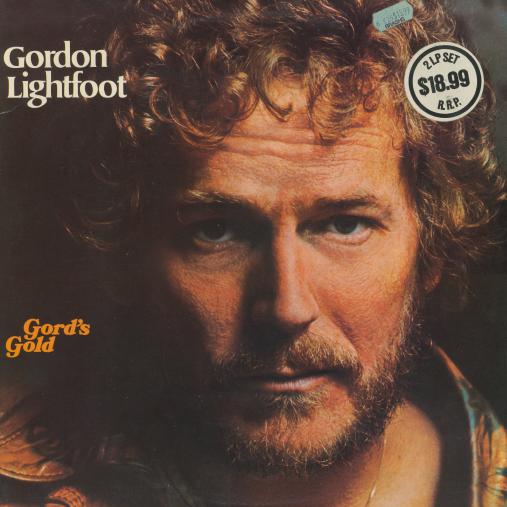
1. “Sundown,” Gordon Lightfoot. 

Dude, I would creep around your back stairs just to duct-tape your mouth shut, so I never had to hear this stupid damn song ever again. And I think I know why your girlfriend is messing around on you. She would like you to stop singing. Forever. This reached #1 on the Billboard charts. And was simultaneously #1 in Canada. And tortured me for 3000 miles in the back seat of an unconditioned station wagon in the summer of 1974.

Ewwwwwwww.

2. “The Wreck of the Edmund Fitzgerald,” also Gordon Lightfoot.

Have I mentioned duct tape? I’m very sorry that this ship sank and everything, but I would like to put all recordings of this fucking song in a leaky dinghy, then push it out to sea and shoot at the damn thing until it sinks. Blech. Blech, blech, blech.

Ptui.

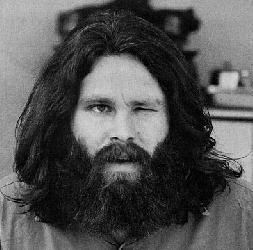
3. “Riders on the Storm,” The Doors.

I think when your grocery store starts playing a song to let you know they’re about to turn on the lettuce misters in the produce department, it should officially be banned from airplay on actual radio stations. Especially when it’s raining.

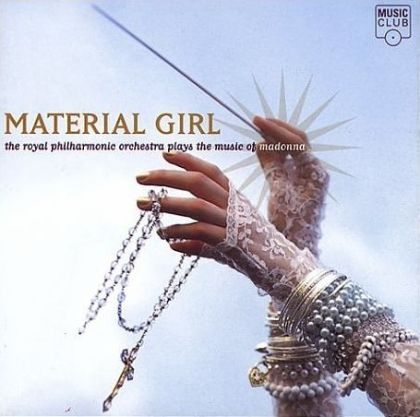
4. Like a Virgin/Material Girl/Papa Don’t Preach. Ma-fucking-Donna.

I hate these songs. Hate. Like, to the point where I wish I could claw out my own ears level of not-enjoyment. I have felt that way since I first heard each of them on the radio, and don’t even get me started on having to watch the videos of them on MTV, back in the day. They make my skin crawl. They make my eyes itch. They make me break out in bad, bad Tourette’s episodes.

YUCK.

5. “Yummy, Yummy, Yummy I’ve Got Love in my Tummy,” Ohio Express

What, have these guys been hanging out in the back room of a bear bar? Ewwww. Twee, twee, twee, ptui. Double ptui. Triple.

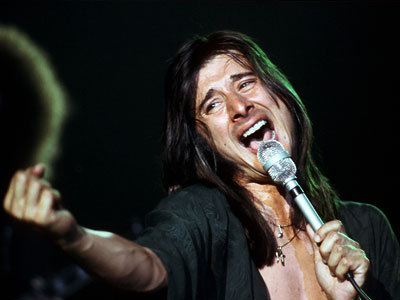
6. “Just a Smalltown Girl/Don’t Stop Believin'” Journey

Okay, I must confess that there is a great deal of Journey that I actually LIKE. Which is probably because I listened to their album Evolution over and over again in this very cute surfer boy’s car in California the first time I ever did mushrooms. But these two songs are anathema to me, and they’re the ones that get played over and over and over again. I mean, seriously, you want a Journey song for the closing number on the final episode of the Sopranos, and you pick one of these? Gag me with the Garden State Parkway.

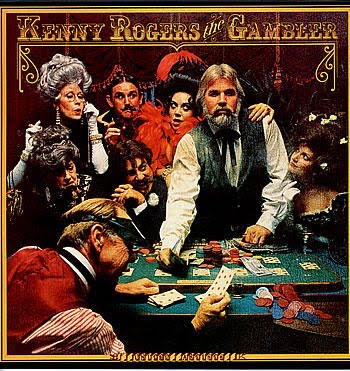
7. “The Gambler,” Kenny Rogers

You got to know when to fold up, and when to stop playing a really annoying song on the radio. I wish this train would just keep going, gambler and all, until I never have to hear about it again. In fact, the next time this comes on the radio, I would like to walk away. I would like to run.

8. “Ramblin’ Man,” The Allman Brothers

If you must play Allmans on the radio, please limit yourself to “Whipping Post,” “One Way Out,” or “Statesboro Blues.” These are brilliant songs. This one is just, basically, the anthem of those who refuse to pay child support. And lame.

9. Most country music apres Tammy Wynette, except for The Dixie Chicks and maybe some Roseanne Cash.

Really, I love me some good twangy pedal steel and a good shit-kickin’ beat, but “Achy Breaky Big Mistake-y” is enough to make me take a cricket bat to the speakers in my car doors. It’s like being force-fed a cocktail of grenadine, maple syrup, and ipecac.

10. Andrew Lloyd Weber. All of him.

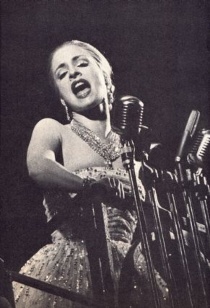
I was tortured with Evita in my teens–long story–suffice it to say I saw the damn thing three times on Broadway against my will (matinee, Lupone-less, each time.) And then there was the endless night of Phantom when I first moved to Colorado… not to mention Cats.

If I am bad in this existence, my afterlife will consist of an eternity on a desert island with Andrew Lloyd and an accordion. Please GOD don’t make me listen to him in the meantime. Please. Please please please.

Okay, so if these ten things were permanently expurgated from the playlists of the world, I would be a happy woman. What ten songs would you Ratis like done away with? SPILL


Back to my roots

By PD Martin

Today I want to talk about the amazing feeling of going back to my roots. I’m not talking about my literal roots (i.e. my birth place or the birth place of my family), rather I mean my creative birth place. The time and place when I first decided I wanted to write.  Here’s a hint:

What about now?

Recognise it?

Or now?

Yep, you got it! Paris.

On Monday we arrived back from a three-week holiday. Our main ‘objective’ was my sister-in-law’s wedding in Ireland, but we also had a glorious five-day stopover. It was around March this year when my husband told me that he’d finally found a great deal to Ireland that would save us loads of money…“but do you mind going via Paris?” he said with a grin on his face. Needless to say, I was one happy woman!

So how and why is Paris my creative birth place?

I mentioned in my first Murderati blog that while I was into reading and creative writing in my primary school years, once I got to high school I ended up focusing on science and maths — maths, applied maths, physics and chemistry were my elective subjects. As a complete contrast, my other subject was physical education, with my main project on dancing. You see, I had danced pretty much all my life, and loved it. Anyway, while studying psychology and criminology at university, I was also taking lots of dance classes, around 30 hours a week at one stage, and also did acting and singing lessons. Over the next couple of years dancing petered out and singing took over.  I finished my psychology degree and started studying music. Then I took time off from school and worked a bit before travelling.

I was 21 years old when I took off on the typical Aussie pilgrimage…backpacking around Europe. I went with my boyfriend for four months and it was on this trip that my creative spark burned brightly. My boyfriend at the time was (and still is) a photographer and he was also a gifted artist. So it was natural that we’d hit many of the artistic hotspots, including Paris. What can I say, I fell in love immediately. Was it the incredibly impressive buildings? The many artists who had been born or studied in Paris? The ambience of the place? The history of the place? The answer is, of course, all of these things and so much more. Coming from Australia, all our buildings and architecture is relatively new (like North America). And there’s something about the sense of history that oozes from every inch of Paris (and Europe) that’s inspiring and exhilarating. It drives me to create. And that feeling was there again on this visit. I mean, look at this:

But back to my first visit to Paris…Within a few days in Paris, I wanted to write. I wanted to write my own lyrics for songs, I wanted to write poems, I even wanted to write a book. I tracked down an English bookstore in Paris and bought their one and only book on creative writing. I can’t remember the name of it, but it was quite large (a university text book rather than a mass market paperback) and of course being an English book in a French-speaking country it came with a high price tag. But it was worth it.

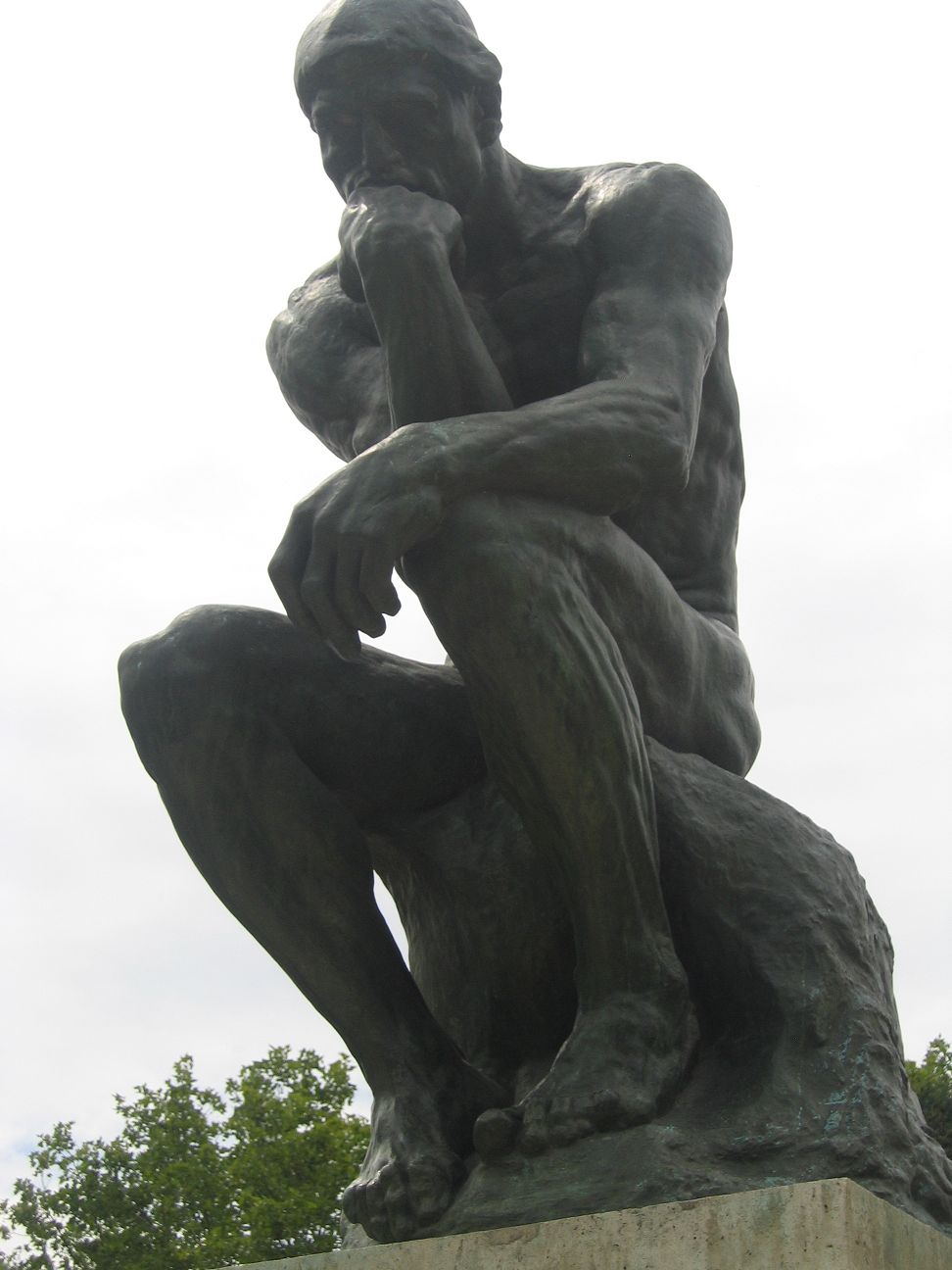
A couple of days later, I found myself in the magical Rodin gardens. My boyfriend was drawing the amazing sculptures (like many other budding artists around us) and I was writing in a newly acquired notebook, with my creative writing text book at my side. We spent hours there (twenty years ago!) and so this trip I had to go back to the Rodin museum and gardens.

There didn’t seem to be quite as many people sketching the sculptures as last time, or perhaps my memory has simply amplified the numbers I remember from my first visit. But the whole place still triggered that creative impulse.


Then there’s the food. Let’s just say, I ate a LOT of baguettes in five days, some not-so-nice French wine and some gorgeous French wine, loads of cheese (yummy and so much cheaper than here in Oz) and a few treats from gorgeous patisseries. I have a major sweet tooth, and passing shops like this sent my heart racing!


From this particular place I tried the Opera cake and it was divine.

The ambience of the restaurant and café culture is stunning, and we also did the pre-requisite visit to the Louvre. To me, every part of Paris is inspiring.

Now I’m back, safe and sound, although still a little jet lagged and with an annoying cold. But who cares…I was in Paris!

I’d like to say I can launch back into my writing, the creative spark burning incredibly brightly. But unfortunately, I’ve got two ghost-writing gigs on the go, and two corporate jobs. But while I’m doing those the subconscious will no doubt be ticking over, ready when I return to my new book again. And then I’ll be channelling Paris!

PS The wedding was fabulous too, and Grace was the perfect flower girl!

PPS I forgot to say…Paris is also where my husband proposed to me, 13 years ago!

In Praise of Foolery (Or: Cartoons Can Save Your Life)

David Corbett

I’m what’s prosaically referred to as a lapsed Catholic (think laissez-faire agnostic with sloppy Buddhist hankerings). So I’m not sure how the Mass begins anymore, but last time I attended Sunday services, the first exchange between the priest and the congregation quoted the 43rd Psalm:

            I will go to the altar of God

            To God, the joy of my youth

Or, for those who gaze back longingly at the Latin Liturgy:

            Introibo ad altáre Dei

            Ad Deum qui laetíficat juventútem meam

I puzzled over this line when I first heard it, wondering why God evoked—or might even be equated with—the happiness of childhood. And I assumed it meant that beholding the sacred is much the same as the sense of astonishment that characterizes our earliest perceptions, that sense of boundless wonder, both inviting and frightening in its mystery.

But if I’m perfectly honest, the joy of my youth was largely defined by cartoons.

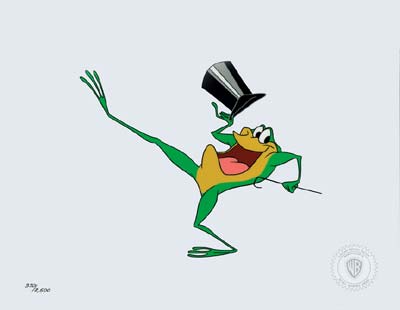
Of particular influence was the inimitable Michigan J. Frog:

(YouTube won’t let me embed the video, but to watch the full cartoon, click here.)

Among all the cartoons I watched as a kid, this one stuck with me more than most, because of its cosmic punch line: Every silver lining has a cloud. Somehow, even at the wee age of whatever, I was already an ironist.

My oldest brother, who ultimately became a research psychologist—excuse me: Human Factors Engineer (ahem)—for the Defense Department, said it was “frightening” to observe how much of my personality was formed by Rocky & Bullwinkle:

I’m not sure how “frightening” I was—or am—but I’m a little stunned at how unfunny that cartoon clip is. (I included this particular one because it has two characters named for my original and current hometowns, Columbus and Vallejo—again, that little noodge of irony).

As I grew up I put aside childish things—yeah, right—until college, when I discovered you can indeed learn a lot from Lydia:

Groucho, Chico and Harpo reacquainted me with the daring face-slap of the absurd, the mad grand fun of chaos—the sanity of craziness—and did so in a way that Duchamps and Breton and Artaud couldn’t touch. I realized that in the eternal bout between scholar and clown—I mean, come on, is it even fair?

Later, I’d become entranced with The Simpsons, of course, the best satire ever to appear on TV:

But I don’t think I ever quite understood the full, life-affirming, soul-saving necessity of cartoons until I met my late wife Terri.

Terri left home at the age of fifteen for reasons too personal to disclose here, but as she was big sis, and big sis was basically mom, her younger brother and sister trailed along, and she supported them all by working as a piece-rate seamstress, the same trade as her beloved Italian grandmother.

But Terri’s brother John was troubled, and when he unwisely dropped a tab of acid at age sixteen it caused a psychotic break. His incipient schizophrenia came on full-blown, and as the only responsible adult in the family anyone could locate, Terri had to go to Herrick to approve treatment. The doctors wanted to give John electroshock, and trusting them, she gave her consent—resulting in her little brother’s now being not just schizophrenic but brain-damaged.

This threw Terri into an emotional tailspin she would spend the next ten years trying to pull out of. And John’s schizophrenia didn’t drop out of the sky. The term “schizophrenogenic mother” has fallen on hard times, diagnostically speaking—no point blaming the primary caregiver for the patient’s illness—or, as one researcher put it:

From the late 1940s to the early 1970s, the concept of the “schizophrenogenic mother” was popular in the psychiatric literature. Research later confirmed that the mother who could cause schizophrenia in her offspring did not exist. Such a blame-levelling concept, which had no basis in scientific fact, may have caused a great deal of harm.

All of this is true, I suppose. But Terri said when she read the diagnostic description in a textbook she suffered an epiphany: That’s Mom. (I had the same experience when I saw the DSM précis for Borderline Personality Disorder and thought it read like my mother’s bio, but I digress.)

I don’t mean to hammer Terri’s mom. She had her own broken soul and deserves as much compassion as anyone. But what Terri found familiar in the diagnostic description was the pendulum swing between distant and judgmental on the one hand, and overly involved, even intrusive and oblivious to boundaries on the other. Nothing was ever quite what it seemed, words often meant nothing, and emotional ambiguity was coin of the realm. “I love you” could be rendered with such indifference or even jealousy that it was easier just to wait, watch and live in a shadow state of denial—until that was no longer possible, as became the case when Terri, at age eighteen, had to deal with the guilt being the one who’d approved John’s destructive “treatment.”

Terri’s ten-year emotional deep freeze only thawed after intensive therapy, aided by—you’re way ahead of me—cartoons.

You never have to guess what a cartoon is feeling. No ambiguity here. When Bugs is happy, he’s reeeeeaaaalllly happy. When Sylvester the Cat is sad, the slobbering tears can’t come fast enough. And when Yosemite Sam (or Riff-Raff Sam, as in the above clip) is mad, well, you get it.

Through this ingenious if unorthodox psychoanalytic technique, Terri got back in touch with her emotions. And it gave her a marvelously goofy quality. One day, puzzling over the curious fit of a real-life PI with a closet cartoon character, she confronted me with: “What you need is a moxie moll. What are you doing with a goonybird like me?”

And I thought: God save me from moxie molls.

To the horror of her more uptight lawyer friends, we spent one of her birthdays roasting weinies and eating frosted animal cookies. “David didn’t take you out to someplace nice?” one woman asked. Terri almost bounced: “Nope. It was so cool.”

Don’t get me wrong, Terri was as down-to-earth a person as I’ve ever met, congenitally practical in the way only Italian women can be. And she was smart—she didn’t just sofa-surf cartoons, she read Nietzsche and Toni Morrison and Edna St. Vincent Millay. (I led her astray, turning her on to Robert B. Parker and John Harvey.) But cartoons saved her life.

Not surprisingly, her favorite movie was Roger Rabbit:

Terri was an estate planning and probate lawyer, married to a man who, like Eddie, has a short fuse, so you can imagine how much she enjoyed that ending. And I sometimes wonder if that scene weren’t a reasonable facsimile of the world Terri inhabited most days, at least until ovarian cancer made foolery a bit less fun. Still, even as death crept closer, she retained a pretty good sense of humor, despite the fear, the disintegration of her body and her hope, the dementia. Cartoons couldn’t save her then.

She loved life like no one I’ve ever met, which made seeing her lose her life so young feel so cruel. She was the bravest, kindest, silliest, smartest, most fundamentally honest person I’ve ever known. She remains my hero. I hope, in some small way, I live up to her example.

But there’s a coda, and it involves a caramel-colored pound poodle named Bugsy. (Please excuse the small image; Squarespace and I are having our issues over photos.)

We adopted him and soon discovered he was, to quote Groucho, “the most glorious creature under the sun.” He looked like a Paddington bear. I have friends who still talk about him glowingly–he was that kind of dog. He bounced. He buried his ball in a blanket so he could pretend it was hidden, then dig it up. His stubby tail wagged like a hummingbird. He was the closest thing to a living cartoon I’ve ever known.

Bugsy survived Terri by five years, and was as clownishly sweet as she was right up until the end. The circumstances of his passing eerily mimicked hers, so much so I wrote about it in the following poem, and I add it here not to crank the sad into maudlin, but to add a final and appropriate touch of wonder. These two incomparable beings returned to me the joy of my youth. I’m grateful.

Scathed

Same disease, same lousy luck.

Dogs get cancer, who knew?

Worse, poor guy’s resistant to his chemo,

like you were, all that muck rattling in his lungs.

And it’s that time of year, so close

to the five-year mark of your death.

To be fair it’s not so terrible. Not yet.

Credit the steroids, I suppose.

Got the appetite of a hobo,

still fetches his ball some, nuzzles my hand,

but his hair’s going, each breath brings a cough.

As for me, in five years I’ve learned to let go.

I get it, the finger-snap of life, drinking

from the dharma’s clear, cold well

or whatever Buddhist bullshit applies.

I recall your take on such things.

Phooey, to be brief.

I wonder if that’s changed,

where you are. If anywhere.


I remember the last place you were too well—

tube jammed up your nose, down your throat

into your gut to pump out the shit-brown sludge

that would rot your insides if not drained away.

Belly like a watermelon, your gaze a howl—

you wandered the cancer ward day and night,

bed to chair to hallway to bathroom to bed again,

tidal surge of morphine in your veins,

the doctors baffled by your pain.

Vomiting, pissing yourself. My bride.


For all that, though, I pity

those unscathed by great love.

What I know of things divine, I learned

from you. You and this rascal dog:

rescued from the pound, spared

the killing needle and nursed back

from kennel cough and garbage gut

and, once, less ominously, a bee sting to his nose—

taffy colored, the moist rough flesh ballooned—

then, in later years, pancreatitis, viral warts.

The whole doggy diagnostic, now this.

Through it all, he’s been gentle, honey-hearted.

He’s grateful—freed prisoners don’t forget—

but uncanny as well. After you died,

he began each day by crawling onto my chest,

curling his paws onto my shoulders, licking my nose.

Slowly. Mindfully. Old dog, new trick.


It’s what the holy rollers crow about,

ripping open their hearts to the Lord.

That aching, mad want: He listens.

He watches. He knows. Loves.

If true, pity it didn’t count for more

when you were dying, or now,

as this minor, magical creature

noses toward his own death.

I promise I’ll hold him at the end,

stroke his head and flank and

tell him he was the best damn dog,

remind him that you thought so, too.

Then, if you can—though the smart money

says you can’t—guide him to wherever you are,

call his name (he’s hard of hearing these days—

will death cure that?) and open your arms

as he steadies his legs and shakes and

cocks his head, then figures it out,

starts to run.

* * * * *

So, Murderateros: What was the joy of your youth? Have you revisited it — or it you — in adulthood? Does it carry for you an element of the divine? Has it, in even some small way, saved you?

No need to stick to the Q&A. Feel free to make any comments you please. I’ll be happy to respond however, to whatever.

BTW: For a fictional version of a gifted young woman saved by cartoons, check out Nadya Lazarenko in my second novel Done for a Dime, most of which was written after Terri’s passing. My attempt at homage.

*****

Jukebox Hero of the Week:  Terri didn’t live to see the Scissors Sisters, but I think she would have approved of dancing eggs, singing watermelons, and a giant pink goonybird:

In Defense of Fiction

by Alafair Burke

Professor Burke goes back into the classroom this week, marking the start of my tenth school year during which I have balanced two professional lives – one as a legal academic, one as a crime fiction author.  I probably spend more time and handwringing than I should pondering how these two lives fit together.  One attempt to explain the coupling follows, in a short piece I wrote recently as a guest blogger for the wonderful Powell’s Books.  Professor Burke thought y’all might enjoy it:

I went to a Book Blogger Conference at this year’s Book Expo of America convention.  One vocal blogger (is there any other kind?) let me know that she only reads memoirs and “other non-fiction” because she is interested in “issues” and “needed books to matter.”

I let her assumption about the accuracy of memoirs slide.  As a law professor who writes not merely fiction, but genre novels to boot, I was far more concerned about making the case that fiction – even low-brow, beach-book crime fiction – can  “matter.”

For my day job, I write law review articles – hundreds of pages with still more hundreds of footnotes.  Law review articles are supposed to be meticulously researched and relentlessly thorough probes of important and novel legal issues.  They are intended to “matter.”  

It is hard to know whether an individual piece of legal scholarship has impact, but one measure is its frequency of citation by courts or other legal scholars.  To give you an idea of the numbers, Cass Sunstein, the most cited legal scholar in the country and now Administrator of the White House Office of Information and Regulatory Affairs, was cited in eight judicial opinions and 927 law review articles in the past year.  Yours truly has been cited in three judicial opinions and 208 law review articles – in her entire career.

In contrast, a modest print run for a novel with a major publisher is 35,000 copies.  In short, more people read Michael Connelly than Cass Sunstein.

Of course, it’s not just the size of the audience that “matters.”  I happen to be interested in the criminal justice system, which is undeniably shaped by public perception.  And those perceptions are shaped in America not by law review articles or other works of non-fiction, but by popular culture. 

In a world where a major cable news network allows Nancy Grace to preach fear six nights a week to an audience of more than 1.3 million, entertainment may be a sane commentator’s best hope of shaping public views about our criminal justice system.

I have written law review articles about the unseen, unreviewable effects of prosecutorial discretion, but I have certainly had more impact on the popular conception of a prosecutor’s role by showing Portland Deputy District Attorney Samantha Kincaid employ – both for good and bad ends – nearly limitless charging and plea bargaining authority.

I have written about the problem of wrongful convictions, but my writing has surely shaped public opinion more through fictional (but realistic) depictions of high-pressure interrogations, flawed eyewitness identification procedures, overreliance on questionable informant testimony, and police investigations shaped by tunnel vision.

As a writer, I believe in showing, not telling.  My job is to spin a good yarn, not lecture.  But I nevertheless believe that, as a lawyer who cares about equity and accuracy in the criminal justice system, I can defend the genre in which I write.  Books can entertain and yet nevertheless educate.

I’d love to hear from you in the comments.  Have you have learned something surprising from a so-called “beach book”?  When has an entertaining book also “mattered”?


Speechless

Well, I have very little to say this morning. 

I thought of writing about a newly discovered television series HAVEN, very loosely based on the Stephen King book THE COLORADO KID. I don’t remember how I found it on iTunes, but I downloaded the first season, watched it in a week, and anticipate every episode of Season Two. It’s a crime show/supernatural show, which I love. I love real-world supernatural.

I’ve seen few good movies this summer (My two faves so far: X-MEN FIRST CLASS and SUPER 8. And the end of HARRY POTTER, but that’s another story …)

I’ve been reading YA mysteries, as well as trying to catch up on the JD Robb series. I’m only four books behind now …

Of course I’ve been writing. My next book, SILENCED, is due early October. I’ve been a little (a lot) nervous about this book because it’s the first book with a new editor and a new publisher. Kind of terrifying.

And the kids! Five kids, all in fall sports. You’d think they’d spread the out to keep me sane, but noooooo, I have to juggle five kids. Fortunately, my husband has taken over the boys and their football practices, and I take care of my younger daughter’s soccer practices. Now we just have to figure out who goes to what Saturday games. Thank God I have another driver in the house, my 17 year old daughter, who plays volleyball–and her games are Tuesdays and Thursdays, NOT Saturdays!

I can’t wait until school starts — for us, August 22. I need my routine back. I did get the school supplies early (yea!) and the kids wear uniforms (ordered!) but there’s a lot of things that need to be done this coming week–including three nights of orientations. And the fact that I’m going to have a senior in high school. I don’t feel old enough to have a daughter who is almost 18.

We didn’t go on a family vacation — we went last year, and hopefully I’m taking them all to Disneyland next summer the week before the RWA conference in Anaheim. But with sports, my New York trip, getting a new dog, and deadlines … the Brennan family didn’t get away.

So with all these things going on, I really didn’t have anything poignant to talk about for my blog. But my 15 year old daughter told me a great joke today:

Past, present and future walk into a bar. It was tense.

🙂

She found the joke on this great little clip I hope you enjoy. Have a great week.

The Help

by Alexandra Sokoloff

The film of The Help came out this weekend, and I know everybody else is going to be talking about it, and it’s my day today, and it’s been on my mind, so why not?

I will try not to spoil too much, but if you’re trying to stay pure before you read/see  – you’ve been warned.

First, the book. 

I understand why it’s popular and I also understand why there’s a backlash against it. I have to say it – it made me uncomfortable.

Now, uncomfortable is an emotion, not an objective criticism.  And I don’t read books for comfort most of the time, I read for passion and thrills and to live a certain experience.   Which can all be comforting, in their way. 

I know a lot of people feel passionately about this book and I don’t mean to undercut that.  But I’ll just try to describe the discomfort I felt about it.

There’s been a lot of criticism about the dialect, especially Aibileen’s.  I didn’t mind the dialect at first – I love figuring out phonetically how people are speaking, myself, I’m actually a little obsessed with phonetics, and I know I’ve been guilty of going overboard with it in my own writing on occasion.  But as I kept reading and got to the white characters…. who were portrayed with no such dialect at all…

Well, to write in such a broad way for an African-American character and not at all for white Mississippians… who have some of the deepest accents in the South….

Uncomfortable.

But what made me most uncomfortable about the book was that all of these maids ended up in the service of a white woman again, to get “her” book written. It made me feel guilty of being patronizing by association.

And I think a whole lot was left out.

Now, I know perfectly well that as a California native I cannot possibly understand the relationship between white children and the African-American women who raised them (Southern friends of mine say, “My other mom”).   In fact, there are a whole lot of things about the South I will never understand, but that’s another post. 

And as a white woman I have no business speculating about what was or was not true to the actual experience of the African-American women portrayed in the book.

But even so, I can’t believe that the depths of anger that must, must have been there, and are still there, were adequately portrayed. 

I think it’s a good story. I think Stockett is talented, and she’s obviously created some powerful characters. I would rather have read this subject from an African-American point of view. That’s not Stockett’s fault.  Absolutely, obviously, she wrote the book from her heart.  But I felt that as the author she was offering a forgiveness to the white characters in the book that is not hers to offer.

And I sure would like to read a book with an alternative POV now.

The movie was less uncomfortable for me, possibly because I knew what I was going into, and a lot because of three key performances. 

– Viola Davis as Aibileen.  I would camp out overnight to see this woman read the phone book. I think she’s one of the major actors of our time.  It is her movie, period. The depths of emotion – and emotional truth – that I didn’t find in the book I did find in her performance, and she has the authority to portray it. 

– Emma Stone as Skeeter.  Ever since Zombieland I’ve been seeing everything she’s in.  The most exciting young actress working in Hollywood, I think, she’s stunning.  And while I’m sure this was how she was directed, too, she knows this is not her story.  I had huge problems with the Skeeter character in the book; I don’t think she ever got how irrelevant she was in the bigger picture.  The movie cuts her role down to a more proportionate size, and portrays the character more as a journalist simply recording stories instead of acting as if this book is all her doing, and Emma Stone has moments – I felt – of reflecting the shame of her situation.  It’s not really there in the book or the movie, but I felt it in her. 

Btw, I have to say it for those who were here for my post 2 weeks ago: Tom Cruise doesn’t hold a candle to Emma Stone in the “too pretty to play the character” category, but it didn’t matter a bit, here (because Emma Stone is one of those actresses who leaves room for an audience to inhabit her AND her emotion and ferocious mental life sort of overwhelm her beauty).  As a matter of fact, Viola Davis is way too pretty to play Aibileen.  Pretty much the definition of Hollywood is “too pretty”.

– Bryce Dallas Howard as Hilly.  What a great villain this is!  In my opinion Hilly is half of why this book has become a classic, and Howard doesn’t shy away from the viciousness.  It’s a comic character, but the has her moments of wonderfully ordinary evil. I sure hope she made some people uncomfortable.

I think I liked the movie better than the book for the first half (and the dialect issues are much less apparent, partly because you can hear the broad accents in ALL of the characters) and I was totally with it, and also appreciating the adaptation – there were some very deft, concise additions and staging to underline the real stakes. Until that midpoint where

SPOILER (although the trailer does it anyway)


The maids agree to tell their stories. 

And then the action just kind of stopped.  It was an interesting thing to see, because theoretically the cuts that writer/director Tate Taylor made should have made the story play better, but actually nothing much happens in the second half of the book, and that just gets more and more obvious in the movie.  The film gets a little embarrassing as it works the pie joke way too many times over a solid fifteen minutes, and the big reveal of how and why Skeeter’s beloved housemaid “left the family” is a pale shadow of what happens in the book, an awkward and unconvincing scene (it’s also staged in a room that is way too small for the action, a very strange choice.  I could barely watch the action for trying to figure out why the scene was taking place where it was.)  Also in the film the Millie and Celia subplot is cut down so much that I didn’t feel much investment in it.  And unfortunately Millie’s character loses the internal life that she had in the book.

But the truth is nothing much happens in the second half of the book. So even when you cut out all the obvious fat, when you put it up on screen almost everything feels like filler. To ME.  Until the end, where

SPOILER


Aibileen has a great final confrontation with Hilly – you can see her talking to her just as any one of the seventeen children she raised, and to me, that really worked, emotionally – it takes a lot to make me cry but I was wrecked.


I don’t know, this is hard.  I have to think it’s always a good thing when a popular work of art puts a spotlight on racism; my discomfort is the feeling that the book and maybe the film are more of a feel-good bromide than any meaningful step toward – even a discussion that might change attitudes.  But I could be totally wrong; maybe both the book and the film are doing good where good needs to be done.

And it does force me to think about the way I portray race in my own books, and how I’m falling short. And that – is good.

Anyway, Rati, if you’re up for it – what do you think?

Alex