In light of Alex’s post regarding Hollywood’s choice of actors to play Jack Reacher, I changed my planned topic (a boring look at the proliferation of social media) to talking about character.
In fiction, characters who resonate with readers have staying power. This may mean a series character — Reacher, Jane Rizzoli, Eve Dallas, Myron Bolitar, Harry Bosch, Mickey Haller, Joe Pike, Lou Boldt, Tess Monaghan, D.D. Scott — or a stand alone like … well, because I’m writing this off the cuff, I can’t think of a stand-alone fiction hero off the top of my head. (That also might be because it’s 12:50 a.m. on Sunday morning and I still have 2,000 or so words to write to finish this short story that has turned into a novella.)
There are heroes (Harry Potter) and villains (Lord Voldemort) and anti-heroes (Snape) who resonate because we see ourselves in all of them.
A great hero has flaws. A great villain has strengths. Just like real people.
The power of character has never been made more clear to me than in the outpouring of public criticism over the actor playing Jack Reacher. To me, this isn’t about the strengths or weaknesses of Tom Cruise–it’s about the creation of a hero who people have connected with so strongly that they are emphatic about who should — and should not — portray him on the big screen.
My daughter is a huge reader, preferring fantasy and dark paranormal. She devoured THE HUNGER GAMES and, other than her annoyance that a blonde–dying her hair dark–was picked to portray Katniss, “sees” Katniss in the shots she’s seen of actress Jennifer Lawrence. Yet, she feels strongly that Peeta and Gale have been miscast and that her VISION of the two would have the actors (Josh Hutcherson-Peeta; Liam Hemsworth-Gale) reverse roles. When we were at RT in Los Angeles, the decisions had just been announced, and our roomie Lori Armstrong and my daughter Kelly ranted over the choices for Peeta and Gale.
Multiply THE HUNGER GAMES three books by five (coming on 15 Reacher books) and you have the depth of passion for the character of Jack Reacher.
To me, this passion is amazing. To pull in such a diverse audience across the world who are not only gripped by the stories, but powered by the hero, is rare and wonderful.
I’ve read all of Tess Gerritsen’s books. I’m such a huge fan, that a good friend of mine found her six original Harlequin Intrigues at a garage sale and bought them for me. I don’t generally read category romance, but when I love an author I’ll read everything they write. I so enjoy the Rizzoli & Isles books, that I read each release the week it comes out. I’ll admit, I wasn’t thrilled with the casting choice for Maura Isles because 1) she doesn’t look the part (Maura has short, chic dark hair) and 2) she doesn’t act the part (Maura doesn’t talk as much in the books, and is not as clueless about interpersonal relationships, except of course not recognizing that Anthony Sansone is … ok, I digress.) But the actress is growing on me.
Jane Rizzoli, however, I felt was perfectly cast. She was exactly how I pictured Jane, except maybe with a little more confidence.
But for me, it’s about character. The Rizzoli & Isles television series has a different feel than the books. It took me a full season to separate the voices, and now I can enjoy them both for what they are. I don’t picture Sasha Alexander as Maura Isles when I’m reading, but because Angie Harmon was far closer in looks and personality, I do picture her. And I love both the characters (except of course when Maura was seeing Daniel Brophy, but we can all hope that she’s seen the light–fully.)
Okay, I’m sort of picking on Tess 🙂
Character matters. When we read characters who resonate with us, who make us want to be brave, who make as fearful, who bring out the best–or the worst–of our personalities, we have engaged with the story on an intimate level. We’re part of the story, not distant observers. And talented storytellers like Tess and Lee Child have given us those characters we can believe … believe in so strongly that we care not only how they are portrayed in film and television, but by whom.
But character is a two-way street. How we communicate our feelings shows our own character. The internet, and social media’s quick snippets of 140 characters, or 260 characters, or thousand word blogs, all give us a forum for voicing our opinions. And as a staunch defender of the first amendment, I’m glad so many people not only have an opinion, but a forum to share that opinion.
How we share our views shows our true character–it shows how we truly are, when no one is looking.
The Internet has create a world of anonymity even when it’s not truly anonymous. It’s so easy to voice our opinions instantly … but sometimes, even when we’re right or just think we are … maybe it’s better if we choose to remain silent. Or edit our opinion so it’s neither cruel nor personal nor a veiled threat.
Because character matters — in fiction, and in real life.
Who’s your favorite character and why? Who’s shown great character in real life?
I can’t believe I’m about to do this but lately I can’t go to any message board or listserv without running headlong into people from the mystery community whining about Tom Cruise signing on to play Jack Reacher in Lee Child’s One Shot.
I rarely find myself in the position of defending anything Hollywood does, but this tempest over Tom Cruise as Reacher demonstrates a ignorance not only of the workings of the film industry (which I actually hope any decent person has a healthy ignorance of) but an ignorance of filmmaking in general that is so vast and astonishing that I am just going to have to use my blog post today to rant. I mean, get this out of my system.
We’re book people, people, we’re supposed to be smart. And yet what are people obsessing over about this casting? “Cruise can’t play Reacher, Reacher is 6’5”.”
Seriously?
That’s all we’re getting out of that character and those books?
And here I had this idea that action has something to do with character. That there’s something about an iconic character that has to do with essence and soul. I thought that Reacher’s brains and the fact that he’s a walking (literally) archetype – a modern and completely fucked up – I mean wounded – knight errant had something more to do with his charm than – inches. I thought the actual stories – the Mission Impossible-like intricacy of Reacher’s plans and the way he is constantly able to rally the most unlikely teams of misfits to accomplish hopelessly lost causes had a little to do with the appeal of the books.
As much as I am in total favor of the objectification of male bodies, preferably as often as possible, to me Reacher’s size and six-pack are completely incidental to the man. But people are posting photos of their picks to play Reacher that would launch me into the mother of all feminist rants if people were posting the equivalent photos of female actor choices for – oh, say, Clarice Starling, Jane Tennison, Jane Rizzoli, Elizabeth Bennet. It’s embarrassing.
Would any one of us really want any of those slabs of beefcake who were hulking around the Reacher Creature party last Boucheron to play Reacher? Really?
I have seen some perfectly idiotic casting choices floated on boards and lists, and no, I’m not going to name names, because those actors might actually be fine actors. Or something. But we are not talking about repertory theater, here.
The height thing aside (and height in Hollywood is relative), there’s a whole hell of a lot more to playing a role like Reacher than acting. We are talking about a mega-million dollar movie that is supposed to turn into a multi-billion dollar franchise. You don’t just need an actor for Reacher, you need a movie star. You need more than a star – you need someone who can carry the movie. And not just carry the movie, but carry the franchise.
Carrying a film is something more than acting. It’s not a very tangible thing. It has to do with being able to be present as a unique character but also letting the audience inhabit you. It’s about being the point of view character, a vehicle for the audience, and the film’s authorial voice, all rolled into one. It’s why movie stars are rarely as good actors as the character actors around them are, and why character actors are almost never able to play leads. A lead actor can be acting his heart out and the movie will still be dead on arrival because the actor isn’t doing that other essential intangible thing.
And the more action and special effects going on, the more important it is to have a lead who can carry all that action.
Those wonderful actors who seemed to be rising really fast and suddenly disappear and are never heard from again? Well, maybe they’re on the rehab circuit, but just as probably they were cast in a film that was supposed to be their big breakout and they just weren’t able to carry the film.
Carrying this movie is going to be ten million times more important than size. I can think of a couple of actors, good actors, who seem to me physically perfect for Reacher, who in fact work just fine as Reacher in those random Reacher fantasies, you know the ones I mean – but who I wouldn’t want to gamble on being able to carry this film.
Tom Cruise has been carrying movies consistently since he was 21 years old. Ironically, what all these size-obsessed complainers don’t seem to realize is that Tom Cruise is one of the only actors on the planet BIG enough to carry a franchise that big.
And anyone who thinks Tom Cruise can’t act should go rent Collateral, or Magnolia. Or Jerry Maguire. Tom Cruise is a hell of an actor. You don’t have a string of dozens of successful movies over thirty years, the majority of which have made over two hundred million dollars each, and more, worldwide, without having something going on. Or would you like to try to argue that that list of movies succeeded in spite of Cruise?
Moreover, he is a terrific action star. He is a superb athlete and known for training for weeks on end to get the physicality of every action he performs in a film exactly right. Do you think it’s easy even to fire a gun convincingly on screen, much less perform the kinds of stunts he routinely does in the Mission Impossible films (not that I’m a huge fan of those, but that has nothing to do with Cruise)?
What exactly do all these naysayers know about casting, anyway? Give a major actor some credit for knowing what he can and can’t play. No one thought Dustin Hoffman could make a convincing woman and he only got cast in Tootsie by making demo films of himself as Dorothy Michaels to convince the powers that be that he actually could do it. But he knew. And after the fact, can you imagine anyone else in that role?
Well, newsflash: Tom Cruise knows a whole hell of a lot better than a bunch of mystery readers what he can do. This is not a man in the habit of doing things badly. Will he pull if off? Maybe, maybe not. Think about it. Any time we sit down to write a book we think we just might be able to do it some meager form of justice and from there we work like dogs and pray like hell. What makes anyone think it’s any different for an actor?
But we are talking about one of the hardest working and most passionately dedicated actors in Hollywood. I’d lay down money that Tom Cruise has a better idea of who and what Jack Reacher is than the vast majority of these posters. Character is his job and he’s been doing it brilliantly for over 30 years.
He’s a seasoned and successful producer as well, which I’m not going to get into, but you better believe it’s good news for the movie.
But I will say it is stupefying to me that a community of readers and writers, in all this ranting, seem to be saying not one word about what could go wrong with the script. Josh Olson, the original adaptor (adapted and was Oscar-nominated for A History of Violence) is smart, passionate, angry, iconoclastic – I was excited that he was writing the script. Christopher McQuarrie, attached as director, is doing his own adaptation of the book now. He’s most famous for writing and winning the Oscar for The Usual Suspects. All sounds good, right? But there’s no guarantee here that what ends up on screen will have anything to do with the story we know from the book. Personally I would hate to see the incredible ensemble energy of this particular story, the way all the seemingly minor characters come together as an unlikely and sympathetic team, get eviscerated to showcase Reacher going it alone. But that’s an optimistic view of what could actually happen, story-wise.
Instead of bitching about Cruise, we should be on our knees lighting candles to the movie gods that whoever ends up in creative control of this film (and that can change radically in between now and the film’s release) doesn’t decide… oh, let’s say… that the stakes aren’t big enough, and get the bright idea to make the villains the joint heads of the entire Russian mafia who have decided to take over the US and to do so have acquired a nuclear warhead which Reacher will be forced to dismantle while simultaneously trying to rescue his long lost and hitherto unknown son or daughter or, hey, twin son and daughter– with the loyal help of the dog the executives gave him to make him more “relatable”.
Oh yeah, there is a whole lot that could go wrong with this film.
There also is a chance that a very smart movie could come out of this. And if it doesn’t, it’s not going to be because of Tom Cruise.
How about putting some energy into wishing for a great movie? It’s rare enough that that happens. Does everyone really want to jinx that with all this vitriol before they even start shooting?
Finally, let me just say this. Reacher fans are the last people who should be complaining. We can have Reacher in any form we want, every time we pick up one of the books. Cast at will. And I guarantee that not one of us sees him the same way. That’s the beauty of fictional characters.
But look, this is Murderati, we’re all friends, here. If you want to talk about who really should play Reacher, here’s your chance to do it. Share the fantasies. Go wild. Link to beefcake shots, or Youtube exotic videos, I’m not going to object. Or tell us some books-to-movies that were perfectly cast, and why.
So who do I see as Reacher? Lee Child. It is entirely mystifying to me that anyone could not think so. And there’s not a living actor in Hollywood who could come up to that level of brains and sexy. But it’s not going to happen, and it shouldn’t.
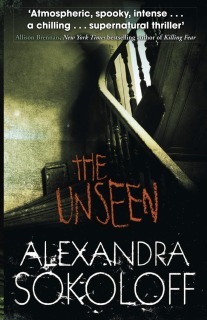
Oh, and if there’s anyone left after all of that,The Unseen comes out in the UK this week, with maybe my favorite cover ever, it actually gave me a bad nightmare. Just don’t ask me who I’d cast.
That was the buzzword when I worked at Disney Studios. I was the assistant to the Director of Marketing for BVI, or Buena Vista International. Disney had just established its own network of international distribution, where I had worked as a long-term temp (three months) before getting a real job (with real benefits) in the marketing division. This was right when Aladdin came out, to give you a point of reference.
Synergy, synergy, synergy. It was the era of Jeffrey Katzenberg’s famous internal memo about what was broken and what needed to be fixed in Hollywood. The memo targeted Disney Studios in particular. At this point, Katzenberg was best known for putting Disney’s animation films back on the map and, when he didn’t get the number two spot (behind Eisner) after Frank Welles died, he left Disney Studios to form SKG with Steven Spielberg and David Geffen.
Synergy was about getting all the different departments to “work together” for the common good of the studio. We were encouraged to stop inter-office bickering and do what was necessary to create an environment of success. Lines of communication were opened and barriers to progress supposedly eliminated. There wasn’t an inter-office memo that crossed my desk that didn’t include the word “synergy” in paragraphs one, six and eight. There was a bit of a cultish feel to it and there were a few subversives, present company included, who felt we’d stepped into the pages of a George Orwell novel.
The whole thing didn’t really mean that much to me. I had my own agenda.
Behind my new boss’ back I wrote my own inter-office memo and I addressed it to Jeffrey Katzenberg himself. Before getting my temp job at Disney Studios I had been struggling away as an independent film maker, which meant that I was cash-advancing my credit cards and beg-borrow-stealing my way through a maze of production services in an attempt to make 16mm and 35mm films. I had just finished shooting a half-hour film (the last film that Chuck Connors ever did) and it had completely broken me and drained all the resources I never really had. By this time my fellow producers (aka college buddies) had moved on to find normal jobs capable of sustaining normal lifestyles and I was left to carry the weight of the project on my worn-out shoulders.
I needed to re-shoot a couple scenes before going into post-production, and I made a desperate plea to Jeffrey for help (Hollywood encourages its members to call the big guys by their first names – Jeffrey, Steven, David, etc. Of course, I was to be called “Mr. Schwartz” the day HR escorted me from the premises, but we’ll get to that).
A few days after I rolled the dice I received a phone call from the President of Production at Disney Studios.
“Jeffrey received a memo in his inter-office mail yesterday,” he said.
“Yes?” I replied.
“I have to admire your balls for sending it.”
“Thank you,” I said.
“Jeffrey wrote a note on the memo that reads, ‘See if you can help this guy out.'”
I was ecstatic. The President of Production at Disney Studios was going to help me finish my film with Jeffrey’s approval! That day I went into my boss’ office (remember, I was a lowly assistant–although he allowed me to use the title “Executive Assistant” to make me feel powerful– to the Director of International Marketing) and told him what I had done.
“I’m glad you told me after you sent the memo,” he said.
I knew he’d be cool with it, he was a renegade, too, which became much more evident months later when he “accidentally” sold the same promotion to McDonalds and Burger King simultaneously. He then announced he’d be leaving the Land of the Mouse for a studio on “the other side of the street.” His actions caused me to become the Executive Assistant to No One, which did not instill in me a particularly hopeful sense of job security.
But I digress.
I started getting my ducks in a row with the President of Production and discovered that they actually rented all their production equipment, so I wouldn’t be able to get any free services. If I’d only needed post-production I might have been able to make it work, but since I had to do some reshoots I was out of luck. They could get me some great discounts and take a budget of around $100,000 down to $20,000 or so, but by that time I was about $60,000 in the negative. In the meantime, the cast and crew had disassembled and entered the great Hollywood diaspora, which means they all went looking for jobs. And my big star was getting older.
One day I got a call from him – “You gonna finish this film before I die, Schwartz?”
“I’m trying, Chuck!” I said, full of youthful bullshit.
Chuck Connors died before I could finish the film. He gave me the best performance that no one will ever see.
So, the whole memo thing ended up being just a neat little anecdote left to dissolve in the lore of Hollywood history.
After the Director of International Marketing (my boss) left, the President of the Marketing division took me and another marketing person to lunch to see what there was to work with. Ever clueless, I told him about my big unfinished, thirty-minute film and my experience with the memo. The President spent the rest of the lunch talking about Synergy, ending with the memorable quote, “At BVI we market films, we don’t make them.”
I went to my little cubicle and printed his quote in Times New Roman 80 pt and slapped it on the wall next to my computer. It was a way to remind myself that I didn’t belong here and I wasn’t going to let myself slip into the “machine,” further away from my dream of writing and directing films. The little note did it’s job because about a week later I was downsized from Executive-Assistant-to-No-One to So-This-is-Unemployment.
Apparently, I was not the most synergistic cog in the machine.
I’ve always had this self-destructive tendency. I’ve lost or quit numerous jobs in an effort to advance my career.
When we work for people we give them our most valuable asset – our time. I’ve always known this, even while working piddly summer jobs during high school. I can put almost no dollar value to my time. And yet we all have to, we can’t help it. We have to make a living. And so I’ve taken the jobs I’ve had to take and the jobs I’ve been lucky to get and I’ve demanded that I get more in return. Not necessarily more money. Instead, more education, knowledge, access. It might take years for me to acquire the skills I need from a job — the skills that will help me in my own efforts to become a better writer or film maker, but once I reach the saturation point, once I’ve got the job down and I’m not learning anything new, I have to leave.
This was a lot easier to do when I was young and single.
I’m just happy I’ve been able to jump off the treadmill for a while. For now my time is my own. I’m writing a novel and a screenplay. The screenplay is an assignment, but it’s fun and it’s exactly what I want to do. It isn’t causing any pain. And the novel is what I have to do for my soul, regardless of what other work I need to do in order to survive.
When I worked at Disney I didn’t know that, twenty years later, I’d be using the things I learned there to help manage my future career. Things like Synergy.
At Disney I learned that everything needs to be working together if the company is going to succeed. Now I’m the company. So I have a literary agent, a film agent, a film manager, an accountant and an intern. I’ve got a publicist and a publisher and an editor and a publicity department working behind the scenes. My job is to get everyone working together for a common goal. It’s not so easy, as many of you know. It’s not like these people wake up every morning thinking about me. They’re not paid to think about my career 24/7. Neither am I, for that matter. But I do it.
What’s cool is that it’s working. Not in a Big Disney sort of way, where Aladdin hits two thousand screens simultaneously world-wide and every department in the Disney Universe claims they played a part in its success. But in a smaller, still-effective way, where Stephen writes a blog and it posts on Murderati and all the folks who work to help grow his career read it and think, “Well, it looks like Stephen is still out there. Maybe I’ll make that call and get him that deal he’s been wanting.”
The Brits have many differing reputations – not all of them good. We binge-drink. We paint Union Jacks on our faces and run riot at sporting events abroad. We are obsessed with the cult of talentless celebrity (being ‘a celebrity’ is now a recognised ambition for school-leavers). We will sue for libel at the drop of a hat. And if that hat lands on our foot, we’ll sue you for personal injury as well. Our politicians promise the earth when they’re in opposition, then once they get into power they renege and cheat on their expenses … oh, hang on, maybe that last point isn’t so unique to this country.
The engineering brilliance of the Victorians has been transformed into a nation of fun-pubs and asylum seekers, shirkers, chinless wonders, boarded-up high streets and blame-culture ‘you-must-not-have-any-fun-in-case-you-hurt-yourself’ Health & Safety petty bureaucracy.
Sounds like a cue for Stone Sour:
But, the Brits do have their good side. Our military, while under-supported and under-equipped, are still regarded as a superb fighting force. The vast red brick factories of the Industrial Revolution have given way to small pockets of technical ingenuity.
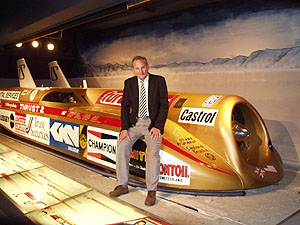
A visit to the Coventry Motor Museum, where they have a display of Richard Noble’s two land-speed record-breaking cars, Thrust 2 and Thrust SSC, tells you as much as you need to know about our abilities to improvise in remarkable ways.
And while we don’t do Spectacle quite as well as the Americans …
… political plain speaking quite as well as the Australians …
… and can’t run a railway anywhere near as well as the Japanese …
… you have to admit that we do a pretty good line in Pomp and Ceremony:
But one thing the Brits do find it enormously difficult to do is open up and Share.
I don’t know why this should be. Maybe something of that stiff upper lip colonial mentality still remains, but I find it very hard to unload emotionally onto strangers, to talk about what I earn, or discuss what we paid for our house. If someone remarks on my dress, I’m far more likely to confess that I bought it in a mega-sale than smile sweetly and accept the praise. I once said about Charlie Fox that she took a punch easier than she took a compliment, and maybe there’s a lot of her in me, or vice versa. I may get a lot of things across in my writing that I should have unloaded onto my therapist – if I had a therapist. (That’s another thing Brits don’t do – therapy.)
So, while others are prepared to strip themselves bare in public, I prefer to keep things just a little more bottled up, to use it in another way. Just because I don’t talk about my emotions, doesn’t mean I don’t have any, or can’t access them. I’d rather think of them as the flames in an internal combustion engine rather than a bonfire. Maybe it’s little more than a writing technique, but everyone goes about this job in their own way.
I spent last weekend at the Harrogate Crime Writing Festival, where I ran into our Tess who was delightful enough to be singing the praises of my books. (And, being a Brit, I’m getting embarrassed even typing that …) as well as a whole host of other literati. I was struck once again by the generosity of the writing crowd. When I mentioned to Al Guthrie that I’m bringing out the early Charlie Fox books in e-format next month, he immediately offered to interview me for his Criminal-E blog. Lee Child readily agreed for me to use the introduction he wrote for the Busted Flush edition of KILLER INSTINCT in the e-version as well, and said he’d link to his own site. And I had four approaches from agents, who’d just learned that I had, with much regret, parted company from my own.
Next month I should have an e-anthology – which I’m convinced should be called an e-thology – of Charlie short stories, and the first five novels being launched in e-format for the first time. I may well be singing and dancing about that a LOT. So, being a Brit, I shall apologise in advance for such vulgar self-promotional activities, but I hope you’ll forgive my excitement.
So, ‘Rati, what are the best and worst characteristics of your fellow countrymen (and women, of course)? Alternatively, what characteristic is often exaggerated in books or movies, that really annoys you? (Only, if you’re a Brit, you’ll probably be too polite to say so …)
This week’s Word of the Week is giraffiti, which is vandalism spray-painted very, very high …
When I was in medical school in London, I traveled a lot. I’d decided that while I was young, I had no money, but I had time, and that once my career kicked into gear, my opportunity to rattle around the world would be lost. Whenever possible, I took electives in foreign countries, and every school vacation, I tried to get away somewhere interesting.
So it was that I ended up in Cairo, in a squalid little concrete block hotel not far from the endless deafening, traffic jam that is Tahrir Square (next to which, by the way, is the Egyptian Museum; I don’t know if they’ve renovated it since my last visit, but it was astonishing in a Raiders of the Lost Ark kind of way, a handsome old building with sandstone walls and marble floors, stuffed with huge, ancient statues and sarcophagi and dusty wood and glass display cases holding 5,000 year old cat statuettes and canopic jars and whatnot. I recognized many pieces from the archeology books in my father’s study; around each corner was an exhibit even more amazing than the last.)
It was a memorable stay. I was paranoid about theft, so one of my Third World hotel protocols was to hide my passport on top of the largest piece of furniture. When I reached up onto the armoire, I felt something smooth under my fingers; I took down the filthiest pornographic magazine I’d ever seen, a glossy German language celebration of a very pale, blonde dwarf and her obsession with huge, impressively-endowed black men. The porn mag was an exhilarating find – a number of the activities contained within were outside the realm of what I’d previously thought of as “sex”.
In the hotel’s lounge, I met a young Japanese guy – I’d been studying Japanese at night school, and, since he didn’t speak English, I banged out a few of my best verbs and nouns, and found to my amazement that we were actually able to communicate. He was one of the most unusual people I’ve met while traveling. No, he hadn’t visited the Egyptian Museum. No, he hadn’t seen the pyramids. How long have you been here? Five weeks, he said. He had no interest in Cairo as a place; he just wanted to be there. Why?, I asked.
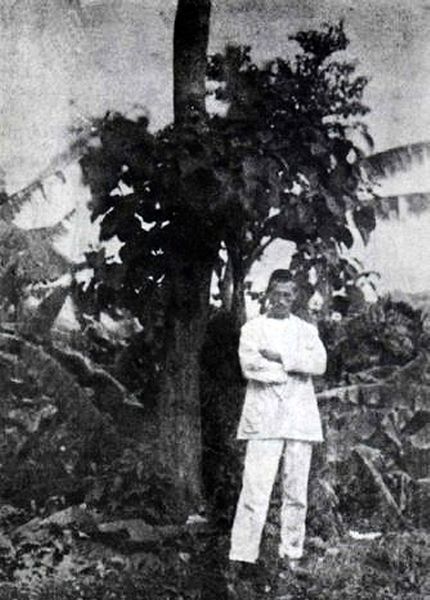
He explained that he was following the footsteps of his hero, the French Decadent poet Arthur Rimbaud, who had apparently spent seven weeks convalescing in Cairo in the 1880’s. In another two weeks, my new friend hoped to go on to Ethiopia by land, although he was having some difficulties because of unrest at the border. When he got to Harar, where Rimbaud had lived, he intended to spend a month there. Again, he’d stay in a hotel, lying on his bed and smoking Marlboro Red Label 100’s, concentrating on being in the place his hero had once inhabited.
Rimbaud was a fascinating man. One of France’s greatest poets, he stopped writing before he was 21, and got a real job. He scandalized literary Paris by his affair with Paul Verlaine, who ended up shooting him. Rimbaud turned out to be not really the job-having type; he spent much of his time walking around Europe, then took work that would get him abroad. In Ethiopia (then Abyssinia), he worked as a gun-runner; claims that he was also a slaver have been rejected in recent years, but were still part of the man’s mystique at the time I met his Cairo Superfan.
At the end of the week, when I left for Luxor, the Japanese guy was still lying on his bed, his door cracked half-way open to the hall. I stuck my head into his room, stifling in the heat and cigarette smoke, to say goodbye; he was hopeful that his visa for Ethiopia would come through at the end of the week.
Over the years, I’ve thought about him often. There was something both pure and absurd about the conceptual plane on which he’d chosen to exist. To travel 6,000 miles and skip the Great Pyramid of Giza (the only one of the Seven Wonders of the Ancient World still standing, fer chrissakes!) seemed a little nuts, but I liked his dogmatic insistence on using his travel time for what he wanted it to be, not for what he was expected to do.
The next trip I made – a week in Paris – was largely influenced by his example. Indeed, my travel patterns since probably owe him a debt, as I have evolved into primarily a sensual traveler. I don’t feel a pressing need to see or do anything in particular when I’m at a destination. I’m there for the physical experience of the place, not the tourist highlights – I don’t get up at the crack of dawn so that I can fit in the Baths of Caracalla before I hit the Coliseum. I’m much happier sitting on a bench in a park, watching the people go by, or, better yet, enjoying a three hour lunch at a café, chatting with the waiter, reading a book, enjoying being not where I normally am.
Anyway, my post-Cairo Rimbaud fanatic trip to Paris: I decided to devote my week there to the study of early Modernism. I’d stay in my hotel and listen to and read about Richard Wagner’s opera Tristan und Isolde, and read and read about T.S. Eliot’s epic poem The Waste Land. I’m not sure why I chose the Wagner – probably because Eliot had quoted from it in The Waste Land, and because Wagner had a reputation as being difficult (I was a cultural snob back then, predisposed to like something if it was challenging).
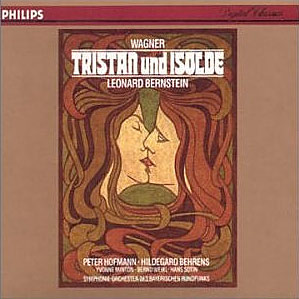
I took the train to Paris, and checked into the frumpiest of single-starred hotels by that glum industrial estuary of railroad tracks that fan out behind Gare du Nord. I unpacked my suitcase, arranged my books carefully on the battered desk and setting out my Sony Discman, a stack of batteries, and the 1981 Leonard Bernstein recording of Tristan, with Peter Hoffman singing Tristan and Hildegard Behrens singing Isolde. I had a shower, went down to the street and bought a croquet monsieur and a bottle of Orangina, ate my dinner, and then began.
I don’t have that much to say about the Wagner – it’s an astonishing piece of music, almost four hours of flowing and ebbing music centered around a theme of love, ecstasy and death, culminating in the infamous “liebestod”, where the protagonists die while in a transcendent state of love, a recurrent theme in classical literature. Tristan is a tragedy in the grand tradition, with a mass die-off at the end, tonally somewhere between Romeo and Juliet and Reservoir Dogs. The opera is still important to me – indeed, my next tattoo will be a quote from it.
Here’s Jessye Norman singing the final aria as the dying Isolde, consumed by love for her dead Tristan:
Mostly, though, the week was dedicted to The Waste Land, the 434-line poem written by the American/English poet Thomas Stearns Eliot, first published in 1922. The first time I had encountered it (at a poetry reading competition when I was about 15), it had blown me away. I thought it was one of the most astonishingly beautiful things I’d ever heard – and I had no idea what it was about.
A sidenote: In England, you decide what you want to do with your life when you’re about 13, and then tailor your classes appropriately. Since I was going into medicine, I’d abandoned my favourite subjects (English, French, Latin) to concentrate on Chemistry, Physics and Biology. I felt cruelly deprived of an arts education; it didn’t seem fair to me that other students got to sit in class and learn about stuff like The Waste Land, while I had to study frog reproductive systems and the structure of benzene. So I tracked down a copy of the poem, and read it earnestly.
Now The Waste Land is an almost postmodern tapestry of quotes and allusions, with every quote and allusion tacking the interpretation to fairly specific meanings. There are quotes from Dante, Wagner, Rimbaud-shooter Verlaine, from Hindu, Christian and Buddhist religious texts, and references to anthropologic works on ancient fertility myths. In short, I was way out of my depth. But the language was magnificent, lyrical and lapidary. And much of the poem is uttered in snippets of dialogue or monologue, the words so precise that the characters, undescribed and unsignalled in the text, spring vibrantly to life.
Here. From the first section of the poem, “The Burial of the Dead”:
Summer surprised us, coming over the Starnbergersee
With a shower of rain; we stopped in the colonnade,
And went on in sunlight, into the Hofgarten,
And drank coffee, and talked for an hour.
Bin gar keine Russin, stamm’ aus Litauen, echt deutsch.
And when we were children, staying at the archduke’s,
My cousin’s, he took me out on a sled,
And I was frightened. He said, Marie,
Marie, hold on tight. And down we went.
In the mountains, there you feel free.
I read, much of the night, and go south in the winter.
Beyond any deeper meaning, the language is vital and immediate, completely enchanting. I read it over and over, accepting that I didn’t understand it, accepting that Eliot’s abundant annotations were also beyond my scope, just thrilling to the words, to the sounds, to the imagery.
By the time I got to Paris, I was older, and maybe a bit more world-weary; after all, by that point, I had delivered babies, and watched men die. In my hotel room, I read about The Waste Land late into the night, going beyond the text to develop a deeper understanding of the origins of the work in the years following the maelstrom of death and ruin that was the First World War, a recent event at the time Eliot was writing. And I read about the fertility rituals that inform the poem and its sources, about the wounded Fisher King. I understood Eliot to be presenting European civilization as almost zombie-like, decayed but refusing to die, endlessly revived to stagger on without beliefs, without the succor of religion or myth. I was able to synthesize the poem better, to recognize its referents and their meanings.
But along the way, the poem seemed to dull for me. It might have been recognizing the anguish it contained, or becoming too conscious of its complex infrastructure of invoked works, but the poem lost a little of its life, a little of its ecstatic beauty. I returned to London, set it aside, and went on with my life. I liked recognizing the poem when it was cited in song lyrics and magazine articles and book titles (Evelyn Waugh’s A Handful of Dust, Iain Banks’ Consider Phlebas and Look to Windward, and many others), but for a long while, I rarely looked at the work itself.
Luckily, over time I’ve forgotten much of what I’d learned about the poem. The Waste Land gradually resumed its potency (a phenomenon which is the reverse of the poem’s main theme), and I treasure it again. I read it once every six months or so – fairly often for a poem from which I could probably recite long passages from memory.
Recently, Faber has released a fantastic iPad app, The Waste Land. It’s a labour of love, and it’s really wonderful. It includes the entire poem, and is beautifully designed so that you can effortlessly appreciate the text in a number of different ways. By sliding your fingers across the screen, the published poem is replaced with a scan of the original manuscript, heavily marked up by Eliot, the poet Ezra Pound (to whom Eliot gave a huge amount of credit for his work on the poem) and Vivien Eliot (who recent scholarship suggests had a much larger part in its creation than has previously been supposed).
But that’s not all! When you tap on a particular line of text, generous annotations appear in a side panel; the annotations are much more accessible than Eliot’s original notes. And there are a series of video interviews with prominent literary or cultural figures discussing different aspects of the poem.
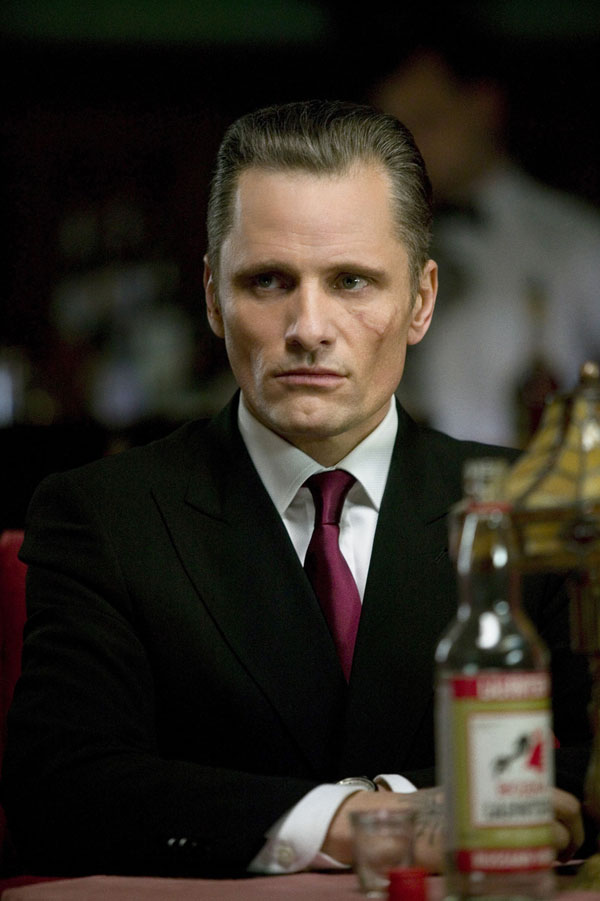
But wait – there’s more! Tired of reading? Just let any one of five (5) famous people read the poem to you! The words scroll slowly by as you enjoy listening to recordings of Eliot himself (two different), Ted Hughes, Alec Guinness and… Viggo Mortensen as they bring this magnificent work to life!
There actually is still more: the prominent Irish actress Fiona Shaw (Marnie on the current season of True Blood) does a filmed dramatic reading of the piece in a battered but very lovely house. All of the readings have their different strengths; Eliot’s own recordings have never made the poem sound as good as I hear it in my head. (Or out loud – somewhat embarrassingly, I’ve read this poem. To chicks. In bed.) Hughes’s reading is reverent and workmanlike, but poor Guinness is hard for me to listen to – I keep waiting for him to say something about Mos Eisley Spaceport, or using the Force. Viggo’s reading is surprisingly good – again, reverent, but modest and earnest. He’s not as strong at the monologue/dialogue parts as is Fiona Shaw, but she’s a stage actor. And also, she overdoes the bits with the – what, omniscient narrator? – who hovers in the background as the poem’s spine.
Anyway, I highly recommend the app; it’s the perfect introduction to one of the most important pieces of literature of the 20th Century — and one of my fondest artistic epiphanies. I can’t help but think that it would’ve really enriched my cloistered week in Paris. Then again, I suppose that finding unfamiliar pornography on the armoire might also have done the trick; an epiphany of an altogether different sort.
So, what about you? Have you had any (preferrably youthful and embarrassing) artistic epiphanies? Has a book or play or piece of music given you sudden insight into a universe you’d barely understood before?
This year marks the release of my fourteenth thriller. It also marks the fourteenth time I’ve gone on book tour, and after nearly two weeks on the road, I finally got home last night. Now I have about 36 hours to catch up on my sleep, visit my mom, tackle my email and my stuffed in-box, do my laundry, and then re-pack my suitcase before I board a plane for the next two-week stint on the road, this time in the UK.
Oh, and I have to write this blog post. Which explains why this may be short and I may be just a tad distracted. When you cross too many time zones in a matter of days, the brain does tend to fade out on you.
After so many years, the various tours blend together. One reporter asked me if I’d ever been to his town before. I sat flummoxed for a moment, because I just couldn’t remember. And no wonder we forget where we’ve been. All we see is airports, the inside of bookstores and radio stations and media escorts’ cars, plus a numbing succession of hotel rooms. I’ve gone days in a row without time for lunch, much less sightseeing. I’ve learned to eat when I can and sleep when I can. And yet, every single moment of the tour, I never forget how lucky I am to be on tour. It’s a privilege that not every author enjoys, and despite the grueling schedule and the lost sleep, it’s exactly where I want to be.
I also relish the chance to see familiar faces. In Cincinnati/Dayton, I’ve had the same media escort since my very first book. Through the years, Kathy Tirschek and I have traded family news and shared the ups and downs of the business. When I get to Phoenix, I always look forward to seeing Evelyn Jenkins, who’s sure to point me to the hot new restaurants, and Barbara Peters at Poisoned Pen Bookstore, who was one of the first booksellers in the country to rave about my debut novel, HARVEST. We’ve been in this business together long enough to see the changes.
And there certainly have been changes. When I started out, the independents were the stores for an author to visit: Joseph Beth, Hawley-Cooke, Davis Kidd, Kepler’s, Cody’s, Stacey’s, and Chapter Eleven. Then there was Waterstones in Boston, Complete Mystery Bookstore in Portsmouth, Bookland in Maine, and the Mystery Bookstore in Los Angeles. Of course, there were also visits to chain bookstores , and every tour would usually include stops at Barnes and Noble and Waldenbooks and Borders.
But as the years went by, many of those beloved independents vanished. In Hawaii, the venerable Honolulu Book Shops was squashed by the arrival of Borders. The era of the big box stores had arrived, and I’d arrive in a city to find that the little mystery bookshop I’d visited just a year ago was no more. Waterstones disappeared. So did Cody’s and Stacey’s. Shops you thought would live forever instead withered on the vine.
This year, there’s been a strange turnabout. Borders has closed half its stores. Suddenly places like Maui, where Borders took out all the independent competition, is left without a bookstore. As chain stores close, whole swathes of the country become bookstore poor, and customers are forced to rely on Amazon.com or grocery stores to buy books. Add to that the popularity of e-readers and the transition toward 50% e-sales, and it’s harder and harder to just drop into a local bookstore to browse for print books.
But … what’s this I’m seeing? In Scottsdale, at the Poisoned Pen, the crowd for my latest book event was the largest ever. In Maui, the local populace is trying to lure a bookseller, any bookseller, to open a shop. Maybe a mid-sized town can’t support a big chain store, but a smaller neighborhood independent — the ones we used to see everywhere — just might be able to make it again.
So now we seem to be cycling back to where I started, where the little bookseller is once again a treasured part of the local community. I witnessed that just yesterday in the village of Bucksport, Maine, where Bookstacks has managed to become a popular stop in town. I see it in Half Moon Bay at Bay Books, which has become a destination for book lovers from miles around. Yes, we’ve probably lost a lot of print readers permanently to the lure of the e-book. But there’ll always be a core group of readers who want a place where they can ask for recommendations, browse the stacks, and talk to a bookseller about what to buy Uncle Bob for Christmas.
(As often happens here on the ‘Rati, a couple of us will be thinking about the same thing in different ways . . .I just read JT’s post from Friday. Her letter of love is so beautiful. Take a few minutes to read it if you haven’t already. And congratulations to JT once again for a well earned award! )
Two weeks ago, I went to the farmer’s market closest to my house. It’s just getting established and there aren’t many vendors, but I appreciate not having to drive across town to buy organic and locally nurtured elegant golden beets, crunchy lemon cucumbers, ruffled patty pan squash, hot green chiles. Our market also has a few brave fine artists – painters, photographers, potters — and though I’m unlikely to buy any of their pieces due to my current monetary constraints, I do like to talk with them.
Artists tend to be interesting people, forced to create because of an inner yearning that I can certainly relate to. I can also relate to their selling experience. Any writer who has done a mall book signing has sat in a booth or at a table watching people walk by without buying or saying a thing.
On this particular Saturday, I was feeling bleak . . . melancholy . . . bummed. I knew that going to the market would be therapeutic; fresh, beautiful produce always makes me happy.
On the way out of the market area, I stopped to chat with a ceramicist named Holly Kuehn One thing led to another and of course I mentioned that I write. Nearby, a woman kept looking our way with that concentrated curiosity of an eavesdropper. She hadn’t entered the book, so I decided to help Holly sell some of her work. I loudly admired a group of tiles depicting cranes in flight and suggested to the woman that she come in and admire them too. As soon as the woman entered, I walked outside and the artist and I resumed our conversation.
“What’s your name? I’d like to look up your books,” said Holly.
“Just look up The Clovis Incident; you’ll find my name more easily that way than trying to key it in,” I said.
And that’s when the woman next to us squealed and opened her purse.
“Here it is!” she said, pulling out one of my brochures. “See? Right here. Pari Noskin Taichert.” She grinned as if winning a prize and called her husband and friends over. “Look. This is her! She’s the one who wrote those books I’m making you read.” And then back to me. “I’m your biggest fan!”
She proceeded to explain why she had the brochure in her purse in the first place. “I went to a bookstore the other day and they didn’t seem to know who you were so I was going back to show them this.”
Is it trite to say she made my day?
Is it trite to say that I had a marvelous time this last Saturday meeting Allison Davis (of the many comments here on Murderati)? That it, too, brought me tremendous joy?
Or what about the couple who showed up at my door several years ago? I’d met them at my first Malice Domestic and they became convention friends; we’d seek each other out each year. Well, one day the doorbell rang here in ABQ and there they both stood . . . looking a little sheepish.
Yes it was a bit weird, but it was also lovely. They were right too; I would’ve been upset to know they’d traveled through NM and hadn’t stopped by. A few years later, their visit was made even more precious when I went to my last Malice and found out that the husband had died of skin cancer . . .What a gift to have seen him here in NM, to have seen him smiling and happy and to be able to hold on to that beautiful memory.
Perhaps there are people who become so famous that their readers (sometimes aka fans) devolve into nuisances. I can’t imagine it. To me, it’s an incredible blessing to meet someone who has taken hours of his or her life to spend reading what I’ve written.
Every thank-you is an honor.
So today’s questions are:
Do you thank writers, musicians, actors or other artists in some way?
If so, who’s the last one you did?
. . . and if you don’t thank these creatives, do me a favor and try it. You may or may not get a response, but you might just make someone’s day. And good karma never hurt anyone.
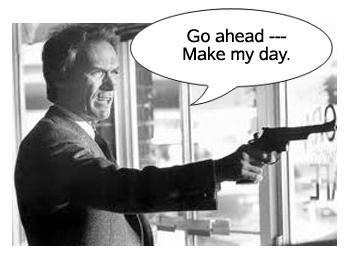
Because then-President Ronald Reagan made it famous by appropriating it for a “no new taxes” speech to the American Business Conference in 1985, most people think . . .
. . . is the greatest line Inspector Harry Callahan of the San Francisco Police Department ever uttered.
But I beg to differ.
Clint Eastwood has snarled a lot a memorable things over the course of the five films in which he’s played the iconic Dirty Harry (DIRTY HARRY, MAGNUM FORCE, THE ENFORCER, SUDDEN IMPACT and THE DEAD POOL), but in my opinion, as meaningful snippets of film dialogue go, his “make my day” line doesn’t hold a candle to the one he dropped, more than once, in MAGNUM FORCE:
“A man’s got to know his limitations.”
While the “man” Harry was talking about was his two-faced supervising lieutenant (played to hair-raising perfection by Hal Holbrook), his statement could have applied just as easily to writers as policemen. Because the writer who’s constantly working beyond his limitations — which is to say, outside the boundaries of his innate strengths — is probably not writing very well.
“Limitations?” you say. “I don’t believe in limitations!”
And that’s understandable, of course. Who among us wants to think that there are things we would like to write that we can’t? Things, in fact, that we may be ill-suited to ever write particularly well? Such ideas run counter to everything we’ve ever learned about the power of positive thinking and the indomitable creative spirit.
Still, I think there’s something to Dirty Harry’s declaration.
One of the most common fears we professional writers have is that an unpublished novel from out of our past will someday be discovered and published, to great critical abuse, after we’re dead. Something we’ve determined should die unborn will instead be dredged from the depths of our effects and made public the moment we’ve been lowered into the ground. It’s a terrible thought, isn’t it? And yet, I don’t happen to have this particular concern. I don’t have it because none of the dozen or so novels I attempted to write, prior to finally publishing FEAR OF THE DARK, would add up to 200 pages. FEAR OF THE DARK was the first novel-length manuscript I ever completed; all the others petered out and died after two or three chapters. (And this is a very good thing, people, believe me. They were all dreadful.)
There were many reasons for all the false starts: lack of skill, preparation and commitment chief among them. But one of the main reasons most of these novels died on the vine was that, in each case, the realization inevitably dawned on me that I was trying to write a book I was not equipped to write. It was not my book. Instead, it was a book outside my realm of competence: too big, too complex, too far removed from my particular life experience.
I loved spy novels, so I tried to write spy novels. I enjoyed comic westerns, so I tried to write a comic western. Science fiction, horror, coming-of-age melodramas — if I read it and loved it, I tried to write it, and almost always with the same disappointing result: an unreadable, unconvincing manuscript. Only when I set my sights on FEAR OF THE DARK — a classic, hardboiled private eye novel that fit right in the groove of my interests and skill set at the time — did I write and finish a book that felt like my very own.
Did I do the right thing in pulling the plug on all those other manuscripts, rather than soldier on to each one’s ultimate conclusion? I think I did. I could have done a ton of research to fake my way to the very end of one or two, sure, but I don’t think that would have accomplished much, because it wasn’t just an insufficient knowledge of the material involved that made me the wrong person to be writing these particular books. It was the fact that I had little or no personal perspective on them; I was a foreigner trying to write a book only a local could really do justice to.
I know this all sounds like an argument for that tired, age-old piece of advice that says a writer should only write what he knows, but that’s not what I’m suggesting at all. What I am suggesting is that, just because you can learn all there is to know about something and then write a book about it, that doesn’t mean you should. How well suited you are to write a given book doesn’t begin and end with how well informed you are about its subject matter. There are other qualifications to consider as well, such as:
Insight
What insight, based upon your own personal or professional experiences, do you have into the material? Will you be writing from the inside looking out, or from the less advantageous perspective of an outsider trying to peer in?
Passion
What reasons do you have to be passionate about this book? What makes it one you need to write, rather than one you’d simply like to write?
Motivation
Have you decided to write this particular book because it appeals to you artistically, or are you simply chasing the dime? Would this still be your project of choice if all commercial considerations were set aside?
Confidence
Is this a book you can write with a level of confidence the reader can actually feel? Or will your self-doubts regarding your command of the material, regardless of how much research you’ve done, be noticeable on every page?
The Fun Quotient
Yes, writing is work, and it’s not supposed to be all fun and games, but a book that’s well-suited to your talents and interests should, on some level, be enjoyable to write. If, instead, you find writing it feels like a daily stint on the San Quentin rock pile, you may very well be writing somebody else’s novel, not yours.
In baseball, they call the area around the plate in which a pitched ball is most likely to be pounded by a given batter his “wheelhouse,” and I believe all writers have wheelhouses of their own. That’s where your best work lies. Over time, as you grow as a writer, your wheelhouse grows naturally right along with you, broadening the range of material you can write reasonably well. But unless you’re one of those rare genetic mutations who are capable of writing anything they choose with equal brilliance, there will always be books that reside outside your wheelhouse, and those are the ones you’d be better off leaving alone. Taking a swing at them instead — to run with my baseball metaphor just a little while longer — is more likely to earn you a strikeout than a homerun.
There’s a published author of my very casual, online acquaintance who does a great deal of crowing about the diversity of his work and his determination to write in and across all genres. It seems he’s intent on writing any book, for any market, that suits his fancy. From an artistic point of view, this sort of blind ambition may be admirable, but as a business plan, I think it’s a disaster, because it’s based upon a rather vain assumption of professional infallibility that few, if any of us, can honestly claim. Anyone less than a literary phenom, in fact, following this guy’s formula, is going to write some books that work and a lot more that don’t, and surely life is too short to be wasting time writing the latter just to flaunt one’s disdain for boundaries.
Let me state for the record that none of this is meant to imply that a writer shouldn’t always try to stretch himself, or make a constant effort to avoid being pigeonholed. Versatility is a wonderful thing. I am, however, suggesting that smart authors assess their strengths, weaknesses and comfort level with certain types of material, honestly and accurately, and prioritize the things they write accordingly, for their best possible chance of success.
And they don’t much care how much credit they’re given for being someone who can write anything they damn well please.
Questions for the class: Name an author you love to read, but wouldn’t dare attempt to imitate, for the reasons I’ve stated above. Or instead, make an argument for why you think no kind of book should be off-limits to you.
(FINAL NOTE: The title for this post is another favorite outtake of mine from one of the Dirty Harry movies, this one from the titular DIRTY HARRY. It’s Harry’s answer when he’s asked to explain how he came to get his nickname: Because he always seems to catch “every dirty job that comes along.” Which, if I were a cynic, I might say is often the writer’s lot in life, too.)
I have traveled more this summer than I have… um… in a long time. In fact, I have traveled so much that my brain feels like it’s scattered across the continental United States. Including Alaska. Because, hey, Alaska is on the continent, even though there’s some Canada in the middle.
Which is not a complaint–I love traveling, and I’ve had an amazing time rocketing back and forth and stuff. I’m just kind of stupid.
I have a theory that the deal with jetlag is that your body travels at the speed of sound or whatever, but your brain is in a covered wagon behind two oxen on the Oregon Trail. Kind of getting jostled. And it takes a while for the twain to re-meet.
So here is where I just got back from: Wyoming. Where the buffalo roam. And the elk, and the bison, and the antelopes, and the horses and stuff.
I got to go stay on my Uncle Bill’s ranch outside Cody, which was pretty fucking awesome. Here is what we ran into on the driveway, on the way in:
These guys are just kind of pets, who wander around. I thought that was pretty great. But then one of them decided to scrape the paint off the rental car’s hood with his teeth. Not so great.
And, frankly, he was a little pissy about it.
Which seems a little entitled to me, considering what the hood looked like.
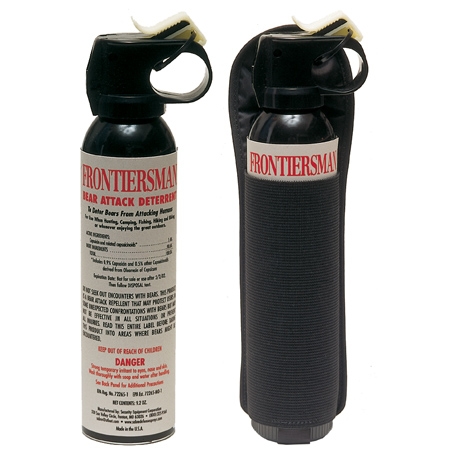
But hey, it was totally beautiful there, even though there are wolves and you kind of shouldn’t go outside without “bear spray,”
and so maybe it’s not so great if you’re a young elk (this was also on the driveway, BTW):
But, seriously, beautiful… here is one of the trout ponds:
And here is one of the 183 alligators that Uncle Bill shot last winter in Florida:
Uncle Bill likes to shoot stuff. He is very, very good at it. He taught me a bit about shooting while I was there, too. I kind of suck at trap shooting, as it turns out. I only hit one clay pigeon on Saturday, and one on Sunday. Out of about 50 each day. So, you know, MASSIVE suckiness on that front. And I think he was a bit disappointed.
(This would be me, NOT HITTING ANYTHING)
Thankfully, I did better with the crossbow:
Here is what I hit:
Not too shabby.
And also, he loaded up a nice pistol for us and let us shoot at the range he’s set up on the place:
I did okay with that, too:
Although when I posted this pic on Facebook, I got shooting tips from no fewer than four men. Only one of whom I actually know in real life. No women offered comments–perhaps because I didn’t actually ask for advice? Testosterone is funny stuff. Go figure.
Also, I beat Uncle Bill at chess three times. Which was pretty great. But then again, he’s 93 and he’s only been playing for a year. And he beat ME six times. So… well… it’s kind of like the time my sister sent a postcard home from Switzerland in eighth grade that said, “Dear Mom, I was in a ski race the other day. I came in third. Unfortunately, there were only three people in the race.”
Although as my sister likes to point out in retrospect, “the other two people made the Swiss Olympic ski team, so I didn’t suck THAT badly…”
Don’t even ask how many times he kicked my butt at Go. Because that’s just embarrassing.
But the best thing about being there, other than the fact that Wyoming is so gorgeous:
(this is where we stopped to picnic, on the drive up from Jackson)
Was getting to hear Uncle Bill’s stories at dinner.
I posted a link to the interview he did with a naval research institute magazine about getting shot down in the Phillipines during WWII the last time I posted here, but I got to hear way more details about that adventure in person.
Like, about how he had a COMPOUND FRACTURE of his leg and they were on the island for six weeks, and he made himself a crutch out of the bomb cradle from this Japanese plane that got shot down a couple of days later–wrapping the metal with the shrouds from parachutes in the Jap plane. Which had thirteen dead guys in it.
I asked him what they ate while they were there.
“Coconuts,” he said. “Although I did see one of those Komodo Dragons, and thought maybe I could get it so we could grill it and have it for dinner, but then I realized that it was going into the plane to eat the dead Japs, so I decided against it.”
They finally got the two guys in the best shape to build a raft and go to another island for help–from the Phillipine guerrila fighter dudes. They finally got picked up by a submarine.
“What was that like?” I asked.
“Food was good,” he said. “Always is on a submarine. But the view’s terrible.”
He ended up in a hospital in Australia for a couple of months. The guy in the bed on one side of him had his arm in a sling after cracking up a Jeep. Guy in the bed on the other side had his leg in a sling. He told Uncle Bill that everything had been going fine “but then her husband came home.”
Uncle Bill has a Wyoming license plate with a Purple Heart on it. And he totally earned it.
Also, he told me about going hunting with my Great-grandfather Fabyan in the Twenties, which was pretty great to hear about. Bill is the eldest of my dad’s eight siblings. So, the stories about family stuff go way back. Which I love.
(Uncle Bill is second from left, top row. Sorry this is such a crappy repro–photo of a photo, taken with my phone.)
And he gave us his passes to the Buffalo Bill Center, in Cody. Which is an incredible museum.
They have astonishingly beautiful paintings of the west:
And incredible Plains Indian artwork:
And then we went to Bubba’s for Barbecue:
Which was pretty damn fabulous:
Also, I learned how to make really good buttermilk biscuits from Billy, who works on the ranch. He’s from Florida. I made sausage gravy, which Billy said looked relatively authentic. Though he makes his gravy from sausage he makes himself, out of wild boar he shoots in the Everglades.
He made his biscuits with Crisco, for us, but at home he makes them with lard he renders from the wild boar fat. The dude is SERIOUSLY awesome. And he’s also a rocking crossbow coach. Well, and pistol coach. We said we were psyched to get to do “biscuits, bows, and bullets” with him.
Uncle Bill has asked me to come down to Florida to shoot alligators, which I totally want to do this winter. But I’m also hoping to taste some of that boar gravy… and more of Billy’s biscuits.
Anyway, the whole trip was astonishingly wonderful. And we scattered some of my dad’s ashes on one of the trout ponds–under some falls where he always suspected a really giant trout was hiding.
I also loved getting to go to the bone store with my stepmom and half-sister–and travelling with them generally:
Even though my half-sister kicked my ass at trap shooting:
I am hoping I get to go back to Cody some more, because it was lovely, and Uncle Bill is fabulous. And also, I need more practice shooting so I don’t embarrass the family quite so badly.
For now, though, I have to go back to being a Democrat.
Though I did return to New Hampshire with a souvenir:
And some very fond memories:
So, hey… thank you, Uncle Bill!
What’s your favorite thing you’ve done this summer, o dearest ‘Ratis?
In over 15 years working as a private investigator, I only faced real physical danger once—and it was a doctor who tried to kill me.
We’ll call him Rob “Doc” Devendra, and in the early 1980s he took a year off from med school to work in a friend’s business. The friend was a San Francisco cocaine dealer linked to the Medellin Cartel. Doc drove 50-100 pound loads of Colombian cocaine from Miami to the west coast. (This was before the Mexican pipeline developed, obviously.)
As job’s went, it wasn’t half bad: The money was unbelievable, and the adrenalin rush as addictive as the coke. But, after only a year, Doc developed an all-too-common medical condition known in layman’s terms as Cold Feet. He realized he could make millions in the drug biz legitimately, writing prescriptions for bored housewives, a future his flirtation with the dark side could ruin. And so he and his Colombian-connected pal parted ways—amicably, as it turned out. Doc returned to med school, became a doctor, and lived a happy and prosperous life—until the summer of 1988.
Doc’s friend the dealer, facing a ten year sentence for trafficking, became a federal informant and began identifying all his past associates and business partners. Interestingly, Doc was not one of the people he named—which is, in legal parlance, a material omission. This made Doc a very interesting fellow to the people the drug dealer did name.
Rule No. 1 of criminal defense: Snitches lie. And in this case Doc was the living proof.
I was retained by one of the defendants, accused of helping the snitch launder his money. My job was to find Doc, interview him, and serve him with a subpoena mandating his appearance at trial.
After weeks of talking with a variety of characters, plus record searches in three states, I tracked Doc down to Hannibal, Missouri, where he had a stake in a small family-practice clinic.
Arriving in town in mid-July, I first drove to his house—common practice, a man at work can always claim he’s too busy to see you—and rang the bell. Shortly his slender, doe-eyed wife appeared, accompanied by a very friendly Dalmatian. I told the wife I was working on a legal matter based out west, and it was important I speak with her husband. I politely declined to say more out of respect for his privacy.
The wife seemed mystified. She told me Doc was out of town but she’d let him know I’d stopped by. I asked when he’d be back. She said she wasn’t sure, then pressed me for more information: Legal matter? Out west? Her husband?
“It really is best,” I said, “if I discuss all this first with Doc.”
I had to assume she was lying, of course, so I kept returning. Sometimes I’d just park down the street, hours at a time, to see who came or went. I followed the wife here and there, noting the make of her car, the one left behind in the garage, where she went, the friends she met. And as I kept re-appearing at her door, she greeted me with increasing alarm. (The Dalmation, curiously enough, always seemed glad to see me.)
Getting nowhere with the wife, I decided to try the father. He owned a small jewelry shop, and had reportedly also, once upon a time, strayed from the law. He was rawboned, blondishly gray with a short-cropped beard. His attitude started out folksy and sly, but when I just kept coming back he grew hostile. He told me to stop pestering him, he’d call the law. I apologized for the intrusions—and called his bluff, returning again and again.
Two days in, frustrated with the direct approach, I decided to get creative. I made an appointment to see Doc at his clinic. Using an assumed name, I complained of lower back pain—which in fact was true, an affliction caused by long hours spent in cars finding, trailing, and surveilling people like Guess Who. I was sitting there in the examination room, complimenting myself on being so doggone clever, when the door opened.
Not Doc. His partner—Asian, soft-spoken, middle-aged. I had—as they say in the biz—been made. The partner asked: “What is this about really?” I calmly, professionally, repeated my spiel. The doctor, feigning puzzlement but clearly disturbed—what kind of trouble was his partner in?—said he would pass word along. I left, sensing I’d at least increased the pressure on Doc to stop delaying and meet with me.
Meanwhile, another far more serious situation arose. It concerned my brother John. He had gone in for an AIDS test, and the results were due. I called, spoke with his lover David, and asked what they’d learned. After a very long pause, David said: “You’ll have to ask your brother.” When I finally spoke with John, he calmly discussed treatments that were available, and assured me there was nothing to fear just yet.
The receiver felt like a stone in my hand. I was devastated.
My love for John had gone through four distinct stages.
One: early childhood—he was my hero, my protector. I adored him.
Two: age 5 or so to 18, he turned on me from guilt and shame, evoked by his homosexuality, his fear of being found out—he tormented me, tongue-lashed me every day, finding fault with every single thing: my daydreaming, my sloppiness, my books, my interest in sports and military history, my music. I hated him.
Three: age 19 to early thirties—John came out of the closet, accepted himself, and apologized to me for all those years of vicious, relentless hazing. I abided him, playing the righteous victim, holding on to my resentment like a trophy, even as we got along better and better.
Four: the final two years of his life—I realized my stupidity, my need to let go of that pointless grudge and forgive. I accepted his need to love me and be my big brother, and accepted as well how much I wanted that.
Desperate to return home, visit John, I became even more obsessive in my quest to nail Doc Devendra. I spent the entire weekend going back and back again—the wife, the father, a lawyer who’d incorporated the medical practice, a realtor who’d brokered the purchase of the clinic, an old business partner in nearby Palmyra, names I’d come up with in my searches—letting everyone know I was going stay in their lives on a daily if not hourly basis until the good doctor met with me face to face.
Come Monday morning—feeling exhausted, outfoxed, emotionally spent—I came up with one final plan. I had my camera with me, to take pictures if he fled, and my tape recorder to record all verbal exchanges, in case he tried to claim I’d threatened or extorted him. I parked my rental car in front of his clinic, slumped down into the seat so I couldn’t be seen, adjusted my rear view mirror so I could observe all incoming vehicles. People walking into the clinic could see me, but that was a risk I had to take. I waited. From previous visits I knew that, if he parked behind the clinic, he was trapped.
About forty minutes later, his wife’s gold Honda sped past me down the small side drive. There was only one person in it. A man. Doc.
I turned on my tape recorder, dropped it in my sportcoat pocket, grabbed my camera and the subpoena, then followed him on foot. I turned the corner just as he was getting out of the car, thirty yards away. Seeing me, he jumped back in, threw the Honda in gear. The car sped toward me.
I blocked the only way out.
One often hears it said that there is a difference between courage and fearlessness. The sheer overwhelming and predictable physicality of fear is something the brutal repetition of combat, police and firefighter training is meant to overcome. Blind habit will take over and push you forward into the teeth of your terror when the mind, the hobgoblins and specters of imagination, will freeze you in place. Fearlessness, in this way of thinking, is foolishness. There is no such thing. The absence of fear is lunacy, and its presence can actually be a kind of animal wisdom, as long as your training is there to save you.
Buddhism has a somewhat different take, as I’ve noted before. Fear is seen as the flip side of hope. When we hope for something we reside in a fictional world, projected into the future, a seemingly benign dream that fuels our initiative. And often we fear that we will do something, or something will get done to us, that will jeopardize this oasis we’ve imagined for ourselves. But it’s a mirage, it never existed in the first place, except as a vessel to hold our wishes. In her book WHEN THINGS FALL APART, which a friend gave to me after my wife Terri died, the Buddhist nun Pema Chödrön writes: “If we want to be free of fear, we must first surrender hope.”
And so, as I stood my ground, waiting to get run over, I suppose it’s fair to ask: Which was I—courageous, fearless, or just out of hope? In all honesty—and anyone who has been in a high speed car crash (or combat) will know exactly what I’m saying—I was none of the above. What I felt was time distortion, the seconds expanding like deep breaths, and a kind of numbness, tinged with my underlying anger. Marines call this Task Saturation, when you are so focused on what you have to do, your emotions lock down—anger, fueled by adrenalin, is the lone exception. In my case, I was simply so focused on serving that god damn subpoena once and for all so I could get home to see my brother, and so enraged I hadn’t done so already—enraged at myself, Doc, his wife, his father, my brother, God, fate—that I simply didn’t care what happened. The car kept coming, faster. I remember thinking, “Be my guest, asshole.”
At the last moment, the Hippocratic Oath kicked in. The Honda screeched to a lurching stop inches from my body, the bumper grazing my legs. Still trying to scare me, Doc revved the engine to its highest RPMs—this would be the only sound on my tape—as I leaned out at full length across the car hood and tucked the subpoena under his windshield wiper.
I stepped aside. Doc sped away. Only then did I notice I was shaking.
When my report hit the office back in San Francisco, the staff regarded me with a new, somewhat hushed respect. They thought I was remarkably—if, perhaps, crazily—brave. Only then did I realize I’d done something out of the ordinary. And though I wanted to give myself credit, I knew it wasn’t courage or even fearlessness I’d demonstrated back in Hannibal—it was fury. I wasn’t even sure I knew what courage was.
A few months later, I was visiting my brother at his house. He was still handsome then, though increasingly gaunt from the wasting, to where his vivid blue eyes looked haunted. He told me he needed to take a bath, and asked if I would help scrub his back. Karposi’s Sarcoma had left large seeping lesions all across his body. He gingerly settled down into the bathwater. I lathered my hands, and gently washed his back. When I was finished, he said quietly, “Thank you.”
I left him alone, went into the kitchen, told David I’d just helped John bathe. Very calmly, he reached for a special soap dispenser at the sink.
“You need to wash your hands with this. It has bleach in it.”
Every day, David risked his life to care for my brother. He would ultimately die from that devotion.
That’s courage.
So, Murderateros, who was your tutor in courage? How did your lesson play out?
How have you carried the lesson forward?
Have you been someone else’s mentor in what it means to be brave?
Do you agree that there’s a difference between courage and fearlessness?
Do you think hope is a source of strength, or a house of cards?
Did you ever have your own “trip to see the doctor?”
Note: I’m in a panic today, preparing for the Book Passage Mystery Conference — specifically, getting ready for my pre-conference seminar, Integrating Acts & Arcs (not to be confused with Implementing Snacks & Snarks) — so I apologize in advance for any tardy responses to comments. I’ll do my best to be prompt.
* * * * *
Review Update: Please excuse the BSP, but Len Wanner, whose The Crime of It All is one of the most engaging online sources on crime writing, recently posted his review of DO THEY KNOW I’M RUNNING? If you don’t know the book or my work, this is perhaps the most flattering, humbling, gratifying introduction I could hope for. I can die now.
* * * * *
Jukebox Hero of the Week: I’m a little conflicted. This post made me miss my brother, and I grew up listening to John practicing Debussy’s “Clair de Lune” on the piano — in fact, I’m not sure I remember him practicing anything else — but I just couldn’t bring myself to put it here. (“If I never hear that tune again as long as I live …”)
But Terri’s birthday is coming up (July 23rd), and as a small memorial I’ve decided to include a video of a song she loved, Lloyd Price’s “Personality.”
I had originally included a performance she and I once watched together on PBS. It’s one of only a handful of times I ever saw a piece of music reduce her to tears — she trained as a concert pianist, it tends to grind the sentiment out of you. I still choke up when I listen to this music alone. It’s as perfect a performance as I’ve ever heard: Martha Argerich on piano, the second movement to Ravel’s Concerto in G. But today of all days they closed that video down, claiming copyright infringement. Phooey, as Terri would say. My apologies to thos of you who tried the earlier link and came up short.
Wait! As Katherine so kindly pointed out, there’s another YouTube version of the Ravel, for the more classically minded of you. Here tis (THANKS KATHERINE)!

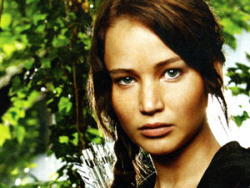 My daughter is a huge reader, preferring fantasy and dark paranormal. She devoured THE HUNGER GAMES and, other than her annoyance that a blonde–dying her hair dark–was picked to portray Katniss, “sees” Katniss in the shots she’s seen of actress Jennifer Lawrence. Yet, she feels strongly that Peeta and Gale have been miscast and that her VISION of the two would have the actors (Josh Hutcherson-Peeta; Liam Hemsworth-Gale) reverse roles. When we were at RT in Los Angeles, the decisions had just been announced, and our roomie Lori Armstrong and my daughter Kelly ranted over the choices for Peeta and Gale.