Author Archives: Murderati Members


Getting attention

by Pari

I was a kid who wanted attention and got a lot of it . . . mostly negative. A rabble-rouser and talk-backer, I spent a good portion of my elementary school years in chalky unlit cloak closets being punished for one transgression or another.

Miss Klein, my third grade teacher – the one I called a “big fat barf” in front of the whole class – told my classmates in her creaky voice, “Ignore her and she’ll stop.” Mrs. Roberts exhorted my 5th grade cohorts with “Don’t pay attention to her, you’re just feeding the fire.”

While my teachers promoted negative PR about me, my peers held me in a certain amount of awe. Fury made me brave and I willingly took on bullies and mean teachers without a second thought. Glorious attention came with each exploit. The good variety provided sympathy, hugs, pats on the back and the occasional extra dessert in the cafeteria at lunchtime. The bad variety – the spankings and groundings – yielded more fodder for the tears that would evoke the good variety.

Through those years of my turbulent childhood and adolescence, I came to one undeniable and hard-earned conclusion: being sad or bad evoked the attention I craved; being content and doing what I was supposed to do rarely brought more than a glance.

In a way, I lived the adage Any PR is good PR . . . or any attention is, ultimately, good attention.

Fast forward to today. I don’t buy into that adage anymore and I don’t need attention like I did when I was a kid. That’s what makes my current life experience a bit odd. I feel like I’m being rewarded for being sad. People I haven’t heard from in years have reached out to me. Their reactions are very moving and appreciated — necessary, in fact — but they’ve also made me think a lot about my childhood and my desire for attention then. And being the person I am today, the woman who studies human motivation through the eyes of a decades-long PR pro — I’ve been thinking a lot about how marketers/PR pros play on our emotions to get us to act.

If you watch television or listen to the radio, you’ll soon notice that most ads are upbeat; even if they’re not funny, they’re selling good news:

This book will change your life!
You’ll love going to this amusement park!
Buy this car and D-cup women will throw themselves at you!
Offering her the diamond will fulfill your dreams.
Look at this starving child; you can change her life with just $.25 a day.

But wait. Not all ads are happy. What about:

Drunk driving kills.
Meth will steal your entire life.
This is your brain on drugs.
Look at the chunk of my face they had to cut off because I got cancer from smoking.

The first set of ads spur us to buy with promises of sunshine and daffodils. Perhaps the motivators have to be positive in order for us to part with our money. So how do we explain the success and prevalence of the second set of bummer ads? And what about political ads? Their efficacity confuses me most of all. Some are the obvious happy variety:  Vote for me and the economy will soar, you’ll be safe and everyone in America will have a Jacuzzi. Many, however, are based on fear or guilt or massive negativity: So-and-so is in league with Satan, wants to drink your children’s blood, voted to let terrorists fly first class to the U.S. without passports and wants to make you poor and kill your grandparents. He’s bad bad bad bad and scary and horrible and everything you don’t want . . . and, oh, by the way, I’m the good guy.

I’m assuming all of these ads and approaches work. Otherwise the billions of dollars spent on each variety wouldn’t pass hands each year. But which ads work best for which messages? Which ones get our attention and make us take the second step of doing the desired outcome?

Hell if I know.

That’s what I want to explore today.

Do you have a favorite ad? Tell us why (add a link if you can find it)
Do negative ads – like the PSAs or political ads I mentioned – work for you? Why?
Are you noticing other trends in advertising that are attracting your attention now?


I love to be in America

By PD Martin

First off, don’t forget to sing the title of my blog today, aka Westside Story.

After a couple of blogs on the writing/professional side of things, today I’m in holiday mode and thought my blog and state of mind should be one! At the moment I’m sitting in my Hawaiian hotel (Waikiki) and although we’ve only been here a few days, we’ve already packed lots in.  The fact that most of it revolves around the pool, food and shopping…

This isn’t our first trip to Hawaii, so maybe that’s why we’re not hitting the tourist sights as much as we ‘should’ be.

My first trip to Hawaii was in 1997, on my way to Canada. That trip was only four days long and marked the start of my one-year working holiday visa. I was only here for a few nights and it was party time! Then again, I was in my twenties.

My next trip to Hawaii was last year, when my mum shouted me for my 40th birthday. And yes, you now know how old I am! We called it the girls’ trip and it was Mum, my daughter and me. We had a great time and a few weeks ago Mum started dropping hints about how nice it would be to go back to Hawaii, but this time with my sister as well. So, here we are. And once again, my daughter’s prized possession, Pooh Bear, is along for the trip as an honorary girl.

It ended up being quite last minute, a June special. So it was all very sudden and very exciting! But it is quite a long flight from Australia (plus we had a couple of hours in Sydney) and I think Grace’s state on arrival says it all. This pic was taken in the hotel foyer, while we were checking in! We hoped maybe her cute collapse would get us a free upgrade to an ocean view but it wasn’t meant to be.

One of the things Aussies do when they hit the US, is shop. I kid you not. America has seriously cheap clothes. So, by day two we’d already been to Ross twice.  As I unpacked my day 2 shopping I did wonder if I needed THAT many ¾ pants (Capri) but you can never have too many when they’re like $9…right?

Of course, there’s only so much shopping a four year old can take, but we’ve also been hitting the pool for a couple of hours in the morning. The pool time is mostly for Grace, although my sister is a sun-lover.

Buffalo wings are also part of my American tradition. Yes, I know they’re terribly unhealthy but they are yummy! And although some places will advertise American-style buffalo wings in Australia, they just ain’t the same. So, on the second night we hit The Cheesecake Factory. Unfortunately, the wing experience wasn’t quite how I remembered it. I’m sure they never used to have any kind of crumbing or coating, but this time they did. Oh well, I’ll just have to try again another night.

For the trip last year, I also threw in a bit of research, in the form of a visit to the firing range. One night, after Grace was tucked up in bed and my mum was settled into the golf, I set out for my big gun experience. Gun laws in Australia, and my state of Victoria, are extremely strict and I thought Hawaii might be my only chance of firing an AK-47 and similar big weapons. It was certainly a once in a lifetime experience…there are really only so many times you need to fire a gun for research purposes.

Tomorrow is the factory outlets (more shopping), then a luau (Monday), Diamond Head (Tuesday) and finally a daytime catamaran sail (Wednesday). Then it will back to the Aussie winter. Brrr….

And maybe there’s a chance for one more go at buffalo wings!

What are your favourite haunts when on holidays? 

All Wrote Out

By Cornelia Read

So, finally got the second draft of the fourth book turned in.

I still have a very weak grasp on both who set the original arsons, and how my protag Madeline is going to be more proactive in involving herself in fingering the prime suspect who DIDN’T do it, and finding the guy who did.

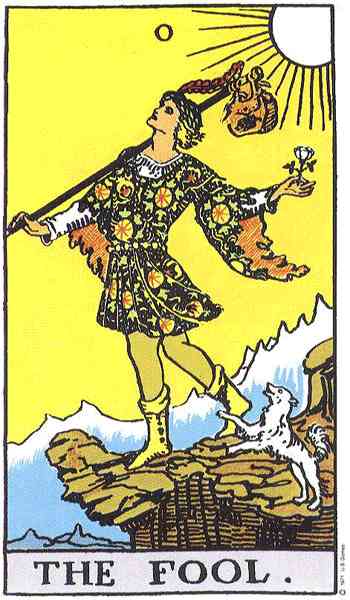
(^ I have recommended the image above as cover art. My editor was amused but not, I think persuaded)

Kicking the ass of the person who actually set the the copycat arson was kind of a piece of cake, but hey, I’ve wanted to kick the ass of the person THAT character’s based on for, oh, about 15 years now. 

In fact, I saved that chapter for last when I was writing draft one, and I enjoyed the hell out of it. A little writerly revenge dessert, if you will. Wish fulfillment.

Although, okay, my writing group’s response was, “um, we get that you totally want to kick this person’s ass, but we should actually feel that your protag’s life is in danger at least for part of it, and THEN you can kick ass.” So, I tried to do that this time. At least a little more. But I did let Madeline UTTERLY kick ass at the end of it.

Also, I am trying to figure out how not to be such a terrible procrastinator in real life, about this deadline stuff. Because oh, MAN do I suck at getting things in on time. Have all my life. And it’s just ridiculous, really. I mean, okay, there is a certain OHMYGODOHMYGOD juju wonder thing that happens,

where you’re kind of forced to get in the zone and all, and sometimes the sparks fly in a good way and that part is awesome, and I do think I think of some of my best lines in that sort of state (favorites this go-round: “My husband thinks cunnilingus is an Irish airline,”


and “I felt like I was being sodomized by my own life. And not the fun kind of sodomy either.”) 

I mean, I got to see Cara Black, Hallie Ephron, and Hank Phillippi Ryan speak at a bookstore in Cambridge a while ago, and someone asked about their writing process, and Cara said basically she gets up in the morning, walks her dog, and then writes until about noon before she lets herself look at email. Which is just goddamn genius, really, and if I did that every day I might be an eminently more sane woman.

But of course my first thought was, “So. Maybe I should get a dog.” (Like, maybe a German Shorthaired Pointer, because they are awesome.)

Not “So. Maybe I should write for several hours in the morning instead of checking email right away and then, like, doing my tarot online at ninety-five different free tarot websites and then checking out what the free online I Ching readings have to say, and then wonder if I should make lunch or not, and check Facebook a bazillion times first. And then read someone ELSE’S book and then watch some shit on Netflix or xfinity and then go to sleep for the night.” 

Because, you know, SERIOUSLY it is a wonder that I don’t just get this card in every fucking position whenever I do that. Because it’s really fucking stupid of me.

Oh, well.

But now that it’s in, this is the fun part. Where I can do all the things I normally do–like talk on the phone with pals

And post pictures of The Great Hamster of Alsace on Facebook, with accompanying text about how weird it is that the wild hamsters of France should be wearing black turtlenecks

(seriously. In the wild.)

And various other crap that I get up to generally, but WITHOUT GUILT for at least a few days. I mean, how awesome is THAT, right?

And also, I can post video here of my new favorite song, “Philosphia” by The Guggenheim Grotto:


Which I think I most love because of the line, “work of art, oh to be a work of art…”

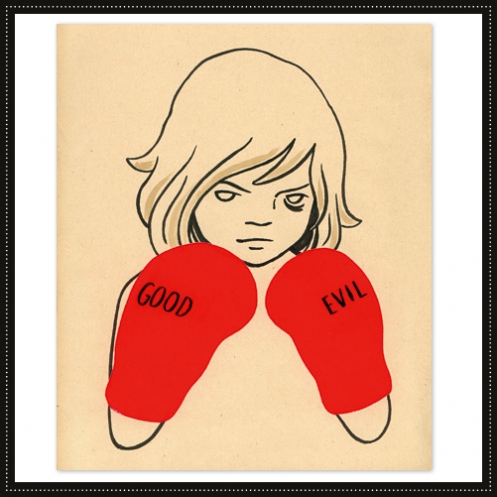
But, you know, other than that, I am pretty much all wrote out at the moment. I have been duking it out with good and evil in my head for a long time now, and maybe have a handle on it. Kind of. At least a beginning. At least in THIS book.

I hope I nail it in draft three. Which I would start tomorrow, if I had any sense. After I walked my imaginary dog.


Oh, and this morning at 2 a.m. (which will be yesterday morning at 2 a.m. by the time you read this) I celebrated with a breakfast of Ruffles and sour cream and onion dip. WASP soul food.

Although I briefly considered absinthe.

What do you guys do to celebrate something you’re really proud of yourself for finishing?

Looking Forwards and Backwards

Zoë Sharp

This is a very special year for me. This is the year that marks the tipping point in my life. I have now been making a living as a writer for longer than I have not.

More than half my life.

It hasn’t always been a smooth ride, but nothing worthwhile is ever easy and there are no medals for effort in this game.

But sustained effort is what we put into it, with the aim of appearing effortless on the page, no matter if the words have been sweated and slaved over, or dashed off in a single stream of consciousness before lunch.

(Sadly, I have yet to experience the latter state.)

All I ever wanted to be was a writer, even before I reached double figures. And even after I completed my first novel at the age of fifteen and it received ‘rave rejections’ from all and sundry, I never lost sight of that ambition.

It was another three years before I wrote my first paying article. A paltry sum, but real payment in exchange for words. It was a revelation that here might – just might – be something I could do. All the while, there was a character forming in the back of my mind. Not someone else’s experiences and shaping them with logic into a piece worth reading – or, more to the point, a piece worth being paid for – but my own story.

Still, the lure of commercial non-fiction was difficult to resist. One piece became ten, then a hundred, then a thousand. A living made, brick by brick, a skill acquired, a craft honed. From those first shaky steps on uncertain ground until, by the time I was twenty-two, I’d given up my ‘proper’ job and taken the next oh-my-God-what-have-I-done? step of being able to say, at last, “I am a writer” with no other visible means of support.

So today I’m looking both forwards and back, remembering the dreams I had when I was first starting out. It was a big exciting world and I felt as if it was at my feet. I had confidence and imagination. I was bursting with stories and characters until fragments fell out of my head and lay scattered around me so that I had trouble collecting them all up again. I still keep finding little scribbled notes for a hundred different ideas, a hundred different directions.

All I wanted was to tell those stories, speak for those characters. Or – better yet – to let those characters tell their own stories and speak for themselves. Words were both my workplace and playground. They were my refuge and my delight.

But those early rejections, however encouraging, were still rejections. My first novel was turned down, where my first serious attempt at the non-fiction market found four takers out of six. I was wary of taking another spin down that road. But it just wouldn’t leave me alone.

It took a long time to write my first crime novel. Years of stop-start work with a great many faith-slips and slides along the way. One step forwards and a great long slither back again. But eventually it was done.

And now, in the blink of an eye, it’s ten years later and I now I can say “I am an author” (subtly different from being a writer, I think) with nine published novels and a bevy of short stories under my belt. Sure, there are those who write faster. There are those who write slower. I can only judge myself against me.

But, looking back, I realise how lucky I am to have become what I wanted to be all those years ago. It would have been very easy to have been sidetracked into other things. Things I probably would have been happy doing in a lot of ways, but not deep down what I really WANTED to do. It is up to me, now, to make the most of it.

I have never been able to decide which is sadder in life. Having an ambition and never quite achieving it, or never having an ambition at all.

So, my questions to you today, dear ‘Rati, are several-fold: where are you now, in your career, in your life? Is it where you hoped to be when you started out? If it isn’t, what was the chain of circumstance that led to this point?

Where do you want to be?

And how to you plan to get there from here?

This week’s Word of the Week is lexis, a noun meaning the way in which a piece of writing is expressed in words, diction; the total stock of words in a language.

The Neighbor Who Vanished, or Didn’t

David Corbett

I didn’t know what Louise had planned for yesterday when I decided to post this. It’s either a different slant on the matter or maudlin overkill or something else entirely—I’ll let you be the judge of that.

To borrow a phrase from Richard Ford: This is not a happy story, I warn you. More troubling than that, I’m not entirely sure it’s true, even though I remember it all vividly.

I grew up in Columbus, Ohio. When I was four-to-five years old, I was one of the younger members of the neighborhood pack of kids, a collection of maybe a dozen brothers and sisters from five families in a residential part of town called Beechwold.

I was not just younger, but inward and awkward, relying heavily on my older brother John to help me navigate the social minefield that childhood so often becomes.

Normally, John was stellar, protecting me from embarrassment or harm. In the instance I’m about to describe, that excellence faltered. I don’t blame him. He was becoming aware of his own homosexuality at the time, and was plagued with his own fears of embarrassment and being found out. So in this case, I was on my own.

Two doors down from us lived the Lehman family, and they had a son named Gary who had Down Syndrome. We didn’t call it that back then. We called Gary retarded.

Gary would sometimes come out into his yard to play with the rest of us, and he had a fascination with the cartoon character Popeye. The other kids would goad him, saying, “Popeye, Gary! Popeye!” And Gary would mimic the cartoon, reach inside his shirt for his can of spinach — in truth, just slapping his chest — down the spinach in one gulp — he would lick his hand — then flex his muscles and, with his arms windmilling, charge whoever the instigators pointed out. More times than not, it was me. I was the designated Bluto.

I had nothing against Gary but I knew I couldn’t afford not to prevail in our encounters, or so I believed. I wonder about that now, wonder what would have really happened if I’d let him win, but the world that choice would have created was lost long ago. He was bigger and heavier and stronger than I was, but I could usually wrestle him to the ground and pin him without too much effort, at which point the others would cheer, the bout would be over, and things would eerily return to normal, as we knew it.

The shame of this was heightened by the fact I had a crush on Gary’s mom. Mrs. Lehman was young and far more attractive than the other mothers in the neighborhood, with short black hair cut in a pixie style so fashionable back then. She wore capri pants and men’s shirts with the sleeves rolled up, an arty look back then for the Midwest. She mesmerized me, haunted me. She at times watched as the kids crowded around Gary, lured him into the Popeye bit, then gently called him inside afterward. He would bound toward her, oblivious to being the butt of our jokes; she would not look at us, just let her son into the house, the door would close. I cannot envision her in my memory without an expression of helpless sorrow. And that sadness made my shame and guilt unbearable.

At some point Mrs. Lehman vanished, and another woman appeared in her place — older, frumpier, aproned, more conventionally maternal. She led Gary out among us one day and smothered him with kisses and hugs and told us all how much she adored him, called him her precious, her darling. The love was almost garish but sincere, there was no mistaking that. But who was this woman? Where did the other, mysteriously lovely Mrs. Lehman go? As ashamed as I felt, I missed her, even pined for her in the way young boys do for beautiful mothers, even when they’re not their own (perhaps especially then). How could I ever tell her how sorry I was, which would begin my rehabilitation in her eyes? How could I atone and so begin what, in my five-year-old heart, I perceived as our romance?

Sometime later, I don’t remember exactly when, the Lehmans moved away. And sometime after that — or so I recall — my brother told me that the beautiful Mrs. Lehman had committed suicide.  No one knew why. Or if they did, they never said.

Again, I’m not entirely sure this beautiful woman really existed. Maybe the sweet, frumpy Mrs. Lehman had been there all along, and the arty woman in the black pixie who died so tragically was just a figment of my imagination, a false memory forged from loneliness and guilt. I’d ask my brother but he too is gone now, a victim of that first wave of AIDS that swept through San Francisco in the 1980s. And so I’m left with a hesitation where a memory should be, a silence in need of a ghost.

Are you unsure of a seemingly seminal memory? Does the past sometimes seem as hypothetical — or illusory — as the future? Is there an incident from your past that puts the lie to the myth of “normalcy.” Have you ever been goaded by others into an act that, for years afterward, stirred the deeper waters of your conscience? Has such a moment found a way into your fiction?

* * * * *

Jukebox Heroes of the Week: I couldn’t leave you with such a troubling story and not try to pick you up, at least a little. Here’s one of my favorite love songs, a bit of poignant gentleness (with ukelele!) from a band not normally known for it, The Who — a tune that puts all the world’s wisdom in two simple lines:

The pleasure seems to balance out the pain

And so you see I’m completely crazy …


The Duffer Awards: Legendary Characters, Ridiculous Awards

by Alafair Burke

Remember high school Year Book Awards?  Most Likely to Succeed?  Best Dresser?  Most likely to raise the biggest pig?  (Hey, I went to high school in Kansas!)

Well, I think crime fiction characters need these kinds of very, very serious awards.  So for the entire month of June, my website will host the first annual Duffer Awards. Each day will feature two beloved crime fiction characters, matched head-to-head for very, very serious award categories like Most Likely to Win a Hot Dog Eating Contest and Odd Couples Most Likely to Win on Amazing Race.

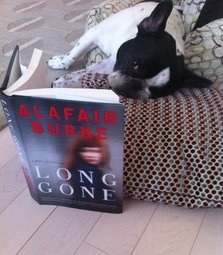
And very serious awards need very serious award statues.  Duffer, as you probably know, is my very serious dog. 

dufflonggone 2

Here is a Duffer Award. (Notice that his body is NOT an Oscar Award because that would undoubtedly be some kind of trademark infringement, and Duffer is much too serious to get caught in that kind of scandal.)


We started the Duffer Awards on June 1.  (See how I used “we”?  Like “we” are a major operation with accountants tallying votes and whatnot?  We are very serious.)

Here are the awards we’ve decided so far (winners in bold):

1. Most Likely to Marry His Ex-Wife
Mickey Haller (Michael Connelly) v. Jesse Stone (Robert B. Parker)
 
2.  Most Likely to Sacrifice an Arm a la 127 Hours
Serge Storms (Tim Dorsey) v. Gretchen Lowell (Chelsea Cain)
 
3.  Most Likely to Make a 15-mile Detour for Good Junk Food
Tess Monaghan (Laura Lippman) v. Kinsey Milhone (Sue Grafton)

4.  Best Manners
Maisie Dobbs (Jacqueline Winspear) v. Inspector Lynley (Elizabeth George)

5.  Most Badass Sidekick
Bubba Rogowski (Dennis Lehane) v. Clinton “Skink” Tyree (Carl Hiaasen)

Today at the website, you can vote on Best Hat: Raylan Givens (Elmore Leonard) v. Walt Longmire (Craig Allen Johnson).  Post a comment beneath your vote, and you’ll automatically be entered to win weekly prizes including signed copies of my books and $50 gift certificates to your favorite bookseller.  The more you comment, the more you’re entered to win. 

Coming later in the month are 24 additional very serious awards for very serious things like Best Shoes, Ability to Travel the Globe in Two Pages or Less, Most Likely to Crash a Server on Match.com, and Most Likely to Get Away With It.  Click here and start voting today. And I hope the Murderati will visit the Duffers every day in June to vote on a new award.  (And perhaps help spread the word.  This should be fun for anyone who reads crime fiction!)

The Best Two Bucks You Can Spend

400000000000000381699_s4In other June-only news, ANGEL’S TIP is available in the US as a $1.99 e-book.  This special edition also includes an essay from me about the real-life stories that inspired ANGEL’S TIP, as well as the first three chapters of my new book, LONG GONE. 

If the idea behind this low price is to hook new readers, I feel a bit like a drug dealer handing out free samples on the playground.  But if you have been at all entertained by my posts here, this is a way to check out the novels for less than a cup of coffee. 

Here are the links to buy for Kindle, Nook, and the Sony Reader.  Okay, I feel a little dirty now.  And not in a good way.

Now for Comments: Help me get an early start on next summer’s Duffer Awards.  What are some very, very serious awards for crime fiction characters, and which two characters would make a good head-to-head match for the award?

#YAsaves

By Allison Brennan


If you were on Twitter last night, you couldn’t have missed the slew of #YAsaves hashtags after the extremely biased and ignorant article on current YA novels came out in the Wall Street Journal. And I’m sure there will be a slew of blogs in cyberspace today and throughout the week about this article. Fortunately, it gave me a great subject for today, and something I feel passionate about.

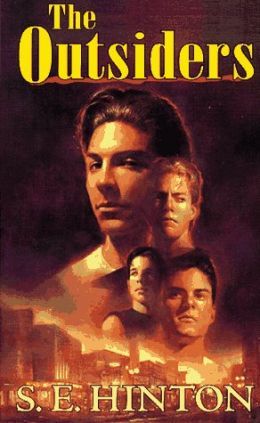
The piece was essentially a criticism of the dark YA novels being published today, from THE HUNGER GAMES to THE OUTSIDERS, the latter which the author claims launched the current publishing preference of darker YA fiction.

I’m 41. Growing up I didn’t have this amazing selection of YA books. At the age of 13, I graduated from Judy Blume and Lois Duncan and Paula Danzinger and Nancy Drew right into Stephen King and John Saul. I read THE STAND during Christmas break when I was in 8th grade. It wasn’t a “YA” book, but it was certainly no “lighter” than most of what’s published today. I had no choice. There simply wasn’t the selection available. Most of the books that would be published in YA today were dubbed “literary fiction” in the 70s and 80s—hardly something I would have read if not forced to in school.

I am thrilled that my kids have choices in books today. I’m thrilled when they read. I love when they talk to me about their books.

I’m not one who believes the offensive article in the Wall Street Journal shouldn’t have been published. I don’t agree with it, but the author has every right to voice her opinion. When I was editor of an alternative college newspaper, our motto (attributed to Voltaire) was, “I may not agree with what you say, but I’ll defend to the death your right to say it.” That didn’t stop people from picking up stacks of our monthly paper and tossing it into trash bins. I’m more frustrated that there was no counterpoint, that the WSJ didn’t solicit an alternative argument for such a blatantly pro-censorship piece.

I found it hugely ironic that an article broadly condemning contemporary YA novels to the extent of saying, “The book business exists to sell books; parents exist to rear children, and oughtn’t be daunted by cries of censorship” recommended as “acceptable” Ray Bradbury’s brilliant FAHRENHEIT 451, which tells the story of a dystopian society which forbids reading and critical thought.

Hands down, Bradbury is one of my favorite authors and FAHRENHEIT 451 one of my favorite books. It illustrates what happens when censorship is taken to the extreme.

I’m coming out of the closet today. I am philosophically conservative. A classic liberal. I abhor censorship of all kinds. I believe in the free exchange of ideas, the right of parents to rear their children and decide whether something is inappropriate for their age or maturity level. I would never tell a parent they have to let their child read something, or tell them they shouldn’t let their child read something.

I censored my children’s reading material when they were younger because I felt some was inappropriate for their age or maturity level. When they reached 12 or 13, I stopped. If they asked my opinion, I would share it, but at 13 I felt they were mature enough to make their own reading decisions. I just wanted to know what they were reading just like I need to know who’s house they’re going to, if the parents are going to be there, when they’re going to be home, and what movie they’re planning to see at the mall.

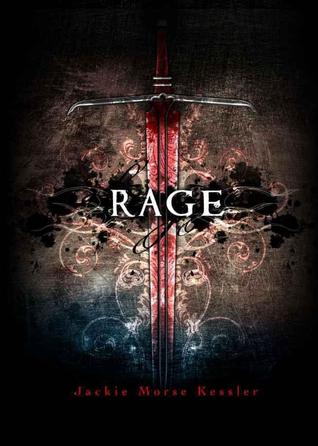
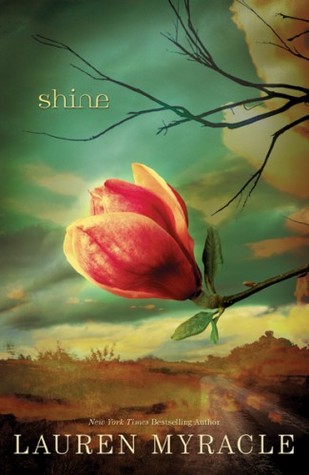
My daughter Kelly reviews YA books for RT Book Reviews. Nearly every book she reads she discusses with me and shares her thoughts about not only the writing, but the story and message. She can be a harsh critic and a vocal advocate. Several of the books condemned by the WSJ article Kelly read, including SHINE by Lauren Myracle and RAGE by Jackie Morse Kessler (who’s also a writing friend of mine.)

Kelly was particularly incensed by the article’s comments on these books, both of which she enjoyed.  On RAGE, the article said:

“The argument in favor of such novels is that they validate the teen experience, giving voice to tortured adolescents who would otherwise be voiceless. If a teen has been abused, the logic follows, reading about another teen in the same straits will be comforting. If a girl cuts her flesh with a razor to relieve surging feelings of self-loathing, she will find succor in reading about another girl who cuts, mops up the blood with towels and eventually learns to manage her emotional turbulence without a knife. 

Yet it is also possible—indeed, likely—that books focusing on pathologies help normalize them and, in the case of self-harm, may even spread their plausibility and likelihood to young people who might otherwise never have imagined such extreme measures. Self-destructive adolescent behaviors are observably infectious and have periods of vogue. That is not to discount the real suffering that some young people endure; it is an argument for taking care.”


Kelly read first HUNGER (about anorexia) then RAGE (about cutting.) She is neither anorexic or a cutter, and reading the books didn’t make her stop eating or start slicing up her arms and stomach. But the books made her think, and we talked about these very real disorders and what might cause them and what signs to look for.

I’ve written about serial killers and  rape survivors and vigilante killers. I don’t think that I’ve created a serial killer or a vigilante killer, but I’ve had dozens of emails from rape survivors thanking me for speaking out for them. 

Kelly was SO angry about the article that I suggested she blog for me today. She said she couldn’t, she was too mad, but she’s writing something for Murder She Writes that’ll go up on Thursday. I think it’s important to hear the YA perspective, so I’m going to nag her. (After all, what are moms for? We live to nag and embarrass our children.) It’s one thing for the YA authors to be angry; what about the readers they’re catering to?

Kelly read SPEAK by Laurie Halse Anderson the summer before 7th grade. It’s a book about rape in junior high. (She’s also read many of Laurie’s other novels, including WINTERGIRLS which she loved.) This was the same summer we watched all three seasons of VERONICA MARS with my oldest daughter, Katie, who then was about to start 9th grade. That show opened up important discussions that we still refer to now, three years later. About partying and drinking and date rape and cheating and being safe on-line and more. I am much more confident that my girls are prepared to face the challenges of high school and college because, though raised in a stable home with all that they need in a relatively sheltered middle class environment, they will be smart and cautious and sympathetic and empowered. I was so proud reading my oldest daughter’s yearbook that there was a consistent theme to the comments—that her peers admired her because she stands up for what she believes in. Not just because it’s an admirable trait, but because I know how hard some of her stands were, and that she didn’t always have universal support.

Not all kids are ready to read a book like SPEAK at the age of 12. No one should force them to read it. But SPEAK, and RAGE, and SHINE, and all the others, need to be available for those who are ready, who are mature enough or need the book.

And it’s not just teen “issue books” that are being targeting. It’s the entire genre of darker YA fiction that was essentially dissed. The individual books were highlighted because they are easy to categorize as being about cutting or rape, but make no mistake, the author of this article was targeting the entire YA genre that at this point in time is leaning dark and darker.

Ideas matter. Books matter. I’m not threatened by different ideas or philosophies or views. I may not agree with them—and I may not want my kids reading some books or watching some movies—but I would never tell you that your kids shouldn’t.

I write commercial fiction, specifically romantic thrillers. There is nothing in the WSJ article I haven’t heard before related to sex and violence in adult fiction. I have sex in my books; I have violence. I have foul language. I don’t write for everyone. One of the hardest lessons to learn as a writer is also a hard lesson to learn as a human being: you can’t please everyone, and you shouldn’t try.

Growing up, there were several books that impacted me and have stayed with me for life.

One book I can’t remember the title (I always thought it was Judy Blume, but now I can’t find it) but I read it in fifth grade. It was about a girl whose mother never married—just like mine. I can remember reading it because there was a father-daughter dance at my school—and in the book. My grandpa took me to mine, and if I’m not confusing fiction with reality, the heroine in the book had a grandfather who took her to her dance as well. Trust me, there weren’t a lot of kids in the 1970s whose parents had never married (or at least, hadn’t known or admitted it.)

I read Flowers for Algernon and Harrison Bergeron when I was in seventh grade, and those two stories have stayed with me ever since.

And sometimes, I don’t remember how powerful something was for me … until my kids read it and it brings back memories. Like One Flew Over the Cuckoo’s Nest which I read in 8th grade and then recently re-read when my daughter read it for school. Or Huckleberry Finn. Or In Cold Blood by Truman Capote. Like I said, there wasn’t a lot out there for YA readers.

Censorship is bad news all around. If I teach my kids anything, it’s that they have the right to speak, to have an opinion, to even have a differing opinion (though as the mom, I have veto power, and they just have to live with that.) I want them to challenge and question. Some of my strongest held beliefs today are the ones I challenged the most. Because they withstood my rigorous tests, they are my foundation. If I’ve tested my faith and it survived, no one else can shake it. If I’ve tested my philosophies and opinions and they survived, no one else can shake it. I have to have faith in my kids that they, too, can challenge themselves and be better people, better human beings, as a result.

On Twitter, the YA authors are asking people to share which YA book has most impacted them and why (in 140 characters or less!) with the hashtag #YAsaves. What would you say? And if you’re on Twitter, say it here and there!


Visual image systems

by Alexandra Sokoloff

I am finally catching up on some films I didn’t get around to last year for various massive personal reasons, and I just watched Black Swan.

I have a lot to say about this movie if I were just writing about this movie. It was immediately striking how very, very, very, VERY seldom Hollywood puts out a movie that’s about a woman. It really is outrageous, when you think about it.  And when they do, it’s a not-so-sane-to-begin-with woman descending into complete madness. Well, maybe we wouldn’t be so damn mad if movies actually acted as if we exist.  But that’s not what I’m writing about today.

It reminded me of the old Bette Davis movies, really not something you see very often these days. And yes, I have to say the dancing drove me completely crazy.  Natalie Portman is a very good dancer for an actress, but she’s not even in the same universe as a prima ballerina; I wish they’d just used the real one throughout.

But the real reason I am starting this post with Black Swan is that it is a great example of a blatant and shameless visual image system.
 
Look at the fun Darren Aronofsky and his designers have with black and white: note when the heroine wears white, when she starts wearing white and black, when shades of gray are used (as with the company director), who else wears black and when.

It made me want to revise a previous chapter on Visual Storytelling and Thematic Image Systems to incorporate other examples I’ve come across in the last year.

I’ve said that I think it’s most useful to think of theme not just as one sentence, but as layers of meaning, a whole set of morals and lessons and ruminations and propositions; a world of interrelated meanings that resonate on levels that you’re not even aware of, sometimes, but that stay with you and bring you back to certain stories over and over and over again.

(Think of some of the dreams you have, where there will be double and triple puns, visual and verbal. And by the way, if you’re a writer, and you’re not keeping a dream journal, you’re working too hard. Why not let your subconscious do the work?).

There are all kinds of ways to work theme into a story. The most obvious is the PLOT. Every plot is also a statement of theme. DIALOGUE is another, as I’ve discussed before.

But today I’m going to revisit the concept of reflecting theme through primarily visual image systems.

A great example of working a thematic image system, in this case entirely visually, is the first scene of Raiders Of The Lost Ark.

The very first encounter and shock moment comes less than two minutes into the film, when one of the guides in Indy’s search party chops through undergrowth to reveal a huge, demonic statue. The terrified guide runs away, screaming. It’s a thematic reference to the awesome power of the gods (And a setup of Indy’s CHARACTER ARC: he begins the movie without fear of the supernatural; by the end he understands that there are things he will never understand, awesome forces that need to be respected).

The entrance to the cave is temple-like, part of the thematic image system of world religions and mysticism.

Inside the cave, Indy pushes through a veil of cobwebs. At first this just looks cool and spooky – but maybe it’s also symbolic of piercing the veil between reality and the supernatural or divine.

Beyond the chasm Indy and the guide pass by a gold Aztec calendar (or something like one!) at the entrance of the cave: another visual representation of world religions, which will be presented in various ways throughout the film. The calendar is also part of the ongoing theme of mysticism and the supernatural; note the eerie music.

And finally, the inner chamber and the altar with the gold idol, another religious image. Indy susses out another booby trap: the stepping stones: if you step in the wrong place, poisoned darts fly.  

Just as Indy makes it out of the cave, there’s the reversal and defeat that the natives are right there with bows and arrows… and Belloq steps up to take the idol away from him. When Belloq holds the idol up, all the natives bow down to it, externalizing the theme of the power of the gods and the necessity for reverence.

And you thought all that was going on there was action, right?

Of course, one thing all my screenwriting has been good for is learning how to convey a story visually. But my obsession with visual storytelling started way before I started writing scripts. Production design is a crucial element of theater, too, and we had a brilliant head of design in the theater department at Berkeley, Henry May, so I got spoiled early on with mindbending, thematic sets that gave a whole other dimensionality to the plays I saw in my formative years. A good production designer will make every single thing you look at on stage – color scheme, props, sets, costuming, shapes, textures – contribute to your deeper understanding of the play’s story, characters and themes.

That was a lesson that served me well when I started screenwriting. And then working as a screenwriter opened up whole new worlds of visual storytelling.

So what can we as authors learn from screenwriting about writing visually?

A lot.

In film, every movie has a production designer: one artist (and these people are genius level, let me tell you) who is responsible, in consultation with the director and with the help of sometimes a whole army of production artists) for the entire look of the film – every color, costume, prop, set choice.

With a book, guess who’s the production designer?

You are.

And how do you learn to be a great production designer?

But studying other great production designers.

Alien is a perfect example of brilliant production design. The visual image systems are staggering. Take a look at those sets (created by Swiss surrealist HR Giger). What do you see? Sexual imagery everywhere. Insect imagery, a classic for horror movies. Machine imagery. Anatomical imagery: the spaceships have very human-looking spines (vertebrae and all), intestinal-looking piping, vulvic doors. And the gorgeous perversity of the design is that the look of the film combines the sexual and the insectoid, the anatomical with the mechanical, throws in some reptilian, serpentine, sea-monsterish under-the-sea-effects – to create a hellish vision that is as much a character in the film as any of the character characters.

Oh, and did I mention the labyrinth imagery? Yes, my great favorite: you’ve got a monster in a maze.

Those are very specific choices and combinations. The sexual imagery and water imagery open us up on a subconscious level and make us vulnerable to the horrors of insects, machines and death. The combination imagery also gives us a clear visual picture of a future world in which machines and humans have evolved together into a new species. It’s unique, gorgeous, and powerfully effective.

Obviously Terminator (the first) is a brilliant use of machine/insect imagery as well.

Nobody does image systems better than Thomas Harris. Silence of the Lambs and Red Dragon are serial killer novels, but Harris elevates that overworked genre to art, in no small part due to his image systems.

In Silence, Harris borrows heavily from myth and especially fairy tales. You’ve got the labyrinth/Minotaur. You’ve got a monster in a cage, a troll holding a girl in a pit (and that girl is a princess, remember: her mother is American royalty, a senator). You’ve got a twist on the “lowly peasant boy rescues the princess with the help of supernatural allies” fairy tale: Clarice is the lowly peasant who enlists the help of (one might also say apprentices to) Lecter’s wizardlike perceptions to rescue the princess. You have another twisted wizard in his cave who is trying to turn himself into a woman.

You have the insect imagery here as well, with the moths, the spiders and mice in the storage unit, and the entomologists with their insect collections in the museum, the theme of change, larva to butterfly.

In Red Dragon Harris works the animal imagery to powerful effect. The killer is not a mere man, he’s a beast. When he’s born he’s compared to a bat because of his cleft palate. He kills on a moon cycle, like a werewolf. He uses his grandmother’s false teeth, like a vampire. And let’s not forget: he’s trying to turn into a dragon. A lot of authors will just throw in random images. How boring and meaningless! What makes what Harris does so effective is that he has an intricate, but extremely specific an
d limited image system going in his books. And he combines fantastical visual and thematic imagery with very realistic and accurate police procedure.

Hopefully I have by now trained you all to be on the lookout for SETPIECE SCENES in films and books. But a really great setpiece scene is a lot more than just dazzling. It’s thematic, too, such as the prison (dungeon for the criminally insane) in Silence.  That is much more than your garden variety prison. It’s a labyrinth of twisty staircases and creepy corridors. And it’s hell: Clarice goes through – count ‘em – seven gates, down, down, down under the ground to get to Lecter. Because after all, she’s going to be dealing with the devil, isn’t she? And the labyrinth is a classic symbol of an inner psychological journey, just exactly what Clarice is about to go through. And Lecter is a monster, like the Minotaur, so putting him smack in the center of a labyrinth makes us unconsciously equate him with a mythical beast, something both more and less than human. The visuals of that setpiece express all of those themes perfectly (and others, too) so the scene is working on all kinds of visceral, emotional, subconscious levels.

Now, yes, that’s brilliant filmmaking by director Jonathan Demme, and screenwriter Ted Talley and production designer Kristi Zea and DP Tak Fujimoto… but it was all there on Harris’s page, first, all that and more; the filmmakers had the good sense to translate it to the screen. In fact, both Silence of the Lambs and Red Dragon are so crammed full of thematic visual imagery you can catch something new every time you reread those books.

If you watch or rewatch Sea Of Love, which I did just recently, you’ll see how the storytellers work the sea images and the love images throughout the film. The film is often shot in blue tones and against backdrops of wide panes of glass, with moving shadows –  all creating an undersea or aquarium effect, especially in the suspense scenes. The story explores themes of love, including obsessive love, and addiction – sex addiction and alcoholism. There are repeating visuals of bottles, glasses, drinking, nudity, erotic art, X-rated movie theaters, hookers.  

The film also uses color to create emotion and thematic meaning: red for passion and attraction (in clothing, flowers, fruits and vegetables), and white for innocence, truth, new love (again in clothing, bedclothes, dishware).  Al Pacino as the protagonist starts wearing the soft leopard-print slippers his lover gives him to reflect that he is discovering his sensual and animal side.

The Harry Potter books are so crammed full of visual imagery it would take a book to  go into it all (there probably is one, in fact…) The books play with all the classic symbols of witches, wizards and magic: owls, cats, gnome, newts, feathers, wands, crystals, ghosts, shapeshifters, snakes, frogs, rats, brooms (I don’t really have to keep going, do I?).  But Rowling also uses recurring images very specifically – and numerology as well. Twos are ambiguous and problematic, a classic symbol of duality, with good and evil unintegrated and opposing. You see this in the character clusters of Harry and his rotten cousin, Dudley; Harry and Draco Malfoy; Harry and Voldemort (who are linked by the feathers in their wands, only two of a kind in existence, produced by the same phoenix, another recurring image). In the first book and film, Voldemort lives as a tumor on the back of Professor Quirrell’s head (creating a Janus two-face). Even the cake that Hagrid brings Harry for his birthday is cracked in the shape of the yin/yang symbol.

Threes, on the other hand, are good: there’s the triumvirate of Harry, Ron, and Hermione; and the other powerhouse three of Dumbledore, McGonagall and Hagrid. Even the seemingly threatening three-headed dog turns out to be a guard dog named Fluffy who is in the service of Dumbledore and Hagrid.

In The Secret Life Of Bees Sue Monk Kidd builds a wonderful, intricate thematic image system based on fairy tale symbols and tropes and representations of the goddess and femininity. The young protagonist runs away from her abusive father after breaking her African-American housekeeper out of custody, and the two of them are taken in by a group of three African-American women who keep bees and practice worship of the Black Madonna.  This is total fairy tale stuff: the girl and her companion, the three fairy godmothers who raise her to true womanhood in the wilderness (relatively). But the three fairy godmothers are also representations of the Triple Goddess; bees are the classic symbol of the goddess; there are lots of references to flowering and queens, Mary and the Black Madonna, as the girl discovers the strength of her own femininity and femininity in general. There is also a strong theme of love transcending and healing the wounds of racism. It’s a great book to study for superb use of image systems.

Look at The Wizard of Oz (just the brilliant contrast of the black and white world of Kansas and the Technicolor world of Oz says volumes). Look at what Barbara Kingsolver does in Prodigal Summer, where images of fecundity and the, well, prodigiousness of nature overflow off the pages, revealing characters and conflicts and themes. Look at what Robert Towne and Roman Polanski do with water in Chinatown and also, try watching that movie sometime with Oedipus in mind… the very specific parallels will blow you away. Take a look at Groundhog Day, which constantly provides groundhog images, images of stopped or handless clocks (and that malevolent clock radio), an ice image of the eye of God, anthropomorphic weather.

It’s always useful to start with blatant use of symbolism and visual imagery, as in the some of the examples above, to get the hang of how storytellers use these visual techniques, and then start looking for more subtle usages. But if you prefer your stories more bare instead of dripping with imagery, well, great! It’s all about what works for you.

So how do you create a visual/thematic image system in your books?

Well, start by becoming more conscious of what image systems authors are working with in books and films that you love. Some readers/writers don’t care at all about visual image systems. That’s fine – whatever floats your boat. Me, with rare exceptions, I’ll toss a book within twenty pages if I don’t think the author knows what s/he’s doing visually.

What I do when I start a project, along with outlining, is to keep a list of thematic words (in my notebook!) that convey what my story is about, to me. For The Harrowing it was words like: creation, chaos, abyss, fire, forsaken, shattered, shattering, portal, door, gateway, vessel, empty, void, rage, fury, cast off, forgotten, abandoned, alone, rejected, neglected, shards, discarded… I did pages and pages of words like that.

For The Price: bargain, price, deal, winter, ice, buried, dormant, resurrection, apple, temptation, tree, garden, labyrinth, Sleeping Beauty, castle, queen, princess, prince, king, wish, grant, deal, contract, task, hell, purgatory, descent, mirror, spiral…

Some words I’ll have from the very beginning because they’re part of my own thematic DNA. But as the word lists grow, so does my understanding of the inherent themes of each particular story.

Do you see how that might start to work? Not only do you get a sense of how the story can look to convey your themes, but you also have a growing list of specific words that you can work with in your prose so that you’re constantly hitting those themes on different levels.

At the same time that I’m doing my word lists, I start a collage book, and try to spend some time every week flipping through magazines and pulling photos that resonate with my story. I find Vogue,
the Italian fashion mags, Vanity Fair, Premiere, Rolling Stone and of course, National Geographic, particularly good for me. I tape those photos together in a blank artists’ sketchbook (I use tape so I can move the photos around when I feel like it. If you’re more – well, if you’re neater than I am, you can also use plastic sleeves in a three-ring binder). Other people do collages on their computers with Photoshop. I am not one of those people, myself, I need to touch things. But it’s another way of growing an image system. And it doesn’t feel like writing so you think you’re getting away with something.

Also, know your world myths and fairy tales! Why make up your own backstory and characters when you can tap into universally powerful archetypes? Chris Nolan was blatantly working the myth of Ariadne, Theseus and the Minotaur in the labyrinth in Inception (a little too on-the nose to me to actually call the character Ariadne; we get it, okay? But overall, it was good stuff).  

Remember, there’s no new story under the sun, so being conscious of your antecedents can help you bring out the archetypal power of the characters and themes you’re working with.

So I’d love to hear some books and films which to you have particularly striking visual and thematic image systems. And authors (painters, dancers…) hat are some of your favorite images to work with? Are you aware of having recurring thematic images in your work?

– <a href=”http://alexandrasokoloff.com”>Alex</a>

FIGHT CLUB

by Stephen Jay Schwartz


The first rule about writing a blog about Fight Club is you don’t talk about Fight Club.

The second rule about writing a blog about Fight Club is you don’t talk about Fight Club.

Therefore, this blog has nothing to do with Fight Club.

Let’s start at the beginning. Not the wee beginning, but a more recent beginning. A beginning that began just before I read Fight Club for the sixth time. (I thought this wasn’t about Fight Club?) Let’s start after I finished my novel, BEAT, and was preparing for whatever my next book would be. This was, I don’t know, a year and a half ago. The mistake I made is that I didn’t read Fight Club again, immediately, after writing BEAT.

When I wrote my very, very first blog for Murderati, which was also my very first blog ever, I called myself The Newcomer. As part of that blog I said I would check in from time to time to document the journey of my debut year. When I wrote that first blog I was three months away from pub date for my first novel, BOULEVARD.

Since that time I’ve gone through an incredible rite of passage – from being unpublished to being published. I blogged about the excitement of going to my first Bouchercon, then to Thrillerfest, then Left Coast Crime, then RT, then Bouchercon again…meeting hundreds of published authors, soon-to-be published authors, readers, book-sellers and the ilk. I had an amazing debut year.

I really didn’t have much trouble going from the first to the second book. I had a two-book deal with Forge and I had deadlines to meet. And, although writing that second book was a bitch, it was also quite doable, as it was a sequel. I didn’t have to create a new world or write a new protagonist from scratch.

But things change. And I don’t think I’d be doing my job as a Murderati if I didn’t tell the story. Because everyone’s story is different, and everyone’s story should be told. Not necessarily as a map, but as a guide. I’m not writing this for the folks who have written three books or more. I’m writing it for the folks who haven’t been published yet, or who have published a book or two, like me. I don’t know if it’s a cautionary tale, but it is a tale of caution. The caution being that one must not think that getting published opens all doors immediately. There’s a saying in the film business: “You’re an overnight success, twenty years in the making.” After having two books published I find that I am still “in the making,” and perhaps will be for quite some time. That’s okay, it’s part of the process. I’m good with it.

So, BEAT was in production at Forge and it was time for me to think of book number three. I was getting the impression from my agent that Forge might not want another Hayden Glass book, so he suggested I write a proposal for a standalone. I was eager and excited to try something new. But I’d never had to write a proposal before. I sold BOULEVARD as a completed novel and, in the publishing deal, my commitment for the second book was simply written as, “Hayden goes to San Francisco.” My editor didn’t see any portion of BEAT until I turned it in. And he was good with that. How lucky I was!

But now I had to write a proposal. I came up with a cool idea and jumped into the research, which took me a couple solid months. I did a ride-along on a fire-boat in the L.A. Harbor and a four-hour, top-to-bottom tour of a container ship, escorted by the captain himself. I did interviews and read books and got enough to know what the story would be. I wrote the proposal, sent it to my agent, and he promptly killed it. He didn’t feel it would sell. So, I tried again. Had an idea, spent less time on research, wrote the proposal and, again, he shot it down. Then he suggested that maybe my editor would in fact be interested in another Hayden Glass novel. We talked over some ideas—he suggested I make the story bigger, broader, international.

About this time my editor suggested that I write a short story tie-in that could introduce readers to the world of Hayden Glass and help sell both books. So, I took about two months to write CROSSING THE LINE, which was a prequel short story to BOULEVARD. It introduces a younger Hayden Glass, just one year into his job at the LAPD, getting an opportunity to work the Vice Squad. He ends up arresting a prostitute and, while bringing her in, crosses the line. It’s marks the moment his sex addiction first appears. This is a story we gave away as a free ebook on Kindle. It was a nice little detour, but a detour just the same.

Now, months had passed and I still wasn’t writing another book. It took a while to perfect the proposal for the Hayden novel and when I gave it to my agent he loved it. But we thought I should have a back-up, standalone proposal, so I wrote the same Hayden proposal as a standalone with different characters and a few different twists and turns.

My editor loved the Hayden proposal and pushed for it, but Forge didn’t bite. I asked my agent if we should submit the standalone proposal and he told me just to write the book without a contract and we’ll sell it (“for a million dollars!”) when it’s done.

By this point about six months had passed. And suddenly I was writing without a contract.

Most people say the second book is hardest to write. For me it’s the third. And maybe that’s because it’s a standalone. And it’s a tough one. It takes place mostly overseas and involves FBI characters with very specific character traits and job specializations. It has required a ton of reading as well as “boots on the ground” research. For many months I floundered, trying to find a path to the characters, trying to justify story points. Struggle, struggle, struggle.

I wrote the first fifty pages two or three times and completely threw them out. My wife, a wonderful story editor, was relentless in her attempts to keep me on track, to follow that “one-book-a-year” schedule. But she wasn’t seeing the magic on the page.

As 2010 came to a close I got the opportunity to meet for a screenwriting assignment on a 3D, zombie action film. I read the draft of the project they had and I knew what needed to be done to get it working. I met with the producers and director a number of times and then the gig was mine. I realized I couldn’t hold down a full-time day job, write a novel a year and write the screenplay, so my wife and I decided I would quit the day job.

I began writing full-time in January. I knew I’d be juggling the screenplay and the novel, but I still felt I’d get the novel done by June. I tried juggling, but the screenplay took precedence. And I just wasn’t feeling the new story for the novel. Which was frustrating as hell, since I’d spent a good deal of time beating out a detailed treatment for the book, and there’s a ton of cool action and some deep, intriguing psychological twists. It’s a book I want to write, a story I’d like to read. But I just wasn’t feeling it, and my writing reflected that. I didn’t have my mojo on.

So now it’s June. This is when I was supposed to be delivering the book to my agent, according to my “quit the day job” schedule.

I’ve been writing the first ten pages over and over for the past two months.

It wasn’t passing the wife-test.

And then she asked the magic question – “Why don’t you read Fight Club again?”

Yes, why don’t I. It seems I need it.

Didn’t I say this would come back to Fight Club?

I started re-reading Fight Club and I was about a third of the way in when I saw through the mist. I saw the rhythm. The wit. The bite. The grit.

My wife had an interesting idea. “Would you be able to capture your character if the book were written in first person?” Fight Club is written in first person.

“Yeah,” I said. “I think I might.” I was having a real hard time getting inside the head of this character, because he’s new, he’s FBI, he has a very obscure field of specialization. First person would force me to make some decisions.

I took those first ten pages and rewrote them in first person. Hmmm. This seems to be working. I was forced to take chances, to make some shit up. But something was still missing.

“I think I’ll write it in present tense,” I said. Fight Club is written in present tense. I’ve written eleven feature screenplays, and screenplays are written in present tense. I “get” present tense. In fact, it was hell getting my head into past tense for my first two novels. Once I figured it out I didn’t want to touch present tense again for fear I’d lose my sense of the past.

I went back and rewrote those first ten pages as present tense, first person, and…there it was. My voice. I found it again.

That was about a week ago and I’m up to page 35, which I’ve already polished. The wife read it last night and said it felt like a novel. Finally, it’s there.

I figure if I can write fifty pages a week I’ll have a strong first draft in three months. That’s seven pages a day, seven days a week. Ugh. Yes, I know, there are those of you out there who can cut that time in half. However, I still have another draft of the zombie movie to deliver. And then I’ve got another one or two screenwriting opportunities on the horizon and I hope to get at least one of them going in the next month or so. So, it is what it is.

The point is, I found my voice again. And I’m indebted to Fight Club for helping track it down. As I said, this was my sixth time reading Fight Club. I read it once a long time ago, then twice while I was writing BOULEVARD, then twice while I was writing BEAT. Whenever I’m lost and banging into walls I read Fight Club.

This is not to say that I’ve stolen Chuck Palahniuk’s voice. That is really not possible. I would never try to become, nor would I succeed at being, a Chuck Palahniuk imitator. But reading Fight Club helps me find my voice, which sometimes gets buried in the muck of everything that mucks us up in life. I get a similar boost from reading Charles Bukowski and Jack Kerouac.

I think it’s really interesting that I have a touchstone. Something that shakes me to the core, “reboots” my creative self so that I can continue working at my peak performance.

Fight Club is the plumber’s snake that unclogs my drain.

Does anyone else have a “touchstone?” Is there a book or an object you can count on to keep you centered, to keep you writing at your creative peak? Shout it out, baby.

And So Here It Is…

by Brett Battles

As I mentioned two weeks ago, today is my last post as a Murderati regular. I have had a wonderful stay. The fantastic crew of authors, the wonderful readers and conversation contributors, you’ve all made this an excellent place to call home.

My departure has not come without thought. In fact, it’s taken many months of internal deliberations. But workload, focus, quality of ideas have all played a part in this decision. I’m writing more than I ever have before, and I don’t see that letting up anytime soon. I have so many stories I want to write, so many characters I want to bring to life, so many little moments I want to describe. But to really do that, I need to redirect my time and focus into these areas, and stepping aside so you can meet someone new, and discover things I would not be able to show you.

Pari and JT, you are the backbone—the soul—of Murderati, and I can’t thank you enough for asking me to be a part of it. JT, our bond is deep and long…Killer Year forever.

Zoë, my Thursday mate, it’s been great sharing the day with you, and spending a little time with you when you and Andy visited L.A. You are an original in the best of all ways.

J.D., I still remember when we—along with your beautiful wife—were waiting at the airport after Bouchercon in Madison, sharing stories and laughing. As much as I was exhausted and wanted to get on my plane and go home, the time passed too quickly.

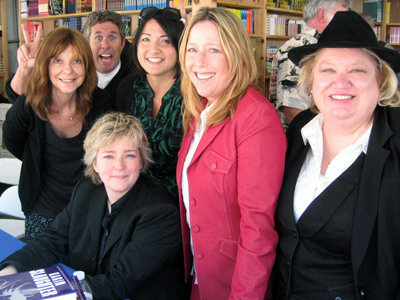
Alafair, that picture from the party at Mystery Bookstore’s LA Times Festival of Books party a few years ago is still one of my favorites! And I still laugh about that time I was too nervous to even talk to you.

Louise, you continue to be an inspiration…not just to me, but to the whole extended Murderati family. You are so much stronger than you even know.

Tess, your quote graces the cover of my debut novel, and as much as I am eternally grateful for that, what I remember most was an email you sent me while you were reading it. Me, a still to be published author, and you telling me that you were on tour but also in the middle of reading my book and “loving it!” I’m not sure my feet have touched the ground yet.

Steve. Steve, Steve, Steve, Steve, Steve. We have been good friends for more than twenty years now…dorm life, film school, astronomy class with a teacher who had a few too many on finals day…a gap…then a reconnection before the release of BEAT. A reconnection that has meant the world to me.

Alex, from the very first Thrillerfest to today, seeing you in the crowd always makes me smile. You’re a haven of light.

Cornelia…we have traveled a similar road. We have shared tears high above I-don’t-know which city. We have an understanding for which few words are needed. I am here for you, as I know you are there for me.

Allison, you’re energy, your spirit, your drive in the face of everyday life is to be more than simply admired. You are gifted on so many levels, and I’m glad to call you friend.

David and P.D. as I’m sure you’ve already found, you’ve landed someplace special. My only advice is to have fun.

And to a few Murderati of the past—Rob, I know enough to not say anything nice about you…well, except to say you have become a great friend; Toni, I haven’t seen you in person in years, I miss you, I miss your stories, I miss your laugh and your smile. You brighten things wherever you go; and Ken, your words are amazing, and your heart is huge. It’s always a privilege just being around you.

And finally, to you, the members of the Murderati community, you are the reason we are all or have been a part of this blog. There are not enough words to thank you properly, so I’ll merely say, “Thanks,” and hope you know what I mean.

Okay. All that said, it’s not like I’m completely disappearing. I’m sure you’ll see me in the comments, and, hopefully, my friends here will allow me back now and then to let you know how things are going.

If you’d like to bookmark my personal blog where I sporadically post news click here…no pressure, though.

Until I see you again…