Author Archives: Murderati Members


Lessons From Vacation

by Alafair Burke

One More Day.  No, that’s not the title of a sequel to this novel, David Nicholls’ One Day, one of my 2010 favorites.

The phrase “one more day” has become something of a running joke between my husband and me, because every time we take a trip, I tend to say as we’re boarding the plane home, “We just need one more day.”

I was never much of a traveler.  My parents, both on academic schedules by then, would throw us in the car as kids and drive around all summer, but once I was on my own, I pretty much stuck to home, taking a trip or two per year, almost always to visit my siblings and/or parents.  I was thirty years old before I had a passport, and then it was only to attend a legal academic conference conveniently scheduled in Barbados.

Once I published my first novel in 2003, however, I started racking up those frequent flier miles.  If memory serves, I went to twenty cities or so for my debut novel.  My UK publisher brought me to London.  It’s not as if book promotion travel gives you any opportunity to know a city.  It’s just airports, hotels, cars, bookstores (yea!), and, if you’re lucky, a walk around the business district. 

Think this:

Not this:

Yet somewhere along that road, I turned into one of those people who likes to travel. I found myself wanting to linger in each city, yearning for time to acclimate to my new surroundings.

But my increasingly uttered “one more day” mantra has me wondering whether I not only like to travel, but need to.

I just opened my credit card bill to learn that in the last month, I booked five different flights, all to be taken before the end of April.  Those five upcoming trips don’t count a law-lecture gig in D.C., a book conference in North Carolina, or other short car-trips I’ll inevitably book on weekends.

I say inevitably because, damn, I’ve turned into one of those people — the type who is always thinking about the next trip.

And I’m not happy about that development.  There’s a thin line between adventurous and restless, and I fear I’ve crossed over it. 

So the question is ‘Why?’  I live in an amazing city.  I love and need the company of my husband and dog.  I like my apartment and my neighborhood and my cabinet full of cozy sweaters. I miss my array of health and beauty products when I’m living out of a carry-on bag with only a quart-size ziploc of stuff to make me purdy.

Some of my travel desires are undoubtedly healthy and legitimate.  I like nice weather. 

This:

Whereas New York currently looks like this:

I enjoy the company of friends and family who live elsewhere.  It’s usually easier for me to go to them than vice versa.

One of my besties, Michael, and I golfing in Florida with another Florida Michael

Some of the Burkes at Burkeapalooza in Banff

But part of me realizes that this new desire to travel is distinctly related to the fact that I now work primarily from my apartment.  When I was still a practicing lawyer, I spent most of my waking hours at a desk or in court.  Once I walked into that courthouse, I cranked.  I was a machine.  I planned my work, and I worked my plan, all so I could leave at a reasonable hour.  I felt freedom hit me when I walked out that door.  Coming home was paradise.  At home, I could relax.  At home, I could turn off and let it all go.  Namaste, sistah.

Now?  Not so much.  Just down the hallway from my seemingly relaxing, minimalist living room is a cluttered office with a to-do stack that averages eight inches high.  In that office is a keyboard that I can always — always — have my hands on for just a few more minutes.  I can type just a few more words.  Finish just one more paragraph so I’ll be a tiny bit closer to the finish line.  In just one apartment, I have two computers, an iPad, and a phone, all constantly downloading emails from five different accounts — emails that if answered now, will not need to be answered later.  

Home is now the office, and the office is now home.  I no longer crank during the day.  I go to the gym.  I walk the dog.  I Facebook and Tweet way, way, way too much.  And I no longer turn it off at a reasonable hour.  I stay at my desk even after the husband happily declares he’s home.  I fiddle with my phone when we’re supposed to be watching a movie.  I take academic work to bed with me and read under the covers with a flashlight.

But, man, when I’m on vacation, I draw clear lines.  I’ll set a word goal on the plane.  The minute my laptop hits the mark, I slam that bad-boy shut and watch me some airplane TV.  I check emails but don’t answer them.  I read for pleasure.  I chill like a vill, baby.

Don’t get me wrong.  I love controlling my own schedule.  When I’m not being Professor Burke at the law school, I like working at home in my PJs with Duffer sitting at my feet.  I’m way, way spoiled.

But I’d like to take the best of my old practice days and pull them into my current teaching-slash-writing existence.  I want to return some urgency to my work day  and bring the chill back to my evenings and weekends.  Even though I’m the boss of me, I want the boss to set some kind of schedule, and I want the employee to stick to it.  In short, I want to draw some psychological lines between work time and me time.

Any suggestions?


Where Blog Ideas Come From

I’m writing this blog Saturday night, in San Jose (two hours from home) because my oldest daughter has a weekend-long volleyball tournament.

They played six matches today (lost four, won two) and will be playing a minimum of four tomorrow. The team is new–most of the girls haven’t played together before, but by the end of today they seemed to have developed a rhythm and camaraderie that was lacking at the beginning. Tomorrow should be a lot of fun for all of us.

We got back from dinner with the team at eight, and I knew I needed to write this blog. So now I’m sitting at the computer and have no idea what to write about.

I wrote five original blogs and answered two interviews for my January blog tour to promote LOVE ME TO DEATH. I’m kind if empty on the blog ideas.

Should I talk about my digital-only novella, LOVE IS MURDER, that was released last week? No, too self-promo.

When I’m stuck at home, I look at my book shelves. Just look at them, remember the books I’ve read and what I liked and disliked about them; books I haven’t read and why. I look at my desk and see work or a drawing from one of my kids. I skim through my iTunes thinking about music or the television shows I recently watched.

Should I talk about my two new favorite crime shows, DARK BLUE and DETROIT 187? Hmm–no, because I vaguely remember that Brett . . . or someone else . . . recently blogged about t.v., which was the reason I downloaded DETROIT 187 in the first place. I don’t know if I should kiss or curse whoever told me it was a must watch show. Fabulous.

Or, maybe I could talk about research . . . the research for my current WIP, Lucy Kincaid #3 IF I SHOULD DIE, or that I’m participating in another SWAT training session . . . I don’t know yet whether I’ll be a victim or a suspect! That’s in March. I’ve blogged a lot about research, so I’m kind of burned out on the subject. (But I will blog about SWAT after the exercises!)

The big problem? I’m not at home. I can’t just look around my office or go into the house and pour a margarita or pull a book off the shelf to jump start the muse into inspiring me.

So I asked Twitter.

One problem with Twitter is that first, I have just less than 2000 followers. Second, it’s after 9 p.m. on a Saturday night and I’ve learned that Tweets slow down at night and on the weekends. Hmm . . . does that tell me people Tweet at work? No! Can’t be! Or maybe people have lives outside the Internet? Really? 

In the twenty minutes since I posted my plea for a blog idea, I’ve had four:

@jennspiller suggests death by volleyball.

* Does this mean I’m suppose to write a short story about a murder at a volleyball tournament? Who’s the victim? Why? Where? How? With the net? Strangled? Even a short story would take a couple thousand words. Next?

@kendraelliott says “I don’t know how you write so many blogs. And you always keep them fresh.”

* Thanks, Kendra. I really needed that pressure tonight.

@APMonkey suggested “How you balance the toughness of your female leads with their femininity?”

* I do? Really? Wow! Great news. I’ll go ask my characters and get back to you.

@rrsmythe wrote: “how about…how writers pick their genre…or does it pick them based on their personalities…;)”

* Is that a loaded question or what? But I think I can answer it fairly quick. I don’t think personality has much to do what writers write. I don’t think romance writers are naturally more romantic, or mystery writers naturally better at solving puzzles. I think genre comes partly from voice, partly from personal interest, and partly from talent–i.e. what they’re good at.

Because if my personality shaped my genre, I must be a very curious, very odd, very morbid person. (As well as cynical and hopeful a the same time, which is just too much like a split personality.)

So thank you Tweetheads for helping me tonight. I now have over seven hundred fifty words about nothing. I would be upset, but Seinfeld–the show about nothing–seemed to do pretty well for many years.

Sometimes, ideas just pop into my head and I barely have to think before I write; other times, the ideas take longer to percolate. Both for blogs, and books.

Since I don’t have any good questions for you all, why don’t you ask me something? Or maybe something you’d like me to write about in the future? I’ll have my iPad courtside during the volleyball tournament ready to answer. And, if you’re stuck like me, go out and have a great day.


How ’bout those resolutions?

By Alexandra Sokoloff

Yike, a month gone already.  I’m still trying to get the hang of the new year. 

Well, good excuse for a check up on things, so I’m going to be eclectic today.

First, I would not be a human being if I did not say that I have been riveted and awed by the power of the Internet as used by the citizens of our planet as a tool for revolutionary change in the last few weeks.  I would never disparage our own quests to create art and entertainment; it’s one of the ultimate promises of a free society.   At the same time, anything I talk about today pales in comparison to what’s going on in Tunisia and Cairo.   I feel unworthy to use Facebook or Twitter.

That being said – an update in no particular order.

As part of my New Year intentions, I said I wanted to dance more this year, and that, at least, is one resolution (I mean intention) I’ve kept.  I signed up for a two-hour, three-day a week college jazz class. 

College dance classes are no joke.   So many people want in that you’re only allowed two absences.   Considering my schedule, which I am afraid these days even to look at, this is a HUGE commitment.

And yes, I am sore.  

I remember this feeling.   Specific pain, unspecific pain, a nagging worry about hairline fractures in the top arches of both my feet…. mitigated a lot by the fact that all the other dancers in the class are constantly discussing their specific and unspecific pains in detail, a topic of conversation second only to sex, of course, and dance shoes as always coming in a close third.

On the other hand, after just a week of this, I feel my center all the time.   I enjoy every move that I make – sitting, standing, walking, driving – everything in my body feels the way movement should feel like.   One of the all- time great feelings on the planet. 

And at least for 6 hours a week and the few hours after class, I am calm.  The absolute immediacy of dance relaxes me in about the same way that sitting in sand and staring at the sun on the ocean does.

I also have to say that anyone who thinks college is the peak of a human being’s physical power is delusional.  At twice the age of some of these kids, even with possibly broken bones in my feet, I am still about ten times stronger.   It makes me worried for them out on the street, actually.

But beyond just musculature, I don’t have to struggle with the thing that makes dance or any art so hard:  doing everything all together at once, without having to think of the component parts every single second.  In dance they call it “muscle memory”.   And I wish there was a term for it in writing.   Well, maybe there is, I’d love to hear it!

I don’t know at what point in my career that kicked in for me, the point I realized I can always finish a script or book – that no matter how bleak it looks I will be able to pull it off.   No guarantee (actually no hope) of perfection, but completion, for sure.   All elements pulled together into a whole that is recognizably a story.   That’s a good thing to remind myself of today, before I start writing, because I’m doing something I haven’t done before and it’s VERY uncomfortable, like trying to do a triple turn (on the left!) when you’re used to doing doubles. 

What I’m doing is a double point of view, when all my other books have been a very close third person from a single focus.   Actually, that’s not true – The Shifters alternates between the female lead and the male lead, but this feels completely different, much, much harder.  I guess because even though I am inside both characters’ heads, I am holding back so much information inside one of the characters.  Not exactly an unreliable narrator, but an opaque one.   And I’m not sure if that character’s POV should be present or past tense.  And then there’s the nagging feeling that I might need to have another character’s POV as well, which feels completely overwhelming.

Anxiety is a constant companion right now.   It always is in a first draft, though, I have to keep telling myself that.   Also the world situation, not to mention the publishing industry situation, might have a bit to do with it.

But it doesn’t make writing any easier when in a way you have to teach yourself how to write every single novel – from scratch.   You have no idea of what the real problems are going to be until you’re actually in there fighting them.

Still, I sit down every day, and I do the pages, and if I have to do a lot more structural rearranging in the second draft, that’s doable. 

And I have to remember, the story chose ME, right?   Not anyone else.   I have to have a little faith that it knew what it was doing.

Another new thing this year – I am back in school in a completely different way: I’m teaching a class on story structure at Otis Parsons, the LA art school.   And for those of you who wonder what’s the point of blogging, I was asked to teach because the chairman of the Digital Media Department read my blog. 

While I’ve been teaching several workshops a year across the country, they have been very short intensives, geared toward adult aspiring and professional novelists.   I’ve never taught a college class before, so it’s a huge luxury to have a whole semester to explore story – and specifically visual storytelling – with such bright and committed young filmmakers.   (But thank God it’s only a half day a week!).

Because of the class I’m watching a lot more movies these days (TCM is the world’s greatest film school, if you ask me), and I can’t help thinking that this intense, targeted exposure to film is going to work a profound change in my creative process and product, just as the discipline of taking an intensive jazz class three days a week will have a profound change in my dancing and body makeup.  And that’s an exciting thing.  I don’t know what those changes are going to be, but if you’re not constantly growing as an artist, you’re dead.  So I’m really grateful that even in the fog of confusion that was last year, I have been put in places that I know will take my work to the next level.

And it must be said – I’m grateful for Southern California weather.

So I’d love to get reports on everyone else’s New Year, so far.  How are those resolutions?  Or did the year decide to make some changes for you all on its own?

And I’ll copy Brett’s reminder:  to anyone in or around Los Angeles on Monday, it’s The Mystery Bookstore‘s final day, and there will be a party starting at 6 – if not earlier – and going until whenever.  Brett, Rob, Steve, and I will all be there along with a lot of other writers and fans.   And they’re giving away some fabulous prizes.   Hope some of you can make it!

Alex

THE ILLUSTRIOUS KELLI STANLEY!

By Stephen Jay Schwartz
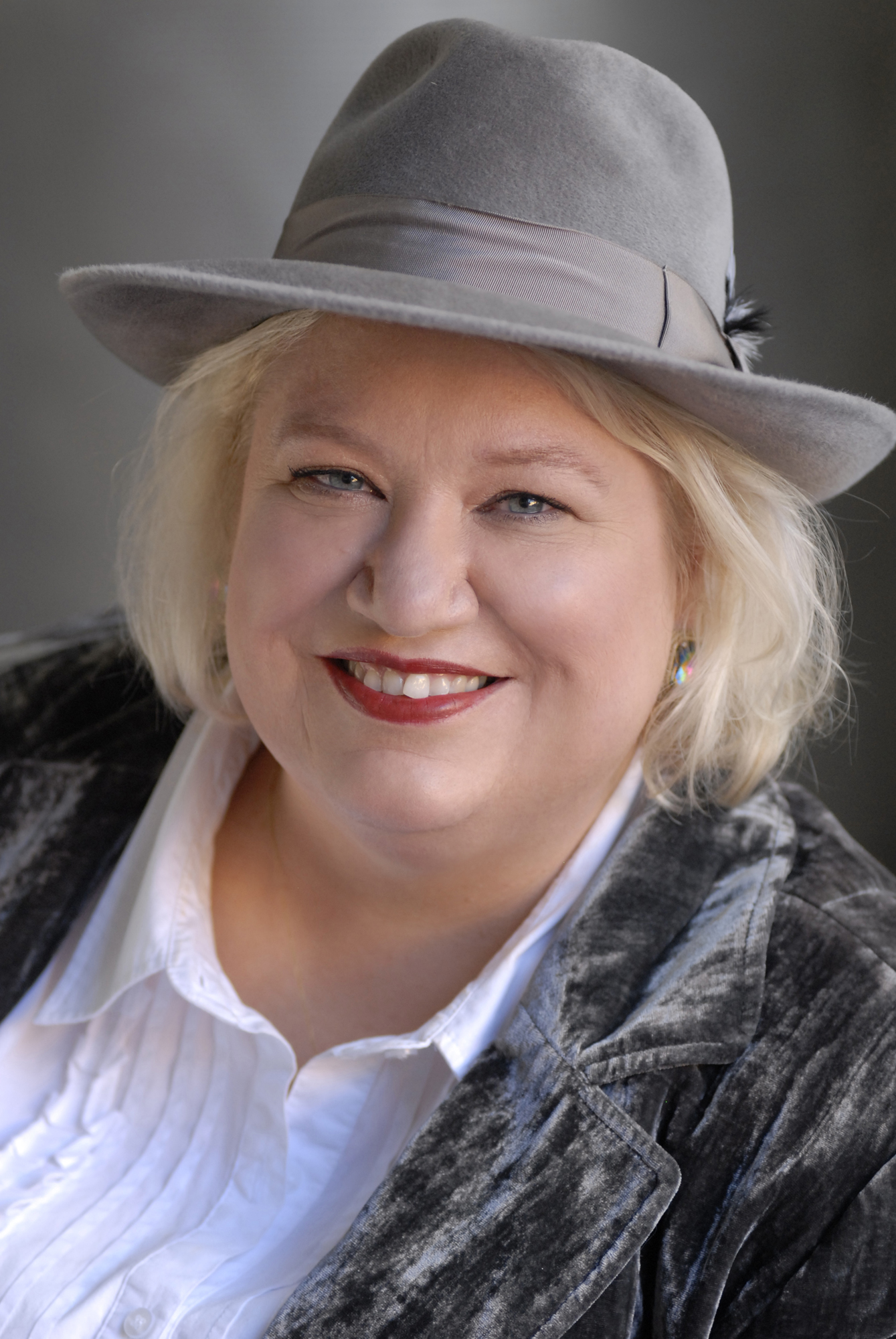
 

If you’ve been to any writers conferences in the past couple years you’ve almost certainly bumped into the charismatic and exceptionally talented Kelli Stanley.  In her fedora hat and 1940s couture, Ms. Stanley can usually be found amidst a crowd of companions.  She’s friendly and incredibly supportive to other authors in our genre.  And she’s one smart cookie.  She’s on the fast-track to success with two published novels and two more coming out this year.  Her first novel, NOX DORMIENDA, was a Bruce Alexander Memorial Historical Mystery Award winner and a Macavity Award finalist.  Most of us know her from her highly acclaimed second novel, CITY OF DRAGONS, which set the world on fire last year.  Set in San Francisco in the 1940s, CITY OF DRAGONS introduces the unforgettable protagonist Miranda Corbie—ex-escort and now private investigator.  My kind of gal.

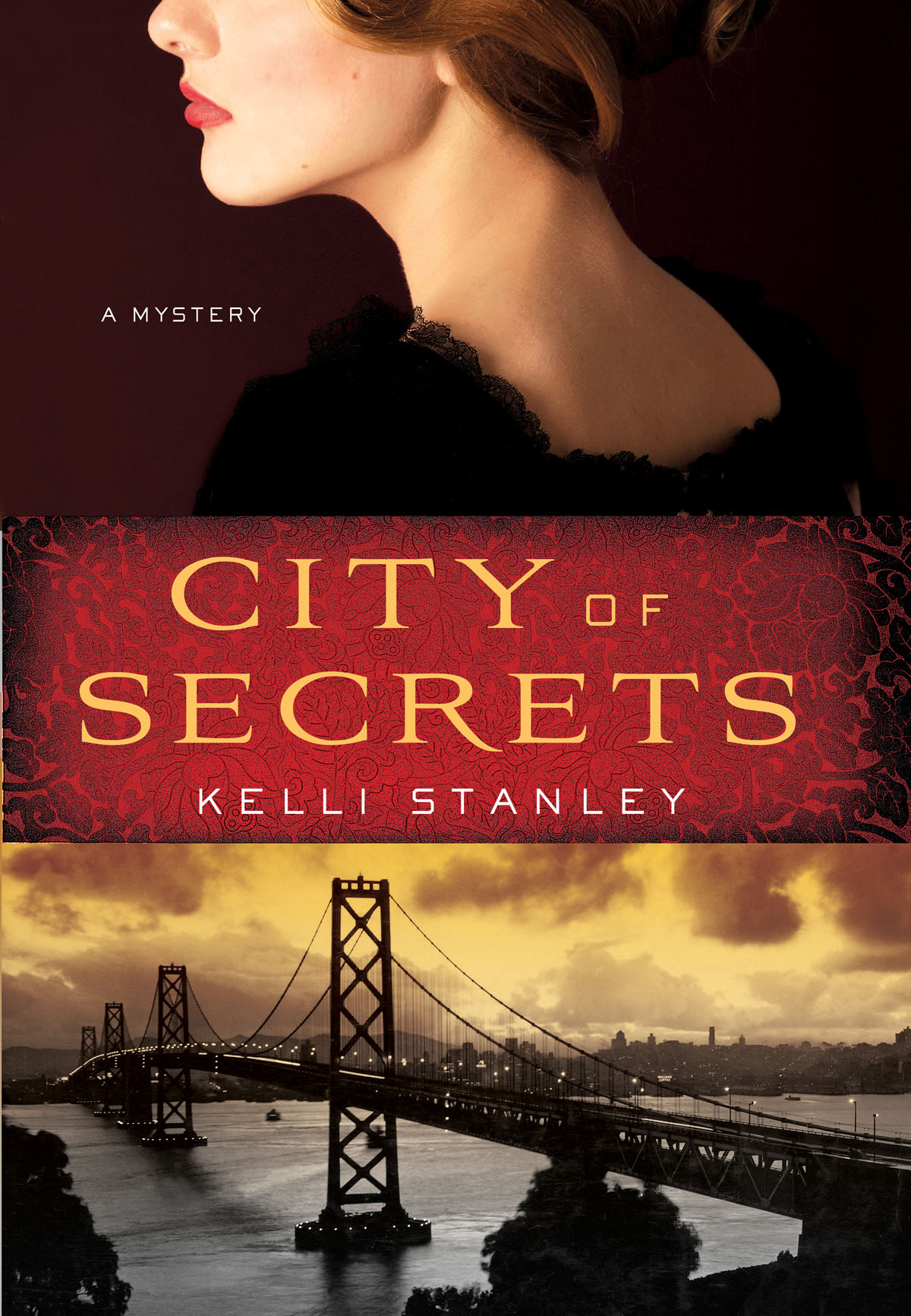
2011 will see the publication of two sequels – THE CURSE MAKER, a sequel to her first novel NOX DORMIENDA, and CITY OF SECRETS, sequel to CITY OF DRAGONS.  THE CURSE MAKER releases on February 1st, 2011.

Please join me in welcoming Kelli to our family….

Kelli, you’ve got to be the most energetic and optimistic author I’ve ever met. What gives you such enthusiasm?

Massive quantities of drugs and alcohol. Er—that’s a joke, folks!

Seriously, Stephen, thank you. I’m by nature a positive and highly motivated person—type A and all that—and when I see you and other friends I’m generally feeling the high of the community … I’m a people person, and I enjoy the social aspects of the business very much. 

What you don’t see, however, is how often I—like every other writer I know—get depressed, let down, disappointed, scared, panicked and question whether or not I should keep writing or whether what I’m writing is any good, or whether I should just cut my ear off and paint sunflowers.

Insecurity should, by rights, decrease as you get older … but we’re in a very odd business with very few benchmarks, which is one of the many reasons why you can easily go mad … as if hearing voices in your head isn’t enough.

I’m like everyone else—I’m extremely insecure, and question what I’m doing here on a daily basis.  However—I also yell at myself for doing so, and I try very hard to focus on the positive. My family puts up with a LOT.

You graduated with a Masters degree in Classics. How has that influenced your writing style and do you feel that it has contributed to your success as a storyteller?

Classics is a field composed of many parts—history, archaeology, cultural and gender studies, literary theory, philology. The philology aspect (it literally means love of words) teaches you, in a profound way, how subtle language can be. English is like a light saber as opposed to a surgical laser … it’s strong, beautiful, and comparatively clumsy in comparison to highly inflected languages like Latin and ancient Greek.

As writers, we make choices on every page … but Cicero or Sophocles made many, many more. The possibilities and subtleties of rhythm and diction and nuance in Latin and Greek would take your breath away.

I grew up reading poetry, and have always been drawn to the sound of words, the music of them, and certainly Classics—and learning and teaching and translating Greek and Latin—enhanced that. Chandler was always very proud of his Classics background—he boasts about it in at least one letter—and I think that experience informed his lyricism and precision.

For myself, I believe it strengthened my ability to “hear” the rhythm of a sentence, and taught me how one word, one position of a word, can affect an entire passage.
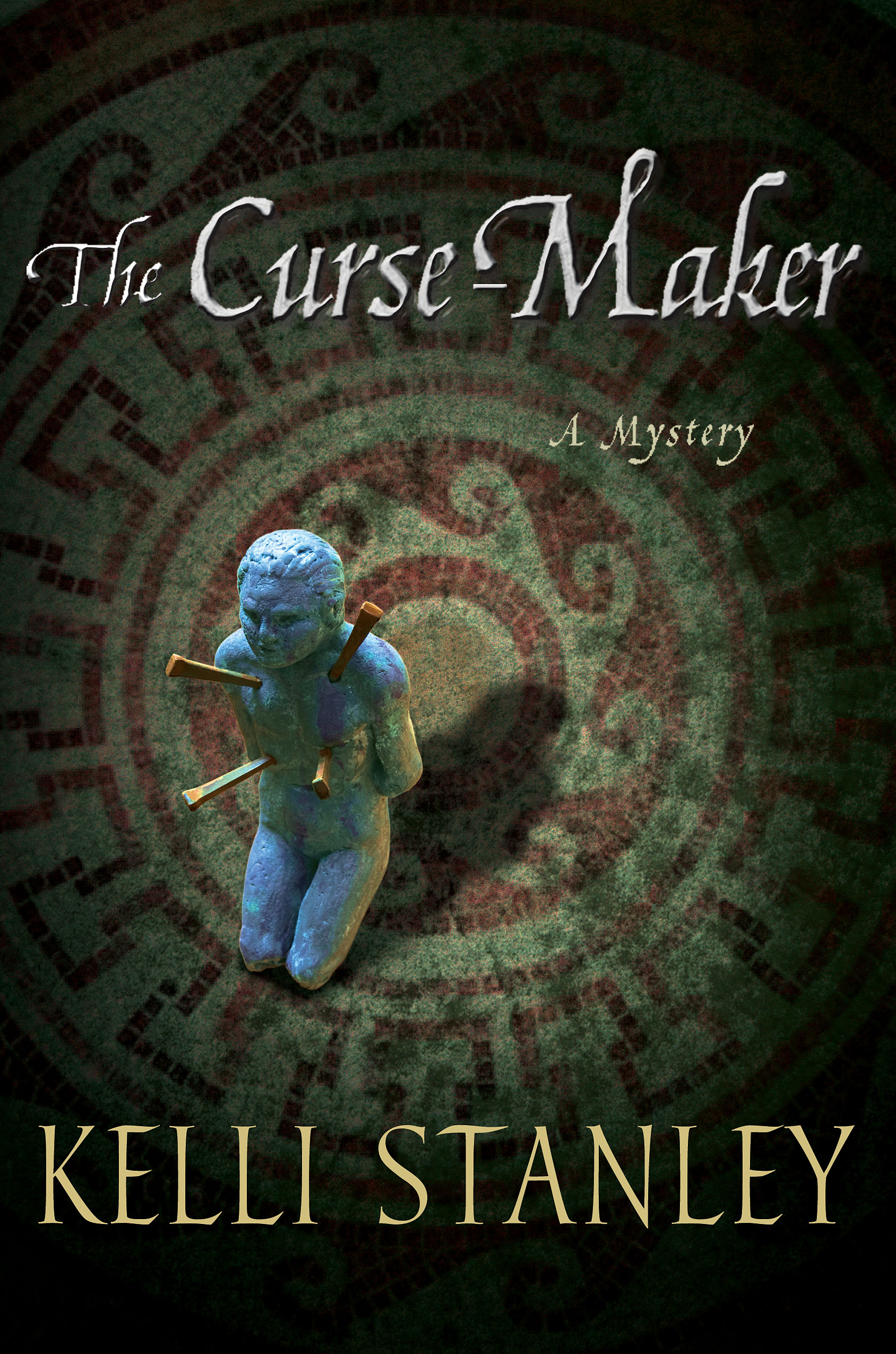
 

Can you tell us a little about the history of THE CURSE MAKER? I understand it is the second in a series; the sequel to your Award Winning debut novel, NOX DORMIENDA. Why did you choose to continue the series?

Well, there are pluses and minuses to selling the first book you write. The plus was that I didn’t have to wait. The minus is that I had no “stock” upon which to draw once I was published.

The only book I had waiting in the wings, so to speak, was the sequel to NOX, since I’d always intended it to be a series. I wrote the sequel during the fall of 2006, after a summer trip (and Master’s graduation present) to England.  It was my swan song as a classicist, and I gave a presentation at the University of London. Then I traveled to Bath, where the curator of the museum very kindly took me behind the scenes and gave me some hands-on time with the curses—ones not on display.

NOX had not yet secured a contract, but I wanted to write the sequel while the England trip was fresh—and before I lined up a day job. So … flash-forward to 2009. I sold CITY OF DRAGONS in January of that year, and my editor liked NOX, so I thought, “Why not see if my publisher might want to take up my first series?” I rewrote the sequel extensively—a complete revision—and, to my everlasting joy, they bought it. That’s THE CURSE-MAKER.

I’ve been told it’s highly unusual for a publisher to produce two series by the same author—especially this early in my career—so I’m immensely grateful to my editor and the folks at Thomas Dunne/Minotaur/SMP for the support. Because NOX was originally published by Five Star (to whom I will also and forever be profoundly grateful), I consider this more of a relaunch than a sequel.
What is “Roman noir” and how did the term originate?

“Roman noir” came about through marketing cogitation. I was trying to figure out what really set my first book apart. At first, I thought it was the setting and doctor protagonist, but Ruth Downie’s debut novel actually beat me to the punch. I thought my career was over before it had begun, when—like a lightning bolt from Jove! 😉 – I was watching a film at the Noir City film festival in San Francisco, and realized—that’s it! NOX DORMIENDA is an homage to Raymond Chandler (even the title could be translated as “The Big Sleep”)—and “Roman noir” was born. It’s a perfect fit, because it’s actually a tongue-in-cheek pun: “roman noir” is also a French literary term used to describe the hardboiled detective story—exactly the style of writing I was trying to capture for Roman Britain.
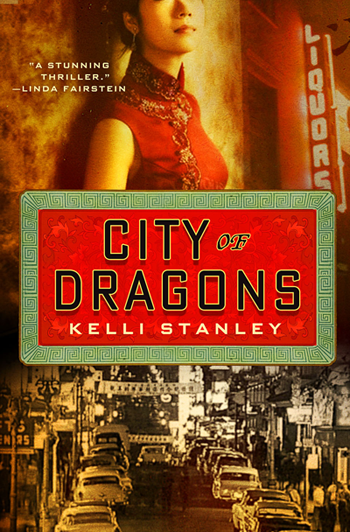
So many of us know you from the tremendous success of CITY OF DRAGONS, your hard-boiled tale of a female escort-turned-investigator set in 1940s San Francisco. How is your Roman series different from CITY OF DRAGONS and the upcoming sequel, CITY OF SECRETS?

Thank you, Stephen!  CITY OF DRAGONS and the Miranda series is my “dream” work—it’s the root of what motivates me to keep writing. The period, the politics, and my attempt to recapture the past as it was, rather than how we wish it to be, make it a dark journey, but one guided by Miranda’s personal code.

My books generally offer some ledge of sanity or perspective to cling to. When you look around—either in 2011 or 1940—you see so much horror, venality and despair that giving up—relinquishing the fight or giving in to it—would be easy. Writing about despicable people doing despicable things is easy. What isn’t always easy is making readers care about the pain and humiliations of our fellow flawed human beings, about the rules of behavior that can sometimes make us warders of our own souls. This is the kind of noir I try to write with Miranda.

The Arcturus series—as the “Roman noir” tag line implies—is lighter by nature. You’ll find dark corners—some very dark corners—to explore, but because Arcturus himself is a much less despairing individual—and one blessed with a healthy relationship—the darkness isn’t so much at the core of the book.  And there’s much more humor … sarcasm tends to be one of his coping devices.

As a writer, it allows me to have fun with the conventions of the genre, pay my respects to it (THE CURSE-MAKER was inspired by Red Harvest, among other titles), and take a small writing break from my 1940 series.

What are the differences and challenges you find in writing male versus female POV?

I think women tend to see themselves reflected in life, rather than straight on. Men—at least straight men—generally don’t. They see out of their own eyes. Gender construction was a particular interest of mine when I was getting my degree, and I don’t just mean the “Venus-Mars” thing.  I start with the human being and go from there. Character voice tends to emerge naturally. I don’t find it more or less challenging to write male or female POV, but I do think the female voice presents certain challenges … that aspect of watching yourself being watched that I mentioned before. The idea of vulnerability, the ease with which women can embrace manipulation instead of outright assertion.

It is, as they say, “complicated.”

Is it even possible to write a hardboiled novel with a happily married protagonist?

I hope so, because that’s what I’ve tried to do! I figured if Chandler intended to marry off Marlowe, there’s precedent.

The darkest parts of THE CURSE-MAKER are dark, indeed—Aquae Sulis is a health resort, last chance for the desperately ill—and desperation can make your skin crawl. Brutal murders, the lengths to which people will go to humiliate one another … there are a number of themes that are quintessential noir.

Arcturus doesn’t have to completely experience it himself in order to recognize it and understand it. And some of his troubles concern his wife … he comes to Aquae Sulis because he IS desperate to help her. And frustrated because he doesn’t know what’s wrong.

Again, their relationship is that ledge I was talking about earlier. It’s what we can cling to, sometimes with our fingernails, in a jagged little world.

What influenced you to write such diverse topics as series novels?

I wanted to use my degree—I owe a lot in student debt! So NOX was an attempt to use what I know and combine it with what I feel. The Miranda series does that, too, though my formal education is not in twentieth century history. I’ve always been drawn to the period, though … even my house was built in 1941.

The common thread is noir. My first series uses the style to make the period more accessible, and the second series is a restructuring of both style and period—1940 with the gloves off and not illuminated with a key light.

I love series writing, because I love character. I’m fascinated by psychology, and I enjoy seeing how events shape and change people. They shape and change my protagonists, certainly.

I don’t intend to always write historicals. I’d like to write a thriller set in Humboldt County, California, where I spent my adolescence. And a contemporary stand-alone, and a graphic novel … if I’m very, very lucky!
What has it been like to put out two books in one year? How did this
opportunity come about?

It came about because I’m lucky to have an understanding and supportive editor. And I had the chance, so why not? I didn’t want to wait for a full year before the next Miranda. She’s the constant in my life and career. So we’re launching THE CURSE-MAKER now and CITY OF SECRETS in September, just in time for Bouchercon.

As far as what it’s like … so far, so good, but it is a bit confusing to go on tour and be asked about first century Roman Britain when I’m thinking about CITY OF GHOSTS (the third Miranda that I’m working on).
 

What’s next for Kelli Stanley?

The paperback for CITY OF DRAGONS should be out August 30th, followed by CITY OF SECRETS. The sequel takes place in May of 1940, just a few months after CITY OF DRAGONS.

A young girl—a model at one of the “flesh” shows on the Gayway at the World’s Fair on Treasure Island—is found stabbed to death with a souvenir ice pick … and an anti-Semitic slur scrawled on her skin. I think Miranda is a bit more confident in this novel—thanks to the events in CITY OF DRAGONS—and she needs to be.

The events take place in San Francisco and Calistoga (another spa town in the Napa Valley), and is based on research on American populist fascism of the era.

Many people don’t realize how strong some of these extremist organizations were, particularly on the coasts. Certainly the anti-Semitic and pro-Hitler radio commentator Charles Coughlin enjoyed widespread popularity across the country.

I’m currently writing CITY OF GHOSTS. I hope to write Miranda forever! And if THE CURSE-MAKER proves to be successful, we’ll see how far we can take Arcturus and Gwyna.

Thank you, Stephen, for having me over at Murderati—you guys are the best, and I’m honored to be here!

Kelli – thank you so much for joining us.  I am taken with how well you articulate your thoughts about your work.  I love your writing and I’m happy to be one of the voices out singing your praises!


Jersey-licious with Brad Parks

by Brett Battles


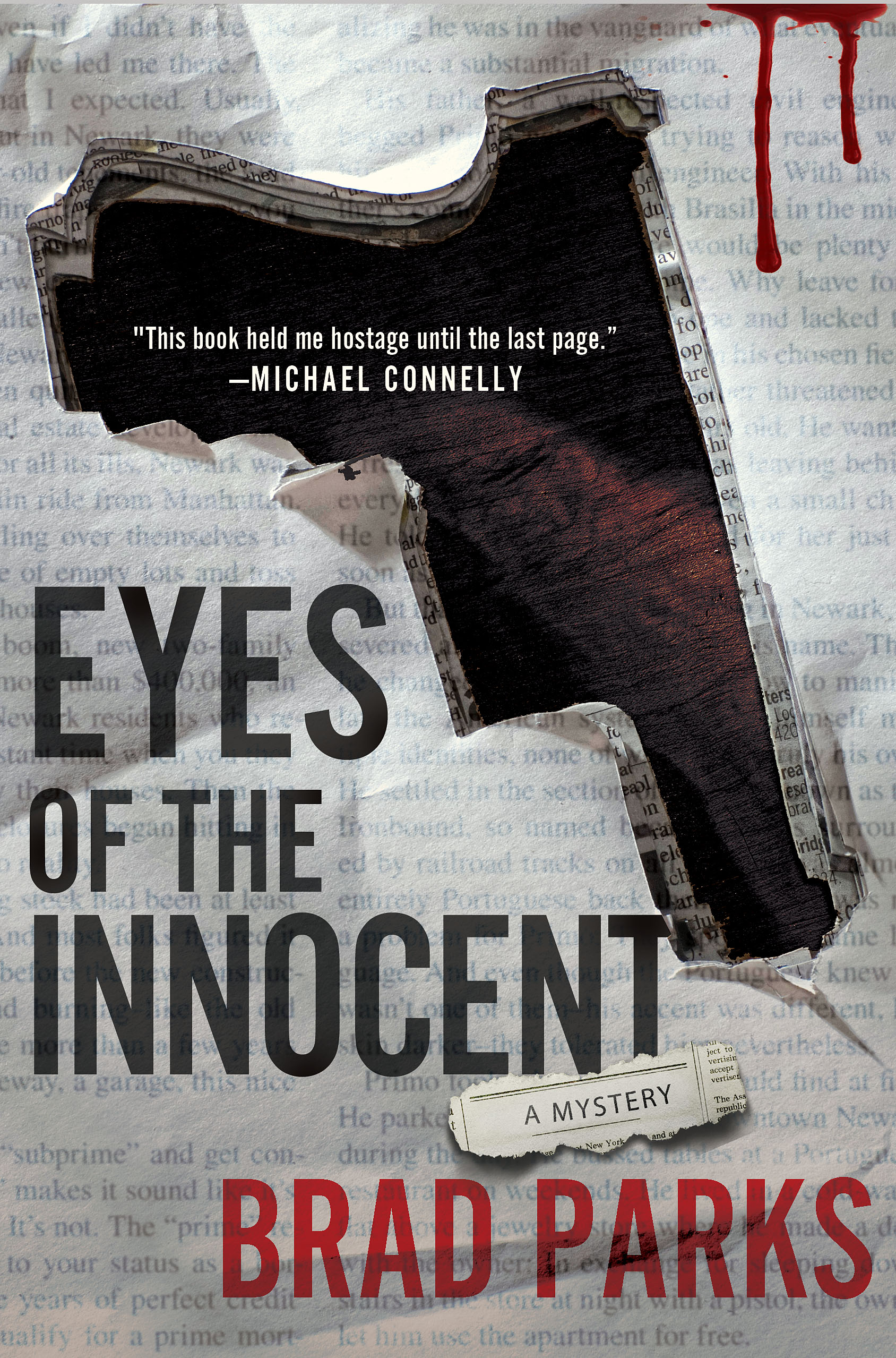
Next week my friend Brad Park’s latest novel, EYES OF THE INNOCENT, will be released. This is the second in his Carter Ross series, the first of which, the award winning FACES OF THE GONE, will be available in paperback the same day. Thought today we’d get to know a little bit more about Mr. Parks and Carter Ross and the state of life in New Jersey.

First, if you’re a author wondering how you might raise your profile, and have considered doing a blog tour, but are unsure how to make that happen, here’s something you might be interested in. My good friend Dana Kaye will be hosting a webinar TOMORROW on just how to do that. Click here to find out more information. (http://blogtour101.eventbrite.com/) Murderati readers can receive a $5 discount by entering the discount code: murderati

Now to Brad…

Brad, welcome to Murderati, and congratulations on the upcoming release.

Most authors, if not all, started off as huge readers, and each seems to have had one or two favorites that really influenced their desire to write. So, who is your gateway author, and what was it about their work that grabbed you?

I got hooked by a wizened Florida boat bum named Travis McGee and the man who created him, John D. MacDonald. My Dad was a big John D. fan and, by some coincidence, the “M” part of the family bookshelf was just about eye height to a 13-year-old. I’m not sure what grabbed me as a kid (other than perhaps Travis’s talent with the ladies), but as a grown up I marvel at MacDonald’s ability to imbue his work with sense of time and place — you really feel what it’s like to be in South Florida in the 50’s and 60’s when reading his stuff. But you probably wouldn’t appreciate something like that, Brett, inasmuch as Quinn never leaves his living room.

Ah, yeah, I’ll let you bring that up with Quinn yourself. But I’m with you on Travis McGee. Think I’ve read the series all the way through at least three times. So where did Carter Ross come from? He’s certainly is completely the opposite of you…oh…wait…

Yeah, we’re quite different. For example, while we’re both stiff, starchy, khaki-wearing WASPs with identical physical traits — 6-1, 185, brown hair, blue eyes — it turns out Carter is not left-handed, whereas I am. So, as you can see, any similarities between me and my main character are…

Oh, hell, fine. You got me. I guess the funny thing is, I never really gave much thought to what I was creating in Carter. During my days as a newspaper reporter, I always knew I wasn’t the story, and I think that sensibility was strongly in place when Carter Ross began forming. I was more interested in the story he had to tell than in who he was as a storyteller. So I figured if I made him like me — the most boring white man alive — the reader would find the story more interesting, too. It never occurred to me readers would latch onto the guy. (And, in truth, most of them haven’t — by ratio, Carter’s cat, Deadline, enjoys a 5:1 advantage in reader mail).

A series, was that always the plan?

Definitely. New Jersey in general — and Newark in particular — are dream locales for a crime fiction writer. Virtually every ethnic group, ethnic mob, street gang and category of malfeasance can be found somewhere in the great Garden State. Might as well keep using it. I can’t imagine ever running out of stories for Carter to cover.

Every time I see you a conference I always get the feeling you have a team up in your hotel room making sure you’re looking as sharp as you can before you step out the door. True or false? If true, elaborate. If false, explain yourself.

The BradParksBooks.com crew really does a great job, doesn’t it? I have Manuela on hair — I’d be lost without her. Stephen picks my outfits. And for my money, Hector is the best traveling manicurist in the business (I hired him away from Patterson, take THAT Jimbo!). Unfortunately, budget cuts at the publishing house necessitated letting go of Johnny, my trainer and nutritionist, so if I look a little soft around the middle, that’s why.

I mean, what, you think I want to be one of those authors who rolls out of bed and stumbles down to the conference bar in jeans, sneakers, a long sleeve T-shirt and… oh, hey Brett! Looks good on you, though.

Nice dropping in of the website, very subtle. So I’m told you’re the first person to win a Shamus and a Nero Award for the same book…can’t remember exactly who told me, but…Congratulations. Has that helped you get any respect from your friends and family? Or is it business as usual?

Yeah, every once in a while my wife wanders by the Nero Award — a very handsome brass bust of detective Nero Wolfe — and mutters, “Couldn’t they have given you a check instead?” No, seriously, it was very gratifying to win those awards. And I think it has given me a little extra credibility, not so much with friends (who pretty much know how full of crap I am), or with family (who taught me how to be full of crap in the first place), but with booksellers and librarians and folks of that ilk. It’s a very crowded marketplace, as you know, and awards help you stand out a little bit. Besides, I like how the Nero Award looks on the mantel.

Give us a little lowdown on EYES OF THE INNOCENT. Was there anything specific that inspired the story?

Yes and no. As a journalist, I did a lot of reporting on the subprime mortgage crisis, and the story starts with a character who gets in trouble in part because of a subprime mortgage. I also did reporting about house-flipping and political corruption, and those are in there, too. But it’s not so much anything specific — like one particular story I covered, as was the case in my first book — and more an amalgam of real-life things, which I then chopped up and turned into one big fictional stew.

What’s up next for you? More Carter?

Carter Ross Nos. 3 and 4 are written and waiting to go. I also have a Young Adult that my agent is shopping (it’s called “Secrets High School,” and I promise there are no vampires in it). Once I’m done with my tour for EYES OF THE INNOCENT, I might try a stand-alone. Or maybe I’ll start a series about a guy who I’ll call a “cleaner.” He works for this agency and, well, I don’t want to get into details, but do you think that’ll work?

You just try it, Mr. Parks. I’ve already done the research, so if you go missing you’ll never be found. Just saying…

Thanks for stopping by Brad!

Thanks for having me. And, hey, if you want Stephen to, you know, work on your wardrobe a bit, I’m sure he’d be happy to help.

Appreciate the offer, but I’ll pass for now.

All right, Murderati, if you have any questions for Brad, let ‘em rip!

(Reminder to anyone in Los Angeles on Monday. It’s Mystery Bookstore’s final day, and there will be a party starting at 6 – if not earlier – and going until whenever. Rob, Steve, Alex – I believe – and I will all be there along with a lot of other writers and fans. Hope you show up too.)

Music, Music Everywhere

by J.D. Rhoades


As I’ve mentioned before, I’m one of those people who likes to have some music on when I write. For one thing, having the headphones on is good for drowning out the other noises in the house. There’s also something about music that tickles the creative lobes of my brain and stimulates better writing.

One of the things that’s really delighted me about the Internet in recent years is the way it’s expanded access to music. I’ve discovered dozens of new artists through friends posting their favorite music on Facebook or their blogs. Sites like Amazon.com, Rhapsody and iTumes  have made it easy–perhjaps too easy– to buy music and download it to your Mp3 player or computer with one click of a button.

But even beyond that, I’ve discovered a number of ways to find and enjoy tunes on the Web. Some do charge a subscription fee, but the majority are free. So, for those of you who may not be familiar, I’d like to share with you some of the stuff I play through the computer while I write and/or goof off.

I’m not trying to start one of those endless and tedious debates over Apple’s hegemony, but I honestly don’t understand why anyone bothers with iTunes when there’s Rhapsody. You can buy and download music at both places, but Rhapsody, for a modest monthly fee (10-15 bucks a month, depending on your plan), allows you to “stream” literally millions of songs–everything from classics to recent major releases– to your computer, as many times as you like. One plan allows you to download and play music on a variety of Rhapsody-compatible portable players for no extra charge. All you have to do is plug the player once every 30 days to renew the subscriptions. If you want to burn tracks to a CD, you do have to purchase them, but it’s only  99 cents for most tracks.  The  Rhapsody software also plays your already existing MP3 library. 

If you want to hear a mix in a specific genre or style, check out Pandora.com.  You sign up for a free account, and then create “stations” based on your preferences. Plug in a specific artist or song and something called the “Music Genome Project” will find it, play it, then find songs with similar attributes and play those. As I write this, I’m listening to my “Neville Brothers” station, which treats me to (of course) the Nevilles, along with artists like Little Feat,  Jimmie Vaughn, The Subdudes, etc. I also have a “Deathcore Metal”  Station, a Chicago Blues station, and many more. You can spend some money and upgrade the service, but I find the free one suits me just fine. It’s also available for streaming through a variety of Wi-fi enabled BluRay players.

If you want to be the DJ, there’s always blip.fm. Sign in, search for a song you want to “blip”, and use it to start your own playlist. As you get more familiar with it, you can meet and subscribe to other DJs whose music you like, gather your own listeners, and save songs you hear to your own favorites. There’s even video if you want it. .

If you really want to stretch out and be adventurous,  let me recommend shoutcast.com, It’s another free service that provides you with access to online radio stations across the world. Some of the feeds are live from broadcast stations with a ‘net presence, some are homegrown stations created by hobbyists. You can get Top 40, Country, whatever you’re into, but the worldwide natrue of the stations lets you search for and easily find some interesting stuff. For instance, I’ve lately found myself listening a lot  to Serbian pop music from Radio Desetka in Belgrade.  Wonderfully cheesy.

One of my favorite memories of my college days was hanging around and doing the occasional fill-in shift at the college radio station, WXYC-FM. College radio at the time was a blast. Volunteer student DJ’s, freed from the tyranny of commercial playlists, would play damn near anything. True, the results could be a little hit or miss, but that was part of the fun. One of my favorite jocks from those days, a guy named Keith Weston, has preserved some of the spirit of those days with his website, Deeper Into Music. The website’s banner promises “obscure songs mixed with familiar chestnuts,” which about sums it up. It’s a great mix of some of my favorite bands from back in the day mixed with some very tasty modern indie rock. Check it out.

So tell us, dear ‘Rati: where, if at all, do you go to find music on the ‘net? Any goodies you’d like to share?

Confessions of a Failed Tiger Mom

by Tess Gerritsen

A few years ago, I had the pleasure of sitting on a literary panel with Jed Rubenfeld, a soft-spoken and charmingly self-deprecating novelist whose debut historical thriller, The Interpretation of Murder, had just been released.  After the panel, he invited me to an address in uptown Manhattan, where his daughter was giving a violin recital, which unfortunately I couldn’t attend.  I thought it an unusual invitation to get from a fellow novelist — until he told me that his wife was Chinese.  And then I thought: “well, of course,” and the invitation no longer seemed at all surprising to me.  Because I’m the daughter of Chinese parents, and lord knows, I endured a childhood of countless violin and piano recitals, to which everyone my family knew was always invited.  

Rubenfeld’s wife is now in the news, and in a big way.  Her name is Amy Chua, she’s a Yale Law School professor, and she’s just released a memoir called Battle Hymn of the Tiger Mother, about being a Chinese mother.  She also wrote an essay that appeared in the Wall Street Journal, which resulted in a storm of publicity and criticism about her rather strict style of parenting.  That essay has generated over 7200 comments and counting, some of them from people who call her an abusive control freak.  I haven’t read the book yet (although I’m looking forward to it), but based on what I’ve seen of newspaper reviews, Chua’s book is funnier and more thoughtful than the essay makes it seem, and Chua’s two daughters have reportedly matured into happy, talented young women.  Yet the criticism continues, because the American public is both astonished — and somewhat appalled — by Chua’s hard-driving parenting.  For instance, her children were not allowed to:

• attend a sleepover

• have a playdate

• be in a school play

• complain about not being in a school play

• watch TV or play computer games

• choose their own extracurricular activities

• get any grade less than an A

• not be the No. 1 student in every subject except gym and drama

• play any instrument other than the piano or violin

• not play the piano or violin.

For most Americans, that looks like a shockingly autocratic list of demands.  All I can say is, welcome to my childhood.  

When I was growing up in California, all the Asian-American mothers I knew were Tiger Moms.  Every single one of my childhood cohorts played the piano or violin or both.  It wasn’t as if my parents said, “You want to play the piano?” Instead it was: “Your first piano lesson will be on Tuesday.”

So now I play the piano and the violin.

I was also told, like Chua’s kids, that anything less than an A was an unacceptable grade in school.  Then, after my parents found out that there was an even better grade, called an A plus, they were no longer satisfied with a plain vanilla A.  My grades all had to be A pluses.  Except for physical education class, which was an exception that Chua also made for her kids.  Chinese parents don’t really care whether their kids are jocks, and they consider team sports a complete waste of time.  However, if it’s an individual sport where you can shine and make them proud — such as figure skating or gymnastics — that’s okay.

As for sleepovers? Dates with boys?  No way.  My dad absolutely forbade me from dating until I was a senior in high school.  That doesn’t mean I actually followed the rules. Chinese kids learn early how to get around those rules.  

I’m glad that my parents weren’t as strict as Chua when it came to some school activities.  I was allowed to perform in school plays, which was my biggest pleasure in high school.  I acted, wrote, and directed, which helped me learn the basics of drama — lessons that helped me as a writer.  I’m also grateful that my parents let me watch TV.  I can’t imagine a childhood without “Star Trek” or “Gilligan’s Island” or — hanging my head in embarrassment — “Mr. Ed.”  Those were cultural touchstones that made me into a real American.

But in so many ways, mine was the classic Chinese-American childhood.  For the most part, I’m grateful for it. I’m grateful that I play the piano and violin, that I was accepted at a top university, that I earned my medical degree.  

But there’s also a dark side to growing up with tiger parents.  I’ve heard from too many Asians whose dreams of careers in the arts were thwarted by their parents.  One 45-year-old computer engineer wrote me, mourning the fact he was now too old to pursue a fashion career.  “I have only one life, and I’m spending it at a job I hate.  Because it’s what my parents wanted for me.”  I heard the story of a young man whose parents wouldn’t let him pursue a singing career, and instead demanded he became a doctor.  The day he earned his medical degree, he called his father and said, “I’ve done what you wanted.  Now I’m doing what I want.”  And he became one of the top opera singers in China.  

My own childhood, with its emphasis on staying home alone and studying, probably led to my continuing feelings of social ineptness.  I still feel awkward in cocktail parties.  Small talk is beyond me. I never learned to be comfortable in social situations — and I wonder if other Asian Amerians feel likewise.  

When it came to raising my own children, I have to admit, I’m a failed Tiger Mom.  My husband is Dutch, and you know how lenient those hang-loose Dutch are.  Anything goes!  I managed to hang onto a few Tiger Mom practices.  My older son plays the violin and my younger son plays the cello.  I never asked them if they wanted to play an instrument; I just told them it was time to start.  But all the rest of it?  Demanding they practice their instruments?  Get straight A’s?  Get into Harvard?  Way too much work for this laissez-faire mom.  Instead, I’m the mom who waited in line with my kids for the midnight showing of “Star Wars, Episode I” and wrote them this excuse note for school: My sons couldn’t make it to school yesterday because they were exhausted from watching the premiere of the new “Star Wars” movie, which I felt was an important cultural event.  Yes, I really wrote that note.  My sons still talk about it.  

As a Tiger Mom, I failed.  I’m no good at demanding obedience from anyone.  And my boys have been allowed to pursue their own dreams, even if those dreams are wildly impractical.  

After all, it’s what I did; I wouldn’t expect them do do any less.


In the mood . . .

by Pari

I’ve long been fascinated with the deep myths we carry about what writers are and aren’t. One of my favorites was very difficult to shed: the vision of myself in a freezing garret somewhere in Paris, circa 1920, with an espresso in one hand and a Gauloise in the other. My hair would be short, oily and wild because of the many times I grab it . . . pull at it  . . . run my fingers through it . . . The mood would be one of mad creativity and struggle – torture almost – as I midwife brilliance out of each ink-dipped quill scratch upon a thick sheet of paper.

Yeah . . . I know.

The reality of how I write is much less romantic: I turn on the Notebook, sit my butt down and go. The phone rings. The dogs need to be let out. Oh, it’s time to pick up the kids! Wow, I’ve got to get this brochure written; that media contact made for a client; call others for donations for a third; here are the fifteen emails for Left Coast Crime; need to make a decision. Is it the right one? Oops! I’ve got to make dinner. Who’s washing the dishes? Taking out the garbage?

Still I manage daily to further the fiction word count. A writer needs to write; I’m writing.

But lately I’ve been going through an extremely intense emotional time. It’s guaranteed to last beyond Left Coast Crime – maybe for the rest of my life – and I’m finding a new challenge in my work. One I’d never thought about before.

You see, my mood doesn’t match the story I want to write and I think it’s influencing my work in a way I don’t want. But I love the WIP and don’t want to abandon it right now. And the reality is that what’s going on personally/emotionally isn’t going to be a quick fix, it might never be fixed. In that case, the whole idea of postponing the work for the right time is moot.

So what do I do?

For now I’m forging ahead. I console myself with the knowledge that editing will probably be my friend in this case. Or, if I’m lucky, I’m wrong about the influence of this sadness on the story. Perhaps writing will stand well enough in spite of – or because of – this period of flux.

So my questions today are these:

1. As readers, have you ever come across a piece of fiction that felt like the storyteller wasn’t in the story? That it was somehow inauthentic – not because of skill, but precisely because of something deeper and much less tangible?

2. As writers, have you ever experienced what I’m so insufficiently trying to express: a time where your emotions just don’t mesh with the work but you’re unwilling to stop writing it?

And an apology: Because of what’s going on, in addition to work and Left Coast Crime, I’ve been very quiet on the blog . . . haven’t been participating in the conversation much at all. I see this being the pattern until early April. Please bear with me. After LCC, I’ll surely be more active here again.


Getting Lucky

By Cornelia Read

Sometimes I wonder about the phrase “getting lucky,” or even the single word “lucky.” The connotations are positive, even though the type of luck one’s discussing is never actually specified.

Which seems like maybe a bad idea. 

It’s even a bit like one of those “leverage your synergies” business misuses of words that have most annoyed me, over the past ten years or so: using the word “quality,” unqualified, and presuming it means “high quality.”

Some regional manager of sales blathers on and one about how “This is a quality product/job/experience,” without bothering to wonder what KIND of quality. I mean, shitty quality? Mediocre quality? Quality that elicits multiple gagging noises from all the other people trapped in the conference room while the guy’s fucking Powerpoint presentation drags on and on?

This is why I refuse to watch “The Office,” by the way. My daughter keeps telling me it’s wonderful, and I keep saying, “look, if I have to spend upwards of eight hours a day in a room full of inarticulate assholes throwing ill-sharpened darts of political expediency at one another, the least I should get out of it is health insurance.”

And then she says, “What the hell are you talking about, upwards of eight hours a day? The show’s an hour long.”

And I say, “yeah, but that’s not how long it FEELS.”

She is routinely not amused. Go figure.

Meanwhile, I have been getting lucky lately. Good lucky. Lubricious lucky. And auspiciously “my editor actually kind of likes the first draft” lucky–all at the same time.

(Um… not, like, simultaneously. Just, generally within the same loose time FRAME.)

Which, hello, doesn’t suck. Hugely doesn’t suck. (okay, maybe sometimes… um…)

Yeah. This after five years of no lucky.

(Hint:

Take this image, and then draw a huge red circle and slash over it.)

That would be how not lucky. For five years. Well, except for that one night with the Irish guy I used to… ahem… yeah. Not going there.

(Look! Something shiny! Behind you!)

Where were we? Oh yeah. The last five years of my not-lucky…

So, time for visual aids… here’s what the last five years of my life have been like, in pictures. (Because it is 3:43 a.m. and I have been, ahem, getting lucky. The good kind.)

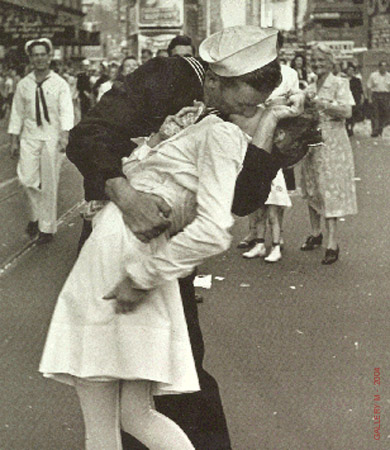
It started becoming like this, first:

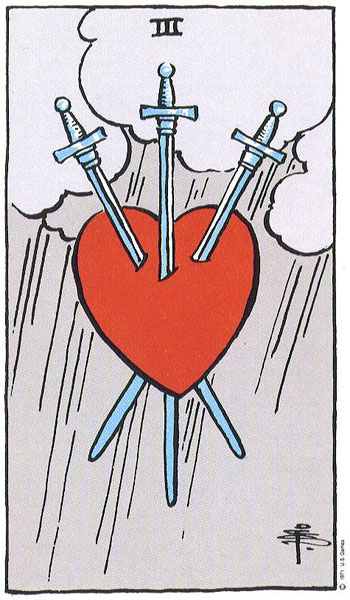
And there had already been a lot of what felt excruciatlingly like this:

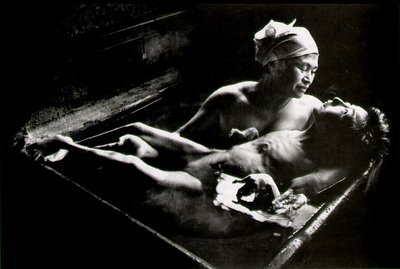
Which didn’t exactly improve.

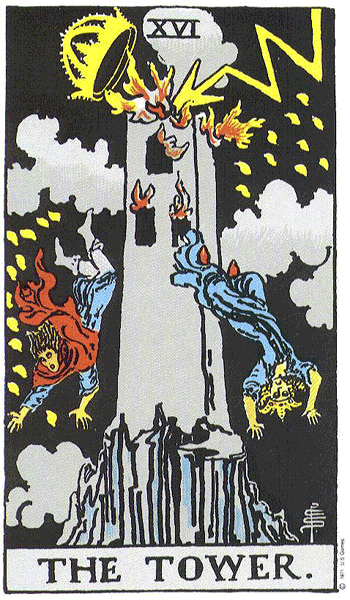
And then the real estate market went to shit:

And meanwhile the whole marital situation was like this:

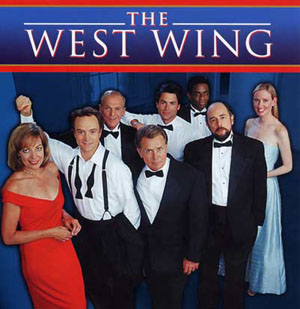
No, actually, more like this (if Elizabeth Taylor had been entirely blameless and Richard Burton had become a shrill Fox-News-Republican asshole):

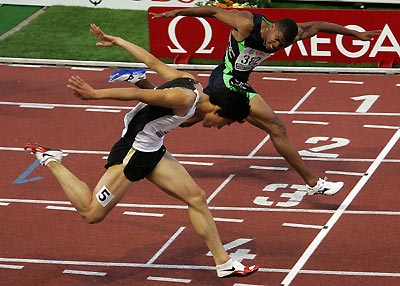
Which at least made us both pretty goddamn happy when it got to this:

And then there was a lot of this:


Which sucked hugely, and didn’t make anything feel LIGHTER or anything, as you might expect.

And meanwhile I had moved 3000 miles away from a place I’d spent nine years accumulating excellent friends in, which felt like this:


Only without the boat. Or even any sled dogs, for shit’s sake.

And meanwhile I was trying to write one of these:

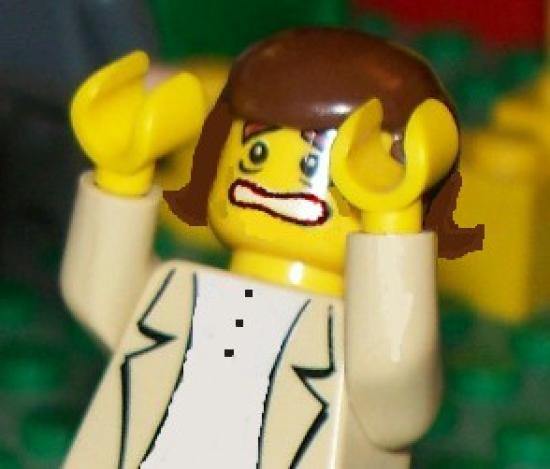
Which most days made me feel like this:

(Hint: I would NOT be the person pictured standing in the doorway with oven mitts on… And I watch this even less than I watch The Office. Which is to say NOT AT ALL.)

Except I would have been puking this:

So progress on the work front was pretty much this:

Which I’m sure made my edtior and agent feel like this:

Which of course helped me write better and faster. Not.

In fact, I ended up consoling myself with a lot of this:

And other fine online viewing.

Even though I was totally worried about my dwindling supplies of this:

And then I really had to finish my first draft for my lovely, long-suffering editor:

Which actually worked out, and meanwhie there has been a good bit of this lately:


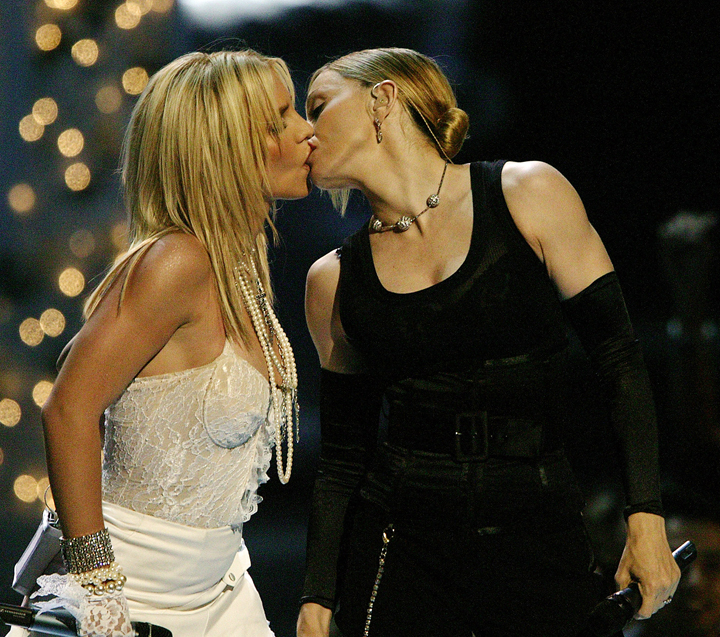
Um, except for the whole “actually, one of us is NOT a chick” thing.

(And neither of us being named “Britney,” either. Thank GOD.)

So, now it’s 4:20 (heh) and I’m going to go to sleep.

Please wish me more luck. Good luck.

And as for you, dearest ‘Ratis… Got Luck?

Problematica Technica

Zoë Sharp

I believe I may have mentioned it before that I don’t like making mistakes. It bugs me to realise that I’ve left some small error in the final version of a book that I just know people are going to spot and giggle about. And occasionally they do.

I’ve been doing quite a bit of reading over Christmas, and finally got around to finishing the final part of the Millennium trilogy. Wonderful books once I got into them – I can entirely understand their popularity – but chock-full of factual errors, including one involving how a TASER functions which was a major part of the plot.

But anyway …

If you watch any kind of TV cop shows, it’s easy to see where a lot of writer’s mistakes come from – Hollywood. I’m a bit of a fan of TV cop shows, I admit. A couple of episodes of NCIS or CSI, or Without A Trace are what I need to wind down before I head back up to the computer to put in another late-nighter. But it’s purely entertainment, not research.

Because we don’t have ‘live’ TV we watch stuff on DVD instead, which means we can watch old and new series almost back-to-back. For this reason we happened across an old episode of CSI where the plot centred on illegal street racing, a la The Fast And The Furious, and a new episode of NCIS: Los Angeles which also had street racing as its backdrop.

Why is it that so many people get car stuff wrong in books and on screen? I mean, I can understand gun errors. Not that many people have seen a real gun up close, never mind handled or fired one. I didn’t think there was any thriller writer out there who still talks about flicking the safety-catch off a Glock, but I’ve been surprised recently.

And I have to say that the movies don’t help. I’m amazed how many TV cop shows have somebody run out of ammunition at a vital moment, and only realise the fact because they keep pulling the trigger on their semiautomatic and it goes ‘click’ repeatedly. Now, anybody who’s shot a semiautomatic knows that when the magazine is empty, the slide locks back (see pic below and please excuse silly grin – I don’t get to play with firearms much these days). Squeeze the trigger and nothing happens. No ‘click’. Not even once, never mind repeatedly.

Of course, there are oddities. I had one character using a SOCOM Mk23 covert pistol in one book. This is designed for taking out sentries. When the suppressor is fitted, the gun has a slide lock that prevents the ejection of the brass, so the noise of the mech working does not negate the silencing of the shot.

But I digress …

Back to cars. Just about everybody’s driven a car, or seen one, or sat in one. But I can’t believe the writers for one of those cop shows I mentioned came up with the idea that fitting a new experimental-type of battery to a car would cause it to, a) go like brown smelly stuff off a shovel, or b) explode for no apparent reason. I confess that don’t remember a great deal else about that particular episode because I was too busy laughing.

And, for heaven’s sake, vehicles do NOT burst into a dramatic fireball after a few rounds fired into them. Most times, you need to blast away with incendiary rounds before the damn things even start to burn. Erm, not that I’ve tried it, of course …

They don’t blow up from being pushed over cliffs, either. And if the engine is turning over without the engine firing, it’s NOT the battery at fault. Shooting out the radiator will not cause the car to stop instantly, either. Speaking as someone who’s had their radiator holed by a disintegrating fanbelt, you can get quite a few miles before the engine temp climbs to the point where you have to stop and let it cool down, but you CAN limp home if you’re careful.

Medical clangers are even more prevalent. My favourite go-to guy for all queries of a forensic or medical nature is Doug Lyle – DP Lyle MD. Doug is the author of numerous mystery novels as well as forensic books, and I recently came across an old issue of the MWA newsletter where he listed the top ten writer’s medical and forensic mistakes: 

  1. The Quick Death: “No one dies instantly. Well, almost no one. Instant death can occur with heart attacks, strokes, extremely abnormal heart rhythms, and cyanide and other ‘metabolic’ poisons. A shot to the chest or abdomen leads to a lot of screaming and moaning, but death comes from bleeding and that takes a while.”
  2. The Pretty Death: “I call this ‘the Hollywood death’ – real dead people are ugly, pale, waxy and grey.”
  3. The Bleeding Death: “Dead folks don’t bleed. When you die your heart stops and the blood no longer circulates and it clots. Stagnant or clotted blood does not move.”
  4. The Accurate Time of Death: “Determining time of death is neither easy nor accurate. It is always a best guess and is stated as a range and not an exact time. In real life, the ME would say that death likely occurred ‘between 8pm and midnight’ but that might make him appear wishy-washy and Hollywood likes its heroes to be smart.”
  5. The One-Punch Knockout: “The hero socks the bad guy’s henchman in the jaw. He goes down and is apparently written out of the script because we never hear from him again. It’s always the henchman because the antagonist, like most people, requires a few solid blows to go down.”
  6. The Disappearing Black Eye: “If your character gets a black eye in Chapter 3, he will have it for two weeks, which will likely take you through to the end of the book. He will not be ‘normal’ in two days. On a good note, by about day seven your female character may be able to hide it with make-up.”
  7. The Quick Healing: “If your character falls down the stairs and injures his back, he will not be able to run from or chase the bad guy or make love to his new lover the next day.”
  8. The Untraceable Poison: “No such thing.”
  9. The Instant Athlete: “Your PI drinks too much, smokes too much, and eats donuts on a regular basis. He will not be able to chase the villain for ten blocks. Two on a good day.”
  10. The Instant Lab Result: “The world is not like CSI. In the real world, the same test can take days, even weeks. And the coroner will not likely release a report until the results are confirmed.”

Obviously, I’m paraphrasing, but if you want the full run-down you’ll just have to go out and buy one of Doug’s excellent books, such as FORENSICS FOR DUMMIES. I highly recommend it as a fixture for every crime writer’s bookshelf.

So, what mistakes have you come across lately, on page or screen?

And just so you don’t think I’m being entirely without humour today, here’s a wonderful sketch with Ronnie Corbett and Harry Enfield: My Blackberry Is Not Working!


This week’s Word of the Week is culverin, which was an early form of handgun; later a type of cannon with a  long barrel of relatively narrow bore, used in the 16th and 17th centuries, also culverineer.