Author Archives: Murderati Members


A Room With A View


By Louise Ure


My work space is a room with a view. A smallish room, only eight feet square, it’s tucked onto the back of the house like a cliffside bird’s nest and faces out to the Golden Gate Bridge. I look over a cascade of rooftops to the water and the Marin Headlands to the north.
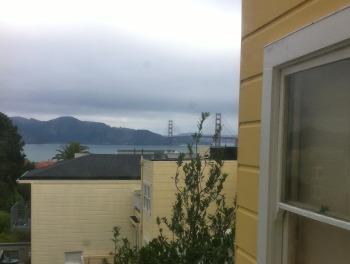


Many of the houses are painted shades of yellow — from buttercream to Tweety bird — an effort, I think, to defy the incessant grays of the fog.

What I can’t convey to you in these photos is the sound, the low rhythmic call of the fog horn, then enough time to take a deep breath and the answering single note of the responding fog horn on the far side of the bridge.

And the clock. How can a clock so small make so much noise, as the second hand moves determinedly  around? Those are the only sounds I hear, unless it’s high tide and then the sound of the waves add an undernote that sounds like faraway traffic.
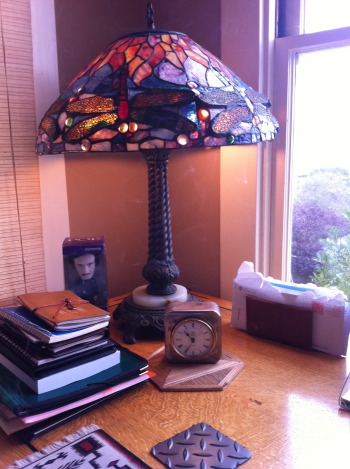


My space is tidy but not organized. I prefer piles of things to an empty desktop, but could not work if there were papers, notebooks and Post-It notes scattered helter-skelter around me.

There are many things I love about this space: the dragonfly-patterned Tiffany lamp, the aircraft carrier-sized new iMac and, perhaps most importantly, the desk itself.


When I decided to turn this small room into my writing space, I couldn’t find any furniture that fit my needs. There are deep windows on three sides of the room and two doors on the fourth wall, leaving no easy arrangement of furniture or shelving. I sit, surrounded by windows like the last soldier left to guard the lighthouse.

Then I met Paul, a  musician and guitar maker, who took me up on a dare: craft me a desk that can sing like a musical instrument. He did. He shaved and sanded the pale yellow oak until it gleamed. Then he inlaid strips of ebony along the edges, made drawer pulls out of chunks of turquoise, and added teardrops of abalone to mark the corners. It is a thing of beauty.

  I would feel foolish telling you my process for writing as I’m so distant from those days that they feel like bedtime stories I remember being told as a child. I stumbled into writing as a way to keep my mind active in retirement and as such an accidental writer I have no tips, organizational tricks or creative advice for others. It’s all legerdemain as far as I’m concerned. Trickery with the hands and the mind.

The good part about writing being magical is that, just as a magician can make something disappear, his real trick is being able to make it come back — life-sized and solid on the stage.

I’m waiting for the magic.


Where the Books Get Made

by Alafair Burke

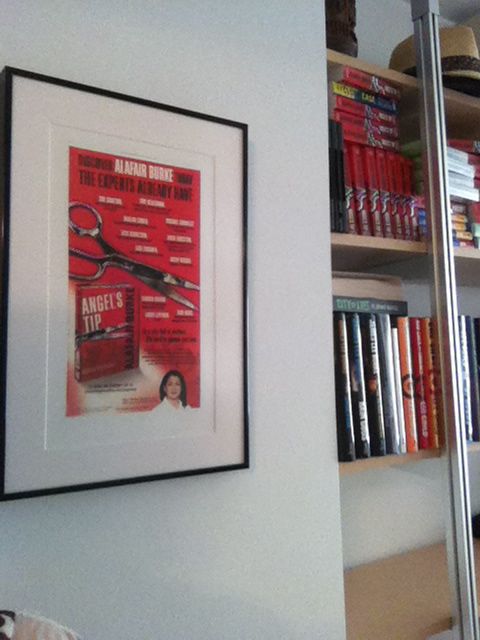
I’ve really enjoyed seeing where my fellow Murderati bloggers work, so now it’s my turn to welcome you into  the physical space of my work world.  We have a two-bedroom apartment in New York City, one of the few American cities where designated square footage for a home office is considered a luxury.  When I walk in, I am greeted by a photograph that my agent commissioned of a pretty cool full-page New York Times ad that Harper ran for my fifth novel, Angel’s Tip.  Photographs don’t yellow like newspaper.  Smart agent.


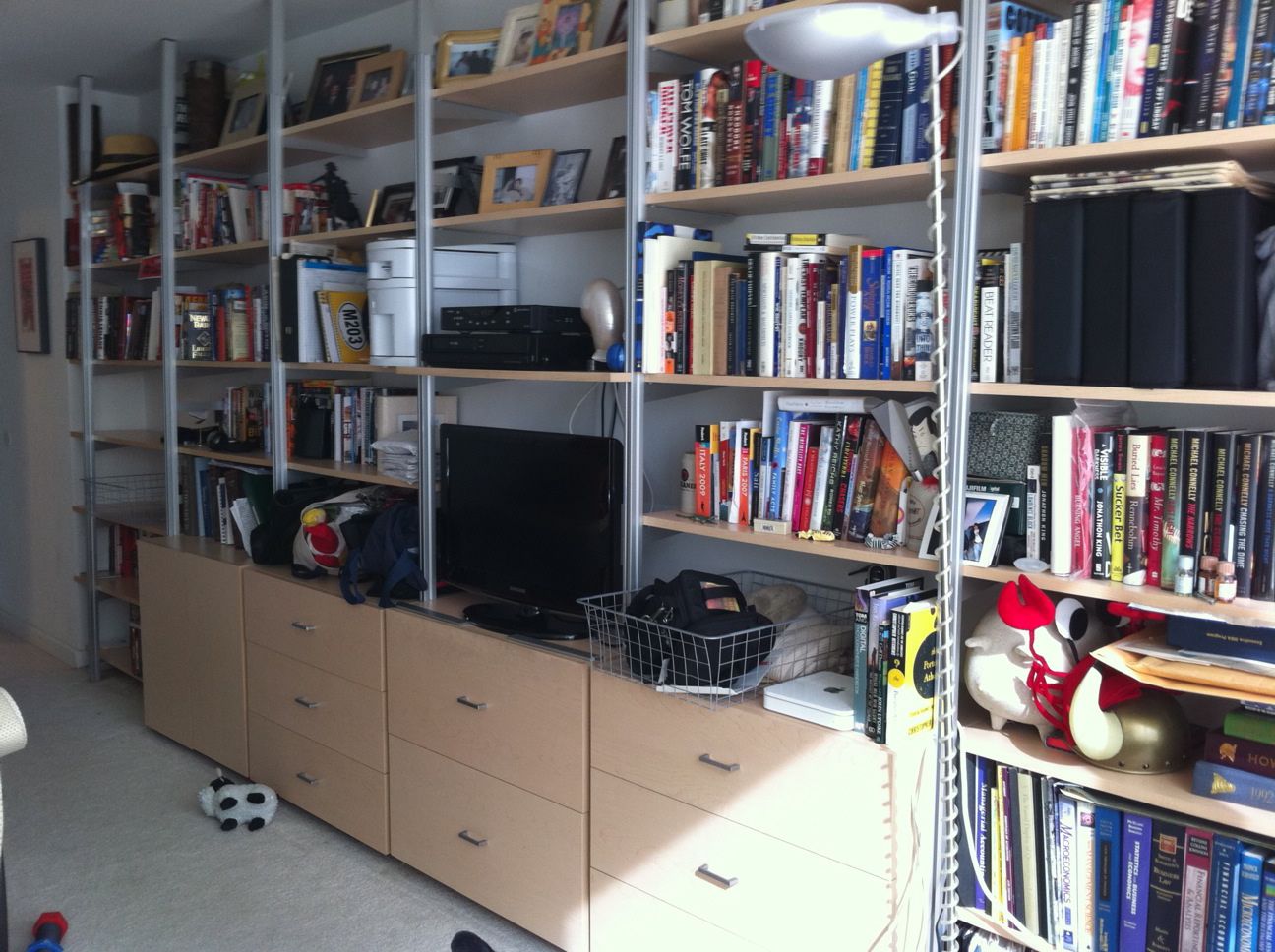
 One wall of the office is lined with storage.   


Turning to the next photo, my Eames chair makes me very happy.  I used to have a crappy one I bought at Costco until Lee Child persuaded me that I needed to buy myself better stuff.   (He’s a pretty good Persuader.  Ba-dump-bump.)

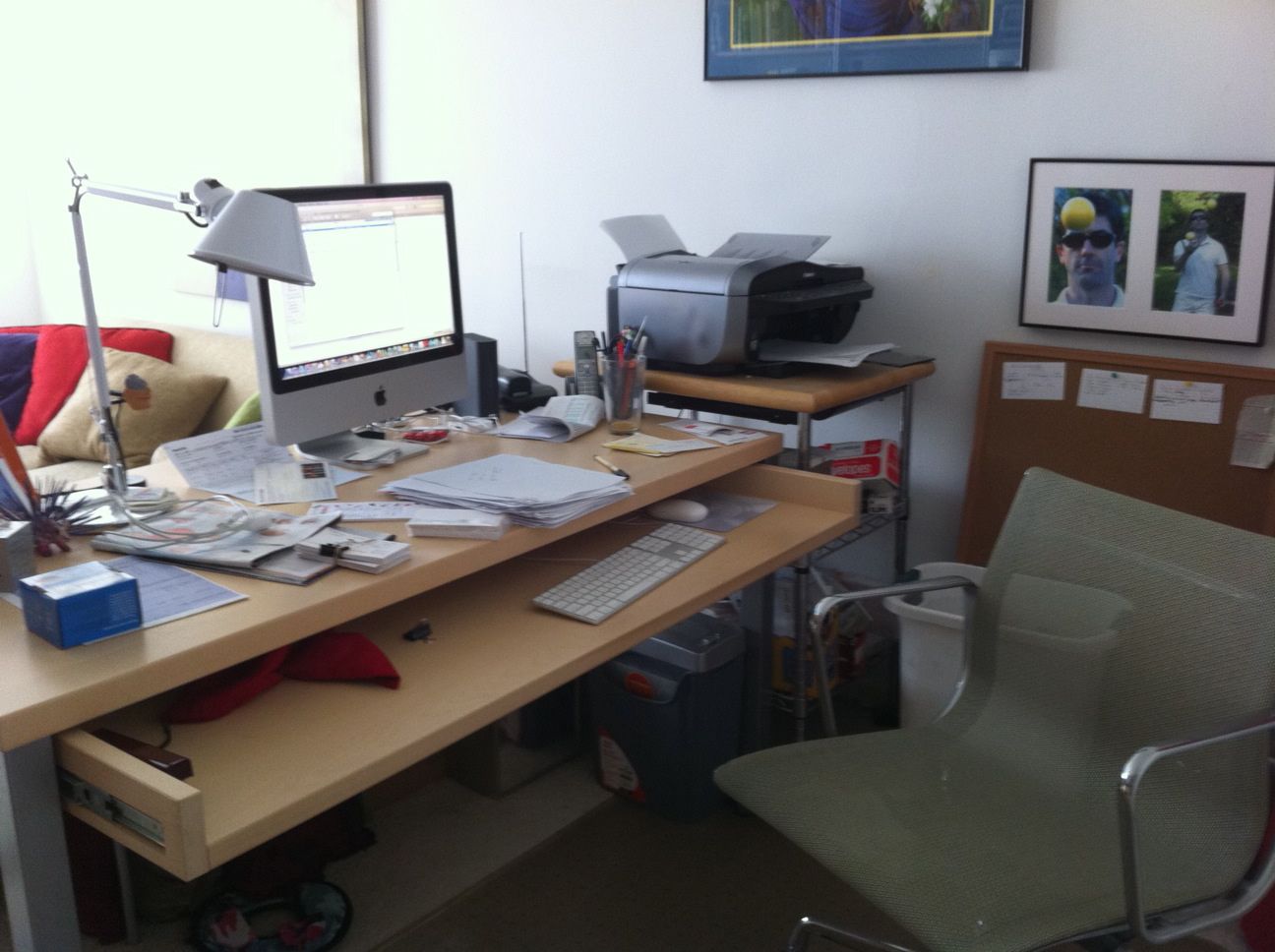
I also really like my desk.  In theory, all that junk on top should be on the pull-out surface, so it gets hidden away when closed, but, well, that’s just not what happens.  Sadly, that is actually pretty clean for me.  If you can see exposed wood, it’s clean.  The state of my office usually reflects how busy I am.  Five weeks ago, there was not a single inch of clear surface to be found.  Four weeks ago, after I finished my new book, it was incredibly tidy.  Now I’m working on edits, and once again, some mess is accumulating.

Beneath those photos of my husband juggling, you’ll see a bulletin board I bought last summer with grand ideas of storyboarding.  Note that it contains only three note cards and a newspaper clipping.  On the note cards I listed character and place names.  The newspaper clipping’s about a Minnesota court decision ruling that dirty bong water constituted an illegal drug.  A storyboarder I am not.


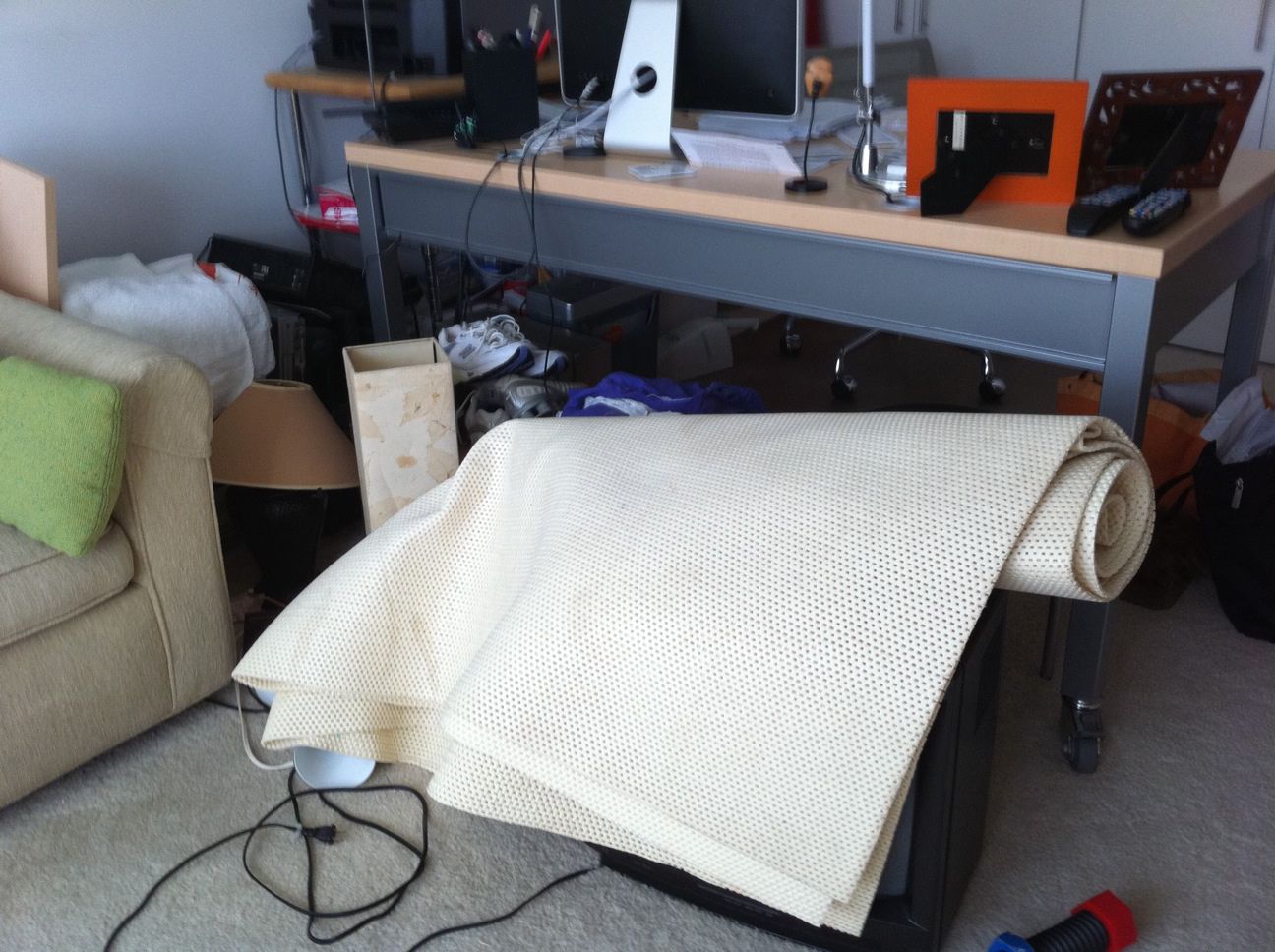
Remember how I said I cleaned my office a few weeks ago?  Well, cleaning for me usually means getting rid of stuff.  Or at least building a huge pile of things that I need to get rid of.  Still.  All these weeks later.  Can someone please call the Goodwill truck for me?


 This is probably my favorite thing one might find in my office, Duffer enjoying the one and only sunbeam.


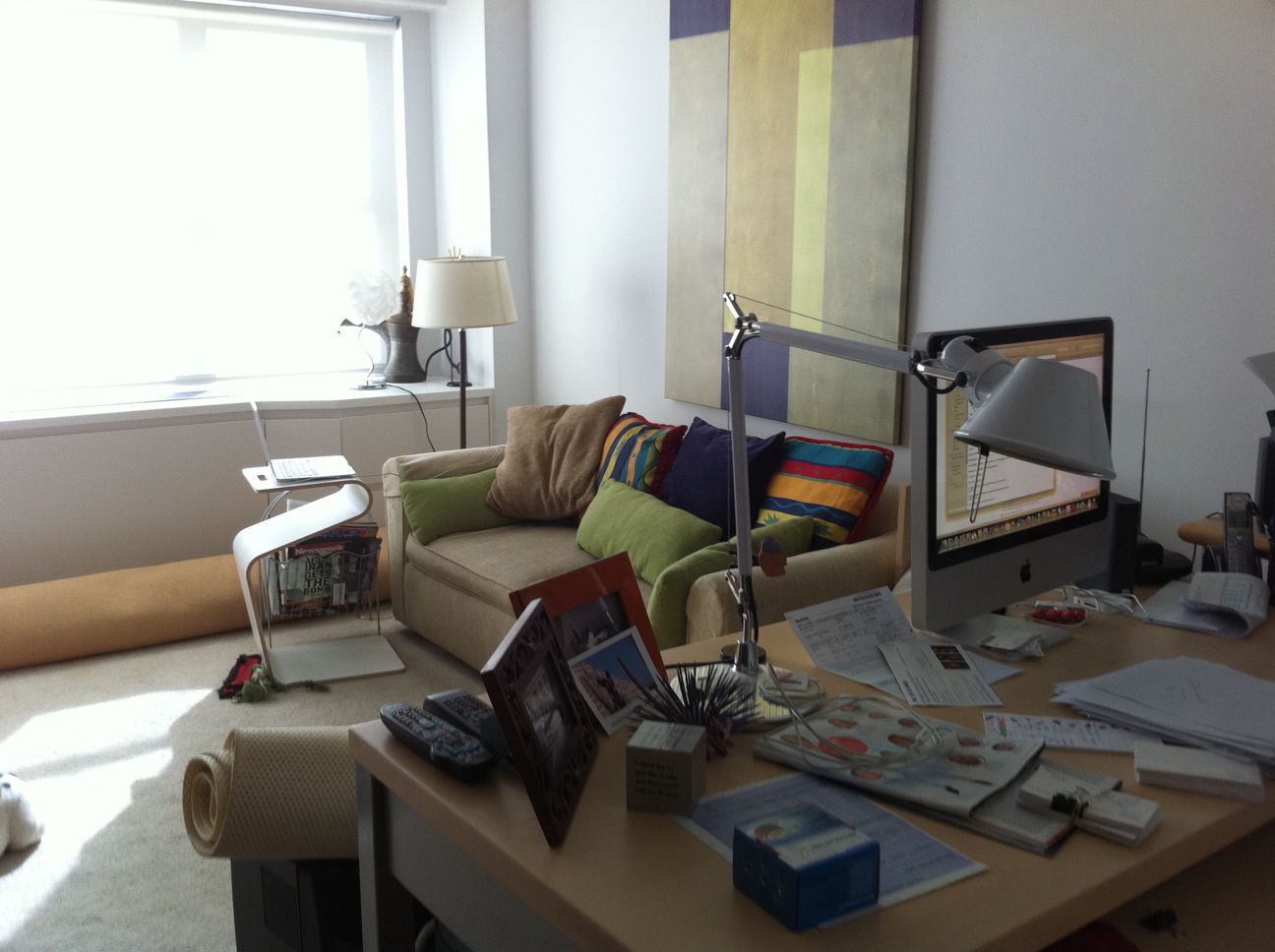
Here’s a couch I had in my home office back when I had a house.  I rarely sit on it but see no reason to get rid of it either.  That’s my little laptop on its stand, but it rarely gets used anymore at home since I got an iPad.


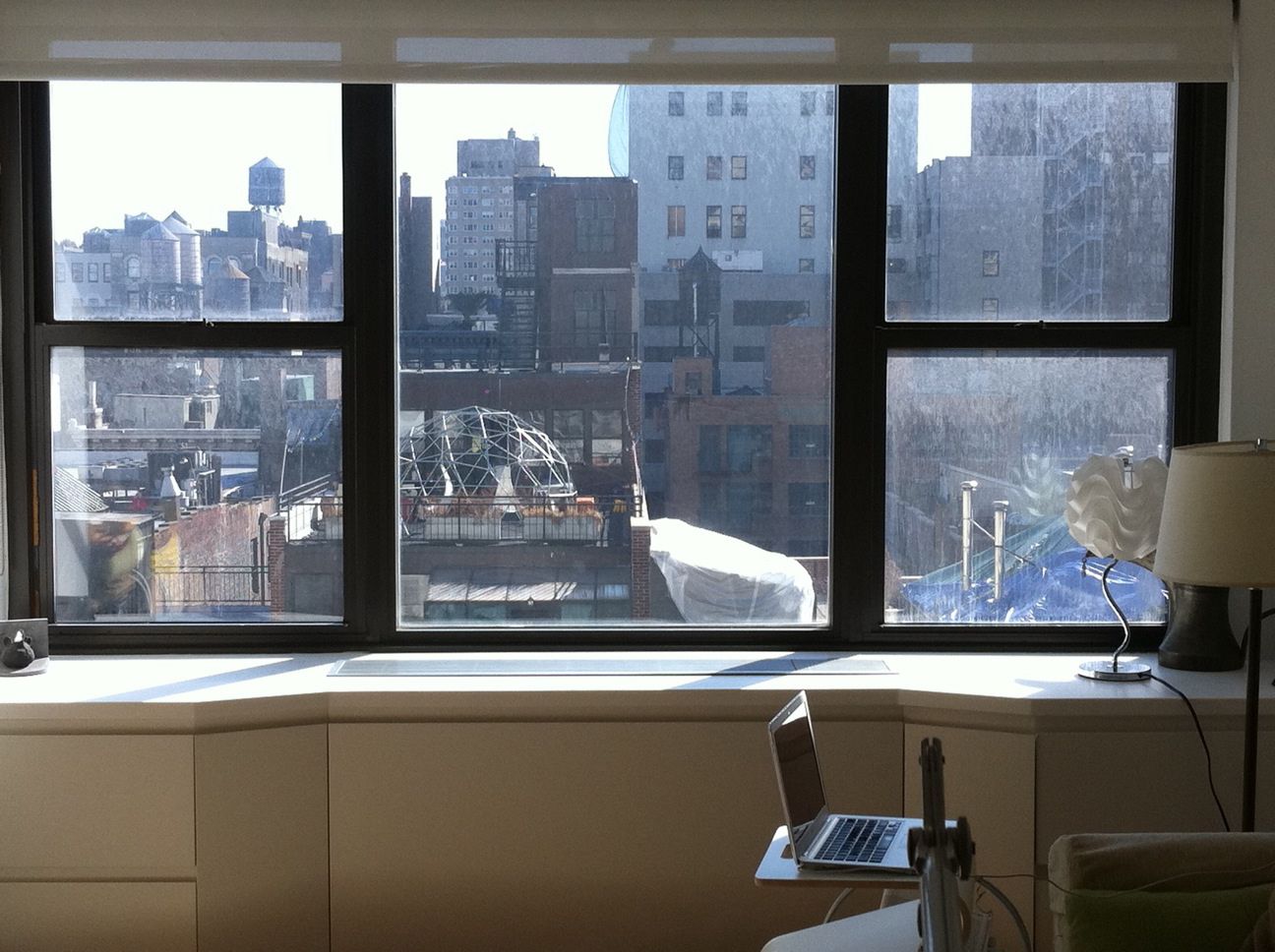
From my desk, I look south over Greenwich Village.  I hate the people who live across the street for ruining my simple view with that ridiculous geo-dome-y thingey mcbopper.  They also have colored Christmas lights around the terrace year-round.  Classy.


Now that you’ve seen my home office, I should say that lately I seem to be most productive away from home.  At the end of summer, I nestled myself away in Portland’s West Hills and wrote a TON in ten short days.  Sans husband, sans dog, sans all responsibility, I found incredible energy and focus.  Try it sometime.

In the city, as I’ve previously mentioned, I often walk down to Otto (a Mario Batali pizzeria and wine bar) with my laptop.  Good wine.  Tasty food.  No internet signal. 


You can see from the guest name on this check that I’m a regular.  My bartender friend, Dennis, even made a cameo appearance in the last Ellie Hatcher novel, 212.


The wonderful thing about writing is that we can work anywhere.  We can set our hours.  We can travel.  We can scribble sentences on airplanes and in coffee shops if we need to.  We do what works for us.  The only thing that matters is the writing.

A Creative Mind is Rarely Tidy

By Allison Brennan

I wrote my first ten books rotating between Starbucks, my favorite brewery, and my favorite bar & grill. The need to write outside the house was primarily because my kids were in the house, I had no private office, my desk was in the living room (read: the center of the Brennan Household) and I got little done at home. I can write with noise, no problem. I listen to loud rock music when I write, preferably with my iPod and earbuds. But I can’t write with interruptions. One? Sure. Three hundred an hour? Not so much.

So I took my laptop and hit the caffeine bar, or when Starbucks closed I went to the brewery or BJ’s restaurant. Like Alex, I love writing on planes. I tend to get a lot done, I have no idea why. Unless the person in front of me puts their seat all the way back . . . I don’t like that.

BTW, BJs has the BEST margarita in the world, the “Rita-tini”, which they’ve taken off the menu and replaced with some awful, sweet drink called the “platinum margarita.” But they still make rita-tini’s for me 🙂

But then we moved and I had my own office.

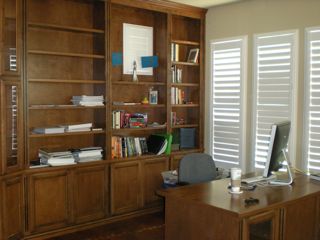
BEFORE

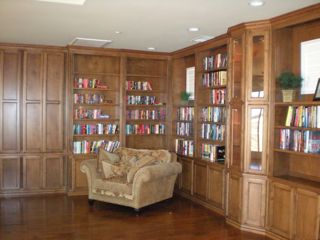
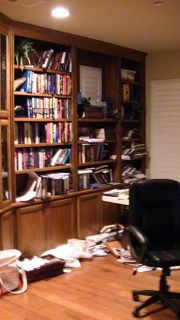
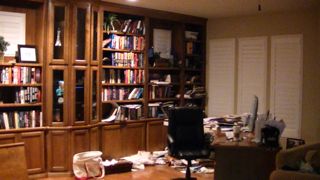
I considered just posting this picture because my office looks so clean! But . . . this was about two days after my bookshelves were built. The barren shelves are all packed with books now.

And here’s the other corner:

That chair is in front of the TV now, and the corner is filled with kids toys. And the books are doubled up. But it looked clean and organized for awhile!


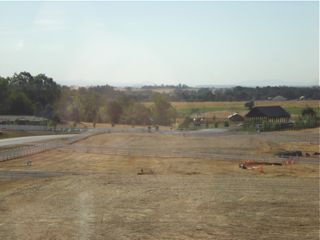
And this used to be my view before they built houses below me:


I don’t have that view anymore (it was brown in this picture–taken in August of 2008–but in winter and spring it’s lovely.) Now I look at a house and their roof and driveway. Fortunately, they’re lower than me and I can still see the covered bridge. Not that I look out my window much.

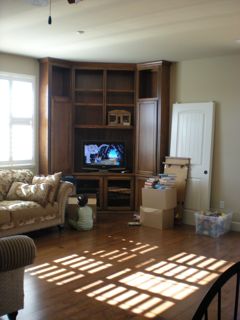
 I also have a television in my office. (My office is really a pool house/guest house–but we don’t have a pool and there’s no bed in the guest house, so guests usually take one of my kids rooms . . . anyway, it’s nearly 800 square feet. It’s also where we play games, watch movies, and do art projects and homework. It’s not really all mine . . . )

The photo I took tonight of my television didn’t turn out, but this is the entertainment center right after it was built . . . it now has a bigger tv (that I got from my husband for my last birthday) and there are blankets and pillows all over the floor from when the kids last watched a movie . . . 


AFTER

I am not a neat person. In fact, I’m rather a slob. I’ve always been this way–ask my mom (she might even visit the blog now that I finally set up the computer I gave her for Christmas . . . ) and I’m 40. I’m not going to change. I had some idiotic grandiose idea that I was going to clean up the mess surrounding my desk before I posted this blog . . . but what was I thinking? So my office looks more like this now:

The table that I strategically hid with my chair are all the things (papers, books, etc) I need to find a place for. There are stacks of papers and books and magazines under the table and behind the table. Someday I’ll organize . . .

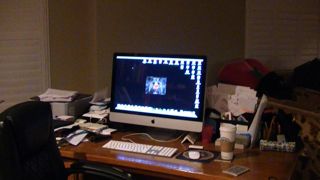
And my desk area?

(And no, it’s NOT the same Starbuck’s cup from two years ago . . . )

The stack of paper on top of the printer to the left are my finished page proofs for LOVE ME TO DEATH. They’re going out via FedEx Monday morning. The papers sticking up on the right are bills. On the left are more bills, school papers, art projects the kids made me, and assorted stuff.

My process is: sit down and write (on my iMac or MacBook Pro when away, and sometimes on my iPad with wireless keyboard.) I don’t have sticky notes. I don’t have white boards. I don’t have notebooks or scraps of paper or outlines or excel spreadsheets. In the copyedit stage I’ll often make little notes on stickies and put them on the pages of things I want to check on later for consistency, but that’s about it. Everything is in my head, which is scary, becausIe sometimes I forget things. But I’ve tried white board and notebooks and Scrivener and even an excel spreadsheet once. It doesn’t last more than a chapter. The thought of outlining an entire book gives me heart palpitations.

I start with a premise, usually a basic “what if” idea and at least one character I sort of know. I picture the opening scene and start writing. My beginnings–the first 125-150 pages, the first act, whatever you want to call it–take me longer to write than the last 300 pages. Sad, but true. The last book I wrote took me three months to write (and rewrite and rewrite) the first 150 pages +/- . . . and three weeks to write the first draft of the last 400 pages. First draft, I need to repeat, because obviously it was very rough.

My process is insane, but I’ve tried writing other ways and it does not work for me. I write. Get stuck. Go back to the beginning. Rewrite. Repeat two or three or eight times until something clicks and I know I have “it” (the first act) and then the rest of the book flows much smoother. Then when I’m done, I go back and edit, but it’s usually a clean up edit, fixing typos (there are a lot when I’m writing fast) and big inconsistencies. Then I send that to my editor KNOWING I’ll be doing revisions. I need a fresh set of eyes to read it because by this time I’m sick of the book and can’t see the problems. Writing this first draft (I call it the first draft, but I have edited it) takes 2-4 months. Revisions take 2-4 weeks. And I’ll touch every page, even if my editor loves something, because in revisions not only am I fixing story problems/making the characters deeper/heightening suspense . . . I’m also tightening, making the sentences and words stronger, cutting repetition.

I don’t know how the book is going to end when I start. I DO know that my protagonists will live, and the bad guy will get what’s coming to him, but who the bad guy is or how the protagonists solve the crime or stop the disaster, I don’t know. It wouldn’t be any fun if I did!

My brain is like my desk. Messy, but I know where everything is. 🙂

My last five books I’ve written at home (mostly) but I still go Starbucks or BJs (the brewery has closed) when I am on deadline or when I’m stuck. I find the change of scenery helps my muse. Maybe it’s the feeling that people are watching and if I’m not typing they’ll think I’m a slacker :/ Or more likely there are fewer distractions.

Whatever it is, I’ll be at Starbucks Monday morning because I have a tight deadline and I need my muse to get it into gear.

Ass In Chair. Well, sort of….

by Alexandra Sokoloff

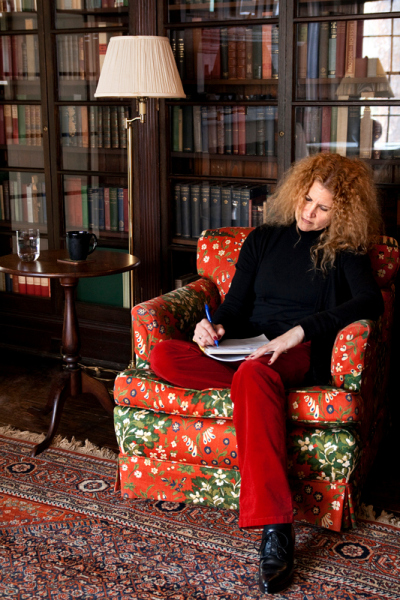
So this is me in my office.

HAH.    Nobody really believed that, right?   I didn’t think so.

Your first clue is – I’m dressed.   How often does that happen?   Not bloody often.   Second, books belong on the floor or under the bed, not neatly lined up behind glass.   (Who has glass bookcases anyway?   People with full-time housekeepers, or too much time on their hands, that’s who.).    Third, I’m in a chair.   Sitting up.   Granted, it’s a very lovely chair, but if I actually wrote like this it would mean that all my best ideas would be draining down into the floor, not to mention what it’s doing to my back. 

But we’ll get to my ergonomic theories in a minute.

The photo isn’t a total sham, actually – it’s a place I do write, and write exceptionally well, the Weymouth Center in Southern Pines, a writers’ retreat where I go a couple times a year with my fabulous NC writing posse, and the real-life haunted mansion on which I based the haunted house in THE UNSEEN.

But this is really where I write:

Yes, a couch.   Lying down on it, with my Mac Air on my lap  (which can get really hot, I haven’t worked that out, quite).   I do the requisite eight hours, give or take, of Ass In Chair, only with me it’s Back On Sofa.    On a very difficult day it will be Back In Bed (writing, not sleeping).   I do this because it doesn’t feel so very much like working that way, because it’s easier to keep the cats off the keyboard, and especially to protect my back.   Let me clarify that I don’t have a bad back.   In fact I haven’t had a single back problem for at least ten years.   But I am pretty sure I don’t have back problems because I’ve been lying down to work for the last ten years.   Writing for as many hours a day as a professional writer has to write is VERY hard on anyone’s back; there are whole seminars on the issue.   We all find our ways of coping; mine is to keep my spine relatively aligned throughout my work day.

And the couch thing could actually have something to do with my very first impressions of the writing life being old episodes of The Dick Van Dyke show, in which  – when he wasn’t pacing – Rob Petrie was always lying on that couch in the office as they worked.   (I had a hard time with Rose Marie always doing the typing and getting the coffee; I deliberately can’t make a decent cup of coffee or operate a stove to this day.   I did seem to pick up her dating habits, however.).    As a matter of fact, if you look at just about any old movie about screenwriters you will mostly see them musing while lying on couches, usually (if male) tossing an old tennis ball idly up in the air, whereas authors in movies tend to sit at desks hunched over typewriters (and they don’t outline, either, they just put a blank sheet in the roller and start typing CHAPTER ONE.   Yeah, right….).  

Hmm.   Maybe these movie depictions are why screenwriters get no respect.

Anyway, my couch is in my living room, and there are actually two, matching, and I go back and forth between them, because variety is the spice of life, and sometimes I sit for a while at a café table (not in a café) with high stools to accommodate my legs, also in the living room.  

On one wall where I can always see it, or sense it, is this painting by my mega-talented sister Elaine.  


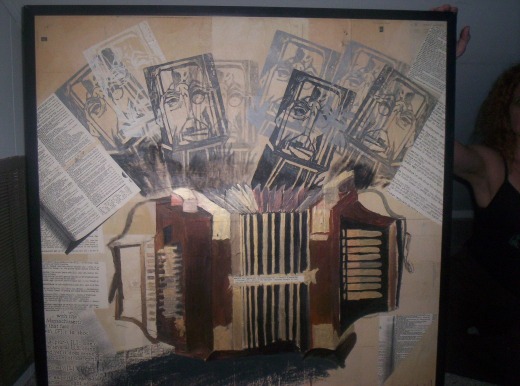
The painting is called L’Esprit de L’Escalier (a phrase I’m sure at least Zoe knows well and one which pretty much describes the core impulse to write, if you ask me. )    And the painting to me encapsulates the writing process; I never get tired of looking at it.

And on another wall, one of Elaine’s drawings:  a corner on the north side of the Berkeley campus featuring the late Rather Ripped Records.  


There’s something about the manic energy of this piece that puts me right back in the manic energy of Berkeley, very useful for writing.

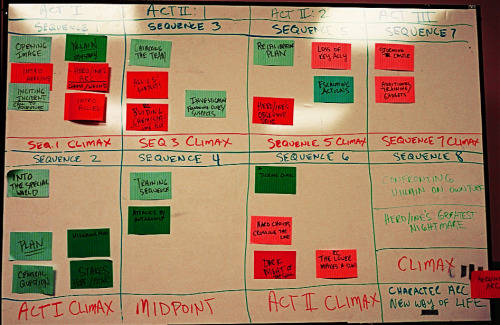
And of course I have index cards up on structure grids everywhere, some on tables, some on the wall.  This one is sticky Post Its on a white board:


I’m working on three projects at once right now so I’ve completely taken over two tables and a wall in the dining room (who needs to eat?).   

This is another one of my favorite writing spots:  

I know, it’s weird, but I write really, really well on planes – I can get a solid two days work in during a cross-country flight.    Unfortunately I don’t write so well in hotel rooms, but research trips are always magical and staggeringly productive for me, and as any one of us can tell you, that’s just as much writing as anything.

I know, now you want photos of cabana boys (see comment section of Stephen’s post, which somehow took on a life of its own.  Sorry, Steve…).   But I’d much rather you post suggestions of cabana boys for me, with current contact information and typing speed, thanks…

Cabana boys aside, I have to say I have found this week of sharing workspaces more interesting than I possibly could have imagined. One thing I absolutely love about my author friends and the author life is that we all know EXACTLY what we all are doing, work-wise, at any given moment.  The business side of it, the sales, will be different for all of us at different times.  But the writing process?  How we spend 8-10 hours or more of every day?   We know intimately what all of us are doing – writing is writing, and we all live it, every day.   It is overwhelmingly, as Rob posted, in our heads.  

But a glimpse of these little personal quirks – how and where we sit, or lie down, in isolation or in public, as all this massive STUFF is going on inside our brains… or to put it another way, how we get that door to that alternate universe to open up inside us – has been really touching to me.   I can’t wait to read more – and hear more from YOU all about the inside/outside thing, your workspaces, everything.

Finally, I’d like to send love and sympathy to the families and friends of those lost on 9/11 and in all senseless wars.   Peace, Peace, Peace.

Alex

TOO LONELY TO WRITE ALONE

By Stephen Jay Schwartz

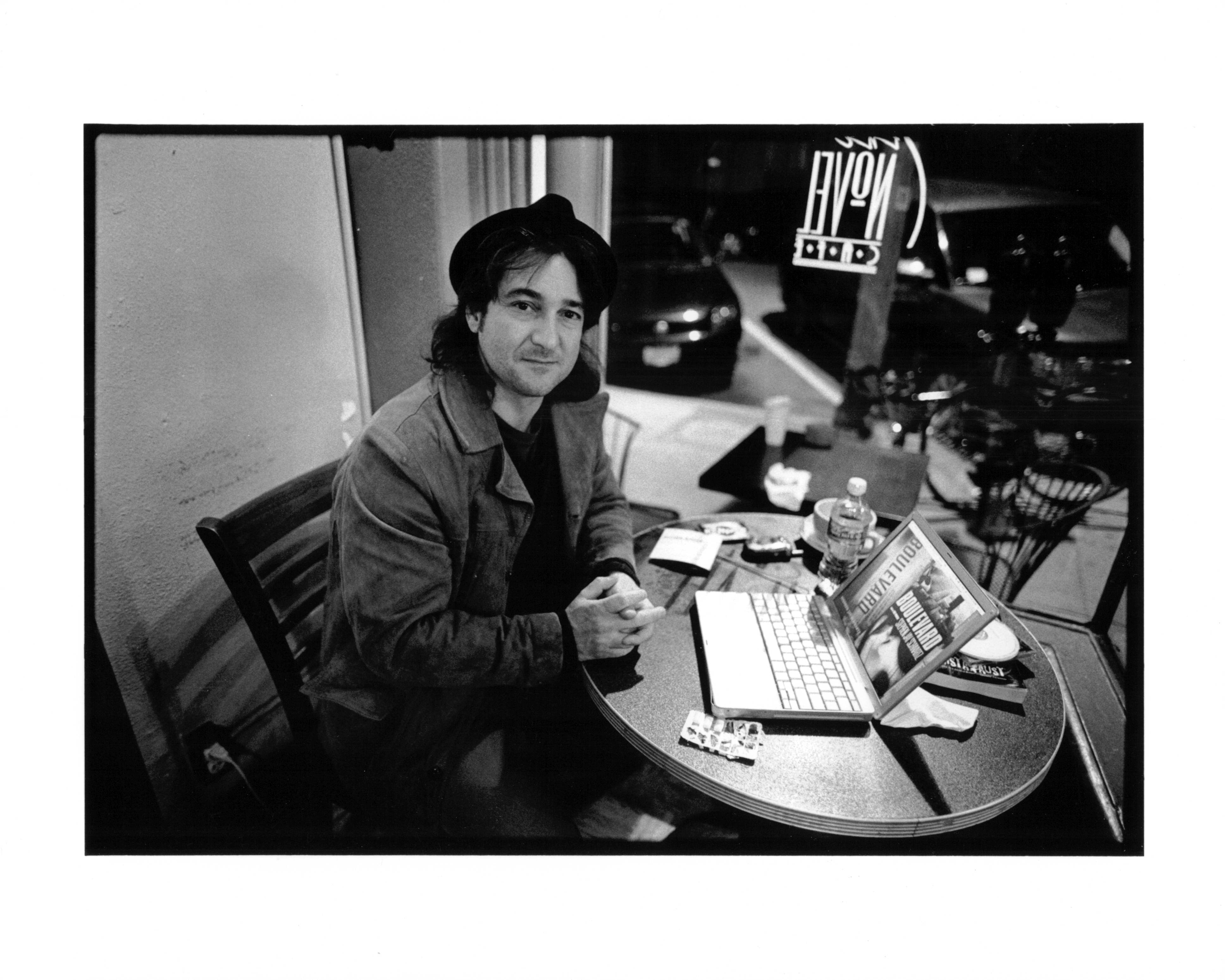
You’re looking at my office/work-space.  I’ve been writing at the Novel Café for over twenty years.  I’ve written most of ten screenplays and two novels there.  Recently the Novel Café went through an ownership change, and it is now called 212 Pier. 

I’m an extrovert.  But I’m also an introvert.  And that probably wouldn’t make sense if I weren’t a Gemini. 

Writing is a solitary profession.  We’re inside our heads when we write.  It’s lonely.  And I simply cannot face it alone.

So I surround myself with people and noises and music and chaos, and I manage to filter it all out into the blur of background noise as I write.  And when I get stuck or frustrated or stalled I look up and see the faces of my friends hard at work, since this is a writers’ café, and it gives me inspiration.  Makes me feel part of a community.  Sometimes I’ll catch the eye of another writer staring up, searching for an “out,” and I know that I can step away from my table and approach him and we can chat a while, take a break, discuss story or the weather or the local news.  And then, re-energized, fitfully empowered, we each of us return to the grind.

I can only write in cafes.  I cannot write in the quiet solitude of my home or, God forbid, a library.  Too much silence. 

Writing in cafes has appealed to me since the day I discovered that some of my favorite authors spent their days in Parisian cafes.  Hemmingway, Gertrude Stein, James Baldwin.  The Lost Generation of expatriates.  It all seemed so romantic.  I latched onto the idea of the café writer and never let go. 
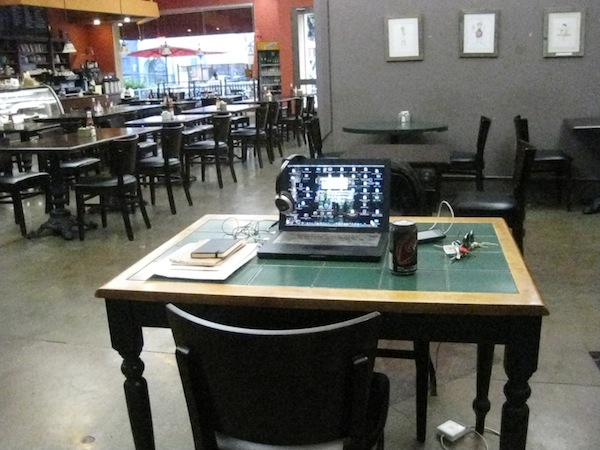
I’ve written in the majority of LA’s cafes.  There’s the Bourgeois Pig in Hollywood, which is just a little too “Hollywood hip” for my taste; there was the old Pick Me Up Cafe, one of the first in LA and long since closed (I read all of “Portrait of the Artist as a Young Man” at the Pick Me Up, coughing my brains out on second-hand smoke); the Highland Grounds in Hollywood, where I also shot part of a movie I made after graduating college; The Rose Café in Venice, and so many more.

Since I travel a lot, I’ve hit most every hip café in every major city in the U.S.  I’ve found wonderful surprises in places like Columbus, Ohio, Boise, Idaho and Salt Lake City, Utah.  When I’m in San Francisco I write at the Trieste, a fifty-year old café, which features prominently in my upcoming novel, BEAT.

I’ve pretty much settled on 212 Pier (45 minutes from my home, but well worth it), and the below cafes, which are closer to my home:


This is the Catalina Café and Brewing Company in Redondo Beach.  I’ve put a lot of time on Boulevard and Beat here, and there’s a great community of screenwriters who come in every night.

This is Coffee Cartel in Redondo Beach.  I write under the protective guard of the shiny, metal knight, who blesses each manuscript written in his presence.


Another awesome thing is that Coffee Cartel has a special place for me in their display case.  212 Pier also has a copy of Boulevard prominently displayed in an area where they advertise the work of local authors.

I’ve pretty much given up trying to write at home.  I made a feeble attempt to create an office space using an itty-bitty alcove, a nook, a crannie, in my garage.  It quickly became “Steve’s Office Crap Storage Dump.”


When I have to do big, creative things, like this whiteboard for my 3 X 5 cards on WIP story points, I end up leaving it on the bedroom floor where it serves as a bed for our labradoodle.

What I’m saying is that my work-space is a mess.  It’s whatever I have in my travel bag at the time, usually a stack of manila file folders filled with crap I’ve downloaded from the Internet, in no particular order, thrown onto the surface of some café table somewhere in this great big city.  It’s a wonder I’m productive at all. 

Everything important is on my computer.  Which is basically a file folder on my desktop marked, “Beat,” for example, filled with files on character, plot, research elements, outlines, treatments and first draft chapters.  I’m a very linear thinker, so I pretty much depend on writing brief paragraphs of every scene in its proper order.  I’d love to get more sophisticated, but I think I’ll need a computer younger than 15 years if I hope to use the cool “author” software they’ve got in the marketplace.

Really, the last piece of sophisticated equipment I bought was an Underwood typewriter.  I’m hoping to get an IBM Selectric for Hannukah.

Oh, and after reading Rob’s post on Wednesday I decided to upload a photo of my library.  It’s where I worship…

I’m  currently on a no-budget, youth hostel research trip in Europe, so I don’t know if I’ll be able to participate in the comments.  I’ll check in if I have Internet access.  I’m sure I’ll find a café with wifi!  It’s high time for adventure, my friends! 


Where do I work? Hmmm…That’s a good question

By Brett Battles

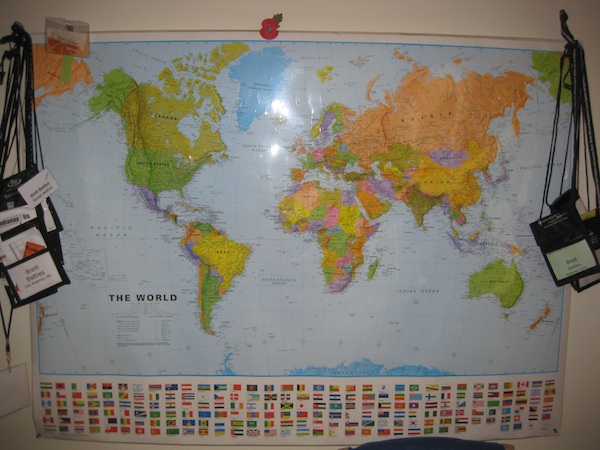
I don’t mind saying I’ve been a little nervous about this post since we here at Murderati decided to do a workspace theme (two) week(s). See the answer to what’s your workplace like, is not exactly a straight forward one for me. Let’s start with where, first. The simple answer to that is this is where:


(I’m talking about the world, not the wall where my map is hanging. And, yes, I also keep all my lanyards.) Okay, perhaps that’s a little over stating, and I’m certainly not trying to be flippant or snobby. But the truth is, I tend to work away from home more than I work at home. And if I’m traveling I might work in my hotel room, at the coffee shop on the corner, on the train, at a bar…wherever. Also I’m doing a lot of research while I’m traveling…taking notes, pictures, movies…getting impressions of where I’m at, etc.
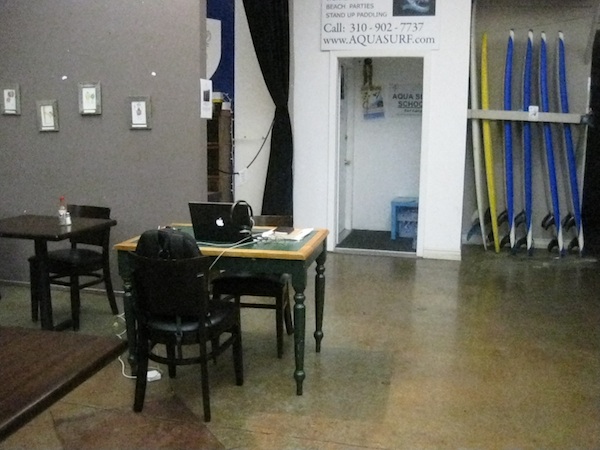
But let’s stick to the actual writing process. If I’m being completely honest I do most of it when I’m not traveling. Still, there is the question of where. To answer that I need to break down my process into four parts: plotting/synopsizing, writing the book, rewriting 1 (editor’s notes, light passes), rewriting 2 (copy edits, read through, heavy rewrites).
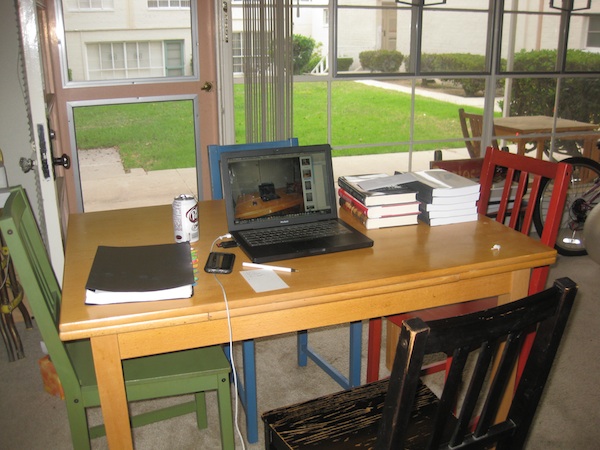
These four parts are basically done in one of two different places: home or away from home. Plotting/synopsizing and rewriting 2 (the heavy stuff) are almost always done at home. I do a lot of talking to myself in these phases, and also some pacing and the like, so the privacy works out for me. At home, I work at my small dining room table.


Trust me, it’s usually not that clean. As you can see, I face a nice view of a green courtyard. Very soothing.

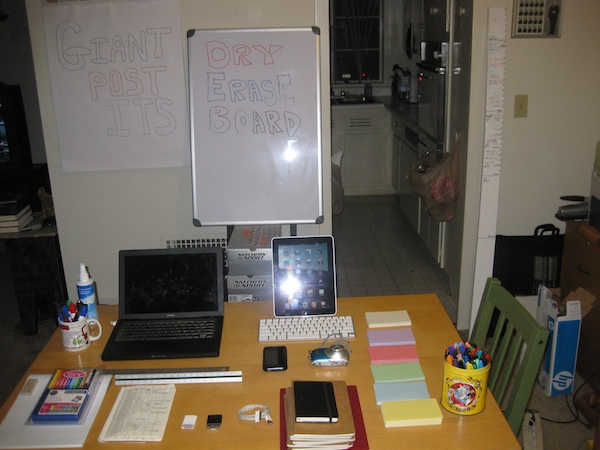
As I said, I do a lot of plotting here. So I thought I’d show you some of the tools I use:


Let’s start on that back wall…my famous giant post-its are a big help. Each page tears off and I can stick them to other walls around my place. Then there’s the dry erase board. What I do there is once I’ve filled it, I’ll take a digital photo of it then erase it and start again. On the table left to right, back row first: dry erase pens and cleaner, my MacBook, my iPad with keyboard dock (used for research, and typing when traveling), my iPhone in front of that which allows me to work away from home but not be out of touch, and one of my two digital cameras – the one shown is water proof. (I also have an HD video camera, but I tend to use the video on my digital cameras more often.) Front row from left: pad of grid paper for making building layouts and maps, set of color pencils, regular ruler and drafting ruler, my work tracking booklet where I keep track of what I do daily (word counts, what project I’m on, any significant events), digital card adaptors for iPad and computer to transfer photos, my docking cord for phone and iPad, stack of note books each for a separate project that I take with me as needed, colored index cards, and, finally, colored sharpies.

As an example of how my process is continually changing, the index cards are a recent addition, used with the new book I’ve just started writing.

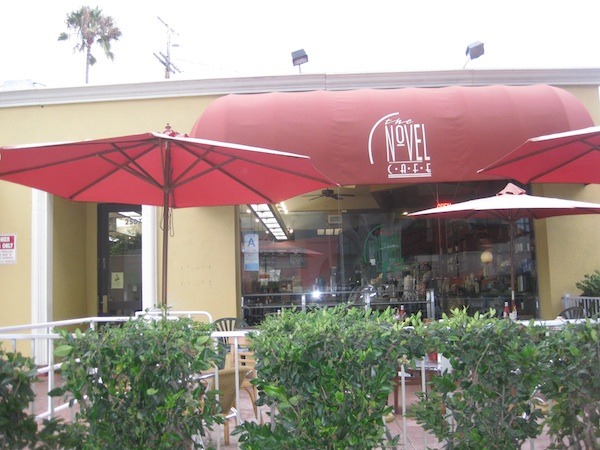
Okay, so that’s my home workspace, and tools. What about those other two parts of my process – writing and rewriting 1? Those I do for the most part away from home. Why? Because for some reason when I’m creating new material the distractions at my house (TV, books, bed for napping) tear my attention away. So I go to coffee shops or cafes. For the past year and a half, I’ve found one specific place I go to most of the time. It’s the Novel Café in Santa Monica.


There are actually several Novel Cafes. Our own Mr. Schwartz turned me onto them. Only the one he exposed me to is now known as 212 Pier. I stopped going there when they shut it down for renovations when the new owners took over, and ended up going to the Novel that’s only about four blocks away. It’s newer and not quite as quirky, but I like it, and so I’ve stayed. It’s about a 20 minute drive from my place, and makes me feel like I’m going to an office…in a good way. It gets my brain focused in the right direction. Plus the cafe is set up for people to work there all day. Free wi-fi, plenty of tables and plugs, and a full kitchen. You can stay from opening to closing and they won’t kick you out. In fact, there are a lot of regulars who, like me, use it as their office, too. Web designers, screenwriters, other media professionals, and even a few other novelist (which is good since that’s the name of the shop.) I often run into my friend and mega-talented author Tim Hallinan there. We’ll end up spending a few hours writing at adjacent tables…well, writing, talking, writing…talking.

Here’s a shot of my favorite table looking out at the rest of the café:


It’s tucked into a little nook for those who want a little more privacy. This table is at the edge of that area, so I get some privacy, but also can watch what’s going on everywhere else. And as a good thriller writer, I can see the front door, so I know who’s entering in case I need to make a quick getaway out the back. (Hasn’t happened yet.)

And a reverse angle of the table:


Yeah, you’re not seeing things. Those are surfboards. A surf school operates out of a room in the back of the café. Oh, and that area just behind my table, with the open, black curtain? That’s home to a clairvoyant who keeps really odd hours and I hardly ever see her. But I’m hoping some of her psychic vibes are wafting over me as I write. 

Anywho…those are my workspaces. At least for now. My process is always in a state of transformation.

Where I work

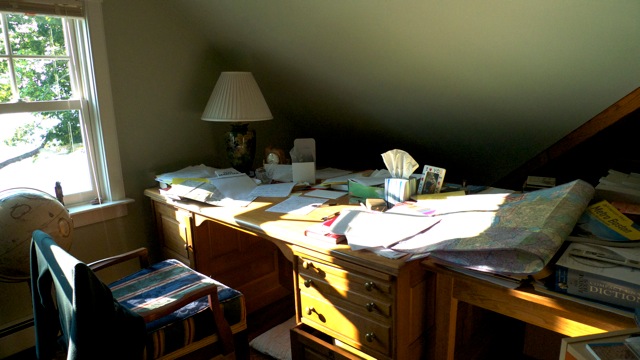
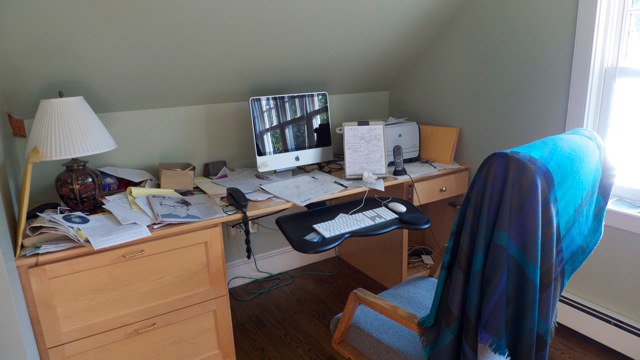
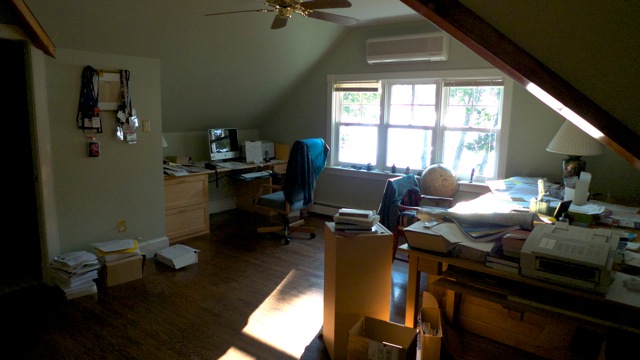
So now it’s my turn to talk about my workspace.  I thought about cleaning up a bit before taking these photos, but then decided, what the heck.  I’ll show you what it really looks like, clutter and all.  My office is in a huge room above our garage.  It has open beams and sloping walls, a really fun sort of space that made building bookcases a challenge.  On the wall is a framed copy of  1996 New York Times Bestsellers List where I made my very first appearance, and draped on it are all the nametag lanyards from various book festivals and conferences I’ve attended over the years.  You can also see two different desks. 

One desk is an antique partner’s desk, where there’s way too much junk spread out across the surface.  But this is the desk where I write my first drafts, in longhand. At the moment, it’s got maps of Boston, handwritten pages of my next novel, and a ton of other stuff I really should get rid of!  

The other is my computer desk, which looks no neater!

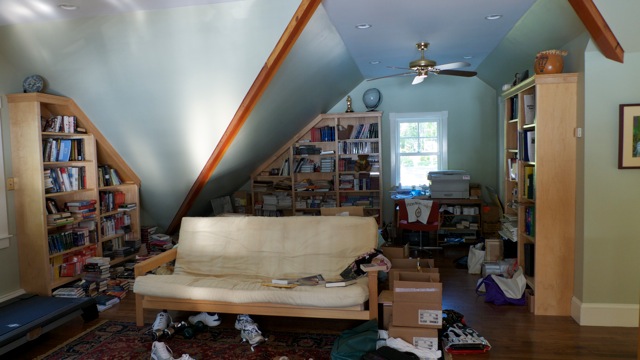
And I’m embarrassed to show you what the other half of the room looks like.  But here it is:

There are books, running shoes, a photocopy machine, and tons of boxes with various editions of my books that I’m not sure what to do with.  Plus a futon couch where I sometimes stretch out and stare at the ceiling when I can’t figure out what the heck happens next in the story!

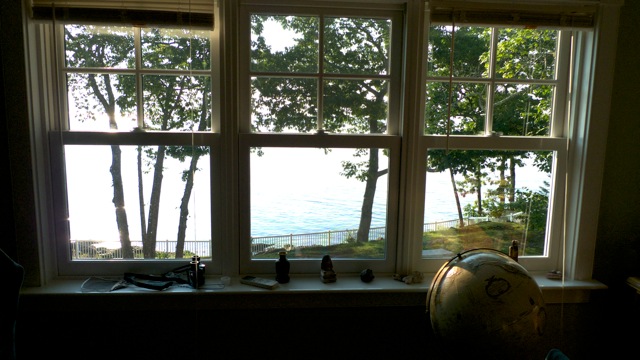
Finally, here’s the best part of my office.  Or maybe I should call it the worst part, because it’s so darn distracting:

The view.  My windows look out over Penobscot Bay, where I can spot seals and dolphins, seabirds and even the occasional bald eagle.  On the window sill are various souvenirs I’ve brought back from my travels abroad, including interesting rocks from Turkey, Egypt, Libya, and England.  And I always keep my globe nearby, just to remind myself that there’s a lot of the world I have yet to see.

Theme week(s) at the ’Rati: Work space & writing process

by Pari

Oh, man, this is embarrassing . . .
When we decided to take two weeks for the ’Rati to write about our workspaces and processes, I thought it’d be nifty. What better way to learn how my cohorts work and how their home environments reflect their personalities and literary brilliance?

That was before I looked at my own office.


Crap sticks.


Gahhhhhhhh.

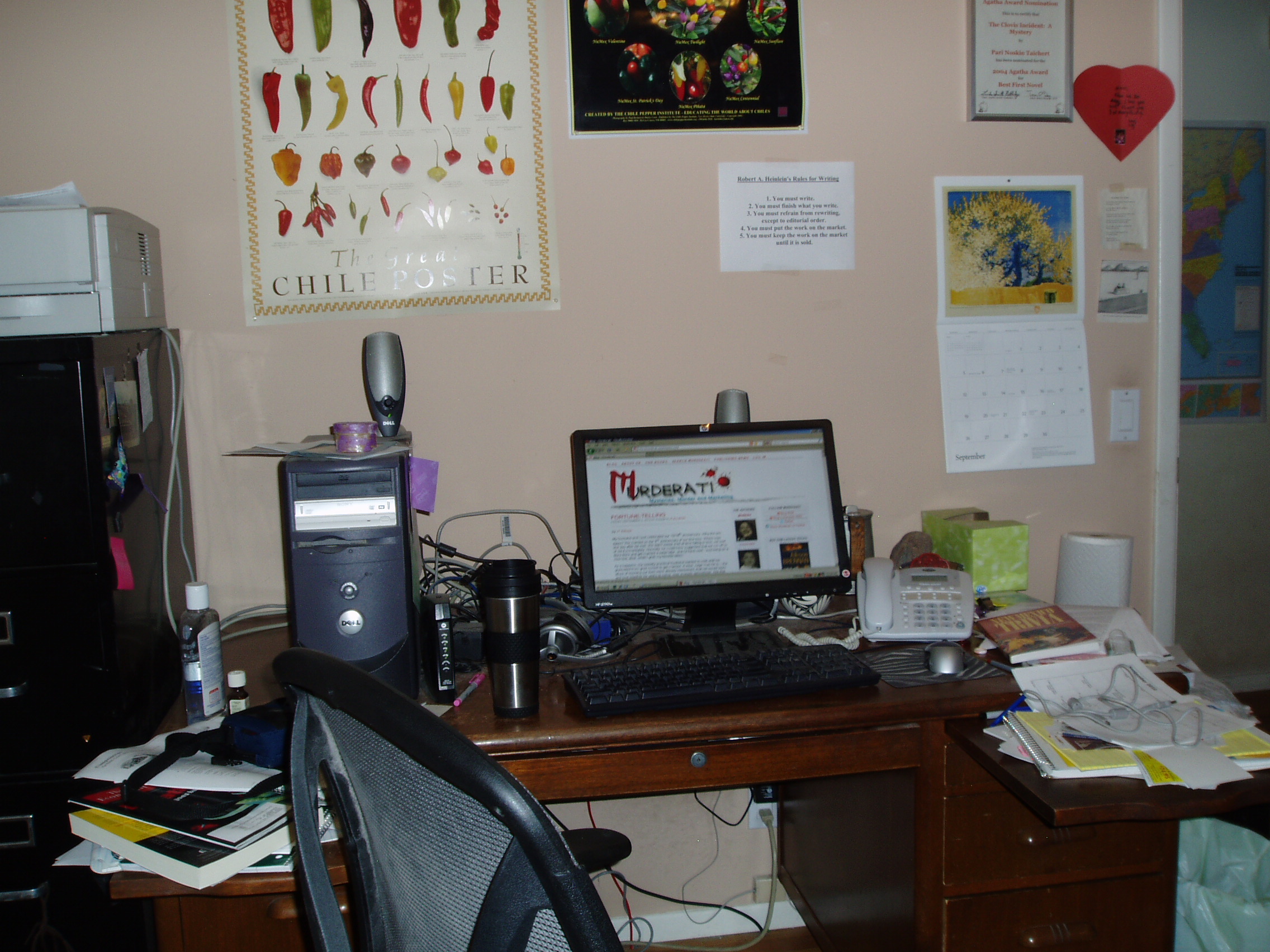
As you can see, there’s a certain amount of chaos in my life. I won’t defend it. I always have several projects going on at once and my workspace reflects that . . . rather painfully. Up until July 1, I wrote my fiction in this chaos too. That’s why I still have posters and inspirational sayings on the wall behind my computer and to each side of it.

I managed to produce five manuscripts here along with several feature articles and short stories. So even if it seems horrific to the neater folks reading this post, it worked for me. But anyone who has been following Murderati for the last year knows I’ve been going through tremendous transformations in my career and self perception. The slapdash approach I had for the first decade — mas o menos — just stopped being effective for this new, improved Pari.

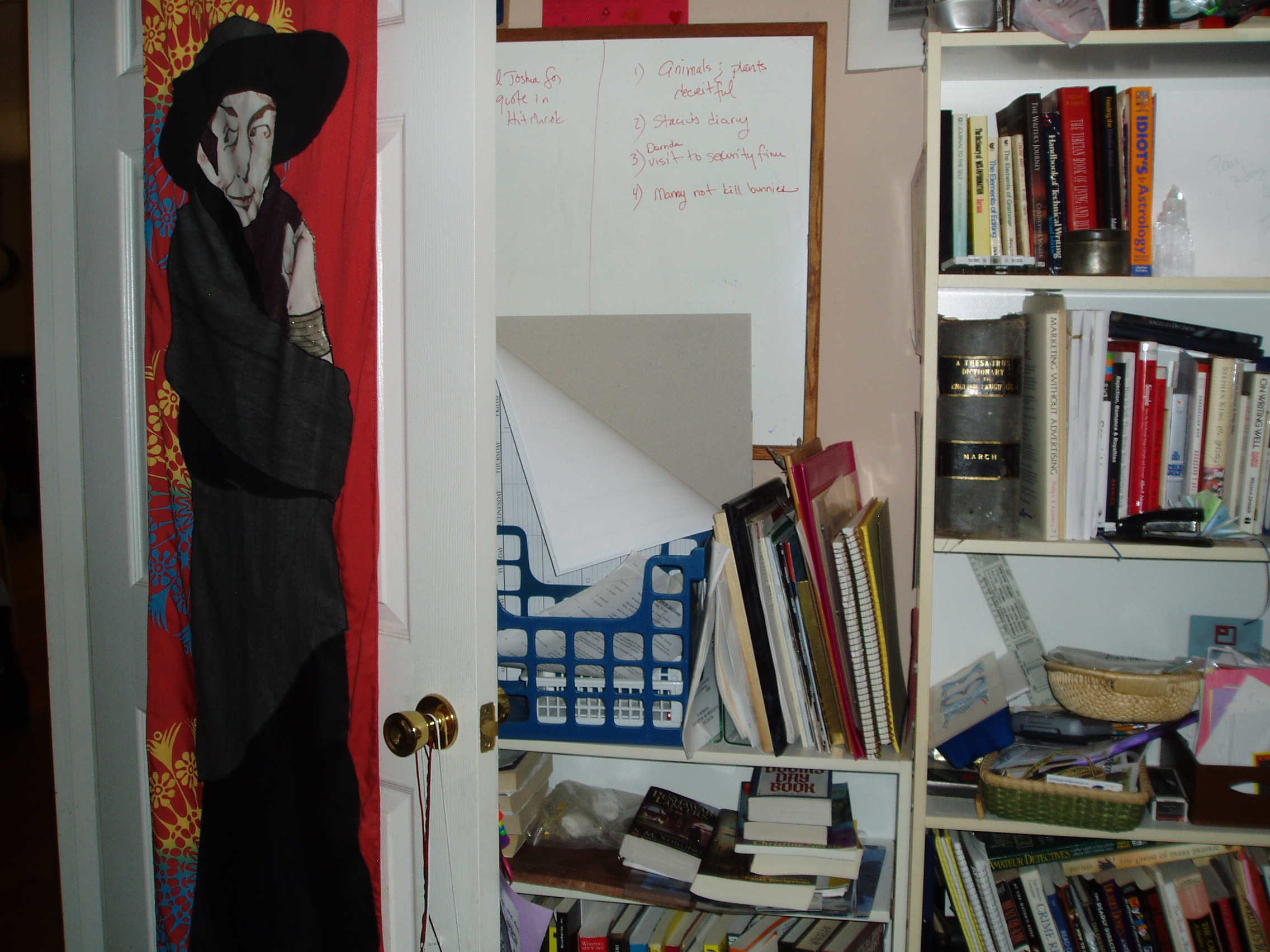
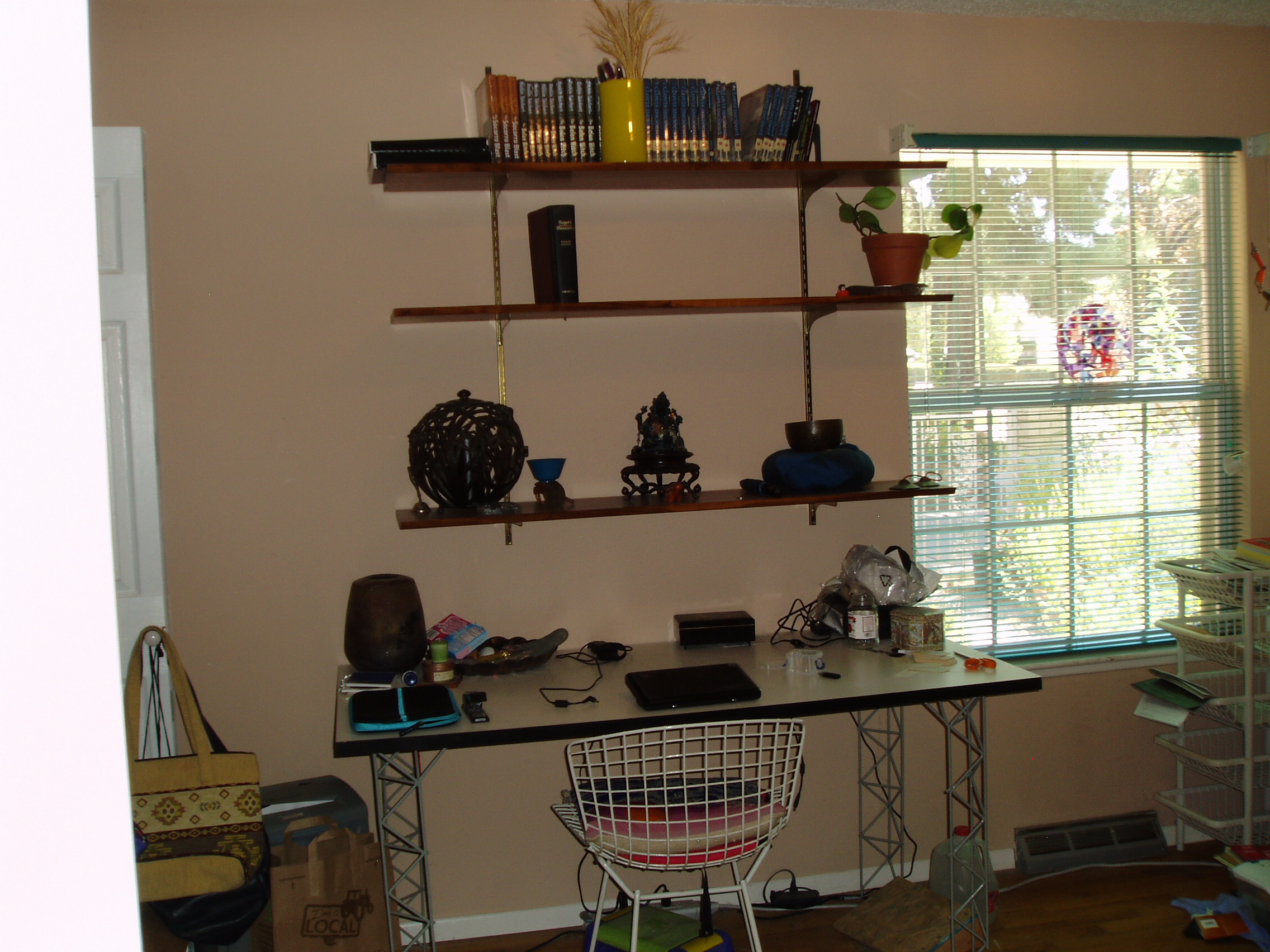
On July 1, when I made the vow to write fiction daily, I needed a workspace that mirrored that commitment. So I appropriated one wall in the mess of my office for free-rein creativity. No editing allowed. No self-criticism. No distractions (unless they feed my creativity). NO INTERNET.  And I came up with this:

Isn’t that better?

I know it may seem cluttered to you, but to me it’s quiet — easy on the eyes and mind. I keep my little notebook computer here; it’s dedicated solely to fiction.

Every time I walk into my office, I consciously decide if I want my business or writing hat on. If it’s the former, I head to the desk with the clutter (though to be honest, it’s cleaner since I took those photos.) It’s where I’m sitting right now writing this blog. It’s where I write features, do my public relations work for clients, post anything on the internet and send emails.

It’s where I edit my fiction too.

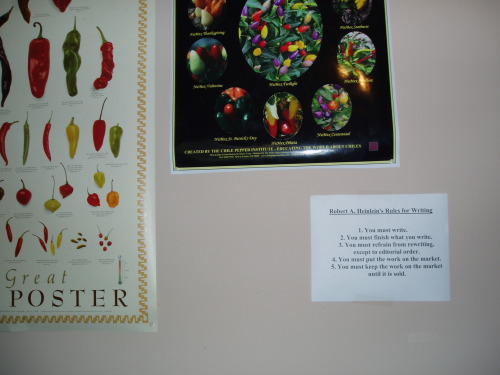
I use Open Office to write all of my stories/manuscripts now. When they’re done, I put them on a flashdrive and bring them to the business computer. To make the distinction even more profound, I convert those docs to MS Word. The result is that my internal editor, and quite a few of my demons, now sit at the messy desk. They don’t interfere with productivity, though they’re causing a bit of a bottleneck in Heinlein’s Rule #4. (You can see that in the third picture in this post.)

While it might seem hokey, by making the division between my business space and fiction space so pronounced, I can more easily protect my creative process. Self-doubt isn’t permitted on the fiction side of my office. If it starts to creep in, I get up and move. Simple. And amazingly effective.

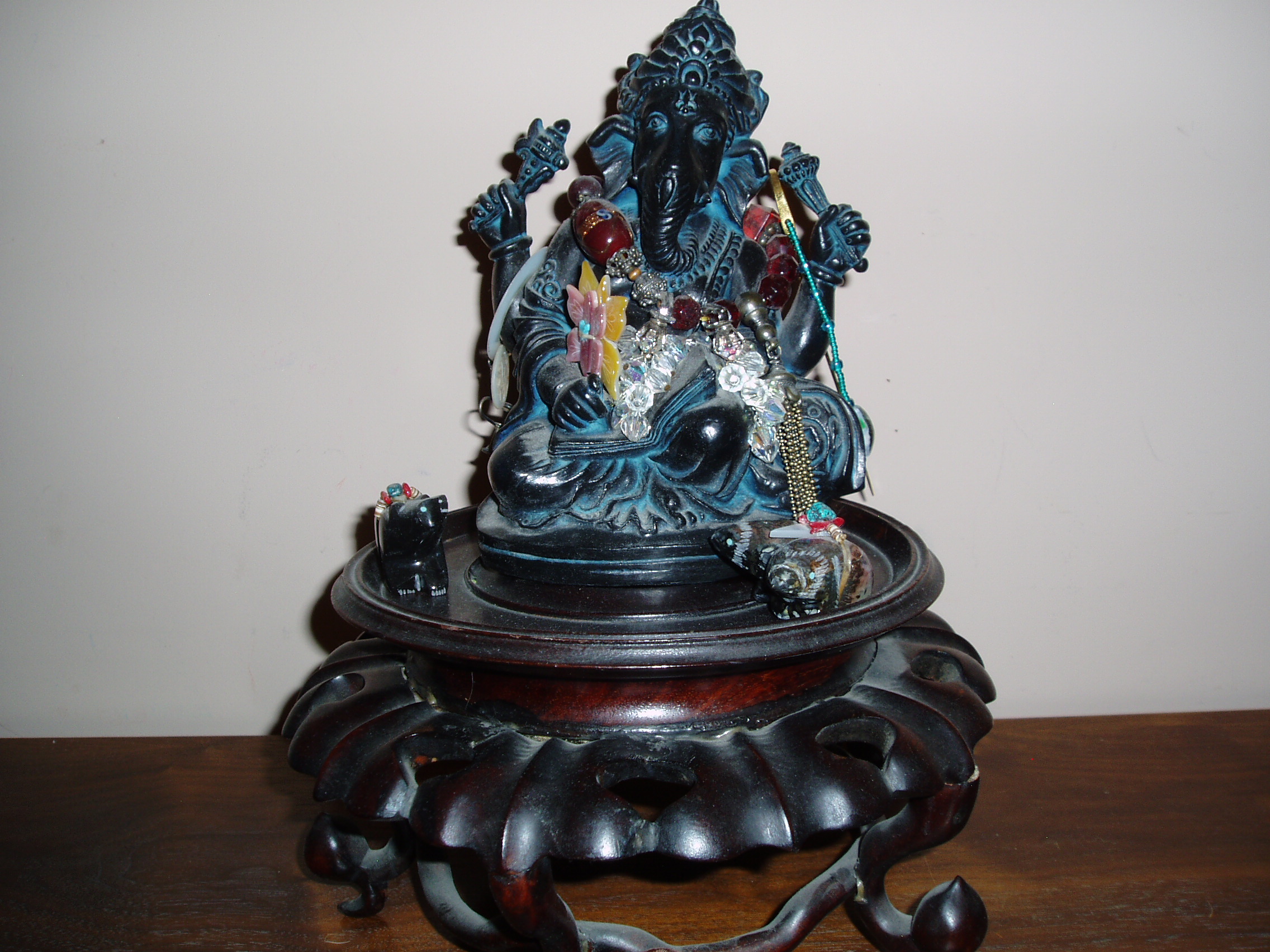
If I’m in need of positive inspiration while writing fiction, I look out the window. More often, I glance at the statue my friend sent me. It’s the Hindu god Ganesha — the god of success and remover of obstacles — with additional talismans that mean something to me.

For those wondering about my schedule or methods, I can’t say I have much of either — and that’s embarrassing too. I have the secret fear that ALL of my colleagues are far more together than I am in this regard. But the truth is that I’ve tried outlining, index cards, strips of paper, white boards . . . and none work well for me. Rather than tools, they seem like fetters.

So I just write my fiction every day. By doing so, I affirm the habit of creativity and put it in a place of honor in my life.

Well, that’s it.
I hope the following two weeks are interesting for all of you. I know I can’t wait to see and read what everyone else posts through Toni’s round-up entry on Sept. 19.

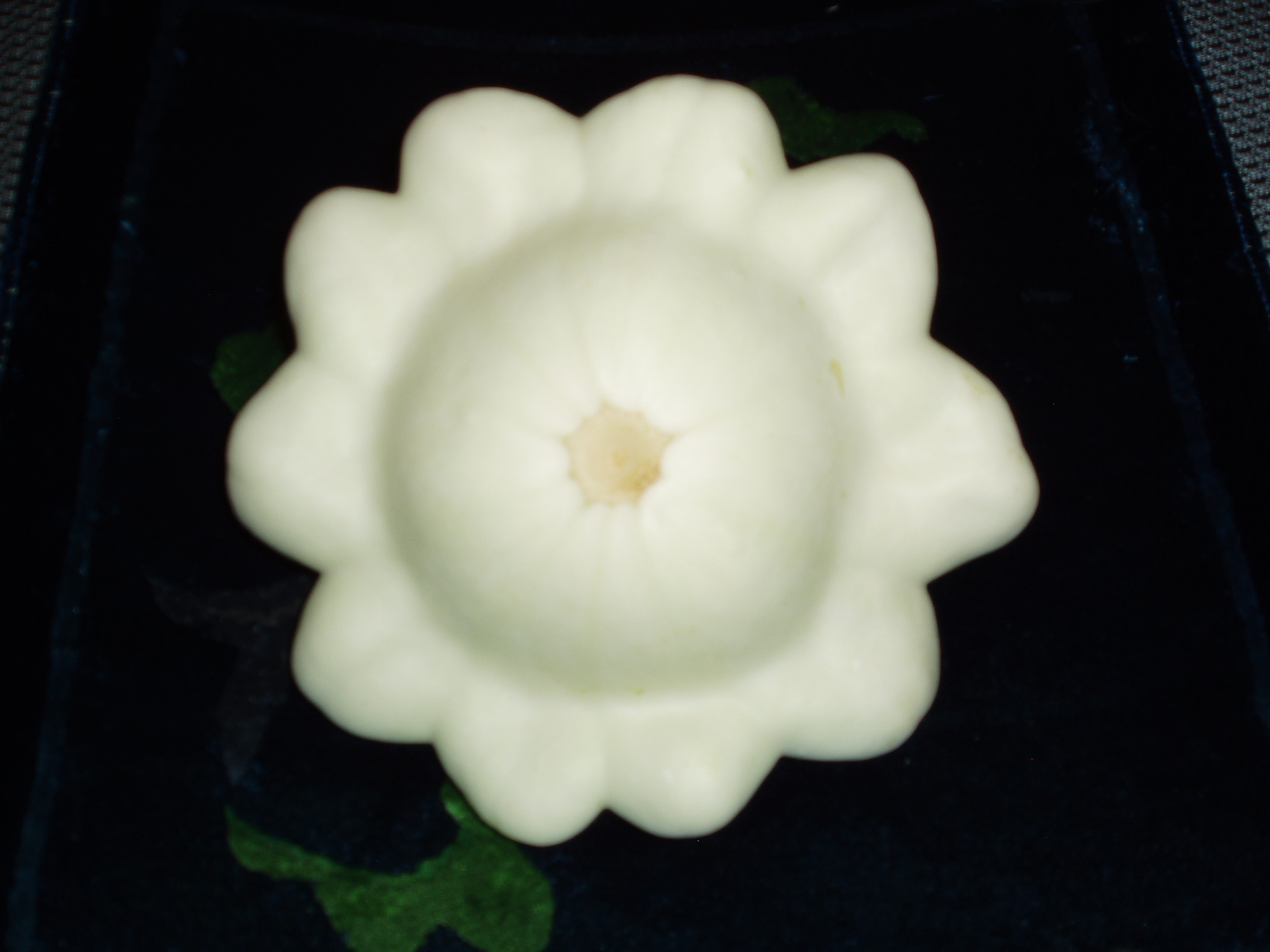
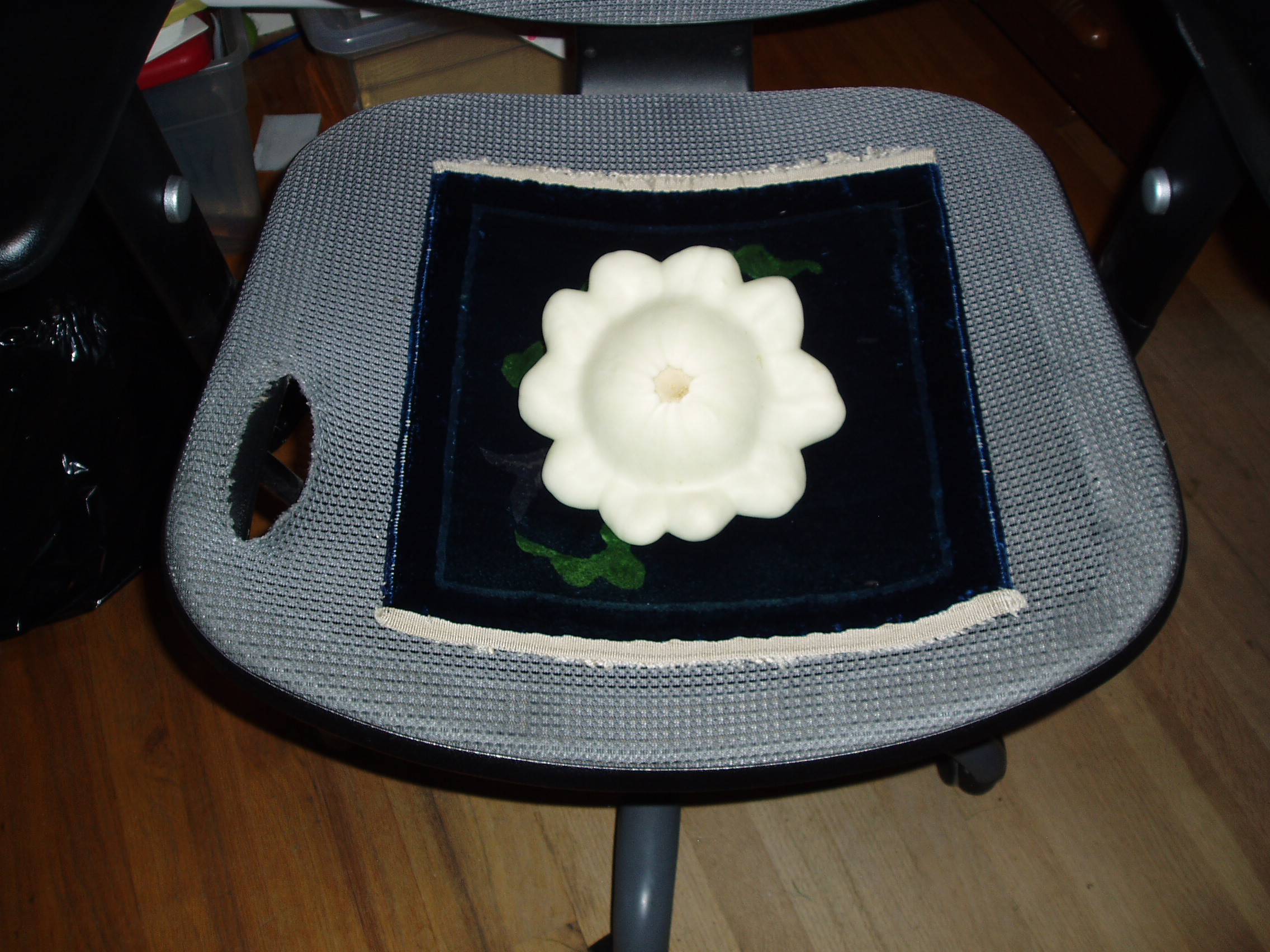
Bonus Pictures: I just had to share this. It’s a patty pan squash we grew that’s about the size of both of my hands. Yummmm.

Crest-Fest at Tiffany

By Cornelia Read

I dragged my daughter Grace all over Manhattan the other day, doing kind of groovy errands. We toured Barnard in the morning, which she loved so much she was on the verge of joyful tears throughout the entire information session, and I think was just about ready to chain herself to the gates in order to get accepted to the freshman class of year after next. Then we got to go to Belgian Shoes and exchange a gift pair from my Aunt Jean that were slightly too big for a really groovy mock-alligator black patent leather.

like this except NOT GREEN

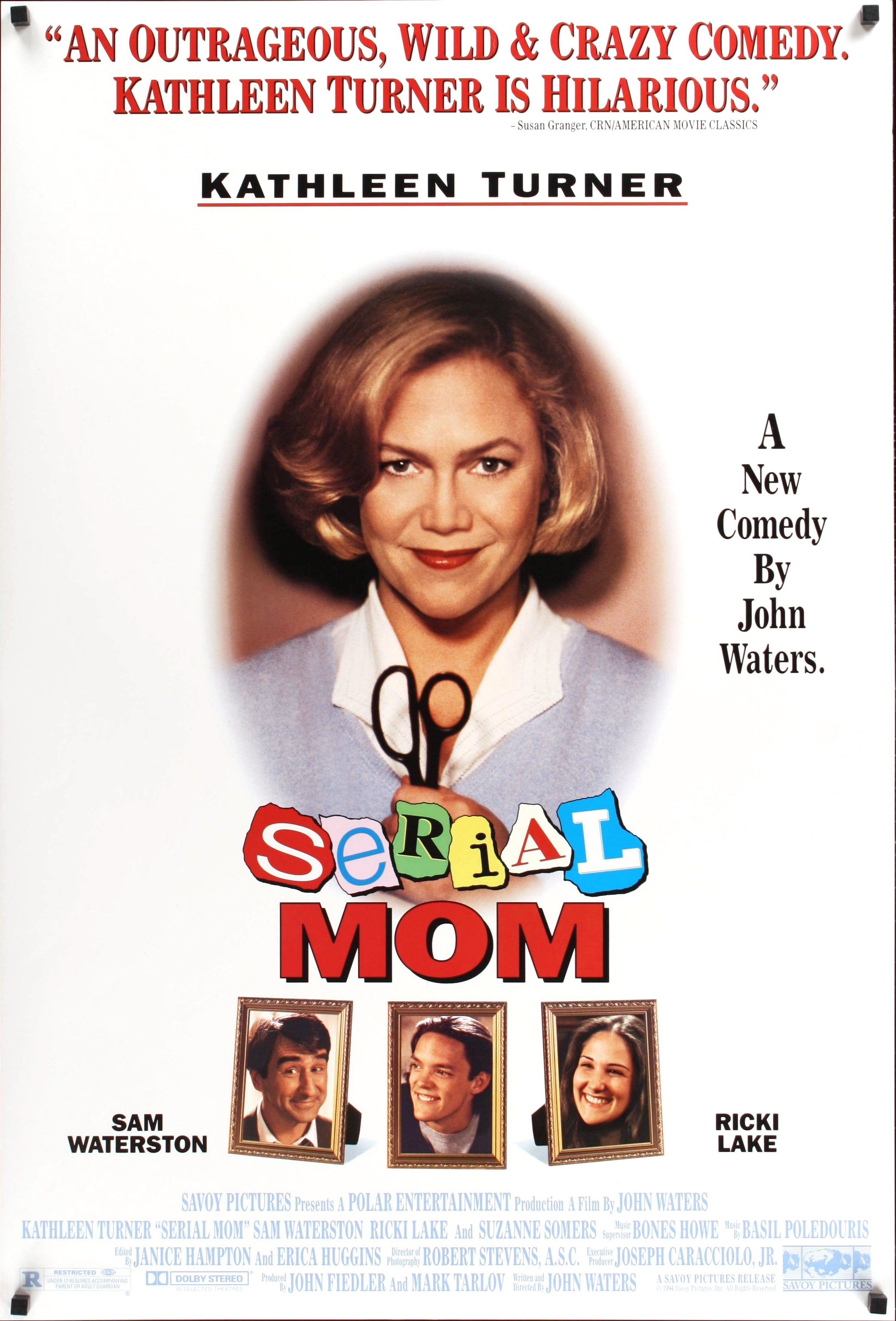
The very nice salesman assured me that you can now wear patent leather BETWEEN Memorial Day and Labor Day, but I disagree totally. I mean, if John Waters thinks Kathleen Turner can fictionally want to kill off Patty Hearst for wearing white shoes after Labor Day, I’m pretty sure I’m still on safe ground here, right?

But the coolest thing we did was go to Tiffany to ask whether they still had a Read family crest on file. My cousin Eric had told me there were two in the files, an older one that has like a bear paw or something, IIRC, with a motto along the lines of “Angry When Roused” only in Latin. The newer one is what my Grandfather designed for himself, which is the crest Eric had made into a ring for himself.

My mother had said that she wanted to have my dad’s version of this ring copied for me and my sister, if we wanted them. I told her that sounded terrific, especially if she felt like doing it for my fiftieth birthday (still thankfully… ahem… three years away.) Mom thought my stepmother might have Dad’s ring, but I’d found out she didn’t, and promised to go check with Tiffany, etc.

After some confusion on the part of the very courteous staff as to where one might actually GO in the store to find this information out (we were sent to the second floor, which is engagement rings and diamonds and pearls, then back to the ground floor [REALLY big sparkly stuff],

and then finally to customer service on the sixth floor, which proved to be correct ding-ding-ding.)

The tremendously kind Mr. Mark Harty helped me out with all this, promised to contact the branch of the company that keeps these things on file, and then emailed me that same afternoon to ask whether I’d forgotten a shopping bag at his desk.

I wrote back that if the shopping bag were from Belgian Shoes, then it contained merely a pair of totally jankity ballet flats from Target, and that I’d be honored if he’d throw them away.

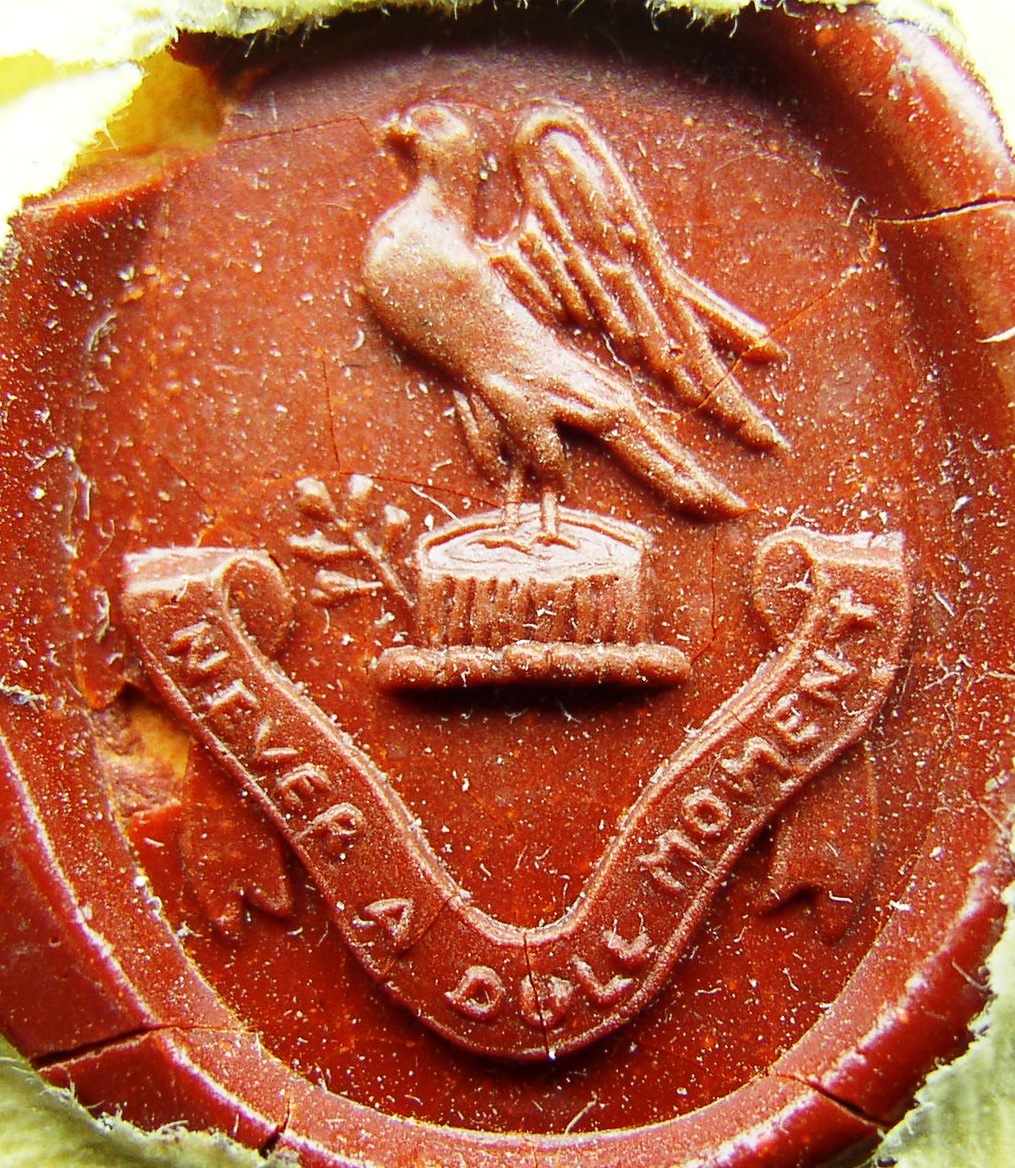
He emailed back later that same day and attached a jpeg of Grandaddy’s crest (and also said he’d successfully disposed of my “beloved” ballet flats, which was most excellent of him):


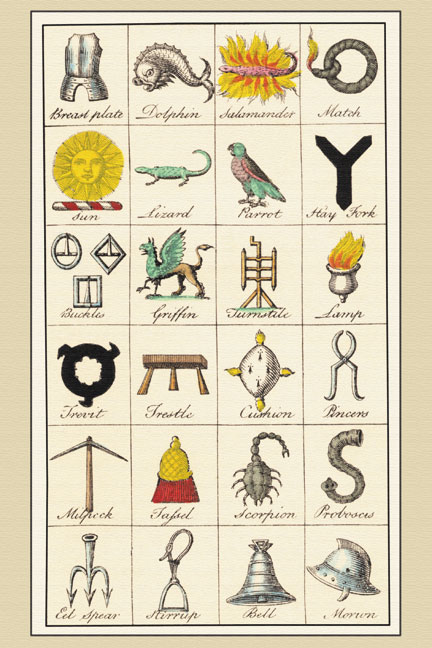
I don’t know a lot about heraldry, so just looked up a list of what the symbols mean this morning. Here are a few I thought were cool:

an ANT: great labour, wisdom, and providence in one’s affairs

an ASS: patience and humility

an AXE: execution of military duty 

a BAT: Awareness of the powers of darkness and chaos

BAY LEAVES: poet or victor’s laurels

a BEAR: strength, cunning, ferocity in the protection of one’s kindred

a BEAVER: industry and perseverance

a BEE: efficient industry

BELLS: Power to disperse evil spirits; a hawk’s bells denotes one who was not afraid of signalling his approach in peace or war

a CENTAUR: eminence in the field of battle

a COCK: courage and perseverance; hero; able man in politics

a CRANE (stork): close parental bond; vigilance if holding a rock

a DOG: courage, vigilance, and loyalty

a DOLPHIN: swiftness, diligence, salvation, charity, and love

a DUCK: person of many resources

an EAGLE: Person of noble nature, strength, bravery, and alertness… if wings “displayed,” it signifies protection.

an ELEPHANT: great strength, wit, longevity, happiness, royalty, good luck, and ambition.

an ESCALLOP (scallop shell): traveller to far places…

It’s a long list, but kind of fun to check out. Here’s a link to the full thing.

If I were to design my own, it would definitely have an inkhorn or inkwell (art of writing) with a panther (fierce, but tender and loving to children and will defend her children with her life.)

Grandaddy picked a stump with a branch sprouting from it, which apparently means “new life sprouting from the old.” Not sure what the bird is. An eagle? A cock?

Cocks in heraldry can sometimes look like this, rather than totally roostery (this is apparently a “moorcock”):

As for his new motto, I’d definitely keep that.

Here’s another crest I found online this morning, which I think is really cool:

I presume it was designed for an African-American family, given the visual references to slavery and Africa. I like the sound of these people very much.

Okay ‘Ratis, your turn. If you’ve got a family crest, let us know what it is and whether or not you’re comfortable with it. What would be in your crest if you designed it yourself? What would you want as your motto?

Right or Privilege?

Zoë Sharp

When I was a kid, one of my favourite places was the library. I lived on a boat from an early age, which was not exactly conducive to having a large collection of books. Condensation was a big problem, and the pages tended to mildew badly in the winter.

So, I got my reading kicks amid the old oak shelves and the parquet flooring of the nearest public library in Lancaster.

It was there I worked my way contentedly through the crime section, happy to take a chance on an author I hadn’t previously come across because it wasn’t costing me anything to give them a try. And, if I didn’t like the book I’d chosen, I had plenty more book to go at.

My first event as a published author was held at that same library. While I was writing my first book, the recently republished KILLER INSTINCT, I was part of a small local writing group who met every few weeks in another tiny local library in a nearby village, barely larger than an average living room. It’s gone now, more’s the pity, boarded up and abandoned – a victim of local authority cutbacks. The community is poorer for it.

And now the government is turning its attention to another aspect of the UK library system – PLR.

Public Lending Right came into being in 1979, when the Public Lending Right Act gave British authors a legal right to receive payment for the free lending of their books by public libraries, after a campaign that lasted thirty years and was vigorously opposed by a minority of determined MPs. The scheme itself was established three years later. Payment is just a few pence per lend, taken across a sample of UK libraries over the course of a year. And as it’s capped at £6600 (a little over $10,000) it’s the mid-list authors who tend to benefit most.

For authors whose books are produced in small numbers intended largely for the library market, often only in hardcover, PLR is a lifeline. It doesn’t matter if a book is out of print, so long as it’s still being circulated in the library system, and still being read. For the years when KILLER INSTINCT languished out of print, it was the only way I knew people were still reading and enjoying the book.

I feel very grateful to the libraries in general – and Lancaster Library in particular. In fact, the first ‘real’ character I included in one of my books was the librarian there, Andrew Till, who became an FBI agent in FIRST DROP. I was delighted to be able to include him as a thank you for all the hard work librarians do.

(a recent library event as part of Yorkshire FEVA – Festival of Entertainment and Visual Arts – with the staff of Knaresborough Library [from l to r] Karen Thornton, Wendy Kent, Deborah Thornton, with ZS, and fellow crime authors Richard Jay Parker and Matt Lynn.)

Whenever I’ve toured a new book in the States, I’ve always been more than happy to do library events, but got the impression – rightly or wrongly – that some authors are reluctant to promote the library system. Taken at face value, I can understand this. After all, if a library buys a book and then lends it to a hundred people, that (in theory) is a potential 99 sales lost.

I know whenever I’ve done library events that there’s often a very good take-up of sales alongside them. Many people who use libraries are also voracious book buyers, who borrow books as an extended version of browsing. Many others simply cannot afford to buy new books, particularly hardcovers. I’d rather they used the library, and kept that alive, than scoured second-hand stores and market stalls. Particularly as in the UK struggling authors have PLR as a small safety net.

But now, of course, the cash-strapped government is looking to cut public expenditure dramatically, and PLR is one of the things that’s coming under the microscope by the Department for  Culture Media and Sport. The results of the Spending Review are due to be announced on October 20th.

Meanwhile, there’s a petition you can put your name to, if you feel strongly enough about it. I know, if you’re not a UK author, you may think, why should I? But if you enjoy reading UK authors, please bear in mind that PLR is often the difference between an author being able to continue writing, and having to give it up in favour of more gainful employment.

So, ‘Rati, will you visit and sign the petition, or don’t you feel that authors should receive payment for library lends? What’s your view?

This week’s Word of the Week is quintessential, meaning something it its purest, most concentrated form, the most essential part, form or embodiment of anything. In medieval times, it was thought the world was made up of four corruptible elements: earth, air, fire and water. The heavens came to be regarded as a perfect incorruptible element. In Latin, the quinta essentia, literally, the fifth element.

I’m off on the road from this morning, so I’ll get to comments when I can, but please bear with me.