Author Archives: Murderati Members


Confidence (Revisited)

by Tania Carver (Martyn Waites)

Yes I know you may have seen this post before. That’s because it’s a repeat. The dealine had caught up with me and I havne’t been able to do anything new this week. Apologies, but it’s either this or a blank space. And while I’m sure some of you will prefer that to my ramblings, here’s the repeat. 

I was talking to a writer friend recently, a famous, bestselling writer friend, and the question of confidence came up. ‘I love it when a reader tells me how much they’ve enjoyed my book,’ my friend said, ‘because until I hear that I think they’re all rubbish.’

I know I shouldn’t have been surprised at this but I was. It reminded me of another conversation I’d had with a writer friend – again famous and bestselling – who said after handing their new book in, ‘This is the one. This is the one where I’m going to be found out.’ It wasn’t.  The book was another bestseller.

I don’t know why I was surprised by what they said, really. Because I don’t think it matters what level you’re operating at, sales-wise, as a writer, you’re always prey to the same doubts and fears.  Last week was the publication of J K Rowling’s first novel since her Harry Potter series. Some of you may be aware of this, it didn’t happen without notice. I would say its had mixed reviews but I don’t think that’s the right word.  Polarised would be a more accurate one.  Some people loved it, some hated it.  The ones who hated it did so mainly because Rowling had written the novel she wanted to write and not the one they had expected her to.  Fair enough. There was a fantastically angry review by Jan Moir in the Daily Mail – which I’m not going to link to as I don’t believe in giving that rag any more publicity – which slated the novel as a socialist tract and left wing propaganda. Considering the Daily Mail is the British newspaper to have supported Hitler and old habits die hard, I would think Rowling would be massively pleased by that. I would be. Some reviews on Amazon complained because characters, just like people in real life, swore.

But other more fair and balanced reviews appeared in other papers. By and large, her book would be judged a success. Despite all the numpties and their negative reviews, others were more positive and sales were, of course, huge.  Well done her.

We were talking about Rowling the other night at home. We’ve been doing that quite a lot recently since she now has the same publisher as the Tania books (In fact the release date for Choked was moved so as not to coincide with hers). Linda is firmly of the opinion that she doesn’t know why Rowling has bothered. ‘If I’d been that successful and made that much money,’ she said, ‘why would I want to open myself up to that kind of scrutiny?  Why would I put my head above the parapet just to have people take a pot shot at me?’ She’s got a good point. But my response was, ‘What else is she going to do? She’s a writer. Why write and not be published?’ Both valid viewpoints but over the last few days I’ve been thinking more about what Linda said. And this reminded me of the two conversations at the start of this piece.


The three of us were all together recently, talking about the same thing.  Confidence in our work. I confessed that I was still waiting for the tap on the shoulder and someone to say, ‘Come on son, you’ve had your fun. But now it’s time to let the real writers in. There’s the door.’ My friends said they felt exactly the same. One of my friends even admitted that they thought they had a double whose place they had taken and who should have been getting all the acclaim. And yet, we still keep doing it.

It’s hard enough to write in the first place. To put your work out there, fearing – and often expecting – the worst, work that you could well have spent at least a year of your life working on, work that’s become precious to you. To let it go and have people hurl whatever they want at it. I’m always amazed when I get a good review. Or rather relieved. I always think about what my friend said earlier: They haven’t found me out yet. Phew. I’ve dodged a bullet this time. But next time . . .

I know, when you examine it, it’s a stupid way to think, behave and conduct a career. But I honestly believe that writers have to do it. You’re driven to write. Compelled to do it. And when you have written you want to be read. You need to be read. Because without a reader a book is just a lump of paper. So you have to do it. And to tell you the truth, if I know any writers who think differently to what I’ve outlined above I doubt I would want to read their books. Feeling that your work is terrible is, I think, a necessary part of the process. It’s what drives you on, keeps you going. Makes you strive to improve, to stretch yourself. To go deeper into that character, further with that situation, make that dialogue better, that description more succinct. You have to. And that’s why I think J K Rowling is no different, despite the slight disparity in earnings with the rest of us. She’s a writer with a writer’s heart and a writer’s drive. And a writer’s willingness to put her work out there and be judged by it when she doesn’t need to. And I love her for that.


So how do we keep the balance? Well, there’s something I always tell creative writing students. It refers to an old interview with Martin Amis when his (some would say last good) novel The Information was about to be published. The book concerns two writers, one who is successful, one who isn’t. The interviewer asked which one he was. ‘Both,’ he said. ‘Usually at the same time.’ When I read that I thought, ‘What a load of pretentious bollocks.’ But the more I thought about that, the more I thought he was right. As a writer when you’re working you have to be both. At the same time. It’s a balancing act, a seesaw, with the brilliantly successful writer at one end and the abject failure at the other. You have to be able to write stuff that you think is absolutely sparkling deathless prose yet at the same time the worst piece of dross ever written and you’ve got to strive to improve on that. It’s an odd way to think but it works. For me, at least. It’s a confidence trick. It keeps me in check while simultaneously making me work harder.

It stops the book I’m currently working on being the one where I’m found out.

Hopefully.
 

THE LONG AND SHORT OF IT

By Stephen Jay Schwartz

So, I’ve been reading short stories lately. Hundreds of them. All contemporary, mystery-thrillers. I’m judging another competition, so I’m deep in it.

I kind-of forgot about the short story format. Like many of you, the short story is where my writing career began. It started with “Sammy the Dinosaur,” the four-page story I pecked out on our Selectric typewriter when I was eight years old. “Sammy the Dinosaur” was new and original to me, though I’ve heard that there was some other series with the same name that preceded me. My wife mentioned this recently, saying she assumed I stole the idea from the original author. This is simply not the case, however. When pressed, she softened her accusation, suggesting that my eight year-old mind was merely susceptible to ideas originated by others and that I imagined the story as my own. What she doesn’t know is that “Sammy” was the name of every pet I had as a child. Every fish, whether it was a beta or catfish, was “Sammy.” For a short time I had a salamander named Sammy. “Sammy” actually became something of a cursed name, since each fish never survived more than a month and the salamander disappeared after a massive, New Mexico dust storm lifted its cardboard home into the sky.

After the salamander debacle I began naming my pets with “B” names, a tradition that continued all the way to our recently deceased (seven years ago) dog Bandit and ultimately to the names of my ultimate pets, Boulevard and Beat.

It started with my first bullsnake, which was given the amazingly original name, “Bull.” The snake was a gift from my father, who brought him home to face the violent protests of my mother and sister. My dad held his ground and, for this, I gave him the honor of choosing its name. My father was a doctor and this moment proved that he was a man of great skill and no imagination. “Bull,” he said. “You know, for Bullsnake.” As though it needed an explanation.

Ultimately I had four bullsnakes: Bull, Belle, Billie and Bess. Bull was the only male in the group, so the rest was his harem. I had other pets during this time, too. They were the mice my snakes didn’t eat. It was weird, but if a mouse looked at them wrong, or if one accidentally kicked a snake in the jaw before the fatal strike, the snake turned tail and ran. The mouse went from pastry to pet.

I’ve been a vegetarian since I was seven years old, so feeding mice to snakes became pretty hypocritical after a while. One day I tried to get Bull to eat an egg. I dropped the egg out of the familiar “feeding container” (a Folgers Coffee can punctured with air holes) and watched as the snake crawled OVER the egg to get a better view into the empty can. I then had the bright idea of picking up the egg and dancing it around the cage so that it would appear “mouse-like.” Needless to say, my hand became that night’s meal.

When I got older I bought an iguana. Because iguanas eat salads.

It’s time to stop this tangent. We were talking about short stories.

After “Sammy the Dinosaur” I graduated to long form. When I was fourteen I wrote my first screenplay, with my writing partner Seth Gardenswartz. Together we were Schwartz & Gardenswartz Productions. He wanted us to be Gardenswartz and Schwartz Productions, but I told him it sounded clunky. Schwartz & Gardenswartz worked because it was “two Schwartzes separated by a Garden.” It took a full afternoon to convince him that my intentions were good and that I wasn’t trying to steal the spotlight. Finally, he agreed. I remember snickering softly, within earshot, “My name is fi-irst, my name is fi-irst…”

So we wrote that screenplay, a sci-fi thriller called “Battle of the Gods.” Written in long-hand, because neither of us typed. We gave it to my sister, who turned it into a typing class pet project. It came back as a 65-page paragraph. Really. All the dialogue, descriptions, name slugs, transitions, everything, wrapped into one gigantic paragraph. Thanks, Sis.

High school was four years without thinking about stories or writing. High school was four years of thinking about girls. I can’t remember if I read a thing. Wait, there was Steinbeck’s “The Pearl.” I remember hating it. They could have at least assigned Nabokov’s “Lolita.”

College came around and I started reading, and appreciating, good writing. The first writings that caught my attention were short stories. Flannery O’Connor. Katherine Anne Porter. “The Jilting of Granny Weatherall.” Fantastic stuff. And then there was Hemmingway, and “The Short Happy Life of Francis Macomber.”

And Amy Hempel. My God, have you read Amy Hempel?

Stories by Bernard Malamud. Stories that lit the fire.

After college I got lost in screenplays, writing at least ten feature scripts before ditching the film world to set my sites on the novel. I began by tackling the short story. I wrote seven or eight pieces that I kept to myself. Just getting used to the process. Then I dove into long-form with my first novel, Boulevard.

And now I’m studying the short story. Again. A good short story is a whole little novel in an itty-bitty space. I’m more intimidated now than ever. I’ve been asked to contribute to a short story collection for Red Hen Press, with some pretty impressive authors in the mix. I’m trying not to let it scare me. But it does. I’ve gotten used to the long format and, as exhausting as it is to write a novel, at least I have the comfort of knowing that I’m never really expected to finish one. Then there’s that great surprise at the end, when I actually do finish. (I assume I’ll experience that feeling again, someday). But these short stories…geez, there’s simply no excuse to not get one done.

I guess it’s fortuitous that I’m judging a short-story contest the same time I’m supposed to write a story for publication. I’m learning what works and why. And what doesn’t work, and what to avoid.

Short stories open a whole new world for me – at their best they’re magnificent dishes meant to be consumed in one sitting, yet remembered forever for their satisfying taste. At their best they influence our styles and give us something to emulate. And, as authors, they give us an opportunity to experiment with different styles and points-of-view and tense, without committing our careers to the kind of “risky” change that scares agents and editors. And, if a new style works as a short story it might signal a new direction for the course of our books. Or it might signal exactly what we shouldn’t do in our books; the canary in the coal mine. Something to think about.

What are your favorite short stories? Which ones have influenced your style? Do you prefer writing short stories or novels? Do you prefer reading short stories or novels? Why?

The not-so gentle art of the synopsis

Zoë Sharp

I’m sure I’m not alone when I say that I find writing a synopsis the most difficult part of being a writer. But it’s also the most vital.

Even if you’re a seat-of-the-pants kind of writer, who sets out with an idea and runs with it until the end, you may still have to produce a synopsis after the event, in order to sell your masterpiece to a publisher.

If you go searching the subject, you’ll find almost too many websites, blog sites and articles to count. I’ve been hunting around and tried to come up with a general consensus of the advice that’s out there. Please feel free to add, contradict or explain your own theories!

If you’re a plotter to begin with, then you will probably already have the original outline you used as the backbone of your story. If you’re anything like me, though, by the time you’ve finished it will be covered in crossings-out and pencil alterations. So, your first job is to produce a clean, accurate outline.

I go through my manuscript as I’m writing and do a summary of each chapter or scene. A few lines, an idea of who’s doing what, and what might be happening behind the scenes to be picked up later. This is more for my own consumption than anyone else’s, however. It will not make the story sound particularly exciting, but it’s extremely useful when it comes to edits, because I can make my alterations to the summary and then transfer them to the manuscript itself.

But, I also write the jacket copy synopsis. This gives me a tight view of the book as a whole, and reminds me of the thrust of the story. The jacket copy synopsis I wrote for DIE EASY: Charlie Fox book ten, is this:

In the sweating heat of Louisiana, former Special Forces soldier turned bodyguard, Charlie Fox, faces her toughest challenge yet.

Professionally, she’s at the top of her game, but her personal life is in ruins. Her lover, bodyguard Sean Meyer, has woken from a gunshot-induced coma with his memory in tatters. It seems that piecing back together the relationship they shared is proving harder for him than relearning the intricacies of the close-protection business.

Working with Sean again was never going to be easy for Charlie, either, but a celebrity fundraising event in aid of still-ravaged areas of New Orleans should have been the ideal opportunity for them both to take things nice and slow.

Until, that is, they find themselves thrust into the middle of a war zone.

When an ambitious robbery explodes into a deadly hostage situation, the motive may be far more complex than simple greed. Somebody has a major score to settle, and Sean is part of the reason. Only trouble is, he doesn’t remember why.

And when Charlie finds herself facing a nightmare from her own past, she realises she can’t rely on Sean to watch her back. This time, she’s got to fight it out on her own.

One thing’s for certain, though. No matter how overwhelming the odds stacked against her, or however hopeless the situation may appear, Charlie is never going to die easy.

A taster, yes, but this is NOT really a description of exactly what happens in the book, so not really a synopsis in its true sense. But at the same time it’s relatively simple, it mentions only two characters by name, so it’s not too confusing, and it gives you a pretty reasonable idea of who, what, where, why, and the conflicts faced by the main character, both physical and emotional. Plus the present-tense gives it an immediacy and impact.

At the beginning I include the detail about Charlie because I never assume people know the character. And I make sure I include the word ‘her’ so people don’t get confused from the start that she’s a woman.

But to take this and turn it into the kind of synopsis I could show to a publisher means a LOT more work.

For me, the main jobs of a synopsis are to get across the following:

The theme.

The basic elements of the plot and what makes it different from other, possibly similar storylines the editor’s seen before. And NEVER say ‘and there’s this great twist ending’ without actually telling them what the ending is. They’re the experts. They’ll decide if it’s great or another cliché they’ve seen a million times before.

The attraction of the protagonist to a jaded reader.

If the subject or setting is topical or different or otherwise interesting.

To show that the writer can put together a good story, and write it in a stylish and gripping way.

So, to this end a synopsis should include the following:

The Hook―why is this book worth reading?

The Characters―what are their motivations, their emotions and the crises that challenge them?

The Story―told in a brief but enthusiastic way, as you’d describe a great movie you just saw to a friend who you’re trying to convince to go and see it. What happens, how the characters react, and what are the after-effects. Not, ‘the bad guys robbed the bank and then the good guys caught them, the end’.

The Climax―the event at which the protagonist overcomes or succumbs.

The Resolution.

But this is not often one linear story. There are different elements that have to be considered and combined. First is the basic story itself:

What’s the incident or action that kicks the whole thing into motion?

What are the main events that put obstacles into the path of the protagonist?

What is the climax to the story?

What is the resolution to the story? Not the same as the climax. The climax could be the big fight scene on a sinking riverboat on the Mississippi. The resolution is what happens once the characters get back to New York and events have had time to hit home.

Then there’s your protagonist’s story:

Who is he/she? What drives them. What do they want―or want to avoid―and what’s preventing them from achieving this?

What situation or incident brings about change in their life?

How are they affected by the events of the book?

What is the ongoing effect on the protagonist’s life at the end?

And, of course, the story of your other characters:

Who is the antagonist―what do they want?

How do they attempt to achieve their goals and what obstacles to they put in the path of the protagonist in order to do so?

Are they changed by the events of the story, or do they bring about change in the protagonist because of their actions?

The relationships within the story:

What are they at the start?

How do they develop or change during the course of the book?

How are they tested, changed or broken by the climax?

How are they different at the end?

And finally, people get hung up on the length of a synopsis. Brief is good, but not if it makes the thing boring. Better to go to two pages and grab somebody than stick to one and send them to sleep. Theme and effects are more important, I feel, than a blow-by-blow of the action. The main events should be enough.

Use readable font size rather than trying to squeeze as much in as possible by going to 6pt. Single or double spacing? I always use 1.5, but that’s personal preference. Some people also advocate putting a character’s name in capitals the first time it appears. Again, this is personal preference, but I would make sure that character is always described the same way throughout. Not by first name, profession, and then surname―too confusing.

 And just in case this has left you eager to put together a brief story of your own, I’m very pleased to mention the Flashbang Flash Fiction Competition 2013. Sponsored by CrimeFest. £2 entry free. 150 words maximum. Deadline March 1st 2013. First prize is two free passes to CrimeFest. Shortlisted and winning stories published online. Full details here.

This week’s Word of the Week is deus ex Meccano, which is a kit of metal bits and pieces which allows you to construct the ending to your book :))

The Art of Character

By David Corbett

It’s a bit of two-for-one day here at Casa de Corbett—I’m posting not just here but with Deborah Crombie over at Jungle Red, where we’re giving away a free copy of The Art of Character.

Why am I defying laws of physics by appearing in two places at once?

Because we’re a week away from the pub date for The Art of Character, and in between popping open the Dom Perignon and soliciting celebrity piggyback rides, we’re trying to amp up the volume on the book’s release.

If you want to know the story of how the book came about—Deborah’s preoccupation—trundle on over to Jungle Red.

Here I just want to speak briefly about why I think the book is helpful, and maybe even important.

Some of the best books on writing in recent years have emphasized structure—specifically Robert McKee’s Story and John Truby’s The Anatomy of Story. And though both books deal with character, Truby’s in somewhat more depth, I found there was something lacking in both that needed addressing.

Though both books and a few others deal brilliantly with the function of character, and discuss how the character is a crucial element in the story matrix, they leave largely unaddressed the trickier, subtler, more difficult, and thus most interesting parts of characterization—giving the character recognizable feelings and desires, contradictions and secrets, letting her think and feel and behave like a real and complex human being, not a plot puppet.

As I emphasize in the book, it’s important to think of the character not as just a cog in the story, but as a real individual, with a life “outside the narrative,” to whom the events of the story happen.

And it’s not enough to “take dictation from imaginary beings.” A great many clichéd characters sprang fully formed in their creator’s imagination precisely becaue they were derivative—vaguely concealed duplicates of other characters.

There’s no short cut. To create great characters you have to spend time. You have to feel deeply and imagine wisely. You have to ask a hundred questions and answer them not with your mind but with your heart and your intuition—and characters aren’t always quick or straightforward with their answers. Patience and attention are required.

The books I did find that dealt with this aspect of characterization didn’t take it far enough, in my opinion, or didn’t deal with it sytematically and comprehensively. On top of that, they were written in a style I found leaden, contaminated by “how-to.”

A character can’t be fashioned from ideas, or stitched together from parts, no matter how clever the tropes. You end up with a Frankenstein, not a Frank Galvin, or a Frank Pierce, or even a Frank Chambers.

But few if any of the books on writing I reviewed, even the ones I admired, offered any real guidance on how to conjure that organically whole yet emotionally complex hobgoblin we think of as a fully realized character.

I took only the mininum number of English classes in college and never took a creative writing course. I learned most of what I know about writing from trial and error—plenty of the latter—and breaking down scenes in acting school, where the importance of a physical and intuitive connection to the character was hammered into my over-analytical brain.

Writers lack the physical presence of the actor, and can’t rely on it. We have only words. How is it done?

I wanted to help writers figure that out by helping them move through each of the stages of characterization, from conceiving the character—and being wary of characters derived from the story, the finishing school for plot puppets—to developing the character, to understanding that character’s role in the story, to techniques for rendering her on the page.

I emphasize the importance of scenes, not information, in not just portraying your character but conceiving and developing her.

And I stress the need to plumb one’s own experience, emotions, and memory to create the intuitive facility you need to perceive your characters like figures in a dream, not pieces on a chess board—or the product of a checklist.

Last, I wanted to write the book in such a way the reader would feel not just informed but inspired. I wanted readers to feel compelled to put down the book and return to their desks and forge ahead with whatever they were writing.

From the response the book has garnered so far, I think I’ve been largely successful. Now the book needs to find its target audience: writers, whether just starting out or perfecting their craft.

If you’d like to try for a free copy, go to today’s posting on Jungle Red.

If you’d like to read an excerpt (“Serving and Defying the Tyranny of Motive”), check out this post on Zyzzyva. (Another excerpt will appear a week from today on Narrative Magazine’s Tumblr page.)

And if you’d like to pre-order the book, you’re only two clicks away, beginning with this one here.

* * * * *

What are the easiest and most difficult aspects of characterization for you?

Who is the most interesting character you’ve come across in a book, play, film, or TV program lately?

Among the characters you yourself have created, which one’s your favorite? Which one was hardest to create or get right? Which one was easiest?

* * * * *

Jukebox Hero of the Week: One of the points I make in The Art of Character is that a writer who writes for himself is “scribbling to a ghost.” We write for readers, because the reader makes us honest.

But it’s often important to personify the reader we’re trying to reach, and envision that reader as someone who expects our very best.

The actor Joseph Chaikin wrote that he never went onstage without imagining Martin Luther King, Jr., in the audience. Since we celebrated Dr. King’s birthday Monday, I thought it might be appropriate to choose this tribute to him from the late great Solomon Burke. It’s a beautiful song about persevering despite the gnawing doubts that plague even great men and women, and the humility that comes with true courage:


National pride on Australia Day…sort of

By PD Martin

This Saturday is Australia Day. Given I know many (most) of our readers are NOT Australian, you might be interested to know that Australia Day commemorates the arrival of the first fleet in 1788.

It’s a big day here in Oz, yet I’m feeling mixed about it all. There are so many layers to this day. Good, bad, and plain ugly.

First off, at the most superficial level I think most Australians will agree it’s a great day for a BBQ (a national past time, particularly in summer; and Australia Day is one of those days when pretty much everyone either has or goes to an Australia Day BBQ).  It’s also a public holiday, and let’s face it, who doesn’t like a day off? In fact, this year because it falls on Saturday, the public holiday is on Monday (in lieu), so we get a long weekend — bonus! Mind you, as a full-time mum public holidays don’t actually mean a ‘day off’ for me, but they do mean a day of family time, which is something I cherish greatly.

There’s also the part of me that’s incredibly proud to be an Australian and so it’s nice to have a day to honour this feeling. I love this country and while Australians generally have a low-key kind of patriotism, it’s still there, bubbling away underneath. You probably got a sense of my pride in Australia during my blog on our gun laws (yes, I think we’ve got it right). Plus our healthcare system is pretty damn good, I think. Then of course there’s the country itself (the cities, the outback, the bushland, the beaches). I also love how multicultural we are these days. And let’s not forget the weather. Having lived in Ireland for a year and a half, I think I appreciate our sunshine even more now. Looking out to blue skies and maybe a few puffs of cloud at least 6-9 months out of the year is extremely important to me. It sets the mood for the day and instantly makes me feel upbeat. Sure, the really, really hot days aren’t my favourites but I’d rather be hot than cold any day.

So, all of the above are incredibly positive things. Go, Australia. Yay, Australia. I love living here. Australia Day rocks. But then…

I think about the actual day it commemorates — the British declaring sovereignty over Australia (then New Holland), and everything that followed in terms of our indigenous population. In fact, most of our Indigenous population call Australia Day Invasion Day. And of course, that’s what it was. It’s all about perspective. Having lived in Ireland and studied some of its history extensively for Grounded Spirits, I often compare the two countries. Ireland is the most invaded country in the world. Its most recent invasion, of course, had massive consequences — consequences that were felt for centuries (and still are). After all, that’s how Ireland became Northern Ireland and the Republic of Ireland. (Note: I realise I have simplified a very complex issue with this statement. And yes, it is/was also very tied up in religion. But what you’ve got to remember, is that traditionally the Catholics were Irish and the Protestants were English.)

Anyway, part of Grounded Spirits takes place in the 1820s, when the Irish weren’t even allowed to own land in their own country. Ireland has been fighting invaders, either in the political arena or physically, for pretty much its entire history. The Irish fought their invaders over the centuries. What would have happened if Australia’s indigenous population had guns? Would a battle between Australia’s indigenous population and invaders (British or otherwise) still be going on today? Would the country be split in half?   

The final layer…In terms of Australia Day commemorating the British declaring sovereignty, I’d actually rather Australia was a Republic. I believe that the average Australian actually does NOT feel an affiliation to the UK or the Queen. Problem is, for better or worse we don’t fully understand that burning desire to legally be a Republic. As a result, most Aussies (non-Indigenous) are pretty apathetic about the whole issue.

However, many of the supporters of an Australian Republic believe it would (and should) be linked to Reconciliation. These two issues could be tied together — an Australian Republic that starts afresh, recognising that Australia has been built on the foundations of indigenous Australians, British settlers/invaders and the massive number of migrants that now form our multicultural population. Symbolically, a Republic could be a new start with an acknowledgement of this country’s true history.

Australia Day…see what I mean about the layers? The good, the bad and the ugly?

So, what will I do on Australia Day? I will celebrate all the positives of this wonderful nation, but the history and the need for both Reconciliation and an Australian Republic will also be at the forefront of my mind. We do have friends coming down for a BBQ, but I’ll make sure we talk about the layers of Australia Day.

No excuses

by Pari

This is being written in real time. Two, maybe three, minutes without editing. At least as much as I can do without editing. You see, people always talk about how they can’t find the time to write. Hell, I complain about it all the time, especially since I started working full time and am so tired when I come home from work. Mornings are out because I have to get up earlier than I’d like in the first place so that I can exercise. But writing, ah, writing, it’s exercise for the creative body and it needs its expression too. So, how long does it take to write, say, 100-500 words. I don’t know. I’m writing this as one of my kids goes to the bathroom ( I know, it’s not very glamorous that, but that’s the test I set up for myself), just typing as quickly as I could without editing until my kid gets out of the bathroom and we head to the store. It’d been two minutes now . . .and the door is opening. 178.

Day two: I wanted to make a point with this speed written blog. Namely, that it’s important to power through excuses because, most of the time, excuses are the stuff of fear. Of what? Of not being good enough, of not being profound enough, of not being able to hide from the fact that we’re never satisfied as creative with what we’ve created. The truth is, that’s a good thing. To be self-satisfied is to kill creativity. At least, that’s what I think. So here’s the blog. I’m going to type until I reach two minutes and then I’ll spend three or four to edit and then that’ll be it. I’ve already completed the equivalent of one double-spaced page and that was in  123: 2 minutes exactly
______________________________________________________________________

I wrote the first two paragraphs of this blog in a very short time . . . and decided not to edit. They’re not brilliant, I’ll grant you that. But they’re evidence of something that I have to face myself. There is always time to write! I noticed two things while trying to go as fast as I could:

  1. I couldn’t stand to make typos. I had to correct them and that took time I could’ve been creating.
  2. I wanted my writing to make sense and it was such a struggle not to go back and edit small phrases and punctuation while in the writing process. However, I only paused a few times, only corrected a few errors, too.

There’s no real profundity here, just a test that I’m sharing with you this week. I had originally thought about writing a blog about prejudice or something commemorating Dr. King, but this topic intrigued me.

After all, Dr. King didn’t let excuses or fear stop his mission, did he?

So today, why don’t you try this experiment too? Set a timer and go for 1-2 minutes in the comments and see what you come up with. It might be fun. It might reveal something interesting to you. Or don’t share the test with us . . . but do leave a comment. I’m actually home today and can answer.

By the way, this last segment — with its self-consciousness and spell checking in real time — took me 4:29 to write.  249 words.


It’s called MICROBLOGGING, okay?

by Alexandra Sokoloff

I was going to call this post “Is blogging dead?”  but that just sets up a conundrum I can’t wrap my head around, not after the week I’ve just had.

But this question has been on my mind a lot lately, for a lot of reasons.  

Promotion and social media exposure, a strong internet presence, is absolutely mandatory for an author. Blogging used to be THE primary method of getting yourself out there, and if you had a personal blog and participated in a group blog like Murderati, or several, even better.

But so many group blogs have shut down, and authors seem to be burned out on personal blogging.

And then there’s Facebook. 

I hear from a lot of people that FB is on the decline but it seems to me that the conversations that used to be had in the blog comments, and the large communities of “backbloggers,”  a lion’s share of that action has moved to Facebook, and that that aspect of FB is growing.

Blogs are in-depth entities. The joy of a blog is that you can really explore a topic (as well as sometimes do some virtuoso writing), and the comments that follow deepen the conversation, and there’s something compelling about the FEELING of a closed, fixed space that a blog is that makes it a sort of virtual salon. People return to their favorite blogs. I think of Murderati as a PLACE, where I can find people I know and where other people can drop by and join the party.  I love that virtual reality aspect of it.

But blogging takes a lot of time, not just for the blogger. It takes actual effort to read a blog, in that you have to go to a particular place to get to the conversation.  If the conversation there isn’t what you were looking for, you have to look elsewhere.

Facebook is a different kind of experience.  It’s all right there in front of you. You throw a topic up there and whoever happens to be passing by on the endless river of “feed” may or may not jump in.  You never know who or what you’re going to get, although I do notice a base of regular commenters coming back to my Facebook page over and over, so there is an aspect of place to it as well.  

FB has tailored a social media expereince that is either still a novelty, or possibly more suited to the kind of social media experience that we are looking for – quick, fun, convenient interaction that gives you a buzz of relevance without much work.

I’ve heard it referred to as “microblogging” and I think that’s a perfect description.

Now, I’m speaking from a very privileged position of being part of an established and respected group blog and also running a very popular blog of my own – my Screenwriting Tricks for Authors blog is getting more traffiic than ever (though far fewer comments these days), and a great deal of that traffic is for much older posts that are constantly reposted and linked to as people discover the blog and read the accompanying workbooks.  It’s a hugely important selling tool for my nonfiction books.

But lately I feel like I’m casting a far wider net with FB than I can with blogging.  Any post I make I get comments from people I don’t know at all. It’s a quick interaction that introduces me to a huge number of people who may remember me and the fact that I’m an author, which is the groundwork of all promotion – name recognition. And I enjoy the format of Facebook.  It’s so visual – which puts it light years ahead of Twitter, in my opinion. There’s an aspect of improv to it, in that I can always find something fun to say about something someone else has posted. I am, for better or worse, a social butterfly, and I love to have random conversations with large groups of random people.

I know, I know, it’s sounding like I’ve just discovered Facebook (Where exactly has she BEEN for six years?you’re asking). But that’s not exactly true. I was on it before it went public. It’s only recently that I’ve felt that I can use it properly and that it’s at least for the moment being a form of social media promotion that gives me the most bang for my time.  Time being always of the essence – not just for writers, but for everyone who reads them.

So today, I’d love to hear what you have to say about it. Do you think blogging has moved to Facebook? Have you had luck microblogging over there?  

And while we’re on it, where does Twitter figure in? If people ARE leaving FB, where are they going? I’m really interested in what you all have to say about it.

And for comparison of the two media, here’s my Facebook page, where you can find the same discussion topic (third topic, full page.)

Alex

On holidays

By PD Martin

I’m on holidays again. I did consider simply re-posting my summer in Oz blog from last year, because I’m pretty much doing the same thing!

Well, not exactly.

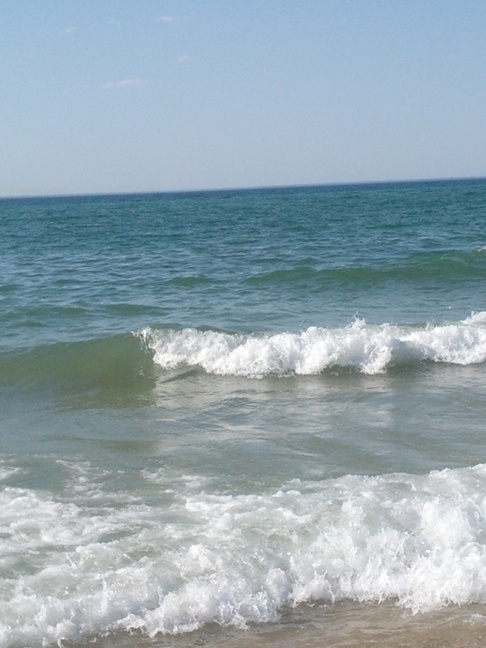
Every year, we head down to the Mornington Peninsula on Boxing Day (26 December) and stay for quite a few weeks. I used to spend my summers down here (since I was two years old, when my grandparents bought a small holiday house) and now my little ones are enjoying their summers by the beach, too.

This year and last year, our ‘go home’ date was dictated by Grace’s school holidays. So we’re here until almost the end of January.

We do pop back to Melbourne for a few trips, like our traditional Australian Open tennis day. That’s today!

So, it’s pretty much been:

  • Beach
  • Relaxing on the deck (eating)
  • Beach
  • Relaxing on the deck (eating and drinking)
  • A walk or two 
  • Beach

You get the picture, right?

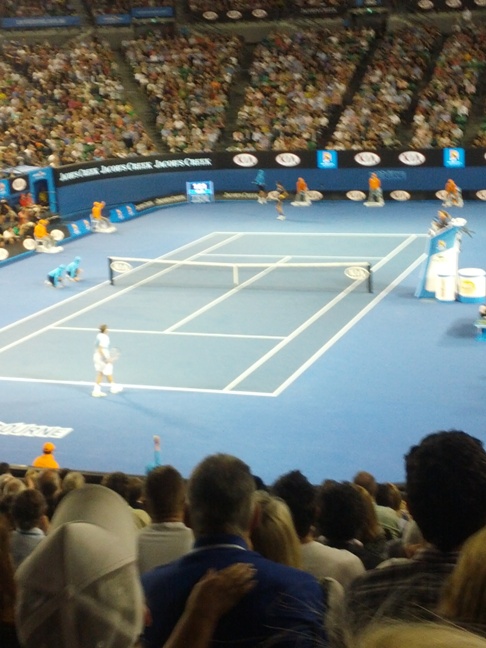
Then last night was the tennis (sorry about the poor quality pic). We saw Williams (Venus) vs Cornet and then Ryan Harrison vs Djokovich.

Unfortunately the men’s match was extremely one-sided and when you go to these matches you really feel for the guy who’s getting his ass whooped. At least, I did. It must be so hard to be playing in front of so many people and have the first set gone in just 20 minutes. You can feel the disappointment, the frustration.

Anyway, I’m off to the tennis and my family is waiting so I’m out of here. Mind you, it’s going to be a scorcher today…39C which is just over 102F. Loads of sunscreen and hats today! Then tomorrow it’s back to the beach.  

We’ve got another ten days on the Peninsula, so I’m guessing we might hit the beach and relax on the deck a bit more!

Are you still on holidays? If so, what are you up to?

FULL SPEED BEHIND

by Gar Anthony Haywood

My middle daughter Erin is going through a bit of a rough time right now.  Nothing earth-shattering or health-related, thank God, just the usual fallout from a young adult making a few poor decisions regarding — what else? — money.  We’ve talked about her situation together and we both agree that the best way out of the mess she’s in is the one that is often the most difficult path of all to take: retreat.  Facing up to the fact that pushing forward, rather than falling back post-haste, would only make her problems worse, and acting accordingly.

Taking this tack will be embarassing for her, and will impact others.  It will involve admitting her mistake to friends and family, exposing herself as someone who isn’t quite as mature and put together as appearances might otherwise indicate.  In other words, it’s going to be painful as hell.  But it has to be done.

In the process of offering her my fatherly advice that she cut her losses now while she still can, before the brown stuff really hits the fan, I told her about a story I’d just recently heard on This American Life, the NPR radio program.  The story was titled “Self-Improvement Kick,” and it dealt with a young guy named Daryl Watson who, lost in life and looking for purpose, was inspired in 2009 to become the new Peace Pilgrim.

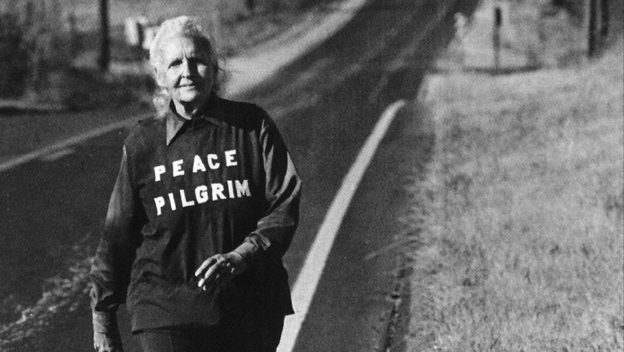
Who the hell was the first “Peace Pilgrim” you ask?  Well, it was a woman named Mildred Norman, who in 1953, at the age of 44, took it upon herself to walk across the length of America to promote the cause of peace.  From the start of her pilgrimage in Pasadena, California, to her death in Knox, Indiana, 28 years later, Norman logged over 40,000 miles on foot, carrying as her only possessions a pen, a comb, a toothbrush and a map.  She was entirely dependent on the kindness of others to keep going; everything she received in the way of food, drink and shelter was freely given.  She never asked for anything.

Wow, right?

Anyway, 28 years after her death, young Daryl Watson heard Norman’s story and decided he’d just found his purpose in life.  He was going to become the world’s new Peace Pilgrim.  He chucked his career in children’s television, sold off all his belongings and cashed out his savings account.  Every bridge connecting him to the life he knew was dismantled; Watson not only tore up his driver’s license, the aspiring playwright erased every play he had written in the last eight years.

Before he set off from Cape Henlopen State Park in Delaware for San Francisco, California — a trip he estimated would take him around six months to complete — he created a blog site dedicated to his journey and emailed a very public goodbye to all his friends and loved ones, explaining as best he could what he was about to do and why.  He then started walking . . .

. . . and gave the whole thing up three days later.

Here’s how Watson describes what happened just after he’d crossed into the state of Maryland, a mere 40 miles into his trip:

“. . . I’m tired, I’m hungry, my feet are killing me, I’m really thirsty, I’m freezing. And I saw this billboard. And it said, ‘It’s OK to make mistakes — as long as they’re new ones.’  And I was like, hmm, I wonder if I made a mistake.”

Watson soon decided he had indeed made a mistake and pulled the plug on his grand experiment.  Which meant he had to go back home and start his life all over again, but only after telling all those people to whom he’d bid farewell that the Peace Pilgrim, circa 2009, had fallen just 23 1/2 weeks and 2,880 miles short of duplicating the amazing perambulatory feat of the original.

Talk about humiliation.

The impulse to soldier on, even at the risk of ruining his health or, worse, losing his life, must have been incredible.  How to admit to all those people that you’ve failed so miserably, so completely?  Wouldn’t perishing in the cold almost seem preferable to enduring such mortification?  And consider that what Watson was returning to was nothing less (greater?) than Square One, the giant crater of nothingness — no job, no home, no earthly possessions — he’d deliberately made of his existence.

Yet he did what had to be done.  He admitted defeat and reversed his field, saving himself, and all the good works he may very well do in the future, in the process.

I related this story to Erin because I think it beautifully illustrates the lesson I wanted to impart to her, which is that sometimes, the only way to go forward is to stand on the brakes and go back to where you started, no matter the cost to your ego.

I’ve been working on a short story over the last several weeks that I’m overdue turning in to my editor.  The reason the story’s late is that I stopped midway through to rewrite much of what I’d already written, having realized — or, more to the point, having lost the will to deny — that the story just flat out wasn’t working as it was.  I hated to do it.  I wanted the damn story over with.  But just as Daryl Watson was cosmically advised by a billboard to rethink what he was doing and turn back, I am occasionally the recipient of similar warning messages, and this one told me to bite the bullet, double-back, and fix what was broken in my short story.

It was the right thing to do.  The story works flawlessly now.

When deadlines loom, anything short of forward momentum feels like failure.  But there are times that moving forward, intead of backward, is precisely the wrong approach to take.

I think Erin understands this now, and I suspect the man who once sought to become Peace Pilgrim, ver. 2.0, does as well.

WITH ALL UNDUE RESPECT, PT. 2

Gar Anthony Haywood

I greatly enjoyed Zoë’s most recent post here on the subject of respect and the lack thereof so many people these days show to others.  I enjoyed her post so much, in fact, that I’ve decided to riff on it today on this, my Wildcard Tuesday.

This probably isn’t anything you haven’t already noticed, but nowhere is the widespread disrespect Zoe wrote about more apparent than on the streets and byways of America.  When civilization completely breaks down, I firmly believe the fuse will be lit somewhere on the 405 freeway here in Los Angeles.

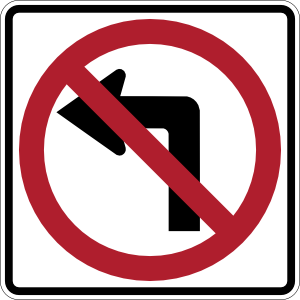
Angelenos treat the rules and regulations of the road like mild suggestions no one is really expected to take seriously.  Funny, but when I read a “NO RIGHT TURN” sign, I take it very literally, while others…well, let’s just say they must see some fine print on there somewhere that’s invisible to me.

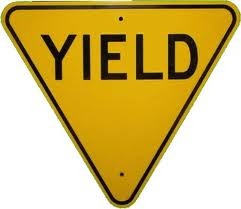
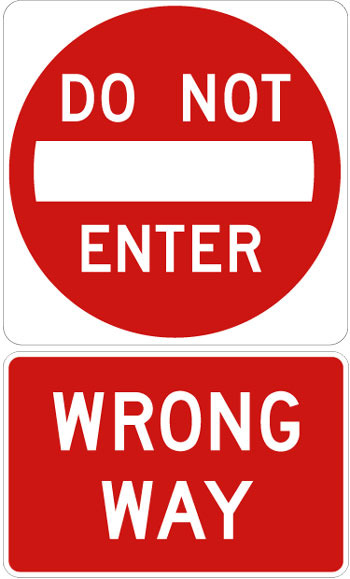
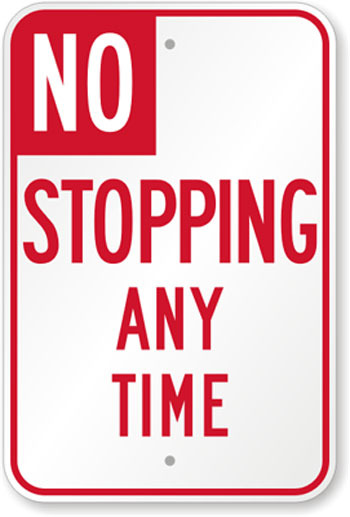
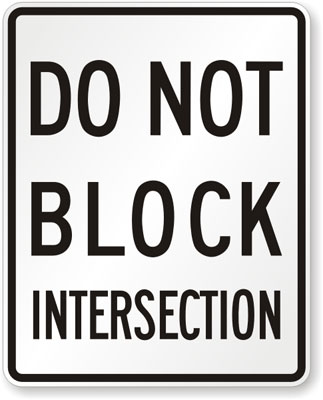
Here, then, are a few common road signs, and the ways they are interpreted by some of the numbskulls who risk our lives daily driving any damn well they please:

THE A-HOLE’S INTERPRETATION: “Make a half-assed effort to slow down momentarily, then watch for opposing traffic as you blow through the intersection.”


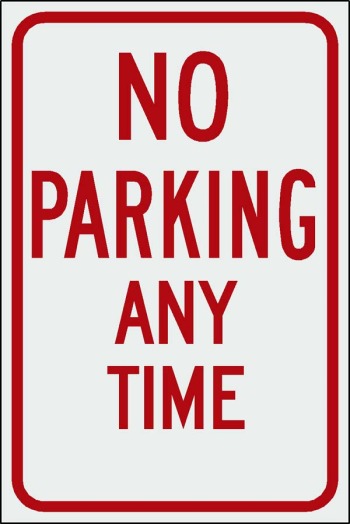
THE A-HOLE’S INTERPRETATION: “Park here only it you have a need to, and only for the amount of time it will take you to leisurely conduct your business.”


THE A-HOLE’S INTERPRETATION: “Please don’t turn left here unless it would inconvenience you in some way not to do so.”


THE A-HOLE’S INTERPRETATION: “Right-of-way doesn’t mean jack if you can’t beat me to the spot, sister.  Let’s go!”


THE A-HOLE’S INTERPRETATION: “If they didn’t want people making U-turns here, they would never have put this opening in the island.  Besides, you’re nuts if you think I’m going to drive a block out of my way to turn around legally, instead.”


THE A-HOLE’S INTERPRETATION: “Relax!  I’m gonna run into the store, fill my cart to the max, than start a huge argument with a cashier when I attempt to get 68 items through the Express Line.  Should only take me a minute.”


THE A-HOLE’S INTERPRETATION: “You say your lane’s going away and you need to merge into mine?  Sounds like a personal problem to me, pal.  Get lost.”


THE A-HOLE’S INTERPRETATION: “If you watch for opposing traffic very, very carefully, and do it really quick, you should be able to continue on past this sign for another block or two to reach your destination.   Beats the hell out of going around.”


THE A-HOLE’S INTERPRETATION: “First of all, I’m not stopping, I’m parking.  Secondly, I left my kids in the car so you know I’m not going to be here long.  And third, there’s no place else to park that’s not at least a block away and my damn feet hurt.”


THE A-HOLE’S INTERPRETATION: “So I’m supposed to hang back and miss the next green up ahead just so some shmuck I don’t know can make his left turn in front of me?  I don’t think so.”