Author Archives: Murderati Members


On The Road Again (not as Brett Battles)

Zoë Sharp

The more observant among you will have noticed, of course, that I am not Brett Battles. I realise that this may come as a huge disappointment to some of you. (After all, he’s a one-of-a-kind type of guy.)

And, being such, Brett has very kindly allowed me to trade places with him for this week’s ‘Rati blog. I leave for a mini-tour of the States on Monday morning, and will be all over the place for the next 11 days. Although posting a blog here wouldn’t be too difficult, getting to comments might prove more tricky. So, I’ll leave you in Brett’s more-than-capable hands while I’m away.
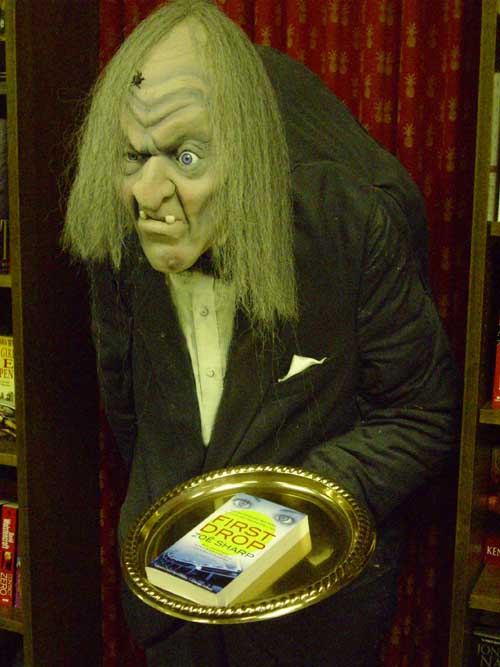
 

And this pic has nothing to do with Brett, just in case you were wondering. It’s just a lovely one of one of the more unusual fixtures in the Murder on The Beach bookstore in Delray Beach, which I took last time I was there.

Andy and I have always enjoyed travelling. Good job, too, because one way or another we do a lot of it. Packing and repacking for work trips is a common thing, to the point where we usually only start throwing stuff into bags the night before we go.

We see a lot of cool sights – mainly from aeroplanes, with a wing in the foreground. Like this shot of Mount Rainier, for instance.

We’ve packed for some weird trips, including one taken in March a few years ago that incorporated both the snowy heights of New Hampshire and the heat of Daytona Beach. It’s the only time I’ve ever taken a (fake) fur hat to Florida.

Travelling has definitely got harder these days, and one of the most important things we’ve had to do because we’re flying from the UK, is fill in our Electronic System for Travel Authorisation (ESTA), as well as the usual Customs and Immigration forms. The difference with the ESTA is that we have to do it on-line, well in advance of when we travel, just to make sure we’re going to be allowed in. I have no idea what would happen if we turned up at Arrivals in Houston without having completed it, but I foresee a long wait at the airport and then a somewhat miserable flight home.

This trip started out as a quick visit to Houston to see Busted Flush Press, who are bringing out all the early Charlie Fox books which have never been published in the States before. The very first of these, KILLER INSTINCT, is already out, and the others are planned at short intervals thereafter.

If you’ll forgive a quick itinerary:

I’ll also be calling in to sign stock at Partners & Crime in NYC, as well as flying south to New Orleans to meet up with fellow ‘Rati, Toni McGee Causey, and spend a couple of days mooching round that fascinating city. She’s also promised that she and Carl will take us out to shoot some cool stuff.

(When someone sends me an email that says, ‘Come stay,’ and then goes on immediately afterwards to list a selection of the firearms they have available, I know we’re going to get along brilliantly…)

I’m thrilled to little pieces about doing a signing with Lee in NYC, as he’s done a wonderful foreword for the Busted Flush edition of KILLER INSTINCT, for which I am HUGELY grateful. He also generously did an intro for me when I last signed in NYC, for the publication of SECOND SHOT, and here we are at Partners & Crime back then. (Damn, I’m probably going to wear the same jacket again this time – it’s my favourite.)

Besides the ESTA, the other thing we’ve had to do before we go is go out and buy shampoo, toothpaste, etc, in teeny-weeny containers. Our existing (UK) travel toothpaste is too big to pass current regulations, as is our shampoo, conditioner, mouthwash, etc.

We’re intending to do all the internal legs of this trip entirely with carryon bags, which speeds up getting through airports and saves stuff getting lost or mis-routed. There are one or two drawbacks to this, however, of which the whole size-of-liquid-containers is one of them.

The other is that I will be unable to take my beloved Swiss Army knife with me. It’s not just that I happen to find it extremely useful to carry a knife at all times, but also that it has scissors, tweezers, a nail file, and tiny screwdriver that’s just right for repairing glasses. Still, it has to stay at home. <sigh>

Another must for this trip will be our Avon Skin So Soft. Not because we particularly want delicate, fragrant skin, but because it’s the most effective insect repellent we’ve ever tried – and particularly that it doesn’t say in small print somewhere on the container “avoid contact with exposed skin at all costs” I guess we’ll be decanting that into a smaller bottle for this trip…

Ear defenders are another travel essential for us, as they really cut down the drone on planes, and help make the dreadful sound systems bearable if you do want to watch the in-flight movie, by cutting out some of the more raucous higher frequencies.

As with previous trips, I’ll be typing out a detailed itinerary, with all the names, phone numbers, email contacts, times and addresses. I’ll also make a careful note of time zone changes, as I nearly got caught out last time around by unexpectedly losing an additional hour driving across Indiana, which meant I turned up for an event at Jim Huang’s The Mystery Company in Carmel with about three minutes to spare, instead of comfortably early!

Then I’ll be printing out two copies, which will be kept in different bags, just in case!

I like the irony of this pic, by the way, which shows a rainbow dropping down neatly onto the Golden Arches…

As soon as we land in the States, we’ll be stopping off at the nearest shopping mall to buy a  Pay-As-You-Go cellphone. Calling to or from a UK cellphone in the States is wildly expensive, so we’ve found previously that it’s much easier to just get a cheapie PAYG and dump it when we’re done. I’ll still be taking my phone, though, because it’s got navigation built in, and that saves lugging road maps for half a dozen different states with us.

 

On the luggage front, packing clever is our aim. We always take those roll-up vacuum bags, so we can squash all our laundry into them as we go, which not only keeps it separate from the clean stuff, but takes up much less room.

We usually stop off and do laundry halfway through a trip anyway, which means we can take much less clothing, but also means we have to take colourfast stuff that can quite happily be thrown into a washing machine all together. I seem to remember Andy once left a bottle of sun cream in his pocket before one trip to the laundrette, but fortunately the top stayed firmly attached, and it came out sparkling.

Oh, and pens. I’ll be taking LOTS of pens.


That’s about it, but if you have any travel tips for me, I’d LOVE to hear them. (In fact, I probably NEED to hear them.) And, of course, if you can make it to any of the events, please come along and say hi.

This week’s Word of the Week is gad, which not only is a minced form of God, as in gadzooks, but also means a miner’s wedge or chisel, a metal spike or pointed bar, a spear, an engraver’s stylus, a goad (which is a dialect word for the bar across a Scottish condemned cell, on which the iron ring ran to fasten the shackles, and also to wander about, often restlessly, idly, or in the pursuit of pleasure, to straggle or to rush here and there in a wayward uncontrolled manner. So, that last bit probably sums up nicely what we’ll be doing.

Turn the Page

by J.D. Rhoades

 Warning: the following post has little or nothing to do with books or mystery writing. It happens. 

 This past Saturday, I sat on a metal bench in the blazing sun on a bright blue North Carolina morning. It was only 8 AM, but the wife and I and about a thousand other people were sitting shoulder to shoulder, fanning ourselves with flimsy programs that were far too small, and far too damp from sweat and humidity, to keep anyone cool. But there was no way we were going to miss this. Our son was graduating from High School. 

Over the past few days, I’ve been absorbed by memories. In my mind’s eye, they’re  like mirror fragments cascading to the floor, magically arranging themselves into a mosaic of the last eighteen years:  My first sight of him, at his delivery (“My God,” I thought, “he looks like Winston Churchill!”) The sweetness he exhibited towards his little sister when she was born, and the epic battles later (“Mom, I think Nina needs to go to the Emergency Room.”) Bringing home the new puppy (R.I.P. Clifford, we still miss you). The time when we were watching TV and some politician’s ad came on, and his little voice piped up from the big easy chair across the room: “Who is THIS idiot?” Cub Scout camping trips. Beach weeks. Christmas mornings that used to begin at the crack of dawn (or before) and now begin when we  roust him and his sister out of bed.   Apples to Apples. Trivial Pursuit. Clue (Junior Edition). Life. Legos, Beanie Babies, Nerf, GameBoy, and multi-sided dice.   Mechwarrior, Barney, Pokemon, Yu-Gi-Oh! Spongebob, the Simpsons, Sabrina the Teenage Witch, Family Guy, Futurama, the Wire, Samurai Champloo, Samurai Jack, Ninja Warrior, Cops, AFV, Firefly and Buffy. Where the Wild Things Are, Harry Potter, the Dark Elf Trilogy, and The Song of Ice and Fire. Disney, Godzilla, Toy Story, Shrek, Star Wars, Pirates, Tarantino and Kurosawa flicks.  Engrish, webcomics,  DeviantArt, and Japanese TV on YouTube. Baseball, then soccer (including a brief flirtation with being an Arsenal fan), then PS2, Wii, PC games, D & D and a bunch of role playing games I never heard of. The same group of friends (who I affectionately refer to as “your dumb little buddies”) who he’s hung out with since Kindergarten and who now are scattering in all directions.

It seemed to take forever for him to grow up, but now I look back and think “how did it all happen so fast?” Seemingly overnight,  the baby who couldn’t sit up on his own is a brilliant, big-hearted, funny, sarcastic, kind, goofy,  passionate, cynical, opinionated, fiercely talented young man who’s a little like me, a lot like his mom, and a lot like…well, like someone entirely himself. He’s an artist whose work periodically makes me sit up and go “whoa,” and a writer who may, and I say this in all sincerity, kick my ass someday. 

In a couple of months, he’ll be moving out, gone off to a  college of his own choosing. It was a choice which surprised me at first , but which makes perfect sense for him. And that’s a thing that makes me both incredibly proud and a little sad: he’s making his own decisions, and they’re good ones.   Maybe not always what I would have done, but reasonable for him.

In the months and years ahead, he’ll make plenty more decisions: some good, some bad, some probably even incredibly boneheaded. But they’ll be his, not mine, and he’ll own the consequences, both good and bad. All we can do is hope we’ve given him the tools to make the right choices.

I think about 16 year old Abby Sunderland, who was attempting to be the youngest person to sail around the world, and think, as many did after she was rescued from her damaged sailboat, “WTF were her parents thinking?” After all,  I thought, I still get the willies when The Boy takes the car to a friend’s house. Then I realized: I can’t do what I’ve done for years. At various times in the last eighteen years, I’ve been, with tongue in cheek, referring to my son as The Boy. But he’s not The Boy. He can now take it into his head  to do something crazy–sail around the world, hike off to Tibet, marry a Duke fan–and there’s not going to be much I can do except offer what advice I can and try not to say “I told you so” if things go sideways.  At least try not to say it too  much. 

A page is turning. Big changes are coming in all our lives. The Girl is ecstatic at finally getting a bathroom to herself, but I know she’ll miss her hanging-out buddy, her foil, her debate opponent, her (occasionally unasked for) advisor.  I’ll probably be moving my writing stuff into his room, but I know the house is going to seem bizarrely quiet without that booming voice that you can hear clear across the house as he mocks something particularly stupid on TV.  

I know I’ve made mistakes as a parent, and I know there are probably a thousand ways in which I’ve failed him, but I think despite it all, he’s turned into someone of whom we’re intensely proud.

Here’s to you, Nick. No matter how fast or how far away you sail, I hope sometimes you turn your face towards home and think of the people who love you. And remember you always have a safe harbor here. 

For girls only

Well okay, the boys can read this one too.  But I wanted to give them fair warning that they might want to click elsewhere right now.  I can picture my pal Dusty Rhoades suddenly shoving his fingers in his ears and chanting “La La La, I don’t wanna listen to this” when he finds out that this post is About Women’s Fashion, and has only a tenuous connection to books.  But there is a connection.  Sort of.  

Those who know me know that I am, um, fashion challenged.   As I type this, I’m in bare feet and wearing blue jeans, a cotton L.L. Bean shirt, and cotton underwear bought at Walmart.  That’s my summertime outfit.  In winter, I add a flannel shirt and socks, but otherwise it’s the Same Old Thing, seven days a week.  I’m a stickler for comfort, plus I’m that dire combination of being both a Yankee and of Chinese descent. When it comes to thrift, no Scot could hold a candle to that.  

But there comes a time in one’s life when one realizes one must evolve.  And that moment came when I learned that TNT is sending me on the road to promote the new TV show “Rizzoli & Isles.”  They are flying me out to Hollywood at the end of June to do what’s called a “junket,” where the cast and I will be available for interviews.  That’s followed by public screenings of the pilot episode in Boston, Philadelphia, Chicago, Atlanta, and — egad — Times Square, NYC, where I will appear alongside Angie Harmon.

That’s when I decided to trawl through my closet to see what I might wear to these screenings.  I discovered several things.  First, that I still had half my high school wardrobe in there.  I’m happy to report that most of it still fits, but still…  

Not a single outfit I owned was Angie Worthy.  I imagined myself onstage with the svelte and stylish Ms. Harmon as the audience titters: “Who’s that lumberjack in the flannel shirt standing next to her?”  

Clearly I needed to go shopping, but I am probably the only woman in the world who can walk into Saks Fifth Avenue in NYC, spend six exhausting hours combing the racks, and find absolutely nothing that looks good on me.  So, on the advice of friends, editor, and agent, all of whom heard the desperation in my voice, I did something I’d never dreamed of doing.

I made an appointment with a personal shopper.

A week before my planned trip to NYC for Book Expo, I spoke on the phone with a nice young woman named Danielle, a personal shopper at Bergdorf Goodman.  She wanted to know my height, weight, measurements, age, coloring, and budget.  Then she asked: “Which designers do you normally like to wear?”

“Does, um, L.L. Bean count?” I asked.

There was a silence. “What sort of occasion are you shopping for?” she asked.

“I need to look good!” I blurted.  “I’m going to be onstage with Angie Harmon!”

“Oh dear,” she said.  Probably thinking: Honey, you are so f***ed.  But she cheerfully suggested a few designers and told me she’d have a nice selection picked out when I arrived.

A week later, I arrived at the Personal Shopping department of Bergdorf Goodman and was escorted to a giant private dressing room where Danielle and her assistant had about two dozen outfits waiting for me to try on. Since I don’t trust my own fashion sense, I wheedled my agent and editor into coming on the expedition with me, not realizing that we would all be in the same dressing room together.  Where everyone would watch me strip down to my Walmart underwear.  

Danielle zipped me into the first dress.  From the moment I stepped into it, I thought: Oh my god, I love this one!  And it fit like a glove.  Ditto with the second dress.  And the fourth.  Without ever having laid eyes on me, Daneille had managed to choose just the right outfits, and to take all the pain out of the experience.

Within two hours, I bought four dresses, a sweater, and three pairs of shoes.  Then a seamstress magically materialized and pinned a few nips and tucks where they were needed.  Then it was all whisked away to be altered and shipped to my home.  

I even came in under budget.  

What did I learn from the experience?

I learned that inside the most diehard L.L. Bean girl lurks a wannabe fashionista.  I learned that even I can wear big-girl high heels.  And I learned that, when the occasion calls for it, yes, I can rise to meet any challenge.

 Even when it means stripping for my editor. 


TMI*

by Pari

You put your feet up after a long day and zap on the television to enjoy your favorite program. Then those commercials come on.

You know the ones I’m talking about: The mother hugging her child, the man with a skip in his step, the gray-haired woman doing the cha-cha. But wait! That drug will prevent depression or drive you to suicide. This one will transform your sex life or cause 24-hour erections. And ladies, your bones will get stronger or you’ll go into renal failure.  

I’m fascinated with the skillful juxtaposition of cheerful visuals with droning voiceovers, mile-a-second disclaimers that are every corporate legal department’s wet dream. I’m in awe of how abundant and terrifying details wash over us so effectively we hardly hear or digest their meaning.

While this is undeniably intentional in the marketing world, there are unintentional parallels in our own literary craft.

No we’re not all striving for cognitive dissonance. Yes we do overwhelm our stories with irrelevant information. The result? We force our readers to ask unrelated questions, to get distracted, to lose track emotionally or to fall out of our stories completely.

Be honest, is the entire history of a grandfather clock – from the sprouting acorn through the clockmaker’s apprenticeship — really driving the story forward? Or is it merely showing off your knowledge? Hmmm?

Sure, there are writers who include chapters of details that read like fresh lemonade – cool and refreshing. Far more writers drown their salads with gloppy dressings, float their matzoh balls on seas of schmaltz, cover their steaks with gallons of Hollandaise . . .

What’s a poor wordsmith to do?

Here are a few techniques that might help counter TMI:

  1. Cultivate the mindset of a reader:  Look for the yawn trigger. Find the places in stories you read where you skip or skim. Study these sections. Chances are the writer got carried away with unnecessary information. Got it? Now search for the same flaws in your own work.
  2. Read your work aloud #1:  If you run out of breath, something is probably wrong. I’m not joking. Well, unless you aspire to be Proust.
  3. Read your work aloud #2:  If you find yourself wanting to skip over sections you’ve written, get rid of them!
  4. Play the cutting game:  See how much detail you can cut from your descriptions/explanations and maintain the essence of your message. This game is good for two reasons: it cleans up your prose and shows you that no matter what you write, it can be deleted without killing you.
  5. Find sections that contradict everything I’ve just written:  Study them. Find out why they work and tell me in the comments.

Writers: Do you struggle with TMI? How do you deal with it?

Everyone: Do you have examples of TMI in favorite or crummy books/short stories? How about apparent TMI passages that actually do work?

* TMI: Too much information

In Which I Completely Forget Which Saturday It Is (and then get all weepy and shit.)

By Cornelia Read

(“Pearl of Great Price,” decoupage, Frederick H. Read 2005)


So I am a big dodo, today. I totally thought it was Alex’s Saturday to post, which it SO is not.

Today I have to get my daughter ready to fly to India tomorrow–which means finding someplace to buy a mosquito net and water purification tablets and apparently a new pair of sandals since hers just broke, which is interesting since “broke” is what currently describes the amount in my checking account (my mom is paying for India for Grace and her cousin Sasha, which is astonishingly great of her.)

Also just got a letter in the mail this morning which seems to indicate that Grace’s school neglected to give her financial aid for senior year, and would now like me to come up with $30,820–$15,435 of it by July 1. I am wondering if walking into the fin aid office Monday morning and saying, “you know, I filled out all the online paperwork back in April and got it in on time and everything, and if there’s something more recent I neglected to do, I apologize but my father just shot himself and the whole family kind of went off the rails and everyone required a lot of long-distance phone call handholding for upwards of eight hours a day for the first couple of weeks after that, because it’s not like a suicide makes a crazy family suddenly SANER, you know? And could you possibly help me out here because at the moment I have $250 in my fucking checking account…”

And Dad checking out when he did also means I blew my June 1 deadline for book four, which means said book will probably not be published next year, and I kind of am having trouble getting my head back into the work, go figure.

On the bright side, my writing group back in California just read what I have of that manuscript, to date, and I made everyone cry twice, in just the parts that are supposed to do that, and they think the rest of it is funny and poignant and they like my arson investigator chick, so that is a huge relief (unless they’re just saying that to make me feel better because everything else in my orbit sucks so hard right about now, which is always a possibility but I think I’ll just go with hypothesis A, here, for the moment anyway.)

The memorial service in California was fabulous, though. It was so beautiful, and we all worked really hard to make it look good, and a friend of my dad and stepmom offered up his house for the day. My writing group and my publisher sent gorgeous flowers, God Bless Them Every One. A hundred fifty people came, twenty people got up and spoke. Everyone brought his favorite foods. One woman flew in from Australia to be there, two people came from Hawaii, lots from the East Coast. May pals Sophie Littlefield and Julie Goodson-Lawes and Muffy Srinivasan drove down from the Bay Area, which was such a hugely blessed occurrence that I can barely believe I know such fabulous women.

I have been thinking a lot lately about whether it would be harder to lose a parent who was wonderful and beloved and a pillar in your life, or tougher to have the kind of fraught relationship Dad and I had–missing the good parts, wishing there had been more of them, knowing that now that can never be fully resolved. I guess both options suck profoundly, only in different ways.

I miss the man I knew back in 1967,

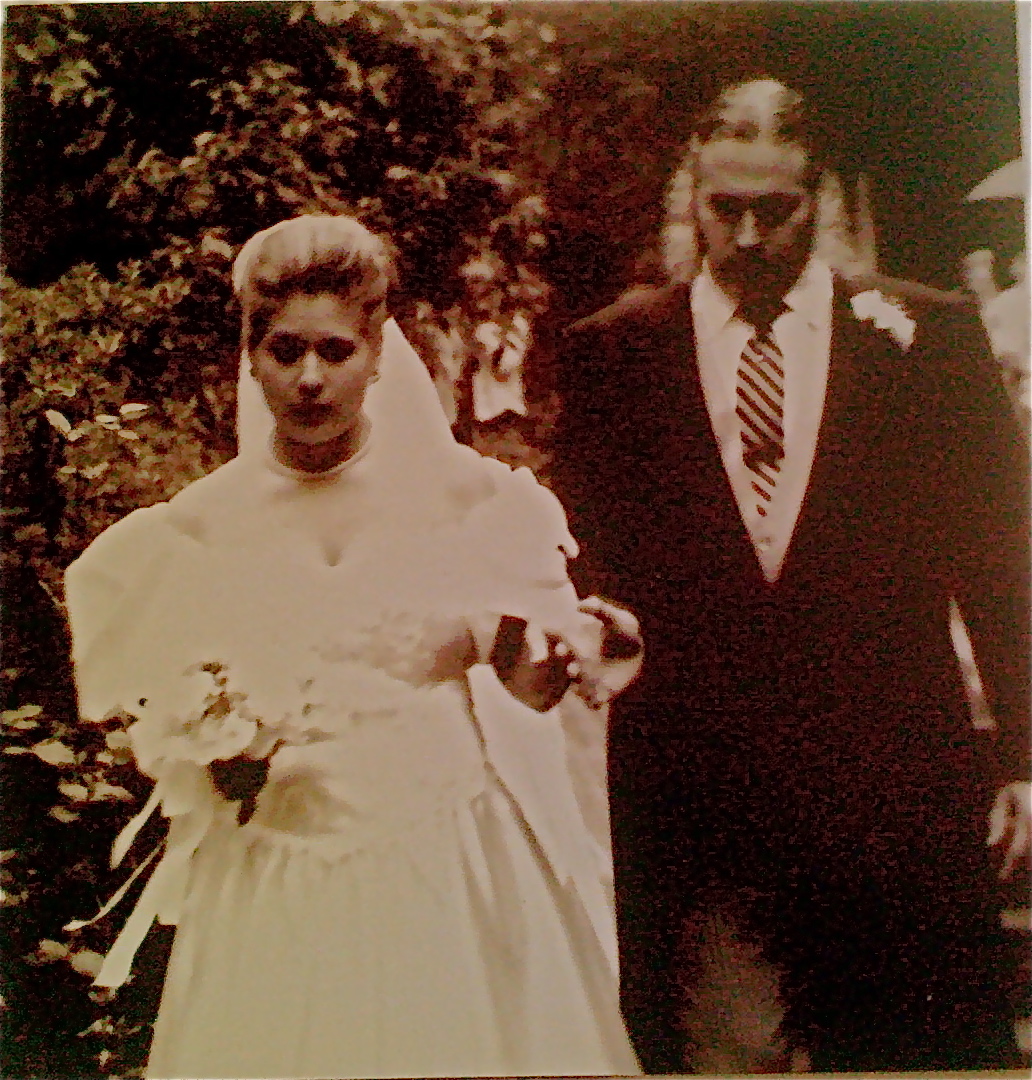
(showing off for Dad in front of his new Porsche–Belgian shoes and all, Jericho, NY, 1967)

when I was four and he was my favorite person in the entire world–before the drugs and the Primal Therapy and the pain of life in general killed that guy off, so that I only got glimpses of his ghost for the following four decades.

(“Upper Orchard,” Centre Island, New York. September 17th, 1988)


He stopped speaking to me for twelve years, starting when my daughter Lila’s autism was diagnosed. That was a deeply shitty month–a week later I found out that my husband had been sleeping with a woman he’d worked with in Colorado for a year and a half. October of ’97 SUCKED, let me tell you.


Dad only got back in touch when my first novel was published. He came to a signing I did with Lee Child in Thousand Oaks, after having sent my mother (to whom he hadn’t spoken in decades) a note saying “we plan to see the author at her T.O. appearance.” He wrote that on a sheet from a small notepad, embossed with “Proud Supporter of the California Rifle and Pistol Association” across the top.


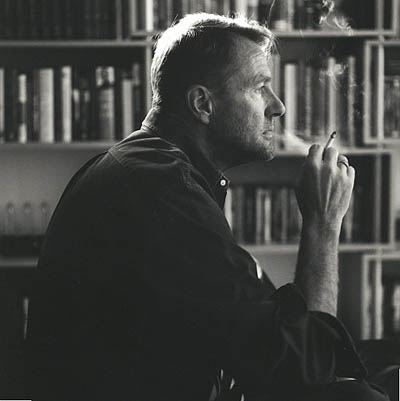
The weekend before that I was in Scottsdale with Lee, at Poisoned Pen for our first signing together. We were smoking outside the building, leaning up against the wall in the heat, and I said, “look, my dad is planning to come see us next weekend, and I haven’t seen him in twelve years. He thinks the KGB reads his mail and that ninjas want to barbecue and eat his feet and steal his collages. Plus which I still have his Marine Corps sharpshooters medal, and he’s now a postal worker, and he wrote my mom this weird note on gun-nut stationery… so if you want me to rent us both some Kevlar vests or totally pull out of the event, I’m totally okay with that. Because he’s pretty insane and it’s all freaking me out a little, here.”

Lee took a drag of his Camel and said, “well, if you’re really nervous, I think we have two choices. Either I can hire security, or I can just take him out into the parking lot and slap him around a little.”

And I thought to myself, “Lee CHILD wants to beat up my dad for me… that’s the coolest thing EVER!” Which in and of itself is pretty fucking weird, right? In an awesome Reacher kind of a way, of course.

And Dad thankfully didn’t shoot us, he just ate most of the plate of brownies the bookstore had put out, and got in the back of the line to have his copy of Field of Darkness signed, behind the 150 people there to see Lee, and he was actually kind of sweet about it all, and I didn’t even cry until I got back into the media escort’s car, which took a lot of fortitude.

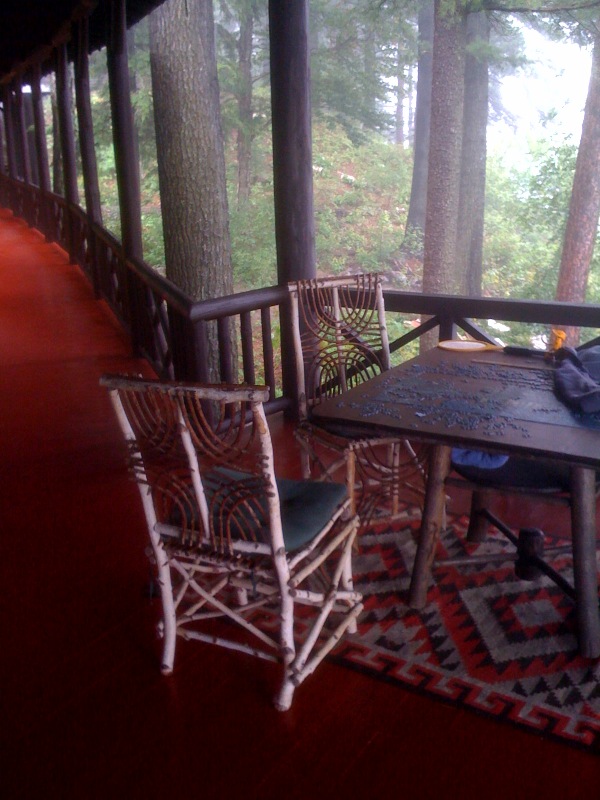
After that he was back in my life, in the best way he could manage to be–not without mentions of ninjas and Primal tantrums and stuff, but still, my dad was back, and he got to know my daughter Grace, and told me how sorry he was about Lila, and I grew to love my half-sister, and get close again with my stepmom. They even invited us to spend three weeks with them at Camp in the Adirondacks last summer.


And Peter Riegert came up to visit and see if it would work as a location for the film of Field he’d like to do, and stayed for three days.

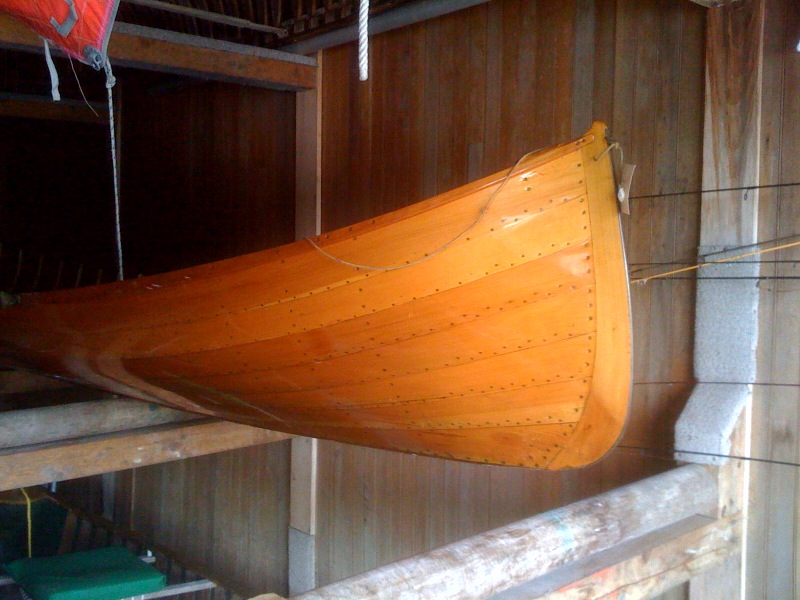
On the last day, Dad rowed Riegert and me around the lake in an old guideboat for a couple of hours, telling us stories about what it was like there when he was a kid, and being totally charming.

Peter said later, “I know you have kind of a tough relationship with your dad, and you have to deal with Angry Dad and Crazy Dad, but he was totally charming today to me, and I greatly appreciate that.”

(See: “Read Camp,” pp. 189-195)

And I told him it was really nice having a friend who was famous enough to make my dad get his head out of his ass for an entire afternoon, and not even mention a single ninja, but it also made me really happy. When Peter called up a couple of weeks ago to tell me how sorry he was to read my email about what had just happened with Dad, I told him that that afternoon is one of the best times I ever had with my father, and thanked him for making that possible.

I told the story of Dad showing up unexpectedly at “Father’s Weekend” at my boarding school when I was seventeen (he showed up with nothing but a sleeping bag, not having told me beforehand that he was planning to attend, and asked me to find him a place to sleep. Unfortunately he ended up bunking at the headmaster’s cottage, through a series of odd coincidencs, and I’m pretty sure Dad was the first person EVER to do marathon bonghits in my headmaster’s guest bathroom…) at Murder By The Book in Houston when I was on tour earlier this year. It’s kind of a long story, but it’s pretty funny. And it ends with the headmaster of my school coming up to me and saying, “I’ve been doing these weekends for twenty years now, and your father is the ONLY interesting man I’ve ever met at a single one of them…” which was especially nice since I figured he was going to tell me I was expelled because my dad had done marathon bonghits in his bathroom all weekend. Anyway, I made everyone in the store laugh a lot, which was awesome.

I told that story again at the memorial gathering. And people got to laugh again, which was good, and it made everyone cry, too.

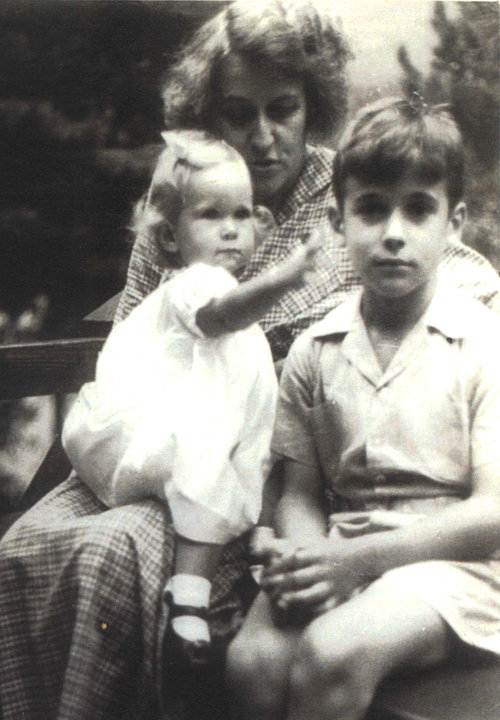
Crap. Now I’m crying again, too. It’s been a couple of days since I’ve done that, and I’ve got a lot to get taken care of today… I will leave you with the following, the obit my Aunt Jean wrote for the NY Times:


(Dad with Grandmama Read and his eldest niece Edith, Camp, 1945?)


READ–Frederick Harvey. Frederick Harvey Read the eighth son of the late Vice-Admiral USNR and Mrs. William A. Read, of Purchase, NY died suddenly, May 13, 2010 in Malibu, CA. Fred attended Buckley School in New York City, St. Paul’s School in Concord, NH, graduated from Lawrenceville School and attended the University of Colorado. He then joined the Marine Corps where he was the outstanding marine in his division at Camp Pendleton and learned how to sky dive with Jacques Istel at Hemet, CA. After his military service he married Deborah Smith of Centre Island and had two daughters, Cornelia L. F. Read, the author, and Freya Read Read, a designer for The Pottery Barn, who survive him. He then became a Junior Partner at the Wall Street firm of Hayden Stone. In his early years, he was a member of The Brook Club in New York. He also sailed at The Seawanaka Corinthian Yacht Club. That marriage ended in divorce and after a brief stint in Nassau, Bahamas and Chandolin, Switzerland, Fred moved to Malibu to be near his children. During his years in Malibu, he was a short order cook at The Neptune’s Net, a taxi driver and a master Volkswagen mechanic. A fine hockey player, he played with Charles Schulz’s pick-up team. He married Bonna Newman and had their daughter, Elena Jean Read, both surviving. A loving father, he is also survived by four grandchildren, Lila and Grace Eggert and Indy and Sasha Read, his eldest brother, William A. Read, Jr. of Palm Beach, FL, his other brothers, Peter B. Read of Jaffrey, NH, Donald B. Read of Old Lyme, CT, his sister, Jean Read Knox of Williamsville, NY, and numerous nieces and nephews. He was predeceased by four other brothers, Curtis S. Read, David W. Read, Roderick F. Read, and Alexander D. Read. Fred was a wonderful trout and salmon fly fisherman, a lover of nature and beautiful green places, and a very talented artist. His work showed in 2009 in Toronto, Ontario, and at Diesel Bookstore in Malibu, CA. He was also noted for his scrimshaw which is in many private collections. Until recently, Fred was a 17 year employee of the United States Post Office in Malibu, CA. Fred will be missed by all who knew and loved him and his many friends. A memorial service will be held at the convenience of the family.


Dad’s collages are online at http://www.artforcetwo.com/home

(“Big Indian,” decoupage, Frederick H. Read 2003)

Where Will It End?

Zoë Sharp

I’ve been sitting here for a couple of hours now, staring at a blank open document, wondering how to begin. My problem is not that I don’t know what to write (see Rob’s ‘Rati blog from yesterday) but more that I’m not sure how best to tackle the subject.

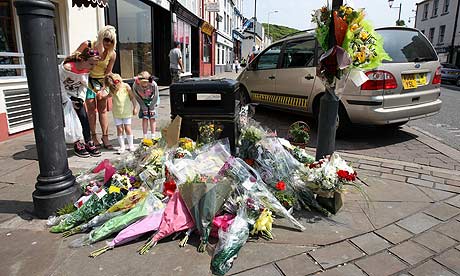
Anyone who’s seen the news over the past week will be aware of the events in my home county of Cumbria. For those who aren’t familiar with the details, last Wednesday morning a fifty-two-year-old cab driver called Derrick Bird walked out of his cottage, armed with a .22 rifle and a shotgun, climbed into his car and went on what’s best described as a rampage, shooting dead twelve people and injuring a further eleven before finally crashing his car and taking his own life.

It’s shocking, yes. Answers are being sought, but I fear that none will be found. People are asking what could have been done to prevent such a thing occurring, and it’s not very reassuring for anyone to think that events of this nature – awful though they are – are impossible to predict and prevent. There will always be the quiet man who suddenly snaps, without warning.

The day after the killings last week, I received an email out of the blue from BBC radio, asking me to write a short essay on Derrick Bird’s actions from a crime writer’s perspective, which I duly did. I mentioned the piece in the blog on my own website last week, and I understand the recording also went out on the World Service.

In it, I made that point that although it may be difficult for people personally touched by this tragedy to understand why anyone would want to read about fictional crimes in the name of entertainment, they do. Crime novels are a constant feature of the best-seller lists, and the category most-borrowed from UK libraries. They provide order and closure and answers where in reality none exists. A form of escapist comfort that there is a world people can retreat into where justice will prevail.

If you’re robbed or mugged in real life, for example, the reality of the situation is that the police are probably not going to catch the people who did it. Even if they do, the perps are most likely going to get off with community service, and you’re never going to see your belongings again. You’re going to become a victim twice over, because the fear of crime is often so much greater than the risk.

But we are a crime-writing community. We don’t just write about crime, but we talk about crime, think, eat, sleep and frequently dream about crime. That does not mean that any of us are going to go out and actually commit a crime. There are limits to how far even a method writer will go in search of authenticity in their work.

And we certainly do not expect any of our readers to be suddenly turned into monsters, just from reading something in a book. As writers of books that touch on sometimes horrific subjects, we offer vicarious thrills, like a rollercoaster ride. Readers know they’re going to be scared, but also that nothing bad will happen to them, and they can get off at the end.

But that hasn’t always been the case. In the early days of rollercoasters, fatal accidents frequently occurred. And, when they did, people flocked to try their luck, just as they flock now to the scene of such dreadful events, with an almost mawkish desire to be seen at the scene. One radio journalist I spoke to said he interviewed several teenage witnesses to Derrick Bird’s crimes whose testimony he could not use. “They sounded too excited,” he said sadly, shaking his head. “That won’t last, of course.”

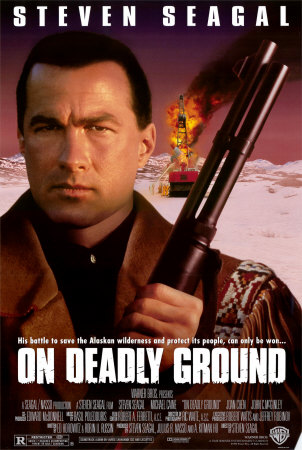
And it has now emerged that the night before the massacre, Derrick Bird apparently watched a Steven Seagal movie, ‘On Deadly Ground’, and parallels are being drawn that this somehow inspired him to act. Yes, there have been studies done on the link between violent movies and computer games and violent crimes, but I feel the underlying tendencies must surely have been there already. I have to own up to a guilty pleasure – I happen to like several of Steven Seagal’s movies, but I’ve never had any desire to run amok on a battleship.

The day after the news broke, I received an email cancelling several library events I had in the area. They were due to be part of Cumbria Libraries’ ‘Midsummer Murders’ series. I can understand the reasoning perfectly, because now you look at it, the name does make you wince. But although one of the events was scheduled for the little library in Seascale, which is one of the directly affected towns, others were spread out across the far side of the county – the third largest in the UK, incidentally, at 2613 sq miles. Cancelling rather than postponing all crime-writing events throughout Cumbria seems a little harsh.

Fellow Cumbrian crime writer, award-nominated Diane Janes, was due to have her new book, THE PULL OF THE MOON, discussed on Lakeland Radio today, as it had been selected as the June choice of the Big Read Book Club. Two days ago, the book was pulled as the book of the month, citing the tragic events as cause, and particularly as the funeral of the first of the victims was this morning. Diane is understandably upset by this, as her book has nothing to do with guns, massacres, or even Cumbria, and Lakeland Radio covers the south rather than the west of the county.

Of course, nobody wants to cause unnecessary grief or trauma to the victims or their families. That goes without saying. And if relatives of the victims live in the catchment area of the radio station, it would be dreadful if they heard talk of crime as entertainment and were upset by it. But I worry how far this will go, from proper sensitivity into political correctness, and then on into censorship.

What are your thoughts on this, ‘Rati?

This week’s Word of the Week is meretricious, meaning of the nature of or relating to prostitution; characteristic or worthy of a prostitute; flashy or gaudy. From the Latin meretrix, a prostitute, from merere, to earn.

At A Loss For Words


By Louise Ure


I have changed in many ways – some large, some small – since my husband died two and a half months ago. And not all of the changes have been bad.

I’ve lost almost forty pounds and grown stronger. I’ve taken on tasks that I previously thought I could never face and done them well. I even planted and grew a rose bush that looked more like a dowsing rod when I got it than a living plant.

I wound up replacing all my jackets, blazers, raincoats, vests and pocketed sweatshirts, not so much because of the weight loss as it was the mouse. Emboldened by the loss of the pup Cisco, my furry intruder screwed up his courage and scrambled his way into the pocket of each of my jackets where I kept the Charlie Bear dog treats for Cisco and his pals on the street. Then, fat and drowsy, he couldn’t climb out again, so he chewed through the bottom of each pocket in his escape. I tell you, I’m not putting cheese in the mouse trap anymore. I’m stuffing it with Charlie Bears.

But there have also been smaller, more insidious changes that I didn’t see coming and cannot explain.

I’ve suddenly become afraid of driving at night and have had to restructure my outings to venture forth only in daylight. One friend graciously humors me with 4:30 dinners at her house as if I were a Senior Citizen at an Early Bird buffet.

I can’t work crossword puzzles anymore. Remember my earlier facility with them? In ink. In three languages. In half the time of their “average solving.” It’s gone. I can’t even get the easy clues anymore.

And books hold less interest for me. I’m still reading, but taking no pleasure in either the world created there or the techniques the author used to bring that world to life. I hope that comes back.

And then there’s writing. Or, better stated, not writing.

I didn’t write at all during Bruce’s illness and decline; my mind only focused on him. But I also haven’t written during these ten weeks he’s been gone.

I am truly at a loss for words.

And part of me thinks that’s okay.

Unlike so many of my writer-brethren, I’ve never felt that writing defined me. I was successful and had accomplishments before I started writing and hope the same will someday be true again. Writing is one of the hardest jobs I’ve ever done and while I’m outrageously proud of the three books I’ve had published, I’d be perfectly happy if I never wrote another word again.

I’ve never felt “compelled” to write. Never felt that my day or my life would be incomplete without it.

I’m not here to announce my retirement from the writing community, at least not yet, but you’ll probably see more posts from me in the future that come from the point of view of a reader — an observer — rather than a writer. And what the hell, a reader’s slant might be a good addition here at Murderati.

In any case, it’s the best I can do. I have nothing to say.


Peace Out

They’re Ba-aaack

by Alafair Burke

You fellow crime junkies probably noticed two blast-from-the-past names in last week’s news, Joran Van der Sloot and John Mark Karr.  Turns out the men have more in common than the letter J, extra parts to their names, and oddly doughy skin. 

Turns out they might both be as dangerous as we crime junkies first suspected.

Joran Van der Sloot, you’ll recall, was one of the initial suspects in the disappearance and presumed murder of Natalee Holloway, an American high school student who went missing after leaving an Aruba hangout with Van der Sloot and his pals.  Although the men insisted they dropped Natalee off at her hotel, they were arrested multiple times as part of the investigation.  And although they were never charged, a Dutch journalist captured Van der Sloot on film in 2008 claiming that he had Natalee’s body dumped at sea after she collapsed on the beach.  That evidence was deemed insufficient to justify another detention.  Still later, the same journalist unearthed footage of Van der Sloot, then still only 21 years old, boasting of his involvement in sex trafficking.  The family’s lawyer wrote it off as fanciful talk.  Van der Sloot also told Greta van Susteren, only to recant his statement later, that he sold Natalee into slavery.

John Mark Karr’s previous appearance in the headlines was shorter lived than Joran’s, but no less freaky.  He shocked the world four years ago when he falsely confessed to the murder of JonBenet Ramsey.  The only thing the public could understand less than a child’s murder was a voluntary confession to one that the person didn’t actually commit. And the public learned more about Karr than the fact of his confession: his seeming obsession with access to grade schools and day cares, his two prior marriages to thirteen and sixteen year old girls, a prior arrest for child pornography, and his time spent in Thailand, with ready access to young girls in the sex trade.  But then the police debunked Karr’s confession and he, like Van der Sloot, faded from public — and apparently police — view.

Some will question why we ever obsessed over these cases in the first place.  The questioners raise a valid point.  The sad truth is that JonBenet and Natalee are only two among a sea of murder victims whose cases have never been solved.  The fact that they were both blonde, female, and attractive from white, upper-middle-class families is no doubt part (or all) of the answer.


But a separate question is why, once we decided to care about these cases, we ever stopped obsessing over Joran Van der Sloot and John Mark Karr.

Back at the D.A.’s Office, I’d hear cops say they just knew someone was up to no good.  With certain suspects, we’d joke (sorry, folks) that if the defendant didn’t do what we charged him with, he was certainly guilty of something.  The assumption was that our super-honed spidey senses could determine when someone was a dangerous recidivist. 

Of course, the empirical research suggests otherwise.  Turns out human beings, even experts, are horribly inaccurate at predicting future dangerousness.  Regardless, we continue to allow testimony about such predictions in court, allowing it to affect, for example, continued detention of sexual predators after they have served their sentences, parole determinations, and the life and death decisions of jurors in capital cases.

Part of the reason we probably continue to allow such evidence into court is because, despite the empirical data, we just cannot set aside our intuitive instinct that sometimes you just know.  And guys like John Mark Karr and Joran Van der Sloot reinforce those intuitions.

Van der Sloot was arrested last week on suspicion of murdering another young woman in Peru, exactly five years to the day that Natalee Holloway was last seen in his presence. Karr finds himself at the center of an investigation into bizarre allegations that he was attempting to start a “sex cult” of young girls resembling JonBenet.  The cult was to be called The Invincibles. 

The allegations, by the way, come from Karr’s former sixteen-year-old fiance, whom he met while serving as a teacher’s aide in her fourth grade class.  The former fiance also claims that Karr has been living as a woman under the name Alexis Reich to obtain greater access to young girls.  (Note to self: Has someone already used the gender-transition-but-only-to-be-a-mommy-to-little-girls twist for a book?  Because that’s some deliciously wicked stuff if contained to the fictional world.)

Facebook Profile of Alexis Reich (previously John Mark Karr) New York Magazine recently observed, with the requisite snark, that the “resurgence of these two scary clowns makes us feel like it’s 2006 all over again.”  The same article also asked more provocatively whether our initial obsession with the men is what made them reoffend, as if we created “the same kind of invincible-feeling, serial attention-seekers that we do with reality stars who continue to appear on show after show and perform stunt after stunt. Were you the best character in your last murder investigation? People are going to love you in this new one! But you’re really going to have to step up your game this time around.”

The notion that serial predators act out for further attention isn’t lost on me.  See, e.g., the Wichita police department’s reason for not immediately reporting the existence of the attention-starved BTK.  But given that neither Van der Sloot nor Karr seemed eager to have their latest deeds known, the magazine’s concerns seem misplaced.

Instead, I’m left wondering how many other nutjobs are wandering around as law enforcement waits for the inevitable phone call.  I just had the pleasure of reading Michael Connelly’s forthcoming book, The Reversal.  I don’t think I’ll spoil too much by saying that the book involves a suspected murderer who is released pending re-trial after his conviction is reversed.  The LAPD assigns an entire team to watch the defendant, knowing he’ll eventually cross a line that will get his release revoked.

But a suspect under a court’s jurisdiction can have limited rights, and a trial has a natural end date.  In most cases, law enforcement can’t track the folks who set their spider senses atingle, either because of concerns about harassment complaints, a lack of resources, or both.  They eventually let the suspect go, despite the bad feeling in their stomachs, and move on to the next case.  Until five years later, when he kills a woman in Peru.  Or four years later, when one of his young girlfriends realizes he’s a monster and runs to the police for protection.  Or never, because the spidey senses were wrong, or because the suspect never reoffended, or because he never got caught.

I know we like to close our posts with a question, but I find myself with too many questions and not enough answers.  Should someone have been watching these two?  But then what about all the false-positives — cases where we might be tempted to track (harass?), but where the suspect is innocent?  And, as we think about the lessons of these kinds of cases for our writing, why is it that the genre is so obsessed with the cold case – new case structure, where old stories and new offenses bleed together?  I know I’ve used the set-up a couple of times myself in what I thought were succcessful outings (see Angel’s Tip and Judgment Calls).  What are some of your favorite novels that have used the “they’re baa-aaack” structure?

If you enjoyed this post, please follow me on Facebook, Twitter, or my newsletter.

Reading: Finished Michael Connelly’s The Reversal; back onto Lee Child’s 61 Hours (I’m a happy reader!)

Watching: Get Him to the Greek; The Good Wife

Listening to: Psychedelic Furs

Stand By Me

By Allison Brennan


So . . . I was originally going to write about the difference between FRUSTRATION and DISCOURAGEMENT in pursuing publication, but then a news story caught my eye, and I was going to write about THAT but when I logged onto the Murderati Members Only site, I discovered that one of my more knowledgeable fellow bloggers has a brilliant post on the very subject I was going to discuss . . . 

So I went back to my FRUSTRATION v. DISCOURAGEMENT idea. Only, I don’t want to talk about being frustrated in this business, or discouraged. Because tonight I’m elated.

No, I haven’t hit any lists recently, nor have I heard any good news. In fact, as far as careers go, mine is in limbo. I’ve had some major upheavals recently, and honestly, probably shed more tears over writing and the business of writing in the last four months than in the four years I’ve been published. 

But I am elated. I’m calm because there’s one thing I have now that I never had at the beginning of my writing career:

Friends.

Okay, don’t feel too sorry for me. I had friends of course, and a very few who I consider close personal friends, like Trisha who I dedicated SPEAK NO EVIL to. (My first book I dedicated to my mom; my second to my husband; my third to a fallen sheriff’s deputy from my adopted hometown. So Trisha is a dear friend who got my fourth dedication!)

But in THIS business–publishing–“friends” means something completely different.

We have MySpace friends. And Facebook friends. People follow us on Twitter and subscribe to the RSS feeds on our blogs. They are FRIENDS–in the broad sense of the word. They either like our books, or want to learn about publishing, or met us at a conference and liked our humor (that would be Toni, not me!), or think that by friending us they are networking because my friends are your friends, in a mi casa et su casa kind of way (and no, I don’t speak Spanish–I took three years of Latin in high school–so if I got that wrong, don’t shoot me.)

But true friends are those you can vent to. Those you can commiserate with. Those who will stand by you No. Matter. What.

In publishing, especially when you’re in the same relative field of fiction, your friends can also be your competition. But true friends don’t consider that a reader may have to chose between their book and yours on pay day. A true friend will always give you the best advice they can because they love you and want you to succeed–because your success has nothing to do with their success.

In 2008, I attended the RWA conference in San Francisco. I regularly attend both Thriller Writers and Romance Writers because (surprise) I write romantic thrillers that I think appeal to both sides of the line. I went to the RWA conference coming off a great Thrillerfest, but at the same time I was stressed because of personal family issues and I was president of PASIC, the Published Author chapter of RWA, and had a major event to host. Evidentially I offended someone because I didn’t recognize them or I didn’t pay proper homage or I said something wrong. I don’t know, because I only heard about this third hand. It hit me then for the first time that maybe–just maybe–I needed to change. That when I left my hotel room, I needed to be “on” and “alert” at all times. 

I didn’t leave my hotel room much that conference. 

But one person was there for me, and understood what I said even when I didn’t make any sense. (Ah-ha! you’re all thinking, it must be Toni. You’re right!)

I have had some major ups and downs in my career, and Toni has stood by me from the very beginning. I have a few other friends who have always stood by me as well, and they know who they are. But when the world comes crashing down, or when I have terrific news, Toni is the first person I want to talk to.

I only met Toni after I sold, but before my book came out. We met online though Backspace, a group for writers (which I have sorely neglected of late.) We were both attending the first ThrillerFest in 2006 (Right after my first B2B2B trilogy came out.) Toni confessed that she was nervous and an introvert (she doesn’t act it, but she is! Trust me!) and wanted to know if I’d have a meal or two with her. We ate virtually every meal together, talked until the wee hours of the night, and I was so blessed that she actually liked me. (Toni is smart, funny, and a far better writer than I can ever hope to be.)

As my career progressed, I realized that sharing information or fears or worries or highs or lows wouldn’t be taken the same way by the same people. For example, if I am at all critical of something in my career, I have a half dozen people telling me they wish they had my problems. I want to shake them and say, really? You want them? You want to stay up until three in the morning for two weeks, knowing you have to get up at seven to get the kids to school because you have a tight deadline? But the grass is always greener, and some people think that the life of a bestselling author is all glamour and bon-bons and working 10-to-2.

Except the people who know better. 

There’s an urban legend that may be true, may be false, but I’m inclined to think it’s true. Apparently, someone cornered Nora Roberts in the elevator at one RWA and said, “OMG, I want to be you.” And allegedly, Ms. Roberts said, “Really? You want to be me?” And then laid into her. 

I read JT’s facebook status yesterday. On Saturday, she was working on her next book. I was working on revisions. My friend Christy Reece posted early in the morning that she was editing all day. 

I’m not sharing all this to get sympathy. I’m sharing today because I want you all to look around you. Who is the one person you can count on No. Matter. What? Who will stand by you if you rob a liquor store, murder your boss, or  . . . oh, wait. Sorry. Scratch that.

Who will stand by you while you vent? Complain? Even if you’re wrong, they’ll listen and give you loving correction, because they love you and want you to succeed. No matter what.

Thank you Toni, I would never have gotten through these last few months without you standing by me!


That’s Witch With a “W”.

 by Alexandra Sokoloff

It’s amazing how many ‘Rati have new books out this month.   Oh, right, I guess that’s what we do.

But yes, me too! –  my fourth supernatural thriller from St. Martin’s is out on Tuesday, Book of Shadows, my first novel without “The” in the title, and my favorite book so far. 


It’s about a very male, very rational (he thinks)  Boston homicide detective who reluctantly must team up with a very female, very irrational, mysterious (and of course, beautiful) witch from Salem, to solve what he thinks is a Satanic killing – which she insists involves a real demon.

As a lot of you know, my favorite thing as a writer is to walk that “Is it or isn’t it?” line between reality and the supernatural, and I think this may be my finest line yet.   Because this is actually a police procedural, but the question is, “Whatdunit?”  (Thanks, Dusty…)

And I can already tell I’m going to get in trouble with this post, but what the hell.   So to speak.

I have been fascinated with witches and the modern practice of witchcraft for as long as I can remember.   I mean, please, didn’t we all grow up with The Wizard of Oz, not to mention Halloween?  And in a way my book is precisely about that existential question posed by Glinda the Good, in her very first line of the movie:   “Are you a good witch, or a bad witch?”

And I don’t mean that just literally, but metaphorically.   Because the whole history of witchcraft seems to me to boil down to the question of whether women are good or bad.   For centuries, during the times of the old earth religions, witches were seen as good: healers, midwives, mystics, helpers, the folk equivalent of doctors.    In the Middle Ages (and I’m sure throughout history, but particularly starting in the Middle Ages), the organized, patriarchal church (and male doctors) tried to stamp out this manifestation of feminine power with the systematic torture and genocide of women in the form of the Inquisition.    Witches were evil, women were evil.

In the 1960’s, when societies were expanding the borders of ordinary consciousness, there was a newfound fascination with the earth religions and an upsurge in the practice of goddess worship, including witchcraft.     I’m sure all of us who grew up in California have known a practicing witch or two in our lives – anyone who’s ever been to the Renaissance Faire as many times as I have probably knows whole covens.

But get outside of California and OH, it’s a different story.   It’s always been hard for me to comprehend he defensiveness that arises in response to the suggestion that God might actually be female, too.   (Um, doesn’t even Genesis (that’s the Bible Genesis, rock stars…) say “God created man in his own image, male and female he created them”… ?)

I mean, I love you guys, you know I do – but you’re only HALF the human equation.

Try referring to God as “She” in, oh, the Bible Belt, for example, though.   Which yes, I do frequently, and I feel that collective internal gasp of horror around me   (And then women, girls, come up to me in private to say, ‘Thank you”).  

Women are just not supposed to have that kind of power.

So in Book of Shadows, I wanted to dive right in and explore some of those things that make some men – and a lot of women – uncomfortable with feminine power, and feminine energy,  and feminine sexuality, and feminine deity – the whole yin of things.    It’s noir, but it’s supernatural noir.    I wanted to take two people who were as different as I could make them on the surface:  male vs. female, rational vs. intuitive, doing vs. being, real world vs.  the unconscious, psychic world – even their cities are opposites:   Boston vs. Salem – and force them to work together and learn that they’re a lot more similar than they seem on the surface.

Actually I think my cop protagonist, while he doesn’t exactly trust this witch, probably with good reason, takes all of the above feminine stuff pretty much in stride, admirably so.   What he’s not so comfortable with is the idea that there might really be something supernatural going on in this troubling case.

One theme I come back to over and over again in my writing is the idea that messing around with the occult, or other dark forces (which you could say about drug abuse, or certain kinds of sex, or abuses of power)  can open doors that let undesirable elements through that aren’t so easy to get rid of.   And that young people are particularly prone to supernatural experimentation – and attack by supernatural predators as well as human ones. That’s definitely something that goes on in the book.   And some of my earliest exposure to that idea was my sixth grade study of the Salem Witch Trials.   (That’s right, isn’t it – we all got the Salem Witch Trials about sixth grade?)

The ambiguity of that situation has always drawn me.    Were the girls who accused the “witches” pawns of land-grabbing villagers?   Bored and frustrated pre-teens seizing the only power they’d ever have by acting out?   High on ergot?   Freaked out – maybe a little possessed – by their experimentation with voodoo under the tutelage of Tituba?     Wouldn’t you just kill to know?

I tried to capture some of that ambiguity in my accused killer, a troubled musician in a Goth band who has taken a little too much of an interest in that very bad real-life magician, Aleister Crowley. 

The research for this one was a real treat, too.   Of course I had a whole backlog of witch stories to draw on, from people I met working at the metaphysical bookstore The Bodhi Tree, in L.A. (and that’s also where I met a lot of grunge teens who were rabid about Crowley),  to attending ceremonies with Craft friends, including witnessing what for me was the real magic of “Calling the Corners”.    I’ve had a love affair with Boston since I set The Price, there – it’s not just layered with American history and an amazing art history as well, but there’s just something deliciously eerie to me about the whole place.   I got to go to Salem on Halloween (think Bourbon Street at Mardi Gras but with more witches, pirates, and Puritans).   And I was incredibly lucky to find a criminalist in the Boston Police Department who gave me an extensive tour of Schroeder Plaza, the department and the crime lab, and answered all kinds of technical questions for me.   It was one of those projects where even though circumstances around me were very complicated at the time, everything I needed for the book fell into my lap – I love it when that happens. 

Almost like… hmm, magic.

You can read the first couple of chapters on my website, (look for the link under “Excerpt”)  and I’ll gladly give away a copy to a randomly drawn commenter today.   (Will post winner here tomorrow).

And my questions for the day are –  What’s your take on witches?   Know any?   Are you familiar with the way witchcraft is actually practiced, or is that whole world completely mysterious to you?   Or do you do the odd spell or two yourself?

– Alex