Author Archives: Murderati Members


Brave new e world

by Alexandra Sokoloff

Well, Tess said something apocalyptically frightening in her post on Tuesday:

E-book land is going to be a busy, anarchic universe with a dizzying array of great books sold along with bad books, and lord knows how it’s all going to shake out.

And hanging over us all will be the one thing that could doom us all.  Piracy.  Once books can be copied and disseminated for free, there will be no way to make a living in the writing profession. I fear that it’s only a matter of time before that happens.

And we will look back on this era as the last age of the professional writer.

Thanks, Tess, just what I needed to hear going into a new year.

I guess it’s no big secret anymore that the publishing industry is undergoing a revolution that has us all in shock, awe, fear, or simple paralysis.

One of the components of this revolution is the e reader, as Tess talks about in her post.

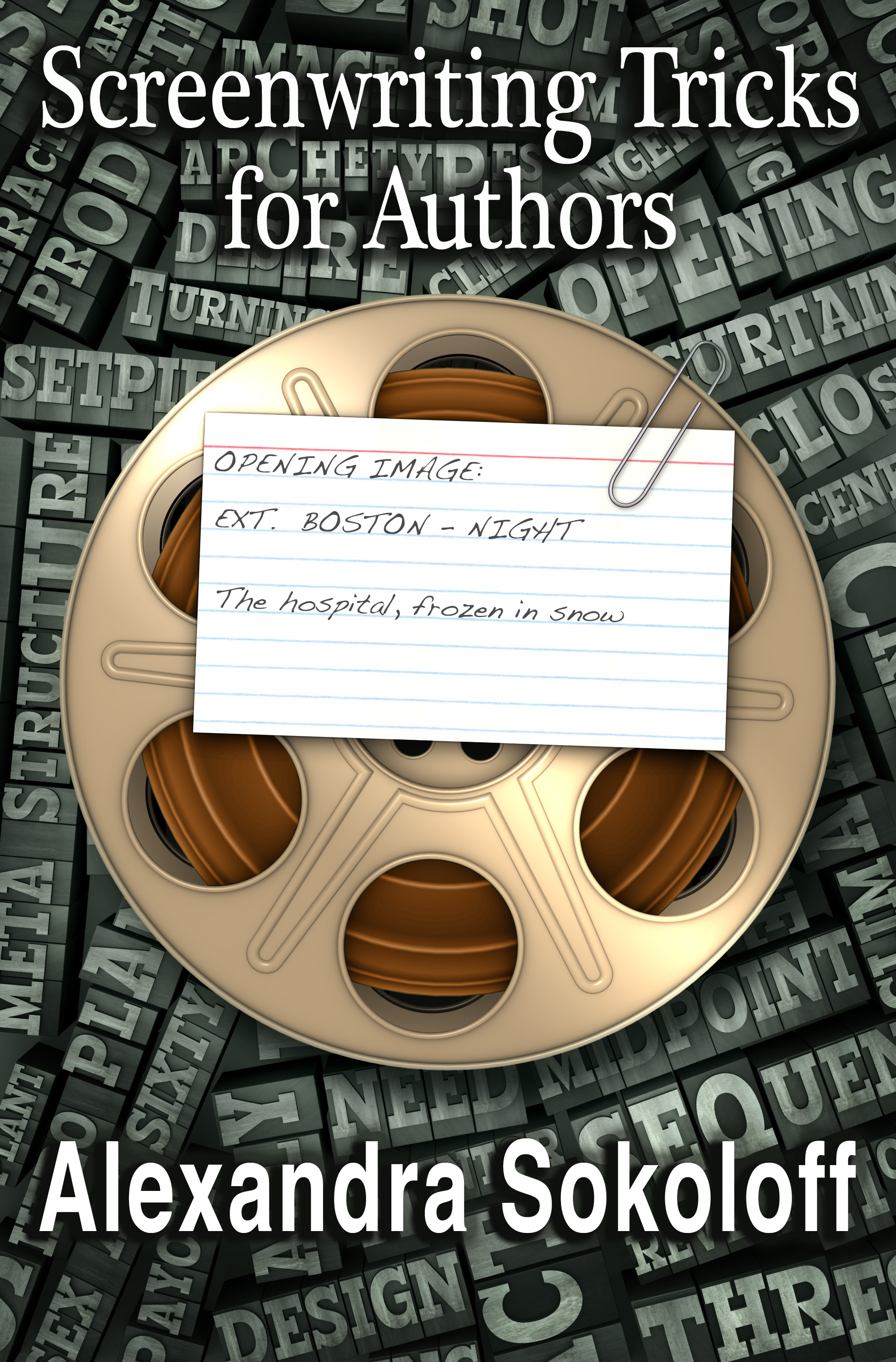
At the end of the year, along with my agent, I made the decision to publish Screenwriting Tricks For Authors, the workbook I wrote based on my blog and the story structure articles I’ve posted here at Murderati, at the Kindle store.   It’s now up for sale here.
There were a million reasons.   Well, okay, not a million, I just always like the sound of that number, and I’m a Pisces and can’t count to save my life.

But some of the reasons are –

– I TRULY needed to get the information on my blog into a coherent order, and a blog is not the greatest format for what I am trying to convey.

– I’m being asked to teach a lot, these days, and I can’t possibly take the time anymore to print the workbook at Kinko’s for distribution to my students, and when Amazon started making Kindle books available to PC users, and is promising a Mac version imminently, that made Kindle publishing the easiest instant solution.   And a Kindle or PC version is far cheaper for students to buy than a hardcopy version, about a third of the cost.   That part was just a no-brainer.

– I am constantly adding to the info on my blog and with Kindle, you can republish a new version any time, instantly, without cost.   Now that is cool.

– It’s not huge money, but a LOT more in royalties, comparatively, than other options.

– Publishing on Kindle doesn’t tie up other publication rights – if I am offered a good book contract for the workbook, I can just take it.

– Peer pressure from Joe Konrath, who has a lot to say about Kindle and other e publishing, but you could start here.     

Really, this is a revolution, and while I’m not personally comfortable publishing a novel on Kindle, at least not yet, I am excited to stick at least a toe in the water by publishing this workbook.   Anyone can take the time and click through links on my blog and get a lot of the same info for free, but if you find what I’ve written on the subject is useful,  $9.99 is not such a huge chunk of change to put down to have the whole deal in coherent order.   Plus, you know, supporting an author whose information you are using is good karma.

So this is a New Year’s experiment, which I’ll keep everyone posted on.  So far the only drawback I’ve experienced is intense complaining from non-Kindle, non-PC (meaning Mac) readers who want the book downloadable or in hardcopy for them NOW.  

In the meantime I’ll keep blogging about craft, because God knows it’s exhausting – if not outright terrifying – trying to keep come up with posts on your personal life. 

So I’ve been teaching another online class these last two weeks.   NOT the greatest time for an online class, actually, because everyone is still so dazed from the holidays and just trying to get back in the swing of things.   Um… especially me.  Still, I am as always finding the teaching completely inspiring  – I love hearing other writers talk about their stories and characters and writing processes.   And new writers have all that, you know – hope.

The discussion so far has completely reinforced my belief that the best thing that you can do to help yourself with story structure is to look at and compare in depth 5-10 (ten being best!) stories – films, novels, and plays – that are structurally similar to yours.

The late and much-missed Blake Snyder said that all film stories break down into just ten patterns that he outlined in his Save The Cat! books.  Dramatist Georges Polti claimed there are Thirty-Six Dramatic Situations and outlined those in his classic book.

I think those books on the subject are truly useful – as I say often, I think you should read everything.  But I believe you also have to get much more specific than ten plots or even thirty-six.

(I also think it’s plainly lazy to use someone else’s analysis of a story pattern instead of identifying your own.  Relying on anyone else’s analysis, and that for sure includes mine, is not going to make you the writer you want to be.)

For example, in the class that I’m teaching now, without giving details of anyone’s plots, there is a reluctant witness story, a wartime romance story, an ensemble mystery plot, a mentor plot, a heroine in disguise plot.   And others.  

Each of those stories has a story pattern that you could force into one of ten general  overall patterns – I guess – but they also have unique qualities that would get lost in such a generalization.  And all of those stories could also be categorized in OTHER ways besides “reluctant witness” or “hero in disguise”.   

Harry Potter, for example, is what you could call a King Arthur story – the chosen one coming into his or her own (also see Star Wars, The Matrix…)  but it is told as a traditional mystery, with clues and red herrings and the three kids playing detectives.   It’s also got strong fairy tale elements.   So if you’re writing a story that combines those three (and more) types of stories, looking at examples of ANY of those types of stories is going to help you structure and brainstorm your own story.

If you find you’re writing a “reluctant witness” or “accidental witness” story, whether it’s a detective story, a sci-fi setting, a period piece, or a romance, it’s extremely useful to look at other stories you like that fall into that “reluctant witness” category – like Witness, North By Northwest, The Man Who Knew Too Much, Conspiracy Theory, Someone To Watch Over Me.

If you’re writing a mentor plot, you could take a look at Silence of the Lambs, The Karate Kid, Star Wars, The Empire Strikes Back, An Officer and a Gentleman, Dirty Dancing, all stories in completely different genres with strong mentor plot lines, with vastly different mentor types.

A Mysterious Stranger story has a very specific plotline, too:  a “fixer” character comes into the life of a main character, or characters, and turns it upside down – for the good, and the main character, not the Mysterious Stranger, is the one with the character arc  (look at Mary Poppins, Shane, Nanny McPhee, and the Jack Reacher books).

A Cinderella story, well, where do you even start?  Pretty Woman, Cinderella of course, Arthur, Rebecca,  Suspicion, Maid to Order (I think that’s the one I mean), Slumdog Millionaire.

A deal with the devil story – The Firm, Silence of the Lambs, Damn Yankees, The Little Mermaid, Rosemary’s Baby, The Picture of Dorian Gray, Devil’s Advocate.

And you might violently disagree with some of my examples, or have a completely different designation for what kind of story some of the above are…

But that is exactly my point.  You have to create your own definitions of types of stories, and find your own examples to help you learn what works in those stories.   All of writing is about creating your own rules and believing in them.

So I guess that’s what I wanted to say today.   Identifying genres is not enough.   Identifying categories of stories is not enough.   What’s the kind of story you’re writing – by your own definition?

When you start to get specific about that, that’s when your writing starts to get truly interesting.

So what kind of story ARE you writing?  Would love to hear some, and brainstorm some great examples.

Have a great holiday weekend, everyone!

– Alex

———————————————————————————-

Related posts:
What’s YOUR structure?

Meta Structure

Fairy Tale Structure

What is High Concept?

DOCUMENTING THE JOURNEY

By Stephen Jay Schwartz

So, I’m about a week away from delivering my second novel to the copyeditor and it feels…I think it feels great, despite the fact that my whole being feels bludgeoned from the process.  Is it really almost done?  I can’t believe it.  They say the second book is the hardest and I’m here to say that, yes, they’re goddamn right.

Coming to the end of this journey made me think about the beginning of this journey.  What I went through to get the first book done.  It brought memories of the days when I was writing BOULEVARD on my own, without a book deal.  Before I had an agent.  When the idea of becoming a published author existed solely in my head.

I went back and found my journal, the journal I started when I was in the middle of the process, and pulled the first couple entries.  I thought it might be an interesting thing to share, now that I’m on the other side of it.  One thing that’s interesting is my relationship with San Francisco and how the city ultimately evolved into the setting for my second novel.  I can see the seeds of that decision in the journal entries themselves.

I hope this isn’t boring.  I hope it’s not the literary equivalent of showing pictures of my family vacations.  I’m sure many of you have gone through a lot of this stuff yourselves….

December 13, 2006

I’m starting this late in the game.  I’m 225 pages into the writing of Boulevard.  I’ve written and re-written the first forty pages many times. 

I wrote most of it straight from the heart without outline or thought of plot.  Which was liberating.  I’m used to making outline after outline after treatment after draft.  It felt good to just put pen to paper (fingertip to keyboard) and write.  The momentum and poetry came from that process – that “spontaneous prose”. 

And finally, when I’m closing in on the final fifth of the book, I’ve outlined it to the end.  I’m just a month or two away from completing the first draft.  And then there will be everything left to do.  A huge rewrite is in order.  I’ve left subplots dangling.  I’ve left characters hanging on ledges.  I’ve introduced motifs only to split and scatter them over a long bumpy pot-holed road.  All of the detail work has yet to be done. 

I’ve been at this story for about two years now.  I don’t have the time to put into it, not the way I did on all the screenplays I wrote before I had a wife and kids and a mortgage and a real job I cannot quit.

Today I’m mired in a scene of recollection as Darren (whose name I will change) drives back from The Slough of Despond after viewing the killer’s artwork and meeting a prostitute who cuts herself.  The Slough scene reads pretty well now, after spending numerous evenings reworking it.  But a simple scene where Darren considers the value of his partnership with ex-partner Rich is taking me all of two nights to formulate.  And I won’t finish it tonight.

I’m having trouble writing tonight.  Which is pathetic because I’m in my favorite writing spot in the world – San Francisco!  Actually the best spot is The Novel Café in Santa Monica.  But nothing beats San Francisco for ambiance, energy and inspiration.  I got here yesterday, working for the day job.  When I’m not out selling lights, I’m spending my time in the book stores, cafes, restaurants.  I discovered the Beat Generation Museum here and I’m considering taking another trip up here in a couple weeks to see Carolyn Cassady speak.  I purchased “Windblown World”, Jack Kerouac’s journals from when he wrote “Town and the City” and “On the Road”.   It is this journal, as well as the journals of John Steinbeck (written as he wrote “The Grapes of Wrath” and “East of Eden”) that has inspired me to finally keep a journal.  I must write a little something every time I sit to work on my novel. 

It’s been a struggle tonight.  I don’t feel like a very good writer at the moment.  The story is beginning to feel formulaic.  I’m not trying to write a stock crime novel.  I don’t know what genre this will fall into.  I expect a lot of trouble when I try to publish it, because no one will know how to market it. 

Sometimes I wonder if I have anything to say in the piece.   Or have I already said everything in the first hundred pages.  I feel like I’m just connecting the dots from here to the end.  The unique spark of creativity is eluding me. 

It’s such a process.  I torture myself with it.  I chew six pieces of gum at once.  I tap my foot incessantly.  I drink cappuccino and espresso and hot tea (caffeinated).  I spend my days nibbling at sunflower seeds like a rodent.  I’m anxious at writing, I’m anxious in stasis. 

This is maddening.

December 14, 2006

I’m surprised how little writing I managed to do while in San Francisco.  I was only in for two days and I wallowed in the sights sounds smells tastes of the City.  I love San Francisco more than any other place I’ve been.  I remember one set of days long ago when I was nineteen I sat in a café in the City reading Dante’s Inferno from beginning to end.  It’s such a literary city. 

I spent my two days walking in the mist and fog and rain in North Beach and eating and drinking and journeying to the Haight District and eating and drinking and bookstore hopping where I found old Doc Savage paperbacks the likes of which I read when I was thirteen and in camp in the Ojai mountains.  And I’ve been looking for them ever since, in used bookstores, and of course I should find them in San Francisco.  And I picked up Kerouac’s journals.  And the DVD “What Happened To Kerouac?”, the documentary that introduced me to the Beat Generation.  And a CD of Kerouac reading “On the Road”.  I spent time at City Lights Bookstore where I again saw Lawrence Ferlinghetti pass beside me.  Last visit I asked him to sign one of his books for me, which he did and I will treasure.

December 20, 2006

Thought I’d try a little warm-up writing on the journal before burying myself in doubt and struggle.  I’m at the Novel Café, early enough in the evening to get a little decent writing done.  I worked in the field with our L.A. rep today and ended early enough to land at the Novel by 4:30 pm.  I bought my two hours of parking and I begin the nervous clock-watching from now until 8:00 pm when I will put my last quarters into the meter. 

I sat down and read ten pages of Kerouac’s journal to get me into the mood, to slow me down a bit, to settle me and prepare me for a night of writing.  I spent a few minutes with Ralph, who told me that his screenplay, “Stronger than Steel”, will be represented by CAA.  I haven’t seen the other cast of characters yet – Paul, who was a reader for me when I worked for Wolfgang Petersen; Diana, Paul’s mother, a union reader who, along with Paul, spends her days and nights at the Novel reading scripts and writing coverage; Joe, long-time writer-buddy who is finishing his heist script, who lives on a boat in the Marina; Rob, a successful writer/director who has two films coming out simultaneously in January.  There are other regulars, like the “log guy”, a homeless wanderer who carries a lacquered, well-loved log wherever he goes.  The “veggie guy” who carries a sign on Venice Beach denouncing MacDonald’s and the full-scale slaughter of animals.  All the little gems that make the Novel such a wonderful place to write.  Such a creative pond of collective karma.

Spent some time this weekend learning about Tourette’s Syndrome, in an effort to understand more of what my son is going through.  He has been diagnosed with Asperger’s Syndrome, Tourette’s and OCD.  A lot on his plate.  The Tourette’s and OCD have really taken over.  As I learn more about it I realize that I have or had Tourette’s myself, that all my strange, hyperactive tic behavior from my grade school days were the result of Tourette’s.  I still have a lot of tic behavior – biting my knuckle, clearing my throat constantly, always touching my face, obsessively eating sunflower seeds, etc.

Okay, I’m warmed up a bit, but not writing to my potential.  Still, I have so little time to write that I must get started.

I struggled through a few hundred words this evening.  I tightened and finessed the scene at the Slough of Despond.  And I deleted the three pages of transition scene after the Slough, with Darren driving home.  I’ve been trying to break through a wall for two weeks now.  This was most of the material I wrote in San Francisco, which read as dull, uninspired narrative.  I pushed through a bit on it, managed a few paragraphs to move the story forward.  But nowhere near the output I expect from myself.  My writing has been clunky lately, complicated further by the epileptic spasms of my computer as it coughs and putters in a complicated electronic death throe.  It’s been having meltdowns since yesterday when I downloaded updates to my software, and when I tried to set up my new wireless printer.  I re-booted the system tonight and when it re-upped it had cryptically reformatted my margins and font style so that the 223 pages I was so proud to have produced was reduced to 193.  I remember my excitement at having crossed the 200 page mark a few weeks back, and now I’m back under 200.  This is nuts.  I’m afraid of losing my work.  I need to get my laptop serviced before all is lost.

God, I’m tired.  I’m writing poorly.  I can’t think, can’t formulate words.  I’m writing in molasses.  I can’t focus.  Maybe it’s physical, maybe I’m sick.  Lots of people have been getting sick around me, so maybe I’m coming down with something.  My motor skills are off – I keep miss-typing; typing dyslexia, which is not me.  Usually typing is my forte.  I love typing and I rarely fumble.  But tonight I’m all over the place.  It’s a real struggle getting the words out.  Still, I managed to improve the beginning of the transition scene between the Slough and Darren returning home.  I’m going to have to pack up and leave the Novel soon.  It’s getting late and I have to be up at 5:00 am tomorrow to work the day job. 

I had a great conversation with Joe tonight about writer’s block.  He told me what I already know – if you can’t write, type.  Just keep it going.  You’ll work through the block.  Good old Joe.  He’s a real ally.  Uber comrade.  We discussed Frank Darabont, Paddy Chayefsky, Scorcese and Kerouac.  He gave me an interesting new perspective about the lionization of great writers.  He said he left that behind a while ago.  He does not hold any writer in awe.  He feels it gets in the way of developing his own sense of import as a writer – by putting some writers above him he is in effect lowering himself below them.  It allows him to focus on his writing without the constant comparison of him to other writers.  I argued that the great writers are my best mentors, my guides, the muses who help me monitor myself so that I can learn how to do the very best work I’m capable of.  I wouldn’t give up my Steinbeck, Kerouac, Hemmingway, Dickens, Updike, Augusten Burroughs, Fitzgerald, Joyce, Katherine Ann Porter, Flannery O’connor, James Baldwin, etc.  They ground me.  They center me. 

But God am I scattered tonight.  I don’t know what’s going on in my mind.  I must be getting sick.  I can’t keep a thought.  Time to pack it up and get my few hours of sleep before the long workday tomorrow.

                                                        *   *   *

 ….and on and on the journal goes.  I think it ended up being around a hundred pages, covering the next year or so, with stops and starts along the way.  It continues through the search for an agent and the sale of the book.  I love reading the journals of authors and filmmakers—it gives me insight to their process and humanizes them.  It makes what they do seem attainable.  Observing their struggles on the page gave me the courage to keep at it, year after year, until the day I could ultimately say, “this book is done.”

So, what about the Murderati gang?  Do you keep a journal when you write?  Anyone want to share an excerpt?

On my next blog I’ll be interviewing novelist Rebecca Cantrell as she looks forward to the paperback release of her fantastic, period thriller, “A Trace of Smoke.”


Hand Me That Chisel

By Brett Battles

I find myself at a similar place as I was last August or so…thinking up ideas for the next book. Unlike last time, I don’t plan on going batshit crazy and write proposals for three different, potential novels. No, this time I’ll stick to one. Or, rather, two. One for a standalone, and one for the fifth in my Jonathan Quinn series.

“But, Brett,” you may say. “You have the two standalone ideas that weren’t chosen last fall. Why not use one of those?”

Believe me, I’m tempted. One, in particular, I really like, and, who knows, I might resubmit it anyway. But the truth is, I feel another story calling me. The interesting things is that I have no idea what the story is about.

I’ve heard the analogy that writing a novel (or, maybe, an outline for a novel) is like being a sculpture standing in front of a slab of marble. You know there’s a beautiful statue inside, you just have no idea what it looks like. That’s kind of the stage I’m at right now. I’ve got this slab of marble, I just don’t know what’s inside yet.

Now to get to that interior, to that story, there are a lot of different tools I can use. I can chip away, a little at a time by taking long walks and strenuous hikes. I can let my mind wander while I’m doing nothing. I can inundate myself with other forms or creativity – books, movies, TV, magazines, music – and see if I get inspired.

These are all things I’ve done in the past, and, actually, things I’ve mostly done in the past two weeks. But there are other tools, too, specialized tools that might work for me, but not for someone else.

The past couple of days I’ve been using one of those specialized tools more heavily than I’ve done in a long time, or perhaps ever.

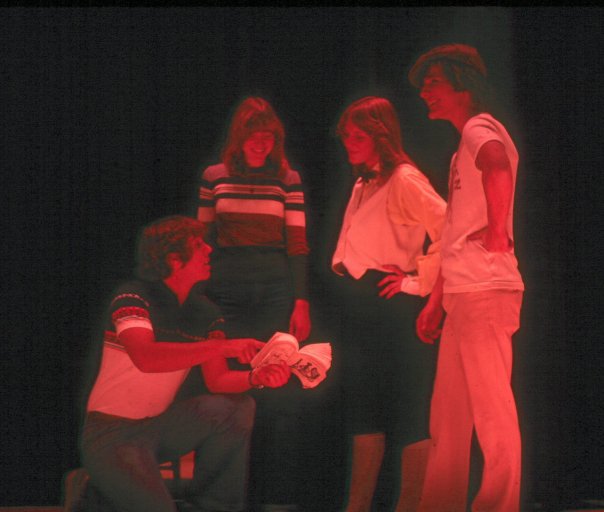
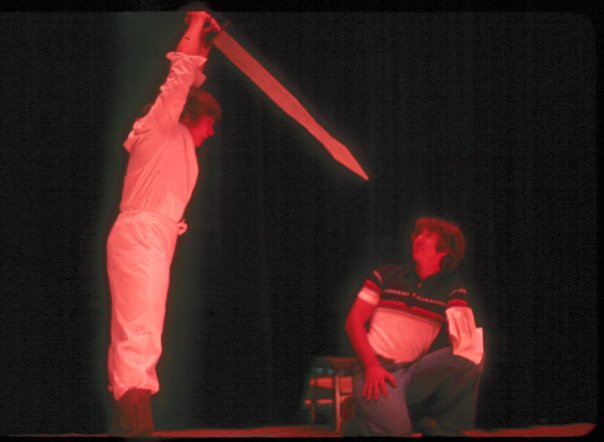
I’m a visual person. I was big into theater in high school, so much so I even directed the musical version of THE HOBBIT when I was a senior…bet you didn’t know there WAS a musical version of THE HOBBIT. Here’s some photographic evidence:


(That’s me kneeling in both pics…apparently that was my chosen directorial style.)


When I went off to college, my interests had moved to motion pictures, and I majored in film and television history. (Got to watch a LOT of movies during class. My all time favorite course was one our own Steven Schwartz and I – I think – took together…The Films of Alfred Hitchcock, or something like that. Awesome!)

Quite by chance, when I entered the working world I happened to stumble into the arena of graphic design for television, or what we called motion graphics. No, I wasn’t a designer, but I worked with designers everyday for what turned out to be almost twenty years. And when you work with graphic designers, you will find that visual stimulation is a daily event.

So it’s not surprising that the visual can be very stimulating to me.

Back in grade school (or was it junior high?), I got an assignment in an English class to create an essay/story by using only pictures found in magazines. If I remember correctly, we could add short headlines, but that was it. The pictures had to make the story. It was a great project, and, if you ask me, very forward thinking on my teacher’s part.

To this day, I still remember that project, and, in a way, am still utilizing the lesson learned.

Almost everyday I come across images on the Internet that stimulates me for some reason. Could be I just like the setting, or the face. Could be I like the atmosphere. I save these images to a folder on my desktop that I call Inspirational Pics. In the past I’ve looked through them on occasion. But this week, as I set out to cobble away at that chuck of rock that someone unceremoniously put down in front of me, I decided to try something new.

I created a new folder, then opened one with my Inspirational Pics. Slowly, I went through them, one-by-one. If one made me stop or otherwise called out to me, I put a copy of it in the new folder. By the time I was done, I had about two dozen images (out of the, literally, hundreds I’ve collected.) I then put these selected images in an order that made sense, and started to play them as a slideshow.

And you know what? There’s something there. I can feel it. I don’t know what it is completely yet, but I have discovered a main character, and I’m starting to see events – though hazy still – that take place in the story. I even wrote a couple pages that might be the beginning of the novel. The pictures really speak to me. I can feel them pulled me in. I can see them knocking off the unnecessary parts of the rock as I hunt for the story I know is there.

I know I’ve found my tool of choice on this particular project, and for the next week I will undoubtedly watch that slide show over and over, letting it reveal more of the story to me.

Yes, I know. I’m weird. But I like it that way. (I’d share the pictures, but don’t want to tip my hand.)

So, what tools do you use to get rid of the unnecessary bits that are hiding your story from you?

Hype

by J.D. Rhoades

     Last Saturday, we turned down the lights, made popcorn, and watched the movie “Paranormal Activity.” You may have heard of it.

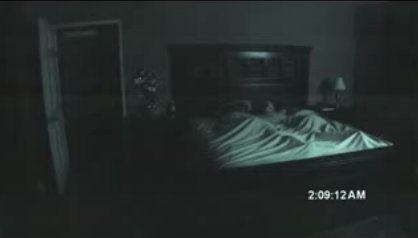
     The movie  was reportedly made on a microscopic budget of around 15 grand (yes, you read that right). It played some minor film festivals,  caught the attention of several studio execs (Including Stephen Spielberg), and was eventually released nationwide, where made a ton of cash. It was billed as  “one of the scariest movies ever made”. The marketing campaign even mentioned that people walked out of test screenings, which worried the filmmakers until they saw that people were leaving because the movie scared the living daylights out of them.


     Certainly it’s a scary film, and cleverly made. Like THE BLAIR WITCH PROJECT and CLOVERFIELD, it’s supposedly filmed by the main characters on their home video camera. Katie and Micah, a cute yuppie couple (well, her anyway), have been hearing weird noises and whispery voices in the middle of the night.  Micah (who is, by the way, an utter douchebag) wants to see if he can document what happens while they’re asleep (and maybe make a little x-rated home video while they’re at it; see “utter douchebag”, above).

     I can tell you,  there are some shivery moments. The nighttime shots,  where the right half of the frame is the couple asleep in bed and the left half is their open bedroom door with the darkness of the  hallway beyond, inspire real dread.


     You just know that something really awful is about to appear in that door.  And it does.

     But the movie’s central conceit hamstrings its ability to create a really effective  ending, and you’re left going “wait, that’s it,  it’s over?” In the end, I found the movie disappointing.

     Then I started wondering: if it hadn’t been billed as “the scariest movie ever made” (a title that, in my mind, is still and always will be held by THE EXORCIST),  would I have been so down on it? Had I stumbled across it on TV or picked it up at the video store not knowing anything about it, would it be the type of movie that I go around telling everyone I know “you gotta see this, this is total genius”?

     So I’ve been thinking about hype, and its effects, both good and bad.


     It happens a lot with the so-called classics. How many of us have come to a book that our friends have solemnly described to us as  “essential” or even “life changing”, only to walk away going “THAT’s the best book you ever read?” For example, I thought CATCHER IN THE RYE was amazing the first five times I read it, but I know people who can’t stand the book or its main character. I, on the other hand, was let down by  MOBY-DICK, which I finally put down in disgust when I realized that  Ishmael had been  blathering through 100-plus pages and he wasn’t even on the damn boat yet.

     More recently, I found myself disappointed by Neal Stephenson’s ANATHEM, which got a lot of press and a lot of hype. It even made quite a few “Ten Best” lists.  I was really looking forward to it, because I loved CRYPTONOMICON and really liked QUICKSILVER. I have a high tolerance for Stephenson’s rambling, discursive style, because usually the rambling takes you to some fascinating places. But ANATHEM just took the whole rambling thing just that one step too far for me. It can best be described by  review I wrote of the book for Goodreads: “Monkish scientists on an earth-like alien planet  are brought out of their cloistered existence to confront a potential alien invasion, which they do by attempting to talk it to death for 900+ pages.” I wonder though, if I’d have been more tolerant had it not been so heavily promoted as  “the most brilliant literary invention to date from the incomparable Neal Stephenson”.

    On the other hand, there are some works whose hype goes too far in the other direction, works whose reputation is so bad that when one finally encounters them, one is slightly disappointed to discover that they’re really not all that awful. Joe Queenan described this phenomenon in his hilarious work RED LOBSTER, WHITE TRASH, AND THE BLUE LAGOON, in which he coined the term scheissenbedauern (“shit regret”) to describe “the disappointment one feels when exposed to something that is not nearly as bad as one hoped it would be.” My example of this would be that great bugbear of the literati, THE DAVINCI CODE. Yes, it was dreadfully written, but it was fun, possibly because I had no expectations by the time I finally read it. In movies, my example would be STARSHIP TROOPERS, which I think I enjoyed because after months of my fellow Heinlein fans screaming about how it was nothing like the book, and in fact was a betrayal of all the book stood for, I was ready to take the movie on its own terms.

     Now, as writers, let’ s be honest. We’d probably all like to see our books get some real high octane hype. We’d love a national TV and radio blitz accompanied by full page ads in all the papers and magazines, telling everyone that our next book is going to change the face of literature as we know it, cure cancer, and bring about peace in the Middle East because everyone will be too busy reading it to fight.

      But then I think about someone I used to know, who one day got the book contract of her dreams. High six figure advance, serious publisher support, major buzz. And when the book came out–it sold respectably. For a debut, in fact, it sold pretty damn well. But “respectably” and “pretty damn well” weren’t going to cut it after all the money they’d thrown at it.  Her career seems to have recovered, but I hear it was a damned close run thing for a while there.

     So, ‘Rati, if you dare: do you think that hype helps or hurts a book or movie? What works have you seen that you think might have been spoiled by all the hype? Which ones gave you a melancholy touch of scheissenbedauern?


Discuss. 

Ogling the hot new things in Las Vegas

by Tess Gerritsen

There were two conventions in town.  Over at the Sands Hotel, the Adult Entertainment Expo was in full swing. 


I, however, was at the other convention.  


The Consumer Electronics Show, at the Las Vegas Convention Center, was THE place to check out the mind-boggling new gadgets about to come on the market in the next few months. From cars to cameras to TVs to gaming systems, this is the show where you’ll catch a glimpse of our electronic future.


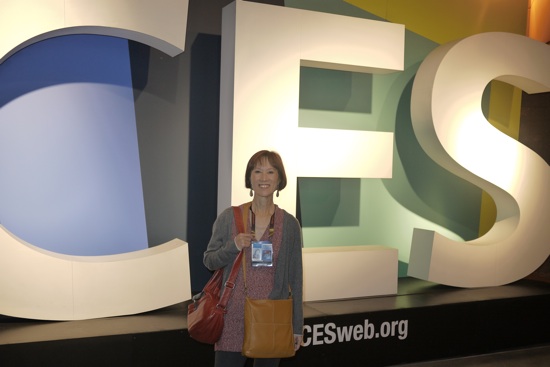
 Months ago, the Interead company (which makes the Cooler E-book reader) invited me to be a guest author at their CES booth.  Although I knew that the show attendees would be overwhelmingly male, and probably not many would be familiar with my books, I jumped at the chance.  Who wouldn’t want to check out the cool new gizmos on the horizon?


As predicted, the show was indeed overwhelmingly male.  (It’s the first big event I’ve ever attended where there was no wait at the women’s restroom!)  But, this being Vegas, buxom gals weren’t hard to find on the showroom floor.


 “Booth bunnies” were everywhere.  I sent my husband around the hall to take photos of them, and I have never seen him so eagerly take on an assignment. (For a glimpse of some more booth bunnies, hop on over to my own website for other photos.)

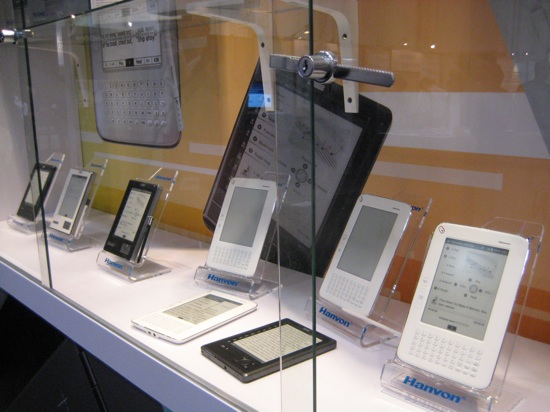
But dazzling electronics and chesty girls aside, CES was also where you could catch a glimpse of gizmos that will be part of the publishing future.  At last year’s CES, or so I’m told, you could scarcely find an E-book reader on display. This year, there were at least a dozen booths, clustered in their very own section of the exhibit hall.  Oddly enough, the world’s bestselling e-reader, Amazon’s Kindle, didn’t have a booth at CES.  But check out the wide variety of other e-readers that will soon be available: 


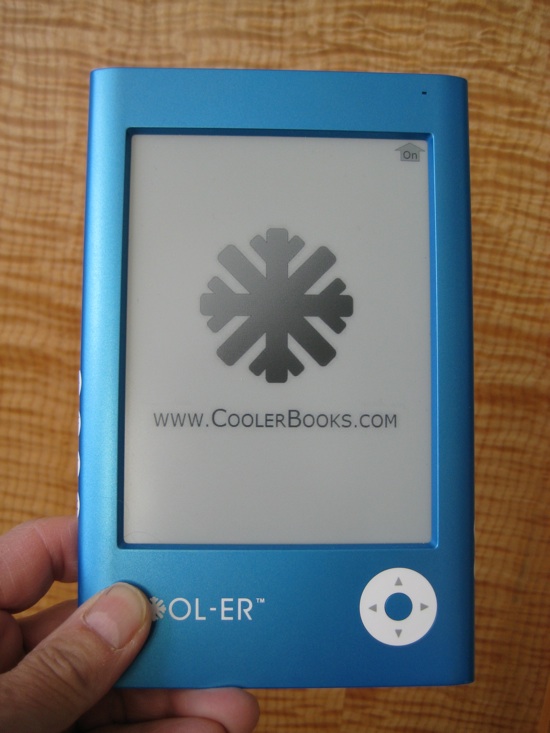
Here’s the Cooler E-reader, the product sold by Interead, my host at CES.  It’s the lightest one on the market, easy to slip into a pocket or purse.


And where E-readers go, accessories are sure to follow.  There were several booths devoted to just that specialty item:


Judging by all the E-reader products — and the interest in those products — a tipping point has clearly been reached.  E-readers are the future, and whether you think it’s a good thing or a bad thing, we writers can’t afford to ignore the tidal wave that’s rushing toward us.

Nor can publishers.  Because along with the E-reader revolution comes a publishing revolution.  As a writer, you can now publish with any number of e-book sites, and sell your work directly to readers — without any publisher involved.  It means there will be an overwhelming amount of content for consumers to choose from, much of it low-quality.  E-book land is going to be a busy, anarchic universe with a dizzying array of great books sold along with bad books, and lord knows how it’s all going to shake out.

And hanging over us all will be the one thing that could doom us all.  Piracy.  Once books can be copied and disseminated for free, there will be no way to make a living in the writing profession. I fear that it’s only a matter of time before that happens.

And we will look back on this era as the last age of the professional writer.


Dreams, Goals, and “Getting Published”

by Pari

Even though we’re entering our second full week of 2010, many of us are still thinking about what we hope to accomplish during the New Year. Whether we set resolutions or frame our year in the context of goals met, it’s this initial push that shapes our experience of the next 350+ days.

. . . And I want to save some of you a bit of heartbreak.

During the recent holidays, I met many people who told me their goal for this year is to “get published.”

That, along with a series of blogs on motivation (read all of them from 12/23 on) at Dean Wesley Smith’s site – and my time at the Master Class – make me think we should discuss the distinction between dreams and goals here.

To me, dreams are hopes and wishes. They should be grand, marvelous, BIG. They should make you feel good when you think of them, smiling with the giddiness of magnificent possibility.

Do me a favor. Right now, before I continue, I want you to think of some of your dreams. Go on. Knock yourself out. I’ll watch the following video while I’m waiting.

Goals, on the other hand, are the nuts and bolts. They are the steps that help you walk toward your dreams. The key here is that YOU have total control over whether you achieve your goals or not. No one else does.

So . . . I have a real problem with the idea of “Getting published” as a tangible goal. At least when it comes to traditional publishers (paying markets: novels, magazines, ezines) because, basically, it’s out of your control.

Someone else judges your work and decides.

I can hear you now: “Pari, you’re being a real downer here. Are you saying I don’t have control over my own writing career?”

Not at all. In fact, you’re totally responsible for your career. Yep. It’s all you.

But “getting published” as a goal is setting yourself up for incredible disappointment for all the wrong reasons. We’ve all read enough really crappy books to know that just about anything has a chance of publication no matter how awful.

So getting published isn’t necessarily a measure of your work, your effort, or your abilities.

NOT getting published doesn’t tell you anything either, except that you’re not getting published.

The problem is that we humans spend a lot of our time inferring. Writers are particularly bad about it. We parse rejections for hidden innuendos. We take book reviews to heart. And we’re prone to embrace the negative far more quickly than the positive.

So why set yourself up for that kind of pain? It’ll just shut you down or make you angry or bitter (when you read one of those shitty books). And, I bet, it’ll hinder your productivity and the quality of your writing, too.

Why not formulate real goals instead?

JT gave us a helluva primer on that last Friday.

Even though it scares me to go public, I want to share my professional goals for this year with you too:

  1. Write at least two pages of fiction daily.
  2. Write and mail at least one short story/month.
  3. Write (and market) at least two new novels this year.
  4. Reach 10 items in the mail/email simultaneously at least once this year.

Right now, those don’t seem particularly difficult. By the end of the year when, I hope, I have a full-time job AND am working intensely on Left Coast Crime 2011 (why don’t you register while you’re checking out the website? Then I can work on my own goals a little more easily.), they’re going to be doozies.

So, what do you think?

Have you mistaken dreams for goals?
Is my framework useful to you or did you already know it?
Am I overreacting to the “getting published” meme as a goal?

As always, I look forward to our conversation.

What I Did on My Vacation

By Cornelia Read

(Apologies because this is going to be totally random. I’ve flown 12,000 miles in the last couple of weeks and am still kind of messed up from the final redeye. Also, it was a strange vacation. As you will see.)

I remember the first time I stepped foot on Oahu. It was 1967, I was four years old, my parents had just split up, and it had been a damn long flight from New York.

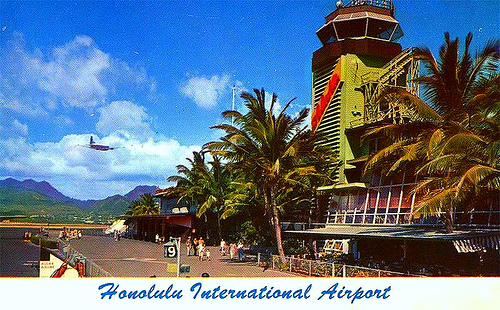
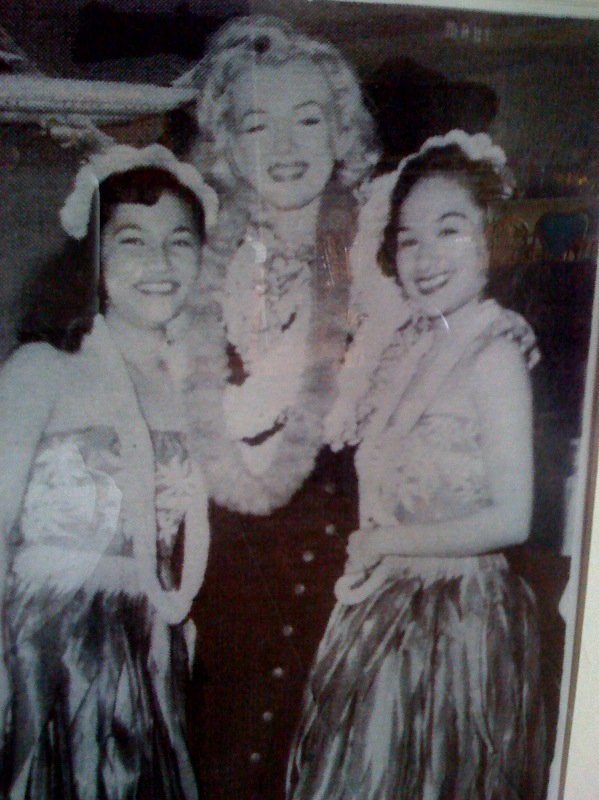
They still had roll-up stairs at the Honolulu airport instead of jetways, and when we walked down them to the tarmac young women in grass skirts placed white plumeria leis around my mother’s, my, and my little sister’s necks. Then someone took our picture, and we walked inside and poured ourselves glasses of fresh pineapple juice out of the complimentary dispensers–the kind of perpetual-waterfall aquarium things they used to have on all respectable five-and-ten luncheon counters.


I remember being amazed that the photograph of us in our leis was waiting for us the following day at the drugstore near my godmother Charla’s house, where we stayed for the first few weeks before we rented our own place on Portlock Road near Hawaii Kai.


(It was apparently kind of a common ritual, which is cool. They don’t do it anymore though.)

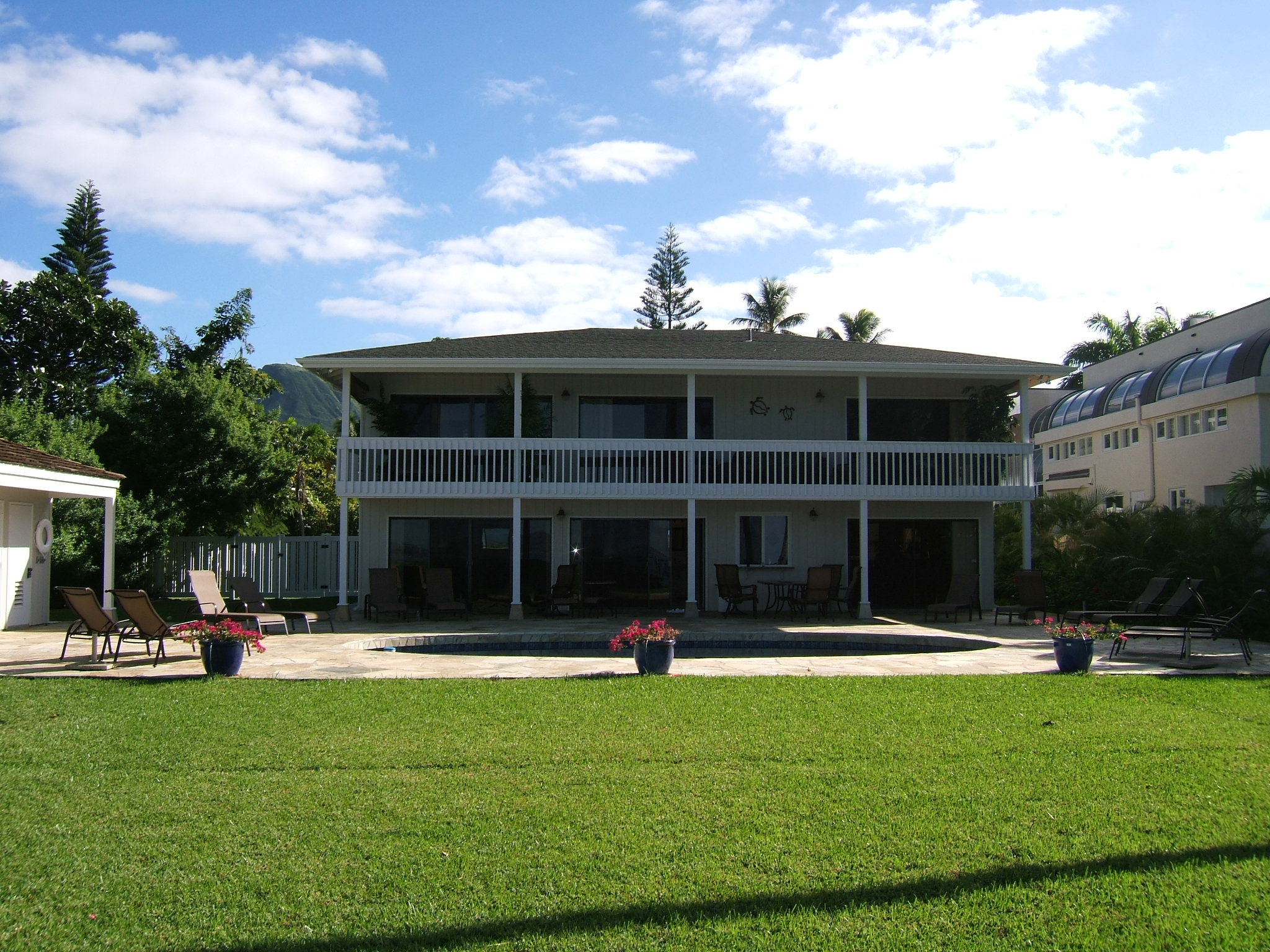
We lived there for about eight months, in that house on Portlock. My mom remembers that the rent was $300 a month. We were right on the beach, with a view of Diamond Head, and the house was most excellently funky. It was actually two military officer’s bungalows someone had bought at auction and stuck together, so that there were odd features like interior windows that opened into closets and stuff.

It no longer exists, of course, having been replaced by a McMansion that I believe sold for five mill, the last time out. 


Ho hum.

The yard looks like this now–big pool, etc. We used to just run through the sprinkler. I mean, there’s a beach RIGHT THERE behind those bushes, too. But whatever.

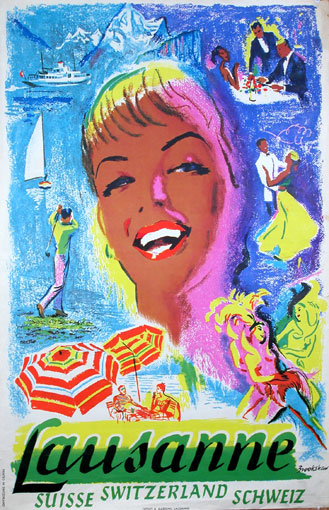
I can remember every room, though, especially the lanai (covered outdoor porch, for the uninitiated.) The renters before us had been stewardesses, so the walls of this were decked in vintage travel posters, about ten layers deep: Paris, Venice, Tahiti… all in that swirly mid-century style that JetBlue apes these days along its own jetways.

It’s bizarre to have the 3-D walkthrough of a house that no longer exists in my head–down to what each of the doors sounded like. For some reason I spent about fifteen minutes trying to describe it to my husband when I was in labor with our twin daughters, back in ’94, right before they stopped my epidural and wheeled me into the room where everything got really intensely serious and I was too busy screaming obscenities for any further nostalgic architectural anecdotes.


I was just back there over New Year’s, for Aunt Charla’s youngest son’s wedding. It was really trippy. Felt like home, in so many ways, even though I hadn’t been there in twenty-one years.


There were all these barefoot little blond kids running around the edges of the lawn, in twilight, and I kept wondering what had happened that I wasn’t streaking through the half-dark with them instead of sitting with the grownups inside the tent. Didn’t seem right at all.

I mean, even my daughter Grace is too old for that. But still, it’s imprinted, you know?

I lived in that Portlock house for another six months when I was eight. I learned to swim there, went to my first school (we didn’t have to wear shoes–they’d send notes home if we had a field trip reminding our parents we couldn’t go barefoot.)

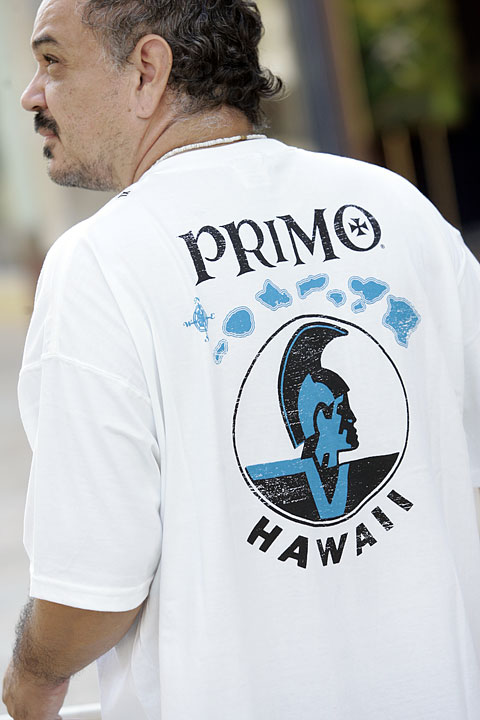
I spent almost the entire time wandering around topless in a little yellow-and-white aloha print bikini bottom that tied at the hips, in ’67, though I remember wearing white Navajo moccasins, thriftstore lederhosen, love beads, and a Primo Beer t-shirt with King Kamehameha on it the day I first hiked up Diamond Head.

The first time I ever heard “Light My Fire” on the radio we lived there, and I remember going into the funky old bathroom while Mom was taking a shower one morning to tell her that Hendrix had just died. I think I was eight.

We had a young guy who was AWOL from the army, hoping not to get sent back to Vietnam, hide out with us for about a week. We took him to the Honolulu Zoo and he went incognito in a wig and bell-bottomed pantsuit of Mom’s. I thought that was hysterical.

I still speak pretty decent pidgin, it turns out. And feel like a local even though I haven’t been in forever. (When I was little, I thought “haole” meant tourist. Tremendously disappointing to discover it meant “white person,” and that I was one.)

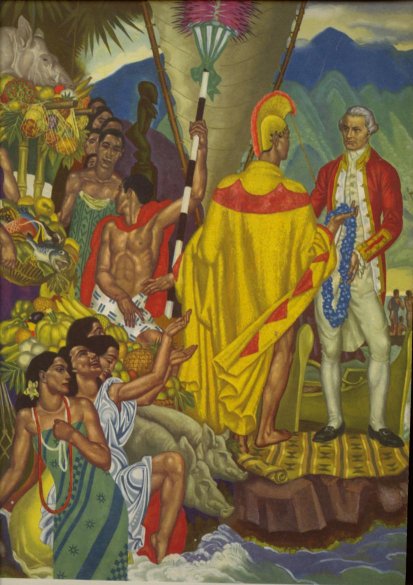
I still remember my local history–that Kamehameha pushed all the opposing soldiers off the edge of the Pali, to unite the islands, and that Captain Cook’s remains were chopped up and laid out on a big rock, from whence he was eaten, some Hawaiians having mistaken him for dog. And good riddance, I say, though that’s not my kind of luau.

I am also well aware that you shouldn’t be carrying any pork in your car when you drive over the Pali, because Pele the fire goddess will con you into picking her up as a hitchhiker and steal it from you, and she is NOT someone you want to piss off.

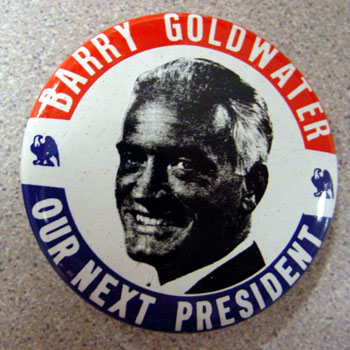
Meanwhile, Mom met Michael (my stepfather #1) at a cocktail party in Honolulu early in our ’67 sojourn. The first time he took her out to dinner, he asked whom she’d voted for in the last election. When she said “Goldwater” he called her a dumb cunt, and she went to the ladies room and tried to climb out the window, but it was too small so she went back to their table instead.

Years later I asked her why, in that case, she’d married him, and she replied that she felt like such a failure as a twenty-eight-year-old divorcee at loose in the world that he seemed sort of astute when he said that, rather than just an asshole. Live and learn.

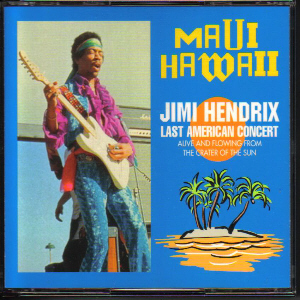
They went to see Hendrix on Maui together, and at the Monterey Pop Festival after we’d all moved to California.

They also used to get stoned with friends and then all go down to Waikiki to stare into these giant golden floodlights out in front of some hotel. Apparently when you looked up, everything was totally purple for a couple of minutes. They called this “doing Purple Haze.”

Last week we took Michael out for dinner for his 85th birthday. He was kind of cranky at first, but I got him talking about when he was a press agent for Edward R. Murrow, and about an autographed group photo in his apartment of Betty Grable and Red Skelton and Ethel Merman and Basil Rathbone and a whole bunch of other people that I remembered from when I was little–from some early TV special he promoted (just Googled it. “Shower of Stars.”)

(This would be Betty Grable, on set. Sorry about the watermark.)

Michael’s always been kind of a pain in the ass with a nasty temper, but he was relatively nice to me when I was little so I don’t mind kissing butt a little to assuage his ego.

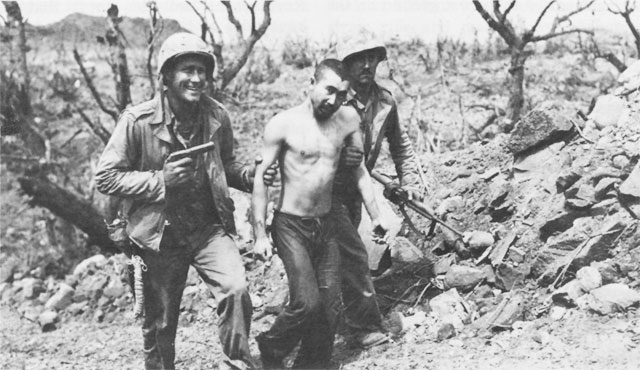
I also asked him to remind me how to say the Japanese phrase he memorized, back in the day, which I never remember. This time I wrote it down on my iPhone: “Tayo agay detekoy.” That means “Come out of the cave with your hands up.” Michael did five tours in the Pacific during WWII, semper fi.

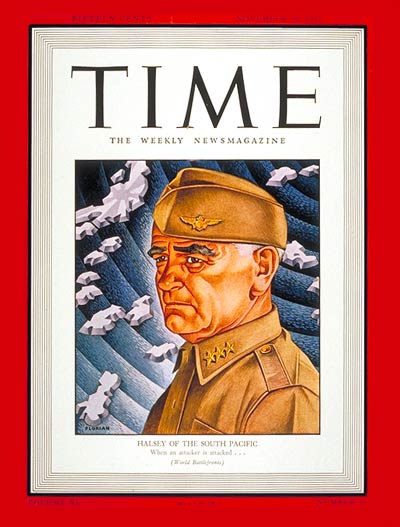
He also remembers storming a beach one time that the Marines had already won and lost once… there was billboard erected above them in the sand that read “Kill The Little Yellow Bastards!” with Bull Halsey’s signature inscribed below. Michael said the average life expectancy on that beach was seventeen seconds.

This all really made him hate war, especially the Vietnam conflict. He’s pretty much responsible for my political worldview, for which I’m grateful. I learned to despise Nixon and Kissinger and Joe McCarthy from him, and still have a picture of Angela Davis that he took in the Seventies on my desk.

He worked for the U.S. government’s foreign office or something in the field in the late Fifties, during this border war between India and Pakistan. He said he realized pretty quickly that both sides were wearing American-tailored uniforms, listening to American military advisers, and firing American-made weapons at each other, to a bunch of Yankee warmongers’ great profit.

Michael was asked to sit in on a meeting there, considering new titles for US-AID’s magazine (which had been called “Food for the Poor” or whatever up to that point.) The committee wanted his PR expertise, saying they hoped a new name could broadcast the greater scope of work being done by the organization, blah blah blah.

Michael leaned back in his chair and said “so why don’t you call it ‘Guns for Dictators’?” then strode out of the room and resigned. First person ever to do that while abroad, apparently.

Anyway, the kind of guy you give way to, on his 85th birthday, you know?

Meanwhile, the lady we were staying with on this visit–my very favorite babysitter back in the day–was apparently an early lover of Obama’s. She said he was a great guy even in his teens, and confirmed that he did indeed inhale.

Right on, Barry.

I first met this woman when I was five. She and her sisters lived down the beach, hence the babysitting. One of her nieces and I now have the same publisher (curiouser and curiouser.)

We were reminiscing about old times on Oahu and in California (she came and stayed with us in Carmel for a while), when she asked “do you remember the time Michael had a gun and wanted to shoot himself in the middle of the night, so I snuck you and your little sister out to the car and drove you around for a few hours?”

“Yeah,” I replied, though I hadn’t thought of it for decades. I’d been eight, my sister six, and this wonderful lady would’ve been about seventeen, at the time. The Sixties were kind of boundary-free…. So much so that they kept going for a good chunk of the early Seventies, as I recall.

We spent a lot of time on her lanai talking story, as the locals say. It was really beautiful. So is she.

So, I don’t know… my childhood. Kind of surreal. I remember all this stuff and am somehow not surprised I ended up being graced with a somewhat noir outlook.

I’m glad Grace got to come with me, to see all of this. Especially to meet Michael because hey, at 85, that could be a limited-time opportunity.

I did take her to do some wholesome touristy stuff, too, like climbing Diamond Head.


It’s all hollowed out near the top, with all these cool observation posts and gun emplacements and tunnels.

She was a little sick of me taking her picture, once we’d reached the summit.

And I have to say this attitude did not mellow over subsequent days. 


When she wasn’t being forced to pose, she was great, though.


Also, I got to do some very nostalgic Hawaii kid stuff, like eat Li Hing Mui and other kinds of “crack seed” (mostly Chinese preserved fruit flavored with sugar, salt, licorice, and saccharine–kind of an acquired taste.)


And have manapua and pork hash dumplings for breakfast in Chinatown.

And now we’re back in New Hampshire, which seems like kind of a lame place to move after your first divorce, by comparison (mine was final on December 13th. YEE HA!)

(view from car windshield at airport bus parking lot in Portsmouth, NH. Note conspicuous lack of palm trees.)

Luckily, I seem to be able to relive stuff in my head rather well. Hope that gets me through February.

Happiest of new years to all you ‘Ratis. May you and yours have good health, good luck, good prospects, and a lot of gentle time to talk story with those you love….


Off Roading

by Zoë Sharp


New Year turned into something of a mini adventure for us, as I mentioned in my blog over on my own website last week. And Rob’s almost Zen-like post of yesterday made me realise there was something about the whole experience of being out on the roads in bad conditions that struck me as really, really annoying.

Most people should not drive.


Most people, if truth be known, do not drive because it brings them any kind of enjoyment or satisfaction. They simply need to get from A to B, and the car has become the easiest way to do this. Particularly if you live in a rural or semi-rural area in the UK, when the buses run if they feel like it and regular local trains are something your granny talked about in the days before the Beeching Axe, while modern out-of-town shopping centres have killed the diversity of the high street.

 If you want anything, you’ve got to get in your car and drive to get it.


And nobody will admit to being a bad driver. They might say they play a little golf, but aren’t very good at it, but they will not say, “I drive a little – of course, I’m crap, but I drive a little.” And it’s worse over here where automatic cars are not the norm, so for some people clutches are a service item.


The other problem is the car has changed beyond all recognition in recent times. Years ago, when I was heavily involved in the classic scene, I used to drive all kinds of vehicles, including on one occasion a 1920s Bentley. Driving an open sports car from that era was a full-engagement exercise, with no power assistance of any kind on the steering or cable-operated brakes, plus it had a right-hand crash gearbox and reverse pedal layout. The skinny cross-ply tyres gripped every other Thursday, and the suspension was best described as agricultural.

But you had to concentrate on what you were doing, all the time.


Now, however, we sit in our squashy climate-controlled, heated-seat little boxes, listening to high-quality stereos, with our back-seat passengers watching DVDs, waiting for instructions from the sat-nav on what to do next. There’s no manual choke to keep an eye on until the engine warms through, while other niceties of car control are taken care of by cruise control, anti-lock brakes, four-wheel drive, auto-tiptronic gearboxes, and traction control. Much of the time, you don’t even have to remember to turn on your headlights or windscreen wipers, because the car will do it for you, and it will squeak at you if you forget to turn them off.


And, if the worst should happen, we’re held in place by our auto-tensioning seatbelts while a dozen airbags explode in our faces to cushion the impact. And once the dust has settled we whip out our mobile phones to call breakdown recovery. In fact, all aspects of the motor car have grown more sophisticated.


Except one.


The driver.


Drivers, if anything, have grown a whole lot less sophisticated, because now they expect to put less into the experience and still walk away. They’re distracted by their mobile phones (yes, Rob) and their texts, and their email, or surfing the web on their iPhone, or their drive-thru coffee, or burger, or fishing in the passenger footwell for their cigarettes (as the driver admitted to doing when he knocked two friends of mine through a dry stone wall) or even trying to stop their dogs getting to the meat in the cooler on the rear seat (as the guy who knocked down Stephen King admitted to doing).


We recently saw a typical White Van Man on the motorway not only yacking on his phone, but taking an order on a clipboard resting on the steering wheel while working out a quote on a calculator at the same time. Gawd alone knows what he was using to steer … (And WVM, by the way, is not a racist statement. There are just a lot of guys who drive round in white vans – usually Mercedes Sprinters – doing 100+mph in the outside lane of the motorway. It’s a recognised phenomenon.)


But I digress slightly.

One thing that New Year showed us was the people in the UK cannot drive in snow. The first thing they do is turn on their fog lights. Why? WHY? In the hundreds of thousands of miles we’ve driven over the last twenty-plus years, we’ve encountered severe conditions where rear fog lights were actually necessary, maybe half a dozen times. If you can see my headlights behind you, you can turn off the fog lights because I can sure as hell see you, and having that damn bright light shining in my eyes is not only asking for road rage, it also distracts me from seeing your brake lights come on.


So stop it. Stop it now. Do not make me open a can of whup-ass on you.


So, there we were last weekend, sliding around in the increasing levels of snow on one of the highest roads in Britain, watching people slithering off the tarmac and wheelspinning, and I wondered how many times bad driving has featured as a plot device in a crime novel. Or a character’s been rammed at an intersection just when they’ve had an epiphany about the case, which prevents them from telling anyone or catching the bad guy.

Any examples spring to mind?


And what about you, ‘Rati – any driving woes you want to share?


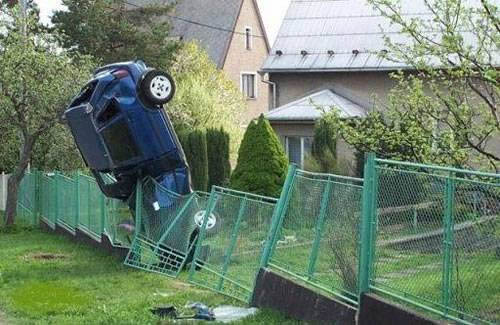
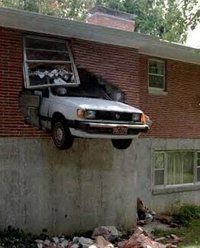
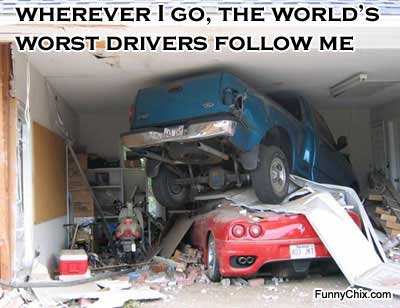
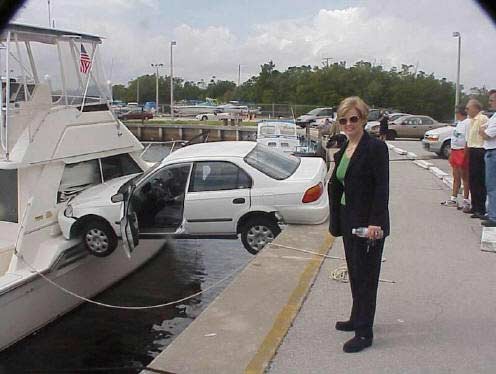
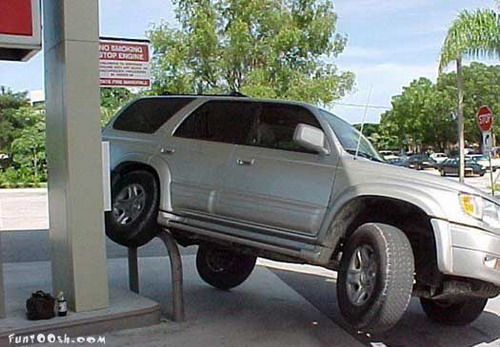
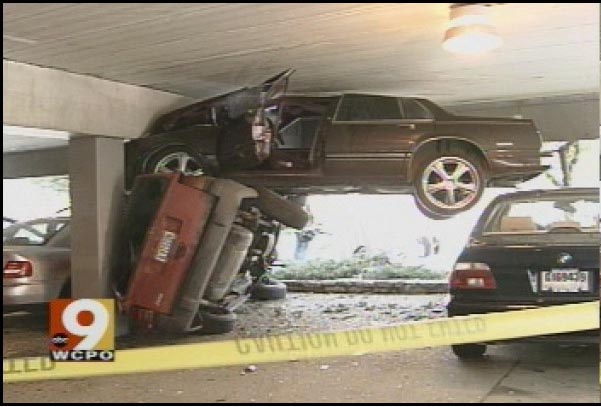
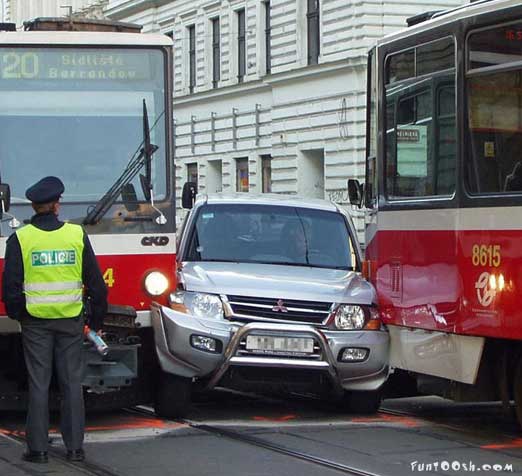
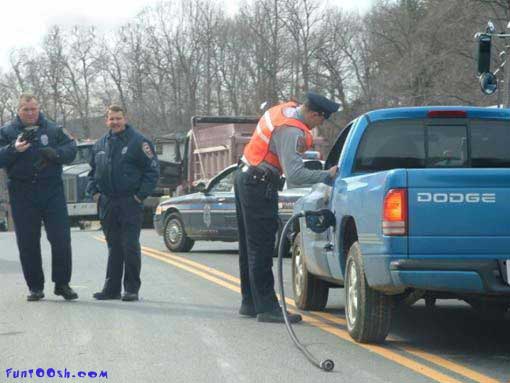
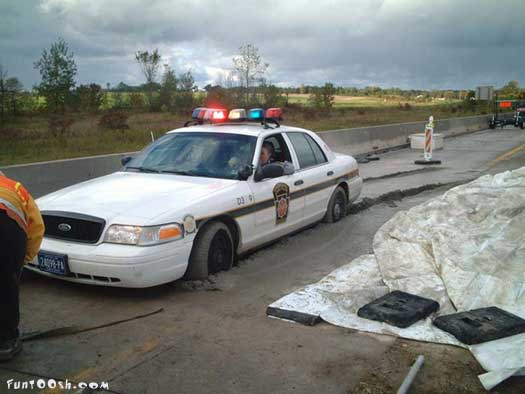
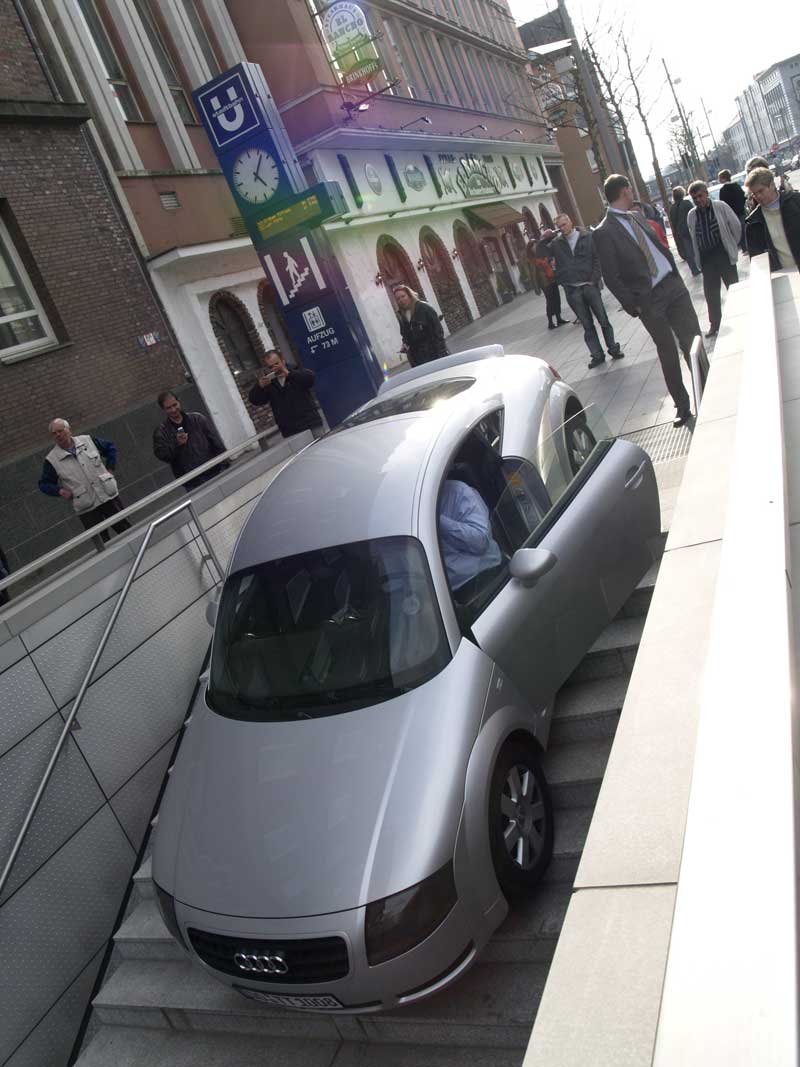
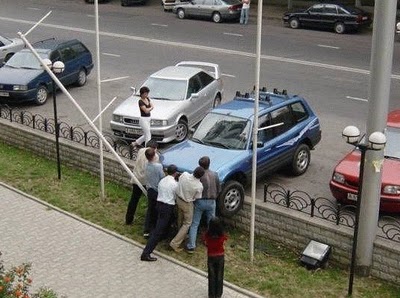
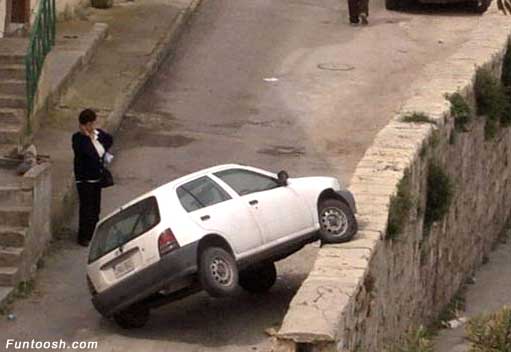
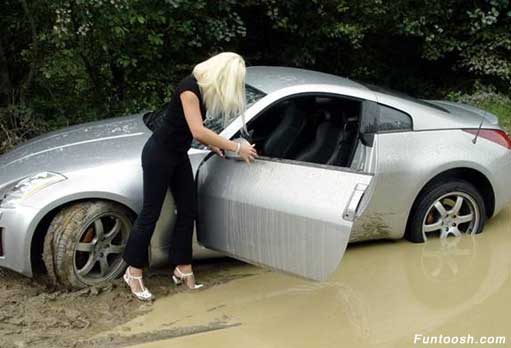
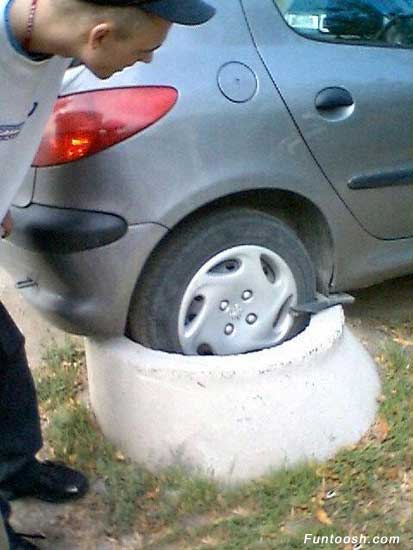
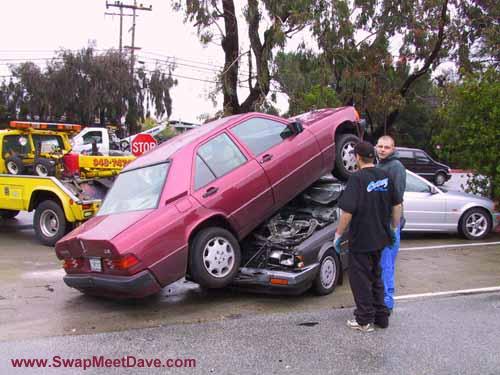
I hope you like the pix I found for this blog, by the way, and I make no comments WHATSOEVER about male versus female drivers. Uh-uh.


This week’s Word of the Week is catastrophe, which not only has the usual accepted meaning of a sudden disaster or misfortune, or a sudden violent upheaval in some part of the earth’s surface (geol) but also a final event or the climax of action of the plot in a play or novel.


Put On Your Dancing Shoes


By Louise Ure


Okay, I know I risk the loss of attention of some of our male ‘Rati here, but I’m talking about shoes today.

Little girls love them because they’re a physical manifestation of our princess fantasies. Adult women love them because they’re a physical manifestation of all the rest of our fantasies. Big girls love them because they’re the only clothing (aside from gloves) that we can buy in a normal size. Slim girls love them because they make us feel like the ballet dancer on the top of the musical jewelry box.

I love them all. Flat shoes. Fancy shoes. Killer heels. Animal prints. Straps.

I used to date a guy named Tom who bought me shoes for no reason at all. I’d come home from work and there would be a little pyramid of shoeboxes on the bed. Straw wedges. Red canvas sneakers. Strappy sandals with a chunk of turquoise in them. Black ballet slippers. It was heaven.

It takes a special man to know the shape and pressure points of his woman’s foot. A special man to get the right size every time. I’d be with Tom today if it wasn’t for his equally nasty habit of leaving lipstick love letters in baby talk on the bathroom mirror.

I’ve grown older and wiser since my Tom-the-Shoe-Man days and now eschew heels of either the footwear or male variety.  And I’ve cut back from the 100+ pairs of shoes in the closet to a measly fifty.

But that doesn’t mean I’ve abandoned the passion.

So the day after Christmas, with my shoe jones in high gear, I sneaked off to see my dealer. Zappos.com, that is. From the Spanish word “zapatos” (shoes). They have 1000 brands on hand. Ninety thousand styles. Three and a half million pairs of shoes ready to go.

I gave the secret password and entered into the wonderful world of shoes. Fleece-lined. Waterproof. Thigh-high. Italian leather. Purple.

Did I say purple? For some reason, my shoe jones was screaming for purple and I found just the thing. Puppy-soft leather. A hot-orange sole for flamboyance. An elegantly understated logo across the heel.

Zappos never disappoints. Twenty-four hours later they were in my hands. Er … on my feet.

Except that they were tight. And the flamboyant orange made me look like I ought to be duck hunting. And that understated logo was braying like a tea partier with a megaphone.

They were going back.

When you print out the (free) return-shipping label at the Zappos website, they have this deceptively humble little comment box that says: “What could Zappos have done to prevent this return?” As if it were their fault.

It reminds me of that weight loss ad that on late night TV that starts with: “Unsightly belly fat? It’s not your fault.” Of course not. That bean burrito just jumped right out in front of me at the intersection. And I didn’t even realize I was being rude to that jelly donut until it started crying.

What could you have done differently, Zappos? I’ll tell you.


“Next time please remind me that there’s a whole world of purple out there and the color on these shoes is not going to match any of the lavender, lilac, deep purple or mauve in my closet.

And you could whisper that I haven’t been a size 8 in a closed-toed shoe since I was in third grade.

You could tell me that I bought the same pair of shoes from you in gray last year and they’ll go just fine with all the purple stuff.

You could cough gently into my computer and say that $188 for a pair of faux-leather purple shoes I don’t need is not a bargain. You could even have a little asterisk at the bottom of the page with the credit card info that teases, ‘Are you sure? You’ve got a big credit card bill coming in at the end of the month.’

Like a nurse in a methadone clinic, you could have offered a free pair of those little slip-on satin Chinese slippers instead, with the warning that ‘as a writer, you spend most of your time at the computer and you shouldn’t be wearing screaming purple and orange outdoor shoes.’

You could have cut me off. Told me my addiction was getting out of control. Your pages could have taken longer to download. You could have saved me from myself. But you didn’t.”


I hit Send, then printed out the return label and hot-footed it down to the post office before I lost my nerve.

Unfortunately, the Post Office was in cahoots with my dealer and instead of sending the shoes back to Zappos, they returned the box to me. Like a recent quitter who finds a fresh pack of smokes in her purse, the jones kicked back in.

I would prevail. But now I needed a new return label, so I got on the phone to talk to my dealer directly.

“Zappos, the happiest place on the internet! This is Loren,” he cooed. Oh my, yes. I’ll bet he had blue eyes. I wondered if he left messages in baby talk on the mirrors.

I explained my dilemma.

“Let me look up that order,” he said.

There was an uncomfortable silence as he read my suggestions for what Zappos might have done differently.

“Oh, you’re THAT Louise.”


 P.S. The winner of our “‘Rati Holiday Contest” is commenter Sylvia! Ms. Sylvia, if you’ll send me your snail mail address, you’ll have 14 Murderati books winging their way to you!


Marketing: You Take the Good, You Take the Bad…

by Alafair Burke

…You take them both, and there you have … the facts of life.  (Sorry, I suffer from a condition scientists have labeled theme-song-monkish-itis, the only symptom of which is an insistence upon finishing a song lyric, especially when it comes from a 1980’s sitcom featuring Tootie, Cloris Leachman,* and, at one time, George Clooney.)

Ahem, onto my post: 

My girlfriends and I were on our fourth round of contract rummy on Thursday afternoon when one of them fiddled with her phone and declared, “Hey! RJ Julia is tweeting about you!”  Once I recovered from a momentary hallucination that I was famous, I asked for details.  Imagine my delight when I learned that RJ Julia, a fabulous independent bookseller in Madison, Connecticut, had tweeted: “Best freebie in an ARC mailing: a cute package of Nutella w/Alafair Burke’s newest.”

As I’ve previously mentioned, I am not one of those authors with marketing savvy.  Case in point: For Bouchercon a few years ago, I had bookmarks made for the giveaway table that featured these three fabulous photographs of my beautiful dude, The Duffer.  The text read, “The Duffer says Read Alafair Burke.”  I was very proud of myself.


Lee Child, unmatched for kindness, yet unflinchingly honest, took one look at my handiwork and declared me unfit for self-promotion.  For the life of me, I couldn’t see the problem.  Who, after all, could resist the Duffer?  “No one,” he explained, “and that’s the problem.  These sweet people who like mysteries about puppies and kittens will think you’re right up their alley.  Then they’ll read your violent, profanity-laden books and hate you for putting them through it.”

So much for my creative printing efforts.  Now my cards and bookmarks bear the typical book jacket images.

Contrast my high-effort bookmarks with the more recent, low-effort Nutella giveaway.  A few weeks ago I was in the Continental club at Newark airport, toasting a stale bagel, when I spotted a bowl full of these:

Not quite as adorable as a french bulldog who resembles Stacy Keach, but still pretty cute, right? As it turns out, my character Ellie Hatcher keeps a jar of Nutella and a spoon in her top desk drawer.  The galleys of 212 were due to be sent out to independent booksellers at the end of the year.  Lightbulb over the head, etc. 

Truth be told, I didn’t think of these tasty little treats as marketing – just a shared chuckle with the independent booksellers who have helped me over the years.  But I’ll take the shout out from RJ Julia as proof that, as marketing goes, this at least wasn’t an “epic fail,” as my nephew says.

The experience got me thinking about the little and big things we do to try to promote our work.  My high-cost, high-effort bookmarks apparently weren’t right; a snack-size trinket I first spotted in the Newark airport earned me some Twitter action.

As publishers cut back on advertising dollars and tour budgets, we’re all looking for personalized ways to thank our most supportive readers and booksellers while searching for a new audience as well.  Are you willing to share stories of your efforts, either successful or failed, high-cost or low?  Readers and booksellers: What efforts have you seen from authors, both good and bad?

(And, uh, speaking of marketing, if you enjoyed this post, please follow me on Facebook, MySpace, and/or Twitter.)

* Lest you ever doubted Cloris Leachman’s comic talents, watch this (but only if you don’t mind “blue”).