Author Archives: Murderati Members


The Ultimate Crime Playlist

We’ve had discussions here about music – whether we listen when we write, what we listen to, and, most recently from JD, the hassle of obtaining permission rights for lyrics.  But I recently thought about music from a new perspective last week when I had a group of my criminal law students to our apartment for a pizza party.  For the evening’s music, I compiled a playlist of crime-related songs.

The idea started as a joke in class.  To study accomplice liability, our class discusses State v. Ochoa, a case in which defendants are convicted as accomplices for the murder of a sheriff because they assaulted a deputy at the scene who might otherwise have come to the sheriff’s rescue.  After the first couple mentions of the man who “shot the sheriff,” I noticed a few snickers.  Better to clear the air, I figured.  “How many of you found yourself singing I Shot the Sheriff when reading this case?”*  Lots of hands.  “Bob Marley or Eric Clapton?”  More Marley than Clapton.  Good students, I thought.  “Might have to add that to the pizza party playlist.”

So I did.  And then my OCD kicked in and I couldn’t stop.  Who knew there were so many songs related to crime?  Okay, so maybe the connection’s a little loose on some of these, but whatevs.  It was a fun project.  Here’s the list.

  1. Smooth Criminal – Alien Ant Farm (Michael Jackson works too.)
  2. Gimme Shelter  – Patti Smith (ditto, Stones.  I like covers.)
  3. Rehab  – Amy Winehouse     
  4. Folsom Prison Blues – Johnny Cash  
  5. Chain Of Fools  – Aretha Franklin    
  6. Panic – The Smiths  
  7. 99 Problems – Jay-Z
  8. Psycho Killer – Talking Heads  
  9. One Way Or Another – Blondie 
  10. Wanted Dead Or Alive – Bon Jovi
  11. I Fought The Law – The Clash
  12. Human Nature – Michael Jackson  
  13. Rebel Rebel – David Bowie
  14. I Confess – The English Beat  
  15. Criminal – Fiona Apple
  16. Born to Run – Frankie Goes to Hollywood (Save your noise, Springsteen fans.  I said I like covers.)  
  17. I Shot the Sheriff – Bob Marley (Even I won’t take Clapton over Marley.)
  18. Lust For Life – Iggy Pop (a lyrical stretch, I know, but it’s Iggy.)
  19. Town Called Malice – The Jam   
  20. When You Were Young – The Killers
  21. Let’s Go Crazy – Prince   
  22. F*** the Police – NWA    
  23. I Wanna Be Sedated – The Ramones 
  24. Jailhouse – Sublime          
  25. Shoplifters Of The World Unite – The Smiths
  26. Ball And Chain- Social Distortion  
  27. 187um – Dr. Dre
  28. Burning Down The House – Talking Heads
  29. Call Me – Blondie
  30. She Sells Sanctuary – The Cult
  31. I’m Your Villain – Franz Ferdinand

So, which are your favorites?  What have I missed?  What other songs should be here based on titles, lyrics, or band names?

*Needless to say, my law school classes are not like those you may have seen in Paper Chase or Legally Blonde.

Whoops

Yes, I’m late this morning. I’ve been fighting a cold–and I really do mean fighting–so I’ve been going to bed early and completely forgot to post my blog.

How do I fight a cold? I sleep more, take Airborne and E-merge-C (not sure on the spelling, but it’s essentially Airborne with Vitamin C) and zinc. The cold is there, but it’s subdued and going through its cycle sort of behind the curtain or in the background. This has worked for me for almost every cold for the last couple years as long as I start it up at the first sign of that tingle in the back of my throat . . . 

So I titled this blog “Whoops” thinking that I’d apologize, ramble a bit, and then ask a question because I really didn’t want to talk about vanity presses and self-publishing anymore (And yes, there IS a difference, even though I do not generally encourage writers to self-publish.) If you’re a writer, you’ve really been off-line if you don’t know that Harlequin has partnered with Author Solutions to funnel rejected writers to a vanity publishing scheme. 

But then I realized that “Whoops” fit for the Harlequin move, so reluctantly decided to summarize this week’s big news.

When all major writers organizations (RWA, MWA, SFWA and this morning Novelists, Inc) come out and oppose the move AND remove Harlequin from their approved publisher lists, you know this is a big deal.

I don’t want to go into all the details because frankly, I’m tired of it and last night was the only time I got any productive writing done since Wednesday night, partly because of the cold and partly because of the thousands of emails I’ve received from various writers groups. I blogged about it at Murder She Writes on Thursday

I’m posting NINC’s public statement here (it’s not yet on the website but I just received the email) because I think it’s the best argument against vanity publishing, and provides links to more information:

Novelists, Inc. Responds to Disturbing Developments in Publishing:

Vanity publishing is not new, although the Internet has become a lucrative feeding ground for vanity publishers. Presented with enough enthusiastic jargon and color graphics, a hopeful author might well be convinced that he has stumbled upon a fantastic new way of bringing his stories, his voice, to the reading public.

Alas, the truth is that vanity publishing is still the same old opportunistic hag dressed up in new clothing, with the added flash and dash of savvy marketing. It still exists to part dreamers from their money, with very little hope of return. The dangled bait never changes, the creatively couched language suggesting that all these good things “could, may, might possibly, perhaps” happen for you if you choose one from column A and two from Column B on their à la carte menu of pricey services.

There is now a new, deeply disturbing twist being applied to this age-old money grab. Publishers with brand names, currently enjoying respectable reputations within the industry and with the reading public, are putting both on the chopping block in order to get a share of the vanity publishing market.

It takes years to build a respected name and reputation in this industry. Losing that respect happens much more quickly, sometimes overnight. 

No authors’ organization can prevent a publisher from setting up a vanity publishing division. Writers’ organizations can, however, speak firmly and clearly about the sort of egregious business practices that reflect badly on our entire industry.

Ninc strongly advocates that any and all publishing houses that now operate or are in the planning stages of creating vanity publishing arms do so ethically and responsibly, while adhering to accepted standards of full disclosure. This includes not using the same or a similar name for the vanity division of their royalty-paying publishing house.

Ninc further strongly advocates that these houses either cease and desist or do not institute the practice of steering hopeful writers who are rejected by the royalty-paying divisions of their companies into the open arms of their vanity publishing offshoot.

To do otherwise demeans the publisher’s brand and robs credibility from every one of its conventional, contracted authors.

For Those Considering Vanity Publishing

Novelists, Inc. (Ninc) is an international organization devoted to the needs of multi-published authors of novel-length popular fiction. Ninc has no unpublished members; all are experienced, savvy, and educated in the various perils and pitfalls that await the unwary writer in search of an audience.

So why is Ninc addressing the subject of vanity publishing? That’s simple. We care about writers. All writers. And we care equally for their audiences, the book buying public.

Vanity publishing, by definition, involves bringing together a writer eager to have his work in print and a company eager to charge that writer for printing the copies. Vanity publishers don’t care if the book is good or bad. Vanity publishers will print anything the writer will pay them to print. Quality and sales potential of the work are not priorities; in fact, they aren’t considered at all.

Ninc’s advice to hopeful authors remains what it has always been: work hard, learn your craft, and network with other writers to share knowledge and information. And remember, if an offer to publish your previously rejected novel and thus become a “real author” by handing over a check sounds too good to be true, that’s because it is.

NOTE:

As long as there are people desperate to be published, vanity publishers will exist, and profit-motive companies, no matter the size or prior reputation, may at some point decide that if a starry-eyed dreamer and his money are soon to be parted, why not hold out a hand for their share. All Ninc and other professional writers’ organizations and consumer advocates can do, and thankfully are doing, is to educate people on the subject of vanity publishing. Please, before you open your wallet, take some time to open your eyes. Here are some places to begin educating yourself:

http://www.sfwa.org/for-authors/writer-beware/vanity/

http://www.anotherealm.com/prededitors/

http://absolutewrite.com/forums/forumdisplay.php?f=22

http://www.writing-world.com/publish/vanity.shtml

http://www.panmacmillan.com/Authors Illustrators/displayPage.asp?PageTitle=An Easy Way to Lose Money

http://www.sff.net/people/lucy-snyder/brain/2005/05/is-publisher-just-middleman.html

http://ezinearticles.com/?Publishing-Scams:-Six-Red-Flags-That-Scream-Rip-Off&id=81336


Publishing is not easy; no one said it would be. The only people I’ve found who are upset with RWA and the other organization for making a stand against Harlequin (and Thomas Nelson’s West Bow vanity press deal with A/S) are unpublished writers who seem to think that we’re trying to stop them from being published. If you do your research and understand that you’ll be spending thousands and thousands of dollars and have to do all the work yourself (writing, editing, marketing, distributing, selling, yada yada) and probably not sell more than 100 copies, then hey, it’s your money. But know that not only after you pay them to print (and pay them to edit and pay them to cover design) they still take anywhere from 25-50% of the NET PROCEEDS. 


Self-publishing differs in that the author essentially is the end customer–they have the books printed, warehouse the books, market and sell the books, but once they have that book in their hands the self-publishing press doesn’t get another dime. All money made from the sale goes to the author. And if an author wants to be a bookseller and sell out of their trunk or online store, hey, that too is your right. It’s not as bad as vanity publishing, and actually a good idea for some projects like church devotionals and school fundraisers and family histories and some special niche market books–but for most commercial fiction and non-fiction, this is a very difficult path to follow. Some people want to do everything. I, personally, don’t. I want to write. That’s all I want to do. That I have to update my website and do book signings is part of the business, but it’s not the reason I became I writer. Writers write. So if you go into self-publishing with your eyes open, fine, but it’s not easy and it’s a rare writer who is successful in earning back their outlay.

I know there’ll be people coming up trying to defend each model. I got in one tiff with a writers who said that self-publishing and traditional publishing are simply two equal choices. Nope, they’re not. In traditional publishing, money goes TO the author. Writers get PAID. In self-publishing, the writer PAYS EVERYTHING. End of story. Not equal choices as far as I’m concerned. And Vanity Publishing? The writer pays MORE for everything and loses half the “profits” as well.

My favorite blog on the issue comes from Ashley Grayson, a literary agent. Though the whole blog is worth reading, in part he said:

“Publishing a successful book requires editorial judgment, investment of resources, dealing with book-selling channels that increasingly demand a bigger share of the cash flow, and appealing to fickle readers. The self-publishing model is sooo much simpler. There’s only one customer, the author, and he or she buys all the books which are never manufactured until purchased. Of course this is a growing segment of publishing; the publisher gets money, takes no risk and retailers are not actively involved.”

So what do you think?


Back at the manor

by Alexandra Sokoloff

I have a posse of mystery writer friends (I should say goddesses or divas!) I hang with when I’m in Raleigh: Margaret Maron, Sarah Shaber, Diane Chamberlain, Katy Munger, Mary Kay Andrews and Brynn Bonner.   We’re more a regular lunch group than a critique group, but several times a year we go on retreat to the beach or the mountains or some generally fantastic place.   We work all day long by ourselves and then convene at night to drink wine and brainstorm on any problem that any one of us is having (and of course, compare page counts!).


And one of our favorite retreats is the Artist in Residence program at the Weymouth Center in Southern Pines, NC.  

Weymouth is an amazing place – a 9000 sq. foot mansion on 1200 acres (including several formal gardens and a 9-hole golf course) that’s really three houses melded together. It was what they called a “Yankee Playtime Plantation” in the last quarter of the nineteenth century, the fox hunting lodge of coal magnate James Boyd.  James Boyd’s grandson James rebelled against the family business to become – what else? – a novelist. Boyd wrote historical novels, and his editor was the great Maxwell Perkins (“Editor of Genius”), and in the 1920’s and 30’s Weymouth became a Southern party venue for the likes of F. Scott Fitzgerald, Sherwood Anderson, and Thomas Wolfe. That literary aura pervades the house, especially the library, with all its photos and portraits of the writers who have stayed at the house.

It’s a fantastic place to write – pages just fly.  

We have our own rooms, meet for coffee in the morning and set goals for the day, work all day, and then reconvene at night for dinner and to discuss progress and spitball plot problems.

When I started plotting THE UNSEEN, I needed a haunted mansion that I could know and convey intimately, so of course the Weymouth mansion, with its rich and strange history, convoluted architecture,  isolation, vast grounds, and haunted reputation, was a no-brainer.    I truly believe that when you commit to a story, the Universe opens all kinds of opportunities to you.    And as it happened, we were able to stay in the house again for a week as I was writing the book last year

We came down to the house on the very day that my characters were moving into THEIR haunted house.

(I’m telling you, writing is a little scary.   More than a little scary, in this case…)

Now, some of us had some truly spooky encounters in that place.   Every time I turned around there was knocking on the walls (the pipes in the kitchen), weird manifestations (a ghostly team of horses trotting by with a buggy on the road outside) and rooms that were just too creepy to go into after dark.  One night I had to go all the way back upstairs, across the upstairs hall and around to the front stairs to get to a room I wanted to go to because I was too freaked out to cross the Great Room in the dark.   And another one of us had the classic “Night Hag” visitation:  she woke up feeling that someone or something was sitting on her chest.    Brrrrr…..

One prevalent theory of hauntings is that a haunting is an imprint of a violent or strong emotion that lingers in a place like an echo or recording.   I’ve always liked that explanation.

Well, this house was imprinted, all right, but far beyond what I had expected.

Because besides the requisite spooky things… that house was downright sexy.  There’s no other way to say it.   Seriously – hot.

I had ridiculously, I mean – embarrassingly –  erotic dreams every night.  There were rooms I walked into that made my knees go completely weak.   The house, the gardens, even the golf course, just vibrated with sex.

Now, maybe that was just the imprint of creativity – the whole mansion is constantly inhabited by writers and musicians, and as we all know, creativity is a turn-on.  

But also, consider the history.   As I said – Weymouth was a “Yankee Playtime Plantation”.   Rich people used that house specifically to party – in the Roaring Twenties, no less.   (Think THE GREAT GATSBY!).   God only knows how many trysts, even orgies, went on.   So could sex imprint on a place, just as violence or trauma is supposed to be able to imprint?

It makes sense to me.

And the history continues today –  the mansion and gardens are constantly used for weddings, loading more sexual energy into the place, and last night, for example, there was a junior high cotillion practice in the great room, which I snuck down to watch – talk about sexual energy bouncing off the walls!

That sexual dynamic surprised the hell out of me, but it completely worked with my main character’s back story – she’s a young California psychology professor who impulsively flees to North Carolina after she catches her fiancé cheating on her.  (Actually, she dreams her fiancé is cheating on her, in exactly the scenario that she catches him in later.)    So her wound is a specifically sexual one, and one of her great weaknesses is that she’s vulnerable to being sexually manipulated.  

Add to that that the most prevalent explanation of a poltergeist is that it’s hormones run amok:  that the projected sexual energy of an adolescent or young adult can randomly cause objects to move or break.

So of course I went with it.   It wasn’t anything to do with my outline, but California girl that I am, how can I not go with the obvious flow?

I think it adds a great dimension to the story, in a way I never could have anticipated, and I’m pleased to have been true to the – um, spirit – of poltergeists.

And this year, one of the books I’m working on at the manor is my dark paranormal for Harlequin Nocturne, about a witch and a shapeshifter.   Shapeshifter erotica – in THIS house – well, you can imagine…

So I have two questions, first, re: research.    Has a place you’ve researched ever significantly changed a story for you?    How?

But also I’d love to know – what’s the sexiest place you’ve ever been, and why?    I wouldn’t mind having a list to file away.   You never know when you might need it.

–        Alex


And here’s a bit of the introduction to the house, from The Unseen:

————————————————————————————————

……..They had turned off the narrow road and onto a dirt one that led up to the stone gateposts from the photos.     Laurel felt a little buzz of déjà vu at the sight of the sleek stone hunting dogs seated atop them, permanently frozen at attention.

            A metal gate stretched between the posts, padlocked.   Audra reached for the keys  on the dash, and Brendan gallantly jumped out to unlock and open the gate for her.

            As he did, Laurel caught Audra eyeing her in the rear view mirror and felt uneasily that they might not be pulling as much over on her as Brendan assumed they were.

            But before either of the women could say anything, if either was going to, Brendan was back in the car, presenting the keys to Audra with a smile.

            They drove forward, gravel crunching under the tires, past a perfect curve of pink-blossomed crape myrtles lining both sides of a split rail fence along the road.   Wind stirred the tall, spare pines around them.   Laurel found herself craning forward to look.   As the house appeared between the trees, she felt a jolt.

             It was an English country house of white-painted brick with a steeply pitched roof of what looked like real gray slate, two chimneys, a round upper balcony with white-painted iron railing, and gray shutters.    It seemed whole from the front, but the overwhelming feeling was that it was not.    There was part that just seemed to be missing.

            And angry, Laurel thought absurdly. 

            As Audra drove the circle to come up to the front, Laurel got a glimpse of the rest of the house, and realized what was so wrong.   There was another whole house connected to the front one, this one much longer, made of brick with white columns and trim, set perpendicular to the white front part.   Unbelievably, there seemed to be yet another white house behind that, at the other end of the brick part, but just as soon as Laurel had spied it that glimpse was gone.   Audra stopped by the path leading to the front door and shut off the engine.

            “Welcome to the Folger House.”


            The solid oak door creaked open into a small entry with glazed brick floors, surprisingly dark compared to the lightness of the house outside.   The room had a greenish tinge, from the garden green-painted wainscoting running halfway up the wall.   Laurel was reminded of the Spanish-style houses around Santa Barbara, and she had a sudden, painful memory of  – the dream – and her midnight ride from the hotel.   She pushed the thought away and forced herself back to the present as she followed Audra and Brendan into the house.

Across the green entry there were two steps up into a second, larger entry with a fireplace and a long wood bench like a church pew facing it.   Laurel glanced over a family portrait above the fireplace mantel, a crude, colorful painting of two parents and two children that gave her a strange sense of unease, but she had no time to study it before Audra stepped forward to begin her narration.   “This is actually the newer portion of the house,” she explained, “The part that was added on when James and Julia moved in permanently.”   Laurel looked around her at the cool, quiet rooms. 

 Past the fireplace were stairs down to a small empty room of indeterminate function to the right, with the same glazed brick floors, and what looked like a bathroom beyond.   On the left there was a short hall with a glimpse of a dark-paneled study at the end.    Very odd rooms to have at the entry of a house, Laurel thought There was dust like a fine sprinkling of baby powder everywhere, but otherwise the house was in surprisingly good condition.

            “Hmmm,” Laurel smiled vaguely at Audra.

             On the fourth wall of the second entry there was a door into a much wider and taller hall with dark hardwood floors and white walls.   Laurel and Brendan followed Audra into it.    An elegant staircase curved up to the right, with a tall bay window that looked out over enormous, overgrown gardens.   Past a window seat, the stairs took another upward turn and disappeared.

            Brendan took Laurel’s hand again as they walked forward.  She frowned at him and he nodded ahead toward Audra, shrugging helplessly (with a  What can I do? look.)   Laurel pressed her lips together and went along.   His hand was strong and warm around her fingers and she was suddenly electrically aware of his presence beside her.

            At the end of this hall there was an archway, with three short steps leading down, and then out of nowhere, a huge room, the size of a small ballroom, with two fireplaces, smoky mirrors in gilt frames lining the walls and a wide, rectangular expanse of hardwood floor.  

Laurel was about to follow Audra through the archway when she felt a chill run through her entire body.

            “Here,” she said aloud, and Brendan turned back to look at her.   Laurel pulled her hand from his and touched the doorjamb and thought she felt the faintest shock, like static electricity.   “They cut the house here.”

            “Yes, I believe you’re right,” Audra acknowledged, with an appraising glance at Laurel.

            They all moved down the steps into the great room.  Aside from a few end tables with marble tops, the only furniture in the room was a battered, dusty grand piano.

            “This is the older house,” Audra said, unnecessarily; the feeling of the room was completely different, much older and more complicated.   The ceiling was high with a raised ornamental design in the dome, and the crown molding had plaster medallions  at intervals all the way around the room.  Two bay windows with dusty panes flanked a set of equally filmy French doors which led out onto what must have been absolutely stunning gardens, several acres of them, now so overgrown with wisteria and yellow jasmine and honeysuckle Laurel thought instantly of Sleeping Beauty’s castle.

          The bare floors shone even through their layer of dust and Laurel noted they were heart of pine (heart pine) but far older than the floors in her own house… she could see the wide planks had been fastened by hand-carved wood dowels instead of nails.

            Then she froze, staring at a spot halfway across the floor.

            Brendan opened his mouth to speak to Audra, but Laurel dug her nails into his palm and pointed.

            In the solid layer of dust on the floor, there were footprints.    Smallish and soft-soled, like footsteps on the beach, headed away from them, toward the archway to the next room.

            But they began in the middle of the floor, and left off well before the doorway, just five or six of them, and then nothing but undisturbed dust.

I HAD A VERY RELAXING DAY TOMORROW

By Stephen Jay Schwartz

 I’ve been living for tomorrow since I was eight years old, when I wrote my first short story, Sammy the Dinosaur (Copyright 1972 All Rights Reserved No Persons Shall Use Any Portion of Sammy the Dinosaur Without Permission of Author or Author’s Estate.  Sammy the Dinosaur is a Fictional Character and as such is not Liable for the Reckless or Irrational Behavior of his Creator).

Maybe I figured Sammy would lead to greater things.  My mother sent the three-page story filled with typos and drawings of lopsided dinosaurs to Readers Digest where it was promptly rejected. 

I started making Regular 8mm movies when I was in fourth grade, graduating to Super 8mm films after my bar mitzvah money bought me the new Chinon XL555 movie camera complete with slo mo, fast-mo, stop-frame, and various other special effects.  In those days you could either get a camera that had sound, or a silent camera with effects.  I went for the effects, since my friends and I had been shooting our own version of the James Bond films, and slow motion was essential for those scenes where Bond shot me with a plastic machine gun and I tumbled from a snowy mountain-top to my death.  I always liked being the bad guy, the one who skied off a mogul and into a tree.

I figured those Super 8 movies would lead to a better tomorrow.  They simply led me to more expensive movies that I made in 16mm or 35mm, after spending my future credit rating on the loans that would get me through film school. 

In school I wrote screenplays that were sure to bring me millions.  I felt comfortable maxing out my credit cards and taking out more student loans – it was all an investment into my future life, the great “tomorrow” I would soon be living.  I mean, geez, ONE screenplay sale would wipe out my entire debt and put me in the black for years, right?  One after the other, each “million dollar” screenplay became a door-stop.  Became garden mulch.

I’ve suffered the American Dream a long time, friend. 

When my agent went out with BOULEVARD he was certain we’d make a bundle.  After a number of publishers rejected the book, my agent made that wonderful call to tell me it had sold.  Before telling me the offer, he warned, “Listen, it ain’t life-changing money.  Maybe we’ll sell Book Three for a million.”

It was a two-book deal, and fifteen years ago I could have lived on the advance for a year.  But now I’ve got overhead and past-due bills and a family and all those student loans to pay back, with interest, with collection fees. 

They say the economy needs to “adjust” before we can begin to see any improvement.  Before banks begin to loan again, before new houses are built.  We first need to work through our inventory of foreclosed properties.  As I wait for my own house to foreclose or short-sell, the house I put all that refi money into when the prevailing thought was, “buy, remodel, add equity,” I think about this tomorrow I’ve been waiting for.  I realize that I’ll have to “adjust,” I’ll have to lose all the overhead and settle into a realistic standard of living that I can afford. 

In many ways “tomorrow” has arrived.  My first book has been published and my career as a novelist has begun.  But I still have that day job and come Monday morning I don’t feel so much like the hot-shot writer.

I imagine a tomorrow where I might wake up late with nowhere to go, with nothing to do but write the things I want to write, with plenty of time to do it in, without worrying about bills, or losing my home. 

Tomorrow, maybe.


What were your dreams growing up, Murderati?  Have they changed over the years?  What have you sacrificed to get them?  What are your dreams yet to come?  And…can “tomorrow” really be attained?


AT PLAY IN THE FIELD OF THE WRITTEN WORD PART 3

by Brett Battles

I hadn’t actually intended to write a Part 3 of the saga, mainly because I thought the saga was all played out. But given what’s happened since posting Part 1 and Part 2 (and what’s happened is, well…just wait till you’ve read the whole post), I felt it was necessary. In fact, I think I might just continue this series until the book is done, reporting in every once in a while as to what has happened.

So, let’s begin. When I last talked to you about the stand alone I was writing, I said that I had written proposals for three different directions, and that my publisher had chosen one. With that I was off to the races!

And the races I hit. For the next two weeks I wrote my tail off.

(Aside: we all write at different speeds, and approach writing a book in different ways. My way is to write a first draft pretty much non-stop, warts and all, then go back and rewrite until it is presentable. What that translates into is that I plow through the pages. And given the fact that I’m doing this fulltime, it means I plow through A LOT of pages.)

At the end of this two-week period, I had a sizeable chunk of the draft done, and was excited about where things were going.

Then I did something we all do. I randomly visited a bookstore.

No. Wait. I need to back up a moment.

For my stand alone I chose a very specific location. One that was personally important to me, and one that has some very specific attributes. There is only one other writer I know who has written about the area in the past several years.  Just to be safe, I read one of this person’s books to make sure we didn’t overlap. We didn’t. So I moved on, a happy camper.

Let’s flash back to that bookstore. While browsing around, I started looking around the thriller section, and came across more books by the author I mentioned above. (An excellent author, BTW, who writes equally excellent books.) On the shelf were four books from this person’s series, the first of which was the one I had already read. I was curious where she went with the series, so I picked up the other three books one-by-one to see what they were about. The first two were both set along the California coast, no where near where their first book and my new manuscript were located, and, even better, had nothing to do with the plot I was writing.

Then I picked up the last book. This one WAS set in same place as mine. Okay, no problem. Lots of books share similar locations.

Then I started reading the synopsis on the back.

“Uh-oh.” Though it was not entirely clear what the story was about, what was there sounded familiar. Immediately, I knew I needed to read the book. Still, I wasn’t too worried. I mean, how close could it be to what I was writing? When I got home that evening I started reading.

By 1 a.m., my eyes were wide, and my brain was reeling. What I discovered was that there WERE several things that were not just vaguely similar, but WAY too close to what I was working on. I got out of bed, and shot off a quick email to my agent saying I wanted to talk to her first thing in the morning New York time (I’m west coast.)

When I woke up…okay, I was already awake, unable to sleep for long…When 9 a.m. ET came around, I called. I explained to my agent what I discovered, and think I actually could hear the blood draining from her face. “Call your editor.”

That’s exactly what I did. Surprisingly, she was very calm about it. “Have you read the whole book?” “Not yet.” “Well, maybe it turns out that things are different.” “Maybe, but I doubt it.” “Read the book, then send me a short synopsis, and where the similarities are between the two.”

I spend the rest of the day (that would be two weeks ago last Monday), reading and doing a cross story analysis. And I came up with one very definitive truth – I could not write the book I’d been writing.

Similarity included: the triggering event, the fact that this event happened around 20 years in the past, the villain, deaths of old friends, and, of course, the location. I’m just being general here. Trust me, the core elements of the stories were very similar.

Granted, the way I was telling the story, and the way the other author told their story were different, but it didn’t hid the fact that there was too much the same.

I sent my notes off to my editor, and then realized I had a choice to make. I could just sit around and feel miserable, or I could be proactive and keep myself moving forward.

Those who know me know that being miserable is not a trait I know how to do well. I’m not of the “why-me?” variety, I’m of the “what-do-I-need-to-do-to-keep-moving-forward?” variety.

So in that vein, I took the finding of this book to be a fortuitous discovery. My God, how horrible would it have been if I hadn’t found it? The author had already agreed to read my book when it was done. Can you imagine if I had finished it and sent it off to them? (Rob suggested that if the author were to give me a blurb it may have been, “It’s was a great book…when I wrote it!” Hilarious, in a tragedy averted kind of way. But I have a feeling this author is too kind to ever write something like that. But they might have pointed out the similarities to me, and boy would that have been embarrassing!)

The next day (Tuesday), I returned to my favorite coffee shop determined to come up with an alternate plot that could save some of the elements from the original story. You might be wondering why I didn’t just suggest I do one of the other ideas I had proposed…well, my publisher really liked many aspects of the story they’d chosen, as did I, so I wanted to preserve what I could. Especially, for personal reasons, the location.

With the help of good friend and author Bill Cameron via iChat, I was able to brainstorm a new story. And guess what? It was even BETTER than the old one. Tons better. I wrote up a new synopsis and sent it off.

By Wednesday morning, I hadn’t heard back for my publisher. So, again, I had a choice. Sit around and wait, loosing time, or dive in and write like the new proposal was approved. The only downside there would be if it wasn’t approved I’d have to toss everything out, but if it was I’d be ahead of the game.

I’m not a sitter.

I wrote the opening two chapters that Wednesday, and sent those to my editor so she’d see the direction I was going. Then I wrote on Thursday and Friday. On the following Monday, I was expecting to hear from her, but she gotten busy so needed more time. I wrote on Monday, and Tuesday, and Wednesday, and Thursday, and Friday. I wrote like a madman, hitting daily word totals that I seldom ever hit.

The only other communication I had with my editor that week was an email apologizing for the delay, but would need more time. That was fine. I was in a groove, and I was afraid to push her in case it jinxed things. (Yes, sometimes I worry about that.)

When this past Monday morning came I was ready to dive in again. Then, before I even started, I received an email from my editor. I was nervous to open it, but did so.

She LOVED everything. She also thought it was better than what I had been working on. And the chapters I sent? “Powerful and horrifying.”

That big PHEW!!! you heard Monday around 8 a.m. PT was from me just in case you were wondering.

Now that I had closure, I emailed the author of the other book to let them know what had happened. And, as I would have expected, the response back was completely understanding and supportive.

So everything’s on track again. And, as I write this, I have already written more pages of the new direction than I had of the original one.

Can I say phew again? PHEW!!

Similar stories happen all the time. There is no getting around it. As writers we can’t worry if someone has told a story like the one we’re working on…most of the time. But there are instances when things get so specific that you might have to adjust. I ran into one of those instances, Big Time.

But the real lesson here is that no matter how small or large a problem is, you can either wallow in your own self-pity, or you can do something to put it behind you. If that means you have to throw away 150 pages, 250 page, or even a whole book, then that’s what you do. Because option two is ALWAYS the way to go if you want to succeed.

Okay, ‘rati. What kind of hiccups have you experienced in your life that have required a change in direction? What was your response?

Will you read my manuscript?

by Tess Gerritsen

It finally happened to me. Last week, while my husband and I were dining out at a restaurant, a complete stranger approached and handed me his manuscript.

I should have known something was up when the chocolate cheesecake appeared at our table.  I don’t normally eat sweets, yet here was this luscious dessert that neither of us had ordered.  The waitress smiled and said, “That’s for you, courtesy of the gentleman at the bar.”  Turning, I saw a man waving at me.  About halfway through our meal, I had noticed him walk into the restaurant, carrying a briefcase, and had been vaguely aware that he’d been watching us. Since I have a horrible memory for faces, I assumed this was someone I knew — or at least should recognize — so I smiled as he came over to our table.

Then he pulled a manuscript out of his briefcase and said, “I know you’re probably really, really busy.  But I was hoping I could give you my manuscript.”

At which point I glanced across at my husband, who had that oh-my-god-I-can’t-believe-the-nerve look on his face. But there was that chocolate cheesecake, already half-eaten on our table.  And there was that hopeful smile on the man’s face.  And then there’s me, Tess Gerritsen, the wuss, who always wants to be polite and cooperative.

So I took his manuscript. 

As my husband said on the way home, “I guess this means you’ve really and truly made it.” And we came to the rather unsettling realization that the man had to know I was already there before he even walked into the place.  Who walks around everywhere with a manuscript, expecting to run into some random writer? We had walked into that restaurant without reservations, so someone there must have spotted me, called the writer to tell him I was dining there that night, and he grabbed his manuscript and rushed over to find me.  Does that sound paranoid?  Okay, so it does.  But I don’t know how else to explain it.  

I’m sure other published authors have encountered similar situations.  Most of the time it happens at book-signings, when some stranger approaches your table, and instead of wanting you to sign a copy of your latest book, he wants you to take his manuscript.  I’m pretty good at saying no in that situation, because I’m ready for it.  My guard is up.  But other times, we’re just not expecting it.  When a friend slips you his unpublished novel at a cocktail party, for instance.  Or you get an email from an old classmate you haven’t heard from in years. Or your dentist says, while he’s drilling your root canal, “Would you mind looking at my novel?”

I’m reminded of one of the funniest scenes from the film “Shakespeare in Love,” where Will Shakespeare is being rowed across the river by a hired boatman.  And as Will climbs out, the boatman calls out: “Will you read my manuscript?” There isn’t a writer alive who didn’t roar with laughter at that, because it probably happens to all of us.

And I understand why it happens.  Breaking into this business is a tough, tough thing.  Aspiring authors are desperate.  They think that if they just knew the right person, got their work into just the right hands, success would smile upon them.  And so they shove manuscripts at us in restaurants, under restroom stalls, toss them over our gates, slip them into our mailboxes.  

The problem is, this almost never gets them any closer to success.  I try to explain to them that I’m not being a meanie, it’s just that I’m not the one who makes the decision to publish a novel.  I’m just a writer.  I’m not an agent or editor.  They’re the ones with the power.

Agents and editors don’t necessarily listen to our opinions anyway.  There’ve been only two instances where I came across writers of real talent, whose work really impressed me.  Both times, it happened at writing workshops.  I loved what they’d done, and I asked my agent to give them a little attention.

She declined to represent either one of them.  She just wasn’t excited about their manuscripts. (And that’s how much influence I have.)

Handing over your manuscript to a mere writer isn’t getting it into the hands of the people who really matter.  It’s agents and editors who need to read and love your work.  If you read the dedications in my books, you’ll know who my literary agent is.  So submit your manuscript to her, not to me.  (Sorry, Meg.)  

As for that manuscript I got in the restaurant, it’s still sitting here in my office, on top of a stack of galleys.  Will I read it?  Maybe.  But I’m already pretty sure it’s not going to float my boat.  Whenever manuscripts come to me via some wacky, unofficial route, they are almost guaranteed to be unimpressive.  


How to pick a writing workshop


By Pari

“Pari, in a future blog post, could you go through in a little detail how you happened to pick this particular workshop. Workshops aren’t cheap and your insights on separating the good from the bad would be really useful.” Chris Hamilton

Thanks for the idea, Chris. I’ve been thinking about it ever since my last post. Here are a few questions that should help you in the decision-making process. Ask them yourself when you’re looking at workshops.

What am I looking for?
Bingo. This is the biggie. Sure it’s obvious; it’s also neglected. Many writers have a weird “Do Me” attitude. These people abdicate responsibility for their learning at the same time they’re spending the money and time to do it.

Stop!

Ask yourself: Am I interested in general craft, dialog, networking (that might spur you to take a course/workshop from a “name” writer), plot structure, novel writing, bringing more emotion into my writing, or the business of writing?

Without a clear idea of what you hope to take away from the class, you can’t possibly narrow the field.

Do I really want to be in a student mindset?
Be honest. Do you really want to be a learner or do you think you know it all already?

Will you embrace comments, feedback and information on assignments and in lectures or will you spend your hard-earned money to fight everything and then bitch about the class afterward?

Related to this is the time factor: are you ready to jump in and attend the entire class, do all the exercises and other assignments, conduct the required research  . . . or will you be pissed at the demands on your already busy schedule?

Whom do I respect?
This consideration is two fold.

  1. Whom do I respect enough to ask for candid recommendations about the workshop/class?
    Pick carefully. If possible, you want people that know your writing. I’ve had acquaintances tell me NOT to take a class because they believed I didn’t need it. I trusted them. Before I ever considered the Master Class, I asked around, talked to friends who’d gone through it. Believe me, I really thought I knew what I was getting into <g>.
  2. Do I respect the instructors?
    If you don’t know them already, contact them. Get to know them — at least a little —  through emails and, if appropriate, conversations. Please .  . . If you don’t feel like you can respect them, for heaven’s sake DON’T give them your time and money because you somehow feel they’d “be good for you.” Sheesh. I know people who’ve done this. Argh!

This also gets into the whole concern about teachers or classes compromising your “voice.” It’s a crucial consideration.

When I first started writing, I was very open and willing to take classes from all kinds of people. Luckily I didn’t have a lot of money or I probably would’ve ruined my writing for life.

Let’s face it. There are a lot of instructors out there that teach more from ego than from anything else.

The first part of the respect question has to do with “objective” input. That’s why you have to respect the sources.

The second part of the question has to do with your own gut. Pay attention to it! If something stinks like durian fruit, don’t just through your sweet-smelling time and money at it and expect it turn into a fresh gardenia.

How much money do I have to do this?
Obvious, hunh?

The master class cost a lot, but for what I wanted it was a bigger bargain than going to the myriad classes I’d need to attend to get half of the information.

So . . . some things aren’t quite so obvious after all.

What kind of a commitment am I – and my family – willing to make?
Time. Money. Emotion. Absence from home. Gas expenses. Hotel costs. Emotional focus.

There are classes that require a day, a few hours/week, weeks, months.

What is your learning style?

Do you want an immersion experience or a tidbit here and there?

Will this class impact your family, day job, other activities? Is that all right?
I can tell you that if you attend a class that takes you from home for an extended time – that requires sacrifices made on your behalf — you’re going to get push-back when you return. Be ready for it.

And THINK ABOUT IT.

Don’t skimp on this step because you intuitively feel everything is going to be copacetic.

Pari’s experience:

I did ask myself these questions before committing to the Master Class. I hadn’t been to a writing or craft or business workshop in years and years – except as an instructor. For me, the worries were time, money and my voice as a writer. I asked around and found writers/people I admire with all of my heart. And then asked them what they thought.

I thought I knew what I was getting into and it was far different than anyone could have ever told me; no one can totally predict how another will respond. Still, the Master Class was perfect for me and my requirements. I’m a better writer and business person as a result and know that this is only the beginning of the effects of those two incredible weeks.

But if many of my friends asked me if they should attend it, I’m not sure I’d say “yes.” It would depend tremendously on the person asking, on that person’s current career, and most definitely on what I knew about her or his homelife. (Because push-back can be a bitch; believe me.)

So, Chris, I hope this helped.

Everyone else: I hope it helps you too!

Questions for today’s discussion:

  1. Did I miss anything?
  2. If you’ve attended a professional workshop – writing or in another field – what questions did you ask yourself before picking it?

Les Mots Justes

By Cornelia Read

I started keeping a book of quotations when I was about eighteen–just little snippets of things that were written so well, so exactly, that I wanted to somehow possess them outside the pages in which I’d initially read them. Most are a mere sentence long, and I return to my little egg-yolk yellow notebook weekly, at the very least, not for inspiration, per se, but to run my eyes lustfully over the lapidary specimens all gathered in one rich place.

A good sentence has cadence, poetry, and a little bite, in my estimation. It skitters across the surface of things, hinting at boundless depth with no obvious exertion. A perfect sentence suggests an entire world, sharply delineated in a few master strokes–its meaning as much to be found in what is not said as in what is.

Herewith, a few recent things I’ve added to my collection:

He is one of those people who would be enormously improved by death.

–Saki

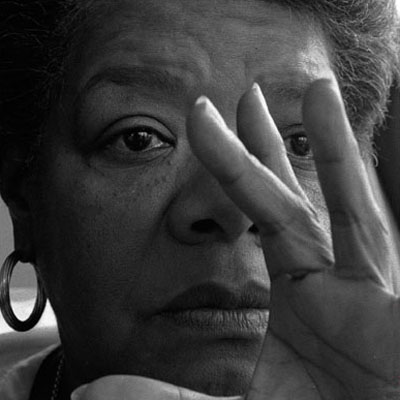
The species are still so innocent that a person who is apt to be murdered believes that the murderer, just before he puts the final wrench on his throat, will have enough compassion to give him one sweet cup of water. 

–Maya Angelou


And, of course, that is what all of this is – all of this: the one song, ever changing, ever reincarnated, that speaks somehow from and to and for that which is ineffable within us and without us, that is both prayer and deliverance, folly and wisdom, that inspires us to dance or smile or simply to go on, senselessly, incomprehensibly, beatifically, in the face of mortality and the truth that our lives are more ill-writ, ill-rhymed and fleeting than any song, except perhaps those songs – that song, endlesly reincarnated – born of that truth, be it the moon and June of that truth, or the wordless blue moan, or the rotgut or the elegant poetry of it. That nameless black-hulled ship of Ulysses, that long black train, that Terraplane, that mystery train, that Rocket ’88’, that Buick 6 – same journey, same miracle, same end and endlessness.

— Nick Tosches, Where Dead Voices Gather


Weren’t lovers interchangeable when you thought back about them? Maybe that was true in the future too…. I always loved odd things: the blue curacao bottle, the wet asphalt, my own insipid fear.

–Darcey Steinke


The writer who loses his self-doubt, who gives way as he grows old to a sudden euphoria, to prolixity, should stop writing immediately: the time has come for him to lay aside his pen.

–Colette

If you have any doubts that we live in a society controlled by men, try reading down the index of contributors to a volume of quotations, looking for women’s names.

–Elaine Gill

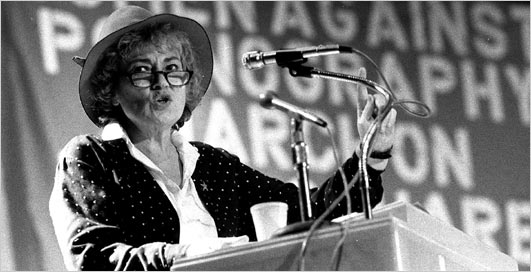
The establishment is made up of little men, very frightened.

–Bella Abzug


Imagine the brain, that shiny mound of being, that mouse-gray parliament of cells, that dream factory, that petit tyrant inside a ball of bone, that huddle of neurons calling all the plays, that little everywhere, that fickle pleasuredome, that wrinkled wardrobe of selves stuffed into the skull like too many clothes in a gym bag.

–Diane Ackerman


You tell me of degrees of perfection to which Humane Nature is capable of arriving, and I believe it, but at the same time lament that our admiration should arise from the scarcity of the instances.

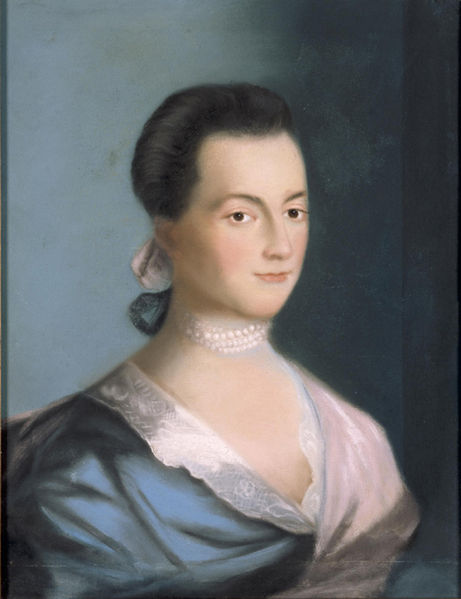
–Abigail Adams (letter, 1775)


Most people go through life dreading they’ll have a traumatic experience. Freaks were born with their trauma. They’ve already passed their test in life. They’re aristocrats.

–Diane Arbus


I would be a socialist if I thought it would work.

–Nancy Astor


 My father warned me about men and booze, but he never mentioned a word about women and cocaine.

–Tallulah Bankhead


I ask the support of no one, neither to kill someone for me, gather a bouquet, correct a proof, nor to go with me to the theater. I go there on my own, as a man, by choice; and when I want flowers, I go on foot, by myself, to the Alps.

–George Sand

And really, the reason we think of death in celestial terms is that the visible firmament, especially at night (above our blacked-out Paris with the gaunt arches of its Boulevard Exelmans and the ceaseless Alpine gurgle of desolate latrines), is the most adequate and ever-present symbol of that vast silent explosion. 

–Vladimir Nabokov


I’m deeply suspicious of anything with a whiff of the New Age about it—not because of the practices themselves, which as far as I can tell from a safe distance may well have a lot to them, but because of the people who get involved who always seem to be the kind who corner you at parties to explain how they discovered that they are survivors and deserve to be happy. I worry that I might come out of hypnosis with that sugar-high glaze of self-satisfied enlightenment, like a seventeen-year-old who’s just discovered Kerouac, and start proselytizing strangers in pubs.

–Tana French

And then, of course, there are these guys:


How about you, sweet ‘Ratis? Have you read a perfect sentence lately?

All Things Remembered

by Zoë Sharp

As I write this, today is Wednesday, November 11th – the eleventh day of the eleventh month. Armistice Day. Remembrance Day. This morning I was in my local supermarket, in a hurry, a thousand things on my mind, buying some flowers for my mother’s birthday. And just as I reached the head of the queue, there was an announcement.

“It’s coming up to eleven o’clock on November eleventh,” said the voice over the Tannoy. “We will now have two minutes’ silence.”

At the Cenotaph, one would expect that. The Menin Gate, definitely. But Sainsbury’s?

The checkout staff stopped scanning items. The customers stopped wandering the aisles. We stood in companionable quiet, without impatience, without agitation, for two minutes.

And then the checkouts lit up again. The murmur of conversations restarted, the rattle of the trolley with the squeaky wheel that I always seem to pick, the mewling of a small child who’d been, until then, strangely silent. (I understand that holding tight onto their nose often has that effect.)

I suddenly remembered a chain email I received from a friend last week. Confession time. I hate those chain emails. I mean, really hate them. They’re usually so full of saccharine sweetness that I go into a diabetic coma just reading the subject line, never mind the contents. Bah, humbug, yes indeed. I don’t respond well to emotional blackmail.

But this one was different.

These are not my words. I don’t claim them to be. I don’t even vouch for their accuracy, only their sentiment. And if anyone knows to whom they should be credited, I’ll gladly add their name into this post.


“The annual Poppy Appeal commenced on October 28th.

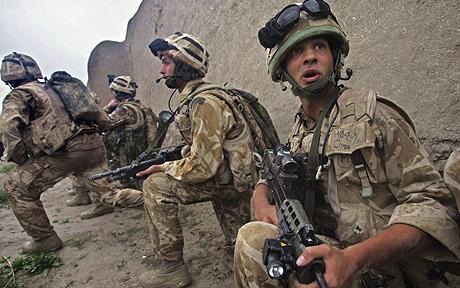
“The average British soldier is 19 years old … he is a short-haired, well built lad who, under normal circumstances is considered by society as half man, half boy. Not yet dry behind the ears and just old enough to buy a round of drinks but old enough to die for his country – and for you. He’s not particularly keen on hard work but he’d rather be grafting in Afghanistan than unemployed in the UK . He recently left comprehensive school where he was probably an average student, played some form of sport, drove a ten year old rust bucket, and knew a girl that either broke up with him when he left, or swore to be waiting when he returns home. He moves easily to rock and roll or hip-hop or to the rattle of a 7.62mm machine gun.


“He is about a stone lighter than when he left home because he is working or fighting from dawn to dusk and well beyond. He has trouble spelling, so letter writing is a pain for him, but he can strip a rifle in 25 seconds and reassemble it in the dark. He can recite every detail of a machine gun or grenade launcher and use either effectively if he has to. He digs trenches and latrines without the aid of machines and can apply first aid like a professional paramedic. He can march until he is told to stop, or stay dead still until he is told to move.

“He obeys orders instantly and without hesitation but he is not without a rebellious spirit or a sense of personal dignity. He is confidently self-sufficient. He has two sets of uniform with him: he washes one and wears the other. He keeps his water bottle full and his feet dry. He sometimes forgets to brush his teeth, but never forgets to clean his rifle. He can cook his own meals, mend his own clothes and fix his own hurts. If you are thirsty, he’ll share his water with you; if you are hungry, his food is your food. He’ll even share his lifesaving ammunition with you in the heat of a firefight if you run low.

“He has learned to use his hands like weapons and regards his weapon as an extension of his own hands. He can save your life or he can take it, because that is his job – it’s what a soldier does. He often works twice as long and hard as a civilian, draws half the pay and has nowhere to spend it, and can still find black ironic humour in it all. There’s an old saying in the British Army: ‘If you can’t take a joke, you shouldn’t have joined!’

“He has seen more suffering and death than he should have in his short lifetime. He has wept in public and in private, for friends who have fallen in combat and he is unashamed to show it or admit it. He feels every bugle note of the ‘Last Post’ or ‘Sunset’ vibrate through his body while standing rigidly to attention. He’s not afraid to ‘Curse and Create’ anyone who shows disrespect when the Regimental Colours are on display or the National Anthem is played; yet in an odd twist, he would defend anyone’s right to be an individual. Just as with generations of young people before him, he is paying the price for our freedom. Clean shaven and baby faced he may be, but be prepared to defend yourself if you treat him like a kid.

“He is the latest in a long thin line of British Fighting Men that have kept this country free for hundreds of years. He asks for nothing from us except our respect, friendship and understanding. We may not like what he does, but sometimes he doesn’t like it either – he just has it to do. Remember him always, for he has earned our respect and admiration with his blood.

“And now we have brave young women putting themselves in harm’s way, doing their part in this tradition of going to war when our nation’s politicians call on us to do so.


“We will remember them.”

And at the bottom of the email were these final words:

“I wouldn’t dream of breaking this chain. Would you?”

So, although I know my day to post this week is a day late for the eleventh day of the eleventh month, but how could I not put these words out there, in the best way I know how, when called upon to do so? Especially as my own main protagonist is ex-British Army, and military or former military characters litter the pages of our novels.

So, ’Rati – this day or any day – who do you want to remember?

Rust Never Sleeps

I am supposed to be a writer, and unless I do a little writing everyday it’s hard to tell that’s what I am.

-Otis Twelve

I turned my latest work in to my agent a couple of weeks ago. And then I did…nothing.

Oh, I still did the newspaper column and the Murderati posts as they came due. Those tend to take about an evening to write and edit. 

But the thing is, I’m what I optimistically call “between publishers” right now. I don’t have editor’s notes to pore over,  or copy edits, or promo stuff to do. I’m waiting to see what happens next. While I wait, I haven’t been doing any fiction writing. I’ve been reading, hanging out,  playing with the new puppy, picking up the guitar again…that’s the good stuff. But I’m also watching a lot more TV and drinking a bit more than is really  good for me.


After a week or so, I began  feeling restless, like there was a tickle in the back of my brain. I know that feeling well…that’s  stories and ideas in the back of my head, scratching to get out.

And I’ve written…nothing.

Because I’m waiting to see what happens next. Or so I tell myself. Sometimes I tell myself I’m just “recharging the batteries”, which I suppose is at least partially true.  However I rationalize it,  I haven’t been working on a fiction project for the first time in five or six years. Even  during the times I was goofing off and feeling guilty about not working on a project,  I was goofing off FROM something, if that makes sense.


It’s ironic, because during this short hiatus,  I’d done a couple of appearances and classes in which I solemnly told aspiring authors  that in order to consider yourself a real writer, you have to write every day. And I meant it, too. Every time I said it, though. those  little mocking voices in the back of my head went “so what does that say about you, you fraud?”


Finally, the other day, I sat down and started to try to write a scene in a book I’d been sort of desultorily outlining while I was finishing up the last one. It’s quite different from what I have out on submission, which in its turn was quite different from anything I’d done before. But I could see it, I could hear it, I could feel it. And if I could do  those things, I could get it written down.

Except I couldn’t. Nothing came. I wrote a bit. I deleted it. I wrote a bit more. I checked my e-mail.  I checked Twitter and Facebook. I went back to what I’d written. It sucked. I deleted it.

I was rusty. After two friggin’ weeks, I was rusty. I’d lost the rhythm  of working every day. It reminded me of picking up the guitar again after a long layoff. When you do that, all the calluses on your fretting hand  get soft and the  fingers don’t leap  right to the notes with the assurance you only get when the memories are engraved into the nerves and muscles through practice. What I was putting down on the page was the literary equivalent of buzzing notes and blown chords.

I’m not worried. Not much. I’m keeping at it, because this new book can be really good.   I know, just like the guitar, I’ll get it back. It’ll start flowing again. But I’m here to warn you:

Rust never sleeps.


So…what’s your longest layoff from writing, and what was the effect? How long did it take you to get your groove back? Readers, have you ever picked a skill up after a long layoff? How did it go?