Author Archives: Murderati Members


First, you need an idea

By Alexandra Sokoloff
I am at Bouchercon, with Brett, JT, Steve, Kaye Barley, and other Murderati regulars.   SO many questions from so many apsiring authors.   But they’ve already made a gigantic leap in their careers by committing to B’Con. 
 
This is something I’ve been talking about and thinking about, here:
When people ask authors, “Where do you get your ideas?”, authors tend to clam up or worse, get sarcastic – because the only real answer to that is, “Where DON’T I get ideas?” or even more to the point, “How do I turn these ideas OFF?” The thing is, “Where do you get your ideas?” is not the real question these people are asking. The real question is “How do you go from an idea to a coherent story line that holds up – and holds a reader’s interest – for 400 pages of a book?” Or more concisely: “How do you come up with your PREMISES?”
Look, we all have story ideas all the time. Even non-writers, and non-aspiring writers – I truly mean, EVERYONE, has story ideas all the time. Those story ideas are called daydreams, or fantasies, or often “Porn starring me and Edward Cullen, or me and Stringer Bell,” (or maybe both. Wrap your mind around that one for a second…)
But you see what I mean.
We all create stories in our own heads all the time, minimal as some of our plot lines may be.
So I bet you have dozens of ideas, hundreds. A better question is “What’s a goodstory idea?”
I see two essential ingredients:
a) What idea gets you excited enough to spend a year (or most likely more) of your life completely immersed in it – and
b) Gets other people excited enough about it to buy it and read it and even maybe possibly make it into a movie or TV series with an amusement park ride spinoff and a Guess clothing line based on the story?
a) is good if you just want to write for yourself.
But b) is essential if you want to be a professional writer.
As many of you know, I’m all about learning by making lists. Because let’s face it – we have to trick ourselves into writing, every single day, and what could be simpler and more non-threatening than making a list? Anything to avoid actual writing!
So here are two lists to do to get those ideas flowing, and then we can start to narrow it all down to the best one.
List # 1: Make a list of all your story ideas
Yes, you read that right. ALL of them.
This is a great exercise because it gets your subconscious churning and forces it to choose what it truly wants to be working on, and with a little help from the Universe you could find yourself writing the next Harry Potter or Twilight. And it gives you an overall idea of what your themes are as a writer (and very likely the themes you have as a person). I absolutely believe that writers only have about six or seven themes that they’re dealing with over and over and over again. It’s my experience that your writing improves exponentially when you become more aware of the themes that you’re working with.
You may be amazed, looking over this list that you’ve generated, how much overlap there is in theme (and in central characters, hero/ines and villains, and dynamics between characters, and tone of endings). You may even find that two of your story ideas, or a premise line plus a character from a totally different premise line, might combine to form a bigger, more exciting idea.
But in any case, you should have a much better idea at the end of the exercise of what turns you on as a writer, and what would sustain you emotionally over the long process of writing a novel. Then just let that percolate for a while. Give yourself a little time for the right idea to take hold of you. You’ll know what that feels like – it’s a little like falling in love.
List # 2: The Master List
The other list I always encourage my students to do is a list of your ten favorite movies and books in the genre that you’re writing, or if you don’t have a premise yet, ten movies and books that you WISH you had written.
It’s good to compare and contrast your idea list with this IDEAL list. This list of ten (or more, if you want – ten is just a minimum!) – is going to be enormously helpful to you in structuring and outlining your own novel. Now, all of your novelists may be wondering why I’m asking you to list movies as well as books. Good question.
The thing is, for the purposes of structural analysis, film is such a compressed and concise medium that it’s like seeing an X ray of a story. In film you have two hours, really a little less, to tell the story. It’s a very stripped-down form that even so, often has enormous emotional power. Plus we’ve usually seen more of these movies than we’ve read specific books, so they’re a more universal form of reference for discussion.
It’s often easier to see the mechanics of structure in a film than in a novel, which makes looking at films that are similar to your own novel story a great way to jump start your novel outline. And just practically, film has had an enormous influence on contemporary novels, and on publishing. Editors love books with the high concept premises, pacing, and visual and emotional impact of movies, so being aware of classic and blockbuster films and the film techniques that got them that status can help you write novels that will actually sell in today’s market.
And even beyond that – studying movies is fun, and fun is something writers just don’t let themselves have enough of. If you train yourself to view movies looking for for some of these structural elements I’m going to be talking about, then every time you go to the movies or watch something on television, you’re actually honing your craft (even on a date or while spending quality time with your loved ones!), and after a while you won’t even notice you’re doing it.
When the work is play, you’ve got the best of all possible worlds.
So go make your lists, and if you feel inspired, let’s talk about some of your results!

Related posts:



What’s It All About?

by Zoë Sharp


As I write this, Bouchercon is here.

And I’m not.

I wish all the best to my fellow ‘Rati who are attending. Have a glass of something non-alcoholic (well, maybe at breakfast?) for me.

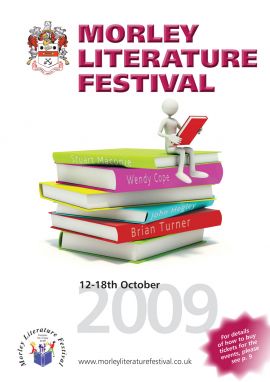
You see, I realised quite a while ago that attending conventions like Bouchercon – and the Morley Literature Festival, which is where I was on Monday evening – is all bound up in what I love about being a writer. How good or bad I am at public speaking is another matter but, like someone who sings loud and lusty in the shower, at least I have a good time while I’m doing it.

I was mentioning this to my Other Half, Andy, while moodily clutching a hot water bottle to my busted rib as I contemplated not being in Indianapolis this weekend, and he came out with a question that brought me up short.

“But what is it you enjoy about actually writing?”

Now, Andy has a perfect right to ask that question, because he has to live with me when I’m trying to wrestle a book into submission, and it’s a long drawn-out and often extremely painful exercise. And when we first met I was only just a writer, with a couple of very minor published articles under my belt. In fact, he was the one who encouraged me to throw in the job I was doing and try writing articles full time. Without his support, I couldn’t have done it at all.

And, for a number of years, I wrote non-fiction with enough success for him to give up his job in turn and join me in the business. I diversified into the photography and we ambled along like that, doing very nicely thank you.

But I’d always wanted to write fiction and that urge kept coming back to taunt me. The sensible plan, of course, would have been to introduce short stories, interspersed with the feature articles I was already doing, and would have been less of a commitment in time and effort.

Well, nobody ever said I was sensible. (Can I draw your attention to the broken rib again?)

And then there was the whole death-threat letters business, which I won’t bore you with at this point. Suffice to say, that episode reawakened my interest in storytelling in general, and crime fiction in particular.

So I wrote a novel, had it turned down, rewrote it a couple of times, and that became my first book, KILLER INSTINCT, which will finally be coming back into print next year from Busted Flush Press. (Woo hoo!) I can’t remember much now about the actual writing process of that book, but I know there were long periods when I didn’t work on it at all. Nothing to do with not knowing what happened next, more to do with being convinced that nobody else would care what happened next.

I don’t suffer from writer’s block. I suffer from writer’s ‘oh-my-god-this-is-the-biggest-pile-of-crap-and-nobody’s-ever-going-to-want-to-read-it’ instead.

And, I admit, I’ve probably had a lot more of those moments since I was published than I had before.

So, why do I do it?

It has to have something to do with wanting to be creative in some way. Creativity is a very difficult character trait to define, and is probably worthy of a blog topic all by itself. But being creative in itself isn’t enough. Photography is a creative art in its own way – finding locations, angles, lighting – and I get a huge amount of satisfaction from being reasonably good at my job, to the point where I’d really be very reluctant to give it up completely because it fulfils a need for physical activity that sitting in front of a computer screen simply doesn’t provide.

Writing is a very focused kind of creativity. It’s not just the putting of words on paper, or I would have been more than happy to carry on writing non-fiction articles. The field was of interest to me and I was making a nice living doing it.

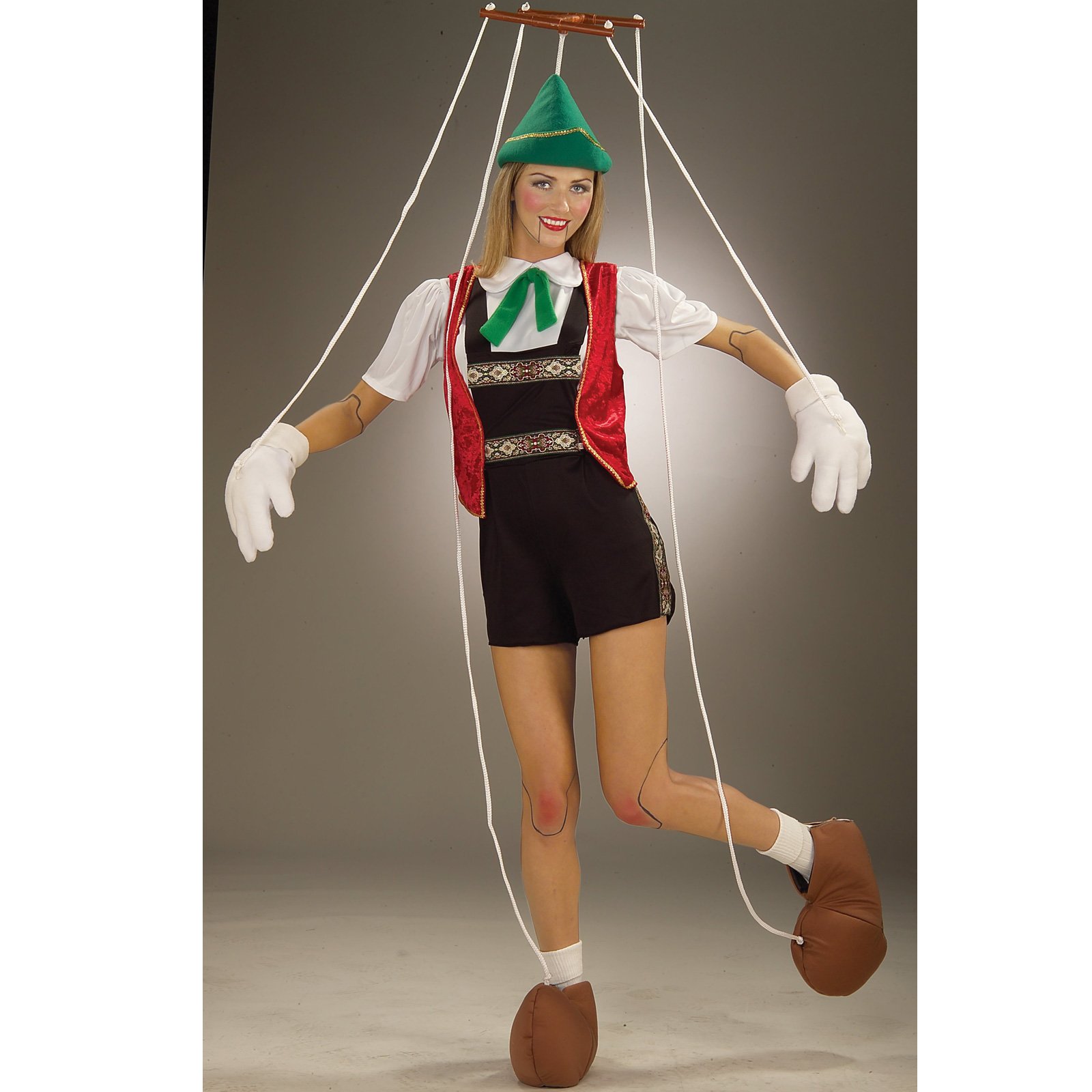
So, what do I actually enjoy about writing a novel? Maybe it’s the business of making ideas live and breathe, feeling them step off the page and speak their thoughts to me, take control of their own actions instead of being puppets who collapse, wholly inanimate, as soon as I stop working their strings.

After all, what child hasn’t harboured a secret hope that their toys come to life when you’re not looking and live lives of their own when we’re not looking? (No? Ah, that was just me then …) But I can still remember as a small child, sneaking up to the toy cupboard and yanking open the door in the hopes that I’d catch them at it, or at least not quite where I remembered leaving them. Hardly surprising the Toy Story movies were such a success.

Writing has to be one of the most difficult and often frustrating things to do. Sometimes, working out the intricacies of the plots makes you want to grab a Black & Decker and drill holes in your own head, just to get the ideas out of there. (No? Ah, just me again, then …)

The days I’ve agonised. The nights I’ve sweated. And at the end of it, someone can dismiss months or even years of effort with a contemptuous flick of the red pen, a dashed-off Amazon review. There are no marks for trying in this game. No quarter given.

So, what DO I enjoy? The business of creating my story and my world, and peopling it with characters who become real and bring pleasure to those who read them? Originally, I thought I was in control of my characters, but I’ve come to realise I’m much more of an observer, putting them down and watching them do things I didn’t plan on and can’t seem to influence beyond a nudge here or there. You can’t shove them into a course of action they really don’t want to follow. Believe me, I’ve tried. That’s when things really do grind to a full-scale halt.

And then we’re back to the agonising days and sweating nights again.

So, at the end of all this, I’m not entirely sure why I write. I just know it’s a compulsion. Something I have to do, however much the process often has distinct similarities with banging your head repeatedly and bloodily against a very stout brick wall.

My question, obviously, is why do YOU do it? If you’re not yet published, what dreams do you harbour for when you are finally in print? What is it about creating a work of fiction that appeals to you so much?

And if you have a good answer, can you let me know?

This week’s Word of the Week is periscian, which is a person living inside the polar circle, whose shadow moves round in a complete circle on those days on which the sun does not set. From the Greek peri, around, and skia, a shadow.

Music and Lyrics and Permissions, Oh My!

by J.D. Rhoades

It should come as no surprise to readers of my books or of this blog that music has a huge influence on me. The titles of the first three books, THE DEVIL’S RIGHT HAND, GOOD DAY IN HELL, and SAFE AND SOUND, come from songs by Steve Earle, The Eagles, and Sheryl Crow, respectively. Favorite tunes are often a springboard for plot points or for whole books, even if the books themselves end up bearing no relation to what actually happens in the song.

Sometimes,  I like to use music directly  in a scene to emphasize or comment on what’s going on.  It’s a cinematic-type effect and a by-product of my own creative process, which often involves seeing the story as a movie playing in my head. Some of my favorite movies use music playing over a scene, or playing or being played by the characters.  Scorsese’s GOODFELLAS, for example, would be a lesser movie if it didn’t have that awesome soundtrack serving as a sort of Greek chorus to the action on the screen.

As an author, though, you have to be careful when using music on the page. It can get a little too cutesy if you overuse it, for one thing. But there’s a more practical concern, namely that getting the permission to use a song  lyric can be a major pain in the ass.

One of the many things that surprised me when I got into the business is that it’s the author, not the publisher, who’s responsible for obtaining (and if necessary paying for) the proper permissions. The first question is, when do you need permission do use bits of a song (or quotes from someone else’s poetry or prose)?  While the US Copyright Office insists that “there is no specific number of words, lines, or notes that may safely be taken without permission,” I’d always heard that two lines was pretty safe. More than that, however, and your  publisher may start to get nervous. There’s a concept called “Fair Use” that might save you, but it’s murky and convoluted even by the standards of copyright law, so just assume you’re going to need permission.

So how do you go about getting the permission you need?  First you have to find the song’s publisher. Note that this is  not the record company, at least not much these days. A savvy songwriter will set up his or her own publishing company, which is the actual owner of the rights to the song, and thus the entity entitled to the money from performances and other uses.

There are a couple of ways to find out who the publisher is. One is to look on the album itself. There’s usually  some fine print, somewhere around where you find the list of tracks on the album. It’ll say something like “All songs copyright Insert Name Here Music.” The other, easier way is to do a search on the websites of the two big music licensing services, ASCAP or BMI.  Let’s try to find who owns, say, John Hiatt’s “Have a Little Faith In Me.” 

We go to the ASCAP site, navigate to the ACE title search page, and plug in the title.

Your title search for “”HAVE A LITTLE FAITH IN ME”” returned 0 results.

Damn. Okay, let’s try BMI.

Whoa. 9 hits.

  1. HAVE A LITTLE FAITH IN ME 531566
  2. HAVE A LITTLE FAITH IN ME 531550
  3. HAVE A LITTLE FAITH IN ME 4945526
4. HAVE A LITTLE FAITH IN ME 531548
  5. HAVE A LITTLE FAITH IN ME 531554
  6. HAVE A LITTLE FAITH IN ME 531560
  7. HAVE A LITTLE FAITH IN ME 3737905
  8. HAVE A LITTLE FAITH IN ME 3907859
  9. HAVE A LITTLE FAITH IN ME 6794630

Fortunately, the first one gives us:

Songwriter/Composer Current Affiliation CAE/IPI #
HIATT JOHN R BMI 61573778
 
Publishers
UNIVERSAL MUSIC CAREERS BMI 539732230

Clicking through the publisher’s name gives us:

CAE/IPI #: 539732230
Phone: (310) 235-4700
Fax: (310) 235-4907
Contact: UNIVERSAL MUSIC MGB NA LLC
DBA UNIVERSAL MUSIC CAREERS
2440 SEPULVEDA BLVD STE 100
LOS ANGELES, CA 90064-1712
http://www.umusic.com

So then you can call, write, or e-mail, tell them you’d like to use a lyric from one of their artists in a book, and ask to be directed to the proper person. They’ll take it from there.

Steve Earle‘s people were great to work with, and let me use a few lines from “The Devil’s Right Hand” for a pittance.  My experience with “Good Day In Hell” was a little different. It was my screw up, actually: I’d put off tracking down the publishers until the book was already being typeset. I found that, since the song was co-written by Glenn Frey and Don Henley of the Eagles, there were actually two publishers that had the rights: Cass County Music and Red Cloud Music. An e-mail to one, however, got me in touch with a very nice lady who let me know she could handle both. However, she said “The guys almost never give anyone permission to do this.” I began quietly freaking out at this point. After a couple of days, she got back with me and said they wanted to see the passage where the lyric would be used. Heart in throat, I sent her an excerpt, along with a note that contained some of my best groveling.  Within a day she’d e-mailed and said “I caught up with them in two separate airports. They say okay, and all they want you to do is make a small donation to each of their favorite charities.” Which I promptly and gratefully did. Mr. Henley, Mr Frey: thank you from the bottom of my heart. In a profession full of jerks and prima donnas, you guys showed real class.

You may decide after reading this that using someone else’s lyrics is just too much damn trouble. Certainly, after the “Good Day In Hell” scare,  I went back and rewrote the scene in SAFE AND SOUND that contained the Sheryl Crow lyrics, because no way was I going through that kind of fear again if I didn’t have to. But if you think the story just won’t be the same without it, start early.

 And, as always, be nice.


The Real Deal


By Louise Ure

On September 22, Joan Rosenthal, a 75-year old grandmother of five and a woman with a passion for reading, was shot dead on her front patio in the upscale community of Tiburon, California. This was only the fourth murder in the town’s history.

She was “dressed the way a lot of us look when we first get up in the morning,” police chief Mike Cronin said at the news conference later in the day. Nothing was taken from the house.

For reasons they haven’t yet specified, the police believe that Mrs. Rosenthal’s death was caused by someone she knew.

Less than a mile away as the crow flies is the home of mystery writer Judy Greber (Gillian Roberts). She was a friend of Rosenthal’s in the way that many Tiburon residents are friends. They would greet each other and chat at the local Safeway, comparing grandchildren’s antics and proclivities. They might run into each other at the Tuburon library: one the author of books there and a presenter, the other an organizer of reading groups and a docent.

But on September 22, all that changed. Joan Rosenthal lost her life. And Judy Greber was assaulted by the unthinking comment of a neighbor, “I’ll bet that would make a good mystery novel for you.”

She didn’t know whether to grimace, grin or slap the questioner.

I understand her reaction. What is it about some people that they don’t understand the distinction between writing about death and deception and having to bear witness to it as part of our lives?

I think I told you that when I was interviewed for jury duty this summer the prosecutor asked me, “How can we be sure that you can tell the difference between what you hear here in the courtroom and what you write on that page when you get home at night?”

“That’s easy,” I told her. “One is fact and the other fiction.”

What I could have said is that one is a mental exercise where I’m creating characters and angst and pathos out of the thin air, and the other is the gut-churning, eye-reddening, sleep-depriving horror of man’s inhumanity to man, reaching far too close to home.

It is true that writers draw inspiration from everything around them. I’m happy to use my neighbor’s squeaky voice, my high school teacher’s illogical mantra, a colleague’s singular tattoo.

But I could never write a crime novel based on someone close to me.

I cannot use that real rape. I cannot depict that real bi-polar relative. I cannot fictionalize a real neighbor’s murder.

It would be akin to posting someone else’s naked pictures online. Sure, you can do it, but only because you have betrayed a trust, because you have taken advantage of special access and abused the privilege.

And it’s a step away from humanity that I do not choose to take.

I can evoke the smell of fresh-spilled blood but I do not wish to imagine that that pool of blood springs from a friend of mine. I can write about violence and abuse but do not wish to paint the faces of my family into those imaginings.

I don’t mean to disparage writers of non-fiction works here. To catalog the descent of a Ted Bundy or The Son of Sam somehow falls into a different category for me. (Perhaps it’s only because they weren’t part of my circle of family and friends.)

Nor do I mean to condemn our fascination with celebrity (Michael Jackson’s or Steve McNair’s murder, for example). But if that celebrity was my step-sister, I don’t think I could read about it.

Call me a coward. Call me empathetic. But do not discuss the murder of a neighbor as if it’s all grist for the mill and tell me “it would make a good mystery novel” for me.

How about you readers and writers? Do you wish to write about a real life crime or violence close to you?  And how would you feel reading about real crimes that have effected people you feel you’ve known?


Turning 40 and Missing Bouchercon

by Alafair Burke

This Friday is October 16, significant to many people, I’m sure, for a variety of reasons.  Odds being what they are, someone reading this is probably having an anniversary.  Or a birthday.  Or a new book published.

According to the handy dandy Interwebs, this Friday will mark a number of important historical events: the guillotining of Marie Antoinette in 1793, the births of Oscar Wilde and Eugene O’Neill, n 1854 and 1888, respectively, the beginning of the Cuban Missile Crisis in 1962, and the launch of Ross Perot’s infomercial in 1992.

But I have my eye on this Friday for two reasons.  First, it’s the Friday of Bouchercon weekend.   There’s no shortage of terrific programming for the weekend, and Friday is chock full of good stuff:   2009 Anthony nominees for short story, like Sean Chercover and Jane Cleland, discuss their work; panels on setting, plotting, and noir (oh my!); talk of police procedurals, PI novels, series characters, and women in the genre; and, of course, Michael Koryta’s interview of guest of honor (and god of writing) Michael Connelly.

 So much for a photo with both Michaels at the same time


I think I just felt a tear roll down my right cheek.  Why?  Because I won’t be in Indianapolis.  Nope, no Bouchercon for me this year.  Why not?  Because the second reason I’ve been eyeballing the approach of October 16, 2009, is that it marks the fortieth anniversary of my birth.  I believe that makes it my fortieth birthday.


When I first realized last winter that Bouchercon fell on my birthday, I assumed I’d go.  Given the timing of the annual conference, I’ve had Bouchercon birthdays before.  I spent my 33rd at that memorable hotel in Las Vegas.  My editor took me off-site to see Tom Jones where I was not the only birthday girl, but was apparently the only one who held on to her lingerie.

But as early 2009 whizzed by and my travel plans went left unmade, I realized I was procrastinating for a reason.  I was trying to guess how I’d feel on the big day.  I was imagining my own future state of mind.  Stupid idea.  Speculating about the future is risky.  Understanding one’s current mood and its relationship to external factors is also imprecise.  Throwing the two together was…well, stupid.

Several months ago, past-me imagined future-me on October 16, 2009, and did not like what she saw:  Me wandering around alone at Bouchercon; sitting at my signing table, saying goodbye to the last person in my modest line as the crowd waiting to see the author next to me tried to mask its pity; sobbing into my martini at the bar as I realized I was officially half way to eighty, well over a third of the way to dead.

Bummer, huh?

Turns out past-me sucks at both remembering the past and predicting the future. 

As Bouchercon approaches, I find myself recalling not those past moments of humble pie (almost) every rookie writer experiences at Bouchercon — meandering around with a hotel map and a conference brochure as the seasoned vets exchange enthusiastic and kissy welcomes and hold court at the bar.  Instead, my mind is flooded with good memories of friendships formed and a love of writing shared: the Reacher Creature parties; that amazing panel in 2006 with Ken Bruen, Laura Lippman, and fellow Ratis, Cornelia Read and Zoe Sharp; the night these guys became my pals and we smiled like people in a toothpaste ad:

Bouchercon Chicago with Ben Rehder, James Born, and Barry Eisler And, although October 16 is still a few days off, it looks like past-me also got the future wrong. I don’t feel like crap about 40 after all.  I have an amazing husband and two kickass jobs.  I get love from good friends and my awesome dog.  I ran twenty-five miles last week, which I couldn’t do when I was 30.  Or 20.  And I live (and get to write about) the coolest city in the world.

If I cried at the Bouchercon bar about entering a fifth decade of this life I’ve got, I’d deserve to get my butt kicked.

Yet for reasons I had months ago, I won’t be in Indianapolis.  I’ll be having a different kind of fun: that husband and a few of the good friends I mentioned will be hanging out at a beach house, frying a turkey.  Today’s me predicts Friday-me will have a fabulous time.

But I’ll miss you folks who are going to Bouchercon.  I hope you’ll use the comments to remember the past or predict the future.  What are some of your favorite Bouchercon memories or most anticipated Bouchercon events?  Feel free to throw in some birthday chat as well.  You never know…Friday-me might need the encouragement after all. 

Public Speaking

By Allison Brennan

When I was six, my mom’s best friend paid me five dollars if I could be quiet for five minutes. In eighth grade I was voted Most Talkative. The senior prediction in my high school yearbook? “Allison Turner will be silent for ten consecutive minutes.”

Public speaking has never been difficult for me. My thirteen year old daughter points out that in the five minutes it takes for the grocery clerk to ring up $300 worth of food, I can fill him or her in with not only the highlights of the week for me and all my kids, but the upcoming highlights–while also finding out what their plans are for the rest of the week. In school, I regularly participated in conversations. (I’m thrilled that my oldest daughter has inherited the opinionated gene from both her father and mother, and when she voices her opinion the murmurs in the classroom are, “Don’t go against Katie, she’s going to win the debate.”) And my five-year-old son will proudly proclaim to everyone he meets that he is, in fact, five; that his brother plays football and his sister plays soccer, and his oldest sister Katie is going to get her drivers license “really soon.”

I particularly love workshops because preparation is minimal. I talk about something I know, have a couple bullet points in case I freeze, take cues from the audience, and engage in lots of Q&A. I love panels, especially small panels with two or three people. Why? Because if they are people you know well and are comfortable with, you can play off each other. Toni and I have done a couple workshops together and they have been a blast and I think well received by the audience. We did one at RWA called “Smart Women, Short Skirts” with SMP guru Matthew Shear and our agent Kim Whalen. The topic? Strong female characters.

[As an aside, I proposed a similar workshop for ThrillerFest. It, too, was lots of fun and I thought well-received by the audience–I had a terrific panel of people, including my buddy James Rollins and debut author Sophie Littlefield who was hilarious–but to be honest? The title they chose lacked . . . something. The organizers wanted all the titles to be in the form of a question–Jeopardy anyone?–and called it: “Should Women Be on Top?” Ahem. I preferred my original title.]

Last year, I gave my first real speech at the Emerald City Writers Conference in Washington. I like speaking; I don’t like writing speeches. I figured I could wing it–have some bullet points and just go with the flow. Unfortunately, others chastised me not writing a speech or even a theme, so during the flight I began to panic. I wrote a damn speech . . . sort of. But it didn’t sound like me. (I know, that sounds weird. But it sounded like what I thought a speech should sound like–and it was way too formal.) So I kept tweaking it and messing with it and came up with something so-so- . . . but when I gave the speech, I realized it wasn’t working–it was all out of order. So I went off on a tangent and basically winged it, but I was so tied to that damn speech I kept trying to get back to it and grew flustered.

[ASIDE: This is one of the many reasons I don’t plot and I don’t write a detailed synopsis–only the bare minimum necessary when either 1) I need to get paid on proposal or 2) the copy department needs something to write back cover copy. But if I write a long, detailed synopsis, I keep thinking I have to get back to it or something’s wrong, even when I consciously try to forget about it, it’s there gnawing at the back of my brain.]

While the speech wasn’t the worst thing on the planet, I wasn’t too pleased. I decided never to give a speech again. Problem solved, right?

Not quite. I’d already agreed to speak at the New Jersey Romance Writers conference. And that’s now only two weeks away.

I’m speaking at the lunch. I think they expect me to be motivational, or smart, or witty, or all of the above. (Lord, help me. Seriously.) It’s a speech, not a conversation. I can’t do Q&A with the audience, however much I would like to. And I probably need a damn theme that runs through the entire speech, or some such nonsense like that.

I’m presenting two workshops at the conference, and those I’m not sweating. One is my Breaking Rules workshop which I always have fun presenting (almost as much fun as my “No Plotters Allowed” workshop.) The other is on romantic suspense with the fantastic Mariah Stewart (my mom just read her last book, ACTS OF MERCY, and said it was absolutely fantastic.)

So I’m good with those. I even have notes from previous workshops so if I get stuck I have something to refer to.

But the speech? 

An idea–could I possibly call it a theme?–came to me after reading a message from a new RWA member who’s recently joined one of the multitude of loops I’m on. She wrote something like, “I’m so excited to find other writers who also hear the voices of their characters and would rather write than eat! I’m so happy that I’m normal.”

This is nothing new. I’ve heard a variation on this statement for years. Writers popping in, relieved that they are “normal” when they thought they were weird or no one understood them. Thrilled to be in a group of people who understand and accept them.

My theme? “You’re not normal. And why would you want to be normal anyway?”

Okay, maybe that’s not a theme per se, but it’s a place for me to start.

I haven’t written the speech yet, though I will. Because I don’t want that icky feeling of failure that I had last year at the other conference. 

But I HAVE started “talking out” my speech, alone, in the car, driving to pick up whoever needs picking up. I’m sort of working it through in my head, very similar to how I think through complex plot points trying to figure out what the heck is going on in my book and how to solve problems my characters have created. So I’m getting comfortable with the idea. And if the speech is any good in written form, I’ll post it here in two weeks, the day after I present it.

I don’t think I’m normal. I don’t think most writers are normal. Thank God. Normal is boring. It’s bland. It has no color. We’re all kind of freaky, and we should be pleased we’re not like anyone else.

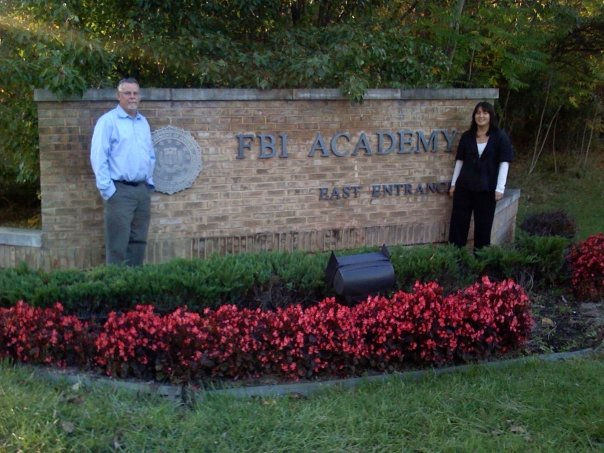
I was talking to an FBI Agent who said that the dinner conversations with his family generally relate to his work, and that his kids will often bring up current crimes to discuss. A medical scientist I recently met shared that her conversations often get macabre and she doesn’t think twice about it since she socializes with people in her field, but sometimes when she ventures out she’s noticed perplexed expressions when she talks about her business. When I viewed an autopsy last year, I finally understood what it meant to “compartmentalize” violence and look at death objectively in order to learn the truth.

Writers tend to think of about things a little differently than most people, and crime writers are often thinking about murder.

Case in point. One day, I was driving my daughter home from practice. It was late afternoon, but not dark enough for headlights. On the side of the road was a large dark green garbage bag filled with . . . something. The way it was positioned, partly obscured by the shadows of the vineyards, coupled with the size and shape and I immediately thought it looks like there’s a body inside.

As I thought it, my daughter said, “That looks like a body.” Then she added, “Do you want to pull over and check?”

Shortly thereafter, my husband and I went to a private home for dinner with a small group of people, including my husband’s boss and his wife. His wife is a fan, and she asked me about my latest book and research. Talking about research is one of my favorite things to do. But I realized that maybe telling her about the decomposing body I saw during my morgue trip–the one that was found underwater and gave me a great visual for PLAYING DEAD–wasn’t appropriate dinner table conversation.

So . . . wish me luck and help me out. Do you have any stories illustrating how you’re not normal? Any fun writer–or reader–anecdotes that I can use (with credit!) in my speech? Do you think you’re normal and I’m the one off the deep end? 

Come Hang With Us in Berkeley!

By Cornelia Read

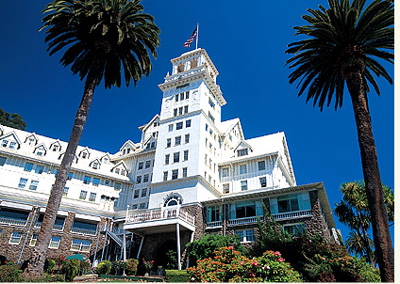
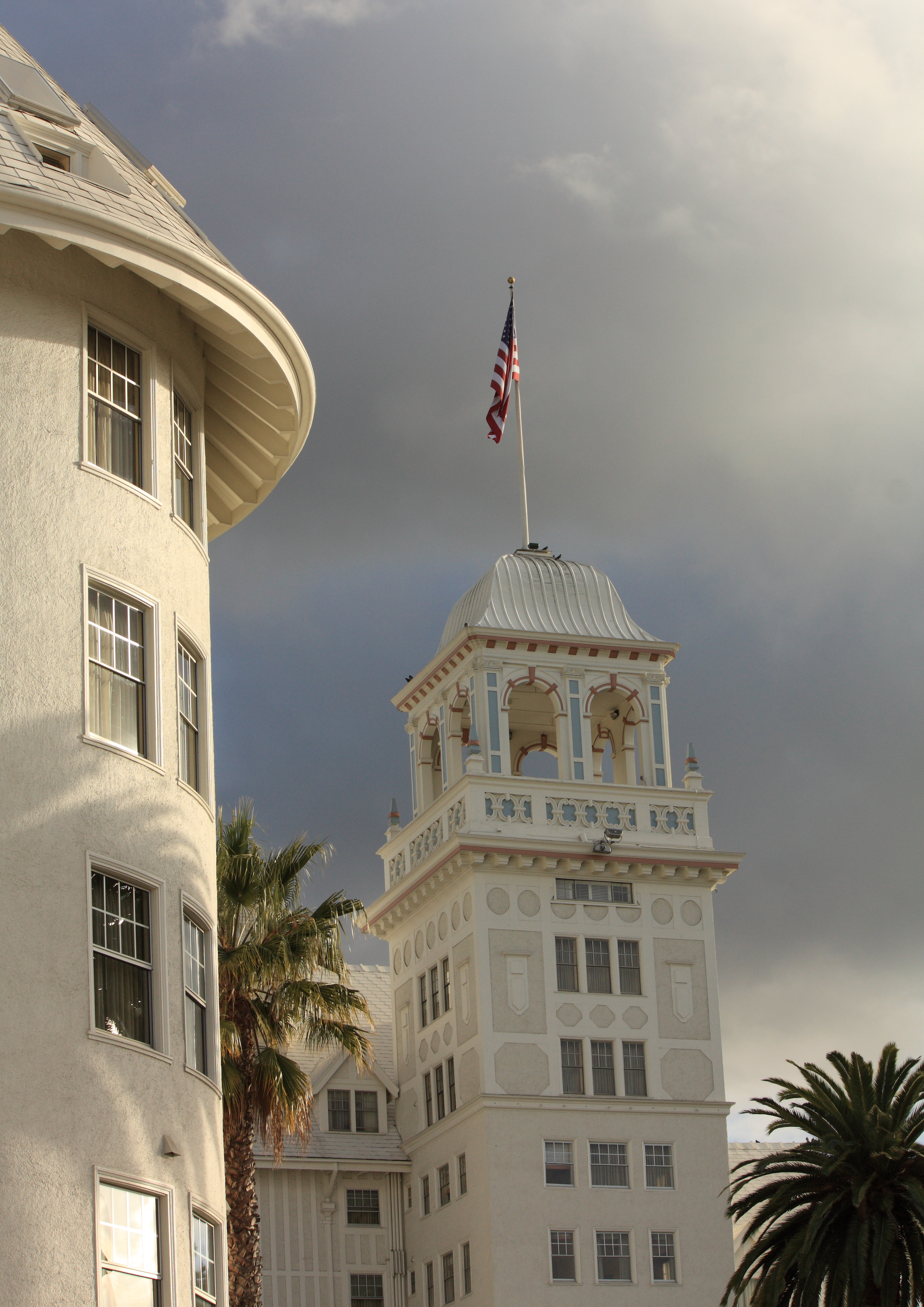
Okay, so this is me, totally shilling for an event, but it’s going to be very fun so I hope you’ll bear with me here. I’m doing a weekend mystery-writing workshop at the really cool and historic Claremont Resort & Spa in Berkeley, California, the weekend before Thanksgiving (November 21 & 22) with an extremely great group of people, and if anyone reading this is working on a crime novel and wondering about the business, I hope you’ll consider joining us.

The Claremont is gorgeous and awesome, and has a great bar. It was built in 1915, and is a AAA Four Diamond kind of place:


(and did I mention spa? There’s a spa.

And tennis. And amazing views of San Francisco Bay. And really, really good food.)

They’re giving us a special discount on rooms for anyone who wants to stay over for the weekend, too. Which is immensely wonderful of them.

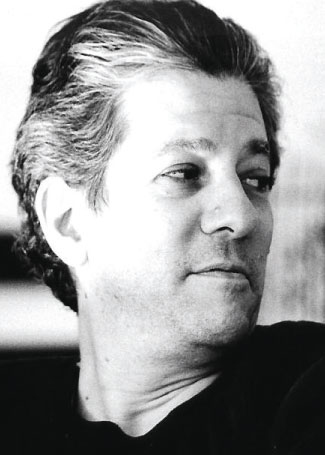
We’re flying in two special guest type people from New York to join the presenters: Peter Riegert, actor/director/screenwriter extraordinaire,


and astonishingly awesome literary agent Barbara Poelle, from the Irene Goodman Agency.

Writers on the faculty include Juliet Blackwell (AKA Hailey  Lind–www.julietblackwell.net),

Tony Broadbent, www.tonybroadbent.com.

Sophie Littlefield, www.sophielittlefield.com

Tim Maleeny, www.timmaleeny.com

and, well, me.

I’m not sure what I look like on stage, but I can tell you that the rest of these guys are smart and funny and wonderful and will give you all kinds of groovy inspiration and insider dirt and food for thought and all that good stuff. We are also going to have a kickass gang of law enforcement pros for even MORE insider dirt on the procedural angles of our writing lives of crime (representatives of both SFPD Homicide and the SF District Attorney’s office.)

Seriously, what’s not to like? You should totally come hang with us. It’s going to be most excellent.

For more info, downloadable brochure, and registration coordinates, please visit http://www.berkeleymysteryworkshop.com.

(Space is limited to 35 people.)


Hope to see you there, and thanks for reading this!

YOU CAN OR CANNOT GO HOME AGAIN…

By Stephen Jay Schwartz

So said Thomas Wolfe, that you can’t go home again.  The place you left when you ran away, when you escaped that provincial town to tackle the big city, it ain’t what it was when you returned after college, hoping for free room-and-board against the punishing kick in the ass life gave you in the form of first-last-security-utilities-parking-employment taxes.  Hey, mom, dad…I’m back.  What happened to my bed?  You’ve turned my room into a…tea parlor?

But the town was still the town and the things you thought were antiquated were seen with post-college eyes as quaint, even charming.  Something you might have actually missed, on occasion.

Then, off to chase the dreams again.  The next time you returned, well, ten, fifteen, twenty years had slipped on by. 

I returned home this past week, to Albuquerque, New Mexico, on my book tour for BOULEVARD. 

Everything had changed.  Nothing had changed.

I grew up in Albuquerque, couldn’t wait to get the hell out when I was eighteen.  Followed my dream to the Pacific Ocean.  Everything about California was superior to everything in New Mexico. 

But as time went on I realized there were a few exceptions.

Like, maybe, the food.  Or, should I say the New Mexican Cuisine.  Where were the blue corn tortillas?  Hadn’t anyone heard of posole?  Or sopapillas?  Why weren’t the waiters asking if I preferred red or green?  The question was heard all the time in New Mexico: 

“Would you prefer red or green?” 

“What’s hotter today?”

“The green is spicier, we got it in from Hatch this morning.  Careful, it’ll burn your lips off.” 

“Gimme the green.”

And what about the sunsets?  Nothing like watching the sun set over the California ocean, sinking into eternity under a clear, aqua blue sky.  Nothing like that to remind me that the best sunsets I’d ever seen were the ones in New Mexico.  Big Sky country.  With giant, puffy, layered clouds kaleidoscoping the color spectrum like an enormous Disneyland above your head, bleeding pink-orange-yellow-red-purple-lightblue-darkblue-darker blue-black as the sun finally, reluctantly, crept into the desert night to produce a sky blacker than space itself, then the sudden sparkling illumination of constellations overhead.  Damn, I missed those New Mexican sunsets.

And I missed the adobe.  Bricks of mud and straw.  The humble roundness of earthen homes, unpretentious, traditional, embryonic.

Why couldn’t I find Navajo and Hopi Indians selling fry bread on the streets of Santa Monica?  Where were the luminarios at Christmastime? 

And where was the weather?  I missed the instant, angry thunderstorms and the lightening that chased its tail across the horizon, the booming thunder ricocheting off giant obelisks of red clay and sandstone.

I missed the tender four seasons—enough snow to build a snowman or catch a half-day skiing on Sandia Peak, a gentle Spring, a warm, dry Summer and zero percent humidity.  Los Angeles was perpetual summer, a Twilight Zone heaven to match the façade of perpetual youth and beauty that graced the beaches on hot December afternoons.

I missed New Mexico.  But when I returned I found it wasn’t the place I remembered.  What I remembered was my childhood.  The people who inhabited it, the relationships I had, my mother, father and sister.  My two dogs and four bullsnakes.  The empty fields and muddy ditches and lizards and crawdaddies I used to catch.  My first kiss, my first girlfriend, my first break-up, my best friend, my worst enemy.  The used, 1972 Mustang Grande my mom bought me for $500 when I was sixteen years old.  Scraping to find 32 cents every day to put just a little more gas in the car, every day. 

I returned to an Albuquerque where my father had already passed on, my mother had moved to Mexico, my sister to Texas.  The two dogs were in two-dog heaven.  The snakes buried in the backyard of what was now someone else’s home.  The fields were alternatively mini-malls or vineyards.  The friends looked like the parents of the friends I knew in high school.  Everything had changed.

And yet, I came home to a hero’s welcome.  A 3/4 page, color profile piece on the front of the book section of the Albuquerque Journal.  A welcoming committee of friends and relatives.  An impromptu headlining act at the local book club.  A full house, sell-out crowd at my signing at Book Works.  The people of the town, the ones who hadn’t left, remembered me and chose to celebrate my success.  They reminded me that, although I had left New Mexico, New Mexico would not abandon me.

I know now that I will move many times during my life.  I will live many places. 

New Mexico will always be home.

How about my little rati friends?  What does home mean to you? 

PS – I’m sorry I’ve been absent from the postings lately—I’ve been on tour and a bit overwhelmed. I’ll be in the air most of Friday, so I’ll sneak in as I can to check on comments.


At Play in the Field––––––

Okay, I know I promised you the second part of my proposal adventure, but it’s currently with my editor and I’m waiting to hear back. Wanted to have that info before I wrote the next segment.

So instead I thought I’d present a short story by the next generation of Battles writers, my daughter Fiona. She wrote the following story one day last spring, and I knew I had to share it with you all. She, of course, has no idea I’m doing this.


THE GIRL THAT CRIED GUN

By Fiona

Once there was a girl in England. She was the biggest liar ever. But one day she said she was a guy with a gun and she cried “help” and everyone came and they go their guns and stuff and then they saw her giggling.

Then one rainy day she really saw a man with a gun and she called “help”! But no one came. And then she ran but then she got shot. And died! And they had a funeral and no one came because she is a big fat liar! Except her mom and dad were there.

And everybody had a party. And no one felt bad or sad.

Remember don’t be a liar unless you want to die.


The End.


Wow…character development, even an arc – you gotta think she learned her lesson right before she kicked the bucket. I love how Fiona titled it “The Girl That Cried Gun” but in the story the girl cries “help.” And that ending…dramatic! Couldn’t make a dad more proud.

The first story I remember writing, though I’m pretty sure it wasn’t my very first, was one about to crime fighting super heroes named Kung Fuey and Chop Suey Louie (original spelling). Their adventure took place in Hong Kong as I remember it. See, I was writing crime thriller set in international locations even then. The…eh…writing was on the wall, I guess.

So what was the title of the first story you remember writing? What was it about?

And, please remember, don’t be a liar unless you want to die.


Your Mattress is Free!!!

I like free stuff.

Who doesn’t?

As a guy who’s about to enter the life of the fulltime writer and, as a result, is abandoning a good chunk of steady income, I’m always on the look-out for things that save me money.  And free is certainly a way to do that.

When I tell some of my friends about the free stuff available to all of us, their immediate response is, yeah, well, you get what you pay for.

There seems to be this odd little bit of psychology going on out there that nothing of any quality is ever given away for free.  There’s either a catch, or the product sucks.

Well, I’m here to tell you that this is not true.  I use really great free products every day in my work as a writer.

OFFICE SUITE

The standard office suite that everyone and his brother uses is Microsoft Office.  If you go to Amazon, you can pick up a brand new copy of Office for only $309.49.  And, of course, since we’re writers and all of our editors use Word, we obviously have to plunk down that three hundred bones just to do our jobs.

Or do we?

Not if we use OpenOffice.org, we don’t.  OpenOffice.org is a full office suite that is completely compatable with Microsoft Office.  I use it every day.  Because it’s open source software, it costs a big fat donut.

That’s right.  Zero.

You can find it here:  www.openoffice.org, or, what I think is a better (and prettier) version, here:  goo-oo.org.  It can be used in Windows, Mac OSX or Linux.

Yes, you can read and write Word documents and your editor will never know the difference.  But your pocketbook will…

BACKUP AND MORE

When I was working on my second book, I was a day away from deadline when my computer decided to glitch out and I lost 30 pages of work.  Doesn’t seem like much, I know, but when you’re in a crunch, it’s devastating.  Believe me.

Worse yet, I discovered that this very same glitch had also erased those thirty pages from all of my backups.  I could go into a long story about why this happened, but I won’t bore you with it.  It was a case of computer glitch and user error (yes, believe it or not, I do make mistakes) — so let’s leave it at that.

Anyway, I was screwed.  I had to completely rewrite those thirty pages and I never did feel the rewrite was as good as the original.  Oh, well.

My backup routine in those days was a combination of saving to network drives, flash drives, and emailing myself a copy with google mail, where everything remains stored forever.

The problem with this system was that it meant that every time I finished working for the day (and several times during), I’d have to stop and do all my backups.  And because I’m a lazy SOB, I found this to be a pain in the ass.

Then I discovered Microsoft Live Sync.

Live sync allows you to save and syncronize documents to a private folder on the web, and between all of your computers.  I can go from laptop to desktop to netbook, whether a Mac or PC, and I’ll always have the latest copy of my book waiting for me.  And, I’ll also have that latest copy on my hard drive.  I no longer have to carry around a data stick everywhere I go.

And guess what?  Live Sync is free.

For those of you who don’t like or trust Microsoft for whatever reason, or you want double backup, there’s a similar service called Dropbox that essentially does the same thing.  And it’s free, too, up to 2 gigs worth of files.  After that you have to get the premium service.

And with Dropbox, you can even access your shared folder with your iPhone.

I could not live without this service.  Anything that allows me not to think about backups is, to my mind, a godsend.

PHOTOSHOP CLONE

In these days of websites and writers stuck doing a lot of our own publicity, many of us just can’t afford to pay the big bucks to special web designers and photoshop experts to dress up our websites and touch up our author photos.

(Come on, now, you know we all touch up those photos…)

Unfortunately, not all of us can afford a product like Photoshop, which is quite a few hundred dollars.

Well, actually, I take that back.  We can afford a product like Photoshop, called The Gimp.  Yes, I know, unfortunate name, but The Gimp is a Photoshop clone that does just about anything you could want when it comes to graphics and photo manipulation.

And, yes, it’s free.

SCREENWRITING SOFTWARE

Want to write a screenplay but don’t want to take another large chunk from your bank account for screenwriting software?  Check out Celtx, which is soooo much more than screenwriting software.  They actually call their product Integrated Media Pre-Production software and you can use it to plan your next movie as well as write it, and can post your drafts for your crew or collaborators.

The software is free.  The posting on their web server involves a monthly charge.  My advice?  Save your Celtx file to a Windows Live Sync folder and give your collaborator a key to the folder.

Or you could pay five bucks a month and use their service.  Seems reasonable to me.

OUTLINING SOFTWARE

I can’t vouch for this one because I’ve never used it, but yWriter is novel outlining software designed to make those of you inclined to organization to have an easier time of it:

Looks good to me.  And, yes, it’s free

You’re killing me, Larry!!!

And this is only the tip of the iceberg.  There are hundreds of free software applications out there and I’m sure some of you here have your favorites.

Anyone want to share?

Actually, all I really want to know is where I can get free beer.