Author Archives: Murderati Members


What’s In A Name?

Zoë Sharp

How influenced are you by the author’s name on the cover of a book? I’m not talking about the latest bestseller, or those authors you pre-order before you even know the title. I’m talking about new-to-you names. People you’ve never heard of before.

I had the pleasure of interviewing fellow crime author Jaden Terrell for my WildCard Tuesday slot at Murderati this week. Jaden’s real name is Elizabeth―and I’m not letting any cats out of bags with that, as she talks about it on the blog. As an alternative, she chose Jaden from a list of baby names used for both boys and girls. It actually means ‘bravery, fighter and believer’, so it’s a great choice for a writer as well as being non-gender specific.

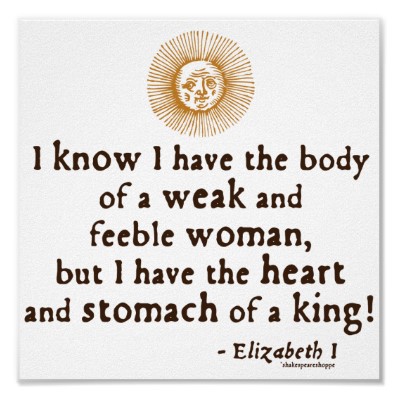
Elizabeth, as Jaden points out, is a very feminine name, and potential readers instantly pigeonholed her as a cosy writer because of it. I wonder if people did the same thing to Queen Elizabeth I of England when she rode out to make her famous speech at Tilbury before the imminent arrival of the Spanish Armada?

Hmm, maybe not.

Still, with publishing these days seen as much from a marketing-the-author point of view as marketing the book itself, possibly alienating a large section of your possible readers before they’ve even picked up your novel might be seen as unwise.

When I first started writing my Charlie Fox crime thriller series, it never occurred to me that anyone would take my name—or my gender, for that matter—into account. Surely, I thought in my naivety, it’s the book that counts. People either like your voice, or they don’t. They like your characters, or they don’t. They like your stories, your eye on life, your descriptive narrative, or they don’t.

But time and again in the eleven years since I was first published in fiction, I’ve heard opinion voiced such as these:

“Oh, women can’t write thrillers.”

“My husband won’t read female authors.”

“What can a woman possibly write with authority about cars/guns/fight scenes?”

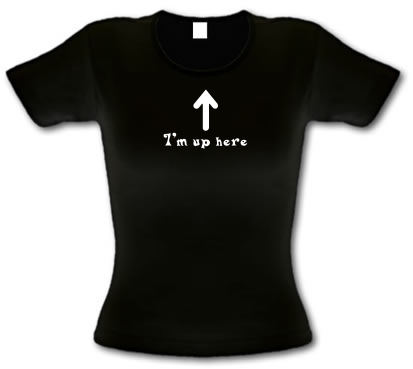
Now, I have always hated being told I can’t do something based on nothing more than the fact I have lumps in the front of my shirt. But, on the other hand, I don’t want to be given artificial prominence (if you’ll pardon the phrase) for the same reason, either.

(Great this, isn’t it? Want one? Find them here.)

I recall having a bit of a verbal set-to in the bar at CrimeFest last year with a particular author who was campaigning for positive discrimination for ‘us wimmin’ and seemed totally taken aback that I would not welcome or accept such help.

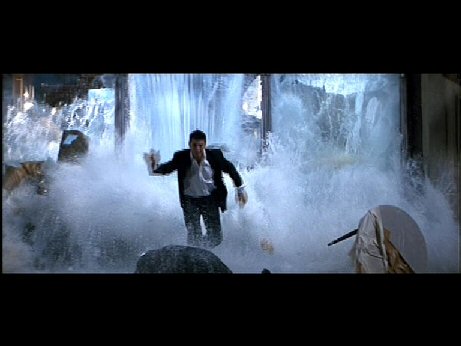
OK, so I’d be very upset (think the same kind of ‘very upset’ as Ethan Hunt in Mission: Impossible I, right before he blew up the aquarium) if I thought I’d been excluded from some prize shortlist, for example, solely on the grounds that one of the judges didn’t like—or somehow disapproved of—female crime thriller writers. But then again I’d be equally annoyed if I thought I’d been included purely because the judging panel felt they needed a token women to round out the numbers. If my work doesn’t stand on its own merits, why would I want such consolation praise?

When I first looked at expanding my repertoire outside the current Charlie Fox series, it was suggested that I might need to use a different pen-name. My first inclination was to plump for something non-gender specific. Not initials, necessarily, but a perhaps name like Jaden which doesn’t give any immediate clues.

After the confusion that the name ‘Zoë’ frequently causes—not to mention the irritating extraneous ‘e’ that people often graft onto the end of ‘Sharp’ like some mutant extra limb—the prospect of a more simple name was quite appealing.

And something short because—as PD Martin pointed out in her comment—it takes up less space on the cover and therefore can be writ larger if necessary. And possibly something that placed me differently on the shelves.

But now I rather think I’ve changed my mind. (Female prerogative, perhaps?)

Some of the comments on Jaden’s post vocalised why.

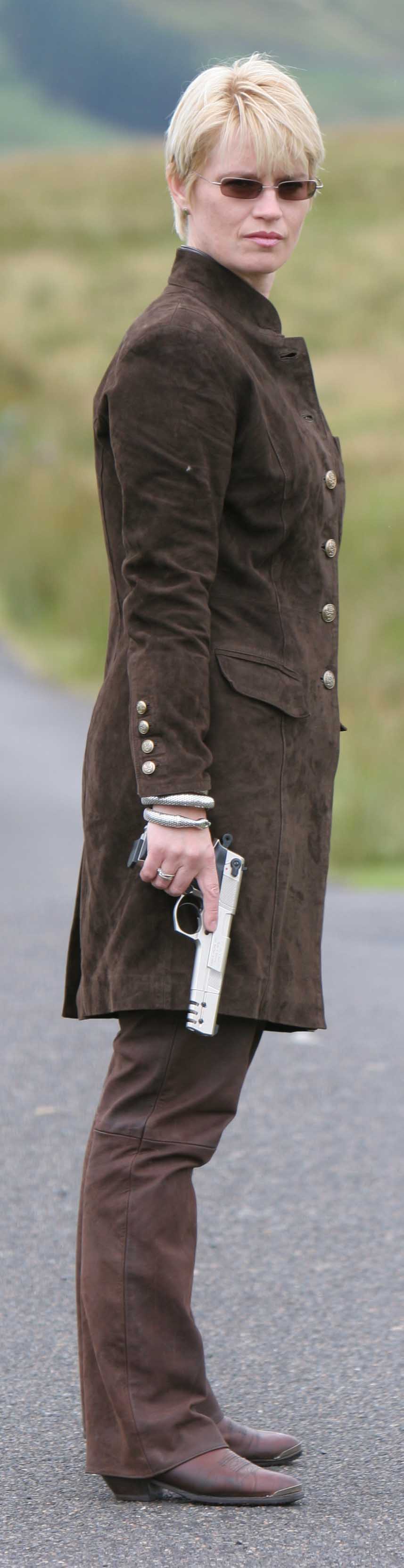
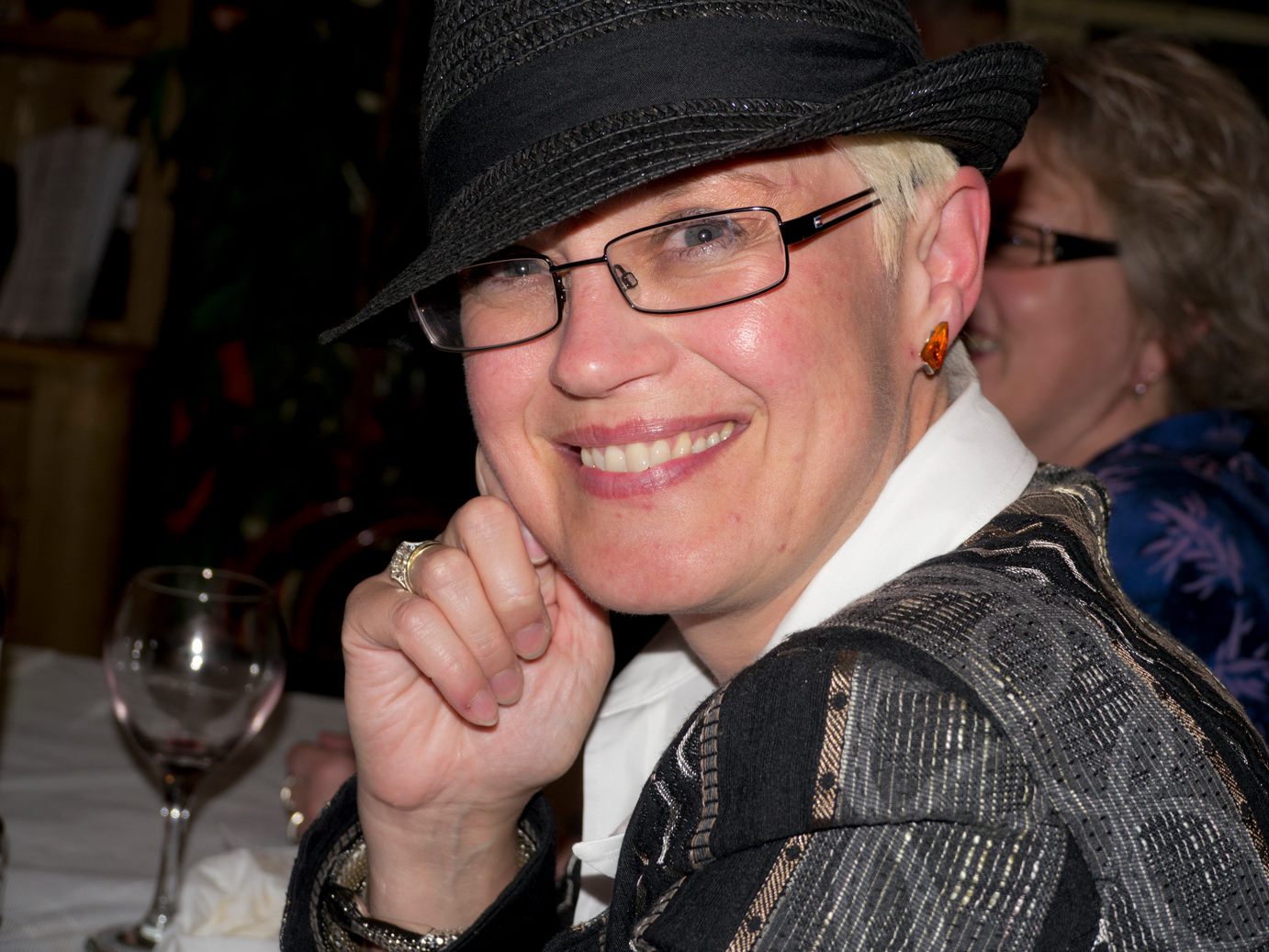
You see, I don’t really want to succeed in my chosen profession by pretending to be something I’m not—i.e. a man, or at the very least some androgynous entity. Yes, I can shoot, and sail, and ride a motorcycle, and strip an engine. But that doesn’t make me a bloke in a skirt, as this pic perhaps demonstrates.

If, as Jaden mentioned, I was writing a first-person male character, maybe that would be different. I loved Robert B Parker’s books, but the Sunny Randall ones were my least favourite, and I think that had a lot to do with the first-person female protag/male author combination.

But Charlie as a character spoke to me in first-person, so that’s how I wrote her. Other characters are talking to me in close-third, so that’s how I’m writing them. And if I’m going the ‘digital original’ route—a wonderful description for which I can thank ex-Murderato colleague, Rob Gregory Browne—then sticking with my existing name is a positive advantage.

Providing I describe the book clearly, so readers know if it’s part of the Charlie Fox series, a new standalone, a supernatural thriller or the first of a trilogy, does it matter?

What do you think, ‘Ratis? Should authors make their gender plain? Does it matter? Do you find yourself leaning towards reading more male writers, or more female writers? And should authors write under different names if they’re crossing different genres or different series, even?

This week’s Word of the week is cavillation, meaning a trifling objection, from cavil, to make petty objections or to quibble.

Serving the Genre, Respecting the Genre, Transcending the Genre

By David Corbett

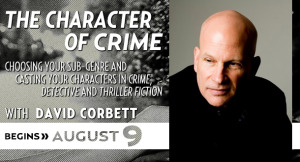
Starting tomorrow, I begin my second class through Chuck Palahniuk’s online writing university, Litreactor. This one is titled The Character of Crime.

The class deals with the importance of knowing your subgenre in order to better understand reader expectations so you can not only meet those expectations but exceed them.

I also stress the need to create characters with sufficient depth and complexity so your story has a chance to achieve not just popular but critical success.

There is still room for four more students in the class, so if you’re interested, sign up now.

I realize I seem to be harping on the same theme as two weeks ago  – the potential for greatness in the crime genre. My apologies if I seem a bore. Two weeks back I was inspired by Don Winslow’s marvelous talk at the Book Passage Mystery Conference. This time I’m just restating my fundamental belief that this is a great genre that owes apologies to no one.

Either way, I find myself returning to a debate we often have in this particular corner of the literary world:

What does it mean to serve the genre, to respect the genre, and to transcend the genre?

I’m normally one of those people who finds the phrase “transcend the genre” more than a little patronizing. It’s so often used to describe the works of literary writers who go slumming in the Naked City to make a few bucks – and who often not only don’t “transcend” the genre, they fail to respect or even understand it.

Literary writers often think of genre conventions as mere formula, and automatically recoil. This is, to my mind, exactly the wrong way to look at it.

Rather, if you’re going to try your hand at a genre and not just wander in as some kind of snooty tourist, you need to know what makes the thing work, and why. Anything less simply reveals your arrogance and ignorance – and it’s been my experience that arrogance and ignorance all too often go neatly hand in glove.

But by saying we need to serve or respect the genre, I’m not saying that we can’t expand our usual understanding of what a crime story can do.

One thing I’ll emphasize in the class: The difference between a good crime story and a great one often lies in seeing in its subtlest, most far-reaching or most profound terms the underlying thematic premise of the particular subgenre you choose.

The detective genre, for example, is fundamentally about: How can we determine the truth?

This idea is as subtle and as vast as you care to make it. It’s no accident, for example, that Chinatown is based on the oldest detective story in the Western canon – Oedipus the King – or that it resonates with the same theme: the intrinsic danger in presuming the truth can be known.

And in Vertigo, Scottie Ferguson doesn’t just solve the crime and overcome his fear of heights, he tracks Freud’s understanding of male sexuality, from the pleasure principle (Babs) to romantic idealization (Madeline) to the reality principle (Judy) – with tragic results, as in Chinatown, due to a fundamental lack of knowledge.

At the heart of every detective story lies a mystery – something that baffles our usual understanding of things – and there is nothing confining the limits of that mystery except the reach of your own imagination.

The crime subgenre, which is more about the battle between police and criminals than about solving a mystery, fundamentally addresses the balance between individual freedom and social conformity.

A world run by criminals would be a Hobbesian state of nature, with no rules, the war of all against all, and ultimate power residing with those who possess money and weapons. A world run by the police would be – you guessed it – a police state, with everyone guilty of something, and paranoia and suspicion underlying every act.

Every society seeks a balance between these two polarities, and the crime story is a great vehicle for exploring what it would mean to move the goal posts in one direction or the other.

You can also ask fundamental questions such as what makes a given act a crime, or to whom do you owe your loyalty, and answer them in as ingenious a fashion as you please. Two great Boston crime writers, Dennis Lehane and Chuck Hogan, do this brilliantly in such books as Mystic River and Prince of Thieves.

Crime stories that feature the criminal as hero – like The Thomas Crowne Affair  – often ask us to reconsider the value of the creative individual in a society defined by compromise, mediocrity, and conformity.

The criminal in such stories is often devoted to excellence – and risk – in a way that others in the society are not. In a very fundamental way, the criminal in such stories is a stand-in for the artist, whose role is every bit as challenging, enigmatic, potentially disturbing – even revolutionary. (It’s no great surprise that real revolutionaries are often described as terrorists or criminals by those hoping to trivialize their political aims.)

Other stories with criminal heroes, like The Winter of Frankie Machine, Goodfellas or In Bruges, achieve greatness by forcing the criminal hero to perform a moral accounting of his entire life.

The thriller, which combines elements of the detective story with the horror story, pits the seeker of the truth against relentless pressure and danger. It shares certain traits with the epic and myth, and like those ancient types of stories it can be expanded to show the individual hero, through great sacrifice and personal transformation, redeeming or redefining the society in which he or she lives.

In other words, the genre is perfectly capable of delivering big themes and great art, and it doesn’t need interlopers to pull it off.

This is something I’ll continue to hammer away at here, in my classes, and in my own work. I love the crime genre. I think more than any other form of story it represents our current mythology on how we live. And if you see it in that context, you can achieve something truly original and meaningful and profound.

* * * * *

So, Murderateros – What crime stories do you think have that spark of greatness?

When was the last time you had to defend crime stories against the snoots?

What themes in the crime story affect you most deeply?

Note: I’ll be traveling again today, and won’t be able to check comments until this evening when I get home on the west coast. Don’t let that stop you from chiming in, though. This community is more than capable of having a rousing discussion without me as room monitor.

* * * * *

Jukebox Hero of the Week: I was visiting the east coast this week, and on Saturday had the chance to visit with former Murderati regular Cornelia Read and her beau, the actor Peter Riegert. Peter shared a clip from a former student, the beautiful and gifted and quite tall Storm Large (her real name, interestingly enough). It’s a number from her one-woman show and I can’t get it out of my head.

WARNING: This track has quite explicit language and a perspective on sex and womanhood some may find offensive. If you think you might fall into that camp, by all means skip it. But if you’re up for it, this is one of the wittiest, raunchiest, most wryly ironic and unapologetically non-PC performances you’re likely to see in quite some time. (Real catchy tune, too.)

Another man’s gold

by Pari

Saturday yard sale. Card tables covered with the detritus of excess — too many impulse buys — no way to make order of any of it:

  Dick & Jane refrigerator magnets
  only-once used complete fondue set (with cans of “eco-flame”)
  the weird wrought iron candelabra given as a wedding gift and so ugly the people who bought it must’ve been feeling hostile that day
  the outgrown silvery flapper dress that was worn for Halloween
  the rollerblades, black with purple trim, bought with the hope of exercise
  boxes of books , hardcover and paperbacks, read and reread

“How much?”
“Would you take a dime for that?”
“Does it work?”
“Are all the pieces in this puzzle?”
“Do you have anything old?”
“What’s this?”
“It doesn’t look like sterling.”

We sit under a 50+ year old Ponderosa pine, its shade enough to drop the temperature 10 degrees compared to the eye-scorching sunlight just three feet away.

Cars pass
Slow down
Swerve to the wrong side of the road.

“You got any furniture?”
“How long you going to stay open?”
“You moving?”

Hours drag . ..  8 am, 9 am, noon . . . The Tabu-scented candle begins to melt, its strong sweet ‘n’ spicy smell evoking visions of lime green leisure suits and bad haircuts.

A car stops.

“You’ve got good books.”
“Really? I’ll take it.”
“I don’t know what I’m looking for, but I’ll know it when I see it.”
“Found it.”

Conversations pass the time and amuse:

An Afghani man shakes his head, his thick slicked down gray hair not moving even a millimeter. In a thick accent (though he’s been in the country since 1991), he says, “The years go by too quickly. Yesterday I was thirteen, today I’m fifty-eight.”

He walks away with nothing, but turns to my kids. “Always listen to your parents. Always! Do what they say. They know best.” He pauses. “Your parents are the only ones who’ll tell you the truth. Young men will lie. They’re all crooks.”

My kids smile politely.

A woman in a long Indian cotton skirt, braless too — as groovy as they come — brown hair hanging down past her waist:  “Oh my God! I can’t believe you’ve got this. You’ve just saved me having to figure out how to make helmets for my Transformer costumes.”

She leaves with four complete sets of bright red Tae Kwon Do protective gear and a custom-made wood and silver hair pin and ten books and a ring.

A neighbor stops by.  “Your signs are too small.”

He puts out bigger ones from his own past sales. More people come.

Most leave with small purchases:

  A pack of playing cards from Russia
  A box of clunky old computer keyboards
  A bag of multi-colored plastic beads . . .

Tonight: Sushi!

______
My question to you:
What did you do last weekend?

What makes you angry?

by Alexandra Sokoloff

Denise Mina is one of my absolute favorite crime writers and a constant inspiration. At a recent Bouchercon (San Francisco) she gave some of the shortest, sagest advice to writers and aspiring crime writers I think I’ve ever heard:


Write about what makes you angry.


It doesn’t take me a millisecond’s thought to make my list. Child sexual abuse is the top, no contest. Violence against women and children. Discrimination of any kind. Religious intolerance. War crimes. Genocide. Torture.

I have long found it toxically ironic that the crimes that I consider most unspeakable: slavery, rape, torture, the sexual slavery of children (including incest and prostitution – the average age a woman begins that life is thirteen), animal abuse – none of these were even worth a mention in the Ten Commandments. Apparently taking the Lord’s name in vain, stealing, and coveting thy neighbor’s wife rank above any of my personal hate list.

And I think the lack of Biblical sanction against those crimes has contributed to society’s continuing and pretty mindblowing ability to ignore those crimes.

And I’m angry about it.

That anger has fueled a lot of my books and scripts over the years. Gar wrote about this recently, and I agree: I’ve always thought that as writers we’re only working with a handful of deep themes, which we explore over and over, in different variations. And I think it’s really useful to be very conscious of those themes. Not only do they fuel our writing, they also brand us as writers. And if you need a hint about what your personal themes are, look to the themes of your favorite writers; chances are it’s theme that’s attracting you more than almost anything else about those books.

So when it came down to creating a series that I could sustain over multiple books, it’s no surprise that this issue came up again as one of the main thematic threads.  With Huntress Moon I’ve finally created an umbrella, an interesting world populated by characters I care about, to explore, dramatically, the roots and context of the worst crimes I know. And at least on paper, do something about it.

But while writing is great to call attention to a problem and explore it, it’s not enough in the face of real, everyday evil. There’s writing, and there’s action.

 I’ve been thinking a lot about child prostitution (more aptly called child sex trafficking) recently as I’m writing the Huntress sequel, because there are characters in Book Two who are in that life. The fact is, most prostitutes start as child prostitutes. Women (and boys) who work as prostitutes almost always begin that life well before adulthood. Kids run away from abuse, usually sexual abuse, at home, and are sucked up into the life by predators: raped, battered, terrorized, and hooked on drugs so they’re kept enslaved to the pimps who live off their earnings. Yes, still.

I’ve worked with some of those kids, when I taught in the L.A. County Juvenile Court systerm, and I find it unimaginable that we just let this happen, and often treat these victims as criminals rather than getting them help to break free.

So today, I don’t want to just get angry about it, I want to do something about it.

I’m very grateful that sales of Huntress Moon have been very good. And since this issue is so much on my mind, I’ll be donating all of my proceeds from today’s sales of Huntress Moon to Children of the Night, a Los Angeles-based shelter which helps children and teenagers in prostitution from all over the country get out of the life.

So if you haven’t gotten your copy of the book and you’d like the extra satisfaction that that money is going to an excellent cause, today’s your chance:

Amazon US

Amazon UK

Amazon DE


Or – take that money and take a minute to donate directly to a cause that’s fighting something that makes YOU angry.

So you know the question today:

What makes you angry?  Do you write about it?  If not, do you think it might benefit your writing to try?

And I’d also love to hear about other people’s favorite charities and causes.

Here are a few more of mine:

Planned Parenthood

Equality Now

Amnesty International

Kiva

And – I just had to mention that Murderati regular, the lovely, talented and deeply insightful Billie Hinton and I are both featured in Digital Book Today’s Weekly Great Reads – you can pick up Billie’s claire-obscure for just 99 cents!

Alex


Just do it!

by PD Martin

I’ve always been the kind of writer who LOVES applying expressions like this to my writing…

  • Just do it!
  • Bum on chair!
  • Focus!
  • Never surrender!

I eat those phrases up for breakfast! (Sorry, I know that’s way too many exclamation marks, not to mention clichés, but they need to be there.)

I’ve also been lucky enough that I’ve never really suffered from ‘writer’s block’. In fact, the hard-ass part of me says writer’s block is self-indulgent. Now, I’ve probably got loads of readers (well, the authors) up in arms at this point. I know there will be lots of people who disagree about writer’s block.

The thing is, I’m not saying there aren’t days (or even weeks) when writing seems harder than normal—sometimes WAY harder. But, I’m a practical kind of girl, so I either write through it (eventually it starts flowing again) and edit later, or sometimes I move projects all together. That way, I’m at least writing. Besides, at this point I know I can finish a novel, so it’s not like I’m going to wind up with loads of unfinished manuscripts. It’s just a temporary focus shift.

I did this earlier this year. My plan for 2012 was to finish my mainstream drama novel and then while I was querying agents, I’d work on my Pippa Dee novels as part of my ebook strategy. But after I sent my mainstream novel to Beta readers, there was one problem I simply couldn’t decide how to solve. There was one character who everyone disliked. But what to do with her?

So I guess that was kind of writer’s block, but it didn’t feel like it because I decided to move on to my Pippa Dee novels while I waited out the decision. I could let it tick over in my subconscious. No way was I going to let it interfere with my productivity. Told you I was practical.  

So I focused on The Wanderer and Grounded Spirits and once they were finished and up on Amazon, I moved back to Crossroads and Deadends. Two weeks ago I finally finished the editing process and started querying agents. Remember my blog on the writer’s rollercoaster?

Anyway, obviously the querying process has taken up a chunk of time over the past two weeks, but I still feel extremely unproductive. And I’ve been bringing out the big guns, internally telling myself to:

  • Just do it!
  • Bum on chair!
  • Focus!
  • Never surrender!

But, to no avail. Well, not much at least.

However, it’s not writer’s block. In fact, when I do spend time on my current work in progress (the follow-on to The Wanderer) it flows very easily and I’m excited by it. But for some reason I’ve really been letting the distractions rule these past two weeks. Facebook, emails, scheduling Amazon freebies, and who knows what else? Where have the days gone?

And there have also been some days, when I haven’t felt like writing or trying to write at all. I mean, the rest of this year I’ve been eating lunch at my desk to maximise my work time. Seriously! With Grace starting school in February this year and my shift to ebooks, this has been my year for working hard.

So what’s going on? Where’s my bad-ass writer gone?

I think part of the problem is when I finished Crossroads and Deadends I was conflicted about what to work on next. My 2012 ‘project plan’ says next in line is The Guardian Arises, book 2 in my Wanderer and Guardian trilogy under Pippa Dee. Problem is, sales of The Wanderer and Grounded Spirits have been such a small percentage of the sales of my PD Martin stuff, that I’ve realised that middle grade/YA fantasy novels aren’t the most popular ebooks. So, from a financial point of view, I probably should work on the follow-up to Hell’s Fury, but that book will take me about six months to write, whereas I reckon I can write The Guardian Arises in six weeks, especially because I’m already 20,000 words in and it’s officially middle grade so will probably be around 50,000 words.

So, how can I get myself back on track? One thing’s for sure. Something’s gotta give. What do you do when you lose your focus and/or get distracted?

By the way, I’m aware that this blog is in sync with some recent ones here. Collective unconscious? Pari’s rebooting, Stephen’s decided to take the writing slower and devote more time to family, and Martyn (Tania) found a change in location the key to kicking his current WIP along. I think maybe the answer for me is to go away for a couple of days without internet. That’d sort me out! 

GETTING AWAY FROM IT ALL (AS IF)

by Gar Anthony Haywood

As I write this blog post, I’m wondering how in the hell I’m going to find a way to post it in time for Wednesday.  Because, you see, I’m on vacation this week, and nothing ever comes easy for me when I go on vacation.

Vacations are supposed to be fun.  An opportunity to put work behind you and do nothing but relax and enjoy yourself for a while.  Travel, eat well, and take afternoon naps by the pool.  Catch up on your reading, maybe even try a few absurdly dangerous things you’d never try otherwise (hang-gliding, cliff diving, etc.).  Laugh and play, and love with renewed vigor, and forget what it was about your chosen profession that had you longing for a vacation in the first place.

The idea is to find your professional “off” switch and activate it, then fill the void only with things that make you smile.  For most people, shutting down their work lives can be as simple as turning off their cell phone and leaving it off.  Disconnect him from his Macbook and smart phone and an accountant becomes just another joe, his head no longer swimming with numbers to crunch.  Drop an attending ER physician on a beach in Maui for a week and see how much time he spends worrying about gunshot wounds and head trauma.  Because the work these people do is only as portable as they choose to make it, they can get on a plane and leave it behind them, whenever the need arises.

Not so the professional writer.

The writer’s lot is reminiscent of that old saying: “Wherever I go, there I am.”  Your work — and all the things about it that make you crazy — is in your head, twenty-four-seven, and you can no more leave it at home with the family dog when you go on vacation than your left foot (assuming you have a left foot).  The writer has no “off” switch, other than sleep, and sometimes even that doesn’t work.  So a writer’s vacation is, at best, a series of momentary diversions from the stresses that are always with him.  There is no complete escape.  You can run, but you can’t hide.

This summer, the family and I are doing a week in Aspen, Colorado, and as you can see, a person looking for heaven on earth could do worse.  This place is gorgeous.  The weather’s lovely, the air fresh and clean (if a little thin) and the scenery is right out of a nature lover’s dream.

So why am I having to work so hard to be happy?

The answer’s complicated, but it all boils down to money.  Paradise is paradise no matter how you slice it, but when you’re doing it on the cheap, it’s a little less so.  The wife and I aren’t here with the kids counting pennies, exactly, but we are keeping an eye on where every precious dollar goes, so corners are definitely being cut.  Most of the time, this is a painless process, since this is the story of our lives back home, after all.  We’re used to making compromises.  But when you’re on vacation, surrounded by people who would appear to have vast fortunes to spend fulfilling their every desire (and that of their children), it’s hard doing without.

Especially when you hold yourself personally responsible.

That writer’s brain you can’t turn off during vacation is constantly thinking about all kinds of things, but one of its most maddening preoccupations is career assessment.  The dreams we hold for ourselves professionally do not feature us questioning our every purchasing decision during the two weeks out of every year we set aside to forget our troubles and live a little.  Rather, these dreams have us playing on vacation with reckless abandon, unfettered by the budgetary constraints we are ordinarily bound by.

A compact for the rental car?  To hell with that, give me the SUV!

The Westin or the Holiday Inn?  The Westin!

Sirloin steak or tacos?  Puh-lease, we’ll have the steak!

Still, limited discretionary funds or no, I’m having a wonderful, blessed time here in Colorado with a woman and two children I love very deeply.  I can’t give them the vacation they deserve, but I can give them a husband and father who will never stop trying to do so.  To writers without a six-figure book deal or Hollywood option money rolling in by the truckload, the cup can always appear to be half-empty, especially when they’re trying to take a break from the grind of writing to relax for a while.

But my cup is most definitely better than half-full, and I know it.

(Oh, by the way: I managed to find a connection to the Internet in time to post this Wednesday morning, so things are definitely looking up!)

Questions for the Class: How well do you fare on vacation?  Are you able to shut everything out and enjoy yourself, or . . . ?

FAUST!

A Wild Card Tuesday Special brought to you by Stephen Jay Schwartz
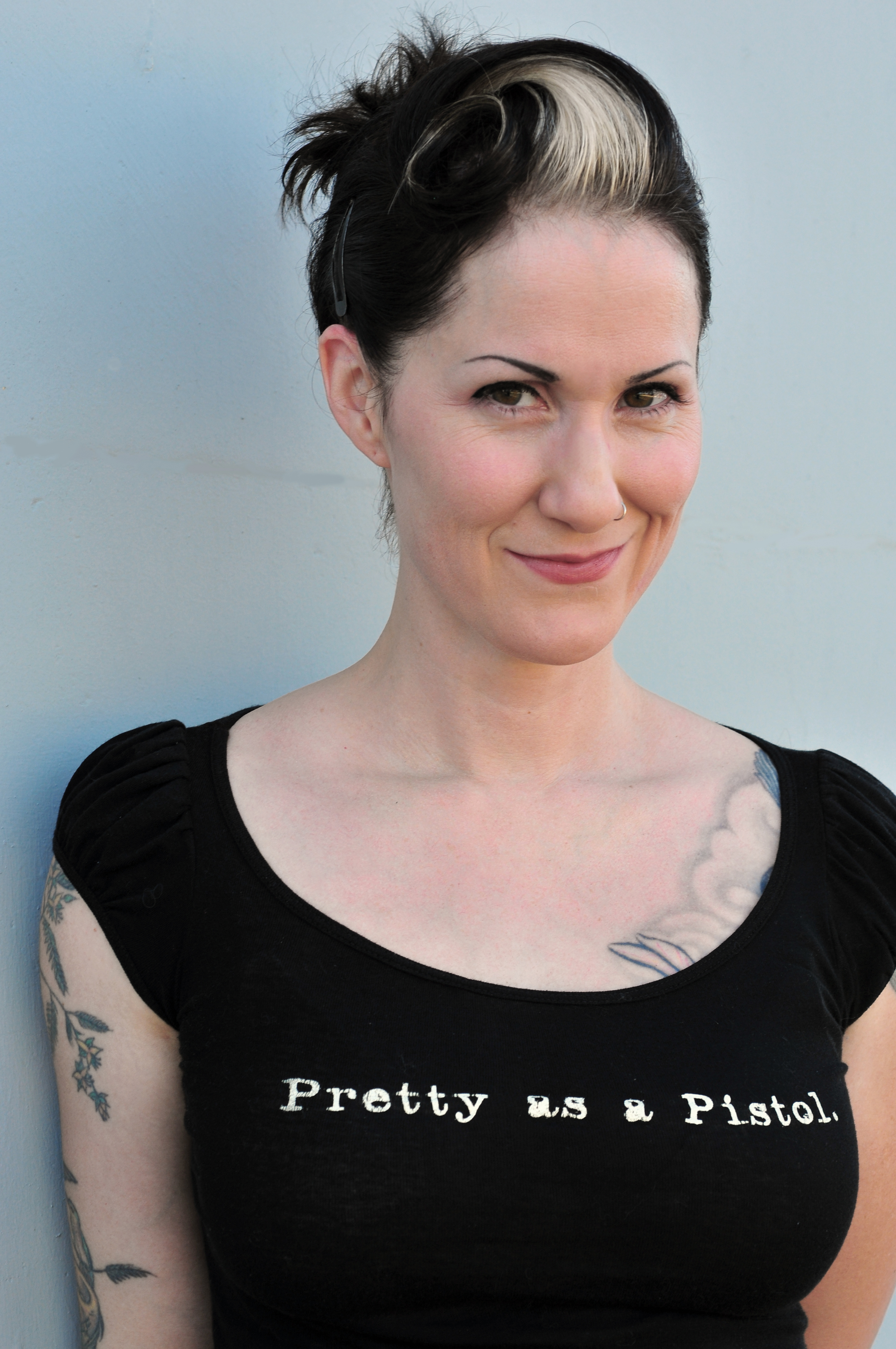
 

You are about to get a real treat. The lovely and talented Christa Faust is in the room.

When I first began my trip into authordom I asked fellow authors whose works I should read. One author’s name came up time and again, and the “must-read” novel was Money Shot.

I read the book and fell instantly in love with Angel Dare, Christa’s kick-ass protagonist. The novel struck me as high-calibre literature, filled with sharp, witty, gritty lines and real, three-dimensional characters with real, three-dimensional problems. Christa’s style is a nod to old, L.A. pulp noir, but her voice is entirely her own. I became an instant fan and told everyone I knew about the gem I had found. (Everyone who hadn’t already told me about Christa’s work, that is).

I can’t remember exactly where I finally met her – it could’ve been Bouchercon, Left Coast Crime, or the Mystery Bookstore party the night before the L.A. Times Festival of Books. I do remember the fanboy grin I had on my face the day I got her to sign my copy of Money Shot, though. I can’t help it, her work evokes that kind of response.

So do me a favor. Check out the interview. Then check out her website, which is about as cool as websites get.

Then buy her books. You won’t be disappointed.

                                                                 *    *    *

Stephen: Christa, you are about as unique as an author gets. There are many of us who play at being tough and cool and hip, but, in my opinion, you're the real deal. You exude a confidence I've only seen in a handful of writers. Have you always been this way? Was there ever a point in your writing career where you were timid and insecure?

Christa: I don’t know about tough, cool or hip, but I’ve always been confident about everything, not just my writing. That’s just a natural part of who I am. It’s not that I think every word I write is genius and that I’m always perfect, I just don’t sweat my own fuck ups and don’t take criticism personally. People are entitled to not like my work and if one guy doesn’t like my book, it doesn’t mean that book is no good. It just means that one guy doesn’t like it.

In this like-button world we live in now, it seems as if 90% of reviews boil down to “this is cool” or “this sucks.” My advice to fledgling writers is not to take either one too seriously. I’m not saying that you should ignore thoughtful criticism from people you trust, just don’t base your sense of self worth on how many people “like” you or how many stars you have on Amazon.

Stephen: How did you get your education as a writer? Did you go to college, study literature and creative writing? How did you develop your style?

Christa: I never made any kind of conscious decision to develop my style. I just tell the stories I want to tell using the voice I have. That voice has grown and developed over the years because I’ve grown and developed as a person.

I did go to college and enjoyed exploring a variety of subjects just to satisfy my intellectual curiosity, but I didn’t learn a single practical thing about being a professional writer. I’ve never had a publisher ask to see my diploma before cutting me a check. The most valuable lessons I learned about the craft of writing were learned on the job, working on novelizations and tie ins.

Stephen: What are media tie-ins and how did you get involved in this arena?

Christa: There are two types of licensed, media-related books. The first is novelizations, like the one I did for Snakes on a Plane. That means that I take a preexisting script for a feature film (often months before it’s even cast, let alone shot) and translate it into prose, embellishing and adding detail and backstory until I reach the required word count, usually 95K.

Tie-ins are books that follow the further adventures of franchise characters, like my novel Coyote’s Kiss, featuring Sam and Dean Winchester from the television show Supernatural. While tie-ins must take into account what has already happened in the existing film or show and what may be planned for the next sequel or season, they are original stories invented by the author.

The most important thing to understand about this kind of work is that, unlike unofficial fan-fiction, it’s licensed and contracted by the franchise owner and you don’t get to pick which characters you will be chosen to write about. Sometimes you might be given a choice between show A or movie B and you are always free to say no to any job if it’s a property you really hate, but you can’t just call up your editor and say “I love Star Wars, so I want to write a Star Wars tie-in.”

As far as how I got into doing this kind of work, a friend of mine got asked to do a tie in and was unable to take the job. He recommended me. I took the job. Once the editors saw that I was fast and solid and could be relied upon to hit those skintight deadlines, they started piling work on me. It was like learning how to swim by being dropped out of a helicopter into the ocean, but that’s how I made my bones as a pulp writer.

The thing I like about writing these kinds of books is the mental workout. It’s like weight lifting for your writing muscles. It might seem simple and repetitive and you’re exhausted  and sore after you’re done, but when it comes time to get in the ring with one of your own original stories, you’re a lean mean writing machine.

Stephen: To my understanding, you were the first (perhaps only?) female author to be published by Hard Case Crime. How did you come to be published by Hard Case and how did it make you feel?

Christa: I am, as of yet, the only female author in the Hard Case line up. Which is not to say that there aren’t other amazing women writing in the genre right now, like Megan Abbott and Cathi Unsworth. I just got lucky and got their first. I like to think that other women, maybe new writers none of us have even heard of yet, might eventually follow in my high-heeled footsteps.

I got asked to submit to Hard Case in a funny roundabout kind of way. I was all fired up about the HCC re-release of the Richard Prather standalone novel The Peddler and so I posted on my blog about it. Ardai read my post and responded saying that I should submit something of my own. I didn’t have anything ready to go, but I turned around and banged out Money Shot in about 6 weeks. To my surprise, he liked it and bought it.

Being a part of that stellar line-up made me feel honored and proud and kind of like a freshman crashing a senior party. I still get such a kick out of seeing my books on the same shelf as some of my hardboiled heroes.

Stephen: You've lived through some pretty fascinating experiences, Christa. Most authors would call that "research," and a handful of us would have to attend twelve step meetings to make up for it. What has your experience as a Times Square peep show girl, a fetish model, and a Dominatrix added to your work as an author?

Christa: It’s funny that you say “lived through” as opposed to “enjoyed” or better yet “continue to enjoy.” While I haven’t worked the peep booths in twenty years and don’t do much in the way of modeling these days, I’m still active in the BDSM scene both in my private life and as a professional Dominatrix.

I see booking pro fetish sessions as kind of like writing tie-ins. You don’t get to pick the characters, but you are still free to be creative and have fun within the confines of that set storyline.

But back to experience and writing, I think everyone’s personal life experiences can and do influence their fiction. But I also don’t think writers should be limited to writing only about themselves. I’m not a fighter, but I was able to write about that world by talking to and spending time with fighters. I’ve never killed anyone either, but I’ve never had any problem writing about murder.
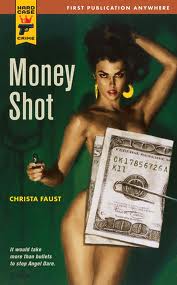
Stephen: Whenever anyone asks me what my favorite novels are I always include Money Shot. Your voice is crisp, authentic and timeless. I've read your early novel, Control Freak, which I also loved, but your voice seems to have coalesced in the pages of Money Shot. How did your style evolve between the writing of these two novels? What influenced your voice in Money Shot?

Christa: As I said earlier, I think my style evolved because I evolved. I was 21 years old when I wrote the first draft of Control Freak. I was pretty green and hadn’t made my bones as a pro. I was reading mostly Splatterpunk horror novels and that influence is strongly evident. As I got older, I found myself reading more vintage pulp and hardboiled novels and falling in love with that genre and it’s tougher, leaner kind of prose. But none of this was planned or on purpose. Mostly I just think it’s a combination of life experience and building up those writing muscles over the past 20 years.

I will say this, Money Shot and Choke Hold are both written in the first person, which probably makes them feel more intimate and immediate.
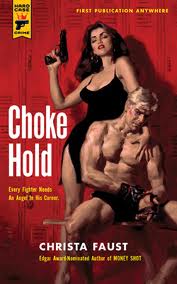
Stephen: Your recent novel, Choke Hold, is a sequel to Money Shot. Will there be more in this series? When can we expect to see the next one?

Christa: Man, I hope so. I don’t have a regular day job so I’m constantly hustling to make the bills. Side projects, tie-ins, teaching, and my BDSM sessions. Unfortunately, I don’t have enough money saved up to take off the time I’d need to work on another Angel Dare book and I’ve never been able to work on two or more books at once. Especially not a more intense, personal project like that. Hard Case Crime is fantastic and Ardai is hands down the best editor I’ve ever worked with, but he doesn’t have a huge budget. The advances aren’t enough to live on. I wish money weren’t a factor, but it is. A writer’s gotta eat.

So if you want another Angel Dare book, buy the shit out of the current Butch Fatale novel, Double D Double Cross.
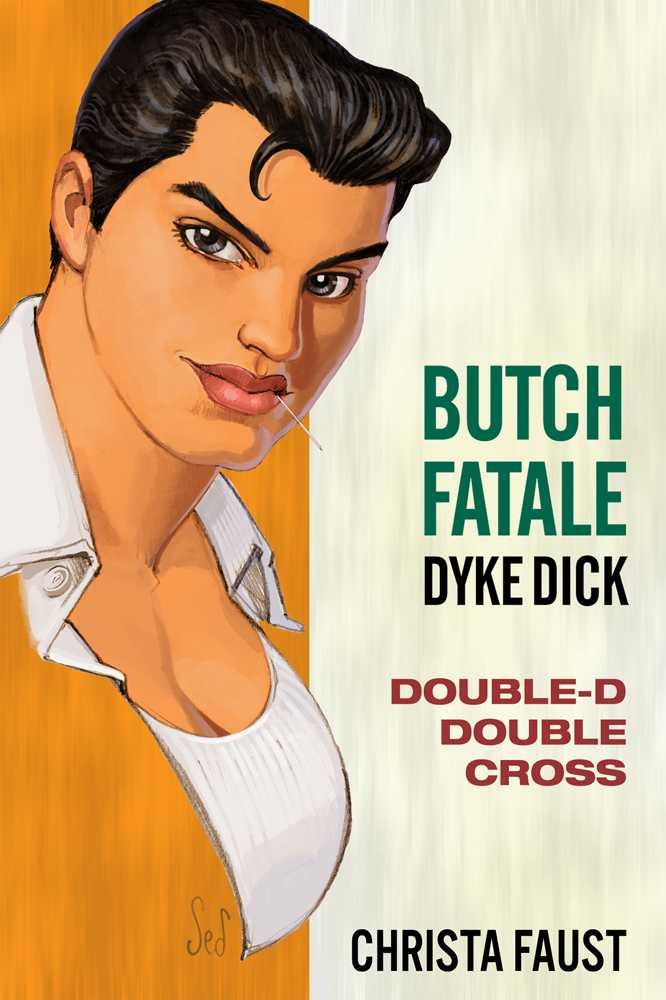
Buy six copies. Tell all your friends to buy six copies. Or your mom. Or your dog. You know the drill.

I’m being facetious here, obviously. But in all seriousness, if you love a writer, support them by buying their work. It seems like basic common sense, but there’s been this unfortunate trend towards viewing writers as a kind of free reality entertainment on social networks. If everybody who “likes” me on facebook or follows me on twitter actually bought a copy of Double D Double Cross, I’d be able to write that third Angel Dare book.

Stephen: Could you tell us a bit about Double D Double Cross? Where did this idea come from? How did it develop? Will it continue as a series?

Christa: The idea for Butch Fatale series has been brewing for more than 10 years. It’s basically my tribute to the Shell Scott novels by Richard Prather. Only I put a butch lesbian in the role of the private eye and I don’t cut to the blowing curtains during the sex scenes.

In most pulp and hardboiled fiction, queer characters are usually villains or comic relief. If they’re main characters, they tend to get cured and made normal or utterly destroyed by their “sickness.” I wanted to make the queer character the hero. And while I was at it, I wanted to entertain the hell out of the reader along the way.

Stephen: Are you experimenting with different publishing platforms? What do you think about the e-book phenomenon?

Christa: A quirky little pet project like the Butch Fatale series seemed like the perfect way for me to test drive the concept of e-publishing. It’s been quite a learning curve, and I’ve still got a long way to go, but I’m having fun with it. Not a kindle millionaire yet, but should be any day now, right?

We really are living in interesting times. What it means to be a professional writer has changed more in the past few years than in the whole rest of my life. It’s exciting and intimidating and challenging and I don’t have any idea where this bus is ultimately going. But I’m going to find out and I hope all my readers will come along for the ride.

Stephen: I've never met an author so fully actualized in life and career. Are you happy? Are you doing what you want in life? What else do you want to do?

Christa: I’d like to be less broke. To be able to spend less time hustling to make rent and focus more on just telling the stories that really matter to me. Healthcare would be nice too. And more shoes.

Stephen: What is a typical day like in the life of Christa Faust? A typical week?

Christa: Write, write, write, walk the dog, write, write, write, foot worship, write, write, sleep. Repeat.

I’m basically a hermit. I spend the majority of my time alone at my desk. Not very sexy or bad-ass, but unfortunately true.

Stephen: What are you working on currently?

Christa: I just kickstarted a second Butch Fatale novel called The Big Sister, which was a whole other new and curious experience in this brave new world of internet-era fiction. In addition to the e-book version, I’m also creating a special Ace Double style paper edition that will contain Double D Double Cross and The Big Sister. I’m hoping to have that one available by December to the people who chipped in to get it off the ground and shortly thereafter to everyone else. You can read more about it here: http://www.kickstarter.com/projects/310000831/butch-fatale-dyke-dick-book-2-the-big-sister 

Thanks, Christa, for giving us a peek into your life and your process as an author! And thanks for sticking around to answer questions from our Murderati authors and readers. We appreciate it!

Location, Location, Location

By Tania Carver

A change of scenery. The chance to go somewhere different, see something we don’t normally see, experience something (or things) we wouldn’t ordinarily experience.  And then, conventional wisdom tells, us we return refreshed, revitalised.  Ready to go on, to re-engage with our world once more.  Yes, we all need a holiday.  That’s the way it goes.

And I completely agree.  We all need it.  But at the risk of sounding solipsistic or even selfish (heaven forbid!) I would suggest writers need it slightly more than most.  And I’m not suggesting just a physical holiday either.  No.  I’m talking about something much more lasting.

July has been a busy month in the House of Tania.  Work things like audiobooks and Harrogate, home things like the kids breaking up from school and getting a new garden installed.  (We soon hope to have the only Aztec Gothic patio seating area around.  Sitting right next to a shed I painted to look like a beach hut in Kent.  We’re nothing if not eclectic.)  But I’m sure you don’t want to hear about that.  Let’s talk about writing, and that change of scenery.

And to do that I’ll start with the audiobooks.  I’ve spent most of the month sitting in a recording studio in North London acting out three of the Tania Carvers.  I enjoy doing it – it’s about the only time I get to flex my old acting muscles.  And of course I think I know best about how they ought to sound.  A view not always shared by the director, Garrick Hagon, but we got there in the end.  It was fun.  I would argue that all writers should do it to their own work at least once because there’s really no substitute for hearing your own voice read your own words.  I know quite a lot of writers do that anyway, read what they’ve written at the end of the day or start of the next one, and that’s good.  But this is a whole step up.  And it makes you aware of just how bad you are.  Sometimes how good you are, but mostly how bad. 

I’ll run you through a typical day.  You get to the studio, sit down and spread your pages in front of you.  There should be no other sound in the room except your voice.  And your voice should make the words live.  How well you do that depends on how well you’ve written and how you can express it.  So then you start.  You work out which scenes need to be read slowly to build up tension, which to go fast with to speed the action along, which parts of the sentence to emphasise in order for the listener to get the most out of it.  Which accent or dialect you need to use for which character.  How they speak, the pitch and tone of their voice.  If you fluff the words, you have to do a re-take.  If you get a name wrong or speak one character’s words with another’s accent you have to go back.  If there’s any noise on the track but your own voice, it’s back you go.  And all the while you’re doing this, you’re making sure your diction is totally coherent and that the listener isn’t being shortchanged.  It’s a lot harder than you might think.  It’s not digging ditches but it is surprisingly exhausting work.  You’re physically exhausted at the end of the working day.  I know of writers who agree to do this thinking ‘How hard can it be?’ and vowing never to do it again.

And the main reason it’s so difficult, I think, is because there’s no place to hide.  There’s just you and your voice and your work.  It’s raw and naked and exposed.  If something’s not right in the writing then it’ll show up.  Unless you’re a damned good actor and you can hide it well.  You’re right up against your own work and it can be very, very scary.  You’ll be amazed at how many times you’ve used the same lines.  Or scene set ups.  Or the same locations.  (Don’t worry, we’re coming to that.)  Or the characters do exactly the same things.  Or worse, behave completely out of character.  Or even much, much worse, have no character whatsoever.

Maybe I’m just being too hard on myself but I don’t think so.  We’re all our own sternest critics, or at least we should be.  I have a long-standing lunch date with another five writers and one of the questions that popped up over food was: ‘Out of all the books you’ve written, how many do you think are any good?’  I won’t tell you the answer, but none of us got into double figures.  Most of us didn’t get to use our other hand.  And that’s a good thing.  We should feel that way as writers.  We should never be happy with what we’ve written.  It’s how we push ourselves on to do better.

But I’m digressing slightly.  Back to the studio.  It’s a very sobering experience coming up against your own work like that.  I remember several years ago while I was recording one of my own books I just stopped talking.  The producer came over my headphones asking what was wrong, why had I stopped.

‘This is shit,’ I said.  ‘I’m sorry you have to listen to this.’

He told me it wasn’t and asked me to keep going.  I was having none of it.

‘Can we cut this?  It’s awful.’

We couldn’t.  We had to press on.  And we did.  But I never forgot that feeling, the response I had to my own work.  And this was a book I had been looking forward to doing, one of the ones I had thought was good.  I went back and looked at it afterwards.  I was right.  It was an awful section and I was embarrassed to have written but it was done, it was there and there was nothing I could do about it.  Except learn from it and not be so boring again.

This time, as I said, one of the things I noticed was how many times the same locations popped up.  Obviously this is as it should be, to an extent, because the books are set in a specific geographical area and I do like to ensure the places in the novels reflect their real life equivalents.  Either good or bad.  But I think there’s a limit to the amount of times you can have the same characters saying the same things in the same locations.  The writer gets bored with that and I’m sure the reader does too.  It’s one of the pitfalls of writing a series – making each book fresh and vibrant and as good, or as original, as the first one.  And we don’t always pull it off, not every time.  But I believe we do try to do that.  Or the ones worth reading do – and I hope to count myself in that number.  But to my eyes and ears the locations began to stand out as the same ones coming round again and again.  And while I do believe in protecting the environment I don’t agree with that kind of recycling.  So something had to be done about it.

With this in mind, when I finished in the studio I set aside a day to go scouting for locations.  I’m sure all writers do this.  Take off in the car with a camera (or iPhone), notepad (or iPhone again) and map (or GPS) and see if you can find a place that’ll strike a chord, somewhere that speaks to you and tells you it wants to be used by you.  In whatever way you want to.  (OK, maybe it’s just me who thinks that way.)  So off I went.  Sometimes Linda and I do this together (and try to discover some good restaurants along the way) but this time it was just me.  And I went to a couple of places where some of the action in the new novel could be conceivably be set.  Looked good.  I found another location that Linda suggested I look at.  I did.  Very atmospheric, very usable.  Then another location I’d had in mind.  Great place.  But the wrong time to be visiting – the new novel’s set in winter.  When I was there everyone was walking round wearing shorts and ill-advised tattoos and eating ice cream.  Still, I got the feel of the place, the vibe.  It felt right for what’s in mind.  And then I went into Colchester, the central location for all the Tania novels.  I’d deliberately kept this till last because I wanted to gauge my reaction to being there in light of what I’d discovered during the studio sessions.  And I was right.  The town just didn’t speak to me like it has done before.  It didn’t invite me to set another novel there.  I know this sounds twattish expecting this to happen, especially since I think those writers who talk about channelling their novels just deserve a good slap. But I honestly didn’t feel it.

So I came home and we discussed it.  And Linda agreed.  And we came up with somewhere else to set the new one.  Somewhere different but familiar because Colchester is a place that means something to both of us and the new location had to as well.  And once we decided that, plotting the book started to fly.  Everything seems to be fitting together so much better.  It’s not like a holiday, not in the physical sense.  It’s something more than that.  For the next few months the place where the book is set is going to be more real than the world around me.  And it’s somewhere I haven’t written about before.  Somewhere familiar but different.  It’s refreshed, revitalised.  We’re ready to re-engage with Tania’s world once more.

Before I finish, a bit of blatant pimpage.  THE CREEPER is about to be released in the States.  Obviously I’d say it was good but don’t just take my word for it.  See what Publisher’s Weekly had to say here


WHERE THINGS STAND

By Stephen Jay Schwartz


I’ve had a lot of people ask when my next book will be out. “What, the book I’m still writing?” I ask.

Well, I hope to have it finished by the end of the year. However, I’m not on contract, so the first place it goes is to my agent, who has to love it if it goes any further. Then he’s got to sell it. That deal will take as long as it takes and then I’ll have to work with a new editor, who may or may not want me to make significant changes. Then he/she must put her/his stamp of approval on the book before the book goes into production. The book ends up on the shelves about a year after that. So, if I finish it by the end of the year it will be another year and a half before it hits the stores.

God, that’s depressing. Will there even be bookstores two years from now?

Or I could go the self-publishing ebook route, like other authors I know. Then I could have the book available a couple months after it’s done. I’d have it out in less than a year.

I haven’t even been thinking of traditional publishing versus ebook self-publishing. I’ve only been concentrating on writing a good book, no matter how long it takes. But it’s been a long time now and ultimately my decision might rest on expediency and control (ebooks) over the glamour of seeing my hardcover in stores and reading reviews from Publisher’s Weekly and Booklist (traditional publishing).

Does not having a new book on the shelves every year mean I’m not in the game?

I don’t know. Now that I’ve learned a little bit about the world of publishing I don’t have the same mad desire to rush my work into publication, the way I did for Boulevard and Beat. I was living on the dream that being published would change my world, that it would bring vast riches and movie deals and an international fan base. I’ve learned that, while these things can in fact occur, they generally take many years and many, many novels in the pipeline. I’m no longer willing to put my friends and family aside to juggle a full-time day job and a full-time writing career that eats every evening, weekend and holiday. My kids are twelve and fourteen now and I only have so much time to be their daddy. I don’t want to be remembered as the guy who lived hunched in a chair behind the night-time glow of a computer screen.

I’ve simply decided to take it slower. And it’s not like I haven’t been working. This past year I wrote and rewrote a feature screenplay on assignment and I had essays and poetry published in numerous print publications, including the “Now, Write” series, “Writers on the Edge” (22 writers talking about addiction), and Gerald So’s “The Line-Up.” I’ve been active in oodles of events for Sisters in Crime and Mystery Writers of America and I’ve committed to projects for Thrillerfest and other organizations. And I’ve written the first full draft of my new novel, which I’m basically tossing into the trash in favor of a new take on the story. So, I’ve been active, I just haven’t finished my fucking novel.

And yet that’s the name of the game, isn’t it? Pumping out the pulps? Everything else seems like busy work. Everything else is a distraction.

I wonder how long I can live on the reputation of my first two novels. A long time, I hope. Because it’s going to be a while before you have another Schwartz book in your hands.

Hopefully, it’s worth the wait. These things, these books, are forever, you know. I think I’d rather write six or eight really, really good books than twenty or thirty novels that blend into one, underwhelming conversation. And that means I’ll probably always have to have a day job. And maybe that’s okay. It keeps the writing pure. It means I’m doing it for the right reasons. I still only want to write novels that I want to write. I can write screenplays on assignment, no problem. There’s no love lost in writing for the screen. It’s just a paycheck and I’ll take it if I can get it. But the novel is my heart and soul. As personal as a saxophone solo in a bebop garage band. No one’s gonna tell Charlie Parker to play a catchier tune. “You know, the kind the fans can sing along with.”

So, the big news is that I’ve yet again changed the venue of my current novel. You know, the one set in Amsterdam? Only I re-set it in Las Vegas a few months ago. Last week I re-set it in San Francisco. I was in the City for a couple days and on the phone with my wife, just rattling off the passion I have for the magical city and then I hear her timid little voice saying, “Maybe you should just set it in San Francisco and be done with it.” And, as usual, she’s right. I love the city, I know the city, I have contacts at the SFPD and FBI in the city. I hooked up with my police friends while I was there and suddenly I was introduced to the Chief of Police and I was invited to sit in on a press conference he held regarding a recent police-involved shooting. I got the red-carpet treatment. And I ran story ideas by my cop friends and they offered the solutions to all of my problems – exciting, new locales in the city, operational secrets, “insider” information. It would take me months, maybe years, to acquire this kind of access in Las Vegas.

It’s a process, man. I’m actually glad I’m not writing on contract now. I’m glad I don’t have a deadline. It’s taken all of two years to discover the story I want to tell. And the book will be better for it.

It takes what it takes to get it right.

And that’s simply where things stand.

What happens at Harrogate (stays at Harrogate)

Zoë Sharp

This is a two-part post, really. The first part has to be about last weekend’s Harrogate Crime Writing Festival, part of the International Festivals and one of the biggest literary events in the UK.

And a hoot. An absolute hoot.

I didn’t go to take part this year, although I’ve been lucky enough in the past to be on several panels. This time, as they say, I went purely for the craic.‡

Rather bizarrely, most of the photographs from Harrogate have me cuddling other authors. It was purely platonic, honest! But it does show in general what a terrific bunch crime writers―and readers―are.

I could mention all the fun stuff that went on, like everybody at our table in the restaurant on Saturday night trying on Russel D McLean’s rather splendid hat. And that included the waiters, too 🙂

I could also mention that I was adopted as a surrogate mum by Katherine Heubeck, Adele Wearing and I think possibly by Vincent Holland-Keen as well (who took the pic above, by the way). Be nice to me kiddies, or everything goes to Battersea Dogs’ Home …

Just in case the tax man is reading this, it was not only great fun, but also an incredibly useful event from a networking point of view. I now have a promised blurb and a swap excerpt for the new series book, DIE EASY: Charlie Fox book ten, which is out in the UK in Oct; I have some terrific advice on graphic novels from Gregg Hurwitz, (pictured with fellow thriller author KD Kinchen) who has a wonderfully British sense of humour; I was asked for several review copies of my books and short stories to be sent out; and I received invites to do five guest blogs or interviews. How lovely is that?

In particular, I found reaction to the news I’d penned a supernatural thriller, currently being test-read, very interesting. Some people were more intrigued than they’ve ever been by my crime thrillers.

Hmm, what does this tell me?

Well, following on from David’s blog of yesterday, it tells me I should spread my wings more. The supernatural story is one I’ve been bursting to tell for years, but something always got in the way. And besides, I was always being told “you’re a crime writer” so I was always careful not to step on the cracks in the pavement, just in case Something Bad happened.

Now, to be frank, I’m not sure I care. I simply want to tell stories about characters in conflict, regardless of whether the cause of that conflict is supernatural, futuristic, psychological or straightforwardly criminal. And when you take the constraints of a specific genre away, the freedom is like a shot in the arm.

My question to you is, what was the last thing that gave you a burst of renewed enthusiasm for what you do? What effect did it have? And why?

And for all of you who heard various things about the ‘Wanted For Murder: the e-book’ panel at Harrogate, which I attended, here’s Stephen Leather’s take on what happened.

The debate is still raging …

Craic is this week’s Word of the Week. It means news, gossip, fun entertainment and enjoyable conversation, particularly used in Ireland, having been borrowed from northern English crack, meaning news or conversation, and then reimported with the far more attractive spelling of craic. This also helps differentiate it from the new slang meaning of crack, as in crack cocaine

And finally, our own talented PD Martin, writing as Pippa Dee, has penned a spooky new tale:

A tortured face, a haunted hotel and an obsession to solve the mystery. GROUNDED SPIRITS is part ghost story, part mystery and part historical fiction—set in Ireland in both the current day and the 1820s. For the next two days, it’s free on Amazon! 

The story is based on a real hotel in Ennis, Ireland, that is rumored to be haunted. The painting described in the story does, indeed, exist—a photograph of the tortured face is included in the book and that face appears on the book’s cover (to the left).

Download it quick while it’s free!

Amazon US

Amazon UK