Author Archives: Murderati Members


The End of the World as We Know It

by David Corbett

Today’s post is largely just to pose a few questions and get a conversation going. So I’ll try to make my windup brief.

A week or so ago I treated myself to a summer movie, Searching for a Friend for the End of the World, the story for which is only too aptly captured in its title.

I enjoyed the picture quite a bit, partly because it’s cleverly written and charmingly acted and deftly directed, partly because I have a mild crush on Keira Knightley, but mostly because what the film got right, in a number of truly funny and poignant scenes, was the variety of ass-backward ways we deal with love in the face of the inevitability of death. I’m a hopeless romantic and the idea of true love in the face of total annihilation has a certain resonance for me. I cried. More than once.

Then over the weekend I noticed that Showtime was playing 28 Days Later, a film I also very much enjoy, for much different reasons, even though I’ve never seen the whole thing. I’d watched it from the midpoint to the end, and this weekend got to watch from the beginning to the midpoint. In my head, it all makes sense now. I think.

But these two films got me thinking about the end of the world as a story motif. Perhaps I’m wrong, but there seem to be a great many apocalyptic scenarios cropping up in the narrative ether these days, from all manner of zombie fare to games like Wasteland and I Have No Mouth and I Must Scream (based on a Harlan Ellison short story), to films such as I Am Legend and Melancholia and Children of Men to literary novels such as Cormac McCarthy’s The Road, José Saramago’s Blindness and Margaret Atwood’s Oryx and Crake.

Even comedians have gotten in on the act — what greater pratfall or punchline can there be than self-inflicted extinction:

Of course there’s a long tradition of such stories, reaching back to Gilgamesh and Genesis to the constanly recycled Book of Revelations, interpreted anew by each generation. In the modern era H.G. Wells rejuvenated the secular approach, kicking us along through two world wars to the nuclear era, which gave earth’s utter destruction a real shot in the arm.

One might have thought the tempo would have decreased after the end of the Cold War, but the opposite seems to be the case. Nuclear Armageddon just began sharing the stage with virulent pestilence, environmental devastation, alien invasion — or the old standby, man’s monstrous egotistical stupidity.

Perhaps the most intriguing thing about such stories is they’re never really about the end per se. (Though the ones that are about the real end seem to stick with us longer.) Most such films are about the apparent end, and serve as cautionary tales. There but for fortune, they seem to say. Or: There but for the hero.

I’m going to propose a few theories for this, all of them utterly non-scientific. Then I’m going to ask folks to chime in with their thoughts on whether we are truly obsessing over the end of the world more than ever, and if so why. Or is this a theme as old as man, and we’re just churning out the most recent iterations.

Who knows, maybe it’s just in the air. Stories beget stories. The more we think about something the more we keep thinking about it. Picture it as a kind of narrative snowball. Rolling all the way to hell.

Regardless, here’s my top ten theories for why we’re now (more than ever?) obsessing about the apocalypse:

  1. The American Dream is disintegrating into a Hobbesian “war of all against all,” a period of radical historical transformation, that we symbolically understand as “the end of the world.”
  2. The Mayans were right.
  3. The end really is nigh, and our animal brains or our intuition or the Collective Unconscious or whatever understands this, and is trying to alert our conscious selves so we can spiritually prepare for our collective demise.
  4. The dogs are taking over.
  5. In an era of relatively few wars, and relatively minor ones (to all but the combatants and affected civilians, obviously), plus a worldwide economic downturn no one seems to know how to solve, severely restricting a ravenous consumer culture, people need some form of violent outlet to expiate their guilt and shame for having been so consumed with self-gratification. The apocalypse, with its savage violence and moral message of good versus evil, serves the symbolic need for cataclysmic violence, cultural upheaval, and moral certainty.
  6. The UrGod Demon Slavengorg has escaped the Tunnel of Doom, and now seeks revenge against the Sybarite Prince Ramalama and all those who have served him so blindly (read: us).
  7. The planet’s climate is changing so dramatically that our bodies—and thus our unconscious minds—are trying to alert our habit-besotted brains that a real different tomorrow is right around the sweltering bend.
  8. We’re constitutionally, psychologically, biologically and culturally ill-adapted to change, evolution be damned, and as we enter a period of rapid, devastating and unpredictable change — including the end of mainstream publishing as we know it — the uncertainty of our fate creates a profound anxiety that we relieve through creating nightmares we can control.
  9. The Boomers are aging, and this is their way of processing their collective, generational demise.
  10. The cats are taking over.

* * * * *

What do you think, ladies and gents?

Why can’t we seem to get enough of the end of the world?

What’s your theory?

Better yet, what’s your favorite end-of-the-word book or film or video game? Why?

* * * * *

JukeBox Heroes of the Week: Who else, what else? (Incidentally — I used to think the lyrics went, “It’s the end of the world AND we know it. Quite a different message there.)


Rediscovering an old love

By PD Martin

For today’s Wildcard Tuesday, I wanted to look at rediscovering old loves—not lovers (!), that’s an entirely different sort of blog 🙂

I’ve been thinking about this a lot in the past week, as I prepared to go skiing for the first time in over 12 years. Maybe longer, actually. I thought it had been 10-12 years but if I do the maths it’s probably more like 14 years. That’s a long time. Particularly given I used to LOVE skiing.

So, what stopped me from pursuing my love? I’m afraid it’s plain and simple – money. In fact, if I had money, I’d definitely ski every season, probably several times a season. I’m not sure what skiing is like in other parts of the world, but here in Australia it’s an extremely expensive pursuit. A day lift pass at Mt Buller is $108, then there’s ski rental, clothing, accommodation, etc. etc. Not really in the budget of most authors.  

This trip was actually spurred on by my daughter and my dad. Grace has wanted to ski for a couple of years (since she was 3), and Dad was going up (also for the first time in 10+ years) with his new wife and step daughter. They made me an offer I couldn’t refuse; they’d pay for all of Grace’s expenses, including ski school. And so, we planned our two-night, three-day trip.

It was Grace’s second time ever seeing snow and her first time skiing. I hoped she would love it, but we took it easy, booking her in for the afternoon session on the first day. I warned her that falling was part of skiing and not to worry about it! But she’s not very fond of falling, so I was worried it would completely put her off.

It felt a little weird leaving her in the ski school. While Grace does go to school now, she’s never been to day care or a holiday program – the benefits of working from home. However, once she was settled I hit the slopes. I had two hours of skiing time to myself.  After only two green (easy) runs, I felt ready and confident enough to hit the blue (intermediate) slopes. I should say, I was never an advanced skier, mostly because I would only get up for a couple of days a season. That money thing again. So I was always a blue run girl, rather than a black (advanced) skier.

Anyway, it was definitely a case of rediscovering an old love.  We were blessed with the weather … blue skies and sunshine. I only had two hours that first day, but I made the most of it up on the top of the mountain before heading back to pick up Grace. Then Grace went on her first ever chairlift with me, and I took her down a long (easy) run. I was glad that the skiing process had come back to me enough that I felt confident taking her down with me. And she LOVED it. It also gave her the incentive to learn to ski, because she wants to go down the mountain fast like Mummy.

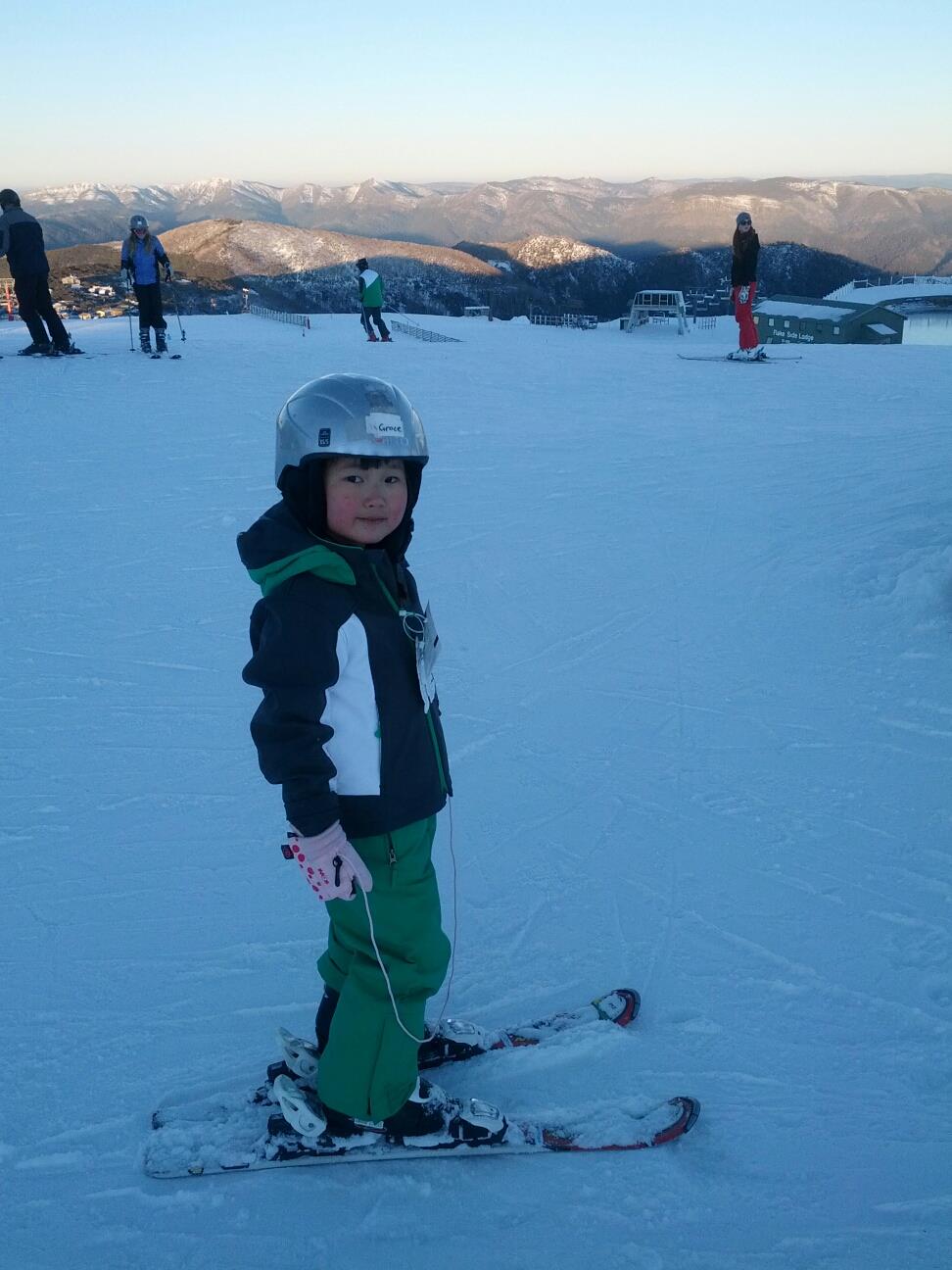
The next day she was keen for an all-day lesson (9-3.30). I dropped in on her a few times and got some great video of her learning to snow plough. In the afternoon it was up the chairlift with her again for a hot chocolate with my dad, then up a little higher on the mountain. This was when this pic was taken.

So, I’ve rediscovered an old love. I’m not sure when I’ll be up again (comes back to the lottery/best seller solution) but I hope it won’t take me another 14 years.

Are there any old loves you’ve re-discovered? Or perhaps something you want to re-discover?

Virtual Everything

by Pari

A few years ago ebooks and self-publishing scared me.  I handled my confusion and fear by rejecting them all in the name of “quality” and the benefits of “traditional” publishing. I felt superior somehow; that crazy, new-fangled technology had to be fringe. By gum, it was just too kooky to really take hold.

Boy was I wrong.

And I’ve completely changed my mind. Now I want to learn how to format my own works so that I can bypass traditional publishing completely. Yep. That’s a dramatic pendulum swing. I suspect I’ll come back a bit by the time I settle down and really start publishing again.

Ah, technology. Gotta love it.

However, for those of us  — of a certain age — a battle continues to wage. We’re unwilling Luddites, too intimidated by many new technologies to embrace them and too embarrassed to know where to seek help. I don’t know how many of you have seen the Saturday Night Live mock commercial about the middle-aged guy who walks into a Verizon store

. . . well, it’s painfully accurate.

I doubt I’d have a cell phone if my work didn’t pay for it. I have a Twitter account that I never use b/c I keep expecting something newer, faster, etc etc to come out any second. I’ve signed up for virtual bill paying for some of my utilities, but still end up paying almost everything by a check in the mail. I think I have a PayPal account, but am not entirely sure I do. And so it goes . . .

The worst part of all, I can’t help but feel that the entire world is leaving me behind in the virtual dust of my ignorance.  I don’t want to be a stick in the mud, but I don’t have any idea how to pull myself out without stripping off all of the bark  or breaking.

So I need your help.

First a couple of questions:

  1. What percentage of your  total bill paying, marketing etc do you do online?
  2. What convinced you to do that much (or little)?

And now for your advice:

  1. Where would be a good place for me to start becoming more tech-literate?
  2. Which would you start with first:
    1.  virtual bill-paying
    2. e-baying
    3.  self-publishing?
    4. Can you recommend a blog or source where I can get info that doesn’t sink into jargon after the second sentence?

I may be away from the computer a lot today and tomorrow, but I’ll respond to comments by Wed afternoon at the latest.

Thanks!

My e publishing decision

by Alexandra Sokoloff

Sometimes synchronicity just hits us here at Murderati – I’m so glad for P.D.’s post yesterday because I’m able to provide the flip side view today! Almost as if we planned it…

I’m sure everyone here at Murderati has noticed more and more e book posts creeping in alongside the craft ones.  Personally I’m thrilled to see it; I’m always very much about being practical about craft. I think writing is a marvelous hobby, everyone can benefit from doing it, and I strongly believe just writing is just fine. But if you are going to go through the agony of writing an entire book, a real, finished book, don’t you want at least the possibility of getting it out there in the market, for others to read and experience and for you to make money for your labor?

I myself plan to get much more hardcore about about publishing and e book issues.  Partly because it’s astonishing to me how many writers and aspiring writers still have so many misconceptions about e publishing – and there is a LOT of misinformation out there. (As my last workshop class knows,  I was outraged enough about this to teach an impromptu e publishing seminar in the middle of our writing intensive last week!)

The fact is, a very large number of the authors I know who started out in publishing at about the same time I did (2007) have made the leap and are now e publishing directly – either exclusively so or in conjuction with traditional publishing contracts.  My friends and wonderful authors Blake Crouch, Ann Voss Peterson, CJ Lyons, Elle Lothlorien, not to mention present and former ‘Rati  Zoe Sharp, Brett Battles, Rob Gregory Browne, and JD Rhoades are just a few who are doing VERY well with e publishing. Friends who started even earlier are doing even better (Scott Nicholson, Diane Chamberlain, Sarah Shaber and of course Joe Konrath, whose Newbie’s Guide to Publishing is a must-read.). In a few short years, e publishing has filled retirement funds for older writers and elevated midlist authors to bestselling – or rock star! – status.

And now that I have several of my traditionally published backlist titles up as e books and the sales numbers are coming in, it’s clear to me that at least THIS YEAR, e publishing is the right choice for me.

How do I know this?  Well, one of the amazing things about e publishing, for those of us who are used to the cryptic and essentially useless sales reports that we get quarterly – maybe – from our traditional publishers – is that now we can see exactly how many copies of each book we’re selling and exactly how much money we’re making per month.  This is a VASTLY easier way to ensure that you’re making a real living, and it takes huge amounts of anxiety out of the process.  Plus you get paid every month, instead of when your publisher gets around to it, which is a vastly easier way to keep up with the bills, if you see what I’m saying.

E publishing has made making a practical living a much more realistic proposition for authors who are not (yet) bestsellers in traditional publishing. I don’t know how long that will realistically last, whether it will get better or worse, but by now, for now, it’s unignorable.

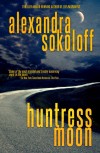
So this month I will publish my new thriller, HUNTRESS MOON, directly as an e book.


(This great cover is by our own megatalented Rob Gregory Browne!)

Lots of thought and agonizing went into this decision.

First, I know that some people who have not yet succumbed to the rapture of e readers still want to hold and touch and smell their print books and get peanut butter on them and all that. I feel you.  I have a real pang about this as well.  But it’s not a very realistic pang.

The book is the book, whether there’s a paper cover on it or not.  And I can publish it this month and get it into the hands of thirty thousand readers in a week (Based on my numbers for Book of Shadows, The Harrowing, and The Price.)  Even if I never sold ONE book after that, that exposure alone would be worth it. Because exposure sells my other books.

But based on the numbers I’ve compiled with my other books,  I will sell thousands, and very quickly.

If I went through traditional channels, the book wouldn’t even hit the shelves until a year and a half from now.  How can I possibly think of giving up the tens of thousands of readers I will be able to reach with this book starting NOW?

Plus, I’m already almost halfway through my first draft of the sequel to HUNTRESS MOON (this is a series, my first-ever!).  I’ll be able to publish that one in the fall. No longer do authors have to hold to the glacial timetables of their publishers, or worry about the possibility of the publisher deciding not to publish at all (which has happened to several of my friends, recently).

I can have two books out this year, with a guaranteed income.  What that income will ultimately be, well, I don’t know, but traditional advances are way down and, much worse than that, most publishers are demanding e rights in perpetuity in traditional contracts, which seems to me an insane thing for authors to give up in the current climate. That alone pushed me in the e publishing direction.

Please hear me. I am NOT saying this is the way to go for a never-been-published author. Be warned: it is not the Gold Rush that it was back in, oh, January – there’s a lot of competition out there.  I – and the other authors I listed above – know the benefits and drawbacks of traditional publishing because we’ve lived it; there’s no Holy Grail mystique about it. To me the choice between the (waning) prestige of having a print book in stores and having an army of dedicated readers is a no-brainer.  Someone who doesn’t have several years of actual sales numbers to compare and crunch is not going to be able to make the same kind of decision that I am doing, it would be much more of a leap of faith.  That doesn’t mean don’t do it, it just means it’s riskier.

Also, going through the gauntlet of traditional publishing prepares an author to e publish like bootcamp prepares a soldier for war.  I KNOW how much editing it takes to come up with a clean and readable book.  I KNOW how much time I’ll be spending marketing, and I have some idea of how and where to do that.

But even if you haven’t had the benefit of that kind of trial by fire, you do need to know that there is an opportunity here that was never available to an author before, and that – is nothing but good news.

Now is the time. Things may change within months.  But I’m not excessively worried about the current system collapsing, because no matter what happens out there,  I can still write books.  Or scripts. I’ve always figured out how to make a living with writing. And I’ve been doing the figuring once again, and  this is how I can do it right, right now.

So first, I want to hear e publishing stories, and of course questions.  Are you doing it? Thinking about it?  If you’re not, what’s holding you back?

And second – I’m giving away 50 copies of HUNTRESS MOON for potential reviews (Amazon reviews are what I need the most, but am glad for any, anywhere!).  You DO NOT have to review the book – I just ask that you be open to posting a short review if you are inspired to do so.

e mail me at  alex AT alexandrasokoloff  DOT com for a copy in whatever format.

Here’s the story!

HUNTRESS MOON

 FBI Special Agent Matthew Roarke is closing in on a bust of a major criminal organization in San Francisco when he witnesses an undercover member of his team killed right in front of him on a busy street, an accident Roarke can’t believe is coincidental. His suspicions put him on the trail of a mysterious young woman he glimpsed on the sidewalk behind his agent, who appears to have been present at each scene of a years-long string of “accidents” and murders, and who may well be that most rare of killers:  a female serial.

Roarke’s hunt for her takes him across three states… while in a small coastal town, a young father and his five-year old son, both wounded from a recent divorce, encounter a lost and compelling young woman on the beach and strike up an unlikely friendship without realizing how deadly she may be.

As Roarke uncovers the shocking truth of her background, he realizes she is on a mission of her own, and must race to capture her before more blood is shed.

——————————————————————————


I am not launching the book officially until July 11, but it’s up in online stores starting today so that I can collect some reviews. 

E mail me at  alex AT alexandrasokoloff  DOT com for a copy in whatever format.

But if you just feel like reading, or want to support me and this site, of course you can buy a copy! $3.99 on Amazon, $2.99 on Nook

Amazon

Nook

Amazon UK

Amazon DE

Amazon FR

Amazon ES

Amazon IT

A note to Nook readers – Huntress Moon will only be available for Nook for the next two weeks, after which it will be exclusive on Amazon for the next three months at least. I’m truly sorry to have to do it that way, but it’s unavoidable (read more on that here.)   Also, if you’ve been waiting to grab The Harrowing, The Unseen, or The Space Between for Nook, they are up now for $2.99, again, only for a few weeks.

Thanks for reading!

Alex

Back on the rollercoaster

And so, the rollercoaster begins…again. This week I finally finished my mainstream drama/fiction project. Hooray! It’s been a long time in the making, mostly because I had to come off it several times last year to take paid freelance jobs (ghost writing, corporate stuff, etc.) and this year I’ve been focusing on my ebook strategy. However, I launched myself into the re-write in mid-May and now it’s done. It’s a wonderful feeling to be finished the novel and to be happy with it (for the most part). 

The bad news is, I’m on the rollercoaster again. Sigh. I really don’t know if I’m mentally prepared for the lows as well as the highs. Sigh. You see, while I’m committed to the ebook path for some of my books (some genres), I feel that I’d like to give traditional publishing a go with my mainstream drama. Which means finding an agent. <Insert a million sighs>

Yup, THAT rollercoaster. Picking a shortlist of agents based on their recent sales and the authors they represent, then querying one to three at a time. And that’s a whole other thing—so many agents don’t like or insist on not being part of multiple submissions. But if you do one agent at a time, it could take you a year or more to get through your top 10! Of course, any author hopes that their first or maybe second pick will leap at the opportunity to represent them. But it’s getting harder and harder, even for authors with a publishing record (like me) to get an agent to take the plunge. I’m in a time warp, back in 1998-2004, when I was an aspiring author, looking for an agent or publisher. Looking for my first break. And in some ways, it feels like I’m back at square one.  Sigh. 

This week I start querying, and I’m both excited and petrified. I know I need to tighten the query letter and synopsis, so that’s my next focus. Although the timing truly sucks. This week and next week is school holidays in Victoria, Australia so I’m a full-time mum for the next two weeks. Not that I can complain—I’m also going skiing. In fact, when this post goes live I’ll be at Mt Buller, skiing for the first time in 10 years. And it will be my daughter’s first time ever. Exciting!!! Can’t wait. Although it does also mean I might not be able to respond to comments until the weekend (or perhaps I’ll be very brief from my Smartphone). Anyway…

Being an author truly is a rollercoaster—or more accurately several rollercoasters, sometimes happening simultaneously.

First, there’s the creative process itself, the creative rollercoaster. One minute you think that sentence, paragraph, chapter or book is brilliant; the next, you think it’s crap. And those highs and lows just seem to be part of the creative process. I’m still really on this rollercoaster for Cross Roads and Dead Ends (working title). I said above that I’m happy with it (for the most part), but like many authors I question whether you can ever be truly 100% happy with a book. I could edit and tweak for eternity, I think. 

Then there’s the agent rollercoaster. The rollercoaster I’m currently on. Once you get an agent, there’s the publisher rollercoaster. Will your agent’s first round of publishers be interested? Will they all be so interested that it goes to auction (best-case scenario) or will they all pass (obviously worst-case scenario)? 

Then there’s the rollercoaster once your book is published, the marketplace rollercoaster. Will the reviewers like it? Will the readers like it? And even if both reviewers and readers rave about it, will it actually make a dent in terms of sales? The making-a-living-as-an-author rollercoaster. See? Lots of rollercoasters!

Ultimately, my aim as an author is to take my readers on a rollercoaster, but with very different highs and lows. In the case of Cross Roads and Dead Ends, I want my readers to experience the characters’ pain, their loss, and feel that sense of resonance. I want to take my readers to soaring heights, but also sometimes the depth of despair. But that means I have to go on all the other rollercoasters first.  So here I go. Ready for the adrenaline high and the possible motion sickness. 

So, authors, which rollercoaster are you on at the moment? Readers, how do you feel about the author rollercoaster? 

BLOGGED ON THE FOURTH OF JULY

by Gar Anthony Haywood

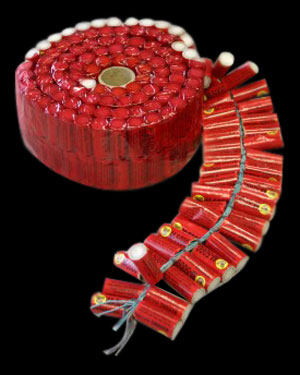
As today is American Independence Day (and because, quite frankly, having just blogged here yesterday, I don’t have a clue what else to do), I thought I’d model today’s post after those gigantic assortment packs of fireworks your neighbors like to buy in order to celebrate the holiday like the Allies attacking the beach on D-Day.  You know, assortment packs like this one:

None of the following subjects of conversation, in my estimation, are weighty enough to build an entire post around, but in combination they just might make for a decent read.  (Hope springs eternal.)  So without further ado, I hereby offer this hodgepodge of ruminations, some only tenuously related to the writing life, each representing an individual item commonly found in said fireworks assortment . . .

(Oh, and BTW – If these amateur munitions are illegal to set off within Los Angeles city limits, why does my South Pasadena neighborhood already sound like a Battle at Gettysburg reenactment every night after 6 PM?  Can somebody please tell me?)

FirecrackersLong-Overdue Responses to Recent Murderati Posts

Maybe some of you have noticed that I’ve been conspicuously quiet lately regarding the posts of my fellow Murderati authors.  It’s not that they haven’t moved me to think, I promise you.  It’s just that I’ve been busy as hell and haven’t been able to find the time to offer my reactions.  Alex’s recent post about how much output is too little for an author trying to make a living in today’s e-book dominated marketplace, and David’s ensuing response to it, have been particularly deserving of my attention.

So I’ll offer my thoughts on the subject now.

David wrote:  “. . . with each book, I’ve tried to write, if not a masterpiece, a book that at least tries to measure up to the greatest books about crime that I’ve read: The Long Goodbye, Cutter & Bone, Bellman & True, Nightmare Alley, Dog Soldiers, God’s Pocket, Clockers, The Long Firm, to name a scant few.”

I can so relate to this.  I think I do the same thing — but not all the time.  Sometimes, I know damn good and well that my WIP at the moment is something well short of a masterpiece, and that’s perfectly fine, because all I’m really aiming for is a small gem.  Small gems are masterpieces in their own right, relative to their most applicable genre or sub-genre.

I don’t think every author should be expected to set the bar at “masterpiece,” each and every time out.   But he should settle for nothing less than his best work, within the parameters of the kind of book he’s attempting to write.  That is what I’m always committed to doing, and like David, I obsess endlessly over every word in the pursuit of that goal.

Could I write faster than I do at present?  Oh, yes.  Faster and better?  Uh, no.

If I thought I could afford to publish (or contract to have published) anything that didn’t represent the absolute best writing I’m capable of producing, I might be willing to speed things up a little and take my chances with the resulting work.  But that’s a risk I’m just not prepared to take.  You only get one chance to impress with most readers; blow that chance by giving them something to read that was rushed into print simply to meet a determined annual rate of output and you’re screwed.  One book a year or five, mediocrity is not going to buy you the loyal readership you seek.

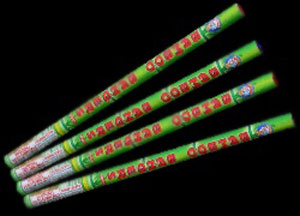
Roman CandlesA Personal Summer Reading List, Pretense-Free Edition

The following are five books I hope to read this summer, simply because I think I might enjoy them, and not because any are likely to make me a better person, or give me a greater appreciation for the use of florid language in stories altogether lacking a plot.

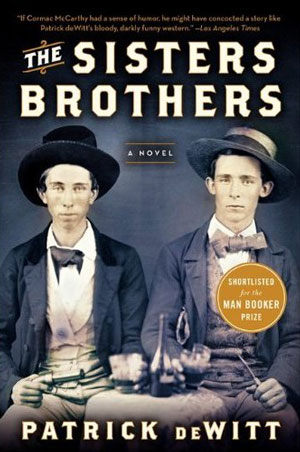
THE SISTERS BROTHERS – Patrick DeWitt
This just sounds like too much fun not to read.

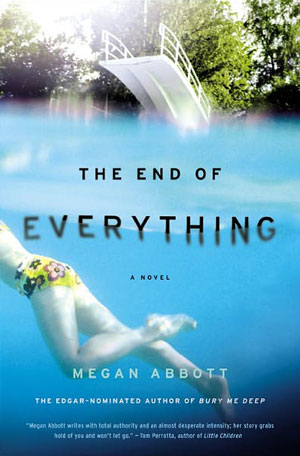
THE END OF EVERYTHING – Megan Abbott
I’d read this one for the title and cover art alone.

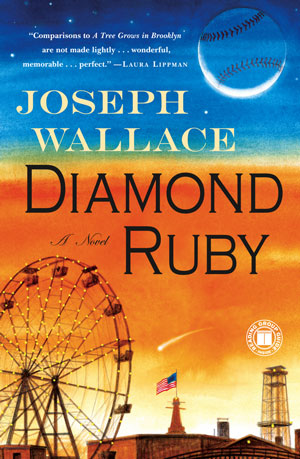
DIAMOND RUBY – Joseph Wallace
Baseball and a smart, headstrong young woman who knows how to play it, both in a YA novel suitable for adults.  What’s not to love?

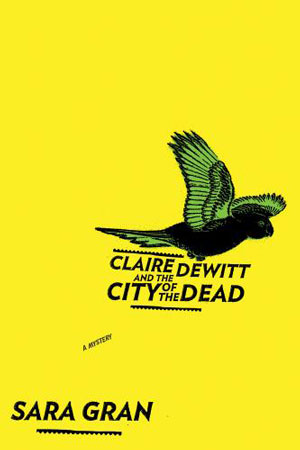
CLAIRE DEWITT AND THE CITY OF THE DEAD – Sara Gran
Sara Gran will be reading from this at the NOIR AT THE BAR party in Los Angeles later this month.  I hope to have the book read in time for her to sign my copy.

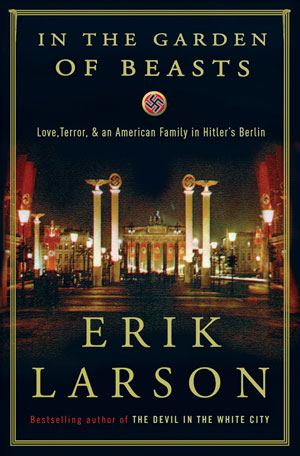
IN THE GARDEN OF BEASTS – Erik Larson
I read Larson’s THUNDERSTRUCK and couldn’t put it down.  This book sounds even better.

Missiles Books I Know I Should Read, But Will Probably Never Get Around To Cracking

I’d be a smarter, wiser, more culturally informed person if I read these “must reads,” I’m sure.  But I fear time’s running out.

1984 – George Orwell

To answer your question, yes.  I am ashamed.

ON THE ROAD – Jack Kerouak

Please don’t hate me, Stephen.  But poetry has always given me the hives.

KINDRED – Octavia Butler

The late author was a good if distant friend before her passing, but I never read her, acclaimed as her speculative fiction was.

HARRY POTTER AND THE (Fill in the Blank) – J.K. Rowling

Yes, this is absurd.  My wife and children live and breathe these books, I can’t take three steps in our house without tripping over a hardcopy of one of them, and yet I’ve never gotten more than a third of the way into the first installment.  Am I nuts?

THE GREAT GATSBY – F. Scott Fitzgerald

If I could get the image of Mia Farrow (whom I’ve never cared for) as Daisy Buchanan out of my head, I might find the will to give this classic a try.  But I can’t.  I just can’t.

Sparklers Reading Just for Fun – What a Concept!

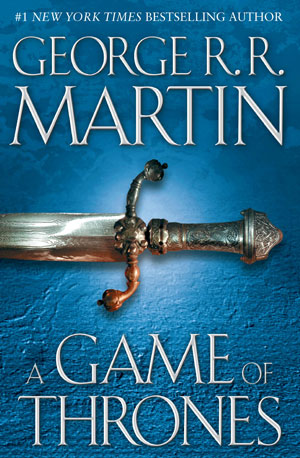
It’s been a long time since I’ve tried any form of fantasy fiction, but the HBO series GAME OF THRONES got me to thinking about reading at least one of the books by George R. R. Martin on which the show is based.

So I bought myself a copy of the first, aptly titled A GAME OF THRONES, and I haven’t put the damn thing down since.  Epic tomes of this dimension usually intimidate me all to hell, but I’m racing through this book like my life depends on it.  Martin can flat out write: you name it — memorable characters, crisp prose, smart and funny dialogue that rings true — it’s all here.  Reading for pleasure has never been so . . . well, pleasurable!

Questions for the Class: What would your own literary Fourth of July “fireworks assortment” look like?

GET ME REWRITE!

by Gar Anthony Haywood

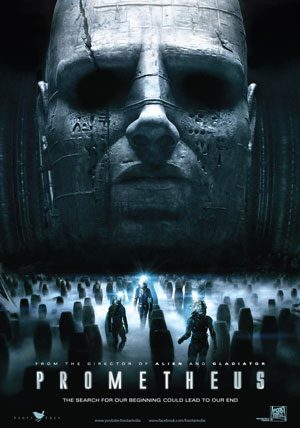
Actually, it’s way too late for a rewrite.  Prometheus is in the can and already raking in millions at theaters across the globe (though nowhere near as many millions as its producers had no doubt hoped, for some of the reasons I’m about to go into below).

I know, I know: We don’t normally do movie reviews here at Murderati.  And technically, I’m not about to post one now.  But this is Wildcard Tuesday, damnit — the day we ‘Ratis on the masthead get to do pretty much anything we damn well please — so what I am going to do is offer a broad-strokes, spoiler-free outline of all the missteps I think screenwriter Damon Lindelof — with the ostensible blessings of director Ridley Scott — made on his way to producing the final draft of the film’s script.

Understand that this is all coming from a huge fan of the first two films in 20th Century Fox’s Alien franchise (1979’s Alien and its 1986 sequel, Aliens).  In fact, I think James Cameron’s Aliens is one of the greatest action films ever made, and its precursor, Scott’s Alien, is a horror movie masterpiece that, when I first saw it, had me seriously considering fleeing the theater only halfway through its full running time, or to be precise about it, right after this now classic scene:

The Alien sequels that followed Cameron’s were all shoddy disappointments that just seemed to get worse and worse, and the ensuing Fox films that paired the eponymous Alien creature with the extraterrestrial bounty hunter first seen in the Arnold Schwarzenegger sci-fi thriller Predator (Alien vs. Predator [2004], Alien vs. Predator: Requiem [2007]) were a travesty made strictly to suck the last drop of box-office from both franchises.  So reasons for me to be encouraged earlier this year by the news that Prometheus was yet another film based on the Alien legend were few and far between.

Still, Prometheus was reportedly a prequel to Alien, and the director behind it was the man who’d gotten the franchise off to such a fantastic start: Ridley Scott.  So how bad could Prometheus possibly be?

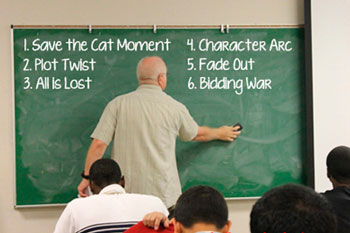
Well, let me just put it this way: There’s no such thing as a rule book for screenwriters and directors to go by in making sci-fi blockbuster sequels/prequels like Prometheus, but if there were, the following are all the rules in it Damon Lindelof and Ridley Scott would have blatantly broken:

1. Don’t commit to doing a sequel if you don’t really want to do a sequel.

It’s been reported that Scott didn’t sign up to do Prometheus with the idea of making just another entry in the Alien film franchise, and if this is true, boy, does that reluctance ever show in the final product.  Everything in Prometheus that’s reminiscent of Scott’s Alien seems completely out of place, and that’s because Scott (and screenwriter Lindelof) clearly intended for Prometheus to be a much loftier, more thought-provoking film.  Which is unfortunate, because the only thought Alien provoked in most viewers was “That’s it — I’m closing my eyes until the lights come back up!”  Alien was a horror film, as I mentioned earlier, and there’s nothing organic to Prometheus‘s basic storyline to suggest that Scott had any interest this time around in scaring anybody.  My opinion?

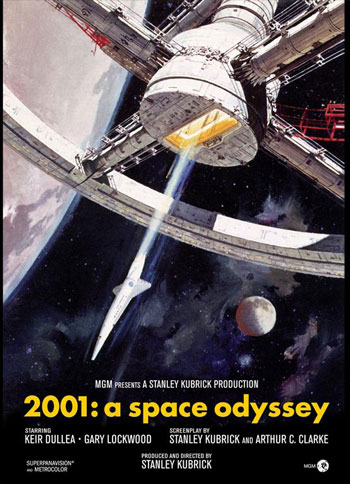
What Scott and Lindelof were hoping to make instead of a horror film, under the guise of an Alien “prequel,” was their own answer to Stanley Kubrick’s 2001: A Space Odyssey.  In other words, a deep, complex science fiction classic that would force viewers to ask serious questions about life, death, and mankind’s place in the universe.

Does that sound like an ideal foundation for an Alien prequel to you?

2. Pay attention to the science in science fiction.

My friend Doselle Young, who writes science fiction and horror with equal aplomb, is something of a science geek, and the list of factual absurdities he found in Prometheus is longer than the guest list to a Kardashian wedding.  Most of the things he mentioned when he and I compared notes on the film were just beyond the intellectual grasp of this former C+ high school science student, but many were basic enough that, once they were pointed out to me, even I understood how ridiculous they were.  For example, consider this question: Over a span of millions of years, would you expect a life form — any life form — to physically evolve in some noticeable way, or remain completely unchanged?

Apparently, Lindelof and Scott think it’s the latter.

Also, timing is a critical element in any piece of fiction — making things happen in a way that is compatible with both logic and what is possible — and Prometheus fails this test over and over again.  Hint to Lindelof: The next time you take on a project of this kind, study up on the exact distance of a light year, and how long it would probably take a man-made spacecraft, no matter how technologically advanced, to cover one.

3. Give all your characters an actual reason to be in your script.

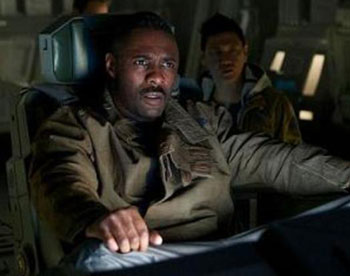
I won’t say much about this one except: Idris Elba, whom I greatly admire, is a member of the Prometheus cast, but I’ll be damned if I know why, other than so that his character — and I use the word “character” here loosely — can occasionally strike a dynamic pose at the ship’s helm.  Who was this person and what was the point of his existence?  The role he played in terms of the plot’s development was . . . what, exactly?

I don’t have a clue, and I doubt Lindelof does, either.

4. Give your characters a reason to do the things they do.

As opposed to just having them do things because, well, wouldn’t it be cool if they did?  Who cares why?

In the film’s most egregious example of random-shit-happening-for-no-good-reason, Lindelof has one character deliberately screw over another simply because he and Scott needed the resultant horrific death to occur, come hell or high water.  Nevermind that the offending character had no discernible motive for the act.

Why did Lindelof and Scott “need” this pointless death to be in the script so desperately, you ask?  Please see Rule #5 below.

5. Don’t populate your sequel with scenes you’ve literally cut-and-pasted from the original.

Remember that, according to my theory, Scott and Lindelof were secretly trying to make a film altogether different from the one Fox was paying them to make.  Doing Alien 5 was not in their plans.  Unfortunately, it was in their contracts, so the dynamic duo behind Prometheus took care to sprinkle their script with just enough blatantly obvious connections to Alien to keep the Fox execs dumb and happy.

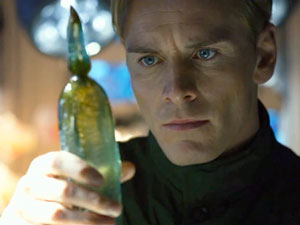
Malevolent android possibly working for the Company?

Check.  Snarling Alien embryo emerging from a live human’s bloody abdominal cavity?

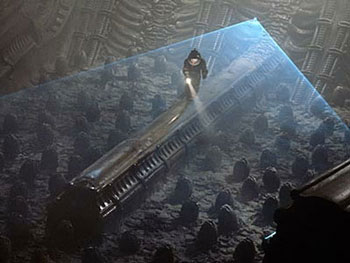
Check.  Overly-curious crew member gets a space-helmet facial from an Alien in a chamber full of creepy egg pods?

Check.  And so it goes.  Watching Prometheus, you can actually see where these scenes were artificially grafted on, square pegs jammed into round holes that bring the film to a screeching halt every time they crop up, so incongruent are they to what happens before and after.  This is screenwriting-by-checklist, and I’m sorry, but it blows.

6. Don’t give your character a brain in one scene only to have him behave like a blithering idiot in another.

When a character exhibits the common sense of most mature adults by fleeing from a dangerous situation, that’s good.

When that same character turns around fifteen minutes later and rushes headlong toward the identical dangerous situation — not because they’ve found the courage to do so, but simply because they’ve apparently lost their fucking minds — that’s bad.

In fiction, when a character behaves with such dumb disregard for his/her own safety that readers are forced to conclude they deserve to die, we call them TSTL: Too Stupid To Live.  With Prometheus, Lindelof and Scott have created a brand new, and far more maddening malady for fictional characters to suffer from: SOOTSTLS.

Sudden Onset Of TSTL Syndrome.

SOOTSTLS can strike any character at any time, no matter how rational and intelligent they may have appeared to be previously.  This is especially true when a screenwriter needs something to happen that shouldn’t really be in the script he’s writing at all (see Rule #5 above).

7. Avoid assigning the task of explaining something to your audience to a character who has no reason to understand things any better than your audience does.

When I said earlier that I had no idea what role Idris Elba’s character was supposed to play in Prometheus (Rule #3 above), that wasn’t exactly true.  Because near the end of the film, this character answers a Key Question the female lead — and every member of the audience — has been wondering about for almost two hours.  Or, I should say, he tries to answer it.  What he says doesn’t make a whole lot of sense.

It’s not the substance of his answer that’s the problem, however.  The problem is that it’s coming from a character who a) should be as ignorant of the subject in conversation as everyone else; and b) has demonstrated, prior to this moment, absolutely no curiosity whatsoever regarding the deep, philosophical mysteries our female protag has been struggling with since Fade In.  This is the guy who understands it all?  The one who’s done little more than exude soul brother cool, scene after scene, while everyone else around him has been ripping their hair out, trying to comprehend what the hell is going on here?

Gimme a break.

Well, I could go on and on.  But I won’t.  You get the idea.  Prometheus sucked, and it didn’t have to.  Given a script equal to its mouthwatering CGI, it could have been terrific.  But its script, instead, was a slapdash affair full of holes and jaw-dropping miscues.  For fans of Alien and Aliens like me, Prometheus represents a missed opportunity of monumental proportions.

That and, on a more personal level, fifteen dollars down the drain.

The First Lady Of Noir

By Tania Carver

Firstly, a bit of explanation.

Last Tuesday’s Wildcard piece was supposed to be this interview with Cathi Unsworth about her upcoming novel, Weirdo. Unfortunately time and scheduling pressures stopped it coming together in time so the post that was meant to be in today’s slot got bumped up. However, the interview is now complete and I thought it would be a shame not to run it.

If you’ve read Cathi Unsworth, you’ll know she’s Britain’s Queen of Noir. If you haven’t, then here’s the primer. Her first novel, The Not Knowing, was published in 2005. She followed it by editing the award-winning short story collection, London Noir in 2006 then the punk noir novel The Singer in 2007. Her most recent novel, Bad Penny Blues, was published in 2009 and was one of that year’s best novels.

She started out as a music journalist at the age of 19, working on the legendary British music weekly Sounds and has worked as a writer and editor for many publications including Melody Maker, Mojo, Uncut, Volume, Deadline and Bizarre. She’s also produced a crime fiction radio series for London’s Resonance FM, has contributed essays to the British Film Institute’s new Flipside DVD series and is currently paperback crime fiction reviewer for The Guardian newspaper. 

Weirdo‘s your new novel, coming out next month.  It seems to be something of a departure for you – the first novel not to have an urban setting. How did that come about?

The idea came a long time ago, reading one too many accounts on teen-on-teen murders that shocked me with their savagery and the remorselessness of the killers. There was that awful torture, rape and killing of Mary Ann Leneghan in 2005, at the hands of six young men in a hotel room in Reading, then there was Sophie Lancaster, kicked to death by a bunch of boys in 2007 because of what she looked like… And that was pretty much how I looked like at her age. At around the time of Sophie’s murder I got given a book to review that I can only describe as gothsploitation, written by someone who had no idea, casting goths as murders and Satanists, whereas I and every other goth I knew were basically shy, bookish teenagers who used the way they looked not only as an attempt to look aesthetically beautiful in the Oscar Wilde definition of the word, but as a shield against the violence of our peers. And in smalltown England in the Eighties as you know, youth cultures were pretty set against each other and pretty violent too – although nothing like the level of Mary Ann or Sophie’s killers.


So I thought I would have a go at exploring this world, setting it in a time and a place I knew and could evoke very well – my Norfolk teenage years. I happened to turn 16 in 1984, the year of the Miner’s Strike and the most recent Civil War in Britain, the workers versus Margaret Thatcher. Although the landscape I lived in was very different to the besieged North – all around the coast, like the flickering candles of a black mass were the flames of the oil rigs drilling North Sea Oil, which enabled the Witch Queen to keep herself in power. Because of the echoes of the past Civil War of 1642-1651 – when Norfolk was staunchly Parliamentarian, and riding on the coattails of Oliver Cromwell’s New Model Army came the Witchfinder General, Matthew Hopkins, who was said to have tortured and murdered 300 women in the Eastern Counties, including many in my hometown Gt Yarmouth – the year of 1984 had that resonance. In that year, one of my favourite records was Vengeance by New Model Army, which still seems to cast the clearest and most prophetic eye over what was happening then and what would come next…

I started to write it, but it wouldn’t come. Then I got waylaid by a serial killer and was compelled to write Bad Penny Blues as a response to a nightmarish book about Jack the Stripper, involving the unsolved deaths of eight women who all lived and worked in my neighbourhood back in the Fifties and Early Sixties. That was a two-year séance, but when it was over, the experience made me ready to write Weirdo.

In the meantime, my Dad had given me an excellent book called Unquiet County: Voices of the Rural Poor by Robert Lee, which explored a rural uprising in Norfolk in the 1830s, led by a mysterious figure called Captain Swing – another phantom, but on the opposite side of the moral divide to Jack the Stripper, he was the 19th century equivalent of Anonymous. Captivated by him, that added another dimension to the story I had originally thought of.

So did an excellent and very disturbing Channel 4 documentary called Being Maxine Carr – it was about 12 single women who moved to new parts of the country at around the time Maxine Carr was released from jail under a new identity – and how they were hounded out of their homes and attacked by lynch mobs, led by whispering gossips, who accused them against all evidence of being Carr herself. Because Carr was released almost exactly at the same time Myra Hindley died, it seemed to me that we needed another Transgressive Woman Hate Figure, and, helped by the tabloids, Carr conveniently fitted that slot. Something we have both explored in our work of course is how women transgressors are vastly more villified than men; there is something viscerally cathartic in the public hatred for them that links back to witch hunts and Matthew Hopkins… So all these elements stirred inside me and out it just flowed…

In your previous books, you’ve captured a couple of areas of London (Camden Town and Ladbroke Grove) and really made them your own.  Did you choose those places or did they choose you?

Good question. When I started The Not Knowing, I just wrote about the places I knew and loved and a lot of the motivation for that was to capture people and places that were important to me as they had been, before they disappeared forever into the ether. Working at Gerry’s Club for a number of years was the impetus for that, I met so many brilliant people down there of older generations who are now dead. And Camden had changed so much from the happy times I’d spent there in the early Nineties, I wanted people to know there were much more interesting things going on there before Britpop!

When I wrote The Singer, that was partly an elegy for how much Ladbroke Grove had changed since Richard Curtis opened his blue door. Then Bad Penny unlocked the green door back to the world that it had been, and I discovered so many coincidences that linked what I had written in The Not Knowing, of events happening in the same places that I had previously had no idea about… And the stories I had heard from the Gerry’s Departed.

I didn’t set them out to be, but they are a kind of trilogy of those places, travelling through from the Fifties to the 2000s. I think, on reflection, those places chose me.

How important is location in your novels? Could they be set anywhere else?

Very important. I have to know a place fairly well to write about it – for instance in The Singer, I also write about Hull, where I have family and know what it looks and feels like and how people speak; and also two of my favourite cities, Paris and Lisbon, that are captivating for the similarity in vibe that certain parts of them – Montmatre and the Barrio Alto – share with Ladbroke Grove. Norfolk is a location that still stokes fear in me, so it’s perfect for Weirdo.

In your previous book, the brilliant BAD PENNY BLUES, you had fictional people intermingling with real ones. Or at least your interpretation of real ones. Was this something you found easy to do and have you continued that in WEIRDO?

It was very interesting to do that in Bad Penny because some of them, like Jenny Minton, I thought I was inventing, until my friend Dave Knight gave me a book about Pauline Boty and I found that someone very similar had really existed; and others, like the character of Jenny’s boyfriend Dave Dilworth I had started off modelling on Mick Farren, a character I admire very much, but then he shapeshifted into Screaming Lord Sutch, another fascinating person from that era who doesn’t really get the credit for all the radical things he actually did. So you can’t really contain these people once you start conjuring them, they all do their own things.

Weirdo doesn’t really deal with anyone real like that, although various people have inspired characters in it. DCI Len Rivett is partly a homage to Deputy Sheriff Lou Ford in Jim Thompson’s The Killer Inside Me, he has that holky charm that I loved about him – and also, the book does have certain echoes of a Western, Norfolk being very much the Wild East and Rivett definitely being the Sheriff of his town. The Norfolk accent is brilliant to use, as a Norfolk person saying: ‘You in’t from round here are ya?’ has a very similar resonance to the voices in Deliverance. Rivett’s strange adversary Noj started off as a suggestion from a friend and, like Donna in The Singer, just formed his/her own character completely through the act of me writing her/him, just as if I was channelling. Noj and Donna would be great friends, actually.

You often take chances with your books.  BAD PENNY BLUES even involved Spiritualism. Not fond of playing it safe or just following your own muse?

Totally following my own muse. I realised when I started writing Bad Penny that I couldn’t do it any other way, because it was so important to me that the dead girls got to speak, and the reader got to feel their lives and their fear as their lives ended – they were the most important people in the book. I took a massive chance with that and expected I would get ridiculed, but that would be a price worth paying to convey those women’s voices in the most powerful way I knew how. Though I did get a few snidey reviews, they were very much in the minority, so I think it did work for readers as I hoped it would.

Every time I write a book someone will tell me I have done something within it that you are not supposed to do. But I have never taken a creative writing class nor read a ‘How To…’ book, so I am blissfully ignorant of all that. But it has massively helped me that I had John Williams as an editor. He understood me better than I understand myself and would never have let me do something that felt stupid or wrong.

You’ve got a background in music journalism and music is a strong element in all of the novels. How difficult is it being a woman writing about something that’s traditionally such a male-dominated area? And have you had any comeback on that?

Well I think there is a reflection of that in all my books, being as they all heavily feature women in men’s worlds and how difficult it is to be taken seriously by the men who guard these kingdoms so jealously… The old cliché of having to be twice as good and work twice as hard is only too true. Girls like me always have more gay male friends, another something that is reflected in my work…

The Singer was reviewed brilliantly by the crime press, but the music press wouldn’t touch it, apart from my dear ex-Sounds comrade Keith Cameron at Mojo. I think, because every male music journalist thinks he is going to be the one write ‘the Great Punk Rock Novel’ but strangely, none of them have yet got round to it. There is a big difference in being a successful music writer and a successful novelist, because the novelist has to have a real empathy for people to make characters come alive, and that I am afraid to say, is a quality quite hard to find in that world. However, one of the best reviews I have ever had in my life came from Griel Marcus, who reviewed Bad Penny in a lengthy essay on the Barnes & Noble website, and who is the absolute hero of all the male muso journalists I ever knew – so, to quote Dudley Smith, that was my valediction, laddie.

I know you’re not one for modern technology but you do have a website and have recently set up a Facebook page. What next? Your own blog? Twitter? 

If I could clone myself, I could do that. At the moment, I work a rather demanding day job four days a week, and have not had a proper holiday in over ten years! So I am paddling as hard as I can to keep my head above the water of Matthew Hopkins’ ducking stool at the moment… I would love to do more if I could. But I can’t even do Facebook friends right now because there just aren’t enough hours in the day…

However, I do think that my website, designed and maintained by the brilliant Pete Woodhead, is a pretty very good one that can provide you with everything you could want to know, plus some great free music downloads, of which there are two new ones up as we speak, a collaboration I have done with Pete and with a brilliant composer-musician friend of mine called Paul A Murphy, who has composed me a Norfolk Sinfonia in honour of Captain Swing.

And anyway, surely it’s nice to keep a little air of mystery…?

I think your books would be naturals for TV and film. What’s happening with that?

I have a project on the go for a film of The Singer with a very stylish young French director called Nicolas Pier Moran… But more than that I can’t really say at the moment, as Nicolas is a rather mysterious chap himself…

And what next for you? I hope it’s another novel. 

I have the ingredients of another novel swirling around in my head right now, but have been too busy to do anything about it for the past six months. Hopefully I will have time to work on it soon, meanwhile I will just read everything I can that connects with it. What I would like to do is a four-book series that moves from the Blitz to the Leveson Enquiry, which will be well in the distant past by the time I ever get round to it. The secret history of women in London is the general theme I think I am finding. I would like to go back to sifting real events like I did in Bad Penny as there are not just so many mysterious villains out there, but so many unsung heroes and heroines. If I could spend a year in the Bishopsgate Institute’s archives I would be very happy indeed!

 

POINT OF VIEW

By Stephen Jay Schwartz

BOULEVARD was the first novel I’d ever written or even tried to write and after it sold and the hoopla died down I got a call from my editor who said, “Okay, now we have to figure out your story’s point of view.”

“Umm…point of view?” I said.

“Yeah, you’ve got third person close, third person omniscient and first person. It’s a bit messy. I think it wants to be third person close.”

I didn’t want to embarrass myself by saying I didn’t know what the hell he was talking about. Third person close…to what? Omniscient sounded like something I understood – a narrator, like God, who knows everybody’s thoughts. And first person I knew, but didn’t really care for. But third person close?

After my hemming and hawing he figured I needed an education. He explained that third person close meant the story is written in third person, but it feels like first person. The narrator doesn’t know any more than the protagonist. Therefore, I can’t cut away to another character’s perspective, and I certainly can’t cut away to scenes that don’t include my protagonist. Unless, of course, I choose, stylistically, to incorporate chapters of third person close with alternating chapters of third person omniscient. But that has to be a conscious decision; I can’t just throw point of view around willy nilly.

My editor’s instincts were right. The story wanted to be third person close. It felt good to me. I like to keep the reader a bit in the dark, not knowing what’s coming around the corner. As my protagonist is surprised, so is the reader. So I had to go through the entire book and take out the handful of scenes that didn’t include Hayden Glass and find ways to incorporate that information into scenes that included Hayden Glass. It was difficult at first, but soon my brain eased into the process. By the time I jumped into my second novel, BEAT, I had it down. Third person close became the way to tell Hayden’s story.

And now I sit with my third novel in various stages of development. It’s a standalone, with all new characters. Its history is odd.

It began with my agent saying, “Okay, your two-book deal is over so you have to write a proposal. Why don’t you do another Hayden Glass book, but bigger. International. Like maybe he ends up in Bangkok and his addiction really gets tested.”

Bangkok? How does my LAPD detective end up in Bangkok? Well, he does go to San Francisco in BEAT. So, maybe he gets called for a special assignment, or he is required to bring back a perp who fled L.A. after committing a crime. I can work with this.

“Okay,” I said. “I can see him going international. But not Bangkok. Everyone I know is doing Bangkok. Besides, Hayden likes the blondes. I see him in Amsterdam. That’s where I’d be tested.”

“Yeah, Amsterdam! Great idea! But you should probably also have something ready in case the publisher doesn’t want to move forward with Hayden Glass.”

“Wait,” I said, “that could happen?”

“That could happen.”

So, I went to work on two book proposals. They were two very similar stories – one was a Hayden Glass novel and the other was about a young FBI agent who was made to bring back a fugitive that fled to Amsterdam. I liked both stories, but I was partial to the new one, with the FBI agent. It was a bit like The Spy Who Came in from the Cold meets 3:10 to Yuma. That became my pitch line.

I finished the proposals and handed them to my agent. He loved them both and sent the Hayden Glass one to my editor. My editor loved it and pitched his boss and…it happened. The publisher decided not to do another Hayden Glass novel.

“Okay,” I said to my agent, my voice weighted with disappointment. “Now we send him the other one, right?”

“No,” he said. “I think you should just write the other one. Write me a best-seller and I’ll take it out for bid!”

Write it? Without a contract? A spec novel, again?

I eventually got behind the idea and started doing my research. I spent a week in Amsterdam, met and interviewed lots of interesting Dutch folk, met and interviewed many interesting FBI folk, read tons of books, did interviews, etc. As I sat down to write I considered what my point of view would be for this story. I wanted to capture that same feeling of tension that existed in my other books, that sense of surprise, but I also wanted to introduce an antagonist in omniscient, in alternating chapters. I was considering going close third with these chapters, but opted against it because my protagonist assumes certain things about the antagonist and they may or may not be true. If I wrote the antagonist in close third I couldn’t avoid getting into his thought process, which would give away the truth about his character. I want this truth to be a surprise to my protagonist and to the reader.

And so I wrote the damn thing in third person close. At least the first draft. When I was done it seemed flat. I realized that, while I can write the perspective of an American lost in Amsterdam (I was that American, for a week), I had trouble writing all the other Dutch characters. They all read like American characters with Dutch names. And just about every other character in the piece had to be Dutch. I felt like I needed to spend six months getting to know the city before I could write it with any sense of authority.

So, I dropped the project and began writing a crime thriller set in L.A. and the Central Coast of California. I got a few chapters in when my wife told me I had to go back to the Amsterdam piece. She suggested I change the venue from Amsterdam to Las Vegas, which would allow me to write American characters in a town I know well (some would say too well). I returned to the Amsterdam piece, which was called TRIPLE X (the Amsterdam flag is three X’s – I’ve since changed the title, but will have to sit with it for a while to see if it works.)

Now I’m re-developing the story and rewriting it. Las Vegas serves the story just as well as Amsterdam. The venue has to be a place without rules where my protagonist feels like an outsider. While the change complicates some of the plot ideas, it also solves some of the problems I had writing an FBI agent working on his own in a foreign country. Even my FBI contacts thought it was better to keep him in America.

I rewrote the first fifty pages or so and then last week I was writing a sentence and it came out in FIRST PERSON, PRESENT TENSE.

I stared at it for a moment and thought, “Oh, shit. This feels right. Dammit.”

Now I’m back at the beginning, rewriting it in first person, present tense.

And I like the immediacy of the thing.

I mean, look at one of the lines and see if you feel the difference:

“He opened his eyes and stepped away. He kept to the balls of his feet, avoiding the things that might be collected as evidence.”

Versus:

“I open my eyes and step away. Keeping to the balls of my feet, avoiding the things that might be collected as evidence.”

Or –

“Bill caught his attention from the door. He seemed disappointed, as if Hoffman’s presence in the crime scene reflected poorly on his judgement.”

Versus:

“Bill catches my attention from the door. He seems disappointed, as if my presence in the crime scene reflects poorly on his judgement.”

I feel like I’m right with the character, walking in his footsteps.

Present tense basically tells the reader that things aren’t necessarily going to be okay in the end. I mean, we don’t know how this is going to end, do we? It’s happening right now. Past tense tends to infer that things turned out well – after all, I’m telling you what happened, aren’t I? So, if it’s in the past then my character must have made it out alive.

Past tense seems so 2008.

It might seem strange for some to write in present tense, but it doesn’t feel odd to me. Screenplays are written in present tense, and I’ve written more screenplays than novels. It’s the first person thing that I need to get used to. Now I’m really in my character’s head. And all the things that go on are subject to the mental state he’s in. To me, that’s interesting. I don’t know why I’ve always preferred reading third person to first person – maybe being in a character’s head seemed too daunting. What if the character is crazy? How do I deal with this as a reader? Exactly.

And some of my favorite books are written in first person – John Fowles’ The Collector, Nabokov’s Lolita, Jim Thompson’s The Killer Inside Me. All deal with the paranoia of unreliable narrators. I kinda dig that. I like presenting my protagonist’s tweaked view of the world as truth, then forcing him (and the reader) to witness the real truth as the world unravels around him. To see and feel it as he sees and feels it. That excites me.

We’ll see if it sticks. I might get two hundred pages in and realize I have to experiment with yet another point of view to make it work. Who knows? It’s a journey, right?

Now I know why people write sequels. A lot of the hard stuff has already been done. I’m looking forward to writing the next Hayden Glass novel, which I’ll jump into as soon as I finish this standalone. I’ll probably publish it as an ebook, the way Brett Battles now does with his Jonathan Quinn series. That way it will publish quickly. Hell, that way it will publish at all.

So Hayden might still end up in Amsterdam. I’ll tell you what I know – when he gets there, he’ll be in third person close.

A Box of Memories

Zoë Sharp

Where do you keep your memories? How do you anchor them to the framework of your life?

Those questions have been very much on my mind this last week. I’ve been away in Somerset, helping an old friend pack up his house in preparation to moving into a single-storey home. He’s now in his late seventies, no longer entirely steady on his feet, and with a tremor in his hands that makes labelling boxes a tiresome task, never mind actually putting stuff into them.

Andrew is a retired pilot. He’s flown just about everything—either fixed or rotary wing—in all conditions, all over the world. The stories he tells of hairy landings in Africa at night, or airborne rescues in South America, would fill several books. I’ve been trying to persuade him to set some of it down for years.

When I needed authentic information about crashing a helicopter for the new Charlie Fox book, DIE EASY, who else would I turn to but Andrew? After all, he’s actually crashed them and lived to tell the tale. So, as a thank you I made him into the laidback ex-military pilot in the book.

A secondary reason for my visit was to coincide with the Air Day at the Royal Naval Air Station at Yeovilton. This year’s event had some fabulous flying displays, from the Red Arrows to a massive Russian Antonov heavy transport plane, aerobatics aircraft, and classics like the Swordfish, the Meteor, and the Spitfire. There were also numerous helicopters flying manoeuvres that I really didn’t think it was possible—never mind advisable—to perform in rotary-wing machines. And being able to get up close and personal to a wide variety of different aircraft is invaluable research, of course.

All in all, a very memorable day.

But five years down the line—or ten years—how will I remember it? I don’t mean my impressions, which were of stunning skill and a boundless enthusiasm, of power and speed and a kind of lethal excitement.

I mean where will I place it against events of my life that came before and after? Unless something dramatic happens in a certain year—and unfortunately dramatic often also equals traumatic—the order of things very quickly begins to blur.

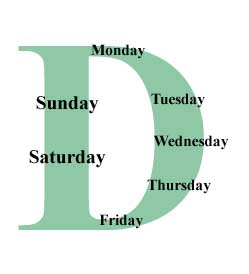
I don’t know if everyone does this, but I have always had a mental image of the days of the week. They are laid out like a letter ‘D’, with the weekend stacked at the left-hand side and the rest bowing out at the right. Whenever I have appointments or it’s my blog day, or whatever, this is the mental image I pin those facts to.

With years, it’s different. I have never pictured a year like the calendars you get in the front of a diary, with each month laid out in a box of days and dates. To me, each year snakes backwards in single file, a day at a time, tilting as it goes like one of those optical illusion paintings, so that it’s always downhill towards winter. I’ve just booked my flights for this year’s Bouchercon mystery convention in Cleveland OH in October. In my mind, October is over the crest of the light summer months and heading downhill into the darker end of the year.

But when they asked me the security questions of where I flew to in the States last March, I struggled to remember my exact itinerary. And the only reason I would have a note of it is because I usually create a document for each trip with a list of addresses and confirmation numbers, and probably I have yet to delete that from my computer.

Am I missing out on something?

After all, I have no children who might be interested in what I did with my life, so I do not feel the need to preserve a little personal history for future generations. And having been a photographer for years I now take very few pictures that are not work-related, although since I got my new cellphone with a decent camera on it, I confess to being a little more snap-happy.

And yet I am fascinated by other people’s history. Leafing through Andrew’s albums of family photos going back before the First World War, I am enthralled by the clothing, the stern faces, the little glimpses into character that people unknowingly show when faced with a camera.

One of the boxes I labelled for him was simply called ‘Dates and Memories’. Into it went all kinds of tickets, letters and cards. The anchor points of his life.

I am also faced with the prospect of moving house at some point, and it would have been my instinct to use it as an excuse to de-clutter. When the time comes I may well still do just that. But this experience has certainly made me pause and reflect. Do I really want to get rid of all those little aide-mémoire items. The ones that give structure to the good times, and put the bad times into perspective?

So, ‘Rati, my question is, how do you remember your memories? And where do you keep them? And if you only had space left in your box of memories for one more item, what would it be?

This week’s Word of the Week is anchorite, or anchoret, which means a man or woman who has withdrawn from the world especially for religious reasons; a recluse, from which we get anchorage, a recluse’s cell or a place to withdraw from the world.