Looking for Pari? Fret not. We’ve traded places this week, since I’ll be in the air …
… heading to New York on Wednesday. Look for Pari’s post then.
* * * * *
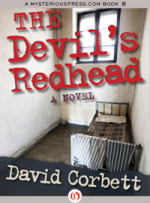
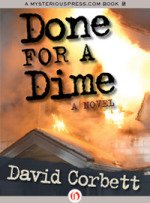
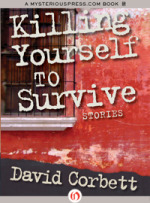
My first two novels and a brand new story collection are coming out in ebook format tomorrow through Mysterious Press and Open Road Media.
Open Road and Mysterious Press have also re-issued the works of fellow Murderateros Gar Anthony Haywood, Martyn Waites, and Ken Bruen. Click on their names to see the books available.
I’m particularly jazzed about the story collection, for it includes a new story not previously published, the eponymous “Killing Yourself to Survive;” plus “Pretty Little Parasite,” which was included in Best American Mystery Stories 2009; “The Axiom of Choice” (a personal favorite), which appeared in Strand Magazine; “It Can Happen,” which was nominated for a Macavity Award and has been optioned for a film; and several other nuggets that have appeared here and there but have never been collected in one place.
I’ll let you know how to track down the books below. For now, in celebration of the re-issue of The Devil’s Redhead, let me tell you about the most embarrassing—and perversely resilient—goof-up in any of my books. (So far. That I know of…)
On page 301 of The Devil’s Redhead hard cover edition (page 313 in the mass paperback), you will find this curious phrase: “sandstone palavers.”
In isolation, it has a certain surreal/dada/Lewis Carroll quality. If only that were what I’d intended.
I wish I could blame some drudge in the bowels of Random House, anyone but myself. Note to aspiring writers: Never edit when you’re blind with grief.
The word I wanted, of course, was “pavers,” a word I’d never heard until my wife, Terri, used it as we were choosing tiles for a rehab job on our back porch.
Part of the word’s charm was her usage, a kind of giddy almost childlike pleasure that she brought to everything. And when it came time, a few years later, to describe a Monterrey-style décor in a Mexican hotel, it seemed the mot juste.
Except my brain couldn’t find it. It rummaged around in “similar sounding” bucket, and came up with “palavers.” I knew this was wrong, and mentally earmarked the spot for revision once the right word came to me. Unfortunately, it never did.
The reason? By the time of this rewrite Terri had died of cancer. The manuscript for Redhead was purchased by Ballantine six weeks before her death, and I reworked the passage in question after her passing.
She was forty-six, the love of my life, and I was devastated. Anyone who knows that kind of grief knows it turns your mind and memory to slop. The simplest things confound you. Both the inner and outer worlds acquire a smudgy dullness, as though wreathed in a leaden haze, and the only light you see comes in lightning bolts of helpless pain and rage.
Such was my state of mind when the copy-edited version of the manuscript reached me.
When I came to the page in question I saw the copy editor had corrected it, but had been so baffled by my misuse, so unclear on my intent, that she changed it to another inappropriate word, with a question mark in the margin. It felt like a violation, given the word’s link to Terri, her happiness, but I still couldn’t conjure the right word myself. I stetted angrily, once again hoping that before I returned the pages the correct word would come to me. Then, of course, I forgot.
I forgot a lot of things back then.
The typo has proved to be as immortal as a Transylvanian count. In edition after edition, even in the U.K., the lousy little monster remains. (God only knows how the Japanese translation must read.)
I promised myself that, should a new edition appear I would finally, once and for all, erase this blight from the book. But when I sold the rights to Mysterious Press, I didn’t have a Word document I could go in and change at will. All I had was a PDF. But that allowed me at least to place a strikethrough mark on the telltale “la” that turns “paver” into “palaver.” I wrote a note pleading that this error be addressed in the final version of the ebook.
We shall see, said the blind man. I’m not, as they say, holding my breath. Typos, unlike the rest of us, are eternal. And who listens to the author anyway?
I’m sure somewhere, Terri is chuckling way. This is what I deserve, she no doubt thinks, for losing my temper. I wish I could tell her: Oh baby, I know. I know.
* * * * *
So, Murderateros: What’s the worst in-print gaffe you’ve committed, and have you been granted a dispensation, given the right to go back in and tweak the little sucker? Or does it sit there still, a troll beneath the bridge of your otherwise perfect prose?
* * * * *
Now, for a bit of TBSP [Tediously Blatant Self-Promotion]:
Here again is a little author profile video that the team at Open Road Media put together to help publicize the launch.
If you haven’t yet tried my work, give one of these babies a spin. I’m proud of each of these books in different ways. I’d be honored and pleased if you decided one of them was worth a look.
* * * * *
Jukebox Heroes of the Week: I’m choosing two, one for each of the first two novels. Music always figures prominently in my books, and these two tunes were signature pieces for Redhead and Dime respectively: Rickie Lee Jones with “We Belong Together,” and Charles Mingus with “Moanin’:”
I’m headed off to teach a Screenwriting Tricks workshop in Cleveland (open to all, if you’re in that part of the country, see here).
So of course my head is in craft mode.
I sit on the plane thinking about what is really essential that I want to get across in an always too-limited time to talk about our craft, and also about what people are hiring me in particular to teach.
One of the things I always hope people get out of my workshops and writing workbooks is the concept of setpiece scenes. I try to hit that hard up front in a workshop, and keep going back to examples during the day.
There’s a saying in Hollywood that “If you have six great scenes, you have a movie.” And I’ve said before that these six great scenes are usually from that list I’ve given you of the Key Story Elements.
It makes sense, doesn’t it? Scenes like The Call To Adventure and Crossing the Threshold (and on the darker side, the Visit to Death or All is Lost scene) are magical moments: they change the world of the main character for all time, and as storytellers we want our readers or audiences to experience that profound, soul-shattering change right along with the character.
Filmmakers take that “six great scenes” concept very literally. These scenes are often called the “trailer scenes” or the “money scenes” (as opposed to “money shots”, which is a different post, with a different rating!). As incensed as I am personally about how trailers these days give every single bit of the movie away (I won’t even watch them before a movie I’m interested in seeing), I understand that this is essential movie advertising: those trailer scenes have to seduce the potential audience by giving a good sense of the EXPERIENCE the movie is promising to deliver. The scenes that everyone goes into the theater to see, and that everyone comes out of the theater talking about, which creates first the anticipation for a movie and then that essential “work of mouth” that will make or break a film.
And do not for a second think that directors aren’t putting excruciating thought and time and detail into designing and staging those scenes. There’s not a director out there who is not in the back of his (or her, but statistically mostly his) mind hoping to make cinematic history (or at least the Top 100 AFI Scenes of All Time list in whatever genre) with those scenes. These are scenes that often cost so much money that producers will not under any circumstances allow them to be cut, even if in editing they are clearly non-essential to the plot.
The attention paid to these critical scenes is not all an ego thing, either. We are not doing our JOB as storytellers if we are not delivering the core experiences of our genre. Genre is a PROMISE to the audience or readers; it’s a pact.
And a setpiece doesn’t have to cost millions or tens of millions of dollars, either, although as authors, we have the incredible advantage of an unlimited production budget. Did you authors all get that? We have an UNLIMITED PRODUCTION BUDGET. Whatever settings, crowds, mechanical devices, alien attacks or natural disasters we choose to depict, our only budget constraint is in our imaginations. The most powerful directors in Hollywood would KILL for a fraction of our power. Theoretically, they can’t even begin to compete.
However, directors can and do compete and top most authors on a regular basis because they know how to manipulate visuals, sound, symbolism, theme and emotion to create the profound and layered impact that a setpiece scene is.
So how do we take back that power? By constantly identifying the setpiece scenes in film and on the page that have the greatest impact on us personally and really looking at what the storytellers are doing to create that effect and emotion, so we can create the same depth on the page.
I’ve compiled some examples (and categorized them by story elements they depict) on my own blog and in my second Screenwriting Tricks workbook.
But just in the last week I’ve come across some great examples that have really stayed with me.
I’m on an Edith Wharton tear at the moment, and it’s striking how beautifully she sets her love scenes, on every visual and sensual level, like this setup from THE HOUSE OF MIRTH:
Selden had given her his arm without speaking. She took it in silence, and they moved away, not toward the supper-room, but against the tide which was setting thither. The faces about her flowed by like the streaming images of sleep: she hardly noticed where Selden was leading her, till they passed through a glass doorway at the end of the long suite of rooms and stood suddenly in the fragrant hush of a garden. Gravel grated beneath their feet, and about them was the transparent dimness of a midsummer night. Hanging lights made emerald caverns in the depths of foliage, and whitened the spray of a fountain falling among lilies. The magic place was deserted: there was no sound but the splash of the water on the lily-pads, and a distant drift of music that might have been blown across a sleeping lake.
Selden and Lily stood still, accepting the unreality of the scene as a part of their own dream-like sensations. It would not have surprised them to feel a summer breeze on their faces, or to see the lights among the boughs reduplicated in the arch of a starry sky. The strange solitude about them was no stranger than the sweetness of being alone in it together. At length Lily withdrew her hand, and moved away a step, so that her white-robed slimness was outlined against the dusk of the branches. Selden followed her, and still without speaking they seated themselves on a bench beside the fountain.
On a different note, in the romantic comedy FORGETTING SARAH MARSHALL (a younger audience would call it a “lude comedy”, and I don’t disagree!), the hapless hero has his first kiss with the love interest at the Midpoint, of course, a classic “sex at sixty” scene (sixty minutes, that is, halfway through the film.). Every kiss in a romance or romantic comedy is, or should be, a setpiece and the filmmakers give the lovers a typically gorgeous romance setting, in this case a cliff overlooking the ocean in Hawaii. But being as this is a comedy, the reckless heroine tells the hero, quite rightly, that they’re both in ruts and need to take a leap of faith, which she promptly does, off the cliff. The hero doesn’t land quite so well, but after narrowly escaping death and possible castration on his slide down, he ends up in the water with her, for a beautiful backdrop to a sensual first kiss that is also a baptism that the hero has been sorely needing.
On the nose? Yes, but well-played and effective, and it does what the Midpoint is supposed to do – it kicks the second half of act two up to another level.
In the film of MEMOIRS OF A GEISHA, over and over the filmmakers use images of bridges and interesting corridors, or stepping stones in a creek, to underscore significant moments. The heroine first meets her love interest, The Chairman, on a bridge over a stream, with cherry blossoms in the background. Now, those of you with jaded eyes might look at that and think, ‘Oh, right, another “lovers meet on a Japanese bridge in an explosion of cherry blossoms’ scene, but the setting is utterly gorgeous, and I would be very surprised if most of the moviegoing audience even notices the bridge or the cherry blossoms – except subliminally, which is how these things are supposed to register.
And in a subsequent scene, the nine-year-old heroine has just realized what the desire of her life is to be, and runs through a long, curving passageway, another classic symbol of transition and birth, but the scene is filmed as an endless following shot in the psychedelically orange gateways of the Fushimi Inari shrine (just click through and look!), and truly delivers on the sensation of transformation that the moment is.
Now, filmmakers have location scouts to find these perfect physical settings for them, but I think it’s one of the great joys of my job as an author (as it was when I was a screenwriter) to be constantly on the lookout for perfect locations to use in current and yet-to-be-conceived storylines. And they’re all ours for the taking.
So you know the question. What are some of your favorite setpieces and locations in films or books? Come across any good ones lately? Or – what is a location you’ve always thought would make a great setpiece scene in a film or book?
You know the saying a woman’s work is never done? Well, sometimes I think an author’s work is never done. Especially in today’s day and age, when there is ALWAYS something we could or should be doing to promote our work on Facebook, LinkedIn, Twitter, Goodreads, etc. So when should we call it a day?
About a year ago I decided I had to cut back on Facebook. As wonderful as it is, it can literally suck time from you. I’d go on to check out my friends’ latest news and an hour or two later I’d return to the Word document thinking: “No way, was I on Facebook for two hours.” But, of course, I was. So I made a new rule, which I stick to most days. I give myself about 10 minutes of Facebook in the morning and maybe 10 minutes at night.
I don’t scroll all the way back now through all my Facebook friends’ posts from the last 12 hours or 24 hours, or however long it is since I last logged on. Instead, I check out the last hour or two. Yes, I am missing things, but I figure actually writing is more important.
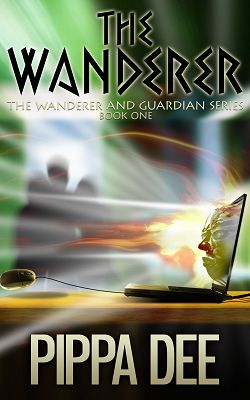
As for Twitter … I’ve never been a big Twitter user, but I’ve synced up my Facebook page so anything I post on my PD Martin page goes to Twitter. Which means less work. Having said that, I’ve created more work for myself with a slight Facebook multiple personality disorder — I’ve got my personal Phillipa Martin profile, my PD Martin page and now my Pippa Dee page. But I think the separation of a personal profile page and professional author page is useful.
So, a writer’s work in terms of social media is probably never done. What else?
How about editing? Yes, our books go out the door and onto shelves (or databases), but is an author ever truly finished a book? I think most of us could edit and tweak until eternity. It’s more that we’re forced to put a stop on the edits at some point—whether it’s self-imposed or from an agent or publisher.
So, authors and readers alike, how long do you spend on social media a day? Do you use different pages/profiles on Facebook? And is a writer’s work ever done?
When former NFL great Junior Seau committed suicide last week at the early age of 43, by all reports, it came as a complete surprise to everyone who knew him. In stark contrast to his reputation as one of the fiercest defensive players the game has ever seen, Seau was a beloved, jocular human being on and off the field, a man whose energy and joie de vie rubbed off on friends, teammates and family members alike.
And yet he took his own life before the age of 50, leaving no clues behind to help explain why.
Because the self-inflicted gunshot wound that killed him was to the chest, rather than the head, people familiar with the recent history of the NFL (National Football League) suspect Seau’s motives for suicide may have been identical to those of Dave Duerson, another former pro who killed himself in a similar fashion only 15 months ago.
Duerson had struggled for years with various symptoms of CTE (Chronic Traumatic Encephalopathy — as brilliantly described by guest blogger Kathryn Fox yesterday), brought on by the multiple concussions he’d suffered throughout his playing career, and taking his own life, it seemed, was his way of escaping a future that promised only more of the same. He’d shot himself in the chest, a text message he sent his ex-wife before pulling the trigger explained, to keep his brain intact for researchers studying the long-term effects of CTE on former players like himself.
As Junior Seau had suffered multiple concussions of his own prior to his retirement in 2010, it’s at least improbable that the similarities between his suicide and Duerson’s are just coincidence. In the absence of any concrete evidence to that effect, however, all anyone can do to understand his final act is speculate, and wonder why, if his troubles were so grave, he never sought help from any of the many people who loved him.
Or did he?
What does a cry for help sound like under such circumstances? Does anyone really know? Ideally, of course, it would be short, sweet, and impossible to misconstrue: “Help me. I’m in pain. So much pain I’m thinking about taking my own life.” But who ever speaks that openly, that frankly, about themselves? Who has the kind of humility required to admit to such vulnerability?
Junior Seau was a former professional football player, a future Hall of Famer in one of the world’s most violent sports, so it’s easy to understand how difficult it may have been for him to reveal his troubles — whatever they were — to anyone. But Seau was also just a man, and men as a general rule don’t come to admitting weakness — let alone asking for help to overcome it — naturally.
Old fashioned though it may be, the idea that a man is supposed to be invincible — capable of fending for himself under any and all circumstances — is still very much in effect for most of us. It’s how we were raised to think, it’s the example we saw set by our fathers and their fathers, and their fathers before them. It’s the through-line of every ham-fisted adventure story we ever read or heard told around a campfire: A man survives. A man provides. A man bends but he never breaks.
But of course, some of us do break. At the whim of love and pride, among other things, we fall short of our great expectations and go to pieces. And some of us even do the unthinkable first: We ask for help. We just don’t do it in a way that’s easily recognized for what it is. We take the edge off, put bells and whistles on the plea so that the desperation behind it — the terrible, soul-crushing desperation — doesn’t show through.
I speak from experience.
No, no, put down the phone! I’ve never contemplated suicide. Ever. The God I believe in has never allowed things to spiral that far out of control for me, and I know with absolute certainty he never will. But my life has never been, and is not now without, shall we say, the occasional threat of rain. In fact, I’ve come close enough to losing everything I hold dear in this world to feel the draw of the abyss, to at least wonder how much worse death could possibly be than another day living in pain.
When I find myself asking that question, I ask for help.
But I speak in code.
I make my need sound like a nuisance, my level of discomfort akin to a sore tooth. I don’t talk about life and death, or the shedding of a single tear. I choose my language carefully, so as to avoid any suggestion that what I’m asking for is nothing less than my last hope.
Sometimes, a friend will see past all the camouflage and bullshit to the harsh truth underneath, but mostly, no one ever does. They just see what I’ve allowed them to see: one more disheartening message from yet another poor devil of their acquaintance looking for work. And what, in these hard times, is unusual or alarming about that? There’s no need for panic. Everyone remain calm. Bankruptcy is not a fatal disease. Divorce is not the end of the world. Hell, it’s not like Haywood said he was going to throw himself off a fucking bridge if he didn’t find a job soon, right?
Or blow a hole in his chest with a gun?
See, that’s the trouble with cries for help, especially those that come from a prideful man: They don’t always sound like a “cry” at all.
For a while now we’ve been putting on our collective thinking cap, trying to imagine who would be the best new addition to Murderati, to add but another unique voice to the mix (and spare Pari her Herculean every-Monday schedule). As we tossed various names around, one name kept popping up over and over: Tania Carver.
Only one problem. Tania Carver, well, doesn’t exist.
At least, you can’t shake her hand—or borrow a fiver from her. But she’s alive and well as the pseudonym for husband-wife writing team Martyn and Linda Waites.
I first met Martyn at Bouchercon in San Francisco, and we shared a pint or two (but who’s counting) in St. Louis as well, so I was given the welcome task of, well, welcoming him and Linda aboard. I was beyond thrilled when they agreed.
Martyn, author of nine books himself (The Mercy Seat is one of my all-time favorites), got the idea of teaming up with Linda when a daring proclamation of chutzpah to his editor proved much harder to pull off solo than he’d thought. He needed Linda to seal the deal. And Tania Carver was born. (For the whole story, check out their website.)
The tale just gets better—Ms. Carver became an international bestseller.
The series features Detective Inspector Phil Brennan and psychologist Marina Esposito, and the books are set in Colchester, “a large town in the north of Essex, almost in Suffolk, [that] was once the capital of Britain but was destroyed by Boudica and the Iceni in revolt against the Romans… There are ghosts of crimes and the echoes of ghosts of crimes down the centuries. It feels like a modern, well-connected, rational city occupying the same space as an old, isolated, superstitious town.” The fourth novel in the series, Choked, comes out this year.
So, if you would please, put your hands together for the one, the only, quasi-existent Tania Carver.
What? That’s how they’re starting? After that great build up David gave, that’s the first line? Yes. It is. Well, OK. Maybe I should explain a little more. It’s Martyn here, half of Tania Carver. The tall, male half. If you’ve been to Bouchercon, as David will attest to, you’ll have seen me in the bar. If you’ve been to virtually any crime fiction event you’ll have seen me in the bar. And out of the two of us I’m the one with the thing about superheroes. Which is why I’ve just been to see The Avengers. Linda didn’t fancy it so I took our daughter along as my human shield and no one could feel uncomfortable about the middle aged man wearing a Jack Kirby t-shirt sitting on his own at a kids film. As it was, it was just my daughter who felt uncomfortable about that. It’s a good job cinemas are dark.
Anyway. I digress. I loved it. What a fantastic film. I wasn’t bored once. As a lifelong comic book reader (and aspiring writer of them – still) it was everything I hoped it would be. There were the characters I grew up with, whose adventures I’d religiously followed every month, whose imaginary lives I became completely intertwined with, up on the big screen, fully fleshed out and in action. Avengers assembled, indeed.
And the cinema was just about full, which was heartening. And not just with kids, but with middle-aged people like me, some of which hadn’t brought along their own kids as human shields and were shamelessly enjoying the movie on their own. And that got me thinking. Why would a whole load of middle-aged people turn up on a Saturday night to watch what is essentially a kids film? Is it just childhood nostalgia for seeing brightly-coloured characters fight each other? Or simple, uncomplicated escapism at its most reductive? Is that it and nothing more?
So was that why I was there too? Was it just a way to fill in a couple of hours with spectacle or was there something more to it. Naturally, being a writer with a tendency to over-analyse, I found something more. Something that could be reduced to a (deceptively) simple phrase: ‘Follow your bliss.’
If anyone reading this knows where that comes from then they’ve most probably read Joseph Campbell. If you’re not familiar with him, here’s a brief introduction. He was a writer, best known for his studies in comparative mythology and comparative religion in relation to the human psyche. His most famous works were The Masks Of God, The Power Of Myth (where the ‘Follow Your Bliss’ quote comes from) and the book that brought him to my attention, The Hero With A Thousand Faces.
It’s difficult to summarise Campbell’s work in a few sentences but for the sake of brevity I’ll give it a go. He believed that all the human cultures of the world, dating back millennia, shared a common mythology. Common stories, in other words, that were broken down locally to be told and retold. The myths of Eastern and Western religions, he argued, came from the same source and were just different interpretations of those stories. But these stories had one thing in common: they were narratives that not only addressed the human condition but allowed people to understand it and, in many cases, transcend it. ‘Truth is one,’ he said, ‘the sages speak of it by many names.’ He combined this research with contemporary philosophical interpretation, especially the work of Carl Jung’s archetypes, by which time he thought that the telling of myths and stories had passed from religious speakers to artists, filmmakers and novelists. His work can be looked on as a repository for every story type there is.
George Lucas discovered this after he’d made the first three Star Wars films. He screened them for Campbell who agreed that everything he’d said was, coincidentally, up there on the screen. After that, it was open season on Campbell’s ideas. Everybody claimed them. Filmmakers from Disney’s The Lion King to The Matrix, novelists, songwriters. Even game and theme park designers.
Which brings us back to The Avengers. What does that movie have to do with Campbell? Well, more than you might think. Let’s look at the story. There’s a great evil. Some heroes are brought together to combat that evil but, for various psychological reasons, they don’t think that they’re up to the challenge. They then have to put aside their differences and conquer their own fears to face the enemy, defeat it, and in doing so learn truths about themselves that will make them better people. It’s a classic mythic structure: challenges, fears, dragons, battles and the return home as a different person. It’s a template that I imagine every single writer has used. More than once.
I’ve often thought that superheroes were more than just juvenile escapism. In the right hands they become the contemporary equivalent of, say, Greek mythology. Or Medieval morality and mystery plays. But it doesn’t just apply to superheroes. We might, as writers, think we’re trying something new, something that’s never been attempted before. We’re not. We’re just shuffling the words around. Admittedly some do it with such style and skill that they create scenes, characters and novels that make it seem like those words have never been used that way before while the rest of us just sit and take notes. But they’re still following Campbell’s archetypes.
‘There are only seven songs,’ Michael Stipe of REM once said (and I may be paraphrasing slightly here), ‘and we do four of them quite well.’ Campbell’s work shows us that like songs there are no new stories and I doubt there ever will be. Because there doesn’t need to be. We have the same kinds of songs, we just have different kinds of singers. When we write, we’re using the same narratives as the Greeks, as the Romans, as Cervantes, as Poe, as Dostoyevsky. As James Joyce. As Stan Lee and Jack Kirby. We use the same structures whether we call them by the names Campbell used or not. Campbell would say that’s down to localism, where we are in the world and how we’ve interpreted those stories. Where – and how – we’ve been taught or influenced. Whatever. All that matters is, we’re all doing the same thing. Whether we’re writing about superheroes or private eyes, crinolined young women or knights in armour. We’re all trying to tell stories in our own ways that, in their simplest forms, are doing the same things now that they’ve always done. Making audiences – making readers – laugh, cry and think. Connecting.
And in doing so we’re all, hopefully, following our bliss.
David’s blog got me started. Thinking of that “evil” little boy at the mercy of all those repressed nuns and priests. “When sister or I enter the room, you don’t just stand up. You leap up. LEAP!“ I mean, Jesus, like that’s not going to have some kind of negative effect on the REST OF HIS LIFE.
It ain’t right, I tell ya.
His blog came to mind again last night when I was clicking through options on Netflix and came across a documentary called “49 UP.”
Do you know the “UP” series? It began as “7 UP” back in 1964, the year I was born. It had a simple premise – “Give me the seven year old and I’ll give you the man.” (Maybe they should have said, “…and I’ll give you the adult,” since half of the kids interviewed were girls. But, hey, this was 1964 and people weren’t particularly PC at the time.)
The idea was to interview fourteen seven year olds (half from lower, working class backgrounds and half from the privileged class) and ask them about their beliefs and dreams for the future. There was a lot of emphasis placed on the socio-economic backgrounds of the kids, with the assumption that each child’s social class would determine what he might or might not be able to achieve in life.
So, the kids were interviewed when they were seven and then seven years later they were interviewed again.
The series has been a life-long project for film director Michael Apted (“Coal Miner’s Daughter,” “Gorky Park,” “Gorillas in the Midst,” “Nell”), who has been the interviewer and organizer since the kids were interviewed at fourteen. No matter what’s happening in his career, Apted always returns to “UP.”
I was introduced to the series when it was “21 UP.” I was riveted, watching each interview juxtaposed to the next, seven and fourteen years apart. For the most part, the kids held to their dreams, but their socio-economic backgrounds did in fact determine the level of difficulty involved in accomplishing their goals.
Another seven years, and another set of interviews. “28 UP.” Another seven years and the kids were 35. Then 42.
I watched them last night turning 49. It didn’t occur to me until this very moment that a new installment is about to be released, and that the participants are now 56.
I find this hard to digest. It’s both beautiful and horrifying. The participants seem to feel the same and some have stopped participating in the project altogether. The ones that remain are aware of the social import of this life-long examination, but they remain troubled by the fact that their lives are ripped apart every seven years and presented to the general public to devour and judge.
It freaks me out to see the progression of their lives. I remember when I was in college I saw a copy of Life Magazine with pictures of people growing from babies into senior citizens. One picture to the next, each taken approximately five years apart. I was fascinated, I couldn’t put the magazine down. But it was also like watching a horror film–you want to turn away, but you’re glued to every frame. I just can’t get over the fact that it’s happening to all of us. That it’s happening to me.
As difficult as it must be to be a participant in the series, I wish I’d had the opportunity. I’m an incredibly nostalgic person — I make every effort to document even the most difficult and personal experiences of my life. I remember making tape recordings of my teenage years, recording my feelings about life, my political views, my dreams and my sorrows. I told myself I did this for the children I would some day have; to show them that their father had the same fears and concerns that they themselves might have. But I really did it for myself. So that I can look back at my teenage years as an adult and map the way my life evolved.
It would have been hard, I know, but I would have endured it. I imagine what Michael Apted’s camera might have seen…
Age 7. Deciding to become a vegetarian after my older sister visits a meat-packing plant on a sixth-grade field trip. My mother thinks I’ll last two weeks. Who knew it was a life-long decision? I’m sure I’ll become a veterinarian. I carry around a little, black doctor’s bag filled with gauze, band aids and surgical instruments. Ready for the next run-over dog. My mind is set.
Age 14. I wake up and join my mother for breakfast. She is tired, her eyes puffy. She tells me my father has left, he’s gone to live with another woman. Other children. I am pissed, I say the joke isn’t funny. I run from the table. She calls after me, “I’m not joking! Your father is gone!”
Age 21. Bouncing around different bars in San Francisco with a girl I met in Santa Cruz. Celebrating the fact that I can drink. My father killed himself the year before. I am confused, depressed, angry. I just finished writing my first screenplay and a couple short stories. Everything is influenced by the loss of my father. And I’m headed to Hollywood.
Age 28. “Out of college, money spent, see no future, pay no rent.” The Beatles remain a huge force in my life. Been with the same girl now for three years. I’m working in the international marketing department at Disney Studios, as an assistant. I’m still trying to finish the 35mm film I made with my friends. I’d shot the thing on cash-advanced credit cards, loans and donations from people who wanted to see me succeed. Chuck Connors had a role in the film, donating his time. He used to say, “Schwartz, are you going to finish this film before I die?” And then he died.
Age 35. Married now with one little boy and another on the way. Working for film director Wolfgang Petersen. It all seems great except it isn’t. I haven’t become the big screenwriter or film director I dreamt I’d be, and it’s becoming clear it won’t happen as long as I remain where I am. There just isn’t any room for more than one story-teller, and Wolfgang is it. Meanwhile, I’m living a secret life; gentle father and husband by day, street-cruising sex addict by night. I wonder if Michael Apted’s lens captures the chromatic duplicity.
Age 42. Two beautiful boys and a marriage barely saved. The cameras see me attending twelve step meetings and sitting in counseling sessions with my wife. They missed the total chaos that unraveled just a few years before. My wife and I are struggling to work things out, and we’re growing closer in the process. I started writing something new and it helps keep me sane. I call it “Boulevard.”
Age 49 hasn’t come, but it’s just around the corner. If the camera was here it would capture a man content with his life, at last, after finding success as an author. Creativity setting him free.
One thing I noticed after watching those kids turn 49 was that the Sturm und Drang of their lives had subsided. They seemed to have settled into themselves, content with where their lives had led them. Many had not realized the dreams they had at seven, fourteen and twenty-one. They found other dreams to pursue and pursued them.
At 47 I’m no longer the angry young man. I’m not exactly where I want to be, but I’m pretty happy where I am. I’ve been through a lot and the worst of it wasn’t that bad. I appreciate the good fortune I’ve had. And I’ve made good friends along the way. Which, I’ve learned, is the crux of it all.
My voyage to this point looks a lot like the ones I observed in the “UP” series. It makes me wonder if we’re all destined to follow the same path. Maybe it’s the human condition, universal.
I used to think that growing old meant I’d lose my passion for life. I treasured my anger because it showed that I cared, deeply, about being alive. I realize now that the anger was mostly wasted energy. Too many years spent gnawed by anxiety. What did my anger provide? Maybe it lit the fire that wrote my books. There was anger in my books.
Perhaps I don’t have to live the anger to write it.
I’m ready to be content, like the forty-nine year olds I saw on TV.
And Corbett seems to have turned out all right, despite the attack on his spirit by the fathers and nuns.
Still, I haven’t seen “56 UP” yet. Maybe things fall apart and it’s Mahler all over again. Maybe there’s a post-midlife crisis I haven’t considered.
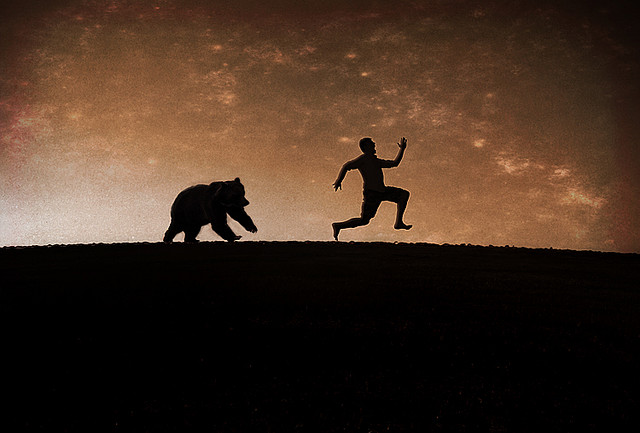
Life has a habit of throwing you curve balls. Just when you think you’ve got it all mapped out, suddenly it takes a sharp left turn and you find yourself running for your life — usually pursued by a bear.
I’ve always liked to think I’m reasonably adaptable, but actually I’ve realised that I’ve been increasingly clinging to things as a security blanket and I wonder if I’ve become too rigid, too set in my ways. When I write, I like to have certainty and structure. There’s a kind of freedom in it — knowing I can expand on an idea and let it run, but with the knowledge of the overall shape of the book still firm in my mind
The latest work-in-progress stems from an idea I had years ago. Something quite different from my current series, but that should nevertheless appeal to readers who like the qualities embodied by Charlie Fox.
The story is a supernatural thriller devoid of vampires or werewolves. It involves grief, rage, love, a breakaway sect of Buddhist ascetic monks, and a shape-shifting demonic entity. Other than that, you’ll have to wait until it’s done 🙂
The idea for this story has been hanging around in the back of my head for so long that I had a detailed outline, almost a scene-by-scene storyboard of how it was going to go. In fact, it probably had the most detailed outline of any book I’ve written to date, because it spent so long in the gestation period.
But when I actually came to sit down and put the first words on the page, it began to change. The roles of the main characters shifted, some were written out altogether, some changed gender and even sexual orientation. I tried to pare it back to the important elements of the story and write from the heart.
Of course, how well it all works when I’ve finished it is anyone’s guess.
But the more research I do, the more story elements seem to fit the facts as I uncover them, and the more the story seems ideally suited for its location, partly in London and partly in a remote region of Okayama Prefecture in the south of Japan.
And I’ve been asking myself, if I’m so caught up in this story, why haven’t I written it before?
We’re back to curve balls. In the past I’ve always been seen purely as a writer of crime thrillers. I’ve always thought of myself that way. It was my niche — my pigeonhole — and I was reluctant to venture outside it, as well as being advised not to do so.
OK, so there’s crime in this story. There’s murder, loyalty, betrayal, ties by blood, ties by tradition, ties by friendship, and a centuries-old killer with no memory or conscience.
For me, I feel that now I finally have the freedom, if I’m willing to take the risk, to swim outside the lanes. To free-dive and see how long I can hold my breath without drowning. To experience the fear and the rush of embarking on new territory. Scary, yes, but exciting too. And if I can get past that fear, the possibilities are suddenly endless.
So, ‘Rati, would you ever read outside your chosen genre if the premise sounded intriguing enough, or you liked the author’s voice enough to give it a whirl?
Or if you write in a particular genre, do you have ideas tucked away in a totally different genre?
This week’s Word of the Week is condign, an adjective meaning well-deserved or fitting, and usually used when referring to punishment. Also condignly (adv) and condignness (n). From the Latin condignus from con- intens, and dignus worthy.
And finally, for anyone interested there are still places available on the crime writing workshop I’m hosting at Derby Central Library on Saturday, May 19th — 10am–3:45pm — entitled ‘A Man Comes Into The Room With a Gun …’
First, if I may, a preliminary bit of shameless self-promotion:
On May 15th, Open Road Media and Mysterious Press will allow me to join fellow Murderateros Gar Anthony Haywood and Ken Bruen as a Brother in Backlist as they re-publish in ebook format my first two novels, THE DEVIL’S REDHEAD and DONE FOR A DIME, plus an all-new collection of stories, KILLING MYSELF TO SURVIVE.
I’ll have more info when I post on May 14th (I’m trading days that week with Pari), but for now here’s a personal profile the folks at Open Road prepared for the launch. Hope you enjoy it:
* * * * *
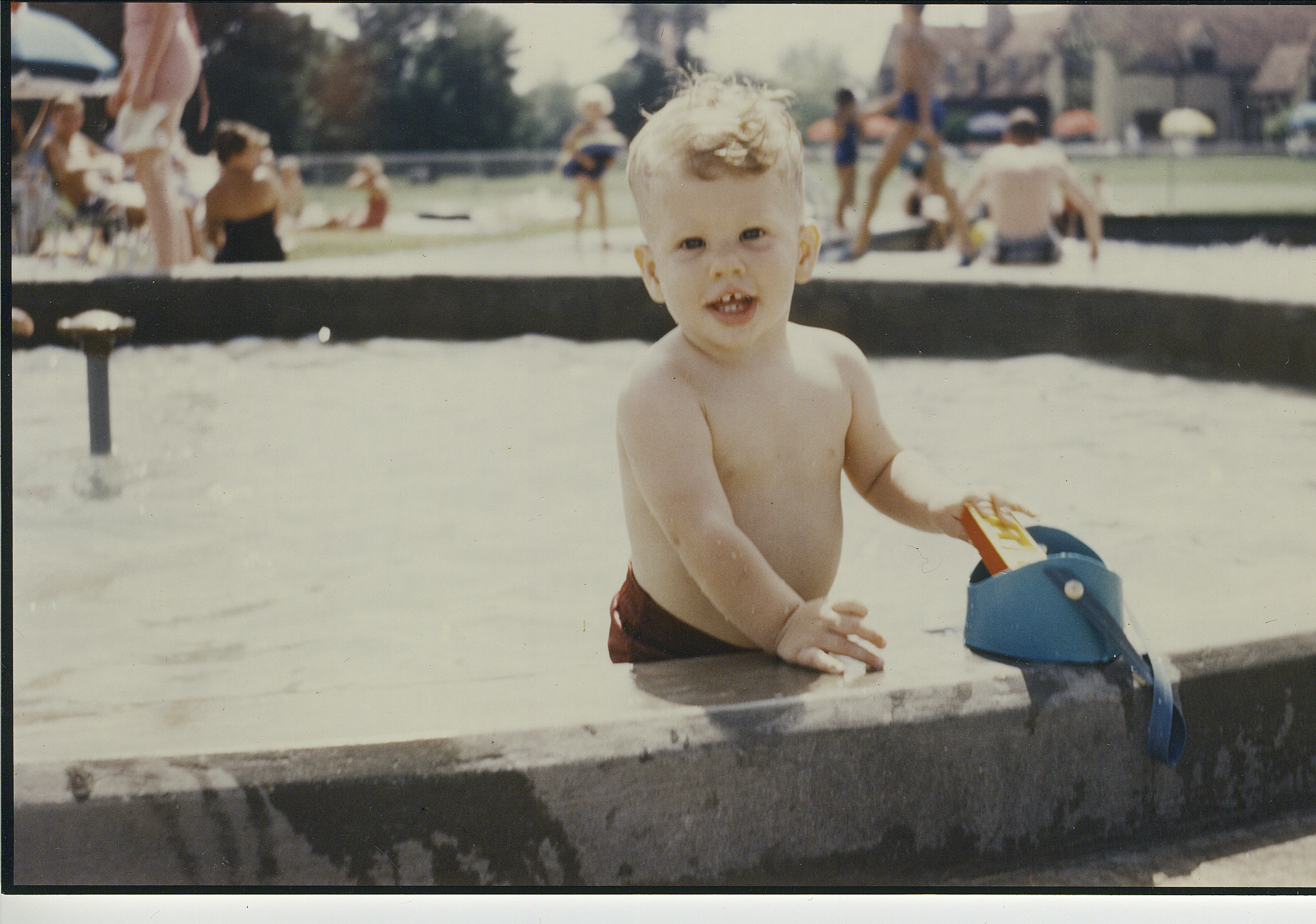
The author, age three or so. Note the evil.
This is a story about unspeakable sin and ultimate redemption.
Whose sin, whose redemption? You tell me.
At the age of six I entered first grade at Our Lady of Peace Elementary in Columbus, Ohio. Nothing, nothing about the public school where I attended kindergarten the year before could have prepared me for what I was about to encounter.
The first bit of strangeness involved the women in whose care my parents abandoned me.
Penguins, the older kids called them.
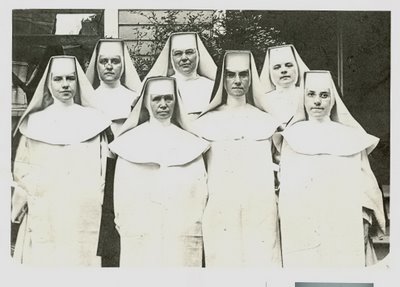
I’d never seen nuns up close before. And not just any nuns. Dominicans. Daughters of the Inquisition.
They had antiquated names linked to obscure saints—Sister Malcolm (there’s a St. Malcolm? Who knew?) Sister Sabina. Sister Norita. Sister Euthenasia (Okay, I made that one up.)
The habits they wore, which I would later refer to as Medieval Madonna Drag, had a black-veiled wimple with a flat mortarboard top. It looked like a nice place to park a cup of coffee if there wasn’t room on your desk. I was secretly hoping one of them might pull a stunt like that—you know, for laughs. But you don’t take vows of lifelong obedience, chastity and poverty if what you’re looking for is a chuckle.
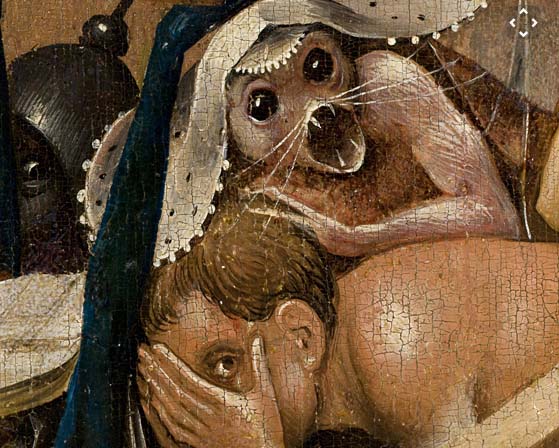
But it wasn’t just the habit. The truly weird part about their get-up was that each of them had tied around her waist a long chain of black beads:
At the end of that chain was the figure of a dying man, naked except for a loincloth, nailed to a cross, a gaping wound in his side and a bird’s nest of thorns jammed down onto his head.
They referred to this man as their spiritual husband.
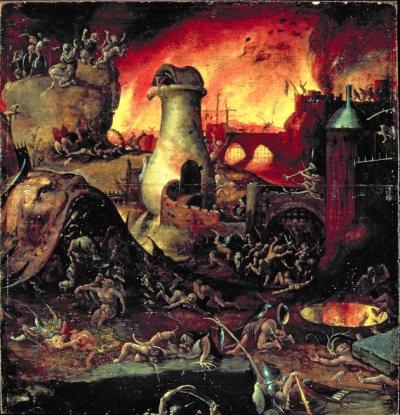
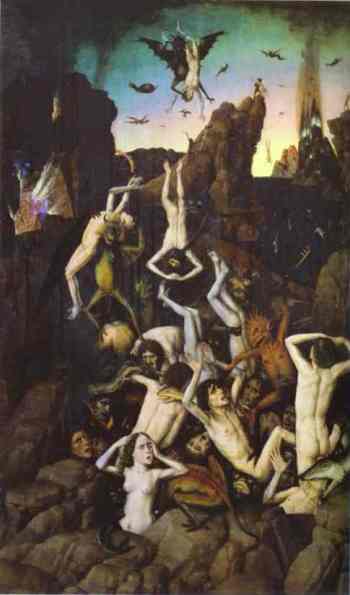
All of which explained, I suppose, their generally unpleasant demeanor. What a pack of sourpusses. Scowls outnumbered smiles ten-to-one, and a few were just mean as weasels. They glared at you through their rimless spectacles with an expression that said: There’s a chair in hell waiting for you, my pretty.
But as strange and menacing as these women were, they were nothing compared to Father Foley, the parish pastor. Kids would literally turn white and tremble at the sound of his name—partly because the nuns said it the same way your babysitter talked about the guy with a hook for a hand out on lover’s lane. The constant, inescapable message was: Beware! Beware of the Wrath of Father George Foley!
Central Casting’s Image of Fater Foley
He was a huge bucket-headed Irishman, 6’2, 250 pounds. He ran the only “legal” bingo operation in all of Franklin County and believe me, there were a LOT of greased palms involved. He’d been a boxer before he went into the seminary and his first stint as a priest was at the boy’s industrial school, as they called it. Reform school.
But none of this — NONE of this — could prepare you for your first face-to-face encounter with the man himself.
To borrow a line from The Twilight Zone: Imagine if you will … You’re six years old. Six years old. You’re still in a state of childlike awe over so many of life’s mysteries, things like dragonflies and waffles and questions like: If I have a right shoe and a left shoe, does that mean I have a right sock and a left sock? (You wouldn’t believe how long I puzzled over that sucker.) Innocent, okay? That’s what I’m talking about. You’re innocent.
But you’re also Catholic. Which kinda nullifies the innocent.
Then one day, as you’re sitting quietly at your desk while Sr. Sabina teaches you the Hail Mary or the Our Father or the ever-so-important, never-to-be-forgotten Act of Contrition (“O my God I am heartily sorry for having offended Thee, and I detest all my sins…”), suddenly downstairs the door to the school SLAMS open.
I mean, LAPD’s SWAT Team would love to kick in a door like this.
And then you hear it. The voice. The voice you will never forget.
BAAAAAHHHH!!!!!! LITTLE MONSTERS.
You hear his steps on the stair — did I mention he had elephantiasis in one leg, so he was crippled and in constant pain. There’s a mood enhancer. But despite all that he dragged himself up the stairs to the second floor where the classrooms were, his steps an eerie and ominous:
BOOM Thud.
BOOM Thud.
BOOM Thud…
Silence as he reached the top of the stairs. Every kid in my class is shaking. Then the classroom door BLOWS back. He’s there in the doorway, immense, fire-eyed—he’s John Brown at Harper’s Ferry, he’s Ahab harpooning Moby Dick. He’s the God of the Old Testament. And he’s come — here to YOUR classroom — to pass out report cards.
The first thing he says, still in the doorway, is: STAND UP!
Confused, wobbly and weak-kneed like baby goats, we clamber up as best we can from our still somewhat puzzling desks — but that’s not good enough:
When sister or I enter the room, you don’t just stand up. You leap up. LEAP!
For the next five minutes, we had leaping drills. He’d tell us to sit. Then he’d bellow: LEAP. We’d shoot up from our chairs like bottle rockets. Okay, he’d say. Sit down. Pause. Then: LEAP. Up we’d shoot again. Over and over, until he decided we’d finally gotten the message.
Then he passed out report cards.
“Have they been good, sister?”
“Well, for the most part, father. Some better than others.”
To say Father Foley believed in discipline is kinda like saying the Vikings were fond of sailing. And it wasn’t like you could run home for sympathy. My mother — my mother — told me: Don’t come running to me complaining that Father Foley hit you because if you do I’ll just swat you again.
If you got a C in conduct Father Foley would BLISTER you with a harangue that would make a Marine drill sergeant weep. His voice could knock out fillings — and if it didn’t, he’d use his hand, or his cane — no joke. For a C in Conduct. It was like you’d robbed a bank or strangled your kid sister or raped the school mascot. Then you had to come down for the next 6 Saturdays and help Mr. Johnson, the janitor, clean the school.
Father Foley called it: The Rock Pile.
I never had to go on the Rock Pile. My crime would be far more serious than that.
But I’m getting ahead of myself. First grade went by reasonably quick and without memorable incident. I habitually got straight A’s and was thought of as a decent kid and a good student.
Things would change.
In second grade I had Sister Alphonsa, who truly, madly, deeply … HATED me. Even before I did the terrible thing.
One day I was working quietly at my desk like all my fellow second-graders when suddenly I heard this swoosh swooshswoosh and the rattle of beads.
I glanced up: Sister Alphonsa was charging toward me, her habit and rosary swaying from her momentum, a look on her face as though, given half a chance, she would eat me whole and pick her teeth with my bones.
She grabbed my hair, pinched my cheek hard, slapped my face, and said: Look what you did!
She slammed a piece of paper down on my desk. I’d misspelled the word “school” on my spelling test.
Call it the curse of being a good student, I suppose. I got the message — I was supposed to be perfect.
Maybe that’s why I did it. The terrible thing.
What was it?
I signed my own report card.
Now, let me remind you, we’re talking straight A’s, across the board, even for Conduct and Effort. I’d show my grades to my parents and they were so blasé about it like: Oh, Christ, this again? Yawn.
So I thought: What’s the big deal?
Now, in second grade we were just learning how to write script, and we hadn’t gotten around to “a” yet, which made writing my mother’s name somewhat challenging, since it was Mary. I thought, Oh well, I’ll just use an “e.” Like Merry Christmas, except it was Merry Elizabeth Corbett. And Merry only had one “r.”
But the misspelling was hardly the giveaway. My mother had the most beautiful handwriting. Her signature belonged on the Declaration of Independence, or the Magna Carta. When I signed her name beneath her previous signatures, it looked like this woman with the beautiful script had lost her hand to a wolf, and was writing with the stump.
But arch fiend criminal genius that I was, I thought: Eh. Who’s gonna notice? Nobody looks at these things.
Several weeks went by. Then Sister Alphonsa appeared beside me once again. She didn’t come flying down the aisle this time. She came slowly, methodically, as though pacing herself to a dirge only she could hear. When she reached my desk, she stopped, glared down at me with every drop of contempt and disgust she could muster and said:
“You … are an evil boy.”
She told me to go out into the hallway. Sister Macaria wanted to speak with me.
Sister Macaria—named for St. Macarius, of which there are in fact three: Macarius the Elder, Macarius the Younger, and Macarius the Wonder Worker—Sister Macaria was, as it turned out, pretty much the opposite of Sister Alphonsa. The kids liked Sister Macaria, the boys especially. She played softball with the eighth graders, had a mean underhand and when she was at the plate and the wood met the leather that little sucker was outta heah.
She also wore her wimple cocked a little to the side with a kind of — how shall I put this — devil-may-care jauntiness.
Sister Macaria had my report card. She looked at it. Looked at me. Looked at it. Back at me. Said finally:
Huh. You signed your own report card.
Yes, sister
Why?
I dunno. Sister.
She sighed voluminously. Well, go inside and get back to your schoolwork.
I’m thinking: That’s it? One minute I’m evil, the next it’s: Go back to your desk and try not to puke on your shoes.
I’m thinking: Wow. This is sin? Count me in.
A few more weeks go by, then early one morning: SLAM.
Boom. Thud. Boom. Thud…
The classroom door blows opens: We all leap up.
Good morning, Father Foley.
Oh yes. We’d learned our lesson only too well. We were God’s little children. Obsequious, oleaginous, obedient little drones.
The weird thing. Father Foley was in an incredibly chipper mood. He didn’t bellow, didn’t threaten, he even cracked a few jokes with the nun.
But I knew what was on my report card, and I’m thinking: You know, this may not end well.
But then I think: Oh come one. He loves my mom—she made an incredible apple pie, and when she baked one for bingo he’d sneak down to the school basement, scoop it up before the crowd arrived and take it back to the rectory all for himself. And my brother Jim, the sanctimonious suck-up, was his favorite altar boy.
I had juice, is what I’m saying. How bad could it get?
Father Foley goes through the A’s: Jimmy Adamski. Marie Anthony. Terry Archibald.
Then the B’s: Mike Bernardo. Kathy Brennan. Debbie Bucci.
Finally the C’s: Jack Cardi. Nancy Callahan. David Corbett.
He looks at my report card — again, such a good mood.
He says: Okay, Corbett, let’s see what we’ve got. A in reading, good. A in arithmetic, good. A in conduct, A in effort.
He turns it over, looks at the back.
YOU. SIGNED. YOUR OWN. REPORT CARD!!!
STAND UP.
I shot out of my chair like a moon launch and stood there shaking. I was so terrified I don’t even remember what he said but he made me stand there for what felt like eternity, going on with the other report cards but returning his attention to me every few minutes to scold me, browbeat me, humiliate me.
The other kids, I knew, hated this. Hated me. I’d turned the sunshine into gloom. For everybody.
I was an evil boy.
Finally Father Foley wrapped up with Brian Zimmerman. No more distractions. But instead of handing down my sentence, he got up and started to leave. He shot me one last withering, malevolent glare, then said: Corbett? What you did is so bad I have to go home and think about what I’m going to do to you.
Thus began my year in hell. I knew, as only a seven-year-old can, that Father Foley was spending every waking minute of every day trying to come up with the most hideous, shameful, pitiless punishment he could dream of — for me.
If he came within sight I’d duck behind somebody else and shrink up like a sponge, trying to become invisible. For whatever reason he didn’t hand out report cards any more that year, Sister Macaria did, but I knew that just meant he hadn’t come up with an appropriate punishment yet. He was still thinking. And what he was thinking was just getting worse and worse and worse the more the days rolled by.
Finally summer break came, I forgot about it for a while, though I knew he hadn’t forgotten. How could he? What I’d done was so bad …
Next year, third grade, we’re preparing for Confirmation, the sacrament that would make us Soldiers of Christ.
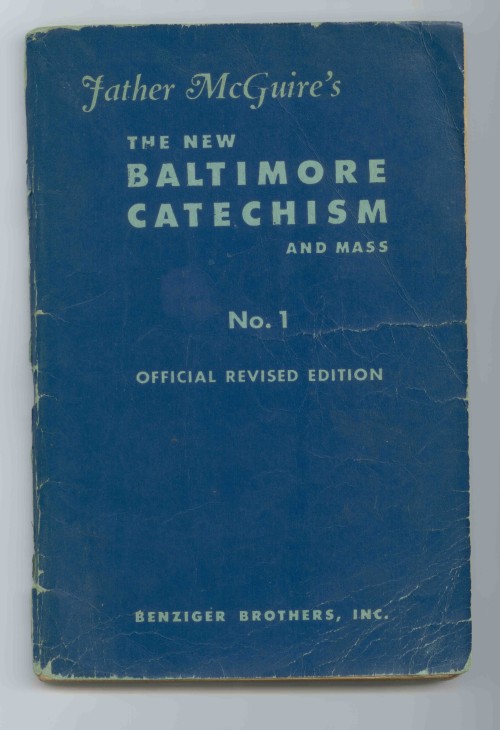
We had to memorize the catechism
because we’d be questioned by the bishop and if we flubbed an answer, we wouldn’t be confirmed, our families would be shamed — we’d be a public disgrace not just to our confirmation class but the entire parish.
And so we learned:
The three conditions for a mortal sin.
The four kinds of sanctifying grace.
The three Evangelical Counsels.
The four cardinal virtues.
The seven chief works of corporal mercy.
The two types of judgment.
The three kinds of lies.
The eight beatitudes and:
The seven gifts of the Holy Ghost (which are, by the way: Wisdom, Understanding, Counsel, Fortitude, Knowledge, Piety and Fear of the Lord—some things you never forget.)
Father Foley conducted the confirmation classes. I still expected him any minute to finally say: Okay, Corbett. I figured out what I’m gonna do to you.
Me: still trembling scared. Terrified.
One day, as he’s running us through our paces, trying to explain the difference between mortal sin and venial sin, he says to Molly Medaglia: Medaglia, say you push good old Corbett there down the stairs …
I didn’t even hear the rest of the question. It didn’t even register that, at least hypothetically, he’d just pushed me down the stairs.
I thought: He called me Good Old Corbett.
Good. Old. Corbett.
He forgot.
Inside, it’s like the Bells of St. Mary’s are ringing in my chest. Doves are flying off toward sunlit towers. Raindrops on roses and blah blah blah blah.
From somewhere deep inside, a voice rose up: Free at last! Free At Last. Thank God Almighty I am free at last!
I was an evil boy. But I never spent a minute on the rock pile.
But I’m still Catholic, and I know how this works. No one gets off Scot free.
Somewhere in hell. There’s a chair. With my name on it. In my mother’s handwriting.
* * * * *
So, Murderateros: What incidents of childhood fear, dread, sacrilege or shame formed you indelibly as the hopeless wretch— ahem, soulful writer — you are today?
* * * * *
Jukebox Hero of the Week: Speaking of an evil boy: Moodvideo’s revisualization of Chris Isaak’s “Baby Did a Bad Bad Thing” (oh yeah):
Last week one of my dearest friends came to visit. Though we do write and call, we hadn’t seen each other for 12 years. I’d had fantasies of staying up late each night and talking til dawn, of baring my soul and emptying all the emotions that I’ve been holding in and waiting for the right person to whom I could express them.
The visit didn’t end up working that way.
We talked a lot, it’s true, but there weren’t any great catharses . . . no hugely revelatory moments. Instead it was a gentle visit, a very normal one. Today my friend is aboard a plane on her way to a convention. And in spite of fantasies unrealized, I feel far more centered than I have in months. Merely being with someone I love so deeply and have known for so long had the effect of a soul balm, a magnificently solid realigning of my very essence that healed without fanfare or even apparent action.
This afternoon as I write this, I’m thinking about other things in my life that have a similar molecularly soothing quality. While I know the metaphor of an emotional MRI is inelegant, it’s the closest idea I can find to express what I’m hoping to convey here. (Use this link for a brief explanation of how MRIs work. In my odd world today, an emotional MRI heals while a medicinal MRI is used soley for diagnostics.)
One poem that always centers me is “Danse Russe” by William Carlos Williams. Reading it jolts my atoms and when they return, a joyous part of my heart has opened. The experience lasts for days as the images the poet creates — and I internalize — enter and reenter my mind’s eye.
The book Turtle Moon by Alice Hoffman reminds me of magic each time I open its pages and allow myself the pleasure of reliving its stunning writing and beautiful story. While reading it, I see the world around me through a similarly magical lens. I suspect that The Book Thiefby Markus Zusak will serve that role too in the years to come.
Kodaly’s Sonata for Solo Cello stirs longing, pain, and utter beauty so fully that every time I listen to it my cells heal. The effect is quietly wrought, a shift of quarter tones rather than entire scales.
I return to these pieces of literature and music — as well as certain others — because they reach a place of tremendous and satisfying meaning in my heart. They align my emotional molecules and bring a beautiful solace. Though I don’t end up with a diagnostic of my soul — and that’s where the whole MRI concept might break down in the telling — I do end up feeling blessedly complete once more.
Today’s question:
Will you share one of your emotional MRIs with us?
Last week there was some publishing news so big that I’ve been wondering ever since why we haven’t been talking about it here. But it’s like that classic left-wing admonition: “I looked around me at what was happening and wondered why somebody wasn’t DOING anything about it… and then I realized I WAS somebody.”
Oh, that’s right.
So, unqualified as I am to write this post, today I’m posting about it. I’m going to keep it short and mostly link to more qualified sources so that you all can use your Murderati time today to catch up, if you haven’t been following along. The news, of course, is that the Department of Justice has filed an antitrust lawsuit against Apple and five of the Big Six publishers, alleging collusion in e-book prices and sales models.
If you haven’t read about it, do that first, here.
So what does this mean for us as authors, exactly?
I have no idea.
I can’t imagine it’s going to be good for advances for traditional book contracts, which have been dropping steadily over the last few years even before this. Damages are being claimed for consumers of e books and not for the authors who have suffered from publishers fixing prices far too high for e books, so there’s no restitution coming there.
What I do know is that it’s going to mean SOMETHING.
Joe Konrath tends to be right about these kinds of things, so I’d highly recommend reading this blog of his and subsequent ones as this case progresses. And April Hamilton has summed up quite a few of the arguments going on in the publishing world over all this.
What I DON’T recommend is ignoring it as if it’s some esoteric business thing that has nothing to do with you.
Writing a book is so hard all on its own that it’s very distracting and anxiety-provoking to have to speculate on how something like this lawsuit may affect your own ability to make a living. I know.
When I was a screenwriter, the life was so 24/7 crazy that I adopted the head-in-the-sand attitude of most screenwriters: “Oh, I don’t have time to keep up with union issues, I am Too Busy with Very Important Writing.”
That is, until an assault by some highly-paid screenwriters on the WGA credits rules so floored and angered me that I got politically involved, so involved that I ended up running for and winning a seat on the WGA Board of Directors.
Now, that wasn’t the brightest career move I could have made, because in truth NO ONE has the time to write and serve on a union Board of Directors at the same time. But being on the board did put the reality of the business changes that were going on in the film industry right in my face. Unignorable.
And what I realized was – I’ve got to get out of this. It’s not sustainable. If the film business model is going to keep changing in this direction, I personally won’t be able to make a living as a screenwriter in five or six years. Which were remarkably coherent thoughts for such a right-brained person as I am, actually. Absolutely not anything I wanted to think about, much less have to act on, but I knew I couldn’t not act.
And I started putting my eggs in other baskets and writing novels while I watched things steadily get worse for screenwriters.
Now I’m making a comfortable living as an author, while a lot of my screenwriter friends have lost their houses and/or haven’t had a film job in years.
I’m not trying to sound dire, especially when I’m being so vague about what all this will mean for us. And of course the news that the publishing industry is undergoing a massive sea change is no news at all for anyone who’s been paying any attention over the last few years. But I do find some authors’ reactions to all of this perplexing, and the idea of silence on the issue alarming. I may not be an expert, but I know this is not a good time to stick my head in the sand.
So I urge you to click through some links, do your own Googling, and be informed. It IS our business.