Author Archives: Murderati Members


The pleasure of the new

by Pari

The other day one of my daughters and I were in the car when an astounding song came on the radio. Something about this piece managed to penetrate the whoosh of air from an open window and to halt what had been an interesting conversation. My daughter and I looked at each other and reached for the volume control at the same time. This song was special  — utterly different than anything we’d ever heard before — and we didn’t want to miss the moment.

I’ve been thinking lately about conventions in one’s life, not the kind a person goes to, but the kind he or she lives by.  Whether it be traditional structures such as the number of syllables per line in haiku or the conventions around what it means to be a single woman in her fifties, I’ve been watching and thinking, observing rather than coming to particular conclusions.

Perhaps because I’m a writer (or perhaps I’m a writer because of this) I adore learning. And the more something butts against my assumptions, the more interesting I find it. What I love about “The Wind is Getting Stronger,” and movies such as Happy, Happy is that they combine elements that I never knew could be combined. In the case of the song, it’s Kletzmer, Latin rhythms, folk music and an oral narrative about a topic people just don’t sing about in that way. In Happy, Happy, it’s the exploration of love, family, enslavement, and a quartet of mainly expressionless Norwegian men singing gospel music a la blue grass (I think). In Caramel, a movie from Lebanon, it’s the window into life in modern Beirut and the way young and older women navigate expectations of love and obligation in a world different — but not nearly as different as I assumed — as the one in which I and my daughters live. I also loved the way French was interspersed with the Arabic; I understood more of the language than I expected.

And, to top off this invigorating time, I’m reading The Book Thief which is an extraordinary literary accomplishment that, to me, defies so many expectations and rules it’s astounding the thing got published (I could say the same thing about Spiegleman’s Maus books).

Conventions are, at times, incredibly useful. They abbreviate the need to learn every single thing anew every single time. They create a common social language so we know how to live with each other. But like old work attire, conventions can lose their utility and become confining or even embarrassing. One of the pleasures of my life at this moment is that I’m searching out and embracing moments of newness, of learning and seeing the world in a different light. Delight is coming in unexpected places:

songs that meld, mesh and break rules and work precisely because they do

movies that challenge expectations through their internal integrity rather than through pushy intent

books that provide a reading experience– through the story told and the way in which it’s expressed —  that is truly different from anything I’ve hitherto encountered.

What about you? Is there a piece of art — music, movie, lit, visual — that has given you the same frisson of joy with its astounding freshness?

NOTHING TO SEE HERE, MOVE ALONG…


by Stephen Jay Schwartz

My Wild Card Tuesday interview with film director Kevin Lewis this week emphasized the fact that a screenwriter more often than not has to rewrite his work based on elements completely out of his control. Like new story comments provided by the myriad of producers involved in a project, or the actors, or the director, or financiers. A character becomes young or old and changes race or sex depending on what actor receives the submission, and that often depends on the relationships the producers have with the kind of talent that can green-light a film.

A screenwriter has to be prepared to work in a new idea at a moment’s notice, and that means tossing out previous story points that don’t gel organically with the new material. Often, to make a new idea work, old ideas must be excised. Completely. A favorite scene or piece of dialogue suddenly doesn’t belong, and it’s not going to belong, no matter how you try to justify it. When you leave these bits of tissue on the bone you create a Frankenstein from the cannibalized parts of incompatible monsters.

But this isn’t restricted to screenwriting alone. We go through the same process with our novels. Sometimes we get into the last third of our book and realize that a major plot point doesn’t work. We have to establish something new and rework it, thread-by-thread, from the very beginning. And we know what needs to be done. We might not want to toss the good stuff, but the fact is, it’s no longer relevant. Sometimes, as they say, we have “to kill our babies.”

Sure, we can fool ourselves for a while. As long as the manuscript stays in our hands, we can assume it’s perfect. That’s why we need trusted readers to tell us the truth. People who aren’t tied to previous incarnations of the story. People who can say, “Why did your character do or say THAT?” If our answer is something like, “Well, you see, in an earlier draft I had this hot air balloon fall on his house, and I liked the way he always looked for things to fall from the sky after that, and…” then you know you’re holding onto something that has no place in the new story you’ve chosen to tell.

Of course, if you really love something and can find a way to work it in organically, go for it. But, more often than not, it’s a brush-stroke meant for a painting that doesn’t exist.

I’m thinking about these things because I’m doing another pass on GRINDER, probably the final pass before the script goes back to actors. This draft addresses feedback we’ve received about elements that make the story confusing to the reader. And there is one fundamental story point that I’ve always loved, but it has managed to polarize the people who champion the project. There’s a change I’ve wanted to avoid making, but now that the success of the project hangs in the balance, I’ve had to find a way to make the change in a way that benefits the story. And what I’ve discovered in the process is that the new change strengthens the story’s themes and helps create a stronger resolution.

Once the decision was made, it became necessary for me to put the old subplot out of my head. Eliminate it from my thoughts. The director–Kevin–and I both loved the old subplot, but we also see the need to sacrifice it for the greater good of the story. The only thing left for us to do was to accept our loss and MOVE ON. Because what’s ahead is actually better, as long as we don’t try to force old story elements into the new idea. I’ve done that before with GRINDER, incorporating scenes from previous drafts, scenes that everyone liked and wanted to see realized, and it didn’t work. Each major rewrite required that I reinvent the story, and, in doing so, old scenes had to be tossed. And only then did the script begin to take shape.

What’s great is that the story is strong enough to adjust to the changes. The new ideas don’t deter from the story’s themes, but strengthen them. Stripping out the previous subplot helped identify a larger problem, and the new ideas helped solve it.

It’s amazing how things really aren’t done until they’re done. It’s true, I jump through fewer hoops when I’m writing novels. But that’s not necessarily a good thing. GRINDER has benefited from the many eyes that have scanned its pages. But my willingness to listen, borne from years of receiving project notes on dozens of writing projects, combined with my experience on the other side, as a development executive, is the key element that keeps me attached to the project on the one hand, and helps me to improve it, on the other.

In the end, the reader/viewer won’t miss the missing scenes. They don’t know what existed before. What they’ll see is a finished product, and it will either work or it won’t.

So, there’s really nothing to see here. Best just to move along…

Plucked From the Ether

Zoë Sharp

“Where do you get your ideas?”

It’s a question that crops up at almost every reader event I do as an author, in one form or another.

Interestingly enough, I don’t hear it quite so much at events where there are a lot of would-be writers. Maybe that’s because all writers feel they should know where to get their ideas, and admitting that sometimes the store cupboard runs a little bare is akin to an admission of failure.

I’ve heard all kinds of answers from authors, too, varying from “Plots-R-Us.com” to “Walmart”, and although these may sound unduly flippant, probably the truth is that most writers don’t actually know, and they’re worried that if they try to analyse it too much, the magic will somehow disappear. Ideas just … arrive. It’s like trying to remember an obscure fact that you know is tucked away somewhere in a recess of your memory. You try and avoid thinking about it, and suddenly up it pops, but you’ve no clue how it got there.

For me, ideas really are a state of mind.

At the library event I did last week I used my New Car analogy when it came to where ideas come from, and received a few puzzled looks until I expanded on this theory.

So you decide you’re going to buy a new car – doesn’t have to be new new, just new to you. And as soon as you’re behind the wheel suddenly it seems that everyone on the road is driving the same kind of car, possibly even in the very same colour. You see them everywhere. This doesn’t necessarily mean that there’s been a rush on that particular model. In fact, I’d hazard a guess that they were probably always out there. It was simply that you didn’t notice them before.

Your eyes may have been open, but your mind wasn’t.

It’s exactly the same with being a writer and having ideas for stories. They’re out there. All the time. They’re floating in the ether, whispering at you from magazines, newspapers, the radio, TV, and the internet. It’s a babble of voices that sometimes makes it hard to hear when people speak, and explains the distracted frown that writers tend to wear a lot of the time. It’s the reason we wake in the night and scrabble for pen and paper from the bedside table, or seriously consider hanging a Chinagraph pencil in the shower so you can scribble vital notes on the glass screen without having to get out first.

Our brains are being constantly bombarded with sensory information and most people learn to filter out the background chatter to avoid being completely overwhelmed. Writers lack part of that filtering system, I think. We get everything, good and bad, the nuggets and the spoil.

The difficult part is working out which is which and turning it into something coherent.

Mind you, right from the moment Charlie Fox arrived in my mind, I knew I’d be a fool to ignore her. Besides anything else, she probably would have broken my arms and legs if I’d tried. 

When I look back at the books I’ve written so far in the series, the strongest are always the ones that sprang from the simplest ideas. I also like to turn things around on people, so that what they expect is not always what they get. Hence writing about Northern Ireland without paramilitary action, and taking a very different slant on a California cult.

For her latest outing, FIFTH VICTIM, the story kicked off with the idea of loss, and what that means to different people. How you don’t appreciate what you have until you’re faced with losing everything, and the effect that has on Charlie and on the people she’s tasked to protect. Who has the most to lose, I wondered? The people who apparently have it all.

If I’m honest I have to say I don’t know where the initial idea came from. It floated past me one day and I was lucky enough to grab it and hold on tight.

But once I’d got my grubby little mitts on it, I nailed it down and started to play with it – although not in a nasty serial-killer kind of way … I simply wrote down each development as it occurred to me, and then played the ‘what if’ game, jotting down all kinds of possible outcomes and scenarios until eventually the whole thing more or less came together.

So, ‘Rati, where do YOU get your ideas? And what’s the best basic idea for a book or movie you’ve come across? Note I said  ‘idea’ – the execution didn’t have to live up to the premise. Although, if it didn’t why not?

I’ve been lucky enough to have been invited to contribute to some great blogs over the past week. Hope you’ll take the time to check them out, if you feel so inclined:

Elizabeth A White’s blog

FIFTH VICTIM pg 69 test

Writers Read

And My Book, The Movie

This week’s Word of the Week is chorizont, or chorizonist, meaning a person who disputes the identity of authorship, especially one who ascribes the Iliad and Odyssey to different authors. From the Greek chorizon, separating.

Next Tuesday is my Wildcard day. I was lucky enough to catch up with the highly acclaimed Timothy Hallinan to talk about the e-book publication of the latest in his Simeon Grist mystery series. Don’t miss it!

Get Well, Daniel Woodrell

By David Corbett

Daniel Woodrell goes in for surgery today to repair a shoulder that never healed right after a nasty accident while gigging for suckers on the Current River with celebrity gourmand Anthony Bourdain.

Reports are varied and contradictory, but from what I can piece together from reports I’ve heard or read, it appears that, while in the boat at night on the river, Bourdain went for a fish and his spear caught in a low-hanging branch that snapped back with thunder-crack velocity, knocking out the boat’s lights and generator and planting Daniel face-first in the bottom of the boat. In the darkness, calling out for Daniel but getting no response, everyone feared he’d been thrown overboard—worse, that he was drowning somewhere under the tumbling current. When the lights came back on the film crew spotted Daniel helpless at their feet, unconscious with a broken shoulder, and sped him to a hospital.

The repair work proved inadequate, shall we say. Daniel now faces a bi-planar osteotomy at the Mayo Clinic, to be followed by two months in an immobilizer and rehab for the rest of the year. How far has Anthony Bourdain set back the progress of American letters? We shall see. Apparently he felt terrible about the accident at the time—Daniel is one of his favorite writers, he says—but those TV personalities move swiftly on, running to the next gig, as it were. (Shortly after the accident, Bourdain was in Naples, where he was having “a very good time.”)

If for some reason you don’t know who Daniel Woodrell is—shudder the thought—let me introduce you to one of the finest writers of our generation. I doubt I can say anything of general interest that isn’t said better in this interview with Craig McDonald for the Mulholland Books website.

For a taste of Daniel’s writing, you can start with this remarkable short story, “Night Stand,” that appeared in Esquire. It’s included in the collection The Outlaw Album that came out last year. I’d say I recommend it, but that doesn’t get halfway near how I feel about the matter. Daniel is one of very few writers I can honestly say that I’ll read anything to which he’s attached his name, and I routinely hand over my dog-eared copy of Tomato Red to friends who’ve yet to enjoy his work, saying, “Trust me, you’ll love this,” and they always do.

Two of his books have been made into films: Woe to Live On, perhaps my favorite of Daniel’s novels, adapted by Ang Lee into Ride with the Devil; and Winter’s Bone, a remarkable film based on a breathtaking novel, each unique in its own way, each unforgettable.

Saul Bellow is rumored to have said that a writer is a reader inspired to emulation. Well, I can attest that reading Daniel’s work has driven me to be a better scribbler. I know I can’t equal his language—Daniel is a stylist of the first order, by which I mean the prose serves story perfectly, exquisitely—but I can strive to match his honesty, his attention to detail, his sense of rhythm and his knowledge of the human animal. I want to reach within and write from the place where his words have landed and lingered. In a way, I think I need to. I’ll feel small somehow if I don’t.

Here’s to a successful surgery and a quick convalescense. May the bones set right and the healing begin. Somebody bring the whiskey.

If you’d like to wish Daniel well, or let him know how much you enjoy his books, please leave a comment. I’ll be passing this link along for him to enjoy once the anaesthesia wears off.

And if you’d like to share a story of a wonderful outing gone wickedly wrong, that might put a smile on his face. Misery loving company and all that.

* * * * *

Jukebox Hero of the Week: Seems appropriate that we should tap into the old-time music that appeared on the Winter’s Bone soundtrack, particularly this haunting number, “Hardscrabble Elegy,” by Dickon Hinchliffe:

INTERVIEW WITH FILM DIRECTOR KEVIN LEWIS


By Stephen Jay Schwartz
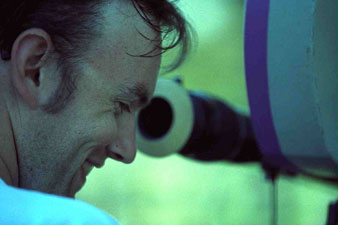
Last year I had the great opportunity to meet and befriend the talented, young film director Kevin Lewis (click to view his reel).  Kevin is the creator of GRINDER, the screenplay I was employed to write. It will be the eighth feature film Kevin has directed.

Originally from Denver, Colorado, Kevin’s early film efforts earned him a scholarship to the famed school of cinema at USC. While there he interned with such established entertainment heavies as film directors John McTiernan and Renny Harlin and producer Lynda Obst. Kevin’s first feature film after college, THE METHOD (starring Sean Patrick Flanery, Robert Forster and Natasha Gregson Wagner) was picked up for distribution by Showcase Entertainment at the Slamdance Film Festival.

His next directorial effort, DOWNWARD ANGEL starring Matt Schulze from “The Fast and the Furious,” was picked up by Blockbuster Video and continues to do well in home video and pay TV.

Over the next few years Kevin directed numerous known actors, such as John Savage, Sean Young, Charles Dutton, Jake Muxworthy and Chloe Moretz, in the films THE DROP, DARK HEART, and THE THIRD NAIL.
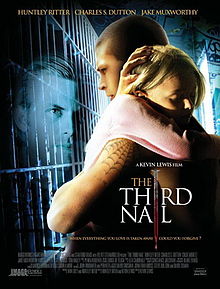
Kevin currently works with the 3D film conversion company, Venture 3D, located on the Sony Lot in Los Angeles. The company takes traditional two-dimensional film and converts it to 3D using a unique filmic approach that was first designed for medical and military applications. Among others, Venture 3D converted the film PRIEST and is currently converting James Cameron’s TITANIC. HyperEmotive Films is Venture 3D’s sister company, created to produce original motion picture content. GRINDER is a HyperEmotive Film.

In working with Kevin I discovered that we are built from the same stuff. We were weened on the films of the 1970s. Most of our filmic references go back to scenes from Taxi Driver, Apocalypse Now, Midnight Cowboy, Marathon Man, Three Days of the Condor, Dog Day Afternoon, The Godfather…we both agree that films from that era had guts and told stories that Hollywood is unwilling to tell today. Unwilling, or maybe unable to recognize the value. It’s a discussion we have almost every week, and it bonds us.

SS: So, first off, Kevin, thank you for joining us here at Murderati. While all of us are authors, most of us are also big film buffs, and some of us write or have written screenplays professionally. So, there’s quite an interest in learning how you do what you do. To begin with, I’d like to know your opinion of the state of affairs in Hollywood now. Why aren’t they making films like the ones we love, from back in the day? How has Hollywood changed?

KL: Thanks for having me here, Stephen. First off, things just aren’t that good in the biz. I think Hollywood wants to play it safe right now. In the 70’s nobody played it safe, the filmmakers (movie brats) were willing to explore, they wanted to kick out the old guard and take over, and that is what they did. Now, the same movie brats are the ones who have grown complacent. When I hear things about Spielberg, how when he was young he wanted to shoot on location and now he just wonders what hotel room he will get next to the filming location, well, that says it all. We have George Lucas directing in an air conditioned room with thousands of CGI artists around him making a prequel trilogy that pales in comparison to the original.

The executives who run the studios want trans-media properties (ips that cross platform to video games, comic books, etc), they are more interested in “branding” than original content. We have movies that cost over $200m, based on the board games “Battleship” (which, check me if I am wrong, never had aliens in it), “Candyland” and “Monopoly”. Every comic book has either been made or is going to be made into a movie. I think the Hollywood execs have grown up in a pop culture world and this is all they know. I blame a lot of this on the success of blockbuster films like “Star Wars”. And I blame myself as well, for supporting the marketing campaigns that built the blockbusters. I was raised on Lucas/Spielberg films, and I collected the toys (still do), but once it all became about toys it was the end of the creativity. Because now you have marketing execs calling the shots. Last summer there were movies in the theatre that had the number 5 in the title. Studios care more about sequels and prequels than original material.

I also think that in the past we had creative execs who actually understood the creative process or were creative themselves. But now Hollywood has been invaded by MBAs and they do not understand or even want to understand the creative process. We have studio execs that are former agents (how scary is that?) and they have figured out a way to make sure they are “locked” in, even if a movie tanks. The MBA makes sure he gets paid.

And the foreign box office has made things worse because now everything has been converted to “genres,” since genres play cross-platform. A producer once told me that “dialogue is hard to understand in foreign countries, but a bullet speaks a thousand words.” That’s a pretty scary statement.

SS: I find it interesting that you’ve embraced 3D. I saw some footage of the work you’ve done at Venture 3D and it blew my mind. I saw scenes from what looked like a Merchant-Ivory film, it was a period drama, and it felt like I was walking the halls of the film’s castle myself.

KL: 3D stereoscopic is a great opportunity for filmmakers to make their movies more immersive. I like to call it “Story-scopic”, because the 3D has to service the story, and you need to make a good 2D movie first and then accentuate it with the 3D. 3D allows the filmmaker to bring the audience in to their world and make the movie more of an “experience” than just watching a movie. And in this day and age, where you have everything trying to grab the attention of the viewer from Netflix, xbox, ipad, etc., you need to make 3D a motion picture event. If you do it right that’s what it can be – an event.

SS: We authors often talk about how difficult it is for us to write and finish our novels while juggling the responsibilities of having day jobs, families and various other commitments. However, all a writer needs is a pen and paper to practice his craft. A film director needs a crew of fifty and a few hundred thousand dollars, just to start. How do you stay on top of your game? How does a film director practice his craft?

KL: It starts with story, story, story. You have to work on the story whether you wrote it yourself or worked with a writer. Then it becomes about the mechanics, “How do I breathe life into this and make it a reality?” You have to break down the budget and figure out your resources. I am from the Spike Lee school “By Any Means Necessary” and sometimes that’s what it takes. You can also read about directors, producers, and writers. Read scripts, listen to commentaries from people behind the scenes, from directors, producers, writers or other craftsmen. Now technology is really cheap, you can get yourself an HD 1080p camera to shoot and a lap top with Final Cut Pro and you can make your own movie, or just experiment. Practice, practice, practice equates to shoot, shoot, shoot. James Cameron said “The artist should not go to technology, the technology should come to the artist”.

My first feature I had to beg, borrow and steal and I shot on 35mm and used a moviola to cut. Now it would be pretty much all digital for less than half the cost. And that has leveled the playing field. It’s great because technology is at the artist’s fingertips and they can express themselves freely and inexpensively, but it is a determent as well because it has opened the field to pretty much everybody and so the competition is fierce. But I believe if you stick to telling your film YOUR way and use YOUR voice as a filmmaker you will succeed.

SS: By working with you I’ve been impressed with your almost magical ability to turn words into images, or to see images between the lines, so to speak. I feel that I’m a pretty visual person, but you’re a born film director, and it shows. When you read a book, do you always see the movie in your head? How is telling a story in film different from telling it on paper?

KL: Yes, unfortunately I do. My brain constantly charges up a barrage of images. I think and feel visually, always have. Sometimes I wish I could just turn the switch off, but I think it has helped me in this field. Telling a story on film is all about the visuals, that is why film is different from theater and books, it is a director’s medium. The stage is a playwrights medium and novels are the writer’s medium. But even more than that it is a COLLABORATIVE medium. Unlike novels or paintings, making movies means having a lot of chefs in the kitchen (producers, financiers, etc..) and that can make for some interesting dishes. Not all of them taste very good in the end.

SS: The following is a passage that opens one of our fellow Murderati member’s books. How would you shoot the following scene, from CEMETERY ROAD by Gar Anthony Haywood?

Winter, 1979

What I’ve always remembered most about my last day in Los Angeles is the smell of burning tar. A neighbor across the alley from O’s mother’s garage was having his roof redone and the stench of molten tar hung in the air like a hot, black cloud.

“Goddamn, that shit stinks!” R.J. kept saying.

O’ was late as usual and all through the waiting around had R.J. going through Kools like a chocolate junky through Kisses. By the time O’ finally showed up, over forty minutes after the agreed-upon hour, the floor of the garage was littered with butts, R.J. having crushed them underfoot with an animal-like ferocity to assuage his terror.

KL: I see it shot with a desaturated look, reminds me of Altman’s “McCabe and Mrs. Miller” or shot in black and white (A producer/distributor’s worst nightmare unless you are “The Artist”). I see a nice long lens shot, SLOW MO of a paint brush spreading the tar down on the roof, the heat rippling off. Close-ups of cigs being smoked and then put out with R.J.’s dialogue. –very Howard Hawkesque. Then a shot behind the main character, his shoulders filling frame. The smoke back lit as it seeps out on left side of frame. A nice tracking shot when O shows up, tracking over the cigs with a low angle dolly, huge depth of field like Welles’ “Citizen’s Kane”. That’s what comes to mind when I read that paragraph.

SS: Not many people really understand what it takes to get a movie made. This past year I’ve watched you struggle and fight and persevere against enormous odds. It’s kind of like seeing what my book editor goes through when he fights the advertising department to get the book cover I want, then he turns around and fights for marketing dollars so my book gets noticed, and then he fights to get the right blurbs on the cover, and on and on and on. He does all this on top of reading, evaluating and editing my manuscript. What are the “behind the scenes” things you have to do to ensure your vision makes it to the screen? What are the obstacles? How much time do you actually spend directing the movie?

KL: Making a movie is truly like going to war. You need to prep your soldiers for battle. You need to make sure they have food, clothes, weapons and know the battle plan and, more importantly, the exit plan. Making a movie takes probably a year or more of your life. You have 2-3 months for prep, 1-2 months to shoot (unlike Mission Impossible 4 that takes 6 months just to shoot) and 3-4 months for post. That is if you started NOW with money in the bank, a finished script, cast and locations locked and ready to go. But if you are like most indies, then it will take a lot longer than that. The feature I’m doing now has taken 3 years and I have been directing it every day, whether in my head, on paper, on the phone or through the lens.

SS: What do you look for in a story? What are the things that make a screenplay work for you? What are the mistakes you see in unproduced screenplays, time and again?

KL: The first thing I look for is whether I connect with what’s happening on the page. Movies are about people watching people and you need that emotional connection for the truth. The mistakes I see in a lot of screenplays are poor, cliché dialogue, or scenes that don’t really represent how people interact in the real world. The other thing I see are “mash ups,” like “Point Break meets The Artist”. Really? Just because you take two genres and “mash” them up it doesn’t mean it’ll make a good movie. It’s like if you took two foods like pizza and turkey a la king and combined them and made “pizza a la king”, it doesn’t look pretty and it tastes terrible.

SS: What are the challenges you see in adapting novels for the screen? What should authors be doing to make their books more attractive to film makers?

KL: A book is a book and a movie is a movie and they are very different. The book is almost always better than the movie because it allows the reader to picture the world, characters and story themselves rather than being told the story in the director’s voice. You need to take the “essence” of the book, the soul if you will, and start from scratch. Tolkien believed that film could never capture every nuance in fiction, and I think he was right. You have to take the soul and as long as you stay true to the core and spirit, you are on the right path. The writer has to divorce himself from being the author or it is just too painful, because liberties will be taken and your baby will get mauled. In the same way, the writer/director needs to divorce himself as “writer” once he shoots the movie and the director needs to divorce himself as the “On set director” and put on the “editor” hat once the movie is in post. Being a director means you wear many hats and being a successful director means you have to wear those hats very well.

SS: What are your favorite films and who are your favorite film directors, and why?

KL: It used to be “Raiders of the Lost Ark”, but once that shameful debacle called “Indiana Jones and the Crystal Skull” came out, I had to cut the ties. Raiders was the first movie that made me understand what a director does, but after Skull my love affair was over. It was a serious break-up so I had to go to my number two movie, which is “2001 A Space Odyssey”. They could never and would never make that movie today. And if they did, the dawn of man sequence would be cut out because the producers, studio and focus test groups would say it was “too slow and nothing ever happens,” and Bowman would be played by George Clooney and Hal would be voiced by Brad Pitt and there would be a huge CGI star child war at the end…anyway 2001 for sure, just because of it’s sheer brilliance and audacity. I have never seen a movie like it. I also love “Apocalypse Now”, “Trainspotting”, “Blade Runner”, “On the Waterfront”, “The Conversation” and “The Godfather”. My favorite directors are Kubrick, because nobody made movies like him and nobody ever will, Peter Weir for the emotional pull that he instills in his stories and characters, Coppola (his early work) for his way of tapping into the human condition and showing the truth. In regards to the modern directors, I love Darren Aronofsky, Christopher Nolan and Danny Boyle.

SS: Christ, Kevin, we have exactly the same taste. “Blade Runner” (the director’s cut), “On the Waterfront” and “The Conversation” are personal favorites of mine.

Now, you’ve been working on GRINDER for years, and you’ve seen it grow from the nugget of an idea into various different screenplays, by a few different writers. What is the development process like for you, as the original writer and the film’s director? Is the film shaping up the way you envisioned?
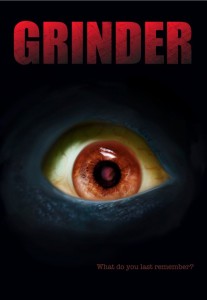
KL: The development process is hard. You nurture it for so long, envision what it is going to sound, look and feel like and then the rug gets pulled out from under you and you change it because a producer or financier has an idea. So you try to make that work, go back to scratch, start to get excited again, thinking, “Yeah that isn’t a bad idea, yeah it’s better, it works” and you envision the sound, look and feel and…wait, another note. Now we’re going to change the female into a male, and the protagonist is going to be the antagonist…it’s like a merry go round – a battle between art and commerce and unfortunately commerce always wins – it is not show-business, it is business-show.

SS: As you mentioned above, film is a collaborative medium. This is one of the reasons many screenwriters run for the hills to begin writing novels. When I write a screenplay I feel that I am writing an outline for what is ultimately a director’s vision. I feel that this is my role in the process. How do you feel about the collaborative nature of making movies?

KL: If your collaborators share the same vision as you, it can be amazing, if they don’t then yes, get your running shoes on.

SS: What’s next for you, Kevin? Where do you see yourself in five years?

KL: I love working in film. Spielberg said “I dream for a living,” and if I can continue to make a living dreaming then I will be happy. As you know, an artist is rarely happy with himself. He strives for greatness, constantly yearning to do better. I want to continue to grow as an artist. I love working on a story, trying to make it better, more real, more human. In the end if I can make movies that touch people and make them think about the world around them, I think I will have achieved success.

SS: You’re doing it, Kevin, and I’m rooting for you. Thanks for being a good sport and spending a little time with the folks in the audience. We can’t wait to see the fruits of your labor.

What’s sexy?

by Pari

Last week, I was writing a sex scene. It’s a therapeutic activity given my current life circumstances. My protag had, through a variety of totally believable events, been chosen for a reality show dream date with an idolized rock star from her youth, someone who still exuded the hot raw energy that had fueled her fantasies  — and, by default, caused her to date many idiots — through adolescence and early adulthood. There he was, a man who turned out to be a really interesting guy, with a depth no one could’ve suspected. They stood in the entrance to his hotel suite, his lips and warmth breath on her neck bringing back feelings she hadn’t had since before her decades-long, rotten marriage and nasty divorce. (No this isn’t autobiographical.)

And, then, for some reason, she couldn’t go through with it, couldn’t have steamy monkey sex with a man she really wanted.

“What the hell?” I muttered, flabbergasted at this turn of events.

What was the matter with her?  What was the matter with me? Had I turned into a total prude? Granted, the sex scenes I’d written in the past always hinted at lovemaking rather than describing play-by-plays. But was I now incapable of giving my protag the release she needed?

Ah . . . there she continued to stand, trembling and totally confused.

Didn’t she know it would be the best thing for everyone for her to just let go and get to the damn climax?

The poor thing leaned against the wall, her heart breaking with desire, embarrassment  . . . and disappointment at her own inability to surrender.

Then the rock star did something so unexpected, my protag  — and I — were caught off guard. The man who’d had to fight off groupies for most of his life, who’d had relationships with supermodels and megastars, buttoned my heroine’s blouse back up and accepted her in that moment right where she was. No pressure. No anger or frustration. He simply held her and witnessed her feeling what she needed to feel — without judgment or condescension.

And that, my friends, ultimately turned her on more than anything else possibly could.

Of course, after I finished writing the scene  — and drinking a scotch and smoking a cigarette — I started thinking about the nature of sex scenes in books and movies.  

What personal and societal expectations are we setting up with all of these idealized depictions of women falling into men’s arms and being totally fulfilled as if every man is a fabulous lover and every woman is capable of turning off her damn mind? As if one sense takes over so completely we forget the discomforts, awkward positions (ouch!), the weird smells, odd noises. . . . and, often, our self-consciousness.

I’m thinking about all of this too because I recently saw Orgasm, Inc.  (watch the trailer — watch the whole darn film!) and — just as important — I have two adolescent daughters. ‘Nuff said.

But back to the sex scene . . .
Although my protag eventually made love with her date that night; the sex scene wasn’t about sex at all.

It was about acceptance.


So here are my questions for today:

Do you read sex scenes or go to movies for them? If so, what do you want out of them?
Can sex scenes not be about sex . . . and still be called “sex scenes?”
Can they still satisfy?

I look forward to reading your answers.

Lives in the Balance (& book giveaways!)

by Alexandra Sokoloff

The TV binge continues.  Yes, it’s sad, although probably better than the equivalent in ice cream or heroin.  

I know I promised a DOWNTON ABBEY dish, and believe me, it’s coming, but I’ve got something else on my mind this week.

FRIDAY NIGHT LIGHTS.

Do you all know this show?  (I lived in the South for five years and never learned to fully say y’all.  I think because I know my mother would kill me if I ever did it in her presence. Even if it does make absolute sense grammatically.)

I’ve been meaning to watch FRIDAY for ages because I thought the non-fiction book on which it’s based was just so incredibly excellent, and I’ve heard so much about the show, created by the amazing Peter Berg, and there’s also, well, Kyle Chandler.  (And on the jailbait end of the spectrum, although at the time of the show he was an adult pro hockey player so it’s actually NOT a felony to look at him – Taylor Kitsch.)

And I finally just started on it, which was a HUGE mistake, because there are FIVE SEASONS of this thing.Who in the world has time for five seasons of anything?

But first game – I mean, first show – I was just hooked.

I had lunch with a friend this week and was raving about it and he looked at me askance and said something to the effect of “Okay, I know it’s great writing and all that, but sports fan that I am – even I couldn’t get past the whole Texas football arena.  So how the hell do YOU?”

I know what he means.

The fact is, very few people realize how much exposure to football I’ve actually had, because I very rarely talk about all the jocks I’ve – been exposed to.  

Look, I’m a dancer. I appreciate physical talent.

But I’m not watching this show for the football, even though I can enjoy watching any sport for that pure physicality. I absolutely love seeing what the human body can do. And football (and hockey) are by far my favorite sports because of the body types and the body parts that the uniforms emphasize.

Okay, but football culture. Not a fan. Hazing, bullying, sexual harassment and assault, simpering cheerleaders making baked goods… And Texas, well, it gave us W. And anyone who can’t figure out how I feel about THAT….

But the absolute fact is, this is a brilliant show. This show is about Texas (and I think it’s important to understand Texas to understand this country, especially now), and it’s about football (and I think it’s important to understand football to understand this country, not as much now as eight years ago, but always), and it’s about race and racism, and it’s about paralyzing cliches of men and women. It’s about Christianity and what that is in this country. It’s about Texas oil and gas, crucial to understand about that state and this country right now.

And it’s about teaching. 

And it’s about teenagers.

More specifically, it’s about teenage lives in the balance.

I’ve been thinking a lot about those teen years, lately. Well, I recently wrote a book set in high school, of course, that tends to concentrate your focus (or more exactly, your entire conscious and unconscious being) on these things. But there’s only one novel that I’ve written so far (and I just finished my TENTH on Friday, people!!!) that doesn’t prominently feature teenagers in major roles.

I know why that is.  When I was just out of college, I taught high school in various exceptional circumstances – rehab centers and the LA County lock-up camps.  Gang kids, at-risk kids, prostitutes, felons, addicts, fosters, abandoneds, traumatized, brutalized, you name it. And while I was doing that, half-time, part-time, enough to make a bare living, I was also double-full-time doing the work that broke me through as a professional writer. So writing and working with troubled teenagers are inextricably entwined for me.

But even before that, I went to Turkey as an exchange student when I was sixteen, one of the most traumatizing and most profound and character-defining experiences of a pretty diverse life. Psychologists say that people can become fixed psychologically at the age of a trauma (especially childhood trauma) and I explore that idea thematically in many of my novels. 

So I have extreme fixations at the ages of sixteen and twenty-two – I can channel everything about those ages as if I’m still living them.  (Well, and lots of other ages, too, but for the purposes of this blog!)

Drifting a bit, but my point is that great stories about teenagers or teaching teenagers just light me up.  I, the non-crier, cried all the way through the fifth season of THE WIRE, which I loved every single second of every episode of, but that season about the kids just devastated me, and FRIDAY NIGHT LIGHTS is having that same effect on me.

Because both of those shows are about kids who are literally infinite – the potential of everything imaginable is inside them, as it is in every child, but it’s so very, very often in those teen years that kids fly or they fall. The stakes are unimaginably enormous; they are not just life and death but mythic.

I’ve been thinking about THAT a lot because RWA, one of the biggest of the big annual book conferences, asked me to do a YA-focused structure workshop at their craft conference this year and I’m working on this theory that YA tends toward the mythic and magical, with the ultimate of stakes, because that is actually so very heartbreakingly true about the teenage years.

FRIDAY NIGHT LIGHTS really bears this out.  Like THE WIRE, the show focuses on kids who are “at risk”, but “at risk” is portrayed as what it truly is.  The razor edge between – for a smart but troubled girl – rape and a life of prostitution and degradation – and a college education and an adventurous and fulfilling future.  The razor edge for an orphaned boy between prison (which for a boy of 17 or 18 means sex slavery, torture, drugs, a high probability of suicide) and a stable self-employment, love and family.  For more than one kid, the difference between a pro football career and a lifetime of drudgery at Tastee Freeze – or again, prison. Not just between life and death, but between life and hell.

It’s the reality of so many, too many, staggeringly many teenagers in our country.  Take a look at the statistics for girls and boys – for rape, homelessness, addiction, prison, suicide… and don’t even get me started on the prospects for children and teenagers in less fortunate countries.

As crime writers, we write about extreme circumstances, it’s basic to the genre.  Well, to me, there’s nothing more extreme than the razor edge that teenagers walk every day, and generally they walk it alone because their parents either should have been sterilized at birth, or said parental units develop a wonderfully selective amnesia once they’re out of their own teenage years and are of no help whatsoever to their children in a crisis, much less the continuing crisis that the teenage years are. And – though it’s better now than what it as when I was in high school, kids still don’t generally talk about the bad stuff.  And you’d better believe predators rely on that post-traumatic self-defensive amnesia.

I admire the hell out of televison that doesn’t sugarcoat. The most prevalent, Alice-in-Wonderland memory of my teenage years was looking around at all the agony the students around me were experiencing and wondering how the hell adults could be so oblivious to it.

So with YA, just like with my adult fiction, I write the dark, because I remember what it was like to be a teenager, and because I so wanted someone else to be acknowledging it and DOING something about it. And I am in awe of any storyteller, in any medium, who tackles the razor edge that the teeage years are.

Myself, when I was a teenager, I was never at risk for a criminal life.  But I know my soul was in the balance, and great stories that told the truth about the darkness I experienced, and that I saw around me, literally, physically saved me – when people fell short.

Something to think about, isn’t it?

So how about you?

In high school, did you, or people you knew, walk a razor’s edge? Who or what saved you or them?  What were the stories that got you through to the light?

And – who WASN’T saved?

Alex 

__________________________________________________________________________ 

Murderati March Madness 

Zoë and I are giving away e books this week!


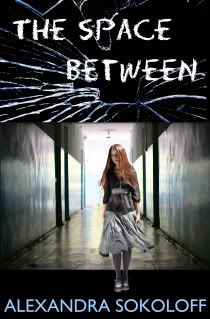
My very dark YA thriller The Space Between is free on Kindle through Sunday (midnight): 

“Alexandra Sokoloff has created an intricate tapestry; a dark Young Adult novel with threads of horror and science fiction that make it a true original. Loaded with graphic, vivid images that place the reader in the midst of the mystery and danger, The Space Between takes psychological elements, quantum physics and multiple dimensions with parallel universes and creates a storyline that has no equal. A must-read. ”  — Suspense Magazine


More info and download now:

Amazon/Kindle 
Amazon UK
Amazon DE
Amazon ES
Amazon FR
Amazon IT

If you meed an e pub version just e mail me – alex AT alexandrasokoloff DOT com


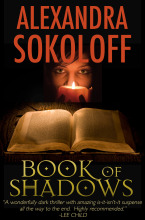
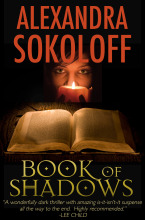
And Book of Shadows will also be free in the UK and worldwide, except US:

“A wonderfully dark thriller with amazing is-it-isn’t-it suspense all the way to the end. Highly recommended.”   — Lee Child

More info and download now:

Amazon UK 
Amazon DE
Amazon ES
Amazon FR
Amazon IT


————————————————————————————–

Zoë Sharp’s ex-Special Forces turned bodyguard heroine, Charlie Fox, is described by The Chicago Tribune as “Ill-tempered, aggressive and borderline psychotic, Fox is also compassionate, introspective and highly principled: arguably one of the most enigmatic − and coolest − heroines in contemporary genre fiction.”

Now you have a chance to find out how it all began. For 48 hours from midnight Pacific Standard Time on Wednesday, February 29th to midnight PST on Friday, March 2nd the very first in the Charlie Fox series, KILLER INSTINCT: Charlie Fox book one, will be available as a FREE Kindle download from Amazon.com and Amazon.co.uk. The book, complete with two deleted scenes and a Foreword by Lee Child, also includes the opening chapter fromRIOT ACT: Charlie Fox book two.

The New York Times said of KILLER INSTINCT: “The bloody bar fights are bloody brilliant.”


Once more with feeling

By PD Martin

In my post on Australia’s National Year of Reading, I spoke about my early love of reading and how I read to be transported into other worlds — be they realistic or fantastical worlds.

Most crime fiction books take us into the fictional world of a cop, FBI agent, body guard, profiler, etc — but they’re based in realism. The crimes could really happen (although as Gar mentioned in his post yesterday, sometimes real events sound too fictional to include in a novel!).

When I was writing my Sophie Anderson series, there were different elements at play, different motivations in terms of my aim for the reader. Some of the books are classic WHOdunits — my aim was to keep the reader guessing about who the perpetrator was. They are also largely WHYdunits. Given my leading lady is a profiler, the books include forensic psychology that focuses on why the perpetrator committed the crime and/or why they exhibited certain behaviours during the crime. My Sophie books can also be described as forensic-based police/FBI procedurals, so the scientific evidence is also a key element — HOWdunit.

In my National Year of Reading post, I said that reading is also about emotion, about how a book makes you feel. And while this can be an important element in some crime fiction stories, it’s not a key factor in the Sophie series. Sure, I want people to connect with Sophie and the story — to be worried about the characters if they’re in danger, to feel losses, to feel the victim’s pain or the victim’s family’s pain, etc. But it’s not the primary driver in these books. Like I said, like many crime fiction books they’re who/why/how dunits.

However, this is not the case in the book I’ve just completed. Tentatively titled Crossroads and Deadends, it’s the mainstream drama/fiction book that I’ve spoken about on Murderati briefly a couple of times. And while I hope readers will feel transported into the character’s world, my primary aim is to get an emotional response from my reader. I want them to feel the characters’ heartaches and triumphs. I want them to worry about how the characters are going to cope.

It feels very different to be writing predominantly for an emotive response, rather than piecing together evidence and suspects. I’m not analysing a crime, and neither are my main characters. Rather, my three main characters are trying to keep their lives together, despite destructive internal and external forces.

So, what is success from my perspective as the author? For the Sophie books, I felt successful when readers reported not knowing whodunit, staying up until 3am to finish a book (and generally not being able to put the books down), being scared to read late at night if they were by themselves, and telling me how much they loved Sophie. I’ve even had emails from my younger readers who read my books and were inspired to study forensics or criminal psychology at college, because they want to be like Sophie. Success.

So, what will make me feel like I’ve done my job well for this new book? Yes, I want it to be a page-turner even though it’s not in the classic page-turning genres of crime, thrillers and action adventures. But mostly, I want readers to identify with my characters and be inspired by their stories. And, quite simply, I want them to cry at least once. Like I said, this book is a completely different style of book and so it’s not surprising that what I consider to be success in terms of my readers’ reactions will be different.  

Oh yeah, and I guess success is also a best seller…but what writer doesn’t want that?

I don’t really have any deep questions today, but would still love your comments.

And I’d also like to tell you about some other Murderati news from Zoe and Alex, who are both offering some of their books free on Kindle.

Zoë Sharp’s ex-Special Forces turned bodyguard heroine, Charlie Fox, is described by The Chicago Tribune as “Ill-tempered, aggressive and borderline psychotic, Fox is also compassionate, introspective and highly principled: arguably one of the most enigmatic − and coolest − heroines in contemporary genre fiction.”

Now you have a chance to find out how it all began. For 48 hours from midnight Pacific Standard Time on Wednesday, February 29th to midnight PST on Friday, March 2nd the very first in the Charlie Fox series, KILLER INSTINCT: Charlie Fox book one, will be available as a FREE Kindle download from Amazon.com and Amazon.co.uk. The book, complete with two deleted scenes and a Foreword by Lee Child, also includes the opening chapter from RIOT ACT: Charlie Fox book two.

The New York Times said of KILLER INSTINCT: “The bloody bar fights are bloody brilliant.”

Also, Alex’s very dark YA thriller The Space Between is free on Kindle from Thursday (starting 12:00 AM PST) through Sunday (midnight): 

“Alexandra Sokoloff has created an intricate tapestry; a dark Young Adult novel with threads of horror and science fiction that make it a true original. Loaded with graphic, vivid images that place the reader in the midst of the mystery and danger, The Space Between takes psychological elements, quantum physics and multiple dimensions with parallel universes and creates a storyline that has no equal. A must-read. ”  — Suspense Magazine

More info and download now:

Amazon/Kindle 
Amazon UK
Amazon DE
Amazon ES
Amazon FR
Amazon IT

And Book of Shadows will also be free in the UK and worldwide, except US:

“A wonderfully dark thriller with amazing is-it-isn’t-it suspense all the way to the end. Highly recommended.”   — Lee Child

More info and download now:

Amazon UK 
Amazon DE
Amazon ES
Amazon FR
Amazon IT

YOU CAN’T MAKE THIS STUFF UP *

* (And expect anyone to believe it)

by Gar Anthony Haywood

A true story:

This past Valentine’s Day, the wife and I were on our way to a restaurant to have a nice, romantic lunch together when her Honda CR-V broke down.  (Yeah, you read that right — it’s a Honda!)  No sooner had I pulled off the freeway than the damn thing died, dash panel aglow with seemingly every warning light in the manual.

I managed to re-start the car and pull it around a corner just to get it out of traffic, but that was it.  The beast was dead.  Time to call the tow truck.

Later that day, the service tech at our local Honda dealer called me with a question: What unlicensed hack had worked on the wife’s car before this?  Because whoever it was, they’d left the radiator so misaligned with its mounting bracket that the associated fan had, over time, sliced through a hose, draining the radiator of all its coolent.

Nobody, I said.  The only service that had ever been done on the car had been of the minor, regularly scheduled variety, and that had been done at the very same dealership from which the tech was calling.

Silence.

Well, the tech said somewhat uncomfortably, that was rather hard to believe, considering the mangled mess of an automotive undercarriage he was looking at.  Did I want to come down to the dealership to see for myself?

And then I remembered . . .

Around six months earlier, the family and I had just piled into the CR-V on our way to a birthday party.  I was tooling up the hill on Glendale Boulevard when a flash of white ran directly across my path: a bulldog the size of a baby grand piano.  He’d run across the street to go after some poor guy getting into his parked car and chosen to sprint back just in time to acquaint himself with my moving vehicle.  I never even had a chance to hit the brakes.

We ran over the dog.

WHUMP THUMP BLAM KABAMM BOOM!

Oh, Jesus.

I pulled the car over to the curb and killed the engine.  My hands were frozen to the wheel.  My two kids were crying hysterically and the wife was white as a sheet.  “Oh, my God,” Tessa kept saying.  “Oh, my God . . .”

I got out of the car and started back toward the point of impact, wondering what the hell I was going to say to the animal’s owner when I presented him or her with the poor thing’s pulverized remains.  Remains that were, when I reached the spot in the middle of the street where they should have been waiting for me, nowhere to be found.

WTF?

I looked over at the guy the dog had been chasing, who was safely inside his car now and was about to drive off as if nothing unusual had happened.  “Where’d he go?” I asked, openly bewildered.

He rolled his window down and pointed to a corner house across the street.  “He ran home,” he said, matter-of-factly.

“He ran home?”  How the hell did he run home?!

“He ran home,” the guy said again.

After he explained his non-existent relationship to the bulldog in question, I left him to go find the animal and apologize profusely to its heartbroken owner for having reduced a beloved pet to the wretched, broken creature I was certain it had to be.

Nope.

When I peered through the gate surrounding the house to which the man in the car had directed me, I saw the dog sitting straight up on the porch, tongue out and wagging this way and that, a young Hispanic man in a wifebeater T-shirt stroking his ears affectionately.

I couldn’t believe it.

“Is he all right?” I called through the gate, incredulous.

The owner just stared at me, the way you might stare at me were I to punch your favorite grandmother in the face and then post video of the assault on YouTube.

I asked my question again and received the same response.  Deciding to quit while I was ahead, I went back to the CR-V and gave my still-hysterical family the good news: The dog was alive and well.  Daddy wasn’t a puppy-killer after all.

The CR-V?  Well, it looked okay, as near as I could tell.  Aside from a huge dent in the plastic belly shield beneath and behind the front bumper, the car had suffered no apparent damage.  We went on to our birthday party that day and have been driving all over creation in the wife’s Honda, without incident, ever since.

Or until six months — six months! — brought us to last Valentine’s Day, when the bulldog got his revenge.

But that’s not the kicker to this story.

The Honda dealership eventually decided a body shop was better suited to make the repairs to our car, so off to the body shop it went.  We got ourselves a nice little rental car and proceeded with our lives.  Two days later, I was driving the kids to school in the rental when the unbelievable happened.

I hit a dog.

A big, hairy lab mix had just crossed a busy intersection, happy and slow as you please, as I was passing through it.  And wouldn’t you know, the big hirsute galoot was being chased by a little dachshund-terrier hybrid running at full tilt — much like that bulldog had chased a stranger getting into his car six months earlier.

This time I had enough warning to brake, but it didn’t help.

WHAM BAM CRUNCH!

Jesus!  Again?!

Two very small consolations immediately occurred to me: 1) I hadn’t completely run over the animal this time; and 2) the two kids in the car’s back seat weren’t mine.  They were members of our carpool for whom I was responsible that day, and unlike my own children, this pair didn’t view such accidents as cause for a catatonic seizure.  They were stunned, but not horrified.

I gingerly backed the car up to get it out of traffic and braced myself for the terrible sight I knew awaited us.

Sure enough, there the little dachshund-terrier mashup lay, on its side, its back turned to us.  A pedestrian who’d been crossing the street when the collision occurred crouched down to, I could only assume, deliver the Last Rites . . .

. . . and the little dog got up and ran away.  No limp, no whimper of pain, nothing.

Can you say, “Déjà vu?”

So let’s review, shall we?  I run over a dog in my car.  It gets up and runs away, seemingly unharmed.  Six months later, the damage caused by the collision kills my car.  I get a rental while the car’s in the shop.  I’m driving that rental when I hit another dog, which like the first, gets up and runs away, seemingly unharmed.

What’s wrong with this picture?  As fact, absolutely nothing.  But as fiction, NO READER IN THEIR RIGHT MIND WOULD BUY IT FOR A SECOND!

Did it all happen exactly as I’ve described it?  Sure did.  Is this not a sterling example of how wildly improbable life can sometimes be?  Sure is.  But here, finally, is the writing-related point of this blog post today:

Just because something really happened doesn’t mean it will make a great story, because a great story has to be more than just fascinating.

It has to be somewhat credible, too.

Questions for the Class: Do you have any true-to-life stories that no one would believe if you tried to pass them off as fiction?

Come on, Jacques–It’s Chinatown: David Corbett Interviews Cara Black

Cara Black is the author of the Aimee Leduc mysteries, each set in a different arrondissement of Paris.

Her latest, Murder at the Lanterne Rouge, is set in one of the French capital’s four Chinatowns.

The book, the twelfth in this stellar series, is due in stores on March 6th, or you can order it here.


I met Cara when my first novel came out. We were doing an event together, and I remember her telling the crowd that her books were set in Paris, and that she traveled there at least once a year for reseach.

I, on the other hand, had just written a book that took place in a barren stretch of California flatland known for meth and rednecks. I thought: Wow, she’s got this gig figured out WAY better than I do.

Indeed, she does.

Cara seems to gain not just a broader readership with each book but ever more extravagant praise. her latest, Murder at the Lanterne Rouge, earned a starred review from Publishers Weekly:

“Outstanding…. Readers will relish realistic villains and an evocative atmosphere that begs for a trip to the City of Lights.”

The New York Journal of Books added:

“The pace accelerates as fast as Aimee’s Vespa. The details of the series, Aimee’s love of vintage couture, her love life, and the specter of her mother’s disappearance, all make welcome appearances here. Murder at the Lanterne Rouge is wonderfully plotted, and Cara Black ties together the past and present with élan.”

Cara has graciously agreed to join us here as she prepares to launch her new tour, indulging a few questions about her latest:

1)  Aimee’s reached the twelfth offering in the series: Murder at the Lanterne Rouge. Where in Aimee’s life do we find her now? What changes have occurred over the course of the series—is she sadder but wiser, stronger because of all the things that haven’t killed her, resigned to the tedious routine of a ho-hum life in Paris? 

It’s January 1998, a little over four years into the series (we first met Aimée in November 1993). There’s snow on the ground, and she’s broken her rule about dating ‘men in the police force’ and is in a relationship with Melac, a Brigade Criminelle officer with a lot of family baggage. Something inside Aimée thinks he might be ‘the one’ until he’s summoned to undercover surveillance in a new clandestine position and he can’t reveal anythng about his new caseload.

Par for the course, she thinks, wondering why she thought Melac could be different from any other ‘flic’ like her father. She’s resigned, yes, but a little wiser too, especially about danger after her last case. She’s now resolved to focus on building her business, and Leduc Detective Agency continues with its bread-and-butter computer security contracts.

But now her partner René, a dwarf, normally the most level-headed, business-minded and cautious of the two, has a coup de foudre—love at first sight—and thinks he’s found his soul mate: Meizi. René’s only known her for two months and she comes from a traditional Chinese family, or so he believes. Then Meizi gets connected to a brutal murder and disappears.  Aimée’s reluctant to investigate—suggesting she’s a bit wiser, perhaps. But given the deep involvement of René, her best friend—who’s heartsick when he discovers Meizi isn’t who she claimed to be—Aimée can’t refuse, and plunges in. 

2) Where is the Lanterne Rouge, and how did it come by its name? What arrondissements have you yet to cover? What will you do once you’ve killed somebody off in every single one? 

Actually the story takes place in the northern edge of the Marais, in the smallest and oldest of the four Chinatowns in Paris. The Lanterne Rouge refers to an alley where a shrink-wrapped body is found—but if I tell you anymore, David, I’ll have to kill you. 

 As for the second half of your question: Twelve arrondissements down, eight more to go. I’ll figure out what to do when I’ve written about all twenty when I get there.

3) Why pick this Chinatown? What makes this one different from the other three Chinatowns in Paris? 

My friends live nearby and coming from the Metro I always walked through the area. It intrigued me and I discovered that this warren of several medieval streets is home to inhabitants from Wenzhou, a southern province below Canton, who engage in selling wholesale bags, luggage and costume jewelry. They’re  known as ‘entrepeneurs’ and are quite different from the residents of the other Chinatowns, many of whom are political émigres.

As I walked these narrow fourteenth-century streets I heard the slap of Mah Jong tiles and the pounding of machines from behind closed doors and in the old courtyards. There’s a whole substrata below the surface of sweatshops with illegal immigrants who come to France to work but become almost indentured slaves to pay off their passage. A conversation with a man in the Renseignements Generaux, the RG, which is the domestic intelligence service, really sparked this book after he told me: ‘No one dies in Chinatown.’

4) How did you persuade several law enforcement officers—not to mention a Chinese documentary film maker—to talk to you about the clandestine working conditions and life for most of the inhabitants in Chinatown? How many bottles of wine did it take? Or did you go with pastries this time?

Wine, pastries whatever it takes. Seriously, I was acquainted with this man in the RG for several years after an introduction from a friend. He’d give me fifteen minutes sometimes—he’s a busy person and runs a major department—but when I mentioned how this Chinatown interested me his eyes lit up.

Turns out he’s in charge of collecting information about the quartier—he wouldn’t reveal exactly what that meant, but he was excited with my idea. He encouraged me. I even ran the murder scenario, the motive and the suspects by him to check for plausibility and he gave me a heads up. After that validation he introduced me to the Chinese documentary film maker—one of his sources—who was a great help about the living and working conditions that are below the surface and never seen by tourists or local Parisians. He insists that I keep his name quiet and refer to him only as Monsieur X.

5)  Did you really find the remnants of the Knights Templars tower in a courtyard? And did a Polish workman shoo you out when you went to investigate? And what was a Polish workman doing in Paris?

Yes, the tower remnant survives on rue Charlot in the back of a courtyard which was undergoing renovation when I happened upon it. Very cool. The Polish workcrew—lots of Polish plumbers and construction workers find jobs in Paris because of the EU—wanted to go home after a long day working. The guy who saw me snooping around wanted to go with his buddies after work for a beer and he was irked because I was holding him up.

I came back the next day because I’m that kind of person—anything for a story—and apologized to him. That did the trick—he beamed and let me snoop some more. Can you imagine living in a building with a Templar tower in your courtyard? I had to use it in the story.

6)  How did you find out about the Engineering Grands Écoles with its medieval student hazing practices still in use today? Does that really happen? Are the practices really as severe as you portray in your book?

Those Grands Ecoles hazing practices exist and for my book I even toned them down a bit. My source was a Parisian engineer, a friend of my neighbor, who had attended this school and had first hand experience of the customs—writing Latin verse on small matchsticks, for example; or being rousted from bed at 4 AM then forced to do exercises and chanting until sunrise; or, if he didn’t conform to the rules, put into isolation deep in the bowels of the medieval abbey where the campus is located. He suffered what we’d call abuse and brutality for two years. Yet he hung in there and did graduate.

 A lot of the graduates work in the Ministry or are CEO’s, but he’s now ostracized from the ‘old boy’s network.’ He works in Silicon Valley and started several companies—he’s a brilliant man and not only can come up with the concept for a product, but diagram it, issue its plans and build the thing. He credits this to the rigorous standards of the school and its unique education. Today he feels it was worth it. 

7)  We see Aimée and her best friend Martine rushing off to the January sales as true fashionistas must. Do you get a product-placement discount from designers you mention in your books?

I wish. Brilliant idea. I could use a Dior pencil skirt and Louboutin heels for my Vespa scooter. 

8)  Your books are so rich with the daily culture of Paris, the things that make it come alive as a city for the people who actually live there. But what of the cultural touchstones identifiable to those of us who know Paris only from afar – does Aimee have a favorite French painter, composer or singer, for example? Do you?

Aimée likes:

The female Impressionist painter Berthe Morisot 

The singers Pat Benatar and Edith Piaf 

The poets Gerard Nerval and Baudelaire 

The novelist Honoré de Balzac  

The dancer Margot Fonteyn 

The opera Les Paladins by Rameau 


Cara likes: 

 The painter Gustave Caillebotte 

 The composer and singer Jacques Prevert and Georges Brassens 

The poet Baudelaire 

The novelists Romain Gary and Honoré de Balzac

The dancer Fred Astaire

The opera Tristan and Isolde

Okay, so Fred Astaire is American* and Tristan and Isolde is by Wagner.

Sue me.

* Turns out Fred Astaire was almost as Teutonic as Wagner: He was born in Omaha with the name Friedrich Emanual Austerlitz, of German and Austrian parents — DC.

* * * * *

Jukebox Hero of the Week: In thinking of my own favorite French musicians, I remembered the group Les Negresses Vertes, a kind of gypsy cabaret punk outfit — half Pogues, half Charles Aznavour — that my late wife Terri and I saw in San Francisco early in our relationship—one of the best live hows I ever attended. Here’s a tune of theirs remixed by Massive Attack (for the original, go here):