Author Archives: Murderati Members


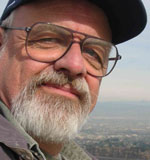
An Interview with John Shannon — LA’s Wise Man of Crime

David Corbett


I met John Shannon early on in my career, and he’s remained one of the most important, gratifying, inspiring connections I’ve made as a writer.

Author of the Jack Liffey PI series (and a novel based on a history of the American left, among other non-genre titles), he’s one of the smartest, most honest, most impassioned, most decent men I know, and his writing reflects all of that and more.

His prose shimmers, his stories grab you by the coat and shake you, his breadth of knowledge and depth of understanding remind you what a joy it is to have someone who knows a little about the world show you the ropes. His hero, Jack Liffey, reminds you of Marlowe, sure, but with touches of Hamlet and Jimmy Stewart and that tough, funny uncle who lived near the beach you loved so much but saw so little.

Most importantly, his Los Angeles is a city that’s more real than any other fictional representation I’ve encountered. He finds places and people—both isolated in their urban solitude and knotted to tight-knit communities—that others tend to overlook, and he embraces them with both his heart and his eyes wide open. Whether he’s taking you to the Vietnamese enclaves of Orange County, the surfer hangouts in Palos Verdes, the homeless camps in “The Nickel” (L.A.’s Skid Row), a Native American homestead in Owens Valley or the sprawling Persian community in greater L.A., segretaed by faith—with the Jews (yes, Persian Jews) taking over Beverly Hills, the Armenian Christians in Glendale, the seculars in the South Bay (with Shah Pahlevi diehards hovering near Westwood), and the Zoroastrians (yes, they still exist) in Culver City—he takes you there with crackling detail and an insider’s access to secrets.

I thought John might enjoy a spin in the Murderati Maserati, and so I invited him for a digital cruise down the interview highway. Here’s what we ended up talking about:

Mike Davis, a social historian (City of Quartz, Planet of Slums) has stated that you’re attempting an alternative history of Los Angeles from the viewpoint of the people routinely excluded from the official discourse. First, would you agree with this, and second, why choose the crime genre, and specifically the PI novel, as your vehicle?

Mike is a good friend and I was flattered and a little surprised by that description. I don’t know if I’m consciously trying to include the excluded. I’m certainly trying to include L.A.’s amazingly disparate communities. More people of Mexican heritage than any city but Mexico City, more Koreans, etc, etc.  And not just ethnic communities—whole subcultures of cubicle-farm video game designers, territorial surfers, whacked-out wannabe musicians.

Really, the Jack Liffey series began with two unrelated impulses. One was my wish to create a detective who was an Everyman with no particular detecting skills or bravado—a decent, strong-willed, honest man, but really only a laid-off aerospace technician who is struggling to make ends meet and keep up with his child-support payments by tracking down missing children. (It’s better than delivering pizza, he says.) A man who believes in nothing but staying honest and pushing his rock up the hill day after day beside Sisyphus. The other impulse was to open a window into a social history of layer upon layer of racism, greed and exploitation in America. Perhaps racism most of all—I believe it’s the core conflict at the heart of Western Civilization, and has never been adequately addressed.

You’ve remarked that you don’t read much in the genre, but instead get your inspiration from a specific strand of realism that includes Hemingway, Robert Stone, Joan Didion and others. But Hammett is part of that tradition, as are some other crime writers. How do you think the crime genre fits into that lineage, and did that have anything to do with your own choice to start the Jack Liffey series?

Someone once said that some mystery readers are eager to find out whodunit and others just love to ride alongside their hero. I’m here for the ride. But let’s redefine the genre a bit. I’d like to think of the genre I love as “the hard edge,” though I really only have a few toes in it myself. I think I first started thinking about it as a separate little outpost of literature when I read Kent Anderson’s brilliant Viet Nam novel Sympathy for the Devil. The book felt like the harsh breath of the modern world itself. And then I recalled that my first writing hero was Graham Greene, and later Robert Stone. These books are morally serious, hard-edged and unsentimental, dealing with silences and disappointment and inner strength. And unsparing self-punishment for failure. This harsh outpost is full of magnificent spare dialogue, description that’s often witty and vivid, shocking with abrupt concrete metaphors. Hard Edge tales don’t always take place out among the Picts and wild men who paint themselves blue, but most of the writers have paid their dues out there and know that the world is not benign, not easy, not pacific and above all probably not redeemable in any grand fashion. But we have to try. It’s a noble existential calling. Out on the frontier, these surrogate adventurers have to face the ugly and cruel every day, and every day they have to reinvent human decency, out of nothing. How else could my Jack Liffey try to plug the God-sized hole in the world?

You had a strong education in the importance of structure from one of your teachers at UCLA, Marvin Borowsky, a former story editor in Hollywood. What was it that Borowsky said that impressed you?

If I could find a way to distill everything I learned from Marvin Borowsky, I could bottle it and sell it. It was amazing the way he could look at a script or a story and say, “It’s going bad at point B or C or D because of what happened back here at A.”  There are differences between dramatic structure and novel structure, though.  Dramatic structure is much more unforgiving and demanding. After all, it has to arc, it has to be dramatic. One way Borowsky helped me break down the idea of conflict into writerly terms was by re-expressing it. What does the main character want? Why can’t he or she get it? And what’s the result that comes out the collision of these forces? The result is not just the main character getting it or not getting it; something new develops. It sounds simple but it’s a very powerful tool for working on dramatic structure, and we were constantly dismantling down to the core films like L’Avventura and La Notte that can seem so mysteriously opaque to examination. Or even Lear and Eugene O’Neal.  

Borowsky had a lot of other insights. That a main character could be likeable or unlikeable, fine, but he or she had to be active. (Think of Macbeth.) We love to watch characters who are active. Of course, as I say, this is all basically only true of drama, and further it only addresses structure, it says nothing about the quality of writing, characterization, etc. But the first novels I wrote (all before the Liffey books) were written initially as screenplays. So at least they weren’t inert navel-gazers. I won’t go off on a tirade, but a lot of current American writing is pretty uninteresting to me. Like most mystery or noir fans, I want things to happen in a book.

So much so that I’ve created a bit of a “formula” of my own to make things happen. Every Liffey ends with a major disaster of some kind—earthquake, firestorm, poison gas spill, landslide, torrential rain, etc.  Of course, to some degree this is my playing with the dystopic side of L.A. and of the modern world, but it’s also just the fact that I love writing these catastrophes. Hey, I got to kick IKEA to the ground.   

You’ve said some incredibly interesting things about the inherent political assumptions embedded in the various crime sub-genres—specifically, the difference between the police procedural and the PI novel. What did Jack Liffey’s being a PI avail you that being a cop denied Harry Bosch, for example, especially with respect to exploring Los Angeles?

I have to be a little guarded about how I say this because I have a tendency to go schematic and oversimplify. It’s a very human failing to grab an idea that seems to clarify something for you and then try to universalize it, or at least stretch it beyond it’s proper application.  I thought from the first that there was a strong tendency in police procedurals to be about defending or reasserting the status quo, to have at least an undertow of social conservatism. In fact, Harry Bosch escapes this somewhat by being a bit of a renegade cop, as do many other series cops. Still, the underlying archetype for the police procedural—certainly for TV cop shows—is the Star Trek meme. A group of people working together to keep the world clean and remove any disturbances in the warp.

The private eye on the other hand, amateur or pro, tends to be about turning up big flat rocks and finding the corruption wriggling underneath. About helping the weak, and if not siding with the underclass, at least moving easily among them, and not trying to crush them for Mr. Big. Or Mr. Banker, if you like.

An L.A. policeman I know told me, “God, how tired I am of walking into parties and having everyone throw up their hands and shout ‘I didn’t do it!'” That certainly expresses one difference between the subgenres. The cop IS authority, can’t help but be. But Jack Liffey can go anywhere and eventually win the trust of just about anyone if he’s seen to be genuinely sympathetic to who they are.  He’s an outsider, which is a highly honorable role in Western Civilization. Wire Palladin, San Francisco. 

I sense a bit of Camus and Sisyphus in your conception of the hero—am I right? What is it about Camus’ conception of that myth that hits you (and me, to be honest) as optimistic, when so many others, especially Americans, find it shockingly grim?

Here’s a Camus quote I used as the epigraph on my second novel Courage, about revolution in Africa: “If after all, men cannot always make history have a meaning, they can always act so their own lives have one.” Oh yeah, Sisyphus sure resonates. A man’s gotta do what a man’s gotta do. I read Myth of Sisyphus and Caligula in high school and was blown away. For some reason I always think of members of the French Resistance being terribly abused by the Gestapo but not giving up any comrades (they rarely did). To go on doing what you know is right but very painful when God isn’t watching, when nobody who matters is watching—wow. Who knows the depth of courage it takes?  One privilege the French of that era have in history is knowing now who they are. For good or ill. When your country is occupied, you have to make up your mind who you are, and you remain what you choose for the rest of your life. Few of us today know who we are in that way. Some who went to Mississippi Summer. Some who refused the draft. All the other forms of “courage” that our society honors are basically conformity.

The number of times I’ve heard people say, “I don’t go to tragedies, they’re so sad. I want comedies.” That’s a totally sentimentalized view of art and heroism. With that view, even great art is reduced to kitsch. I find most comedies incredibly depressing, with their artificial situations and forced yuks, like drowning in hot pablum. Nothing is more heartening than a great tragedy. I won’t belabor it, but the human spirit is what it’s about.

Still, if you need any evidence that I honor Sisyphus, I keep on writing the books. There’s one about Chinese immigration and the Tea Party all finished and coming soonish (The Chinese Beverly Hills) and another underway about the Russian immigrants and the gay community in West Hollywood passing each other in the night like ships made of matter and anti-matter.  A writer’s gotta write, etc.

* * * * *

Jukebox Heroes of the Week: With a protagonist named Jack Liffey, methinks we need a spot of Fenian fury. Here’s the Pogues, with the tune that shook me out of my cynicals blahs and reawakened my love of music in the eighties:

TO HELL OR CONNAUGHT! 


Easing into the week . . .

It’s another Monday

  • ·         another day of gearing up for the week
  • ·         answering all those emails that I left for today
  • ·          . . . and all the others that somehow appeared in my inbox over the weekend
  • ·         another day of my full-time job, of trying to get my creative writing in, of cooking and cleaning and, well, this week is going to be really really busy and very interesting.

You see, every few months IDEAS in Psychiatry brings in these extraordinary speakers for several events — for health care professionals and for the public. Dr. William S. Breitbart will be our guest this week. I’ve been looking forward to his visit and anticipate it will be one of the most interesting we’ve had. However, it also means I’ll be working a lot of extra hours.  I don’t mind at all, but it’s put me in a mood where I’m not particularly interested in heavy thinking.

Nope.

I want this:


Lion Cub Trying To Roar brought to you by Animal Videos


And a baby seal on a couch

And cats with thumbs

And pages and pages of pictures of the aurora borealis

Because sometimes you’ve just got to stop the thinkiness for a little while and remember to enjoy life.

So that’s this week’s blog. A vacation of sorts.

Please post cool links that I can visit during my breaks this week. I’m in the mood for amusement and beauty, but please note that I’ll only click if I know you OR if you personalize your message in some way so that I — and all of us at the ‘Rati — know it’s not spam.


New Year’s Resolutions/Writing One Day at a Time

by Alexandra Sokoloff

Oh, okay, yes, the year is still new and I am finding myself compelled to do a New Year’s resolutions post.

One good thing is about writing a blog is that it makes one – well, me, anyway – more inclined to make public resolutions. I’m not actually sure how useful a list ever is. When it comes down to it, we all have kind of the same resolutions every year. Basically. Write more books and be a better person, right? Yes, okay, and look hotter, somehow.

But this year I wanted to do a list, mostly because as I said recently, 2011 was so hard it’s amazing just that I survived it.

I complain about the abject agony of writing all the time, but this year writing has been lifesaving, just to have one familiar thing to do every day.

But things are getting better. I’m feeling that I could move beyond survival to actually enjoying myself again.

So resolutions make sense, because they imply there IS a future, at least until the world ends in December. JUST KIDDING.

First, the standard ones:

Working out. This is one I don’t have to worry about. Exercise has been periodically too much of an obsession; I’m one who more often needs to tell myself, “You don’t REALLY need to take that two-hour Boot Camp class today.” I know if I don’t work out every day I become a rabid animal within 48 hours; it’s my version of antidepressants (depression being, as David pointed out yesterday, the real health hazard for writers). But these days I’m more balanced about working out. I take mostly dance classes, which is the way I most like to move and it’s so habitual by now it’s never a big deal to get myself to class to do it. So dance four or five times a week and one killer ab/ass class on top of that, not as much fun as dancing but the results are so immediate and visual, it’s addictive. No, I mean, it’s good.

Eating. Pretty good about this, too. I don’t eat too much, I eat mostly the right things, I know how to combine proteins, and I don’t keep anything like ice cream or Cheetos or macadamia nuts in the house, ever. One thing here – I am going to try to eat more Superfoods next year – why not, right? Salmon, blueberries, pomegranates, almonds, yams, dark greens; I love all that stuff anyway. I am finding it very MESSY to eat pomegranates, but wow, are they good.

Getting out more. Well, with my conference schedule this year I don’t have to worry about a social life, even though I have the typical author problem of feast or famine in this department. You live like a hermit while you’re writing, and party till you drop at the conferences. These days I’m mostly paid to go, a big perk of the job. But I am resolved to say yes more than no to social events.

Wear more colors.  I’m terrible about always automatically reaching for one of the five thousand black things in my closet (but they’re all different!). I mean, with my hair, I don’t really worry about standing out. Or rather, I do worry – about standing out too much. I KNOW why big city dwellers constantly wear black; it’s anonymous (and hides city dirt. And SO slimming….) But I also love dressing up for conferences, where I feel safe, and one of the most fun things is having people enjoy what I wear. So yes, a conscious effort to mix up the colors a bit this year.

Giving more. I am grateful to be feeling financially stable, and am glad to plug my favorite charities at the beginning of the year: Children of the Night, Kiva, Equality Now, Equality California. And don’t forget Wikipedia – you KNOW you use it.

Children of the Night – Rescues teenagers from prostitution.
Kiva You can pledge $25 or more as a microloan to small businesswomen in developing countries, the loan will be paid back and you can loan again to someone else.
Equality Now Ending violence and discrimination against women and girls around the world.
Equality California – Advocates for civil and legal rights of gay, lesbian, bisexual and transgender Californians.

Writing more?

Okay, this one is not possible without a total brain meltdown.

My problem here is not that I’m not writing enough, but that I have too many concurrent projects. But I had a really productive December and am on track to finish my latest paranormal by my deadline at the end of January, which will make me less frantic about my contractual obligations. And I am closing in on finishing the thriller that I’ve been working on this year, sometimes just a few minutes a day. But five minutes a day for a year equals a book.

Did you catch that? I’ll say it again. Five minutes of writing a day for a year equals a book.

Which is what I really wanted to write about today, because I don’t think it’s said often enough that you CAN write a novel (or a script, or a TV pilot….) in whatever time you have. Even if that’s only five minutes a day. If you have kids, if you have the day job from hell, if you are clinically depressed – whatever is going on in your life, if you have five minutes a day, as long as you write EVERY DAY, to the best of your ability, you can write a novel that way.

I don’t know if I’ve posted this here before, maybe a million years ago, but I wrote my first novel, The Harrowing, by writing just five minutes per day.

My day job was screenwriting, at the time, and yes, it was a writing job, but it had turned into the day job from hell.

But fury is a wonderful motivator and at the end of the day, every day, I was so pissed off at the producers I was working for that I would make myself write five minutes a day on the novel EVERY NIGHT, just out of spite.

Okay, the trick to this is – that if you write five minutes a day, you will write more than five minutes a day, sometimes a whole hell of a lot more than five minutes a day most days. But it’s the first five minutes that are the hardest. And that often ended up happening. Sometimes I was so tired that all I could manage was a sentence, but I would sit down at my desk and write that one sentence. But some days I’d tell myself all I needed to write was a sentence, and I’d end up writing three pages.

It’s just like the first five minutes of exercise, something I learned a long time ago. As long as I can drag myself to class and endure that first five minutes of the workout, and give myself permission to leave after five minutes if I want to, I will generally take the whole hour and a half class, and usually end up loving it. (There are these wonderful things called endorphins, you see, and they kick in after a certain amount of exposure to pain…)

The trick to writing, and exercise, is – it is STARTING that is hard.

I have been writing professionally for . . . well, never mind how many years. But even after all those many years—every single day, I have to trick myself into writing. I will do anything – scrub toilets, clean the cat box, do my taxes, do my mother’s taxes – rather than sit down to write. It’s absurd. I mean, what’s so hard about writing, besides everything?

But I know this just like I know it about exercise. If you can just start, and commit to just that five minutes, those five minutes will turn into ten, and those ten minutes will turn into pages, and one page a day for a year is a book.

Think about it.

Or better yet, write for five minutes, right now.

So what are other people’s resolutions? And what are your tricks for actually following through?

Happy New Year, everyone!

Alex

Health hazards of being a writer

By PD Martin

Okay, so maybe you’re thinking this sounds like a bizarre blog title. And I guess it is something we don’t talk about much. So here it is, the health hazards of being a writer. Brought to you by PD Martin.

First off, I should talk about all the wonderful things about being a writer. Things like: creative freedom; working from home; working from cafes; working in your pyjamas; creating magical or scary or whatever types of worlds; creating in general; bringing our work to the masses (hopefully); yada, yada, yada. Okay, time to move on to the moaning part of the blog and the ‘beware’ section.


RSI
It’s true. Being a writer involves long chunks of time at a desk, typing. And we all know that can lead to repetitive strain injury. Thankfully, so far I’ve been spared from this particular hazard. However, I do have…

Carpal tunnel syndrome
If you don’t know what that is, it’s a nerve thing (yes, very technical) and it’s generally caused by typing. The main thing for me is I wake up in the middle of the night with painful pins and needles in my hands and also get that if I try to grip something for a while (e.g. a car steering wheel). Annoying more than anything else.

Eye sight problems
Another one I can tick, I’m afraid. I used to have perfect vision. Then in my 20s I was doing lots of hard-copy editing (okay, not exactly writing, but it’s still part of the same business). After a few months I realised I couldn’t read signs…everything in the distance was a little blurry. Yup, I’m now long-sighted.

Alcoholism
Okay, I’m happy to say I don’t suffer from this one! At least not yet. Although, that wine does look yummy.

But it’s true, many writers like to have a drink or two before they write. Or maybe it’s our creative brains. Who knows, but many authors do like to knock a few back. You?

Insomnia
I do get this one from time to time. Like a few weeks ago when I woke up in the middle of the night and starting thinking of opening lines for a book. Plot points, character arcs…two hours later I was still awake.

Back and neck problems
Oh dear…I’ve got this one too. Mind you, my husband does accuse me of being a hypochondriac (better not show him this list). Mostly it’s my right shoulder running up into the neck. Ouch.

Weight gain
Can I blame this on hours at my desk? Maybe. Although if I’m honest my metabolism seemed to know the minute I hit 40 (less than 2 years ago) and stood at the front of the room waving its finger at me with an ‘Uh huh…no way you going to eat that and not put on a few pounds.’ Blast it.


Stress
Okay, everyone’s stressed. And authors are no different. What do we stress about? Usually deadlines and lack of any cold hard cash. It’s a tough life, you know?

Sometimes we stress about writer’s block (thankfully I’ve never had that problem – touch wood) or about our careers shrivelling up like over-dried dried prunes (okay, I do stress about that).

Well, I think I’m done. Phew. Although no doubt I’ve missed an ailment or two.

What about you? Give it to me. Give us a laugh or unload your troubles 🙂

PORTRAIT OF THE STARVING ARTIST AS A YOUNG MAN

by Gar Anthony Haywood

In the years immediately following high school, there was nothing I wanted to do more than write comic books.  My best friend Larry Houston was a terrific artist and, along with Don Manuel, another artist friend of ours, we were absolutely certain it was our destiny to become rich and famous comic book publishers, ala Stan Lee at Marvel.

We managed to publish and sell two issues of our own fanzine, THE ENFORCERS, under the Graphics2000 banner, before both our money and youthful  innocence ran out.  Here’s what the second issue of our mag looked like:

Anyone who’s ever tried to mix friendship with business could have probably predicted how things would work out for Graphics2000.  Larry and I found 2000 things to bicker about, mostly dealing with creative control, and one night over coffee I just pulled the plug, telling him I preferred remaining friends to our becoming spiteful enemies.  I don’t remember a lot about that parting-of-the-ways conversation, but I do remember this:

We were sitting in Larry’s parked car outside my apartment building, reviewing our reasons for wanting to write and draw comic books in the first place.  All along, I’d thought his reasons were the same as mine — because he and I were artists placed on this earth to create.  But it seemed I was mistaken.  Larry didn’t give a rat’s ass for “art,” he was in this thing for the money.  His ability to draw was an asset, not a gift, and only a fool would waste a viable asset doing something strictly for art’s sake.

Wow.  You could have blown me down with a feather.

I was precisely the kind of fool Larry was talking about, and I pretty much remain that same fool today.  I suppose it’s no coincidence that Larry has gone on to build a successful and lucrative career in animation, leveraging his artistic talents to great economic effect, while I have. . . well, written a dozen critically-acclaimed crime novels that have barely managed to keep my kitchen cupboards stocked with corn flakes. 

Needless to say, I never thought my high-minded choice of art over commerce would prove so absolute.  I always thought I’d find a way to become both rich and creatively unfettered.  Such a parlay is not entirely unprecedented.  But writing only what I’ve wanted to write, with an indifference to what publishers will buy that almost borders on contempt, has not served me well by any fiscal form of measurement, and I wouldn’t recommend it to any newbie author as a game plan for success.

Still, I’ve tried my hand at writing with one eye on the marketplace and the other on the page a number of times, and nothing good has ever come of it.  I don’t often hate the process of writing, but I’m always at my unhappiest when I’m writing something intended to fill a niche, rather than satisfy an itch.  The responsible adults among you with bills to pay and children to feed are right now thinking, “So fucking what if he’s unhappy?  Better unhappy than homeless!”  But that’s only a reasonable response if you assume I’m capable of doing my most saleable work regardless of my enthusiasm — or lack of same — for the material.

Ever hear the old expression “If it hurts, you must be doing it wrong”?  Well, that’s how I feel about writing.  Writing’s difficult and, yes, even painful on occasion — but it’s not supposed to be misery.  The message I heard most clearly in Stephen’s most recent post here regarding the mixed emotions he’s had while writing his latest book is, “I DON’T WANT TO BE WRITING THIS BOOK.  I’M NOT ENJOYING THE PROCESS.”  And that, I think, is what we all feel when we put the cart of commerce too far before the horse of our own personal aesthetic.  (Which, by the way, I’m not suggesting Stephen has.  It may be that what he’s been experiencing is merely the stress that comes with writing the best damn thing one’s ever written.  I wouldn’t put it past him.)

I’ll state for the record again that I’m not advocating writing with zero attention paid to profit.  That’s no way to keep baby in new shoes, nor your agent answering the phone.  I’m simply arguing that you can’t write as well as you’re capable if what you’re writing has too much to do with external demands and not enough with internal ones.  That way lies madness, my friends, and I’ve heard enough “successful” authors, having made that devil’s bargain, wail about their conflicted souls to know it.

One final end note: Larry Houston and I are still great friends, more than thirty years after I broke up our Graphics2000 partnership.

Guess we artistes can’t be wrong about everything.

Questions for the Class: Writers, how do you deal with the constant yin-yang pull of commerce versus art?  Readers, can you tell when an author is writing more for profit than for love?  What are the signs?

My new name: “Marketing Curmudgeon”

by Pari

When I was first published, I remember how hard I marketed. I went to conventions, posted on blogs, wrote thank you notes, sent emails, wrote and sent newsletters, stayed “in touch” with my “fans” . . . worked on creating buzz by having friends post reviews on online sites (and I returned the favor whenever I could), contacted libraries, sent review copies (often at my own expense) to anyone who’d read my books, participated in the American Bookseller Association’s promotions and on and on.

All that marketing yielded a name in the mystery community  — albeit a smallish name in the pantheon of great and well-known writers — but many folks did know me. I was nominated for two awards which gave me street cred in certain circles. What all that work didn’t yield was a major audience, a NY publishing contract, or enough money to pursue fiction as my main career.

It also put the emphasis squarely on Marketing/PR. And that, my friends, is bass ackwards. Writers need to write. That’s their job. It’s their expertise. The heavy lifting in marketing and PR belongs to Marketing and Public Relations pros.

I actually think that’s at the heart of much of the trouble in the publishing industry today. People forgot their jobs, tried to cut corners or take on what they oughtn’t’ve and now we have a mess.

In regards to Marketing and PR, I have a heightened sensitivity. I’ve worked in the field going on three decades. I can smell tricks and techniques from miles away.  Now every writer I know is a marketer. Every single one is trying to hit me with the latest version of marketing know-how. And here’s what happens: the more I’m hit, the more tricks I perceive, the more diluted the message becomes and  . . .  the less I buy.

Maybe I’m in a subset of audiences that don’t like to feel accosted or badgered. Maybe I just know too many writers. But I’ve become a real curmudgeon.

Some people might claim I’m being a hypocrite. Murderati and my FB pages are Marketing/PR. It’s true they were when I started them, but that’s not what they do for me now. I post blogs because I like the conversations that ensue and that my world includes readers I may never meet but with whom I feel friendships blossoming. The same is true for FB.

This year I plan to self-publish some of my work. You’d think that’d put me back on the Marketing/PR treadmill, that I’d be looking for the latest analytics and techniques to reach the most potential readers.

Nope.

I’m determined to find a new paradigm. I think it’s going to have to do with having a butt-load of product so that if a reader likes one of my works, he or she will look for others — and the works will be there to purchase. If one reader enjoys something, I hope he or she will tell someone else . . .

Simple. No bells or whistles.

And I’ll just keep writing.

My vacation

by Pari

(Hey all, I just noticed that Cornelia posted yesterday; it’s right below this one. It’s a goodbye post. Please don’t miss it.)

Can this really be happening? After nearly one and a half weeks off, I’m going back to work tomorrow? Holy crap!

It seemed like an eternity in the abstract. Hours and hours of only ME time in which I could get so much accomplished . . .

Clean the house — So far, I’ve managed to clear enough space on the floor in my office that I can finally get around the boxes. I also got rid of several bags worth of recyclable paper and plastic. Cleaned a closet or two. Swept up and dusted enough dirt to fill at least one of the raised beds I meant to build during this vacation.

Write — I meant to edit all the work I’ve written since I started this writing-every-day thing more than 18 months ago. While I continued to write daily, I didn’t even look at any of my past work yet. Crapsticks. I’ve got two – three novels, a novella, at least six short stories . . . and I go to work again tomorrow? Crapsticks x 2!

Organize — What the hell is that supposed to mean anyway? Get little pouches and fill them with coupons? Put my bills somewhere where I’ll pay more attention to them? Figure out what to do with the kids’ artwork? Get rid of things I’m not using. Lose some of the things that have been dragging me down?

Speaking of  .  . . 

Lose Weight — yeah, right.

Here’s what I did do:
Had some really wonderful conversations with friends.
Eat all kinds of special foods that I won’t eat again for a year — hard salami w/guyere cheese, sticky pecan holiday bread from my favorite local bakery, pate and cornichons, champagne . . .
Sleep.
Sleep.
Sleep.
Stay up until one every night streaming foreign films.
Sleep in.
Enjoy being by myself for hours on end.
Think about my life and what I want to do in the coming years . . .

I may not have accomplished even a fraction of what I meant to do, but I certainly did accmomplish a lot.

How about you? What did you do for the holidays? Did you get a vacation? Did you have some down time?

I’d love to know . . . and I’m off today so I can actually respond more than I’ll be able to tomorrow. So send a note my way.

Oh! And Happy New Year! May you be blessed with everything you hope for this year.

So Long, Farewell…

By Cornelia Read

This is my goodbye post for Murderati. I adore you guys, and have had great fun writing here, and everyone in our gang has been lovely to me through some really tough stuff over the last few years: my dad’s suicide, my divorce, my move back to the East Coast, my struggles with writing and winter and all kinds of things. I will miss you all a great deal, and I thank you for your many kindnesses.


But I am really, really tired. I’m so happy to be back in my hometown of Manhattan, but I’ve moved three times since August while doing three extra rewrites on my fourth book (with my genius of an editor, who is a patient, patient woman,) and am just now getting my life back in order in many, many ways that require some better attention from me in real life.

And, hey, all kinds of really good shit has happened too. Like, after several years of this…

I’m hanging out with a really cool man who is great fun and very funny and kind, not to mention pretty damn “easy on the eyes,” as Grandmama Read used to say. And he is also NOT a psycho Republican, which is a huge plus after my last foray into the whole Y-chromosome thing.

So now when I think of The Lone Ranger, I think less of it pertaining to my social life, and more just for basic entertainment purposes:

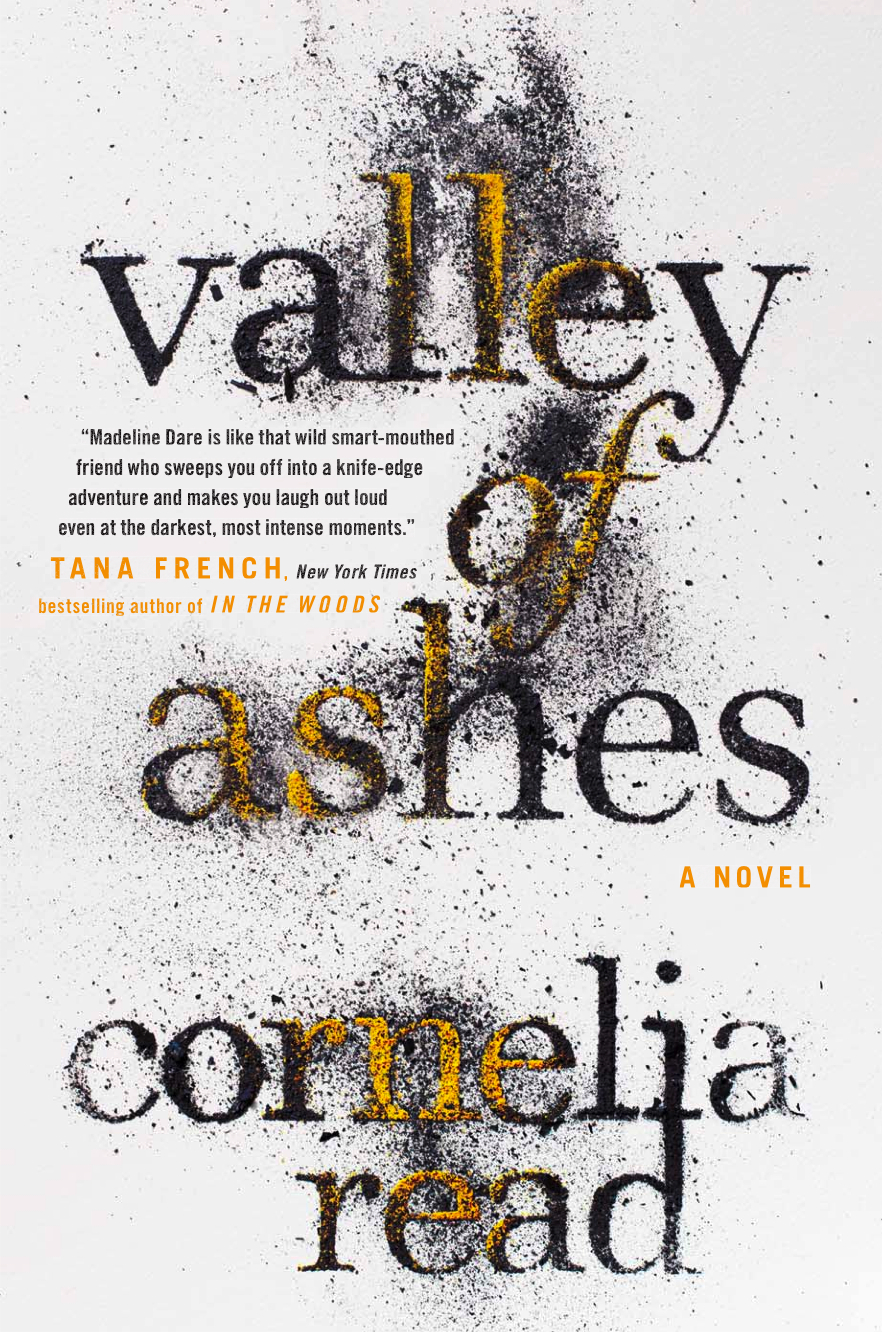
And I DID finally finish that fourth book, which is called Valley of Ashes and is due out from Grand Central Publishing next August:

Plus my third book comes out in paperback this month, and I love the cover Grand Central did for that, too:

Last June, my kid graduated from Exeter,

and she got into her first-choice college,

and just made the Dean’s list at the end of her first semester, which is pretty fucking cool if you ask me.

Also, she just came out at the Junior Assembly in New York the week before Christmas, which my mom and I also did back in the day.

That was a rather stellar evening…

That’s my kid Grace on the right, and my niece Sasha on the left. I utterly adore both of them, and their escorts were terrific. (Jill Krementz took this photo. She is amazing and so very, very talented, and was very generous to document the evening for us.)

Here’s Grace in the Pierre Hotel ballroom, with her escort Dan:

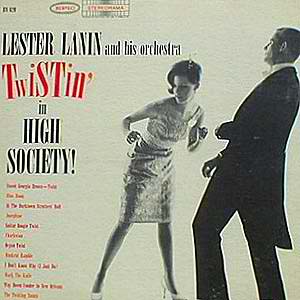
Though I did miss having Lester Lanin there…

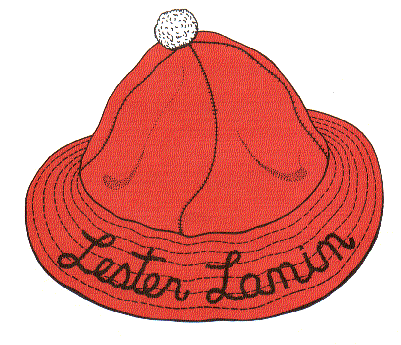
Especially since the new band didn’t throw beanies out onto the dance floor…

(Yeah, I just put Woody Guthrie and Lester Lanin in the same blog post. That’s how I roll. Because it is entirely possible to be a deb and anti-fascist. Just ask Eleanor Roosevelt.)

And I finally live in the neighborhood I’ve been wanting to hang out in for about the last year and a half: Inwood, on the far norther tip of Manhattan, just above the Cloisters:

It’s really beautiful here, and everyone is nice, and what with my apartment being a fifth-floor walkup, my ass is looking rather splendid these days. Which is pretty good, especially coupled with the cheap rent…

 I mean, seriously… you look at this, and you don’t think “New York City,” right? It’s a very nice place to come home to on the A Train.

Okay, Duke Ellington is not actually ON the A Train in that video (because, hello, the A Train is a SUBWAY,) and I live way the hell above Sugar Hill in Harlem, but still, it’s a pretty nice tune to hum to yourself when you’re going express from 59th to 125th on your way home, you know?

Also, I think I have FINALLY relearned how to get off the 59th Street Bridge and onto the Long Island Expressway, which is the free way to get to the island and a pretty fine time to sing “The 59th Street Bridge Song” to oneself…

So, no worries about me, if you’re inclined to worry. I’m happy, I’m just exhausted.

I wish everyone a most wonderful 2012, and happy trails, and all good things… thank you for everything, you guys rock.


MOTIVATION

by Stephen Jay Schwartz

I got a great opportunity recently when the film I wrote this year, GRINDER, attracted a quality actor. The screenplay came to me as a rewrite assignment almost exactly a year ago. I worked with a group of producers and the film’s director to produce a new outline, treatment, two full drafts, and two polishes. The result was an intriguing action film with intense, zombie-like creatures and a structure similar to the film “Momento.” The final draft got the film its financing as well as a number of exceptional crew attachments. The lead actor came to us and made his attachment contingent upon an additional rewrite to satisfy his notes.

The actor looked at the script through the eyes of an actor. And thank God he did. He pointed out the fact that the central characters lacked motivation. He noticed that the clever, intricate plot actually disguised the fact that the characters had not been properly developed. The plot served as eye-candy to keep the viewer (or reader) turning pages, offering no additional dimension, no “soul.” It was Story 101 stuff, and I should have caught it earlier. But the development process is complicated and a great many perspectives need to be considered along the way. We could have moved forward with the script we had, parting ways with the actor who had so generously given his time and feedback, or we could have taken his notes and worked to give the film the depth it deserves. We decided to do the rewrite, and I’ve spent the last two weeks writing a new treatment for the film. I’ll have about two weeks now to write the draft. Eleventh-hour stuff, but exciting as hell.

Motivation. Why our characters do the things they do. The challenge with the script is that it’s non-linear, so it’s very difficult to mark the “scene before” moments that guide each character’s motivation through the story. I had to pull the story apart, create a linear time-line, then restructure the puzzle in a way that made sense. In the process, I had to give the protagonist a reason to do the things he does. The actor asked a few crucial questions about his character – “Who is he now? What was he? What does he want to be?” Simple stuff. Sacrificed by a complicated plot. What motivates him to do the things he does?

The questions got me thinking about my own motivation and how it has changed over the years. I’ve noticed that I don’t have the same kind of passion I used to for writing novels. Why is this? What happened to me?

When I was writing BOULEVARD I wrote every single night after my day job. After a ten-hour day I’d go to the cafe and spend another five or six hours writing the book. I spent all my weekends, holiday and vacation time writing the book. I did this for three and a half years. What was my motivation?

I think the big motivator was a decision to change my life. The novel represented my last opportunity to prove that I had something more going for me than selling lighting products to support myself and my family. It was my ticket out. I had already spent what felt like a lifetime in and out of the film business and it left a bitter taste in my mouth. The novel seemed like the perfect way to fulfill my creative aspirations.

When I got my book deal, I was motivated to please my editor and write the best book I could. It was a two-book deal, so the motivation to write my second book, Beat, was wrapped right into the first. I expected all that hard work to pay off. I expected to support myself as a writer from that point on.

But I learned it could be a long, long road to that goal. I quit the day job a year ago, determined to write my third book without the stress and frustration I experienced while writing the first two. I had a screenwriting assignment, a little bit of cash from the books, and some savings.

I’ve been writing the book, but the motivation hasn’t been there. Why? Well, there’s no book deal, for one. I’m writing on spec with the hope that it’ll sell when I’m done. But that’s how I wrote the first book, so why was I motivated then and not now?

I think it’s because, in the beginning, the possibilities seemed wide and endless. I didn’t know anything about the publishing industry. I figured a two-book deal would net me, what, two million dollars? Seemed about right. Now I’m educated and depressed. I tend to think, “What’s the point?” All this hard work, all the sacrifice. I made a big deal of spending a lot of time with my family this year, to make up for all the time I didn’t spend with them when I had a full-time job, writing those first two books. I didn’t want to resent my writing for taking me away from my family, so I quit the day job in order to balance it all. But now I resent the writing for all that it requires of me, while not providing me with the kind of income necessary to support a family. I get tired of the dream that says, “after I finish this screenplay/novel/film/whatever, I’ll sell it and everything will be all right.” I’ve been living that dream for twenty-five years.

There is, of course, a different kind of motivation to write, and it has nothing to do with paying the bills. There’s writing for writing’s sake. I’m all for that, but it means a complete restructuring of my life. It means I write for myself and if it sells, all the better. It means I should have a real job, something I love, something that I want to do for the rest of my years. All of my day jobs have been just that–day jobs. Designed only to get me to the next film or writing assignment. Because all I ever really wanted to do was write and make films. What else do I love? I mean, love enough to do forty hours a week? The only thing I can think of involves animals. I could work at a zoo forty hours a week. Or a gorilla reserve in Uganda. Or I could do ocean animal rescue. Maybe I could work at Best Friends Animal Sanctuary in Kanab, Utah. I could do these things, for the rest of my life. However, they wouldn’t pay the bills.

I’m told I’m only a couple years away from really “making it.” Hmmm. It does seem plausible now, for the first time in my life, providing the film gets made and it becomes a success, and that the TV option I recently sold for Boulevard and Beat actually goes to series. And that I finish my third novel and sell it.

But where’s my motivation to finish that third novel? Why does it feel so much like work?

I have to find my motivation. Story 101. Without it, my life is just a clever, sometimes intriguing, oddly non-linear ride toward a zombie-like climax. But the soul, man, where’s the soul?

The Great Book-Buying Debate: Redux

Zoë Sharp

We’re halfway through the Holiday Season between the excesses of Christmas and the promises of New Year. For many of us this means clinging to a few more days of indulgence before we have to shake off our sloth and get back to work.

The weather outside, not to burst into song, is frightful. We’ve had gales and rain and biting cold without the pleasures of actual snowfall. What better time to curl up in the warm with a good book?

Many of you will have received books as gifts. I did myself. I gave a few, too. Some were the silly kind of book that you often end up buying for people at this time of year. Others were more serious bits of reading that I knew – or hoped – the recipient would enjoy.

Book buying in the holiday season tends to be somewhat different from the rest of the year, but it still got me thinking about a topic covered by own very own former ‘Rati, JD Rhoades, more than two years ago. Dusty asked what influences you as a reader to buy a book by an author you’ve never heard of before?

The comments were highly illuminating. But time moves on and buying habits do the same. With the sudden explosion in e-books, I wondered, what influences readers NOW in the choices they make?

So, with Dusty’s original questions firmly in mind, I devised a few of my own.

1. Where do you do most of your book browsing these days?

a) on line?

b) local indie store?

c) big chain or supermarket?

d) local library?

2. How much of your reading is

a) in print?

b) in digital format?

3. Where do you hear about most of your new books?

a) bookstore display?

b) bookstore recommendation?

c) discussion group? (If so, where/what kind?)

4. What makes you decide to try a book by a new (to you) author?

a) word of mouth?

b) advertising?

c) personal appearance by the author at a store or convention?

d) on-line buzz or reviews?

e) book trailer?

5. How big a role does social media play? Have you ever decided to try an author because you’ve seen them posting on line and been intrigued or amused by what they have to say?

Equally:

6. If you’re on Twitter or Facebook or any of the other social networking sites, does it put you off if an author constantly plugs their own work or does the repetition actually make you decide to give them a try?

7. How influenced are you by reviews? Not just reviews from respected blog sites or publications, but reader reviews on Amazon. Does the total number of times a book has been reviewed, or the number of five-star reviews influence your choice at all? Do you ever read the reviews?

8. If you’re buying a book on line, do you use the facility to read a free sample before you buy? And has this ever put you off the book?

9. How important is price, whether for an e-book or a print version?

And finally:

10. Did you give or receive a book this Christmas? If so, what was it? And any suggestions for how you nicely wrap and gift an e-book?

This week’s Word of the Week is toxic, which means of poison, but comes from the Greek toxon, a bow and apparently has its roots from the practice of dipping arrows in poison. From this we also get toxophilite, meaning a lover of archery, which is not to be confused with toxicomania, a morbid craving for poisons.

Obviously, this is my last post of 2011. A very Happy New Year to all my fellow ‘Rati. Wishing you health, luck and happiness for 2012.