Author Archives: Murderati Members


Tits on the Radio—Or the Art of Reinvention

By David Corbett

I saw the film The Artist last week. If you’ve been shackled to a rock inside a cave on the moon, feel consumed with holiday madness, have better things to do, or for some other reason have yet to hear about this picture, here’s the trailer:

I love it for all the obvious reasons—it’s beautiful, smart, innovative, romantic, with stunning performances, beautiful music, fabulous costumes, the cutest terrier since Asta, the whole schmeer—but what has stuck with me is the theme: The need to reinvent oneself at a time of cataclysmic change.

Or, as we writers are apt to say at one point or another: Change or Die.

Publishing is going through a metamorphosis every bit as profound as what occurred in the film industry when talkies left the silents behind, or what happened in the music business a decade or more ago, when major labels jettisoned “mid-list” bands, and those bands had to find new ways to reach their audiences.

And it’s not just the turn to eBooks that heralds change. The very nature of the book itself in digital format opens up new possibilities—and requirements—that are mind-boggling. The ability to embed photos, sound, even video into a digital book means that all too soon mere text will not be enough—not just in non-fiction.

Or, put otherwise, in the immortal words of he band Scissors Sisters: You can’t see tits on the radio.

If a heightened experience is out there, demand will shift that direction like iron filings to a magnet. The mere book, with its beautiful prose its only singularity, will become an artifact, a luxury, a boutique item.

I know, I know, you’ve heard this all before. “There’s something unique to the written word,” I hear you say, “that can’t be duplicated in any other medium. One way or another, the book will survive.” Well, I’m no longer drinking that particular batch of KoolAid. Stories will survive, sure. But call it intuition, call it midnight dread, but I’ve met the ghost of writing future, and he’s not a patient man.

The book will evolve into something more like a digital version of graphic novels, TV episodes, films, or even games, and writers will need to team up with artists from other media just to remain competitive.

Games are of course the great narrative frontier, and once computerized characterization evolves to where game avatars can assume real personalities that players can meaningfully affect or even change, the whole notion of what storytelling means will utterly transform. Stories will no longer be something a storyteller dreams up, then shares with an audience. They will be interactive narratives storytellers and audiences mutually create.

I find this exhilarating and terrifying. A generally solitary soul, writing suits me not just professionally but personally. I’m not quite at the Hell-Is-Other-People end of the bar, but I spend a lot of days largely by my lonesome. There’s no way around it, that ain’t gonna cut it no mo. I’m going to have to adapt to the notion of working with a crew, in one form or another. And pronto. If I can find one.

Alexandra has written about how hard everyone she knows is working just to remain artistically viable. Stephen and Gar have also posted about the intense, scattershot demands they face professionally. Pari just this Monday talked about the need to reframe these new demands so they’re seen as adventurous opportunities, not terrifying or numbing obligations. Zoë has written about her whole shift to eBooks, and Phillipa and Alexandra have chimed in on that front as well.

Oh, and I haven’t even mentioned the tectonic shifts in the world economy—don’t worry I’ll restrain myself.

The new annum dawns and the message is not just clear but loud, louder than ever: Change, Buckwheat, or die.

The Artist reminds us we’ve been here before, and some made it through the transition, others didn’t.

So Murderateros: I wonder—what have you changed this year, in order to remain in the game?

How confident do you feel you’ll survive, make the transition, land on your feet?

What new or secondary talents have you brought to the fore? Which others do you need to develop?

Do you feel like you’re keeping up, or are you slipping behind?

What scares you more: changing or dying?

* * * * *

Jukebox Heroes of the Week: I’m going to do a repeat, here, the live version of “Tits on the Radio.” I have a serious crush on Ana Matronic of Scissor Sisters, and I hope I can muster half the energy in my work as she does in this number:

Happy New Year everyone! Boogie on, to Babylon and Beyond.

Best wishes for a grand, transformative 2012!


Men of Mystery/ Rage Against the Night

by Alexandra Sokoloff

I wouldn’t call myself a connoisseur of men, exactly, or a gourmet, or heaven forbid, a gourmand.

But I do, well, notice them. 

One of the not-so-often-talked-about perks of the author life is that you are thrown in with some of the most fascinating, charismatic and fun males on the planet.

The variety is staggering.  Just consider our own men of Murderati. 

The oh-so-cool and oh-so-soulful Steve Schwartz. Well, who wouldn’t melt at the Kerouac/Cassady beat aura, the rhythm of a musician, that leather jacket?

Dusty Rhoades, an earthy, sexy bear of a man who calls himself a redneck when no redneck was ever so smart or so freaking liberal – but who you can see strangling a man with one hand if he ever even THOUGHT of messing with one of Dusty’s friends. 

David Corbett, so scary smart you want to whack him, but he’s carried noir elegance into present day and has the street cred to back it all up. And loyal as the day is long.

Gar Haywood, the sophisticated chameleon, who does “urban” noir and heartwarming cozy with equal skill – always the coolest man in the room but OH, you would not want to cross him and get caught in the fire. (Or would you?) 

Jonathan Hayes, who you KNOW could introduce you to a spectrum of sensual delights usually reserved for Arab men in patriarchal cultures who die gloriously in battle and get 100 virgins and the world’s best chefs working around the clock for them or something like that.

Ken Bruen, the Irish poet. I don’t know how any of the rest of us even have souls of our own: it seems to me that Ken has the keeping of the universal soul.  There is no harshness in this man, he is beautifully, truly himself to the core.

Expanding into the greater community. . .

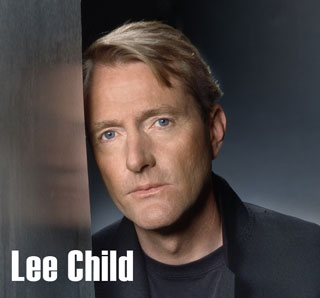
Lee Child, every woman’s fantasy of James Bond but OH so much more interesting.   As radical as the day is long, and people call him shy but HAH. I’ve never met a man more capable of making any woman feel she is the most fabulous thing on the planet.  Reacher is a pale copy of the creator.  Plus he has that dreamy brother, the dreamy Andrew Grant, who has his own sleek spy thriller cred.   Lee or Andrew?  Andrew or Lee?  Or . . .  well,  that kind of speculating could keep a girl busy for a long, long time. 

Harlan Coben. The ultimate family man with bad boy written all over him.  He will drive you insane by telling you the absolute truth about why you are not where you should be as a writer, and then tell you the exact thing you need to know to get to the next level, driving you even more insane, because he’s right.  I love his passionate meltdowns on panels, they’re worth the price of admission to any conference. 

Joe Konrath.  If you can keep from killing him on first contact (or tenth), the most fun anyone can have standing up. Brilliant, visionary mind, nail-biting writer, and a sense of humor that will keep you young if you have the ovaries to survive it.  An earthy life force, and one of the only men who understands that all a woman wants on the dance floor is for you to be out there on it with her.  He would deny he is a good guy but I know better, and if you don’t, you’re missing out. 

F. Paul Wilson.  There is nothing this man does not know or cannot do. A practicing doctor AND genre-bending bestselling author AND serious drummer and wonderful actor; the sweetest man on the planet, as well as the most wickedly funny. You can rock out with him to ass-kicking Cajun music in a down-and-dirty Zydeco club on Bourbon Street, and talk to him about Deism while the band is taking a break.  A prince among men, and that’s no lie.

Barry Eisler. Well, what can I say – that hair!  No, there’s so much more to Barry. So much gorgeous and talented in one package would be insufferable if he weren’t so passionately political.  Get your mind out of the gutter and take a look. Barry has a moral compass that could lead us all.  If there were a zombie apocalypse, I’d want him rebuilding the world.

Speaking of Hollywood gorgeous – Marcus Sakey.  All right, I always had a thing for Starsky, so sue me.   But Marcus you can’t hate either, he’s the real deal. Uber-talented, doesn’t miss a trick, and a great guy – I’d love it if they’d just clone him.

Blake Crouch – hmm, can’t say anything here, I’m practically certain I could get arrested.  But someone so talented (writing AND music), so sweet, so fun, so loving, and so YOUNG, is going to rule the world any second now. And I’d be happy to have him do it.

We have men in this community who can turn you into a puddle just with their voices (Reed Farrel Coleman and and Gary Phillips)  There are brilliant soulful poets you want to save, while the more conscious half of your brain is saying they will destroy you if you stay a second longer at the bar (fill in the blank…)

I could go on and on and ON.  But there’s one man you might not be as familiar with as the others, while I, being the cross-genre slut—uh, wench—that I am, have had a little more exposure. And this is one you NEED to know. 

Rocky Wood is the current president of the Horror Writers Association, and the author of  Stephen King: Uncollected, Unpublished (Softcover), Stephen King: The Non-Fiction, Stephen King: A Literary Companion, Horrors: Great Stories of Fear and Their Creators

Rocky is a born New Zealander, current Australian, and believe me, Hugh Jackman and Russell Crowe have nothing on him. They so very seldom make men like this anymore, it’s tragic. If there’s any point of cloning at all it should be to make more of these.

First of all, there’s that accent. But that’s just window dressing, really. 

He is charming in the way that the most charismatic movie stars I’ve met are charming.  He is totally present and focused in exactly the moment he is in, and on the person or group he is with. He has an aura that is sexy and smart and just beyond what you see in the real world.

You are drawn to the accent and his intensity, first, and the charisma, and then you very quickly start to realize that this is a wonderful person.  An exceptional person.  That whatever you thought you were rushing off to do can wait, possibly forever, because you really need to be right here and just find out who this person is.

A purely good person. 

They say about certain gurus and great spiritual leaders, like the Dalai Lama and Mother Teresa, that you feel uplifted just as they walk in the room. That their physical presence changes your own auric vibration. Well, that’s Rocky.

All right, here comes the hard part.  And if you’re not sitting down, maybe you should, because when I say hard, I mean hard.

Rocky has ALS, otherwise known as Lou Gehrig’s disease,  or Motor Neurone disease. It is an evil, insidious thing. It turns the muscles to soup. There is no cure.

The news of this, this year, made me want to take whatever pills that would get me out of this life as fast as I could exit it.  It made me wonder what was the point of anything at all.

Horrible things happen to good people all the time. No one can tell me that there is not actual evil in the world.

But this is one of those – THE PERSON WHO LEAST DESERVES THIS SCOURGE – events. 

So what is anyone to make of something like this?

Believe it or not, I’m not going to be dark about it.  I had that phase a while ago.  I’ve moved on, to two basic thoughts.  Which actually might be in opposition, but here they are anyway.

1. The perfect cure can happen instantly, tomorrow, this afternoon, this second. Miracles happen. Not consistently, but they happen.  As I wrote in THE PRICE, and as I believe (on good days): “If one miracle has ever happened in the world, why not this one, for you?”

2. Another, and possibly the more important point is that: this world is only illusion.  What you feel, what you can touch, right now, it’s only illusion.  There is a better state we pass on to, which to me is—pure energy.  Without the heaviness of a body.  Without the agony of what people do to each other on the earth plane.

Don’t get me wrong, I love my body, it gives me great pleasure, and I’m happy to know that it gives other people great pleasure.  But it’s so very heavy.  I have to think that there is a lighter kind of existence, and that it’s a much better existence.  I do enough yoga to believe that, with every cell and neuron in me.

And if this is true, it is not such a hard or horrible thing to have a fatal disease. Anything that is what the Hindus call Moksha: liberation, release from the earth plane, is a blessing.

(So I’ve gone from the ridiculously sensual to liberation from the physical body.  How’s that for a blog post?)

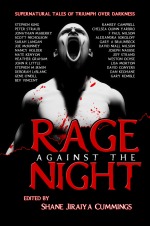
But since we’re still on this plane, a bunch of Rocky’s friends, who happen to be pretty incredibly great writers, have contributed a passel of short stories to a collection called RAGE AGAINST THE NIGHT, edited by Shane Jiraiya Cummings, with short stories by Stephen King, Ramsey Campbell, Peter Straub, F. Paul Wilson, Chelsea Quinn Yarbro, Sarah Langan, Scott Nicholson, and many more. My short story, The Edge of Seventeen, is reprinted in the book, too. You may be especially interested in a story by Stephen King, which details a deal with the devil that Rocky would never make: passing this kind of illness on to another human being. But the book is also packed with tales from rising stars in the horror genre you may not be as familiar with.

The price is $3.99, and all proceeds go to buying Rocky an eye gaze machine, a miraculous device that allows which allows the severely physically impaired to communicate via eye movements.

Rocky has already made arrangements to pass the machine on to another family that needs it, because that’s the kind of man he is.

No one knows what will happen tomorrow.  I may drop dead long before Rocky does. Any one of us could. What I do know is that anyone who has not known this man is the poorer for it.   I hope this post will go a small way toward correcting that.

Thank you for reading.

Alex

RAGE AGAINST THE NIGHT:

E book now available for $3.99 from: 

Amazon (Kindle)

–  Smashwords (multi-format ebook)

In the coming weeks, the anthology should be available at all good online retailers, and the print version will be available in January.

Synopsis:

Under the onslaught of supernatural evil, the acts of good people can seem insignificant, but a courageous few stand apart. These brave men and women stand up to the darkness, stare it right in the eye, and give it the finger. These are the stories of those who rage against the night, stories of triumph, sacrifice, and bravery in the face of overwhelming evil.

– Edited by Shane Jiraiya Cummings.


Reframing

by Pari

Yesterday, after I took the kids to their father’s house, I spent the first Christmas in 19 years alone.  It was a good day . . . contemplative. On a long walk, under the kind of blue sky that stings it’s so gorgeous and clear, I realized that much of my life has been ruled by obligation. 

How much of yours is too? 

It’s easy to see how this happens. Our various life roles come with obligations: parent, spouse, partner, child, writer, friend, worker, manager and so forth — each is at least moderately defined by the social circles and cultures within which we live. Yesterday, while staring at the bare winter branches against that stunning sky, I wondered what it would be like if I could transform at least ¼ of the should themes in my life into want-to themes. What if I framed my daily writing requirement into a privilege?  What if I looked at exercise as a time for joy?  What if the deep emotional work I’m doing isn’t so much a shedding of the old as an exploration of the unknown?

I first studied reframing intensely in graduate school. There, while training to be a therapist, I saw how powerful it could be. Indeed, much of therapy depends on reframing to be successful for without viewing things anew, a person stays mired in his or her uncomfortable present. In more recent years, my practice of daily gratitude forces me, on occasion, to apply the technique when I most want to pity myself . . . or when I want to blame others for something in my life.

As happens frequently with my walks, I had a small epiphany. I realized that many of my New Year’s resolutions also stemmed from a center of obligation. (Do you see how insidious shoulds can be?) So how could I reframe my heavy sense of have-to around this time of year into can’t-wait-to

Here is the beginning of what will probably take me most of the week to settle into, but I thought I’d share my resolutions so far . . .

In 2012, I can’t wait to

  1. reward myself for trying something new without any thought to success or failure
  2. dance as often as I can
  3. look for an adventure and take it
  4. eat dessert first  
  5. relish days when I don’t have to do anything
  6. play as much as I think while writing
  7. embrace . . .

So what about you?  What New Year’s resolution do you want to stand on its head?

The Walking Dead

 by Alexandra Sokoloff

That would be me, after two weeks of something that never quite turned into flu but wasn’t much fun anyway.

I don’t really watch television, no time and very little tolerance, but I do occasionally binge on it.

And I don’t know whether it’s my way of avoiding the traditional Christmas chocolate binge, or the fact that I’ve been sick for a lot longer than I figured on being, but I have been having a mother of a TV binge this week.

In the past I have become obsessed with shows like DEADWOOD (still the best of all), THE WIRE (excruciatingly close second), ROME, and MAD MEN. Obsessed means that I watch every episode as soon as I can get it, which can present a time management problem when I discover a show that has actually been on the air for several seasons already.

I may be able to blame this current one on Our Steve, because it actually started when I was feverish and I guess I needed to see people sicker than I was or something, so I watched Outbreak (a movie Steve helped develop) on Netflix. I’ll see Dustin Hoffman and Kevin Spacey in anything, and this is them together, and I’ve been kind of wanting to see it again after seeing one of what must be one of the year’s most excruciatingly dull movies—CONTAGION.

I don’t know what it is about the plague that is so hard to get right in a feature film.  At least I didn’t until I discovered the AMC TV series THE WALKING DEAD.  And now I know what has been missing from these plague movies.

Zombies.

Now you have to understand this. I like apocalypse stuff but I am NOT a zombie girl. Couldn’t care less. Mystified by the popularity (plus, that wave has   l  o  n  g  passed, hasn’t it?)  I read THE PASSAGE (good book) and some of PRIDE AND PREJUDICE AND ZOMBIES (cute, but you get it after a few chapters and don’t have to keep reading.  ZOMBIELAND was funny and 28 DAYS LATER was scary but has one of the worst endings I’ve ever seen from a talent like Danny Boyle.

But WALKING DEAD – well, it’s created by Frank Darabont, based on the graphic novel series by Robert Kirkman, Tony Moore and Charlie Adlard.  Darabont is one of my favorite filmmakers. Only person who’s every pulled off a Stephen King novel on film (besides Cronenberg with DEAD ZONE. I love Kubrick’s THE SHINING but it’s not King’s THE SHINING. And yes, STAND BY ME is great but it’s not a King NOVEL.).

The first episode of WD is so scary I had to turn it off periodically and calm myself down. I am beyond stunned that it didn’t give me nightmares.

It’s cinematic and riveting, often heartbreaking, purely wonderful storytelling.

Well, only the first 13 episodes are available so far and I went through that in a day.  (When I say binge, I mean binge.).

Which meant that I could actually resume writing the next day, which is the good news.

The bad news was I was jonesing for more apocalypse.  So I did some searching and discovered the BBC series SURVIVORS (the recent remake, or revision), which is post-flu apocalyptic.

Watching both series back to back was a seriously interesting exercise.  I’m not entirely sure in what – British vs. American TV, British vs. American gun culture, British vs. American people. . .  zombies vs. flu. . .

Here’s the thing.  I’m not a particularly violent person or writer; I avoid gore in my reading and my own writing. But after 13 episodes of WALKING DEAD, I am seriously craving bloodshed on SURIVIVORS.  Sure, everyone but a dozen people died in the first episode (shown through tasteful shots of the soles of tennis shoes and limp manicured hands).

But once the human encounters started again, there were some people who needed to be dead. And the British characters in SURVIVORS just refuse to kill people.  Also, I know this series aired on the BBC, but I have to think that in actuality there are more than two guns in Britain.  I’m sure Zoe has at least that many.  Okay, I’ve actually seen four guns on the show so far, but only two in play at once. 

Now come on, Brits, in case of an apocalypse, even without zombies—wouldn’t guns be one of the FIRST things you’d be looking for?  Like, after water, but before food?  That seems to me basic survival.  I know that you don’t have gun shops at every random strip mall, but you do have a military, and in the world of the show, the military is just as dead as the rest of the world.  So there would be guns to be had, right?

I’m sorry, but tire irons aren’t going to cut it.

That’s me being logical, there. But there’s another aspect to it, not logical at all.  I have to confess, thatcompared to WD, where zombies are shot, arrowed, pickaxed… skulls crushed with shovels, bodies torn apart by ropes (and by other zombies) – gruesome casualties by the dozens almost every episode . . .

Well, it sounds terrible to say it, but after all the excruciating tension of WD I just was not sure SURVIVORS was going to be violent enough for me. Even with all those British accents, I wasn’t getting into it.  It was, no big surprise, sex that kept me with it for the first two episodes.  There are two pretty fine leading men in this show, Max Beesley and Paterson Joseph;  I’m happy to see the producers realized they should be shirtless more often.  The other characters grew on me and the lead actress I disliked in the first episode turned out to be a villain, so that was okay. The lead actress I like best got to kick some serious ass a few episodes in, which was a pleasant—or maybe I mean gratifying—surprise. And I like the conceit of the show, which is that, at least so far, the Odyssey-like encounters the main group has with other survivors are modeled around famous stories from literature, like Peter Pan and Oliver Twist. It could have been corny but it works.

I am having one continuing problem with it, on the morality front.

With zombies of course you don’t have to have debates about morality, you can just break skulls—although THE WALKING DEAD does pretty well finding moral dilemmas, with some zombie killing anyway.

But I’m starting to wonder if my own morality got a little warped by the show, as with SURIVORS I am getting TIRED of the good guys letting the bad guys go. Especially in the case of two would-be rapists, who should have been put permanently out of commission.  The good guys could have talked about it, argued it, but someone should AT LEAST have brought up the idea.  Instead of turning them loose to attack other women. Or children, if there don’t happen to be any women handy.

There’s another weasel I’m sure the writers are just keeping around to keep people’s blood boiling, but it makes me long for the take-no-prisoners skull-crushing of WD.

I bet you’re all starting to wonder what my point is.  I’m not sure, actually.  My questions are not so much about zombies, but if you’d like to talk about them, have at it.  Give us some classics. But what I was really wondering was – have other people started to experience holiday meltdowns?  How did or do they show up for you? 

There’s also a question for the Brits.  Do you have more than two guns in the entire country?  (Sorry, kidding.)  But I can’t say that I’ve seen a lot of gunplay in my favorite British series.  Am I just missing the gory ones, or do you all look aghast at the level of violence in American cable TV, especially?

And I’m up for any recommendations of apocalyptic favorites. I only have five more episodes of SURVIVORS to go . . .

The very happiest holidays to all (with or without zombies), and hoping all wonderful things for everyone in the new year.

Alex

——————————————————-

P.S.   If I have not responded to anyone who requested review copies of THE HARROWING, THE PRICE or BOOK OF SHADOWS, please re-mail me at alex AT alexandrasokoloff DOT com.  I was late getting to my webmail on this because of my bout with plague, and may have deleted a few e mails along with the deluge of spam.

(And Reine – your e mail is not working for me….)

Alex


The life of a hitman

By PD Martin

A while ago I started a research series here on Murderati and somehow it fell by the wayside. Sorry! But I’m back on the research front with today’s blog, this time focusing on some research I did into professional hitmen.

Note: In nearly all the known cases of contract killers the gender of the killer is male. It doesn’t mean a woman can’t be a hitperson, it’s just much, much less likely.

An article I found in the Journal of Forensic Sciences classifies three types of hitmen: amateur, semi-professional and professional. The amateur ones are probably best characterised as the career criminal or drug addict who takes a few hundred bucks to knock off someone’s wife or husband. Planning levels are low and often these amateurs stuff up the job and/or get caught.

But then we have the upper, upper echelon. I uncovered one research study on this type of contract killer, but the number of subjects was extremely low (five killers, all male and covering a large age range). One assumes that the people who practice in the upper echelons of contract killing simply don’t get caught. In the US in 2008, there were 200 murders that were either known or believed to be carried out for money. Of those, 82 were solved and fall into the amateur or semi-professional categories, leaving 118 unsolved. That’s a lot of unsolved contract kills. And how many killers were there? It’s possible there were a handful of busy killers, or fifty or so averaging two jobs a year. Who knows?

The professional hitman (which my research was focused on) is highly organised and plans the kill methodically. He (or very rarely she) is often employed by organised crime and the target is usually a criminal and often someone within organised crime. There is little to no physical evidence left at the scene.

In terms of this type of contract killer’s personality, they see what they do as a job-strictly business. There’s no psychological or emotional need to kill; in their minds, it’s simply a way of living. However, it’s been found that some contract killers see themselves as doing the ‘work of God’, stepping in where the justice system fails. Either way, these individuals are capable of complete compartmentalisation and so it’s possible that they’re married with children and successfully living a double life.

In the small sample study of five contract killers, they also tested IQ. They ranged from 95 to 115, with the average being 108. However, most of them functioned above their overall intelligence and this was because they had highly developed analytical and organisational skills, plus extremely well-developed social skills.

Most of them are highly methodical with an overdeveloped sense of discipline and many have served time in the military. They do ‘stalk’ their victims but it’s purely for functional reasons, to get to know their routines and to find the best place to kill them. The contract killer feels no bonds or ties to the victims, and as a professional killer, it’s also unlikely he’ll feel any remorse.

How to be a hitman…really?

One of the weirdest (and funniest) things I ran across during my research was a book called Hit Man: A Technical Manual for Independent Contractors. The book was initially published in 1983 by Paladin Press. However, in 1993 a triple homicide was committed by a man who said he’d used the book. The victims’ family sued Paladin Press and in 1999 the case was settled and the book was officially pulled off the market. Of course, it popped up online the next day!

The book details things like: mental and physical preparations; equipment needed; how to make a disposable silencer; different killing methods; surveillance; planning the kill; finding jobs; how much to charge; how to get it right; controlling the situation; and enjoying the fruits of the life of a contract killer. Bizarre, right?

I actually often read out a section at my talks about women. I won’t repeat it here for copyright reasons but I can give you the general gist of it – it my own words. The section reads as a warning against women. I guess you’d call it a back-handed compliment for women, because it says we can be great contract killers but the reasons given are our deceitful natures and because we’re so vicious! It then goes on to say that luckily women are taken off the street because of our nesting instinct…and then we’re busy with babies, laundry and housework. Hard to believe the book was written in 1983 and not 1953 with comments like that.

So, do you think you know a contract killer? Or maybe you bought the book!

Lastly, I wanted to wish everyone Happy Holidays. We’ll be celebrating Christmas Day out the back, eating seafood and basking in the Aussie sun – the forecast is for 30C (86F).  Here’s a taste of the Aussie Christmas…a song my 5yro was taught at pre-school. The Aussie Jingle Bells. Probably funnier if you’re an Aussie!


And yes, we will be throwing a shrimp on the barbecue. 

THE PREDICTABILITY FACTOR

by Gar Anthony Haywood

Quick:  What kind of book comes to mind when you think of this author?

Or this one?

Chances are, your answer to my first question was something along the lines of “a fast-paced standalone thriller featuring an ex-military policeman named Reacher.”

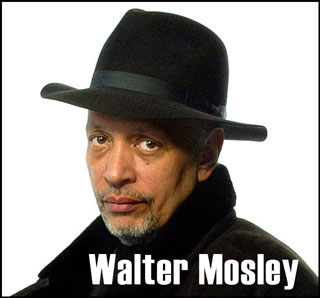
And your answer to my second question was, in so many words, “an eloquently written mystery featuring a diverse cast of African-American characters in an urban setting.”

How can I be so sure of this?  Because these authors have built a brand for themselves.  Their body of work demonstrates a consistency of subject matter and perspective that readers have learned over the years to recognize as their purview.  Granted, Mosley has ventured outside of his Easy Rawlins/Leonid McGill box on a number of occasions, with mixed results, but for the most part he is defined by those series and the specific type of material they represent.

Is this a good thing?  To have readers believe they know precisely what kind of fiction you write, and will continue to write in the future?

I believe it is.

Readers don’t like to guess what an author’s next book will be like, they want to have a reasonable expectation about it, and if you give them what they enjoy reading consistently, they’ll keep coming back for more.  Seeing you go off on a tangent contrary to their expectations can often disappoint, and not every disappointed reader re-ups as a member of the fan club once you’ve let them down.

The down side to establishing a static brand for readers to latch onto, of course, is that “box” I just placed Walter Mosley in.  No author really wants to think they’re confined to one.  The freedom to take your work in whatever direction your interests might demand, to write what you want to write, when you want to write it, is every author’s dream, as is a reputation for versatility.  Successful or otherwise, nobody wants to be looked upon as a one-trick pony.  That kind of pigeon-holing limits not only your creativity, but the scope of material publishers are willing to pay you to write.

Still, as I’ve mentioned here before, an author has to know his natural limitations, and not allow his creative wanderlust (or his ego) to take him places he is ill-equipped to go.  What we write at the start of our careers tends to be where our true passions lie, and I believe the time to stretch out and move beyond that material is only after we’ve both demonstrated a mastery of it and developed a sizable following for it.   Expanding one’s repertoire sooner than that could be premature, and throw readers and publishers alike a curve just when they are beginning to think they know — and can appreciate — what you do.

Ironically, all this is coming from someone who has failed to take the very advice I’m offering.  Since my first published novel in 1988, I’ve written and sold eleven more, and all twelve cover no less than four mystery/crime fiction sub-genres: hardboiled mystery (my Aaron Gunner series); comic cozy (the Joe and Dottie Loudermilk series); serio-comic, standalone crime (my Ray Shannon novels); and standalone thriller (CEMETERY ROAD and my latest, ASSUME NOTHING).  With the exception of my six Gunners and CEMETERY ROAD, which all feature an African-American protagonist seeking to solve one murder or another in present-day Central Los Angeles, there is little to connect one sub-set of my canon with another.  In fact, anyone reading a Joe and Dottie Loudermilk mystery, for instance, would be hard pressed to recognize me as the same author of either of my Ray Shannons.  The voice I use in each sub-genre is that different.

So why have I taken such a scattershot approach to my writing?  Because it’s been fun.  Changing gears on a whim, or as an anecdote to boredom, has been incredibly entertaining.  And on rare occasions, profitable.  But profit and entertainment are only part of the story, I’m afraid.  There’s also another reason for all the genre-hopping to which, quite frankly, I’m a little ashamed to admit: I’ve been greedy.  No mere cross-section of the crime fiction audience was enough for me; I’ve always wanted the entire pie, the whole enchilada.

Can you say “pompous ass”?

And not a very smart pompous ass, either, because I don’t think I did myself any favors by jumping the Aaron Gunner ship for the Loudermilks’ Airstream trailer when I did.  In my defense, St. Martin’s, who was publishing me at the time, gave up on the series after three books, so a re-evaluation of my fourth book and beyond certainly seemed to be in order.  But I made the decision to change my game without really exploring the possibility of selling the Gunners elsewhere, and it may be that in doing so, I disrupted the momentum of the series unnecessarily.

Even more to the point of this blog post, I may have also left the readership I’d grown to that point to wonder who the real Gar Anthony Haywood was: a hardboiled crime novelist in the tradition of Raymond Chandler, or a funny, family-friendly writer of G-rated cozies?

It’s a question, I fear, many readers are still trying to answer.

Might I be a household name now had I published five or six Gunners in a row rather than take a three year hiatus after Gunner #3 to write my two Loudermilk novels?  Probably not.  But maybe I would be.  Who knows?  Maybe sticking with the Gunners for a more extended period of time would have better established my brand, and drawn more readers to it.

Nobody wants to be predictable, especially where romance is concerned.  But for an author, it’s not such a bad thing.

Questions for the Class: Authors, have you firmly established your brand by writing books that fit within the same basic framework every time out, or have you branched out to do other things?  Readers, what’s your reaction to favorite authors who split their time between writing what you love and writing what you don’t?

Retailers as publishers – the way forward?

By PD Martin

In today’s Wildcard Tuesday, I want to look at Amazon’s move into the publishing business…

Amazon moved into the publishing realm (sort of) in 2009 with AmazonEncore, a program where Amazon selected self-published titles they felt deserved greater attention and marketed them as AmazonEncore editions. In 2010, the imprint moved into a more traditional role, publishing original manuscripts (some selected via the Amazon Breakthrough Novel award and some via agent submissions). Also in 2010 came Amazon Crossing, an imprint that publishes English-language versions of foreign language books. 

However it was in 2011 that Amazon really launched itself as a publishing ‘house’. In 2011, three new imprints launched from Amazon’s Seattle office:

  • Montlake Romance (romance imprint; launched in April)
  • Thomas & Mercer (mystery/thriller imprint; launched in May)
  • 47North (science fiction, fantasy and horror imprint; launched in October)

Then in May this year, Amazon set up its New York-based imprint, appointing Laurence J Kirshbaum at its helm and focusing on non-fiction and some literary fiction. The imprint made its first acquisition in August, with Timothy Ferriss’ self-help book The Four-Hour Chef (for publication in 2012). 

Amazon’s most recent foray into publishing came earlier this month, when the company moved into the children’s publishing book market through its purchase of Marshall Cavendish Children’s Books. The trade publishing list includes over 450 children’s books and the deal was made via Larry Kirshbaum’s publishing unit. One can only assume that acquisitions will follow.

Certainly there’s no arguing that Amazon has been a powerhouse since it launched amazon.com in 1995. As a retail player, it’s revolutionalised the book buying and selling business and of course Kindle has changed the way we read books — forever. And is it even necessary to mention what Kindle and ebooks have done for an author’s ability to self-publish?

So, has Amazon brought its transformation skills into the more traditional publishing sphere? Will its move into traditional publishing be a Midas touch for authors or the kiss of death? I believe that Amazon still requires ebook exclusivity – so an author’s book is only available online via Kindle. Will this change? As an author, I hope Amazon’s new imprints bring a new opportunity — there’s a new publisher in town, another publishing ‘house’ that agents can approach. At least, I hope that’s how it will turn out. But often when it comes to things like this, I lack insight 🙂

What do you think? And will other book retailers following Amazon’s footsteps? 

OLD SCHOOL COOL

by Stephen Jay Schwartz

My sense of cool is Old School. I don’t even know what cool looks like today. When I was young and cool, things like comic books were the definition of not so cool. Now comic books are IT, man, but you have to call them “graphic novels.” Comic Con is supposedly cool, and yet many of my friends say they go there to “geek out.” The pictures I’ve seen of Comic Con make it look like the height of Geek Civilization.

Cool to me is white T-shirt, blue jeans and tennis shoes (or biker boots). Tattoos add an element of cool, too, although that’s a more recent phenomenon. It wasn’t so cool when the tattoos said, “MOM,” or “Semper Fi” or when they featured images of sea anchors and raunchy, naked women.

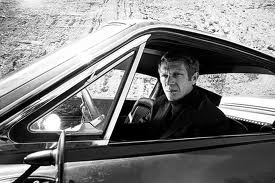
I think the image of cool, Old School, is Steve McQueen.

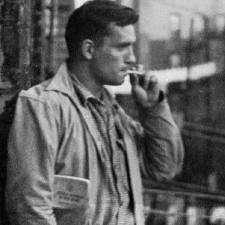
I’ll also throw in Jack Kerouac and Neal Cassidy, both of whom I consider “Literary Cool.”


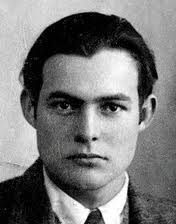
And I probably shouldn’t leave out the young Ernest Hemmingway.

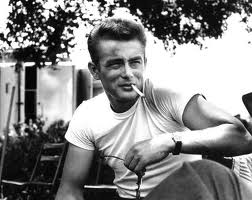
Cool has an element of “bad” in it. Bad boys are cool. Jack Nicholson, Dennis Hopper, James Dean. There’s usually an element of danger in the mix. Selfishness, temper, physical strength.

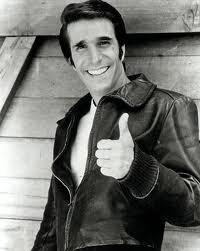
The Fonz was supposed to be cool, but not really. He was “television executive cool” or “Madison Avenue Cool.” Manufactured to appeal to the largest demographics. He was just Henry Winkler, really, a scrawny Jewish kid from New York. That ain’t cool.


Butch and Sundance were cool.

Cigarettes were supposed to be cool, but I never bought into that. If I’d been born a decade or two earlier I would have, though. And, of course, I’d be dead by now.

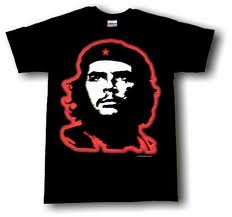
Oddly, however, cigars are a little cool. I’m not exactly sure why. I think it has something to do with Fidel Castro. Who isn’t exactly cool, but he’s a rebel, which makes me think of Che Guevara. Che must be cool, because he’s on all those T-shirts that cool guys wear with their bluejeans and boots.

Malcolm X seemed pretty cool, yet Martin Luther King was merely kind. He was a great man, yes, but I wouldn’t say he was cool. Mother Teresa and Ghandi weren’t cool, for that matter, either.

Fast cars are cool. They always have been and they always will be cool. Unless the Comicon crowd ends up ruling the world. With their Toyota Priuses. Yeah, I know, it’s responsible, but it ain’t cool. There’s no element of bad in it.

Cool is Porsche, Corvette, Ferrari, Lamborghini, Ford Thunderbird, Jaguar…most any car from the ’50s and ’60s. Muscle cars are cool.

So are muscles, in fact. When I was in high school, cool was a young body-builder named Arnold Schwarzenegger. Before Conan the Barbarian. And Lou Ferrigno, before The Incredible Hulk. Of course, they were all doing steroids, which we ultimately learned was not so cool.

The Matrix is cool. It reeks of cool, and yet it feels organic. It’s cool by design, yes, but it’s designed so well. Pulp Fiction, too, is cool.

Sports figures are almost always cool. In my day, Muhammed Ali was cool. I’m not a big sports fan, so I don’t know all the cool sports figures. They’re mostly football players, basketball players, baseball players, boxers. Maybe Indy car drivers. Testosterone sports. Not a lot of tennis players or golfers on that list.

I’m sure there was a day when Elvis was cool, but to me he was always an advertisement for what people who never knew cool thought cool should be. Just because he did that thing with his hips. Oh, that’s so cool. But cool came before Elvis – Charlie Parker, Dizzy Gillespie, John Coltrane. Dangerous cats with their reefer ways. My God, you could lose your mind listening to their devil jazz.

The Beatles were cool, for sure. They started off kinda dopey, but they got their shit together as the war dragged on.

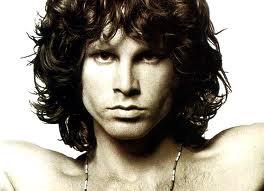
And Jim Morrison. Scary cool.


For that matter….Jimi Hendrix. I mean, really. Uber cool. Backed by overwhelming, misunderstood talent. And Janis Joplin. Too bad about all that overdose shit.

Maybe I’m past my expiration date. I’m an old man already. But, old men can be cool, too. Maybe it’s just what they represent. William S. Burroughs and Charles Bukowski, old and still fighting the fight (when they were alive and fighting the fight). They were rebels. Their long lives represented the fuck you I can live my life the way I want to attitude that defines cool.

What’s cool now? Justin Bieber? Really? It can’t be.

Ask your kids, will you? Maybe your grandkids. You gotta tell me what passes for cool these days. I gotta know, because I’m too old to see it.

And, how do you define cool? What is this concept, and why are we drawn to it?

And, dare I try to relate this to novels? What would you consider a cool novel? I consider Fight Club by Chuck Palahniuk the ultimate in cool. Or Hunter S. Thompson’s Fear and Loathing in Las Vegas.

Tell me, please. Educate me. Bring me up to speed.

Thank you and now I’ll shut up.

Three Nuns, a Russian Drug Dealer and a Clown …

Zoë Sharp

I know this sounds like the start of a joke, and in some ways it is. A few years ago I was at a convention – it may even have been ITW – and members of the audience were asked to come up with an opening line for the panel members to pick at random out of a hat and run with.

I wrote:

‘Three nuns, a Russian drug dealer and a clown are being pursued through the food hall at Harrods by a Japanese tribute band to Abba, when the clown’s cellphone rings …’

The unlucky panelist who picked that one out?

Lee Child.

Did he run with it?

Of course – in his own inimitable style.

Has he entirely forgiven me?

Hmm, not sure about that one 🙂

So, when I was asked to contribute a piece about beginnings for a bulletin for the upcoming CWA Debut Dagger competition, held every year for unpublished authors by the British Crime Writers’ Association, this line sprang to mind.

And as an aside I asked competition entrants to complete the line in their own style. Here are some of the most entertaining, all of which will receive a copy of one of my e-books. And if anyone else would like to give it a whirl, I’ll give away another copy to the best effort!

Gary Ian David

‘Three nuns, a Russian drug dealer and a clown are being pursued through the food hall at Harrods by a Japanese tribute band to Abba, when the clown’s cellphone rings …’

Charlie fumbled desperately in the huge pockets of his unique suit. Out came streamers, sweeties, a disorientated live pigeon that flew to the roof and knocked itself out on a steel girder. A million silk hankies, a rubber sausage and a plastic hammer. A box of confetti exploded as he threw it away and a tramp caught an exploding cigar in mid flight. Children raced after the strange group of misfits, giggling, fighting over the clowns discarded novelties and falling over one another in their haste. A group of workmen did a fair interpretation of Benny Hill’s theme music as the group raced around, everyone chasing someone or something… all that was missing was The Keystone Cops. Wait for it… here they come. Nuns holding their skirts up, showing off their woollen stockings charged ahead of the drug dealer when he fell over and a bag of cocaine burst on the tiled floor. Yoshi Agnetha Yamashita pulled Aiko Frida Shoda back by her hair and screamed when her auburn wig came away in her hand. Michiko Benny Minamoto knocked his mate Atsushi Bjorn Takahashi over as they both struggled to head the nuns. Several uniformed police officers struggled at the back of the pack. The uniformed head of department stepped out in front of the charge and held his hand up. ‘Halt,’ he commanded. He was trampled underfoot. At last Charlie found his phone and held it to his ear. He stopped dead and the crowd ran over him. As they rushed toward a pair of glass doors, they slowly swung open… too slowly. The nuns crashed into them and as they fought one another a dwarf lifted up Sister Mary’s skirts and ran between her legs. He dived on top of the counter and grabbed the Walking, Talking, Weepy, Sleepy, Happy Chappy doll… the last one in the store… in fact the last one in the world. Camera crews filmed him holding the toy above his head and wealthy Harrods customers offered him obscene amounts of cash to part with it. He ignored their pleas and walked out with his head higher than anyone else’s in the store. On Christmas Day his son would be the envy of the world.

KJ Rabane

‘Three nuns, a Russian drug dealer and a clown are being pursued through the food hall at Harrods by a Japanese tribute band to Abba, when the clown’s cellphone rings …’

“Right so you say you’ve got the wine and the Russian rug runner-how are you getting on finding the Japanese arbour? The clown answers “they say Harrods is a store where you can find anything but I’m having trouble with the Japanese Abba. And this phone is hopeless I can hardly hear what you want. You should have written it down. What time did you say your mother was coming? By the way I’m wearing the clown outfit so I’ll be ready for the kids when I get home.”

Heath Gunn

‘Three nuns, a Russian drug dealer and a clown are being pursued through the food hall at Harrods by a Japanese tribute band to Abba, when the clown’s cellphone rings …’

“Waterloo, how does it feel you won the war”, shrieked the ringtone, the clown, with his mop of thick orange hair, glanced over his shoulder, held up his empty hand and all nine of them stopped dead in their tracks next to some French extra mature cheddar cheese.

“Billy, Hi”, gasped Thomas, the clown, “yes we are aware the fancy dress party started over an hour ago, and as soon as we beat our way to the tube we’ll be there”, “I know but unfortunately people who jump from railway bridges have little consideration for the timing of your birthday party”. He rolled his eyes at his pursuing entourage just as Lydia, the Russian drug dealer, tapped impatiently on the face of her bright yellow wrist watch.

“Billy the quicker I get off the phone, the faster we can all run to the tube station. Yes I’ll pick up some beers on the way, and vodka”. With that Thomas slid his thumb over the smooth screen of his phone and with a nod of his head the unlikely looking group lurched on through the well lit food isle.

Jean Harrington

‘Three nuns, a Russian drug dealer and a clown are being pursued through the food hall at Harrods by a Japanese tribute band to Abba, when the clown’s cellphone rings …’

Three nuns and not one a virgin. Why should they be? Zoe loved sticking pins in stereotypes and that sexually innocent women were the world’s most virtuous was one of her favorites. Take these three: a widow, a divorcee and a lesbian. They could probably write erotica if they so chose, but instead here they were in the Amazon fighting sin and snakes without a luxury or a lover among them. As she paddled downstream, they sat without speaking, waiting for their destiny to unfold, waiting perhaps to be pierced by a dart gun as they had been pierced by the Lord. But surely not by anything else.

Sandra Powley

‘Three nuns, a Russian drug dealer and a clown are being pursued through the food hall at Harrods by a Japanese tribute band to Abba, when the clown’s cellphone rings…’

“Crap timing Ruth,” gasped the panting clown, clutching the phone to her ear. “The flashmob’s gone pear-shaped here and store security are getting heavy. Wait up…” She ducked down an aisle. Three nuns and a Russian drug-dealer ran past, pursued by a bellowing Japanese Abba tribute band – struggling to gain any speed in their platform heels – followed by two hefty, wheezing security guards giving chase. As the strains of karaoke Water-roo faded, she pulled off her red nose, took a deep breath and tried to concentrate on the voice in her ear. “What do you mean Hitler’s been shot? I’ve got News at Ten filming him outside St Pauls in an hour.” She pushed back her curly scarlet wig and scratched her scalp. “I know it’s short notice Ruth, but if Adam’s in hospital, I need a stand-in, so just get down to the protest camp for the news crew…Hang on.”

Spotting a mountain of pannetone, she scooted over the lino like a commando and took cover. “Yes – and you also said that your rabbi is liberal…Hitler-Schmittler, Ruth – global economic crisis trumps religion,” she hissed, replacing a dislodged package in the display. “I’ll call you from casualty, once I’ve seen Adam and found out who shot him – and while you’re sourcing your Third Reich outfit, have a look for your commitment.” She put her phone in her pocket and ripped off her clown suit, scanning the food hall for a place to remove her make up.

Five minutes later, a middle-aged woman slipped out of the ladies room, wearing jeans and tassled loafers with a smart jumper and a Liberty scarf. Her face was bare and a navy beret masked her wig-flattened blonde hair. She took a pair of Prada-framed glasses from her expensive leather handbag, pausing for a moment to browse a row of preserves before she hurried off, empty handed.

Marian Crowe moved purposefully, navigating the crowded streets to the Royal Free Hospital, unaware that her journey was pointless. Adam had been dead for forty-seven minutes and his body had already been relocated by The Service.

Michael Higgins

‘Three nuns, a Russian drug dealer and a clown are being pursued through the food hall at Harrods by a Japanese tribute band to Abba, when the clown’s cellphone rings.

“Yes, Mr. President?” said Jo-E, a smile on his face, well he always had a smile on his face, as he slammed open the leather-padded walnut door leading to the East Dulwich Deli. “No, no, I can talk, Mr. President.”

With a flicker of regret, Jo-E kicked one of the tables to the floor with a shoe the size of a London double-decker bus. This really would be a great place to eat, he thought, if it wasn’t for that damn Dancing Queen and her killer poodles.

Janelle Colquhoun

‘Three nuns, a Russian drug dealer and a clown are being pursued through the food hall at Harrods by a Japanese tribute band to Abba, when the clown’s cellphone rings …’

They abruptly halt. The three nuns knock heavily into the Russian. Anger shows on the eldest nun’s monobrowed face. The three members of the Japanese band look at each other with raised eyebrows and shrug.

“Keep going,” the Russian drug dealer yells, lapsing out of his Russian accent.

The cellphone persists with it’s Wiggle’s “Hot Potato” ringtone.

“For fuck’s sake answer the frigging thing!” the youngest nun screams, tearing off her wimple and stamping her foot, “This is fucked anyway! Like, hello, what sort of a daft film script is this anyway?!”

The clown, with his hands shaking and his painted smile drooping at the corners, reaches to press the button to answer the call.

There is an enormous explosion. The last frame the cameraman captures through his viewfinder is the clown’s red nose spinning off into the Harrods’ lobster display.

“And that,” Detective Malevolent said, pressing the remote control button, “Is what we know so far about the explosion at 6:03am in the Harrods’ food hall this morning. Any questions?”

All these are tremendous in their own way, and I wish everyone who took part the very best of luck when their entries to the Debut Dagger go in.

This week’s Word of the Week is pusillanimous, meaning lacking in courage and strength of mind; faint-hearted, mean-spirited, cowardly.

I shall be travelling much of today, but will get to comments when I can.


Scalps, Bloody Shirts, and Babies Carved in Half

by David Corbett

Got your attention yet?

I’ll get to the gore in a minute. First, some announcements:

From January 23rd through March 12th I’ll be giving an eight-week Monday night course titled Story Not Formula: Crime Fiction Essentials at The Grotto in San Francisco. Follow this link or this one for details on what I’ll be teaching and how to sign up.

I’ll be doing basically the same course online for Chuck Palahniuk’s LitReactor sometime next year, so those of you hoping for an online course, I’ll keep you posted, and check my website for updates.

Also, on the weekend of February 4th-5th, I’ll be teaching a course at Book Passage in Corte Madera titled Integrating Arcs and Acts in Fiction and Film. Here’s the description (follow this link to sign up):

Aristotle believed that plot was the most important and difficult challenge the writer faced. But by plot he meant the architecture of change in the hero’s fortunes. Character and structure are inextricably linked. David Corbett, drawing on five iconic films—Vertigo, The Godfather, Chinatown, Silence of the Lambs and Michael Clayton—will demonstrate how the architecture of story deepens our understanding of character, with scene-by-scene breakdowns of how the drama is built. He will also, in the class discussion that follows, apply the lessons learned to individual student film and fiction projects.

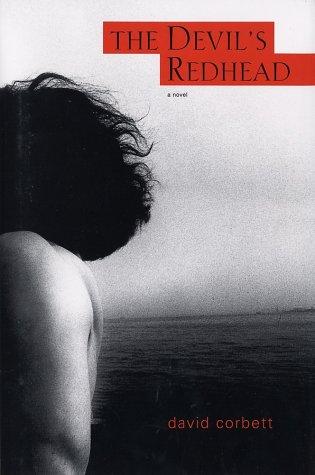
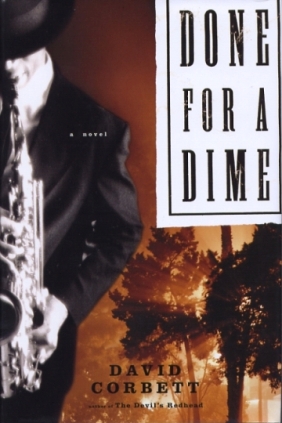
Last, Otto Penzler has selected my first two books, The Devil’s Redhead and Done for a Dime, along with five short stories, for digital reissue as part of his Mysterious Press imprint at Open Roads Media. Hopefully the books and stories will be available for download early next year. I’ll keep you posted.


 * * * * *

Now back to scalps and such.

I had a completely different post in mind for today, but then I picked up the morning paper. As I wrote here on Murderati two weeks ago, my hometown suffered a bitter loss recently when a wonderful man and brave cop, Officer Jim Capoot, was murdered in the line of duty. I predicted that a tough political fight would soon be brewing over the issue of police staffing, city finances and public safety contracts.

Boy, that was quick.

A newly elected city council majority has decided to propose a public safety review committee that the police officers union and police supporters find not just pointless but insulting, calling it a travesty to their professionalism and the memory of their fallen comrade. They intend a mass demonstration at tonight’s council meeting, with T-shirts honoring Jim Capoot.

In short, the heat is already cranked up to boil, before most of us even know what’s going on. And this reminded me of one of my favorite historical insights, from Evan Connell’s Son of Morning Star, about General George Custer and the Battle of Little Bighorn. Somewhere in the mid-nineteenth century, a settler actually bothered to ask a Native American why the warriors of his tribe took the scalps of their victims. The response says everything about human nature: “Because our enemies do.”

Henry Adams likened politics to the systematic organization of hatreds. He’d feel right at home in my hometown. If he still had his hair.

In such a charged atmosphere, with emotions so high after Officer Capoot’s slaying, the city council majority’s decision to press forward now with this hot potato demonstrates a level of arrogance and political tone deafness that is almost inspirational. I know the time line is tighter than it seems, with police and firefighter contracts ready to expire in June, but this could easily have waited a month.

Beyond that, though, is the issue of merit. I’ve met a number of the cops in Vallejo and done the prep course for the Citizens on Patrol Volunteer program. I spent fifteen years exposing lazy, incompetent, lying, drug-addicted, corrupt and bigoted cops. I’ve testified against them. I think I have a pretty good nose for the breed. That’s not the problem in Vallejo. In fact, V-town has one of the most professional forces I’ve ever encountered. The problem we have is simple: the cupboard is bare. We can’t afford more police officers, no matter how much citizens and the police themselves may want them.

But the police union’s kneejerk outrage, its decision to crank up the heat and switch off the light, is equally disappointing — though understandable, given the recent murder of Jim Capoot. The only thing more puzzling is that decision about the T-shirts. Apparently nobody’s explained to them the history behind “waving the bloody shirt.” It’s not complimentary. (Carpetbaggers on one side, KKK on the other—talk about systematic hatreds. Is this the political climate we want to emulate?)

Now I know enough officers to realize beyond any doubt that they mean no disrespect to Officer Capoot or his family. Quite the opposite. But they create an impression of a willingness to exploit even the death of a fallen fellow officer in pursuit of a political agenda and protection of their own bottom line.

And the city council creates the impression that they distrust the police on a fundamental level, and lack any faith that the public safety unions will play fair or provide honest information about what’s needed to keep this city safe. Instead city hall needs to create an independent body full of non-cops to gather the facts necessary to determine where we stand. This is moonspeak for “disaster.”

Those impressions, regardless of their degree of truth or falsehood, feed a dragon that exhales poisonous smoke. And that smoke is suffocating this city.

The police are right, the review committee will harm not help public safety, and it will cost money, money this city doesn’t have, any more than it has the money for the increased staffing they want.

Postscipt: I addressed the council chambers tonight and made this point. I can’t support the resolution. But I also requested the debate proceed with a little less heat, a little more light.

One solution to the over-arching problem is to have volunteers, as much as possible, help the police do non-patrol and investigation tasks. I’ve applied to be a volunteer for the police department and intend to put out the call for more. Because the unstoppable force has hit the unmovable object—we need more police, we don’t have the money—and the collision will incinerate this city (and a great many others in this country) if the citizens don’t stand up, get engaged, and empower themselves.

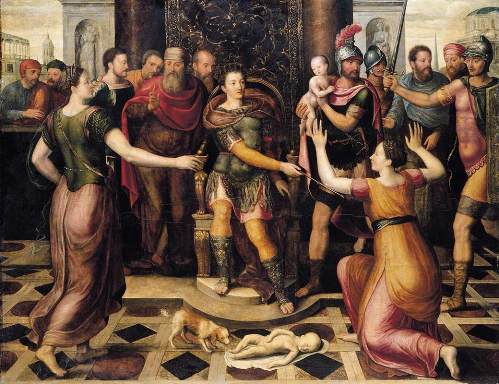
I’m not enough of a Pollyanna to think volunteerism’s the secret magic voodoo answer, but I’m also not so drunk on my own gall that I want to be the one standing there when one side or the other in this fight holds up half a bloody baby and declares victory. Solomon had it easy. Solving this fucker’s gonna take real wisdom.

A recent Vanity Fair piece that covered the approaching financial apocalypse in California, and mentioned Vallejo in some detail, made the excellent and inescapable point that we’re on the cusp of a new social contract, one that demands not just more accountability from government and the powerful but much more engagement from its citizens. The Tea Party and the Occupy Wall Street movements are manifestations of the growing awareness of this transformation. Let’s hope to God they don’t just devolve into systematically organized hatreds.

* * * * *

Jukebox Heroes of the Week: I know I should be putting up a Christmas carol, or at least Robert Earl Keen’s hilariously heart-warming “Merry Christmas from the Family,” and wishing everyone a merry merry happy happy. But I couldn’t help myself—here’s the Boss singing Woody Guthrie:


Yes, have a wonderful holiday. This merry is your merry.