Author Archives: Murderati Members


Cult Crime


by Jonathan Hayes


There’s been a recent flurry of activity over the Brian De Palma-directed, Oliver Stone-scripted, Al Pacino-larded Scarface. The celebrations, complete with cast reunion and one-off screenings nationwide, are not about an anniversary (the movie came out in 1983), but release fanfare for a new Blu-ray edition. In truth, Scarface has such a huge following that no particular special occasion would be necessary to celebrate it.

The film, released to middling reviews and decent box office, has flourished over the last almost three decades as a burgeoning cult obsession, driven by VHS, then DVD releases. Its popularity was particularly obvious among rappers – every hip hop star showcased on MTV Cribs had that poster of a brooding, Hamlet-esque Tony Montana, on the edge of darkness and light, hanging on his media room wall; indeed, this is probably how the film’s following was sustained, with younger fans picking up on the endlessly repeated meme.

The movie’s appeal is obvious, particularly to disadvantaged young men. The American Dream writ large, Scarface tells the story of Tony Montana, a Cuban thug ejected from Havana during the Mariel boat lift. Landing in Florida, through ambition and ruthlessness, Tony becomes a cocaine kingpin, becoming hugely wealthy and losing everything in the process. It speaks to the disenfranchised directly, celebrating the outsider, implying that even the marginalized can have whatever they want, if they have the drive and the cojones.
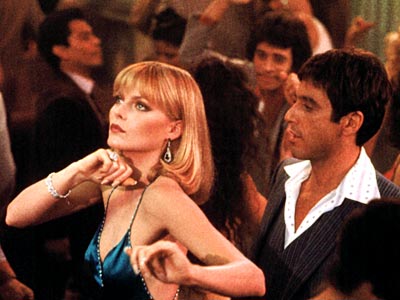
Tony’s rewards are the dream of any 14 year old boy – fountains of money, amazing cars, a mansion, cool guns, and Michelle Pfeiffer at her most luminous. As a movie, Scarface is a pop song, an agglomeration of hooks – Tony’s sexy toys, the graphic violence (including an impressive chainsaw dismemberment in a shower in a pre-gentrification Miami Beach), Stone’s quotable dialogue (“Say hello to my li’l friend!” alone is probably uttered hundreds of times every day) and Pacino’s manically bizarre take on the Cuban accent – Stone may have written “cockroaches”, but with “CACK-A-ROACHES!!!!”, Pacino made it his own. Much as he did with “HOO-AHH!!!” in the abysmal Scent of a Woman. (A side note: why did the Academy acknowledge him for that performance? Giving him the Best Actor Oscar was like injecting the Tasmanian Devil with coffee and methedrine and setting it loose in Disney World on Orphan Visiting Day; since then, with every one of his performances, Pacino may not actually say “HOO-AHH!!!”, but you can feel him thinking it…)

As a kid, I spent a lot of time in art house and rep cinemas – the Coolidge Corner, the Harvard Square and the Brattle in the Boston area, the Scala and the Ritzy in London – enduring endless double bills of Kurosawa and Truffaut, the Marx Brothers and Bogart. When I was growing up, the big cult movies were countercultural/alternative, like King of Hearts and Harold and Maude. If Scarface is something of an evergreen, what are the current cults? 

Wait: I want to mention one film that is, I think, both a cult film and a classic, in the non-ironic sense. Ridley Scott’s Blade Runner, released the year before Scarface, is sci-fi noir, an existentialist picture from a Philip K. Dick short story about a detective assigned to track down androids who are “more human than human”; in the process, Deckard (Harrison Ford) is forced to question his own humanity. The film’s philosophical themes are buried in a glorious miasma of visionary filmmaking, centered about Syd Mead’s concept – which felt unprecedented at the time – of a future not all slick and shiny and “futuristic” in that smooth, modern Kubrick’s 2001 sense, but of a civilization that had progressed technologically but not ideologically, developing organically in the ruins of its own crumbling cities, consuming the environment, exterminating natural life on earth until it’s forced to flee the planet.


With unparalleled art direction, sound design and special effects, Blade Runner is, for my money, a great film. It’s flawed, though, which is why it remains mostly a cult object – cost and time overruns, endless arguments with the studio, which took control away from Scott to deliver an aggressively edited release with an overdetermined noir voice-over, and the existence of seven different release cuts have all interfered with the film’s establishing itself as a true classic. Blade Runner is more worthy of a Blu-ray edition than Scarface; thankfully, it is the object of a five disc Blu-ray set, containing several different cuts of the film. You’ve probably seen it, but if not, watch it before the arrival of Scott’s new “installment” of the “Blade Runner franchise”, a project announced a couple of weeks ago.

To my eye, the two contemporary films that command the biggest cult following among Millennials (aka Generation Y, aka Generation Next, aka Generation Net) are Fight Club and Léon (released in the US as The Professional). I base that opinion both on the multitude of references to them rattling around on Twitter and Facebook, and because I’ve been surprised by how frequently I encounter them when I’m looking at tumblrs (tumblrs are blogs which make it particularly easy to share photographs and videos and audio, rather than being text-oriented. My own tumblr is a repository for images and sounds I’ve come across that I want to share; they may be beautiful, arresting or disturbing, but they all evoked a reaction in me).

Citations of the two films break down along lines of sex; unsurprisingly, Fight Club shows up mostly on dude tumblrs, whereas it’s (usually) the chicks who post from The Professional. Both films are very strong visually – something I think is key in catching the attention of the post-MTV generation.
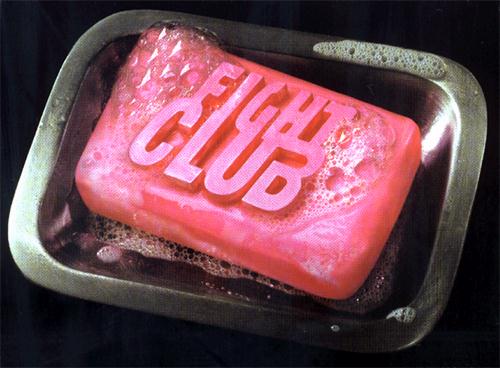
Fight Club is David Fincher’s 1999 adaptation of Chuck Palahniuk’s 1996 novel of the same name. You’ve probably seen it, but if not it’s a lacerating satire about… well, a lot of things. An insomniac traveling salesman who feels emotionally disconnected from the world meets a handsome, id-driven stranger. They become friends, and together start a “fight club”, in which men meet for no-holds-barred bareknuckle fist fighting. The club, lead by the homicidally reckless Tyler Durden, evolves into an anti-corporate movement, pranking companies and attacking consumerism head-on, with each episode of sabotage more destructive than the one before, everything leading up to an explosive twist ending.
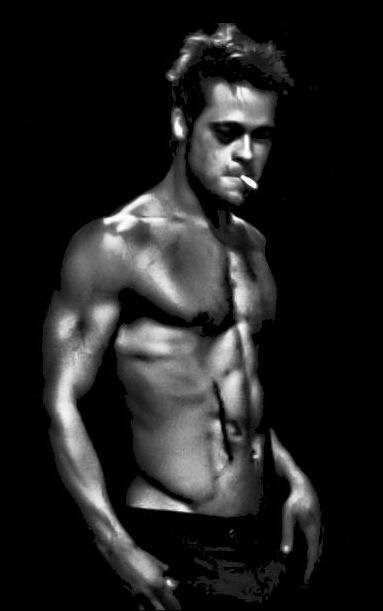
At its core, the film grapples with the classic post-modern anguish over the Death of the Real. The members of the fight club are responding to a prevalent sense of alienation from reality, from real feeling. They live in a world where values are dictated by marketing, where advertising is treated as art, and where high end consumption is considered a valid life goal. For young men who’re increasingly realizing that their lives will never be like the lives they’ve been shown on TV (they’ll never live in a loft in New York City with seven attractive strangers, they’ll never drive a Bentley convertible, and, even though they “think she’s a skank”, they’ll never get the chance to fuck Snooki) the anarchist message is an instant hook. If you can’t have something that you’re constantly being shown as visible and imminent, the fantasy of burning it all down is incredibly seductive.

An awareness of the shallowness of the goals of the generations that immediately preceded them – Generation X, the Baby Boomers – is said to mark Millennial thinking. Millennials want careers – want lives – that have meaning and richness. It’s not about money, but about valid experience. This extends into the realm of physical action: I think that one of the reason that extreme sports, sports with a high risk of physical injury, like skateboarding and ultimate fighting, are popular now is because pain is an immediately and undeniably real experience. I think this is part of the reason why the 2000’s were the era of Jackass, the era of the emergence of the Modern Primitive culture of piercing and tattooing.

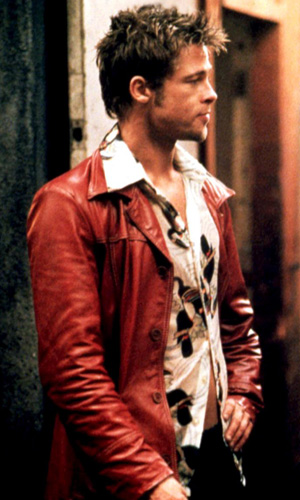
Fight Club scratches this itch for young men. They watch the film, relate to its seditious messages, accept the homoerotic undertones of the unreliable narrator’s relationship with Tyler Durden. And at the end of the day, the movie looks fantastic, and Tyler Durden looks just so freakin’ cool in those shades and bro shirt and red leather jacket, up there on that glossy 42” Sony LED screen in the living room.
 

One of the major ways in which experience for the Millennials has been mediatized and mediated is in the experience of love and sex – the latter far more than the former. Any 13 year old boy or girl can show you how to access hardcore online pornography for free, and a huge percentage of teens have sent or received photographs of themselves or their peers naked or having sex. I’m fascinated by the amount of erotic material in their tumblrs, both the stuff that’s on the edge of hardcore, and the frankly pornographic, with visible penetration. This goes for both the male and female bloggers. And while some of the females may be using porn to catch the attention of the boys, I think that many young women like/embrace/are aroused by it.

I’m not interested in questions about the morality of pornography, but I do find its embrace interesting and problematic, particularly in terms of the expectations young people will have in terms of how sex will work inside (and outside) their main relationships.

Blogs – tumblrs perhaps even more so than traditional text blogs – are declarations of both identity and aspiration. The blogger filters the internet, sharing material to show how the blogger wants to be seen, the things they fear, the things they want for themselves. They can be endlessly engrossing, particularly when you come across a blogger who shares your world view. I’m the same way – my tumblr (which I assemble almost at the level of spinal reflex, grabbing and posting images and music that have triggered something in me, knowing that I’m disclosing complex but pretty legible truths about myself) is my way of filtering my experience of the world (as viewed through the fish-eye lens of the internet). I see my tumblr as a visual and acoustic form of DJ’ing, of imposing order on a world out of control.
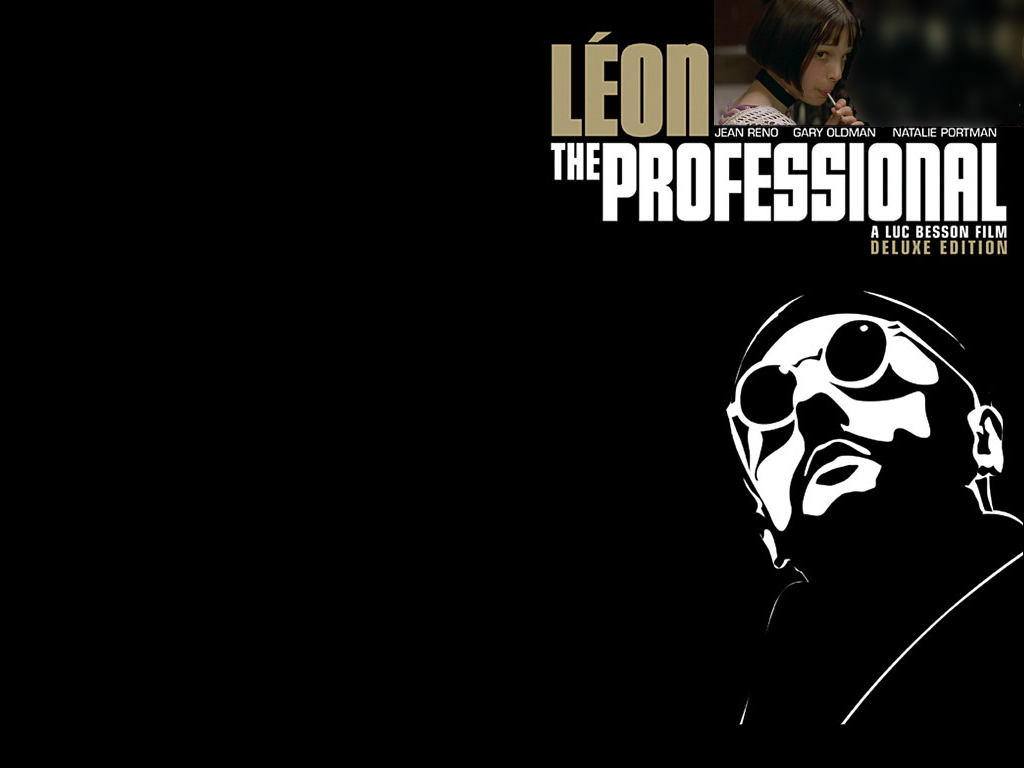
The Professional (aka Léon) is a stylish crime film by the prolific lowbrow pulp French director Luc Besson (The Big Blue, La Femme Nikita), who must never be confused with Robert Bresson, the highbrow French director of such films as 1951’s The Diary of a Country Priest and 1959’s Pickpocket. A little girl (Natalie Portman) witnesses the killing of her entire family by a bunch of corrupt, drug-dealing DEA agents led by Gary Oldman. She is saved by the intervention of a neighbor, a bearish, taciturn hitman (Jean Reno), who hides and protects her. He becomes a father to the orphan, and she in turn brings him out of his shell, freeing him from the rigorous code of living he’s adopted to survive all these years. Of course, her involvement in his life compromises it, with ultimately disastrous results.

I like this film a lot, but largely for visual reasons – Besson’s films tend to poke around notions of crime and redemption without doing much with them, but at the end of the day, he inherited the mantle of beautiful, advertising-inspired filmmaking from Jean-Jacques Beneix (Diva, Betty Blue), and strong visuals work for me 

The essential relationship in the film – between Mathilda Lando, the appealing, inquisitive 12 year old and Leon, the grunting, barely socialized hit man – is, I believe, at the root of the appeal for the girls who post stills and clips. It’s an odd, uncomfortable relationship, hovering between the childlike, the revelatory, the protective and the incestuous. Leon (the hitman) is the ultimate father figure – he’s a kind of indestructible machine who will protect the little girl against any attack. He is strong, silent and, in his ultimate self-sacrifice, the epitome of the loving father.

In turn, Mathilda looks after him, this brooding, homicidal manchild, making sure he’s fed and watered, defusing his alienation and isolation, abnegating his nihilism to connect him once more to the world. And, once his feet touch the ground, he is no longer an immortal, but human, vulnerable in every sense of the word.
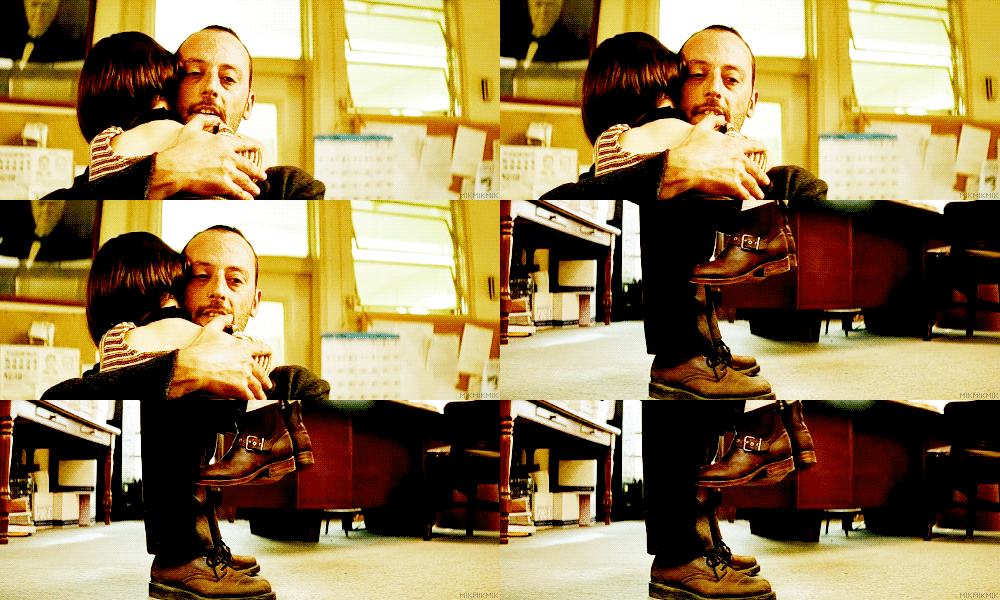
I suppose that’s part of the character’s romantic appeal: he is one particular ultramasculine male archetype, and she comes along, with her innocence and love, and unlocks his armour to reveal the loving Daddy within. And he loves her, and protects her, at extraordinary cost to himself.

But I also found their relationship a little creepy, the way she becomes his mother, almost his wife in the process. It has that tang of incestuousness, that little echo of the taboo – particularly when you come across photographs of Mathilda and Leon right next to a hardcore animated gif of a couple having violent sex.

 

I think Mathilda herself – an avatar of innocence, of vulnerability in the face of an ugly, brutal, monstrous world – is another reason the film is so appealing to young women. Millennials, I believe, relate more to the romantic notion of the childlike waif, the orphan, than have previous generations. I don’t know if this is because the world is a more frightening place now than it was before, or if it is because changing patterns of child raising have resulted in timid, cosseted children.

Anyway, I’ve droned on long enough about this. Both films are worth your time. And so are tumblrs! They’re a fascinating lens onto what people are thinking and doing these days. You can start with my tumblr, if you’d like: Millennials are nothing if not democratic, so tumblrs are really hyperlinked – the photographs I post are usually linked to the original poster. This way, you can click on an image that appeals, track it back to the original tumblr, then page through that person’s tumblr looking for more images that you like, and in turn track those back to their original pages, bookmarking the ones you like. Et cetera, et cetera, et cetera.

Oh, a note about navigating tumblrs: they all have different layouts, but if you click on the tumblr’s name at the top of the page (eg, mine is AFTER THE TORCHLIGHT), that will take you back to the current front page of the tumblr. Some tumblr layouts show 15 posts at a time, others let you scroll infinitely. To quickly view all of the posts in a particular tumblr at once, type /archive after the tumblr name eg http://afterthetorchlight.tumblr.com/archive ).

Finally! One tumblr I occasionally look at, apparently belonging to a young woman in Sweden, is http://tankgirlsinspiration.tumblr.com/archive . I realized just now that the page name she’s now using for her tumblr is… Mathilda Lando. And her bio is Mathilda’s. Have a look at her page – I think it’s fairly typical of a certain type of tumblr – a curious mixture of photos of herself, celebrities, fashion, cute things, animals and hardcore pornography. I’ve posted the link to her archive view; to see any individual post, just click on it. Or, to see it as she’d like you to see it, click here.

Again: I think I’ve made it clear by now that many tumblrs contain hardcore pornography: if this offends you, there are plenty of other places to visit on the net. Or so I’m told.

Thanks for joining me on another weird meander! If you see me at Bouchercon, and made it this far, hit me up and I’ll buy you a drink! In the meantime, what are your prognostications of current films that will be cult hits down the road? Any personal favourites?


The Books Biz Down Under

by Tess Gerritsen

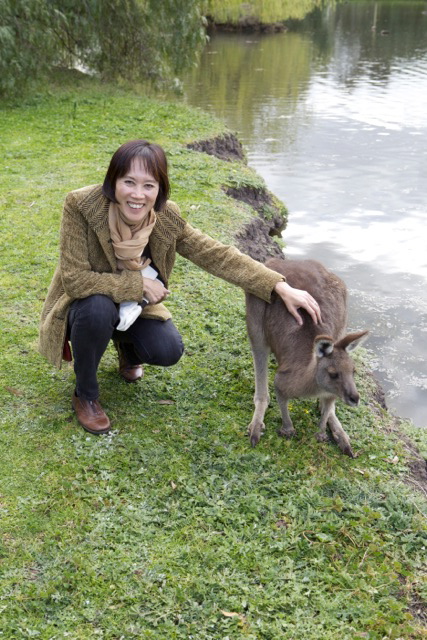
(Yes, it’s the obligatory kangaroo photo!)

I just got home from a head-spinning book tour to Australia and New Zealand, and although I’d love to overwhelm you with my hundreds of cool travel photos, I’ll try to focus here on books and publishing. I’m always curious about what’s going on in the books business around the world, and this trip allowed me to chat with booksellers, publishers and local writers to get an idea of the specific challenges facing our friends Down Under.

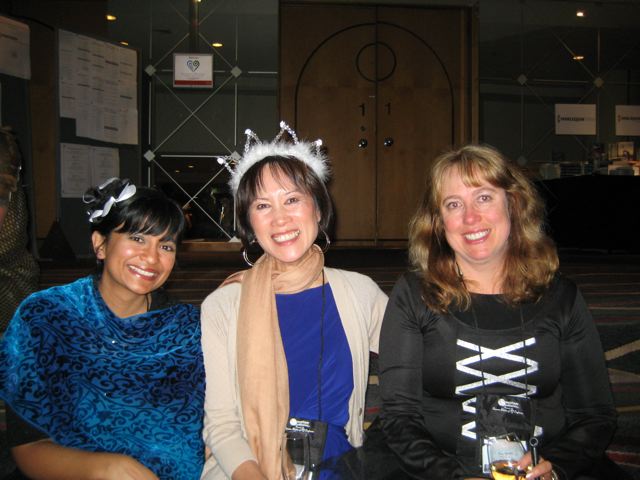
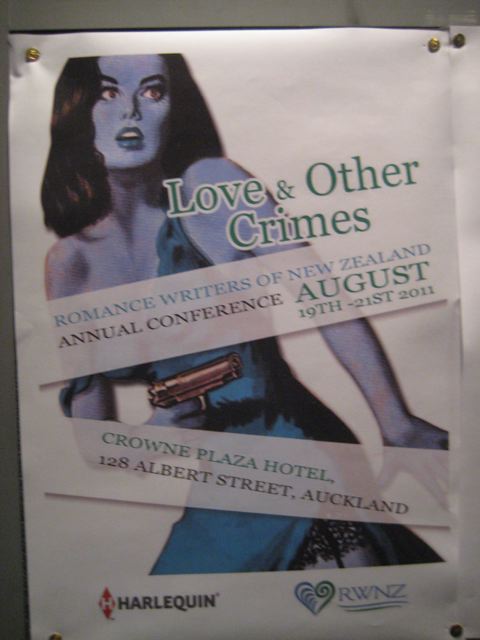
My first stop was Auckland, where I was a guest speaker at the Romance Writers of New Zealand conference. Since the romance genre is where I started my career, it felt like a homecoming, and what fun it was to dress up for the opening night party where I wore — what else?  A tiara!  Here I am, snuggling up to Nalini Singh and the wonderful Tessa Radley, who first invited me to attend.

One sad note put a damper on everyone’s spirits, though: the sudden death of Desire author Sandra Hyatt, who fell critically ill over that weekend.  Because RWNZ is such a small and close-knit group, the loss shook everyone.

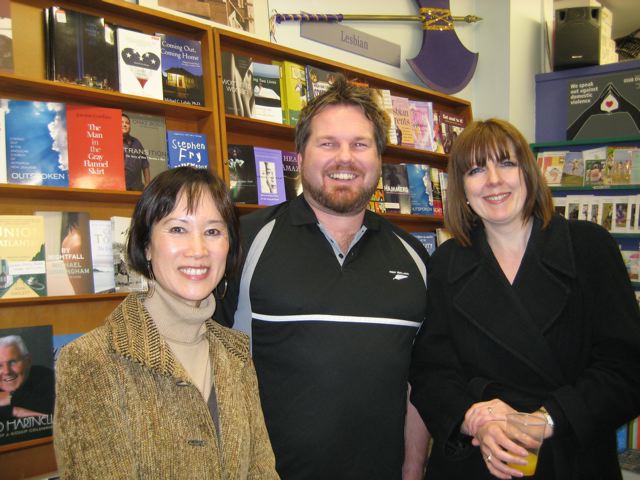
Also in Auckland, I did an evening event at the Women’s Bookshop, where I sipped wine with my NZ publicist Yvonne Thynne and one of the most enthusiastic promoters of the mystery genre in New Zealand, Craig Sisterson.

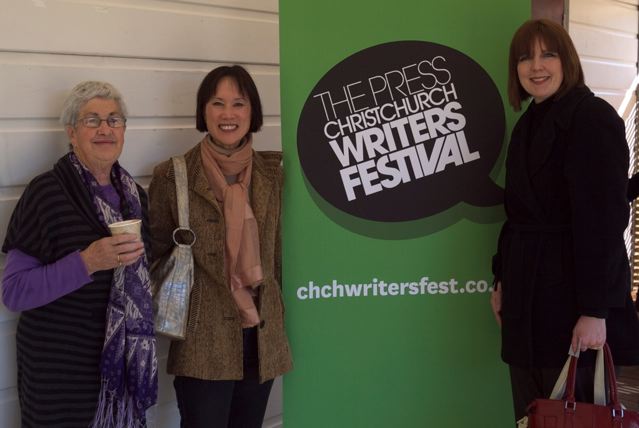
From there it was on to Christchurch where, despite the recent earthquakes, the Christchurch Arts Festival has been reborn.  

(with Ruth Todd and Yvonne Thynne)

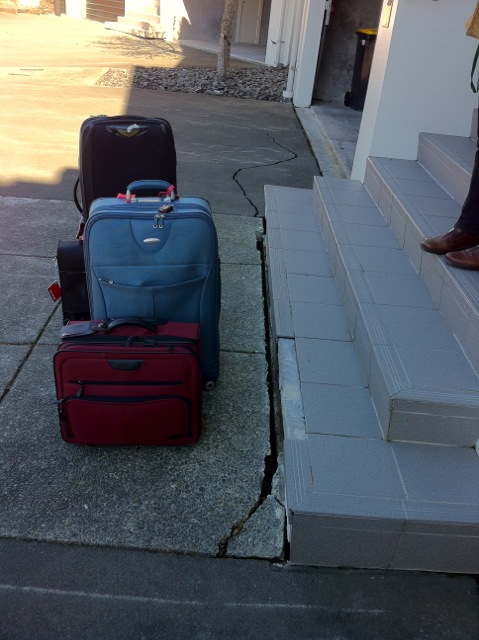
Although I wasn’t able to visit the central business district to see the worst of the damage, it’s obvious that the city is still rebuilding.  It’s still experiencing frequent quakes, and residents have become so accustomed to them that they’ll debate with great authority whether that last tremor felt like a 4.2 or a 3.8.  All over town, you can spot signs of quake damage, including at my hotel:


During my 2003 visit to NZ, my book event was held in Christchurch Cathedral, and it’s sad to think how many of those lovely buildings I saw then are no more.  But the city seems determined to move forward, and the Arts Festival was a hit, with a nice turnout to see author John Hart and me being interviewed by Graham Beattie, as well as the presentation of the Ngaio Marsh Award (to Paul Cleave).

Most New Zealand writers must sell to foreign markets if they want to earn a living.  With a small population (just over four million), it would be difficult indeed to support yourself with just the local market.  If you sell as few as 300 copies in a week, you can land on the top-5 NZ (international) bestseller list.  A big concern is the astronomical price of books.  Because of their small economy of scale, books aren’t printed locally but are shipped in from Australia, adding to the cost.  A hardback costs $60! (NZ/US rate 1.00/ 0.85).  The e-book revolution has yet to fully arrive on its shores, but with the high price of print books, it’s not hard to see that e-books could threaten print sales. And when those e-sales happen, where will the money go?  Will it be sent overseas to Amazon.co.uk?  How will New Zealand publishers survive if e-sales profits go out of the country, instead of being kept within its borders? Obviously they’ll need to establish their own e-sales territory to keep consumer spending local.

In Australia, many of the same issues are brewing.  E-sales are still a small part of their market, but they can see the revolution on the horizon. While print books are cheaper than in New Zealand, they’re still expensive compared to the U.S.  Australia’s population is 22 million, and it takes about 1,000 weekly sales to hit the top-10 bestselling list, but it’s still not a big enough market to support most local writers. Foreign sales, once again, are key to survival.

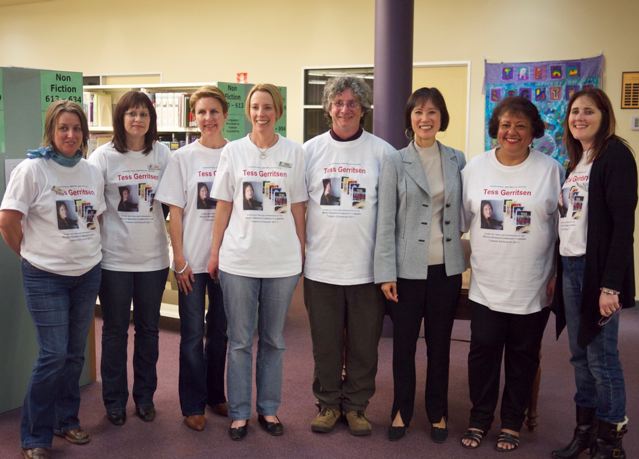
My travels in Australia took me to Adelaide…

(Mt Barker Community Library.  Check out the tee shirts!)

… Sydney, and finally Melbourne, site of the Melbourne Writers Festival, where every event seemed to be sold out.  I gained street cred with my kids when I shared the stage with Steve Hely, producer and writer for “The Office” (U.S. version), revealed crime writing tips along with one of my favorite writers, Michael Robotham, and went on to a cozy evening with the local Sisters in Crime chapter where I was interviewed by Rose Mercer and had dinner with our own P.D. Martin (waving to P.D.!).

What I learned is that writers everywhere are facing the same challenges.  Finding readers. Trying to figure out where we’ll fit in as e-books take over the market. No matter where you go, the writing business is a challenge.

Work

by Pari

Yesterday, Gar wrote eloquently about the paucity of thought that often goes into single-word movie, television and book titles (and blog titles?). As is the case with most of my wonderful blog-mates’ posts, I’ll need to think about that one for a while to see where I stand on the issue.

However, that particular contemplation might be especially difficult right now because I seem to be living in the land of dissection of single words. For some reason, I’ve become a serial analyzer, fixating on one word and then another, wanting to hold what looks like a single-cell concept under a crystalline magnifying glass to discover its true fractal nature.

For example, when I started to consider a topic for today’s post, I immediately wanted to tie it to the idea of Labor Day. So like the good little blogger that I am, I went to the Dept of Labor for an explanation of the holiday.  Once I read that, I felt utterly unqualified to write about it; I don’t know enough about the labor movement, don’t know how I feel about unions or what happened in Wisconsin etc etc etc . . .

Frankly, “labor” to me will always first mean the work I went through to have my babies.

Okay, so labor is work is . . . what is work? What does it really mean? And so it began.

Work is a word with rich depths, isn’t it? Even the dictionary can’t define it in a single sentence. No, there are too many meanings, too many layers to this noun/verb. The more I thought about it, the more I wanted to explore it. How is the term used in daily parlance? At its base does the verb merely mean expending energy? Or is it tied to intentional effort? Is breathing work? Not for most of us. However, it certainly is if you’ve got emphysema.

Does work need a result, a product, to truly be work? That’s what the noun would imply, wouldn’t it? What about struggling with a question that has no answer? Is the time spent thereon work? Do philosophers work when they think? Is a child working when she watches a butterfly sip perspiration from her hand? Is learning work?

Right about now, some of you might be thinking I have too much time on my hands. Or, if you’re Gar, you might be feeling the urge to chew off your arm in frustration.

But I find this stuff fascinating. Is work work if we enjoy it? What would a Puritan answer? How about a hedonist?

As a writer I “work” daily at my craft – but the result might be only a sentence. Is that work if it’s such a small bit of effort? Is it work if I write quickly and have fun doing it? Is it somehow more validly work if I suffer for my craft?

Is reading work? We know it is if it’s for school or a job. But is it work if we do it at night before we go to bed? If we study an author’s approach to story to learn more about craft, is it work? Is it work to go to a movie and analyze it according to Alex’s brilliant techniques?

Hell if I know . . .
Was it work to read this blog?

Questions for today:

What word do you find fascinating?
Why?

Happy Labor Day to you all! I’m home and looking forward to the conversation.


BY ANY OTHER NAME

by Gar Anthony Haywood

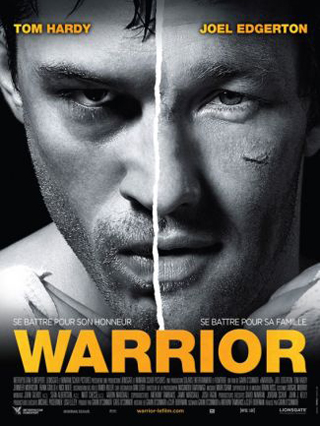
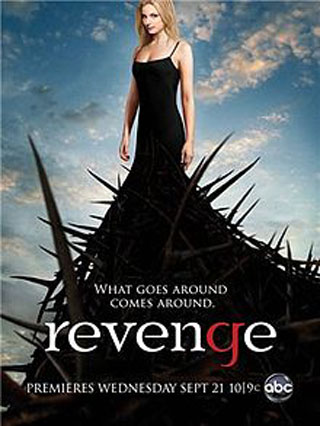
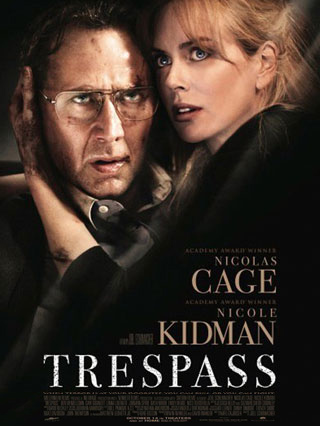
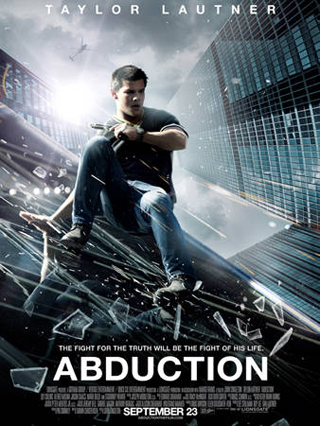
Quick: What do the following upcoming films and television shows all have in common?


If you said they all feature poster art suitable for the Louvre, you’re wrong.  And you’re blind.

If you said they all feature A-list talent whose work you never miss, well . . .  I don’t quite know what to say about that.  Though the expression “get a life” does spring to mind.  (Taylor Lautner??)

If, however, you said all four are burdened by an incredibly unimaginative and dumb-as-a-stick title, you nailed it.  And therein lies the tale of this Murderati post.

Several months ago on my own blog, I wrote a post describing how much it mystifies me when creative people consciously decide to attach a one-word, generic title to something they’ve spent months, sometimes years to produce.  This is what I wrote in part:

“Now, I know not every writer cares to spend a thousand sleepless nights trying to come up with a title for their book or film that’s as fresh and original as it is memorable.  It’s a pain in the ass process and, sometimes, it hardly seems worth the effort. . .

“But here’s where I’m coming from with all this:  A writer busts his ass for months, maybe even years, to write a novel or a screenplay.  He puts his heart and soul into the work, trying with all he’s got to make it something special, something different, something he and he alone could have written.

“After all that, why on earth would he want to give the work a generic, overused, blatantly obvious title that anybody with a fifth-grade education could have come up with?

“I don’t get it.”

I was careful to point out in that post that this sort of thing happens far more often in the realms of film and television because the creative process in Hollywood, as Alex and Stephen know far better than I, is almost designed to produce something ridiculously simplistic at every turn, so as not to confuse our feeble minds when it comes time to turn on our TV or buy a ticket at the box office:

“Hollywood has a long tradition of treating the movie-going public like a herd of mindless cows that would forget how to chew cud if you gave them anything other than grass to think about.  And its penchant for dumbing down titles to their most obvious and uninspiring form is only getting worse.”

And every published novelist knows that the title his book winds up with is not always the one he chose for it, because publishers make the final call on such things.  So my gripe is not with authors in any medium who are forced to live with a Dumb-Ass-Title (hereafter referred to as a DAT) by forces beyond their control.  Authors who go with a DAT by choice are the ones with whom I take issue.

What, in my opinion, constitutes a DAT in the literary world?  The following trifecta of death, “death” in this case being no interest from me whatsoever in reading the book so afflicted:

  • A length of one word (or two, if you include a preceding and pointless “the”).  Think about it — the entire scope and breadth of your novel can be reduced to ONE WORD?  What kind of message is that to be sending to potential readers?
  • Ubiquity.  If the word you choose for your title is as commonplace and ordinary as sliced bread, why should anyone expect your writing to be any different?

And most importantly:

  • Predictability.  “Detective” is a nice word, and it really comes in handy when you write crime fiction, but I think we can all agree that it’s rather lacking in multiple meanings, yes?  Chances are, if the title of a book is DETECTIVE, its storyline involves someone who could most accurately be described as. . . well, a detective!  Big surprise, huh?  Yet another way to appeal to potential readers — announce by way of your book’s title not to expect anything unexpected.

To really qualify as a DAT, a title has to meet all three of the criteria above.  For instance, BEAT may only be one word (yeah, Schwartz, I’m talking about you), but is that word particularly ubiquitous?  And does BOULEVARD immediately suggest what the book is about?  The answer in both cases is no, so these titles don’t make my DAT cut.  (Okay, Stephen, you can exhale now.)

In the comments to my original post, I engaged in a rather lively debate with a crime writer who objected to my assertion that he’d given his latest book a DAT.  He argued that the title he’d chosen was in fact an ingenious one because, as readers of the book would discover in the end, it had a secret meaning.  I won’t rehash all the ways I debunked that argument here, except to say that the cleverness of a title with a “secret” or double meaning is completely lost on somebody who hasn’t yet read the associated book — i.e., somebody cruising the shelves at their local book store looking for something great to read.  Like a duck, if it looks like a DAT, sounds like a DAT, and smells like a DAT, people are going to be inclined to assume that it is a DAT, and won’t grant you 389 pages to disabuse them of that notion.  The time to impress potential readers with your capacity to surprise is at the start of your book, not the end of it, and that start — even before page 1 — is your title.

If you’re beginning to get the idea I could go on and on about DATs if left to my own devices, you wouldn’t be far off the mark.  This phenomenon doesn’t just confound me, it saddens me a little, in the same way that all avoidable, self-destructive behaviors we humans sometimes engage in do.  However, as I’ve beaten this poor, dead horse into the ground online once already, and don’t particularly feel like being the negatron I usually am, what I’d like to do today is turn my old post on its head and devote the rest of this one to singling out some relatively recent crime novel titles that I think are the polar opposite of a DAT.  The following are Kick-Ass Titles (KATs), the kind a reader can’t help but notice and be drawn to, and in my estimation, all are no less exceptional and creative than the fine novels — and authors — they represent.

(As an added bonus, I’m including an Alternative DAT for each, just to demonstrate what might have been, had the gods not smiled upon us all.)

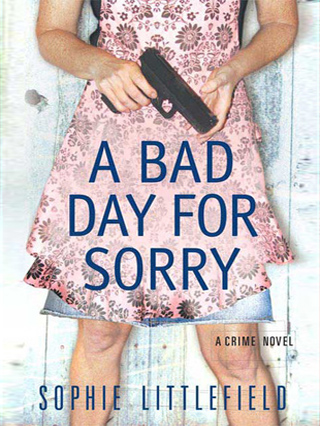
A BAD DAY FOR SORRYSophie Littlefiield

This title has blown me away since the moment I first heard it.  Its primary message is immediately and abundantly clear: Somebody in Littlefield’s terrific book is about to suffer the effects of a full can of whup-ass.  And seriously, what more should the title of a crime novel ever need to say?

Alternative DAT: PISSED

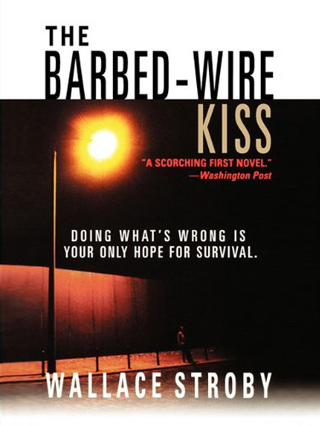
THE BARBED-WIRE KISSWallace Stroby

Shit.  This title ticks me the hell off, and always has, because I wish to God I’d thought of it first.  It makes all the jacket copy for Stroby’s debut noir thoroughly unnecessary, as everything you need to know about his story is right there: Love; pain; sex; betrayal.  No title in the tradition of Chandler and Ross Macdonald could be a more a fitting homage to the masters than this one.

Alternative DAT: THE FLAME

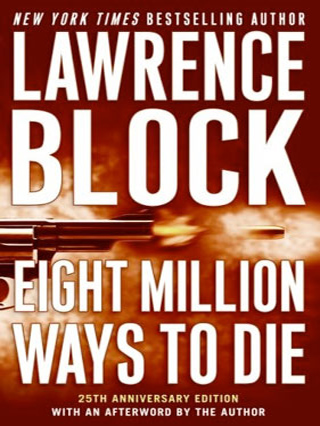
EIGHT MILLION WAYS TO DIELawrence Block

All of Block’s titles for his Matthew Scudder novels are memorable — A DANCE AT THE SLAUGHTERHOUSE, TIME TO MURDER AND CREATE, etc. — but this one, I think, is his best.  Some reference to death in the title of a mystery or crime novel is a no-brainer, but it’s hard as hell to work it in in a way that isn’t blatantly obvious or unoriginal.  Block managed that trick here.

Alternative DAT: MORTALITY

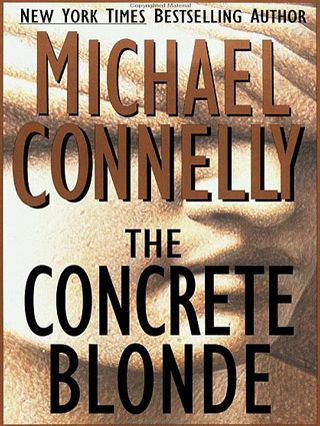
THE CONCRETE BLONDEMichael Connelly

Blondes are a fixture in classic crime fiction, and concrete is often used as a metaphor for the cold, hard city.  Put these two things together and you have a title that promises nothing but trouble for a beautiful woman — and by extension, Connelly’s homicide detective Harry Bosch.

Alternative DAT: BURIED


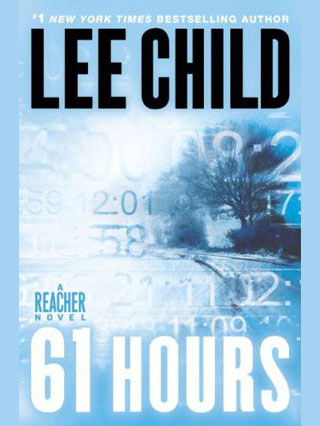
61 HOURSLee Child

One thing a great title does, even as it’s offering hints as to what kind of book it belongs to, is raise questions.  Note that Child didn’t title this Reacher novel 24 HOURS, or 48 HOURS — it’s 61 HOURS.  And what in the hell can happen in exactly 61 hours?  You have to read the book to find out, and Child is counting on you becoming curious enough to do just that.  Clever.  Very clever.

Alternative DAT: THE CLOCK


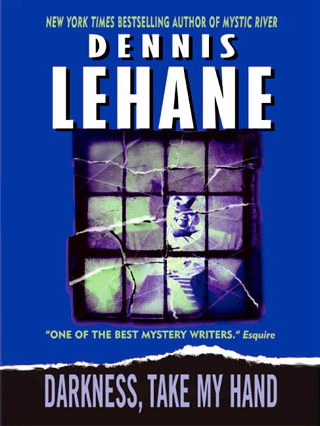
DARKNESS, TAKE MY HANDDennis Lehane

Lehane’s another author whose book titles all tend to stick in the mind — MYSTIC RIVER is a prime example — but this one, for his second Kenzie-Gennaro mystery, which deals with a serial killer who targets children, is my favorite.   It alludes to the temptation evil sometimes holds over us all, and what could be a more ominous intro to a crime novel than that?

Alternative DAT: TWISTED

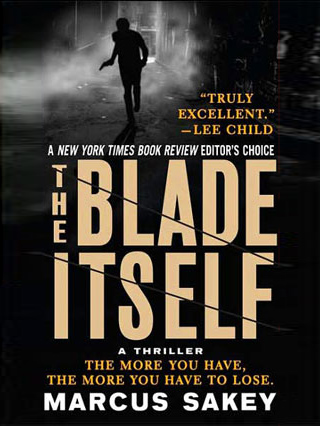
THE BLADE ITSELFMarcus Sakey

Nothing conveys life-altering heartache quite like the expression “cut to the bone,” and Sakey’s title for his debut novel evokes this experience brilliantly.  Could there be any doubt that this is a noirish thriller with serious attitude?  None whatsoever.

Alternative DAT:  THE DEFENDER

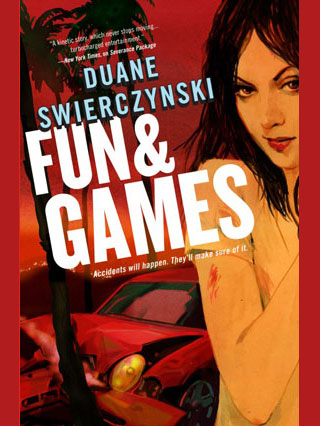
FUN & GAMESDuane Swierczynski

Though Swierczynski is capable of dropping a DAT of his own every now and then — THE BLONDE?  Really? — more than a few of his titles hit the Kick-Ass Title sweetspot for me.  It’s a toss-up which title I like better — this one or POINT & SHOOT — but they both speak volumes about Swierczynski’s old school, pulp-era sensibilities, and the emphasis he places on entertainment above all else.

Alternative DAT: THE BRUNETTE

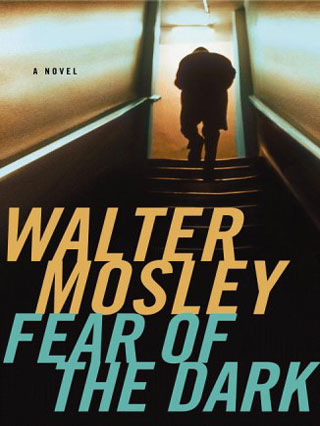
FEAR OF THE DARKWalter Mosley

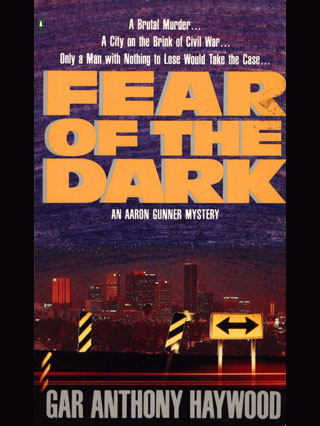
Actually, my appreciation for this title to Mosley’s 2006 Fearless Jones/Paris Minton novel is entirely selfish, because it immediately reminds me of a debut novel near and dear to my heart that was published 19 years earlier:

Remember what I said earlier about THE BARBED-WIRE KISS being an homage to Chandler and Ross Macdonald?  Well, that’s got to be what this was, right?  An homage to me?  So I’m flattered.  Really.  I swear to God.

Alternative DAT: SPOOKED

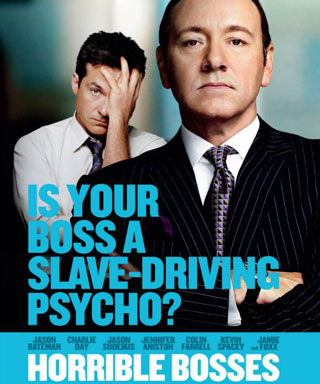
One last word before I sign out: There’s another level to the moronic-title descent into hell that I call “Just Plain Stupid.”  JPSTs can be of any length, yet still manage to be even more obvious and devoid of originality than DATs, and the reason I chose this subject for today’s post is a JPST that’s been all over billboards lately that makes me want to tear my hair out, rather than shave it cleanly from my scalp:

Hmmm.  You think maybe this film has something to do with horrible bosses?  Talk about a title that requires zero brainpower to interpret.  The only mystery in it is just how long the geniuses behind it took to come up with it: four seconds or a whopping fourteen?

Pathetic.

Questions for the class:  How about you, my fellow ‘Ratis?  Do DATs make the top of your head come off the way they do mine?  If so, name a few that really bent you out of shape.  Or conversely, name some titles that you think qualify as KATs instead.

Everybody was Kung Fu fighting

By PD Martin

This is another instalment in my research series and I’ve just realised I seem to be working backwards. The posts on my research into real-life vampires and cults (part 1 and part 2) all looked at research that happened for Kiss of Death (my fifth book) and today’s post is about Kung Fu’s Ten Killing Hands and dim-mak, which featured in my fourth book. Anyway…get ready to be wowed by the world of Kung Fu!

The Ten Killing Hands
The Ten Killing Hands, developed by Wong Fei Hung in China, are ten kung-fu strikes (or series of strikes) that are meant to either severely disable or kill your opponent, sometimes with one blow. It boils down to ten principles: strike the eyes; stop the breath; break the face; explode the ears; crush the groin; twist the tendons; break the fingers; dislocate the joints; break the elbow, and attack the nerve points. It’s nasty, but effective. And, in the hands of a trained practitioner, deadly.

I’ll give you a little taste. One of the strikes used to break the face is the Double Back-Fist targeted directly below the eyes – the aim is to blind your opponent by shattering their eye sockets so their eyeballs literally collapse over their face structure. Nice, huh?

Dim-mak
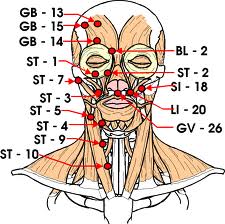
While the Ten Killing Hands are fascinating, probably the most interesting research I did was on dim-mak. Dim-mak is often referred to as the death touch, and is based on the premise that striking certain acupoints can cause instant or delayed death.  It sounds like the stuff of fairytales — of legends and movies like Kill Bill — but it’s real. And in fact, Uma Thurman’s Five Point Palm Exploding Heart Technique in Kill Bill is about five blows, in a specific order, which will stop blood flow to the heart.  And that is dim-mak.

There are multitudes of dimmak acupoints on the body, and strikes to different points cause different physical afflictions.  For example, one of dimmak’s strike points is on the side of a person’s neck. In Kung Fu it’s called Stomach Point 9, but it’s also directly on the carotid artery and vagus nerve. A strike to Stomach Point 9 is said to bring instant or delayed death and there is science behind the claim. The best book I found on this was Death Touch: The Science Behind the Legend of Dim-mak by Dr Michael Kelly. Dr Kelly is an MD who also happened to study Kung Fu and decided he wanted to explore dim-mak from a medical perspective.

The book is amazingly thorough and quite technical in places, talking about how the dim-mak strikes often target bundles and/or peripheral nerves, and attacking these points can cause changes in the autonomic nervous system — which controls important stuff like blood pressure, heart rate, digestion, breathing, and so on. The theory is that direct strikes can fool the nervous system into doing something it wouldn’t normally, like speeding up your heart rate or increasing your blood pressure.

Sometimes the explanation is more simple…back to Stomach Point 9. These days, many people have plaque build-up in their arteries, especially if they’re older, have a genetic predisposition or unhealthy eating habits. So, if you strike someone on their neck with enough force and in a particular manner they can have a heart attack or stroke instantly, or days later when the loosened plaque makes its way to their heart or brain. Plus, a hard strike, even on a healthy person, can cause degradation of the artery that may have lethal effects down the track.

Although other organs are targeted, the heart is often the focal point for dim-mak strikes. The pressure points attack the heart in one of three ways – heart attack, ventricular fibrillation or something called heart concussion. Again, Dr Kelly’s book came in handy! The medical, Latin term for heart concussion is commotio cordis. It’s not a common cause of death, not something you read about much in the newspaper, because it’s rare to have a strike directly to the heart that’s hard enough to cause it. Most reported cases involve sporting accidents, like trauma from a hockey puck, a baseball, a hockey stick, etc. But obviously if a trained Kung Fu practitioner can elicit enough force…

The dim-mak knockout
The dim-mak knockout, also called a pressure-point knockout, is famous in many circles. One, two or three strikes and the person drops to the ground. Many dim-mak experts use these strikes to demonstrate the power of dim-mak in workshops and seminars. According to the medical explanation it’s a vasovagal faint, caused by a sudden drop in blood pressure.

Yin and  yang
Of course, the acupoints aren’t just about dim-mak and martial arts. The more commonly known use of these acupoints comes from Chinese healing — acupressure or acupuncture.  The points are struck to cause pain and death, but they can also be massaged or stimulated with acupuncture for healing purposes. They go hand in hand, for use as a weapon or as a healing tool. Yin and Yang.

Stomach Point 9 also has a healing purpose in Western medicine. The site of the carotid sinus and vagus nerve is an extremely sensitive area and when someone’s suffering from an arrhythmia, doctors will often use ‘vagal maneuvers’ as a treatment. A simple massage along the vagus nerve has been shown to decrease the chances of a fatal ventricular fibrillation.

Now, I’m afraid I do feel it necessary to take this chance for a bit of BSP (blatant self-promotion) in terms of my book trailer for The Killing Hands. But it IS very relevant!

At this point I should also mention that I hold a black belt in Kung Fu. I’m very much out of practice (haven’t trained for about five years) but when I did study it my lessons were tax-deductible. Gotta love an author’s tax deductions! 

So, who out there studies Kung Fu or has heard of dim-mak before? And feel free to share any amazing tax deductions too!

Men and Women: The Friendship That Dare Not Speak its Name

David Corbett

One of the most gratifying compliments I ever received was from fellow writer Jane Ganahl, who remarked that I was one of the few men she knew who could actually be friends with a woman. One always loves to hear “one of the few” in the context of a pat on the back, and yet on reflection, I wonder if what she said is true.

I know a great many male-female friendships, and my own life is full of them. The writing community is rife with cross-gender friendships—I’m close to several of my fellow Murderati members, for example, as well as numerous other writers, and several frequent commenters here, like Shizuka and Allison Davis. I work with a local neighborhood watch program, and I have several women friends there, not to mention my neighbors, etc. I bet if we poll those reading this blog, we’ll learn of dozens if not hundreds of such friendships (please feel free to Comment re: same).

And yet, you’d hardly know such friendships exist from what one finds in books and films.

The frisson of romance, if not rampant sexual tension, routinely hovers about a man and a woman in fiction and cinema like a cloud of static electricity. The great Stella Adler, in a drama workshop I attended in my twenties, chastened two students who were tiptoeing through a courtship scene: “Every time a man and a woman are on stage they are totally in love. All they’re discussing is terms.”

This is an incredibly powerful insight. And yet it also seems like a great loss—unless one views male-female friendships merely as romances in which the terms are somehow less than “totally in love.”

My life would be severely impoverished without my women friends. Yes, there’s an element of flirtation about many of them, and every peck on the cheek provides a whiff of perfume, the brush of skin against skin, a hint of la difference. But they are not “friends with benefits” (or the possibility thereof), or “romances in limbo,” any more than my marriage was “sex with equity.”

Why is this seemingly ubiquitous aspect of modern life so absent from films and fiction?

In her novel Finding Nouf, Zoë Ferraris provides a fascinating psychological portrait of Nayir, an orphaned and unmarried Palestinian Bedouin living in Saudi Arabia. Ferraris, who was married to such a man, knows intimately not just the misconceptions that a strictly segregated society creates between the sexes, but the longing for a better understanding felt on both sides. In particular, Nayir wishes he had a sister, for that relationship would provide him with someone he could talk to about a woman’s thoughts and feelings, subjects Saudi culture strictly forbids he so much as bring up with a woman who is not a wife or a family member.

In the contemporary West, we can often be far more candid with our cross-gender friends than we are with a lover, at least in the early stages of a relationship. I think that male-female friendships serve a serious purpose in this regard, though many I’m sure never plumb the depths Nayir was hoping for.

Marriage, of course, is the great opportunity in this regard. George Eliott remarked, “Marriage is so unlike everything else. There is something even awful in the nearness it brings.” To which Louis de Bernières, in his novel A Partisan’s Daughter, somewhat savagely added, “Sooner or later, at best, your wife turns into your sister. At worst she becomes your enemy.” Both these statements get at the singular intimacy a good marriage provides a man and a woman. Men are particularly needy of such intimacy, which is why so many widowers marry soon after a wife’s passing or pass away themselves.

But like Saudi Arabia, fiction and film discount the possibility of this nearness occurring anywhere else but with a sister or a wife.

And gay male/straight woman friendships skirt the core issue (as it were), which is the possibility, despite all that the sexual divide entails, to bridge it like responsible adults, to put aside or control the erotic charge we are expected to experience, and play nice.

But perhaps my belief that such friendships are easy and frequent is misguided. In an intriguing article for Slate on this issue, Juliet Lapidos expresses bewilderment and frustration at why male-female friendships seem so problematic in the culture. And rare.

Lapidos outlines the reasons men and women routinely give for their cross-gender friendships—men cite the ability to talk about feelings without judgment, and women cite the ability to discuss topics most women find irrelevant or boring, or the chance not to obsess on the emotional connotations of what does get discussed. She then suggests that only “less-gendered” men and women can enjoy such connections, citing her own experience. In her cross-sex friendships, “the traits that supposedly make men and women so separate (excluding physical differences) are hardly in evidence.”

To which I can only scratch my head. Are we really so devoid of self-control or insight that we can’t enjoy each other’s company without neutering ourselves?

I’ve asked a number of friends to come up with examples of cross-gender friendships in film and fiction, and boy, are the pickings slim.

Allison Davis suggested Dorothy and the Scarecrow, Tin Man and Cowardly Lion in The Wizard of Oz. I like that, but would their friendship abide if Dorothy were just a wee bit more, shall we say, developed? Maybe. I want to think so. And yet there’s also a kind of big-brother aspect to these friendships. That’s not so bad—Cara Black, one of my best friends on the crime fiction beat, routinely refers to me as her “little brother.” And my nickname for Harley Jane Kozak is “L’il Sis.” I like that. I love it, in fact. And yet it also screams to everyone who might misunderstand: It’s okay. We’re not up to anything …. Like it’s anybody’s business in the first place, or they can’t tell just by seeing us together. Sheesh.

Catherine Thorpe, another good friend, brought up True Grit, but there again Mattie is fourteen. Does a woman lose her friendship cred once she clears puberty?

Jane Austen abounds with some very tender friendships—but they are almost always romances-waiting-to-happen. And in Remains of the Day, Stephens and Miss Kent share a lovely friendship—but it’s only because the romantic longing goes only one way.

The same is true of Midge and Scotty in Hitchcock’s Vertigo. This sort of romantic gridlock has been codified, one might say cheapened, by the modern put-down, “He’s just not that into you.” Hitchcock, a devotee of Freud, knew there was a great deal more to it than that (why else would Midge say, when caring for Scottie after his breakdown, “You’re not lost. Mother is here”?).

In Peter Carey’s Theft, the connection between the mysterious Marlene and her lover’s brother, Hugh, is one of the great joys of the book: “And there she was—a type—one of those rare, often unlucky people who ‘get on with Hugh.’” As you might guess, Hugh is troubled. As in violently insane.

Two of my own favorite depictions of male-female friendship are in fact chaste romances. The major attribute of both stories is how and why the sexual tension is controlled: one through Victorian rectitude—Charlie Allnutt and Rose Sayer in C.S. Forester’s The African Queen—the other through a nun’s vows—Sister Angela and Corporal Allison in Charles Shaw’s Heaven Knows, Mr. Allison. (Apparently such tales had a particular appeal for the director John Huston, for he brought both to the screen: with Humphrey Bogart and Katherine Hepburn in the one, Robert Mitchum and Deborah Kerr in the other.) 

In the early stages of my last big romance, my lover and I sent pseudo-questionnaires back and forth, purportedly from the HR Department, seeking to determine whether the respondent was “right for the position.” One such question was: favorite love scenes. And I listed two from Heaven Knows, Mister Allison. It really is a love story, a very touching one for all the schmaltz, precisely because they cannot be together “that way.”

The workplace generates a great many cross-gender friendships, in both life and fiction, but there again the issue of repressed sexual tension heads its ugly rear due to the frequency of office romance.

The introduction of women into police forces has been particularly generous, inspiring a whole new onslaught of buddy storylines, with men and women fighting crime shoulder to shoulder: Mulder and Scully of X Files, David and Maddie in Moonlighting. Of course, both these pairings ended up in romance, to the fatal detriment of both shows.

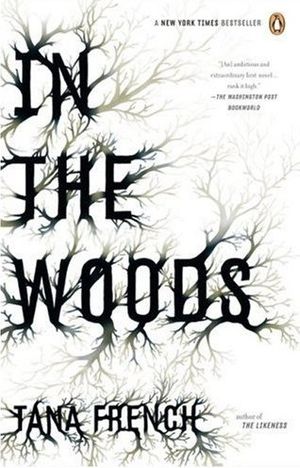
A far more intriguing example appears in Tana French’s In the Woods.

The friendship between Dublin homicide detectives Rob Ryan and Cassie Maddox begins with the former remarking, “I had no problem with the idea of Cassie Maddox.” First, he disdains the “New Neanderthal” competitive locker-room overtones of the job, and he in general prefers women to men. Secondly, she’s not his preferred type physically—she’s boyish, slim, square-shouldered, where he’s always preferred “girly, bird-boned blonds.” (All of this would seem to corroborate Juliet Lapidos’ contention that only “less-gendered” men and women can truly connect non-sexually.) Even so, Rob becomes vaguely attracted and lets it slip out backhandedly in a feeble attempt at banter, to which Cassie responds that she’s always dreamed of being rescued by a white knight, only in her imaginings he was always good-looking. This snaps Rob out of his dog-on-the-hunt thinking, and he “stopped falling in love with her and began liking her immensely.” It’s a friendship developed deeply and satisfactorily throughout the book, until the inevitable night together near the end, when the sexual tension breaks and they make the awful mistake of, as Pinter would say, “going at it.” Things are never the same, and it is a testament to the hunger we have for such connections that we feel this shipwreck of affection viscerally, as the great loss it is meant to be.

In the end, the best example I could find—maybe I should say only example—was the novel The Chess Player by Bertina Heinrichs, adapted for the film Queen to Play.

It’s about the cerebrally intimate, sexually charged but ultimately Platonic bond that develops between Hélène, a Corsican maid, and her chess tutor, an American widower. The sexual tension is there from the start—Hélène’s first glimpse of chess takes place as she’s cleaning the room of a honeymoon couple playing a game on the deck, and the man and woman clearly share an intriguing intimacy. Hélène’s own marriage has reached that sister/enemy impasse, and this sets the stage for a possible affair.

But something far more interesting happens. (One of the best lines in the film is when, after her husband has followed Hélène and seen she is not having sex with Professor Kröger, her tutor, but simply playing chess, he confronts her, and tells her that what he saw was “much worse.”) Hélène becomes intrigued with chess for reasons she cannot explain, and reveals an innate gift for the game that cannot be taught. As for Professor Kröger, he remains haunted by grief; though he has lovers, he sees in Hélène something else, something more unique and impressive. And yet she also reminds him of his late wife—a gifted woman who struggled to accept her very real talent. His fondness for Hélène is tragic, tender and genuine, and she for the first time pursues something that is not for the sake of others—her employers, her husband, her daughter—but hers alone.

Murderateros: Do any of you have a favorite story about male-female friendship—or any at all? Fictive, fact, filmic. Were they with “less gendered” men or women? Or have your most gratifying connections with members of the opposite sex always been with lovers, siblings, spouses?

****

Jukebox Heroes of the Week: On the theme of cross-gender friendship, here are Rodrigo y Gabriela, a pair of guitar gypsies who gave up playing in Mexico City thrasher/metal bands and now play acoustically together. All friendships should make music like this:


The Day the Honeybadger Accepted Mother Nature

by Alafair Burke

I pride myself on being a person who can TCB, take care of business. If I see a problem, I fix it. If someone says it can’t be done, I figure out a way. I have plans, back-up plans, and back-ups to the back-up. There’s a reason some of my friends have taken to calling me Honeybadger. (From this inexplicably viral video: “The honeybadger has been referred to by the Guiness Book of World Records as the most fearless animal in all of the animal kingdom. It really doesn’t give a shit.”)

So when I heard that all the Irene nonsense was threatening to interfere with my book event yesterday at Mystery Lovers Bookshop in Pittsburgh with Laura Lippman, I got to work. I stalked Irene on the internet like a bad ex-boyfriend, anticipating her descent on the city. I moved my return flight to Monday. I booked an extra night in a hotel. I figured out when I would make up my Tuesday classes at the law school, just in case.

Laura kindly offered to let me detour to her place in Baltimore if necessary, so I was armed with an arsenal of options and information: all flight and train schedules from Pittsburgh, Baltimore, and DC. I was going to kick Irene’s butt.

But then something changed Friday afternoon. The mayor announced the closure of the entire public transit system starting at noon, a good eight hours before the earliest predictions of the storm. Car services stopped taking bookings to the airport. Still, I had faith my Saturday morning flight would be fine. Surely the airline would want to move planes out of the New York area.

Friday night, I got the news. My flight was canceled.

My inner honeybadger refused to give up. I could take the morning train to Baltimore in time to hop into Laura’s car. The two of us would Thelma and Louise it to Pittsburgh (minus the rape, robbery, and suicide pact, of course). I would stay in the hotel and write until the storm passed. I would be the victor!

And then someone saner than I spoke up. In a calm, neutral voice, she asked me to imagine that the worst, most hysterical predictions were accurate. Did I really want to be on a train heading into the storm? Did I really want to risk not being able to get home in time for class? How would I feel in the hotel, watching the storm on the news if I couldn’t get hold of my husband and the Duffer?

So at the end of the day on Friday, I did something I rarely do. I gave up. Or gave in. I accepted that some things weren’t worth fighting. I may think I’m more clever than the average bear (okay, I am more clever than the average bear). But I can’t predict the unpredictable. I can’t control the weather. And as much as I adore Mary Alice and Richard at Mystery Lovers Bookshop, as much as I love me some Laura Lippman, this one wasn’t going to happen.

I suppose I could feel beaten. I imagine some would say I should have to resign my Honeybadger status. But I think even the Honeybadger knows when to pick its battles.

As it turns out, Irene went out with a whimper, but there was no way to know that in advance and therefore no reason to have regrets.  Added bonus: The weekend turned out to be a pretty cool time in the city. 


Impromptu Irene book lending library in my apartment building lobby

When was the last time you decided not to try to control something?  What happened?

P.S. Speaking of my canceled event with Laura, here is a nice joint interview in the Pittsburgh paper about the benefits of a shared tour event. Some of you may enjoy it. Be sure to pick up a copy of Laura’s new book, The Most Dangerous Thing. She’s such a major talent!

Proof

By Allison Brennan

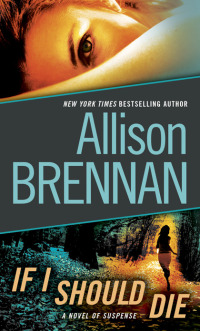
I’m deep into reading the page proofs for IF I SHOULD DIE, book three in the Lucy Kincaid series. I really love this final stage of the publication process–at least the final stage on my end. I see the book as it’s going to be printed. It’s the last time I can make changes–ensuring the copyedit changes were made correctly, double checking the timeline, tweaking words and phrases. No major changes can be made at this point, but I often find the little errors–repetitive words or phrases, for example.

I also read most of my book out loud during this final stage, so it takes me longer to go through the proofs than most authors. Reading out loud helps me make sure the rhythm is right, especially in dialogue. To me, an author’s voice has as much to do with the rhythm of the story as with anything else. It has to feel right, or I’ll tweak it. There’s nothing I can explain or map out–I just know my rhythm is off when the story doesn’t sound right. It’s ironic, because I’m a very visual storyteller–meaning, I *see* the story unfold, I don’t hear it. I write what my POV character sees and feels. When I revise, I’m looking for for the visual story structure. But this final stage is all about story rhythm.

Which made me think about all the writing guidelines and story structure. I’m a big fan of Christopher Vogler, and have a well-worn copy of THE WRITER’S JOURNEY. I’ve never used the hero’s journey to plot or structure a novel, but I have see the hero’s journey in all my books … after the fact. So I can identify when my protagonist crosses the threshold. I know when I hit the midpoint of the story–and at that point whether my book is on the long or short side. Once I hit the third act, I feel the momentum of the story.

When I read the book in its near-final form, I see all that laid out, and it feels almost magical because I didn’t plan it that way. I remember when I first read Vogler. I had already sold my first book, and someone recommended it to me. I was reading it while doing stress tests during my last pregnancy–one hour of doing basically nothing. I saw how my debut novel followed the hero’s journey and it stunned me. But it shouldn’t, because in the introduction Vogler says:

“All stories consist of a few common structural elements found universally in myths, fairy tales, dreams and movies. They are known collectively as The Hero’s Journey.” He goes on to quote Joseph Campbell who “exposed for the first time the pattern that lies behind every story ever told.” And the key for me, that “all storytelling, consciously or not, follows the ancient patterns of myth. … The way stations of the Hero’s Journey emerge naturally even when the writer is unaware of them.”

I believe this is true, whether you plot or don’t plot; whether you consciously assess the hero’s journey as you write or don’t see it until the end of the story.

That’s why I love the final page proofs. I can see the structure of my story clearly for the first time, and each and every book follows the hero’s journey. Not rigidly–because the hero’s journey is as flexible and diverse as people. It’s not a formula, but a guideline into the human psyche in how we perceive stories. And that’s why it always marvels me that the hero’s journey is always there at the end.

But the steps of the journey are not the only “tests” of whether a book is good or not. Sol Stein wrote that the first page was the most important. If a reader picks up a book in the bookstore, reads the first page, then turns the page, they are more likely to buy the book. If they don’t turn the page, they almost always put the book back on the shelf.

Agent Noah Lukeman has a writing book called THE FIRST FIVE PAGES–and you guessed it, he claims they are the most important in any book. Many agents and editors say they know whether a book is good after the first five pages. Some give the author more time if the writing is there, but many don’t go beyond the beginning.

The Campaign for the American Reader has the “Page 69” test. They quote from John Sutherland’s HOW TO READ A NOVEL:

“Marshall McLuhan, the guru of The Gutenberg Galaxy (1962), recommends that the browser turn to page 69 of any book and read it. If you like that page, buy the book. It works. Rule One, then: browse powerfully and read page 69.”

There’s also the midpoint of the book. For me, the midpoint is just as important as the turning points at the end of each “act.” Some claim that at the midpoint, the protagonist hits rock bottom (or near rock bottom) where it doesn’t seem like it can get any worse, or a false victory, where everything seems to be going great (but of course, it’s not.) In police procedures, the midpoint is often where the protagonist thinks they’ve figured out the crime, identified the suspect, made an arrest, and all is right in the world. Case closed … then right after something happens and she releases she has NOTHING, and is worse off than at the beginning.

Of course, there are infinite variations and ideas for the midpoint–like one main character is at the all-time high, while the other is at the all-time low. 

And then there are the readers who have to read the end of the book FIRST. (Yes, I know some of these insane people, they drive me crazy. But there are more of them out there than you think!)

All these “tests” — first lines, first pages, page 69, the midpoint, the ending — are supposed to help the reader decide whether they should read the book.

Ironically, I don’t use any of them.

When writing this blog, I looked at the “tests” in my proofs for IF I SHOULD DIE. The midpoint is critical–during the midpoint chapter, my hero Sean Rogan learns some important information about the villain, but he doesn’t know how it all fits. At the end of the chapter, he gets a warning from an unknown source (who may be a good guy or a bad guy or neutral) that the bad guys know what flight his girlfriend, Lucy Kincaid, is going to be on. That tip completely changes their plans and sets into motion a series of events that go from bad to worse.

All my midpoints tend to have story changing elements. In my debut novel THE PREY, one of the main characters is murdered and that changes the motivation of the hero. In SEE NO EVIL, the prime suspect ends up dead. 

The Page 69 test in DIE gives the reader part of a barroom conversation that offers up more questions for my hero and heroine than answers. My first three pages are the prologue which is one of the creepiest prologues I’ve written–a guy treks into an abandoned mine to visit the frozen body of the woman he loves. Chapter One begins with Sean and Lucy in bed right after morning sex while on vacation in the Adirondack mountains when they smell smoke. I remember in my first draft, it took six or seven pages to get to the smoke, and I knew as soon as I started editing that it was way too long–even though the six pages were interesting, there was no action. By the end of page two, we know that Sean’s helping a family friend who has been the victim of sabotage while getting a new resort ready to open, that this isn’t supposed to be a big case because Sean and Lucy are expecting to enjoy a well-deserved vacation before Lucy starts her training at Quantico. And then–well, it definitely doesn’t go as planned. 🙂

Apply one of these tests to a book you’re reading now and share with us–avoiding spoilers if possible (or at least identify them!)

The Muse, When She Want to Dance, You Dance

 By Stephen Jay Schwartz


The title sounds better when said in a Jamaican accent. I don’t know why, but it does.

Lately I’ve been sitting down to write and I stare at the current scene and instead of moving forward I look at the people in the cafe and I think something completely off-track, I think about how everyone has an orifice or two in their body that leads to the inside of their body which allows them to consume solids and liquids and evacuate liquids or semi-solids (gross) and they walk around like this doesn’t bother them, like it’s normal to have these holes in their bodies, and for some reason their bodies don’t cave in around the holes, they stretch and compress and the holes remain, and the people act as if nothing about this seems odd and, I don’t know, if it were me I’D GO MAD.

After which time I focus on the page and re-read the sentence I wrote and discover it looks strangely dyslexic and I delete and start over again.

Where has my mind been lately?

I don’t remember writing like this when I was under deadline. On deadline I move forward confidently with the fear of legal consequences guiding my hand.

Even as I sit here now, at another favorite cafe, I stare at the fish in the aquarium, not because I’m lost or have nothing to do, but because the fish are staring at me, and I find this disturbing. I do not know what it is they want nor why they’ve chosen me as their target.

Am I just finding excuses not to write?

Why is writing my favorite and least favorite thing to do in the world? How can light be a particle and a wave at the same time?

Whatever’s going on in my head, it’s all good for the book, I tell myself. And then I think that the book has been outlined and I’m forty-thousand words in. I know the book I’m writing and there is no place for catostrophic abstract nonsense.

But is it really abstract, when the tilt of the earth’s axis adjusts a degree every ten thousand years and the resulting Ice Age could destroy us before we’ve gained a foothold on planets capable of sustaining human life? WHY IS THAT FISH STILL STARING AT ME?


I think it’s a stalling tactic. I don’t want to dive into my writing each day for fear that the best I can do might not be good enough. It’s a common trap. The fear of failure. When I was working a full-time job I had the excuse that there simply wasn’t enough time to produce good work. Therefore, if my work was lacking in any way I could simply point to the fact that I had been rushed.

I’m not rushed now. I’ve been working on this book for a very long time. I don’t know exactly how long, and I’m not going to run the numbers.

When I’ve talked about this before people have sent emails saying they hope I get past my writer’s block. But I’m not blocked. I know the story, I’ve written my outline, I’m ready for action. What slows me is that I want every paragraph to represent my very best work. And why shouldn’t it? I’ve done all this background stuff so that I can concentrate on writing a “finished” scene. And that’s where I stop. That’s when I get the fear. With all the time in the world, with the outline, with the research books by my side…will my best be good enough?

It’s so much easier to do ANYTHING else. I could clean the apartment, because I know the apartment CAN be cleaned. I can write a blog, because I know I can finish my blog. I could do some terrible, menial day job, five days a week, hating it every step of the way, and I could do it well because I know I can do it well.

Most things I do don’t require that I do my absolute very best. The problem is that I expect that from my writing.

And that’s scary.

Fortunately, this week, a beautiful woman whispered in my ear. “I’ve got some words for you,” she said. “Would you like to dance?”

The muse, when she want to dance, you dance.

I’ve had three good days so far. My knees were a little weak at first, and I’d forgotten how to lead, but she’s helped me along.

The best piece of advice she’s given me is this…”Don’t think. Write.”

And look…the fish are staring at someone else for once. Maybe now I can get a little work done.

The Stick and The Carrot

Zoë Sharp

The humble donkey is the beast of burden across the globe. It ambles along on impossibly dainty feet, while carrying outrageous loads apparently without complaint.

And always, it seems, there’s a man on the animal’s back with a stick.

I’m not suggesting that the man beats the donkey, although I’m sure that happens with depressing regularity. But the stick is still there and the implication is clear – go faster, work harder, or this is going to hurt.

I think I know how that feels.

The most depressing job I ever had was a brief stint selling display advertising for the local paper. Classifieds were a different section. People want to place classified adverts. They do so specifically because they want to sell something, or buy something. All the classified sales people had to do was sit by the phone and wait for calls.

Display advertising is different. Display advertising is the stuff that gets in the way of the stories people are trying to read at the front of the paper. Unless it’s by chance, their eye skims over the ad without ever taking any of it in. And, I admit, if you work for a New York ad agency you probably have some very scientific ways of making people look at those ads, but I didn’t have those skills.

Nobody wants to spend money on advertising. They know that half that money is wasted – they just don’t know which half. They practically hid under the desk when they saw you coming, or told their secretaries to fob off your phone calls. So, persuading small businesses, week after week, to lay out cash for adverts that ultimately ended up lining the cat litter tray or the bottom of the budgie’s cage, was not my best choice of career. (I did mention it was a very BRIEF stint, didn’t I?)

But what has this got to do with the donkey and the man with the stick? Well, in my case, the display ad sales people were the donkeys, and the stick was being wielded by the advertising manager.

We were given weekly targets of how much advertising we had to sell, and we never seemed to be able to quite make those targets. Looking back, I’m pretty sure that if we’d worked it out we would have discovered that he was trying to get us to sell more ads than it was actually possible to fit into the paper, and if we’d ever managed it we would have caused a major glitch in the space/time continuum.

After six months, the job started to stress me out so much that I even developed a heart murmur. (I’ve never been very good at the high-pressure sell. I can’t even do it with my own books.)

The whole experience was all stick and no carrot.

I’ve discovered over the years that I will go a long way and work my little wot-nots off for a bit of encouragement and a thank you. That is far more important to me than getting paid – I’d rather do a good job than a quick job.

Which possibly explains why I am not a lot more wealthy than I am ;-]

The world of being a published writer can involve a lot of stick, and only being shown the occasional distant slightly out-of-focus photographs of something that might be some kind of root vegetable, but it’s in black and white so you can’t be sure if it isn’t a parsnip.

Things are tough for authors at the moment. If you’re not topping the bestseller lists, you’re being cut loose. It’s a big stick world, and sometimes it feels like we’re the donkeys.

And I know it’s been slowing me down, weighting me down, miring me down. I could feel it. My enjoyment of the whole business of actually writing was ebbing away. It had little to do with success or failure – it was to do with job satisfaction. People can be at the top of their field and still not really enjoy what they’re doing.

When I came back from the States in March, having witnessed the explosion in e-readers, with the idea that I would put the backlist Charlie Fox books out in e-format, starting with a short story e-thology, some people told me I was mad to contemplate tackling the whole conversion process myself.

“Writers should write,” I was told. “Leave that to the experts.”

I’ve never been very good at taking advice, especially when it concerns things I can’t or shouldn’t do.

So Andy and I, with help from my web guru, set about learning how to code and convert. Sadly, a lot of conversion work seems to be carried out by people who don’t love books, and the reading experience is spoilt by silly mistakes and bad bits of coding that slip through.

Producing an eBook is not just about the conversion process, though. It’s about EVERYTHING connected to a book, from the front cover to the wording of the copyright page. If that all sounds like a lot of work, it is.

But I found it was a LOT of fun, too.

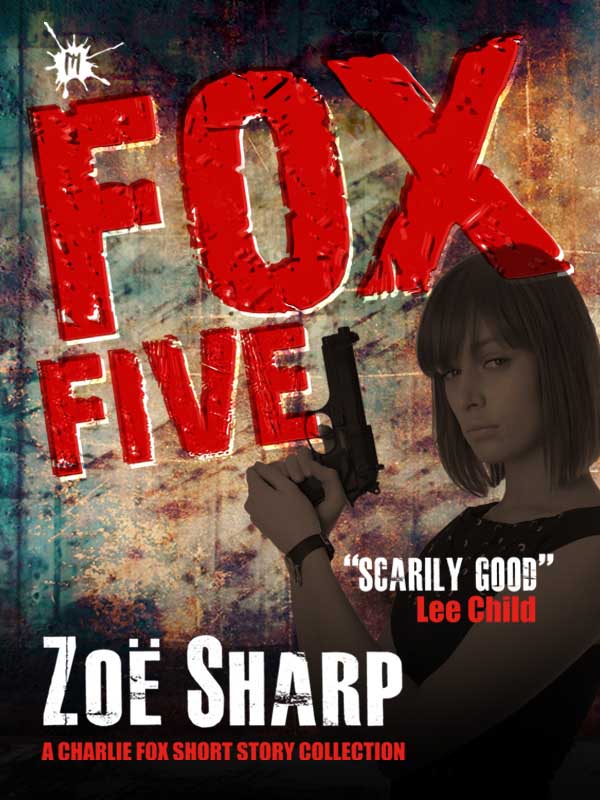
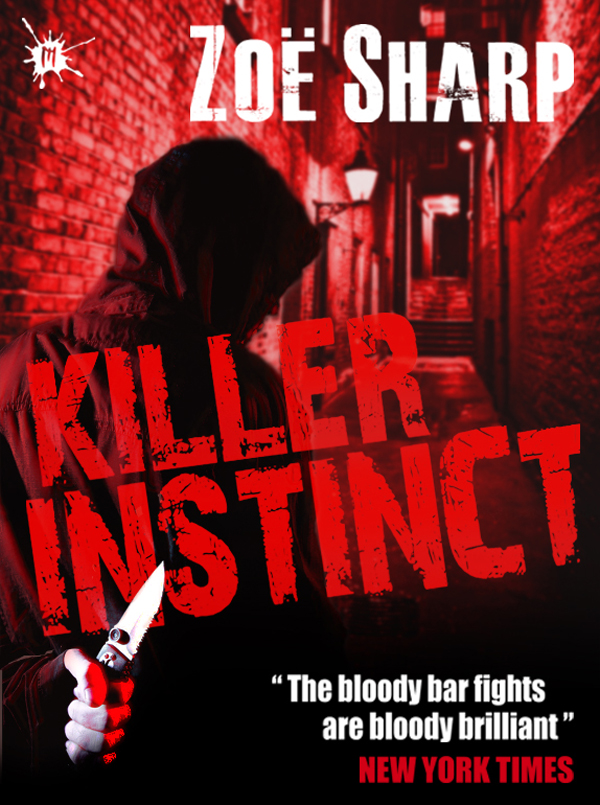
 FOX FIVE: a Charlie Fox short story collection went live on August 8th, and yesterday the first of the backlist went up, too – KILLER INSTINCT: Charlie Fox book one. So, for all those people who wanted to read the series right from the very beginning, now they can. As soon as all the backlist is up on Amazon, we’ll start coding for other reader formats, too.

I resisted the urge to rewrite the book – difficult tho’ that urge was to resist – but did take the opportunity to reinsert two backstory scenes that never made the final book. These explain a little more about Charlie’s military career and the start of her relationship with Sean Meyer. (I didn’t quite appreciate at that stage how important that relationship was going to be, or how integral to the character, hence the original cut.)

Getting KILLER INSTINCT ready for e-publication has been a fascinating experience. Not only was there a fabulous new cover by Jane Hudson at NuDesign I was very fortunate in that Lee Child generously allowed me to use the Foreword he wrote for the Busted Flush trade paperback edition last year. I added my own Afterword from the same edition, together with tasters from the other books in the series, including an excerpt from the next one, RIOT ACT, which is undergoing conversion as we speak. And finally, I joined forces with our former ‘Rati, Brett Battles.

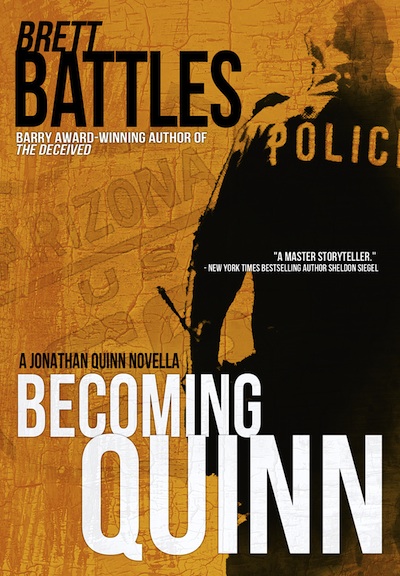
Brett very kindly gave me an excerpt from his Jonathan Quinn novella, BECOMING QUINN, to include at the back of KILLER INSTINCT. In return, an excerpt from KILLER INSTINCT will be going in the back of Brett’s next Logan Harper novel. This is the kind of cross-pollination that not only gives people a nice added extra, but will hopefully also introduce the readers of both of us to something new they might enjoy.

So, I hope you’ll forgive me a small amount of proud-parent BSP at this point:

‘Susie Hollins may have been no great shakes as a karaoke singer, but I didn’t think that was enough reason for anyone to want to kill her.’

Charlie Fox makes a living teaching self-defence to women in a quiet northern English city. It makes best use of the deadly skills she picked up after being kicked out of army Special Forces training for reasons she prefers not to go into. So, when Susie Hollins is found dead hours after she foolishly takes on Charlie at the New Adelphi Club, Charlie knows it’s only a matter of time before the police come calling. What they don’t tell her is that Hollins is the latest victim of a homicidal rapist stalking the local area.

Charlie finds herself drawn closer to the crime when the New Adelphi’s enigmatic owner, Marc Quinn, offers her a job working security at the club. Viewed as an outsider by the existing all-male team, her suspicion that there’s a link between the club and a serial killer doesn’t exactly endear her to anyone. Charlie has always taught her students that it’s better to run than to stand and fight, But, when the killer starts taking a very personal interest, it’s clear he isn’t going to give her that option . . .

 ‘Charlie looks like a made-for-TV model, with her red hair and motorcycle leathers, but Sharp means business. The bloody bar fights are bloody brilliant, and Charlie’s skills are both formidable and for real.’ Marilyn Stasio, New York Times

OK, I’m done now.

This whole thing has proved a huge carrot for me. Getting reacquainted with Charlie at this early point in her history has reminded me why I started writing about her in the first place, and why I can’t wait to get back on with the next book.

Suddenly, writing is fun again, like starting to exercise and stretch muscles that had started to atrophy. I needed a boost, and this has provided it. Getting the short stories out there in FOX FIVE allowed people who’d vaguely heard about Charlie to try a selection of short pieces about her without investing time in a whole book. The 50 free review copies I offered in my last blog were all snapped up within hours. The reviews so far have been great. And if anyone would like a review copy of KILLER INSTINCT, they only have to email me . . . authorzoesharp [at] gmail [dot] com.

This whole experience has, one might say, re-kindled my enthusiasm.

So, ‘Rati, have you faced a time when you were absolutely fed up with what you were doing, and what did you do about it? Or, if you’re still in that situation, what are you going to do about it?

Finally, I thought I’d introduce a new section about what I’m reading on my sparkly new Kindle at the moment.

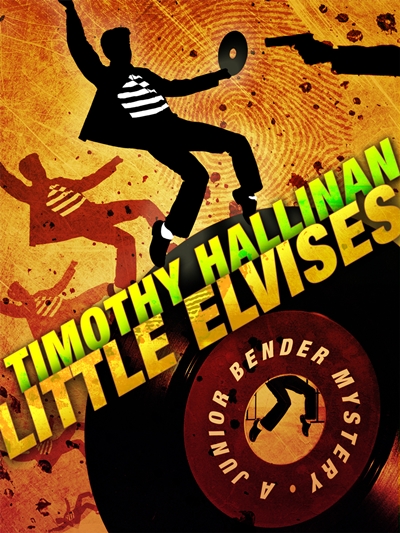
I’ve just finished LITTLE ELVISES by Timothy Hallinan. The book is the second to feature Junior Bender – and how can you not LOVE that name? – Tim’s Los Angeles burglar who moonlights as a private eye for crooks.

The ‘Little Elvises’ of the title were Philadelphia teenagers plucked off the city’s stoops in the 1960s by a mobbed-up record producer named Vinnie DiGaudio and turned into pallid imitations of the boy from Tupelo until their fourteen-year-old fans got tired of them and moved on to the next one. When Vinnie is in the cops’ sights for a murder, Junior is brought in, unwillingly, to prove Vinnie’s innocence. Unless, of course, Vinnie did it.

But one way or another, Vinnie – a gangster whose product was innocence – has made a central mistake. Some things never go away. And that’s what drives the plot of LITTLE ELVISES.

This book was enormous fun. Very wittily written, it’s refreshing in that Junior (sorry, Tim – I can’t bring myself to call him Bender) is far from a hapless comedy PI. He has smarts, both street and of mouth. I shall definitely be seeking out the first book in this series, CRASHED.

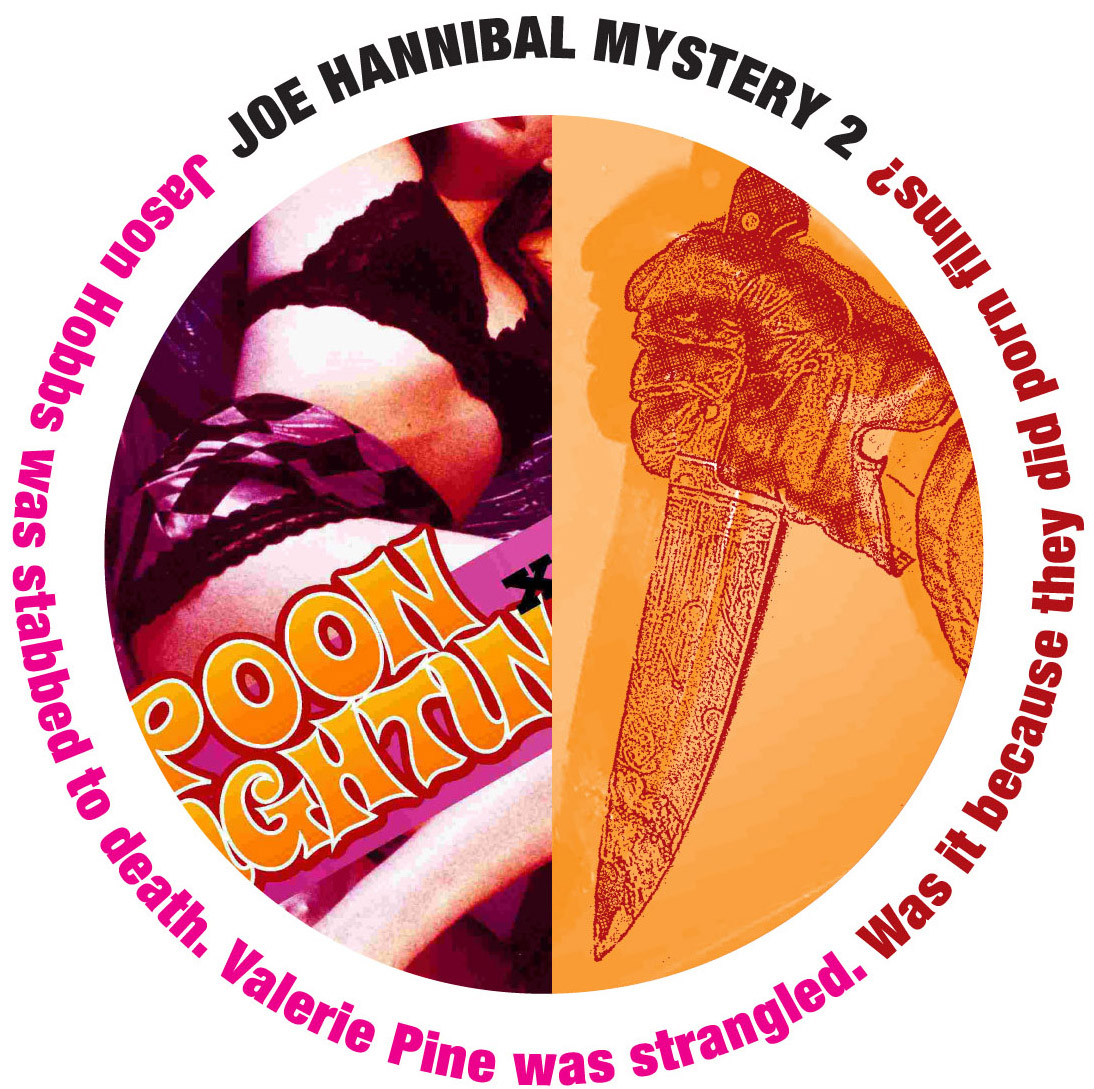
And I’ve just started reading Wayne D Dundee’s THE SKINTIGHT SHROUD, a Joe Hannibal mystery. When someone starts turning blue movies bright red with the blood of murdered porn stars, Joe Hannibal is called behind the scenes to prevent more killings. His investigation takes him places that are both shocking and dangerous and in no time at all he finds himself at odds with the mob, the police, a savage local pimp, and in the arms of another man’s woman.

As the case hurtles toward a startling, blood-spattered climax, Hannibal will experience pleasure -and pain-like he has never known before. His life will hang in the balance more than once before the last dirty secret is exposed and the final desperate killer is cut down. Intriguing so far . . .

This week’s Word of the Week is karmageddon, which is, like, when everybody is sending off all these really bad vibes, right? And then, like, the Earth explodes and it’s, like, a serious bummer, man.