Author Archives: Murderati Members


ONCE IS (NOT?) ENOUGH

by Gar Anthony Haywood

As I write this, my daughter Maya and son Jackson, eleven and nine, respectively, are sitting in the den, listening to an audio book: HARRY POTTER AND THE PRISONER OF AZKABAN.  They are enthralled and amused, falling silent when things get scary and laughing hysterically when something funny happens.  To listen to them, you’d think they were having the time of their lives.

And I swear to God, this has to be the 463rd time they’ve listened to this book.

They’ve listened to all the other Harry Potter audio books just as often, finding each no less consistently entertaining.  And they re-read the actual Potter books just as zealously.  Clearly, J.K. Rowling’s writing (and Jim Dale’s reading) loses nothing in the way of impact the second, third, or 265th time around.

This strikes me as incredible, because I am a devout one-time-only reader.  I never re-read anything.  God knows I’ve read enough books deserving of a second or third read — a lack of worthy titles isn’t the problem.  So what is?

Three things:

  1. Time.  Every minute you spend re-reading a book you’ve already had the pleasure of knowing is a minute you can’t devote to something new and possibly just as remarkable.   That motto booksellers like to put on T-shirts — SO MANY BOOKS, SO LITTLE TIME — rings all too true for me.  I live in constant fear of missing out on a genuinely fantastic, undiscovered read somewhere, and I don’t want to blow it by giving CHILDHOOD’S END a second look, especially if, ultimately, that second look only serves to prove that one should have been enough.

    Which leads me to my next reason for avoiding second reads. . .

  2. Dashed expectations.  Almost thirty years ago, I read Elmore Leonard’s novel STICK and loved it.  It changed my life.  My memory of it is that of a masterpiece, a how-to in crime writing.  But is it really?  If I re-read the book today and found it to be something short of all that, I’d be heartbroken.    Disillusioned.

    As I’ve aged and matured, I’ve become a more discerning reader.  Harder to please and dazzle.  Turns of phrase that I used to find mesmerizing irk me now as false and dissonant.  My standards for genius have been raised considerably.

    Granted, in this particular example, because it’s Elmore Leonard we’re talking about, it’s possible I’d find STICK to be even better than I originally thought.  It’s for sure I’d still enjoy it.  But why take the risk?  Why mess with perfection, even if it’s a perfection based solely on the vagaries of memory?  Wouldn’t my time be better spent seeking out the next Elmore Leonard, wherever he or she may be, instead?

  3. Speed.  Sadly, regardless of whether I’m doing it for business or for pleasure, I read the same way I write: at a snail’s pace.  Even when a book grabs me, I take it in slooooowly.  So the amount of time I invest in a book usually runs somewhere between a week to thirty days.  That’s just the way I roll.  If I could read something and enjoy it in two or three days, tops, maybe I could afford to do more re-reading.  But I can’t.  So I don’t.

Needless to say, not every reader has the same aversion to re-reading that I do.  Some think life is too short NOT to re-read, depending on the book or books in question.  Why deny yourself the pleasure of a great read, these people ask, just because it’s not entirely new to you?  Surely, some novels are not only up to the challenge of re-examination, they can in fact only be fully appreciated that way.  Just as some films require multiple viewings to be completely understood, some works of fiction demand multiple reads before all their surprises and nuances can be perceived and savored.

Hmmm.   That’s a pretty convincing argument, even if I had to make it myself.  Convincing enough that I find myself wondering if it isn’t time to reconsider my hard-and-fast position on this question.  Maybe I’d see things in a second reading of STICK that I missed the first time; things that would suggest, not that the novel is less than I’ve always thought it was, but more.

Well, maybe.

Because I remain dubious — okay, I’m a chickenshit — I’m going to enter into this re-reading business very carefully.  Tentatively.  So I’ll be limiting my re-reads to three titles to start.  These are the books I’ve always been tempted to re-experience, having had them blow me away the first time, that I most suspect will not disappoint under the merciless glare of a highly anticipated second read.  In no particular order, they are:

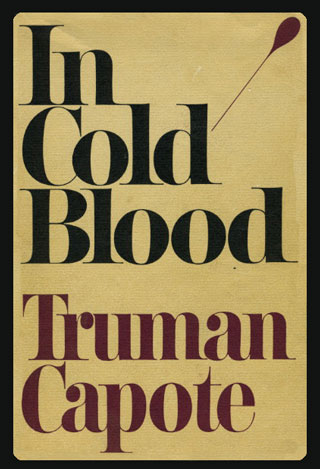
  • IN COLD BLOOD – Truman Capote


    I was only fourteen when I originally read this, so my impression of it as a work of literary genius could be colored by the naïveté of youth.  But I doubt it.  What I know for sure is that this was the first book I could not put down once I started it, and when it was over, I knew I had just read something that was on a completely different level from all I had read before.

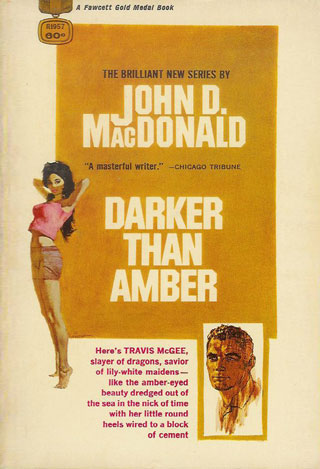
  • DARKER THAN AMBER – John D. MacDonald


    This was my first Travis McGee novel, and I only sought it out because it served as the basis for a movie of the same name, starring Rod Taylor, that I enjoyed quite a bit back in the late sixties.  Little could I have guessed how much better than the film the book would turn out to be, and that I would go on to devour every other McGee title by MacDonald I could get my hands on.

    I’ve never heard this particular title described as one of the best in the series, so it may ultimately disappoint, but I’m curious to see how much of MacDonald’s brilliance I actually got a glimpse of by reading this McGee first.

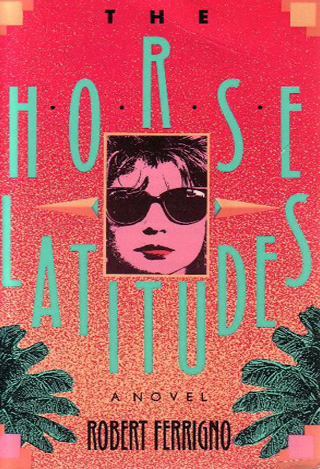
  • THE HORSE LATITUDES – Robert Ferrigno


    I remember this as a terrific read overall, an Elmore Leonard-esque tour de force with an LSD twist, and I have always believed its first two paragraphs make for the greatest opening to a thriller I have ever read.  Check this out:

    It didn’t take much to set him off these days — laughter from the apartment below, a flash of blond hair out of the corner of his eye.  Or, late at night, the sound of two car doors slamming in quick succession.  Especially that.  He imagined them walking to his place or her place, both of them eager but trying not to let it show, holding hands, tentatively at first, then the  man slipping his arm around her waist while she smiled and laid her head on his shoulder.

    There were nights when Danny missed Lauren so bad that he wanted to take a fat man and throw him through a plate-glass window.  Just for the sound of it.  Instead, he went swimming in the bay.

I don’t know when I’ll get around to these re-reads, exactly, but I plan to do a follow-up blog post on my reactions as soon as I do.  So stay tuned.  In the meantime:

Questions for the class: Do you re-read, and if so, how often?  Do some books disappoint on re-examination, or do they always live up to your time-held reverence for them?  If you don’t re-read, what are your reasons for abstaining?  And if you could only re-read three books out of all those you’ve read in your lifetime, what would they be?

One Final Word: Look, I know I’ve been beating the subject of bland and unimaginative titles to death lately, and you’ve got to be sick and tired of hearing me gripe about it, so rather than write any more long Dumb Ass Title diatribes, I’ve decided to vent my spleen with the occasional addendum to posts on other subjects, an addendum I’ll call:

TITLES FIT FOR A MORON

Today’s winner: The upcoming Eddie Murphy/Ben Stiller Oceans 11/12/13 knock-off, Tower Heist.
TEn things I learned this week

By Cornelia Read

1. Les Paul was Steve Miller’s godfather. How cool is that?

2. It is possible to turn in the final draft of one’s fourth novel at three minutes after midnight, which technically means it was a day late, and then pack up your entire apartment and put it into storage in Brooklyn in 36 hours, but only if your new landlords are total lawyer-happy douchebags.*


3. Silent movies can actually be GOOD.

And we should all go see The Artist when it comes out.

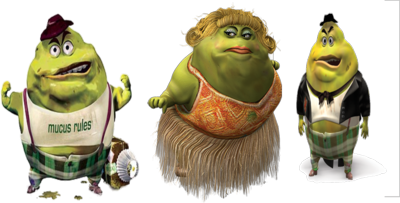
4. If your kid gives you the wicked chesty cough that’s going around, Mucinex DM totally rocks. And it doesn’t taste like nasty fake cherry bullshit. Even though I am not a fan of those phlegm CGI commercials with the family of green slime-things living in your lungs.


p.s. What’s green and skates? Peggy Phlegm.

5. Brussels sprouts cut in half, tossed with olive oil, garlic, lemon zest, and black pepper and roasted for about 45 minutes in a 350-degree oven until they’re brown and toasty can make up for totally douchey landlords.

6. David Corbett makes the best mix tapes in the history of the fucking world. Seriously. Especially when you have to pack your entire apartment in under 36 hours because you have douchey landlords.

Okay, actually, the coolest song is “Dragnet for Jesus” by Sister Wynona Carr, but they didn’t have it on Youtube so here she is singing “Each Day.”

7. If you don’t feel like packing up your toaster, your curler things you bought at a garage sale five years ago and never use, three hors-d’oeuvre platters your mother gave you, and five boxes of books you don’t want to keep, you can totally leave them on your douchey landlords stoop with impunity. If you live in Brooklyn, which of course I actually DON’T anymore.

8. My pal Andrea and her two kids have adopted the phrase “I have to go see my lawyer” when they’re staying in this house in Montauk and really have to use the bathroom quickly and need whomever else is in there to get out in a big fat hurry.

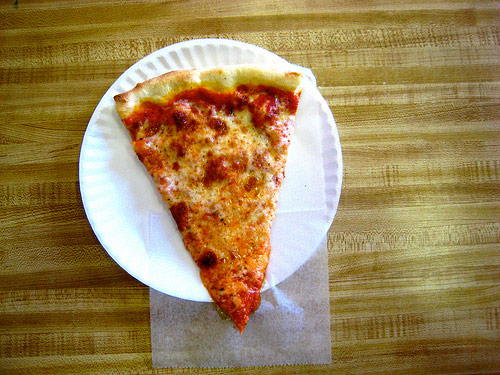
9. Pizza is better in New York City than anywhere else ever ever ever, and it’s cheap. And it’s good fuel when you have to stay up all night packing up your entire apartment because your landlords are douchey.

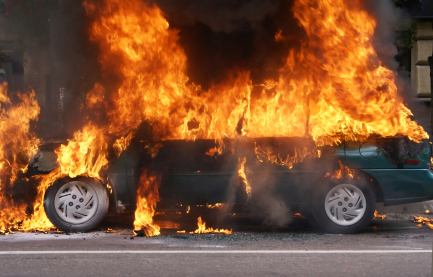
10. If some guy comes up to my window at an intersection and tells me my car’s on fire, I should just shoot him in the face and drive the fuck away.


And how was your week, dearest ‘Ratis? (I will be on a train and then driving to Vermont tomorrow, but will try to check in on comments… hugs to y’all….)

* And may they get bedbugs. With chlamydia.

It’s a wrap

By PD Martin

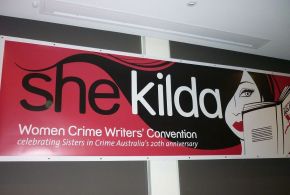
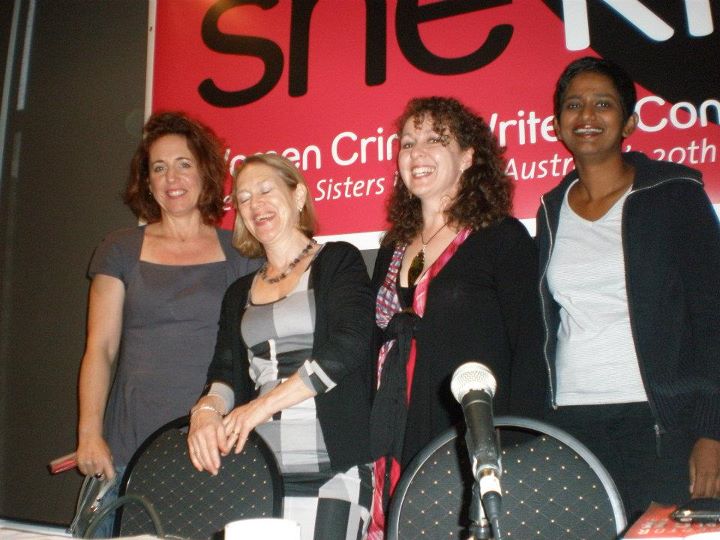
On the weekend I attended the ten-yearly (yup, not annual, not bi-annual but once a decade) SheKilda. It was actually the second ever SheKilda, to mark Sisters in Crime Australia’s 20th anniversary and the 10th anniversary of the first SheKilda. Happily, they are talking about maybe having another one in five years! I’m going to push for two years.

Anyway, having attended Bouchercon once, I was hoping that SheKilda would follow a similar format and, of course, be as wonderful and successful as the US convention. And I was NOT disappointed. It was an amazing weekend. A time for authors and readers to talk, exchange ideas and, in the case of the authors, complain that our partners don’t understand what we do and how hard we work! 

One of the key differences between SheKilda and Bouchercon is that SheKilda was conceived and produced by Sisters in Crime and so all the authors were women. In terms of the audience, I’d say it was probably about 95% women too, but then again most crime readers are female. What sort of gender break up do you think the Bouchercon audience is? I can’t remember from my visit a few years ago.

SheKilda was set up as a convention rather than a writers festival, with all the sessions and activities centred around the hotel venue (Rydges in Carlton, Melbourne). To my knowledge, this makes SheKilda the only one of its kind in Australia. They even served morning tea, lunch and afternoon tea in a common area near the venues, so we didn’t have to stray too far from the action or pound the pavement in the search of lunch.

The weekend kicked off with the Friday night gala opening. It was a chance for all the authors and attendees to mingle (with free champagne, red wine, white wine and beer – oh, and soft drinks too). There was also some extra yummy finger food! Then it was into one of the rooms for the official opening. MCed masterfully by Sue Turnbull (she’s an amazing interviewer and MC), it kicked off with a traditional welcome from Joy Murphy Wandin, who’s an elder of the Wurundjeri indigenous people. Then it was on to the entertaining (funny) City of Melbourne Councillor Ken Ong, then Mary Delahunty of Writing Australia and then the keynote address from Margie Orford, one of the three international guests for the convention. She gave a stunning speech about the setting for her novels and hometown (Cape Town). Apparently the murder rate there is so high that forensics will only be called if they think the murder might make the TV news. There have even been cases of people travelling to Cape Town to specifically arrange murder – hoping their victim will simply go into the massive pile of unsolved murder cases on some homicide cop’s desk. Margie’s police contact will often have 200 files on his desk.

Saturday kicked off with a joint session with all the international guests, Margie Orford, Shamini Flint and Vanda Symon. It was a great opening to the day’s events and was followed by Tara  Moss launching Scarlet Stiletto: The Second Cut, a collection of award-winning short stories by women crime writers.

For my other morning session, I attended Drawing the Line: Whatever!, which looked at how the line is drawn between a young adult novel and an adult novel. YA authors Marianne Delacourt, Karen Healey and Nansi Kunze were led by Alison Goodman. It seems violence was one key determiner, but sex was a more important one. For example, editorial notes removing the word “straddled” were discussed!

After lunch, I was on a panel with Narelle Harris, Marianne Delacourt, Alison Goodman and Kim Westwood, chaired by Tara Moss. The panel looked at bending the rules in terms of genre — mixing genres, moving genres, etc.

After my choc-chip cookie at afternoon tea it was time for my second panel of the day, Conquering the World: Heroes Abroad. This panel was chaired by Angela Savage and together with Lindy Cameron, Malla Nunn and LA Larkin we all explored setting our books overseas. Angela’s are set in Thailand, Lindy’s Redback is set in several locations, Malla’s are set in South Africa in the 1950s and Louisa’s first book is set in Zimbabwe and Australia and her second in Antarctica. And then of course mine are set in the US.

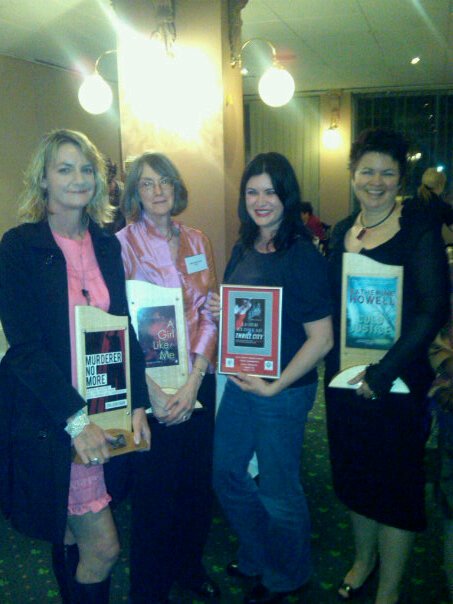
Saturday night was the Davitt Awards, which were created to support Aussie female crime writers – who often seem to be overlooked in our other crime awards. The winners that night (from left to right) were:

Best true crime: Colleen Egan 
Best YA crime fiction: Penny Matthews
Best fiction honourable mention: Leigh Redhead
Best fiction: Katherine Howell (who was my guest here in July)

And PM Newton, who’s not in the picture, won the readers’ choice award. 

I kicked off Sunday morning as part of a panel called Brave New World: Or Death of the Book. As you can imagine, we spent the hour talking about ebooks in Australia and around the world. A recent stat for Australia is that the current $35 million ebook market will increase to anything from $150 million to $700 million in the next three years. Big numbers!

After morning tea, I was an audience member for In the Face of Evil: Encounters with the Guilty, where true crime writers Rochelle Jackson, Robin Bowles and Ruth Wykes talked about their interviews and encounters with real-life crooks and murderers. And then I sat in on Them that Really Do it, which featured authors who used their past/present careers in their writing. Katherine Howell (ex-paramedic), YA Erskine (ex-cop), Helene Young (pilot), Kathryn Fox (ex-doctor) and PM Newton (ex-cop) were on the panel.  


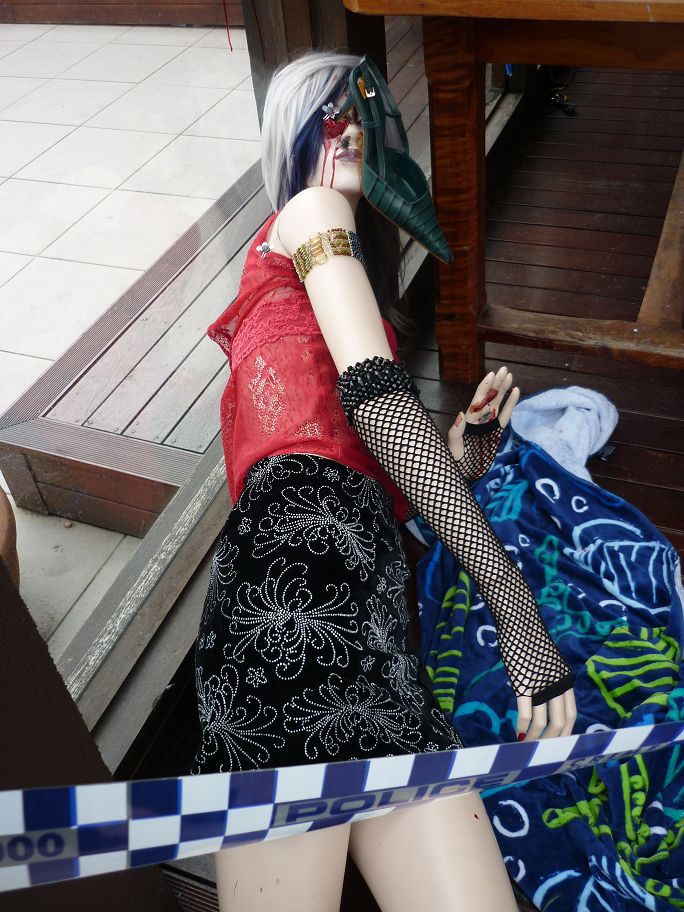
After lunch was Body in the Pool, which gave the SheKilda attendees an insight into how things would really happen if/when a dead body is found. The body (Ms Manny Quinn) had been on display by the pool all weekend and the experts included someone from the police (actually our ex-assistant commissioner, Sandra Nicholson), bug expert Mel Archer and a forensic pathologist. Timing (real versus that portrayed in crime fiction and crime TV) was also discussed. The facts are: at least 6-8 weeks for the entomology report and 10 weeks for the autopsy report.

It was an amazing, amazing weekend. A chance to talk to other authors, share stories (often complaining about how badly we’re paid!!) and expose ourselves to some great authors who are new to us. I have to confess I didn’t make any purchases, but that was only because I’m sure Santa is bringing me a kindle for Christmas so I’ll wait and purchase the many fabulous books now on my ‘to buy’ list as ebooks! 

Editorial note: I was very organised and wrote this blog on Monday, ready for today’s post. However, since then there has been some discussion/debate regarding the state of crime fiction written by women in this country. In fact, I’ll be blogging about the Sisters side of the convention in a fortnight’s time. 

But my question for now: what authors have you ‘found’ at a convention and then bought their books?

THE JOY OF MY YOUTH, PART 2: BOY MUSIC

I’ll be traveling from 4 AM my time until late afternoon, en route to the Creative Lives Writing Away retreat in Breckenridge, Colorado. I therefore will be largely unavailable for responding to comments for at least the first half of the day — sorry.

I’ve therefore chosen a light topic, pure entertainment, beaucoup de fun, for your enjoyment. Chime in, please — “feel free to converse among yourselves” — and I’ll try my best to get back to everyone before the end of the day.

I wonder how much the music we associate with any particular type of story influences our attraction to it.

For example, I grew up when westerns seemed to be everywhere, and though there are memorable themes from such movies and TV programs — most notably those for Rawhide (composed by noted Cossack cowpoke Dmitri Tiomkin), The Good, the Bad and the Ugly (by the fabled spaghetti saddle-buster Ennio Morricone), and my personal favorite, The Magnificent Seven (above, composed by Elmer Bernstein, the High Plains Hebrew) — by and large the tunes didn’t stick. They were as wholesome and hokey as the programs themselves. (I tried to go back and watch an episode of Have Gun, Will Travel, for example, which I loved as a kid, and found it godawful: predictable, sentimental, and paced like a glacier).

And though movies based on WWII were still all the rage — Bridge Over the River KwaiThe Guns of Navarone, The Great Escape (all, interestingly, with themes by Mr. Bernstein again) — and the music from those films not just inspired me but often brought me nearly to tears (cut me some slack, I’m a boy), it also had a back-glancing quality, straining for epic, as though to say the best of manhood was a dead letter.

Not exactly what a guy teetering on the brink of his teens wants to hear.

In contrast, the music for more contemporaneous crime and espionage shows always seemed to be sleeker, hipper, edgier — more conspicuously if fatalistically alive —  even for a show that actually reached back further in time than the war, The Untouchables:

This theme was written by the ubiquitous Nelson Riddle, also famous for the quintessential road theme of the early 60s, Route 66:

Or consider the quirky, short-lived Johnny Staccato (“TV’s jazz detective”), featuring John Cassavettes, who played a jazz pianist PI — a program so forced in its artiness it was often unwatchable  — but what a perfect theme (by Elmer Bernstein again; the dude got around): 

I was a boy in central Ohio, I’d already found my way to a guitar, I had garage band aspirations and far-away dreams. I wasn’t looking to the mythic cowboy past for inspiration, but to the cosmopolitan present, and the music I heard on crime shows spoke not of mesquite canyons but smoky barrooms and shrill casinos and deadly back streets, of twisted hearts and savage dreams, of power lurking in a shadowy boardroom I’d never know, of lonely men and lovely women and an itch you can’t scratch, a hunger you never satisfy, an empty palm at the end of the mind.

Everybody tap your toes!

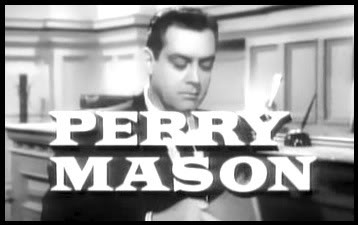
Where did it begin? All roads lead back to Perry Mason, I suppose, with a theme that managed to be driving, lyrical, passionate and dissonant all at once — and distinctly urban:

Little did I know that Paul Drake would be the model for my later incarnation as a real-life private investigator — and Drake is to my mind the most accurate portrayal of a PI ever on TV (though a little dim-witted and unambitious next to the massively mental Mr. Mason).

Henry Mancini’s vibe was a bit more cool and urbane, but he provided two of the most seminal inner anthems of my boyhood. I loved (and envied) the effortless masculinity of Mr. Lucky, despite — or perhaps because of — the ice-rink organ effects:

A spin-off tune from Mr. Lucky was Mancini’s sumptuous “Lujon,” which has inspired filmmakers ever since, cropping up in movies as diverse as Sexy Beast and The Big Lebowski:

And no kid who picked up a Gibson didn’t rush to learn the opening riff from Peter Gunn, a bit of reverb-cranked Mancini-esque testosterone reminiscent of John Barry’s 007 theme:

Guitars, of course, lead us to the Ventures, and though I was far more enamored with hits like “Journey to the Stars” and “Slaughter on Tenth Avenue,” their theme for Hawaii Five-O had a hook so compelling it’s single-handedly responsible for the show’s current reincaration on network TV (imho):

That theme would become almost as much a part of that time’s aural fabric as the theme from Mission Impossible:

Argentinean exile Lalo Schifrin — who in Buenos Aires played piano for the master of the nuevo tango, Astor Piazzolla, and went on to work with Clint Eastwood on the Dirty Harry films — was responsible for the MI theme, which was ripped off shamelessly for The Man from U.N.C.L.E., a second-rate show in almost every regard (which I loved, naturally).

As testimony to the power of music, the most memorable part of the film version of Mission Impossible for me was the midpoint action sequence when this theme finally kicks in with a vengeance — I got chills the instant I heard that unforgettable intro. Still do.

But the shows that truly registered with me came from Britain, and not surprisingly their music was very much a part of that impact.

The first was Secret Agent, which ironically changed both its name (from Danger Man) and its original theme — which emphasized a somewhat manic harpsichord rather than the distinctive, slicing guitar of Johnny Rivers:

Even more compelling was The Prisoner, like Danger Man/Secret Agent starring Patrick McGoohan, and perhaps the darkest, strangest, most paranoid show from that era — or any era:

But the show that stole my boyish heart was, of course, The Avengers.

I wonder how many boys, sitting enraptured before TVs around the world, had their erotic imaginations seared into focus by Diana Rigg:

The show played on Friday nights, I always watched it at my best friend Mike Enright’s house, and when that theme played over the ending credits I always felt a wistful sense of loss and longing. The weekend lay ahead but The Avengers was over, at least for a week.

How would I live until then?

* * * * *

So, Murderateros — what music from childhood stirred your imagination, quickened your pulse, insinuated itself into your dreams — marinated the twtchy tedium of puberty?

* * * * *

Jukebox Heroes of the Week: On a much, much goofier, weirder, cheesier level, there were freakish “supermarrionation”action shows when I was growing up, such as Supercar:

And Fireball XL5:

which in turn inspired the demented imaginations of Trey Parker and Matt Stone, creators of South Park, with their singularly perverse and perversely wonderful Team America:

America. Fuck yeah.


Titles (Again)

 by Alafair Burke

We’ve talked a lot about book titles recently.

Gar got us all thinking when he catalogued the difference between a DAT (Dumb-Ass-Title) and a KAT (Kick-Ass-Title).  In his view, DAT’s use one ubiquitous, predictable word (e.g., the new TV show, “Revenge”).  A KAT draws the reader in, but does not rely on any secret or double meaning (Sophie Littlefield’s “A Bad Day for Sorry”).

Louise followed up with further refinements to the DAT recipe — puns and series unifiers — while defending the use of dual meanings.  

The timing of their posts couldn’t have been better for my purposes. Or maybe worse.  Because they came right as I was trying to come up with a title for the next Ellie Hatcher novel, and I happen to disagree with both of them.

I struggle with titles.  A lot.  I shared my inner title turmoil here at Murderati last summer.  As I explained then, I’ve come to realize two things about titles, and from those two things come some lessons that push me away from Gar’s and Louise’s conception of a KAT.

First, a title’s main job is to create a first impression — not of itself, but of the book it adorns.  An extremely unique title makes a bigger impression.  That means it better be a REALLY accurate impression of the novel’s contents.  Otherwise, it’s just as likely to turn off a well-matched reader as to make her say, Hmmmm (Louise’s test for a KAT).

For example, my first book was initially submitted to editors with the title The Final Verdict.  The acquiring editor’s only quibble was with the title.  The problem was the “feel” conveyed by the title. She thought (correctly) that it sounded like a courtroom thriller when my books (even those featuring prosecutor Samantha Kincaid) really don’t unfold in court.  I renamed the book “Judgment Calls.”  Maybe not a KAT, but at least it didn’t mis-introduce the book.  Lesson One: Make sure the title matches the tone of the book.

Despite that first experience with a title, a made a mistake two books ago.  I struggled like mad with the title of the third Ellie Hatcher novel.  I honestly don’t remember now all of the many titles that I considered and rejected, because I became so passionate about the title that stuck: “212.”  It’s the Manhattan area code.  I also made it the name of the luxury building where a murder in the opening chapters takes place.  It “felt” right to me.  So modern.  So New York.  It was so cool and perfect that some of my Facebook friends found this t-shirt for me to rock on book tour.

But here’s the problem: The title’s really cool if you happen to know that Manhattan’s the two-one-two.  If you don’t know that?  You wind up asking the author on said book tour why she called her book “two-twelve.”  You tell the indie bookseller who’s kind enough to handsell said author’s book, “No thanks.  I don’t read science fiction.”

Oops.  Lesson Two: Make sure your title isn’t so “inside” that it turns people off.

The second thing about titles is that, although they serve to create a first impression, they don’t fill that role alone.  Usually people will see the title in the bookstore or online so will also see the cover art.  They might also read the first chapter or the inside flap to have some minimal sense of the book’s “hook.”

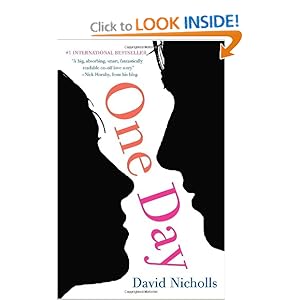
Last year, I used Charles Nicholls’ “One Day” of an example of how title, jacket, and concept can come together.

As I said about One Day the title: “Kind of bland.  Kind of makes me want to sing ‘One day, one where, we’ll find a new way of living.'” But if you see this jacket?


Gets your attention, right?  Flip it over and learn that the novel depicts two people on one single day across twenty years?  Suddenly it’s a perfect title.

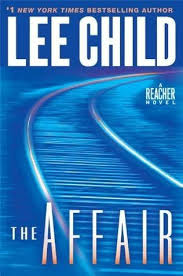
Or take Lee Child’s new book, “The Affair.”  I’m not sure what Gar and Louise would say, but does a two-word title that begins with “The” trigger the DAT rule?  Regardless, I happen to like one-word titles because they can easily address my lessons one and two by fitting well with the contents of the book and not turning people off. 

Simple titles can also be dressed up well with jacket and concept.  The jacket for THE AFFAIR — a haunting picture of empty railroad tracks — is interesting enough that people will pick it up.*

*Note: This post assumes, falsely, that Lee Child still needs a good title or book jacket to persuade readers to pick up a book.

Then you find out that THE AFFAIR is a Jack Reacher prequel.  1997.  A crime scene at a lonely railroad track at Carter Crossing.  This is the story of how Reacher became a drifter.  Awesome!

Lesson Three: Titles Don’t Work Alone.

So it’s that time of year again, and for the last month, I was struggling (once again) for a title.  The working title was TO THE GRAVE, but on the “fit” rule, I decided it sounded too much like either a vamplre book or a medical examiner book.  Then those excellent posts from Gar and Louise managed to get me all up in my head, struggling for a KAT.  

I came up with WHEN DARK COMES DOWN.  Pretty good, huh?  Maybe even kick-ass.  I ran it past some people who all loved the sound of it.  But when I asked them what “type” of book they imagined from the title, I didn’t like what I heard.  Noir.  Darkness (funny that, huh?).  Something about depression.  It meets Louise’s “hmmmm…” test, but those weren’t the right kinds of hmmmm’s.

Back to the drawing board, but this time I didn’t think about KATs.  I thought instead about the good fortune I’ve had this year with my first standalone.  I’m quite sure the title, LONG GONE, wouldn’t meet any tests for being a KAT.  But here’s the jacket. 

The hook?  Alice Humphrey thinks life is all well and good at her dream job until she shows up one morning to find the place stripped bare as if it never existed, vacant except for the dead body of the man who hired her. 

I was lucky enough to hear something like the following from an awful lot of people this year: “I’d never read your books before but there was something about that jacket.  I just knew I’d like this book.”

Keep your KATs.  I’ll take a well-fitting, well-jacketed simple title any day. 

I took to the Interwebs, asking my Kitchen Cabinet pals on Facebook and Twitter what “type” of book they thought of from the following potential titles: NEVER PROMISE, AFTER DARK, and LIGHTS OUT.  The feedback was excellent, but the “fit” wasn’t quite right.  NEVER PROMISE had too many readers thinking of sappy romance stuff.  AFTER DARK conjured up too many thoughts of hookers.  And LIGHTS OUT sounded like calamity during a black out.  It also had this my editor and me singing this awful ditty:

(Have fun getting that one out of your head.  You’re welcome.)

I went back to the drawing board once again, now armed with my market research about tone.  I imagined possible book jackets.  I read my draft jacket copy.

And then I named the next Ellie Hatcher novel: NEVER TELL.

KAT?  Probably not.  But it sounds like one of my books.  It sounds like this particular book.  It connects with content.  It doesn’t send a wrong message.  And those talented art people at the publisher will do something great with it.

So am I full of it, or am I onto something?  Despite the allure of distinctive titles, do you think you’ve ever NOT read a book because the title, albeit creative, turned you off?  And when you hear the title NEVER TELL, what TYPE of book do you imagine?  (Thanks for the feedback!)


Nanowrimo Prep – narrative structure cheat sheet


by Alexandra Sokoloff

There really is something about fall for me, this huge jolt of energy.   Thank God, because I have a lot to do.   This week I did my taxes and a book proposal at the same time, two activities that should never be performed simultaneously.  (At some point the brain does explode, doesn’t it?)  This week I have to write another book proposal while doing edits for another book, and go to Houston to teach a workshop. 

In the middle of all of this there is another book that I am dying, just dying to get done.  This is why I’m a big fan of Nanowrimo. Even though, truthfully, like every full-time writer I have a Nano-like writing schedule most of the time, there’s something about having a designated month where all kinds of people are putting in this kind of insane writing time with the insane goal of having some rough approximation of a book at the end of it that makes it all feel okay, somehow, even doable.

For the last couple of years I’ve been doing a Nano Prep series on my blog   in October,  because I reel in horror at the idea of people just sitting down on Day 1 and starting to write to see what comes out.  The chances of getting a viable book out of that process seem – slim.

I may finally have gone to the opposite extreme, though.  The more I analyze structure, the more it seems to me that every story has the same underlying structure.   In previous years I’ve come up with a checklist of story elements, and last year I really expanded on that one.  But in the last month of some short workshops and my Nano Prep, I’ve actually tried to put the most important of those story elements into an almost narrative, a cheat sheet for story development.

So I’m running it by you all today, to see if it makes sense to anyone but me.

————————————————————————–

Narrative Structure Cheat Sheet

Act I:

We meet the Hero/ine in the Ordinary World.  

S/he has:

   —  a Ghost or Wound

   —  a strong Desire

   —  Special Skills

And an Opponent, or several, which is standing in the way of her getting what s/he wants, and possibly wants exactly the same thing that s/he wants

She gets a Call to Adventure: a phone call, an invitation, a look from a stranger, that invites her to change her life.

That impulse may be blocked by a

    —  Threshold Guardian

    —   And/or the Opponent

    —   And/or she is herself reluctant to take the journey.

But she overcomes whatever opposition,

   — Gathers Allies and the advice of a Mentor

    — Formulates a specific PLAN to get what s/he wants

And Crosses the Threshold Into the Special World.


Act II:1

The hero/ine goes after what s/he wants, following the PLAN

The opponent blocks and attacks, following his or her own PLAN to get what s/he wants

The hero/ine may now:

     — Gather a Team

     — Train for battle (in a love story this can be shopping or dating)

     — Investigate the situation.

     — Pass numerous Tests

All following the Plan, to achieve the Desire.

No matter what genre, we experience scenes that deliver on the Promise of the Premise – magic, flying, sex, mystery, horror, thrills, action.

We also enjoy the hero/ine’s Bonding with Allies or Falling in Love

And usually in this Act the hero/ine is Winning.

Then at the Midpoint, there is a big Reversal, Revelation, Loss or Win that is a Game-Changer.


Act II:2


The hero/ine must Recover and Recalibrate from the game-changer of the Midpoint.

And formulate a New Plan

Neither the Hero/ine nor the Antagonist has gotten what they want, and everyone is tired and pissed.

Therefore they Make Mistakes

And often Cross a Moral Line

And Lose Allies

And the hero/ine, or if not the hero/ine, at least we, are getting the idea (if we didn’t have it before) that the hero/ine might be WRONG about what s/he wants.

Things begin to Spiral Out of Control

And get Darker and Darker (even if it’s funny)

Until everything crashes in a Black Moment, or All is Lost Moment, or Visit to Death.

And then, out of that compete despair comes a New Revelation for the hero/ine

That leads to a New Plan for the Final Battle.


Act III

The Heroine Makes that last New Plan

Possibly Gathers the Team (Allies) again

Possibly briefly Trains again

Then Storms the Opponent’s Castle (or basement)

The Team (if there is one) Attacks the Opponent on his or her own turf, and all their

     — Skills are tested.

     — Subplots are resolved,

     — and secondary Opponents are defeated in a satisfying way.

Then the Hero/ine goes in alone for the final battle with the Antagonist.  Her Character Arc, everything s/he’s learned in the story, helps her win it.

The Hero/ine has come Full Circle

And we see the New Way of Life that s/he will live.


—————————————————————————————


Let me know if this makes sense, or is at all helpful, and otherwise, who else is doing Nano?  And for the happy, sane, non-writers, do you get that Back to School feeling about fall, too?  What are you doing with that burst of energy?

Alex 

WRITE TIGHT

By Stephen Jay Schwartz

“If I had more time, I would have written you a shorter letter.”

– Either Mark Twain, Blaise Pascal, Hemmingway, Cicero, Voltaire, George Bernard Shaw, Winston Churchill or Abraham Lincoln.

It doesn’t matter who said it, it’s still a great quote.

I used to love the long, epic tomes, the Micheners (let’s get into the formation of the volcanic rocks before we get into the backstory of our protagonist’s great-great-great-great grandfather, shall we?), the Urises, the Haleys, the Tolkiens, etc. You can really get lost in those worlds, you can dive down deep and disappear for months at a time. There’s something magical and escapist about it and I know a lot of readers who wouldn’t want it any other way.

Over the years, however, I’ve come to appreciate the sharp, spank on the ass I get from a tight, lean, bitch of a novel. I think it began when I discovered Jim Thompson (The Killer Inside Me, Pop. 1280, The Grifters, The Getaway, After Dark My Sweet, A Hell of a Woman, etc). He gives you everything you need without any of the fat. His characters are deep, psychologically disturbed and very, very real. Thompson gives it to you in tiny little brushstrokes on the page.

A couple months ago David Corbett recommended “Bellman and True,” by Desmond Lowden. He shared compelling examples of Lowden’s exceptional, tight prose, and it sent me to my Amazon button to have a copy sent from London. I read the book and was impressed with how much action, drama, social critique and psychology he managed to pack into such a small space. Lowden’s characters come off the page fully-realized and as real as any one I’ve ever met, and yet they’re stream-lined, compressed, tight.

We often hear the line, “Don’t write the stuff that everyone skips.” It’s a good line, though somewhat daunting when you feel that all your lines are worthy of being read. The truth, however, is we tend to over-write our work.

When I worked in film development I often helped guide screenwriters through multiple drafts of the same project. Sometimes it was necessary to remove large sections of story in order to reduce page-count or make room for new ideas. I once had a screenwriter complain that his character wouldn’t come across as real if so much of his backstory was lost. But I realized something–you can cut a significant amount of your work and, if you do it right, the “ghost” of what you’ve done remains. You don’t need the full story; what’s left behind is often exactly what is right.

I continue to learn how to write tighter and leaner. The screenwriting assignment I just completed gave me a real-world, professional opportunity to practice this task. At only 110 pages or so in length, screenplays have to pack a punch. The best screenplays are as tight as a good poem. Each word should be chosen with special care. Each word an image. I’m bringing that experience back to my current novel – trimming everything back to its bare essentials. I like it, it feels good, it feels right.

But, God, it takes a hell of a long time to write a short novel.

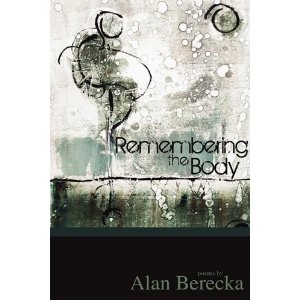
In other news, I recently connected with a wonderful poet whose work provides a great example of how to pack a whole lot of story into an itty, bitty space. Alan Berecka’s poems are little life-stories with brilliant epiphanies that turn on a word or phrase. He shows us that less is more, that words are precious and beatific and ought to be used sparingly.


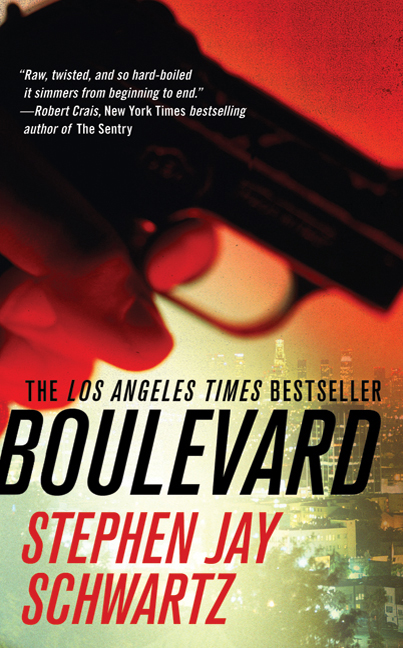
Also, I wouldn’t be doing my job if I didn’t mention that my novel, BOULEVARD, just released in mass market paperback this week. Go out and buy three dozen to fill the pumpkins on Halloween!

And, lastly, I haven’t even touched on the wonderful trip I took to Ireland and Scotland with the family. I could write a book on it. I hated missing Bouchercon, but…come on, man, I saw Ireland and Scotland! Instead of over-writing the experience, I’ll leave you with a few beatific images to ponder….


The first thing that comes to hand . . .

Charlie Fox

I’m out and about today, so I hope you don’t mind if I play a substitute?

Here for your entertainment (and possibly your enlightenment) is the second in an occasional series of guest blogs from my close-protection expert and main protagonist, Charlie Fox, touching on the subject of personal security. For those of you who didn’t see her opening instalment back in June – which went into how to spot and avoid trouble in the first place – you can catch up on the subject here. For those of you who enjoyed the words of wisdom last time out, read on at your own risk . . .


Charlie Fox: People assume that if you want to stand any chance of defending yourself from serious attack you need either to be built like an outside lavatory or be some kind of martial arts guru. Well, yeah, it all helps.

But deterrent or brute force are not the only alternatives.

If you’re reading this in one of the countries around the world that encourages its citizens to bear arms, you might decide to take that route. But I’m a Brit and back home we’re liable to arrest if we’re caught in a built-up area during the hours of darkness in possession of a loud shirt, never mind anything that qualifies as an offensive weapon.

That means not only are firearms of any description out of the equation, but also pepper spray, TASERs, and anything more than a butter knife. Good job all the thieving toe-rags out there also play by these rules, isn’t it?

Ah, hang on a minute . . .

So, if you’re a civilian and the only black belt you own is the one holding up your black trousers, you need a fallback plan.

And that, I guess, is where I come in.

I’ve always been a big fan of the sneaky ‘speak softly, but’ approach. Trouble is, if you do carry a big stick and end up actually hitting someone with it, you’re likely to find yourself in the back of a squad car with your wrists braceleted together behind your back faster than you can say, “Hey officer, he started it!”

(Trust me on this.)

So when is a weapon not a weapon?

All the time.

As I mentioned last time, having a dog is a good deterrent. But if you don’t happen to own a ferocious pet of some description?

Well, then you have to use whatever item comes to hand.

Speaking of which, here are a few fairly innocuous everyday items you might like to consider for personal defence:

I admit the bent fork doesn’t look so innocent now, but it started out as a cheap table fork, same as can be found in cutlery drawers across the country. (OK, my mother would probably die before letting such inferior stuff lurk among her hallmarked silverware, but that’s another story.) I found this one in the kitchen of an organisation called Fourth Day, out in California. I was unarmed and in need of something I could use for my own protection – something that wouldn’t be missed like a chef’s knife. I bent it into this handled claw shape using the steel legs of a bed frame, and kept it under my pillow.

And yes, when I needed it, my improvised knuckleduster proved pretty effective.*

Not only is it a nasty thing to hit someone with, almost guaranteed to do some damage and mark them for later identification, but the way the handle bends around your fingers makes it hard to take away from you, and it also protects your hands.

Protecting your hands is vital. If you’re not a bare-knuckle fighter by training or disposition, the chances are that the first time you hit someone in anger, for real, you’ll break something.

And as soon as you injure your hands, you’re halfway stuffed.

You should avoid it if you can.

Same reason why I’d be wary about using a bunch of keys clenched inside a fist for self-defence – there’s as much chance of breaking your own fingers as your assailant’s face.

Instead, as you’re walking along a deserted street or back to your car in a darkened parking garage, why not just carry a rolled-up magazine? In the past, I took on a burglar with a copy of Bike, which is a nice weighty mag and perfect-bound – it has a thick spine instead of just a row of staples. Tough enough to be effective, flimsy enough to be laughed out of court. And while he was down on the floor still gasping, at least I had something to read.**

Roll the mag up reasonably tight and keep the hard ridge of the spine to the outside. Then strike with it as you would a baton. Practice. I’ve seen the end of one of these punched through an internal door. (OK, practice on an old cardboard box – you’ll be amazed at the damage you can do.)

Of course, going to check out anything, alone, at night, is downright bloody stupid. But we all do downright bloody stupid things occasionally. At least take a flashlight rather than a flickering candle.

I keep a four-cell Mag-Lite by the bed … purely in case of a power-cut – why else? Hold it like the cops do, just behind the head. That way you can use the tail-end to strike out at an intruder without breaking the bulb. And once they’re down you still have the light to see who it is you’ve clobbered.


A steel-case pen is another terrific improvised weapon and one that most people have about them at any time. It can be used clenched in the hand in a hammer grip to strike at the eyes, face, temple, side of the neck, ear, shoulder muscles or chest.

And if you don’t have a pen? The handle of a toothbrush will do the job, a small pocket flashlight or even a roll of sweets. Basically, anything that’s small and cylindrical and easy to hold, but will not cause damage to your own hand when you use it.

There are numerous grips you can use with this kind of object, like palm-push and pointing finger. All will be just as effective if delivered with determination to a vulnerable area.

The last item in the group shot above is a small canister of hairspray. If you’re being attacked, threaten someone’s eyes with it – hell, if they’re attacking you, don’t threaten, just point and squirt. I happen to know that a liberal dose of lacquer in the eyes will take the fight out of just about anybody.*

Not to mention what you can do with a canister of spray and a cigarette lighter . . .

So now you’ve chosen your improvised weapon for self-defence, what do you aim for?

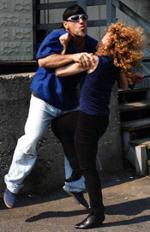
Given a choice in a close-up scuffle, I’d usually go for the throat. Might sound like a cliché, but think about it. In a fully dressed assailant, the body is likely to be covered up. The face too, if they’re wearing a ski mask to avoid you picking them out of a line-up afterwards. I’ve been there, and let me tell you that not being able to see your attacker’s face all adds to the scariness of the situation.***

The eyes are a good choice, but harder to hit if they’re wearing glasses. But the throat is usually exposed and is a small, easily identifiable and relatively soft target. That is one area you could hit with your fist and be reasonably assured of it hurting them more than it hurts you. (I’d try to use a forearm or elbow-strike, though.)

Anywhere on the face is good, too. Eyes, temples, ears, neck, or the soft area under the jaw. There’s a sweet-spot about halfway along the jawline itself (just about where the tails of a droopy moustache would end) that will put them down every time if you place it right.

You can trust me on that, too.***

I’d bypass the body for an initial strike. Unless they’re wearing fairly light clothing, in which case the fleshy vee under the rib cage – the solar plexus – is a good aiming point. A solid blow there with leave your attacker doing landed fish impersonations on the ground while you leg it.

Most guys, I’ve found, have pretty fast reactions when it comes to protecting the family jewels from sudden attack. Mind you, if you are forced into close contact then there’s always the opportunity for a fast-raised knee.****

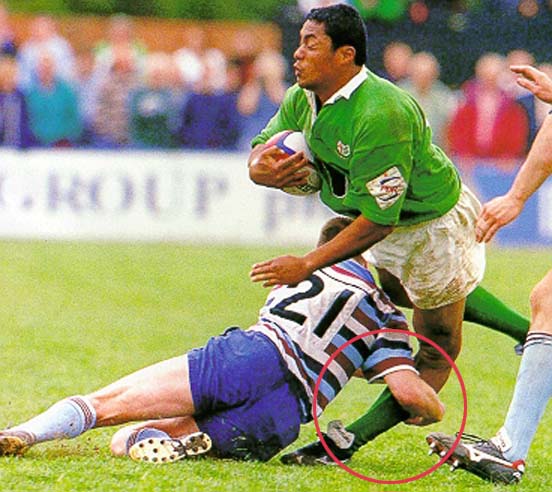
Instead, knees, ankles, shins and feet – probably in that order. The knee is a straightforward lateral hinge joint and very vulnerable to impact. Ask any sportsman.


(And if you’re squeamish, you might want to scroll past this next pic a bit sharpish.)


Back with me? OK. Deep breaths – you’ll be fine.

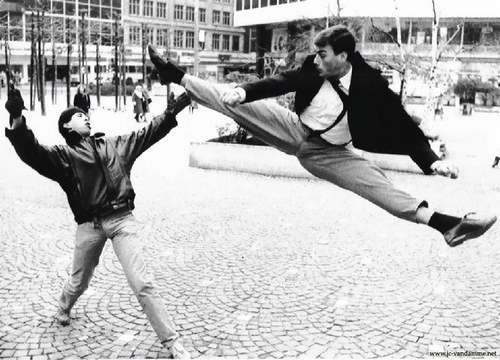
Unless you’re Jean-Claude van Damme, don’t go for high kicks to the head. It’s opening yourself up – if you’ll pardon the pun – for a hefty punch in the knackers.

Instead, a low level stamp-down kick to the side of the knee always proves effective.*****  The shins contain a huge cluster of nerve-endings that will put most assailants down if gouge or clout them with enough gusto. And when it comes to the final target – the feet – the instep is probably a better target than the better-protected toes.

Unless, of course, you’re being mugged by a guy in flip-flops.

In which case you should be ashamed of yourself – grow a pair.

So, questions for you – what do you carry that you could use to defend yourself in an emergency? And have you ever had to use it?


As mentioned, I’m out and about today, but I’ll get to comments when I can. Tomorrow I’m guest-blogging over at Jungle Red Writers. I hope you’ll stop by and say “hi”. I’ll bring virtual cookies!

This week’s Word of the Week is cognition, meaning the act or process of knowing, in the widest sense, including sensation, perception, etc, distinguished from emotion and conation; the knowledge resulting or acquired. And as an aside to that, also cognosce, which in Scots law means to examine; to give judgement upon; to declare to be an idiot.


All techniques mentioned are described in the following books in the Charlie Fox series:

*FOURTH DAY: Charlie Fox book eight

**ROAD KILL: Charlie Fox book five

***KILLER INSTINCT: Charlie Fox book one

****FIRST DROP: Charlie Fox book four

*****HARD KNOCKS: Charlie Fox book three 

Naked City

by Jonathan Hayes


Love at first sight is always followed by a period of recognition of initially unnoticed flaws, with subsequent acceptance or rejection of the hastily beloved. I fell wildly in love with New York City when I was a young child; decades later, I still feel like kissing the sidewalk of this sainted isle whenever I launch myself from my doorstep into the world. I’m well aware of the city’s complexities – sometimes brutally aware, given my work as a medical examiner here – but I embrace it in all its beautiful, thorny glory.

One way of managing things with dark and light sides is to mythologize the dark; it’s a way of controlling it, making it attractive. New Yorkers still take huge pleasure in the image of this town as a violent, crime-riddled hellhole where only the tough survive, despite the fact that this is one of the safest large cities in the world. Perhaps my favourite of the city’s great propagandists was Damon Runyon, whose stories about the antics of charming petty criminals and hoodlums delighted me as a boy. Weegee, a darker contributor to the lore of Gotham, delighted me as an adult.

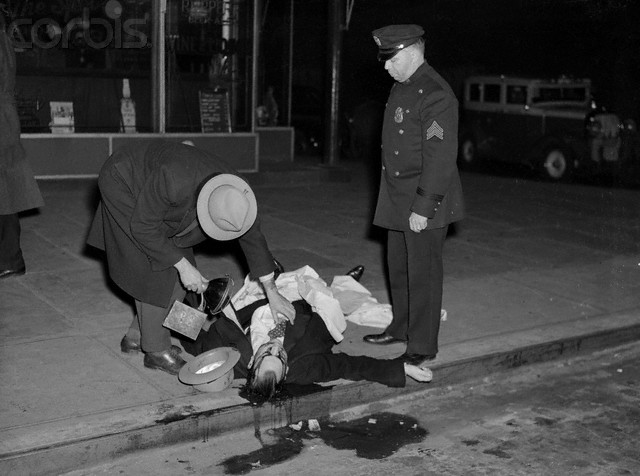
Usher Fellig – dubbed Weegee because of the Ouija board-like prescience that had him showing up at murder scenes often before the police – was a crime beat photojournalist who became world-famous during the 30’s and 40’s. His was the unflinching eye that splashed Skid Row murders and high society drunks in paddy wagons over the front pages of the morning paper. His photographs have a stark urgency that underscores one of the things that New Yorkers love most about their city: it’s realness. In this town, we abhor the inauthentic. For example, most of us despise the changes that have taken place in the Times Square and 42nd Street areas – it has been transformed from the gritty neighbourhood of the 70’s into our own little pocket of fake. We accept it because we understand that it wasn’t put here for us: it was put here for the tourists.

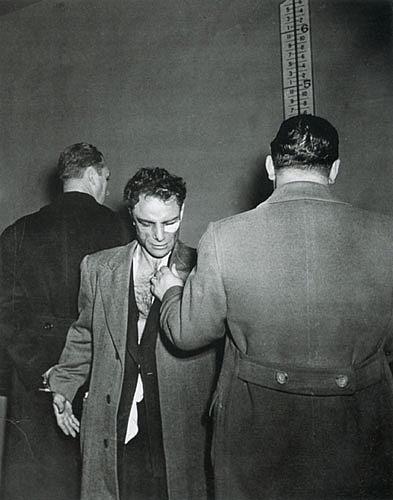
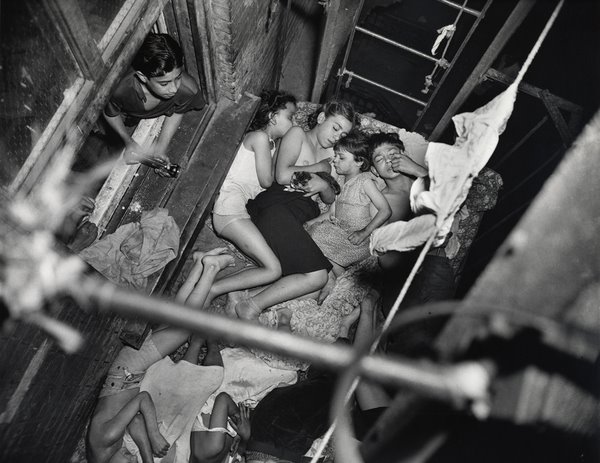
Weegee’s photographs – the line-ups of arrested transvestites, the children sweltering on a fire escape late on a roasting summer night, the bodies of the dead sprawled in doorways, on sidewalks on saloon floors – show the harsh conditions of real life in the real city. But they also bring to their subject the gloss of myth, the blessing of everlasting life, the confirmation of a moment as legend. Some of this is the gloss of time, certainly, amplified by the fact that his images were a visual touchstone for the brooding noir films that spread like black mold over the post-WWII American consciousness – it was, in fact, Weegee who coined the term “the Naked City”.

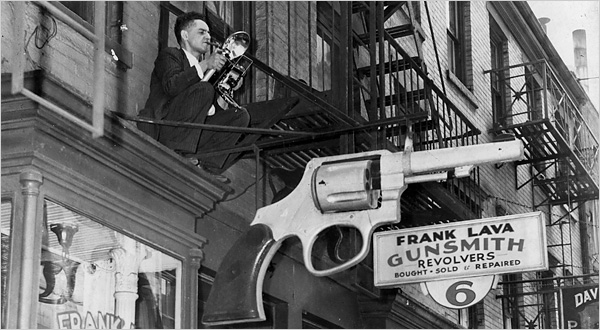
Weegee lived above the John Jovino gunshop

“I would drop into Police Headquarters at around 7:00 p.m. If nothing’s stirring and my elbow don’t itch – and that’s not a gag, it really does itch when something is going to happen – I go on back to my room across from Police Headquarters and go to sleep. At the head of my bed I have a hook-in with the police alarms and fire gongs so that if anything happens while I’m asleep, I’m notified…When I get my pictures I hurry back to Headquarters. There is always a follow-up slip on an accident (or crime) with all the names and details coming in over the teletype. I found out who were injured, where they lived, and on what charges they have been arrested, so that I can caption my pictures correctly. Next I go back to my darkroom and develop my prints. By this time it is around six in the morning and I start out to sell my prints.”

Weegee quoted in “Free-Lance Cameraman,” by Rosa Reilly, Popular Photography, December 1937

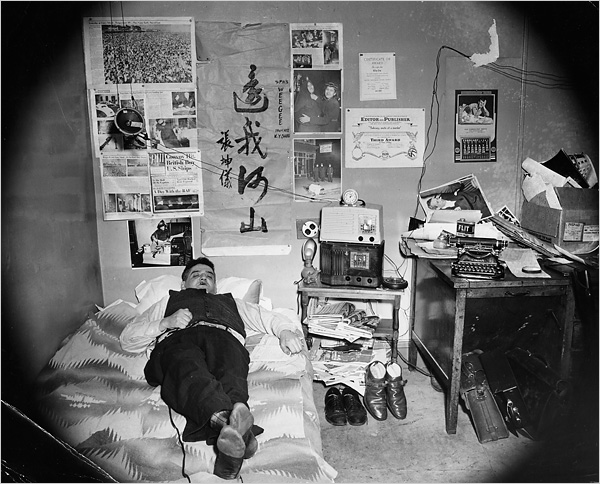
Weegee’s apartment, police radio by his bedside
Here are a few of his iconic images:

“The Critic, Metropolitan Opera”

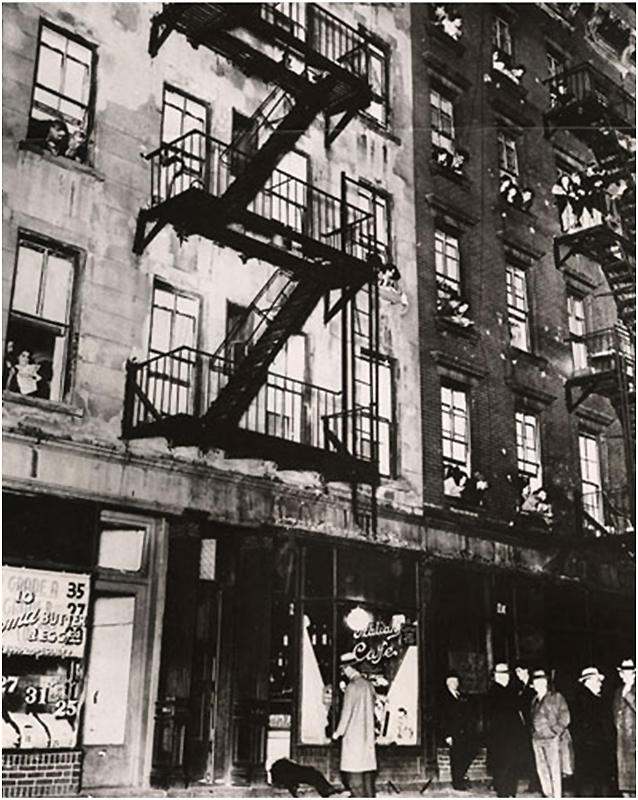
“Balcony Seats at a Murder, 10 Prince St” Weegee was more interested in the onlookers from the windows than the corpse in the doorwell


Weegee, a tireless self-publicist, wasn’t above adjusting the scene for a better photo

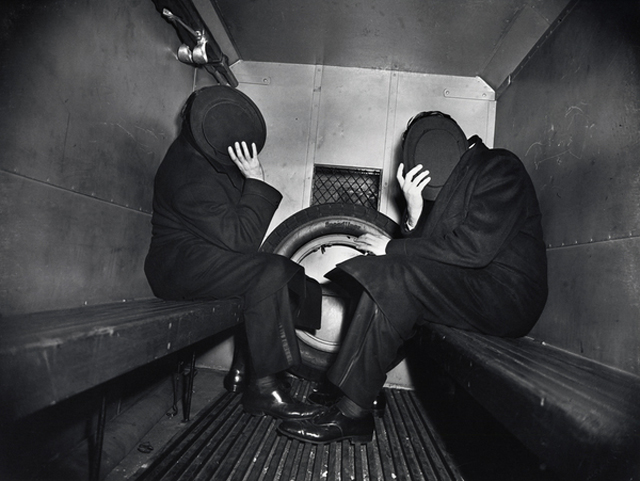
Charles Sodokoff and Arthur Webber Use Their Top Hats to Hide Their Faces, January 27, 1942. The caption from the New York Daily News read: “In Top Hats – In Trouble, Charles Sodokoff, 28, and Arthur Webber, 32, both Broklynites, use their toppled toppers to hide faces as they take free ride to Felony Court. Boys were tippling at Astor Bar Saturday night when they decided to slide down banisters for fun (???). Cop was called and they assaulted him. Funsters then went from mahogany bar to iron type.”

“Cop Killer”, 1941“Heat Spell”, 1941. Newspaper caption: “The hot weather last night took Weegee, the photographer, to the Lower East Side, where he found these children sleeping on a tenement fire escape at Irving and Rivington Streets. Weegee says he gave the kids $2 for ice cream. But their father took charge of the dough.”

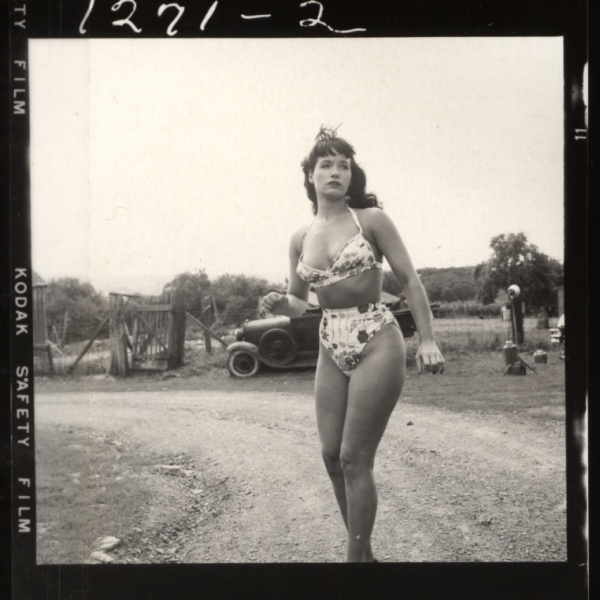
Weegee actually played an important role in my life in New York City. When I first moved here in 1990, I knew no one. A couple weeks after my arrival, I saw an ad for an unusual item: someone was selling a Weegee portrait of the notorious pin-up model Betty Page. It turned out that the seller lived two blocks from my apartment; it also turned out that the photographer was the notorious glamour and fetish photographer Eric Kroll. When I arrived at his studio to see the print, I was met at the door by a corseted dominatrix; they were in the middle of a shoot. I watched until they finished, then the three of us pored over some of the domme’s clothing designs. And then we looked at the Weegee photo.

Betty Page by Weegee – the only of his photographs that I own


It was a wonderful afternoon, a signal moment in my life in the city, one of those days that underscore the whole “only in New York” thing – a forensic pathologist, a dominatrix and a naughty photographer having a convivial afternoon. I’d always assumed that my life in New York would be extraordinary, and barely a fortnight in, it was exceeding all my expectations.

I wasn’t sure I could afford the print; I said I’d think about it. A few days later, I called back and asked if I could have another look at the photograph. Eric invited me to his studio; this time, the door was opened by a woman naked except for a narrow leather belt and fetishy black leather pointe shoes with 7” tall heels. It was the sort of coup de théatre that I came to expect from Eric, a deliberate attempt at manipulation of one friend using a model or another friend. I’m a physician, and am completely used to naked bodies –  Eric was expecting me to be flustered, or embarrassed or excited, but instead I found it amusing, and sweetly flattering.

So we became friends. For the next ten or so years, until Eric moved to the West Coast, I occasionally helped him with his shoots, helping move the lighting in his studio, schlepping equipment to professional dungeons and burlesque clubs around town. It was an interesting education, and had a huge and unexpected benefit: my first circle of NYC friends came from the city’s odd sexual demimonde – strippers, dominatrixes, pornographers – some of whom are still my closest friends today. 


Here’s an interesting bit of lagniappe: the New York Times’ John Strasbaugh narrates a downloadable podcast walking tour of Weegee- related NYC sites.

In praise of fat

by Tess Gerritsen

Sometimes I just don’t want to write about writing.

So instead I’ll open with a memory from five years ago. I am dining with friends on a boat off the coast of Italy.  I have ordered roasted pork tenderloin, and my meat arrives encased in browned, crusty fat, seasoned only with pepper and sparkling crystals of sea salt.  The first bite is a revelation: so moist and flavorful that I moaned in pleasure.  It was like the pork I remembered from my childhood, one of those untrustworthy memories that the passage of time magnifies to mythic proportions.  With that first bite, I proved those memories were accurate.  Pork really could taste the way I remembered it.

The question was, what had happened to pork during those intervening years between my childhood and that revelatory meal in Italy?

One of our table-mates that night offered part of the answer.  She raises and slaughters her own meat on her family farm in northern California.  Her pigs are free-range and they wander the woods and fields, scavenging for acorns.  During their short lives they are petted, cosseted, and treated with respect.  In the fall, when the time comes to harvest them, she does it with a gunshot to the head, murmuring and petting them as she pulls the trigger.  It is a sad task, but she knows they have lived a comfortable life and they feel no fear at the end.  The difference in the taste of the meat, she says, is incomparable.  (I have no doubt that she’s right.  I have eaten venison several times, and the one time I could not abide the smell of it was when the animal had been killed after a prolonged and terror-inducing chase.)

But there was more to that Italian pork tenderloin than just the absence of stress hormones.  There was also the fat encasing the roast and streaking the meat, more fat than you will ever find on a pork roast for sale in American supermarkets.  For decades, American pigs have been bred for leanness, because American consumers think they want lean meat.  They demand lean meat.  It’s been drilled into their heads that lean meat is healthier and tastier.  They want pork to be “the other white meat.”

That’s how we ended up with pork that tastes like, well, chicken. Unfortunately, our chickens no longer taste like chicken. 

 I’m thinking about fat today because of this article I just came across, about the world’s first food fat tax being launched in Denmark:

Denmark has imposed a fat tax in attempt to limit the population’s intake of fatty foods, becoming the first country to take such a measure.

The new tax will be levied on all products that include saturated fats – from butter and milk to pizzas, oils, meats and pre-cooked foods.

The measure, designed by the outgoing government and announced on Saturday, will add 16 kroner [$2.87] per kg of saturated fats in a product.

Consumers over the past week hoarded butter, meat and milk to avoid the immediate price increase.

Of all places, this is happening in Denmark!  The land of milk and cheese!  While you’re at it, Denmark, why don’t you change your country’s motto to: “The land of skinny people who eat nothing but spelt.”

Surely the Danes will raise their sticks of butter in protest and smother this law, because everyone knows that fat is flavor.  It’s what puts the joie in vivre, the bons in bons temps. It’s not the main dish, but it makes that main dish worth scarfing down. 

 My father was a professional chef who died (of Alzheimers) with a cholesterol of 140, which was also about what he weighed all his life. Long before the Atkins Diet, he proved that staying skinny didn’t mean denying yourself steak. He had no compunction about eating fat — real, natural fat. He used to wave raw steaks at me to point out their gorgeous marbling.  As a restauranteur, he could get the choicest meats, which may explain why the pork and chicken of my childhood was so spectacularly delicious.  He taught me never to waste my appetite on a tasteless meal.  He taught me to forget margarine, just eat butter.  He taught me that we have only so many meals in a lifetime, so we must make every single one count.

Over the years, I’ve sometimes turned my back on his advice.  In college, I dated a guy who was paranoid about the state of his arteries, so for two years he and I gagged down a zero-fat, low-sodium diet that was so healthy it would drive a gourmand to suicide. (That relationship, needless to say, didn’t last.) As a med student and doctor, I accepted the common wisdom that any butter you slathered on your toast would ooze straight into your coronaries.  At least, that’s what I told my patients.

But in the privacy of my own kitchen, I was sinning. Out came the butter and cream. Out came the bacon. I perfected twice-fried french fries and buttermilk-marinaded fried chicken.  I warned my butcher to never ever trim the fat from the lamb leg. I cooked osso bucco and slurped down the luscious marrow. Did you know that even boringly healthy oatmeal can be made deliciously sinful when you make it with whole milk and add a big scoop of mascarpone? 

Now it seems that medicine has finally caught up with my father’s wisdom. To lose weight, no longer must we eat like deprived monks.  Eggs and fat are back on the menu.  Instead of shunning a whole class of foods, the secret to healthy eating is portion control, a variety of foods, and moderation.  

And the pleasure of the occasional moan-worthy roast.

So get real, Denmark.  You know why everyone buys Danish cookies, don’t you? It’s because they’re butter cookies, not margarine cookies.  This nutty tax won’t make your citizens any skinnier, because they’ll just be forced to smuggle in cheese from Germany.

Which suggests another country motto for you.  “The land of stinky cars.”