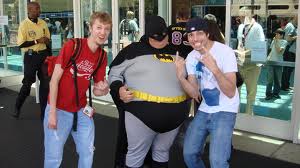
David Corbett and Zoë Ferraris
Today on Wildcard Tuesday, David Corbett converses with author Zoë Ferraris about writing heroes outside the normal mold.
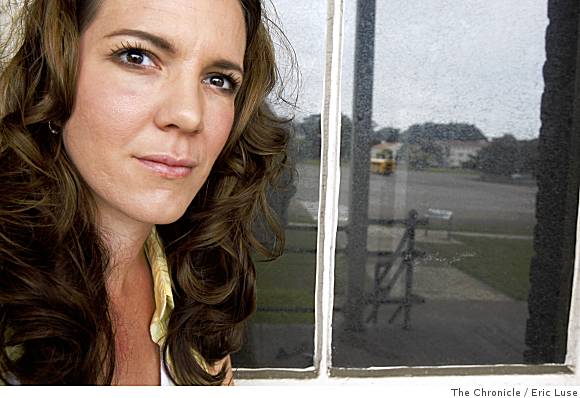
Zoë is the author of two novels, Finding Nouf and City of Veils, with her third, Kingdom of Shadows, due out from Little Brown in June, 2012.
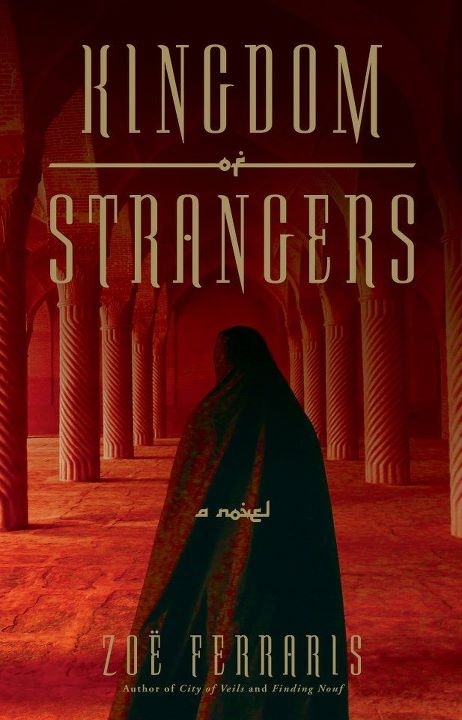
Zoë’s novels take place Saudi Arabia, and while providing a tense, smart, suspenseful read, they also explore the uniquely disturbing relationship between the sexes under the shadow of strict Islam. Laura Wilson, in her review of City of Veils for The Guardian, wrote:
Ferraris’s second novel more than lives up to the promise of her magnificent debut …. The plot is thrilling, with plenty of twists and turns, and all the characters well drawn, but what makes this novel really extraordinary is Ferraris’s knowledgeable and sensitive depiction of a place where religion, used as a blunt instrument, has given rise to a stultifying, paranoid and sex-obsessed society, where women are forcibly infantilised and men are emotionally bonsaied. Highly recommended.
David: When I first read Finding Nouf, I was bowled over by how insightful it was about what damage a culture premised on male superiority could inflict not just on women but on men.
But the other thing that made me take notice was the timing. The book came out in 2008, with America still in the throes of post-9/11 Muslim-bashing. Muslim men in particular were often viewed as terrorists until proven otherwise.
I thought you were incredibly brave, hoping readers would see as human someone so many Americans had already stigmatized, demonized or dismissed.
And yet I didn’t get any sense of a political agenda on your part, though I did sense a desire to lend a voice to one particular type of voiceless—or invisible—character. Am I correct in that?
Zoë: Thanks, David. And yes, I’ve been hanging around Muslims for twenty years. At some point I took stock of all the Arab men I knew and asked myself how many of them are similar to anything I’ve seen in the media—bearded fundamentalist, sleazy souq merchant, wife-beater, oil baron, or billionaire sheikh. The only one who fit any of the above categories was an American I knew who had converted to Islam. His idea of being Muslim was culled from old National Geographic photos; he became a fundamentalist and grew the craziest beard I’ve ever seen.
Same goes for Muslim women. Checklist: any belly dancers out there? Nope.
If you wear the same perfume three days in a row, you’ll stop smelling it. It’s this energy-saving device inside your brain that eliminates new perceptions of familiar things. I think most Americans don’t stigmatize Arabs so much as we’re presented with ideas that become odorless, invisible after a few encounters.
It’s easy to break a stereotype for a minute or two, much harder to set up a situation where you care enough about a character to follow him through a rich series of events. The key is getting a reader to care. And with all the attention on the Muslim world these days, I figured that shouldn’t be too hard.
Much harder, I imagine, to tackle the subject of immigrants in this country, especially Latinos, as you’re doing in Do They Know I’m Running? In many ways that hits closer to home, because it’s a matter of looking at one’s own community and how it deals with strangers.
David: Yes, most people have made up their minds on who and what an “illegal immigrant” is. But I’m not sure my task was harder than yours.
As you say, the problem is creating a character (or characters) people care about enough to follow through a series of crises, intimacies, betrayals, victories. But if the reader’s mind is already made up, your character remains as invisible as Ellison’s hero.
I think this remark of yours is illuminating: And with all the attention on the Muslim world these days, I figured that (getting a reader to care) shouldn’t be too hard.
I succumbed to the same impulse. But what I found was a kind of topical overload. When you’re bombarded with information 24/7 you get pounded into believing there’s nothing more to be contemplated on an issue.
The difficulty of portraying a community’s view of the strangers in its midst is really one of intimacy. And yes, the intimacy ironically works against you. The closer to home the invisible hero is, the more likely he will slip under the radar of preconception and arouse feelings not just of sympathy but guilt.
Zoë: I can see how you ran into topical overload. A novel’s relationship to current events is one of those things that relies on the slot machine of destiny. And I’m sorry, but you and me are competing with vampires, which sometimes makes me think that people are suffering topical overload on everything and the best thing that fiction can do right now is nourish fantasy.
You said that if a reader’s mind is already made up then your characters remain invisible, but I think even the most absolutely rigid minds can be flexed by good fiction. One of the most awesome things a writer can do is take someone completely vile and make you fall in love with him—even if you’re not prepared to admit it. May I call the jury’s attention to Exhibits Hannibal Lecter and Tony Soprano? Dear cannibalistic serial killer, how did you get so charismatic? Ditto you, plump little sleazebag from Jersey? Why do I like you? That’s just shamelessly good writing.
I like your point about intimacy making it more difficult for a reader to accept an invisible hero, especially if anger and guilt are involved. But I just keep believing that when you write about topical things, you’re working with an advantage. And if Thomas Harris can make me like a sociopathic serial killer, then shoot, anything can happen.
David: I’d like to spin the intimacy angle a little, or take it in a new direction. John Hawkes wrote in a short story called “A Little Bit of the Old Slap and Tickle” that to be loved is to be seen. We all want to be seen honestly—and ultimately accepted—if only by one person. And that’s particularly true in a culture where sex roles are so regimented.
And yet, if women are veiled, how are they actually, truly seen? Removing the veil could go deliciously well or disastrously wrong, is my guess.
Zoë: This reminds me of something people usually ask at my readings: What do Saudi women wear under their burqas? It’s a strange, yet totally natural question. And yes, a friend of mine in Saudi often says that women just want to be seen, and she blames this on the burqa.
The first time I encountered a super-devout Muslim face to face, he came to my front door. He was looking for my husband, and when I answered the door (without a veil or head scarf, naturally—this was in Daly City), he turned aside so fast that he nearly got whiplash. He spoke very tenderly and politely to me, but he refused to look at me, and at age nineteen, I was tortured by that. Not only was it awkward watching him have a conversation with the side of my house, I felt like my own presence on my doorstep was dirty, or I was breaking some mysterious Muslim protocol. My husband later said that, in the mind of the visitor, he was showing great respect for me. He was, by not looking at me, loving me in his way—by giving me the freedom to be exposed and not stared at. But I persist in feeling that when someone pointedly avoids looking at my face while they’re talking to me, it’s insulting and disturbing.
David: Wow, that really beats my greeting-the-Jehovah’s-Witnesses-in-nothing-but-my-Batman-cape story.
Circling back to a point we addressed at the start, in a certain sense, we both, in our choice of heroes, honored the age-old challenge of giving a voice to the voiceless—or, a face to the invisible. But is this wise with one’s protagonist—especially in the crime genre?
James Lee Burke famously dedicates himself to standing up for the marginalized, but his heroes David Robicheux and Billy Bob Holland fit perfectly the mold of the chisel-chinned (if heavy-hearted) plains gunman. Lee Child’s Reacher and Michael Connolly’s Harry Bosch epitomize the type, which accounts for much of their series’ vast appeal. I’m sure there are those who might argue that, by having heroes who for most readers seem to be outsiders, we’ve violated a cardinal rule of crime writing.
Did we fail to get the memo—or worse, ignore it?
Zoë: Nah, we read the memo, we just didn’t like it.
I think we’re showing respect for the genre by hitting it with a gene gun. Ye Olde Chisel-Chinned Plains Gunman was born a long time ago, and he’s still the main comfort food when it comes to digesting the ugly parts of our country’s history. But you and me, we’re not just doing all this to be nice, giving those poor voiceless their say. We’re evolving something. We’re part of a whole new menu of crime fiction that encompasses the world. (Check out the Independent’s “Around the World in 80 Sleuths”.)
We’ve defined an invisible hero as someone who’s been “stigmatized, demonized or dismissed.” That fits with the tradition that almost every successful crime hero is tortured in some way. (I believe that was the….other memo.)
Genre loves its antiheroes! And so do we. We may drag new people into that mix—the devout Muslim, the illegal immigrant—but what are they beyond that? How are they tortured?
I think we’re re-seeding the genre, so let’s make a date and see what’s grown up in thirty years.
* * * * *
So Murderateros—do you know of any other invisible heroes? Do you think that the marginalized are best employed as secondary characters? Or is the outsider in fact the archetypal protagonist?
And is topicality a blessing, a cure, or an irrelevance?
* * * * *
Jukebox Hero of the Week: It seemed fitting to find an artist with both Latin and Arab roots, which points directly at Shakira, whose lineage is both Colombian and Lebanese. This song, “Ojos Así,” more than any other captures that dual heritage. It’s based in the Phrygian dominant scale, contains interludes of Arabic, and Shakira herself sings in Arabic in the album version, single version, and various remixes of the song. (In this video, she also, yes, belly dances—sorry, Zoë.)




 READ–William Augustus, Jr. of Palm Beach, Florida and Cody, Wyoming was the eldest of nine children. He was born on Beacon Street in Boston, Massachusetts, May 16, 1918 to Admiral William A. Read and Edith Fabyan Read. Mr. Read grew up in Purchase, N.Y. and was educated in New England, attending St. Paul’s School and the Hun School. He married Kathleen Cushman Spence and they had one daughter, Edith Fabyan Read (Wey). A divorce occurred subsequent to his missing-in-action status during WWII. After Pearl Harbor, he joined the Navy, graduating from the Navy Aerial Gunnery Instructors School in Pensacola, Florida. He was Range Officer at the Navy Border Field Machine Gun Range in San Diego, California and became the Gunnery Officer for the Navy Patrol Squadron 101 in the South West Pacific on the Navy version of the B24 Liberator. He was shot down on his twenty fifth combat mission as Bow Turret Gunner for the Commanding Officer of the Squadron. He and some of the surviving crew were able to swim to an island in the Sulu Sea near Palawan Island within Japanese territory, where they lived on coconuts. He was wounded again in a second crash in which a Japanese plane was shot down and landed on some of the surviving members of the crew, killing two of them and further wounding the others. He was missing-in-action for two months. They were rescued by the submarine, Gunnell. His decorations include two Air Medals, two