Author Archives: Murderati Members


THE JEALOUS AUTHOR’S WISH LIST

by Gar Anthony Haywood

I have Author’s Envy.

We all do.  No matter where a writer is in his career, there is always another one somewhere who makes him green with envy.

For instance, we all wish to God we had this woman’s money:
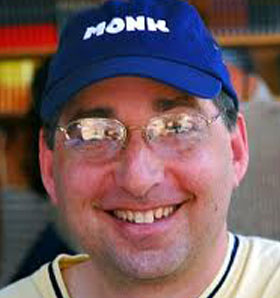
And, except for those of us lucky enough to be even better looking, we would all like to have this guy’s face:
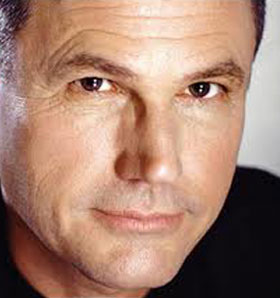
(Yes, even the ladies.  He’s that pretty.)

But enough about the superficial.  The objects of envy I want to post about today are those that go beyond the obvious.  Sure, I covet the way some authors write dialogue or craft plot, tell a story or create character — but these are all skills of the trade I could conceivably develop over time.  The things I want most that other writers have have little or nothing to do with writing, per se.  For the most part, they are intangible.  They cannot be bought or sold.  They are lines on an unwritten resume that, in my mind, help make certain authors unique.  And since I can’t claim these things for myself, I am envious of those who can.

Here are the specific traits and possessions I’m referring to:


The Generosity of LEE CHILD
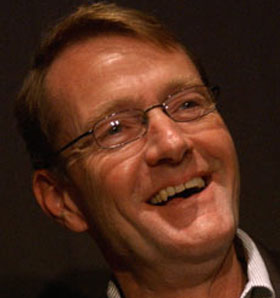
Okay, show of hands: How many people out there have asked Lee Child for something — a blurb, a signature, a few minutes of his time — and been turned away?  Nobody?  Anybody?

I didn’t think so.

If anyone in our business can afford to be less than gracious to others, it’s Mr. Child, but that kind of behavior just isn’t in his DNA.   He lends an all new, respectable heft to the otherwise lightweight term “nice guy.”


The Self-Confidence of SOPHIE LITTLEFIELD
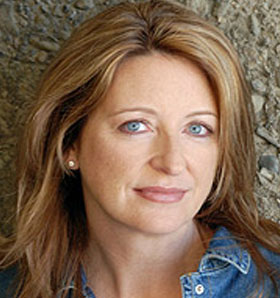
Anyone who’s ever heard Sophie describe how she got her first book, A BAD DAY FOR SORRY, sold knows it wasn’t a particularly easy road to hoe.  Because not every editor who read the manuscript was charmed by some of the language she likes to use.  She was encouraged on several occasions, in fact, to tone it down, if not eliminate it altogether.

But Sophie held her ground.  Her voice was her voice, and hell if she was going to change it just to get published.

Aren’t those of us who’ve read her work thankful she had that kind of faith in herself?


The Voice of GARY PHILLIPS
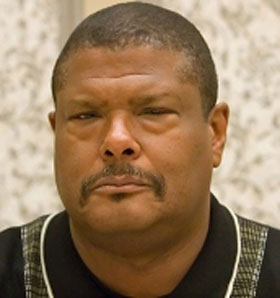
I don’t want the angry squint, nor the imposing, Sumo-like form factor.  He can keep his booming laugh and signature porkpie hat.  I just want Phillips’s trademark speaking voice.  With that voice, I could do readings to make grown men weep and women swoon.   I could moderate panels with the authority of Zeus and stop a convention bar fight with a single call to “Cease!”

Never heard Gary speak, you say?  Well, it’s sort of like this, only more powerful:


The Honesty of LEE GOLDBERG
Let’s face it, when you’re trying to build a readership and every live, book-buying body counts, honesty isn’t always the best policy.  Saying the wrong thing, to fans and fellow authors alike, can have consequences, regardless of how much truth is in the telling.

Incredibly, Goldberg has managed to build a leviathan-like career, both in television and mystery fiction, saying what he feels needs to be said while staring any possible repercussions square in the face.  He offends and he ruffles feathers, but he always tells it like he sees it, without malice aforethought.

I’ve been on the receiving end of his Searing Blade of Truth myself at least once, so I know how much it can sting.  Still, there’s something to be said for a man in our business, in which discretion almost always pays better than being frank, who consistently answers a question with what he really thinks, rather than what the questioner would most like to hear.


The Output of LAWRENCE BLOCK

Being prolific is one thing.  Being prolific and damn good, time and time again, is quite another.  Over a career spanning more than fifty years and multiple genres, Block’s been churning out novels and short stories the way McDonald’s makes hamburgers.  With that kind of production, you’d think he’d turn out a dud or two.  But no.  Quality plus quantity is how this Mystery Writers of America Grand Master rolls, and that’s what makes his vast body of work so impressive.


LAURA LIPPMAN‘s Mastery of Social Networking

Neither Allison Pearson’s 2002 book I DON’T KNOW HOW SHE DOES IT, nor its recent film adaptation, has anything to do with Laura Lippman, as far as I know, but that doesn’t stop me from thinking of her every time I hear that title.  Because in addition to writing some ungodly number of words towards her next New York Times bestseller, her daily regimen also seems to include supervising home repairs, tracking down the world’s best citrus butter cookies, composing open letters to JetBlue, putting younger women to shame at the gym, and informing a growing mob of fans and followers of all the above, as it happens, via every social networking platform yet known to Man.

If all her tweets and posts read like those of some (“Just brushed my teeth.  Next up, flossing.”  Or: “Will be signing Sunday at Harriet’s Pickles & More, would love to see you there.”), this last wouldn’t be so amazing.  But Ms. Lippman’s missives are always cute, clever, and just goofy enough to be entertaining.

While others wield the power of social networking like a club with which to beat potential readers into submission, Laura makes a party invite of it, and to far greater effect.


ALAFAIR BURKE‘s Dog

Okay, this one I admit is a little creepy.  But readers love pets, and nothing makes them happier than knowing that their favorite author is a pet lover, too.  Do some writers use this knowledge to their advantage?  Yes.  And do some even go so far as to pimp their dog or cat just to steer readers in their direction?  Absolutely.  Is Alafair Burke one of those writers?  No.

No.

But goddamnit, the Duffer is cute.  And if an author has to have an animal best friend in order to maximize their sales potential these days, then it may as well be a canine as handsome as this guy.  Woof!


Question for the class: What does your “Author’s Envy” list look like?
It’s a man’s world

By PD Martin

Okay, the title of my post might already have some people getting ready to click off. And some of you may be dying to read the rest. But, I’m not about to go off on a feminist rant…well, not exactly. I’m going to present some fascinating facts and ask some questions. That’s it! I’ve even got a cool poll embedded in this post asking if you have a preference for male or female authors or male or female protagonists. 

If you read my last post, you know that earlier this month I took part in SheKilda, a crime convention set up by Sisters in Crime Australia. I compared it to Bouchercon with one key difference – all the authors/panelists were women.

This key difference sparked a few very interesting blogs both pre- and post- SheKilda. It started a few days before the convention, when The Crime Factory’s Andrew Nette looked at the current state of play for female crime writers in Australia and PM Newton also wrote a fascinating blog on the subject, including looking at the VIDA stats that were released in the US earlier this year.

Then things really hotted up post-SheKilda, when Australia’s best-selling female crime writer and ex-model Tara Moss blogged about SheKilda and gender inequity. The blog was interesting, informative and well-written but it was when one of Melbourne’s book reviewers got on and commented that her blog was “privileged whining” that things really hotted up! As you can imagine. You can check out the blog and comments.

So, I wanted to present some of the facts from these blogs in a combined format and to a wider audience – the wonderful Murderati authors and readers. But most importantly, I want to ask WHY? But onto the why in a second.

Awards
Australia’s Ned Kelly Awards for crime fiction and true crime have been running for 16 years. During that time, only one woman has won the ‘top prize’ of best fiction book. In fact, it was this gender inequity that lead Sisters in Crime Australia to establish the Davitt awards in 2001. The 2011 winners were in my last post.

Then there’s our Miles Franklin Award (which is actually named after a woman, Stella, who often wrote under the name Miles Franklin). Since 1957, the award has been given to a woman only 13 times, and a woman has won two out of the last 10 awards. In fact, this year a group of women set up the Stella Prize to address this gender imbalance.

So now Australian female writers have the Davitt Awards and the Stella Prize.

Getting reviewed
PM Newton’s blog brought my attention to some US stats released by VIDA earlier this year. No doubt many of you saw them. Basically, they showed a major inequity in terms of the gender of book reviewers and authors reviewed. It seems it’s easier to get your book reviewed if you’re a male author.

VIDA lists examples from different publications. The New York Times Book Review section was the most gender neutral, with 35% of the books reviewed written by women. The fact that this stat was the BEST shows you how bad it is. For the New Yorker, the 2010 stats were that 20% of the books reviewed were written by women.

When these US stats came out, the ABC (Australian Broadcasting Commission) interviewed literary editors from The Australian, The Age and the Sydney Morning Herald and a quick tally showed a gender bias towards reviewing male authors. For the interview, The Age’s Jason Steger checked “the last couple of weeks” and found 15 of the books reviewed were written by women, versus 23 by men (that’s 39% female authors). This was despite the fact that the gender break-down of book releases is actually 50/50. 

The why?

Now, while I wanted to present the above information to put this post in context, my main question is why? Are males simply writing better books, more worthy of awards and reviews? Publishers and agents will tell you that men prefer reading male authors. In fact, I emailed my publisher to say I liked the ring of ‘PD Martin’ and the fact that it would fit on one line…she was thrilled because she said ‘Lots of guys won’t pick up books written by women.’

But I often wonder if it’s more about the protagonist.  So, let’s get some stats of our own together…

Note: Please make sure you respond to only TWO questions (i.e. females use the first two polls/questions for your responses, males the second two questions).


The results should show and update automatically once the votes start coming in. I’m looking forward to seeing the results of my little poll but please also comment below 🙂  And feel free to share the poll. But one final point first…had to do it…


WEST COAST CRIME WAVE

David Corbett

So far in my stint here at Murderati, I’ve largely refrained from what my cohorts refer to — with a merry wink and a mischievous grin — as BSP: Blatant Self-Promotion. Well, today’s the day I lose my cherry — on that front, anyway.

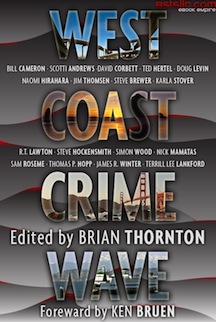
I want to share with you news of a short story collection — with a notable Murderati pedigree — to which I humbly, which is to say proudly, contributed, and which came out just last week.

It’s titled West Coast Crime Wave, and is the brainchild of publisher Michael Wolf and editor Brian Thornton, who put together an amazing collection of stories, with four Murderati connections — stories by me and previous Murderateros Simon Wood and Naomi Hirahara, plus an introduction from the one and only Ken Bruen, who graciously remarked:

Story collections are a lot like rock albums. Two classics trailed by a mediocre bunch of the dithering and the damned. Welcome to the editing savvy of Brian Thornton. When you see BT is the editor, you know it’s the gold guarantee and is it ever.

Some backstory: Michael Wolf has launched an eBook publishing house: Bstsllr.com, and West Coast Crime Wave is his maiden effort. 

Michael cut his teeth as founding Vice President of Research for GigaOM Pro, the research division for GigaOM, a market technology research firm that sought to rethink the whole world of market analysis, and in his work he realized that technology-driven markets were changing things far faster and more completely that the old school could comprehend—and this was nowhere more true than in book publishing. (Check out this interview with Michael—or this one, if not this one —for his vision for the industry and his company.)

Michael tapped Brian Thornton to edit his first anthology, and Ken had it absolutely right. Brian did a masterful job, not merely due to his grace and intelligence but his sheer tenacity. He managed to herd a uniquely rabid crew of cats — including a scientist who clones and patents ”human immune system hormone genes” and “produced the first commercially successful nanotechnology device,” and an academic renegade with a Ph.D from Yale (call us the not-so-dithering and quasi-damned) — and we set our tales in an intriguing array of west coast locales, from Alaska to Los Angeles:

Authors whose names are highlighted, including me, have interviews or story excerpts posted on the anthology website, with more to come.

THE LAST SHIP, by Bill CameronOregon Coast

BLIND DATE, by Scotti Andrews — Seattle, Washington

RETURNING TO THE KNIFE, by David CorbettMarin County, California

THE TOWN AT THE END OF THE ROAD, by Ted HertelTalkeetna, Alaska

MRS. LIN’S ART OF TEA, by Naomi Hirahara — Los Angeles, California

THE RIDE HOME, by Jim Thomsen — Kitsap County, Washington

SURF CITY, by Steve Brewer — Santa Cruz, California

THE LAW OF INVERSE CONSEQUENCES, by Karla Stover — Tacoma, Washington

SYDNEY DUCKS, by R.T. LawtonSan Francisco, California

RED MENACE, COMMIE FOR HIRE, by Steve Hockensmith — Los Angeles, California

OFFICER DOWN, by Simon Wood — San Francisco, California

THE PEOPLE’S REPUBLIC OF EVERYWHERE AND EVERYTHING, by Nick Mamatas

Berkeley, California

JACKIE BOY, by Sam Roseme — San Francisco, California

THE GHOST TREES, by Thomas P. HoppWest Seattle, Washington

BAD HISTORY, by Jim Winter — San Francisco, California

BRIDGET’S CONCEPTION, by Doug LevinPortland, Oregon

DETOUR DRIVE, by Terrill Lee Lankford — Los Angeles, California

PAPER SON, by Brian Thornton — Seattle, Washington

* * * * * 

If you want to give West Coast Crime Wave a spin (and I truly madly deeply hope you do), it can be had for a proverbial song — said song now being valued at the insanely reasonable price of $3.99can you believe it, people! — from both Amazon (Kindle) and Barnes and Noble (Nook).

* * * * *

Jukebox Heroes of the Week: A bit of hip-hop promo for my real hood, Vallejo, CA, from a succession of homegrown rappers. I acquired the link in doing research for my next novel, from a detective on the Vallejo PD Major Crimes Unit, who was more than grateful for the unwitting gang intelligence it provided.

There will be some no doubt who think I should say Jukebox Zeroes, but I wish the suits at the local Chamber of Commerce or even the Progressive Posse felt half this much passion and love for this town.


WHEN YOUR PROTAGONIST BECOMES REAL

Happy Monday, everyone.  It’s Alafair Burke here.  It’s my pleasure today to welcome guest blogger April Smith, whose beloved Ana Grey series is being adapted as a televised movie by TNT.  She was kind enough to write about that experience for Murderati.  In April’s own words:

We all carry fantasies of the day Hollywood will shine its beacons of money and fame on our poor shambling protagonist  and she will be transformed from a lifetime of knocking on doors and laboriously piecing clues together, to a brilliant larger-than-life-but-still-true-to-your-vision sensation. 

“Who do you want to play Ana Grey?” fans tweeted with great excitement when TNT announced it was going to film GOOD MORNING, KILLER as part of its new Mystery Night Movie franchise of two-hour TV movies based on mystery/thrillers.  Sure, I had files bursting with actresses from multiple attempts to bring Ana to the screen, but it had taken so many years to actually get the green light, the names were hopelessly out of date.  They had either passed the industry age limit on females for starring roles  (44, except for Helen Mirren) or had been plastic surgeried beyond recognition (except for Helen Mirren).

FBI Special Agent Ana Grey first appeared in NORTH OF MONTANA in 1994.  At the time, the idea of a half-Hispanic, half-Caucasian female FBI agent as the mainstay of a thriller was threatening.   I was advised by well-meaning supporters that if I wanted my books to sell to film, I should create another mystery series featuring a male protagonist.  Few actresses are powerful enough to “open” a movie, and worse, according to Hollywood savants, the character of Ana Grey was simply not castable, because there were not enough skilled, big-name Hispanic actresses to fill the role.   At the time it was unthinkably un-PC to cast an ethnic person of the wrong persuasion to play another ethnicity.  This never made sense to me (Australian theater’s beloved Robyn Nevin is about to play King Lear), but so it remained for seventeen years.

When TNT cast Angie Harmon and Sasha Alexander in Muderati blogger Tess Gerritsen’s Rizzoli and Isles, it was clear they had already created a hit.  They know their brand.  So when I learned the network was wild about Catherine Bell to play Ana Grey, I had a good feeling, probably for the first time in thirty years in television.  I had written the teleplay and was executive producer as well as the author – a lot at stake.  Catherine was very impressive in JAG and ARMY WIVES, but because everything was moving so fast in pre-production, there was no opportunity to meet her before we began shooting.   

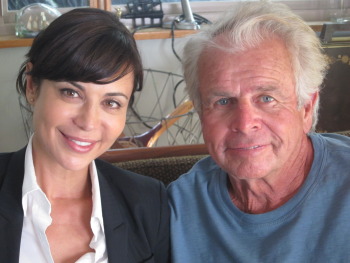
Catherine Bell (FBI Special Agent Ana Grey) and William Devane (who plays her grandfather, Poppy)

The first time I saw my leading lady was at a funky production office tucked away in a shipyard in Vancouver, B.C..  “Catherine’s arrived,” everyone whispered, and there she was in a tee shirt and jeans, just off the plane after traveling with her one-year-old; tall, lithe, beautiful, with huge empathetic eyes and tousled dark hair, ethnically ambiguous (Catherine is actually half Persian), strength, leadership, and kindness just radiating.  We hugged as if we’d known each other forever.  Eighteen years later, Ana Grey was born again.

We are now editing the film, and I can tell you Catherine’s performance is terrific. Pitch-perfect, as far as I’m concerned.  But I’d love to know what you think. GOOD MORNING, KILLER airs on TNT Tuesday night, December 13 at 9 PM.  Contact me at www.aprilsmith.net  For the full lineup of TNT Mystery Night Movies go to http://www.tnt.tv/title/display/?oid=146349.

April on the movie set

It’s Alafair again.  Thank you so much, April, for sharing your experience with the Murderati gang. 

April’s most recent Ana Grey novel, WHITE SHOTGUN, recently launched to rave reviews from People, the LA Times, Booklist, and on and on.  In his substantial review exclusively for Amazon, Robert Crais said, “Let’s cut to the chase: I love Smith’s work. She is one of the finest, smartest, most gifted writers working in crime fiction today, and White Shotgun is her best novel since the justifiably celebrated NORTH OF MONTANA. … This is the real deal.”

Please join me in welcoming and congratulating April.  We can’t wait to watch the movie and read what you write next!

So what about critique groups?

by Alexandra Sokoloff

This is a question I get all the time, and since Nanowrimo is upon us, it seems a good topic to tackle.

I think critique groups can be the best thing for writers since the Internet.  Except when (much like the Internet) they’re the worst.

The problem is, for newer writers, you’re casting around trying to get some tenuous grasp on this writing thing to begin with. And a bad critique group can sink you just as fast as a good one can elevate you.

As regular readers have probably gathered, I tend to have my own opinions about just about everything, and if someone else is wrong, they’re just wrong. I’ve been writing for so long that I HAVE to go with my gut.  I’ve had so, so many years to develop that inner bullshit detector that is so crucial for separating the good criticism from the moronic criticism (which sometimes criticism just is).  On the other hand, sometimes a moronic critic will tell you EXACTLY what you need to hear, so you can’t ever shut out the moronic comments completely.

The sad fact is, being able to critique a critique group is one of those essential skills that a writer needs to develop. And that just takes practice.

I was in a killer critique group when I wrote my first novel, THE HARROWING.  I was a seasoned screenwriter, but had never written a word of prose fiction before that.  I didn’t join the group until I had a very rough first draft of the book, and then week by week, that group showed me what novel writing was really about.  The format of that group was perfect: the group was limited to 12 people (meaning probably 9 showed up each session); we met every week; it was led by one person, a screenwriter, novelist and USC professor, the awesome Sid Stebel; and the format was very simple: anyone who wanted to be critiqued that week would read aloud, up to 9 pages or so; then first the group leader would critique, and then anyone in the rest of the group would critique: good comments first, then more critical comments.  It was a group of screenwriters, poets, journalists, teachers, actors, and novelists, and it was divine.  I think the reading aloud format is SO key because just as in live theater, you see, hear and FEEL what your audience is experiencing about your work.  Even if you have some off-key criticism, the live response of an audience just doesn’t lie.

My second critique group, which got me through my second novel, THE PRICE, was a very small group of friends that I’ve known forever, some of the smartest and most talented people I know (and I have to say that is saying a whole hell of a lot).  We met and exchanged notes on line, which doesn’t seem as if it would work but – maybe because we know each other so well, it worked like a charm.

My current critique group works in a completely different way.  I have a posse of mystery writer friends (I should say goddesses or divas!) that I met when I was living in Raleigh: Margaret Maron, Sarah Shaber, Diane Chamberlain, Katy Munger, Mary Kay Andrews and Brynn Bonner.

We don’t have time or proximity to meet in person every week or every month, so two or three times a year we go on retreat for a week in some fabulous place, the beach or the mountains or some generally fantastic place, and it’s all writing, all the time. There is something incredible about being on retreat with a group of trusted, seasoned writer friends for a whole dedicated week. We’ve got this thing down to a science by now. We have a group session in the morning: all of us set our intentions for the day, and brainstorm on any sticky story problems we’re facing. We separate to work all day long by ourselves and then convene at night to drink wine and brainstorm on any problem that any one of us is having (and of course, compare page counts! Competition keeps those pages flowing… )

One of our favorite retreats is the Artist in Residence program at the Weymouth Center in Southern Pines, NC.

Weymouth is an amazing place – a 9000 sq. foot mansion on 1200 acres (including several formal gardens and a 9-hole golf course) that’s really three houses melded together. It was what they called a “Yankee Playtime Plantation” in the last quarter of the nineteenth century, the fox hunting lodge of coal magnate James Boyd. James Boyd’s grandson James rebelled against the family business to become – what else? – a novelist. Boyd wrote historical novels, and his editor was the great Maxwell Perkins (“Editor of Genius”), and in the 1920’s and 30’s Weymouth became a Southern party venue for the likes of F. Scott Fitzgerald, Sherwood Anderson, and Thomas Wolfe. That literary aura pervades the house, especially the library, with all its photos and portraits of the writers who have stayed at the house.

It’s a fantastic place to write – pages just fly.

Weymouth has even worked its way into one of my books. When I started plotting The Unseen, I needed a haunted mansion that I could know and convey intimately – the house in a haunted house story is every bit as much a character as the living ones. So of course the Weymouth mansion, with its rich and strange history, convoluted architecture, isolation, vast grounds, and haunted reputation, was a no-brainer. I truly believe that when you commit to a story, the Universe opens all kinds of opportunities to you. And as it happened, our gang was able to stay in the house again for a week as I was writing the book.

And if you’re at this point thinking this is something totally, impossibly out of reach… well, think again.  Have you ever just Googled things like “writers in residence in —— (your state)”?  So how do you know there’s not a 9000 square foot mansion available to you absolutely free in your state?  If there’s anything I’ve learned over the years, it’s “Ask, and the Universe provides.”

But it’s also a wonderful thing that authors exchange their work between themselves all the time. What could be better than having authors you admire giving your work a read, and being able to read your author friends’ work in earlier stages?  (I’m at the moment eagerly awaiting Zoe’s newest Charlie Fox, months before it will be released.  I mean, how much would that privilege go at auction at Bouchercon?)  I just love it, and with the crazy schedules we all have it’s often a more viable option than a critique group. 

Maybe it’s the Berkeley in me (I like group – everything – what can I say?) but for me there’s nothing like a literal, f2f critique group, preferably as often as possible.   But – we are blessed that we have all the other options as well.

So let’s talk about it today.  What are your experiences with critique groups, good and bad?  What do you think is the optimum format for getting those essential notes for a new book?

And if you have nothing to say about that, just tell us something scary for Halloween.

I’m traveling for most of the day (that Halloween thing, you know, I write the spooky stuff…) but will check in when I can.

Alex


I SHOT THE LAW (AND THE LAW WON)

By Stephen Jay Schwartz


I was the point man, or “blocker,” in our stack of four. Our team leader asked what I could see around the corner.

“I see two open doors on the right,” I said. “The first is fifteen feet in. The second is twenty.”

“Can you see anything on the left?” he asked.

I didn’t want to push my head further into the hallway. I didn’t want to be a target.

“Maybe twenty feet in, I see some light. It could be an open door.”

The suspect was yelling and throwing things against the hallway walls, but it was further than I could see from my position.

“Joe!” I yelled. “We have a warrant for your arrest. Come out with your hands in the air!”

“Fuck you, pooooolice!” Joe yelled, and we heard a gun shot.

“Keep your cool,” team leader told me.

I tried calling Joe out again, and he repeated his mantra, slamming chairs and other objects against the walls as he yelled.

“Take the first room,” team leader ordered.

I was a bit nervous, being the guy in the center of the hallway and the last one who would step into the room. I wore a vest and helmet, but I’d never fired the Sig pistol and I didn’t know what to expect. I didn’t want to be a misfire statistic.

We moved slowly down the hall, each one resting his hand on the left shoulder of the guy before him. I was in front with no shoulder to hold. After I passed the room, I felt each of my teammates slip behind me, their weapons held in front of them. “One-thousand one, one-thousand two, one-thousand three,” I whispered, then stepped backward into the room, never taking my eyes off the hallway. Our room was clear.

“What did you see?” team leader asked from the starting position behind me.

“The light does come from an opposing room. And the hallway is long, with another open door to the right, about a hundred feet from our position, and a door at the end of the hallway,” I answered.

The team leader sent another four men to join us. I stepped into the hallway again and let them slip into the room we’d taken. I stepped back in after the last man passed behind me. My eyes remained in the hallway.

“Okay,” team leader said. “We’re going to double-stack and take those opposing rooms. Point men go when you’re ready, and don’t forget to cross-cover.”

I took a deep breath. We could hear our suspect, Joe, laughing insanely from one of the rooms. We’d been told he was a felon who had broken his probation by carrying a loaded handgun. We asked what the felony was for and were told that he’d attacked a police officer. I exhaled.

I stepped into the hall and was joined by the point from Team Two behind me. Our teams walked side-by-side, then split off into the opposing rooms. The three in my group entered and cleared the room.  I heard Team Two clear theirs.

“Okay, double-stack and take the last rooms. Team Two, take the one down the hall. Team One, collapse the point and take the one on the right.”

We moved out. I heard them behind me, sharp breaths under clunky face-masks. Joe was nowhere to be seen.

As we approached our objectives I pulled back into my team, collapsing the point. I was in first position, with three other men behind me. Team Two stepped past me and took the room at the end of the hall.

I turned right into the room, my weapon raised. I could barely see through the foggy visor, but I saw a man crouched on the floor with a gun in his hand.

“Drop it, Joe!” I yelled. He raised the weapon and I did what I was trained to do. I put two rapid shots in his stomach. The marks appeared quickly on his shirt.

He dropped his weapon.

“Don’t shoot anymore,” he said, still crouched on the backs of his heels. I got him just below the vest, where it hurt.

“Can’t you fuckers ever aim for the chest?” he asked. There was a yellow stain on the back of his head from where he was hit in the last simulation.

“Sorry,” I said, feeling proud as hell. They were just sim rounds, but I heard they left a welt. I wouldn’t know, having avoided being shot myself.

“Wear crappy clothes!” our PIO had said the week before. “You will get hit, all of you.”

This is my fourth week in the ATF Citizen’s Academy. I fucking LOVE IT. This is Disneyland for crime writers. It’s three or four hours a week for eight weeks. And then we graduate. I want to fail so I can do it all over again.

The ATF Citizen’s Academy is the pet project of Special Agent in Charge John A. Torres, a soft-spoken, well-respected leader who has been with the ATF since 1984. It’s the only one of its kind in the country, and its success has spawned plans to duplicate the Academy in other states across the U.S.

The first couple weeks were filled with lectures. The kind of lectures you never got in college. With footage of undercover operations filmed from the lapels or buttons or sunglasses (the agents won’t tell us all their secrets) of the agents involved. Real Donnie Brasco stuff. These agents put their necks on the line every day, and we got to see it. We were taken through the details of infiltrating a simple counterfeit cigarette smuggling ring in Los Angeles and watched as it grew into an international undercover operation involving the ATF, FBI, Secret Service, ICE, LA Sheriffs, CHP, the Royal Canadian Mounted Police, the Hong Kong police, and more. An Asian gang in Los Angeles led to a Russian car-stealing operation in New York and climaxed with a deal to smuggle military weapons to the U.S. from China. Called Smoking Dragon, the operation netted 95 million dollars in seizable assets.

I think that was the first night’s class.

Then we got into undercover operations with the local motorcycle gangs. Most of this stuff had to do with illegal weapons sales. Our PIO is a Special Agent himself, and he’s mostly known at the agency as the guy who’s crazy enough to do anything he’s asked to do. His name is Special Agent Christian Hoffman, and Author Andrew Peterson brought him to the Romantic Times conference in Los Angeles this past year. Together with an outstanding team of other special agents, Christian ran a panel on ATF tactics, weapons, and operations. The event ended with Andrew Peterson being attacked by a german shepherd from the ATF weapons division. What a climax.

Last week we were wired and sent into a local, outdoor shopping center to spy on a Confidential Informant, another ATF agent. He was approached by several different suspects intent upon selling him a stolen Glock pistol. I was team leader in a group of eight classmates, and we were all paired in twos. Our job was to watch the CI and everyone he came in contact with, while trying not to be “made.” I sent classmates off to follow each suspect he met, which led some of the students into dark parking structures where they witnessed “hand-offs” and were forced to record license plate numbers on the palms of their hands. I found the psychological strain of Surveillance Day much more exhausting than the more physical day we spent catching bad guys with paint-ball guns.

But I love it all. Next week we go to the range. Yes. Fully-automatic assault weapons with live ammo. We even get to fire a Tommy Gun.

After yesterday’s exercise I asked our instructor what the cut-off age is for joining the ATF.

“Thirty-seven,” he said.

Damn. I’m almost the age where I can’t do everything I want to in life. But I’m never too old to write about it.

Starting Over

Zoë Sharp

At the start of this month I began work on a new book, tentatively titled DIE EASY: Charlie Fox book ten.

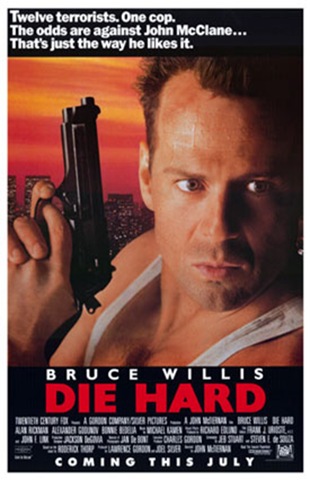
Actually, that’s not entirely true – well, what do you expect from someone who lies for a living? I should say that as far as I’m concerned there’s nothing tentative about it – DIE EASY is the perfect title for this story. Ever since I first saw the old Bruce Willis classic ‘Die Hard’ I’ve wanted to do a riff on that theme. Let’s face it, it was that movie turned a light comedy TV leading man into an all-action movie star, bare feet and all. And as my book is set in New Orleans – The Big Easy – what better title?

OK, that was itsy little lie #1.

Itsy little lie #2 was that I didn’t start this book on October 1st. I should say I RE-started the book this month, as I wrote the opening three chapters and the half-page jacket copy outline way back at the beginning of this year.

But then Other Things got in the way – like getting the entire Charlie Fox backlist out in e-format, plus putting together an e-thology of CF short stories, FOX FIVE: a Charlie Fox short story collection. And I have to say that I don’t begrudge the time spent on those projects at all. It was a thoroughly energising experience that has brought me back to my writing, and the series, with renewed enthusiasm, as I’ll explain.

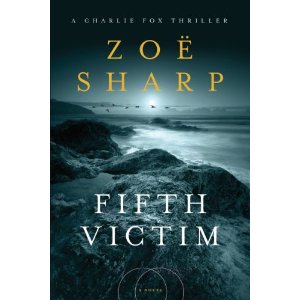
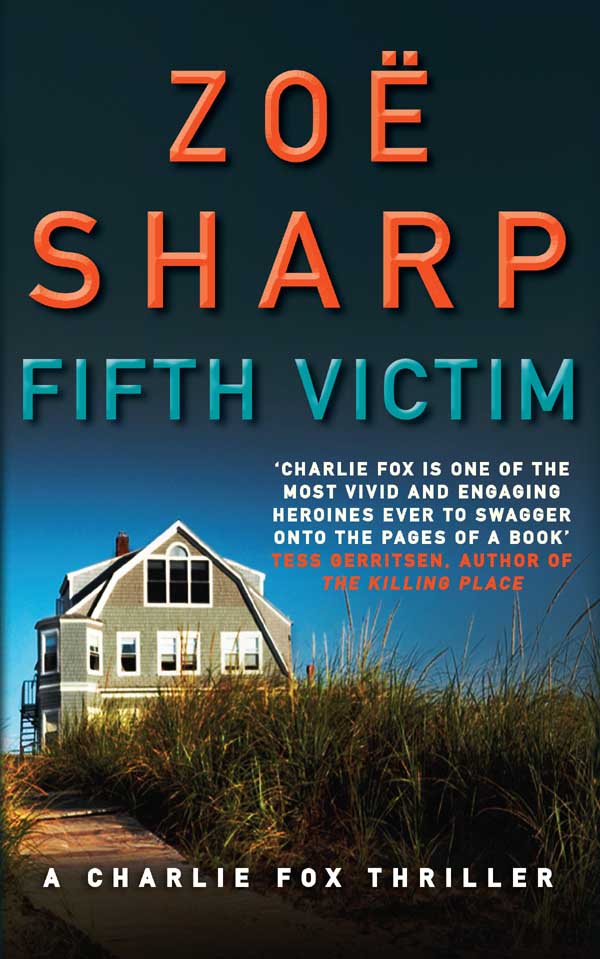
Having found out, however, that my lovely US publisher Pegasus Books is bringing FIFTH VICTIM: Charlie Fox book nine out in January 2012 instead of the March I was expecting, I realised that I needed to Extract My Digit in quite a big way if I’m to deliver the finished t/s of the next book before publication of the last one.

(Of course, Brit readers have already been able to get hold of 5V from Allison & Busby since March this year.)

At that point I had only 5800 words written out of 100-110,000 and no full outline. I knew the broad brushstrokes, the major dramatic highlights and emotional themes, but not the nitty-gritty that would enable me to actually get on with the scribbling.

So why write the opening scenes at all?

Because I wanted to know where it all began. Sounds totally illogical, but very few books start at the very beginning of the story itself. Deciding the right jumping-in point – where you grab the reader by the arm and rush them towards the edge of the cliff – is a vital choice for me. Until I know that, I can’t get on with it. I know some people just start writing and worry about that later, but sadly I’m not one of them.

From early on in the series, I’ve been trying to avoid the foreshadowing opening. The ‘had I but known’ style of thing. I did it in the first book KILLER INSTINCT, but I’ve tried to avoid it since, otherwise it becomes very old very fast. I’ve used a couple of flashforward openings, though, and those I do like.

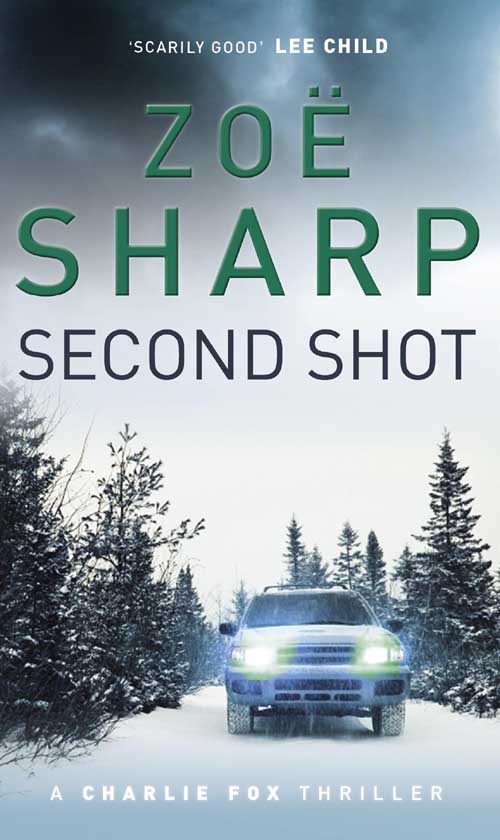
For instance, some people assumed that the opening chapter to SECOND SHOT: Charlie Fox book six was from the very end of it, but without giving too many spoilers, it’s not.

When I wrote ROAD KILL: Charlie Fox book five the original opening for the story had a group of soldiers standing around a fallen motorcyclist who lay screaming in the middle of a road through a very dodgy housing estate in East Belfast, with an angry crowd gathering.

It was a great opening chapter and I loved it.

But it never made it into the final cut of the book. It simply did not drop my protag – and the reader – into the right place in the story. One of the reasons that book was such a pig to write was that I held onto that opening chapter far longer than I should have done. Even now, I still hanker after that original rather than the first chapter I eventually went with. But the final version – which opens with Charlie swinging a sledgehammer into the walls of her cottage – does better serve the story.

Sigh.

But I digress.

It’s now twenty days into October, and so far I’ve had three zero-word days and one day when I only managed a bit of reshuffling, which added 43 words to my total. (Yes, I’m sad enough to keep it all on a spreadsheet.) But yesterday I still managed to hit 20,000 words and I’m aiming to be at 35k by the end of the month.

Then 70k by the end of November, and 105k by the end of the year. That leaves me the last bits to finish off in January, print it all out, do a read through to try and catch inconsistencies, repetitions, check my chapter breaks are in the most effective positions, and ruthlessly scalpel out unnecessary words.

Just like that. Ha!

But I’ll be keeping a running tally of all this on my Facebook author page – seeing as how I’ve almost discovered how this social media stuff works – and possibly on Twitter as well.

I hope you’ll stop by and have a giggle at my expense.

Speaking of having a giggle at my expense, if you happen to be near South Wales next week – October 26th – I shall be appearing at the Newport Big Read event in Gwent. If you can make it, I’d love to see you there.

So, ‘Rati, that’s how I’m intending to tackle my writing schedule over the next couple of months. How about yourselves? And if you’re not writing a book at the moment, how do you deal with big tasks that seem overwhelming at first glance? Do you break them down into work first/reward later, or do you put them off as long as you can possibly manage before knuckling down?

This week’s Word of the Week is ultracrepidate, which means to criticise beyond the sphere of one’s knowledge. It comes from the painter Apelle’s answer to the cobbler who went on from criticising the sandals in a picture to finding fault with the leg. “Ne sutor ultra crepidam.” – “The cobbler must not go beyond the sandal.”

ACHIEVEMENT

by Jonathan Hayes

The arrival of autumn has put me in a mood of mellow introspection. I think I’m going to go ahead and launch a project I’ve had in the back of my mind for some time: The Bestiary of Death. Bestiary will be a monthly 5 minute or so audio podcast (maybe video, eventually) about a forensic topic – rigor mortis, say, or Jonathan’s sense of blood. It’ll be factual, but it’ll also be impressionistic, tinted by my own reactions and experiences. It’ll showcase my delightful speaking voice, plus feature groovy cover designs. I’ll let you know more about it as my plan solidifies.

Someone asked me the other day what I’ve learned from my time as an M.E. – actually a fairly pointless thing to ask a resolutely non-spiritual person. I do think that Warren Zevon’s answer to Letterman asking him what he’d learned from life (“Enjoy every sandwich”) covers it nicely, but I also have been thinking lately about achievement.

Objectively, human endeavor has delivered many astonishing achievements – the elucidation of the structure of DNA, putting a man on the moon, Sofia Vergara – but most of these things seem like almost inevitable byproducts of history. Sooner or later, we’d have figured out the wheel, and iron, and the Butterfinger bar. I feel the same way about personal achievement. Maybe because I have a doting mother and a competitive father, most of the things I’ve done with my life – becoming a doctor, becoming a forensic pathologist, writing for magazines and newspapers, becoming a novelist – don’t feel like achievements so much as they feel like stages of a life. 

But Xevious? Xevious was an achievement.

Xevious poster, c. 1982

I first encountered Xevious, an early 16 bit Namco videogame, in a Leicester Square coin arcade in the early 1980’s, while I was in medical school at the University of London. It’s a vertical scrolling spacecraft game in which you pilot a craft over a foreign terrain, bombing structures on the ground below while fighting off ferocious air attacks. The graphics – risible in the age of the Playstation 3 and Xbox 360 – just blew me away. To play Xevious in1983 was to really embrace the cutting edge of technology, to experience the joy of becoming cyborg, part man, part machine. At least, for as long as you could make your ten pence last.

At first, I was mediocre – much as I love them, I’m not intrinsically a good videogame player. But over countless hours of gameplay, I got better, and eventually I edged my way onto the leaderboard, and finally experienced the satisfaction of using the joystick to type out JAH into a Top 10 slot. Gradually, other arcade players gathered to watch me fly my solvalou spacecraft through the Baculon resistor shields, a barrage of slowly rotating metal slabs the size of skyscrapers you have to dodge to strafe and bomb the buildings below. It was an exhilarating experience, for I’d always been the admiring onlooker, never before the admired player.


The summer of my Year of Xevious, I traveled a lot. After finally entering my initials at the very top of the Xevious leaderboard in London, I flew home to Boston, where I sought out an arcade,  and found Xevious. I banged out my initials there, too, and again, in Philly. Now I had my name right at the top on Xevious games in three major cities; I also had calluses on my knuckles from repeatedly smashing them against the smooth bolts that held the joystick to the cabinet.

A week later, I went on to Bangkok. I knew Bangkok quite well, but wasn’t sure if I’d find a Xevious there. Imagine my surprise, then, when I discovered one in my hotel lobby. But it wasn’t the upright arcade cabinet I was used to: the BKK incarnation was a bar table version, played seated at a video screen covered with a sheet of glass.


Watching the young Thai dudes play, I experienced the rush of derision known only to the superb player – these guys were pathetic, dying off while they were still around the 40,000 mark! My top scores? Well, they were in the high 180’s, low 190,000’s – enough to justify that blast of disdain for lesser players, a fresh and exciting sensation for me.

They pretended not to see me waiting my turn for a long while, but ultimately they could ignore my hulking presence no more; finally, the crowd parted, and I got my shot at the machine.

I didn’t know how I’d fare on this low screen – I’d never played sitting, the way these kids were doing it. And I wasn’t about to start: I grabbed the chair, and shoved it away. I accidentally pushed it harder than I needed, and it shot a good fifteen feet across the lobby.

Immediately I was someone to be reckoned with. When I stepped close to the table, the throng closed in around me. When it became apparent that I was going to play the game standing, the hum of excited conversation grew loud. Would this unlikely-looking, chair-flinging farang be any good at the game?

Well, yes, actually. I played calmly and aggressively, piloting that spaceship like no one there  had ever piloted itbefore. Waves of sparkly diamond rockets fell to my guns, I reduced the missile and fort installations hidden in the woods below to charred pits. None of the players there had ever even seen the second wave of Baculon resistor shields, let alone the ancient Aztec-style carvings on the plains beyond.

I was too tall for the game table; hunched over, banging and mashing, dodging and decelerating, I took that fighter ship way further than anyone ever had, but, my back fully locked by muscle cramps, I finally crapped out; when my last ship was destroyed, I had earned just over 150,000 points. A loud “OHHHH!” went up from the crowd.

The leaderboard screen came up onto the console, the Number 1 slot occupied by some guy with a measly 47,000. I wasn’t proud of my score, and felt a little awkward in the hot press of bodies, so I straightened with a casual shrug, and pushed my way out of the scrum without entering my initials. There was another roar as the crowd sealed behind me, the players determined to go further now that I’d shown them all what time it was.

I didn’t play Xevious again until I traveled to West Berlin, a few weeks later. In the morning, I crossed through the Wall to visit the East part of the city. I ate venison in a gloomy old restaurant, supposedly the city’s best. But I loathed the oppressive, monochromatic dullness of the East German half of the city, and quickly made my way back through the drab, rainy streets to West Berlin.

Back in the American section, I found a bar near Checkpoint Charlie, and ordered a Coke. The lights were low, the crowd mostly soldiers, and the music was expat-oriented Classic Rock. I sipped my Coke, sitting there happy to be people-watching back in the Capitalist world.

And then I saw it in the corner: a Xevious machine.

I hadn’t played since Bangkok. I finished my Coke, got change for the machine from the barman, then headed over. I slotted in a coin, the screen lit up and the familiar opening chimes sounded.

And I started to play.

It took me a couple of seconds to lock into my groove, but once I did, I was on fire. On fire. Nothing could touch me – not the ground fire, not the crystal rockets, not the Baculon resistor shields, not even the random exploding cannonballs that are the lethal outriders of the Genesis mothership. I played on and on, taking the thing further than I’d ever gone, seeing forests and lakes and Aztec carvings I’d never before seen.

It was amazing. Off-duty soldiers gathered to watch me play; I barely noticed them, for I was now truly fused with the machine, the joystick an extension of my wrist, the BOMB and FIRE buttons my new fingertips.

On and on I went, shattering all my previous records. 

And then something magical happened: my favourite song of the era, David Bowie’s “Heroes” came onto the radio. But it wasn’t “Heroes” – it was “Helden”, the German version. And I kept playing and playing in the shadow of Checkpoint Charlie, Bowie screaming in German about the guns going off by the Wall, a crowd of GI’s cheering me on.

My right wrist felt wet; a quick glance showed me I’d played so hard that my knuckles had torn open. Blood was dripping onto the console, smearing down my wrist and arm, flicking up onto my clothes as I slammed the joystick back and forth.

And I just kept going, and going, and going, moving forward slick with blood, tears streaming down my face, Bowie singing that we could steal time (just for one day), the sensation in my heart of escape from oppression while in my head I knew I was still right in the middle of of it, a few yards from the Wall, the barbed wire and spotlights and machine guns that separated freedom from asphyxiating totalitarianism.

And I went on, and on, up past 200,000 and on. I floated up through the tropopause, all the way out into the mesosphere, where around me comets burned up into streaks of pure white light. And still I kept going, on into the thermosphere, surrounded by the shimmering curtains of the aurora borealis, where the 3,000 degree air temperature felt cold against my skin.

I went on and on, and in the end, I never stopped.

There’s a theory that since energy is never destroyed, sound never ends; the sounds of the musicians playing on the deck as the Titanic sank are still echoing around that ship, just infinitely quietly. In the same way, thirty years later, somewhere deep inside, a part of me is still playing Xevious in that bar, still piloting that ship further and further out as David Bowie sings that we could be heroes, if just for one day.

So, yeah, Xevious. Xevious was an achievement.

And that’s what I have to say on the subject of achievement.

Oh, and also: auf Wiedersehen.  

And thanks for playing along at home.


The hardest writing I’ve ever done

Today, instead of working on my blog post, I’ve been forced to write what none of us wants to write.  I’m the author in the family, so of course this painful task fell to me.  After all, writing is what I do for a living, so certainly I should be able to pull this off. But I found myself paralyzed at my keyboard, unable to summarize, in just a few paragraphs, the life of a complex, passionate woman.  Somehow, I managed it. 

I wrote my mother’s obituary.

I am drained.  Today, it’s all I have to offer.  

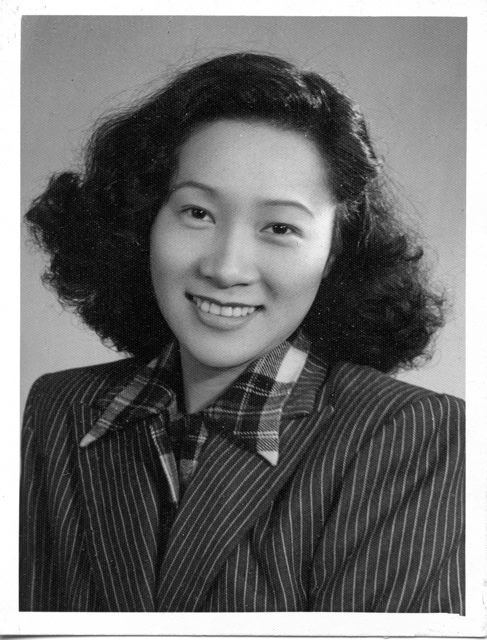
Jui Chiung Tom, known to friends and family as Ruby, passed away peacefully on October 16 at the Quarry Hill retirement home in Camden, Maine.  She was 85.  A native of Kunming, China, she came to the U.S. as a foreign student.  She was the first Chinese coed to ever attend Arkansas College, where her American classmates dubbed her “Ruby” because they found her Chinese name impossible to pronounce.  She planned to return to China, but the Chinese Revolution cut off her hopes of going home.  From afar, through an exchange of carefully worded letters, she learned of the hardships suffered by her parents, whose large estate in Kunming was confiscated by the government. She never saw her parents again.

 After her marriage to Ernest B. Tom, Ruby settled in San Diego, where her difficulties as an immigrant inspired her to help other Chinese immigrants.  Even while busily raising two children, she managed to earn a Master’s degree in Social Services at San Diego State University.  In 1972 she co-founded the Chinese Social Service Center, now known as the San Diego Chinese Center.  39 years later, the organization she created continues to provide social services and cultural programs for the San Diego community.

 With the re-opening of China to tourists, Ruby was finally able to visit her homeland several times, and she was delighted to meet nieces she’d never seen.  A fearless traveler, she often made bold and surprising choices in life — including a decision to get divorced after 32 years of marriage and live by her own rules.  After moving to Maine in 2008, she settled in at Quarry Hill, where the extraordinary and compassionate care of the nursing staff eased her final days.

 A private family service is planned next summer in Kunming.

 She is survived by her daughter, novelist Terry (Tess) Gerritsen of Camden, Maine, her son Dr. Timothy Tom, an anesthesiologist in Corpus Christi, Texas, and her grandsons Adam and Joshua Gerritsen, and Christopher Tom.  In lieu of flowers, the family would deeply appreciate donations to the American Heart Association:

 http://honor.americanheart.org/goto/Ruby.Tom

“Balance” is Bull

by Pari

I used to be so sure of everything.

If I got good grades, I’d go to a good college. If I went to a good college, I’d get a good job. If I got a good job, my life would be great.

If I wrote a good book, I’d find a good agent. If I found a good agent, I’d get a great publishing contract. If I got a great publishing contract, I’d make a living as a novelist.

If I networked enough, I’d meet a lot of people. If I met a lot of people, I’d be able to market my work to them. If I marketed my work to enough people, they’d tell other people. My career would be made.

If I truly found love, I’d get married. If I got married, everything else would fall into place. If times got rough, love would conquer all.

And the biggest myth of all?

The Balance Paradigm:  If I could just find the sweet spot, I’d be able to: work, write, get enough exercise, sleep, eat well, stay in touch with friends, be supportive to people I care about, be a good mom, find fulfillment  — and it’d all flow beautifully.

Forever.

Well . . . with apologies to my Buddhist and Taoist friends . . . I now think the Balance myth is unproductive bullshit. You know that yin-yang symbol? It’s a snapshot; it’s not static. It CAN’T be.

Balance, for more than a moment, is impossible for any living creature. Do you hear me, people? It. Doesn’t. Exist. Tell me when you last met a person  — other than the Dalai Lama — who achieved that perfect midpoint on the seesaw of his or her life.

Everything is in flux. So all the ifs we tell ourselves about trying to wrangle the numerous areas of our lives into some kind of blissful constant center is useless and emotionally exhausting.

Why do we do it?

The reason the Balance Paradigm continues to play such a large role in our collective mindset is that to admit it doesn’t exist is to admit that there’s never really going to be a time of rest – at least not until we die. This doesn’t exclude our ability to be satisfied or calm during certain moments in our lives, it just means that we have to give up the idea of “doing it all.” Because doing everything we want to do — all the time in perfect balance — is about as possible as perfectly singing the Queen of the Night’s aria from the Magic Flute with our mouths full of crackers.

So what can we strive for – what new paradigm is more useful – if we can’t manage to balance absolutely everything in our lives all at once in a perfect harmony?

Here are some ideas:

The Contentment Can Happen for Large Swaths of Life Paradigm

The Change Needn’t be Feared Paradigm (AKA  The Stasis is Death Paradigm)

The You Can’t Do It All But You Can Do A Lot Paradigm

The Life Evolves and So Can You Paradigm

Hmmm.

What do you think?
1.  Can people really find balance in their lives?
2.  Is balance really the goal or has it caused us to shoot for a goal that, by its very impossibility, makes us miserable?